
As you all know, I am probably the most controversial unperson in the whole research integrity community. I was so often accused of being a racist, sexual harasser, even a murderer, that it became boring. And of course I was also exposed as a research fraudster.
So far, all these accusations were false, fake and meaningless. But now something was found is my most important paper of my failed academic career, which very well might prove to be research fraud.
As I always said: everyone who publishes research papers will eventually find fraud in their work, simply because everyone has coauthors. I published very little, but my rule caught up with me anyway.
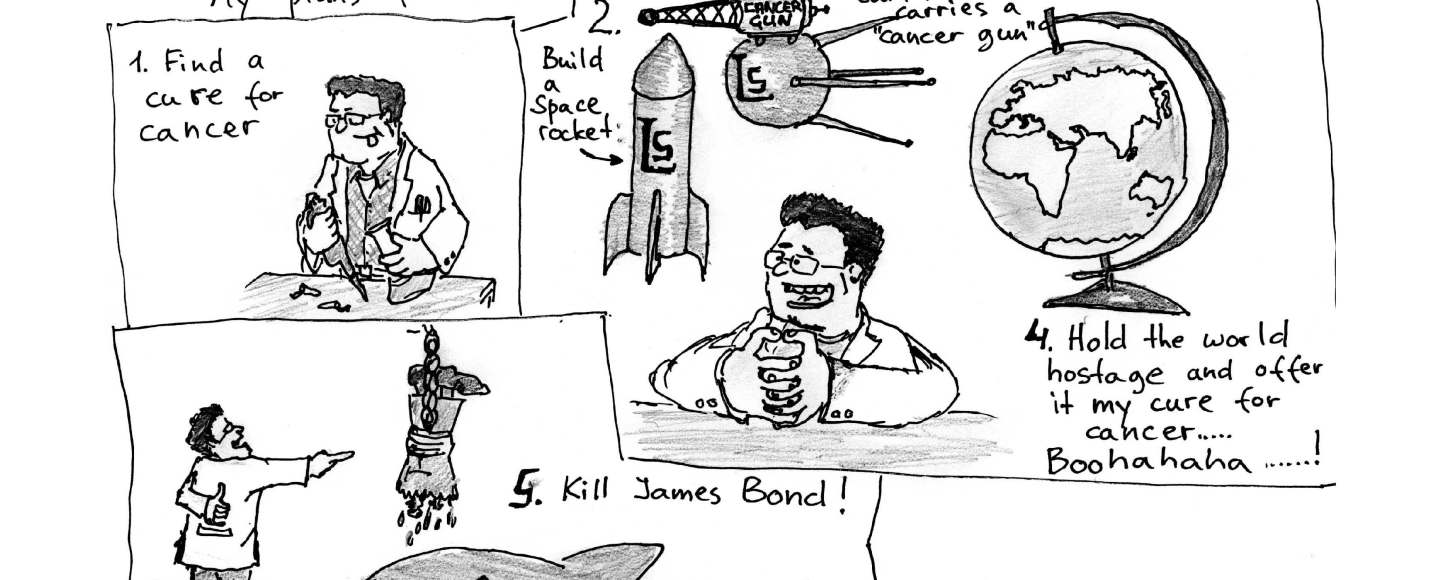
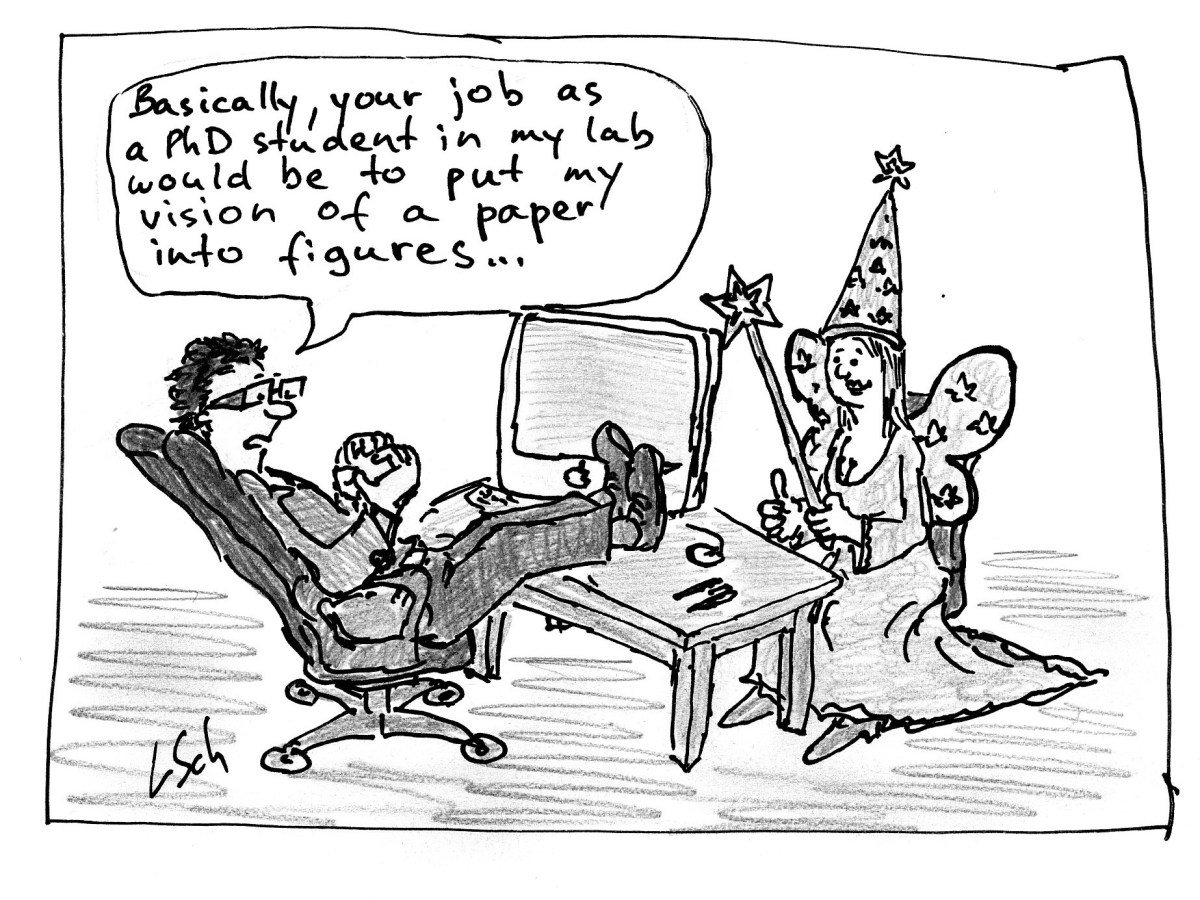
Before we get there, some past exposures. And a cartoon I made more than 18 years ago, when I just started my postdoc project at IFOM in Milan, Italy.

Part 1: “The authors are recommended to please clarify this with the raw data”
Eleven years ago, I wrote about my past experience of being exposed as a fraudster on PubPeer in a German-language blog post on Laborjournal from 2015.
It started with papers from my PhD time at the University Clinic Düsseldorf, under the obsessive supervision of Roland Piekorz and bullying intimidation from our professor Bernd Nürnberg. Their mutual approach to science was to “motivate” their scientific staff to live in the lab. My PhD defence was initially cancelled, then became an unpleasant tug of war, but now my dissertation is probably the most famous in that university’s recent history (I’ll explain in the moment).
But now, to my papers. Here a PubPeer critic used low-resolution images from the pdf to find “irregularities” which, alas, didn’t exist in the higher resolution html version:
Leonid Schneider , Frank Essmann , Anja Kletke , Paula Rio , Helmut Hanenberg , Wiebke Wetzel , Klaus Schulze-Osthoff , Bernd Nürnberg , Roland P. Piekorz The transforming acidic coiled coil 3 protein is essential for spindle-dependent chromosome alignment and mitotic survival Journal of Biological Chemistry (2007) doi: 10.1074/jbc.m704151200


By the way: my former PhD supervisor Piekorz has something else on PubPeer, not just my papers with false allegations. Specifically, Moriggl et al 2005, which is discussed here.
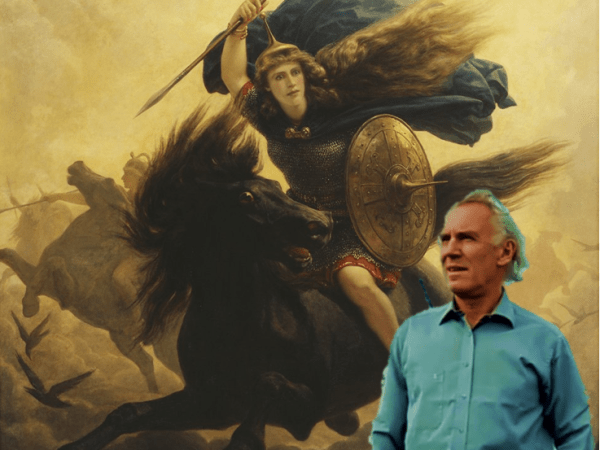
Wagner Ring Festival in Vienna
Erwin Wagner is not related to the famous German composer but we shall enjoy the Ring Festival with him and his friends anyway.

Piekorz never made it to a professor, despite literally living in the lab, which was supposed to serve as model to all of us. He obviously never learned the right tricks to success, unlike his two Austrian friends with whom he worked in the US lab of James Ihle at St Jude Children’s Research Hospital. Both swiftly made it to full professors at MedUni Vienna: the aforementioned Richard Moriggl (now for some reason at Paris Lodron University Salzburg) and Veronika Sexl (now Rector of University of Innsbruck). Both have some really bad stuff on PubPeer, but again: that’s why they are full professors, and Piekorz isn’t.

Prof Dr Dr Nürnberg displayed little understanding of science, and no skills except of being a control freak and bully. He also failed as a clinician and was installed as professor of medicine by his very influential father Eberhard Nürnberg (deceased 2016), and his very influential PhD mentor, Günter Schultz (deceased 2021). Nürnberg was one of Schultz’s less successful mentees, simply because he had no ideas, no imagination, he kept repeating the same old G-protein stuff he learned from Schultz, and was only good in bulling people into NOT publishing papers. That’s also why Nürnberg has nothing else on PubPeer.

On Western blot loading controls: lessons from Richard Moriggl lab
Western blot, a method to separate proteins by size and analyse their relative expression levels, is a much maligned technique of molecular cell biology. The website PubPeer is flooded with evidence of manipulated Western blots, where gel lanes were inappropriately spliced, or where bands digitally duplicated or erased. Some even question the technology as such,…
Charming and pleasant as he is, Nürnberg made so many friends in Düsseldorf that they first made him Dean of medicine, then helped him find a new job in Tübingen, where he now surely made many more new friends. But here is another paper of mine with Piekorz and Nürnberg, again with false flags:
L Schneider, F Essmann , A Kletke , P Rio , H Hanenberg , K Schulze-Osthoff , B Nürnberg , R P Piekorz TACC3 depletion sensitizes to paclitaxel-induced cell death and overrides p21WAF-mediated cell cycle arrest Oncogene (2008) doi: 10.1038/sj.onc.1210628


Regarding the two diagrams: those were different experiments actually, but of course the accuser saw this suspicious reproducibility as evidence of fraud. As for the western blots: Before claiming that the gel bands “don’t match”, one should arrange them properly. Which another PubPeer user did, informing: “Akt and pAkt bands are superimposable“. But yet another user, Cordyceps diapheromeriphila, demanded in 2018: “The authors are recommended to please clarify this with the raw data.” Clarify what?
In another post, this same PubPeer user Cordyceps diapheromeriphila raised heavier accusations against me:
“There are similar cases in which science joumnalists have called employers and harassed scientists to the point of hospitalization“
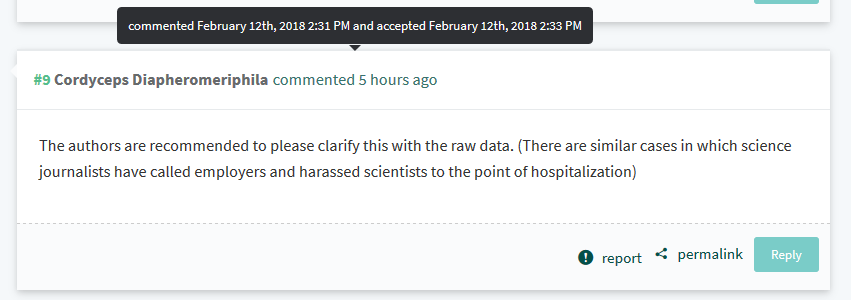
That comment referred to the case of the French scientists and former CNRS president Anne Peyroche, who complained that she was terrorized by phone calls and had to be hospitalised. For obvious reasons, some people accused me. Strangely, the nasty comments by Cordyceps diapheromeriphila were posted soon after I tweeted about the Cordyceps fungus on unrelated matter, PubPeer eventually removed that slur.
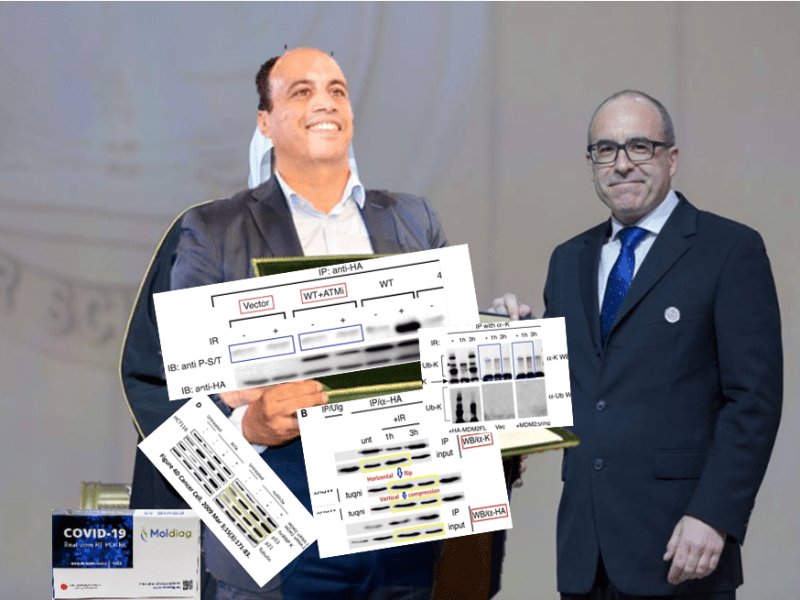
Steve Jackson and the Moumen Troll
“I take issues of research integrity very seriously and shall of course review the concerns posted on PubPeer to establish whether there are any issues that need to be addressed.” Stephen P Jackson.
On PubPeer, things escalated further. My papers from my postdoc work at IFOM in Milan, Italy, were next. I worked in the lab of Fabrizio d’Adda di Fagagna, who does know how to publish papers in big journals like Nature, a skill he learned from his admired mentor Steve Jackson in Cambridge, UK. Tragically for my former PI, Jackson liked some of his other former postdocs more than him, maybe it is a consolation that some of them proved to be outright fraudsters and caused Jackson some embarrassing retractions: Abderrahmane Kaidi and Abdeladim Moumen.
I became the failure in d’Adda di Fagagna’s otherwise rather successful lab, obviously. In fairness, although his approach to science is certainly not above criticism, d’Adda di Fagagna doesn’t tolerate any Photoshopping or other outright data manipulation, and that’s also why his lab’s papers do not have same problems as those from his IFOM-IEO colleagues, for example those of our lab neighbour Francesco Blasi, read here:
For my one-author paper, published after I left IFOM, I was first accused of having stolen the data from my old lab – in reality the experimental data was all mine, d’Adda di Fagagna gave his OK, but didn’t want to put his name on a paper in a journal with a tiny impact factor:
Leonid Schneider Survival of neural stem cells undergoing DNA damage-induced astrocytic differentiation in self-renewal-promoting conditions in vitro PLOS One (2014) doi: 10.1371/journal.pone.0087228
Since nothing worth criticising was to be found, the PubPeer critics turned to simply demanding raw data for every single figure (“Take the train, get the data and post it where relevant“), otherwise threatening “FOI inquiry to research institutions involved“. Their proof that the paper must be fake was this: “this pubpeer entry has more comments than most of posts in his blog“.

Lill space-time-blot anomaly in Marburg
The biochemistry research lab of professor Roland Lill at the Philipps University Marburg in Germany is a place where space, time and western blot continuum collapses into an anomalous singularity, where paradoxes abound, but only one fact remains certain: there was never any data manipulation in the lab of this senator of the German Research…
It got so nasty that even Heike Lange, a research cheater I previously wrote about (e.g, above), came to defend me from ad hominem attacks (thanks for that, Heike!).
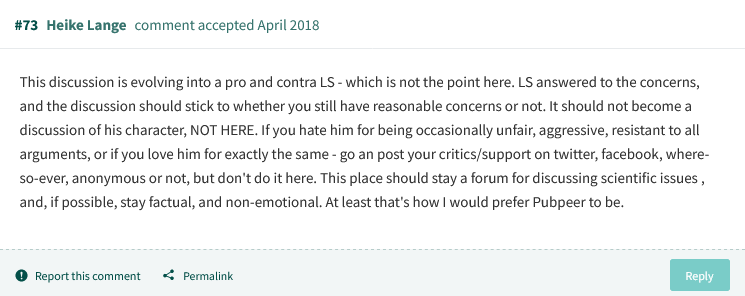
Then, a certain Macchiarini-fan named Hans-Peter Müller was free to make baseless or simply fabricated claims, which for some reason extended to my PhD thesis. He wrote to the University of Düsseldorf and demanded a revocation of my PhD degree, because my dissertation from 2008 contains this cartoon:
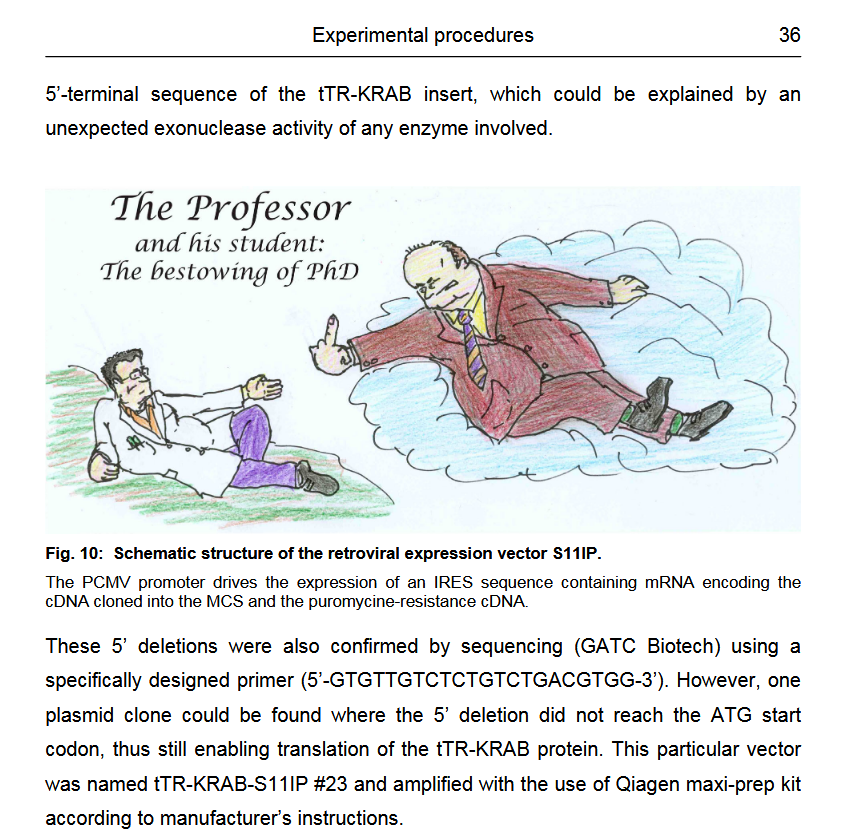
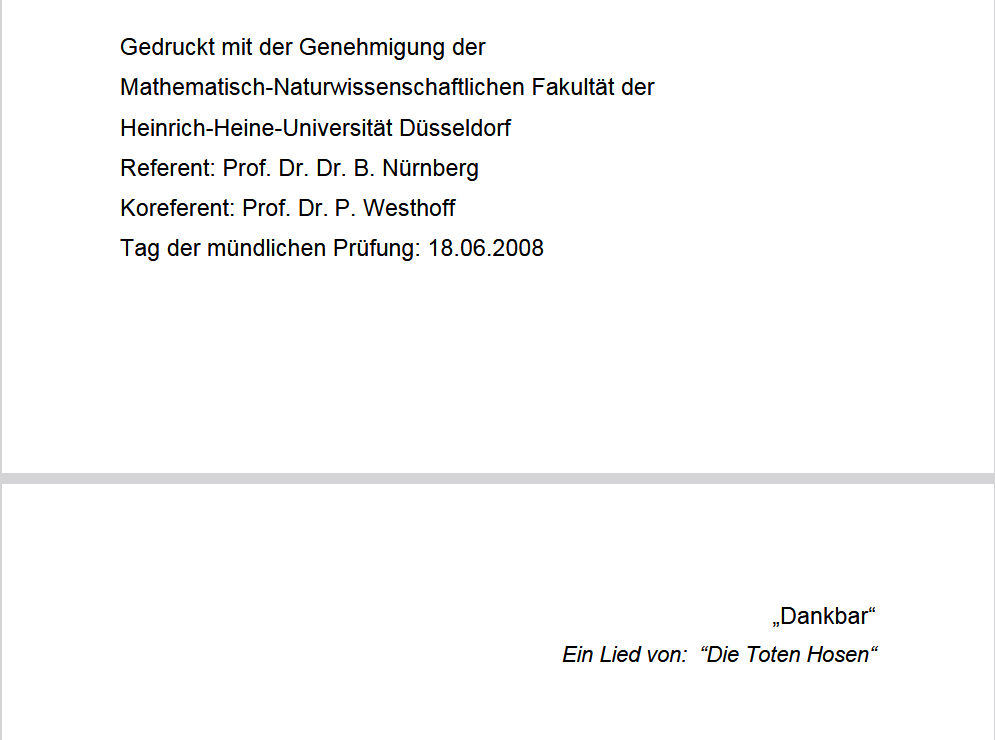
That cartoon was my payback for all the trash I had to take from my Düsseldorf superiors, including their attempt to cancel my PhD defence. I obviously can’t explain how it ended up as Fig 10 (your guess is as good as Nürnberg’s), and I heard rumours that Nürnberg did consider to charge me with document forgery over this cartoon and ask for had my PhD degree to be revoked. I don’t know if he noticed, but I also prominently referenced a song by a punk-pop band from Düsseldorf, Die Toten Hosen, called “Dankbar“. Read the lyrics and you’ll understand why.
Back then, neither the University of Düsseldorf nor any journal took those PubPeer tirades seriously, because obviously there was no case, no evidence, nowhere. Later on, the American mega-fraudster and antivaxxer Wafik El-Deiry became obsessed with that cartoon in my PhD thesis. He and his “Science Guardians” repeatedly demand on X that the German authorities arrest and jail me, then strip me of my German citizenship and deport me. For this cartoon.


I understand that El–Deiry and his Science Guardians friends wrote to the University of Düsseldorf also, demanding a PhD degree revocation and a public stoning of Schneider. That’s why I think my dissertation must be that university’s most famous one by now.

Wafik El Deiry, the anti-qualified Science Guardian
Both Harvey Risch and Wafik El Deiry are perfectly anti-qualified candidates to lead the National Cancer Institute.
Back in 2018, the PubPeer hunt was on, even PubPeer moderators joined. They first edited my reply to make me look guilty and cornered.

The PubPeer moderators then joined the fray directly, and ordered me to admit my fraud in a separate blog post on my own website:
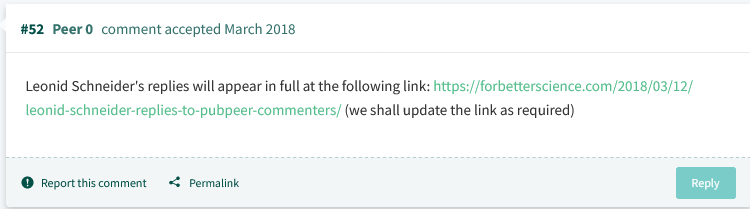
Years passed, I started to believe that this farce, including PubPeer moderators allowing bad-faith allegations and editing my replies into admissions of fraud, was over.
Part 2 – “Send us the raw data for the blots in question”
Now we finally arrived to my Stem Cell Reports paper from Milan, the main subject of this story. It contains most of my 4.5 years of work in the d’Adda di Fagagna lab.
Every major journal rejected it. As editors explained that was because my work suddenly lost novelty – my central finding got scooped. Thing is, d’Adda di Fagagna once invited his German friend K Lenhard Rudolph (then a superstar of ageing research), and showed him my unpublished data. Rudolph ran back to his big institute in Jena, ordered his people to produce similar results, which they of course did in an afternoon, the usual way. Then, Rudolph scooped me with his own paper in Cell, which was later on found to be fraudulent, and Rudolph himself was found guilty of research misconduct by his Leibniz Association and by the German Research Council (DFG), removed as institute director, sanctioned, and became a zombie.

German Leibniz institute director Karl Lenhard Rudolph guilty of misconduct
A major misconduct finding hits German life sciences. Karl Lenhard Rudolph, stem cell and ageing researcher, director of the Fritz-Lippmann-Institute (FLI) of the Leibniz Society, was found guilty of research misconduct by an investigation of the Leibniz Society, in a decision published on June 15th. 11 papers in total were investigated, going back as far as 2001.…
The Cell paper with which Rudolph scooped me, was however found to reproducible because Rudolph must have shown his investigators my own study, published later. That, dear reader, is why fraudulent papers can still be perfectly reliable.
Jianwei Wang , Qian Sun , Yohei Morita , Hong Jiang , Alexander Gross , André Lechel, Kai Hildner, Luis Miguel Guachalla , Anne Gompf, Daniel Hartmann, Axel Schambach, Torsten Wuestefeld , Daniel Dauch, Hubert Schrezenmeier , Wolf-Karsten Hofmann , Hiromitsu Nakauchi , Zhenyu Ju , Hans A. Kestler, Lars Zender, K. Lenhard Rudolph A differentiation checkpoint limits hematopoietic stem cell self-renewal in response to DNA damage Cell (2012) doi: 10.1016/j.cell.2012.01.040

“When flipped horizontally, the actin controls in Figure 3C appear very similar to the controls in Figure 4C.”
An Erratum was issued in 2014, declaring the raw data from two years ago to be already unavailable, and: “The magnitude and impact of this error do not affect the published conclusions“. These are Rudolph’s papers found to contain fraud, one of them (Meena et al 2015) was coauthored with d’Adda di Fagagna and received a massive Erratum in 2017, which was “based on the results of an investigation by the Leibniz Association” and did “not affect the original conclusions presented“:
Despite fraud findings and a PubPeer record, Rudolph escaped all retractions, likely because he was protected by his former mentor Michael Manns, President of Hannover Medical School (MHH). Manns is now deceased. read my obituary in November 2025 Shorts, which also includes Rudolph’s papers.
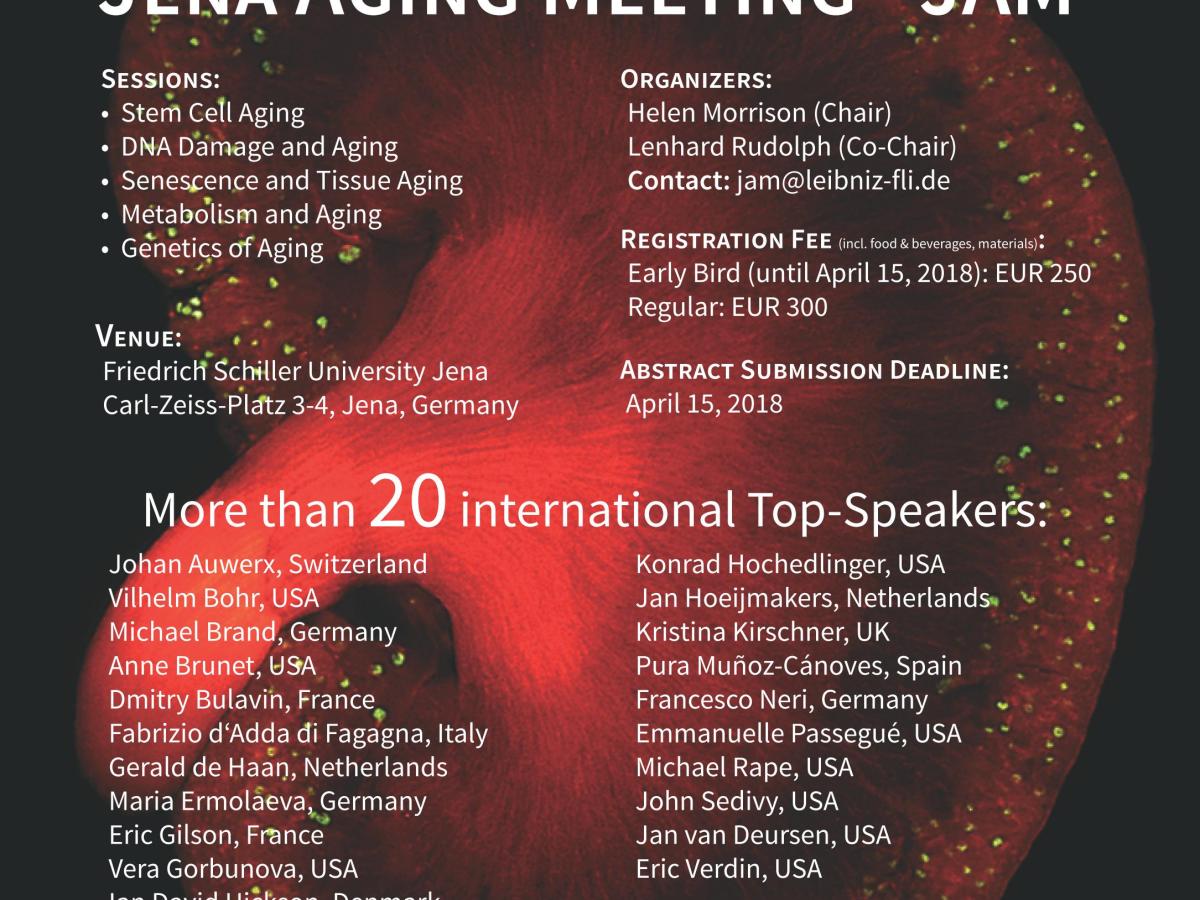
Karl Lenhard Rudolph barred from DFG funding for 2 years, as supportive peers flock to his conference
More bad news for Karl Lenhard Rudolph: misconduct findings and 2 year funding ban from DFG. Good news: the international scientific community stands to him in solidarity, no retractions, even some corrections won’t be implemented.
Now, let’s get to my own paper which may have saved Rudolph from retractions. Because of Rudolph’s scoop (and possibly some enemies d’Adda di Fagagna may have made), it was rejected everywhere, until I submitted it to the brand-new journal Stem Cell Reports, which at that time was just announced and hasn’t published a single issue yet. I liked that it was issued by the International Society for Stem Cell Research (ISSCR) and Cell Press, but d’Adda di Fagagna was, to put it mildly, not happy about my choice of venue, which didn’t even have an impact factor yet.
My paper was first criticised on PubPeer in November 2022, I wrote about that in January 2023 Shorts:
Leonid Schneider , Serena Pellegatta , Rebecca Favaro , Federica Pisati , Paola Roncaglia , Giuseppe Testa , Silvia K. Nicolis , Gaetano Finocchiaro , Fabrizio D’Adda Di Fagagna DNA damage in mammalian neural stem cells leads to astrocytic differentiation mediated by BMP2 signaling through JAK-STAT Stem Cell Reports (2013) doi: 10.1016/j.stemcr.2013.06.004
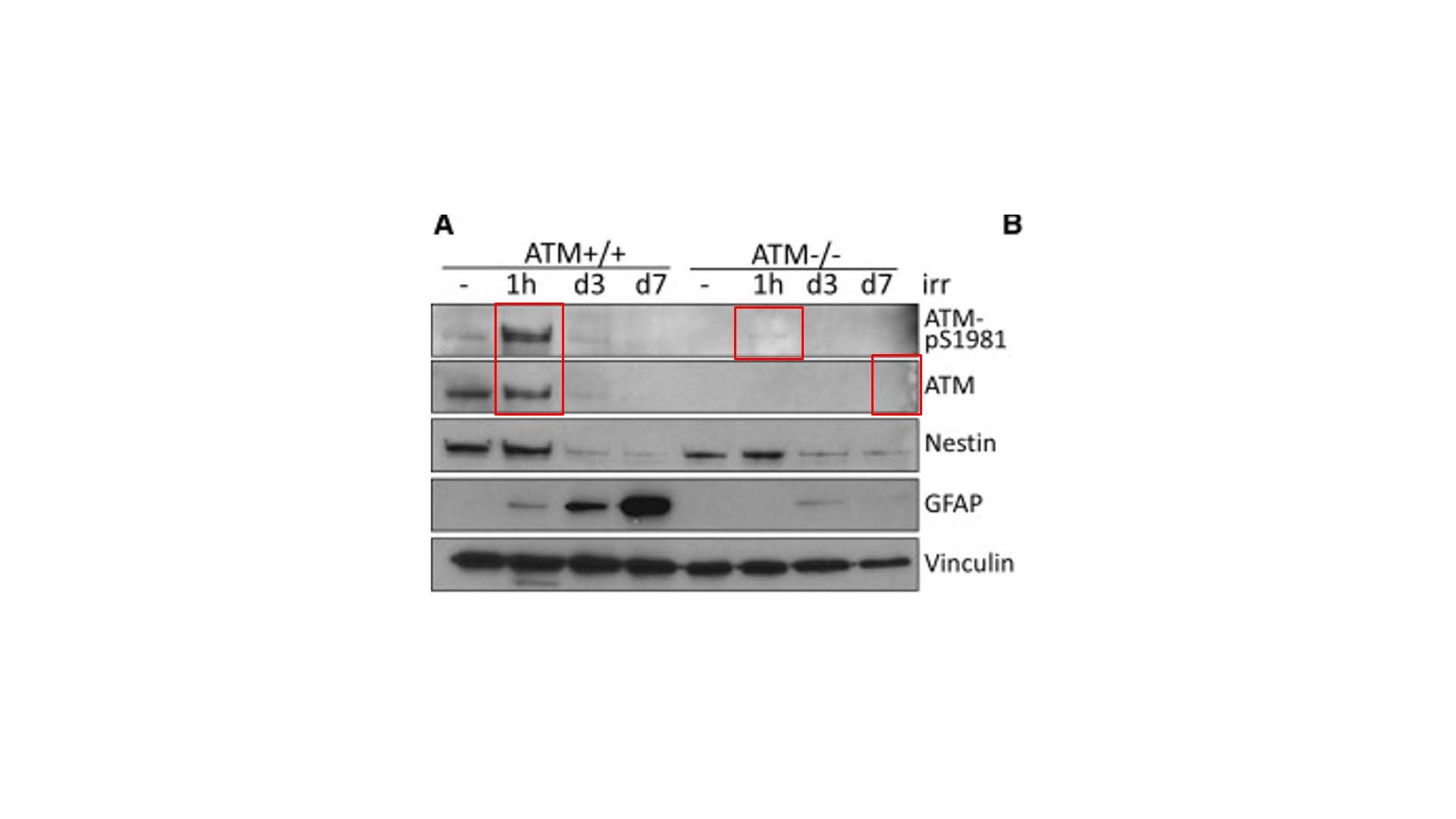
Also, in the same figure, for the ATMpS1981 blot at 1 h in the ATM-/-, the background is considerably different from the rest of the blot. Could the authors provide the raw data?“
I only learned of this PubPeer post when d’Adda di Fagagna wrote that he received this message from the editorial office of Stem Cell Reports (typos journal’s):
“Dear Dr Dadda,
It was brought to our attention that an anonymous comment was made on PubPeer on your Stem Cell Reports article […] The comment refers to some wester blots in figure 5. We as a journal are obliged to follow-up and would like to ask you to kindly provide the raw data for those blots. […]
We thank you for your cooperation and understanding.”
I did that western blot obviously, but I left all the raw data behind in Milan. In fact, I didn’t even have the digital files anymore, the paper was almost 10 years old then and I left Italy in 2012 and science by the end of 2014. But I posted this analysis on PubPeer:

By the way, you may have noticed my comment about a faint phospho-ATM band in the ATM knockout cells. Those were provided to me by Yang Xu, a former mentee of the late Nobelist David Baltimore, (Xu & Baltimore 1996). The cells may be only an incomplete knock-out, as I suspected already back in Italy. But absolutely nobody ever cared about that.

Abderrahmane Kaidi leaves Bristol after misconduct findings
University of Bristol mysteriously lost its senior lecturer, Abderrahmane Kaidi. His institutional website was wiped out in August 2018. I obtained an internal email which lifts the mystery: Kaidi was namely found guilty of “having fabricated research data”, and resigned with “immediate effect”. Affected by research misconduct are also publications from Kaidi’s postdoc period with Stephen…
Obviously there were no image manipulations, despite the accusing red boxes. I wrote to the journal. Yvonne Fischer, the managing editor of Stem Cell Reports, replied to me:
“First, let me assure you that we have indeed carefully assessed the figure in question before sending our inquiry. From looking at the figure at its current resolution and without having the raw data available, it is in fact not entirely clear if the bands in question represent the same protein band, probed with the same antibody, or with different antibodies as you seem to suggest (one for phospho-ATM and one for ATM). Your explanations in this respect are most helpful, especially since the methods in the paper do not explicitly mention that western blot membranes were stripped and re-probed. Regarding the background issue, I can see that the one band in the phospho-ATM blot (red box) has a lower background than the rest of the bands on this blot, while the background on the ATM blot is homogeneous. Could you give some explanation to this considering that both blots were obtained with the same membrane (probed with different antibodies)?
As I mentioned in my previous email, we as a journal are obliged to follow up on allegations like this (of which we fortunately don’t see many at our office) and appreciate your help in this matter.“
I replied and explained to Fischer that there is no difference in background in those ATM bands. I also explained that the figure has only one loading control (vinculin), and to every scientist and qualified editor it should be clear that all these panels stem from the same western blot membrane. If they were not, each of them would have its own loading control, and I referred to Nature guidelines. It seems this practice was foreign to Stem Cell Reports, who must have been accepting western blot data without loading controls all these years.

Pier Paolo and Pier Giuseppe, the titans of IFOM-IEO
Meet two grand cancer researchers from Milan: Pier Paolo Di Fiore and Pier Giuseppe Pelicci. Then decide if you want to give them your tax and charity money.
I also explained that I do not own the raw data, but the publisher does, because the X-ray film scans of the western blots are embedded in the PowerPoint figures I uploaded back in 2013. I also suggested that Fischer asks Elsevier for technical assistance in analysing the figure instead of relying on red boxes someone painted. Fischer replied:
“we indeed take research integrity seriously and rely on the strong expertise of our editors and reviewers, all accomplished scientists and experts in their field as you will appreciate.
Regarding your specific question about loading control for western blots, we fully agree with the Nature guidelines you are citing, requiring that “Loading controls (e.g. GAPDH, actin) must be run on the same blot. When sample processing controls are run on different gels, they must be identified as such in the figure legend. ”
Your are correct in stating that Elsevier stores image files from papers published 10 years back, but this does not include the raw data which was never provided as far as I am aware.
I would also like to repeat that this procedures is part of our editorial routine and obligation, we do not at this point confirm or dismiss any allegations expressed on PubPeer. To conclude this discussion, it would be most helpful if you could send us the raw data for the blots in question, including methods for probing and re-probing of membranes.”
Thus, Fischer admitted to have no evidence of suspect data irregularities but demanded the raw data anyway, or else. She also refused to consult any image integrity experts, but relied on verdicts of some academic editorial board members (who? Konrad Hochedlinger? Thomas Rando? George Daley perchance?)
Losing research ethics and mental health in Daley lab
A former Harvard postdoc from the lab of George Q Daley tells his story.
Fischer also refused not only to look into those PowerPoint slides, but even to forward them to me so I can find the gel scans myself. Under pressure from journal, my former PI from Milan asked me to help him find raw data, and I told him how to do it (uncrop the gel images in PowerPoint, see gel number, search for numbered X-ray film in a folder).
On 20 January 2023, the journal’s Editor-in-Chief Martin Pera, professor at The Jackson Laboratory in USA, informed me (typos his):
“We obtained images of the original blots from your former lab head Dr. Fagaggna and we conclude no further action is required at this point. I am sorry if this matter caused you any distress but we are obliged to investigate public allegations of possible misconduct.“
He did not say the case is closed, and didn’t reply to any of my follow-up emails since. What if the raw data couldn’t be easily found? What then? Did they really plan to retract that paper without any evidence of data manipulation, to take revenge on Schneider? Silence. Well, as you will soon see, now is their second chance.
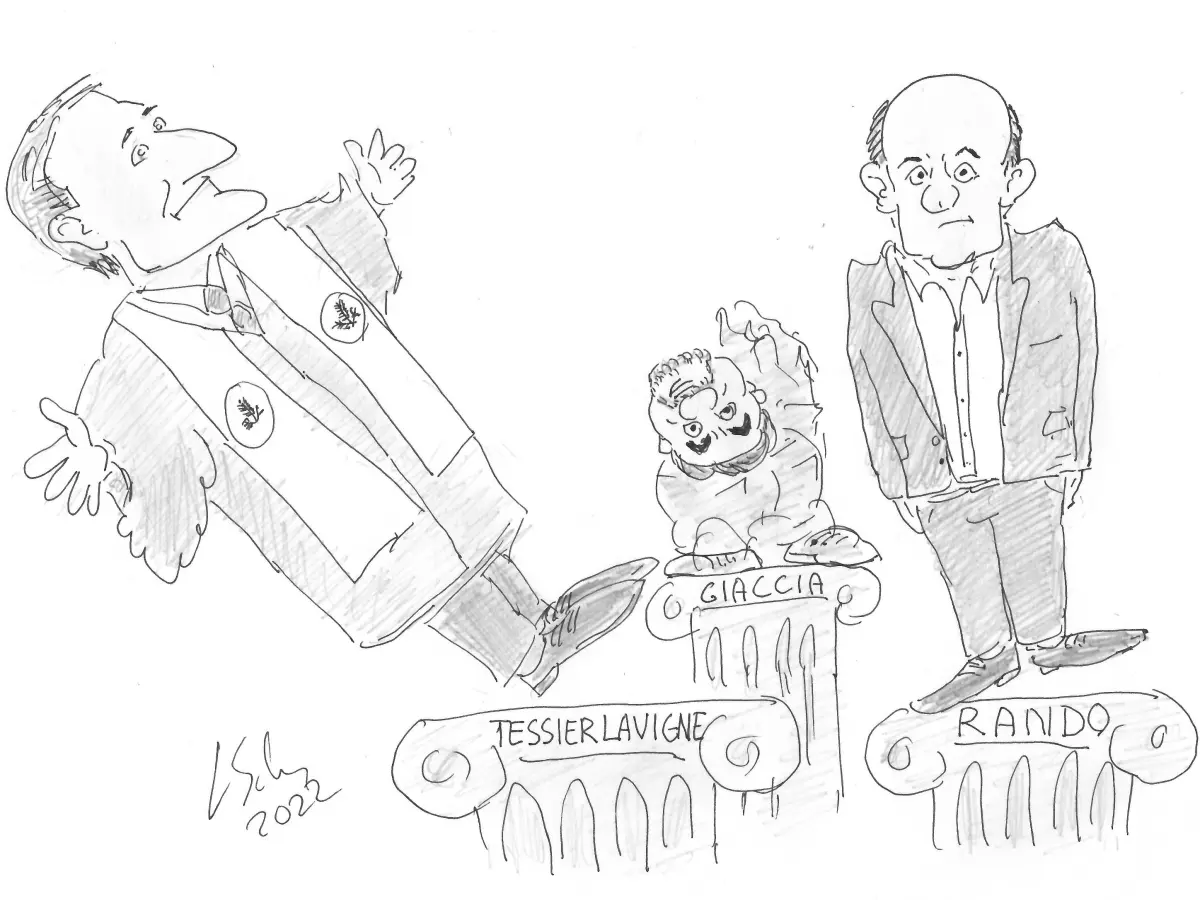
Toppling Giants in Stanford
Everyone is talking about Stanford’s President Marc Tessier-Lavigne now. OK, let’s talk about him, and how Stanford deals with research fraud. And then let’s talk about Thomas Rando.
The irony: I reported to Fischer and Pera some problematic papers in Stem Cell Reports, with clear evidence of duplications. Back in January 2023, Pera told me: “ I confirm that we will be looking into the five other allegations of possible misconduct on Pub Peer that you drew our attention to.” Well, guess what. They only really cared about MY paper. The paper Aminzadeh et al 2019 only got corrected last April, more than three years after I reported it. This was still not corrected:
Seiji Ogawa , Mitsutoshi Yamada, Akihiro Nakamura , Tohru Sugawara , Akari Nakamura , Shoko Miyajima , Yuichirou Harada , Reina Ooka , Ryuichiro Okawa , Jun Miyauchi , Hideki Tsumura , Yasunori Yoshimura , Kenji Miyado , Hidenori Akutsu , Mamoru Tanaka , Akihiro Umezawa , Toshio Hamatani Zscan5b Deficiency Impairs DNA Damage Response and Causes Chromosomal Aberrations during Mitosis Stem Cell Reports (2019) doi10.1016/j.stemcr.2019.05.002

Elisabeth Bik: “Figure 3H. Red boxes: The OCT4 and ACTIN panels look very similar. I realize that these proteins are of similar MW and that this is a re-incubation of the same blot, but the similarities are higher than expected.”
Now we finally get to the fun part.
Part 3 – “Policy does not permit attribution of author responsibilities”
A few days ago, something serious was found in my Stem Cell Reports paper:

Those immunohistochemistry panels in the Fig 7E,G were the only bits in the entire paper where I had no involvement at all. True, I did the cell biology experiments with glioblastoma cells in that Figure 7, and I would be responsible for them. But the mouse experiments with glioblastoma xenografts and the corresponding immunohistochemistry stainings were all done at the lab of a collaborator: Gaetano Finocchiaro of IRCCS Istituto Neurologico Besta in Milan, and his lab members Serena Pellegatta and Federica Pisati. I received from them a final figure panels with beautiful results, and added it to my paper.
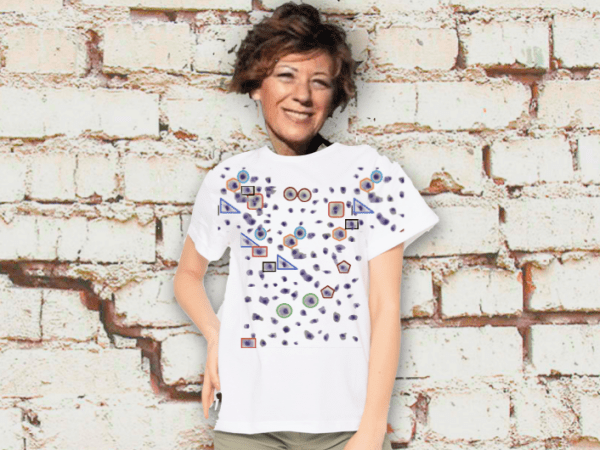
Alfonsina Desiderio and her pathological Bully Boys
Smut Clyde and Clare Francis studied the works of Milanese cancer researchers around Maria Alfonsina Desiderio. There are even ideas for T-shirts!

The irony is: I wanted to split off that glioblastoma data from Figure 7 into a separate small publication, just like I did with two of my other side projects. My Stem Cell Reports paper was actually about murine neural stem cells and how they seemed to differentiate into astrocytes after irradiation, but d’Adda di Fagagna thought one would have better chance publishing the manuscript in a big journal if it had cancer relevance. Well, duh, it didn’t work out, thank yourself and your friend Rudolph.
To explain what happened, I replied on PubPeer, and got moderated. This bit was removed:
“While I did all other experiments, the GBM IHC experiments were done entirely by Gaetano Finocchiaro’s lab. He can explain it, and figure out with Fabrizio d’Adda (who initiated this collaboration) and the publisher what to do about it.“
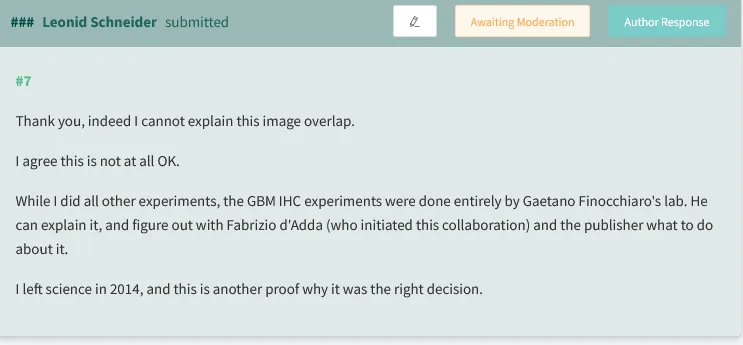

My censored reply now looks like my admission of guilt. Again. I naively hoped my fans among PubPeer moderators moved on and wouldn’t do this anymore… Also, their statement “PubPeer policy does not permit attribution of author responsibilities unless supported by publicly available information“, is not exactly true: there are countless instances on PubPeer where authors reply to direct readers to specific co-authors who did the figure in question, or to simply blame their first authors or other named students. For example:
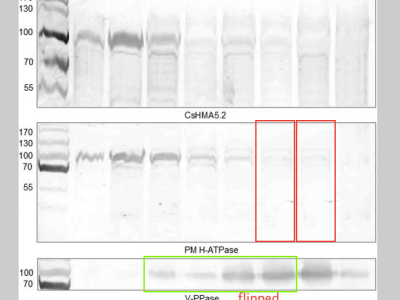
Magdalena Migocka blames students for impending retractions
Magdalena Migocka is a shooting star of plant sciences in Poland. Now she will have to retract at least two papers, for which she blames her incompetent students.
So what was I to do? I did what I always do when encountering a suspicious research study.
I asked my sleuth colleagues to have a look into other papers by my former collaborators, Finocchiaro and Pellegatta. Because they already had something else on PubPeer. This was found by the pseudonymous sleuth Claire Francis, years ago:

Fig 8

Fig 1E
Another Finocchiaro-coauthored paper, Behnan et al Cell Death & Disease 2017, inappropriately reused data from another study published in parallel (Behnan et al Oncogene 2017), but the culprits are likely the only common authors: Jinan Behnan, now assistant professor at the Albert Einstein College of Medicine in USA, and Biljana Stangeland, now biotech entrepreneur in Norway.
Returning to Finocchiaro and Pellegata, this was previously found by Elisabeth Bik:
Dean Nehama , Natalia Di Ianni , Silvia Musio , Hongwei Du , Monica Patané , Bianca Pollo , Gaetano Finocchiaro , James J.H. Park , Denise E. Dunn , Drake S. Edwards , Jeffrey S. Damrauer , Hannah Hudson , Scott R. Floyd , Soldano Ferrone , Barbara Savoldo , Serena Pellegatta, Gianpietro Dotti B7-H3-redirected chimeric antigen receptor T cells target glioblastoma and neurospheres EBioMedicine (2019) doi: 10.1016/j.ebiom.2019.08.030

But look what Claire Francis found now, the problem appears very similar to what was discovered in my own paper:
Marica Eoli , Cristina Corbetta , Elena Anghileri , Natalia Di Ianni , Micaela Milani , Valeria Cuccarini , Silvia Musio , Rosina Paterra , Simona Frigerio , Sara Nava , Daniela Lisini , Sara Pessina , Luisa Maddaloni , Raffaella Lombardi , Maria Tardini , Paolo Ferroli , Francesco DiMeco , Maria Grazia Bruzzone , Carlo Antozzi , Bianca Pollo , Gaetano Finocchiaro, Serena Pellegatta Expansion of effector and memory T cells is associated with increased survival in recurrent glioblastomas treated with dendritic cell immunotherapy Neuro-Oncology Advances (2019) doi: 10.1093/noajnl/vdz022
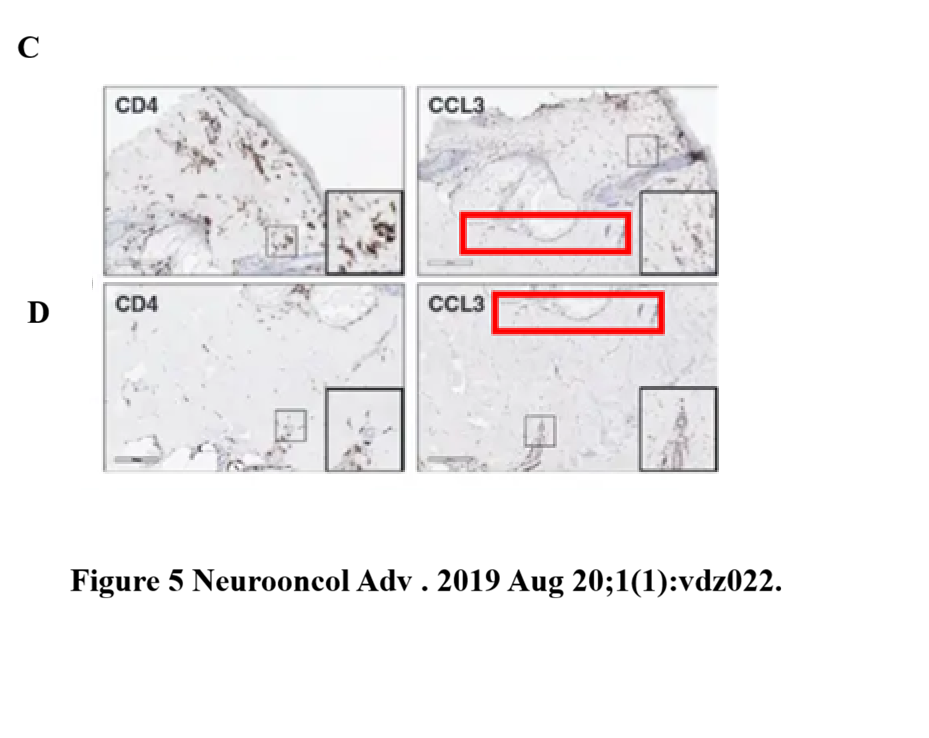
What funny coincidence, no? This overlap is also similar to what was found in my own paper:
Serena Pellegatta , Pietro Luigi Poliani , Elena Stucchi , Daniela Corno , Chiara Agnese Colombo , Francesca Orzan , Maria Ravanini , Gaetano Finocchiaro Intra-tumoral dendritic cells increase efficacy of peripheral vaccination by modulation of glioma microenvironment Neuro-Oncology (2010) doi: 10.1093/neuonc/nop024

Another successful collaboration from the Finocchiaro lab:
Silvia Galardi , Mauro Savino , Fiorella Scagnoli , Serena Pellegatta , Federica Pisati , Federico Zambelli , Barbara Illi , Daniela Annibali , Sara Beji , Elisa Orecchini , Maria Adele Alberelli , Clara Apicella , Rosaria Anna Fontanella , Alessandro Michienzi , Gaetano Finocchiaro , Maria Giulia Farace , Giulio Pavesi , Silvia Anna Ciafrè , Sergio Nasi Resetting cancer stem cell regulatory nodes upon MYC inhibition The EMBO Reports (2016) doi: 10.15252/embr.201541489

different cell lines (different samples even). Also, one band in the GAPDH panels appears to migrate w.r.t. the EGFR and ZEB1 bands.The GAPDH panels are different.”
And again Finocchiaro and Pellegata, again western blots:
Francesca De Bacco , Francesca Orzan , Jessica Erriquez , Elena Casanova , Ludovic Barault , Raffaella Albano , Antonio D’Ambrosio , Viola Bigatto , Gigliola Reato , Monica Patanè , Bianca Pollo , Geoffrey Kuesters , Carmine Dell’Aglio , Laura Casorzo , Serena Pellegatta , Gaetano Finocchiaro , Paolo M. Comoglio , Carla Boccaccio ERBB3 overexpression due to miR-205 inactivation confers sensitivity to FGF, metabolic activation, and liability to ERBB3 targeting in glioblastoma Cell Reports (2021) doi: 10.1016/j.celrep.2021.109455
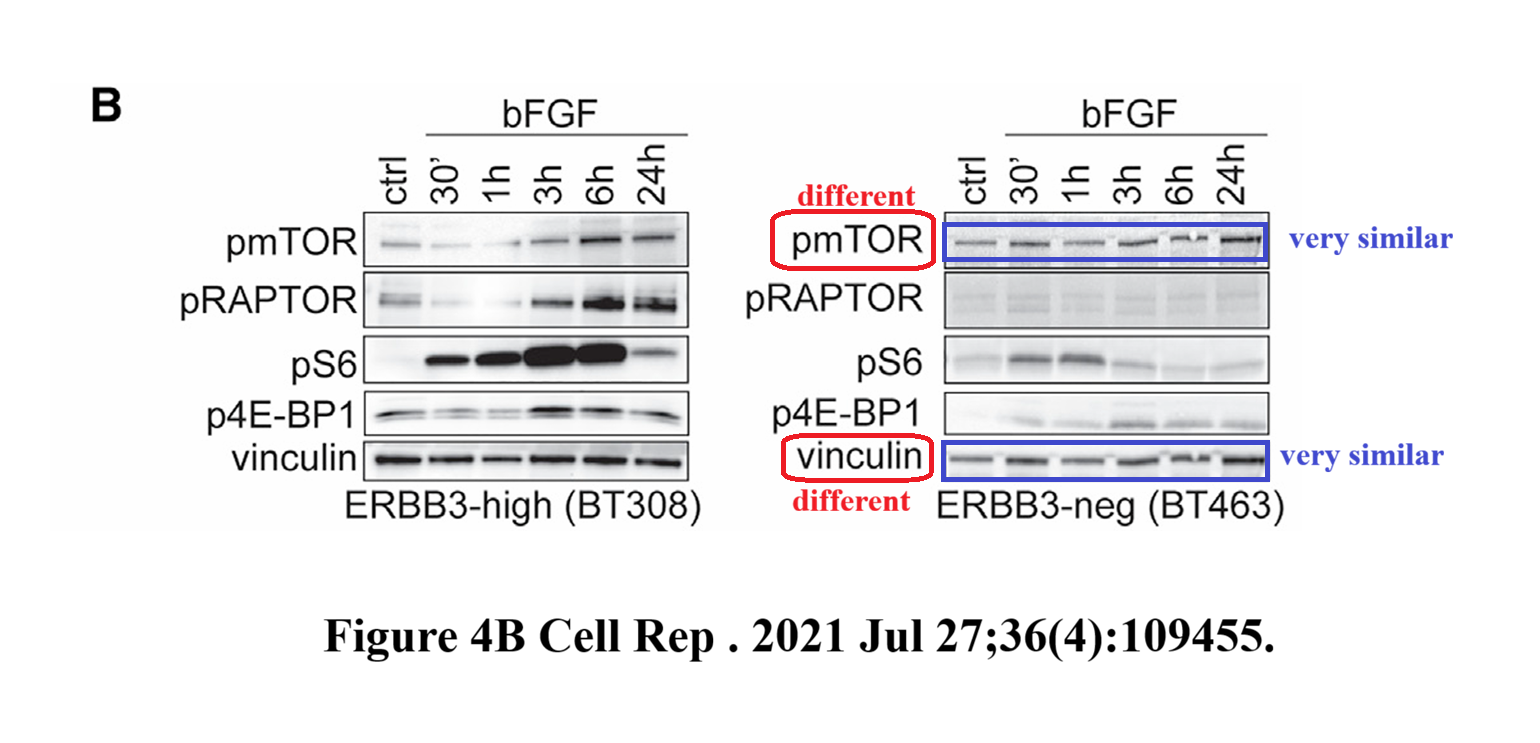
Another sleuth, Aneurus inconstans, also found something:
Antonella De Rosa , Serena Pellegatta, Marco Rossi, Patrizia Tunici, Letizia Magnoni, Maria Carmela Speranza , Federico Malusa , Vincenzo Miragliotta, Elisa Mori , Gaetano Finocchiaro, Annette Bakker A radial glia gene marker, fatty acid binding protein 7 (FABP7), is involved in proliferation and invasion of glioblastoma cells PLOS One (2012) doi: 10.1371/journal.pone.0052113

Aneurus inconstans: “Three GAPDH controls were reused within and across Figures 2B and 3A (boxes of same color), although they are supposed to represent different patients and under different conditions.”
I haven’t heard from Stem Cell Reports or my coauthors yet. Fun fact: one of my other coauthors, Giuseppe Testa, is a honorary editor of Stem Cell Reports.
I don’t know what they plan to do, maybe they intend to issue a correction claiming that Fig 7e and 7g, instead of being the only ones I didn’t make, are actually the only ones I ever contributed to that paper?
Donate!
If you are interested to support my work, you can leave here a small tip of $5. Or several of small tips, just increase the amount as you like (2x=€10; 5x=€25). Your generous patronage of my journalism will be most appreciated!
€5.00


Keep believing in yourself, dear Leonid! Your work is indispensable to the scientific community. As the saying goes: the dogs bark, but the caravan moves on… I don’t always agree with the vocabulary you use :-), but reading your blog every Friday (and even more often lately) is very inspiring and remains an invaluable resource for scientific integrity. Keep it up!
LikeLiked by 4 people
You should see Sholto’s vocabulary…
LikeLike
I totally agree
LikeLike
I am relatively new to this business – just 2 years and 1 month. But I always act under my name, just as Leonid. So retaliation was inevitable. Since January 15 of my papers were targeted on PubPeer, essentially all comments AI-generated. Subsequently comments on 5 of those papers disappeared, according to PubPeer moderator: “this user left a series of comments that violated our guidelines and we removed them”. Since June 3 I received 8 letters of concern from journals. By now 4 investigations have been completed so I can share some of the allegations and their outcomes. In one of those letters we were accused of gel splicing:
“Lanes 1-9 (from the left, excluding the ladder) within the Coomassie stained gel appear to possibly originate from a different membrane than lanes 10-16, although they are described as representing the same experiment.”
In these 2 gels (which we never disguised as 1) we simply presented 16 fractions from protein purification + marker. Never mind that I have never used nor seen an SDS-PAGE gel with more than 15 lanes. Note also the word “membrane” to denote an SDS-PAGE gel, which we consider a tortured phrase generated by a stupid LLM that analyzed our paper. This case was closed last Friday with the following decision:
“The journal’s Editors have assessed the author response, and have concluded that all the concerns raised against this article have been sufficiently addressed, and that the scientific conclusions of the article remain intact.
As such, the Editors have determined that no further action is warranted on this case.”
Similar decision on 1 more paper, 2 others resulted in publishing minor corrections – Asp instead of Asn, DDT instead of DTT (most likely Word’s automatic correction, because it only new DDT and not DTT and I didn’t catch it). Three more under investigation, for the last one I am just now preparing a response. All these “concerns” showed complete lack of understanding of science described in these papers but what can you expect from AI? My enemies are working hard. Interestingly, last 2 letters of concern I received within 48 hours after these comments appeared on PubPeer. Can you guess who the main figure behind these actions is?
PubPeer – Conductive hydrogels based on tragacanth and silk fibroin co…
LikeLiked by 1 person
This makes me propose an article on Retraction Watch how Mo Reza Saeb exposed a Polish fraudster!
LikeLike
I’ve noticed a double standard at PubPeer for quite some time. I post there only occasionally and anonymously. I have submitted comments very similar to very prolific PP contributors, only to have the mods there reject them for all sorts of trivial reasons. The last time I had trouble (a series of four near duplicate publications) I finally objected to PP’s objections, expressing my frustration with their nitpicking and pointing out that any one of the many examples I gave was enough to prove the duplication. Funny, they gave up and posted it all after I complained. It also seems (I may very well be wrong) that some contributors have their posts go up very quickly, whereas mine take 2-3 days to appear even if they get by the mods without revision or objection.
LikeLike
Well, I wasn’t even allowed to post a retraction notice once…
LikeLiked by 1 person
2-3 days is actually quite fast. Mine take 5-6 days. But then I am a certified fraudster with 10 PubPeer records.
LikeLiked by 1 person
So why are we still using PubPeer? It seems pretty clear that something strange is going with the moderation, which by they way, is also completely opaque with no clear recourse.
Also: Brandon Stell makes ~40k from the website each year. I wonder if that’s common knowledge?
https://projects.propublica.org/nonprofits/organizations/474729597
LikeLiked by 1 person
PubPeer’s role can’t be overstated. It revolutionised science more than anything else recently.
So far, it works rather well, most of my comments get approved.
It is of course possible that PubPeer breaks and then we have nothing left and no alternative.
Maybe they will let AI do the moderation. Maybe they already do.
Maybe they will listen to their director Ivan Oransky and ban you all, so that only certified forensic meta-scientists and sleuths in residence can comment.
LikeLiked by 2 people
I doubt Oransky has that sort of influence at PubPeer. When I comment on Retraction Watch it goes up right away. PubPeer is way too slow to allow for the sort of conversations it is supposed to encourage.
LikeLike
I have commented on pubpeer for several years now. In the beginning I had to wait upto a week for comments to appear, and several got moderated. Some moderations definitely made sense but many didn’t. After having commented for about a year, providing a few hundred comments, I one day suddenly realized that my comments appeared directly. Apparently I had been whitelisted! No idea how they choose who to white-list. My record was far from stellar. But I have remained whitelisted ever since, and also reposted many of my previously moderated comments without any backlash. So as has already been mentioned above, it’s quite unclear how pubpeer actually functions, but it has become indispensable
LikeLike
What’s your PubPeer name?
LikeLike
A little brown moth: Abrostola urentis
LikeLike
Found your reply in spam, sorry for the delay.
Great work!
https://pubpeer.com/search?q=abrostola
LikeLike
Whitelisting usually happens after about 100 relatively sensible comments. Sometimes I would like to go through moderation so I have a chance of going on the front page but I really dislike how unpredictable the wait time is so rarely do.
LikeLike
Well, after over 100 relatively sensible comments, Carabus maleki has started having its comments heavily moderated, with some outright non-understandable rejections. I guess one criterion for whitelisting is not going after European drunken narcissists with strong connections to governmental and EU officials.
LikeLike
This just in:
“Dear Drs Schneider and Dadda,
It was brought to our attention that there is an image duplication in your Stem Cell Reports paper DNA Damage in Mammalian Neural Stem Cells Leads to Astrocytic Differentiation Mediated by BMP2 Signaling through JAK-STAT – PMC. doi: 10.1016/j.stemcr.2013.06.004
This concerns Figure 7, where panels E and G show partially overlapping images for the GFAP stained samples in the irradiated groups, referring to different timepoints.
This duplication will require a correction. We ask you to send us a corrected Figure 7 as well as the original image files at your earliest convenience. I addition to that, we ask you to send us a short note, explaining the error and how it has been addressed. This note will be published together with the corrected figure.
Best wishes
Yvonne
Yvonne Fischer, PhD
Managing Editor, Stem Cell Reports”
LikeLiked by 1 person
How strange. Cell Press/Elsevier certainly don’t seem so proactive when I email them 😂
LikeLiked by 1 person
50% of the time I don’t even get an autoresponder reply from Elsevier. Well, it seems that 1000 years old Leonid’s papers are such a threat to scientific record that they have to be addressed immediatelly, while stuff like that:
https://pubpeer.com/publications/00F44CC019359D884953B481DAD7E2
can just sit there 😛
LikeLike
Oh wow, what a set of authors. I am so proud that even results of my Master’s thesis recently caught the attention of the scientific community 35 years after they were published (Leonid was still in the early grades of his elementary school then).
PubPeer – Herbicidal activity of derivatives of 9‐aminofluoren‐9‐ylpho…
LikeLike
I was already 13-14 in 1991, I am just that youthful looking, Hubert!
When will they start examining your school homework?
LikeLike
The work you’ve done is very valuable. You helped us to see the true face of hundreds of academic fraudsters. The time and energy you’ve devoted to this blog are very important. We’ve learned so much from you. Seeing so many like-minded people here has really reinforced my belief that we must speak out against (and never give up on) those who hide behind academic staff and use the funds they’ve secured to carry out unreliable, substandard, and often shady activities. Don’t let what they say get to you. They’re trying to punish you for making them uncomfortable.
LikeLiked by 1 person