

Schneider Shorts of 6 November 2026 – sexual harassment allegations in German university clinic, bad science in Switzerland, an uncorrected paper in USA, retractions for two naughty editors, friends of Iranian papermills, Brazilian role models, and Italian cancer healers.
Table of Discontent
Science Elites
- Climate of abuse of power and misogyny – German professor’s lawyer warns against reading a newspaper
- We inadvertently used the same representative image – why it is no loss that Jacques-Antoine Haefliger retired
- We will work to fix this – Kelly Jordan-Sciutto forgot to correct a paper
Retraction Watchdogging
- The authors state that they were unaware – Shane Snyder edited his own papers
- Unacknowledged overlaps with eight other published articles – Magali Cucciarini-Madry and her papermill friends suffer a setback
- A toxic cyberbully mistaken as a science educator – Helena Nader loses two papers, saves one
- Advanced skills in imaging analysis in the fight against cancer – Sebastiano Ando and Calabria friends are just trying to cure cancer
- A direct consequence of the potent applied current – why Kostya Ostrikov had to stop playing with russians and Iranians
Science Elites
Climate of abuse of power and misogyny
In Germany, another case of alleged sexual harassment at a university hospital.
The newspaper Süddeutsche Zeitung (SZ) reported on 2 October 2026 about four young women training as residents in the clinic for neurosurgery of the University of Magdeburg. The victims received assumed names, while the alleged perpetrator is not named, as it is common in Germany. He is described as “the current deputy clinic director” and his name is abbreviated as “N.”. Translated:
“”Luisa Weber met the senior physician N for the first time in the neurosurgery department at Magdeburg University Hospital in autumn 2020. At that time she was still a medical student, […] N. called her to his office several times a week and sometimes told her about his private life for several hours, commented on colleagues or fantasized about other employees’ sexual relationships. He repeatedly commented on her appearance and asked questions about her private and sexual life. He asked her to show all parts of her body with tattoos or piercings, such as her belly button. She once showed him two tattoos. Otherwise she did not comply with his requests. […]
She and other employees also temporarily complied with N’s requests to “send him ‘funny memes’ with explicitly sexual content” – “out of fear of negative professional consequences.” She only dared to tell N. once that she found his behavior inappropriate. […] she and two colleagues decided to file an official complaint. In an interview with the SZ, one of them reported that N. had repeatedly touched her breast in the operating room. The surgeon was so intrusive “that I had to concentrate on physically distancing myself rather than on the procedure. […]
The third colleague reports that N. wanted to talk about her sex life for hours in his office. He once said that you could tell she hadn’t had sex in a while. He also described to her, without being asked, what he found particularly arousing about sexual contact with women.”
The accused perpetrator is, according to SZ, “the current deputy clinic director” of the clinic for neurosurgery at Magdeburg University Hospital. Here is the clinic’s current website:
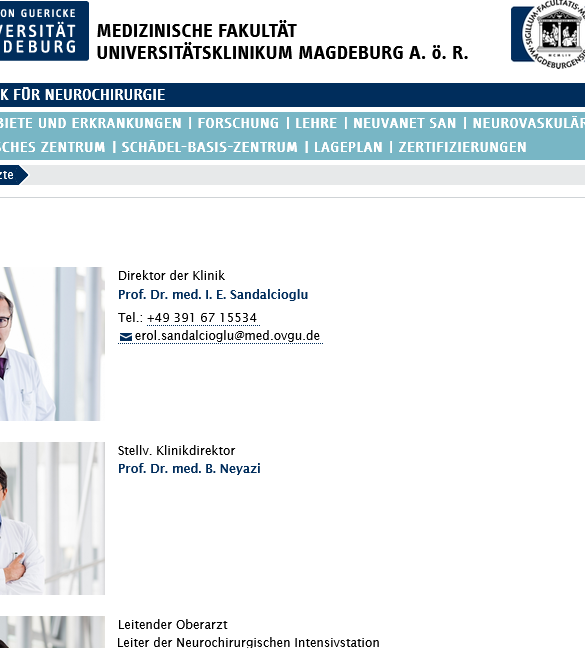
The listed deputy director is Belal Neyazi, whose research lab lists currently next to him a young female assistant investigator and at least 10 doctorate students.
In October 2025, “Luisa Weber” and her two colleagues made a written complaint against N. to the head of neurosurgery, their letter ended “with a request for immediate protective measures“. In parallel, a male colleague complained to the clinic head “about harassment on the part of N.“:
“SZ has documents that suggest that N. – former doctoral supervisor of the assistant doctor in question – passed off part of his scientific work as his own. The doctor has now contacted the university to request an investigation into the incidents. The doctor describes that he initially got along well with N. However, he tried more and more often to take over successful work for himself. […] the harassment from N. became so severe that a normal everyday working life was hardly possible for him.”
The clinic head, described only as “S.”, then “arranged for the three women a conversation with the equal opportunities officer of the medical faculty“. And then the victims faced retaliation:
“However, no protective measures were taken by the clinic management. On the contrary: A little later, a new rotation plan was issued in neurosurgery, which excluded Luisa Weber and her male colleagues from daily ward and surgery operations – and thus from many activities that are relevant to specialist training. […]
On 13 November 2025, clinic director S. informs all employees of his clinic that the three complainants, the male colleague and N. will be excluded from ongoing clinic operations. Those affected did not receive a written notification about this. However, the SZ has a letter from S. to the human resources department informing them of the suspension. S. encloses minutes of conversations with his letter, according to which N. rejects all allegations made against him. This is a “targeted campaign” against him.”
The three women then “contacted the university’s staff council, the clinic board, the compliance department and the equal opportunities officer of the medical faculty and the university.” In December 2025, the women were asked to submit their allegations for an investigation, which ended already in February 2026, because the allegations were “not sufficiently substantiated“. And then:
“Shortly afterwards, N. is back in the operating room – and making a career: a little later, the university’s medical faculty awarded him the honorary title of “adjunct professor”. At the beginning of 2026 he will even be promoted to deputy clinic director.”
As it happens, there’s university’s announcement from 21 January 2026 about Neyazi being awarded the title of adjunct professor for his “special achievements in research and teaching“.
Other wintesses reported “a climate of abuse of power and misogyny in neurosurgery in Magdeburg“, a former resident “was excluded from operations and other activities long after her child was born“. They complain that clinic head “S. in particular conveys the feeling that as a woman and mother you have no place in neurosurgery.”
The website lists Erol Sandalcioglu as director of the clinic for neurosurgery in Magdeburg. He didn’t reply to my email. In 2021, he and Neyazi were celebrated by their university for saving a patient. The University of Magdeburg sent me this message on 6 October 2026, translated:
“Magdeburg University Medical Center takes reports of possible misconduct very seriously. In order to ensure a comprehensive, independent and open-ended clarification of the underlying facts, we have initiated an examination of the events by an external law firm.
This review is currently ongoing.”
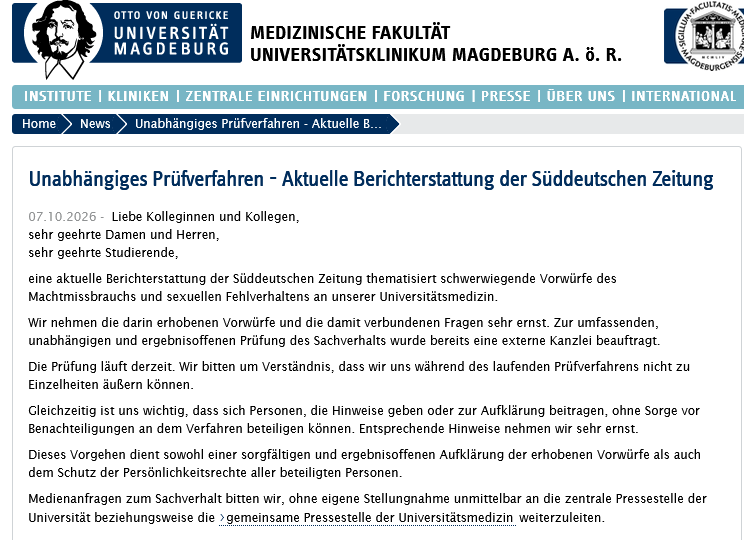
On 7 October 2026, the university issued the same in a public statement:
Also Neyazi’s lawyer of the law firm Markus Kompa from Cologne replied to to me on 6 October 2026, and even provided a statement from Neyazi, in English even:
“The article in the *Süddeutsche* is completely without basis and also violates the strict rules governing permissible reporting on allegations. I recommend that you wait and see how the situation develops under press law over the next few days.
A formal warning or even an interim injunction takes time to process. Before you accept any of the claims made in the report, you should be aware that the statements made by the junior doctors do not correspond to the facts. There was already documented evidence that this group of individuals intended to defame and damage reputations. The allegations also proved to be unsubstantiated during the compliance investigation. It should therefore be in your own best interests to wait and see how things develop.
Attached is the statement:“I categorically reject the allegations made against me. An independent compliance commission has already cleared me of all suspicions. Now, former colleagues are attempting to launch a smear campaign with new, fabricated allegations. As an employee of a public hospital, I have only limited opportunities to speak to the media myself. Especially not regarding details of employment law.
The false allegations made arose as a result of several critical discussions with the four individuals. Their failure to deal objectively with professional criticism has apparently led them to launch a campaign against me.
I have decided to file a criminal complaint against this group of individuals. At the same time, as a scientist, I welcome the fact that an independent commission is reviewing the events a second time. I will cooperate fully with the commission and actively support the investigation into the allegations.””
The lawyer then shared with me a cease-and-desist letter he sent to SZ, demanding the removal of the article by 8 October 2026. In his follow-up emails, he kept warning me not to touch this story. But the SZ article is still online, apparently unchanged.
We inadvertently used the same representative image
We now go to Switzerland. In 2023, Jacques-Antoine Haefliger retired aged 64 as emeritus associate professor of medicine at the Lausanne University Hospital (CHUV). His PhD mentor was the great Swiss immunologist Jürg Tschopp, who died in 2011 aged merely 60.
We don’t know what kind of science young Haefliger did in Tschopp’s lab, but we can see what kind of science older Haefliger did in his own lab. Thanks to some sleuthing by Claire Francis.
Sabine Le Gurun , David Martin , Andrea Formenton , Pierre Maechler , Dorothée Caille , Gérard Waeber , Paolo Meda , Jacques-Antoine Haefliger Connexin-36 Contributes to Control Function of Insulin-producing Cells Journal of Biological Chemistry (2003) doi: 10.1074/jbc.m212382200

And this gel is also puzzling, again we see Haefliger’s close collaborator and CHUV professor and Haefliger’s Head of Department, Gerard Waeber:
Sébastien Déglise , David Martin , Hervé Probst , François Saucy , Daniel Hayoz , Gérard Waeber , Pascal Nicod , Hans-Beat Ris , Jean-Marc Corpataux , Jacques-Antoine Haefliger Increased connexin43 expression in human saphenous veins in culture is associated with intimal hyperplasia Journal of Vascular Surgery (2005) doi: 10.1016/j.jvs.2005.02.036

Bad western blot and bad immunofluorescence, we meet again Haefliger’s regular collaborator Paolo Meda, professor at University of Geneva:
Florian Alonso , Nathalie Krattinger , Lucia Mazzolai , Alexander Simon , Gérard Waeber , Paolo Meda , Jacques-Antoine Haefliger An angiotensin II- and NF-kappaB-dependent mechanism increases connexin 43 in murine arteries targeted by renin-dependent hypertension Cardiovascular Research (2010) doi: 10.1093/cvr/cvq031


And now, Haefliger as first author, Meda as last:
Jacques-Antoine Haefliger , Pierre Tissières , Thomas Tawadros , Andrea Formenton , Jean-Louis Bény , Pascal Nicod , Peter Frey , Paolo Meda Connexins 43 and 26 are differentially increased after rat bladder outlet obstruction Experimental Cell Research (2002) doi: 10.1006/excr.2001.5465

There are also these two papers by Haefliger and his wife and fellow CHUV researcher, Denise Nardelli-Haefliger, an image shared in studies eight years apart:
- Karthik Sathiyanadan , Florian Alonso , Sonia Domingos-Pereira , Tania Santoro , Lauriane Hamard , Valérie Cesson , Paolo Meda , Denise Nardelli-Haefliger , Jacques-Antoine Haefliger Targeting Endothelial Connexin37 Reduces Angiogenesis and Decreases Tumor Growth International Journal of Molecular Sciences (2022) doi: 10.3390/ijms23062930
- Florian Alonso , Sonia Domingos-Pereira , Loïc Le Gal , Laurent Derré , Paolo Meda , Patrice Jichlinski , Denise Nardelli-Haefliger , Jacques-Antoine Haefliger Targeting endothelial connexin40 inhibits tumor growth by reducing angiogenesis and improving vessel perfusion Oncotarget (2016) doi: 10.18632/oncotarget.7370

On 9 March 2026, MDPI issued a Correction to the 2022 paper:
“In the original publication [1], there was a mistake in Figure 5G as published. In this figure, we inadvertently used the same representative image that had previously been published in Figure 2B of our article [2]. We sincerely apologize for this unintentional error. […] The authors state that the scientific conclusions are unaffected. “
Here however, we mustn’t blame Haefliger, or Waeber, or Meda, but someone else:
David Martin , Florent Allagnat , Emilie Gesina , Dorothee Caille , Asllan Gjinovci , Gerard Waeber , Paolo Meda , Jacques-Antoine Haefliger Specific Silencing of the REST Target Genes in Insulin-Secreting Cells Uncovers Their Participation in Beta Cell Survival PLOS One (2012) doi: 10.1371/journal.pone.0045844

This is the older paper, the only common author is Haefliger’s mentee Florent Allagnat, now Head Of Research at Department of Vascular Surgery at CHUV:
F Allagnat , D Cunha , F Moore , J M Vanderwinden , D L Eizirik , A K Cardozo Mcl-1 downregulation by pro-inflammatory cytokines and palmitate is an early event contributing to β-cell apoptosis Cell Death & Differentiation (2011) doi: 10.1038/cdd.2010.105


So whom shall we blame for this gel, Haefliger or Allagnat?
D. Martin , F. Allagnat , G. Chaffard , D. Caille , M. Fukuda , R. Regazzi , A. Abderrahmani , G. Waeber , P. Meda , P. Maechler , J.-A. Haefliger Functional significance of repressor element 1 silencing transcription factor (REST) target genes in pancreatic beta cells Diabetologia (2008) doi: 10.1007/s00125-008-0984-1

Fig 5b
This looks like a case of wanting to be first author as part of mid-life crisis at 54, but maybe Haefliger merely wanted to make sure that Allagnat has enough last author papers to get academic tenure:
Jacques-Antoine Haefliger , David Martin , Dimitri Favre , Yannick Petremand , Lucia Mazzolai , Amar Abderrahmani , Paolo Meda , Gérard Waeber , Florent Allagnat Reduction of connexin36 content by ICER-1 contributes to insulin-secreting cells apoptosis induced by oxidized LDL particles PLOS One (2013) doi: 10.1371/journal.pone.0055198

D. Favre , G. Niederhauser , D. Fahmi , V. Plaisance , S. Brajkovic , N. Beeler , F. Allagnat , J. A. Haefliger , R. Regazzi , G. Waeber , A. Abderrahmani Role for inducible cAMP early repressor in promoting pancreatic beta cell dysfunction evoked by oxidative stress in human and rat islets Diabetologia (2011) doi: 10.1007/s00125-011-2165-x
Now we understand why a 58 year old man would want to be first author on this lab research paper – clearly Professor Haefliger wanted to help another mentee:
Jacques-Antoine Haefliger, Florent Allagnat , Lauriane Hamard , Loïc Le Gal , Paolo Meda , Denise Nardelli-Haefliger , Elisabeth Génot , Florian Alons Targeting Cx40 (Connexin40) Expression or Function Reduces Angiogenesis in the Developing Mouse Retina Arteriosclerosis Thrombosis and Vascular Biology (2017) doi: 10.1161/atvbaha.117.310072

“Much more similar than expected for different genotypes.” Fig 2
Allagnat has more on PubPeer, and also his mentor Haefliger has more on PubPeer. Like this collaboration with his CHUV colleagues:
Valérie Plaisance , Guy Niederhauser , Fayçal Azzouz , Vincent Lenain , Jacques-Antoine Haefliger , Gérard Waeber , Amar Abderrahmani The repressor element silencing transcription factor (REST)-mediated transcriptional repression requires the inhibition of Sp1 Journal of Biological Chemistry (2005) doi: 10.1074/jbc.m411825200


The former CHUV researcher Amar Abderrahmani is now professor at the University of Lille in France, and if this university sounds familiar, well, yes, he collaborated there with Sabine Szunerits and her husband Rabah Boukherroub, as you can see on PubPeer. These people always find each other, and their common science was discussed here:

See no evil, speak no evil, hear no evil
Félix Sauvage tells how he blew the whistle on his collaborator: Sabine Szunerits

Haefliger couldn’t be reached by email, error “550 #5.1.0 Address rejected”. Strange, he is supposed to be honorary/emeritus professor.
We will work to fix this
In March 2025, Sholto David, who is a huge fan of the journal Scientific Reports, flagged a paper published there just the year before.

Scientific Reports 2025: A Year in Review
“In this blog I write about papers published by Scientific Reports in 2025, so we could consider it to be a sort of “wrap-up” of highlights and special achievements in the world’s biggest scientific journal™ in 2025.” – Sholto David

It was this study, from the lab of Kelly Jordan-Sciutto, professor at Perelman School of Medicine and Vice Provost for Graduate Education at University of Pennsylvania in Philadelphia, USA.
Shivesh Ghura , Noah R. Beratan , Xinglong Shi , Elena Alvarez-Periel , Sarah E. Bond Newton , Cagla Akay-Espinoza , Kelly L. Jordan-Sciutto Genetic knock-in of EIF2AK3 variants reveals differences in PERK activity in mouse liver and pancreas under endoplasmic reticulum stress Scientific Reports (2024) doi: 10.1038/s41598-024-74362-z

In March 2025, Jordan-Sciutto imeedtedly replied to Sholto and announced:
“Thank yo for bringing this to my attention. We will work to fix this.”
It is not clear what this work approach was, in any case, one and a half years later, the paper was not retracted and not even corrected.
This 12 year old paper however was corrected last year.
Cagla Akay , Michael Cooper , Akinleye Odeleye , Brigid K. Jensen , Michael G. White , Fair Vassoler , Patrick J. Gannon , Joseph Mankowski , Jamie L. Dorsey , Alison M. Buch , Stephanie A. Cross , Denise R. Cook , Michelle-Marie Peña , Emily S. Andersen , Melpo Christofidou-Solomidou , Kathryn A. Lindl , M. Christine Zink , Janice Clements , R. Christopher Pierce , Dennis L. Kolson , Kelly L. Jordan-Sciutto Antiretroviral drugs induce oxidative stress and neuronal damage in the central nervous system Journal of NeuroVirology (2014) doi: 10.1007/s13365-013-0227-1

The Correction from 19 June 2025 went:
“In the published article there are errors in Fig. 5. The error involves representative images in Fig. 5a. In the original figure, the composite panel shows representative images of cultures immunofluorescently stained for GFAP in green to label astrocytes following incubation with DHE in red to detect oxidative stress. The analysis shows that there are no changes in the antioxidant response in astrocytes following exposure to different antiretroviral drugs. The analyses of the data of these experiments are presented in graph form in Fig. 5b. The source data of the experiments for these analyses support the results presented in Fig. 5a; however, the same image was used to represent the vehicle and AZT conditions at 24 h (lowest row, images 2 and 3 from the left) during the creation of the panel, also leading to the use of the wrong representative images for the AZT and RIT conditions at 24 h. We confirm that the data presented in Fig. 5b is correct, based on the re-analysis of the raw data by an independent scientist. The correct representative images are now shown in Figure 5a, accompanied by Figure 5b. The results and interpretation of the data remain the same.”
See, they still had all the raw data for a paper from 2014. Also this was corrected:
Sean K. Ryan , Michael V. Gonzalez , James P. Garifallou , Frederick C. Bennett , Kimberly S. Williams , Nathaniel P. Sotuyo , Eugene Mironets , Kieona Cook , Hakon Hakonarson , Stewart A. Anderson , Kelly L. Jordan-Sciutto Neuroinflammation and EIF2 Signaling Persist despite Antiretroviral Treatment in an hiPSC Tri-culture Model of HIV Infection Stem Cell Reports (2020) doi: 10.1016/j.stemcr.2020.02.010

The duplicated images have different brightness, was that really an honest mistake? The Correction from 8 July 2025 claimed it was:
“In assembling Figure S4G, the first panels in each row were transposed. These pictures are from a video taken 15 s apart in which astrocytes were stimulated or not stimulated with CBX (carbenoxolone). The associated video was used to generate the data in panels S4H and S4I and therefore the error in Figure S4G does not affect the overall outcomes or interpretations. A corrected version of the figure is shown here. We apologize for this error.”
Do you understand their explanation?
Retraction Watchdogging
The authors state that they were unaware
Elsevier is doing spring cleaning at the journal Chemosphere, because it was delisted by Clarivate in December 2024, for being a papermill-only outlet. So here are three funny retractions.
The corresponding author here was Yeomin Yoon, now professor at Ewha Womans University in Seoul, Korea, until 2023 professor at University of South Carolina in USA, and until the delisting co-editor-in-Chief of Chemosphere:
Sewoon Kim , Chang Min Park , Min Jang, Ahjeong Son , Nauguk Her , Miao Yu , Shane Snyder , Do-Hyung Kim, Yeomin Yoon Aqueous removal of inorganic and organic contaminants by graphene-based nanoadsorbents: A review Chemosphere (2018) doi: 10.1016/j.chemosphere.2018.09.033

Brickellia oreithales: “The editor of this article is also an author. This is unethical.”
The retraction appeared in October 2026, highlight mine:
“This article has been retracted at the request of the Editors-in-Chief.
Following an investigation, it was determined that the handling editor for this manuscript, Prof. Shane A. Snyder, was simultaneously a co-author. This compromised the editorial process and breached the journal’s policies.
The authors were contacted and provided with an opportunity to respond. The authors do not dispute that the conflict of interest existed, but state that they were unaware, during peer review, that Prof. Snyder was the handling editor for this manuscript. This does not affect the underlying finding that editorial handling was compromised. The Editors-in-Chief who reviewed this case have, therefore, lost confidence in the article and have determined it should be retracted.”
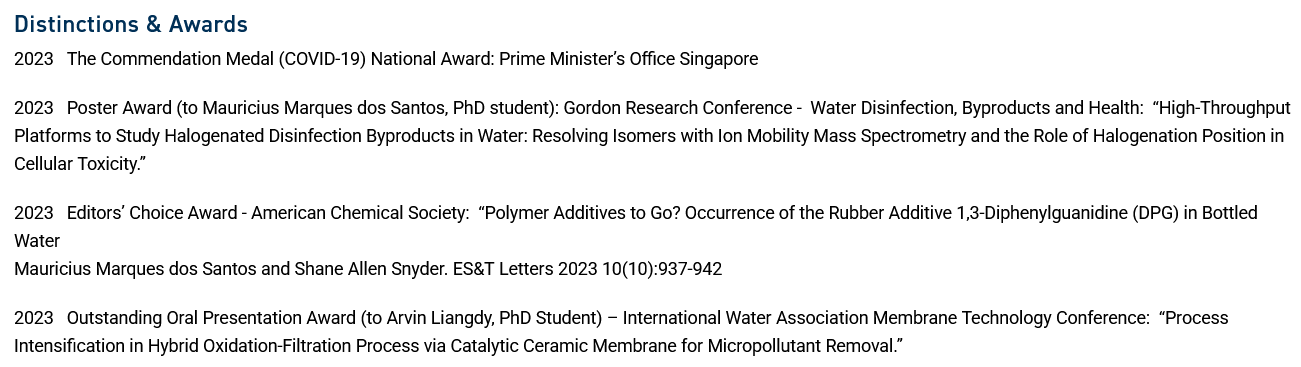
The Editor-in-Chief and corresponding author Yoon did not notice that he appointed one of his coauthors as handling editors, who also happens to be a former an Editor-in-Chief of Chemosphere.. This Shane Snyder is the José Domingo Pérez Foundation Chair at Georgia Institute of Technology (Georgia Tech) in Atlanta, Fellow of the International Water Association, and laureate of the Clarke Prize, the Agilent Thought Leader Award, and the Nanyang Humanitarian Award, among other things. By a crazy coincidence, he is additionally distinguished professor at Yoon’s College of Engineering at Ewha Womans University in Korea. Snyder is so greedy for recognition that he even attributes his student’s poster prizes to himself.


Also this was retracted, Yoon is corresponding author and Snyder a coauthor:
Yasir A.J. Al-Hamadani , Byung-Moon Jun , Michelle Yoon , Nader Taheri-Qazvini , Shane A. Snyder , Min Jang, Jiyong Heo, Yeomin Yoon Applications of MXene-based membranes in water purification: A review Chemosphere (2020) doi: 10.1016/j.chemosphere.2020.126821
Again, Elsevier takes credit for the findings of a PubPeer user: “Following an investigation, it was determined that the handling editor for this manuscript, Prof. Shane A. Snyder, was simultaneously a co-author“, and again, his coauthors “do not dispute that the conflict of interest existed, but state that they were unaware, during peer review, that Prof. Snyder was the handling editor for this manuscript.“
Also this was retracted, Yoon is not on board, by Snyder himself is the corresponding author:
Ai Zhang , Ai Jia , Minkyu Park , Yongmei Li, Shane A Snyder Genotoxicity assay and potential byproduct identification during different UV-based water treatment processes Chemosphere (2019) doi: 10.1016/j.chemosphere.2018.11.031
The corresponding author Snyder did not notice that the Editor-in-Chief Snyder appointed himself to edit his own paper:
“Following an investigation, it was determined that the handling editor for this manuscript, Prof. Shane A. Snyder, was simultaneously a co-corresponding author. This compromised the editorial process and breached the journal’s policies.
The authors were contacted and provided with an opportunity to respond. The authors do not dispute that the conflict of interest existed, but state that they were unaware, during peer review, that Prof. Snyder was the handling editor for this manuscript.”
Naturally, Snyder has more on PubPeer, and his friend Yoon has much more on PubPeer, flagged for editorial conflicts of interests. But not only! This Elsevier journal is another papermill factory:
Aqsa Fayyaz , Karunamoorthy Saravanakumar , Kristy Talukdar , Yejin Kim , Yeomin Yoon , Chang Min Park Catalytic oxidation of naproxen in cobalt spinel ferrite decorated Ti3C2Tx MXene activated persulfate system: Mechanisms and pathways Chemical Engineering Journal (2021) doi: 10.1016/j.cej.2020.127842

Unacknowledged overlaps with eight other published articles
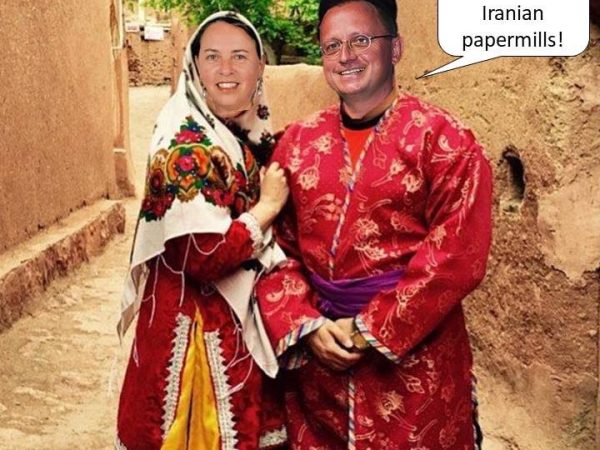
A retraction for a German professor! The hero is Magali Cucchiarini, wife of the German orthopaedics bigwig and fellow professor at Saarland University, Henning Madry featured in this article, where I was educated by the highest German national research integrity authority that apparently, German professors can by definition never ever be associated with papermilling. Read here:
German Authorities on Papermills and Whistleblowing
“I am not familiar with Iranian papermills!” – Prof Dr med Henning Madry, Saarland University.

Cucciarini’s coauthors here are the Iranian papermillers Mahmood Barani, Abbas Rahdar and Sadanand Pandey. It was flagged by Smut Clyde in February 2025 on PubPeer for citing a certain citation magnet, Pan et al 2020, which is “able to attract citations from multiple papers on unrelated topics“.
Fakhara Sabir , Mahira Zeeshan , Ushna Laraib , Mahmood Barani , Abbas Rahdar , Magali Cucchiarini, Sadanand Pandey DNA Based and Stimuli-Responsive Smart Nanocarrier for Diagnosis and Treatment of Cancer: Applications and Challenges Cancers (2021) doi: 10.3390/cancers13143396
Smut Clyde also found that several “other references come from the same constellation of recurring citation magnets“. On 30 June 2026, the paper was retracted for plagiarism from eight papers by unrelated authors:
“Following publication, concerns were brought to the attention of the Editorial Office regarding the relevance of several references presented in this article [1].
In accordance with standard journal procedures, the Editorial Office and Editorial Board conducted an investigation that confirmed the presence of a number of inappropriate citations. Additionally, the investigation identified unacknowledged overlaps with eight other published articles [2,3,4,5,6,7,8,9], without appropriate acknowledgement or citation. Consequently, the Editorial Board has lost confidence in the reliability of the findings and decided to retract this publication [1], as per MDPI’s retraction policy (https://www.mdpi.com/ethics#_bookmark30) (19 May 2026).
This retraction was approved by the Editor-in-Chief of the journal Cancers.
The authors have been informed of this retraction and have indicated their disagreement with this decision.”

I am sure Prof Dr Madry will make sure nobody in the orthopaedics community ever mentions his wife’s retraction for plagiarism and papermilling. Cucciarini has more such stuff on PubPeer. This for example, flagged by Smut Clyde for “biomarkers for potential citation shenanigans“, features yet another major papermiller:
Abbas Rahdar , Mohammad Reza Hajinezhad , Mahmood Barani , Saman Sargazi , Maryam Zaboli , Esraa Ghazy , Francesco Baino , Magali Cucchiarini , Muhammad Bilal , Sadanand Pandey Pluronic F127/Doxorubicin microemulsions: Preparation, characterization, and toxicity evaluations Journal of Molecular Liquids (2022) doi: 10.1016/j.molliq.2021.117028
No, not Francesco Baino, associate professor at Polytechnic University of Turin, here is a papermiller, but not a major one.
Nobelium Bilalski, a Gdansk papermiller
“To date, he has authored over 700 peer-reviewed articles, 150 book chapters, 25 edited books, and 10 editorial-type scientific articles in various areas of Science and Engineering. Dr. Bilal has a h-index of 94 with 34 000 citations (Google Scholar).”
Yes, it is the famous Muhammad Bilal, once Nobelium professor at Gdansk University of Technology in Poland, after his departure a humble postdoc at the University of Antwerp in Belgium, and now again on the lookout for a job. Why not applying to Saarland University?
A toxic cyberbully mistaken as a science educator
A retraction for Helena Bonciani Nader, professor emeritus at Federal University of São Paulo (Unifesp) and President of the Brazilian Academy of Sciences and other academic organisations. She was also ironically a member of the Jury of the Einstein Foundation in Berlin, Germany, which in November 2024 awarded the sleuth Elisabeth Bik and PubPeer with €200k each. Read about the following and other bad papers by Nader here:
Why science fraud is not a crime
“Science is an activity based on uncertainty. […] Methodological errors […] cannot be treated as crimes. The risk is criminalizing scientific practice itself, inhibiting innovation and creativity.” – Helena B. Nader, President
The last author here is Silvio Sanches Veiga, professor at Federal University of Paraná:
Marcia Helena Appel, Rafael Bertoni Da Silveira , Olga Meiri Chaim, Kátia Sabrina Paludo , Dilza Trevisan Silva , Daniele M. Chaves , Paulo Henrique Da Silva , Oldemir C. Mangili , Andrea Senff-Ribeiro, Waldemiro Gremski , Helena B. Nader , Silvio Sanches Veiga Identification, cloning and functional characterization of a novel dermonecrotic toxin (phospholipase D) from brown spider (Loxosceles intermedia) venom Biochimica et Biophysica Acta (2008) doi: 10.1016/j.bbagen.2007.11.007

Another Paraná professor, Olga Meiri Chaim, explained: “Dear Pubpeer, It is the same rabbit area for the period of time 6h up to 24h after the experimentally performed envenomation of the rabbit reported“. She was joined by Veiga, who reiterated the same, and insisted:
“We affirm that there has never been any attempt on our part to falsify or publish adulterated results. We are committed to rigorous and serious scientific research.“
Then Bik found more envenomated rabbit ears:

Cyan boxes highlight regions in the middle panel that appear to be identical, albeit 180 degrees rotated.”
Chaim then returned to PubPeer to give the sleuth a long lecture about the joys of having “animals subjected to a massive inflammation and pain driven by simultaneous injection of venom or recombinant isoforms“. I repeat here only the beginning and the end of that insane post, which Bik aptly summed up as “the gish-gallop of factoids“:
“Dear Elisabeth,
I hope individuals concerned with data herein have further looked to references to learn from many PLD aspects. […]
Curious individuals sometimes behave like trolls for personal goals in laboratories with no due respect for foreigner investments by being raised in attitude in areas that should be more respectful to all, working here as an exercise of collegiality and reciprocity. Thanks for sharing.”
Followed by:
“...you have being perceived as a toxic cyberbully mistaken as a science educator many times. Many are discouraged to interact with women in Science and we are misrepresented. […] I don’t have personal interest in judging anyone, while being targeted like you by toxic bots online to suppress our work.”
Chaim, the victim of Bik’s misogyny, then took care to prophylactically place all responsibility for data integrity with another woman, the first author Marcia Helena Appel, now associate professor at Universidade Estadual de Ponta Grossa.
Boys from Brazil
“We can always make mistakes in our publications but never acting intensionally. Regarding Prof. Eder works, I know him well and I don’t believe he has anything wrong” – Glaydson S. Dos Reis
On 3 November 2026, the paper was retracted:
“Post-publication, an investigation conducted on behalf of the journal by Elsevier’s Research Integrity & Publishing Ethics team identified areas of similarity within Fig. 5 and 7 as described also on PubPeer – Identification, cloning and functional characterization of a novel.
A review identified that in Fig. 5 Panel A, the 6 h and 24 h control panels appear to depict the same source image, but are described as representing different experimental conditions. In Fig. 7A, two regions within the venom panel appear identical but rotated.
The authors were requested to provide comment on these concerns, as well as the original unprocessed image files to aid investigation; however, they were unable to supply the raw images or satisfactorily address the above concerns.
The Editors-in-Chief believe that in the absence of the original source files, the reliability of the affected figures and their associated data cannot be established. Therefore, they have lost confidence in the results and conclusions of the article and have determined it should be retracted.”
All this prompted Bik to screen Nader’s and her friends’ papers even more and add more to Nader’s PubPeer record.
Rodrigo Otávio S. Ribeiro , Olga Meiri Chaim, Rafael Bertoni Da Silveira , Luiza Helena Gremski , Youssef Bacila Sade , Kátia Sabrina Paludo , Andrea Senff-Ribeiro , Juliana De Moura , Carlos Chávez-Olórtegui , Waldemiro Gremski , Helena B. Nader, Silvio Sanches Veiga Biological and structural comparison of recombinant phospholipase D toxins from Loxosceles intermedia (brown spider) venom Toxicon (2007) doi: 10.1016/j.toxicon.2007.08.001

Elisabeth Bik: “Concern about Figure 2A: Amber boxes: The left 50ug Venom panel overlaps with the left 10 ug LiRecDT3 panel, with a 90 degree rotation. Green boxes: The right Control panel overlaps with the right 50 ug LiRecDT3 panel”
Nader suffered another retraction just weeks before:
Carolina M Vicente, Marcelo A Lima, Helena B Nader, Leny Toma SULF2 overexpression positively regulates tumorigenicity of human prostate cancer cells Journal of experimental & clinical cancer research (2015) doi: 10.1186/s13046-015-0141-x


Elisabeth Bik: “the 0h DU-145 panels in Figure 4 appear to overlap. These should be two independent scratches.”
The retraction from 24 September 2026 went:
“The Editor-in-Chief has retracted this article. Concerns were raised regarding a number of figures, specifically:
- Figure 2A: two pairs of blots appear to overlap, MEDIUM Vector and SULF2, and CELL Vector and SULF2, when flipped horizontally;
- Figure 4C: CTRL NEG and SULF2 panels of DU-145 appear to overlap;
- Figure 1A: discrepancies between the original data and published image were noted by the Publisher.
The authors provided some source data on request from the Publisher, but this was insufficient to address the concerns raised. The Editor-in-Chief therefore no longer has confidence in the reliability of the data reported in the article.”
Here however, the publisher Elsevier felt a retraction would have been unfair:
Nilana M.T. Barros, Fabio D. Nascimento, Vitor Oliveira, Maria Aparecida Juliano, Luiz Juliano, Thomas Loisel , Helena B. Nader, Guy Boileau, Ivarne L.S. Tersariol, Adriana K. Carmona The critical interaction of the metallopeptidase PHEX with heparan sulfate proteoglycans The International Journal of Biochemistry & Cell Biology (2008) doi: 10.1016/j.biocel.2008.05.021

An Expression of Concern was issued on 2 September 2026:
“A reader has raised concerns regarding the figure 4 (Beta-actin K1 and Beta-actin 745) western blot of this article appears similar to each other as highlighted in a PubPeer post: PubPeer – The critical interaction of the metallopeptidase PHEX with h…. As part of an investigation conductedon behalf of the journal by Elsevier’s Research Integrity & Publication Ethics team, the authors were contacted to comment on the concerns and to provide the raw data.
The co-author had responded and provided scanned versions of the original paper copies of the gel images in question. However, upon evaluation, the images provided did not match those in the original publication.
In the absence of conclusive proof regarding the reliability of the study and given the long time elapsed since the publication of this article, the Editor-in-Chief of The International Journal of Biochemistry & Cell Biology is issuing this Expression of Concern to advise readers to interpret the results with caution.”
Yes, the authors also attempted to submit false raw data. But that’s still not a reason for retraction.
Advanced skills in imaging analysis in the fight against cancer
The Italian Godfather of fake science, Sebastiano Ando, earned another retraction, his fourth.
La Banda di Ando
Germans are traditionally fascinated with Italy. Like Goethe before him, Fabian Wittmers is no exception, so please enjoy our trip to the deep south of Italy where you will meet an undignified old man named Sebastiano Andò, an emeritus professor of pathology with a pathological proficiency in fake science. As anthropologists report again and again, universities…

Despite or rather because of all that fake science, this emeritus professor of University of Calabria is still beloved by the international scientific community of cancer researchers. Exactly a year ago, he even published in Nature, Simoes et al 2025, which established the morning-after contraceptive Ulipristal as a preventive therapy for breast cancer, and was therefore duly celebrated by Ando’s university. We were told that Ando provided his “advanced skills in computational biology, modeling of cellular processes and imaging analysis” and has been “contributing to producing concrete results in the fight against one of the most widespread oncological diseases in the world.”
But here is Ando’s recent retraction, the paper was first flagged on PubPeer in 2017 by the pseudonymous sleuth Claire Francis:
Anna Grazia Recchia , Anna Maria Musti , Marilena Lanzino , Maria Luisa Panno , Ermanna Turano , Rachele Zumpano , Antonino Belfiore , Sebastiano Andò, Marcello Maggiolini A cross-talk between the androgen receptor and the epidermal growth factor receptor leads to p38MAPK-dependent activation of mTOR and cyclinD1 expression in prostate and lung cancer cells The International Journal of Biochemistry & Cell Biology (2009) doi: 10.1016/j.biocel.2008.07.004


In March 2025, another sleuth joined the game:


The retraction appeared on 6 October 2026:
“This article has been retracted at the request of the Editor-in-Chief.
Concerns were raised post-publication about unexpected similarities between blots from Fig. 3, 4A, 5A, 6A, 6B and 6C in the public domain: https://pubpeer.com/publications/D3F0D5A2E327E2D6DCAFE9607F805B Post-publication, an investigation conducted on behalf of the journal by Elsevier’s Research Integrity & Publishing Ethics team identified additional concerns around the authenticity of the following figures/images:
Similarities between Fig. 2C band ERK2 blots from UO to SB and Fig. 3 A549 cells band β-actin blots from DHT to EGF, Fig. 4D band EGFR and Fig. 4F band AR, Fig. 4D blot EGFR-pSiAR and Fig. 4F blot EGFR-shRNA, Fig. 4A flipped band β-actin and Fig. 7F band S6 blots from + CS (EGF) to + SB (-).
The authors were requested to provide comment on these concerns, as well as the original unprocessed image files to aid investigation. It was felt that the explanation provided was unsatisfactory in resolving these concerns, and no data was submitted by the authors.
The Editor has lost confidence in the results and conclusions of the article and has determined it should be retracted.”
Ando featured enough on this website, so let’s briefly talk about his coauthors and fellow professors at University of Calabria, Antonino Belfiore and Marcello Maggiolini. The former has now retired, the latter not ye, both featured here:

The Name of the Foes
“I am Jorge de Burgos. I believe research should pause in searching for the progress of knowledge. Right now, we don’t need more papers, we rather need more knowledge by going through a continuous and sublime recapitulation to figure out what is true and what is fake” – Aneurus Inconstans

They have much, much more on PubPeer, not all of it with Ando. For example, flagged by Claire Francis in 2017 and updated by Sholto David last August:
P De Marco , V Bartella , A Vivacqua , R Lappano , M F Santolla , A Morcavallo , V Pezzi , A Belfiore , M Maggiolini Insulin-like growth factor-I regulates GPER expression and function in cancer cells Oncogene (2013) doi: 10.1038/onc.2012.97


A direct consequence of the potent applied current
A retraction for Kostya Ostrikov, a Ukrainian born nanotechnologist and professor at Queensland University of Technology in Brisbane, Australia. He was was caught on publishing a massive forgery with the russians, Iranians and Belarusians, and explained this to me in his email from 2023:
“Let me assure you that I totally condemn the war in Ukraine, and at the very least because my old mother is in Kharkiv and she suffers a lot… I am trying to help my colleagues and friends from Ukraine whichever way I can… I also do not collaborate with institutions or projects in any of these three countries, just to make it clear. I am only trying to help very few young and aspiring people who do not have world-class opportunities for scientific research in their countries and want to build careers internationally, so to say “escape” for a better opportunity.”
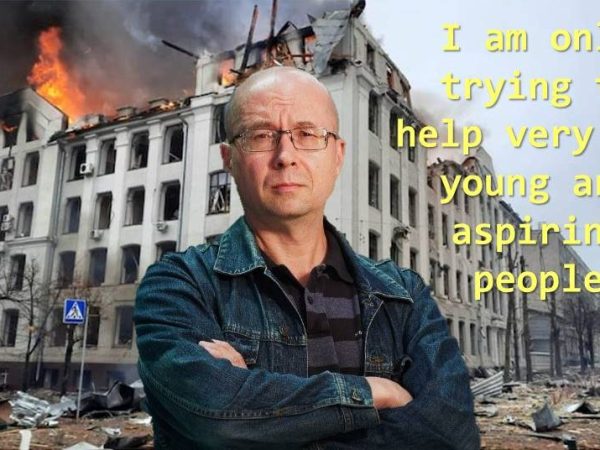
Kostya Ostrikov’s russo-iranian false friends
“Let me assure you that I totally condemn the war in Ukraine, and at the very least because my old mother is in Kharkiv and she suffers a lot… I am trying to help my colleagues and friends from Ukraine whichever way I can…” – Professor Kostya “Ken” Ostrikov
Ostrikov’s coauthors on the now retracted paper are: the russian native Alexander Mukasyan, presently professor at University of Notre Dame in USA, and Dmitry Moskovskikh, professor at National University of Science and Technology (MISIS) in moscow, russia. The other authors are from Iran, the paper was submitted to MDPI in August 2022 and published in October 2022. Its Figure 3c was initially flagged by Alexander Magazinov, Elisabeth Bik then took over and found awful stuff:
Mohammad Abedi, Atefeh Asadi , Saeed Sovizi , Dmitry Moskovskikh , Kostya (Ken) Ostrikov , Alexander Mukasyan Electrical and Heat Distributions and Their Influence on the Mass Transfer during the Flash Spark Plasma Sintering of a Cu/Cr Nanocomposite: Experiments and Numerical Simulation Materials (2022) doi: 10.3390/ma15207366


The MISIS-affiliated first author and Moskovskikh’s mentee Mohammad Abedi replied with a lengthy word salad on PubPeer, ending with:
“Consequently, at the nanoscale level scrutinized in this study, the manifestation of the atypical microstructure, often described as “similarities,” is entirely anticipated and substantiated as a direct consequence of the potent applied current within the material. Once again, I extend my heartfelt appreciation for your attention to this matter.“
And then, Mukasyan declared on PubPeer:
“The first part of the investigation is accomplished. We found all original SEM images used in the paper. […] We continue our investigation. We plan to contact the journal manager on this issue Thank you for your patient”
The “raw data” Mukasyan uploaded was completely fake. Look at the overlay Maarten van Kampen made:


Mukasyan blamed some nameless technician:
“Dear Colleagues We are finishing the investigation of the case. Several statements we want to make: (a) We sincerely apologize for the misconduct; (b) We found that in the last stage of Figures preparation, the person who was responsible for the collage made the outlined changes (c) I was told that the person is not co-author of the paper (d) We are currently discussing the options with the Journal Editor. Again our apology”
That was in September 2023, and for three years, MDPI was perfectly happy to do nothing.

Russkiy Mir at Elsevier and MDPI
Alexander Magazinov presents you two russian professors whom Elsevier and MDPI consider respectable: a Lt Colonel of putin’s mass-murdering army, and a machine-gun totting rascist. Both buy from papermills.

In September 2025, Smut Clyde noticed that several references in that paper made no sense, as it is typical with papermills.
On 2 November 2026, the paper was retracted:
“Following publication, concerns were brought to the attention of the Editorial Office regarding the integrity of several figures presented in this article [1].
In accordance with the journal’s standard procedures, the Editorial Office and Editorial Board conducted an investigation that identified indications of inappropriate image editing and duplication in Figures 3 and 4. Although the authors cooperated with the investigation, the explanations and supporting materials provided were deemed insufficient by the Editorial Board to resolve the identified concerns. Consequently, the Editorial Board has lost confidence in the reliability of the reported findings and has decided to retract this publication.
This retraction was approved by the Editor-in-Chief of the journal Materials.
The authors have been informed of this retraction. Saeed Sovizi has indicated his agreement with this decision, while the remaining authors have not provided any comment.”
It is worth mentioning that the papers by this trio of Abedi, Moskovskikh and Mukasyan got cited block-wise and in totally unrelated context by notorious papermillers, like here by Dumitru Baleanu (He et al 2022), Rasool Kalbasi (Abbasian-Naghneh & Kalbasi 2022, Abidi et al 2021) Amir Mousavi (Liu et al 2022), Iskander Tlili (Wei et al 2022) or Arash Karimipour (Miyani et al 2022). For example, the Abedi et al 2022 paper is cited as reference 36 in Karimipour’s Azodinia et 2023:
“Numerical studies are widely used in research fields [34–36].”
That was Ostrikovä’s second retraction , his first was reported in February 2024 Shorts. After my 2023 article was published, new stuff was flagged on PubPeer, here Otsrikov cured cancer with his speciality, plasma:
Musarat Ishaq, Margaret D.M. Evans , Kostya (Ken) Ostrikov Atmospheric pressure gas plasma-induced colorectal cancer cell death is mediated by Nox2–ASK1 apoptosis pathways and oxidative stress is mitigated by Srx–Nrf2 anti-oxidant system Biochimica et Biophysica Acta (2014) doi: 10.1016/j.bbamcr.2014.08.011

If you wondered: no, Ostrikov did not stop papermilling, he just avoids russians and Iranians. This product from a Pakistani papermill fell prey to The Vickers Curse, where an editorial about moth pheromones gets cited due to a certain bug in doi resolution:
Hafiza Komal Zafar , Sara Zainab , Maria Masood , Manzar Sohail, Syed Shoaib Ahmad Shah , Mohammad R. Karim, Anthony O’Mullane, Kostya (Ken) Ostrikov , Geoffrey Will, Md A. Wahab Recent Advances on Nitrogen‐Doped Porous Carbons Towards Electrochemical Supercapacitor Applications The Chemical Record (2024) doi: 10.1002/tcr.202300161
“Various carbon materials, namely activated carbon, carbon nanofiber, graphene,47 graphite,48 graphene oxide,49, 50 hard and soft carbon, metal-organic frameworks,51 carbon nanotubes, porous carbon, carbon spheres, carbide-derived carbon are described as electrode materials for constructing ECs.52“
51 N. J. Vickers, Curr. Biol. 2017, 27, R713–R715.
The Vickers Curse: secret revealed!
How did an editorial about insect pheromone communication get to receive 1200 irrelevant citations, almost all from papermills? Alexander Magazinov reveals The Secret of The Vickers Curse!
Donate!
If you are interested to support my work, you can leave here a small tip of $5. Or several of small tips, just increase the amount as you like (2x=€10; 5x=€25). Your generous patronage of my journalism will be most appreciated!
€5.00


0 comments on “Schneider Shorts 6.11.2026 – Climate of abuse of power and misogyny”