Schneider Shorts 20.11.2026 – Publication Ethics and Strategies for Successful Scientific Publishing
Schneider Shorts 20.11. 2026 - white scholars in Belgium, Spain, Denmark and Poland burdened with papermill retractions, new metrics for scientific merit suggested in Italy, with the legacy of the Father of Tamoxifen, an understanding editor, and finally, why sloppy science is the future!
Schneider Shorts of 20 November 2026 – white scholars in Belgium, Spain, Denmark and Poland burdened with papermill retractions, new metrics for scientific merit suggested in Italy, with the legacy of the Father of Tamoxifen, an understanding editor, and finally, why sloppy science is the future!
Table of Discontent
Science Elites
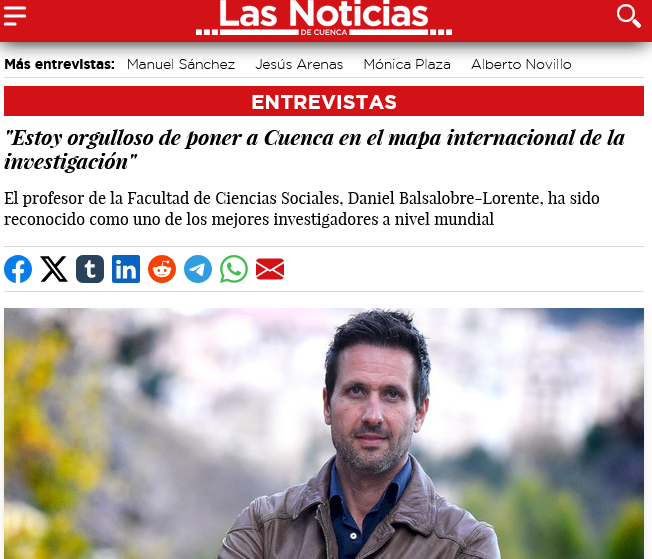
Spanish envy – papermiller and citation extortionist Daniel Balsalobre shamed in El Pais
Scholarly Publishing
Sloppy Science – Sholto David finds hidden watermarks no publisher ever found
El Pais once again drags a major Spanish papermiller out into the spotlight to be shamed. If only other newspapers in other countries did the same.
This time, it is Daniel Balsalobre-Lorente, who has over a hundred papers on PubPeer, six of them retracted. These retractions were the occasion of Manuel Ansede’s reporting for El Pais from 17 November 2026:
“Three different scientific journals have retracted a total of six studies by Professor Daniel Balsalobre, an expert in environmental economics and one of the most cited scientists in the world, over irregularities. Publishers are citing bad practices, including manipulating citations of his work and concealing conflicts of interest.
Balsalobre, born in Barcelona 48 years ago, produced only a couple of studies a year in 2015, but his record swelled explosively after the Covid pandemic and he reached a pace of one paper every five working days in 2023. His papers have been cited more than 25,000 times in record time, mostly in research work produced by Chinese, Pakistani, Indian, Saudi and Malaysian scientists. […]
The scientist says that early in his career he collaborated with a few Spanish researchers, but his trajectory changed when he decided to contact one of the two most cited professors in the world in environmental economics: the Pakistani researcher Muhammad Shahbaz. They began publishing together in 2017 on economic models linked to greenhouse gas reductions. “That led people from other countries, like Pakistan and China, to start emailing me: ‘Daniel, I want to work with you,’” he says.”
I call this “White Man’s Burden”. The genetic achievement of being white in a first world country earns you lots of flattering attention from papermillers who need a white name on their papermill trash to assuage the editorial racism distrust.
“Balsalobre has coauthored papers with many colleagues who have had papers retracted for irregularities, such as Muntasir Murshed of Bangladesh (eight retractions), Abdelmohsen A. Nassani of Syria (another eight), Tomiwa Sunday Adebayo of Nigeria (seven) and Atif Jahanger of Pakistan (three). Within that suspicious network, members cited one another and managed to infiltrate the coveted rankings of the world’s most cited scientists. One striking figure: 170 papers that cited Balsalobre have already been retracted for irregularities.”
Balsalobre even complained about this Muntasir Murshed to the journalist: “The day I found out he was asking for money to publish [selling coauthorships on prefabricated papers], I blocked him immediately”. Exactly, how dares he, white men expect to get authorships gratis!
For his papermilling, Balsalobre was rewarded with the Castilla-La Mancha Research Award from the regional president in March 2023. In addition to his University of Castilla-La Mancha, he pockets money from other institutions: Czech University of Life Sciences, Ecotec University in Ecuador) and two Azerbaijan institutions – State University of Economics and Western Caspian University. The hero is quoted:
“Since then I have been more careful. At the time I may have been a bit careless, too trusting, or something may have gone wrong in the whirlwind of working and producing. I won’t deny that, honestly. Did I do it on purpose? I didn’t need 20,000 citations to achieve my modest academic career“
Daniel Balsalobre-Lorente, a Genius
And this is how Balsalobre got cited so much:
“María de los Ángeles Oviedo, a professor at the University of Seville, accuses the economist of exploiting the system’s flaws by carrying out “coercive citation manipulation.” […] In an insubstantial paper on the use of ChatGPT in higher education, Balsalobre urged the two Indian authors to cite seven of his own environmental economics papers. “Is he one of the most cited scientists thanks to coercive citations?” Oviedo asks.”
Read about Oviedo’s investigations of citation extortions here:
“The preference of Thippa Reddy Gadekallu et al. (Abdul Rehman Javed, Celestine O. Iwendi, Sharnil Nitin Pandya and Gaurav Jay Dhiman) for coercive citation and copy-pasting their review comments” – Maria de los Ángeles Oviedo García
The President of the University of Castilla-La Mancha announced to “asked our research ethics committee to prepare a report” and to “make decisions if any need to be made“. Balsalobre however knows exactly what’s going on:
“It’s Spanish envy, as [philosopher José] Ortega y Gasset said. I’ve never experienced it: they don’t want to have what you have, they just want you not to have it.”
Scholarly Publishing
Sloppy Science
To nobody’s surprise, fraudsters and papermillers are using AI chatbots to generate figures for research papers. Microscopy images for example, and Sholto David caught them:
Sholto David: “Figure 4: The image shows strong indications of having been generated with an AI tool. For me there are a few red flags: Consistent staining between different slides Strongly radial pattern with one (and only one) portal vein located centrally. Portal veins with entirely white centre. I checked and confirmed that it has an OpenAI SynthID. This hidden watermark confirms that it was processed or generated with ChatGPT. See here to check yourself.”
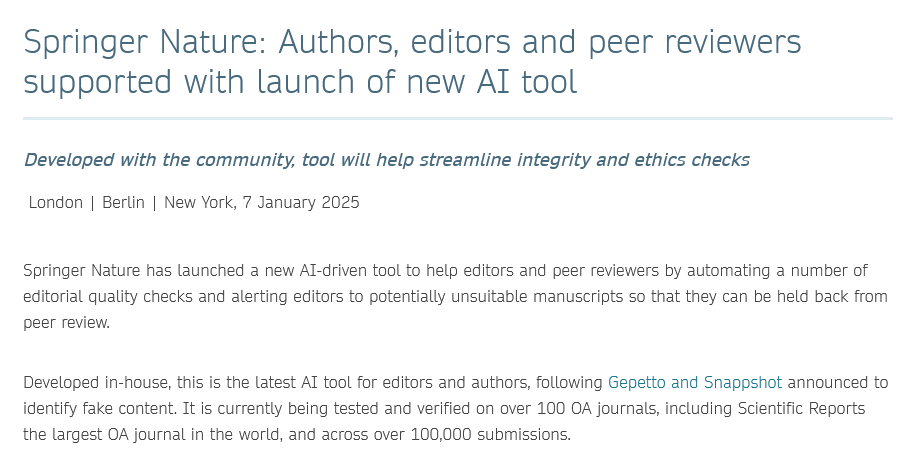
If Sholot can check the image for ChatGPT’s hidden watermark, why can’t Springer Nature and its team of experts with their advanced AI tools do it?
“Developed in-house, this is the latest AI tool for editors and authors, following Gepetto and Snappshot announced to identify fake content.” (Springer Nature)“Central to this approach is Snapp, Springer Nature’s peer review platform — created with continuous researcher feedback” (Springer Nature)
OK, it’s unfair to pick on Springer Nature. Here is Elsevier, who just bought Clear Skies papermill detection tool from Adam Day:
Sholto David: “lone of the previews of the figures has an OpenAI SynthID watermark embedded in it. This means it was edited or generated with ChatGPT. You can check here: https://openai.com/research/verify/ I think visually it is quite clearly generated by AI – the almost perfectly circular and unbroken capsular space is quite distinctive and seems to be a a preference when prompting AI models to generate kidney histology.”
Clearly this is the future of science and scholarly publishing. I suggest calling this “SLOPPY SCIENCE”.
If you wonder how Sholto finds such things, he explained it on social media:
“I ask ChatGPT to generate histology, then do a reverse image search with the image that was generated. Some papers just look obvious in the results and I use Synth ID to confirm it. […] Once you confirm one with SynthID you can reverse search with that image and so on, so I’m making a collection.”
Carelessly placed a wrong spectrum
A papermill fabrication was corrected in an Elsevier journal, by an understanding editor.
Catenaria anguillulae: “In Fig. 1D, the portions of the FT-IR spectra within the shaded box appear remarkably similar, although with some apparent stretching and shrinking. In addition, some seemingly unusual or broken features, indicated by the green arrows, can be observed.”
Here detail:
Hubert Wojtasek: “Obviously this original spectrum could not have corresponded to “another compound”, because no compound can give a spectrum with such physically impossible bendings and overhangs.”
These spectra are clearly hand-drawn, but in October 2026, the paper was corrected:
“The authors regret that they carelessly placed a wrong FTIR spectrum of another compound in Fig. 1D (red-coloured line) in published article (10.1016/j.microc.2025.113542). The correct FTIR spectrum of DTT@CuNCs in Fig. 1D should be as below. Therefore, the authors would like to replace Fig. 1D (red-coloured line) with the correct image. The correction does not affect the content of the paper.
The authors would like to apologise for any inconvenience caused.”
Of course these Egyptian scholars didn’t really put an effort, their new spectra are hand drawn also. Hubert Wojtasek found the paper to be scientifically nonsensical and containing further forgeries and irrelevant references:
Hubert Wojtasek: “DLS curves for DTT@CuNCs, DTT@CuNCs/La3+, and DTT@CuNCs//La3+/caffeic acid in Figure S3D appear to be identical.”
So what kind of clown of an editor would approve a correction to this papermill fabrication?
The Editor-in-Chief of Microchemical Journal is Miguel de la Guardia, professor at University of Valencia in Spain. Here he is with Iranian papermillers:
“The free heme is toxic to the P. falciparum and this parasite converts the reactive heme species into a weakly, highly insoluble and compact magnetic crystal known as hemozin [154].”
[154] N.J. Vickers Curr. Biol., 27 (2017), p. R713
How did an editorial about insect pheromone communication get to receive 1200 irrelevant citations, almost all from papermills? Alexander Magazinov reveals The Secret of The Vickers Curse!
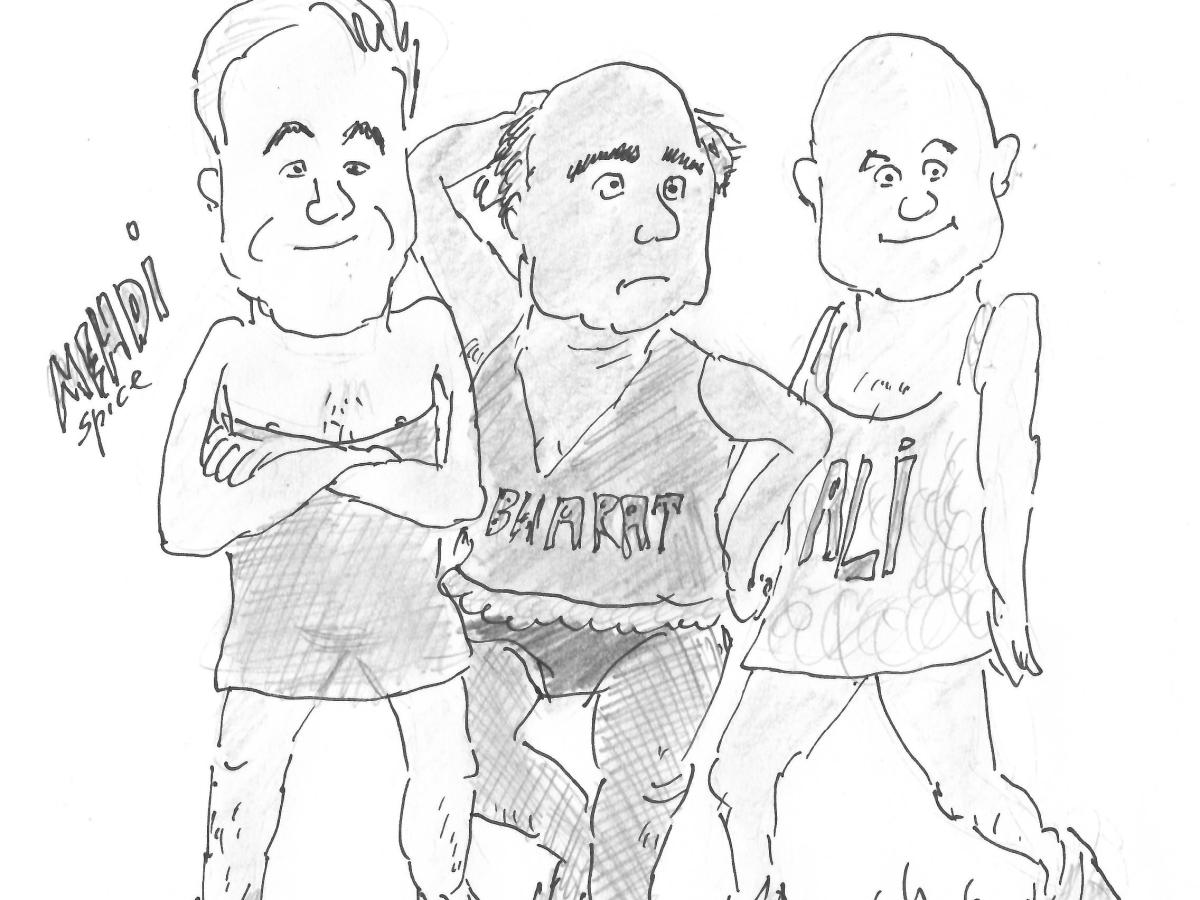
“I can therefore very well imagine that, due to my numerous technical assistants in various laboratories, visitors, and research associates […] considerable confusion must have arisen.” – Prof Dr Mehdi Shakibaei
Here is the paper, it is about the natural form of curcumin, the turmeric ingredient Calebin A, Brookes flagged it on PubPeer in 2016 on the occasion of Aggarwal’s seven retractions and his sacking from MD Anderson in Texas. More recently, Elisabeth Bik added another finding:
Paul S Brookes: “Figure 2B vs. 3B. Re-use of the same sample (imaged slightly differently) to represent completely different experimental conditions”
Elisabeth Bik: “Concern about Figure 7: Red boxes: The RANK blot in the top panels looks similar to the NFATc1 blot in the bottom panels Blue boxes: The top and bottom b-actin panels look more similar than expected”
With this huge delay of ten years, the Elsevier journal finally issued a retraction on 11 November 2026:
“This article has been retracted at the request of the Editor-in-Chief.
Concerns were raised post-publication in the public domain (PubPeer – Calebin A downregulates osteoclastogenesis through suppressi …) regarding similarities between the panels in Fig. 2B and 3B, which appear to represent different experimental conditions. In addition, similarities were observed between the RANK and NFATc1 panels in Fig. 7, as well as between the β-actin panels. The β-actin panels in Fig. 7A also appear to show possible indicators of image splicing.
The authors were requested to provide comment on these concerns, as well as the original unprocessed image files to aid investigation. It was felt that the explanation and data provided were unsatisfactory in resolving these concerns.
The Editor has lost confidence in the results and conclusions of the article and has determined it should be retracted.”
Why such a delay? Well, a clue may be found in the acknowledgement section of that paper:
“We thank Amy Ninetto for editorial review of this manuscript and Prof V. Craig Jordan (Father of Tamoxifen) for providing the facility and required reagents to revise the manuscript.”
The Father of Tamoxifen died in June 2024, aged 74. Vergil Craig Jordan was professor at MD Anderson and he occasionally collaborated with Aggarwal. One could wildly speculate that this retraction of Aggarwal’s fraud was not possible as long as The Father of Tamoxifen was alive.
Oh well. Jordan left behind his own bad stuff on PubPeer. Here something flagged by Claire Francis:
Actinopolyspora biskrensis: “It seems as if a portion of a gel slice has been used in Figure 4 to represent two different conditions.”
In May 2026 Shorts, I discussed two very dodgy papers by Jordan with his mentees, the husband-and-wife couple Joan Lewis-Wambi and Chris Wambi. The two papers were Lewis-Wambi et al 2008 and Lewis-Wambi et al 2009, the former coauthored by Andres Klein-Szanto, retired professor at Fox Chase Cancer Center in Philadelphia. Mrs Wambi is now a much celebrated associate professor at the University of Kansas, while Mr Wambi works as urologist.
This stuff was posted before the Father of Tamoxifen died:
Elisabeth Bik: “Figures 2 and 4. Red boxes: two b-actin panels look the same across panels in these two figures, while representing slightly different experiments. Blue boxes: two other b-actin panels look the same across panels in these two figures, while representing slightly different experiments.”
Elisabeth Bik: “Boxes of the same colors: several Western blot panels, bands, and microscopy photos appear to have been used multiple times to represent different experiments.” Fig 3B, 4A,C,D, 5B
Fig 4B
Fig 3D and 5C
Western blots from that paper re-appeared in a later work by Lewis-Wambi from Kansas, which was retracted three years ago:
“The Editor-in-Chief has retracted this article at the Corresponding Author’s request. After publication, concerns were raised regarding the western blot images presented in the figures. Specifically:
Figure 1a beta-actin bands appear highly similar to Fig. 5b in the corresponding author’s earlier article [1]. Figure 7d pSer167-ER-alpha blot appears highly similar to the MCF:2A BCL-2 blot in Fig. 4a in the authors’ earlier article [2].
Figure 2b pER-Ser118 blot appears to contain an “invisible” band in lane 3.
Figure 3b PEDF blot appears to have a vertical straight line break in the backgrounds between lanes 2 and 3.
Figure 4a PEDF lanes 2 and 3 appear highly similar to p70S6K lanes 1 and 2, respectively.
Figure 7d pAKT blot appears highly similar to Fig. 4d mitochondria Cyt c in [2]. Figure 6d PBS and rPEDF images appear highly similar to Fig. 6d BSO and E2, respectively, in [2].
The Corresponding Author has stated that some of the blots from their other projects were mistakenly used in this article. The Editor-in-Chief therefore no longer has confidence in the presented data.
The authors have been offered to submit a revised manuscript with the correct data for further peer review.
Min Huang and Joan Lewis-Wambi agree to this retraction.”
Lewis-Wambi has more on PubPeer, also her husband Chris has the problematic Finnberg et al 2008. In last year’s news, Lewis-Wambi was celebrated for having “identified a protein that is overexpressed in Black women with triple negative breast cancer” which “could potentially be a target for treatment.” This is her research on the interferon-induced transmembrane protein 1 (IFITM1):
“Figure 3. Much more similar and different than expected.”
As it happens, according to Kansas City Star, in 2019 a 44-year-old local urologist named Christel Wambi-Kiesse “had been accused by Missouri’s medical licensing board of performing robot-assisted surgeries that were beyond his abilities“, “banned from the operating room of the Wichita Veteran Affairs hospital“, and then fired there. The newspaper also wrote:
“One woman died from a massive infection two months after Wambi-Kiesse punctured her bladder while performing a biopsy and failed to repair the damage, according to the complaint. […] Two men, aged 71 and 68, were said to have suffered dangerous complications after undergoing prostate surgeries that took three times longer than they should have.”
Christel Wambi-Kiesse must indeed be “our” Chris Wambi, as the former uses chris-wambi in his profile URLs at WebMD and Vitals.
In no way intended to modify, manipulate, duplicate, or alter
A Danish professor suffered a retraction because of her Iranian friends. Kristi Anne Kohlmeier is associate professor at the University of Copenhagen, her lab studies sleep and arousal. It is now time she wakes up to the dangers of Iranian papermills!
He she proposed to cure multiple sclerosis with extracts from a parasitical helminth worm:
Sholto David: “Figure 6: There are some duplicate patches in the images. […] There appears to be another repetitive area in the upper right hand corner of (b).”
The last author and Kohlmeier’s regular collaborator Mohammad Shabani (who has more on PubPeer) replied that “the image-editing step was performed solely to remove an internal image label generated automatically by the microscope software and was in no way intended to modify, manipulate, duplicate, or alter any tissue structure or scientific information used for data analysis and reporting” and that this “removal of tags was restricted exclusively to an image region outside these predefined ROIs and therefore did not affect any of the tissue regions used for quantification.” This was allegedly the original image:
Instead of the planned correction, this PLOS One paper was retracted on 10 November 2026, the authors did not agree:
“Following the publication of this article [1], the corresponding author requested a correction to Fig 6C and 6D, after concerns were raised about unusually repetitive features appearing in these panels. The corresponding author stated that internal microscope-generated labels were removed from the Fig 6C and 6D image by covering the labelled areas with a portion of the adjacent image. They provided what they described as an original unedited image underlying Fig 6D, and a re-stained and reimaged panel for Fig 6C.
During editorial assessment, additional repetitive features were observed in Figs 6A and 6B. In response to these observations, the corresponding author provided what they described as original histopathology images underlying the published panels. However, the original images provided were not an exact match with the published figure, and repetitive features were also observed in areas of the published panel that did not have any labels in the original data, calling into question the integrity and reliability of the published results.
In light of these concerns, the PLOS One Editors retract this article.”
Here another paper by Kohlmeier and Shabani, the latter admitted on PubPeer to “an inadvertent figure error“:
Mohammad Shabani, Zeynab Pirmoradi, Moazamehosadat Razavinasab, Amin Hassanshahi, Reyhaneh Naderi, Zahra Esmaili, Mohammad Navid Ebrahimi, Mehran Ilaghi, Mohammad Amin Langarizadeh, Amir Hossain Moqaddari, Leili Rouhi, Meysam Ahmadi‐Zeidabadi, Maryam Amiri, Kristi A. Kohlmeier, Sajad Amiri, Hamid Forootanfar, Mohammad Banazadeh Unveiling the therapeutic potential of octreotide in treating morphine dependenceScientific Reports (2025) DOI: 10.1038/s41598-025-12761-6
Sholto David: “Figure 7A and C: The images are unexpectedly the same. I’ve added the green rectangles to show where I mean. These should show different experimental conditions.”
And another one with Kohlmeier, here however Shabani refused to admit to any mistakes:
Alexander Magazinov: “Fig. 12. Recordings from 6-OHDA and 6-OHDA + WIN samples contain unexpectedly similar segments.”
Shabani explained that the duplication “is intentional and central to our experimental design” and in fact “confirms that the recordings are accurate and that the apparent similarity results from continuous, within-cell recordings before and after CB1 receptor activation.“
Statements not supported by the reported methods
Another retraction for Raf Dewil, professor at KU Leuven in Belgium and visiting professor at University of Oxford in UK, about whom I wrote in February 2025 Shorts. Most tragic part: the retraction happened for his already corrected paper in the Elsevier journal where he until recently used to be the Editor-in-Chief.
Carcharhinus albimarginatus: ” potential issue with figure 1B; there seems to be a manipulation of 1 figure at least for 1 image”“2 images; SS and SS+PD seem to be the same, identical plant.”
“2 figures share some rather peculiar resemblance. Admittedly, there is a difference in 1 leave in particular; but the other leaves share some rather high similarity that is quite hard to explain if it was not the same plant.”
On 1 March 2026, Dewil must have been still Editor-in-Chief, and he issued this Corrigendum:
“The authors regret that an incorrect version of Figure 1B was inadvertently included in the originally published article. The correct version of Figure 1B is now provided, which accurately represents the phenotypic appearance of pepper plants under different treatments.
This correction does not affect the data analysis, interpretation, or conclusions of the published article.
The authors would like to apologise for any inconvenience caused”
But recently, something happened. Elsevier renounced Dewil, and his editorial successors retracted his paper:
“This article has been retracted at the request of the Editor.
Following the publication of a March 2026 corrigendum to replace Figure 1B, concerns were raised regarding the provenance of the images presented in both the original article and the updated corrigendum figure. As part of a formal editorial review, the authors were asked to provide source files and supporting metadata for all associated images in the original article and corrigendum.
The materials provided by the authors did not allow the Editors to verify the origin or timing of the Figure 1B images in either the original article or the corrigendum. As a result, the Editors are unable to confirm that the images reliably represent the reported work. Consequently, the Editors have determined that the article and corrigendum must be retracted in order to maintain the integrity of the scientific record.
The authors disagree with the retraction and dispute the grounds for it.”
More for Dewil on PubPeer. In a recent paper, Hasani-Andevari et al 2026, Dewil claimed that lactate and acetate were chemical elements which can be measured by inductively coupled plasma (ICP) spectroscopy. Here more Iranian papermill trash as Dewil prances around on LinkedIn as a champion for human rights in Iran:
Alexander Magazinov: “Figure 2B.The SEM micrograph (showing a Zeiss instrument) does not match the description per Materials and Methods, where a JEOL instrument is claimed.”
Dewil and Ahmad also corrected this paper, after it received over 40 critical comments on PubPeer, for irrelevant references and scientific errors like confusing H2O2 for HCl and mg/kg for mM/kg:
Sulcarius biannulatus: “how can a plant that weighs less than 30 g (table 1, fresh weight) absorb […] up to 40 grams of Cr per plant (roots) and 272 gram of Cr per plant (in the shoots)”
Next to scientific insanities and results derived from impossible measurements, there were tortured phrases like “suitable oxidase” or this:
“During H2O2 -dependent features of contemporary white (AsA) oxidation”
This Corrigendum from 7 November 2026 proves that Dewil either never reads his own papers, or that, if he does try to read his papermill contributions occasionally, he doesn’t understand them.
“Following concerns raised by a reader and on PubPeer (https://pubpeer.com/publications/92339D32EAF093C2A1453164983CBE), a post-publication review was carried out by Elsevier’s Research Integrity & Publishing Ethics team (RI&PE) following COPE guidelines. These spanned unit and arithmetic errors, internal contradictions between text, tables and figures, unsupported statements, provenance questions over Fig. 7, citation inaccuracies and a potential authorship issue. The authors were contacted to provide an explanation and supporting data. Their response was relayed to the Editor, who concluded that the errors did not affect the articles conclusions and could be rectified by publishing a Corrigendum.
The authors apologise for this oversight. The journal apologises that the oversight was not identified prior to publication.
This Corrigendum seeks to resolve the following errors:
1. Units and concentrations
The chromium treatment concentration was reported inconsistently as 300 mg/kg and 300 mM/kg (Abstract; Section 2.1, Plant materials and experimental setup). The correct concentration, consistent with the cited source (Handa et al. who report 300 μM kg−1, not 300 mM kg−1; https://doi.org/10.1016/j.envexpbot.2018.11.009), is 300 μM/kg.
The reported illumination intensity of 300 mol m−2 s−1 was a unit error (Section 2.1, Plant materials and experimental setup). The correct value, expressed in the standard unit for photosynthetically active radiation, is 300 μmol m−2 s−1.
Chromium uptake values were reported inconsistently in grams and micrograms between the text and Fig. 6 (Section 2.2.3, Elemental analysis in shoots and roots; Section 3.9, Cr uptake and accumulation; Fig. 6C and D). The correct unit throughout is micrograms (μg), consistent with Fig. 6.
2. Data and figure inconsistencies
The text describing root and shoot chromium accumulation did not match the corresponding figures (Section 3.9, Cr uptake and accumulation; Fig. 6A and B). The authors have confirmed that the figure values are correct.
The text discussing phenol, flavonoid and anthocyanin content did not match the values presented in Table 2 (Section 3.3, Secondary metabolite production; Table 2). The authors have confirmed that the values in Table 2 are correct.
The HSD value for anthocyanin content was displayed as 0.00 due to rounding (Table 2); the correct value is approximately 0.00466.
The authors have stated that Fig. 7 (page 10) is a conceptual summary model they prepared to integrate experimental findings with relevant literature, and that it was not adapted from a previously published figure. However, the original manuscript did not clearly distinguish which elements of the figure were directly supported by the study’s measurements and which were literature-derived or hypothetical. For clarity, the components directly supported by this study’s measurements are chromium uptake and accumulation, photosynthetic performance and chlorophyll content, oxidative stress indicators, antioxidant enzyme activities, and ascorbate-glutathione cycle metabolites; nitric oxide signalling and related regulatory elements are literature-derived and were not measured in this study.
3. Unsupported statements
The manuscript discussed and drew conclusions about silicon uptake, silicon accumulation and epigenetic properties (e.g. DNA methylation, histone modification), none of which were measured in this study (Abstract; Section 1, Introduction; Section 5, Conclusion). These statements are not supported by the reported methods.
Catalase (CAT) activity was described as increasing and then decreasing over time, implying a time-course measurement (Section 3.5, Antioxidant enzyme activities; Section 4.5). CAT activity was in fact measured once, at harvest, and no time-course data were collected.
The statistical reporting in Tables 1 and 2 (page 4) presented the ANOVA results as “F-ratio (df 23)”, which reflects the total degrees of freedom (7 treatment + 16 error) rather than the F-test degrees of freedom, and was incomplete. Additionally, the near-uniform statistical significance across treatments despite three biological replicates per treatment reflects low within-treatment variability combined with substantial between-treatment differences (for example, mean fresh weight increased from 6.77 g under Cr stress to 26.67 g under combined Si and AMF treatment, an approximately 294% difference), rather than a reporting or analytical error.
4. Terminology and notation corrections
The enzyme analysed was lipoxygenase (LOX); a reference in Section 3.4 (Oxidative stress biomarkers) to “lipoprotein lipase” was a terminology error.
The reagent used in the relevant assay was hydrogen peroxide (H2O2); a reference in Section 3.4 (Oxidative stress biomarkers) to “hydrochloric acid generation” was a reporting error.
The gene expression notation reported in Section 2.2.8 (Total RNA extraction and gene expression assay) contained a formatting error; the standard comparative CT format is 2−ᴧᴧCT.
Supplementary Table S1 (referenced in Section 2.2.8) duplicated the reverse primer sequence for SOD and omitted the forward primer. The correct forward and reverse primer sequences for SOD, as confirmed by the authors, are provided in the Supplementary Information accompanying this Corrigendum.
5. Citation corrections
The reference to Ahmad et al. linked to the GPX assay (Section 2.2.5, Determination of antioxidants and ascorbate-glutathione pathway enzymes; https://doi.org/10.1016/j.chemosphere.2017.11.156) was incorrect. The GPX assay should be attributed to Ahmad (2018); the citation to Mir et al. (2018; https://doi.org/10.1038/s41598-018-21097-3) correctly supports the LOX assay.
The citation to Dos Santos et al. (Section 4.3, Discussion) linked to the wrong paper (https://doi.org/10.1016/j.bmc.2008.08.019); the intended source is Dos Santos et al. (2008), J. Chem. Ecol. 34(9), 1230–1241 (https://doi.org/10.1007/s10886-008-9522-3), which supports PAL as the rate-limiting enzyme but not the specific conversion statement. A more specific reference for that statement is still outstanding.
A citation to Sharma et al. (2017; https://doi.org/10.1186/s12870-017-1003-9), relevant to the primer discussion in the supplementary material, was omitted from the original reference list.
References to Hammer et al. (2011; https://doi.org/10.1007/s00572-010-0316-4) and Unal et al. (2010; https://doi.org/10.1111/j.1745-4514.2009.00283.x), both in Section 1 (Introduction), overstate the findings of those studies relative to what those studies actually report; Hammer et al. is partially supportive of the point cited, and Unal et al. supports related but not identical claims.
Author contributions
The original contribution statement (Author contribution statement, page 11) credited Raf Dewil with language editing only. The authors have confirmed that Dr Dewil also contributed to the experimental design and scientific development of the study; the contribution statement should read accordingly.”
So this Belgian papermiller wishes you to know that he indeed doesn’t know the difference between mol and micromol, gram and microgram, and is otherwise a scientifically illiterate imposter. It seems, Dewil got that job as KU Leuven and Oxford professor on his account of being a white male and his tlaent of using this achievement to recruit gratis papermill services.
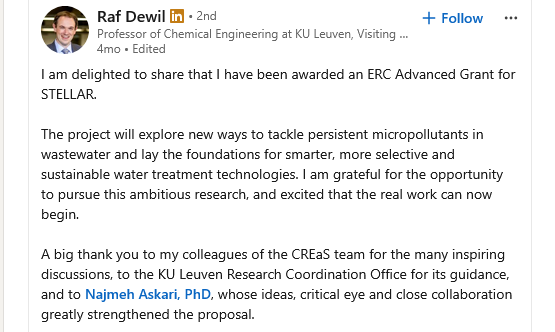
The EU Commission just gave Dewil €2.5 Million for his STELLAR project “Sense-Capture-Destroy-Regenerate: A multi-stimuli molecular strategy for autonomous removal of emerging micropollutants from wastewater“:
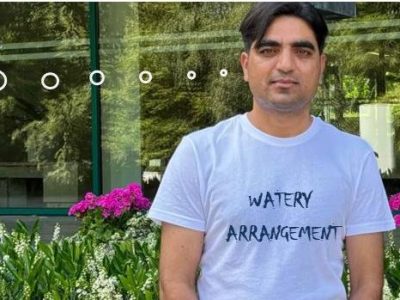
Dewil’s EU-Commission-sponsored postdoc Najmeh Askari published stuff like this, from when she was still at University of Isfahan in Iran:
Tetraphleps parallelus: “Identical noise and peak in XRD patterns of Bi2S3/CuWO4 and Bi2S3/CuWO4/FTO”
€2.5 million for Iranian papermills, wow. Now you know why your EU grant applications were rejected with prejudice, dear reader.
Publication Ethics and Strategies for Successful Scientific Publishing
Teofil Jesionowski, Rector Magnificus of Poznan University of Technology in Poland, suffered his second retraction. Again with his former protege and Pakistani papermiller Muhammad Bilal, who then moved on to Gdansk University of Technology, where he was sacked after my reporting.
“To date, he has authored over 700 peer-reviewed articles, 150 book chapters, 25 edited books, and 10 editorial-type scientific articles in various areas of Science and Engineering. Dr. Bilal has a h-index of 94 with 34 000 citations (Google Scholar).”
Here, His Magnificence, with help of his minion Jakub Zdarta, Bilal, and Bilal’s friend Hafiz Iqbal, invented “a new field called nanozymology, which blends nanotechnology with enzymology“:
The paper contained tortured phrases like “[C=O] bunches“, “chemically dynamic destinations“, “slight underlying contrasts“, “modest circumstances” or “veritable compounds“. Hubert Wojtasek also noticed, among many other issues, that this study “contains 4 figures, none of which is original“, but ““reprinted with permission” from other articles“. A few days ago, this not yet dated retraction appeared (highlights mine):
“This article has been retracted at the request of the Editor-in-Chief.
Post-publication, an investigation conducted on behalf of the journal by Elsevier’s Research Integrity & Publishing Ethics team identified undisclosed changes in authorship between the original submission and the revised versions of this paper. Seven authors listed on the original submission were removed, and six new authors – Nida Khaliq, Mubeen Ashraf, Nazim Hussain and Zulqarnain Baqar (added during the first revision) and Jakub Zdarta and Teofil Jesionowski (added during the second revision) – were added, all without explanation or the approval of the journal editor.
The investigation also identified phrases in the article that deviate from standard technical terminology, which have also been raised as a concern on PubPeer (PubPeer – Enzyme mimic nanomaterials as nanozymes with catalytic attri…). The corresponding author was contacted regarding these observations but did not provide a substantive response.
During the course of the investigation, two of the article’s co-authors, Jakub Zdarta and Teofil Jesionowski, wrote to the Editor-in-Chief requesting retraction of the article, citing concerns regarding its scientific content.
The Editor-in-Chief has determined that, taken together, the unexplained authorship changes and the unresolved concerns regarding the article’s integrity mean that the article’s findings cannot be relied upon, and it has therefore been retracted.”
What happened was this: Bilal and Hafiz sold 7 authors positions on their papermill product, but these people failed to pay. Papermill industry does not tolerate dishonesty and cheating, so in the revision, these free-riders were taken off the paper. Six new paying customers were found, while His Magnificence Jesionowski and his little minion Zdatra got the authorship for free, after all, they already made sure Bilal was paid by Polish tax money. After the Bilal affair exploded, Jesionowski swiftly appointed himself Poland’s Champion of Research Integrity, and started to play victim.
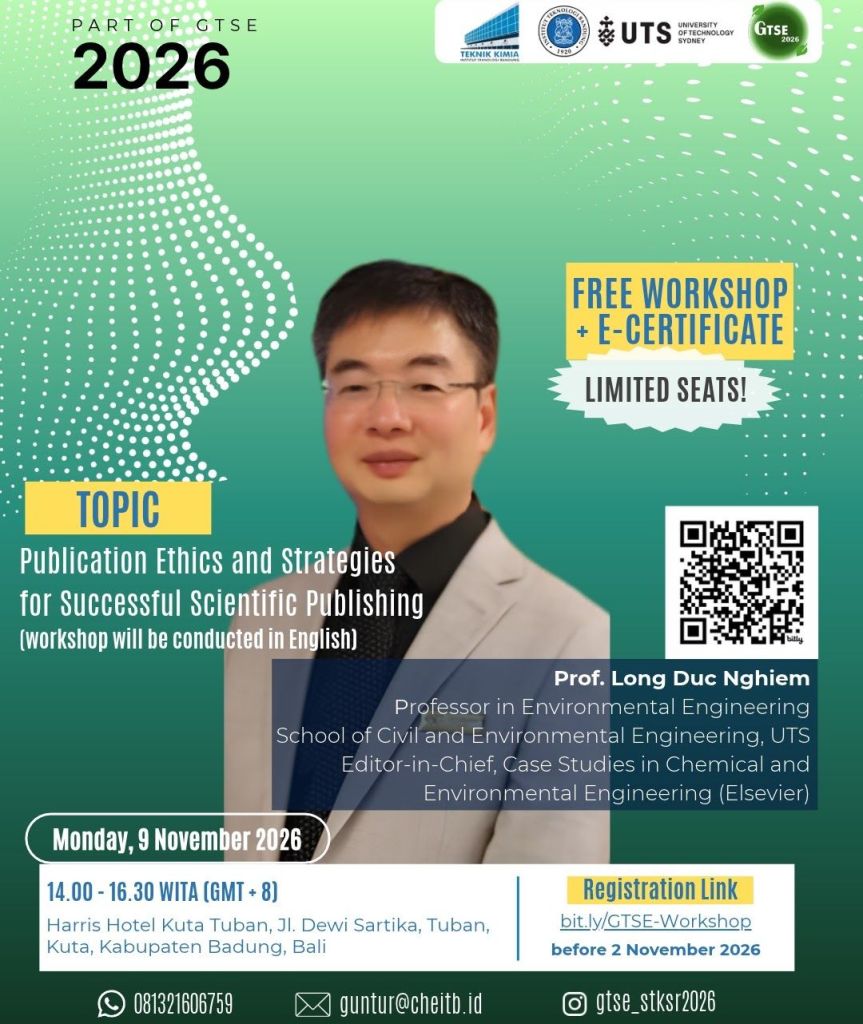
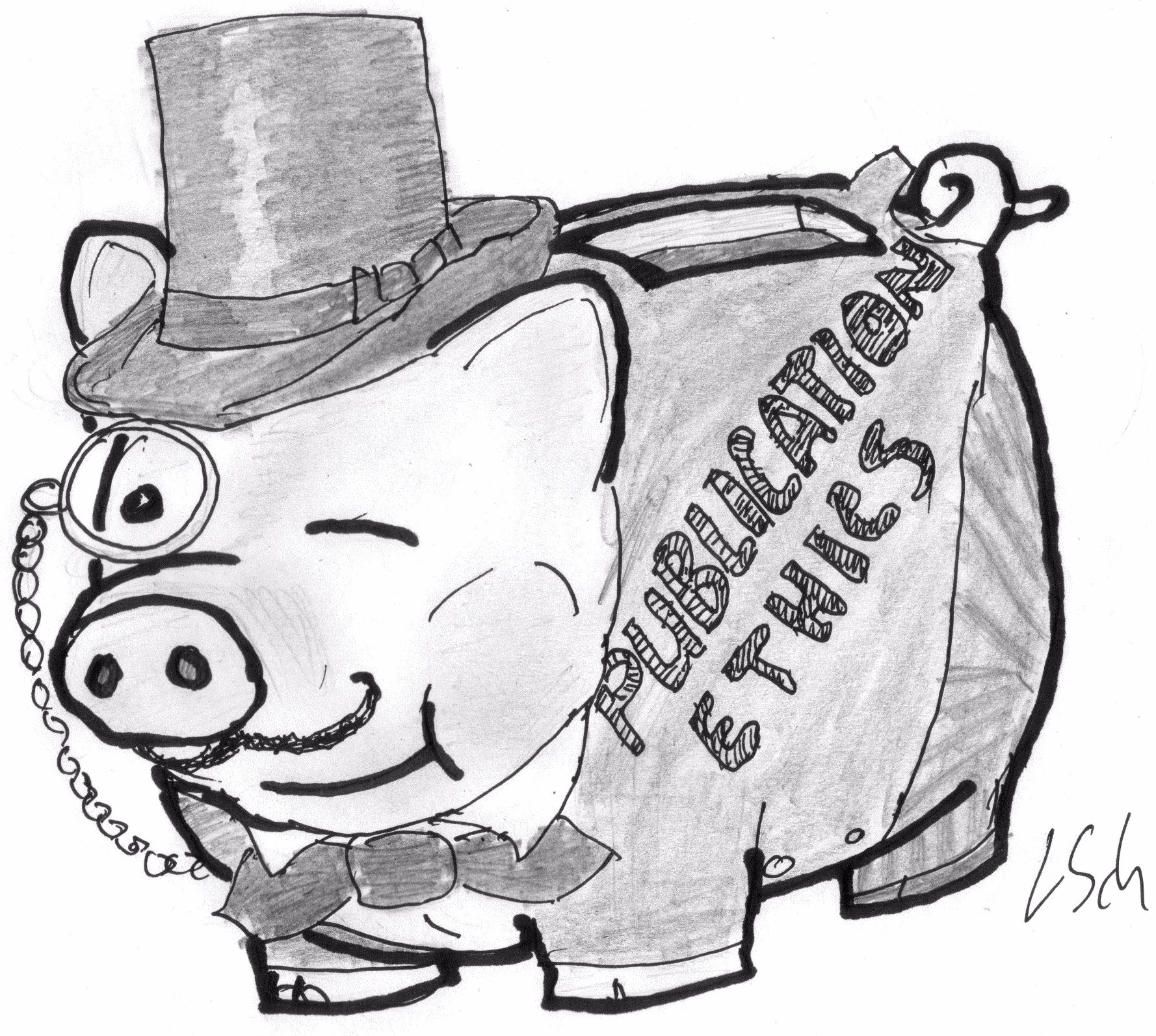
Just last week, His Magnificence graced the Indonesian island of Bali, but not for holidays, perish the thought. He co-organised a conference called “5th Green Technology for Sustainable Environment” (GTSE2026), and participated in the opening workshop on “Publication Ethics” by a the conference chair Long D Nghiem, professor at University of Technology Sydney in Australia, and Jesionowski’s and Zdatra’s dearest friend and papermill provider (read October 2026 Shorts). This is Nghiem’s PubPeer record of papermilling, and this is his workshop at the Bali conference:
“Publication Ethics and Strategies for Successful Scientific Publishing” (GTSE 2026)
From my position as armchair psychologist, I suspect that these professors do sincerely believe that they are honest scientists, and those who refuse to order authorships on plagiarised or AI-generated slop from papermills, are the fraudsters.
A structural investment for the future of Italian research
Now to Italy, where Chiara Riganti, medicine professor at University of Turin, recently earned three retractions. I wrote about this massive cheater and pathological liar with almost 60 outrageously fake papers on PubPeer in December 2025 Shorts.
Aneurus inconstans: “The TBP control of Figure 4A also appears in Figure 7A (red boxes), but the treatments are different. […]The TBP control of Figure 5A also appears in Figure 7A (blue boxes), but the cell lines are different.”
“Following publication, concerns were brought to the attention of the Editorial Office regarding the integrity of figures presented in this publication [1].
In accordance with the journal’s standard procedures, the Editorial Office and Editorial Board conducted an investigation that identified apparent duplications between sub-images in Figures 4A and 7A, as well as Figures 5A and 7A, which were reported as representing different experimental conditions. Although the authors cooperated with the investigation, the explanations and supporting materials provided were not deemed sufficient by the Editorial Board to resolve these concerns. Consequently, the Editorial Board lost confidence in the reliability of the data reported in this article and has decided to retract the publication”
We are told the authors disagreed. They also disagree with a previous retraction, also in MDPI:
Aneurus inconstans : “Three Nrf2 bands of Figure 1A have been flipped horizontally and reused in Figure 3A to describe Tubulin (red boxes). Four TBP bands of Figure 1A have been squeezed vertically and reused in Figure 4C for describing Tubulin (blue boxes). Four Ref-1 bands of Figure 6A have been mirrored vertically and resized in Figure 3A, where they describe SOD2 (pink boxes).”
“Following publication, concerns were brought to the attention of the Editorial Office regarding the integrity of a number of figures presented in this article [1].
In accordance with the journal’s standard procedures, an investigation was conducted by the Editorial Office and Editorial Board which identified indications of inappropriate image editing and duplication in Figures 1A, 3A and 4C. Although the authors cooperated with the investigation, the explanations and supporting materials provided were not deemed sufficient by the Editorial Board to resolve the identified concerns. As a result, the Editorial Board has lost confidence in the reliability of the findings and has decided to retract this publication”
As you see, also this paper featured as last author University of Turin’s associate professor Elisabetta Aldieri. Another coauthor above is Loredana Bergandi, who featured in March 2026 Shorts.
This one, an a society journal published by Elsevier, features Angela Ianaro, a former Italian MP:
Aneurus inconstans (with Maarten van Kampen): “Figure 6F: upon contrast enhancement it is possible to spot identical portions of background within blots (boxes and ellipses of same color).”
“Concerns were raised about Fig. 6 on PubPeer (https://pubpeer.com/publications/6AB84C99047288A8AA654D14510D3D), specifically relating to Fig. 6F. The Journal contacted the authors for a response. The authors responded and provided raw data for the article. An assessment by the Editors found evidence of image manipulation in Fig. 6F. The authors were unable to provide a convincing explanation for this issue and did not claim that the image was reliable. As a result, the Editor-in-Chief lost confidence in the findings and decided to retract the article.
The authors do not agree with the retraction and stand by the results of the study”
“You may think this is just a silly prank with zero impact on whatsoever, but no. […] this initiative is useful for something. It provides solid numbers for quantifying the extent of scientific misconduct in Italy and beyond” – Aneurus Inconstans
Last month, Riganti and her fellow members of the “Top Italian Scientists” club wrote an open letter to the Italian minister of universities and research, Anna Maria Bernini, as well as to the rectors of Italian universities and presidents of public research bodies and Academies of Sciences, to propose “A structural investment for the future of Italian research“:
“We therefore propose to combine large competitive funding with a stable national system of basic, widespread and meritocratic funding, intended to support the ordinary research activity of a large audience of qualified scholars.”
Riganti is signatory Nr 10 of 122 original sigantories, which means she is one of the organisers of this open letter. I agree – the Italian state absolutely must give all its research money to scholars like Riganti, based solely on meritocratic metrics like retractions and PubPeer threads. Good thing For Better Science is blocked in Italy, on court orders.
“…request for preventive seizure made on 12.4.2024 by the Public Prosecutor in charge, concerning the article under indictment, still accessible on the website called forbetterscience.com, although it appears to have been removed from the blog.repubblica.it website (referred to in the indictment)…”
We return to the topic of AI slop. Here is a piece by British and American scholars, led by Anastasia Christou, professor of sociology and social justice at Middlesex University in London. The topic is, as you see, very important:
The PubPeer user Dactylosporangium fulvum reported:
“The following references in the published editorial exhibit the classic signatures of AI-generated citations: real scholars paired with fake titles, real titles/DOIs re-attributed to non-existent papers by different authors, and correctly formatted-but-unregistered DOIs that mimic legitimate publisher prefixes. Each is cited multiple times in the running text and used to support substantive claims. Where the same reference is also the vehicle for concealing duplicated text from a real (but uncited) source, that connection is noted here and documented”
Followed by extensive evidence for AI-hallucinated references and plagiarism of text. The publisher then infringed the academic freedom of Christou et al, trampled upon their freedom of thought, and applied its own politics of knowledge by retracting this paper on 12 November 2026:
“Following publication, it was noted that several references in the article contained incorrect information or were unable to be verified, and that there appeared to be inconsistencies with previously published work. When requested to provide more details to verify the references and citations, the authors provided responses, however these did not address our concerns.
The validity of the references and citations is integral to the scientific integrity of an article. As the publisher has been unable to determine the validity of the references and citations, we are therefore retracting the article. The authors agree with the retraction.”
Donate!
If you are interested to support my work, you can leave here a small tip of $5. Or several of small tips, just increase the amount as you like (2x=€10; 5x=€25). Your generous patronage of my journalism will be most appreciated!
















0 comments on “Schneider Shorts 20.11.2026 – Publication Ethics and Strategies for Successful Scientific Publishing”