

Alexander Magazinov would like you to meet another Iranian genius. Hossein Azadi, or “Prof Dr Dr Azadi”, as he is known at the University of Halle-Wittenberg in Germany. Azadi has many talents, one of them is being able to work (and earn salaries) at several universities in several European countries at the same time: two in Germany, two in Belgium, plus Czechia, Romania and Estonia, and this on top of his full professorship in China. Another talent is papermilling, Azadi published with various European professors some pathetically bad trash, which however is occasionally even funny.
While other universities seem to be quietly divesting of Azadi’s presence, the University of Halle has a different approach, their anger is primarily directed at us, the critics of Azadi. Understandable, since Halle is in Saxony-Anhalt where the pro-russian far-right extremist party AfD won the state elections and is about to form the first N@Z1 government in Germany since 1945. Their leader already announced to deploy tanks against citizens with migrant background. Incidentally, the Halle police is commemorating the anniversary of the attempted mass murder in the Halle Synagogue by investigating Jewish student protesters for allegedly calling a “Nazi” the new AfD vice-president of the state parliament – a racist and an antisemite who celebrates putin and Assad. New wind is blowing in Saxony-Anhalt, also in the emails from this university’s Ombudsman.

Exceptionally moo!
by Alexander Magazinov
Meet Hossein Azadi, a researcher whose exact whereabouts are unclear, but whose bullshit is praised by various European institutions, because all the green buzzwords are in place – and who cares about the substance?
These are just the institutions where Azadi has a profile page:
- Ghent University in Belgium lists Azadi as a “professor” at the Department of Geography, Faculty of Arts and Philosophy.
- University of Liege in Belgium has a record of Azadi’s presence, but the link to contact details says, “The person no longer works at ULiège.”
- University of Halle-Wittenberg in Germany lists Dr Dr Azadi at the Institute of Geosciences and Geography, an institutional website of the State of Saxony Anhalt lists him as professor.
- University of Hamburg in Germany lists Azadi at the Climate, Climatic Change and Society (CLICCS) “Excellence cluster.”
- Estonian University of Life Sciences in Tartu lists Azadi as “visiting professor” at the “Chair of Economics in Rural Economy.”
- Babes-Bolyai University in Cluj-Napoca, Romania, whose STAR Institute lists Azadi as head of “CSIII – Sustainable development”.
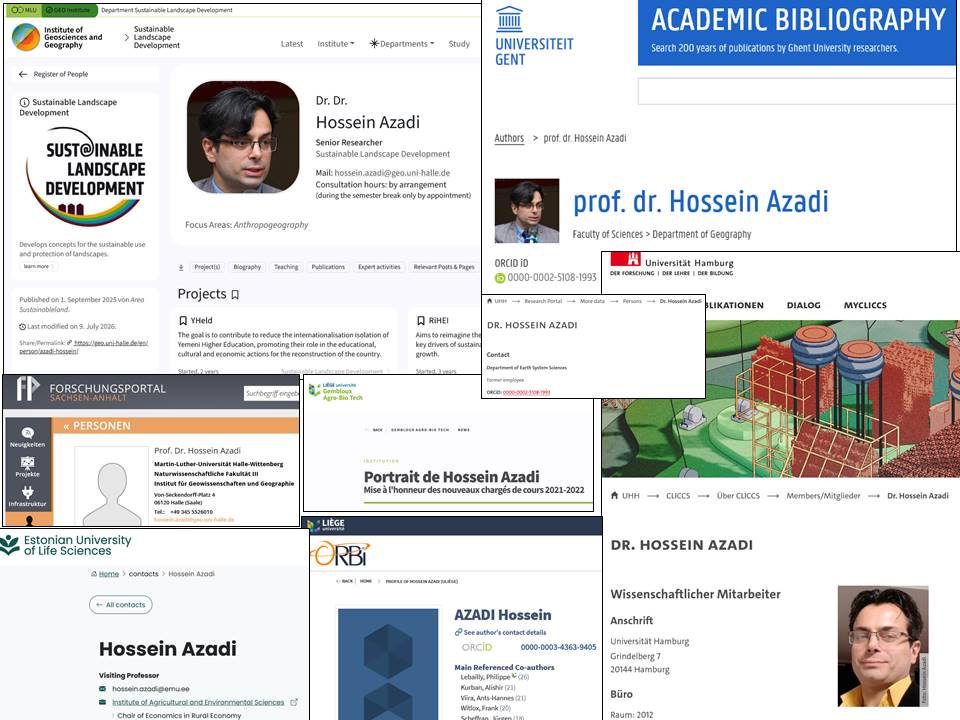
This is still a fraction of affiliations claimed by Azadi in his publications.
Azadi appeared on my radar because of his retractions in The Science of Total Environment, now a delisted dead shell of a journal, where Elsevier is trying to figure out the right amount of clean-up.
This was retracted on 10 August 2026:
Saeedeh Nazari Nooghabi, Hossein Azadi, Luuk Fleskens, Kristina Janečková , Petr Sklenička, Frank Witlox, Social, economic and environmental vulnerability: The case of wheat farmers in Northeast Iran, The Science of The Total Environment (2022), doi: 10.1016/j.scitotenv.2021.151519
“Post-publication, an investigation conducted on behalf of the journal by Elsevier’s Research Integrity & Publishing Ethics team discovered suspicious changes in authorship between the original submission and the revised version of this paper. During revision, the authors Kristina Janekov, Petr Sklenika, and Frank Witlox were added to the revised paper without explanation and without exceptional approval by the journal editor, which is contrary to the journal policy on changes to authorship.”
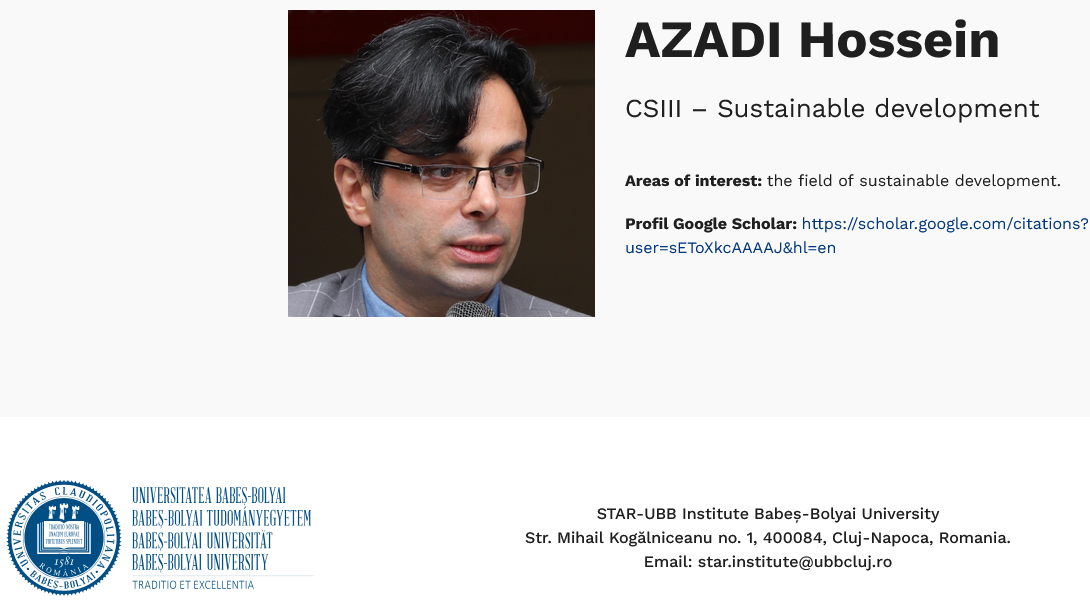
Among the authors, we find a Czech bigwig: Petr Sklenička, former rector of the Czech University of Life Sciences in Prague (where Azadi used to be affiliated at), former chairman of the Czech Conference of Rectors, and since February 2026 Chairman of the governmental Technology Agency of the Czech Republic. The other Czech coauthor, Kristina Janečková, is his lab member. Here is Sklenicka hosting Prof Dr Azadi in Prague:

Then we see a Belgian professor Frank Witlox (department chair at Ghent University, where Azadi was employed) and a Dutch coauthor, Luuk Fleskens, associate professor at Wageningen University. The first author Saeedeh Nazari Nooghabi is Data Coordinator at the University of Guelph in Canada, where she was seen using ChatGPT to write her papers (Nooghabi et al 2026); her boss at Guelph, Amar K Mohanty, and her closest local collaborator, Manjusri Misra, have a PubPeer record of questionable science (here and here), including a retraction for fake XRD (Picard et al 2019).

Salesmen of Green Economy Bullshit
“This bullshit is a form of greenwashing, as policymakers might believe that with growing amount of “research” we are making progress. Except we are heading nowhere.” – Alexander Magazinov

This retraction is dated 25 September 2026, the mistyped names are Elsevier’s fault:
Shansong Huang, Samane Ghazali, Hossein Azadi, Saghi Movahhed Moghaddam, Ants-Hannes Viira, Kristina Janečková, Petr Sklenička, David Lopez-Carr, Michael Köhl, Alishir Kurban, Contribution of agricultural land conversion to global GHG emissions: A meta-analysis, The Science of The Total Environment (2023), doi: 10.1016/j.scitotenv.2023.162269
“Post-publication, an investigation conducted on behalf of the journal by Elsevier’s Research Integrity & Publishing Ethics team discovered suspicious changes in authorship between the original submission and the revised version of this paper. During revision, authors Alishir Kurban, David Lopez-Carr, Kristina Janekov, Michael Khl, Petr Sklenika, and Shansong Huang were added to the paper, and 2 authors were removed from the paper. These changes were made without explanation and without exceptional approval by the journal editor, which is contrary to the journal policy on changes to authorship. […]
The authors disagree with the retraction and dispute the grounds for it.”
There, we again find Sklenicka and Janeckova, plus their postdoc Saghi Movahhed Moghaddam. Then we find an American, David López-Carr, professor of at the University of California Santa Barbara, where Azadi claims to have been a fellow. There is also Michael Köhl, retired professor of forestry science at the University of Hamburg, where Azadi currently is employed, or until recently was. We also have an Estonian bigwig: Ants-Hannes Viira, now head of agricultural policy at Estonian Chamber of Agriculture and Commerce, but until 2025 researcher at Estonian University of Life Sciences (which explains Azadi’s visiting professorship there).
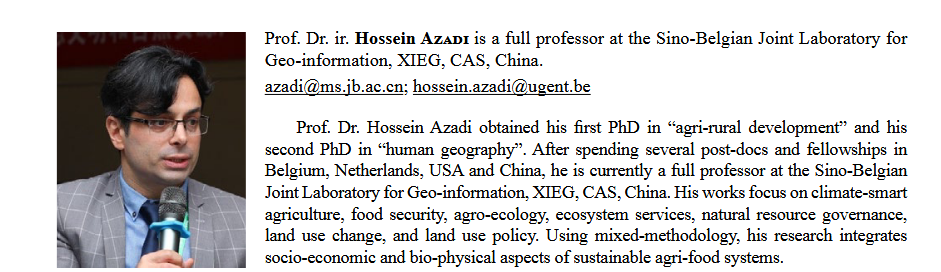
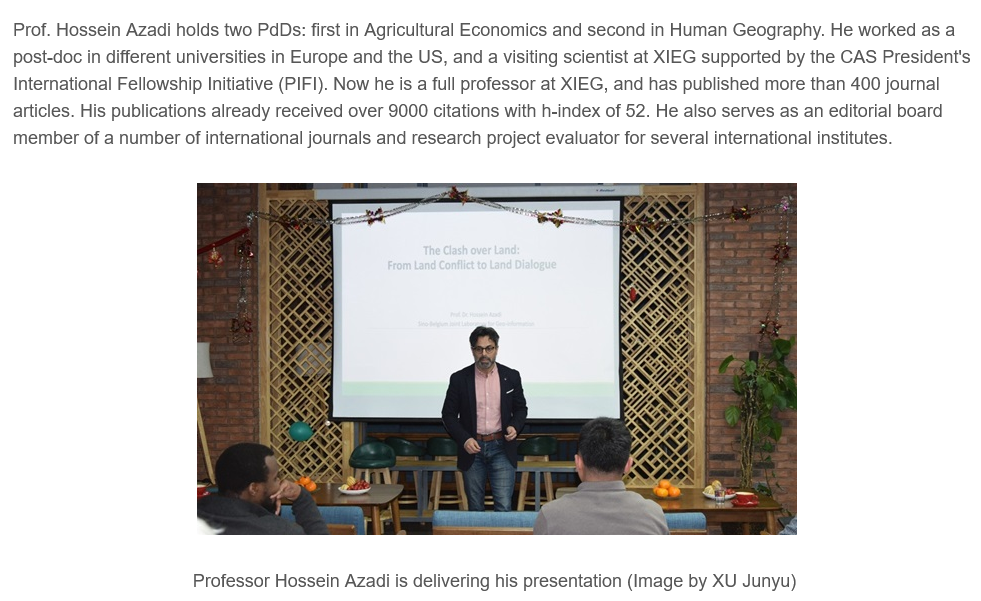
The last author is Alishir Kurban, professor at Xinjiang Institute of Ecology and Geography in China (XIEG), member of the Royal Academy of Overseas Sciences of Belgium (RAOS) and head of Sino-Belgium Joint Laboratory for Geo-information in Xinjiang, where Azadi is visiting professor, next to various Belgian, German, Russian, Dutch, US-American and other international scholars. RAOS and Chinese Academy of Sciences carried out in 2025 a joint ecology conference in Brussels featuring Azadi, Kurban and several Belgian and Chinese professors.
Across the two articles, Azadi lists affiliations to XIEG, University of Liège, Czech University of Life Sciences Prague, Ghent University and yet another one we haven’t heard of yet: Babeș-Bolyai University in Cluj-Napoca, Romania.

Look What the Cat Dragged In
Meet Mohammad Taheri, PhD, a humble PhD student in Jena, Germany, and his equally unremarkable Iranian associate Dr Soudeh Ghafouri-Fard.
Then again, Azadi’s host in Ghent and “Senior Full Professor of Economic Geography” Witlox, somehow also found a reason to credit additional affiliations: University of Tartu and Nanjing University of Aeronautics and Astronautics, the latter totally in line with the overall trend of attraction to Chinese defence-related institutions among European academics. But then again, he also declares these visiting professorships on his institutional webpage in Ghent.
And then came a bunch of ridiculous corrections. This one features Sklenicka, and another new face: Claudete Oliveira Moreira, assistant professor in at the University of Coimbra in Portugal.
Azam Ranjbar, Mohammad Sadegh Ebrahimi, Amir Mozafar Amini, Anwar Eziz, Petr Sklenička, Claudete Oliveira Moreira, Hossein Azadi, Factors Affecting Water Ethics Principles from the Perspective of Farmers in Lordegan Township, Iran, Journal of Agricultural and Environmental Ethics (2026), doi: 10.1007/s10806-025-09966-0
From the study, highlights mine:
“These standards were framed through related pointers and within the shape of questions with a 5-point Likert scale (exceptionally moo = 1, exceptionally tall = 5) and within the plan and extraction rank scale and evaluated the nature of agriculturists with these standards (Table 2).”
The funny “exceptionally moo” stands for prosaic “very low“: a word-spinner replaced “low” by “moo” because an old English verb “to low” means “to make a cow sound.” A reader could find even more phrase-torturing, including “ranchers” and “agriculturists” instead of “farmers,” “foremost component examination (PCA)” instead of “principal component analysis (PCA),” etc. Also, the term “ignorant,” when used for people who have not received formal education, is normally considered offensive… but here, in a work by respected scholars, it is absolutely all right.
For some extra irony, this “exceptionally moo” article was placed in Journal of Agricultural and Environmental Ethics. If the authors aimed to take the piss at a journal with “ethics” in the title, then they got what they wanted.
Again, Azadi’s affiliations are spread across the world: XIEG, Czech University of Life Sciences, Ghent University, Babeş-Bolyai University.
On 6 September 2026, the journal issued this Correction:
“In this article, there are multiple corrections in the text as listed below.
In the section – Questionnaire Design, the text – These standards were framed through related pointers and within the shape of questions with a 5-point Likert scale (exceptionally moo = 1, exceptionally tall = 5) and within the plan and extraction rank scale and evaluated the nature of agriculturists with these standards (Table 2).
must be published as,
Farmers’ awareness of water ethics principles was assessed using a set of indicators derived from the relevant literature. These indicators were formulated as questionnaire items, and responses were recorded on a five-point Likert scale ranging from very low (1) to very high (5). The resulting scores were used to assess and rank farmers’ awareness of the water ethics principles presented in Table 2. The conceptual framework of the study is presented in Fig. 1.
In the Results section,
the text, The normal age of agriculturists within the ponder populace is 54 which is a long time and this shows the high age of ranchers within the think about populace. 32.9% of the respondents are ignorant and 14.2% of them have a college instruction. 87.7% of agriculturists utilize groundwater assets such as wells, springs, and water passages (Qanat) for farming.
must be published as,
The results show that the average age of the studied farmers was 54 years, while 32.9% of the respondents were illiterate and 14.2% had higher education. In addition, 87.7% of the farmers used groundwater sources (including wells, springs, and aqueducts) for agriculture.
the text The Kaiser model (1960) was utilized for selecting basic components or guideline components clarifying the information. In this ponder, the number was chosen by taking out components with comparing eigenvalues of less than one. Typically, the run of conducting foremost component examination (PCA) employing a relationship lattice. Since PCA uses initial communalities of one, it tends to blow up factor loadings, which makes distinguishing proof of designs moderately simpler.
must be published as,
Principal components were extracted from the correlation matrix and retained according to the Kaiser criterion (1960), whereby only components with eigenvalues greater than one were retained. On this basis, four components were retained, with eigenvalues of 5.130, 2.993, 2.709, and 2.077, respectively, accounting jointly for 47.810% of the total variance (Table 6).
the text – For this examination, 22 variables were chosen (Table 6).
must be published as.
The variables included in the analysis are presented in Table 7.
In Table 6, the text – Number of extricating components, eigenvalues, and change clarified by each factor.
must be published as.
Extracted factors, eigenvalues, and percentage of variance explained by each factor.
The original article has been corrected.”

A similar thing happened in an another Springer Nature journal, Environmental Monitoring and Assessment.
Soraya Yaghobi, Alireza Daneshi, Sajad Khoshnood, Hossein Azadi, Accuracy of pixel-based classification: application of different algorithms to landscapes of Western Iran, Environmental Monitoring and Assessment (2023), doi: 10.1007/s10661-023-10985-5
The article was flagged by Guillaume Cabanac back in 2024:
“This Springer article contains several tortured phrases that make some passages hard to parse. These typically result from an attempt to avoid plagiarism detection using a paraphrasing software.”
| Tortured Phrases (found) | Established Phrases (expected) |
|---|---|
| help vector machine | support vector machine (SVM) |
| help vectors AND support vectors | support vectors (in SVM) |
| random woodland | random forest |
| support vector device | support vector machine (SVM) |
| thick woods AND learning | dense forest |
Unusually, Azadi comes with a single affiliation here – University of Liège.
A Correction arrived on September 09, 2026. It is too extensive to be posted here, some representative excerpts:
“Unfortunately, the original version of this article contained errors in the main body text.
On pages 2, 3, and 5: Non-standard variants of the established term “support vector machine” appear in the Introduction/literature review and classification description, including “vector support machinery”, “supporting vector machine”, “vector network system”, “support vector devices”, “vector machine support”, “Help Vector Machine”, and “help vector machine” should be corrected to “support vector machine (SVM)” or “support vector machines”. […]
On page 3, in the Introduction section, ”two help vector methods (radial and linear)” should be corrected to “two support vector machine (SVM) methods (radial and linear)”. […]
On page 2, in the Introduction section, “blurred reasoning” and “tree judgment” should be corrected to “fuzzy logic” and “decision tree”, respectively. […]
On page 3, in the Introduction section, “random woodland” should be corrected to “random forest (RF)”. […]
On page 3, in the Introduction section, in the description of Shaharum et al. (2018): “dense woodland, less thick woodland or farmland” should be corrected to “dense forest, less dense forest or agriculture”. […]
On page 6, the term ”educational process” occurs twice in the ANN algorithm description and should be corrected to ”training process” in both instances. […]
On page 8: “thick woods had significantly decreased” should be corrected to “dense forest had significantly decreased”.
On page 9: The Conclusion reports the SVM overall accuracy as “84.48%”, whereas Table 1 reports “44.48%”. “84.48%” should be corrected to “44.48%”for SVM overall accuracy in the Conclusion section.
On page 9, in the Author Contributions section, “S. A.” should be corrected to “S. Y.””
There was lots and lots more in that correction, none of which affected any of the conclusions.

My Liège is not so vile a sin
“The Board of Ethics and Scientific Integrity of University of Liège investigated the overlap between the aforementioned panels and recommended the article be corrected”

Yet another correction for phrase-torturing, this time in an MDPI journal Land. There are just two authors. the other being Ghent University’s history professor named Eric Vanhaute:
Hossein Azadi, Eric Vanhaute, Mutual Effects of Land Distribution and Economic Development: Evidence from Asia, Africa, and Latin America, Land (2019), doi: 10.3390/land8060096
This is vintage – from 2019 – when Azadi hasn’t yet discovered the benefits of multiple affiliations – here he is just at Ghent. But yes, there is the signature phrase-torturing. This time, there is a clear source for that text, and it was not acknowledged: an article in The Conversation by South African researchers Leslie J Bank and Tim GB Hart.
| Azadi and Vanhaute, Land (2019) | Bank and Hart, The Conversation (2017) |
| As of late, there has been a critical ascent in the foundation of casual land markets. This shows that slighted rustic land has generous esteem. In any case, this esteem is being undermined by an absence of suitable titling openings and land practical frameworks. What is required is an integrated and comprehensive land change program. […] Integrated land distribution must also consider all lands as financially important and should try boosting its potential without undermining the social rights and articulation of characters of individuals. Such a program ought to perceive, to the point that unused land can be used to address neediness and invigorate development on the off chance that is joined into provincial esteem chains. | Recently there’s been a significant rise in the establishment of informal land markets. This indicates that disregarded rural land has substantial value. But this value is being undermined by a lack of appropriate titling opportunities and land management systems. What is required is a single and inclusive land reform programme. It must view all land as economically valuable and aim to maximise its potential without undermining people’s social and cultural rights and expressions of identity and belonging. Such a programme should recognise that unused land can be used to address poverty and stimulate growth if it is incorporated into rural value chains. |
A correction, dated 27 August 2026, reads:
“In the original publication [1], the work by Bank and Hart [55] was not cited, and the final paragraph of the Discussion contained unclear and imprecise wording. The missing citation has now been added, and the paragraph has been revised for clarity and accuracy. The final paragraph of the Discussion on page 12 should read as follows:
Bank and Hart [55] describe the recent expansion of informal land markets and demonstrate that rural land often has substantial but insufficiently recognised economic value. Where registration, titling, and effective land administration remain limited, however, that value cannot be realised securely or equitably. These constraints point to the need for an integrated land reform strategy rather than isolated interventions. At national and local levels, integrated land-allocation planning should combine evidence on existing land-use systems, environmental conditions, and other biophysical characteristics to clarify their relationships with poverty and food security. Such planning should recognise the economic potential of land while seeking to improve its productive capacity without compromising social rights, customary attachments, or the ways in which people express identity through land. Incorporating underused land into inclusive rural value chains may consequently support poverty reduction and broader economic development [55,56].
The authors state that the scientific conclusions are unaffected. This correction was approved by the Academic Editor. The original publication has also been updated.”
Call me unsurprised here – MDPI fix tortured phrases with corrections all the time, and one of their editors is a champion of this approach.
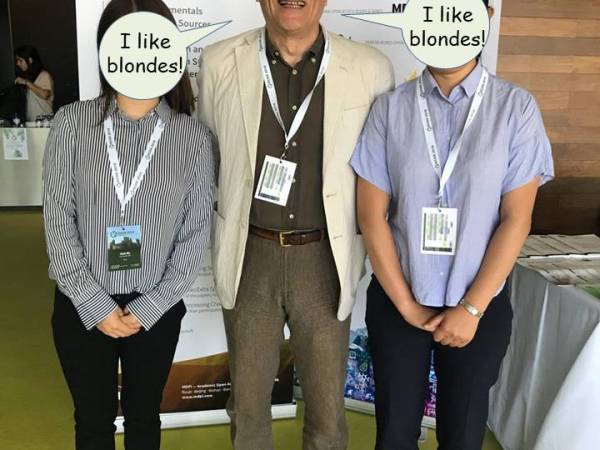
The perfect MDPI editor
“I know you cannot understand such matters, since you appear to have strong mother-related problems that most likely have denied you of a satisfactory sexual life”, _ Enrico Sciubba, Editor-in-Chief
Again Elsevier’s The Science of the Total Environment, this time a correction. It features yet another Belgian scholar, Steven Van Passel, economics professor at the University of Antwerp.
Lida Sharafi, Kiumars Zarafshani, Marzieh Keshavarz, Hossein Azadi, Steven Van Passel, Farmers’ decision to use drought early warning system in developing countries, The Science of The Total Environment (2021), doi: 10.1016/j.scitotenv.2020.142761
“The authors regret that the published article contains inaccuracies in the geographical information and terminology used to describe the study area. In the Abstract and the “Sampling and survey instrument” section, “Kermanshah Township” should be replaced with “Kermanshah County.””
(Correction, dated 15 September 2026)
Another journal by Elsevier, Soil and Tillage Research, also issued a correction. There, we finally meet Azadi’s host in Hamburg: professor Jürgen Scheffran, head of Research Group Climate Change and Security (CLISEC). We also find a Polish professor, Marcin Pietrzykowski of the Agricultural University in Krakow, and a professor from University of Montenegro, Velibor Spalevic, the latter has a PubPeer record of questionable science, including fake and hand-drawn spectra in Amari et al 2024.
Mohammed Adem, Hossein Azadi, Velibor Spalevic, Marcin Pietrzykowski, Jürgen Scheffran, Impact of integrated soil fertility management practices on maize yield in Ethiopia, Soil and Tillage Research (2023) doi: 10.1016/j.still.2022.105595

This is the Correction. future-dated for January 2027:
“Following a post-publication review, the authors identified an inconsistency between Table 6 and the corresponding descriptions in the Abstract and Section 3.3.2. The affected paragraph in Section 3.3.2 also contains a duplicated passage. Table 6 correctly reports the estimated adoption impacts and requires no amendment. The corrections are set out below.”
All these corrections coincidentally happened within a short time frame, just after Leonid and myself notified some of Azadi’s universities. So far, the reaction from Ghent was the most chaotic. I received this from Stefanie Van der Burght, secretary of the Commission for Research Integrity (CWI) in Ghent University:
“In the meantime, we have contacted Prof. Azadi and are awaiting his reply.
At the very least, this will involve an adjustment to the affiliation associated with this paper. As things stand, our institution has no involvement whatsoever in the work underlying the [exceptionally moo – A.M.] paper and it cannot therefore be published under the Ghent University affiliation. In addition, we are continuing to examine the substantive discrepancies you have highlighted.“
And the next one from CWI:
“In the meanwhile, a correction to this [exceptionally moo – A.M.] article has been made: […].
We would be pleased to hear your views on this correction. If you consider it to be inadequate, please provide us with a list of the relevant passages and the specific comments you wish to make regarding them.“

Environmental Pseudoscience and Polluted Research
“We are living in a faked world and there is a lot of un-verified avatars. “, Philippe Garrigues, EiC
Apparently, Ghent folks consider it a perfectly fine course of action asking me to re-review this junk for free. As an exception, I am happy to do this, just to add to their embarrassment. Here are some uncorrected passages.
“Ethical commitments to future eras request that, in addition to financial esteem, water must be considered as a social and cultural component (Wellington, 2018). Since 75% of the world’s 1,200 million destitute individuals depend on agribusiness as their essential source of salary, the usage of moral commitments in this range leads to the sharing of restricted but renewable water assets. […]
This Township covers 342,000 ha and lies between scopes 30º and 55′ to 31º and 26′ and longitudes 49º and 50′ to 34º and 26′ (Fig. 2). This region is found in a precipitous zone at an elevation of between 830 and 4416 m over the ocean level, with a normal stature [average elevation – A.M.] of 2332 m (Mahmoudi et al., 2023).”
Another sign that the corrections were rushed, is that Tim Kersjes of Springer Nature expressed total surprise with them (also thanks Guillaume Cabanac for weighing in):
“I wasn’t aware of this one (my team is not involved in all corrections), but I’ll check with the journal directly.”

Russkiy Mir at Elsevier and MDPI
Alexander Magazinov presents you two russian professors whom Elsevier and MDPI consider respectable: a Lt Colonel of putin’s mass-murdering army, and a machine-gun totting rascist. Both buy from papermills.
Will Azadi eventually correct this one, too?
Imaneh Goli, Hiva Khalili Marandi, Farhad Lashgarara, Zita Kriaučiūnienė, Ahsen Işık Özgüven, Rando Värnik, Christine Fürst, Petr Sklenicka, Hossein Azadi, Environmental Governance, Urban Sustainability, and Adaptation Strategies: The Nexus of Food—Water—Energy, Land Degradation & Development (2026), doi: 10.1002/ldr.70344
“In this context, Ghosh et al. (2021) stated that addressing the challenges of FWE safety in urban areas (e.g., São Paulo and San Diego) requires fundamental approaches such as sustainable land use planning, integrated water management, and the development of renewable energy.”
Ghosh et al., 2021: “Silk Nanodisc Based Edible Chitosan Nanocomposite Coating for Fresh Produces: A Candidate With Superior Thermal, Hydrophobic, Optical, Mechanical and Food Properties.”
FWE stands here for “Food—Water—Energy“, other people use the abbreviation for “Food Warming Equipment“, which is probably why the LLM which wrote that study decided to reference a paper about edible chitosan for food packaging.
“Furthermore, studies on the relationship between environmental governance and urban sustainability (e.g., Briassoulis 2011; Cheng and Li 2019) have shown that effective governance is crucial for ensuring sustainable development in cities, as it can create policies and institutions that enhance sustainable urban development as well as implementing sustainable practices at the local and higher levels.”
Briassoulis, 2011: “Opposition to Golf-Related Tourism Development: An Interpretivist Analysis of an Online Petition.”
Maybe the LLM was fed with too much Trump material and decided that golf was the absolute centrepiece for everything.
Bergmann and Ossewaarde, 2020: “Youth Climate Activists Meet Environmental Governance: Ageist Depictions of the FFF Movement and Greta Thunberg in German Newspaper Coverage.”
“In this context, Sharifi et al. (2021) and Bergmann and Ossewaarde (2020) also mention that cities with strong and participatory environmental governance are more successful in implementing adaptive strategies.”
Why yes, it is a collection of pointless word-salad, more than likely LLM-generated, with random references that still bear little resemblance to the text, however vague it is. Still, the references are funny even in isolation: chitosan papermilling, golf courses, and Greta Thunberg, completing the train wreck.
As is common in this genre, there are white and important authors. Beyond Sklenička, whom we met before, there is Azadi’s current host at the University of Halle, Christine Fürst, a Professor of Sustainable Landscape Development at the Institute of Geosciences and Geography; she also served as Vice-Rector for Research, Internationalisation and Transfer from 2022 until May 2026. Then there is Zita Kriaučiūnienė, a Professor at the Department of Agroecosystems and Soil Sciences of Agronomy Faculty of Vytautas Magnus University in Kaunas, Lithuania. And there is Rando Värnik, a Professor and Chair of Economics in Rural Economy at Estonian University of Life Sciences. Finally, there is Ahsen Işık Özgüven, Dean of the Cyprus International University (the Turkish part of Cyprus).

The Highly Cited Researchers of Clarivate
“here is my advice to Clarivate: better get lost. ” – Alexander Magazinov
Another near-perfect candidate to be corrected.
Hossein Azadi, Shaghayegh Ehteshammajd, Imaneh Goli, Narges Siamian, Saghi Movahhed Moghaddam, Peter Ho, Kristina Janečková, Petr Sklenička, Advocacy and credibility of land tenure in Ethiopia: Mitigating conflicts and threats, Land Use Policy (2024), doi: 10.1016/j.landusepol.2024.107265
Table 2 was completely lifted from Pottek et al., 2017, about Democratic Republic of Congo. Hilarity was a result: apparently, Ethiopia lives according to the Congolese land law.
| Azadi et al., 2024, Table 2 | Pottek et al., 2017, Table 2 |
| Conflict-related displacement, increased land competition, ambiguous Congolese land law (irregularly defined legal duality between state law and ethno-tribal traditions, opaque norms and practices for contract validation and maintenance [emphyteutic leases, concessionary titles, acquisitive prescription, etc.]), cumulative backlogs for contract registration and titling, contradictory cultural notions of land rights, and widespread misunderstanding of both tribe and territorial law Fraud are the results of several transactions involving dishonest individuals and rebel state, or tribal officials as well as the uneven application of the law and contract enforcement. | Increasing competition over land; conflict-related displacement; ambiguities in Congolese land law (imprecisely defined legal duality of state law and ethno-tribal customs, ambiguous rules and practices for contract validation and maintenance [emphyteutic leases, concessionary titles, “acquisitive prescription”, etc.]); accumulated backlogs for contract registration and titling; conflicting cultural understandings of land rights; widespread ignorance of both tribal tenure customs and formal land law; fraud: multiple sales by fraudulent individuals, state, rebel state or tribal authorities; lack of consistent legal authority and contract enforcement. |
That was not the only source. Some passages were very likely lifted from Kalabamu, 2019, although PubPeer rejected the comparison. So it is up to the reader to judge whether similarity is accidental.
| Azadi et al., 2024 | Kalabamu, 2019 |
| The early phase of post-colonial land reform focused on restoring land to indigenous people that had been expropriated by colonial regimes, as well as harmonizing land tenure techniques with those adopted by colonial administrations. | The first wave of postcolonial land reforms focused on giving back land to indigenous communities affected by colonial expropriations as well as reconciling indigenous land tenure practices and those introduced by colonial regimes. |
| In addition, due to the numerous settlements, there have been unrestrained requests for property and numerous land disputes, including confrontations between ranchers and farmers, intensive groundwork, and irrational attacks on protected areas. However, the rest of Ethiopia likewise has severe land shortages and extensive land disputes while having a nearly zero population density. The prevalence of colonialism, Western ideals, and the possession of foreign territories and legal systems appear to have increased land disputes and threats in Ethiopia, regardless of population size and density. | High population densities [in Sao Tome and Principe, Rwanda, Burundi, Comoro, Mauritius and Seychelles] have, as theoretically argued above, resulted in insurmountable demand for land and frequent land conflicts including clashes between subsistence farmers and pastoralists, onerous land transactions and anarchic invasion of protected areas (ECA, 2012). Despite the relatively low population densities, the remainder of Sub-Saharan Africa does experience land scarcity and widespread land conflicts as well. Regardless of population sizes and densities, land conflicts in Sub-Saharan Africa appear to have increased with the advent of colonialism, western values and, above all, the introduction of alien land tenure and legal systems. |
| Despite the reforms, land conflicts have persisted or even been exacerbated. The reasons for the constant conflicts in this land include the preservation of laws, the evolution of combined tenure, or the elimination of the variations between legal and conventional tenure systems (Obayelu, 2020). | The above reforms notwithstanding, land conflicts […] have gone on unabated or worsened. Reasons for persistent land conflicts have included retention (in whole or in part) of colonial laws and tenure systems; emergence of hybrid tenures or the blurring of the differences between statutory and customary tenure systems. |
A co-author of this, Peter Ho, from Zhejiang University and University of Nottingham, is “a Professor of Development Economics and high-level national expert of China, is recognized as one of Stanford’s Top 2% of Most-Cited Scientists (by Career and Annual Index). He has published numerous books with presses such as Oxford University Press, Wiley-Blackwell and Cambridge University Press, where he also serves as Series Editor for Global Development. His work has been honored with the Kapp Prize, the Rural Development Award, and two European Research Council grants,” as the biography in one of his recent papers tells us.

In international affairs and paper mills
Alexander Magazinov would like you to meet an Iranian scholar named Ali Akbar Velayati.
Here, comments did not pass PubPeer moderation, thus again left to the reader’s judgment.
Behnam Kamkar, Mohammad Taghi Feyzbakhsh, Hassan Mokhtarpour, Jelena Barbir, Jasmin Grahić, Sylwester Tabor, Hossein Azadi, Effect of heat stress during anthesis on the Summer Maize grain formation: Using integrated modelling and multi-criteria GIS-based method, Ecological Modelling (2023), doi: 10.1016/j.ecolmodel.2023.110318
Like this, in Figure 4, where 2 degrees of longitude amount to ~220 km, as if it was on the equator, whereas at the actual latitude this distance is close to 180 km.
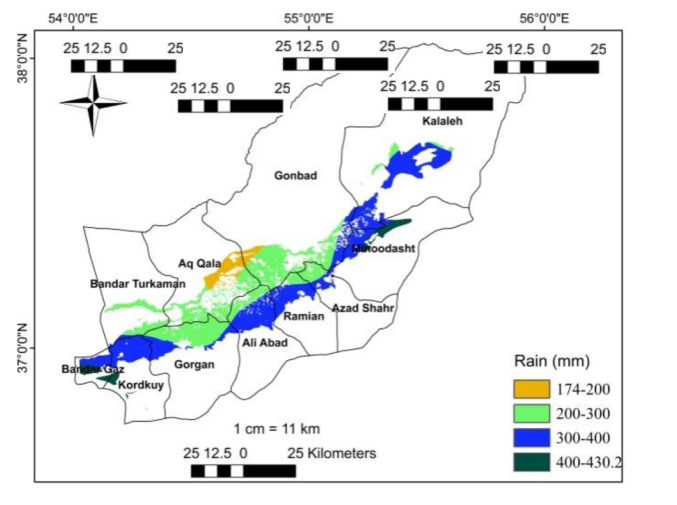
Which, potentially, has quite some effect on conclusions, because distances affect the calculation of terrain slopes.
Or like these citations to the same journal, Ecological Modelling:
“Exposure to extreme temperatures in a particular stage of a plant’s development (especially cereals) could adversely affect its growth, development, or productivity (Watkins et al., 2021; Asfaw et al., 2019).”
Asfaw et al., 2019: “Effects of temperature and rainfall in plant–herbivore interactions at different altitude”
The actual Asfaw paper is – most charitably – a toy model where abstract plants interact with abstract herbivores, and most likely – yet another papermill product in the familiar predator-prey genre. Nothing about development stages of real plants there, anyway.

Begger’s test for Schrödingerean predator-prey system
Why is it that nobody remembers the name of [the famous mathematician] Johann Gambolputty…

“The effects of high temperatures on corn yield have also been considered in recent studies (e.g., Rahimi-Moghaddam et al., 2018; Huang et al., 2020; Zhang et al., 2021; Luo et al., 2014).”
Luo et al., 2014: “Cotton crop phenology in a new temperature regime.”
So easy to mix up corn and cotton, even for an expert in agriculture like Prof Dr Dr Azadi!
Among the authors of that study, we find Jelena Barbir, “Director of Environmental Management and Circular Economy Division” at the Hamburg University of Applied Sciences, her research interests are: “Ecosystems Services, Political Sociology, and Postcolonial Studies.” Another native Croat, this time male, is Jasmin Grahić, “Pro-Dean for International Collaboration and Research” at the University of Sarajevo in Bosnia. Both were responsible for “Conceptualization, Funding acquisition, Project administration, Resources, Validation,” but the “funding acquisition” part does not quite add up, since the only sources of funding are said to be, “Project No. 93-325-4 funded by the Gorgan University of Agricultural Sciences and Natural Resources,” plus “vice president of Research and Technology, GUASNR, Gorgan, Iran.”
Finally, there is a Pole, Sylwester Tabor, who is – no less – a rector at Krakow University of Agriculture, thus never a papermiller. And his previously recorded retraction on a completely different topic – nanochemistry – with Pakistani and Saudi co-authors is just an unfortunate coincidence. Tabor was mentioned in this article:

I have little to say as a conclusion. Azadi is akin to a bad clown in a stupid circus, whose performance entirely consists of pukes and farts. But someone has to pay for it – as usual, the taxpayer.
Notes from LS: We also contacted the two German universities where Azadi was simultaneously employed. The University of Hamburg announced to investigate Azadi’s publications, but refused to comment on the strange situation that their (presumably full-time) employee had another job in Germany, at the University of Halle, which is 350 km away. Apparently, Azadi was earning at least two salaries simultaneously, or maybe three if he was still employed in Ghent. Without telling us anything, the University of Hamburg then quietly deleted Azadi’s profile or listed him as “Former employee“. He also disappeared from the CLISEC website (archived version here). The University of Hamburg then confirmed the website changes as correct, but refused to say when exactly Azadi left, because of “personal data protection”.
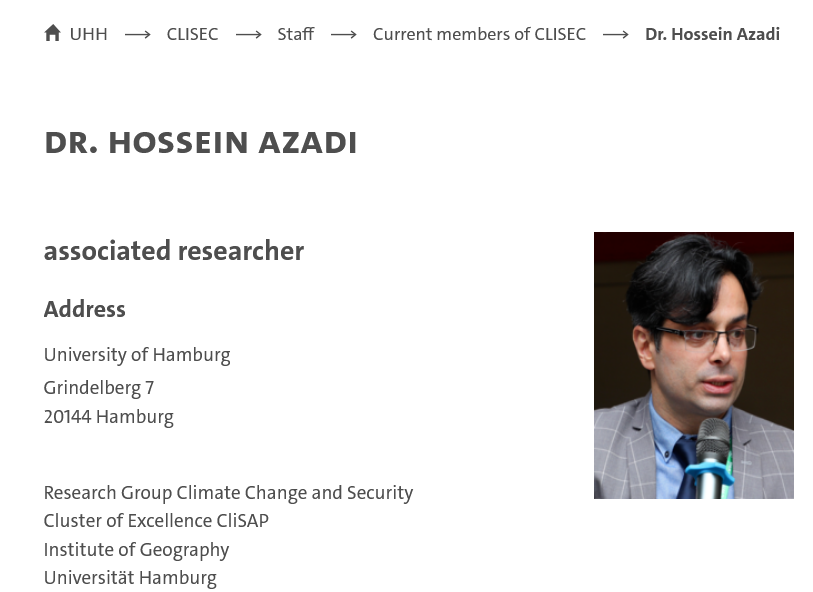
The Ombudsman of the University of Halle-Wittenberg, the mathematics professor Martin Arnold, was much less friendly. He did confirm that Azadi was an employee of his university, after checking with the Dean of Sciences. Arnold refused to say if Azadi was really physically present in Halle, what with his other affiliations in Hamburg, Ghent and elsewhere. Instead, Arnold became angry (“I don’t appreciate having to repeat myself“), and announced to never reply to emails again.
Eventually, Arnold did reply and proudly showed me Azadi’s three freshly published corrections, which you saw above (Yaghobi et al, Ranjbar et al, Azadi & Vanhaute). Noteworthy, the Ombudsman did not deny that these three papers won’t be investigated anymore. However, it’s not like Arnold outsources all his investigations and decisions to commercial publishers – he also announced that he and his university would not unquestioningly accept Azadi’s retractions and Elsevier’s fraud findings described therein:“In this respect, it would be a gross legal error to “take” external assessments as given.”
Then Arnold became even angrier. After I informed him that I will quote his statements and insinuations, the mathematician who apparently always wanted to be a lawyer issued a threat of lawsuit:
“I recommend taking possible consequences into account in your further considerations.”
Provoked by my automatic email signature in Ukrainian, Arnold signed off that last message of his to me in russian. That wasn’t funny anymore, and actually scary. After I protested against these threats to the leadership of the University of Halle, the Rector Claudia Becker replied. She reiterated that the investigation was ongoing, but refused to condemn or explain Arnold’s behaviour. Clearly they prepare for the AfD Machtergreifung in December.
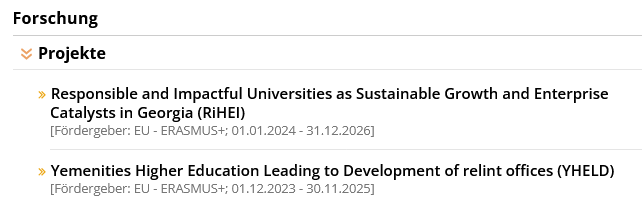
Azadi joined University of Halle in December 2023 the latest, he is still listed there as “Dr Dr Azadi” or “Prof Dr Azadi”. They will either keep him longer, at least until the EU Erasmus research grant RiHEI (which Azadi and Fürst manage) ends in December 2026. Maybe this is why Arnold previously mentioned being able to provide “final information before the end of the year.“
Bad Choices in Dresden IV
A guide on what qualities universities in Germany, Italy and elsewhere in Europe expect from their foreign PhD students and postdocs.
Coda 1: Wadim Strielkowski
Meet Wadim Strielkowski, a Polish colleague of Kristina Janečková and Petr Sklenička at the Czech University of Life Sciences. Or maybe not quite there, as this MDPI article of his. Tvaronavičienė & Strielkowski 2026, about reconstructing Ukraine’s energy sector! – places Strielkowski at Prague Business School and Cambridge (!), and this one (with Lukáš Prokop, an associate of Mohit Bajaj – read below) places him at the Technical University of Ostrava in Czechia.
The subtleties a spectrograph would miss
“it seems the AI used for an anonymous commenter is not able to read the article and randomly comments on the article. […] Sometimes, we feel that some random person commenting on the article may not have the insight or technical expertise to evaluate the article. It seems your AI model used to write such…
But in this one, Strielkowski is associated with “Department of Trade and Finance, Faculty of Economics and Management, Czech University of Life Sciences Prague” and “Department Agricultural and Resource Economics, University of California, Berkeley” (sic!), because why not. And his co-authors are some random Russians.
Wadim Strielkowski, Veronika Grebennikova , Alexander Lisovskiy , Guzalbegim Rakhimova , Tatiana Vasileva, AI‐driven adaptive learning for sustainable educational transformation, Sustainable Development (2025), doi: 10.1002/sd.3221
“By leveraging data analytics and AI, educators can gain valuable insights into students’ strengths and weaknesses, facilitating targeted interventions and personalized support (Simionescu et al., 2022).”
Simionescu, M., Strielkowski, W., & Gavurova, B. (2022). Could quality of governance influence pollution? Evidence from the revised environmental Kuznets curve in central and eastern European countries. Energy Reports, 8, 809–819. https://doi.org/10.1016/j.egyr.2021.12.031
The best fit for an education article: Kuznets curve! Green economy! And – again totally by accident! – a self-citation to Strielkowski and two Eastern European papermilling ladies – Mihaela Simionescu and Beáta Gavurová.
Some years ago, Strelkowski sustained two retractions in Frontiers. Xu et al 2022a and Xu et al 2022b were retracted in 2023 and 2025, for “serious breach of our authorship policies and of publication ethics” and becausee “the integrity of the peer review process has been undermined“, respectively.
A vintage post about Strielkowski by Luděk Brož, Tereza Stöckelová and Filip Vostal, from 2017, can be found here.
“In September 2015, Strielkowski left Charles University. It seemed his only option in prolonging his rich academic career would be to work within the typical habitat of predatory/parasitic publishers and authors, which seems to be mostly Asia, Africa, and Eastern Europe. Indeed, at first that appeared to be the case: that same autumn, Strielkowski undertook a tour of Russia’s provincial universities, where he was welcomed as a famous professor from Charles University in Prague; according to the available information, he sometimes did not shy away from vague promises of institutional collaboration. It is therefore quite remarkable that Strielkowski’s next stopover was Cambridge, more precisely the position of research associate of the Energy Policy Research Group, based at Cambridge Judge Business School. Those familiar with the structure of the University of Cambridge would probably not regard this position as particularly prestigious, but to someone possessed of such an entrepreneurial spirit as Strielkowski, merely being listed on the webpage and corresponding from a University of Cambridge University email address would have been a blessing. No surprise, then, that Strielkowski already features in the editorial board listing of the aforementioned Economics and Sociology as “associate professor, University of Cambridge”. The official page of the North Caucasus Federal University (SKFU) reported on Strielkowski’s visit under the headline “Cambridge – Prague – SKFU. We are developing cooperation”. One wonders what will come next.”
Sons of Poland
“Jeszcze Polska nie zginęła, Kiedy my żyjemy. Co nam obca przemoc dała, odpłacimy fabrykom artykułów.
Coda 2: Mohammad Rahimi-Gorji and Hamed Nosrati
And this coda is to illustrate the overall welcoming attitude of Ghent University to Iranian fraud, so Azadi does not look like an isolated case.
Who in the sane mind would hire an associate of mega-papermiller Davood Domiri Ganji? Ghent University did, so expect their new recruit, Mohammad Rahimi-Gorji to enrich the university’s output with papermilled nanofluid trash.
This was retracted in 2021, before Rahimi-Gorji arrived in Ghent:
O. Pourmehran, M. Rahimi-Gorji, M. Gorji-Bandpy, D.D. Ganji, Analytical investigation of squeezing unsteady nanofluid flow between parallel plates by LSM and CM, Alexandria Engineering Journal (2015), doi: 10.1016/j.aej.2014.11.002
“This article has been retracted at the request of the Editor-in-Chief.
(Retraction August 2021)
The article duplicates significant parts of a paper that had already appeared in Powder Technology, 239 (2013) 259–265. https://doi.org/10.1016/j.powtec.2013.02.006. One of the conditions of submission of a paper for publication is that authors declare explicitly that the paper has not been previously published and is not under consideration for publication elsewhere. Re-use of any data should be appropriately cited. As such this article represents a misuse of the scientific publishing system.”

Taras Persidskyy and Arik of Negev, Shahed Hunters
“He has embarked on a path of unacceptable slander, not only against me, but also against my colleagues (Prof. Oleg Smutok, Prof. Arnold Kiv, Prof. Vladimir Solovyov). We have all the necessary evidence to bring Leonid Schneider to justice for slander and moral turpitude.” – Taras Kavetskyy.
Probably, the same rationale was behind Ghent’s decision to hire Hamed Nosrati as a postdoc. That, however, did not quite work out: Nosrati left on 21 July 2026. As an illustration, the below – featuring papermillers Murat Barsbay, Taras Kavetskyy and even Thomas Webster, and mice, who sign an informed consent to be killed.
Hamed Nosrati, Elahe Attari, Fatemeh Abhari, Murat Barsbay, Mohammadreza Ghaffarlou, Navid Mousazadeh, Rasoul Vaezi, Taras Kavetskyy, Hamed Rezaeejam, Thomas J. Webster, Behrooz Johari, Hossein Danafar, Complete ablation of tumors using synchronous chemoradiation with bimetallic theranostic nanoparticles, Bioactive Materials (2022), doi: 10.1016/j.bioactmat.2021.05.015“
“theranostic nanoparticles with a one-time clinical X-ray irradiation, completely eradicated tumors in mice […]
This study was approved by the Ethics Committee of the Zanjan University of Medical Sciences with the IR.ZUMS.REC.1397.151 ethical code, and the study participants signed an informed consent“
Donate!
If you are interested to support my work, you can leave here a small tip of $5. Or several of small tips, just increase the amount as you like (2x=€10; 5x=€25). Your generous patronage of my journalism will be most appreciated!
€5.00


0 comments on “Exceptionally moo!”