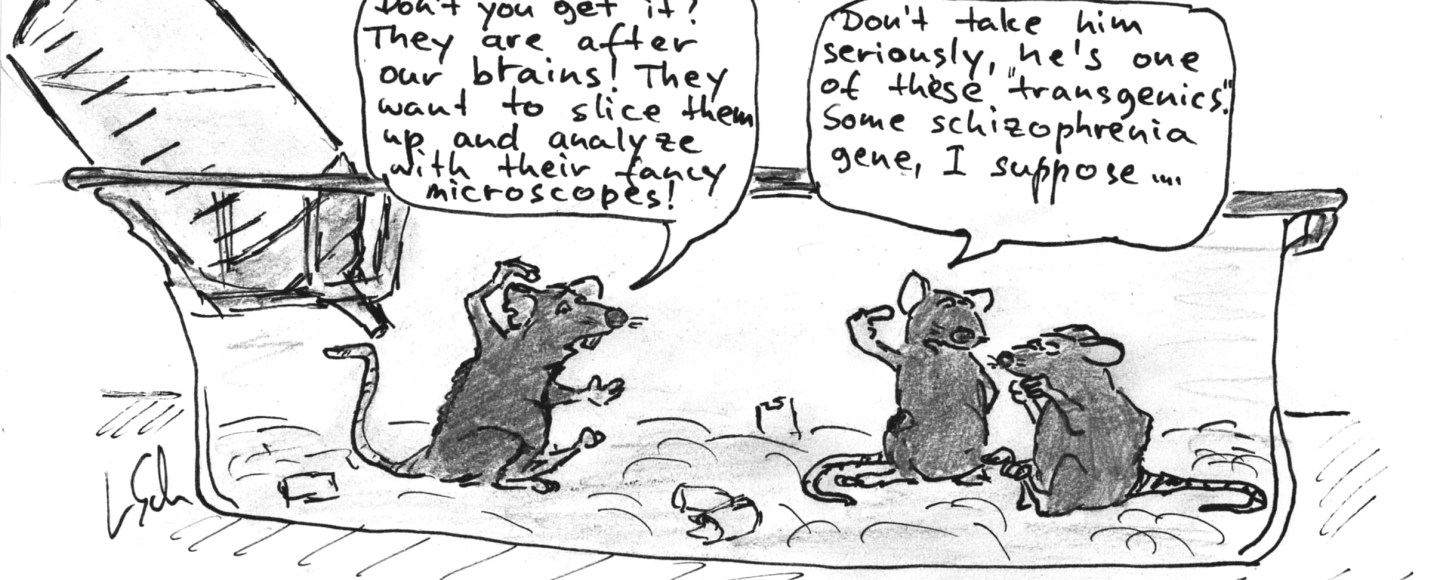

This is wild story about repurposed obesity drugs to treat Alzheimer’s and Parkinson’s, and about a whistleblower who suffered retaliation, only to eventually himself turn to bad science.
We will start with the Danish biotech Kariya Pharmaceuticals, located in Copenhagen and developing “dual GLP-1/GIP receptor agonists to slow the progression of Parkinson’s and Alzheimer’s disease“. The company informs us that their “lead drug, KP405, has completed its Phase I trial” with “88 participants, including people with Parkinson’s” and was found to be “Safe and well tolerated across single and multiple doses“.
A “placebo-controlled Phase IIa in people with Parkinson’s is in preparation“, which surely gives hope to all sufferers from this incurable disease. This brain-penetrating GLP-1/GIP double-agonist KP405 is based on the groundbreaking research of Kariya’s co-founder and Chief Scientific Officer, Christian Hölscher, a native German in China. From 2018 till 2023 he was professor at the Henan University of Chinese Medicine, now he is visiting professor at Shanxi Medical University.
Holscher made the discovery that diabetes and obesity drugs can cure Alzheimer’s already in 2012, as professor at the University of Ulster in Northern Ireland, UK. The next year, Hölscher moved to University of Lancaster, also in UK, where he continued advocating for Alzheimer’s being a insulin disorder. For some reason, in 2018 Hölscher had enough of Europe, dissolved his two year old Lancaster-based company Brain Protect, and eventually moved to China. In the same year 2018, Kariya Pharmaceuticals was set up in Copenhagen.
As professor at Ulster University, Hölscher participated in a preclinical study in mice, where the diabetes drug and GLP-1 receptor agonist exenatide proved its efficiency against Alzheimer’s. The paper was flagged on PubPeer soon after its publication in 2013:
Theresa R. Bomfim , Leticia Forny-Germano , Luciana B. Sathler , Jordano Brito-Moreira , Jean-Christophe Houzel , Helena Decker , Michael A. Silverman , Hala Kazi , Helen M. Melo , Paula L. McClean , Christian Holscher, Steven E. Arnold, Konrad Talbot, William L. Klein, Douglas P. Munoz , Sergio T. Ferreira , Fernanda G. De Felice An anti-diabetes agent protects the mouse brain from defective insulin signaling caused by Alzheimer’s disease- associated Aβ oligomers Journal of Clinical Investigation (2012) doi: 10.1172/jci57256


“Representative blots do not match the quantifications:” Fig 2


Back in 2013, as a PubPeer user reported, the society journal’s editors “concluded after review of the raw data that there was no evidence for malfeasance or intentional misrepresentation of the data in their quantification” and told the critic that “no further action will be taken by the journal“.
We now know why the editors acted like this. At that time, the scientists in University College London (UCL) reported a success with exenatide in a single-blind trial with 45 Parkinson’s patients, claiming “clinically relevant improvements in PD across motor and cognitive measures” (Avilles-Olmos et al 2013). More recently, a large and prolonged phase 3 multicentre clinical trial with 194 patients proved a failure, it “found no evidence to support exenatide as a disease-modifying treatment for people with Parkinson’s disease” (Vijiaratham et al 2025).
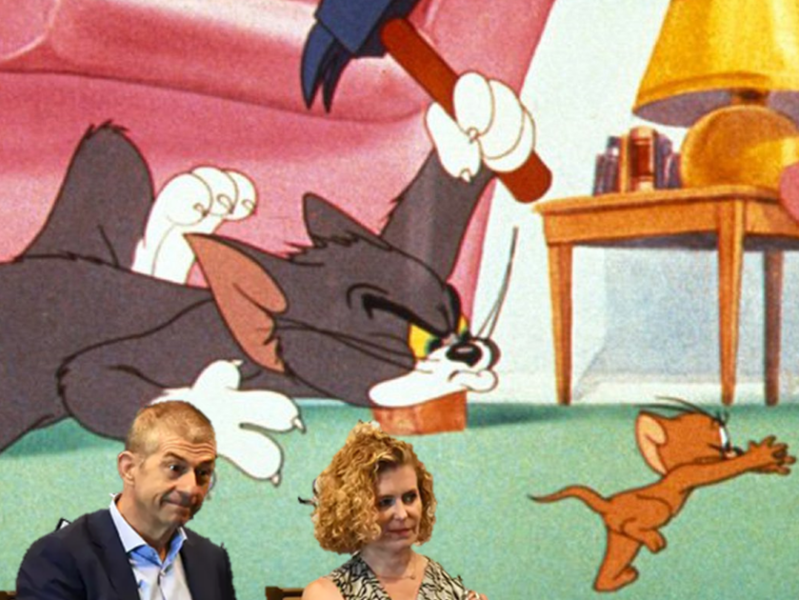
Florida couple hits Gulf War Mice on the head with hammer, posts on internet
“Bob Roskamp, a Sarasota entrepreneur and philanthropist, was getting his biggest kick Thursday from his $5-million gamble on a team of driven University of South Florida researchers who believe they can find the world’s first treatment for Alzheimer’s.”

The Copenhagen company Kariya was originally spun out from the BioInnovation Institute of the Novo Nordisk Foundation, at that time the Danish pharma giant Novo Nordisk also hoped to cure Alzheimer’s with GLP-1 receptor agonists like its own liraglutide. Eventually, Novo Nordisk turned to a semaglutide, another diabetes medicine and now a popular weight loss drug. The clinical investigation skipped phase 2 trials and went straight to two massive phase 3 trials EVOKE and EVOKE+ with 3808 patients, which spectacularly failed. Both were also discontinued instead of going into a planned extension, because “Treatment-emergent adverse events were reported” in 91% of participants, and there “were five fatalities considered treatment-related” (Cummings et al 2026). Interestingly, Hölscher himself was then involved in a phase 2 clinical trial with liraglutide and 204 Alzheimer’s patients, which was ran by several British universities between 2012 and 2021, and showed on all parameters “no significant differences” to placebo (Edison et al 2025).
But Kariya is still there, working on yet another GLP-1 drug. The company’s CEO Ian Laquian, a former Takeda Pharmaceuticals executive, lauded Hölscher:
“For Kariya, the breakthrough came through the persistent research of Professor Christian Hölscher, whose work at the University of Ulster and later Lancaster University consistently demonstrated GLP-1 efficacy across multiple neurodegeneration models. Despite these institutions’ modest research backgrounds, Hölscher’s publications maintained remarkable consistency in demonstrating positive outcomes.”
Let’s now look at these publications then. We will start with the most relevant KP405 stuff. Here Hölscher and his Chinese friends proved that Kariya’s drug works against Parkinson’s in mice:
Chenhui Ji , Guo-Fang Xue , Cao Lijun , Peng Feng , Dongfang Li , Lin Li , Guanglai Li, Christian Hölscher A novel dual GLP-1 and GIP receptor agonist is neuroprotective in the MPTP mouse model of Parkinson’s disease by increasing expression of BNDF Brain Research (2016) doi: 10.1016/j.brainres.2015.09.035

The pseudonymous Claire Francis found more:

Hölscher declared “The authors do not declare a conflict of interest“, which is not exactly correct. Not just because he had his company Brain Protect back then, but also because the drug used in that study, DA5-CH, is his own intellectual property (IP) and is now called KP405 by Kariya.
A more recent study with the same Kariya drug:
MiaoJun Lv , GuoFang Xue, HuiFeng Cheng , PengFei Meng , Xia Lian , Christian Hölscher, DongFang Li The GLP-1/GIP dual-receptor agonist DA5-CH inhibits the NF-κB inflammatory pathway in the MPTP mouse model of Parkinson’s disease more effectively than the GLP-1 single-receptor agonist NLY01 Brain and Behavior (2021) doi: 10.1002/brb3.2231


Another older study with a “novel dual-GLP-1/GIP receptor agonist”, which could be DA5-CH /KP405, yet still “There are no conflicts of interest“:
Ling Han , Christian Hölscher, Guo-Fang Xue , Guanglai Li , Dongfang Li A novel dual-glucagon-like peptide-1 and glucose-dependent insulinotropic polypeptide receptor agonist is neuroprotective in transient focal cerebral ischemia in the rat Neuroreport (2016) doi: 10.1097/wnr.0000000000000490


Hölscher didn’t seem to mind the image duplications, only protested:
“This is not DA5-CH. It is an older dual agonist that is not part of our patent group. This is very clearly described in this paper. There is no conflict of interest, the accusations are baseless.”
As you can judge below, DA5-CH is not only “the most effective drug” (Zhang et al 2020), it also causes more image duplications than other GLP-1/GIP dual receptor agonists Hölscher invented. Here DA4-JC caused a duplication which had to be corrected:
Hong-Yan Cai , Dan Yang , Jing Qiao , Jun-Ting Yang , Zhao-Jun Wang , Mei-Na Wu , Jin-Shun Qi , Christian Hölscher A GLP-1/GIP Dual Receptor Agonist DA4-JC Effectively Attenuates Cognitive Impairment and Pathology in the APP/PS1/Tau Model of Alzheimer’s Disease Journal of Alzheimer’s disease (2021) doi: 10.3233/jad-210256

Both Holscher and the journal proudly shared their Correction from on PubPeer: “in Fig. 10, the TEM sample image of the group 3xTg+PBS was not the correct one“.
I hope you are convinced now that KP405 works. A recent review in Science, titled “Obesity pharmacotherapies and cognition” (Börchers et al 2026) cited four papers by Hölscher. His work is still very valued, as scientists and pharma industry still hope to make even more money with the obesity drugs.
Cerebrolysin: Sharmas, Masliah, and EVER Pharma
“Poking around PubMed (Dysdera the spider is always on the hunt for new hornet’s nests) [..], I came across one image in two papers by Eliezer Masliah. […] By a conservative count, I contributed to about 160 out of 300 slides in the final dossier” – Mu Yang

In this regard, here is another GLP-1 receptor agonist which was developed by Hölscher’s current employer Shanxi Medical University, and look what effect it has on neural cells in a dish:
Yue-ze Liu , Lin Li , Ke Liu , Juan Zhao , Christian Holscher , Guang-lai Li Neuroprotective role of (Val8) GLP-1-Glu-PAL in an in vitro model of Parkinson′s disease Neural Regeneration Research (2016) doi: 10.4103/1673-5374.177742

There’s also a duplicated western blot in Figure 5, yet the bizarre image above stole the show. But you can have another bad western blot here, where a very similar GLP-1 drug was used:
Lin Li , Zhi-Feng Zhang , Christian Holscher, Chong Gao , Yuan-Hong Jiang , Yue-Ze Liu (Val8) glucagon-like peptide-1 prevents tau hyperphosphorylation, impairment of spatial learning and ultra-structural cellular damage induced by streptozotocin in rat brains European Journal of Pharmacology (2012) doi: 10.1016/j.ejphar.2011.11.005

On PubPeer, Hölscher disagreed with everything:
“Western blots sometimes do look very similar. The blots shown are not identical. As this work had been conducted in 2011, we do not have the original western blots. It is not reasonable to ask for such evidence after 15 years, such materials are kept for perhaps 5 years at best.”

Here another diabetes/Alzheimer’s drug Holscher invented with his colleagues at Ulster University, who then tried to market it via a now-defunct start-up, Diabetica Ltd:
Li Yuan , Jun Zhang , Jun-Hong Guo , Christian Holscher, Jun-Ting Yang , Mei-Na Wu , Zhao-Jun Wang , Hong-Yan Cai , Ling-Na Han , Hui Shi , Yu-Fei Han , Jin-Shun Qi DAla2-GIP-GLU-PAL Protects Against Cognitive Deficits and Pathology in APP/PS1 Mice by Inhibiting Neuroinflammation and Upregulating cAMP/PKA/CREB Signaling Pathways Journal of Alzheimer’s disease (2021) doi: 10.3233/jad-201262

Here another Hölscher paper which could explain why liraglutide and other GLP-1 drugs look so promising for brain disorders:
W. Liu , J. Jalewa , M. Sharma , G. Li , L. Li , C. Hölscher Neuroprotective effects of lixisenatide and liraglutide in the 1-methyl-4-phenyl-1,2,3,6-tetrahydropyridine mouse model of Parkinson’s disease Neuroscience (2015) doi: 10.1016/j.neuroscience.2015.06.054

Fig 5
More liraglutide research, strange the drug failed in clinical trials, no?
- Kerry Hunter , Christian Holscher Drugs developed to treat diabetes, liraglutide and lixisenatide, cross the blood brain barrier and enhance neurogenesis BMC Neuroscience (2012) doi: 10.1186/1471-2202-13-33
- Paula L McClean , Vadivel Parthsarathy , Emilie Faivre , Christian Holscher The diabetes drug liraglutide prevents degenerative processes in a mouse model of Alzheimer’s disease Journal of Neuroscience (2011) doi: 10.1523/jneurosci.0529-11.2011

Actinopolyspora biskrensis: “An image in this paper also seems to appear in a different paper where it seems to be described differently. Can the authors please check? There is one author in common on both papers.”
Here, Hölscher invented yet another drug to cure Parkinson’s, based on cholecystokinin (CCK), which is another gut hormone with a similar appetite-suppressing function as GLP-1. Of course also CCK works like a charm, look, Parkinson’s cured in mice:
Zijuan Zhang , Hai Li , Yunfang Su , Jinlian Ma , Ye Yuan , Ziyang Yu , Ming Shi , Simai Shao , Zhenqiang Zhang , Christian Hölscher Neuroprotective Effects of a Cholecystokinin Analogue in the 1-Methyl-4-Phenyl-1,2,3,6-Tetrahydropyridine Parkinson’s Disease Mouse Model Frontiers in Neuroscience (2022) doi: 10.3389/


On PubPeer, Hölscher defended his published claim that “The authors declare that the research was conducted in the absence of any commercial or financial relationships that could be construed as a potential conflict of interest” with this argument: “We do not hold any Ip / patents on CCK analogues.“
That may change, no? Also, in this and the following study he proposes to use the CCK with Novo Nordisk’s Liraglutide, and asks whether a “CCK/GLP-1 dual-agonist can be designed to treat Parkinson’s disease“.
Zijuan Zhang , Ziyang Yu , Ye Yuan , Jing Yang , Shijie Wang , He Ma , Li Hao , Jinlian Ma , Zhonghua Li , Zhenqiang Zhang , Christian Hölscher Cholecystokinin Signaling can Rescue Cognition and Synaptic Plasticity in the APP/PS1 Mouse Model of Alzheimer’s Disease Molecular Neurobiology (2023) doi: 10.1007/s12035-023-03388-7

Dysdera arabisenen “Fig 8 actin band and Fig 9 PI3K band appear to be identical”
Again, “The authors declare no competing interests“. Hölscher protested on PubPeer against my harassment:
“There is no conflict of interest. This study tests novel CCK analogues in preclinical models. Nobody owns any IP on CCK analogues. Again a baseless accusation by this author about conflicts of interest.“
For this CCK study, Holscher replied on PubPeer in August 2026, promising a correction:
Zijuan Zhang , Hai Li , Yunfang Su , Jinlian Ma , Ye Yuan , Ziyang Yu , Ming Shi , Simai Shao , Zhenqiang Zhang , Christian Hölscher Neuroprotective Effects of a Cholecystokinin Analogue in the 1-Methyl-4-Phenyl-1,2,3,6-Tetrahydropyridine Parkinson’s Disease Mouse Model Frontiers in Neuroscience (2022) doi: 10.3389/fnins.2022.814430
Don’t expect Holscher to correct his claim “The authors declare that the research was conducted in the absence of any commercial or financial relationships that could be construed as a potential conflict of interest“, as he insisted on PubPeer: “There is no conflict of interest in any way.”
Another study successfully postulated that Alzheimer’s “could be promoted by mitochondrial dysfunction“, also here, “The authors declare that they have no conflict of interest“.:
Hongyan Cai, Jing Qiao, Siru Chen, Junting Yang, Christian Hölscher, Zhaojun Wang, Jinshun Qi, Meina Wu MCU knockdown in hippocampal neurons improves memory performance of an Alzheimer’s disease mouse model Acta Biochimica et Biophysica Sinica (2022)DOI: 10.3724/abbs.2022138

The German professor in China protested that “Leon Schneider does not understand what a conflict of interest even looks like” and initially also declared other issues as void:
“We respectfully disagree with this statement. When enlarging the bands, it is clear to see that they are not identical. The band on the left is more smudged.“
I wrote to Hölscher about his PubPeer record, and he replied by email:
“as an ‘independent science journalist’, you clearly did not do your homework. The list you created on PubPeer actually contains a number of papers that were authored by a different Hölscher, not by me. Some of the issues have long been dealt with, some are just baseless comments on issues where there are none. I am afraid that this does not add up to be that amazing scandal that you are hoping for.”
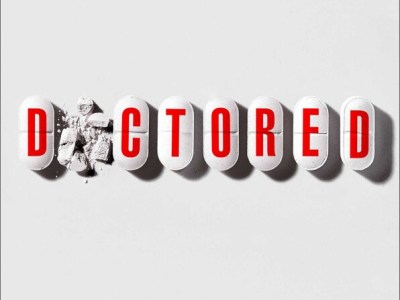
“Doctored” by Charles Piller – book review
“If this book accomplishes anything, it should be to shatter the illusion that Alzheimer’s research is on solid footing and to prompt a long-overdue reckoning in the field. ” – Csaba Szabo

Indeed, proper experts in research integrity and Alzheimer’s research see Hölscher as a shining rod in the darkness. Despite his PubPeer record and his business interests, Hölscher was quoted in Charles Piller’s book “Doctored” as an unbiased scholar debunking the fraud-infested amyloid hypothesis of Alzheimer’s:
“Christian Hölscher, a professor at a leading Chinese university, added: “We need to stop this obsession with amyloid-beta. It is time to make room for new ideas and approaches.”
Unsaid was that those were Professor Hölscher’s own business ideas and approaches for which room must be made. You saw his science, do you still think that Alzheimer’s is really a “diabetes of the brain”, for which his company Kariya already has the cure for?
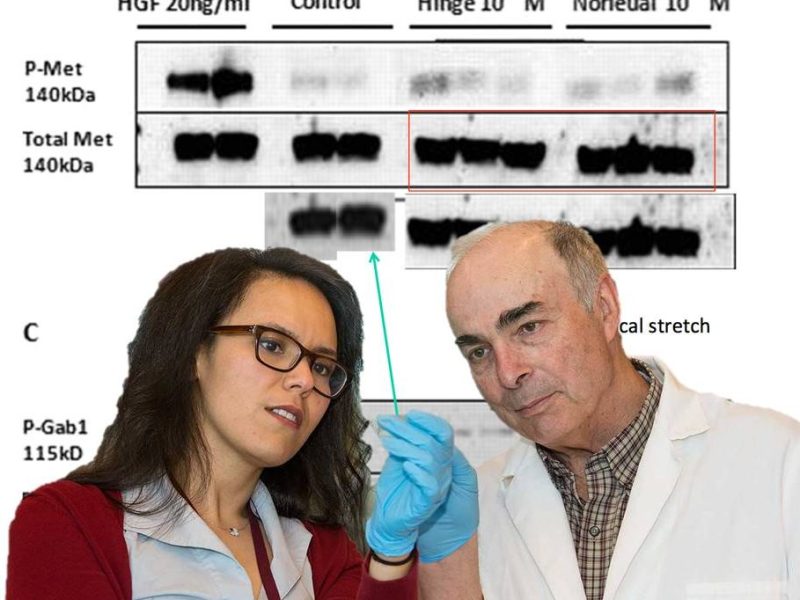
How to cure all diseases
“I have a passion to solve a problem that is facing millions. I could have a job that makes more money, has normal hours, but this is where I should be right now.” Dr Leen Kawas, CEO of Althira Pharma
However, sometimes Hölscher didn’t care that the amyloid theory was bunk, he even discovered that extracts from magnolia bark can cure Alzheimer’s by removing those beta-amyloid plaques:
Zhishen Xie , Jianping Zhao , Hui Wang , Yali Jiang , Qiaoling Yang , Yu Fu , Huahui Zeng , Christian Hölscher, Jiangyan Xu, Zhenqiang Zhang Magnolol alleviates Alzheimer’s disease-like pathology in transgenic C. elegans by promoting microglia phagocytosis and the degradation of beta-amyloid through activation of PPAR-γ Biomedicine & Pharmacotherapy (2020) doi: 10.1016/j.biopha.2020.109886

The Corrigendum from December 2023 briefly informed: “The authors regret mistake Fig. 9A in the original article.” When asked about his claim of “no competing interests”, Hälscher replied on PubPeer: “ There is no IP involved in this study, and no conflict of interest. Leon Schneider does not understand what a conflict of interest even looks like.”
Sylvain Lesné is a failed scientist
From Lesné’s public shame to successful role models of neuroscience like Aguzzi and Tessier-Lavigne.
It was not just Alzheimer’s and Parkinson’s which GLP-1 drugs can cure in Hölscher’s world. In 2016-2017 Hölscher, together with his Lancaster colleague Hedley Emsley and Richard Mead from Sheffield Institute for Translational Neuroscience, was about to start a clinical trial with Novo Nordisk’s GLP-1 receptor agonist liraglutide on patients with Motor Neurone Disease (MND). The trial was sponsored by the charity AID, planned costs were at £450k.
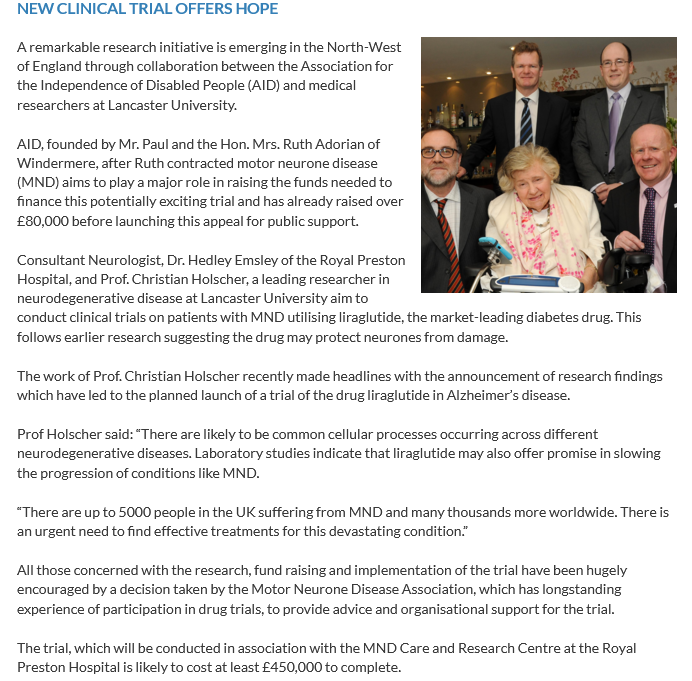
There was also a university press release in 2015 (“Alzheimer’s disease has been called “the diabetes of the brain””), but after 2017, there are no online traces about that liraglutide for MND trial at all. And Hölscher went to China. From there he now told me:
“you clearly did not do your homework there either. There never was a trial, since the funding body that we had approached did not fund it.”
To make this wannabe schoolmaster happy, I did my homework, and Hölscher’s former collaborator Mead explained it to me much better:
“The MND association were keen to make sure it was a viable candidate and wisely funded a preclinical study in our lab before commiting to a clinical study. This is mainly because the “diabetes of the brain” hypothesis is weaker in MND than maybe AD and PD
We ran liraglutide in two mouse models, quite a comprehensive evaluation, it did nothing.
As far as I know the clinical study never started […] Im pretty sure MNDA did not fund it further.“
This preclinical mouse study by Mead and Hölscher (Keerie et al 2021) showed that the treatment of course doesn’t work. Lucky MND patients, they were spared Hölscher’s clinical trial!
It is very unusual for a German professor in UK to abandon everything and go to China. I asked Hölscher if something happened in Lancaster, and he told me:
“Do you really want to be taken to court? That would cost you dearly“
Actually, Hölscher did take his past employer, the Ulster University to court. He was the whistleblower in an infamous case of fraud and medical abuse, the Alder Hey organ scandal!
The local newspaper Belfast Telegraph reported in December 2013:
“Professor Christian Holscher will allege that he was unfairly treated in his post as a professor of neuroscience – where he was conducting research aimed at developing drugs for Alzheimer’s disease – after making a complaint against a fellow academic, Professor Charles Vyvyan Howard.
The university says that it was Prof Holscher who acted in an unacceptable way and that it was this which resulted in the disciplinary action that saw him demoted to the status of senior lecturer. […]
Before joining UU in 2005, Prof Howard had a role in events at Alder Hey Children’s Hospital in Liverpool, where controversy had erupted in 1999 when it was revealed that body parts from foetuses and children who had died in the hospital had been “harvested” for research without anyone outside the hospital, including the parents, being informed.”
Vyvyan Howard was coauthor on ten “fundamentally flawed” papers by Dick van Velzen, who was charged by the House of Commons with “unethical and illegal stripping of every organ from every child who had had a post-mortem“, and then struck off the medical register by GMC.
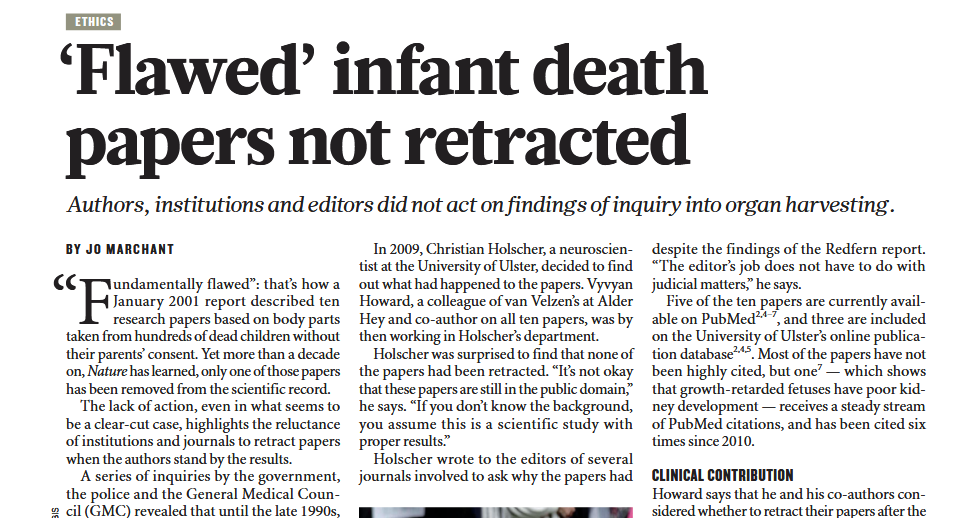
journals often had no idea that these papers were found to be invalid,” he says.”(Nature, 2011)
In 2009, Hölscher was supposed to be collaborating with Howard in Ulster, their EU-funded work on sunscreen nanoparticles allegedly causing Alzheimer’s even featured on BBC.
Yet Hölscher blew the whistle instead. Belfast Telegraph wrote that Hölscher “alleged Howard added two illegal experiments to the project without his knowledge” and also called for retractions of Howard’s papers with van Velzen (at the end, none were retracted). Hölscher then was “found guilty of pursuing a vendetta against Prof Howard” and demoted by his Ulster University. He left for Lancaster and sued his former employer for harassment. In November 2014, Hölscher lost his lawsuit against Ulster University, and was ordered to pay their legal costs.
Howard retired as emeritus professor in May 2014 aged 68. As it happens, his papers with van Velzen include as coauthor a certain Paul Sibbons, who later on went to collaborate with Martin Birchall on trachea transplants.
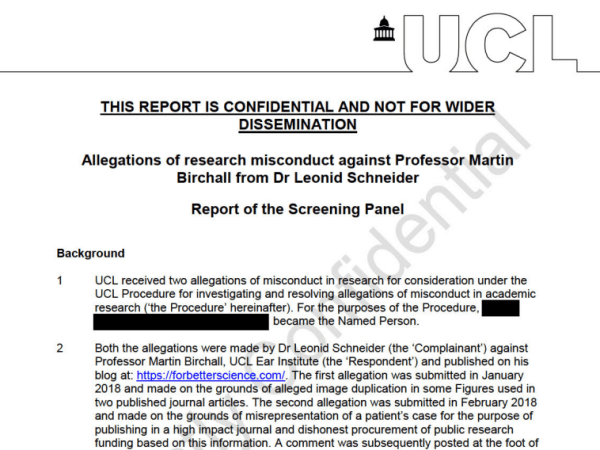
Martin Birchall innocent, UCL decides once again
In yet another investigation, UCL whitewashed Martin Birchall of all responsibilities. I publish here the confidential report and excerpts from a secret PhD thesis, which the UCL committee carefully avoided to read.
What a strange development.
Donate!
If you are interested to support my work, you can leave here a small tip of $5. Or several of small tips, just increase the amount as you like (2x=€10; 5x=€25). Your generous patronage of my journalism will be most appreciated!
€5.00


0 comments on “The diabetes of the brain”