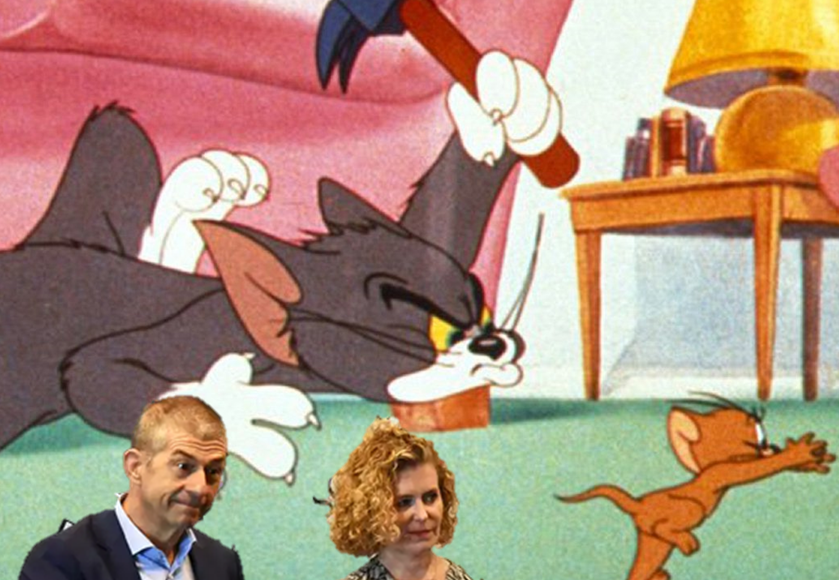

Mu Yang is an expert in mouse neuroscience, and an extremely successful sleuth.She now discovered a rather obscure neuroscience institute in Florida, led by an obscure couple of British immigrants: Fiona Crawford, founder, president and CEO of the Roskamp Institute in Sarasota for the last 23 years, and the other co-founder of the institute, Michael Mullan. These Alzheimer’s researchers started very promisingly, and ended up publishing trash in low-ranking journals.
In 1998, a Florida newspaper announced a bright future for Alzheimer’s sufferers:
“He has a corporate jet, a country retreat in Pennsylvania and a new marriage to a long-time business partner that at times leaves him positively giddy.
But Bob Roskamp, a Sarasota entrepreneur and philanthropist, was getting his biggest kick Thursday from his $5-million gamble on a team of driven University of South Florida researchers who believe they can find the world’s first treatment for Alzheimer’s.”
This team were Crawford and Mullan. Roskamp was already sponsoring Mullan’s chair in psychiatry at the University of South Florida.
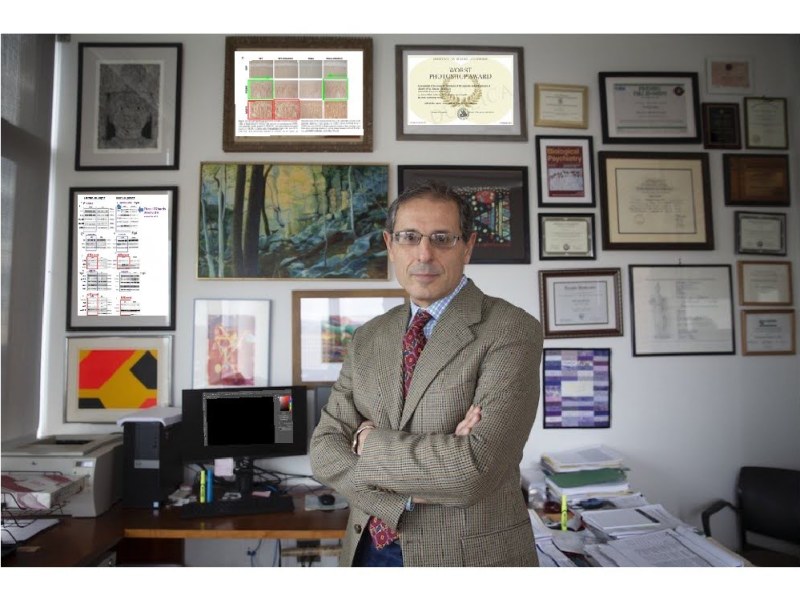
Research misconduct: Theory & Pratico
A whistleblower tried to report fraud in Domenico Pratico’s papers via proper channels, and hit a wall everywhere.

Crawford and Mullan are credited, at least by their Roskamp Institute, for being “key members of a pioneering team of scientists who, in the early 1990s, discovered the first known mutations causing early onset Alzheimer’s Disease in the amyloid gene“. They probably mean the papers Goate et al 1991 in Nature and Mullan, Crawford et al 1992 in Nature Genetics.
Since then, the couple delivered next to nothing, and you will see some of that sad rubbish. Instead, whenever there are any new announcements about drugs targetting amyloid plaques in Alzheimer’s, Crawford and Mullan immediately call the local Florida media to claim credit for that, because, do you remember, they made that groundbreaking discovery in the early 1990ies!
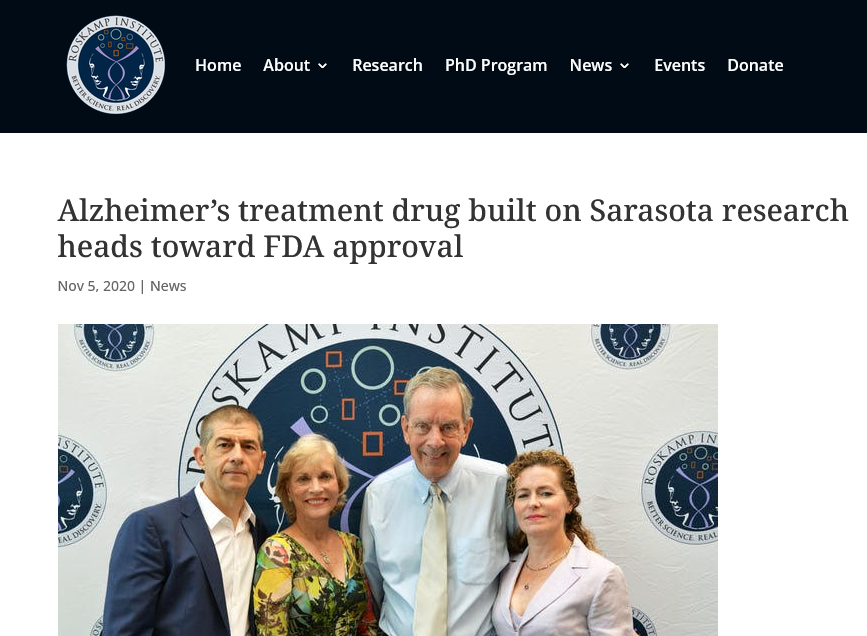
Maybe because Roskamp’s money was all spent, this couple went to bed with tobacco industry… to cure Alzheimer’s no less…
In 2013, Politico wrote about a former cigarette company Star Tobacco which then became a dietary supplement company Star Scientific, pushing a nicotine derivate, Anatabloc:
“Star Scientific Inc. said CEO and founder Jonnie R. Williams Sr. and president Paul Perito resigned at its shareholders meeting in Washington, D.C., though each will stay on in some capacity for another year. Shareholders also voted to change the name of the Glen Allen, Va.-based company to Rock Creek Pharmaceuticals, a wholly owned subsidiary.
Dr. Michael Mullan, CEO of the private research center Roskamp Institute, replaced Williams following the meeting.
State and federal authorities are investigating Williams’ relationship with Virginia’s two top Republicans — Gov. Bob McDonnell and Attorney General Ken Cuccinelli. Both received thousands of dollars in gifts from Star Scientific and Williams. Separately, the company is facing a federal investigation regarding its securities and shareholder lawsuits alleging trumped up claims for its dietary supplement Anatabloc.”
In 2015, Governor McDonnell was sentenced to two years in prison for accepting “gifts and loans, thousands of dollars in golf outings, and numerous items“, re-routed “through family members and corporate entities“, and arranging meetings and “events at the Governor’s Mansion designed to encourage Virginia university researchers to initiate studies of Star’s products and to promote Star’s products to doctors“.
Cerebrolysin: Sharmas, Masliah, and EVER Pharma
“Poking around PubMed (Dysdera the spider is always on the hunt for new hornet’s nests) [..], I came across one image in two papers by Eliezer Masliah. […] By a conservative count, I contributed to about 160 out of 300 slides in the final dossier” – Mu Yang

Now, you noticed Mullan’s new role as CEO, and Florida media informed us then that Star Scientific was taken over by Roskamp Institute, “renamed Rock Creek Pharmaceuticals and moved to the institute.” In 2014, Forbes mentioned “an exhaustively-documented FDA warning letter to Williams and Star Scientific dated December 20, 2013” regarding Anatabloc, but the FDA letter has been since scrubbed off the internet. Rock Creek is virtually defunct now, its website only exists in archived version.
“Anatabloc Facial Crème”, “Anatabloc Revitalizing Facial” and “Anatabloc Serum Clarifying Facial Cleanser” were discontinued, but the Roskamp Institute continued pushing that nicotine derivate for Alzheimer’s:
Megha Verma, David Beaulieu-Abdelahad , Ghania Ait-Ghezala , Rena Li , Fiona Crawford , Michael Mullan, Daniel Paris Chronic Anatabine Treatment Reduces Alzheimer’s Disease (AD)-Like Pathology and Improves Socio-Behavioral Deficits in a Transgenic Mouse Model of AD PLOS One (2015) doi: 10.1371/journal.pone.0128224

Having failed convince anyone that nicotine is a cure for Alzheimer’s, Crawford and Mullan tried to cure something else with it. Traumatic brain injury, (TBI, or mTBI in its “mild” form), which is apparently Crawford’s favourite topic:
Scott Ferguson, Benoit Mouzon, Daniel Paris, Destinee Aponte, Laila Abdullah, William Stewart, Michael Mullan, Fiona Crawford Acute or Delayed Treatment with Anatabine Improves Spatial Memory and Reduces Pathological Sequelae at Late Time-Points after Repetitive Mild Traumatic Brain Injury Journal of Neurotrauma (2017) doi: 10.1089/neu.2016.4636

And another one with nicotine cure, here Mullan lied however that he had “no competing interests“:
Alexander Morin, Benoit Mouzon, Scott Ferguson, Daniel Paris, Nicole Saltiel , Mackenzie Browning, Mike Mullan, Fiona Crawford A 3-month-delayed treatment with anatabine improves chronic outcomes in two different models of repetitive mild traumatic brain injury in hTau mice Scientific Reports (2021) doi: 10.1038/s41598-021-87161-7

The Roskamp Institute still informs us:
“In June 2011 it was announced that an international research consortium led by Trinity College Dublin, Ireland and The Roskamp Institute has been selected for funding by the European Commission Seventh Framework Programme for a large-scale European clinical trial on Nilvadipine, an Alzheimer’s Disease drug developed at The Roskamp Institute. This grant of $8.4 million has allowed more than 500 Alzheimer’s patients across Europe to participate in a multicenter Phase III clinical trial designed to study the effectiveness of the drug on humans.”
Nilvadipine is a calcium channel blocker, prescribed in Europe and Japan for hypertension. Does it also cure Alzheimer’s? No. This same phase III clinical trial, carried out at 23 academic centres in nine European countries, proved this eight years ago:
Brian Lawlor , Ricardo Segurado , Sean Kennelly , Marcel G. M. Olde Rikkert , Robert Howard , Florence Pasquier , Anne Börjesson-Hanson , Magda Tsolaki , Ugo Lucca , D. William Molloy , Robert Coen , Matthias W. Riepe , János Kálmán , Rose Anne Kenny , Fiona Cregg , Sarah O’Dwyer , Cathal Walsh , Jessica Adams , Rita Banzi , Laetitia Breuilh , Leslie Daly, Suzanne Hendrix, Paul Aisen, Siobhan Gaynor, Ali Sheikhi, Diana G. Taekema, Frans R. Verhey, Raffaello Nemni, Flavio Nobili, Massimo Franceschi, Giovanni Frisoni, Orazio Zanetti, Anastasia Konsta, Orologas Anastasios, Styliani Nenopoulou, Fani Tsolaki-Tagaraki, Magdolna Pakaski, Olivier Dereeper, Vincent De La Sayette, Olivier Sénéchal, Isabelle Lavenu, Agnès Devendeville, Gauthier Calais, Fiona Crawford, Michael Mullan Nilvadipine in mild to moderate Alzheimer disease: A randomised controlled trial PLoS Medicine (2018) doi: 10.1371/journal.pmed.1002660
“The prespecified primary analyses failed to show any treatment benefit for nilvadipine on the co-primary outcome […] Exploratory analyses of the planned secondary outcomes showed no substantial effects […] Mortality was similar between groups (3 on nilvadipine, 4 on placebo); higher counts of adverse events (AEs) on nilvadipine (1,129 versus 1,030), and serious adverse events (SAEs; 146 versus 101), were observed. […]
The results do not suggest benefit of nilvadipine as a treatment in a population spanning mild to moderate Alzheimer disease.”
After the phase 3 clinical trial spectacularly failed, also Nilvadipine had to be repurposed for something else Crawford and Mullan were interested in. Obviously for TBI, what else? This study’s “results suggest a therapeutic potential of Nilvadipine for consequences of mTBI“:
Alexander Morin , Benoit Mouzon , Scott Ferguson , Daniel Paris , Nicole Saltiel , Carlyn Lungmus , Mike Mullan , Fiona Crawford Treatment With Nilvadipine Mitigates Inflammatory Pathology and Improves Spatial Memory in Aged hTau Mice After Repetitive Mild TBI Frontiers in Aging Neuroscience (2018) doi: 10.3389/fnagi.2018.00292

Not only did the authors detect something which their assay couldn’t actually detect, they also lied “that the research was conducted in the absence of any commercial or financial relationships that could be construed as a potential conflict of interest.” In the above mentioned phase 3 clinical trial Lawlor et al 2018, Crawford and Mullan admitted to being “paid employees of Archer Pharmaceuticals, which owns patents for the use of nilvadipine in Alzheimer disease“. In fact, Mullan is CEO and CSO, Cawford is COO of the for-profit biotech Archer Pharmaceuticals, which is located inside the non-profit Roskamp Institute, and is clearly its spin-off.
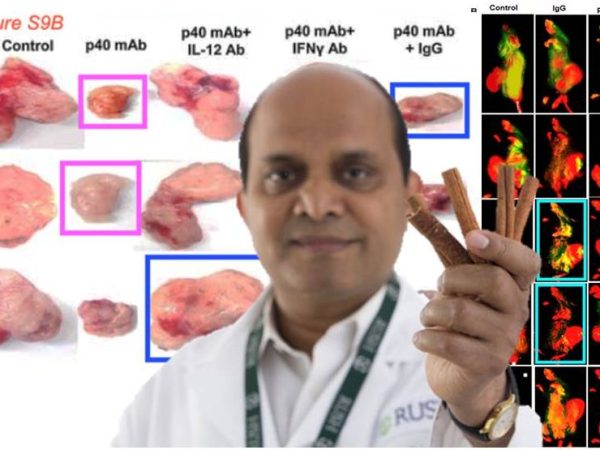
Kalipada Pahan – Cinnamon Boy in Rush
“all our PubPeer citations can be taken care of by submitting erratums and corrections.” – Prof Kalipada Pahan
Here another argument why Nilvadipine is very unlikely to help against TBI, mild or otherwise:
Alexander Morin, Benoit Mouzon, Scott Ferguson, Daniel Paris, Mackenzie Browning, William Stewart, Mike Mullan, Fiona Crawford Nilvadipine suppresses inflammation via inhibition of P-SYK and restores spatial memory deficits in a mouse model of repetitive mild TBI Acta Neuropathologica Communications (2020) doi: 10.1186/s40478-020-01045-x

Dysdera arabisenen: “Fig. 4: The differences between these images are not due to surgery or drug treatment. The face opposite directions.”
As mentioned, TBI is Crawford’s favourite topic. For that, she stuffs sedated mice into a contraption called “Impact One Stereotaxic Motorized Impactor”, which repeatedly hits them on the head with a little metal hammer.
Joseph O. Ojo , Moustafa Algamal , Paige Leary , Laila Abdullah , Benoit Mouzon , James E. Evans , Michael Mullan , Fiona Crawford Disruption in Brain Phospholipid Content in a Humanized Tau Transgenic Model Following Repetitive Mild Traumatic Brain Injury Frontiers in Neuroscience (2018) doi: 10.3389/fnins.2018.00893

More of that Hitting Mice on Their Heads research:
Scott A. Ferguson , Benoit C. Mouzon , Cillian Lynch , Carlyn Lungmus , Alexander Morin , Gogce Crynen , Benjamin Carper , Gayle Bieler , Elliott J. Mufson , William Stewart , Michael Mullan , Fiona Crawford Negative Impact of Female Sex on Outcomes from Repetitive Mild Traumatic Brain Injury in hTau Mice Is Age Dependent: A Chronic Effects of Neurotrauma Consortium Study Frontiers in Aging Neuroscience (2017) doi: 10.3389/fnagi.2017.00416


What is the point of torturing mice if you are going to falsify their data afterwards? Do they simply enjoy the hitting little animals on the heads with a little hammer?
Camila Ortiz , Andrew Pearson , Robyn McCartan , Shawn Roche , Nolan Carothers , Mackenzie Browning , Sylvia Perez , Bin He , Stephen D. Ginsberg , Michael Mullan , Elliott J. Mufson , Fiona Crawford , Joseph Ojo Overexpression of pathogenic tau in astrocytes causes a reduction in AQP4 and GLT1, an immunosuppressed phenotype and unique transcriptional responses to repetitive mild TBI without appreciable changes in tauopathy Journal of Neuroinflammation (2024) doi: 10.1186/s12974-024-03117-4

Dysdera arabisenen: “Fig. 6: The two panels overlap. The TBI one seems a bot brighter.”
Of course, cures were successfully tested for Hitting Mice on Their Heads. Here it is ST266 by Noveome Biotherapeutics, the supernatant from “a proprietary population of cells known as AMP cells“:
Robyn McCartan, Arissa Gratkowski, Mackenzie Browning, Coral Hahn-Townsend, Scott Ferguson, Alexander Morin, Corbin Bachmeier, Andrew Pearson, Larry Brown, Michael Mullan, Fiona Crawford, Radouil Tzekov, Benoit Mouzon Human amnionic progenitor cell secretome mitigates the consequence of traumatic optic neuropathy in a mouse model Molecular Therapy — Methods & Clinical Development (2023) doi: 10.1016/j.omtm.2023.04.002

Dysdera arabisenen: “Fig. 4: D and F seem identical. I and J overlap.”
Crawford is also employed by Haley Veterans Hospital in Tampa. To get at even more of the Veterans Affairs money, she invented a mouse model of the Gulf War Syndrome, by poisoning mice with anti-nerve agent pyridostigmine bromide (PB) and pesticide permethrin (PER):
Zuchra Zakirova , Jon Reed , Gogce Crynen , Lauren Horne , Samira Hassan , Venkatarajan Mathura , Michael Mullan , Fiona Crawford , Ghania Ait‐Ghezala Complementary proteomic approaches reveal mitochondrial dysfunction, immune and inflammatory dysregulation in a mouse model of Gulf War Illness PROTEOMICS – Clinical Applications (2017) doi: 10.1002/prca.201600190


More Gulf War mice:
Joseph O. Ojo , Laila Abdullah , James Evans , Jon Mike Reed , Hannah Montague , Michael J. Mullan , Fiona C. Crawford Exposure to an organophosphate pesticide, individually or in combination with otherGulfWar agents, impairs synaptic integrity and neuronal differentiation, and is accompanied by subtle microvascular injury in a mouse model ofGulfWar agent exposure Neuropathology (2014) doi: 10.1111/neup.12061

Funny how these Gulf War Mice produce dodgy figures. Here a study which poisoned mice and used the blood from Gulf War veterans:
Utsav Joshi, James E. Evans , Ross Joseph , Tanja Emmerich , Nicole Saltiel , Carlyn Lungmus , Sarah Oberlin , Heather Langlois , Joseph Ojo , Benoit Mouzon , Daniel Paris , Michael Mullan , Chao Jin , Nancy Klimas , Kimberly Sullivan , Fiona Crawford , Laila Abdullah Oleoylethanolamide treatment reduces neurobehavioral deficits and brain pathology in a mouse model of Gulf War Illness Scientific Reports (2018) doi: 10.1038/s41598-018-31242-7


That paper was celebrated with a press release, the drug they used to cure Gulf Syndrome Mice was Oleoylethanolamide (OEA), marketed as a weight-loss supplement. It was swiftly pushed by Crawford and Mullan into a clinical trial with 52 veterans with Gulf War Syndrome, the results were announced earlier this year: Abdullah et al 2026, not quite in Nature, but almost: in Scientific Reports. The Roskamp Institute claimed “the findings were strong and suggest that OEA supplementation may help improve energy levels and overall well-being in Veterans“, yet their peer reviewed paper was more modest: “No changes were seen in cognitive performance or pain.”
Sylvain Lesné is a failed scientist
From Lesné’s public shame to successful role models of neuroscience like Aguzzi and Tessier-Lavigne.
Other ways of mouse abuse were found, only to present data which not always was clean or made sense:
Moustafa Algamal , Andrew J. Pearson , Coral Hahn-Townsend , Ioana Burca , Michael Mullan , Fiona Crawford , Joseph O. Ojo Repeated unpredictable stress and social isolation induce chronic HPA axis dysfunction and persistent abnormal fear memory Progress in Neuro-Psychopharmacology and Biological Psychiatry (2020) doi: 10.1016/j.pnpbp.2020.110035


There are more papers by Crawford and Mullan on PubPeer, which contain data irregularities, incompetent nonsense statements and scientifically impossible results. Like this:
Joseph O. Ojo , Corbin Bachmeier , Benoit C. Mouzon , Radouil Tzekov , Michael Mullan , Heather Davies , Michael G. Stewart , Fiona Crawford Ultrastructural Changes in the White and Gray Matter of Mice at Chronic Time Points After Repeated Concussive Head Injury Journal of Neuropathology & Experimental Neurology (2015) doi: 10.1097/nen.0000000000000247


This also makes very little sense, yet it passed peer review:
Benoit Mouzon , Corbin Bachmeier , Joseph Ojo , Christopher Acker , Scott Ferguson , Gogce Crynen , Peter Davies , Michael Mullan , William Stewart , Fiona Crawford Chronic White Matter Degeneration, but No Tau Pathology at One-Year Post-Repetitive Mild Traumatic Brain Injury in a Tau Transgenic Model Journal of Neurotrauma (2019) doi: 10.1089/neu.2018.5720

Basically, they claim to have quantified neurons inside one neuron. Similar ridiculous level resolution was promised in Mouzon et al 2012. And here:
Scott Ferguson , Robyn McCartan , Mackenzie Browning , Coral Hahn-Townsend , Arissa Gratkowski , Alexander Morin , Laila Abdullah , Ghania Ait-Ghezala , Joseph Ojo , Kimberly Sullivan , Michael Mullan , Fiona Crawford , Benoit Mouzon Impact of gulf war toxic exposures after mild traumatic brain injury Acta Neuropathologica Communications (2022) doi: 10.1186/s40478-022-01449-x


However, data in Fig 6aa, and the results described in the legend, do not support this statement. In Fig. 6aa, we see that GW caused thinning of CC only in the sham group. In mTBI mice, GW exposure did not further decrease CC thickness. Also, the ANOVA results stated the lack of Treatment effect.”
Hitting mice on the head or posioning them with Gulf War chemicals, to prove what?
Mullan has also many papers without Crawford, here is one of them, where he turned his attention to cancer:
Daniel Paris, Amita Quadros, Nikunj Patel, Anthony DelleDonne, James Humphrey , Michael Mullan Inhibition of angiogenesis and tumor growth by beta and gamma-secretase inhibitors European Journal of Pharmacology (2005) doi: 10.1016/j.ejphar.2005.02.050


This couple has yet another company, the consulting business BioSRQ, the consultants advertised there are the same people employed by Roskamp Institute, you saw their names on the papers above. The company’s motto is: “Setting the Standard for Labs Everywhere“.
Some standards they set…
A good student
As you see, there’s not much going on research-wise at Roskamp, but Crawford and Mullan did succeed in training at least one successful academic offspring: Jun Tan, who soon became professor at University of South Florida (USF). Tan has a lot on PubPeer (ignore the papers by namesakes not related to neuroscience), and he featured in Charles Piller’s book about Alzheimer’s fraud:
“Doctored” by Charles Piller – book review
“If this book accomplishes anything, it should be to shatter the illusion that Alzheimer’s research is on solid footing and to prompt a long-overdue reckoning in the field. ” – Csaba Szabo

Here a paper from Roskamp Institute, Tan was trained by Mullan:
Jun Tan, Terrence Town, Andon Placzek , Amy Kundtz , Hua Yu , Michael Mullan Bcl-xL inhibits apoptosis and necrosis produced by Alzheimer’s β-amyloid1–40 peptide in PC12 cells Neuroscience Letters (1999) doi: 10.1016/s0304-3940(99)00525-x

Actinopolyspora biskrensis: “Two images in Figure 4(A) seem to overlap, after rotation. 4(A)(a) is described as having been treated with 500 nM and (c) with 1000 nM of Ab1±40 for 48 h.”
Here is Tan, already at USF, trying to cure Alzheimer’s with green tea:
Kavon Rezai-Zadeh , Doug Shytle , Nan Sun , Takashi Mori , Huayan Hou , Deborah Jeanniton , Jared Ehrhart , Kirk Townsend , Jin Zeng , David Morgan , John Hardy, Terrence Town , Jun Tan Green Tea Epigallocatechin-3-Gallate (EGCG) Modulates Amyloid Precursor Protein Cleavage and Reduces Cerebral Amyloidosis in Alzheimer Transgenic Mice Journal of Neuroscience (2005) doi: 10.1523/jneurosci.1521-05.2005

More green tea fraud by Tan can be observed in Rrapo et al 2010, and in the paper where this disaster recycled data from:
She-Qing Zhang, Darrell Sawmiller, Song Li , Kavon Rezai-Zadeh , Huayan Hou , Shufeng Zhou, Douglas Shytle, Brian Giunta , Frank Fernandez , Takashi Mori , Jun Tan Octyl Gallate Markedly Promotes Anti-Amyloidogenic Processing of APP through Estrogen Receptor-Mediated ADAM10 Activation PLOS One (2013) doi: 10.1371/journal.pone.0071913


Figure 3B,”
Demian F. Obregon, Kavon Rezai-Zadeh , Yun Bai , Nan Sun , Huayan Hou , Jared Ehrhart, Jin Zeng , Takashi Mori , Gary W. Arendash , Doug Shytle, Terrence Town, Jun Tan ADAM10 Activation Is Required for Green Tea (–)-Epigallocatechin-3-gallate-induced α-Secretase Cleavage of Amyloid Precursor Protein Journal of Biological Chemistry (2006) doi: 10.1074/jbc.m600617200


In 2022, Retraction Watch discussed a paper by Tan and Paul Sanberg, USF’s Senior Vice President for Research and a biotech entrepreneur. Habib et al 2018 received an Expression of Concern at that time, Sanberg was back then Editor-in-Chief of that journal Cell Transplantation. Also Darlington et al 2013, in the same Sage journal, earned an Expression of Concern, again mentioning hidden financial conflicts of interests, again where all authors blamed Tan alone, saying he had “access to all of the data underlying the findings in this article“.
Tan was also affiliated with the Sanberg’s businesses Saneron CCEL Therapeutics and the supplement company Natura Therapeutics. Sanberg’s wife Cyndy Sanberg runs both companies as President or Vice President, respectively. In addition, she works full time as Senior Director at the College of Business at USF. Poor woman, with three full-time jobs, when does she even sleep.
Another joint work by Tan and Sanberg, Sawmiller et al 2019, was retracted in 2025. There, Retraction Watch reported that Tan had meanwhile left USF. He was last seen in China, at professor at Guizhou Medical University.
There were more retractions for Tan: Habib et al 2017 was retracted in 2021 for “inappropriately duplicated images“, and Shytle et al 2012 (featuring Mr & Mrs Sanberg) was retracted in 2025 for “potential data manipulation“. Here another paper by Tan and Sanberg, not retracted:
Antoinette R. Bailey , Huayan Hou , Min Song , Demian F. Obregon , Samantha Portis , Steven Barger , Doug Shytle, Saundra Stock , Takashi Mori , Paul G. Sanberg , Tanya Murphy, Jun Tan GFAP expression and social deficits in transgenic mice overexpressing human sAPPα Glia (2013) doi: 10.1002/glia.22544


Another one in need of editorial attention:
S Li , J Deng , H Hou , J Tian , B Giunta , Y Wang , D Sawmiller, A Smith , P R Sanberg, D Obregon , T Mori , J Tan Specific antibody binding to the APP672-699 region shifts APP processing from α- to β-cleavage Cell Death & Disease (2014) doi: 10.1038/cddis.2014.336

The data from that study’s Figure 2a re-appeared after some transformation as Figure 6c of another study in that journal where Sanberg was Editor-in-Chief:
Ahsan Habib , Darrell Sawmiller, Huayan Hou , Manasa Kanithi , Jun Tian , Jin Zeng , Dan Zi , Zhi-Xu He , Paul R. Sanberg, Jun Tan Human Cord Blood Serum-Derived APP α-Secretase Cleavage Activity is Mediated by C1 Complement Cell Transplantation (2018) doi: 10.1177/0963689718775941

In 2004, Tan, Mullan and the Roskamp Institute patented an “assay for evaluating the therapeutic effectiveness of agents in reducing Alzheimer’s disease pathology“. I personally am not sure it works.
Donate!
If you are interested to support my work, you can leave here a small tip of $5. Or several of small tips, just increase the amount as you like (2x=€10; 5x=€25). Your generous patronage of my journalism will be most appreciated!
€5.00


One more https://pubpeer.com/publications/B3B7DBAFC96EB90AB3ACBCAD993B92#1
LikeLike
Sorry, another one https://pubpeer.com/publications/CDBD8E4EB505B04696065595FDCF6A#1
LikeLike
Sorry sorry. One more https://pubpeer.com/publications/1F757E1D89FFF8C8E1D3F5818238A3#1
LikeLike