

Schneider Shorts of 9 October 2026 – EU Commission invests €10 Million into Portuguese fraud, a French masterclass in replying on PubPeer, retractions for UCL professors retained and sacked, plus American quality science and amazing discoveries in Alzheimer’s!
Table of Discontent
Science Elites
- Sculptable Living Platforms – Joao Mano gets €10 million rom EU Commission
- As expected for nanoparticles – PubPeer response masterclass by Patrick Couvreur
Retraction Watchdogging
- Recurrence of similar issues across the authors’ related publications – Martin Birchall and UCL friends lose another paper
- We identified these errors previously – Alexander Seifalian failed to correct his curcumin
- Values and noises have no scientific meaning, suggest nothing, form no judgments, and have no influence on the conclusions – Gareth Williams still doing well
- Original data are available – tough luck for Anuska Anjelkovic
Science Breakthroughs
- Alzheimer’s may be reversible – where Joel Blanchard learned to core Alzheimer’s
Science Elites
Sculptable Living Platforms
The EU Commission announced to flush €10 million down the toilet. It is about to give it to a Portuguese scientist who is a known bully and whose lab published massive research fraud.
The EU Horizon project 101224324, titled “RODIN: Cell-mediated sculptable living platforms as highly efficient hybrid units to bioengineer human microtissues” begins on 1 November 2026, and goes to Joao Mano, vice-director at CICECO – Aveiro Institute of Materials and professor at University of Aveiro. Mano is a former protege of the i3BS director and dedicated alcoholic Rui Reis, they published a lot of fake stuff together, we do not know if they also shared a bottle, or two, or five. Read this article:

Rui the Drunk
“we are talking about a dictator that systematically harassed students and other young researchers, created inhumane work conditions, forced them into scientific misconduct, systematically committed financial fraud with research money, and threatened and intimidated anyone that did not play by his rules.” – comment about Portugal’s most cited researcher

The RODIN project is really named after the French sculptor, and is a bullshit bingo of buzzwords like stem cells, AI and nanotechnology. The EU Commission had no choice but to fund it. Mano’s CICERO celebrated in November 2025:
“The RODIN – Cell-mediated Sculptable Living Platforms project proposes a radical shift in tissue engineering: instead of scientists designing materials for cells, the project will give the cells themselves materials that they can actively shape, record what they do, and learn the rules behind that behavior. […] This could lead to: smarter scaffolds for tissue regeneration, more realistic disease models, faster drug testing platforms, and a reduction in animal experimentation.
The consortium brings together three top researchers with highly complementary skills: João Mano (professor in the Department of Chemistry at the University of Aveiro and member of the associated laboratory CICECO – Aveiro Institute of Materials), a biomaterials engineer; Tom Ellis (professor at Imperial College London, UK), a synthetic biologist; and Nuno Araújo (professor at the Faculty of Sciences of the University of Lisbon), a physicist specializing in complex systems. Together they will rethink how materials and living systems co-evolve. […]
The team will develop very thin, flexible, and moldable biomaterial films that living cells can deform as they grow. As the cells organize themselves, they leave an imprint on the material. By analyzing the structures that cells create when asked to form a specific tissue, the project aims to discover the geometric and mechanical signals that the cells themselves consider ideal.”
Mano is already burning through another chunk with EU money with Hongji Yan and Thomas Crouzier, who were both found guilty of research fraud in Sweden. Here, the money went basically into Mano’s pocket, because the participant of NatProLub is his company Cellularis Biomodels:
Safer Sex with Cowboy Yan
“Hongji Yan presented four different versions of Figure 9 in the article and during the investigation as the “correct” figure. One version was published in the original article, one version was sent to the journal and published as a correction, and two more versions were shared with the Board”
Cellularis lists many young people as staff (archived here), and almost all of them are simultaneously Mano’s PhD students at University of Aveiro. Basically, they are paid with EU research grants to work for their supervisor’s private company. In 2022, Mano received the ERC grant HumanINK (“Human based bioinks to engineer physiologically relevant tissues”), which was apparently diverted to his other private company, MetaTissue, which also employs Mano’s PhD students:
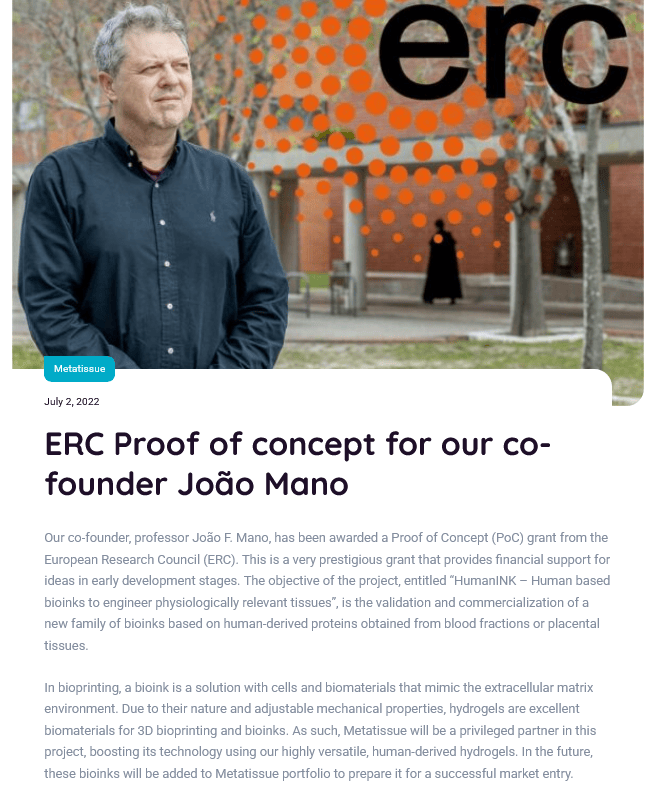
“Our co-founder, professor João F. Mano, has been awarded a Proof of Concept (PoC) grant from the European Research Council (ERC). […] Metatissue will be a privileged partner in this project, boosting its technology using our highly versatile, human-derived hydrogels. In the future, these bioinks will be added to Metatissue portfolio to prepare it for a successful market entry.” (MetaTissue)
The money from RODIN is also apparently on its way to Mano’s private company, because absolutely nobody minds:
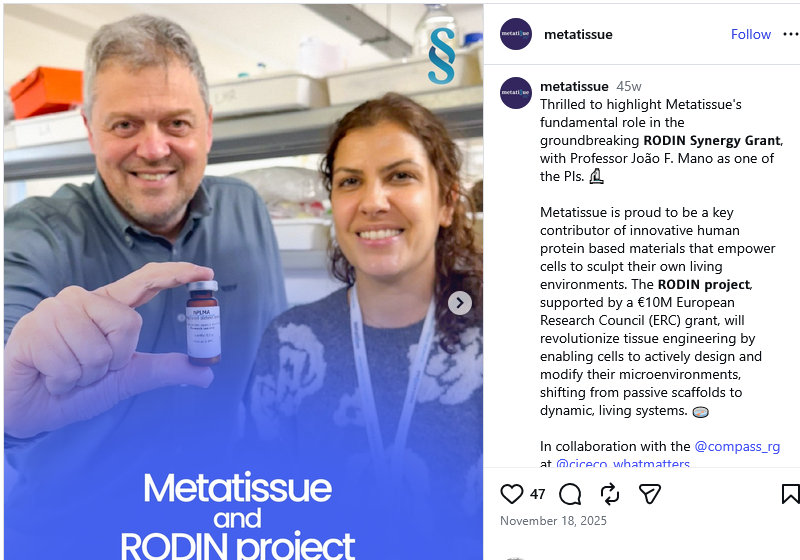
The EU Commission gave Mano all these millions to funnel into his own businesses despite or maybe because of his PubPeer record, currently standing at over 30 papers. I showed some in my previous articles, and here is more, where Mano won’t be able to blame Reis or anyone else:
Lúcia F Santos , A Sofia Silva , Clara R Correia , João F Mano Physical immobilization of particles inspired by pollination Proceedings of the National Academy of Sciences (2019) doi: 10.1073/pnas.1813336116

The images are not accidentally duplicated, they have different brightness. This looks like RODIN-relevant:
Jéssica Antunes , Vítor M. Gaspar, Luís Ferreira , Maria Monteiro , Rui Henrique , Carmen Jerónimo , João F. Mano In-air production of 3D co-culture tumor spheroid hydrogels for expedited drug screening Acta Biomaterialia (2019) doi: 10.1016/j.actbio.2019.06.012

Also RODIN-relevant:
Diana Lopes , C. Fernandes , J. Miguel Nóbrega , Sónia G. Patrício , Mariana B. Oliveira, João F. Mano Screening of perfused combinatorial 3D microenvironments for cell culture Acta Biomaterialia (2019) doi: 10.1016/j.actbio.2019.06.047


This is absolutely highly relevant for RODIN:
Maria C. Mendes , João A. Pereira , Ana S. Silva , João F. Mano Magneto‐Enzymatic Microgels for Precise Hydrogel Sculpturing Advanced Materials (2024) doi: 10.1002/adma.202402988

Lazy and shameless duplciations, worth many millions of Euros:
Maria C. Mendes , Elisa A. G. Martins , Roman V. Chernozem , Polina V. Chernozem , Catarina C. Custódio , Roman A. Surmenev , Andrei L. Kholkin , Ana S. Silva, João F. Mano Osteogenic Differentiation Triggered by Intracellular Magnetoelectric Stimulation of Core–Shell Nanotransducers under Remotely Applied Magnetic Fields ACS Nano (2025) doi: 10.1021/acsnano.5c10509

Most of mano’s papers on PubPeer are with Reis though. Like this, something about squids for tissue engineering:
Rui C.G. Coelho , Ana L.P. Marques , Sara M. Oliveira , Gabriela S. Diogo , Rogério P. Pirraco , Joana Moreira-Silva , José C. Xavier , Rui L. Reis , Tiago H. Silva, João F. Mano Extraction and characterization of collagen from Antarctic and Sub-Antarctic squid and its potential application in hybrid scaffolds for tissue engineering Materials Science and Engineering C (2017) doi: 10.1016/j.msec.2017.04.12

More tissue engineering trash by Reis and Mano:
Lara Lopes Reys , Simone Santos Silva , Rogério Pedro Pirraco , Alexandra Pinto Marques , João Filipe Mano , Tiago Henriques Silva, Rui Luís Reis Influence of freezing temperature and deacetylation degree on the performance of freeze-dried chitosan scaffolds towards cartilage tissue engineering European Polymer Journal (2017) doi: 10.1016/j.eurpolymj.2017.08.017

Carabus maleki: “In Fig. 1A (CST1), certain regions of the SEM images labeled as surface and cross-section (yellow boxes) appear more similar than expected, despite the differences in scale.”
An older stem cell and biomaterials fabrication:
J. L. Escobar Ivirico, M. Salmerón‐Sánchez , J. L. Gómez Ribelles , M. Monleón Pradas , J. M. Soria , M. E. Gomes , R. L. Reis , J. F. Mano Proliferation and differentiation of goat bone marrow stromal cells in 3D scaffolds with tunable hydrophilicity Journal of Biomedical Materials Research Part B: Applied Biomaterials (2009) doi: 10.1002/jbm.b.31400

Carabus maleki: “Two panels in Figures 4 and 6 appear more similar than expected (red boxes), considering that they represent different assays and thus different scaffolds.”
No shame whatsoever:
Ana Rita C. Duarte, João F. Mano , Rui L. Reis Preparation of starch-based scaffolds for tissue engineering by supercritical immersion precipitation The Journal of Supercritical Fluids (2009) doi: 10.1016/j.supflu.2008.12.008

Carabus maleki: “Figs. 2a, 4a, and 10a appear more similar than expected (red boxes), considering that they are presented as representing different assays.”
Readers informed me that Mano transplanted to Aveiro the same bullying system he learned at Reis’s I3BS at University of Minho. This primarily involves extortion of mandatory coauthorships for the boss, and the infamous “5+1 rule”, where, as a former lab member described it, “doctoral students are allegedly subjected to an unwritten mandatory target of 5+1 scientific papers — five original research articles as first author and one review article — as an imperative condition for their supervisor to authorize the submission of their thesis“.
As the result, Mano’s student were said to be “completing their theses by repeating tests over and over just to get one “nice” result or image for publication, pretending it was consistent data“, they all “were all fully aware that the data was fabricated“. Also, students reported from Mano’s lab “inappropriate comments about the number of women getting pregnant in the group” and monitoring “the locations of group members during work hours“.

The Kingdom of Rui Reis
“I think this story shows the debacle and corruption of entire research fields that become just a very expensive show of bad science-fiction. ” – Carabus Maleki

But Mano cannot defend himself that he actually never read those fraudulent papers where he forced his PhD student to add him as coauthor. Not just because he would admit to bullying and extortion: he presented all these papers as his own achievements to get those EU Commission grants like RODIN for himself.
But then again, Portugal is not Sweden. Mano’s Swedish partners were found guilty, but Portuguese academic authorities probably just feed their whistleblowing students to the pigs.
As expected for nanoparticles
Welcome to our French Masterclass lesson by Patrick Couvreur, emeritus professor at Paris-Saclay University, member of the Académie des Sciences and other academies, , i on how to deal with PubPeer allegations the WRONG way. Couvreur also won numerous French and foreign awards, including the Order of “Légion d’Honneur”, and is described as
“A specialist in drug delivery and nanomedicine, his work uses nanotechnologies for drug delivery and the treatment of serious diseases (cancer and diseases of the central nervous system). He is the founder of three start-ups, one of which has been floated on the stock exchange and has enabled the development of a nanomedicine to phase III clinical trials for the treatment of resistant hepatocarcinoma.”
On LinkedIn, the great man informs us that his “contributions in the field of drug delivery and nanomedicine are highly recognized around the world with more than 650 research articles“.
Couvreur’s stock market company was BioAlliance Pharma SA, founded in 1997, in 2014 it merged with the Danish company Topotarget to form Onxeo, which in 2023 changed its name to Valerio Therapeutics, and then abandoned all clinical research in 2025 and went virtually bankrupt. The following research study promoted Couvreuer’s technology of “squalenoylation”, later marketed by his companies Medsqual (founded 2007, dissolved in 2018) and Squalpharma (founded 2019, apparently bankrupt also).
José L. Arias, L. Harivardhan Reddy, Patrick Couvreur Magnetoresponsive squalenoyl gemcitabine composite nanoparticles for cancer active targeting Langmuir (2008) doi: 10.1021/la800547s

Calotis hispidula and Ginkgo biloba: “The internal patterns of two particles in Figure 1c appear identical.”
Couvreur replied on PubPeer:
“First, the circumferences of the NPs are clearly different, as it can be checked in the animated video. We agree that the two indicated nanoparticles exhibit a similar overall distribution of electron density, as expected for nanoparticles produced from the same formulation and imaged under identical conditions. However, their internal contrast patterns are not identical: the position, shape and intensity of the darker regions differ between the two particles, as can also be seen by comparison with the neighbouring nanoparticles. Moreover, conventional TEM provides a two-dimensional projection of electron density and the observed internal contrast can vary with particle orientation, thickness and imaging conditions. Therefore, visual similarity of the internal contrast should not be interpreted as evidence that the two particles are identical.“
Other readers provided additional analysis proving that the regions are indeed identical, and showed traces of digital forgery:


But Couvreur had his own analysis:

“I discussed with my co-author Prof Jose-Luis Arias because the electron microscopic picture was taken in the dedicated platform of the “Centro de Investigación Científica (CIC)” of the University of Granada. He tried to find the original picture. However, the technician currently in charge told that there is no archive of such old TEM pictures since the electronic files are kept for only one year. In addition, the electron microscope used for the figure of this paper published 18 years ago doesn’t still exist. Therefore, I’m sorry not to be able to provide you with the original TEM image. Nevertheless, looking carefully to the two particles, we cannot see the surface imperfection highlighted with the blue circle in the two particles (please, check the attached file). There are also other zones in the picture with background discontinuities (highlighted with blue arrows) and we also don´t know where they come. In addition, the comment “particles were likely copy-pasted multiple times to generate the image” does not fit with the existence of other particles in the picture that are different. Finally, the figure represents classical gemcitabin-squalene nanoparticles which were analysed and published in many other papers by TEM and CRYO-TEM“
Maarten van Kampen replied with an animation, to which Couvreur didn’t reply.


The above observations show that Fig. 1(c) is not a SEM image. Instead, the image is something of a painting that is constructed by a combination of copy-pasting of image elements, smoothing brushes, stretching,”
Couvreur started with denying the obvious data manipulation and accusing his critics of incompetence, and progressed to declaring their analysis inadmissible because he published other papers on this topic, because the raw data is unavailable and because some technician abroad who is not even a coauthor, is alone responsible. That is NOT how one is expected to reply on PubPeer.
Couvreur has a couple more papers on PubPeer, here another one promoting his proprietary squalenoylation. The founder of two biotech companies, one of them marketing this exact technology, lied “The authors declare no competing financial interest.”
Andrei Maksimenko , Mouad Alami , Fatima Zouhiri , Jean-Daniel Brion , Alain Pruvost , Julie Mougin , Abdallah Hamze , Tanguy Boissenot , Olivier Provot , Didier Desmaële , Patrick Couvreur Therapeutic modalities of squalenoyl nanocomposites in colon cancer: an ongoing search for improved efficacy ACS Nano (2014) doi: 10.1021/nn500517a

Cibyra munona: “Panel a, figure 6: two images are overlapping.”
Couvreur proceeded straight to blaming a dead student:
“It is indeed surprising to see that these two histological images partially overlap. Unfortunately, my former postdoctoral fellow, Dr Andrey Maksimenko, passed away a couple of years ago. Although this publication dates back more than ten years, I was able to find in my old files the complete figure that Dr Maksimenko sent me. It shows no sign of abnormality or image manipulation. Overall, the two histological sections appear to correspond to different samples.”
Here, Couvreur didn’t reply tat all, so feel free to blame the dead student on his behalf:
Joachim Caron , Andrei Maksimenko , Séverine Wack , Elise Lepeltier , Claudie Bourgaux , Estelle Morvan , Karine Leblanc , Patrick Couvreur, Didier Desmaële Improving the antitumor activity of squalenoyl-paclitaxel conjugate nanoassemblies by manipulating the linker between paclitaxel and squalene Advanced Healthcare Materials (2013) doi: 10.1002/adhm.201200099
Chalarus longicaudis: “Images 1fNAs and QCO2HNAs show identical patterns across different experimental conditions, differing only in contrast (Fig.9).”

Chalarus longicaudis: “Images 1fNAs and QCO2HNAs show identical patterns across different experimental conditions, differing only in contrast (Fig.9).”
Maybe these are clues why Couvreur’s biotech companies went tits up. Either the science was based on “data” like the above, or it is all a huge international Big Pharma conspiracy against a French genius.
Retraction Watchdogging
Recurrence of similar issues across the authors’ related publications
In London, the unsackable UCL professor of degenerative medicine, Martin Birchall, a former friend of Paolo Macchiarini, lost another paper. This time, again together with another UCL cheater named Wenhui Song, a professor of biomaterials. Read about them both here:
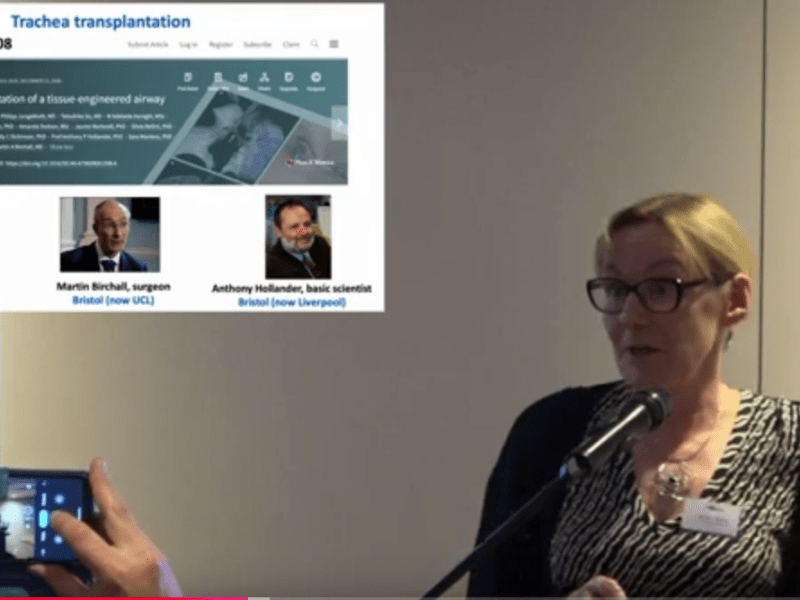
Martin Birchall, Paolo De Coppi, and other clowns of UCL’s degenerative medicine
Several years ago, UCL investigated the Macchiarini affair and found their surgeon Martin Birchall was not only innocent, but also entitled to more money and more patients to experiment upon. Now, Patricia Murray was awarded for exposing this UCL malfeasance, and Sholto David scrutinised UCL papers for data manipulation.
I wrote about the previous retraction by Birchall, Song and their UCL colleagues, Marilena Loizidou professor for cancer nanotechnology, and the medical faculty Mark Emberton, who hushed up the trachea transplant affair at UCL in 2017, in March 2026 Shorts. Here is their fresh retraction, in another Elsevier journal:
Linxiao Wu , Adrián Magaz , Tao Wang , Chaozong Liu , Arnold Darbyshire , Marilena Loizidou, Mark Emberton, Martin Birchall, Wenhui Song Stiffness memory of indirectly 3D-printed elastomer nanohybrid regulates chondrogenesis and osteogenesis of human mesenchymal stem cells Biomaterials (2018) doi: 10.1016/j.biomaterials.2018.09.013


Panels A and B appear to share many unexpected similarities.
The left part of A shares similarities with the right half of B, not in the individual dots, but in the horizontal stripes and structures of the tissue
The right part of A shares similarities with the left half of B, in particular in the areas that I boxed.”


Cyan boxes: The C (50RTC+H) panels appear to overlap, although conditions (chondrogenic vs osteogenic) and time points (4 weeks vs 21 days) do not match, and the colors are shown in different ratios and mean different antibodies.”
The retraction is future-dated for December 2026:
“This article has been retracted at the request of the Editor-in-Chief.
Following publication, concerns were raised regarding potential image duplication and manipulation affecting multiple figures within the article. The authors were invited to respond and provided explanations and replacement images for Figures 4A–B and 7; however, the concerns were not satisfactorily resolved.
While the explanation for the errors in Figures 4A–B was deemed plausible, the issues identified in Figure 7 and the pattern of similar image-related corrections in the authors’ other publications raised serious doubts about the reliability of the data presented. Specifically, the questioned panels in Figure 7 were reported to derive from distinct experiments (21-day chondrogenic vs. 4-week osteogenic differentiation), yet show evidence of duplication inconsistent with inadvertent error.
Given the recurrence of similar issues across the authors’ related publications, such as RETRACTED: Development data associated with effects of stiffness softening of 3D-TIPS elastomer nanohybrid scaffolds on tissue ingrowth, vascularization and inflammation in vivo – ScienceDirect the Editors concluded that the integrity of the dataset and the validity of the conclusions are compromised.”
One could almost think Elsevier considers Birchall and his associates to be compulsive fraudsters. Well, what about that papers of Birchall’s with Macchiarini in the same journal Biomaterials (Asnaghi et al 2009), which Elsevier promised to investigate following complaints by Peter Wilmshurst and Patricia Murray?
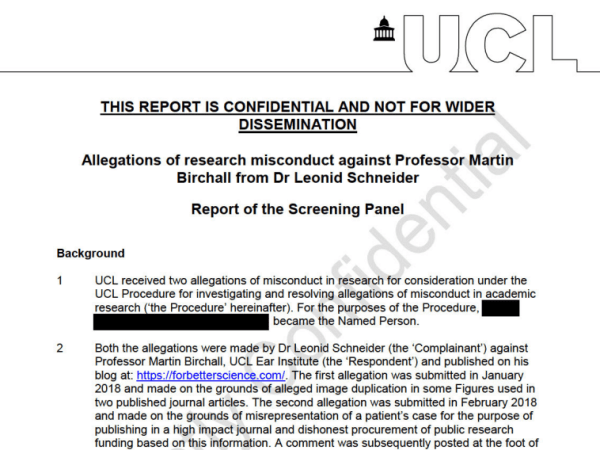
Martin Birchall innocent, UCL decides once again
In yet another investigation, UCL whitewashed Martin Birchall of all responsibilities. I publish here the confidential report and excerpts from a secret PhD thesis, which the UCL committee carefully avoided to read.
We identified these errors previously
Here, Alexander Seifalian, a former UCL professor who made the plastic tracheas for Martin Birchall and Paolo Macchiarini, lost a paper. Seifalian was investigated by UCL, found to be the onyl guilty party among UCL researchers, and fired.
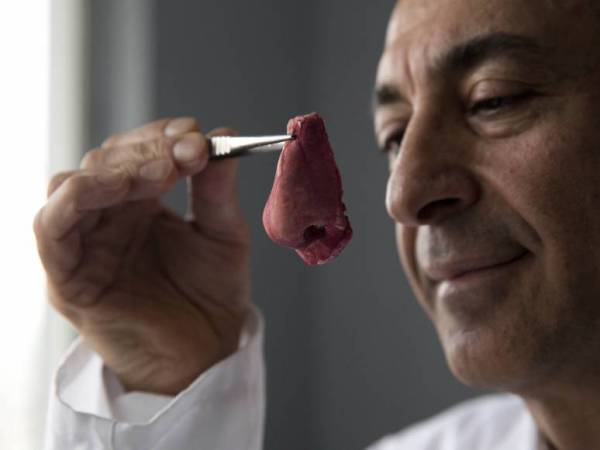
UCL trachea transplant inquiry: scapegoating, obfuscation and a lost nose
In 2017, UCL invited an external expert commission to investigate the deadly trachea transplants performed by the former UCL honorary professor Paolo Macchiarini. An already sacked UCL nanotechnology professor, Alexander Seifalian, whose lab made the two UCL plastic POSS-PCU tracheas in 2011, was announced as the main culprit on UCL side. All this despite Seifalian’s…
Seifalian, a Persian native, then became a businessman, pushing crazy stuff like artificial vaginas and pelvic implants, with the help of his daughter Amelia, and he also turned to Iranian papermills like there was no tomorrow (read December 2024 Shorts).
This turmeric insanity was finally retracted now:
Mercedeh Babaluei, Fatemeh Mottaghitalab, Alexander Seifalian, Mehdi Farokhi Injectable multifunctional hydrogel based on carboxymethylcellulose/polyacrylamide/polydopamine containing vitamin C and curcumin promoted full-thickness burn regeneration International Journal of Biological Macromolecules (2023) doi: 10.1016/j.ijbiomac.2023.124005


Tan and blue boxes highlight panels representing different hydrogels”
The last author Mehdi Farokhi replied in November 2024 on PubPeer: “We identified these errors previously and we are in touch with the editor“. Fatemeh Mottaghitalab added: “We solved the problems and sent the corrected images to them“.
Almost two years later, on 2 September 2026, the paper was instead retracted:
“This article has been retracted at the request of the Editors.
Concern was raised regarding multiple instances of image duplication in the article, including Fig. 8 panels: Row (1), 9 h and Row (2), 3 h; Row (2), 9 h and Row (3), 9 h, Fig. 10 panels: Day 14, Hydrogel with Vitamin C and Day 14, Hydrogel with Curcumin; Day 14, Hydrogel with Curcumin and Day 14, Hydrogel with Vit C/Curcumin, Fig. 11 panels: Untreated Control and Plain Hydrogel (Day 3), Untreated Control and Hydrogel with Vit C (Day 3), Plain Hydrogel and Hydrogel with Vit C (Day 3), Hydrogel with Vit C and Hydrogel with Curcumin (Day 3), Hydrogel with Curcumin and Hydrogel with Vit C/Curcumin (Day 3), Hydrogel with Curcumin and Hydrogel with Vit C/Curcumin (Day 3). The editors observed that portions of these images overlapped with regions from other images. It was determined that these images may have been partially duplicated despite being labelled as independent experiments.
The corresponding author was contacted to provide a detailed explanation and the original, uncropped raw data supporting the published figure. However, the explanation and supporting materials provided were insufficient to adequately address the concerns raised.”
Seifalian has tons of fake stuff on PubPeer, not just his post-dismissal Iranian papermilling, also his past research at UCL. And not just with Birchall:
Lara Yildirimer , Asma Buanz , Simon Gaisford , Edward L. Malins , C. Remzi Becer , Naiem Moiemen , Gary M. Reynolds , Alexander M. Seifalian Controllable degradation kinetics of POSS nanoparticle-integrated poly(ε-caprolactone urea)urethane elastomers for tissue engineering applications Scientific Reports (2015) doi: 10.1038/srep15040

Fig 3, “Muchmore similar than expected.”
This is with Marc Winslet, emeritus professor of surgery at the UCL:
Shi Yu Yang, Anur Miah , Kevin M Sales , Barry Fuller , Alexander M Seifalian , Marc Winslet Inhibition of the p38 MAPK pathway sensitises human colon cancer cells to 5-fluorouracil treatment International Journal of Oncology (2011) doi: 10.3892/ijo.2011.982

The irony is that Seifalian is a polymer chemist and his lab never did any western blots.
Shi Yu Yang, Michael Hoy , Barry Fuller , Kevin M Sales , Alexander M Seifalian , Marc C Winslet Pretreatment with insulin-like growth factor I protects skeletal muscle cells against oxidative damage via PI3K/Akt and ERK1/2 MAPK pathways Laboratory Investigation (2010) doi: 10.1038/labinvest.2009.139

Wislet can’t investigate either, he died in 2023. The first author Shi Yu Yang is still at UCL, as senior fellow:
Mahmoud Abu-Amara , Shi Yu Yang , Alberto Quaglia, Peter Rowley , Barry Fuller, Alexander Seifalian, Brian Davidson Role of endothelial nitric oxide synthase in remote ischemic preconditioning of the mouse liver Liver Transplantation (2011) doi: 10.1002/lt.22272

Values and noises have no scientific meaning, suggest nothing, form no judgments, and have no influence on the conclusions
Another retraction for another UCL professor.
Gareth Williams still remains for some obscure reason full professor for pharmaceutical materials at UCL, read about his achievements here:
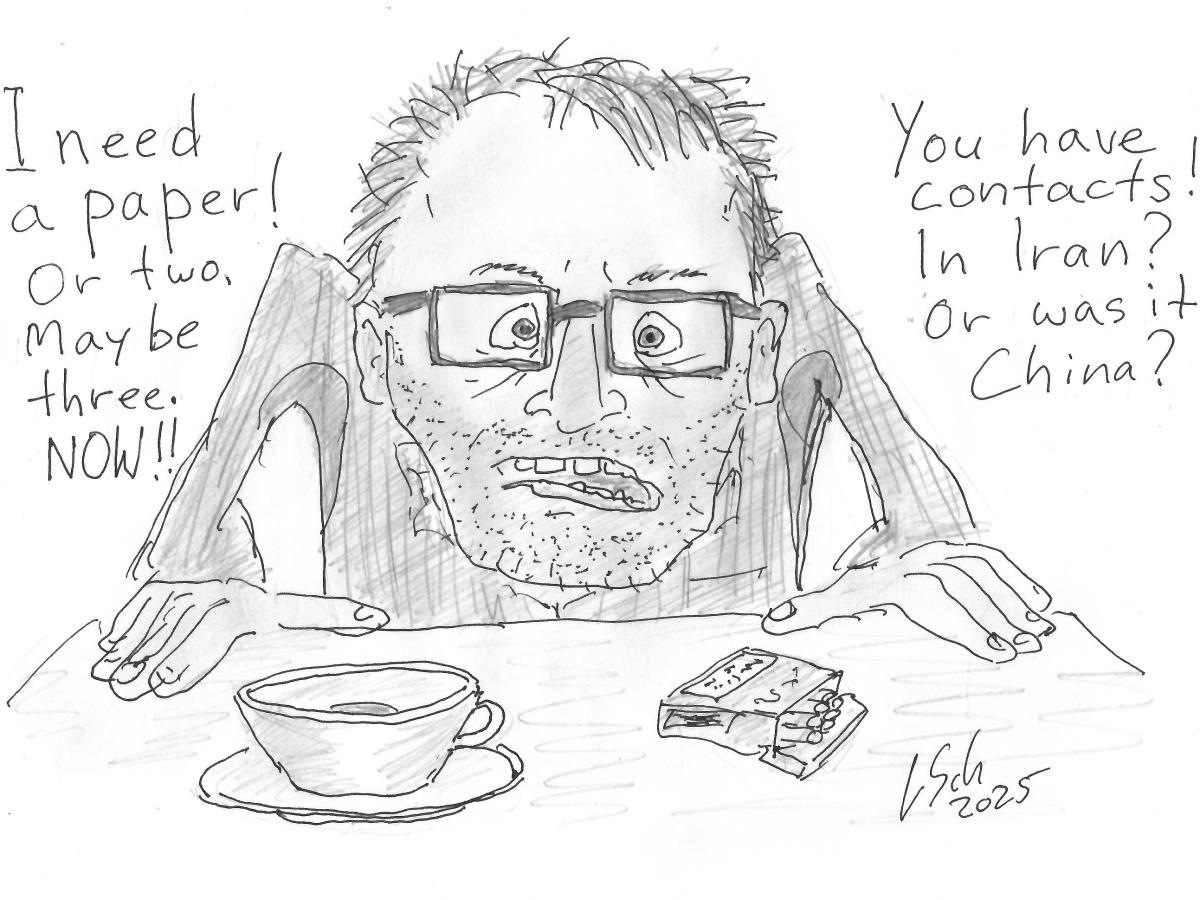
Shocked, angered and appalled
“I have been following the comments on PubPeer, and have been shocked, angered and appalled by the issues […] there can be no explanation for this other than systemic fraud “- Prof Gareth Williams, UCL

Williams’ first retraction featured in September 2025 Shorts. This second retracted paper of his was again coauthored with his Chinese papermill provider and Donghua University professor Li-Min Zhu. Another coauthor is Chris Branford‐White, until his retirement associate dean for research at the London Metropolitan University.
Bin Wang, Pei-pei Zhang, Gareth R. Williams, Christopher Branford-White, Jing Quan, Hua-li Nie, Li-min Zhu A simple route to form magnetic chitosan nanoparticles from coaxial-electrospun composite nanofibers Journal of Materials Science (2013) doi: 10.1007/s10853-013-7208-x

Archasia belfragei: “Four patterns in Figure 3 seem to display identical noise signatures for separate materials/fibers”
The retraction of that 13 year old paper arrived on 17 September 2026:
“The Editor-in-Chief has retracted this article. After publication, it was identified that four patterns in Figure 3 seem to display overlapping noise signatures for separate materials. The authors were unable to provide their raw data or a sufficient response to concerns. The Editor has therefore lost confidence in the data and conclusions of this article.
None of the authors responded to correspondence from the publisher regarding this retraction.”
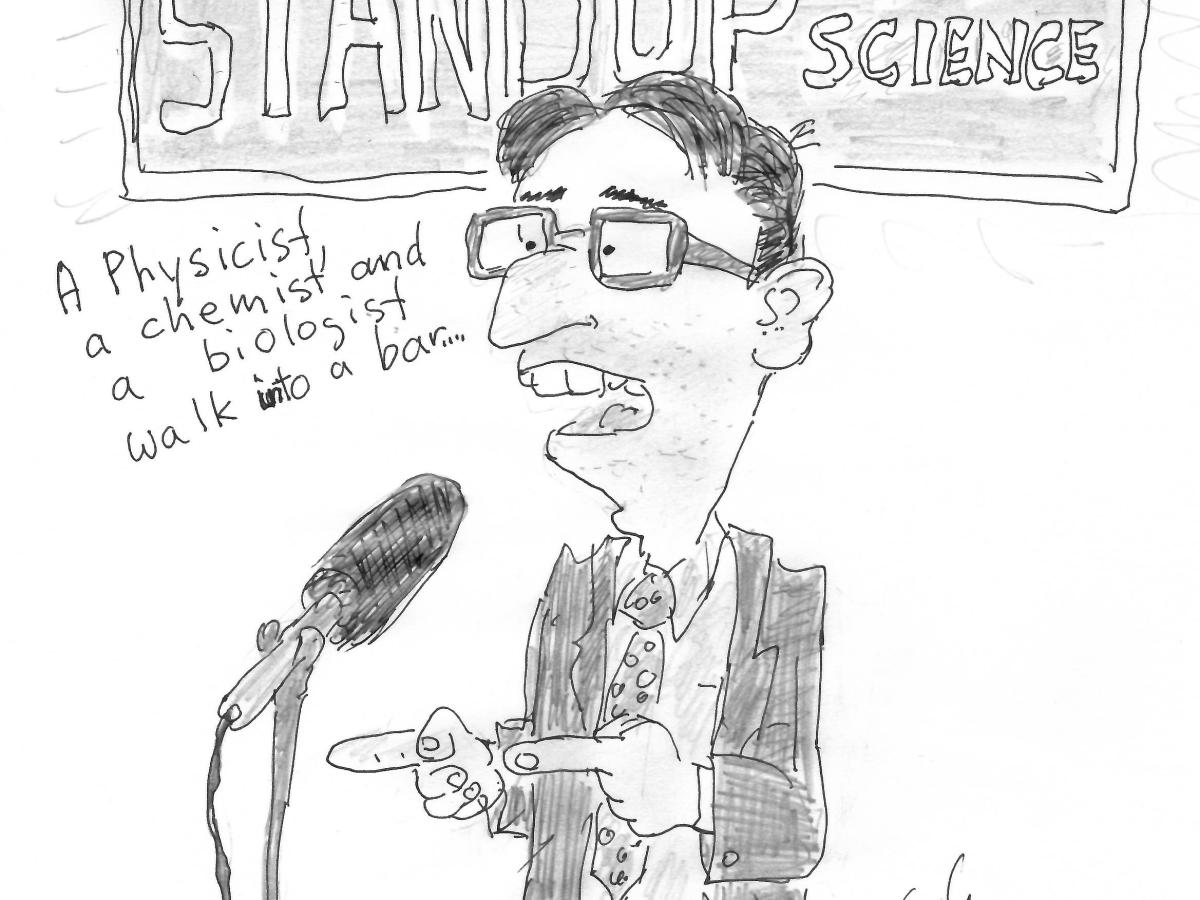
A stupid and foolish question
“Those noises have no scientific meanings, suggest nothing, forming no any judgments, and have no any influences on the experimental results. ” – Professor Deng‐Guang Yu
It’s not all gloom. Williams and Zhu managed to save many other papers, either the journals did nothing, otherwise corrections were published:Wang et al 2019 (corrected in June 2026) or Li et al 2018 (corrected in June 2026). Also this fabrication was corrected, coauthored with Williams’s other Chinese papermill provider, Deng-Guang Yu, professor at the University of Shanghai for Science and Technology.
Shixiong Kang, Shicong Hou, Xunwei Chen, Deng-Guang Yu, Lin Wang, Xiaoyan Li, Gareth R. Williams Energy-Saving Electrospinning with a Concentric Teflon-Core Rod Spinneret to Create Medicated Nanofibers Polymers (2020) doi: 10.3390/polym12102421


In 2025, Yu asserted on PubPeer that the spectra are never identical:
“they are highly similar, but they are from different data and tests, and which these noises have no any scientific meanings, no any influences on the results, and can be replaced by the smooth lines as numerous other publications!”
MDPI’s correction from 10 June 2026 used these bizarre words while removing the duplciated spectra (highlights mine):
“In the original publication [1], there was a mistake in Figure 8 as published. There was no Y-axis for the XRD patterns and FTIR spectra. We have redone the experiments and converted the data in a better manner. […]
The reasons for the previous lack of a Y-axis for XRD patterns have been explained in another correction of [2]. We repeat them as follows: (1) Here, XRD and FTIR are qualitative analyses; (2) the only meaning of XRD patterns is to disclose the physical state of drug molecules in the electrospun nanofibers by the presence or absence of sharp Bragg peaks [3,4,5,6,7,8], and the only meaning of FTIR spectra is to disclose the compatibility between KET and PVP; (3) sampling is not identical for all the samples; (4) the physical quantity of the Y-axis is unit-less intensity, and its values and related noises have no scientific meaning, suggest nothing, form no judgments, and have no influence on the conclusions; (5) it is often very hard to include all XRD patterns into one figure using the same scale range, or in doing so some XRD patterns become straight smooth lines; and (6) numerous publications have no Y-axes for their XRD patterns and also no FTIR spectra [9,10,11]. However, the presence of a Y-axis may make the readings of XRD patterns and FTIR spectra easier for the readers.
The authors state that the scientific conclusions are unaffected. This correction was approved by the Academic Editor. The original publication has also been updated.”
No lessons learned really, Williams continues publishing with insane speed and insane amount, again with Zhu, Yu and other Chinese coauthors. Because who can stop him? Not UCL obviously.
Original data are available
Some retractions seem just cruel. The lead author on the following tragedy is the Serbian-American neuroscientist Anuska Andjelkovic-Zochowski, professor at the University of Michigan, accompanied by her husband Michal Zochowski, biophysics professor at the same University of Michigan. Now look at this, nobody would even correct such an issue, normally:
Allison M. Johnson , James P. Roach , Anna Hu , Svetlana M. Stamatovic , Michal R. Zochowski , Richard F. Keep, Anuska V. Andjelkovic Connexin 43 gap junctions contribute to brain endothelial barrier hyperpermeability in familial cerebral cavernous malformations type III by modulating tight junction structure FASEB journal (2018) doi: 10.1096/fj.201700699r

Elisabeth Bik: “Concern about Supplemental Figure 1C: Green arrow: Differential splice in the tubulin panel”
This is the retraction from 6 October 2026:
“The journal received concerns by a third-party regarding Figure 2A. Specifically, Figure 2A included apparent image reuse, relabeling, and misidentification of the identity of the protein probed in immunoblots, which has a subsequent impact on the reliability of quantification of protein lysates. Further investigation by the journal led to concerns of splicing in Supplemental Figure 1C. While the authors were able to provide the intact raw data for the supplemental immunoblot, the concerns regarding Figure 2A were not resolved. The retraction has been agreed to because of the evidence of image and data manipulation in Figure 2A fundamentally compromises the editors’ confidence in the conclusions presented. The corresponding author, Anuska V. Andjelkovic, disagrees with the retraction and stated that the original data are available at a public data repository, the link to which is available by request to the authors. All other authors did not respond when informed of the retraction.”
Andjelkovic explained on PubPeer that she would “acknowledge the Figure 2A presentation error and accept responsibility for not detecting it before publication“. But she disagreed “that this error invalidates the article’s principal mechanistic conclusions” and pointed to the original data on FigShare, uploaded on 20 September 2026, to “allow independent examination“.
What did Andjelkovic do to deserve such unusual scrutiny and harsh treatment? We will of course find the answer on PubPeer. Some examples:
Svetlana M. Stamatovic , Richard F. Keep , Michael M. Wang , Ivana Jankovic , Anuska V. Andjelkovic Caveolae-mediated internalization of occludin and claudin-5 during CCL2-induced tight junction remodeling in brain endothelial cells Journal of Biological Chemistry (2009) doi: 10.1074/jbc.m109.000521

Background has nearly no features.
Green arrows highlight halos around certain bands.
Of note, the blots in Suppl Figure 2 in the same paper have a much higher resolution and more background features.”

featureless, associated with blot regions which contain a lane with a density value of near zero.”
Another one, again described as “a collaborative effort of Drs. Matthew Schrag, Mu Yang, Elisabeth Bik, and Mr. Kevin Patrick“. Again the faculty colleague Richard Keep is kept on board – Andjelkovic thanked him and Steven Kunkel for supporting her when she started her lab in Michigan):
Svetlana M. Stamatovic , Richard F. Keep, Steven L. Kunkel , Anuska V. Andjelkovic Potential role of MCP-1 in endothelial cell tight junction `opening’: signaling via Rho and Rho kinase Journal of cell science (2003) doi: 10.1242/jcs.00755


Data from that study was recycled by Andjelkovic and her colleagues in a later paper:
Svetlana M. Stamatovic , Oliver B. Dimitrijevic , Richard F. Keep, Anuska V. Andjelkovic Protein Kinase Cα-RhoA Cross-talk in CCL2-induced Alterations in Brain Endothelial Permeability Journal of Biological Chemistry (2006) doi: 10.1074/jbc.m513122200


There are around a dozen such papers for Andjelkovic.
Svetlana M. Stamatovic , Richard F. Keep , Marija Mostarica-Stojkovic , Anuska V. Andjelkovic CCL2 regulates angiogenesis via activation of Ets-1 transcription factor Journal of immunology (2006) doi: 10.4049/jimmunol.177.4.2651

More recent stuff, very bad because a gel band was clearly digitally inserted:
Muyu Situ , Ali Francisco Citalan-Madrid , Svetlana M Stamatovic , Richard F Keep, Anuska V Andjelkovic Transcriptomic Profile of Blood-Brain Barrier Remodeling in Cerebral Amyloid Angiopathy Frontiers in Cellular Neuroscience (2022) doi: 10.3389/fncel.2022.931247

Even more recent, and also very bad:
Chelsea M. Phillips , Allison M. Johnson , Svetlana M. Stamatovic , Richard F. Keep, Anuska V. Andjelkovic 20 kDa isoform of connexin-43 augments spatial reorganization of the brain endothelial junctional complex and lesion leakage in cerebral cavernous malformation type-3 Neurobiology of Disease (2023) doi: 10.1016/j.nbd.2023.106277

Green arrows: abrupt changes in background around the 20kDa band”

Pink boxes: two panels that represent different mutants (Trp53 +/- vs Trp53 -/-) appear to show an overlap.
Cyan boxes: two panels that represent different mutants (NLL vs LL) appear to show an overlap. In this case, the red signals, which both should show ZO-1, were expected to be the same, but they are different.”
Is original data available for this also?
Science Breakthroughs
Alzheimer’s may be reversible
Alzheimer’s is reversible, US scientists announced! In two big papers in big journals, so it must be double-true.
Here the press release by Icahn School of Medicine at Mount Sinai in New York, from 24 September 2026:
“Mount Sinai researchers have identified how APOE4, the strongest genetic risk factor for Alzheimer’s disease, damages the brain’s blood vessels and promotes the buildup of abnormal proteins linked to neurodegenerative disease. Published in Cell and Cell Stem Cell, the studies identify potentially reversible disease mechanisms and demonstrate how a new stem cell-derived human brain tissue platform can accelerate mechanistic discovery and therapeutic development. […]
“Damage to the brain’s blood vessels is not simply a late consequence of Alzheimer’s disease; it is a biologically active process caused by APOE4 that may be reversible,” said corresponding author Joel W. Blanchard, PhD, Associate Professor of Neuroscience, and Stem Cell Biology and Regenerative Medicine, at the Icahn School of Medicine at Mount Sinai. “These findings reveal new therapeutic targets for preserving vascular function and limiting amyloid accumulation.”
The study used miBrains, three-dimensional human brain tissue developed by the Mount Sinai team and derived from induced pluripotent stem cells, to model key features of human brain tissue and its vascular network. […]
“At Mount Sinai we are creating and cryopreserving miBrains from patients,” Dr. Blanchard added. “This will enable personalized studies into how neurodegenerative disease develops and how individuals may respond to therapies. By enabling potential therapies to be tested earlier and more efficiently, the miBrain platform could help bridge the gap between laboratory discoveries and treatments for a broad range of disorders.””
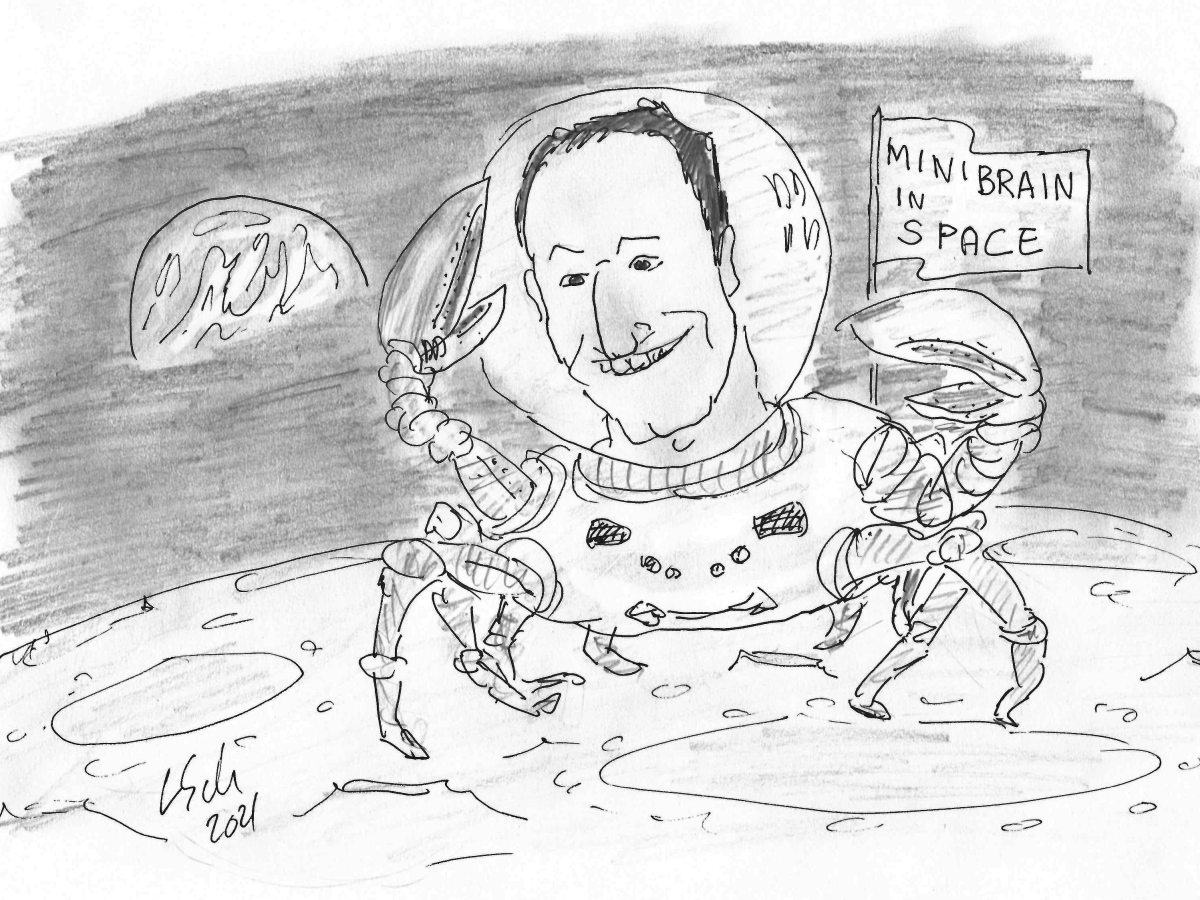
Alysson Muotri, a minibrain
Autistic Neanderthal minibrains operating crab robots via brain waves of newborn babies are to be launched into outer space for the purpose of interstellar colonization. No, I am not insane. Science Has Spoken.
Apparently the hype about mini-brains is over, this is why iPS cell-derived neural spheroids are now called miBrains. These are the two papers from the lab of Joel Blanchard:
- Braxton R. Schuldt , Dominic Haworth-Staines , Andrea Perez-Arevalo , Diede W.M. Broekaart , Ashley Harlock , Leon Wang , Anna Bright , Georgia Gallagher , Grace Rabinowitz , Alison M. Goate , Towfique Raj , Ana C. Pereira , Joel W. Blanchard A pericyte-to-myofibroblast transition links APOE4 to cerebrovascular degeneration Cell (2026) doi: 10.1016/j.cell.2026.08.058
- Louise A. Mesentier-Louro , Camille Goldman , Sebastian Gaese , Alice Buonfiglioli , Dimitrios Kyriakis , Ashley Harlock , Alain Ndayisaba , Emily R. Sartori , Abigail Uchitelev , John F. Fullard , Evelyn Hennigan , Donghoon Lee , Braxton R. Schuldt , Rikki B. Rooklin , Jonathan Barra , Jose Javier Bravo-Cordero , Panos Roussos , Vikram Khurana , Joel W. Blanchard Cholesterol dysregulation in APOE4 astrocytes promotes α-synuclein pathology in miBrains Cell Stem Cell (2026) doi: 10.1016/j.stem.2026.08.00
Blanchard joined Mount Sinai in 2021, before that he was postdoc at MIT, in the lab of Li-Huei Tsai, director of the Picower Institute for Learning and Memory. This Nature paper made Blanchard’s career, it also includes another prominent MIT neuroscientist, Manolis Kellis:
Joel W. Blanchard, Leyla Anne Akay , Jose Davila-Velderrain , Djuna Von Maydell , Hansruedi Mathys , Shawn M. Davidson , Audrey Effenberger , Chih-Yu Chen , Kristal Maner-Smith , Ihab Hajjar , Eric A. Ortlund , Michael Bula , Emre Agbas , Ayesha Ng , Xueqiao Jiang , Martin Kahn , Cristina Blanco-Duque , Nicolas Lavoie , Liwang Liu , Ricardo Reyes , Yuan-Ta Lin, Tak Ko, Lea R’Bibo, William T. Ralvenius, David A. Bennett, Hugh P. Cam, Manolis Kellis, Li-Huei Tsai APOE4 impairs myelination via cholesterol dysregulation in oligodendrocytes Nature (2022) doi: 10.1038/s41586-022-05439-w


I noticed that the rows did not line up all the way down, then I noticed that the first 5 values in column 2 are the same as the second 5 values.”
Mu Yang also explained that “Beyond the infinitesimally small chance of three mice spending exactly the same duration in the center, the tracking software itself—whether based on center of mass or nose position—does not have the resolution to the fourth decimal place.“. Thus, the numbers were clearly duplicated by a human. Other users found other irregularities.
But then, what kind of monsters complain that the data was falsified if Blanchard announced to reverse Alzheimer’s?
Here another paper by Blanchard, Tsai and Kellis, I previously discussed it and other dodgy papers by Tsai (including with David Sinclair) in September 2023 Shorts:
Joel W. Blanchard, Michael Bula , Jose Davila-Velderrain , Leyla Anne Akay , Lena Zhu , Alexander Frank , Matheus B. Victor , Julia Maeve Bonner , Hansruedi Mathys , Yuan-Ta Lin , Tak Ko , David A. Bennett , Hugh P. Cam , Manolis Kellis , Li-Huei Tsai Reconstruction of the human blood-brain barrier in vitro reveals a pathogenic mechanism of APOE4 in pericytes Nature Medicine (2020) doi: 10.1038/s41591-020-0886-4

Another PubPeer user commented about Blanchard’s miBrain technology: “The method used to generate brain endothelial cells in this paper has been reviewed and challenged in” Ewald et al 2021 as something that “actually generates a homogenous epithelial cell population“.
Blanchard replied on PubPeer that “key findings from this study were validated in in vivo through histological and transcriptomic analysis of post-mortem human brain samples and humanized APOE4 Alzheimer’s disease mouse models“, and that the image duplication was absolutely correct and appropriate: “for clarity and symmetry we displayed two images representing the same condition.”
Leaving Blanchard alone so that he can focus on reversing Alzheimer’s, let’s focus on Tsai, who has really a lot on PubPeer. I discussed some of her outrageously bad papers (Fischer et al Nature 2007 , Singh et al Neuron 2001, Rei et al 2015) in September 2025 Shorts. There,, I also presented Marco et al Nature Neuroscience 2020, where Tsai explained the microscopy image duplications as “purely illustrative“, and that she “re-used an unrelated micrograph for artistic purposes only” (bold hers), “not intended to convey, imply, or summarize experimental outcomes“.
More by Tsai and Kellis, this time in Cell:
Hansruedi Mathys, Zhuyu Peng , Carles A. Boix , Matheus B. Victor , Noelle Leary , Sudhagar Babu , Ghada Abdelhady , Xueqiao Jiang , Ayesha P. Ng , Kimia Ghafari , Alexander K. Kunisky , Julio Mantero , Kyriaki Galani , Vanshika N. Lohia , Gabrielle E. Fortier , Yasmine Lotfi , Jason Ivey , Hannah P. Brown , Pratham R. Patel , Nehal Chakraborty , Jacob I. Beaudway, Elizabeth J. Imhoff, Cameron F. Keeler, Maren M. McChesney, Haishal H. Patel, Sahil P. Patel, Megan T. Thai, David A. Bennett, Manolis Kellis, Li-Huei Tsai Single-cell atlas reveals correlates of high cognitive function, dementia, and resilience to Alzheimer’s disease pathology Cell (2023) doi: 10.1016/j.cell.2023.08.039

In November 2021 Shorts, I reported a discovery by Tsai and Kellis, they namely found the gene for intelligence which prevents dementia. Here another paper from Tsai#s MIT lab, in another top journal:
Matheus B. Victor , Noelle Leary , Xochitl Luna , Hiruy S. Meharena , Aine Ni Scannail , P. Lorenzo Bozzelli , George Samaan , Mitchell H. Murdock , Djuna Von Maydell , Audrey H. Effenberger , Oyku Cerit , Hsin-Lan Wen , Liwang Liu , Gwyneth Welch , Maeve Bonner , Li-Huei Tsai Lipid accumulation induced by APOE4 impairs microglial surveillance of neuronal-network activity Cell Stem Cell (2022) doi: 10.1016/j.stem.2022.07.005

Expect zero action from Cell Press, but maybe PLOS One will act?
Waseem K. Raja , Alison E. Mungenast , Yuan-Ta Lin , Tak Ko , Fatema Abdurrob , Jinsoo Seo , Li-Huei Tsai Self-Organizing 3D Human Neural Tissue Derived from Induced Pluripotent Stem Cells Recapitulate Alzheimer’s Disease Phenotypes PLOS One (2016) doi: 10.1371/journal.pone.0161969

Yong‐Chang Zhou: “While there is partial image overlap between Figure sets S1-12/S1-20 and S1-11/S1-19, the experimental results depicted in these figures are markedly different.”
One could almost think that Tsai is making stuff up, but we must perish this thought, she is curing Alzheimer’s and other brain diseases after all:
Daniela Rodrigues-Amorim , P. Lorenzo Bozzelli , TaeHyun Kim , Liwang Liu , Oliver Gibson , Cheng-Yi Yang , Mitchell H. Murdock , Fabiola Galiana-Melendez , Brooke Schatz , Alexis Davison , Md Rezaul Islam , Dong Shin Park , Ravikiran M. Raju , Fatema Abdurrob , Alissa J. Nelson , Jian Min Ren , Vicky Yang , Matthew P. Stokes , Li-Huei Tsai Multisensory gamma stimulation mitigates the effects of demyelination induced by cuprizone in male mice Nature Communications (2024) doi: 10.1038/s41467-024-51003-7

This now looks positively benign, a mere mistake of oversight, easily corrected, but Tsai would probably say that the duplication was intentional:
Chinnakkaruppan Adaikkan , Jun Wang , Karim Abdelaal , Steven J. Middleton , P. Lorenzo Bozzelli , Ian R. Wickersham , Thomas J. McHugh , Li-Huei Tsai Alterations in a cross-hemispheric circuit associates with novelty discrimination deficits in mouse models of neurodegeneration Neuron (2022) doi: 10.1016/j.neuron.2022.07.023

Tsai also collaborated with an MIT colleague Susan Lindquist (who died in 2016, aged 67), a problematic paper of theirs, Sienski et al 2021 (featuring Kellis and David Sabatini) was discussed in June 2026 Shorts. Here another one by Tsai and Lindquist:
Priyanka Narayan , Grzegorz Sienski , Julia M. Bonner , Yuan-Ta Lin , Jinsoo Seo , Valeriya Baru , Aftabul Haque , Blerta Milo , Leyla A. Akay , Agnese Graziosi , Yelena Freyzon , Dirk Landgraf , William R. Hesse , Julie Valastyan , M. Inmaculada Barrasa , Li-Huei Tsai, Susan Lindquist PICALM Rescues Endocytic Defects Caused by the Alzheimer’s Disease Risk Factor APOE4 Cell Reports (2020) doi: 10.1016/j.celrep.2020.108224

To succeed in a lab like Tsai’s you need to share her attitude and her methods. Blanchard apparently learned well.
But don’t worry about Tsai. her past collaborator, the Stanford professor Karl Deisseroth, just won the Nobel Prize in Physiology or Medicine for 2026 for “discoveries concerning light-gated ion channels and optogenetics”. In September 2025 Shorts, I wrote about his problematic paper with Li-Huei Tsai, (Rei et al PNAS 2015), which they corrected.
In 2024, Ivan Oransky’s The Transmitter celebrated Tsai’s research and her company Cognito Therapeutics, which was about to cure Alzheimer’s with Deisseroth’s optogenetics technology. Do you think her preclinical results are translatable?
But now nobody will dare to retract Tsai’s fake papers, because her friend Deisseroth got the Nobel.
Donate!
If you are interested to support my work, you can leave here a small tip of $5. Or several of small tips, just increase the amount as you like (2x=€10; 5x=€25). Your generous patronage of my journalism will be most appreciated!
€5.00


Mehdi Farokhi has a couple of papers with Mohammad Reza Saeb: https://mostwiedzy.pl/en/search?s=Mehdi+Farokhi
LikeLike
Mehdi Farokhi has a couple of papers with Mohammad Reza Saeb: https://mostwiedzy.pl/en/search?s=Mehdi+Farokhi
LikeLike
“The irony is that Seifalian is a polymer chemist and his lab never did any western blots.”
Hm, just like Mohammad Reza, who suffered a retraction with Mehdi Farokhi on the very same day.
10.1016/j.ijbiomac.2024.129932
PubPeer – Conductive hydrogels based on tragacanth and silk fibroin co…
Actually Mehdi Farokhi suffered on that day 5 retractions – all in International Journal of Biological Macromolecules and another one in the same journal on Aug. 21.
Mehdi Farokhi has 16 publications with Mohammad Reza and, interestingly, 5 papers with Rui L. Reis. Small world.
LikeLike