
Dear professors: never insult your critics on PubPeer. Unlike you are used to from your daily experience in the lab, those PubPeer commenters, especially anonymous ones, are absolutely not afraid of you. If you bully them like your lab members, you motivate them to scrutinise your papers even more.
I mean, ask Thomas Südhof, the Nobel Prize laureate.

Tom Südhof’s Verfolgte Unschuld
“The professional bloggers are now trying to turn this into a question of research integrity which is deeply misleading, and claim that they are doing this not for financial gain. Judge for yourself!” – Thomas Südhof, Nobel Prize laureate

And now, meet the materials scientist Deng-Guang Yu, professor at the University of Shanghai for Science and Technology in China. From 2008 till 2015, Yu was Visiting Scholar at London Metropolitan University and UCL in London, UK. His English collaborators probably regret all these papers they published together with Yu. UCL even grudgingly announced to investigate.
The PubPeer campaign was run by two pseudonymous sleuths, Archasia belfragei and Thallarcha lechrioleuca. And Yu’s cunning response was first to be rude, and then to post nonsense.

Here is a typical Yu paper, with his Shanghai affiliation:
Wei Qian , Deng-Guang Yu, Ying Li , Xiao-Yan Li , Yao-Zu Liao , Xia Wang Triple‐Component Drug‐Loaded Nanocomposites Prepared Using a Modified Coaxial Electrospinning Journal of Nanomaterials (2013) doi: 10.1155/2013/826471

Archasia belfragei: “Figure 5 XRD patterns for multiple materials share the same exact noise along a large part of the spectra”
And here is a case where one single XRD spectrum was reused NINE times, for different experiments in 3 papers:
- Qing Wang , Deng-Guang Yu, Ling-Ling Zhang , Xin-Kuan Liu , Yang-Chao Deng , Min Zhao Electrospun hypromellose-based hydrophilic composites for rapid dissolution of poorly water-soluble drug Carbohydrate polymers (2017) doi: 10.1016/j.carbpol.2017.06.075
- Zhe-Peng Liu , Ling-Ling Zhang , Yao-Yao Yang, Di Wu , Ge Jiang , Deng-Guang Yu Preparing composite nanoparticles for immediate drug release by modifying electrohydrodynamic interfaces during electrospraying Powder Technology (2018) doi: 10.1016/j.powtec.2017.12.066
- Shu Chen , Jianfeng Zhou , Boya Fang , Yue Ying , Deng‐Guang Yu, Hua He Three EHDA Processes from a Detachable Spinneret for Fabricating Drug Fast Dissolution Composites Macromolecular Materials and Engineering (2024) doi: 10.1002/mame.202300361


The next study has two corresponding authors, Yu and Gareth Williams, professor of pharmaceutical materials science at UCL, Deputy Director of UCL School of Pharmacy and Head of Research at Department of Pharmaceutics:
Shixiong Kang, Shicong Hou, Xunwei Chen, Deng-Guang Yu, Lin Wang, Xiaoyan Li, Gareth R. Williams Energy-Saving Electrospinning with a Concentric Teflon-Core Rod Spinneret to Create Medicated Nanofibers Polymers (2020) doi: 10.3390/polym12102421


Same two corresponding authors, Yu and Williams:
Xia Wang , Deng-Guang Yu, Xiao-Yan Li , S.W. Annie Bligh , Gareth R. Williams Electrospun medicated shellac nanofibers for colon-targeted drug delivery International Journal of Pharmaceutics (2015) doi: 10.1016/j.ijpharm.2015.05.077

Archasia belfragei: “Figure 4a seems to contain two identical spectra with the same exact noise”
This study has 3 corresponding authors including Yu and Williams, the last author SW Annie Bligh whom you just met above, is Fellow of the Royal Society of Chemistry, formerly professor at London Metropolitan University, then Dean at University of Westminster in UK, and now Provost at University of St Francis in Hong Kong, China:
Xiaolu Zheng , Shixiong Kang , Ke Wang , Yaoyao Yang , Deng-Guang Yu, Fuxian Wan , Gareth R. Williams, Sim-Wan Annie Bligh Combination of structure-performance and shape-performance relationships for better biphasic release in electrospun Janus fibers International Journal of Pharmaceutics (2021) doi: 10.1016/j.ijpharm.2021.120203

Archasia belfragei: “Spectra in 4a for F2 and F4 seem identical, including in their noise signature, which should be unique”
Once again, Williams and Yu are corresponding authors:
Guang-Zhi Yang , Jiao-Jiao Li , Deng-Guang Yu, Mei-Feng He , Jun-He Yang , Gareth R. Williams Nanosized sustained-release drug depots fabricated using modified tri-axial electrospinning Acta Biomaterialia (2017) doi: 10.1016/j.actbio.2017.01.069

Archasia belfragei: “There is unexpected similarities in the spectra noise of two different materials in figure 6a”
More fake spectra by Yu and Williams:
Deng-Guang Yu, Jia-Hui Yu , Lan Chen , Gareth R. Williams, Xia Wang Modified coaxial electrospinning for the preparation of high-quality ketoprofen-loaded cellulose acetate nanofibers Carbohydrate Polymers (2012) doi: 10.1016/j.carbpol.2012.06.036

This is also bad, Yu again corresponding author:
Chen Li , Deng-Guang Yu, Gareth R. Williams , Zhuan-Hua Wang Fast-dissolving core-shell composite microparticles of quercetin fabricated using a coaxial electrospray process PloS one (2014) doi: 10.1371/journal.pone.0092106

Here Williams is last author, although not corresponding:
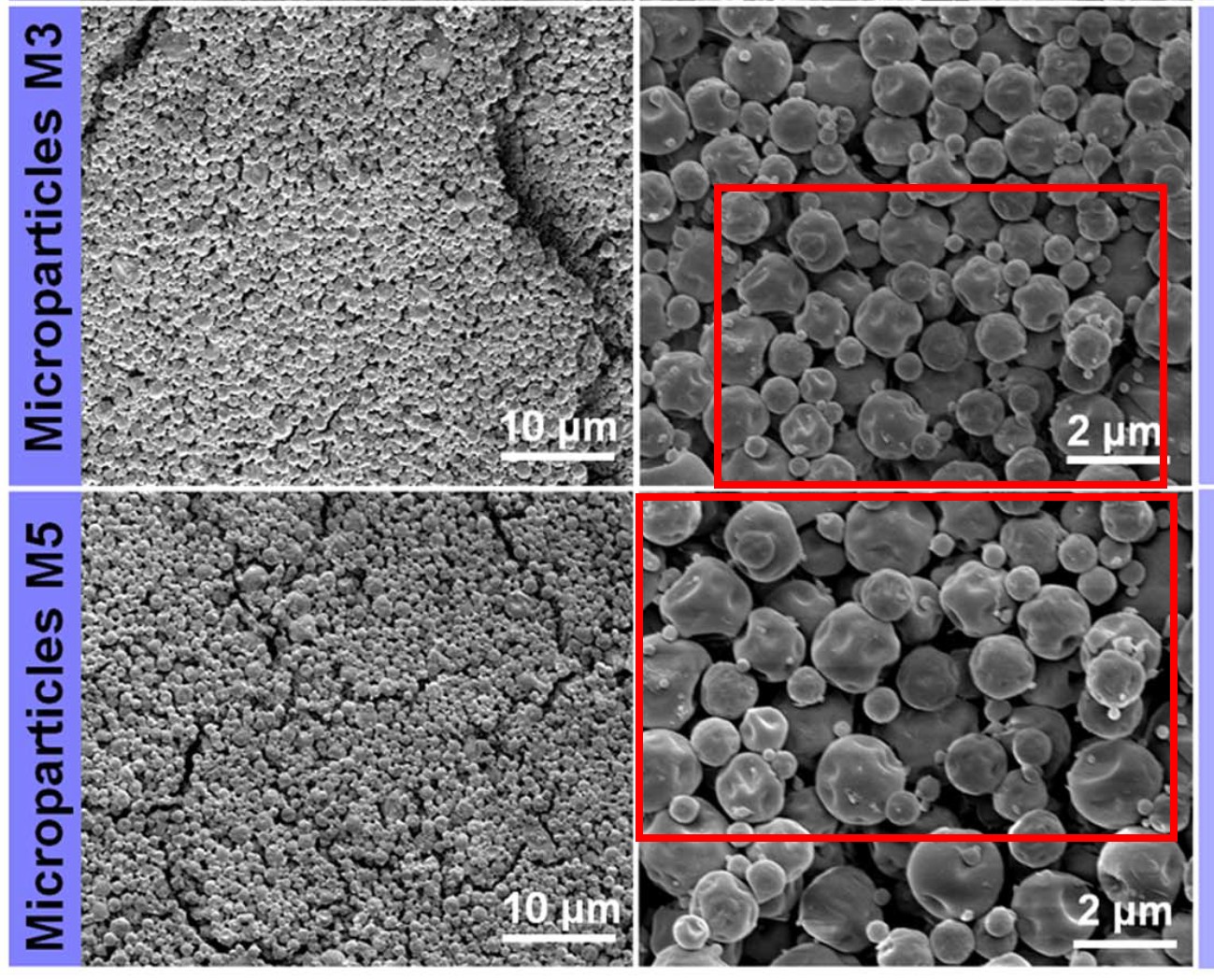
Chen Li , Zhuan-Hua Wang , Deng-Guang Yu, Gareth R Williams Tunable biphasic drug release from ethyl cellulose nanofibers fabricated using a modified coaxial electrospinning process Nanoscale Research Letters (2014) doi: 10.1186/1556-276x-9-258

F3 and F4 seem identical in noise. PVP K10 and PVP K90 seem identical in noise.”
And also here Williams is corresponding author:
Brenda Sanchez-Vazquez , Adérito J. R. Amaral , Deng-Guang Yu , George Pasparakis , Gareth R. Williams Electrosprayed Janus Particles for Combined Photo-Chemotherapy AAPS PharmSciTech (2017) doi: 10.1208/s12249-016-0638-4

Thallarcha lechrioleuca: “Fig.3 Four patterns with unexpectedly similar noise”
And even more by Yu with esteemed British professors Williams and Bligh, flagged by Archasia belfragei and Thallarcha lechrioleuca:


“Figure 5 spectra for F3 and F2 are identical with the same noise signal, although they reflect different materials.”

 , Fuxian Wan , S.W. Annie Bligh Comparative study of electrospun crystal-based and composite-based drug nano depots Materials Science and Engineering C (2020) doi: 10.1016/j.msec.2020.110988
“Fig.5 F2 and F3 patterns with unexpectedly similar noise”
 , Gareth R. Williams , Li-Dong Gao , S.W. Annie Bligh , Jun-He Yang , Xia Wang
Coaxial electrospinning with sodium dodecylbenzene sulfonate solution for high quality polyacrylonitrile nanofibers Colloids and Surfaces A: (2012) doi: 10.1016/j.colsurfa.2011.12.063

“ATR-FTIR spectra in Figure 5 seem identical for F3 and F2, including the same “random” noise (apart from 1659/1660 peak).”
As promised, you will soon see why the sleuths were so motivated to screen Yu’s papers. But before that, how about this set of three:
- Jie Yan, Yong-Hui Wu , Deng-Guang Yu, Gareth R. Williams, Shang-Meng Huang , Wen Tao , Jun-Yi Sun Electrospun acid–base pair solid dispersions of quercetin RSC Advances (2014) doi: 10.1039/c4ra10221e
- Yong-Hui Wu , Deng-Guang Yu, Hai-Peng Li , Xiang-Yang Wu , Xiao-Yan Li Medicated structural PVP/PEG composites fabricated using coaxial electrospinning e-Polymers (2017) doi: 10.1515/epoly-2016-0244
- Ke Wang , Hai-Feng Wen , Deng-Guang Yu , Yaoyao Yang , Dao-Fang Zhang Electrosprayed hydrophilic nanocomposites coated with shellac for colon-specific delayed drug delivery Materials & Design (2018) doi: 10.1016/j.matdes.2018.02.016

Some threads received some replies from one of the authors (likely Yu), which were however removed by PubPeer moderators. They must have been worse than this reply by Yu on this thread, which set off the PubPeer avalanche:
Yaoyao Yang, Shuyue Chang , Yingfu Bai , Yutong Du , Deng-Guang Yu Electrospun triaxial nanofibers with middle blank cellulose acetate layers for accurate dual-stage drug release Carbohydrate Polymers (2020) doi: 10.1016/j.carbpol.2020.116477

By Thallarcha lechrioleuca and Archasia belfragei: “the similarity in spectra in Figure 6 expends basically along almost the whole spectrum for the green spectra, with only 1 small area in the spetra not looking identical:”
Yu reacted with:
“A stupid and foolish question! Please read the article carefully! […]
Same components, similar amorphous state, similar XRD patterns!”
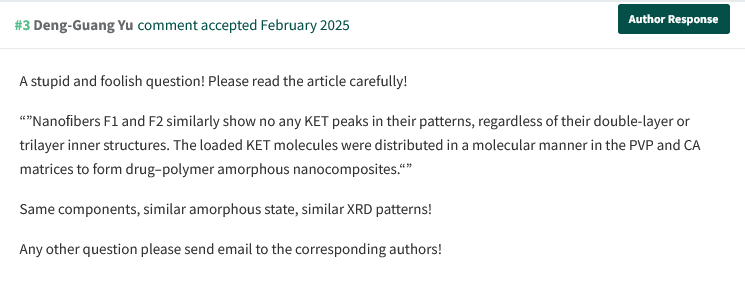
And this is the inappropriate reaction which provoked the sleuths to check Yu’s publication record, which now stands at around EIGHTY papers on PubPeer.
Omer Nour and Magnus Willander guilty of research misconduct
“The Board assesses that there are no scientifically acceptable explanations for why the notified researchers have fabricated research results in the manner that has occurred in the notified articles. Raw data also does not support the reported results. [..] In summary, the Board finds therefore that the notified researchers have been guilty of misconduct in…
I wrote to Yu and Williams. The UCL professor replied, and distanced himself from Yu’s rude PubPeer comment:
“Thank you for reaching out. I absolutely do not agree with Prof Yu. It is correct that the X-ray diffraction patterns for amorphous materials do look similar and share an absence of sharp peaks. However, I would not expect the noise to look the same in the patterns. I have reviewed the comments on Pubpeer and to me they look to be deeply concerning.
I can confirm that Prof Yu has been a long-term collaborator of mine, and that I contributed to the flagged manuscripts. I did not generate any of the data presented, but nevertheless I am mortified that such potential misconduct could have happened on my watch. My view is that the flagged manuscripts need, at minimum, to have corrections issued, and potentially to be retracted to correct the scientific record.”
Now, Williams lists on his lab website 41 papers with Yu. Between 2010 and 2017, when Williams was still a humble senior lecturer, roughly 1/3 of his papers were supplied by Yu. During that time, Williams was admitted as Fellow of 3 Academies, and soon after promoted to associate professor, all this most obviously also thanks to Yu’s fake papers, for which Williams “did not generate any of the data“. Maybe those who failed their tenure track evaluations at UCL should be “mortified“?
UCL’s Governance Manager for Research Integrity Rachel Port acknowledged to have received my emails, but didn’t say whether the affair will be investigated. They must be tired of dismissing all those cases I report to them!
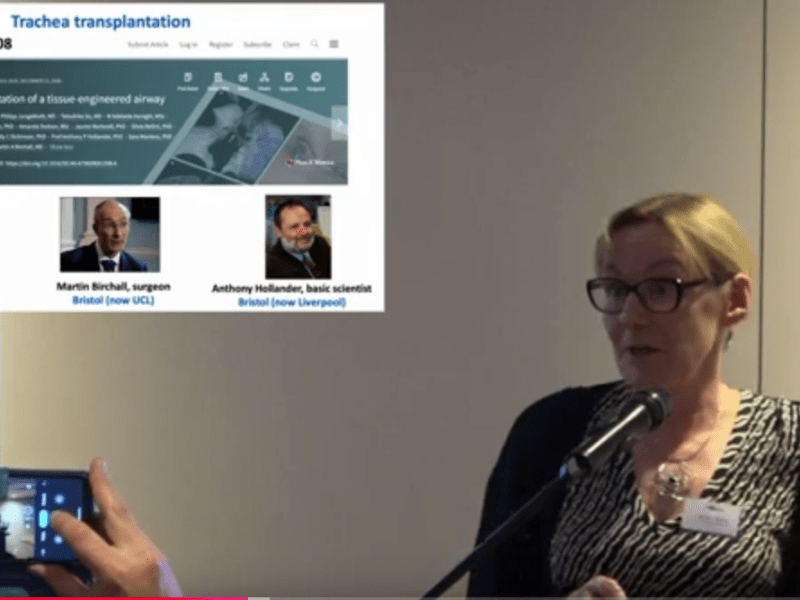
Martin Birchall, Paolo De Coppi, and other clowns of UCL’s degenerative medicine
Several years ago, UCL investigated the Macchiarini affair and found their surgeon Martin Birchall was not only innocent, but also entitled to more money and more patients to experiment upon. Now, Patricia Murray was awarded for exposing this UCL malfeasance, and Sholto David scrutinised UCL papers for data manipulation.
Right after Williams, Yu replied to me with:
“Very sorry!
This is the first day of our new semester!
Very sorry for what happened!
I retract my words on Pupeer!
I will carefully review the records of each article before
deciding whether to correct or withdraw it! “
After that, Yu changed his tune on PubPeer and his emails to me. He also announced to investigate everything. but kept insisting:
“Those noises have no scientific meanings, suggest nothing, forming no any judgments, and have no any influences on the experimental results. They can be condensed into the smooth lines as numerous other publications through setting the scale of y-axis.“
What Yu means: he regrets not having smoothened the cloned spectra which would have obscured the evidence of fraud. He then proceeded posting this denial on various PubPeer threads.

MIT review closed and decision final
“MIT’s receipt and review of allegations of possible research misconduct by my office are treated as confidential under MIT and, to the extent applicable, federal policies. MIT does not intend to disclose its receipt and review of these allegations to others. By the same token, you therefore may not disclose to others that you brought…

Here is another of Yu’s fruitful collaborations with both Williams and Annie Bligh, PFHEA CChem FRSC FRSB FRSA, who by the way is a big fan of TCM, also as Visiting Professor at the Shanghai University of Traditional Chinese Medicine:
- Lei Cui, Zhe-Peng Liu , Deng-Guang Yu, Shu-Ping Zhang , S. W. Annie Bligh , Na Zhao Electrosprayed core-shell nanoparticles of PVP and shellac for furnishing biphasic controlled release of ferulic acid Colloid & Polymer Science (2014) doi: 10.1007/s00396-014-3226-8
- Deng-Guang Yu, Xiao-Lu Zheng , Yaoyao Yang , Xiao-Yan Li , Gareth R. Williams , Min Zhao Immediate release of helicid from nanoparticles produced by modified coaxial electrospraying Applied Surface Science (2019) doi: 10.1016/j.apsusc.2018.12.147

Bligh did not reply to my emails. More of her work with Yu:
- Deng-Guang Yu, Gareth R. Williams, Xia Wang, Xin-Kuan Liu , Hao-Lin Li , SW Annie Bligh Dual drug release nanocomposites prepared using a combination of electrospraying and electrospinning RSC advances (2013) doi: 10.1039/c3ra40334c
- Weidong Huang, Yaoyao Yang, Biwei Zhao, Gangqiang Liang, Shiwei Liu, Xian-Li Liu, Deng-Guang Yu Fast Dissolving of Ferulic Acid via Electrospun Ternary Amorphous Composites Produced by a Coaxial Process Pharmaceutics (2018) doi: 10.3390/pharmaceutics10030115

It should be also mentioned that it will be very difficult to get this specific paper retracted:
Pu Wang , Meng-long Wang , Xi Wan, Honglei Zhou , Heng Zhang , Deng-Guang Yu Dual-stage Release of Ketoprofen from Electrosprayed Core–Shell Hybrid Polyvinyl Pyrrolidone/Ethyl Cellulose Nanoparticles Materials Highlights (2020) doi: 10.2991/mathi.k.200825.001

Chao-Kun Huang , Kerui Zhang , Qing Gong , Deng-Guang Yu, Jia Wang , Xiaoqin Tan , Heng Quan Ethylcellulose-based drug nano depots fabricated using a modified triaxial electrospinning International Journal of Biological Macromolecules (2020) doi: 10.1016/j.ijbiomac.2020.02.239
One reason for predictable editorial inaction at the journal Materials Highlights, issued by Athena Publishing, may be this:
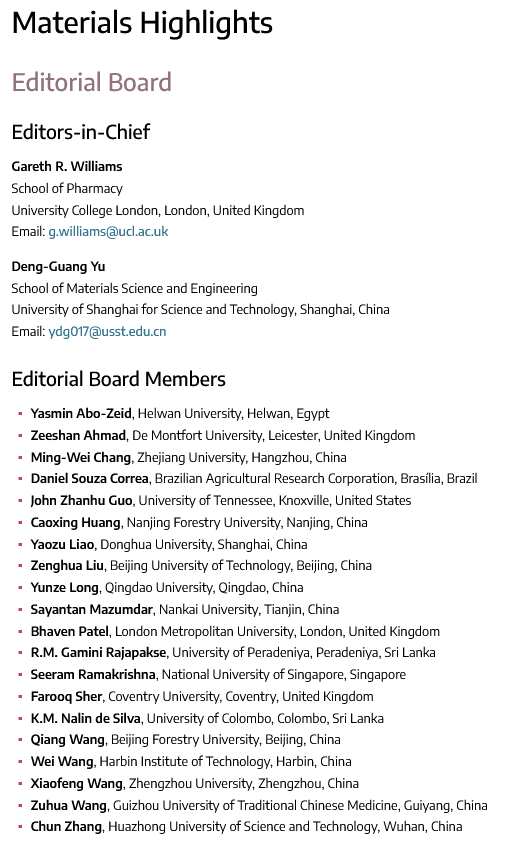
Yes, the two Editors-in-Chief are Williams and Yu. Additional hilarity is provided by the editorial board presence of the papermillers Seeram Ramakrishna and Farooq Sher. The latter is also a scamference organiser, read April 2024 Shorts and especially here:

Nuttingham Trash University
“I will not by myself, or be instructing or encouraging any other person or howsoever othewise, publish or cause to be published words or otherwise howsoever make statements to others which wrongfully refer to Nottingham Trent University and/or their employees and for any person or any body associated with Nottingham Trent University”

Materials Highlights published only a few papers between September 2020 and June 2021, many authored by Williams and/or Yu. However, it continues inviting submissions by offering a “Promotional discount: All articles submitted on or before 31 December 2025 will receive a 25% discount on the APC price upon acceptance“. Still, nobody publishes there since 2021 even at €675 rate.
Another English coauthor of Yu used to be Chris Branford‐White, associate dean for research at the London Metropolitan University, who recently turned 78 years old and is probably retired by now. There is also a Kenneth White, who is much younger and since 2020 professor at London Metropolitan University, thus possibly Chris’s son who inherited the professorship chair. As one does.
Here their papers with Yu, Branford-White’s name is misspelled on one of these publications:
- Deng‐Guang Yu , Xiao‐Fei Zhang , Xia‐Xia Shen , Chris Brandford‐White , Li‐Min Zhu Ultrafine ibuprofen‐loaded polyvinylpyrrolidone fiber mats using electrospinning Polymer International (2009) doi: 10.1002/pi.2629
- Deng-Guang Yu , Xia-Xia Shen , Chris Branford-White , Kenneth White , Li-Min Zhu, S W Annie Annie Bligh Oral fast-dissolving drug delivery membranes prepared from electrospun polyvinylpyrrolidone ultrafine fibers Nanotechnology (2009) doi: 10.1088/0957-4484/20/5/055104


The second paper in that set above was Yu’s most cited, with 340 citations (presumably by himself?). Neither White Sr nor White Jr replied to my emails, not even to deny the presumed family relationship.

The Bielefeld Conspiracy
“During your studies, it should be taught that, for example, you critically question your data, handle it transparently and immediately disclose weak points.” – Prof Katharina Kohse-Höinghaus
More by Yu and White Jr:
Jie Yan, Kenneth White , Deng-Guang Yu, Xu-Yao Zhao Sustained-release multiple-component cellulose acetate nanofibers fabricated using a modified coaxial electrospinning process Journal of Materials Science (2014) doi: 10.1007/s10853-013-7733-7

Archasia belfragei: “Three identical spectra represent three different nanomaterials in Figure 5a”
And again Yu with White Sr, flagged by a different PubPeer user:
Li-Ya Huang , Christopher Branford-White , Xia-Xia Shen , Deng-Guang Yu , Li-Min Zhu Time-engineeringed biphasic drug release by electrospun nanofiber meshes International journal of pharmaceutics (2012) doi: 10.1016/j.ijpharm.2012.06.058

These days, Yu issues educational papers like “Scientific Research Project Curriculum: A Clever Teaching Method of “Scientific Research Nurturing Teaching”, published as proceedings at a predatory conference.

Epileptic spasms of tics and glitches in Krautrock diffractograms
Smut Clyde chases free radicals in a German-run lab in China
Yu also studies what the Supreme Leader Xi Jinping demands of his scientists: Traditional Chinese Medicine. This is the result, according to Archasia belfragei, spectra were reused in a set of four papers:
- Jianfeng Zhou, Liangzhe Wang, Wenjian Gong, Bo Wang, Deng-Guang Yu, Yuanjie Zhu Integrating Chinese Herbs and Western Medicine for New Wound Dressings through Handheld Electrospinning Biomedicines (2023) doi: 10.3390/biomedicines11082146
- Jianfeng Zhou, Yelin Dai, Junhao Fu, Chao Yan , Deng-Guang Yu , Tao Yi Dual-Step Controlled Release of Berberine Hydrochloride from the Trans-Scale Hybrids of Nanofibers and Microparticles Biomolecules (2023) doi: 10.3390/biom13061011
- Yingfu Bai , Di Wang , Zhi Zhang , Jincheng Pan , Zhengbo Cui , Deng-Guang Yu, Sim-Wan Annie Bligh Testing of fast dissolution of ibuprofen from its electrospun hydrophilic polymer nanocomposites Polymer Testing (2021) doi: 10.1016/j.polymertesting.2020.106872
- Monglong Wang , Ding Li , Jie Li , Siyu Li , Zhuo Chen , Deng-Guang Yu, Zhepeng Liu, John Zhanhu Guo Electrospun Janus zein–PVP nanofibers provide a two-stage controlled release of poorly water-soluble drugs Materials & Design (2020) doi: 10.1016/j.matdes.2020.109075


Yu’s reaction on PubPeer was:
“They are right! Thank you for your valuable attention! This is the first day of our new semester, and I don’t have time to read them one by one.”
Well, shouldn’t Yu be happy someone finally read his papers?
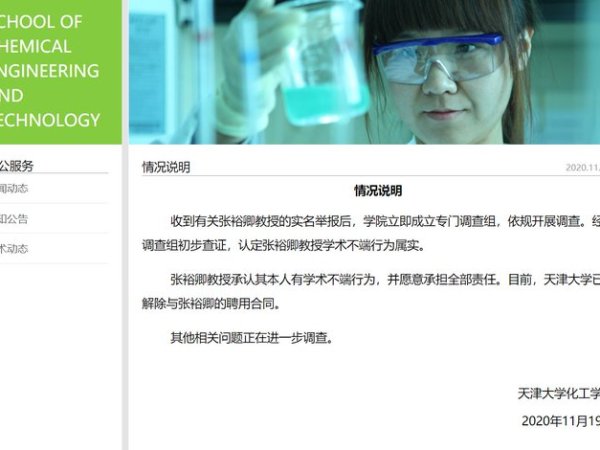
Yuqing Zhang’s 10 years of fraud, a whistleblower account
“All these SEM, EDX, TEM, BET, XRD, FT-IR, and contact angles in the theses and papers from our lab, where do they come from? We made them up. “
Donate!
If you are interested to support my work, you can leave here a small tip of $5. Or several of small tips, just increase the amount as you like (2x=€10; 5x=€25). Your generous patronage of my journalism will be most appreciated!
€5.00


I have suggested several times already that pharmacology research should be shut down (temporarily or forever, you call it) at any university worldwide. Pharmacological research has become a toxic dump that should be reformed in its rules, principles, stakeholders, goals, etc. Traditional Chinese Medicine (TCM), Ayurveda, phytomedicine and alternative medicine are infesting the field, and anything else is disastrous too (see anti-Alzheimer drugs). Is anyone tired to pay wages to the clowns involved.
Dr. Yu is now in China, so he will be safe like houses, but what about Drs. Williams and Bligh? Will they escape any consequence likewise “Mr. 11 retractions” Christoph Thiemermann at Queen Mary University of London?
LikeLike
Dr Bligh is in Hong Kong now!
LikeLiked by 1 person
As long as publishers don’t ban this frauds, nothing will change (at least not from a publishing viewpoint). Universities/institutes in general don’t care, even with a ton of retractions they will still hire you.
LikeLike
Why would publishers want to do anything against research fraud?
It’s against their business model.
Drink responsibly, you know.
LikeLike