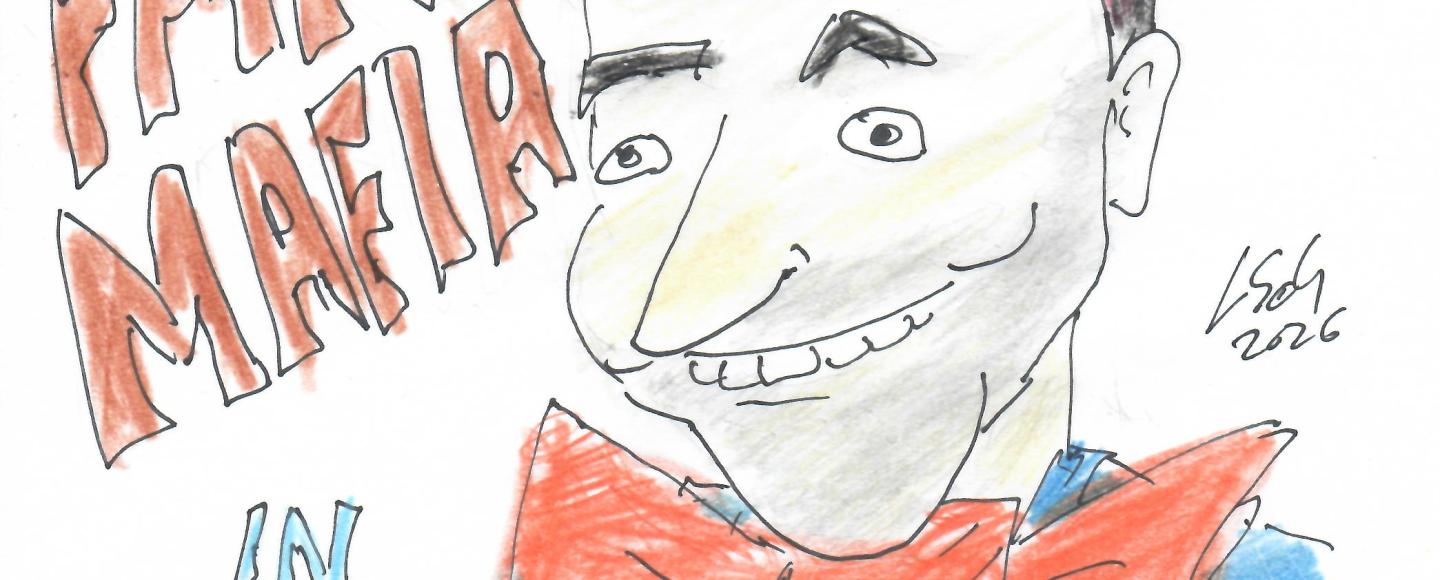

We all know and love Germany’s celebrity hero of research integrity and heroic fighter against bad science: Bernhard Sabel, professor of neuropsychology at the Otto von Guericke University of Magdeburg.
As a humble medical doctor (correction: Sabel studied psychology, he has no formal medical training!) with absolutely no financial interests whatsoever, Professor Sabel toils every day in his Savir Center clinic to help blind people regain their eyesight with innovative technology, and more recently he felt that he could do even more good for the humanity. Thus, Professor Sabel decided to save science from fraud!
Even before Sabel became a celebrity of research integrity, he had a Wikipedia page, in English, German, Italian, Chinese and Russian. We are educated he published over 200 papers, was once cited in “Who´s Who in the World” 1990–2015 and in “Who´s Who in Science and Engineering” 1993–2001, and that he won a Jugend Forscht award in 1976, aged 19. Sabel’s research even “served as inspiration for a thriller trilogy, for which author Andreas Pflüger received the German Crime Fiction Award in 2018” (Sabel is indeed Pflüger’s friend and advisor). And the most recent update to the Wikipedia page informed us that “In 2025 Sabel started the Sciii Foundation gGmbH[9] for the advancement of Science & Innovation Integrity“.
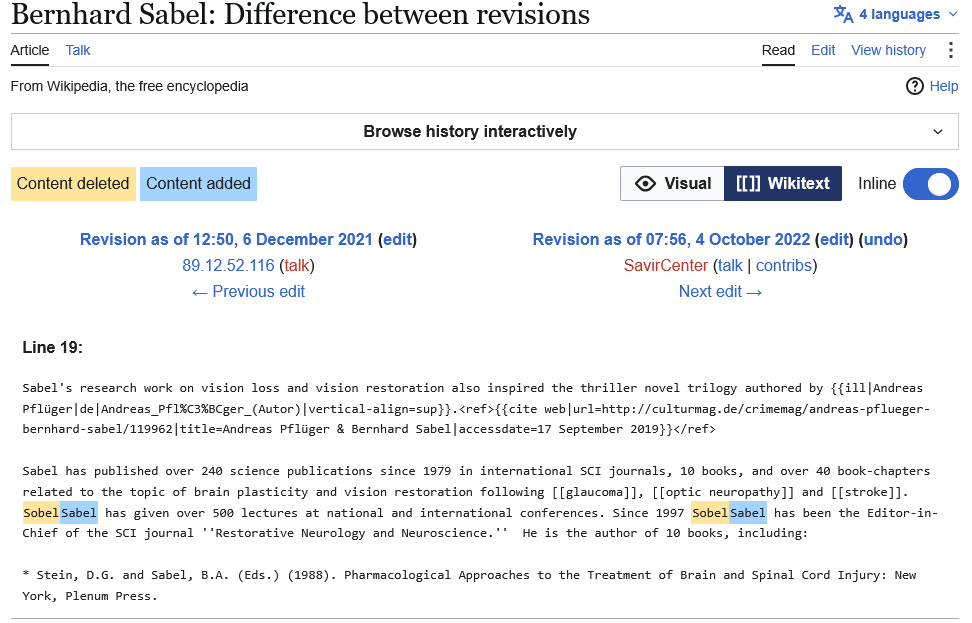
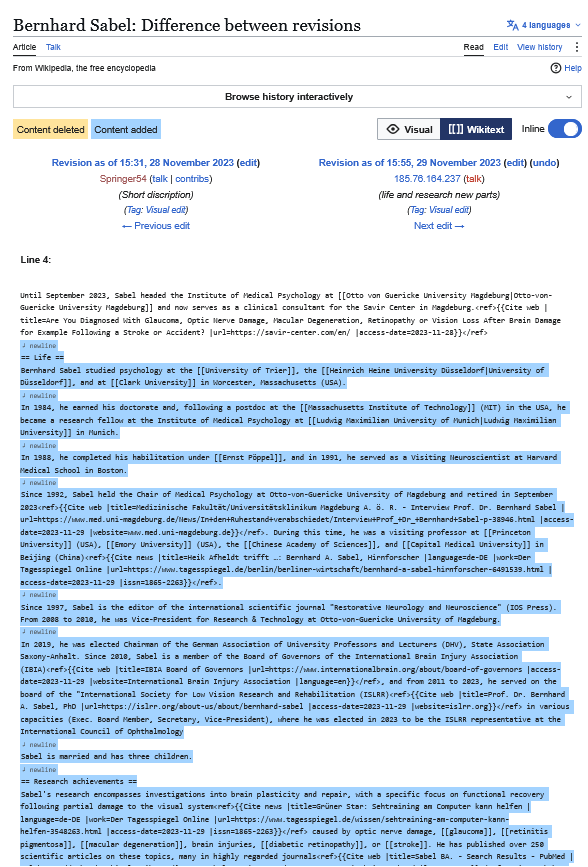
Sabel’s Wikipedia page is possibly not entirely objective, in fact it was partly written by the user “SavirCenter”, who was then banned. Afterwards, another Wikipedia user named “Springer54” added a huge section on Sabel’s biography, from an IP address in Magdeburg. Aside of Sabel, “Springer54” edited the Wikipedia pages of only three other men, all in Magdeburg: two professors at Sabel’s university (Ulf Kahlert and Gerhard Jorch), and… a hypnotist (Norbert Preetz). This user then admitted to be “familiar with the academic environment of Otto-von-Guericke University and have an interest in improving the quality of related articles for the general public“. Draw your own conclusions on objectivity of these Wikipedia pages.
We will first talk about Sabel’s saving science, and then we will talk about his own science. It is a long article.
Part I: Saving Science
Chapter 1: Sabel vs Criminal Science Publishing Gangs
Sabel’s rise to fame as crime fighter started with this paper five years ago, when he decided to rename papermills to “Criminal science publishing gangs“:
Bernhard A. Sabel & Roland Seifert How criminal science publishing gangs damage the genesis of knowledge and technology—a call to action to restore trust Naunyn-Schmiedeberg’s Archives of Pharmacology (2021) doi: 10.1007/s00210-021-02158-3
“The time to show courage and take action to regain the trust we all deserve is now!
What do science and “true love” have in common? Both are infatuated by passion, but if trust is lost, it is almost impossible to go back.”
For that editorial, Sabel teamed up with Roland Seifert, Editor-in-Chief of this Springer-published German journal Naunyn-Schmiedeberg’s Archives of Pharmacology, which became prey to Chinese papermills. After Seifert banned Chinese submission, his journal was overrun by Egyptian, Iranian and Pakistani papermills. Read here:

An attractive and “natural” target for fraudsters
“In the various excellent texts on paper mills the question is discussed why Naunyn-Schmiedebergs Archives of Pharmacology has become a target for fake papers. I oppose the assumption that we simply want to fill pages with pseudo-scientific content. We actually look for quality and good science.” – Prof Dr Roland Seifert, Editor-in-Chief

Then, a Symposium was arranged in Germany. titled “How paper mills publish fake science industrial-style 一 is there really a problem and how does it work?” It took place in Munich and also online on 20 June 2022, featuring Jennifer Byrne, Chris Graf of Springer Nature, Dorothy Bishop and Sabel himself, who educated everyone how papermills work:

The resources shared by participants of course never mention the actual papermill sleuths Smut Clyde et al, but instead credited Byrne and Retraction Watch with their work.
As the true field-marshal in the war against those “Criminal science publishing gangs“, Sabel then set up a Science Integrity Alliance. On 30 August 2022, he sent out this email to a list of important people:
“Dear SIA friends and colleagues;
Welcome to the “Science Integrity Alliance” (SIA) network of scientists. I contact you because you have either signed up to our mailing group following the Munich Symposium on paper mills this summer (https://www.osc.uni-muenchen.de/news/symposium_20_06_22/index.html) or you have published in the field or are otherwise interested in the topic. Of note, the mailing list is not public to maintain confidentiality of the members and to protect SIA from dishonest members (such as paper mills or fake authors). […]
Mission: our mission is to address the “paper mill” problem. Paper mills produce (AI-supported) fake science publications and they are a growing problem, as their very profitable business supports a dramatic rise of fake publishing. While no reliable estimates have yet been determined, we estimate their number in Medicine and all other science to be well above 100,000 annually. This poses a great risk for the permanent scientific record. We no longer know, which science we can trust. It damages scientific and economic progress and is a growing risk for our scientific knowledge base which, in turn, affect global public health, the economy, and our environment. The SIA mission is not to follow individual cases of science fraud, manipulation of experiments, statistical nudging, plagiarism etc. We want to learn more about – and fight – fake science publishing itself. The more people participate in this effort (scientists, publishers, administration, politics), the greater the probability of finding means to stop this knowledge pollution and get things in order again.
If you know others that might care as we do, feel free to pass on this email to them with the invitation to contact my office. Thank you!
SIA-Item of the day: I would like to let you know about an informal meeting of people with paper mill interests at the upcoming Peer Review Congress in Chicago (https://peerreviewcongress.org/). The paper mill meeting is being organised by Prof Jennifer Byrne from Australia, […]
With best regards and have a nice day
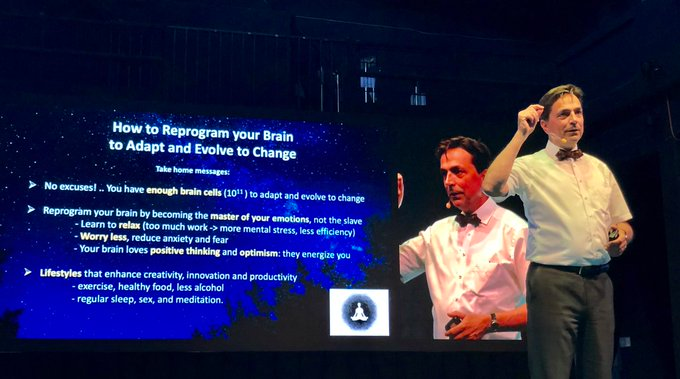
Prof. Bernhard Sabel, PhD
Unfortunately, the Science Integrity Alliance never became a thing. But Sabel moved on to the next challenge!
Chapter 2: Sabel’s Tool
Sabel then invented a tool to detect papermill fraud. Science alerted us to it on 9 May 2023:
“When neuropsychologist Bernhard Sabel put his new fake-paper detector to work, he was “shocked” by what it found. After screening some 5000 papers, he estimates up to 34% of neuroscience papers published in 2020 were likely made up or plagiarized; in medicine, the figure was 24%. Both numbers, which he and colleagues report in a medRxiv preprint posted on 8 May, are well above levels they calculated for 2010—and far larger than the 2% baseline estimated in a 2022 publishers’ group report.
“It is just too hard to believe” at first, says Sabel of Otto von Guericke University Magdeburg and editor-in-chief of Restorative Neurology and Neuroscience. It’s as if “somebody tells you 30% of what you eat is toxic.” […]
Sabel’s tool relies on just two indicators—authors who use private, noninstitutional email addresses, and those who list an affiliation with a hospital. It isn’t a perfect solution, because of a high false-positive rate.”
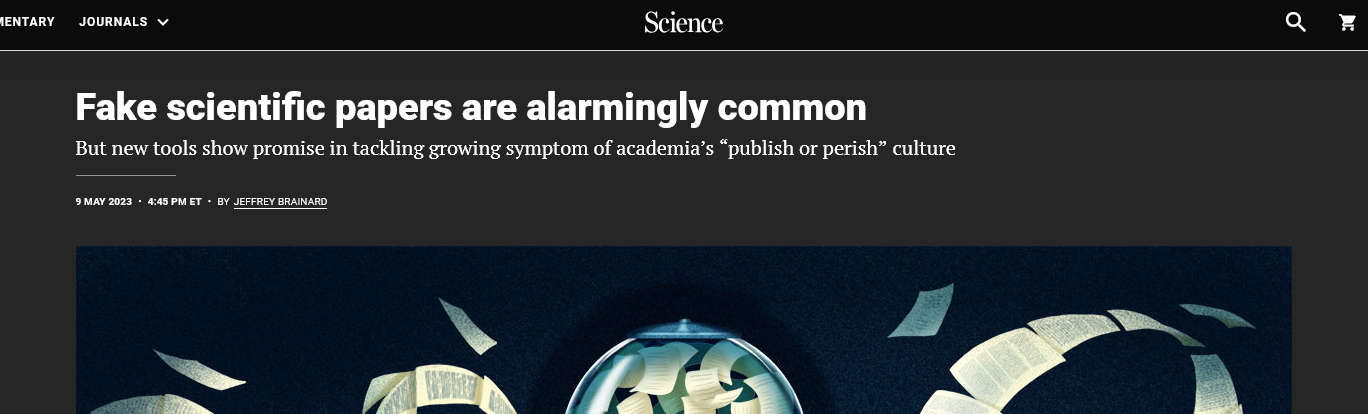
But new tools show promise in tackling growing symptom of academia’s “publish or perish” culture”
This is Sabel’s preprint:
Bernhard A. Sabel, Emely Knaack, Gerd Gigerenzer, Mirela Bilc Fake Publications in Biomedical Science: Red-flagging Method Indicates Mass Production medRxiv (2023) doi: 10.1101/2023.05.06.23289563
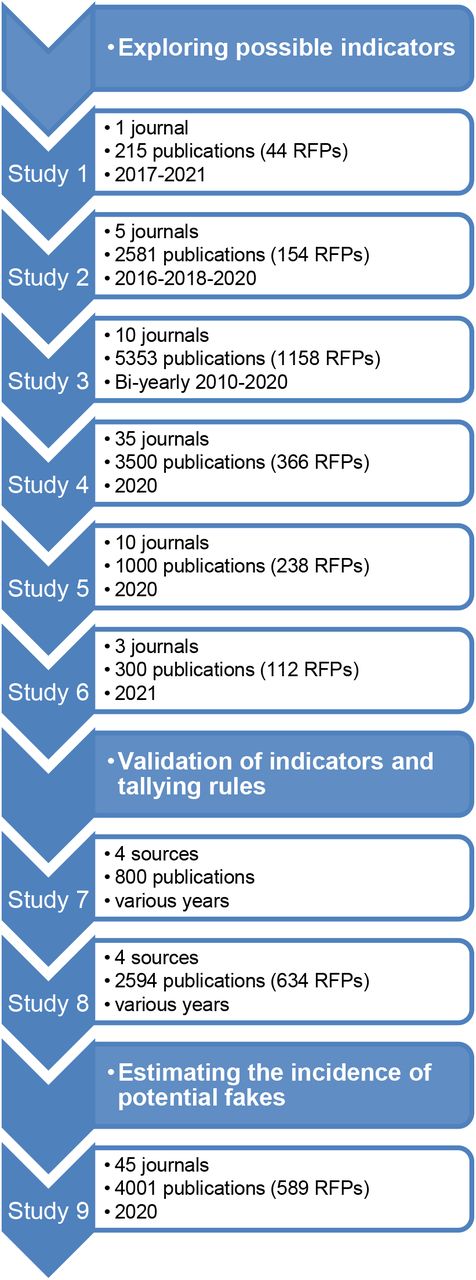
There may be no tool as such, actually, just a method. As Sabel and his team wrote:
“three indicators were identified: “author’s private email”, “international co-author” and “hospital affiliation”. These were used to analyze 15,120 PubMed®-listed publications”
Sabel’s coauthor Gerd Gigerenzer is a retired director of the Max Planck Institute for Human Development in Berlin and author of pop science books on the topics of statistics and decision making. Gigerenzer most certainly didn’t do any internet searches, he was probably golfing or sailing, whatever it is rich emeritus professors do. It seems Sabel’s two students, Emely Knaack and Mirela-Ioana Bilc (you will meet her again, on a very different scientific breakthrough Sabel achieved!) did all those internet searches manually, there is no mention of any scripts or other software use.
But the preprint lists one of the datasets Sabel et al used for validation, referencing “n=100 Tadpole paper mill items (https://docs.google.com/spreadsheets/d/1KXqTAyl4j-jVorFPMD2XRpr76LcIKJ0CVyIvRj0exYQ/edit#gid=0)”
The link goes to Smut Clyde’s spreadsheet about this papermill, originally published on For Better Science (see below), but Sabel chose not to credit us.
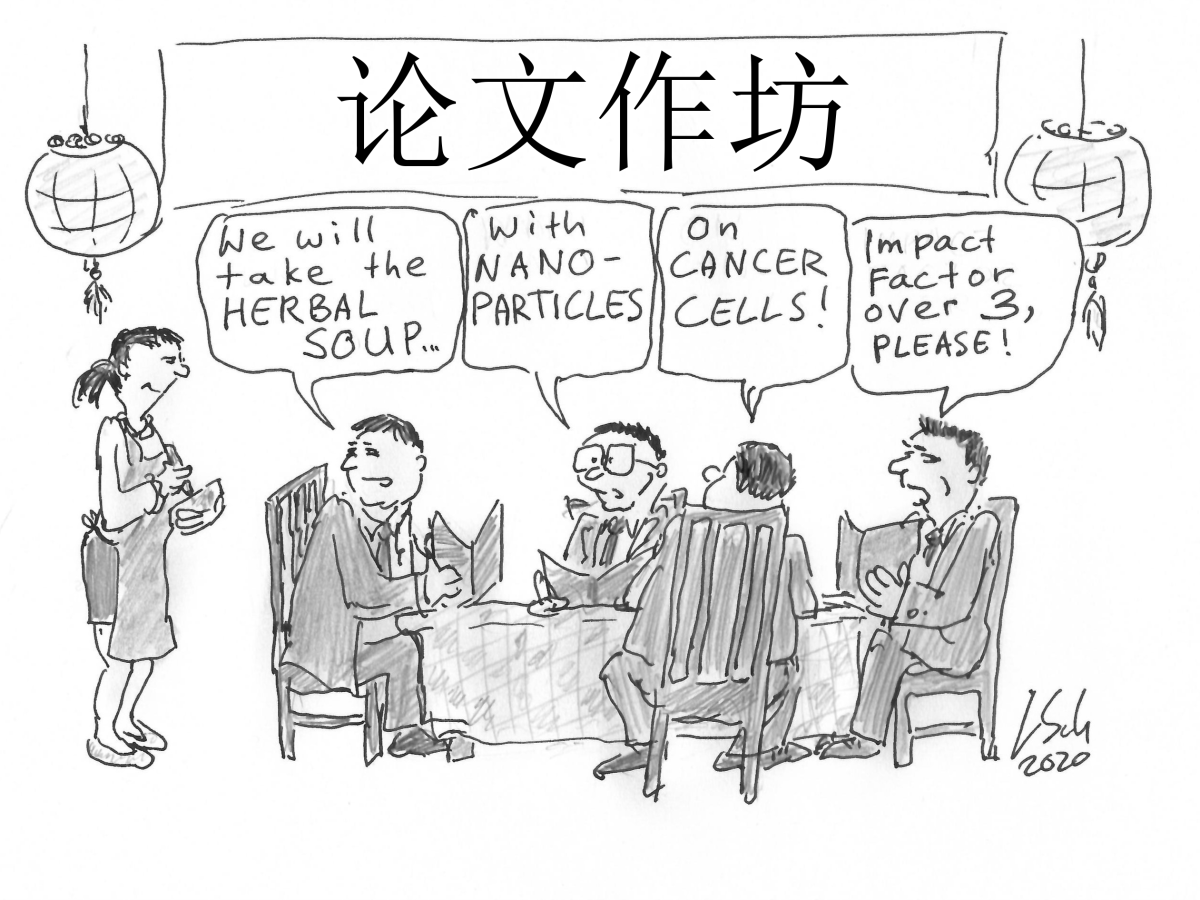
The full-service paper mill and its Chinese customers
An investigation by Elisabeth Bik, Smut Clyde, Morty and Tiger BB8 reveals the workings of a paper mill. Its customers are Chinese doctors desperate for promotion. Apparently even journal editors are part of the scam, publishing fraudulent made-up science.
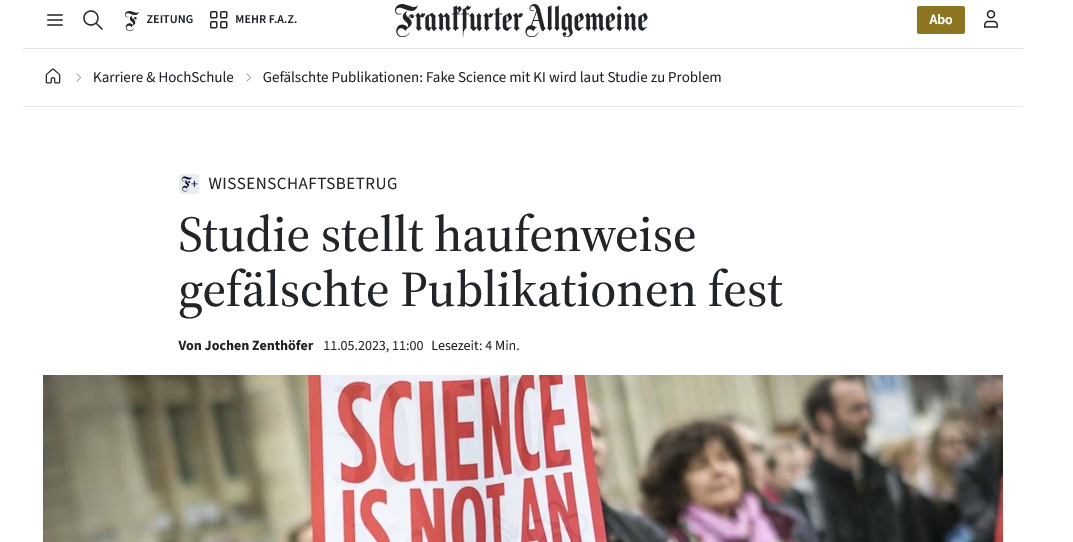
Also the German daily FAZ celebrated on 11 May 2023 Sabel’s technological breakthrough. His methodology is described (translated):
“Sabel, editor of a journal of neurology, sent out a questionnaire. This questionnaire was sent to the authors from a sample of suspect articles and to authors from a sample of non-suspect articles for control purposes. Suspicious authors were, for example, those who provided a private e-mail with their manuscript and did not have an international partner. The assumption was: authors of fake publications are unwilling to provide original data and less willing to answer specific questions. Despite reminders and warnings that non-response or insufficient response could trigger retraction of the article, the response rate from suspected authors was only 45 percent compared to 96 percent in the control group.”
On PubPeer, the preprint was quickly plucked apart by actual experts. For example, the authors’ claim that their “Google and Waibo [sic!] search found over 1500+ such agencies” was found to irreproducible. A user reported that their own search of “Weibo using the same keywords provided by the authors and found that most posts were sharing writing experiences or academic tips rather than advertising paper mill services.“. Same for Sabel’s search of Baidu: “Baidu searches using the same keywords and similarly found that most results consisted of news reports about paper mills or AI-based proofreading/translation tools, rather than advertisements for paper mill services.” But then again, this PubPeer user is clearly biased, they are obviously native Chinese speaker, while it is extremely unlikely any of the authors of Sabel’s preprint knows this language.
Then there was a long thread of criticism on Twitter/X by Isaac King, who mentioned that Sabel et al “calculate a false positive rate of 44%, which would be so high as to render all their other numbers meaningless by virtue of being below the false positive rate”. Here is Carl Bergstrom on Mastodon:
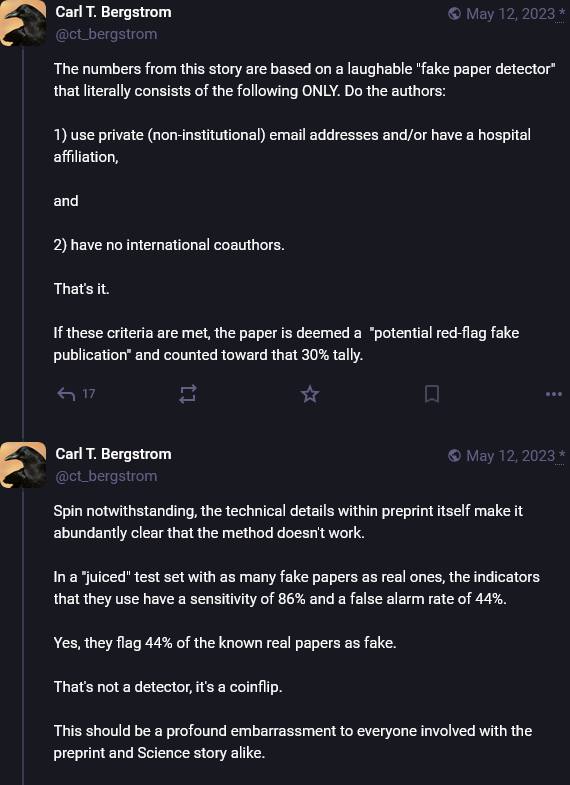
[…] That’s not a detector, it’s a coinflip.” Carl Bergstrom on Mastodon
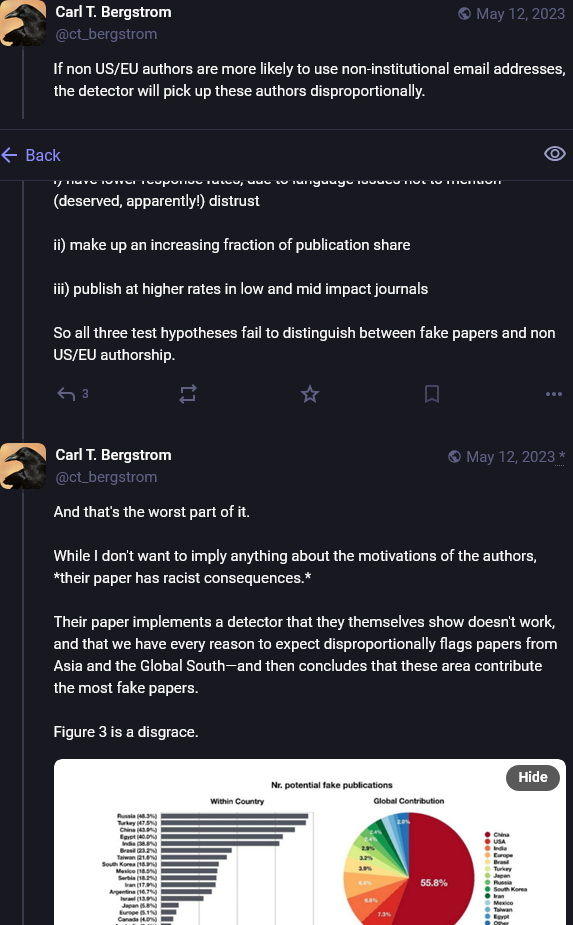
Sabel replied on PubPeer and asked his critics to stop “focussing on methodological issues“, and rather join his fight against papermills.
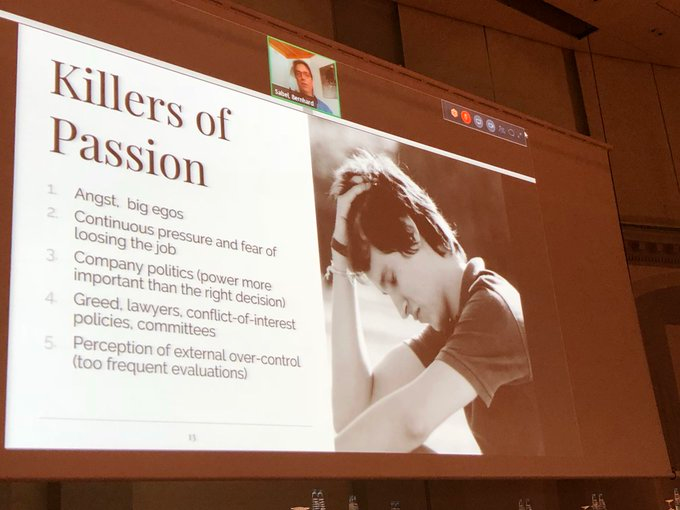
But somehow, the Sabel method did find its use, and where! Not just at the World Conference on Research Integrity (WCRI) in Canada in 2026, where they screened all submitted abstracts with Sabel’s tool, even better!
Here is a clip from the “Science Publishing in Crisis: Challenges and Solutions” panel session at APE 2026 conference in April, with Sabel, the Swedish professor Dan Larhammar, and publishing industry executives Ed Pentz and Steven Inchcoombe. Sabel claimed there that the national science funding agency, the German Research Council (DFG), asked him to evaluate submitted grant proposals with his tool for papermill fraud:
“Maybe I can share an unpublished observation. My team in Magdeburg found that we looked at the grant applications to DFG and checked for the indicators of fake, but there was extremely small number, so there wasn’t a real issue, at least in this particular set.”
Big if true.
Chapter 3: The Book of Sabel
Two years ago, Sabel published a book about papermill fraud. At least he is the book’s official author. Questions about authorship are met with threats of defamation and damage lawsuits.

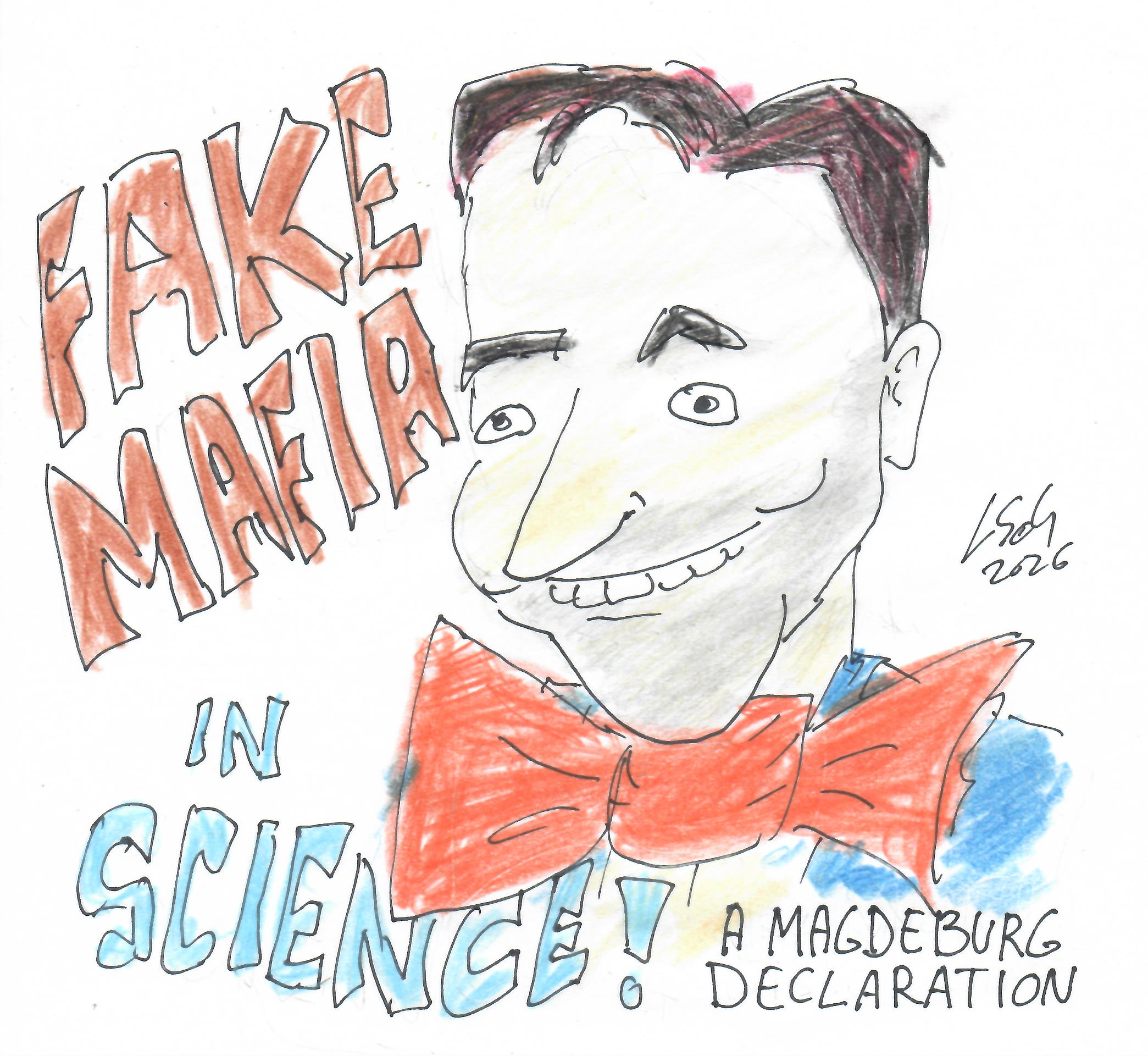
The book is titled “Fake mafia in science – AI, greed and fraud in research” and was published in October 2024.
It was celebrated by the aforementioned editor Roland Seifert:
“The book, written in a compact and easy-to-read manner, is a very suitable gift for every scientist; as a warning, a reminder and a call to do everything in one’s power to prevent the spread of paper mills
Seifert in BIOSpektrum
and to combat them. But science and university politicians and
representatives of scientific funding organisations and publishers should also read the book, because things are also happening at these levels that promote the spread of paper mills.”
Now, even though only Sabel’s name decorates the book’s cover, the publisher Kohlhammer mentions that the Magdeburg professor was assisted by a certain Armin Fuhrer, a “self-employed journalist and book author“:
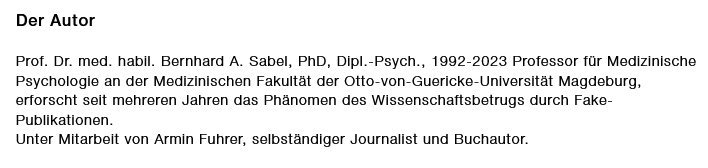
Not just on the cover, also in book reviews and on shop websites Sabel is listed as this book’s author, often as the only author, with Fuhrer either never mentioned, or briefly mentioned at the end, only sometimes (like on Amazon) is Fuhrer is properly listed as “assistant” coauthor. In a relevant January 2025 interview, Sabel never mentions Fuhrer and seems to claim the sole authorship for himself: “That’s why I wrote this book“.
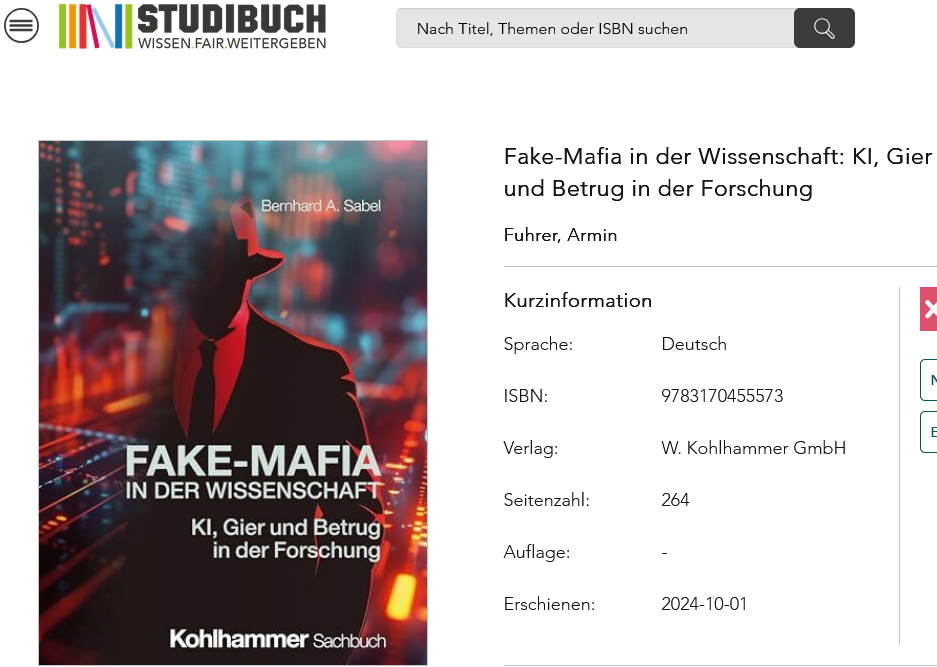
But maybe Studibuch know something: they list only Fuhrer as author, and it is Sabel who is not mentioned.
On his own website, Fuhrer lists this book, and several others: various biographies, and history books about Hitler and other Nazis. He also writes: “A total of around 20 books have now been created, which I wrote as author, co-author or ghostwriter.”
I wanted to know who really wrote that book, Sabel or Fuhrer. Sabel never replied to my emails. But Fuhrer did:
“If you would do some serious research before making any accusations, you would easily realise that I am mentioned in the book as a co-author, even with a photo. Surprise!
Apart from that, I have written around 25 books under my own name (arminfuhrer.de), plus a four-digit number of articles. It’s all news to you, right? Do you realise that you are about to be charged with defamation and damage to business? That could be expensive…
I expect an apology from you by 12 noon on Friday and a correction with Prof. Sabel, otherwise you will receive a letter from the public prosecutor’s office.”
In the next email, Fuhrer announced a criminal lawsuit should I quote the above email. And further lawsuits should his or Sabel’s coauthorship be questioned.
I merely tried to clarify the contributions by Sabel and Fuhrer to that book. It was difficult, because Fuhrer, the man of words and culture, chose to forgo a civil conversation and instead kept throwing around very unspecific insults about my person while threatening me with lawsuits. Yet he mentioned this:
“The fact that Prof. Sabel gives the interviews is because he is responsible for the study that the book is about and can represent the results better than me.”
Followed by this in the next email:
“The study on which the book is based was performed by Sabel – so of course he is named as the main author. What else?“
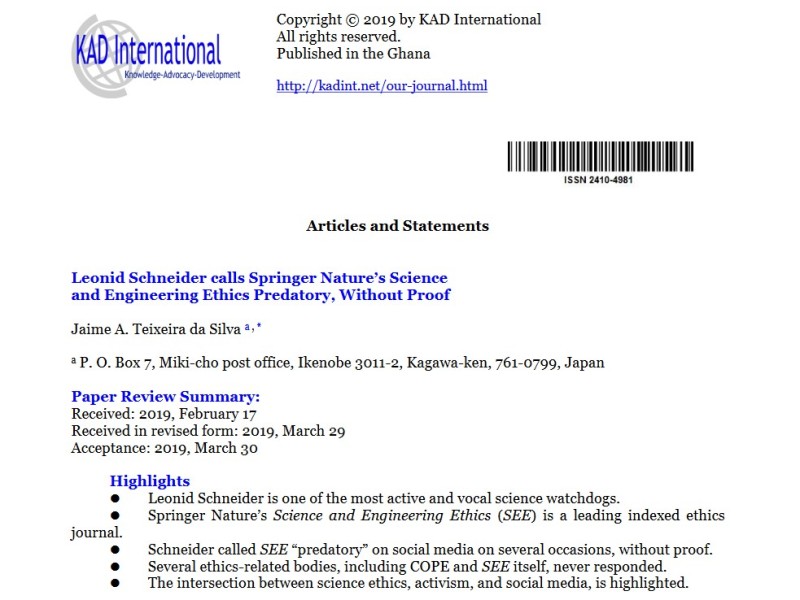
Editors and other real papermill heroes
“Long story short, we investigated our published papers and then retracted those with data integrity issues. That is it.” – Dr Heather Smith, Editor-in-Chief
Fuhrer obviously referred to the above discussed papermill detection study Sabel et al 2023 with Gigerenzer, who of course also sings praises to Sabel’s Fuhrer’s Sabel’s book (“An eye-opening book, absolutely worth reading!“).
At some point I had to ask Fuhrer if he even knew who I was. His educated and professional reply was:
“Of course I know who you are – that immediately makes me sceptical. I realise that, sensationalism-horny that you are, you think you can make a big scoop. The truth is that you will embarrass yourself to the bone, put a serious dent in your career as a ‘science journalist’, but above all it threatens to be very expensive for you. After all, the publisher, Prof Sabel and I will sue you for damages and will undoubtedly be proved right. […] Either you do yourself some good and keep your hands off it or you’ll burn yourself badly.“
I am made an offer I won’t be able to refuse, from a person who just (co-)wrote a book about, well, literally “fake mafia”. How ironic. Also: Sabel never objected to Fuhrer’s lawsuit threats on his behalf – draw your own conclusions. Tough guys, eh?
All considered, to me at least it seems that Fuhrer might have been the book’s main author, and Sabel may have merely assisted him. But officially, it’s the opposite!
That was all in May 2025 Shorts, more than a year passed but Fuhrer never sued me or beat me up. Maybe he is busy writing Sabel’s autobiography, suggested title “Sextropolis: Bernard Sabel und das wilde Magdeburg der Zwanzigerjahre“.
Chapter 4: The Sabel Declaration
In November 2025, Sabel and the aforementioned Swedish professor Dan Larhammar issued the Stockholm Declaration on the reform of scholarly publishing.
Bernhard Sabel, Dan Larhammar Reformation of science publishing: the Stockholm Declaration Royal Society Open Science (2025) doi: 10.1098/rsos.251805
“(i) Academia should resume control of publishing using non-profit publishing models (e.g. diamond open-access). (ii) Adjust incentive systems to merit quality, not quantity, in a reputation economy where the gaming of publication numbers and citation metrics distorts the perception of academic excellence. (iii) Implement mechanisms to prevent and detect fake publications and fraud which are independent of publishers. (iv) Draft and implement legislations, regulations and policies to increase publishing quality and integrity. This is a call to action for universities, academies, science organizations and funders to unite and join this effort.”
In June 2026, the same journal published a reply by Csaba Szabo, titled “Why the Stockholm Declaration will never work“.

The Fribourg Declaration
“The papermill crisis is not an external attack on science but a mirror held up to its dysfunctional ecosystem. The for-profit publishing industry, posing as a newly found saviour of research integrity, is in fact its chief beneficiary and enabler.” – Csaba Szabo

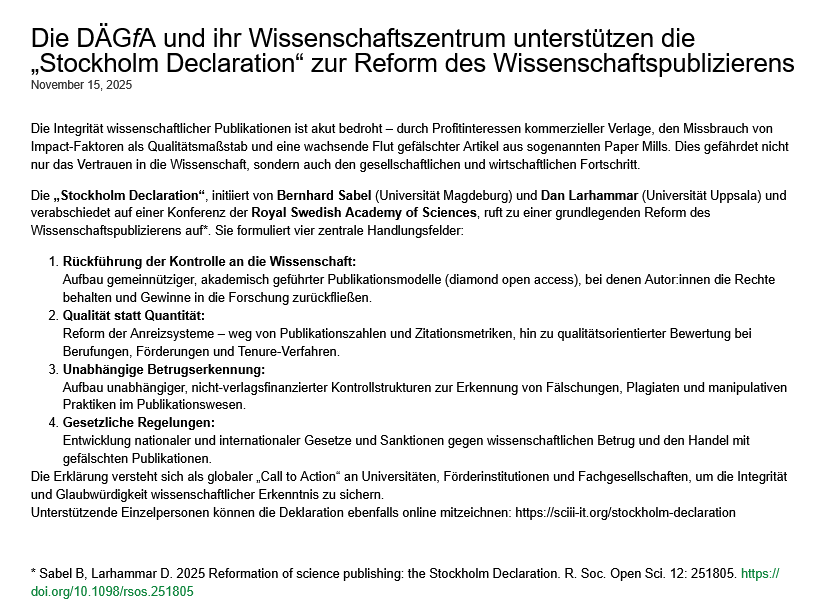
The Stockholm Declaration received over two thousand of signatories and and also somehow got publicly endorsed by the German Medical Association for Acupuncture (sic!):
It also got covered by some German media, including by the national public news, the Tagesschau, where Sabel was celebrated:
“Sabel and his team at the University of Magdeburg had already discovered in 2023 that around 245,000 scientific articles in the biomedical field alone were fake or at least suspicious.
The neurophysiologist, who was himself the editor of a scientific journal, noticed that more and more fake manuscripts were being submitted. Since then, Sabel has also been researching scientific fraud and has made it his mission to take action against it. He has published the book “Fake Mafia in Science” on this subject.Bernhard Sabel warns: “If this continues unchecked, we will ultimately have a collapse in knowledge.” In the worst case, no one would know what is true and what is not. In this way, faith in the truthfulness of science is lost.
Sabel explains that the ideal is an organization that is internationally recognized but at the same time functions independently of countries and that also has the technical skills to search for and fish out fake studies.”
In fact, Sabel already set up such an organisation: his company Sciii, which is registered as a charity foundation in Berlin, with Sabel as owner.
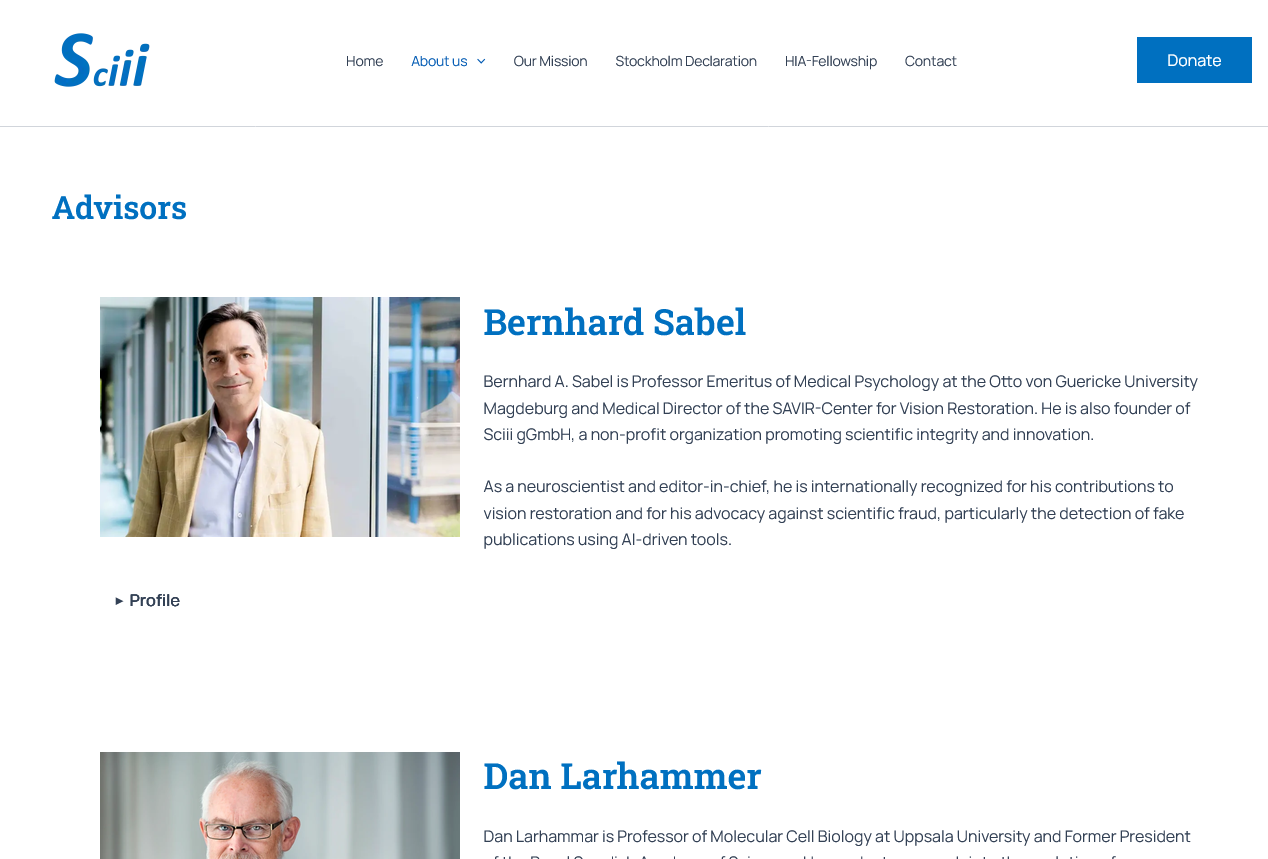
Via his Sciii, Sabel also set up a Stockholm Declaration-inspired “Fake Paper Detection project“, which is funded by the University of Magdeburg to “identify fraudulent, fabricated, or AI-generated academic papers“. I saw a recruitment offer for a Research Associate to work at Sciii, which shows Sabel as author in the metadata and was apparently shared by email only:
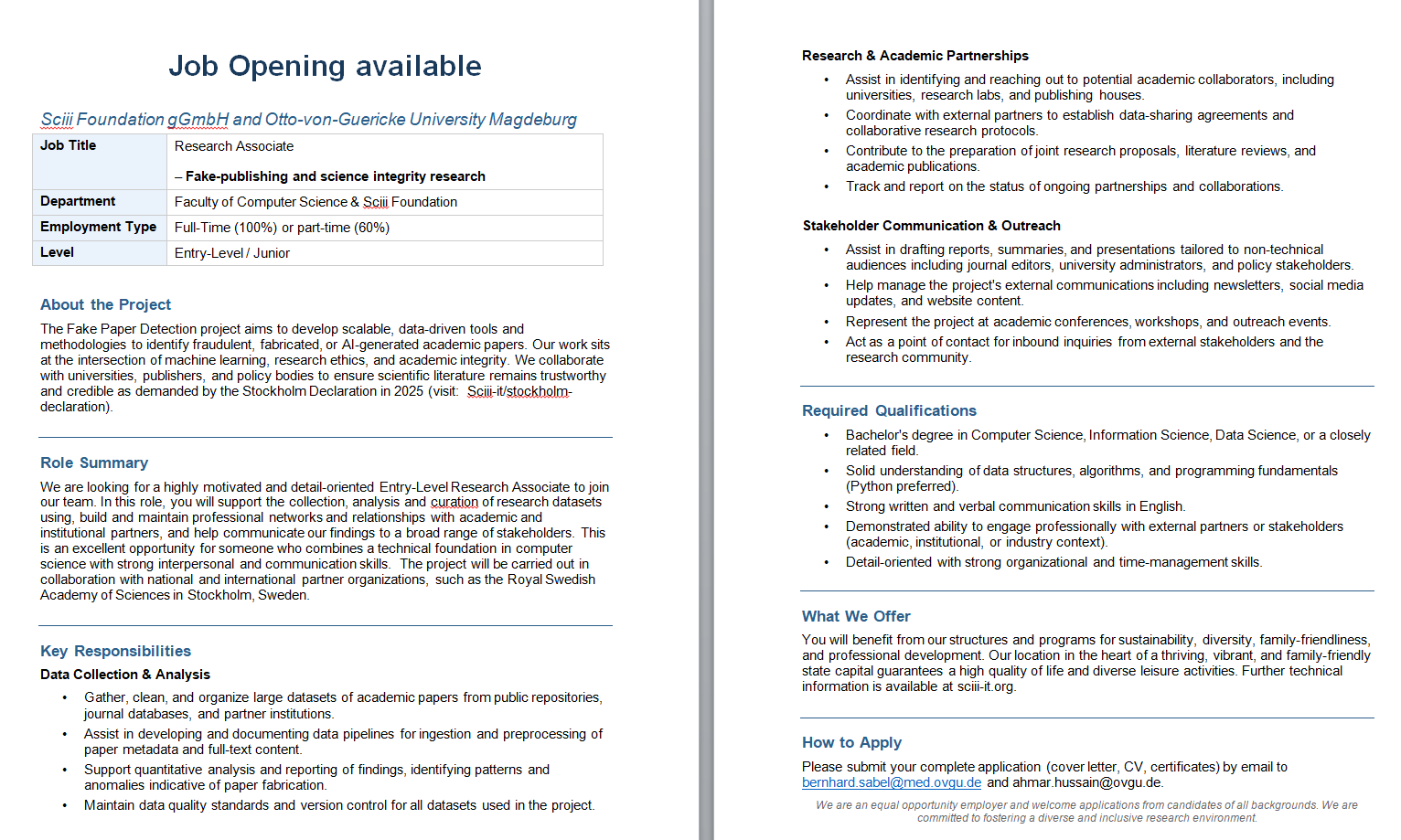
I don’t quite understand why a public university pays the salary for employees of Sabel’s company or foundation (whatever it is), but maybe this is normal in academia? Do you want to apply?
Anyway, now is a good time to study Sabel’s own science.
Part II: Curing Blindness
Chapter 1: The Rise of Savir
Together with his wife Kornelia Sabel, Sabel operates since 2014 in Magdeburg a medical clinic called “Sabel Vision Restoration Center” (Savir), where the so-called Savir Therapy is offered to private patients:
“The core of Savir-therapy is the daily treatment with the worldwide unique microcurrent therapy for eyes and brain. The microcurrent activates neural networks to improve the processing of visual stimuli in the brain as well as improving blood flow in the eye. Thereby the “silent” nerve cells can be woken up, as they are getting supplied with more energy (oxygen, glucose) to process visual impulses. As a result, the visual performance improves.”
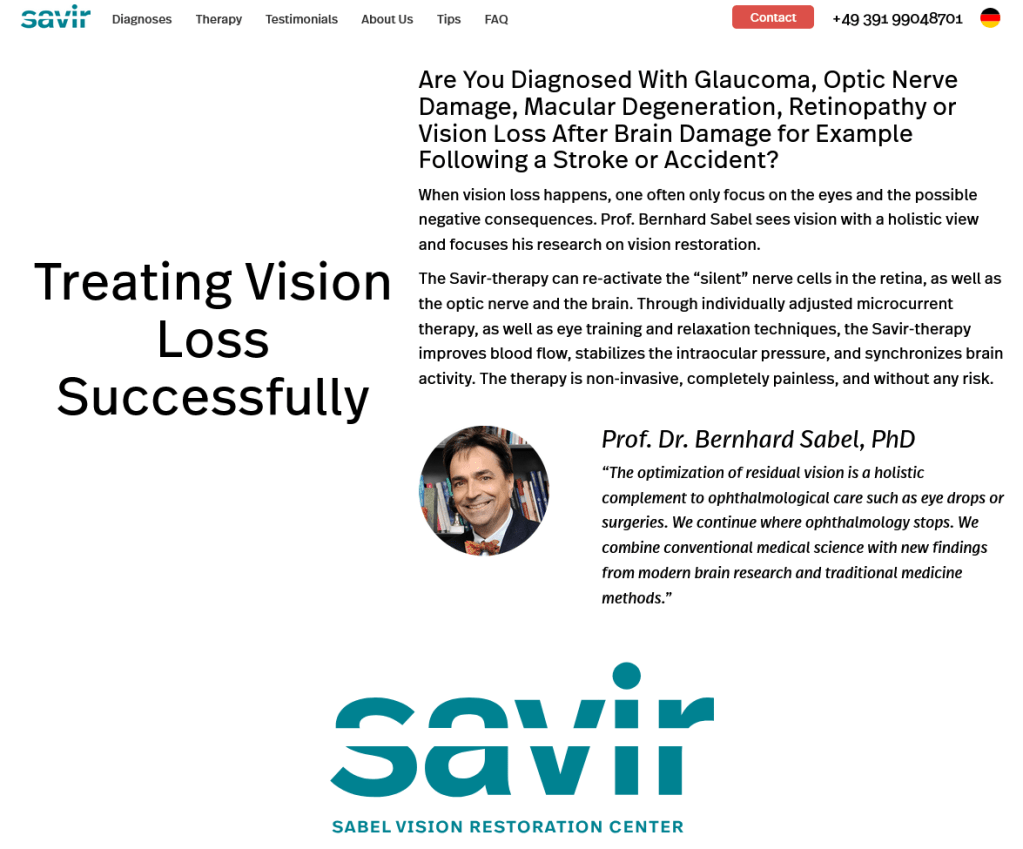
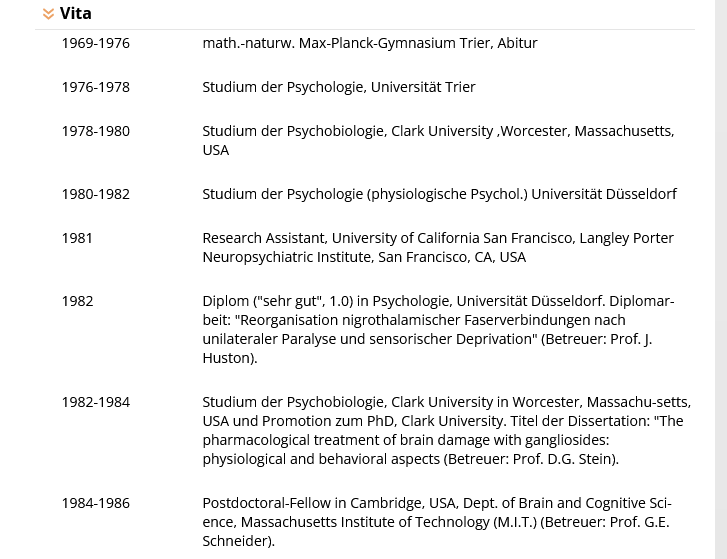
As reminder, Bernhard is a psychology graduate with no formal medical traiining, Kornelia has as “Heilpraktiker” at least some very minimal medical training, even though her specification is more about homeopathy, acupuncture, aromatherapy and other types of “alternative medicine”. She is the registered owner of the Savir Center, very rarely her husband admits to being a shareholder. Like in this new clinical study on 34 patients, approved by the Ethics Committee of University of Magdeburg:
Joana L. El Matine , Anke Lux , Luisa Fricke , Mahshid Tahamtan , Rami S. El Matine , Bernhard A. Sabel Vision restoration in glaucoma: improved subjective visual function after personalised digital lifestyle coaching The EPMA Journal (2026) doi: 10.1007/s13167-026-00446-7
“Sabel is a shareholder of the Savir-Center GbR, Magdeburg, Germany.”
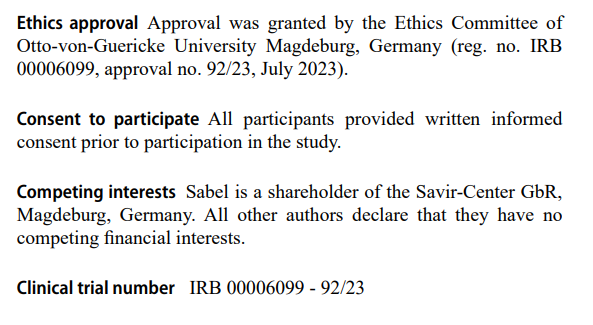
The lack of proper trial registration in this study now led to some investigation. The ombudsman of the University of Magdeburg mentioned in an email from 9 July 2026 that “no genuine clinical trial number or documentation exists anywhere. The number reported is the number from the internal ethics committee approval“, and that “Prof. Sabel will be contacted by an ombudsperson and asked to correct this declaration to avoid that any readers are confused or misled.”
In another paper, Thompson et al 2023, Sabel declared being “shareholder and consultant of SAVIR GmbH Germany, past consultant to Novartis Pharma AG; Various patents issued or pending in the field of vision restoration.”
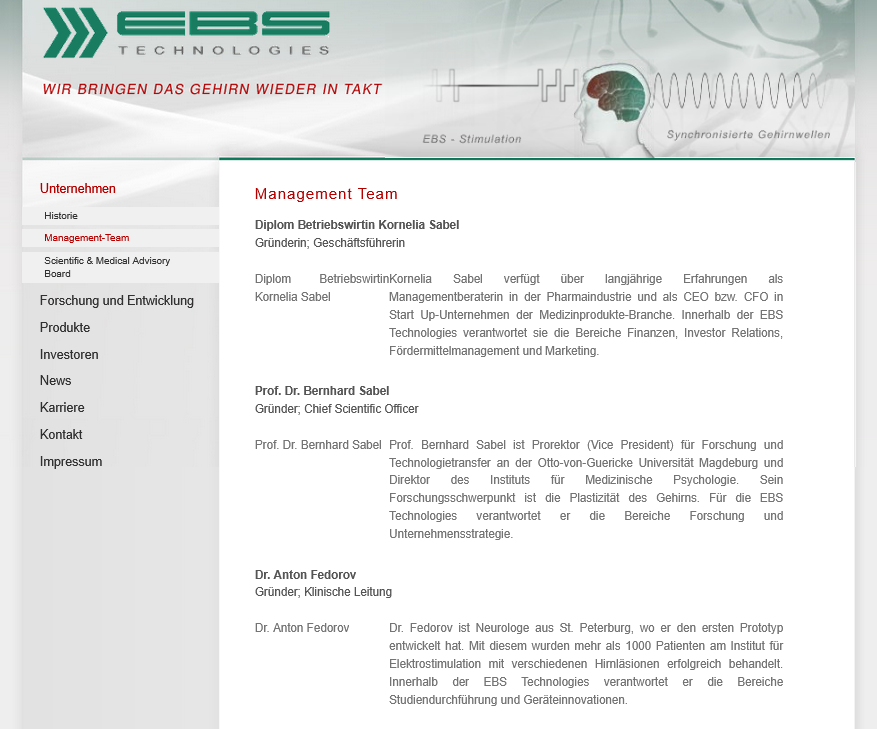
These brain and eye stimulation devices used to be produced by the company EBS Technologies, registered in the town of Kleinmachnow. The company was founded in 2007 and was owned by the Sabels, until 2013 a certain russian named Anton Fedorov (LinkedIn) was involved as co-founder and medical director. In 2019, EBS was dissolved.
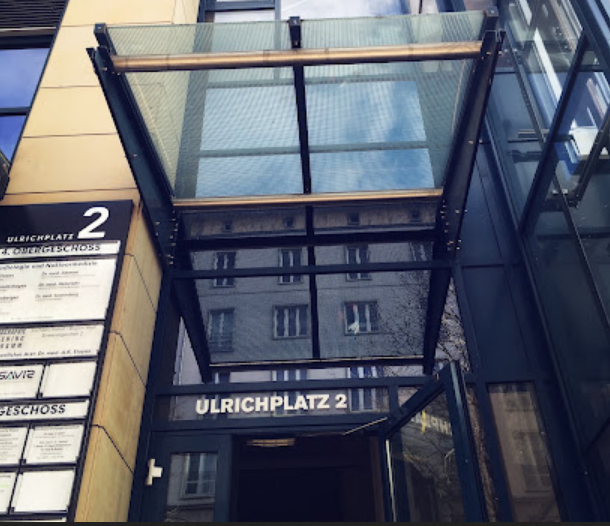
Fedorov runs since 2015 his own Restore Vision Clinic inside the Sana Health Center “Dr. Karl Kollwitz” in Berlin, where he offers the proprietary “Fedorov Restoration Therapy” which is described as “repetitive transorbital alternating current stimulation (rtACS)” which is exactly what Sabel’s Savir Therapy is also called. Indeed, it used to be celebrated as their joint invention, for example when EBS raised €3 million in 2010:
“The company, founded in 2007, can rely on 15 years of (university and clinical) preliminary research by the founder-inventors Prof. Bernhard Sabel and Dr. Anton Fedorov. Clinical experience with application studies from over 1000 patients is already available. Seed financing and other funding enabled EBS Technologies to complete a randomized, placebo-controlled double-blind study and to carry out a second single center study (Phase II). […]
News from 2010
“The therapy process helps stroke and brain trauma patients to improve their functional speech and vision disorders much more quickly and efficiently than before. And the good thing about it is: the therapy is painless and has no side effects.” explains Prof. Sabel”
Today’s “Fedorov therapy” promises to paying customers “80-85% stable improvement” in vision, much more than Sabel’s, for reasons you will soon understand.
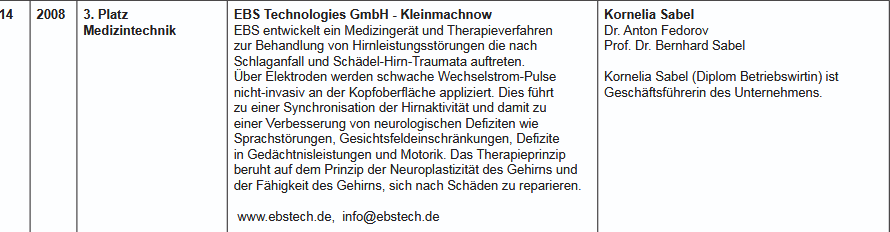
Fedorov used to publish together with Sabel about their rtACS therapy until around 2011 (e.g., the phase 1 clinical trial Gall et al 2011), soon after their friendship soured. The most recent paper on Fedorov’s clinic website is this, the russian is however neither coauthor nor in acknowledgements:
Carolin Gall , Sein Schmidt , Michael P. Schittkowski , Andrea Antal , Géza Gergely Ambrus , Walter Paulus , Moritz Dannhauer , Romualda Michalik , Alf Mante , Michal Bola , Anke Lux , Siegfried Kropf , Stephan A. Brandt , Bernhard A. Sabel Alternating Current Stimulation for Vision Restoration after Optic Nerve Damage: A Randomized Clinical Trial PLOS One (2016) doi: 10.1371/journal.pone.0156134
“The authors have declared that no competing interests exist.”
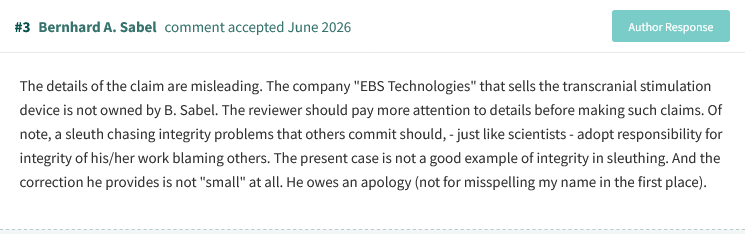
Rather shameless of Sabel, owner of EBS and Savir Center, no? However, Sabel disagreed with my criticism and demanded an apology from me:
The study reported a clinical trial from 2012 at University of Magdeburg, with 45 Savir Therapy treated patients and 37 low-voltage treated controls. EBS is specifically listed as collaborator:
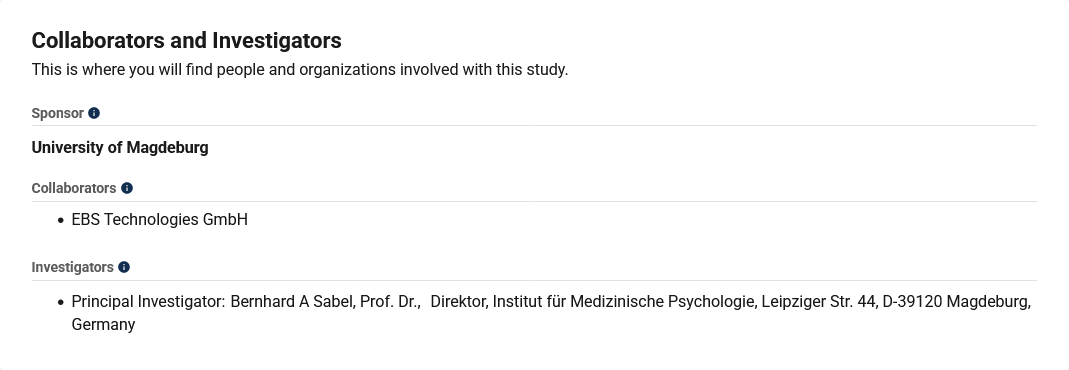
There, the principal investigator Sabel determined that his treatment achieves “a mean improvement in visual field of 24.0% which was significantly greater than after sham-stimulation (2.5%)“, which is incredibly impressive. However, already back in 2016 two societies, the German Ophthalmological Society (DOG) and the Professional Association of Germany’s Ophthalmologists (BVA) attacked this study:
“As long as these methodological limitations are not addressed by further research, the proof of effectiveness for the described method cannot be regarded as secured. To summarize, DOG and BVA determined that the present study did not provide the necessary evidence, based on which this method […] can be recommended”
Also peers criticised that Sabel’s way to quantify the alleged eyesight improvement was neither proven nor reliable, while a clinically established standard test did not find any improvement in vision at all. The ophthalmology professors Helmut Wilhelm and Wolf Lagrèze noted:
“The patients in the treatment group were able to see better from the outset than the patients in the control group. […]
This study should comply with Good Clinical Practice (GCP) guidelines and be conducted by a team that has no stake in the commercial marketing of the method.”
Sabel countered the concerns with this argument: “At 3,500 euros, the treatment is not too expensive“. And this is where it gets even more interesting. Apparently, one of Sabel’s patients wanted their health insurance to refund these treatment costs, which the insurance refused because the therapy is not recognised by the German medical authorities. So the patient sued the insurance, and here is the verdict of a court in Dresden from 20 December 2023 (109 C 5344/21), as reported by the law firm BLD (translated):
“1. Savir therapy (“Sabel vision restoration”) is a multimodal concept that, in addition to neurostimulation of the optic nerve, also includes outpatient behavioral therapy measures.
2. Savir therapy is not a treatment method that is predominantly recognized by conventional medicine. In addition, in the case of the clinical picture in question (tumor disease in the area of the optic nerves), Savir therapy has not proven to be as promising in practice as conventional medical methods. Any tumor residues suspected postoperatively can be treated with conventional medicine through a further resection and/or targeted radiation. Drug therapies to suppress renewed tumor growth are also known and established.”
Again, all this probably proves that only Sabel can save Germany from bad science.
Chapter 2: The absence of any commercial or financial relationships that could be construed as a potential conflict of interest
Back to the lack of conflicts of interests (COI). The Savir Center was opened in 2014, this was published the next year:
Carolin Gall , Katri Silvennoinen , Giuseppe Granata , Francesca De Rossi , Fabrizio Vecchio , Doreen Brösel , Michał Bola , Michael Sailer , Wioletta J. Waleszczyk , Paolo M. Rossini , Turgut Tatlisumak , Bernhard A. Sabel Non-invasive electric current stimulation for restoration of vision after unilateral occipital stroke Contemporary Clinical Trials (2015) doi: 10.1016/j.cct.2015.06.005
“Conflict of interest: None declared”
The clinical study used “repetitive transorbital alternating current stimulation (rtACS) and transcranial direct current stimulation (tDCS)“, however the device was not from EBS, but from another German company: NeuroConn GmbH in Ilmenau. In 2015, the company advertised to its customers with their collaboration with Sabel, and linked to this Savir video on YouTube:
Also this study is from 2015:
Aini Ismafairus Abd Hamid , Carolin Gall , Oliver Speck , Andrea Antal , Bernhard A. Sabel Effects of alternating current stimulation on the healthy and diseased brain Frontiers in Neuroscience (2015) doi: 10.3389/fnins.2015.00391
“Substantial contributions to the conception or design of the work: AAH. Drafting the work or revising it critically for important intellectual content: AAH, CG, OS, AA. Final approval of the version to be published: CG, OS, AA; BS. Agreement to be accountable for all aspects of the work in ensuring that questions related to the accuracy or integrity of any part of the work are appropriately investigated and resolved: AAH, CG, AA.”
That statement is, uhm, how shall I put it…. Bizarre? Insane? Did our international publication ethics expert Sabel ever hear of ICMJE recommendations on authorships? Does he understand that every author must provide “Agreement to be accountable for all aspects of the work in ensuring that questions related to the accuracy or integrity of any part of the work are appropriately investigated and resolved“, otherwise they can’t be an author? Anyway, you probably expect the Conflicts of Interest section now:
“Conflict of interest
The Guest Associate Editor Dr. Henrich-Noack declares that, despite being affiliated to the same institution as authors Aini I. Abd Hamid; Carolin Gall; Oliver Speck; Bernhard A. Sabel, the review process was handled objectively. The authors declare that the research was conducted in the absence of any commercial or financial relationships that could be construed as a potential conflict of interest”
Yes of course. And it is not only the authors who hid their conflicts of interests. The editor Petra Henrich-Noack is not Sabel’s colleague, she is his former lab member and mentee, together they published many studies on electrical stimulation. So many, that in 2014 Heinrich-Noack graduated with a cumulative Habiliation thesis, which was supervised by Sabel.

Fun fact: Heinrich-Noack (who is now at BTU in Cottbus) at some point befriended the papermill fraudsters and antivaxxers Aristides Tsatsakis and Anca Oana Docea (read about them below), plus some of their russian friends, see for example Heinrich-Noack et al 2019, Sayapina et al 2017, Engin et al 2017, the latter is officially Heinrich-Noack’s most-cited paper ever. I wonder if it was Fedorov who introduced her to his russian friends and that russian professor from Greece, Tsatsakis?

An expert criticism by fraudsters and antivaxxers: the case of PubPeer
“A concerning trend is the rise of “hyper-skepticism”” – ChatGPT
Here a review by Heinrich-Noack and Sabel, with some obligatory russian as coauthor, about the benefits of transcranial and transorbital alternating current stimulation:
Petra Henrich-Noack , Elena G Sergeeva , BernhardA Sabel Non-invasive electrical brain stimulation: from acute to late-stage treatment of central nervous system damage Neural Regeneration Research (2017) doi: 10.4103/1673-5374.217322
“Conflicts of interest: None declared.”
Already in November 2014, Sabel, Heinrich-Noack and the US-based russian scholar Elena Sergeeva advertised for Savir’s ACS therapy, with this “hypothesis” commentary in Frontiers:
Elena G. Sergeeva , Petra Henrich-Noack , Michal Bola , Bernhard A. Sabel Brain-state-dependent non-invasive brain stimulation and functional priming: a hypothesis Frontiers in Human Neuroscience (2014) doi: 10.3389/fnhum.2014.00899
“The authors declare that the research was conducted in the absence of any commercial or financial relationships that could be construed as a potential conflict of interest.”
Here is Sergeeva again, a shared contribution with Heinrich-Noack on an animal study where mice and rats were subjected to “optic nerve crush” and then healed with “transcorneal alternating current stimulation (rtACS)“. Despite a Chinese corresponding author, we are informed that Sabel somehow “supervised the study“:
Petra Henrich-Noack , Elena G. Sergeeva , Torben Eber , Qing You , Nadine Voigt , Jürgen Köhler , Sebastian Wagner , Stefanie Lazik , Christian Mawrin , Guihua Xu , Sayantan Biswas , Bernhard A. Sabel , Christopher Kai-Shun Leung Electrical brain stimulation induces dendritic stripping but improves survival of silent neurons after optic nerve damage Scientific Reports (2017) doi: 10.1038/s41598-017-00487-z
“The authors declare that they have no competing interests.”
Same situation here, rats treated with transorbital alternating current stimulation:
A. T. Foik , E. Kublik , E. G. Sergeeva , T. Tatlisumak , P. M. Rossini , B. A. Sabel , W. J. Waleszczyk Retinal Origin of Electrically Evoked Potentials in Response to Transcorneal Alternating Current Stimulation in the Rat Investigative Ophthalmology & Visual Science (2015) doi: 10.1167/iovs.14-15617
“Disclosure: A.T. Foik, None; E. Kublik, None; E.G. Sergeeva, None; T. Tatlisumak, None; P.M. Rossini, None; B.A. Sabel, None; W.J. Waleszczyk, None “
I think I see the logic: the Savir Center doesn’t offer ACS treatments to rodents, only to paying human patients. Thus, indeed no COI!
Another paper by Sergeeva, Heinrich-Noack and Sabel, about the medical benefits of transcorneal alternating current stimulation (Sergeeva et al Brain Stimulation 2015), simply had no COI statement at all. Which means nobody had any COI to declare, right?
As it happens, also Sabel’s regular coauthor Andrea Antal is not only an academic collaborator. She is professor at University of Göttingen, but also works (or used to work) for Savir Center, which is obviously no conflict of interests at all:
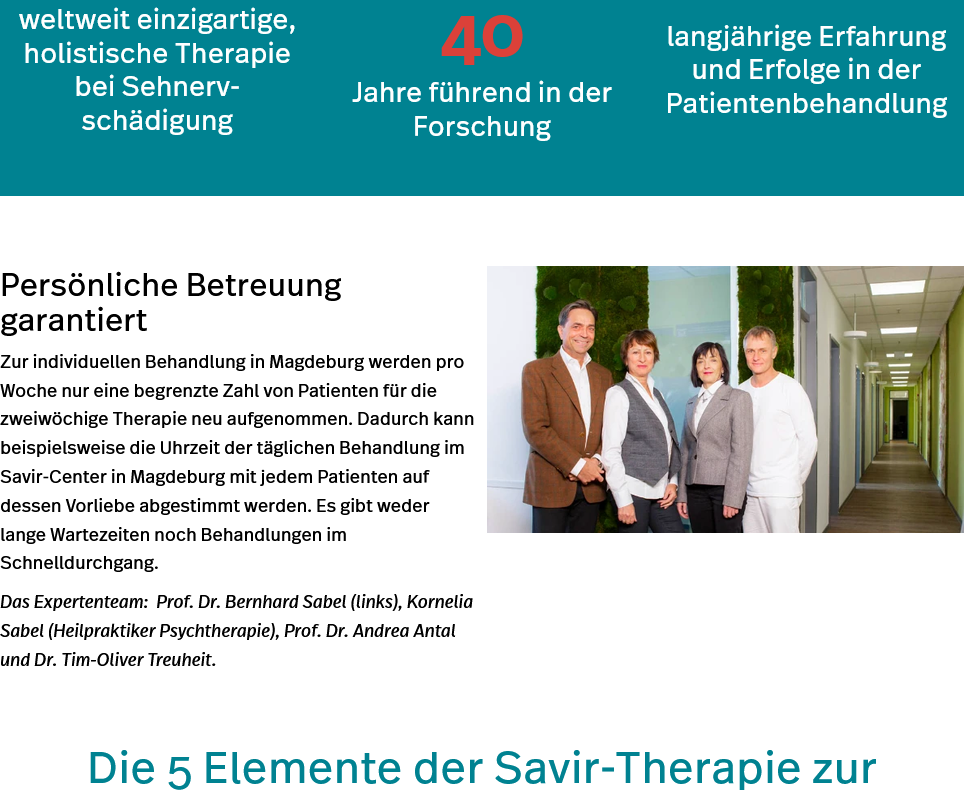
I can’t tell you when Antal joined Savir, but she is perfectly aware of that being a COI. In an consensus paper Nejati et al 2025 about Transcranial Electrical Stimulation, Antal declared working “as a paid consultant for NeuroConn, Ilmenau, Savir GmbH, Magdeburg, Germany and currently is a paid advisor by Pulvinar, USA.” Until a few weeks ago, there was an even better photo of her at Savir online – the Sabels and Antal sitting like royalty, with their humble foot-folk arranged behind them.
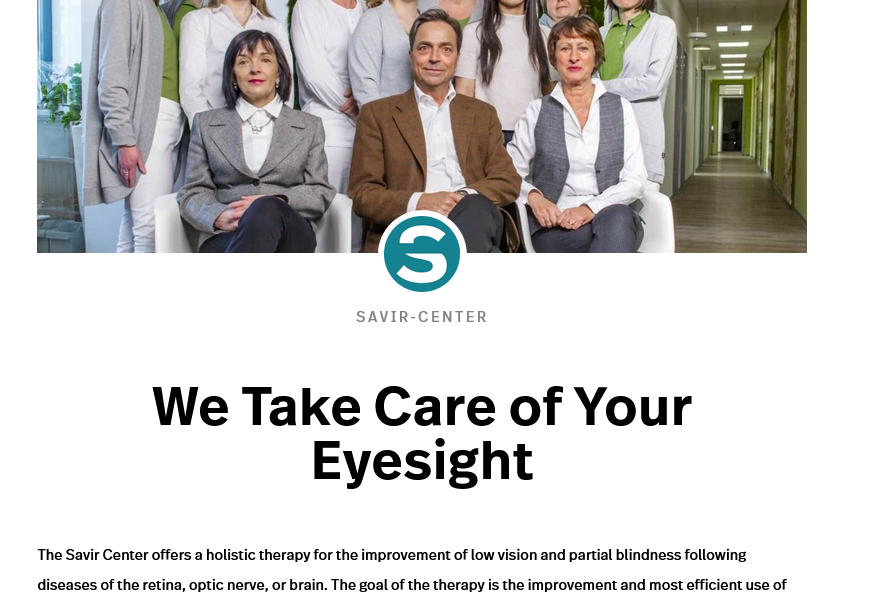
It is not like Sabel was unaware about the need to declare his COI: in an earlier paper, Gall et al 2012, Sabel declared to be “shareholder of EBS Technologies GmbH (Kleinmachnow, Germany), manufacturer of the alternating current stimulation device“, while his coauthors Antal and the above mentioned Sabel’s PhD student Carolin Gall admitted to have “have received financial support from EBS“. Also in Gall et al 2011, Sabel admitted being “consultant and shareholder of EBS Technologies GmbH (Kleinmachnow, Germany), manufacturer of the AC stimulation device used in this study“. His then-friend Fedorov declared being “an employee of EBS“. In Gall et al 2010 , we were informed: “Anton Fedorov is medical director of EBS Technologies GmbH, Germany. Bernhard A. Sabel is founder, consultant and shareholder of the company“.
Why no such disclosure in later papers? Here is one by Sabel and Antal from 2020:
Bernhard A Sabel, Ying Gao , Andrea Antal Reversibility of visual field defects through induction of brain plasticity: vision restoration, recovery and rehabilitation using alternating current stimulation Neural Regeneration Research (2020) doi: 10.4103/1673-5374.280302
“Conflicts of interest: The authors declare no conflicts of interest.”
Both Sabel and his former PhD student and then Savir employee Ying Gao (now associate professor in China) listed as their affiliation “Sabel Vision Restoration Center” in Magdeburg. Like in the cases above, Sabel also holds patents on the therapy which is the subject of this paper, and if you are still in doubt, ACS is indeed his Savir Clinic’s central service:

In case you are still not sure:
Here, Sabel and Gao declared regarding COI: “None“:
Bernhard A Sabel, Lizbeth Cárdenas-Morales , Ying Gao Vision Restoration in Glaucoma by Activating Residual Vision with a Holistic, Clinical Approach: A Review JOURNAL OF CURRENT GLAUCOMA PRACTICE (2018) doi: 10.5005/jp-journals-10028-1237
Also “Source of support: Nil“, although the study quite likely describes a Savir patient, who surely must have paid to be treated:
“In Magdeburg, Thomas was treated daily for 2 weeks with ACS, he was psychologically counseled, and he learned eye yoga and different relaxation techniques. […] At the end of the treatment, his visual field index increased from 10 to 15%, […] When Thomas returned for a follow-up 4 months later, his improvements were remarkable: his visual field had improved from 15 to 74%!”
Conflicts of Interests? Where?
Another ACS paper from 2020, which declared to have used an EBS device called Alpha SYNC:
Bernhard A. Sabel, Aini Ismafairus Abd Hamid , Carolin Borrmann , Oliver Speck , Andrea Antal Transorbital alternating current stimulation modifies BOLD activity in healthy subjects and in a stroke patient with hemianopia: A 7 Tesla fMRI feasibility study International journal of psychophysiology (2020) doi: 10.1016/j.ijpsycho.2019.04.002
“The authors declare no potential conflicts of interest with respect to the research, authorship, and/or publication of this article.”
Yes of course.
Chapter 3: Sabel’s Restorative Neurology
This was published in the IOS/Sage journal Restorative Neurology and Neuroscience, of which Sabel was for 26 years the founding Editor-in-Chief. In 2024, a new Editor-in-Chief took over, Lechoslaw Turski of DZNE in Bonn, while a certain Andrea Antal became Deputy Editor.
Bernhard A. Sabel , Josef Flammer , Lotfi B. Merabet Residual vision activation and the brain-eye-vascular triad: Dysregulation, plasticity and restoration in low vision and blindness – a review Restorative Neurology and Neuroscience (2018) doi: 10.3233/rnn-180880
The Editor-in-Chief Sabel felt that the author Sabel doesn’t need to fill out any COI declarations on his study about “vision restoration training” and “non-invasive brain stimulation“. Even the affiliations reveal nothing, no mention of Savir, anywhere. In case you started to miss Sergeeva and Heirnich-Noack, also for this paper in Sabel’s journal, there was no mention of COIs or Savir affiliation:
Elena G. Sergeeva , Petra Henrich-Noack , Alexander G. Gorkin , Bernhard A. Sabel Preclinical model of transcorneal alternating current stimulation in freely moving rats Restorative Neurology and Neuroscience (2015) doi: 10.3233/rnn-150513
Two russians there even – Sergeeva’s friend Alexnader Gorkin is with the Russian Academy of Science in Moscow. Interestingly, in a pre-Savir clinical trial with 22 patients subjected to “non-invasive alternating current stimulation” (Sabel et al 2011, with Gall and Fedorov), also in his own Restorative Neurology and Neuroscience, Sabel at least mentioned EBS: “The study was funded by the Otto-von-Guericke University, Magdeburg, Germany, and EBS Technologies GmbH, Kleinmachnow, Germany“.
The following is an editorial by Antal and Sabel, introducing a special issue dedicated to the 4th International Symposium “Low Vision and the Brain”, which took place in November 2017 in Berlin and where Sabel acted as conference organizer and chair:
Andrea Antal , Bernhard Sabel Low vision: Rescue, regeneration, restoration and rehabilitation Restorative Neurology and Neuroscience (2019) doi: 10.3233/rnn-199001
The Special Issue had the most rigorous peer review you can imagine – the paying conference participants were promised: “All accepted abstracts will also be published in the Journal ” Restorative Neurology and Neuroscience“.
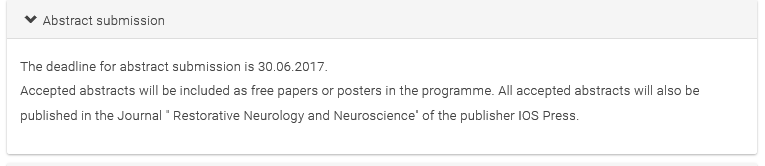
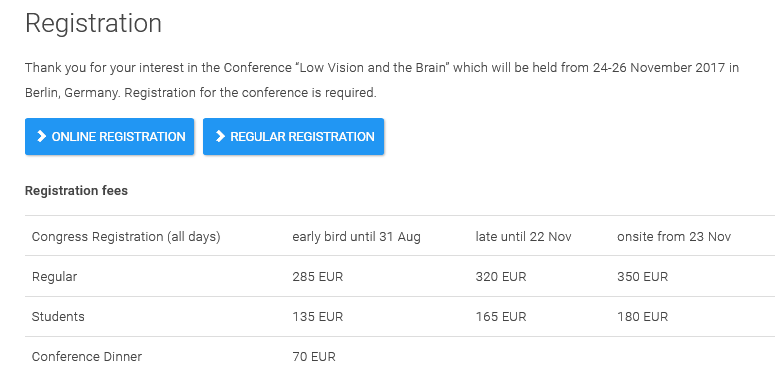
The participant fees weren#t enough: conference was accompanied by “a specialised industrial exhibition“, Sabel personally invited industrial partners and appealed to their “scientific and societal responsibility” to sponsor his conference, which was in his own words “a source of scientific advancement, innovation and commercialization.” One of those industry sponsors was apparently the Savir Center, as Sabel’s own conference talk revealed:
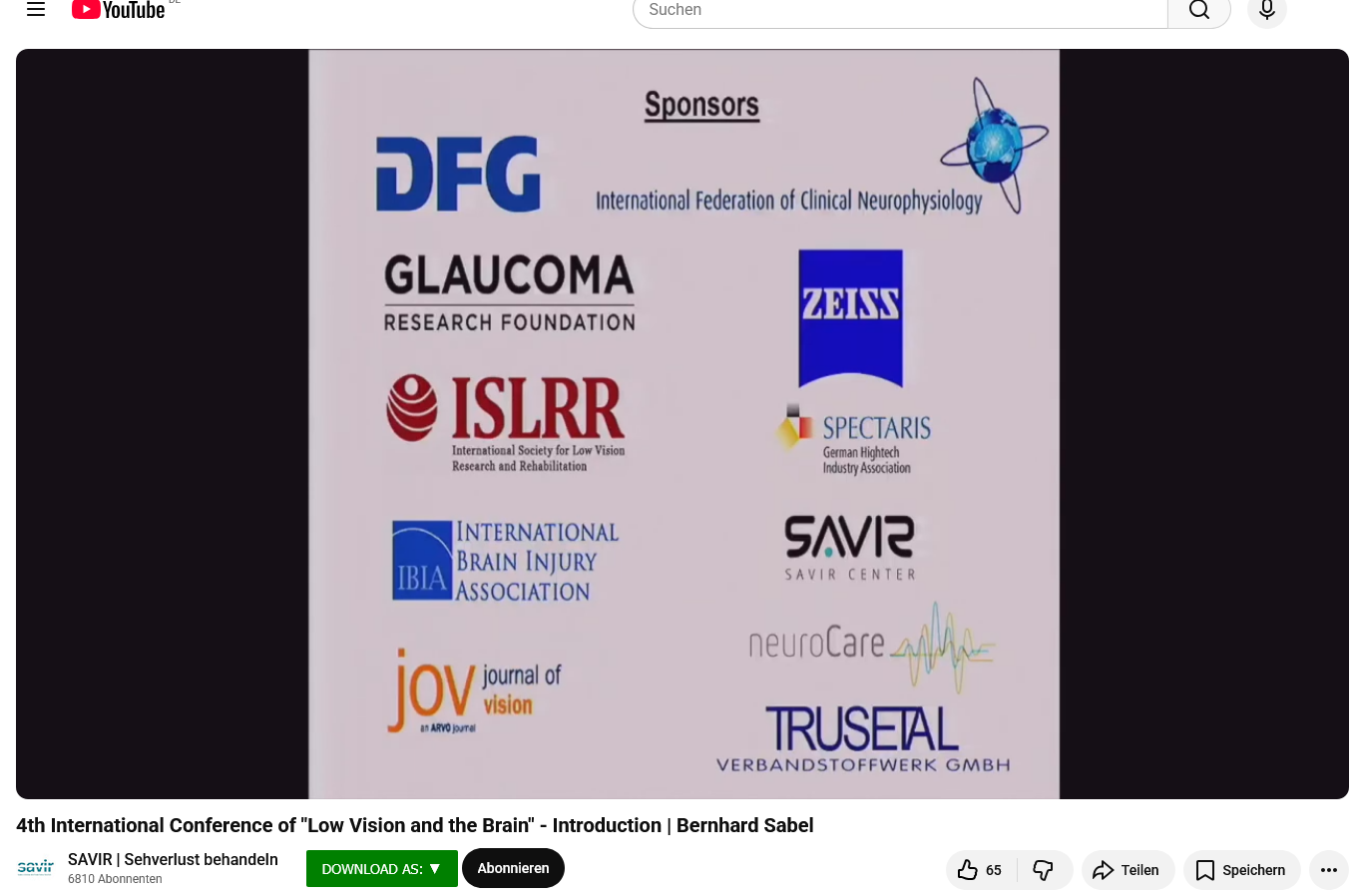
Which brings us to COVID-19. Sabel cured it, did you know? Again, in his own journal where the editor Sabel is always nice enough never to ask the author Sabel to declare his COI!
Bernhard A. Sabel , Wanshu Zhou , Frank Huber , Florentina Schmidt , Kornelia Sabel , Andreas Gonschorek , Mirela Bilc Non-invasive brain microcurrent stimulation therapy of long-COVID-19 reduces vascular dysregulation and improves visual and cognitive impairment Restorative Neurology and Neuroscience (2021) doi: 10.3233/rnn-211249
“This is a clinical analysis of two patients, K.H. and G.B., who visited our SAVIR-Center in Magdeburg to receive treatment for their vision impairment”
This is a rare case where also Mrs Sabel features as coauthor, and she provides as her affiliation “SAVIR-Center, Magdeburg, Germany“. Of course both patients were cured by Savir Therapy, but wait till you hear what made the poor patient G.B. sick originally. No, not COVID-19. The vaccine:
“In February 2021 she was vaccinated with AstraZeneca. During the following weeks she reported having had strong headaches, loss of vision in the left eye, loss of balance as well as cognitive impairments.”
The study later discusses how COVID-19 “vaccination can trigger symptoms“. Someone must show Sabel’s paper to Robert F Kennedy Jr!
Chapter 4: Epilogue with happy patients
Returning to Sabel’s absent business interests, there is also NovaVision, which he founded in 2000 in Magdeburg, with another branch opened three years later in Florida, USA. NovaVision’s business model is the sale of the software NeuroEyeCoach, which is lauded to improve eyesight via “visual training” on your home computer.
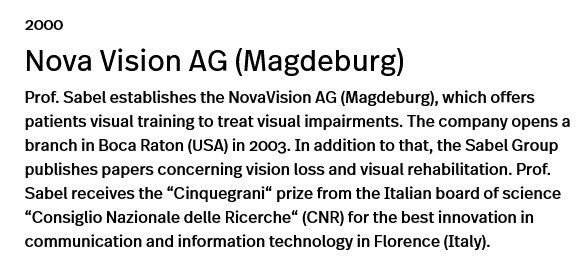
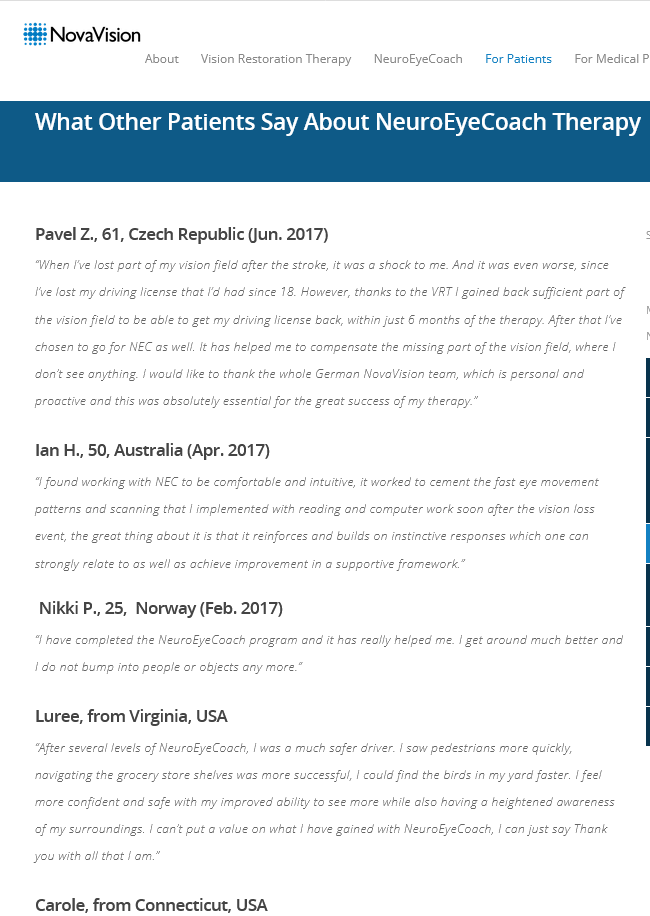
In the study Pogger et al 2010 about “computer-based vision restoration training“, Sabel declared being “shareholder of the Nova Vision Inc.” But not on this study on 11 patients subjected to “vision-restoration training (VRT)“:
Carolin Gall , Bernhard A. Sabel Reading Performance After Vision Rehabilitation of Subjects With Homonymous Visual Field Defects PM&R (2012) doi: 10.1016/j.pmrj.2012.08.020
“This study was funded by the Otto-von-Guericke University of Magdeburg and by AOK (Allgemeine Ortskrankenkasse, common local health insurance). The treatment of the subjects was managed by therapists of the Institute of Medical Psychology (Magdeburg, Germany) and NovaVision AG (Magdeburg, Germany).”
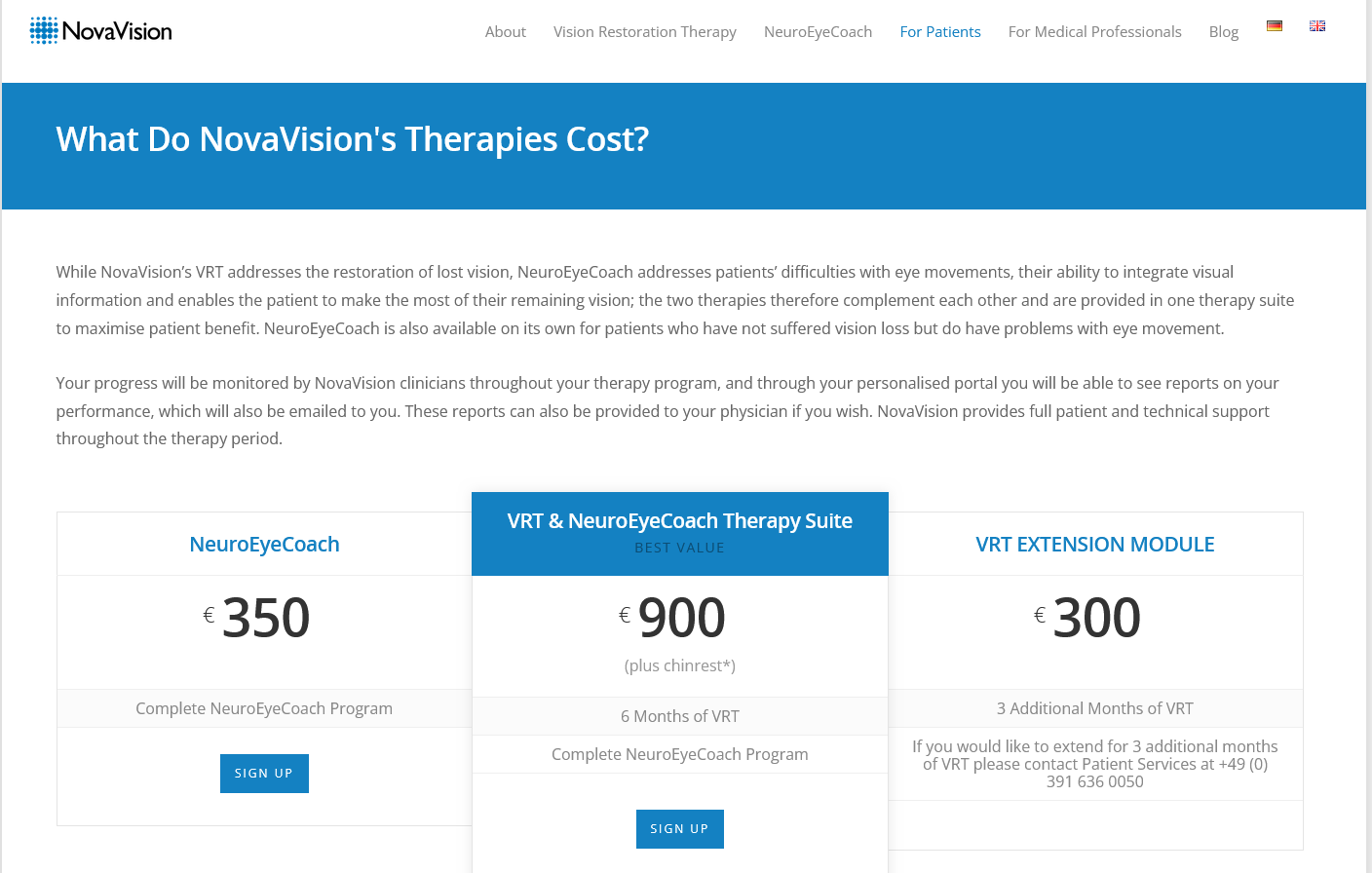
No word about who owns NovaVision. Those are the current prices for the use of software, starting with €350:
There were many other papers where the authors were not asked to declare their COI, not only in Sabel’s own journal.
But then again, what does all of that COI-nitpicking matter when there are happy patients reporting their positive experiences with the Savir therapy! Many of them are quoted on the Savir website, there are even some YouTube videos.
Look at Benjamin’s story:
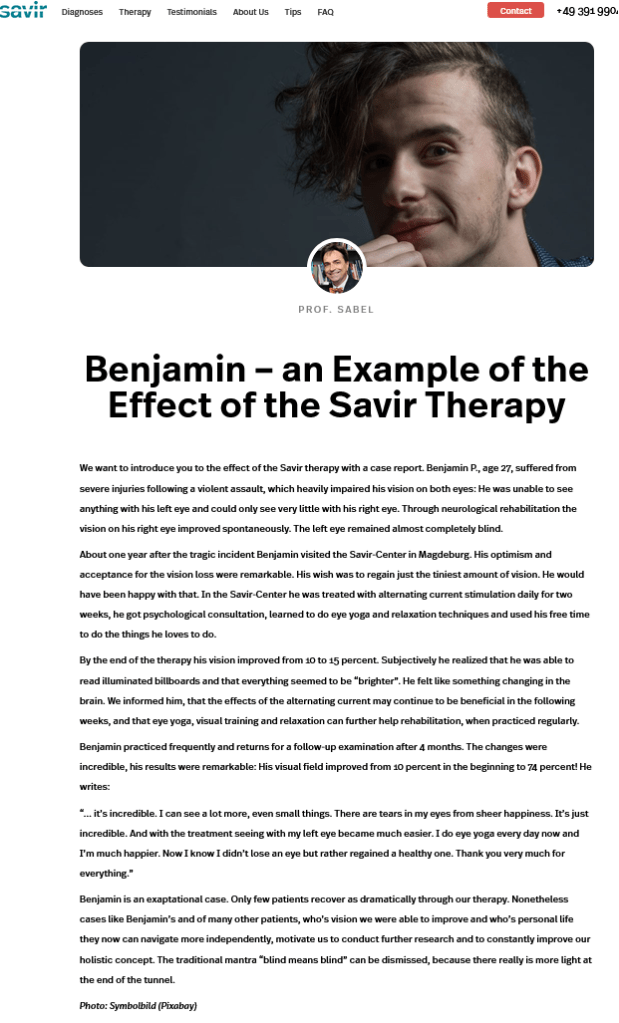
“Benjamin P., age 27, suffered from severe injuries following a violent assault, which heavily impaired his vision on both eyes: He was unable to see anything with his left eye and could only see very little with his right eye. […] The changes were incredible, his results were remarkable: His visual field improved from 10 percent in the beginning to 74 percent! He writes: “… it’s incredible. I can see a lot more, even small things. There are tears in my eyes from sheer happiness. It’s just incredible. And with the treatment seeing with my left eye became much easier. I do eye yoga every day now and I’m much happier. Now I know I didn’t lose an eye but rather regained a healthy one. Thank you very much for everything.” Benjamin is an exaptational case.”
Well, yes, Benjamin is an “exaptational” case. He is a stock photo, found on hairdressing websites here and here, or on this Facebook page:
To be fair, the Savir website does mention at the end “Photo: Symbolbild (Pixabay)“, but still. I struggle to believe that Benjamin really exists.
This is getting too long, so I won’t go into Sabel’s forays into medical nanotechnology. Yes, he has been curing diseases with nanoparticles. Already in in 1990ies, he and his Magdeburg-based company NanoDel Technologies GmbH filed patents for nanoparticle-based drug delivery (e.g., “Drug targeting system, method of its preparation and its use“). In 2003, NanoDel became NanoPharm AG, and Sabel patented “Method of treating cancer” with nanoparticles, prior to that he patented nanoparticle treatments for neurodegenerative diseases (“Polymeric device for controlled drug delivery to the CNS” and “Drug targeting to the nervous system by nanoparticles“). Despite several peer-reviewed research papers Sabel published about successful nanoparticle drug delivery to nervous system (brain tumours cured in 2008), his business didn’t work out as planned – NanoPharm was dissolved in 2016.
In 2021, we were informed that “Prof. Sabel believes that clinical application in various eye diseases such as glaucoma (glaucoma) and retinitis pigmentosa is conceivable – and theoretically beyond that“, on this occasion:
Mohamed Tawfik , Xiwei Zhang , Lisa Grigartzik , Peter Heiduschka , Werner Hintz , Petra Henrich-Noack , Berend Van Wachem, Bernhard A Sabel Gene therapy with caspase-3 small interfering RNA-nanoparticles is neuroprotective after optic nerve damage Neural Regeneration Research (2021) doi: 10.4103/1673-5374.313068
Also here, “The authors declare no conflicts of interest.” Maybe time to set up another nanotheranostics company?
Sabel then published an expert review about “Nanomedicine and drug delivery to the retina” in the aforementioned journal of his friend Seifert: Tawfik et al 2022. There, he declared that “no paper mill was used to help prepare the manuscript“. Technically, not quite: Sabel cited some papermill products in his review, one fraudulent paper was retracted already eight years before:
“For example, Panda et al. studied dipeptide phenylalanine-α, and β-hydroxyphenylalanine nanotubes (Panda et al. 2013) to deliver pazopanib with 25% efficiency and no toxicity in retinal cells after intravitreal injection.”
Panda et al 2013 was retracted in 2016 because “author Kadam has knowingly and intentionally falsified and/or fabricated results“.
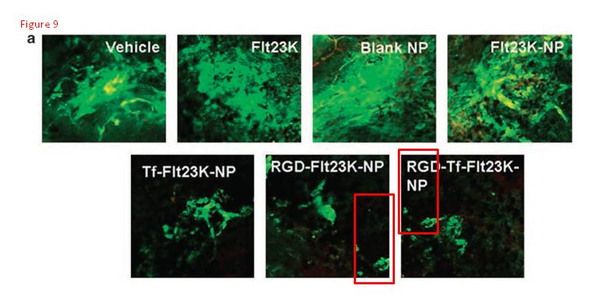
Sabel’s claim about polycaprolactone as “a potential nanocarrier for retinal drug delivery (Yin et al. 2010.” is based on a papermilled fraud recently flagged on PubPeer. And maybe the papermill expert Sabel should have checked PubPeer before commending “Singh and colleagues” for having “explored whether PLGA nanoparticles […] could be specifically delivered to the laser-treated retinas“. Singh et al 2009 was flagged already in 2018:

What an expert, for everything.
Now that you made it to the end of this long article, go sign the Stockholm Declaration and donate to Sciii.
Update 30 July 2026
I contacted the DFG spokesperson Marco Finetti with two questions, and now received his replies. My questions are in bold.
1. Mr Sabel claims publicly that he is investigating grant applications submitted by third parties on behalf of the DFG for fraud. Is this true?
“If Mr Sabel is making this claim publicly, it would not be factually correct. Mr Sabel is neither commissioned nor authorised by the DFG to investigate grant applications submitted by third parties for fraud or scientific misconduct. Nor does he hold any institutional role on behalf of the DFG. In particular, no confidential application documents have been or will be made available to Mr Sabel for such a purpose.“
2. Is the DFG planning any conferences or events with Mr Sabel, or on the subject of the Stockholm Declaration, in the near future?
“The DFG is planning an event for November 2026 under the working title ‘Publication Ethics in the Age of AI: How to Address Fraudulent Publishing’. It is intended to focus primarily on the forms, prevention and detection of fraudulent publications. According to current programme plans, Mr Sabel is scheduled to give a short presentation as one of several speakers. However, the programme has not yet been finalised.
The planned event is not, however, an event aimed at supporting or implementing the Stockholm Declaration. Whilst the Declaration is a starting point for the current debate, the event’s concept is independent and significantly broader in scope. The aim is to bring together different perspectives and define specific responsibilities. Mr Sabel’s potential contribution would therefore be part of an event with a pluralistic format.“
Thus, DFG assures that Sabel lied when he publicly claimed to be reviewing DFG grant applications. The upcoming Stockholm Declaration-inspired conference will sure be fun.
Donate!
If you are interested to support my work, you can leave here a small tip of $5. Or several of small tips, just increase the amount as you like (2x=€10; 5x=€25). Your generous patronage of my journalism will be most appreciated!
€5.00


I learned a long time ago—during my scientific training in Hungary, and through exposure to people such as Sylvester E. Vizi—one of the most important rules in science:
NEVER TRUST A SCIENTIST WITH A BOW TIE.
In my admittedly uncontrolled and heavily biased observational experience, bow-tied scientists show an alarming tendency toward narcissistic buffoonery, intellectual charlatanism, and severe attention-seeking behaviour. They may also display an unusually strong attachment to money, status, publicity, and—on occasion—other people’s ideas. Their scientific theories are not invariably strengthened by close examination either.
Initially, I assumed this was merely a Hungarian phenomenon. Then I looked into history and found Alfred Kinsey, Sigmund Freud, and Thomas Edison.
Later, after watching television and conducting extensive research on the interwebs, I identified further possible cases: Bill Nye, George Church, and Neil deGrasse Tyson. In Tyson’s case, the syndrome appears not to be restricted to bow ties, but may also involve unusually loud conventional ties decorated with planets, galaxies, and other astrophysical objects.
I am now preparing a scientific article on the subject. My proposed psychopathological pathway is: Bow tie → conspicuous intellectual self-presentation → narcissistic overclaiming → never trust the bastard.
Naturally, the study has several limitations: selective case ascertainment, confirmation bias, historical confounding, no control group, no preregistration, and a complete absence of statistical power. But the effect size is enormous. I estimate a 44% false-positive rate, so I will put down Herr Professor Sabel as a suggested referee.
LikeLiked by 4 people
I heard from sources that tomorrow there’s a SECRET research integrity conference in Hannover, Germany, sponsored by Volkswagen Stiftung.
Prof Sabel is there of course.
Prof Byrne and Prof Christopher also.
And publishing executives of course.
The conference is not announced anywhere and is by invitation only. Like an orgy.
Unlike for an orgy, they did invite a loyal journalist, their trusty Florian S who will soon teach us how to think correctly.
I can’t help thinking the secrecy is because of me, after the London incident.
Guys, calm down, I have an interesting life and no desire to meet any stakeholders.
LikeLiked by 1 person
Forgot to add: the only existing mention is on the website of Volkswagen Stiftung.
No secret program or a secret list of secret participants
https://projektdatenbank.volkswagenstiftung.de/projekt/0202829
LikeLike
https://www.youtube.com/watch?v=3rkAjnFB1g4
LikeLike
LOL Reading through the article one of the first things that came to mind was adding a comment that those who wear bow ties are immediately suspect.
LikeLiked by 1 person
This is a good and important article. Even though I had heard people grumbling about this for a while I hadn’t realised how bad it is. This is very telling:
“The SIA mission is not to follow individual cases of science fraud, manipulation of experiments, statistical nudging, plagiarism etc. We want to learn more about – and fight – fake science publishing itself.”
Well there are plenty of people who seem keen on this option. Fight “papermills” without even finding any fake papers. Surely that is step number one?
This is also very frustrating:
“Sabel and his team at the University of Magdeburg had already discovered in 2023 that around 245,000 scientific articles in the biomedical field alone were fake or at least suspicious.”
When I tell people that I personally found 8000 or so problematic articles I am referring to documented mistakes in the methods or results that I have personally identified (sometimes with the help of tools) and posted to PubPeer. What Sabel has achieved could be done in an afternoon, but it shouldn’t be done anyway.
I had always assumed that Sabel was, in fact, a medical doctor. Not sure where that impression came from, perhaps I shouldn’t care, but I do feel like being a psychology professor is a different station in life.
LikeLike
I also made the same mistake. When some professor runs a medical clinic treating patients, whatever yoi think of his specific therapy, you don’t doubt that he must have medical training, credentials and degrees.
Now I finally understand why German ophthalmologists got so upset with Sabel – the guy is not their medical peer!
LikeLiked by 1 person
Maybe I’m being unfair towards psychology professors? There is something oddball about his whole activities though.
LikeLike