

Schneider Shorts of 14 August 2026 – man let down by two young women in Australia, two bullying divas set up a lab in the Swiss Alps, Chinese papermill issues purity certificate to Portuguese customer, with a German lion of the world being hunted, an Iranian genius welcomed all over Europe, and finally, where Retraction Watch went wrong again.
Table of Discontent
Science Elites
- Repeated breaches may be considered serious breaches – Crishan Samuel is a victim of two female students
- Many illustrious scientists – Aguzzi sets up his own Alpine lab, with Südhof!
- Crestfallen but determined to do the right thing – Retraction Watch has no luck with role models
Scholarly Publishing
- Investigation by the third-party testing service provider – Sonia Carabineiro provides RSC with certificate of purity
Retraction Watchdogging
- Setting yourself up for success: practical tips and advice – Jörg Rinklebe earns five more retractions
- Exceptionally moo – Hossein Azadi charmed Germans, Czechs and Belgians
Science Elites
Repeated breaches may be considered serious breaches
The Monash University in Melbourne, Australia, informed me, strictly confidentially, about the outcome of their investigation against their professor of pharmacology, Crishan Samuel. I wrote about him in the article below, those 11 fraudulent papers were flagged by Fabian Wittmers and other sleuths on PubPeer.
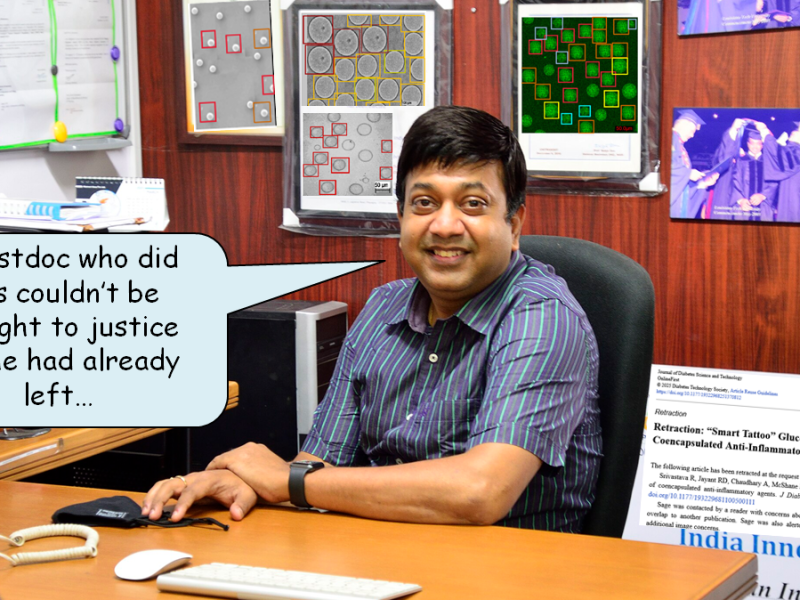
Blame Your Students
“I should have checked these images more closely, but they were intended to be representative images rather than duplications or forgeries of other images.” – Crishan Samuel

Back in November 2025, Samuel sent me this charming message where he blamed his students for everything:
” you certainly seem to have a lot of time on your hands going through these old publications. I have supervised several students to completion (18 PhD students as Main Supervisor + >30 other PhD students, 15 Masters students, 43 Honours students), who I teach to analyse their own data in a blinded and randomised fashion. The students are responsible for choosing the representative images that were highlighted in the publications you sent me links to – perhaps in some cases, I should have checked these images more closely, but they were intended to be representative images rather than duplications or forgeries of other images.“
Professor Chrishan S. Samuel, BSc (Hons), PhD, FAHA
I reported Samuel to the Monash University in December 2025, in her official email reply to me and Samuel, some assistant named Tania of Office of Research, Ethics & Integrity announced an investigation.
Now, on 12 August 2026, Monash University sent me a letter signed by their Pro Vice-Chancellor for Research John Carroll (who actually isn’t in this job since 10 August 2026). The letter was labelled “STRICTLY PRIVATE AND CONFIDENTIAL: TO BE OPENED BY ADDRESSEE ONLY“. At the end Carroll reminded me “of the confidential nature of this matter” and asked to “please keep it private and in strict confidence.” Which I ask you to do also, here it is, confidentially:
Only six papers were investigated, because others were “attributed to the University of Melbourne“, I number them as they are numbered in the report:
- Yifang Li , Matthew Shen , Dorota Ferens , Brad R S Broughton , Padma Murthi , Sheetal Saini , Robert E Widdop , Sharon D Ricardo, Anita A Pinar, Chrishan S Samuel Combining mesenchymal stem cells with serelaxin provides enhanced renoprotection against 1K/DOCA/salt-induced hypertension British Journal of Pharmacology (2021) doi: 10.1111/bph.15361
- Yifang Li , Alex Hunter , Miqdad M. Wakeel , Guizhi Sun , Ricky W. K. Lau , Brad R. S. Broughton , Ivan E. Oyarce Pino , Zihao Deng , Tingfang Zhang , Padma Murthi , Mark P. Del Borgo , Robert E. Widdop , Jose M. Polo , Sharon D. Ricardo, Chrishan S. Samuel The renoprotective efficacy and safety of genetically-engineered human bone marrow-derived mesenchymal stromal cells expressing anti-fibrotic cargo Stem Cell Research & Therapy (2024) doi: 10.1186/s13287-024-03992-x
- Yifang Li, Gang Zheng, Ekaterina Salimova, Brad R.S. Broughton, Sharon D. Ricardo, Michael De Veer, Chrishan S. Samuel Simultaneous late-gadolinium enhancement and T1 mapping of fibrosis and a novel cell-based combination therapy in hypertensive mice Biomedicine & Pharmacotherapy (2023) doi: 10.1016/j.biopha.2022.114069
The paper Nr 7 was already corrected by Elsevier in March 2026:
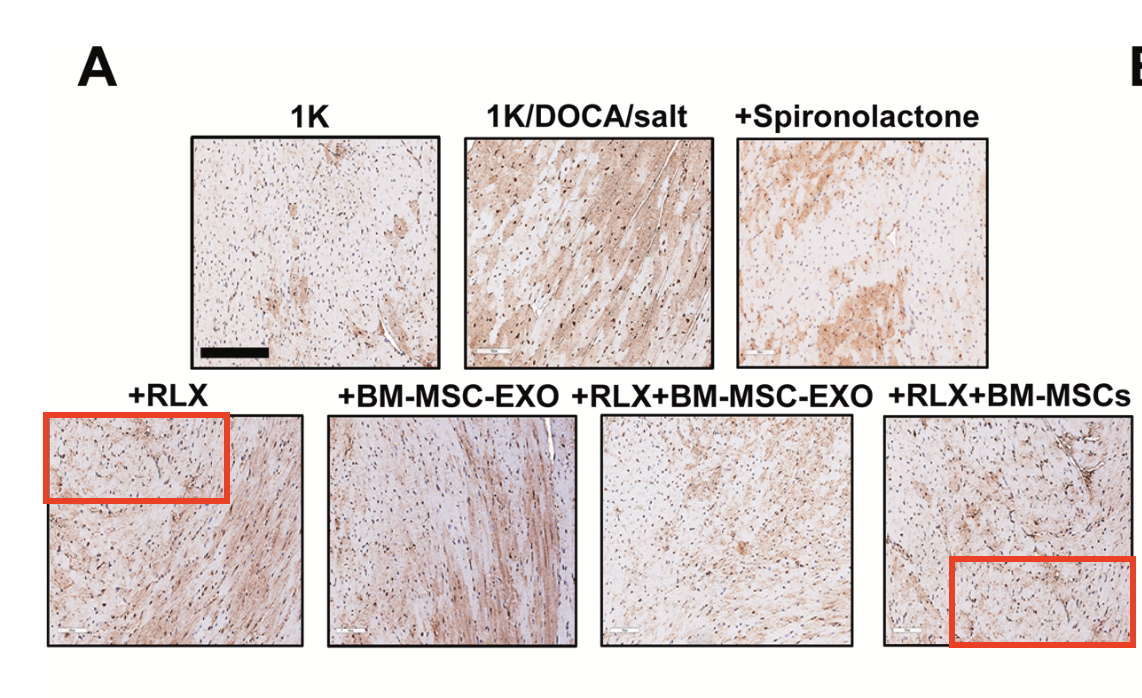
- Simon G. Royce, Xuelei Li , Stephanie Tortorella , Liana Goodings , Bryna S. M. Chow , Andrew S. Giraud , Mimi L. K. Tang, Chrishan S. Samuel Mechanistic insights into the contribution of epithelial damage to airway remodeling. Novel therapeutic targets for asthma American Journal of Respiratory Cell and Molecular Biology (2014) doi: 10.1165/rcmb.2013-0008oc
- Bryna S. Man Chow , Martina Kocan , Sanja Bosnyak , Mohsin Sarwar , Belinda Wigg , Emma S. Jones , Robert E. Widdop , Roger J. Summers , Ross A.D. Bathgate , Tim D. Hewitson , Chrishan S. Samuel Relaxin requires the angiotensin II type 2 receptor to abrogate renal interstitial fibrosis Kidney international (2014) doi: 10.1038/ki.2013.518
- Bryna S. M. Chow , Martina Kocan , Matthew Shen , Yan Wang , Lei Han , Jacqueline Y. Chew , Chao Wang , Sanja Bosnyak , Katrina M. Mirabito-Colafella , Giannie Barsha , Belinda Wigg , Elizabeth K. M. Johnstone , Mohammed A. Hossain , Kevin D. G. Pfleger , Kate M. Denton , Robert E. Widdop , Roger J. Summers , Ross A. D. Bathgate , Tim D. Hewitson , Chrishan S. Samuel AT1R-AT2R-RXFP1 Functional Crosstalk in Myofibroblasts: Impact on the Therapeutic Targeting of Renal and Cardiac Fibrosis Journal of the American Society of Nephrology (2019) doi: 10.1681/asn.2019060597
Duirng the Monash investigation, Samuel continued blaming his students. For the papers 5, 6 and 7, he claimed that he “did not take part in the labelling of images, analysis of images or assembly of figures”, that these were from a “body of work of a student that I supervised in my Lab at Monash Pharmacology […] who completed her Honours project in 2019 and PhD from February 2022 – April 2023.”
The blamed student was female, this seems to be a tradition among Indian scientists. Samuel investigator, described as “Assessment Officer (AO)” agreed that the blame was indeed of that female student, who was found that stupid she “required clearer guidance from the Respondent around image handling and presentation“. It is clear they refer to Yifang Li, now analyst at Deloitte.

Also for papers 9, 10 and 11, another woman was blamed, presumably Bryna Suet Man Chow: “a former PhD student he had supervised at the Florey Institute who completed her PhD from August 2010 – March 2014.” He then declared her as sole responsible for data storage, accused her of destroying “the raw files for these images” by having “changed computer hardware on multiple occasions“, a shameless accusation Monash University not only eagerly accepted, but even commended “the Respondent’s cooperation in attempting to gather the raw imagery“.
Still, Samuel didn’t get off scot-free. It was decided that a breach of regulations did occur, without a guilty party beign specified. Samuel was ordered to “undertake Monash University’s Research Integrity Training Module – ‘Research Integrity in Practice’“, and also to “create a Standard Operating Procedure for data management” and do an audit of “all data underpinning any publication from the last 5 years“, In the future, he is expected to “check all primary data used for figures produced by their students / ECRs” and also to “provide training to current and future HDR students on acceptable practices of image processing“, so that no treacherous womenfolk will dare faking the data again.
Finally, Samuel was warned that in future “repeated breaches may be considered serious breaches“, they may even be “considered recklessness, may constitute research misconduct” and that “any further issues concerning the integrity of his research will be treated as a disciplinary matter“. Which means Samuel is presently officially not guilty of anything and will suffer no disciplinary repercussions.
It is the second time when I report about an Australian university finding fraud, but nobody responsible for it. Read here:
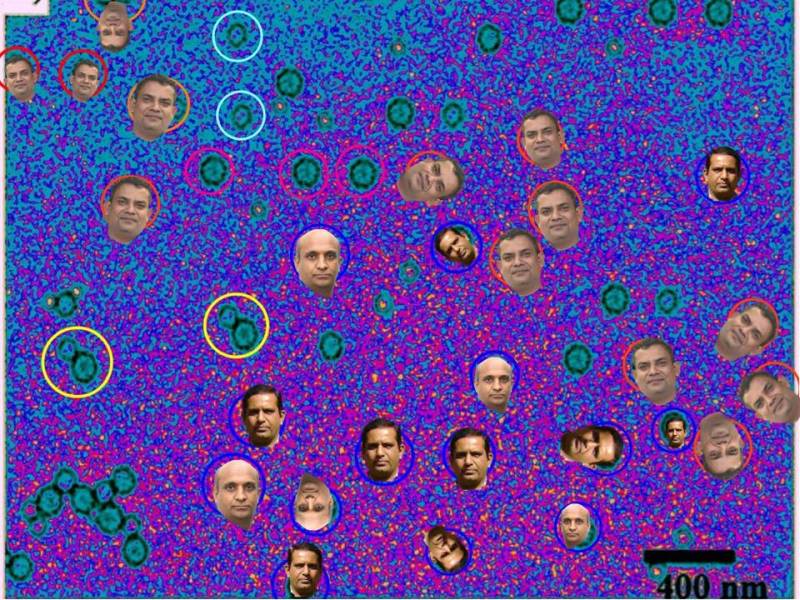
The papers which faked themselves
“These papers breached the Australian Code and RMIT Research Policy by not ensuring that conclusions are justified by the results and not responsibly disseminating research findings.” RMIT investigative report
What about all those fake papers? Nothing, it is up to Samuel and the journal editors to decide:
“That Monash University contact the editors of the impacted journals to advise them of the outcome of this assessment so that they may choose whether any further action is required to correct the record. The AO notes that the Respondent has already been in contact with the Editor of Article 7 and that a corrigendum has been published on 20 February 2026”
Yes, Australian taxpayers sponsor Monash University’s fraudulent research so that some for-profit publisher’s executive alone decides “whether any further action is required to correct the record“.
Many illustrious scientists
The bullying diva with imaginary PhD degree, Adriano Aguzzi, was recently declared by his University of Zurich in Switzerland to be an innocent victim of data forgeries by his rat-snake lab members, but luckily their fraud didn’t affect any of his conclusions and therefore there are no consequences for anyone. Read about this in July 2026 Shorts.

Aguzzi and the Lowlifes
The prion researcher Adriano Aguzzi used to describe his Pubpeer critics as “lowlifes”, and himself as a victim of a lynch mob. But after Elisabeth Bik helped him find even more mistakes in his papers, Aguzzi changed his stance.
Having buggered off into his well-deserved retirement, Aguzzi set up his own research institute to continue curing all possible neurodegenerative diseases using his immense genius. It is called Institute for the Science of the Aging Brain (ISAB), Aguzzi is its boss.
ISAB is is sponsored by various public and private funders. and is run by Swiss foundation, which in turn is operated by Aguzzi and some Swiss doctors and lawyers. It is located in the area of Swiss Alps, in St Gallen, the grand opening will be on 9 September 2026, Aguzzi invites you to come by and meet the “Cantonal Governors” and “many illustrious scientists“.
The institute, which will soon cure Parkinson’s and Creuzfeldt-Jacob diseases, employs Aguzzi himself, two postdocs and a bioinformatician. There’s a job opening for a short-term student employment, maybe you are interested, dear reader?

And look whom Aguzzi gained as his board member! A fellow bullying diva – Thomas Südhof, Stanford professor and the Nobel Prize laureate who, just like Aguzzi, is a self-lamented victim of PubPeer harassment. Südhof seems to be befriending every fellow science cheater out there, his other new best buddy is Wafik El-Deiry (read July 2026 Shorts). Maybe Wafik will soon join Adriano and Tom, so that they can whine about PubPeer together?
Maybe El-Deiry couldn’t join because he doesn’t speak German? That’s probably why Südhof brought instead his friend from Stanford, Marius Wernig, an Austrian native who has several papers with Südhof on PubPeer. Some common papers were discussed here:

Tom Südhof’s Verfolgte Unschuld
“The professional bloggers are now trying to turn this into a question of research integrity which is deeply misleading, and claim that they are doing this not for financial gain. Judge for yourself!” – Thomas Südhof, Nobel Prize laureate
Other German-speakers on the ISAB board are:
- Peter Heutink, presented as professor at the University of Lübeck, but in reality an industry consultant with only has a “honorary” affiliation there
- Magdalini Polymenidou, Aguzzi’s former postdoc, now associate professor in his University of Zürich
Here a paper of hers with Aguzzi, on PubPeer since 2020:
Magdalini Polymenidou, Frank L. Heppner , Erica C. Pellicioli , Eduard Urich , Gino Miele, Nathalie Braun, Franziska Wopfner , Hermann M. Schatzl, Burkhard Becher, Adriano Aguzzi Humoral immune response to native eukaryotic prion protein correlates with anti-prion protection Proceedings of the National Academy of Sciences (2004) doi: 10.1073/pnas.0404772101
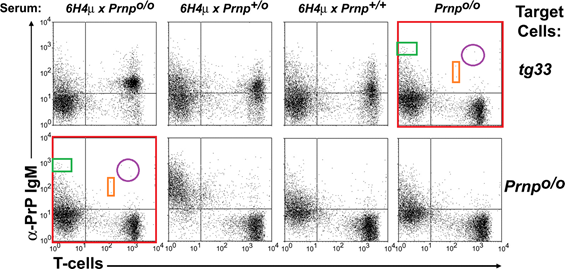
(Note: I previously erroneously wrote the paper wasn’t corrected, but it was corrected, in November 2020)
Another paper, Polymenidou & Aguzzi 2004, got self-plagiarised by Aguzzi later on in Aguzzi 2006, without any reference, because Aguzzi doesn’t believe that self-plagiarism is bad. Nick Brown blogged about it in 2020.
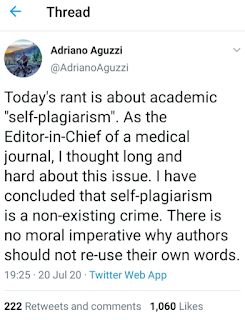
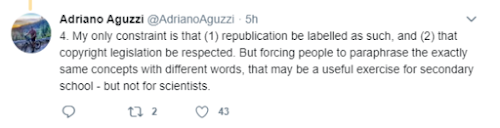
But maybe Wafik can join after all, two other board members are unlikely to speak German also: Jiyan Ma, professor at Chinese Institute for Brain Research in Beijing, China, and Michael Ward, formerly at NIH, now at UC Berkeley in USA.
I wouldn’t expect Aguzzi and his friends to contribute anything valuable to neuroscience, neither for aging nor for any other brain, but yes, they will burn a lot of public and industry money to have a good time in the Swiss Alps, while whining to each other about PubPeer.
Crestfallen but determined to do the right thing
Retraction Watch has no luck with their academic role models they present to us to applaud and admire.
The new hero nicely fits to Aaron Brown, the hedge fond manager and libertarian (sic!) whose book on truth in science (sic!) Retraction Watch celebrated last May, or to Sasan Sadrizadeh, who was celebrated by Retraction Watch in July 2024 and then featured here:

Anyone can start a papermill!
“There are no capital requirements or significant technological barriers, anyone can create papers by rewriting already published works, either themselves or with the assistance of ChatGPT or other software. With a Telegram channel or WhatsApp group the papermiller can easily organise the sale of authorship” – Nick Wise

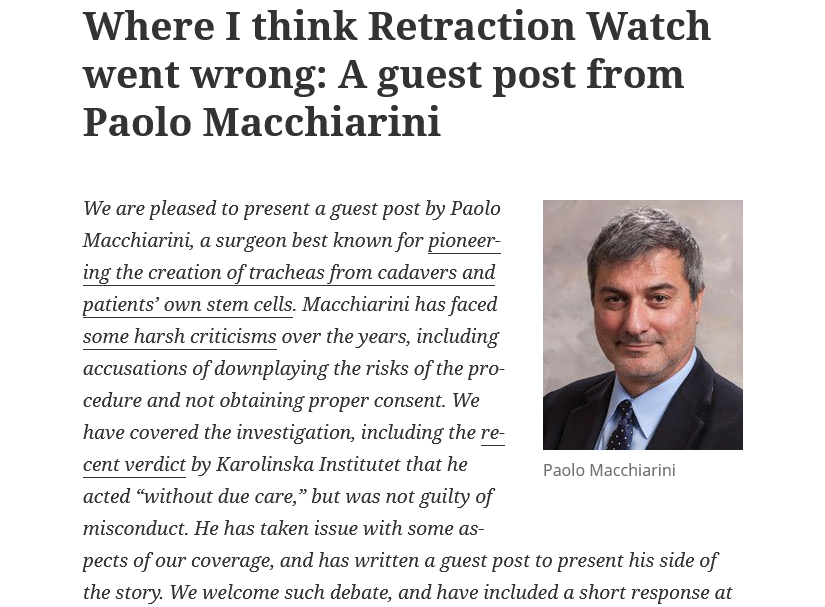
So, here is the new Retraction Watch hero, Rishika Porandla, celebrated in an article from 10 August 2026:
“As a sophomore at Princeton University, Rishika Porandla took a course called “The Curious Scientist,” where students practice disciplinary research skills and act as a “PI” on a project of their choosing.
Porandla didn’t have to think twice about what subject to dive into. In high school, she had studied the biodegradability of polyvinyl chloride and discovered a new process to break down the plastic. The finding led to one of her proudest high school achievements — a published journal article. She was eager to use the Princeton class to advance her discovery. […]
As Porandla dug deeper into her prior work at the Princeton Imaging and Analysis Center, however, she unearthed a troubling find: Two methodological errors. The mistakes affected the study’s conclusions, rendering the results inaccurate.
At first she struggled to accept the discovery.
“I found myself hoping the next experiments would explain away the inconsistencies,” she recalled. “I thought it might have been a calibration error in the Princeton experiment, not the one I did back in high school. I thought, ‘OK, this is a different facility, maybe I overlooked something when I replicated this procedure.”
But the more she examined the study, the clearer the reality became. […] Crestfallen but determined to do the right thing, Porandla contacted Wiley about the concerns and asked for guidance pursuing either a correction or retraction of the work.”
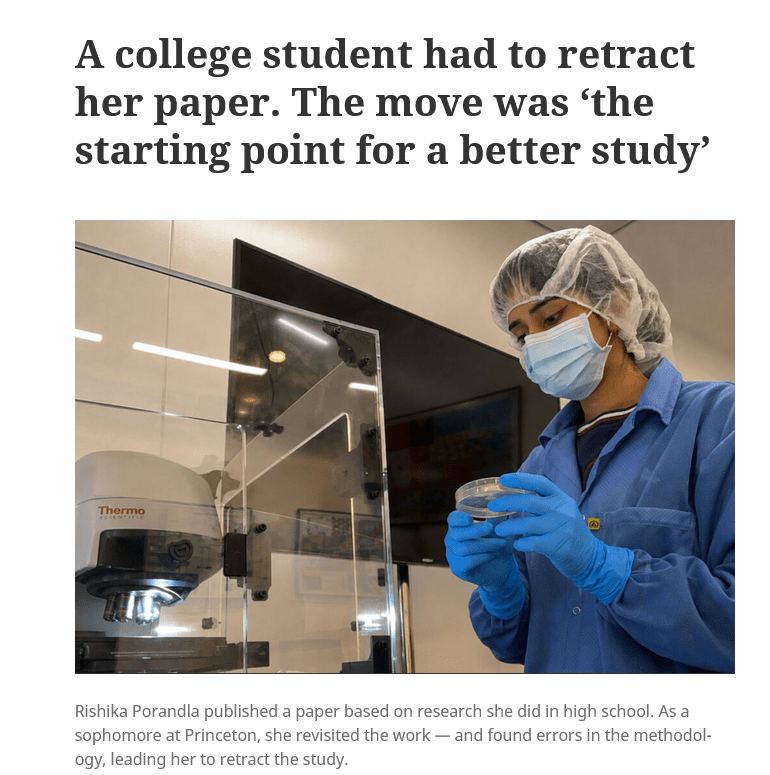
Retraction Watch further writes that “Those familiar with Porandla’s case praised her candor to come forward, citing the rarity of self-retractions.“, the journal’s editor David Huesmann is one of them, commending Porandla’s “honest commitment to scientific integrity.“
According to Retraction Watch, Porandla originally “pitched an idea to her chemistry teacher“, who then failed to adequately advise her “on the importance of rigorous experimental validation, replication, and independent verification before publication.“. He now blames herself for failing to “question feedback from teachers that her study was publication-ready“, and feels uncomfortable because Wiley journal accepted her paper with only one reviewer who failed to provide any “comments critiquing the study’s methodology or questioning the scientific content itself“.
It was this paper:
Rishika Porandla Optimizing Electron‐Beam Photothermal Pyrolysis Parameters for Enhanced Molecular Biodegradability of Polyvinyl Chloride Plastics Macromolecular Materials and Engineering (2025) doi: 10.1002/mame.202400257
The retraction notice from 22 May 2026 went:
“The author notified Wiley’s Research Integrity department that after conducting a follow-up study, she discovered that the original experiments contain significant methodological errors that affect the accuracy and reliability of the results. These errors are related to the calibration of the electron beam exposure time and the distribution of gold nanoparticles, both of which are crucial to the accuracy of the results. Because of the major methodological errors, the article must be retracted. A revised version of this article is forthcoming.”
As Porandla said to Retraction Watch, her “revised manuscript will incorporate a redesigned methodology, stronger validation procedures, and a more comprehensive understanding of the physical mechanisms involved“.
Difficult work ahead, because the sleuth Cheshire aka Actinopolyspora biskrensis found evidence that her paper was originally written by LLM.

And of course hallucinated or mismatched references, something AI and LLM are prone to produce.

Say what you want about LLM, it is not known to duplicate numbers. If computers are good at anything, it is in creating random numbers. Which human forgers aren’t very good at.

The Trial 6 values in Table 4 are identical, at every molecular weight, to the Tg values reported separately in Table 3. […]
Table 4 also contains identical values within individual trials: Trial 1 reports 88.61 °C for both 20 and 30 kDa; Trial 2 reports 95.23 °C for both 20 and 30 kDa, and 122.80 °C for both 70 and 80 kDa. […]
Finally, the Table 4 columns report Tg in °C, but the stated uncertainty is ±0.04 J g−1 rather than a temperature unit.”
There is also a preprint version of that paper, and it reveals even more duplicated numbers:

Also Maarten van Kampen joined with his concerns, critiquing that the “complete description of the experimental setup is wrong“, and wondering “how this description came into being“.
Actinopolyspora biskrensis criticised two more of Porandla’s preprints, which she published as high school student, again for inappropriate references:
- Rishika Porandla QECM-2: A novel visualization of the influence of Earth’s precession index variations on the insolation, precipitation, and photosynthetic activity experienced by equatorial regions 2023 13th Workshop on Hyperspectral Imaging and Signal Processing: Evolution in Remote Sensing (WHISPERS) (2023) doi: 10.1109/whispers61460.2023.10430961
- Rishika Porandla , Judy Ries , Sathvik Dasari Review of Autonomous Navigation Methods for Hypersonic Aircraft Using Inertial Navigation Sensors Systems and Machine Learning Open Engineering Inc (2024) doi: 10.31224/3808
The second preprint was recently published as peer reviewed paper with only one author (Dasari 2026). As Maarten noticed, Sathvik Dasari is currently a 10th grade high school student and thus about 14 years old. No no, their parents didn’t pay essay mills for AI-generated crap, these children are simply geniuses.
Porandla replied on PubPeer, explaining that the figures in her retracted paper were “hand-drawn by me and were not AI-generated“, the bad references were “suggested by the editor during the editorial process“, and the “repeated digits […] were a formatting artifact” which she partially failed to notice. In fairness, Retraction Watch added her replies as update to their main article.
But what Retraction Watch still hasn’t mentioned, is Porandla’s business activities. She has a website, advertising her “Counseling by Rishika“, which is “a research-driven college counseling and academic mentorship firm dedicated to helping ambitious high school students build compelling, high-impact pathways to top universities“. It employs next to her nine people, all US university students, all but one of Indian origin.
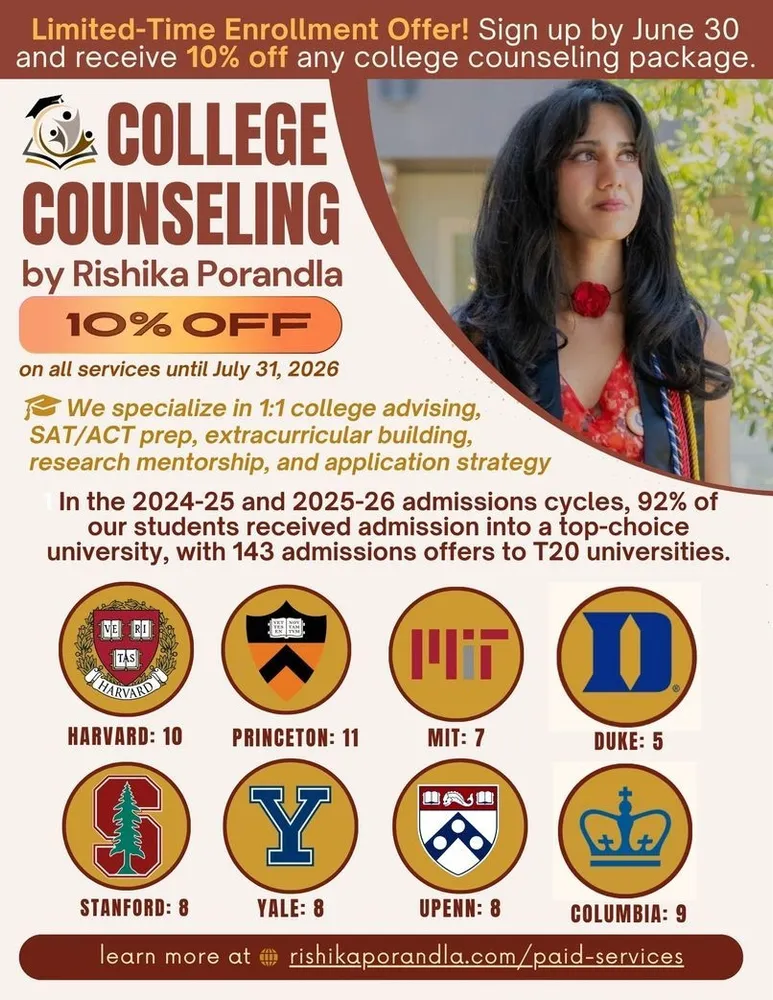

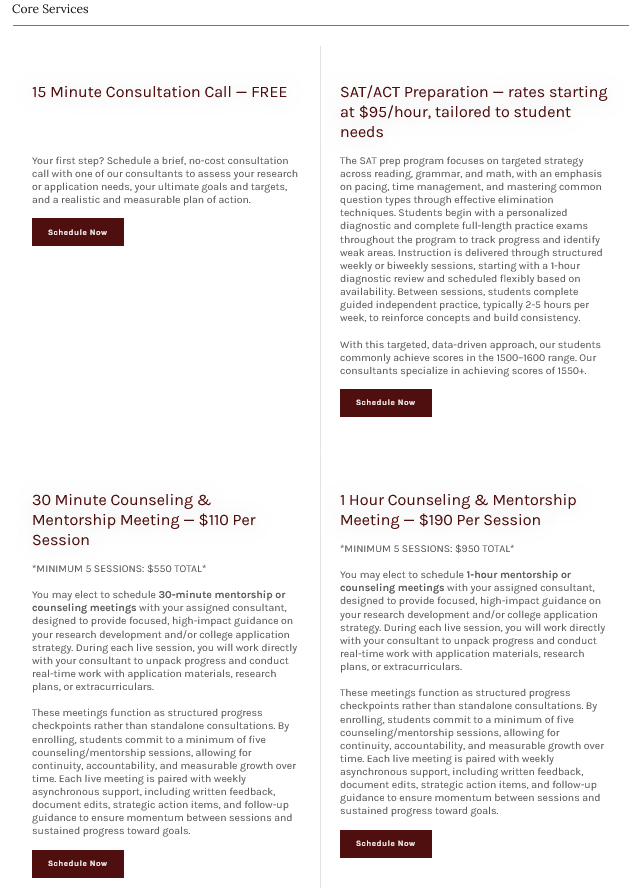
The costs are roughly $200 per hour, a ~$1000 package is minimum. On offer is “a comprehensive suite of services, including long-term application strategy, essay reviews, detailed application editing, activities and honors list optimization, interview preparation, and personalized Q&A sessions.“
She offers “college essay editing“. Lol. That’s what essay mills offer also.
Maybe the impetus for that retraction didn’t come from Porandla after all?
Scholarly Publishing
Investigation by the third-party testing service provider
The Royal Society of Chemistry (RSC) proudly corrected ridiculous papermill fraud from China. Maybe they received written instructions to do so from the Chinese papermill itself. Maybe they also got confused because one author was white and rather pushy: Sonia Carabineiro, assistant professor at NOVA University of Lisbon in Portugal.
Kai Li , Zhaochao Yan , Shuhan Sun , Qianmin Fan , Huayue Zhu , Chenglin Wu , Yanxian Jin , Sónia A. C. Carabineiro, Ruiqiang Yan , Bingjing He , Xianqiang Xiong A triple-functional Co2SnO4-enabled S-scheme heterojunction with photothermal promotion for efficient solar-driven hydrogen evolution Journal of Materials Chemistry A (2025) doi: 10.1039/d5ta03030g


In December 2025, Carabineiro replied on PubPeer, where she openly declared to have used a Chinese papermill, but that papermill also issues certificates of trustworthiness:
“On behalf of all co-authors, I would like to clarify that the EPR data in question was obtained from an external third-party testing service in China: Zhengzhou MiCe Information Technology Co., Ltd. (Xueyanhui Scientific Research Platform, https://www.xueyanhui.com ). Such service providers are commonly used and often collaborate with various research platforms to offer analytical services.
We contacted the service provider, and they confirmed that the data published in our article is indeed the original data they provided. They also verified that the repeated baseline patterns do exist, attributing this issue to a technical flaw in their testing software that affected measurements conducted between July 2023 and early 2024. […]
It is our intention to have the analyses repeated to clarify this matter fully.“
This “Official Statement to PubPeer” was attached to her reply:
It was addressed to “Dear PubPeer Team” and even had an official stamp with a red star on it, while declaring (highlights theirs):
“The original data and test records are preserved in their respective source files, safeguarding against any form of manual tampering. The authors used the original test data we supplied directly in the manuscript, without any form of editing, tampering, or alteration. The authors have maintained academic integrity throughout this process without any academic misconduct. […]
The raw data records from instrument testing show no signs of tampering or human falsification. The software vulnerabilities affected only the baseline region and did not interfere with or fabricate the genuine free radical signals from the samples. The analysis and conclusions related to the signal peaks in the paper remain valid. […]
To resolve any remaining doubts and to further verify the validity of the original data and the reliability of the observed trends, we hereby formally commit to providing the authors with complimentary re-testing services to confirm that the signal characteristics and data trends underpinning the key conclusions are genuine and accurate.“
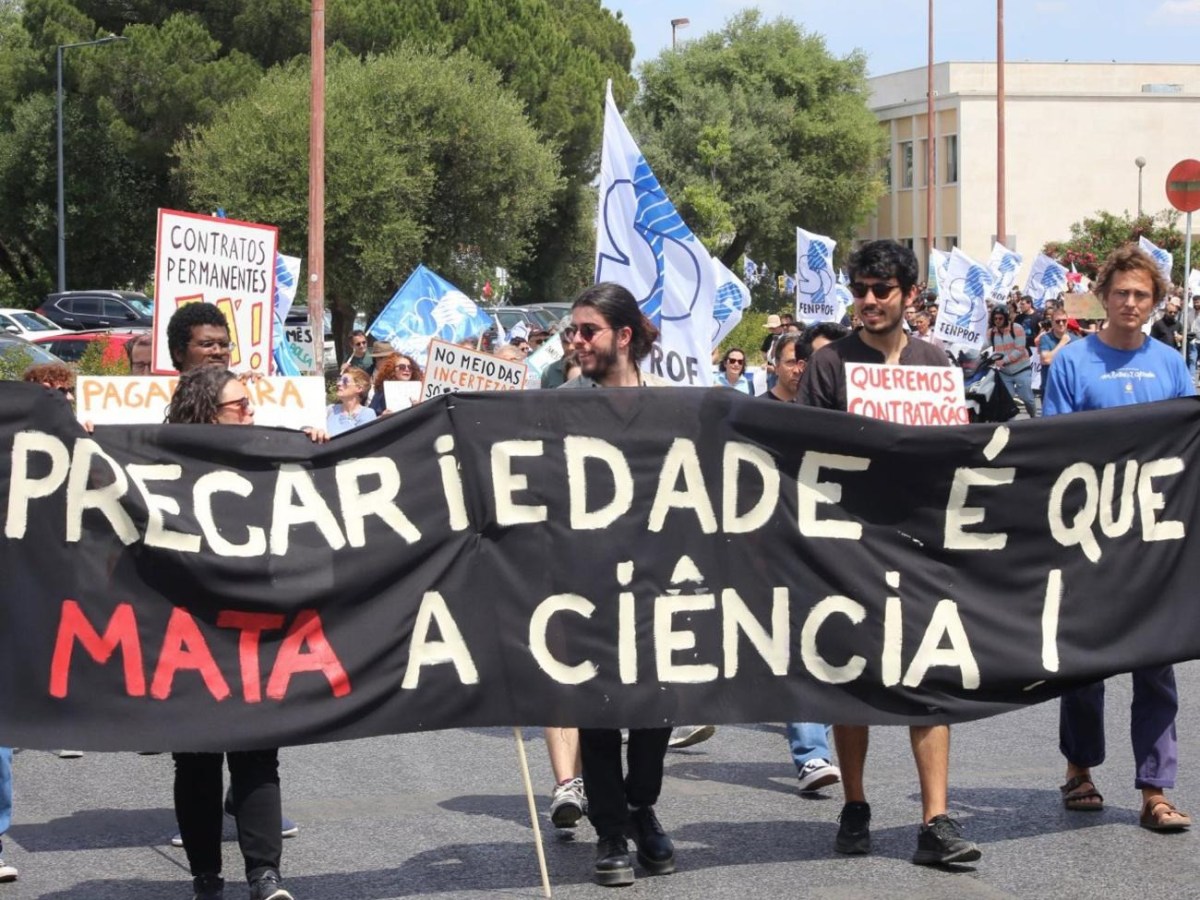
Academic precarity in Portugal
“In Portugal more than 95% of all research activities are carried out under precarious labour conditions, by undergraduate and PhD researchers employed under a variety of temporary contracts, often with limited or no benefits, and no access to a career.” –
Naturally, all that pristine, certified and officially approved raw data is not available for anyone. The RSC editors had no other choice but to comply with the instructions from the Chinese papermills, especially since the Editor-in-Chief of Journal of Materials Chemistry A, Li-Zhu Wu, is a fellow Chinese Academy of Science and winner of various Chinese awards.
Thus, this Correction was issued on 6 August 2026:
“The authors regret that repeated baseline patterns were present in the EPR spectra shown in Fig. 3e and f of the published article. Investigation by the third-party testing service provider indicated that the repeated baseline pattern was attributable to a software-related artifact associated with the EPR acquisition software used at the time of the original measurements. The authors subsequently repeated the EPR measurements using the same samples with an updated testing system and have provided replacement spectra for Fig. 3e and f. The replacement data have been assessed by an independent expert. The corrected figures are shown below and these changes do not affect the scientific conclusions of the paper.”
In parallel, Carabineiro stated on PubPeer that “the independent third-party testing service Zhengzhou MiCe Information Technology Co., Ltd. repeated the EPR measurements using the original samples with an updated measurement system and provided replacement spectra for Figure 3e and f“.
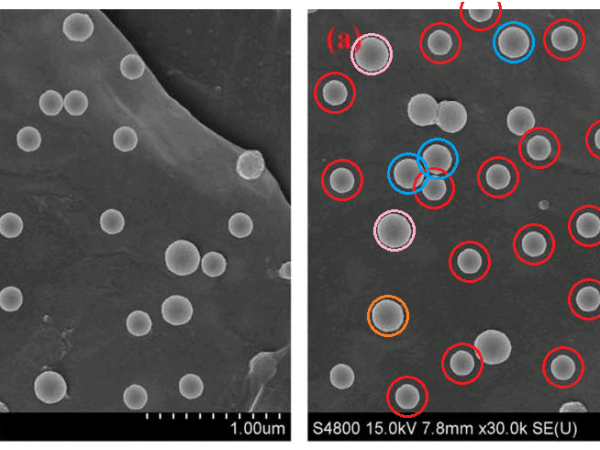
Carrots and sticks for fraudsters at Royal Society of Chemistry
Smut Clyde goes nanotechnology again and disagrees with Royal Society of Chemistry and the Chinese authorities on how honest a researcher Mi-Cong Jin is.

See, RSC even lies that the authors performed those replacement analyses themselves, while they and their papermill openly say something else. That’s because RSC’s own rules specify: “When a third party is used to generate or analyse part or all of the data presented in the study, this should be clearly stated within the Experimental section“:
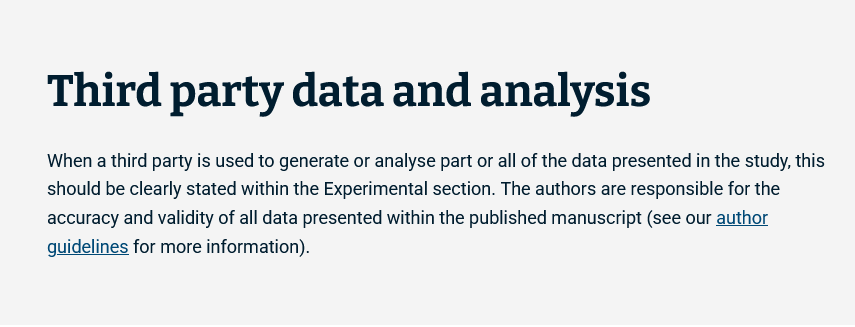
To avoid a retraction for lying about using an “third party” to generate the data, RSC editors lied, and pretended that “the third-party testing service provider” only came into play to fix the device in the authors’ lab. Never underestimate academics’ capacity for lying and cheating!
Now you know. Journal of Materials Chemistry A not only collaborates with papermills, they even outsource their investigations of papermill fraud to the papermills themselves. The irony: the previous Editor-in-Chief, Anders Hagfeldt (Rector of Uppsala University in Sweden) had to step down because he was caught papermilling itself.

Swedish rector Anders Hagfeldt pronounced innocent of papermilling
“The board’s conclusion is therefore that the deviations regarding figure 2b and 2c in article 1 constitute serious deviations from good research practice”
But the even more ironic bit is that Hagfeldt would’ve probably retracted that fraudulent paper by Carabineiro, not despite, but because of her bizarre certificate from the Chinese papermill. But Hagfeldt’s successor Wu apparently answers to her Chinese handlers only.
Of course Carabineiro has more papermill trash on PubPeer. Like these hand-draw cartoons in MDPI:
Sidra Fatima , Sana Javaid , Hira Ahmad , Afaf Almasoudi , Doaa F. Baamer , Omar Makram Ali , Sónia A. C. Carabineiro, Muhammad Babar Taj Facile Synthesis of Sodium Alginate (SA)-Based Quaternary Bio-Nanocomposite (SA@Co-Zn-Ce) for Antioxidant Activity and Photocatalytic Degradation of Reactive Red 24 Catalysts (2024) doi: 10.3390/catal14080471


The top three patterns only differs where the XRD peaks are inserted or removed.”
The above paper has other issues. Carabineiro replied on other PubPeer threads, but here she chose to say nothing. Do Pakistani papermills also issue certificates of purity? Asking for an MDPI friend.
How about Iranian papermills? Do they issue certificates?
Mozhgan Afshari, Sónia A. C. Carabineiro, Maryam Gorjizadeh Sulfonated Silica Coated CoFe2O4 Magnetic Nanoparticles for the Synthesis of 3,4-Dihydropyrimidin-2(1H)-One and Octahydroquinazoline Derivatives Catalysts (2023) doi: 10.3390/catal13060989


Another PubPeer user, Euptychium dumosum, found that spectra in Fig 4were manually forged, see on the right.
In December 2023, Carabineiro replied with “Our XRD patterns have been cross-verified with the JCPDS PDF #221086” and warned that “providing direct access to the raw data offers a more honest representation of our findings.” By March 2024, her offer was rescinded: “Authors regret not being able to find the original XRD data that was in an old computer used for XRD experiments, no longer acessible.” But luckily, in Iran her coauthors “repeated and checked the results.” She reiterated in July 2025, that “the computer on which the data were stored has become unusable, and no backup copies were retained at the time“, but she of course refused to share any raw data on those “new measurements […] attached for transparency“. No correction was published.
Same MDPI journal, here is Carabineiro with more hand-draw spectra and the legendary papermill fraudster, sexual harasser and thief Mika Sillanpää:
Sadia Aroob , Sónia A. C. Carabineiro, Muhammad Babar Taj, Ismat Bibi , Ahmad Raheel , Tariq Javed , Rana Yahya , Walla Alelwani , Francis Verpoort , Khanita Kamwilaisak , Saleh Al-Farraj , Mika Sillanpää Green Synthesis and Photocatalytic Dye Degradation Activity of CuO Nanoparticles Catalysts (2023) doi: 10.3390/catal13030502

Tetraphleps parallelus: “Abnormal Peak in XRD pattern. (very bad painting)”
Carabineiro and her coauthor Muhammad Babar Taj replied on PubPeer in January 2024 with a whole list of “multiple reasons behind such peaks“, the latter then offered “to resynthesize the CuO“. Taj, who is possibly a papermiller broker (see his PubPeer record), was also “sorry to Prof Sonia for hearing such comments” and, referring to one critic, asked PubPeer moderators “to block this person of abusive words and low temperament“.
Other issues were found (e.g., “In Figure 2b the size distribution in the histogram sums to larger than 200%“, but that being MDPI, no editorial action happened until today.
Clearly Carabineiro works with Asian papermills. But she also has other, local collaborations, which brings us to her new friend Senentxu Lanceros-Mendez. He is former mentor of the Egyptian fraudster Ahmed Esmail Shalan, read about them both here:

Lanceros-Mendez is a man of no shame. As director of BCMaterials institute in Spain, he lied to me in a Zoom call about how honest he is and how he is going to crack down on Shalan’s fraud. Instead, he must have fought hard to prevented retractions of Shalan’s papers with his name on them. And he has much more fake stuff on PubPeer, not just with Shalan. And due to his move as associate professor at University of Minho to Portugal, he collected bad papers with Carabineiro. Here one example:
M. Guillot-Ferriols , J.C. Rodríguez-Hernández, D.M. Correia, S.A.C. Carabineiro, S. Lanceros-Méndez, J.L. Gómez Ribelles, G. Gallego Ferrer Poly(vinylidene) fluoride membranes coated by heparin/collagen layer-by-layer, smart biomimetic approaches for mesenchymal stem cell culture Materials Science and Engineering C (2020) doi: 10.1016/j.msec.2020.111281

Here another:
- P.M. Martins, Bruno Santos , H. Salazar , Sónia A.C. Carabineiro , G. Botelho , Carlos J. Tavares , S. Lanceros-Mendez Multifunctional hybrid membranes for photocatalytic and adsorptive removal of water contaminants of emerging concern Chemosphere (2022) doi: 10.1016/j.chemosphere.2022.133548
- Hugo Salazar , Pedro Manuel Martins, Ainara Valverde , Roberto Fernández De Luis , José Luis Vilas‐Vilela , Stanislav Ferdov , Gabriela Botelho , Senentxu Lanceros‐Mendez Reusable Nanocomposite Membranes for Highly Efficient Arsenite and Arsenate Dual Removal from Water Advanced Materials Interfaces (2022) doi: 10.1002/admi.202101419

But then again, Lanceros-Mendes doesn’t really need any papermill services. Thanks to his leadership style, his lab is a giant papermill in itself.
Ricardo Brito-Pereira , T Rodrigues-Marinho , C R Tubio , P Costa, S Lanceros-Mendez High-dielectric mouldable and printable wax reinforced with ceramic nanofillers and its suitability for capacitive sensing Flexible and Printed Electronics (2021) doi: 10.1088/2058-8585/ac13c5

In any case, Carabineiro and Lanceros-Mendez as a team are an unstoppable force of bad science. Nobody can touch them, the latter was described by a former colleague as seeing himself “as untouchable, almost god-like, convinced that institutional power somehow places them above scrutiny, criticism, or consequence“, his interests are allegedly only in “influence, metrics, networking, institutional power, publication factories, and the industrialization of academic output“.
In his recent reply to me, Lanceros-Mendez described all those forgeries in his papers as “unintentional mistakes” and indicated he would only correct those only when journal editors make him.

Rui the Drunk
“we are talking about a dictator that systematically harassed students and other young researchers, created inhumane work conditions, forced them into scientific misconduct, systematically committed financial fraud with research money, and threatened and intimidated anyone that did not play by his rules.” – comment about Portugal’s most cited researcher
Retraction Watchdogging
Setting yourself up for success: practical tips and advice
The German papermiller Jörg Rinklebe, Lion of the World and the greatest scientist his University of Wuppertal ever had, suffered FIVE more retractions, making it eleven in total now. As I mentioned many times before, his university already decided that Rinklebe is innocent, while their Ombudsman, an protestant theologist, stopped replying to my emails. Presumably, “Univ.-Prof. Prof. mult. Dr.-Ing. agr.” Rinklebe became their local Christian martyr saint, tormented for his saintly deeds by evil characters like yours truly. St George of Wuppetal, so to say (Jörg is the Scandi-German version of George). I am their snake in need of slaughtering, obviously.



The more retractions, the holier St George of Wuppertal becomes. Every retraction is like a new stigmata which his investigators and the university rector personally comes to kiss. Here, his seventh, with his papermilling friend Parvaiz Ahmad. It is a masterpiece of scholarly wisdom:
Abdur Rashid, Muhammad Ayub , Xubo Gao , Seema Anjum Khattak , Liaqat Ali , Chengcheng Li , Ajaz Ahmad , Sardar Khan , Jörg Rinklebe, Parvaiz Ahmad Hydrogeochemical characteristics, stable isotopes, positive matrix factorization, source apportionment, and health risk of high fluoride groundwater in semiarid region Journal of Hazardous Materials (2024) doi: 10.1016/j.jhazmat.2024.134023


The not yet dated recent retraction made clear that Rinklebe is scientifically illiterate:
“Post-publication, concerns were raised with the journal regarding the health-risk assessment reported in the article.
On evaluation it was determined that the reference dose applied to phosphate in the exposure assessment was that of white phosphorus rather than of the phosphate anion, which inflated the phosphate hazard quotient and the total hazard index (THI) reported in the article and its supplementary data. The authors identified the cause of this error and submitted a correction; however, the Editor-in-Chief determined that, taken together with the concerns below, the article should be retracted.
The journal also identified that the authorship of the article changed between the original submission and the revised version, with one author added and one author removed, without the approval of the journal editor as required by the journal’s authorship policy. The authors have stated that the change was agreed by all authors, the change was not, however, submitted to the editor for approval at the revision stage.
Furthermore, The journal also found a significant increase of citations to papers published by the authors, Abdur Rashid, Muhammad Ayub, Xubo Gao and Liaqat Ali. In the original submission Abdur Rashid received 12 citations, his increased to 16. Muhammad Ayub received 0 citations, this increased to 8. Xubo Gao received 3 citations, this increased to 10, Liaqat Ali received 0 citations, this increased to 7.
The Editor has determined that the authorship cannot be relied upon and has lost confidence in the results and conclusions of the article and has determined it should be retracted.
The authors disagree with retraction and dispute the grounds for it.”

Retraction Nr 8, this time in The Science of The Total Environment, which Elsevier clearly tries to purge after it lost its Clarivate listing for papermill infestation in late 2025. The editor was Rinklebe’s papermilling friend Daniel C.W. Tsang:
Sabry M. Shaheen, Hsin-Yu Chen , Hocheol Song, Jörg Rinklebe, Zeng-Yei Hseu Release and mobilization of Ni, Co, and Cr under dynamic redox changes in a geogenic contaminated soil: Assessing the potential risk in serpentine paddy environments The Science of The Total Environment (2022) doi: 10.1016/j.scitotenv.2022.158087
“Post-publication, an investigation was conducted on behalf of the journal by Elsevier’s Research Integrity & Publishing Ethics team. This investigation discovered that review of this submission was handled by Associate Editor Daniel Tsang despite an extensive record of collaboration, including co-publication during the time of submission, with three of the paper authors: Sabry M. Shaheen, Hocheol Song and Jorg Rinklebe. This compromised the editorial process and breached the journal’s policies. […]
The authors disagree with the retraction and dispute the grounds for it.”
(Retraction 7 August 2026)
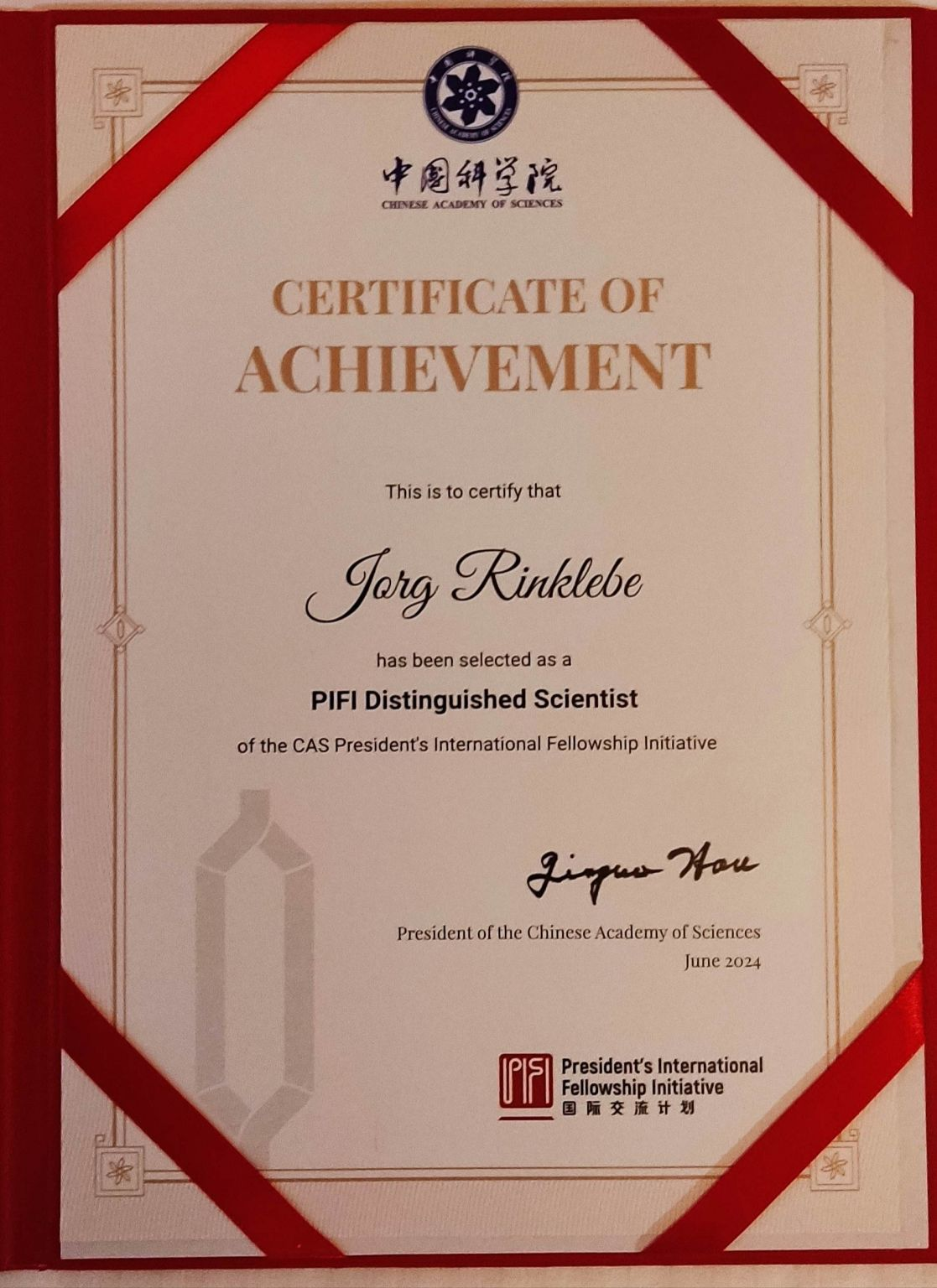
Two more retractions with Tsang as editor, Rinklebe’s coauthors hail from all over the world and include the papermill fraudster Sabry Shaheen, a US professor (Mary Beth Kirkham), and a Greek professor (Antoniadis Vasileios):
- Han Zhang , You Li , Ronghua Li , Weilong Wu , Hamada Abdelrahman , Jianxu Wang , Samir G. Al-Solaimani , Vasileios Antoniadis, Jörg Rinklebe, Sang Soo Lee , Sabry M. Shaheen, Zengqiang Zhang Mitigation of the mobilization and accumulation of toxic metal(loid)s in ryegrass using sodium sulfide The Science of The Total Environment (2024) doi: 10.1016/j.scitotenv.2023.168387
- Manish Kumar , Nanthi Bolan , Tahereh Jasemizad , Lokesh P. Padhye , Srinidhi Sridharan , Lal Singh , Shiv Bolan , James O’Connor, Haochen Zhao , Sabry M. Shaheen, Hocheol Song, Kadambot H.M. Siddique, Hailong Wang, M.B. Kirkham, Jörg Rinklebe Mobilization of contaminants: Potential for soil remediation and unintended consequences The Science of The Total Environment (2022) doi: 10.1016/j.scitotenv.2022.156373
The retraction notices referred to an Elsevier investigation which “discovered that review of this submission was handled by Associate Editor Daniel C.W. Tsang despite an extensive record of collaboration, including co-publication, with two of the paper authors Jorg Rinklebe and Sabry M. Shaheen.” Naturally, in both cases “The authors disagree with the retraction and dispute the grounds for it.“
The carnage at The Science of The Total Environment continues, retraction Nr 11, Rinklebe’s friend Deyi Hou was editor. Rinklebe’s coauthor Jason Unrine is professor at the University of Kentucky, Olga Tsyusko-Unrine is his wife, orginally from Ukraine, now associate professor at his Department of Plant and Soil Sciences. I guess they will end their friendship with that nasty German now?
Lokesh P. Padhye , Tahereh Jasemizad , Shiv Bolan , Olga V. Tsyusko , Jason M. Unrine , Basanta Kumar Biswal , Rajasekhar Balasubramanian , Yingyu Zhang , Tao Zhang , Jian Zhao , Yang Li , Jörg Rinklebe, Hailong Wang, Kadambot H.M. Siddique , Nanthi Bolan Silver contamination and its toxicity and risk management in terrestrial and aquatic ecosystems The Science of The Total Environment (2023) doi: 10.1016/j.scitotenv.2023.161926
“This article is being retracted at the request of an impartial field expert acting in the role of an independent Publishing Ethics advisor.
Post-publication, an investigation was conducted on behalf of the journal by Elsevier’s Research Integrity & Publishing Ethics team with guidance from the Independent Publishing Ethics Advisor. This investigation discovered that the review of this submission was handled by Associate Editor, Deyi Hou, despite an extensive record of collaboration, including co-publication, as well as an ongoing collaboration on a co-publication with three of the paper authors, Jorg Rinklebe, Nanthi Bolan, and Hailong Wang, at the time this manuscript was submitted. […]
The co-authors Jason M. Unrine and Olga V. Tsyusko agree with retraction. The other co-authors disagree with retraction and dispute the grounds for it.”
(undated Retraction)
Elsevier adds this reference to “an impartial field expert” to many of their recent retraction notices. Is it the same expert? Or does Elsevier have a whole breeding farm of those impartial field experts?
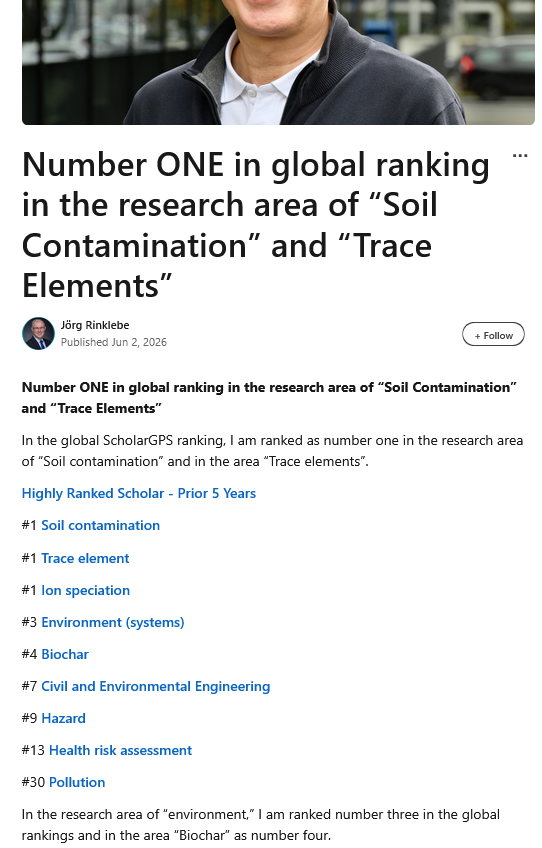
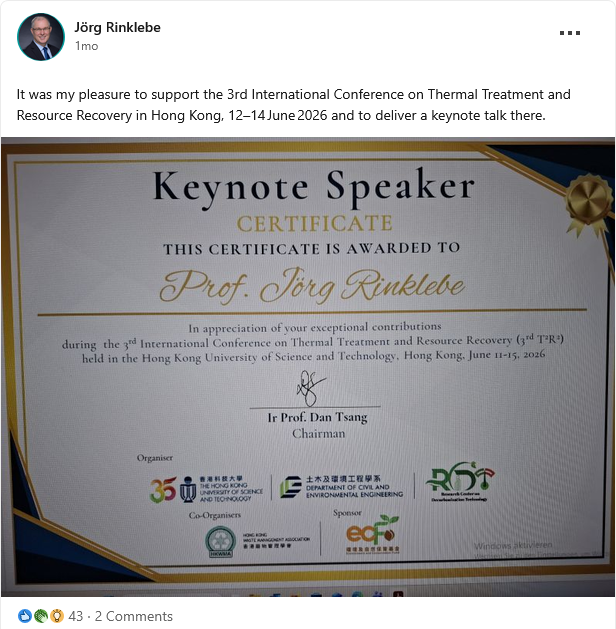
I always keep proposing to the Stakeholders of research integrity conferences to invite Rinklebe as speaker and partner, because, say what you want about him, but Rinklebe knows everything about papermills, inside and out.
The only problem to this invitation may lie in Rinklebe’s recent change of attitude towards Elsevier, prompted by his retractions:
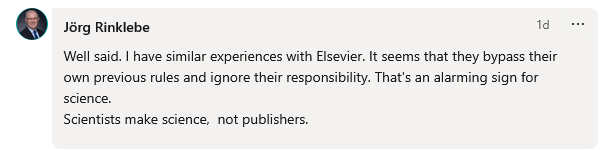
Scientists make science, not publishers.”
That comment was Rinklebe’s reply to his own reporting on LinkedIn of a long statement by his dear friend and fellow papermiller, Yong Sik Ok, who whined there about his own recent retraction:
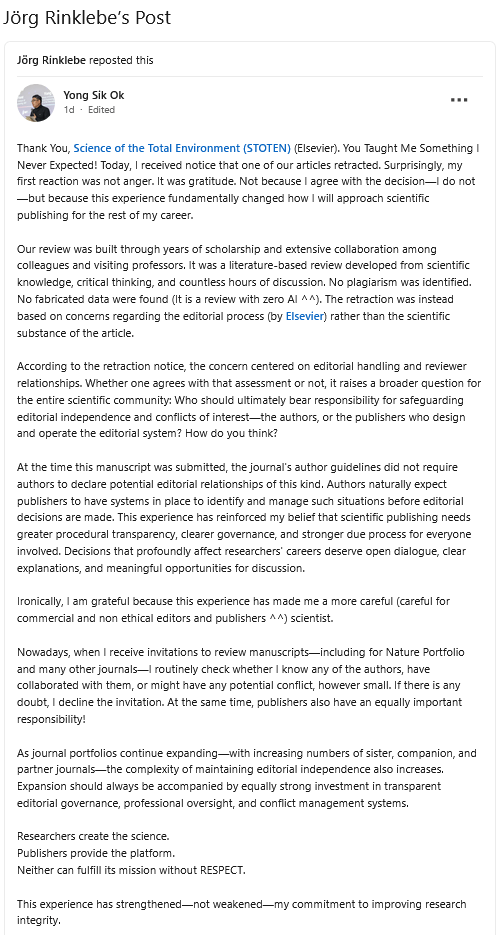
Yong Sik Ok, reposted by Rinklebe: “Thank You, Science of the Total Environment (STOTEN) (Elsevier). You Taught Me Something I Never Expected! Today, I received notice that one of our articles retracted. Surprisingly, my first reaction was not anger. It was gratitude. Not because I agree with the decision—I do not—but because this experience fundamentally changed how I will approach scientific publishing for the rest of my career. […] Ironically, I am grateful because this experience has made me a more careful (careful for commercial and non ethical editors and publishers ^^) scientist.
Nowadays, when I receive invitations to review manuscripts—including for Nature Portfolio and many other journals—I routinely check whether I know any of the authors, have collaborated with them, or might have any potential conflict, however small. If there is any doubt, I decline the invitation. At the same time, publishers also have an equally important responsibility!”
This recent retraction specifically, because Daniel Tsang was editor again, it also mentioned that mysterious “impartial field expert“:
Shuang Song , Srishti Arora , Anna Karen C. Laserna, Ye Shen , Brian W.Y. Thian , Jia Chin Cheong , Jonathan K.N. Tan , Zhongyu Chiam , Siew Lee Fong , Subhadip Ghosh , Yong Sik Ok, Sam F.Y. Li, Hugh T.W. Tan, Yanjun Dai, Chi-Hwa Wang Biochar for urban agriculture: Impacts on soil chemical characteristics and on Brassica rapa growth, nutrient content and metabolism over multiple growth cycles The Science of The Total Environment (2020) doi: 10.1016/j.scitotenv.2020.138742
“Post-publication, an investigation […] discovered that the review of this submission was handled by the Associate Editor Daniel C. W. Tsang despite an extensive record of collaboration, including co-publication, with one of the paper authors Yong Sik Ok, and an ongoing collaboration on a co-publication with two of the paper authors, Yong Sik Ok and Chi-Hwa Wang at the time this manuscript was submitted. This compromised the editorial process and breached the journal’s policies.
Elsevier’s Research Integrity & Publishing Ethics team reached out to the authors for an explanation, but they failed to provide a satisfactory explanation to address these concerns. […]
Despite the above, co-authors Yong Sik Ok and Song Shuang do not agree with the retraction and dispute the grounds for it.”
Do papermillers dream of eclectic journals?
“I focus on the sprawling parody literature devoted to the three Es of Energy, Economy and the Environment. Together they […] freeload on the authentic literature on energy efficiency and pollution reduction (while diluting, distracting and discrediting them).” – Smut Clyde
Ok must also thank Elsevier for this retraction, with Tsang as coauthor, and their friend Deyi Hou as editor:
Avanthi Deshani Igalavithana , Seung Wan Choi , Jin Shang , Aamir Hanif , Pavani Dulanja Dissanayake , Daniel C.W. Tsang, Jung-Hwan Kwon , Ki Bong Lee, Yong Sik Ok Carbon dioxide capture in biochar produced from pine sawdust and paper mill sludge: Effect of porous structure and surface chemistry The Science of The Total Environment (2020) doi: 10.1016/j.scitotenv.2020.139845
“This article is being retracted at the request of an impartial field expert acting in the role of an independent Publishing Ethics advisor.
Post-publication, an investigation was conducted on behalf of the journal by Elsevier’s Research Integrity & Publishing Ethics team with guidance from the Independent Publishing Ethics Advisor.
This investigation discovered that the review of this submission was handled by Associate Editor Deyi Hou despite an extensive record of collaboration, including co-publication, and an ongoing collaboration on a co-publication with two of the paper authors, Yong Sik Ok and Daniel C.W. Tsang, at the time this manuscript was submitted. This compromised the editorial process and breached the journal’s policies.
Furthermore, the investigation found that 8 citations were added to this paper which are not relevant to the topic of the paper and benefit authors, Yong Sik Ok, Daniel C.W. Tsang, and Avanthi Deshani Igalavithana.”
(Retraction 6 August 2026)
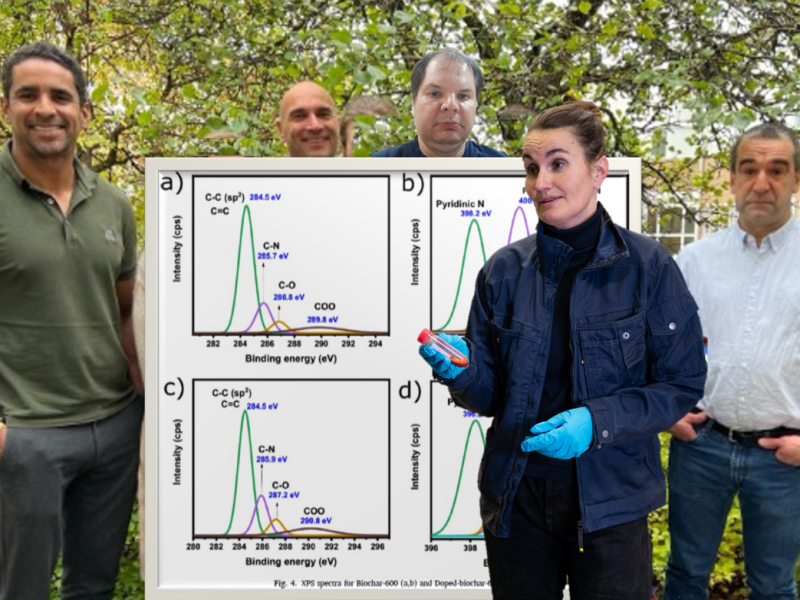
Boys from Brazil
“We can always make mistakes in our publications but never acting intensionally. Regarding Prof. Eder works, I know him well and I don’t believe he has anything wrong” – Glaydson S. Dos Reis
And where is Ok’s gratitude for this retraction, also with Tsang as editor, and another known papermiller, Meththika Vithanage, as coauthor?
Yinfeng Xia , Lifang Zhu , Nan Geng , Debao Lu , Cundong Xu , Piumi Amasha Withana , Meththika Vithanage , Eakalak Khan, Yong Sik Ok Nitrogen transformation in slightly polluted surface water by a novel biofilm reactor: Long-term performance and microbial population characteristics The Science of The Total Environment (2022) doi: 10.1016/j.scitotenv.2022.154623
“Post-publication, an investigation was conducted on behalf of the journal by Elsevier’s Research Integrity & Publishing Ethics team. This investigation discovered that the review of this submission was handled by the Associate Editor Daniel C.W. Tsang despite an extensive record of collaboration, including co-publication and an ongoing co-publication at the time this manuscript was submitted, with one of the paper authors Yong Sik Ok.
Furthermore, acceptance of this article was partly based upon the positive advice of multiple reviewers who were closely linked to two of the authors Yong Sik Ok and Meththika Vithanage. This compromised the editorial process and breached the journal’s policies.”
(Retraction 29 July 2026)
A year ago, in June 2025, Rinklebe and his University of Wuppertal organised a workshop titled: “Boost your Scientific Career – Building Research Vision and Impact”.
Speakers were Rinklebe (“Effective scientific communications through scientific publications”), Ok (“Building international collaboration and recognition: how to develop and
maintain that global network”), Tsang (“Publishing peer-reviewed articles for early-career researchers”), another papermill associate named Daniel Alessi (“Setting yourself up for success: practical tips and advice for students for a career in academia”), the latter introduced as professor at “University of Alberta (United States)“. Apparently, Rinklebe agrees with Trump that Canada must become part of USA?
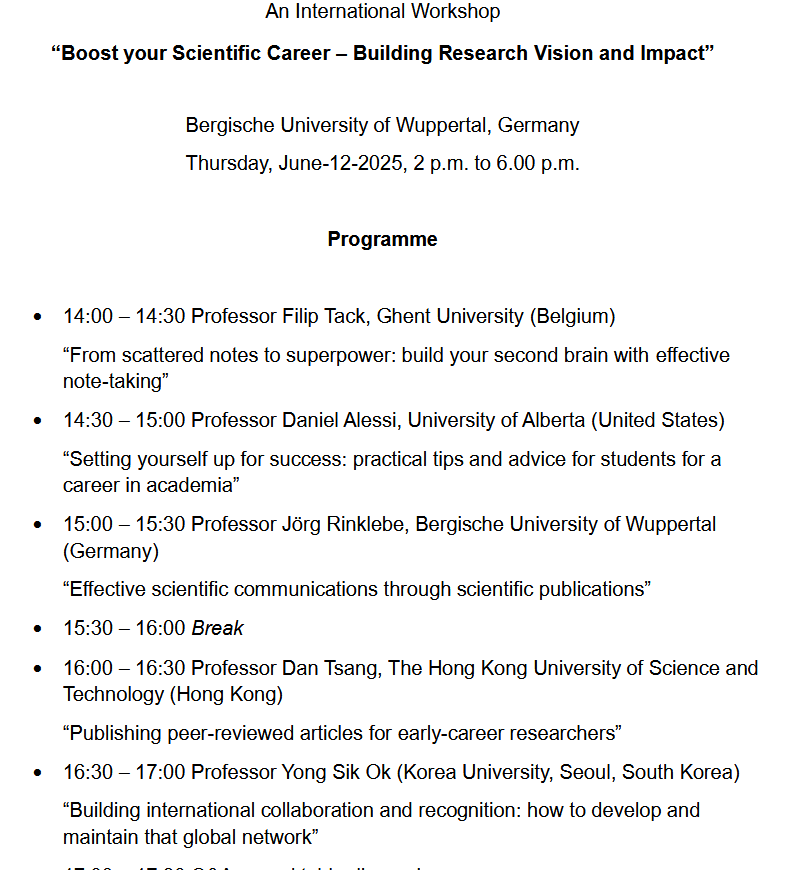
Another speaker was a certain Filip Tack, professor at Ghent University in Belgium, who spoke about “From scattered notes to superpower: build your second brain with effective note-taking”. Tack published a lot with Rinklebe and other boys (much of it already on PubPeer), most recently was involved into this retraction for Tsang and Alessi:
Hye-Bin Kim , Seon-Hee Kim , Eun-Ki Jeon , Do-Hyung Kim , Daniel C.W. Tsang, Daniel S. Alessi, Eilhann E. Kwon , Kitae Baek Effect of dissolved organic carbon from sludge, Rice straw and spent coffee ground biochar on the mobility of arsenic in soil The Science of The Total Environment (2018) doi: 10.1016/j.scitotenv.2018.04.406
“Post-publication, an investigation was conducted on behalf of the journal by Elsevier’s Research Integrity & Publishing Ethics team. This investigation discovered that review of this submission was handled by the Associate Editor Filip M.G. Tack despite an ongoing collaboration on a co-publication with one of the paper authors Daniel C.W. Tsang at the time this manuscript was submitted. This compromised the editorial process and breached the journal’s policies. […]
The authors disagree with retraction and dispute the grounds for it.”
(Retraction 7 August 2026)
Shake the Stupid Tree and see what falls out
“Does this mean it’s time for an update on the bogus-citation economy? Leonid thought it is, and now you all must suffer for his misdirected priorities. ” – Smut Clyde
Vice versa, Tack also now lost his own paper at STOTEN, coauthored with Ok and Alessi, because it was edited by Tsang:
Wei Zhang , Waqar Muhammad Ashraf , Sachini Supunsala Senadheera , Daniel S. Alessi, Filip M.G. Tack, Yong Sik Ok Machine learning based prediction and experimental validation of arsenite and arsenate sorption on biochars The Science of The Total Environment (2023) doi: 10.1016/j.scitotenv.2023.166678
“This investigation discovered that review of this submission was handled by Associate Editor Daniel C.W. Tsang despite an extensive record of collaboration, including ongoing co-publication during the time of submission, with two of the paper authors, Daniel S. Alessi and Yong Sik Ok, at the time this manuscript was submitted. […]
The authors disagree with retraction and dispute the grounds for it.”
(undated retraction)
Tack still boasts being an editor at STOTEN, but in reality he was removed, together with other questionable characters including the former Editor-in-Chief – Rinklebe’s friend and massive papermiller Damia Barcelo.
When is the next conference in Wuppertal?
Exceptionally moo
It is always a pleasure to see a German professor lose a paper for papermilling. Here is another one, Michael Köhl, retired professor of forestry science at the University of Hamburg, who worked for UN and is apparently so notable that he needed a Wikipedia page.
Köhl is accompanied on that retraction by an American, David López-Carr (professor of at the University of California Santa Barbara), and a Czech bigwig: Petr Sklenička, former rector of the Czech University of Life Sciences in Prague, former chairman of the Czech Conference of Rectors, since February 2026 Chairman of the governmental Technology Agency of the Czech Republic. The other Czech coauthor, Kristina Janečková, is his lab member. And we have an Estonian bigwig: Ants-Hannes Viira, former academic, now head of agricultural policy at Estonian Chamber of Agriculture and Commerce.
Their paper got retracted in the same papermill-infested Elsevier journal we just discussed:
Shansong Huang , Samane Ghazali , Hossein Azadi , Saghi Movahhed Moghaddam , Ants-Hannes Viira , Kristina Janečková , Petr Sklenička , David Lopez-Carr , Michael Köhl , Alishir Kurban Contribution of agricultural land conversion to global GHG emissions: A meta-analysis The Science of The Total Environment (2023) doi: 10.1016/j.scitotenv.2023.162269
“This article has been retracted at the request of a Journal Associate Editor.
Post-publication, an investigation conducted on behalf of the journal by Elsevier’s Research Integrity & Publishing Ethics team discovered suspicious changes in authorship between the original submission and the revised version of this paper. During revision, authors Alishir Kurban, David Lopez-Carr, Kristina Janekov, Michael Khl, Petr Sklenika, and Shansong Huang were added to the paper, and 2 authors were removed from the paper. These changes were made without explanation and without exceptional approval by the journal editor, which is contrary to the journal policy on changes to authorship.
Elsevier’s Research Integrity & Publishing Ethics team reached out to the authors for an explanation, but they were unable to provide a satisfactory explanation for these changes.
The Editor has determined that the authorship cannot be relied upon and has lost confidence in the results and conclusions of the article and has determined it should be retracted.
The authors disagree with the retraction and dispute the grounds for it.”
(Retraction 7 August 2026)

Why Elsevier couldn’t be bothered to write the names correctly, is unclear. Sklenicka and his dear colleague Janeckova lost another paper in the same journal, again for papermilling, together with a Belgian colleague Frank Witlox (department chair at Ghent University) and a Dutch colleague, Luuk Fleskens (associate professor at Wageningen University). Also that one wasn’t flagged on PubPeer before:
Saeedeh Nazari Nooghabi, Hossein Azadi , Luuk Fleskens , Kristina Janečková , Petr Sklenička , Frank Witlox Social, economic and environmental vulnerability: The case of wheat farmers in Northeast Iran The Science of The Total Environment (2022) doi: 10.1016/j.scitotenv.2021.151519
“Post-publication, an investigation conducted on behalf of the journal by Elsevier’s Research Integrity & Publishing Ethics team discovered suspicious changes in authorship between the original submission and the revised version of this paper. During revision, the authors Kristina Janekov, Petr Sklenika, and Frank Witlox were added to the revised paper without explanation and without exceptional approval by the journal editor, which is contrary to the journal policy on changes to authorship.”
(Retraction 30 June 2026)
Now, their common papermill dealer is a certain Hossein Azadi, who sports affiliations in China Romania, but also at University of Liège and Ghent University in Belgium and at Czech University of Life Sciences Prague, and of course he has more on PubPeer.

Azadi and Sklenicka also published Ranjbar et al 2026, which contains tortured phrases like his famous “exceptionally moo”. Yes, moo:
- “These standards were framed through related pointers and within the shape of questions with a 5-point Likert scale (exceptionally moo = 1, exceptionally tall = 5)“
- “The normal age of agriculturists within the ponder populace is 54 which is a long time and this shows the high age of ranchers within the think about populace. 32.9% of the respondents are ignorant and 14.2% of them have a college instruction.”
And where else can one publish such papermill fraud but in a Journal of Agricultural and Environmental Ethics. If you wonder where “moo” came from: plagiarism-obscuring paraphrasing of “low”, which in old English also means to make a cow sound.
As mentioned, Azadi used to work in Ghent. There, he befriended a history professor named Eric Vanhaute to publish this paper, which is based on an article in The Conversation by other authors, which Azadi stole and paraphrased:
Hossein Azadi , Eric Vanhaute Mutual Effects of Land Distribution and Economic Development: Evidence from Asia, Africa, and Latin America Land (2019) doi: 10.3390/land8060096
“As of late, there has been a critical ascent in the foundation of casual land markets. This shows that slighted rustic land has generous esteem. In any case, this esteem is being undermined by an absence of suitable titling openings and land practical frameworks. What is required is an integrated and comprehensive land change program. […] Integrated land distribution must also consider all lands as financially important and should try boosting its potential without undermining the social rights and articulation of characters of individuals. Such a program ought to perceive, to the point that unused land can be used to address neediness and invigorate development on the off chance that is joined into provincial esteem chains.”
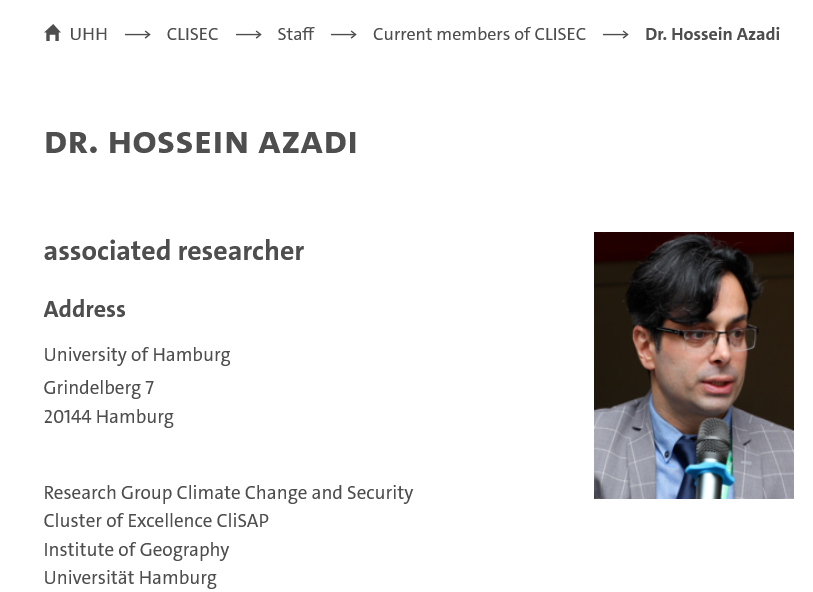
Azadi is still employed at University of Hamburg, in fact he is listed in the top position at the Research Group Climate Change and Security (CLISEC) of professor Jürgen Scheffran. They are accompanied on this papermill trash by a Polish professor, Marcin Pietrzykowski of the Agricultural University in Krakow, and a professor from University of Montenegro, Velibor Spalevic:
Mohammed Adem , Hossein Azadi , Velibor Spalevic , Marcin Pietrzykowski , Jürgen Scheffran Impact of integrated soil fertility management practices on maize yield in Ethiopia Soil and Tillage Research (2023) doi: 10.1016/j.still.2022.105595

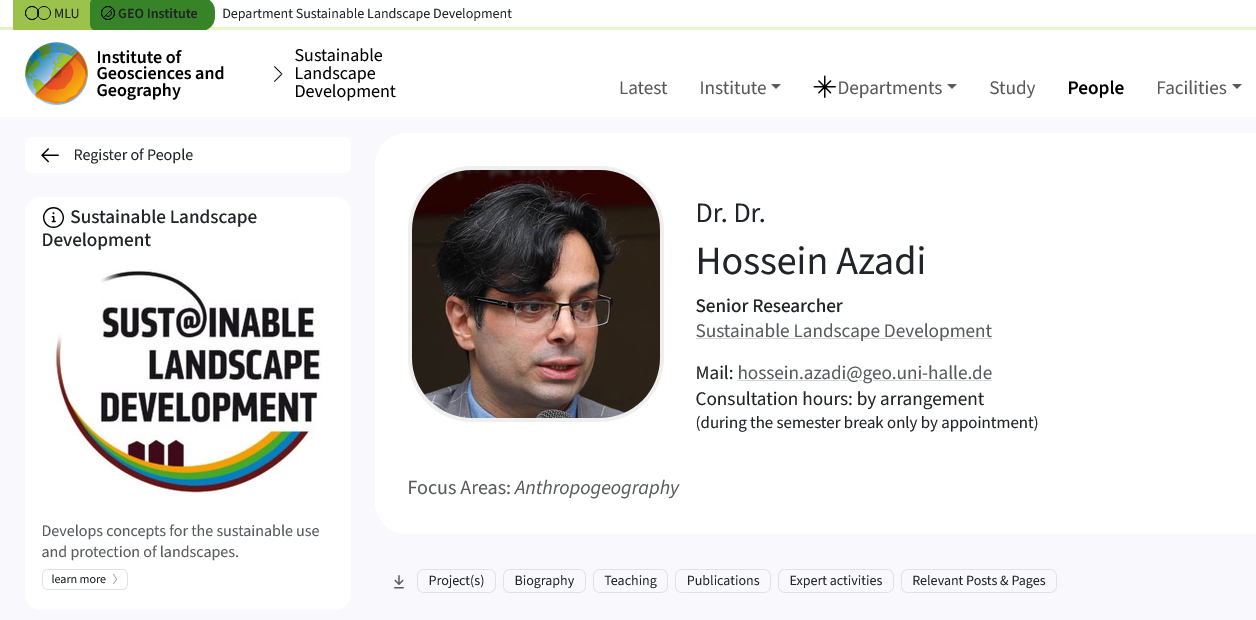
While the University of Hamburg announced to investigate Azadi’s publications, they refused to comment on the strange situation that their (presumably full-time) employee has another job in Germany. You see, “Dr Dr” Azadi works in parallel, and presumably on another full-time salary, at the University of Halle, which is 350 km away. Expect Azadi’s new boss there, Christine Fürst, to soon author papermill trash also!
Donate!
If you are interested to support my work, you can leave here a small tip of $5. Or several of small tips, just increase the amount as you like (2x=€10; 5x=€25). Your generous patronage of my journalism will be most appreciated!
€5.00


Thanks for the article about Aguzzi’s latest endeavours. However, there is one small detail that doesn’t seem quite correct: you repeatedly refer to the “Swiss Alps”, although the new institute is actually located near St. Gallen’s city centre, rather than in the Alps.
I suppose the beautifully designed ISAB logo is at least a subtle reference to the St. Gallen banner. One should perhaps not let actual geography get in the way of an appropriately majestic narrative.
LikeLike
Right, obviously I was never there and only heard of rich bastards holidaying in St Gallen Alps, but that was the canton, not the town.
LikeLike
Is Wageningen University, the employer of Luuk Fleskens, aware that he has lost a paper for papermilling? It seems that this paper is not (anymore) listed at a WUR homepage of Luuk Fleskens. The retraction note is listed at https://research.wur.nl/en/publications/retracted-article-social-economic-and-environmental-vulnerability/
LikeLiked by 1 person
The Dutch Code of Conduct for Research Integrity states very clearly that is mandatory for alle Dutch researchers to be honest and transparant about all of their research activities. It seems to me that this implies that Luuk Fleskens needs to add to his biography and/or to his Research Output that he has lost a paper for papermilling. https://www.wur.nl/nl/personen/drir-l-luuk-fleskens
LikeLike
Hi
I forgot the original Twitter link! https://x.com/i/status/2087620961419788568
LikeLike
And retraction #12 for Jörg Rinklebe. It’s difficult to keep up with it.
https://doi.org/10.1016/j.scitotenv.2023.163681
LikeLike
Oh no. Do I have to write another email to his entire faculty today?
LikeLike
Oh no. Wait until Monaday. It’s been 6 in 10 days, so by Monday there should be at least one more.
LikeLiked by 1 person
There are a couple of good candidates for a next one: https://pubpeer.com/publications/D235DD1E37C6089E938B27D0F0698F
LikeLike
Different Elsevier journal, no spring cleaning going on there….
LikeLike
If we only consider STOTEN, I would prefer this one.
PubPeer – Enzymatic cofactor regeneration systems: A new perspective o…
LikeLike
Did someone mention Rinklebe retractions? This must be #13:
“Pyrolytic and hydrothermal carbonization affect the transformation of phosphorus fractions in the biochar and hydrochar derived from organic materials: A meta-analysis study” (https://pubpeer.com/publications/C172356CEEB6E74F0B8E1701AA5E56)
“Post-publication, an investigation was conducted on behalf of the journal by Elsevier’s Research Integrity & Publishing Ethics team with guidance from the Independent Publishing Ethics Advisor. This investigation discovered that review of this submission was handled by Associate Editor Daniel C.W. Tsang despite an extensive record of collaboration, including co-publication, with two of the paper authors Jorg Rinklebe and Sabry M. Shaheen. This compromised the editorial process and breached the journal’s policies.”
LikeLike
I now informed University of Wuppertal and Rinklebe’s entire faculty about his two recent retractions.
Apparently, one of these tough guys already blocked me:
“Herr Univ.-Prof. Dr.phil. Klaus Held kann nicht auf Ihre E-Mail antworten, weil der Zugang systemseitig gesperrt ist.”
LikeLike
And retraction #14 for Jörg Rinklebe. With Sabry Shahin, Daniel Tsang and Yong Sik Ok. He’s keeping his pace of at least 1 per week.
https://doi.org/10.1016/j.scitotenv.2019.134112
And another one for Yong Sik Ok. With Deyi Hou and Daniel Alessi. It’s #8 for Ok, #4 for Hou, and #3 for Alessi. All summer cleaning at STOTEN. Usually for author-editor conflicts or unauthorized author exchange.
https://doi.org/10.1016/j.scitotenv.2019.133922
LikeLike
I will wait for the next retraction to write to Wuppertal faculty again, two retractions per email.
They already started blocking me.
LikeLike
Hi Leonid,
Thanks for Scheider shorts with Aguzzi new lab in the Alps.
Here is a funny update from ISAB Science Twitter account stating:
“ISAB just made the front page of Science Advances with a new method to analyze tissue blocks from >>50 years go”
9 authors of the publication https://www.science.org/doi/10.1126/sciadv.aef9926 are all affiliated to Zurich University.
Except Aguzzi last author with an ISAB unique affiliation!
The problem is:
Information of publication states that submission date was February 2026. Meaning that work took place before Aguzzi retirement from Zurich University beginning 2026.
ISAB foundation was created the 15.01.2026 as shown by Swiss registry https://www.zefix.ch/fr/search/entity/list/firm/1731050
ISAB laboratory in the Alps was not existing at the time of work that took place higly probably only at University of Zurich: work in the building begann at the earliest time probably in May or June 2026. There were no computers in the building at that time.
=> Aguzzi affiliation in the publication should be only University of Zurich, with a present correspondant present address to ISAB and footnote about transfer.
This is precisely what COPE guidelines ask. Science Advances sticks to COPE guidelines; when someone changes institution, it is the rule is to list the primary affiliation where the research was actually conducted.
Sponsors, SNSF, investors, St-Gallen authorities now believe that ISAB already directed and published valable work, so they will be motivated to give more money!
Very clever.
But I call this this institutional authorship abuse by ISAB.
I hope that Zurich University will reminds Aguzzi how much is due thanks to technical and human Zurich University ressources…
The executive board of Zurich University in last report about Aguzzi from July 2026 states that the university’s quality standards must be adhered to consistently in the future and instructs Adriano Aguzzi to continue addressing the identified errors and irregularities with the utmost care and diligence. He is also required to strengthen the quality management and control mechanisms governing his publications, particularly with regard to the use of figures, to ensure that potential errors are identified and prevented at an early stage…
Maybe the executive board of Zurich University should be warn about this new situation and a correction?
Bah, for the moment, in Switzerland, nobody cares about institutional authorship abuse. Maybe that the July 2026 report even do not include special care about affiliation in publications, because this is considered as a minor mistake, a very minor mistake that do not require any correction, as shown by the Vivek Maradia case (Damien Weber stopped quietly using Zurich University in further publications, and that was all)?
Even Sciences Advances may not care about this fact, leaving the problem to the institution itself, that in turn does not c9nsider that as a mistake.
I even think that PubPeer would not accept such a comment, by considering it only as a diffamation!
My best,
Sylvie
LikeLike
A SEXCLUSIVE from Retraction Watch!
“The student, Rishika Porandla, now tells us she never conducted the experiments described in the study.
“The beam experiment described in the paper was a proposed experimental workflow with associated calculated results,” she wrote in an email. “Public confusion led me to recognize and regret that this is not clear in the retracted publication, and I have included detailed clarification in an updated retraction statement to Wiley.” (…)
She previously told us that it represented “countless hours in the lab” and “was part of my identity as a researcher.”
She originally said she decided to withdraw the paper after discovering methodological errors during a class with Princeton professor Andrea DiGiorgio.
DiGiorgio told us she remained confident in Porandla’s integrity ”
Ivan still refuses to admit he embarrassed himself, and defends Porandla:
” There’s no question Porandla is an exceptional student. “.
LikeLiked by 1 person
Sure, gold nanoparticles will certainly be very useful for degradation of PVC. I wonder who reviews such papers.
LikeLike
” On May 22, Porandla reached out to Retraction Watch by email to share the news of her retraction because she felt it “highlights a broader issue involving student researchers entering the publication space before fully understanding experimental rigor and reproducibility standards.”
She also noted she had faced “significant pressure from mentors to move quickly toward publication before the work had been sufficiently validated.””
Ivan saw the perfect opportunity to help a young damsel in distress. His previous article duly blamed Porandla’s bad teachers for everything. He became her good teacher, a mentor, a guru with immense wisdom and power.
Now he’s making it worse by trying to save her and himself.
LikeLiked by 1 person
Throw in some AI slop and a dash of plagiarism, and I think we may have Cambridge professor material here.
LikeLiked by 2 people
My thoughts exactly. All those supporting liars with delusions of grandeur are responsible when the thing blows up.
LikeLike
“PROF DEAD Jason Arday’s heartbroken family pay tribute after former professor found dead at home following Cambridge scandal”
http://www.the-sun.com/news/16844883/
LikeLike
Horrible news…
LikeLike
Hi,
I encouraged ISAB laboratory to change the affiliation of Aguzzi in that article. ISAB did not answered to my suggestion, but relouer i was wrong with ISAB existence, in fact existing before january 2026, in fact existing since 2023 when aguzzi moved to Appenzell from Zurich, and that I should therefore apologie. I answered with the Swiss register link. ISAB answered me also that Aguzzi engaged hisown personal wealth as he was claiming. I amswerd that at the foundation creation, he engaged only 10’000 frs, less one month salary. Finally, ISAB’s original post was deleted, and the answer too. And I was blocked.
Thread here with the 2 deleted posts by ISAB:
https://x.com/i/status/2088256387960705121
So, Scince Advances publication still have a publication that took entirely place in University of Zurich, with all collaborateurs from Zurich, and all fundings for University of Zurich, and when Aguzzi was still employed as an internal Titular Professor at Zurich University.
But Aguzzi still uses ISAB affiliation and posted this now deleted post annoucing the first image of ISAB Science Advances cover, and article.
I bet that Aguzzo will publish other articles with his previous collaborators, with his ISAB affiliation to show investors that ISAB publishes already!
Sylvie
LikeLike
Another certificate of trustworthiness was issued for another of its products by Zhengzhou MiCe Information Technology Co., Ltd. https://pubpeer.com/publications/7614E62DB90BF127DA14B13B3C50C9
According to Xianqiang Xiong, the last author of this paper published by Elsevier on Applied Catalysis B Environment and Energy
“The EPR analyses in our study were commissioned to an external third-party testing agency, Zhengzhou MiCe Information Technology Co., Ltd. (Xueyanhui Scientific Research Platform, https://www.xueyanhui.com). We relied on the raw data provided by this facility in good faith.
Upon reading your comment, we immediately launched an internal investigation and contacted the service provider. They reviewed their records and confirmed that the data published in our article is exactly the raw data they delivered to us. Furthermore, they acknowledged the repeated baseline noise patterns you pointed out. According to their technical team, this anomaly was caused by a technical flaw/glitch in their testing software at the time of measurement. The provider stated that they have since upgraded their software to resolve this issue.
To substantiate this explanation, the testing company has issued an official statement.”
It seems papermills are providing a new service: issuing official statements to PubPeer whenever their products get into trouble. I wonder if this comes with extra costs for their clients.
LikeLiked by 1 person