

Schneider Shorts of 10 July 2026 – a bullying diva whitewashed in a Swiss travesty, the importance of AI for science, plus retractions for a legendary Italian fraudster in USA and scholars in New Zealand and Romania.
Table of Discontent
Science Elites
- Research environment committed to rigor and honesty – Adriano Aguzzi is officially innocent
Scholarly Publishing
- Generated by Doubao AI – always remove the watermark!
Retraction Watchdogging
- Discrepancies between the raw data and published figures – Rajesh Katare loses another paper
- After further review – and one more retraction for Carlo Croce!
- A human error during figure preparation – first retraction for Anca Hermenean
Science Elites
Research environment committed to rigor and honesty
Switzerland has now a new national martyr saint. The neuroscientist Adriano Aguzzi was officially declared innocent by his own University of Zürich. Seven publications were found to contain falsified data, but this bullying diva is totally not responsible for anything. Not just that: despite his reaching retirement age, the university went on their knees and begged Aguzzi to stay longer as professor and publish even more dodgy trash. The only thing missing in this utterly pathetic whitewashing exercise, is the University of Zürich bestowing a retrospective PhD degree on Aguzzi, because for decades he falsely pretended to have one. Read below, also Aguzzi’s own comments under this article, where he accused me of “revenge porn” and threatened suicide:

Aguzzi and the Lowlifes
The prion researcher Adriano Aguzzi used to describe his Pubpeer critics as “lowlifes”, and himself as a victim of a lynch mob. But after Elisabeth Bik helped him find even more mistakes in his papers, Aguzzi changed his stance.

Now, here is the university’s announcement, published on 2 July 2026, and titled “Integrity Proceedings Clear Adriano Aguzzi“. It starts with a lie:
“In spring 2024, the Executive Board of the University of Zurich (UZH) initiated integrity proceedings to examine allegations of academic misconduct relating to several publications by Adriano Aguzzi, Full Professor at UZH and Director of the Institute of Neuropathology at the University Hospital Zurich. The allegations primarily concerned the inappropriate alteration or reuse of figures derived from image-based laboratory methods, microscopy images and visual representations of numerical data.
The investigation examined a total of 36 publications to which Adriano Aguzzi contributed. The publications reviewed were published over a period of 28 years, from 1996 to 2023.”
The lie is that Aguzzi was supposed to be under investigation not since spring 2024, but since December 2019, when I reported him to the university’s authorities. This is what the university’s vice-rector Christian Schwarzenegger told me several times, see his emails from December 2019:
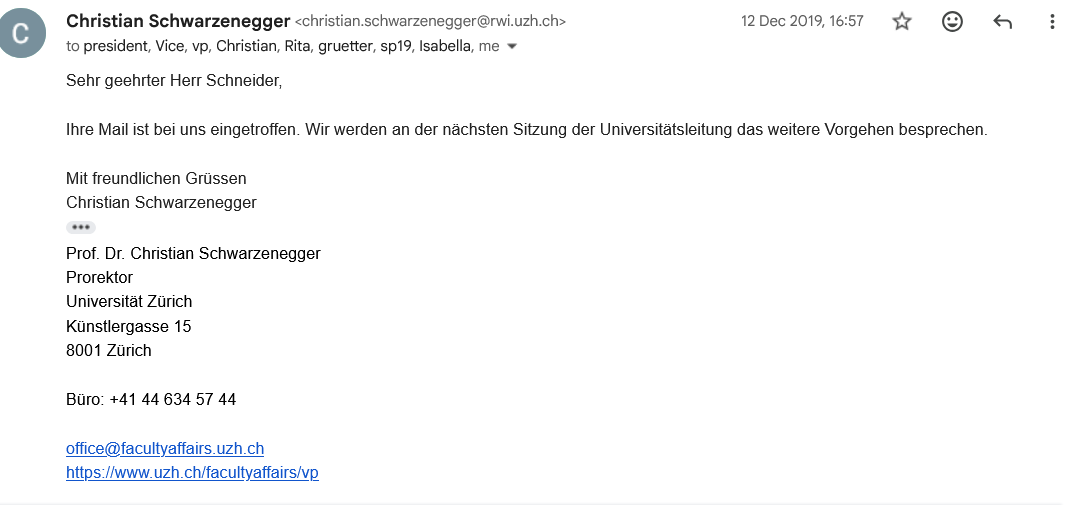
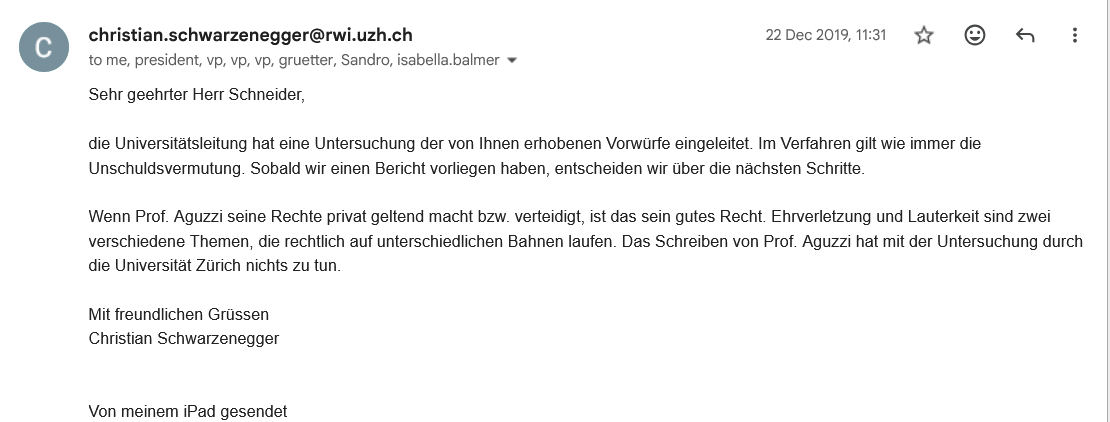
Back then, the University of Zurich absolutely didn’t object to Aguzzi’s threats of lawsuits against me. We now learn that Schwarzenegger’s investigation consisted of asking Aguzzi to be more careful in the future, as the published report reveals:
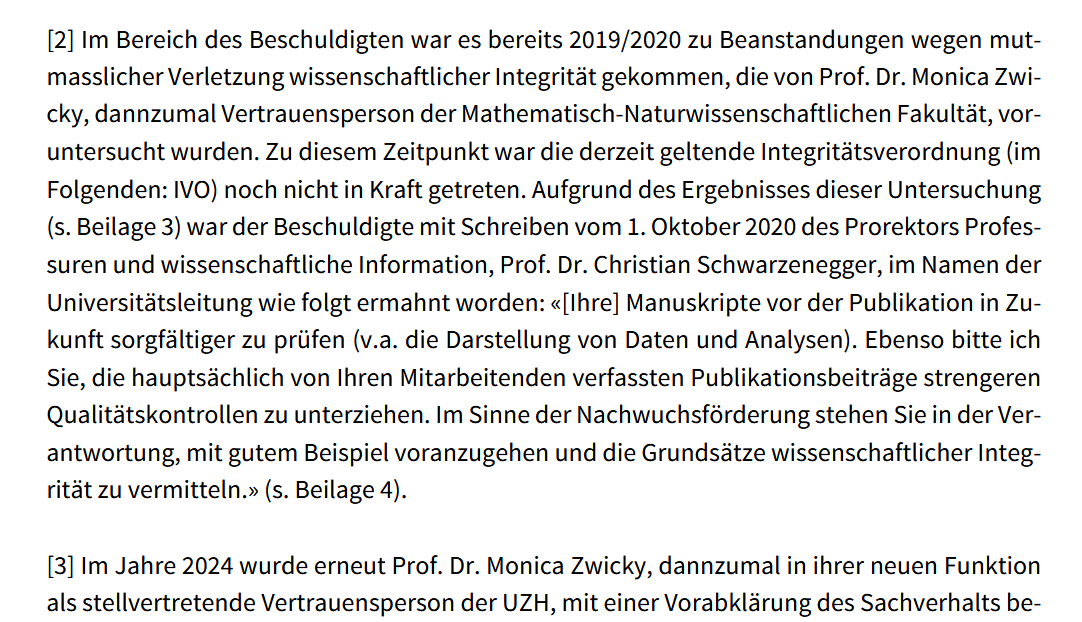
But the university knew that fraud happened, and they knew that Aguzzi is not an innocent angel: he did receive some kind of a reprimand after all. They also forced him to reduce his lab’s size:

Now the university openly admits to have started an investigation only because the science writer Charles Piller asked questions:
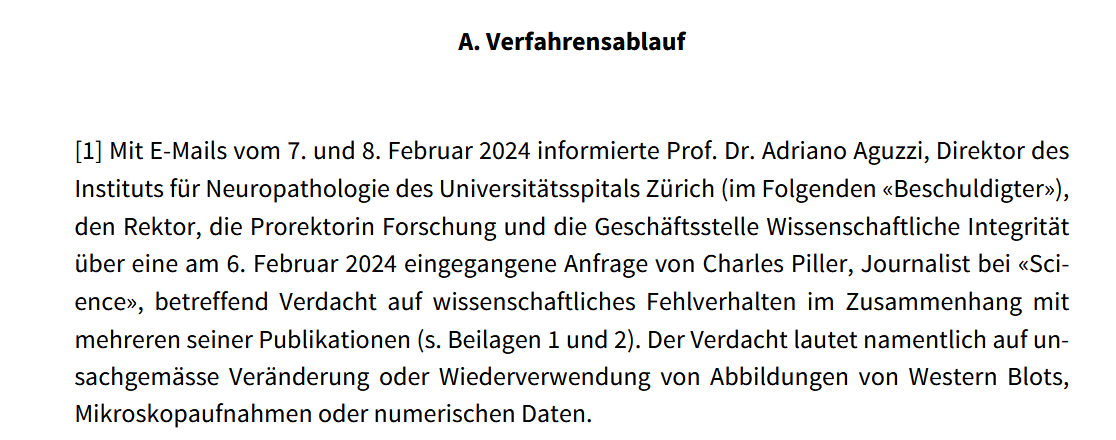
The original plan was to investigate only nine papers:
“Doctored” by Charles Piller – book review
“If this book accomplishes anything, it should be to shatter the illusion that Alzheimer’s research is on solid footing and to prompt a long-overdue reckoning in the field. ” – Csaba Szabo

But Piller had more questions, so more papers were investigated. Yes, this is f***ed up.
The university however somehow made sure that Piller didn’t write any bad things about Aguzzi in his book Doctored:
Rumours reached me that’s because PIller plans another book, and unlike in his 2024 book “Doctored“, Aguzzi may not get to play the good guy a second time.
Back to the announcement by the University of Zürich:
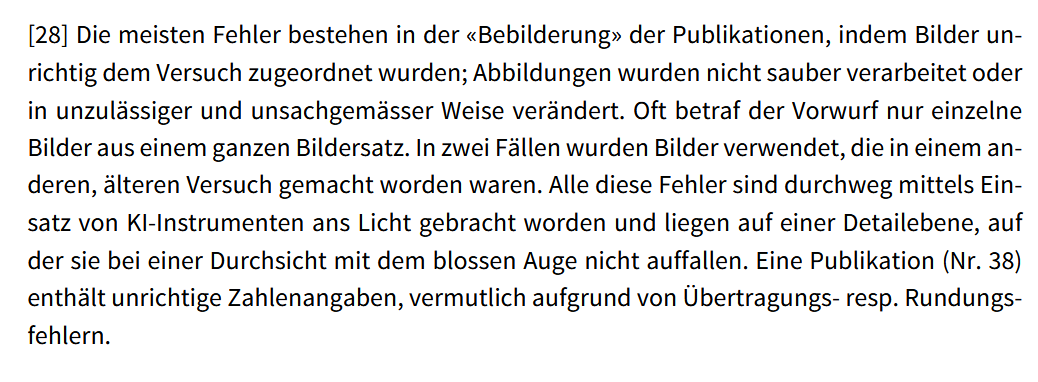
“The proceedings found that the majority of the irregularities identified relate to visual material presented in the publications. In some instances, figures were misassigned, inadequately processed or modified in an impermissible or inappropriate manner.
Scientifically relevant errors were conclusively identified in seven publications that named Adriano Aguzzi as both the last author and corresponding author. In this capacity, he bears scientific responsibility for these publications.
The other publications under review also showed formal shortcomings; however, these could be remedied through corrections, leaving a core body of scientific findings whose validity was not affected. In several publications, the suspected violation of academic integrity was not substantiated. In other cases, the irregularities identified were assessed as minor or inconclusive.”
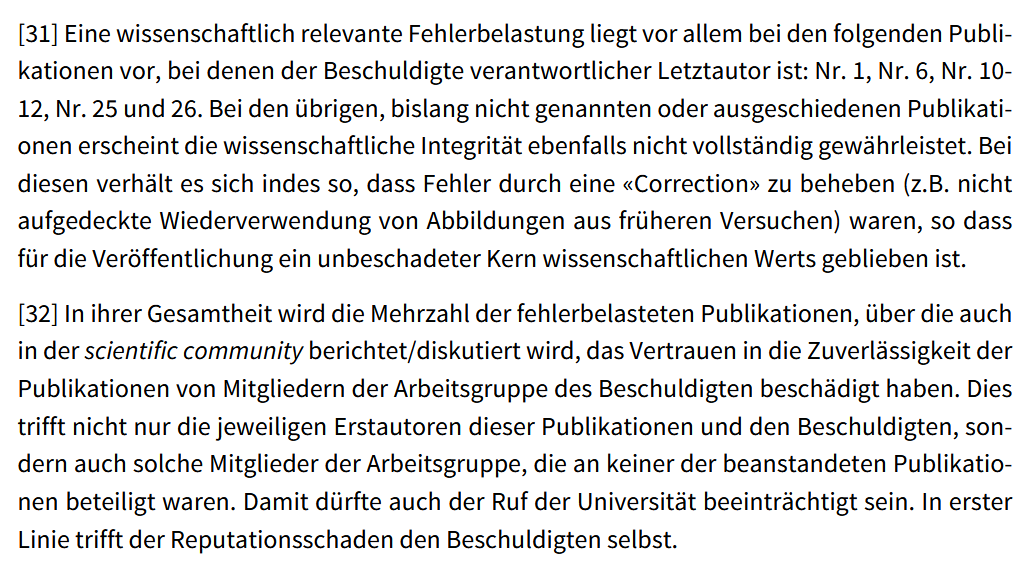
Two of Aguzzi’s papers were previously retracted, as I reported in July 2024 Shorts and March 2025 Shorts. Which leaves another five, the now published investigative report (authored by Wolfgang Ernst) lists 36 investigated papers, papers listed in the Annex as 1, 6, 10, 11,
12, 25 and 26 are the bad ones, Aguzzi is last author on all of them:
But due to the favoritism (“preferential treatment of individual employees“), successful lab members reported being happy about Aguzzi’s leadership, so the university agreed that the complainers were just sad losers. These lab members also reported “systemic and structural pressure to produce and publish results“, a “hierarchically organized” and “very competitive” lab where the boss was often absent and the postdocs did the supervision all by themselves.
The Annex betrays that Aguzzi was indeed investigated in 2020. Now, to the papers, click on PubPeer links to see how bad they are:
- Johannes Haybaeck , Mathias Heikenwalder , Britta Klevenz , Petra Schwarz , Ilan Margalith , Claire Bridel, Kirsten Mertz, Elizabeta Zirdum, Benjamin Petsch, Thomas J. Fuchs, Lothar Stitz , Adriano Aguzzi Aerosols transmit prions to immunocompetent and immunodeficient mice PLoS pathogens (2011) doi: 10.1371/journal.ppat.1001257 RETRACTED July 2024
For the above paper, a note is added: “Part of preliminary investigation by MZ 2020; was closed due to correction)” (MZ being the former Ombudsperson Monica Zwicky). There was indeed an old correction from February 2016, for “Figs 3, 5 and 6. In Fig 3, an error was introduced during the preparation of the figure for publication.”

The June 2024 retraction (which I covered in July 2024 Shorts) therefore happened clearly AGAINST instructions from the University of Zurich to leave that paper in peace.
Also for the totally fraudulent paper Nr 6 we read: “Part of preliminary investigation by MZ 2020; still open due to ongoing correspondence with journal & ongoing experiments“:
- Nicolas Genoud , David Ott , Nathalie Braun , Marco Prinz , Petra Schwarz , Ueli Suter , Didier Trono, Adriano Aguzzi Antiprion prophylaxis by gene transfer of a soluble prion antagonist American Journal Of Pathology (2008) doi: 10.2353/ajpath.2008.070836
Yes, they are trying to save that fake trash. Six more papers were “Part of preliminary investigation by MZ 2020“: Aguzzi et al 2008 (a review), Zhu et al 2018. Nuvolone et al 2017 (not yet on PubPeer), Fisher et al 2020 (see below), Heikenwalder et al 2007 (Aguzzi promised correction, never published) and Polymenidou et al 2004 (corrected in November 2020).
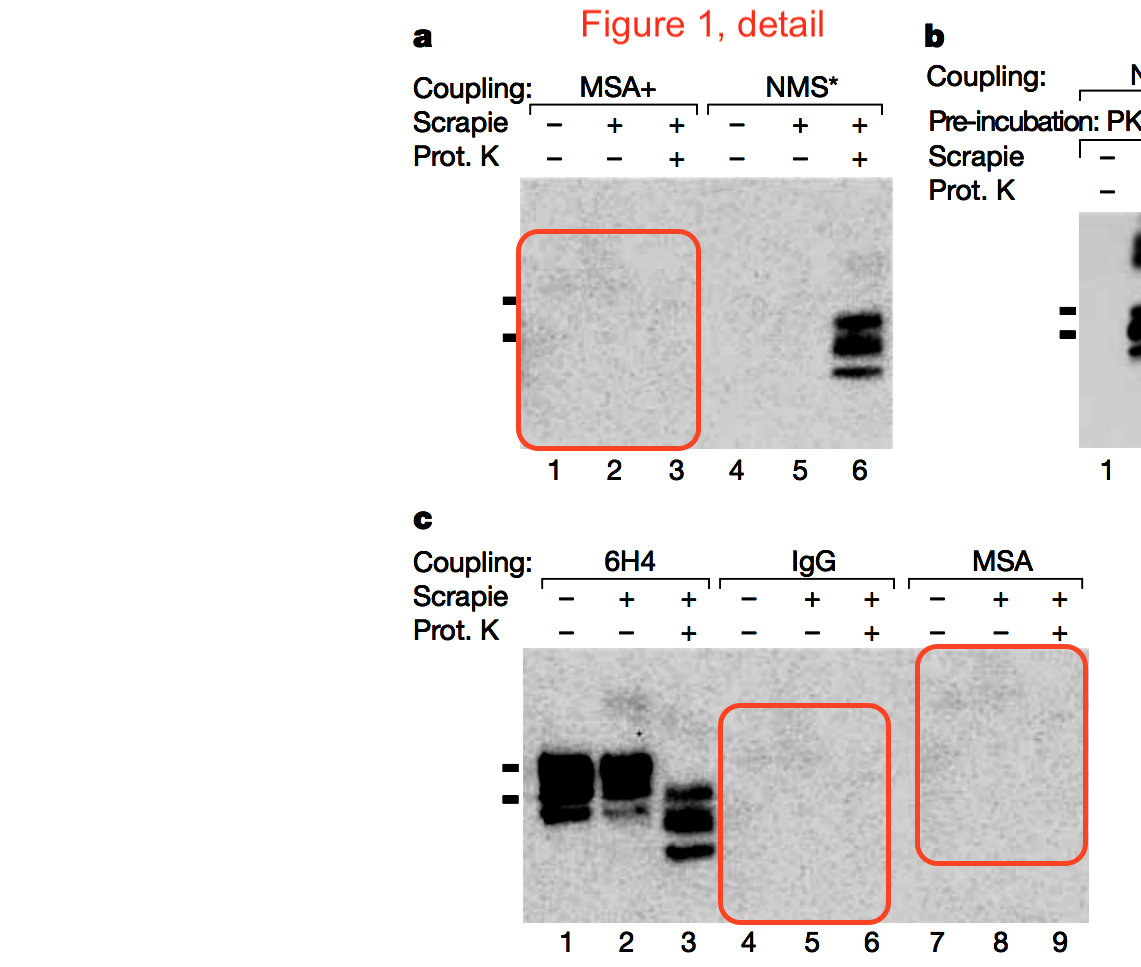
Let’s continue with the officially bad papers:
- Mathias Heikenwalder , Nicolas Zeller , Harald Seeger, Marco Prinz , Peter-Christian Klöhn , Petra Schwarz , Nancy H. Ruddle, Charles Weissmann , Adriano Aguzzi Chronic Lymphocytic Inflammation Specifies the Organ Tropism of Prions Science (2005) doi: 10.1126/science.1106460 CORRECTION April 2024
- Frank L Heppner , Melanie Greter , Denis Marino , Jeppe Falsig , Gennadij Raivich , Nadine Hövelmeyer , Ari Waisman , Thomas Rülicke , Marco Prinz , Josef Priller , Burkhard Becher , Adriano Aguzzi Experimental autoimmune encephalomyelitis repressed by microglial paralysis Nature Medicine (2005) doi: 10.1038/nm1177 CORRECTION January 2005
- Mathias Heikenwalder, Marco Prinz, Nicolas Zeller , Karl S Lang , Tobias Junt , Simona Rossi , Alexei Tumanov , Hauke Schmidt , Josef Priller , Lukas Flatz , Thomas Rülicke , Andrew J Macpherson , Georg A Holländer , Sergei A Nedospasov , Adriano Aguzzi Overexpression of lymphotoxin in T cells induces fulminant thymic involution American Journal Of Pathology (2008) doi: 10.2353/ajpath.2008.070572 CORRECTION June 2024

Charles Weissmann is Aguzzi’s former mentor and University of Zurich professor, he died in December 2025 aged 94. Aguzzi’s own mentee Johannes Haybaeck was fired in Magdeburg for causing death and suffering to patients, his other mentee Mathias Heikenwalder however made it big in Heidelberg, read here:

I Lost My Pancreas in Heidelberg
“While papermills certainly pollute the literature the most in terms of numbers, I believe the spotlight should equally be on questionable research groups at top institutions, whose articles might have an even larger negative impact on society” – Aneurus Incostans

- Asvin K K Lakkaraju , Karl Frontzek , Emina Lemes , Uli Herrmann , Marco Losa , Rajlakshmi Marpakwar , Adriano Aguzzi Loss of PIKfyve drives the spongiform degeneration in prion diseases EMBO Molecular Medicine (2021) doi: 10.15252/emmm.202114714 EDITOR’S NOTE February 2025, posted on PubPeer only!
- Asvin KK Lakkaraju , Oliver Tejero , Ramon Guixà-González , Elena De Cecco , Martina Jungo , Ching-Ju Tsai , Rocco Mastromartino , Jacopo Marino , Xavier Deupi , Simone Hornemann , Gebhard FX Schertler, Adriano Aguzzi The adhesion GPCR Adgrd1 is a prion protein receptor and a mediator of prion cytotoxicity bioRxiv (2023) doi: 10.1101/2023.04.29.538801 WITHDRAWN by authors in February 2024

The last preprint carries a note in the report: “Additional investigations conducted by AA on his own initiative indicate that the experiment depicted in Supplementary Fig. 1E has been intentionally fabricated.”
There was supposed to be a third retraction for Aguzzi’s last author paper Genoud et al 2024 (read July 2025 Shorts), which the diva teeth-gnashingly announced while calling yours truly a “jackal” “with mental issues“, but it’s now clear that the University of Zürich managed to put a brake on the retraction and save this angel of innocence:
“Under the University of Zurich’s Integrity Ordinance, academic misconduct is deemed to occur when researchers intentionally or negligently violate the principles of good scientific practice. The proceedings, however, found no evidence that Adriano Aguzzi acted intentionally.
Based on a reasonable standard of care expected within the relevant scientific community, the proceedings also concluded that Adriano Aguzzi cannot be found to have acted negligently. He supervised the research and publication activities in his laboratory with the necessary care and oversight. As a result, no culpable conduct and therefore no academic misconduct as defined by the university’s Integrity Ordinance can be attributed to him. The proceedings are therefore closed.”
Sylvain Lesné is a failed scientist
From Lesné’s public shame to successful role models of neuroscience like Aguzzi and Tessier-Lavigne.
Aguzzi has around 60 bad papers on PubPeer.
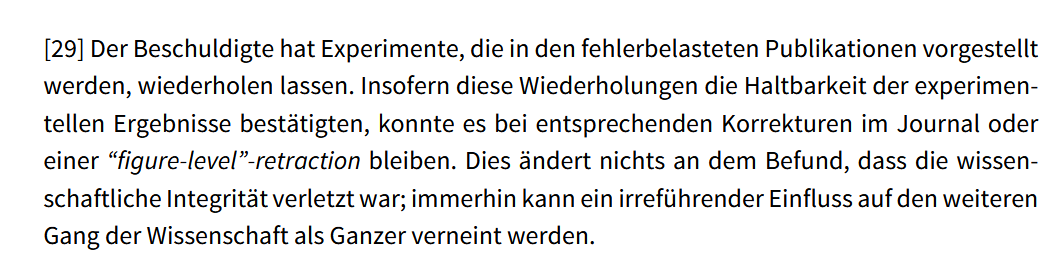
The university specifically made no instructions on corrections or retractions, this decision is solely left to Aguzzi. There was also no investigation regarding workplace bullying, despite Aguzzi’s public record of bullying and harassment on social media. The university interviewed some lab members, who defended their angelic boss:
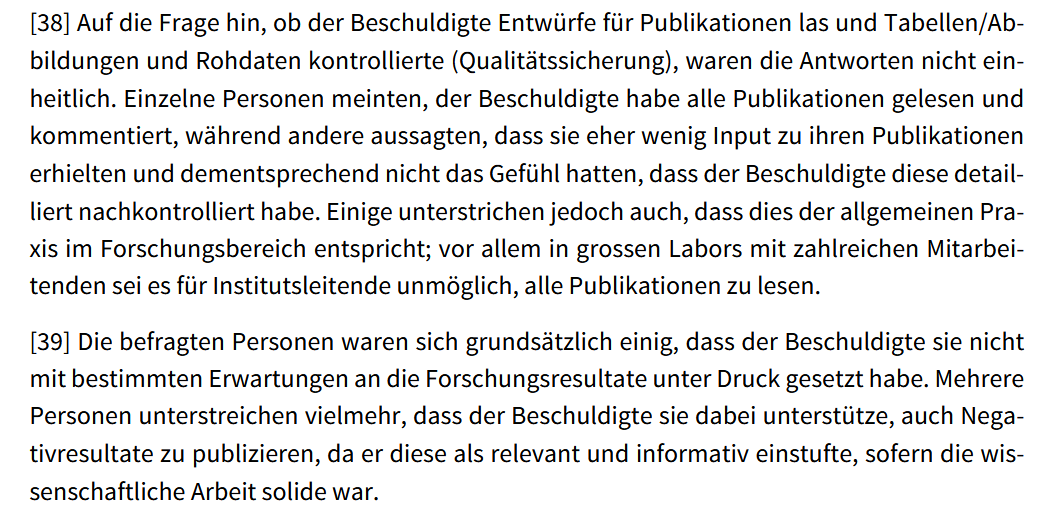
Even though the university decided NOT to investigate Aguzzi’s bullying, the employees still complained about it:
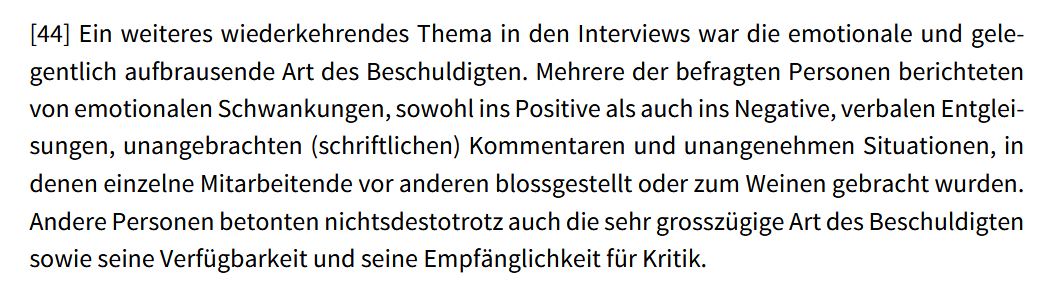
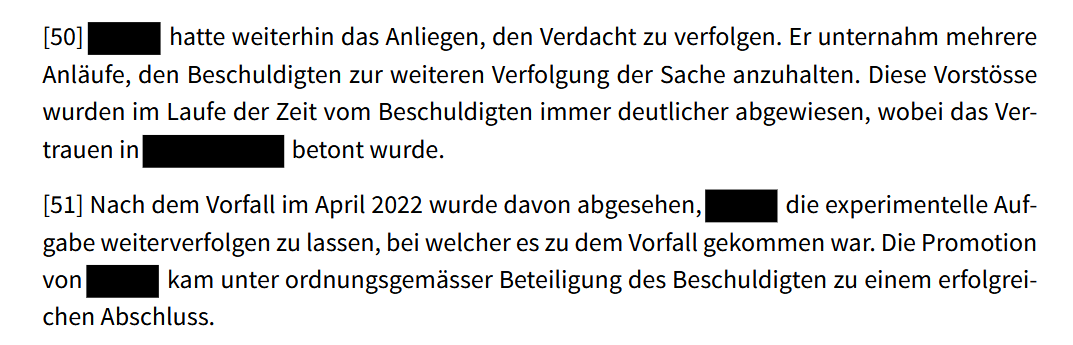
In 2022, a PhD student was tasked with reproducing the results from Aguzzi’s Nature paper Küffer et al 2016. The experiments turned out to be irreproducible, the student also reported that one of the authors “tried to unfairly control the experimental result through manipulative use of reagents“, and notified Aguzzi about the fraud. But then Aguzzi asked a few selected lab members to repeat those experiments, where they of course succeeded, after which Aguzzi defended the accused fraudster and bullied the whistleblower each time the student tried to start a discussion about that fraud. The affair was buried, the fraudsters quietly let go, the whistleblower graduated and sent off also, Nature was not informed, and the university now applauds Aguzzi for all this.
The announcement contains, next to the investigative report, a statement from Aguzzi himself, where he blames his mentees for everything:
“Statement by Adriano Aguzzi
There cannot be any ambivalence: fabricating results is a total betrayal of what science is about […] Also, it is not a victimless crime. In my lab, we spent a year trying to advance a project built upon findings that were later found to have been fabricated by a postdoc. […]Over 39 years of scientific activity, I trained 109 PhD students and postdoctoral fellows, and work from my laboratory contributed to more than 600 publications. My coworkers and I maintained a research environment committed to rigor and honesty: new results were continuously discussed and challenged, and manuscripts were scrutinized multiple times before publication. […] my experience is not unique. History shows that even highly rigorous laboratories can be deceived by determined fraudsters.[…]
Whereas I never committed, abetted, or tolerated scientific fraud, it is disturbing that those individuals who committed misconduct in my laboratory were never subjected to inquiries or sanctions.”
Dear reader, I am sorry I made you vomit. Yes, he even admits his Nature paper Küffer et al 2016 was fraudulent, but in Aguzzi’s view, one should punish traitors instead of retracting fake papers. Wait, it gets better:
“I was not always a perfect institute director. I regret that some of my social-media statements were imprudent and caused unnecessary tension. This has made my laboratory a target for malevolent online attacks. In retrospect, I should have been more disciplined.”
Aguzzi and his University of Zurich blame yours truly for causing this angel so much anguish that he started to bully people online. Hence, no need to apologise to the victims of his online harassment.
And if anyone hoped the university would force Aguzzi to retire, he ends with a fart in their faces:
“Although I have reached the Swiss statutory retirement age, I am not finished with science. I have recently endowed a public-good foundation that will perform not-for-profit research in the field to which I have devoted my entire career. […] I am grateful that the University of Zurich has allowed this transition to proceed. Patients and families continue to wait for answers. If my colleagues and I can continue to contribute, even modestly, to understanding these diseases and ultimately to finding ways to treat them, then the work remains worth doing.”
Reader, did you puke again?
Scholarly Publishing
Generated by Doubao AI
Welcome to the new beautiful world of AI in science. This paper caused quite a fuss on Chinese internet, I was told:
Lizi Yang , Fang Lu , WenYa Liang , Hongfei Jia , Ran Fang Electrostatic gating synergizing with size sieving: A MOF-Based nanofiltration membrane for mitigating the permeability-selectivity trade-off in lithium recovery Journal of Membrane Science (2026) doi: 10.1016/j.memsci.2026.125315

The spectra look perfectly convincing and real, except that they were AI-generated. We know that because the idiot authors and their idiot papermill suppliers forgot to remove the AI watermark.
On 30 June 2026, Elsevier decorated the paper with an Expression of Concern:
“This temporary Expression of Concern relates to the above article.
Concerns have been brought to the attention of the journal regarding potential manipulation of images in Figure 4, and disclosure of the use of AI in Figure 2
The journal is investigating the concerns, including contacting the authors, in line with Committee on Publication Ethics (COPE) guidelines and the journal’s policies.
The Expression of Concern will remain appended to the article until the investigation has been completed. If the editors can reach a conclusion, they will take any action that is deemed necessary. If the editors have determined that they cannot reach a satisfactory conclusion with the information available to them, further notification will be published to update the community.”
Lesson to everyone: always check your AI-generated figures for watermarks before publishing!
Retraction Watchdogging
Discrepancies between the raw data and published figures
Rajesh Katare, a cheater from University of Otago in New Zealand, and a former mentee of the estranged couple Paolo Madeddu and Costanza Emanueli in UK, earn another retraction, his second. The first one featured in March 2024 Shorts.

Bristol Madness
“People should believe in themselves; to search the treasures that they have inside and use them to reinterpret the role.” – Paolo Madeddu,, Professor and Chair at University of Bristol.
The paper was correction in October 2020, ironically to assign Katare the full responsibility for all this fraud, by declaring that he “was omitted as a corresponding author” and that he and his Otago colleague Daryl Schwenke “were omitted as equally contributing authors” :
Joshua P. H. Neale , James T. Pearson , Kate N. Thomas , Hirotsugu Tsuchimochi , Hiroshi Hosoda , Masayasu Kojima , Takahiro Sato , Gregory T. Jones , Adam P. Denny , Lorna J. Daniels , Dhananjie Chandrasekera , Ping Liu , Andre M. Van Rij , Rajesh Katare , Daryl O. Schwenke Dysregulation of ghrelin in diabetes impairs the vascular reparative response to hindlimb ischemia in a mouse model; clinical relevance to peripheral artery disease Scientific Reports (2020) doi: 10.1038/s41598-020-70391-6


The retraction from 20 June 2026 hinted that the authors tried to trick the editors with false raw data:
“After publication, concerns were raised regarding some of the data presented in the figures, specifically:
- Fig. 4A ND D0 AG and DAG images appear highly similar;
- Fig. 4E DM Veh and DAG images appear highly similar;
- Fig. 5A DM Sham and DAG images appear highly similar;
- Fig. 5E AG and DAG images appear to overlap;
- Fig. 5E DM Sham and AG images appear to overlap.
The Authors provided the underlying raw data for validation; however, further checks by the Editors found discrepancies between the raw data and published figures.
The Editors therefore no longer have confidence in the results of this Article.”
Her eis more fake stuff by Katare and Schwenke, whose miRNA research their university once celebrated as breakthroughs in curing diabetes and heart attacks:
Rajesh Katare , Shruti Rawal , Pujika Emani Munasinghe , Hirotsugu Tsuchimochi , Tadakatsu Inagaki , Yutaka Fujii , Parul Dixit , Keiji Umetani , Kenji Kangawa , Mikiyasu Shirai , Daryl O Schwenke Ghrelin Promotes Functional Angiogenesis in a Mouse Model of Critical Limb Ischemia Through Activation of Proangiogenic MicroRNAs Endocrinology (2016) doi: 10.1210/en.2015-1799

That paper however was corrected in May 2025:
“In the published article, in Figure 6C, the image in the “EBM+Ghr” panel was unintentionally duplicated in the “EBM+miR-132” panel due to an error in assembling images for publication. The authors have provided a corrected replacement for Figure 6C, which is shown below. The caption remains correct with the replacement images.”
Two completely fraudulent papers by Katare with Madeddu and Emanueli were previously saved from retractions despite ridiculously fake western blots. Katare et al 2013 received an Expression of Concern in December 2023, its announcement “while an investigation is carried out” looks a bit outdated by now, especially since even more fraud was found there:

Moore et al 2014 was fixed in July 2025 with a permanent Expression of Concern which simply concluded: “Due to the age of the article the authors are no longer able to access the original data for validation.”
After further review
The legendary mega-cheater Carlo Croce earned another retraction! Italy’s greatest cancer researcher in USA and famed collector of counterfeit Baroque paintings remains unsackable and eternally innocent, despite research fraud investigation by his Ohio State University, retractions and lost lawsuits against his critics and his own lawyers who he also cheated out of their money.
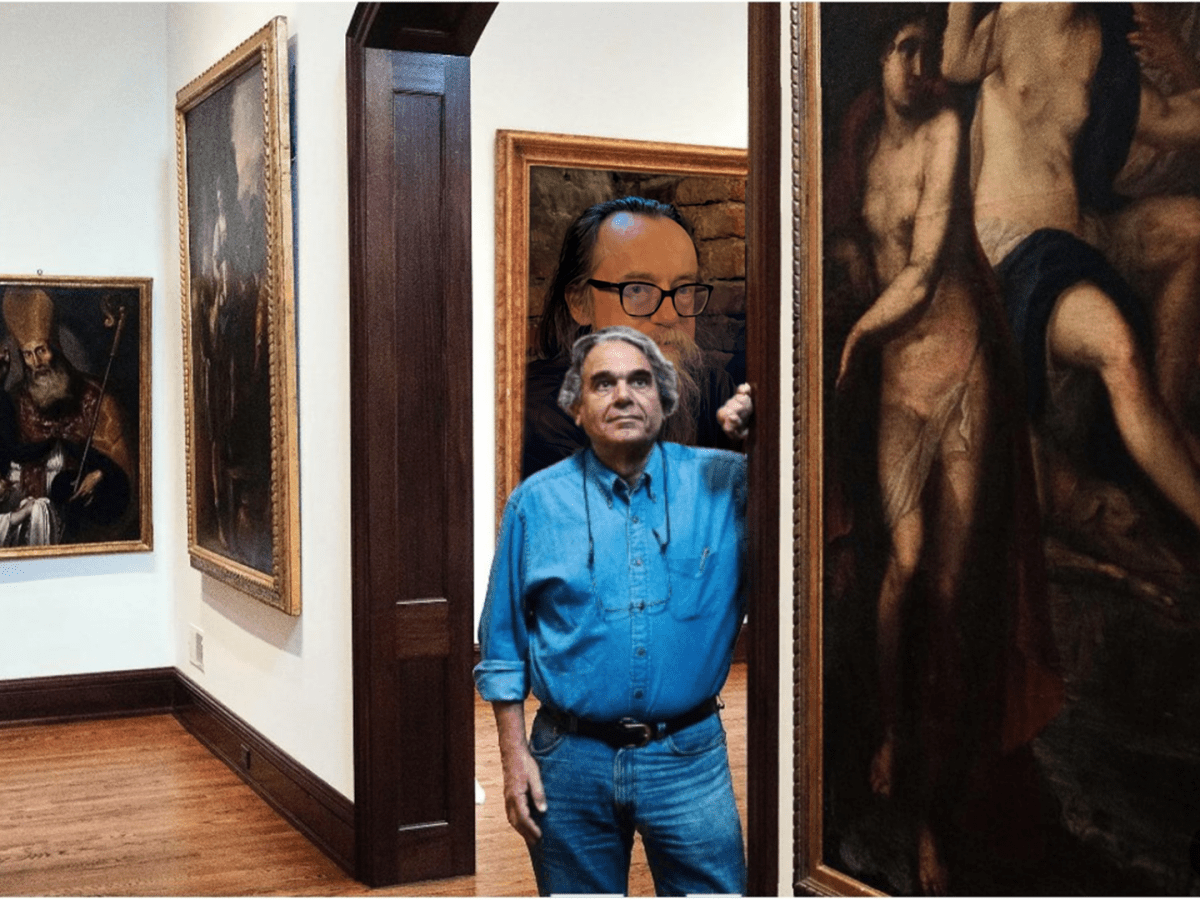
Carlo Croce: from fake science to fake art
“The sockpuppets went on to argue that Croce’s fake results had been vindicated by subsequent replications, making him guilty of nothing more than excessive zeal in the cause of righteousness. ” – Smut Clyde

This paper previously received a fraudulent correction:
Flavia Pichiorri , Dario Palmieri , Luciana De Luca , Jessica Consiglio , Jia You , Alberto Rocci , Tiffany Talabere , Claudia Piovan , Alessandro Lagana , Luciano Cascione , Jingwen Guan , Pierluigi Gasparini , Veronica Balatti , Gerard Nuovo , Vincenzo Coppola , Craig C. Hofmeister , Guido Marcucci , John C. Byrd , Stefano Volinia , Charles L. Shapiro , Michael A. Freitas, Carlo M. Croce In vivo NCL targeting affects breast cancer aggressiveness through miRNA regulation Journal of Experimental Medicine (2013) doi: 10.1084/jem.20120950
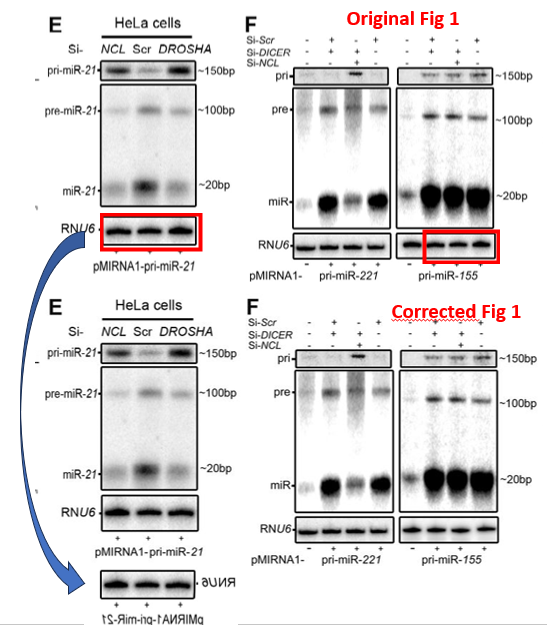
As you see the January 2017 correction contained even more fraud, as PubPeer users noticed right after its publication. It insisted however: “Fig. 1 (E and F) were incorrect as a result of an error in figure presentation during the final production process. The conclusions of the experiments shown in these panels are not affected“.
In October 2022, an Expression of Concern was issued “regarding Figures 1 E and 1 F” and “Based on an investigation by the College of Medicine Investigation Committee (the COMIC) at The Ohio State University“, without any further details.
The retraction came 4 years later, on 30 June 2026:
“This article has been retracted at the request of the JEM editors. The article was published on April 22, 2013, and then Fig. 1, E and F, was corrected on January 19, 2017. JEM was notified by the Ohio State University in January 2021 that an investigation by the College of Medicine Investigation Committee (COMIC) determined that the RNU6 data in the original Fig. 1, E and F, as well as in the corrected versions, were falsified. An Expression of Concern was issued on October 3, 2022. After further review, the editors no longer have confidence in the data and are retracting the article. JEM notified all authors for whom contact information could be found but received no response.”
One wonders, what changed in all those years to make the editors suddenly lose confidence? What “further review” of that fraudulent correction took four, or rather nine years?
A human error during figure preparation
A retraction, possibly the first, for the Romanian cheater and Vice-Rector for Research of Western University of Arad Anca Hermenean, who was briefly mentioned as collaborator of the Galdiero Clan and Michele D’Amico in Naples, Italy:
The Galdiero Clan
“Scientific works must be carefully reviewed, assessed, and, if necessary, corrected at the time of submission and publication. Attempting to re-evaluate articles many years later represents an unfair practice toward the authors ” – a member of the Galdiero Clan.
The paper fell over one single image duplication, flagged by Fabian Wittmers:
Alexandra Folk , Cornel Balta , Hildegard Herman , Alexandra Ivan , Oana Maria Boldura , Lucian Paiusan , Aurel Ardelean , Anca Hermenean Flucytosine and Amphotericin B Coadministration Induces Dose-Related Renal Injury Dose-Response (2017) doi: 10.1177/1559325817703461

Archasia belfragei: “Two panels in Figure 4-I seem to overlap”
The retraction needed slightly over a year and arrived on 30 June 2026:
“Sage was contacted by a reader with concerns about image overlap. Sage was also made aware of concerns raised on Pubpeer regarding the article (PubPeer – Flucytosine and Amphotericin B Coadministration Induces Dose…).
Specifically, the following issue was noted:
- Fig. 4(I) shows partial overlap between Panels A (control) and B (treatment).
The authors provided the raw images for Figure 4 and requested to replace Fig. 4 (I) Panel A. The journal editor and Sage reviewed the request and the raw images and deemed that concerns regarding image integrity were present.
Due to the unresolved concerns about image integrity, that call into question the validity of the findings, the Journal Editor and Sage retract the article.
Author Hermenean A did not agree with the retraction. “
Maybe the publisher Sage needs to address this also?
Anca Hermenean , Aurel Ardelean , Miruna Stan , Nicoleta Hadaruga , Ciprian-Valentin Mihali , Marieta Costache , Anca Dinischiotu Antioxidant and hepatoprotective effects of naringenin and its β-cyclodextrin formulation in mice intoxicated with carbon tetrachloride: a comparative study Journal of Medicinal Food (2014) doi: 10.1089/jmf.2013.0007


Hermenean has a lot more on PubPeer, courtesy of Fabian and other sleuths.
This was corrected by MDPI already last year, in December 2025. We were informed about “the inadvertent selection of incorrect images from our storage folders during the figure assembly process” and that “the scientific conclusions are unaffected“:
Roxana-Elena Cristian, Cornel Balta, Hildegard Herman, Bogdan Trica, Beatrice G. Sbarcea, Anca Hermenean , Anca Dinischiotu , Miruna S. Stan In Vivo Assessment of Hepatic and Kidney Toxicity Induced by Silicon Quantum Dots in Mice Nanomaterials (2024) doi: 10.3390/nano14050457

Archasia belfragei: “Figure 2 has various duplicated panels and overlapping panels throughout”
In the same MDPI journal, Vlasceanu et al 2020 was corrected in August 2025, because “Misplacement of two images occurred during the processing of the figure“. In another MDPI journal, Materials, Codreanu et al 2020 was corrected in September 2025 for “a mistake in Figure 9“, while Balas et al 2021 was corrected in September 2025 for “a mistake in the published form of Figure 3“. In December 2025, Cristian et al 2024 in Materials was corrected to address “an overlap in Figure 2 as published“, in all these cases “the scientific conclusions are unaffected“
This is her oldest flagged paper, MDPI also fixed it with a Correction:
Anca Hermenean , Cristina Popescu , Aurel Ardelean , Miruna Stan , Nicoleta Hadaruga , Ciprian-Valentin Mihali , Marieta Costache , Anca Dinischiotu Hepatoprotective Effects of Berberis vulgaris L. Extract/β Cyclodextrin on Carbon Tetrachloride–Induced Acute Toxicity in Mice International Journal of Molecular Sciences (2012) doi: 10.3390/ijms13079014

Archasia belfragei: “Two panels in Figure 9 appear more similar than expected in an overlapping region, marked in purple”
The correction from 13 January 2026 informed:
“In the original publication [1], there was a mistake in Figure 9 as published. The subfigures B-3 and B-4 were mistakenly selected, due to a human error during figure preparation. The corrected Figure 9 appears below. The authors state that the scientific conclusions are unaffected.”
Images from the above paper re-appeared in this collaboration by Hermenean with colleagues in Spain and India:
Anca Hermenean , Teodora Mariasiu , Inmaculada Navarro-González , Josefina Vegara-Meseguer , Eftimie Miuțescu , Sandipan Chakraborty , Horacio Pérez-Sánchez Hepatoprotective activity of chrysin is mediated through TNF-α in chemically-induced acute liver damage: An in vivo study and molecular modeling Experimental and Therapeutic Medicine (2017) doi: 10.3892/etm.2017.4181


In December 2025, Spandidos issued an Expression of Concern, which was now deleted. On 21 January 2026, a Corrigendum was published, where duplicated images were replaced:
“Subsequently to the publication of the above article, an interested reader drew to the authors’ attention that histological data featured in Fig. 3 on p. 1675, and one of the transmission electron microscopy images shown in Fig. 6 on p. 1678, were strikingly similar to data that had already appeared in a pair of publications featuring the first author on the paper (A. Hermenean); moreover, the histological images shown in Figs. 4B and 5B also appeared to contain an overlapping section, suggesting that these were derived from the same original source where the results from differently performed experiments were intended to have been portrayed. […]
After having re-examined their original data, the authors were able to identify where errors had inadvertently occurred in the assembly of these figures. […] Note that the revised data shown for these figures do not affect the overall conclusions reported in the paper.”
Other publishers corrected Hermenean’s trash also:
Sorina Dinescu, Bianca Gălăţeanu, Mădălina Albu , Adriana Lungu , Eugen Radu , Anca Hermenean, Marieta Costache Biocompatibility assessment of novel collagen-sericin scaffolds improved with hyaluronic Acid and chondroitin sulfate for cartilage regeneration BioMed research international (2013) doi: 10.1155/2013/598056


The correction from 22 June 2026 replaced the images in Figures 2 and 4 “due to an oversight by the authors during figure assembly”.
The Miracle-Polymer-Dumbsterfire
“Read the damn paper and look at the figures before publishing it; it’s not that hard” – Archasia belfragei

Maybe all those corrections were the precondition for an important transaction? Hermenean was recently showered with millions from EU grant money. As her Western University of Arad announced in April 2026:
“”Vasile Goldiș” University of Arad is participating in an 8.35 million euro European project that aims to develop chitosan, a biopolymer used in medicine, cosmetics and industry.
The project, called PIOChitIns, brings together research institutions and companies and aims to obtain chitosan from sustainable sources. The proposed solution uses the biomass of the Black Soldier Fly insect, whose larvae transform agri-food waste into useful substances, such as chitin, proteins and lipids.[…]
The university’s research activity is supported by […] the rector, prof. univ. dr. habil. Coralia Adina Cotoraci, and vice-rector Anca Hermenean […]
The consortium includes the “Petru Poni” Institute of Macromolecular Chemistry in Iași, Chemical Company SA, Vanelli Vet SRL and Tera & MTAS Consulting, along with the “Vasile Goldiș” University in Arad.”
Here some relevant chitosan research:
Sorina Dinescu, Mariana Ionita , Simona-Rebeca Ignat , Marieta Costache, Anca Hermenean Graphene Oxide Enhances Chitosan-Based 3D Scaffold Properties for Bone Tissue Engineering International Journal of Molecular Sciences (2019) doi: 10.3390/ijms20205077

Archasia belfragei: “Figure 4: Two panels seem to contain two panels that overlap although indicating different materials? Marked in purple”
That was also corrected by MDPI, on 6 March 2026, to inform the readers that Marieta Costache cannot act as corresponding author anymore on account of “her passing in February 2024“, the new corresponding author being Sorina Dinescu. We are also told that an error in Figure 4 “occurred due to inadvertent selection of an image from the incorrect image folder during figure preparation“, but luckily “the scientific conclusions are unaffected“.
Finally, look at this travesty, which MDPI was too embarrassed to correct:
Mihaela Radu , Ioana Din , Anca Hermenean, Otilia Cinteză , Radu Burlacu , Aurel Ardelean , Anca Dinischiotu Exposure to Iron Oxide Nanoparticles Coated with Phospholipid-Based Polymeric Micelles Induces Biochemical and Histopathological Pulmonary Changes in Mice International Journal of Molecular Sciences (2015) doi: 10.3390/ijms161226173


As mentioned, there’s much more such fake and not even corrected stuff on PubPeer.
Donate!
If you are interested to support my work, you can leave here a small tip of $5. Or several of small tips, just increase the amount as you like (2x=€10; 5x=€25). Your generous patronage of my journalism will be most appreciated!
€5.00


Oh, we get it. After seven (!!!) years of investigation, the conclusion is clear. It is NOT misconduct what happened in the Aguzzi lab. It is “irregularities” in the form of “figures that were misassigned, inadequately processed or modified in an impermissible or inappropriate manner.” Many of these “irregularities” are “assessed as minor or inconclusive” It is not misconduct. What it is, is “errors”, “scientifically relevant errors” and “formal shortcomings“.
In some cases these “errors” were “introduced during the preparation of figures for publication“. (As opposed to the figures springing to life at night, and just self-assembling into fraudulent panels, I assume.)
Many of these errors were “not noticeable to the naked eye“, only to be discovered by AI. So I guess Uni Zurich congratulates for the successful image manipulation. Who would have thought that later, new detection software will be developed? Clearly that cannot be Herr Professor Aguzzi’s fault! He cheated perfectly, according to the standards of the day.
The “scientific integrity does not appear to be fully guaranteed“, but, of course “all of these can be remedied through corrections”.
In other cases, figures were “intentionally fabricated“. “Under the University of Zurich’s Integrity Ordinance, academic misconduct is deemed to occur when researchers intentionally or negligently violate the principles of good scientific practice. The proceedings, however, found no evidence that Adriano Aguzzi acted intentionally.”
In fact he did not even get the usual Carlo Croce style slap on the wrist of “lax supervision”: Aguzzi “cannot be found to have acted negligently. He supervised the research and publication activities in his laboratory with the necessary care and oversight!!”
Naturally, we have the PubPeer Classic too: “The core findings were not affected“. They never are.
I guess the people making the conclusion did not read their own report, then.
We have also learned that “it is impossible for institute directors to read all publications“. I guess Uni Zurich does not need to comply with the internationally accepted rules of authorship. Good to know.
These finely crafted words of the Uni Zurich – many of which already in use on pubpeer and other university documents, but never assembled this masterfully – are extremely useful. They will make sure all fraudsters in Switzerland feel safe. Not to mention, they will produce an excellent template for other universities in need of whitewashing other investigators.
LikeLiked by 1 person
What do you say to the fact that this whole “investigation” only happened to influence Piller’s reporting?
And I love how Aguzzi’s lies about his fictional PhD degree were buried and never spoken about
LikeLiked by 1 person
I’m pretty sure the investigation by J Mem Sci will conclude by “conclusions remain unaffected”.
AI generation can explain why figures in so many of these b.s. (bio/hydro)char-, MXene-, HAp-based catalysis for wastewater treatment/drug degradation look so similar to each other.
LikeLiked by 3 people
BTW, a similar case but without editorial action: https://pubpeer.com/publications/6C7A94CC95A2989E42D0BFBA046DDB
LikeLike
BTW, a similar case but without editorial action: https://pubpeer.com/publications/6C7A94CC95A2989E42D0BFBA046DDB
LikeLike
I don’t get it. I don’t see any editorial action. Sabu Thomas is an amazing figure: 2256 (not a typo – two thousand two hundred fifty six) publications, 93273 citations, H index = 137. Famous co-authors include – Mohammad Reza Saeb (currently Gdansk Med U), Jozef Haponiuk (Gdansk Tech), Ehsan Kianfar (Islamic Azad University, Gachsaran, Iran – 14 retractions). So far only 2 retractions:
RETRACTED: Comparative study of structural and optical behavior of Er3+ doped Y2SiO5 phosphor prepared by different methods – ScienceDirect
https://www.sciencedirect.com/science/article/pii/S2590123024016803?via%3Dihub
RETRACTED: Nano biosensors: Classification, electrochemistry, nanostructures, and optical properties – ScienceDirect
https://www.sciencedirect.com/science/article/pii/S0921510721004669?via%3Dihub
LikeLike
Oh, sorry, I was blind. I thought you wrote “with editorial action”.
LikeLike
“the proceedings also concluded that Adriano Aguzzi cannot be found to have acted negligently.” – well no, it was all very intentional
LikeLiked by 3 people
As another commenter pointed out – what Uni Zurich meant to say, is that Aguzzi and his fraudsters did their best to hide the image manipulations. It is not their fault that some “lowlifes” found those forgeries anyway, using AI tools (like Bik’s eyes).
For the university, the problem is the sleuths. Piller can be controlled obviously, but the sleuths not. They are “jackals with mental issues” who must be hunted down, possibly literally, but I don’t have the full uncensored report.
LikeLiked by 4 people
My first association with “Schwarzenegger’s investigation” was somebody being repeatedly punched in the face until they confess to whatever is necessary.
LikeLiked by 2 people
It appears that academia has become the most fertile environment for successful, unpunished fraud. Not only has lying, stealing, and cheating become the norm there, but these crimes can also be committed with impunity.
Ethics committees at the university level and relevant government agencies are siding with the defense of fraudsters, even at the cost of tarnishing their own and institutional reputations.
One after another, precedents are emerging that legitimize the false co-authorship of scientific papers and the fraudulent theft of intellectual property of others for the purpose of obtaining academic degrees and exploiting other people’s research results to secure highly paid positions in academic institutions.
* Could the problem lie in the decline of judicial and legal moral principles at the institutional level?!
* According to my personal sentiment based on real facts – facts and evidence – the root cause of the rampant fraudulent activity within the academy is the tolerance of these actions by judicial bodies at all levels, including the ECHR. Many of the judges hold PhD in law. Perhaps they themselves obtained their degrees fraudulently and are unaware of what real scientific work entails?! Upon request I’ll provide shocking facts I have met.
LikeLike
Well, Krolczyk’s lawyer also has a Ph.D. in law. He doesn’t see anything wrong in Krolczyk’s actions. Krolczyk’s retractions (7 so far) were unjustified. He accused me of “violating professional ethics”.
LikeLiked by 1 person
Yes, Hubert, they’re strong in blaming / accusing those who prevent them from successfully and unhindered fraud. Unfortunately, I had experience dealing with the Polish Committee on Ethics. The shamelessness I encountered in their actions, to put it mildly, surprised me. Having Polish roots on my mother’s side and adoring the Polish people, I was upset by the absurdity of the Polish Ethics Committee; I never expected that they could be capable of such a thing.. In essence, accomplices from Poland were involved in the theft and transfer of my intellectual property to lying thieves. See my presentation of this with facts and evidence on ResearchGate, https://www.researchgate.net/publication/376798653/
LikeLiked by 1 person
Leftover AI watermark? Pathethic.
Behold screenshot-spectrum: https://www.nature.com/articles/s41598-025-85894-3/figures/8
https://pubpeer.com/publications/646E63CDAA876BB2CDDCECC2A5B7C3
Brought to you by the complete editorial indolence of Sci Rep and utterly moneyhungry Springer-Nature
LikeLike
There’s an English translation of the entire sorry Aguzzi report at https://www.thetransmitter.org/wp-content/uploads/2026/07/ZurichReport.pdf (article at https://www.thetransmitter.org/ethics/neuropathologist-not-guilty-of-research-misconduct-says-university-probe-aguzzi/ )
LikeLike
Compare Dalshit Chawla’s reporting for Ivan Oransky’s Transmitter with mine.
LikeLike
““In response to the reprimand issued by the university management in 2020, the accused significantly reduced the size of the research group, from an average of 20-25 researchers to 6 PhD students and 5 postdocs.”
Wow, a dozen students/postdocs at once – that must have been a really big bus!
LikeLike
Having Aguzzi investigated by Ernst, a legal scholar, makes about as much sense as asking the local butcher or plumber to investigate the next crime in town.
LikeLike