

Schneider Shorts of 4 September 2026 – corruption in British cardiology, two cheaters dead but many more remain at Italian university, a drunk pervert ork fails his German university, the mystery of a Japanese twink in California, and why retractions are unsuitable for attractive people.
Table of Discontent
Science Elites
- There were always rumours – greedy cardiologists everywhere!
Scholarly Publishing
- Julia Santiago cannot take responsibility – why a fraudulent paper can’t be retracted
- Destroyed by mold – how Frank Sellke tricks journals
- The journal was satisfied – when in Rome: from correction for one scientist to obituary for two other
Retraction Watchdogging
- In light of the a previous correction – why is Keigo Machida not sacked yet?
- Frontiers would like to thank Claire Francis – Peter Leung’s self-investigation failed
- Handling Field Editor Professor Yakov Kuzyakov – now the ork causes real problems to his university!
Science Elites
There were always rumours
In September 2024, Danish TV aired a documentary about corruption in European cardiology. Now Kim Fox, former president of the European Society of Cardiology (ESC) was investigated by his own organisation and found to have committed severe misconduct.
On 26 August 2026, BMJ reported:
“Between 2006 and 2015, Kim Fox, emeritus professor of clinical cardiology at the National Heart and Lung Institute, Imperial College London, and his wife Karen Summers, a former drug industry executive, received more than £50m as co-directors of the UK based contract research organisation Heart Research. This company was involved in running at least three clinical trials of ivabradine, made by French drug company Servier, that were published in the same period.
Most of the money Fox and Summers received came in the form of dividends and distributions paid to them as sole shareholders of Heart Research. The bulk of it—more than £33m, the equivalent of £47m today—came as a distribution of retained capital and profits on liquidation of the company in 2015.”
In 2006 Fox was both president and chair of an ESC taskforce that published “a guideline recommending ivabradine as an alternative treatment for angina in patients who couldn’t tolerate beta blockers“:
Kim Fox , Maria Angeles Alonso Garcia , Diego Ardissino , Pawel Buszman , Paolo G. Camici , Filippo Crea , Caroline Daly , Guy De Backer , Paul Hjemdahl , José Lopez-Sendon , Jean Marco , João Morais , John Pepper , Udo Sechtem , Maarten Simoons , Kristian Thygesen , Silvia G. Priori , Jean-Jacques Blanc , Andrzej Budaj , John Camm , Veronica Dean, Jaap Deckers, Kenneth Dickstein, John Lekakis, Keith McGregor, Marco Metra, João Morais, Ady Osterspey, Juan Tamargo, José L. Zamorano, José L Zamorano, Felicita Andreotti, Harald Becher, Rainer Dietz, Alan Fraser, Huon Gray, Rosa Ana Hernandez Antolin, Kurt Huber, Dimitris T. Kremastinos, Attilio Maseri, Hans-Joachim Nesser, Tomasz Pasierski, Ulrich Sigwart, Marco Tubaro, Michael Weis Guidelines on the management of stable angina pectoris: executive summary: The Task Force on the Management of Stable Angina Pectoris of the European Society of Cardiology European Heart Journal (2006) doi: 10.1093/eurheartj/ehl001
Fox failed to properly reveal his conflicts of interests (COI). The irony is that after the 2024 Danish documentary on TV 2, ESC commissioned an internal investigation about Fox’s recommendations, which concluded those were “appropriate” and reported “no evidence to suggest a bias towards ivabradine.”
Of course ivabradine is not safe at all, BMJ mentions that Fox’s and Heart Research’s own clinical trial “showed an increased risk of heart attack and cardiovascular death in a significant subset of patients” (Fox et al 2014), while European Medicines Agency (EMA) warned “on its use in treating angina“. Cardiology experts now found that “the harms outweighed the benefits“.
The ESC report is secret, Fox’s past declarations of COI are either secret as well or declared as officially destroyed. In fact, the “case remains unreported in most of Europe and beyond, even though the ESC’s guidelines are influential worldwide“, the misconduct findings against Fox only came out because someone blew the whistle.
The only former ESC president who agreed to speak with BMJ about the Fox affair was Thomas Lüscher:
“Lüscher, who once worked alongside Fox at London’s Royal Brompton Hospital, expressed his shock at the case, but added, “There were always rumours.” Fox’s ownership of a contract research organisation was not itself a problem, he went on. “The problem was that he was at the same time secretary, then president elect, then president, and even worse, he talked at [industry sponsored] satellite symposia as the president, at our congress. Today this is unthinkable.””
Chocolate health: advice by Thomas Lüscher and peer review by Jonas Malmstedt
Christmas season is the time to eat lots of chocolate. And as science teaches us, your confectionery is actually the superfood which will make you healthy, slim and clever. Good for you, good for the chocolate industry which often generously sponsors such scientists. In May 2016, I brought a story about chocolate health research and…

Now, Lüscher himself is famous for his obfuscated conflicts of interests not just with he pharma industry, but also with the chocolate industry, like Nestle and Mars, for whom he had been pushing dark chocolate a a miracle cure for years. Lüscher also prided himself to be a workplace bully, and he also published a lot of bad science (read January 2026 Shorts). Why BMJ lets Lüscher of all people to virtue-signal, is not clear.
Returning to Fox, he is truly a greedy sod with zero morals. Look where else he stuck his snout into, and not just him, also his coauthor on that rotten 2006 ESC guideline, John Pepper:

“Celixir has further formed the Innovative Cardiovascular Medicines Collaboration which […] will be headed jointly by Professor Kim Fox […] and Professor Sir Martin Evans […] The same collaboration will be supported by Professor John Pepper, OBE, Interim Director of Research at the Royal Brompton and Harefield NHS Foundation Trust,” Celixir (2019)
Yes, Celixir, the “stem cell” scam by the Nobel Prize Laureate Sir Martin Evans and his beloved serial fraudster, struck-off dentist, and pathological liar Ajan Reginald!

Requiem for Celixir
How the Nobel Prize winner Sir Martin Evans and the lying crook Ajan Reginald almost succeeded, were it not for Patricia Murray.
Fox and Pepper were likely behind Celixir’s clinical trial with their fraudulent “stem cells” which apparently he doctors just started injecting into patients’ hearts at Royal Brompton Hospital in London when the British authorities got scared and finally stopped it, all thanks to the campaign by Patricia Murray (read above). After the Brompton disaster, Fox and Pepper very quietly absconded from Celixir’s advisory board, as the company itself went offline:

Celixir was eventually renamed and/or split up, it seems to continue as “Cardiogeni“, which is currently offline itself. We don’t know if Fox and Pepper are still involved.
Scholarly Publishing
Julia Santiago cannot take responsibility
New, crazy developments in the affair of Pedro Rodríguez, professor at the Polytechnic University of Valencia (UPV) in Spain, and his former mentee Julia Santiago, now associate professor in Switzerland, showered with multimillion-heavy EU and Swiss grants for her lab at University of Lausanne. Aneurus Inconstans wrote already three articles about these people, this one below addressed a correction which this new story is about:
Correction: IMPOSSIBLE
“What is the threshold to distinguish between minor and major? What does “the majority of the results and conclusions” mean? ” – Aneurus Inconstans

The same article reported massive data manipulations in Santiago’s PhD thesis, to no avail. Nobody in Switzerland was bothered, even less people were bothered in Spain. But this is the paper we want to talk again about:
Julia Santiago, Americo Rodrigues, Angela Saez, Silvia Rubio, Regina Antoni, Florine Dupeux, Sang-Youl Park, José Antonio Márquez, Sean R. Cutler, Pedro L. Rodriguez Modulation of drought resistance by the abscisic acid receptor PYL5 through inhibition of clade A PP2Cs The Plant Journal (2009) doi: 10.1111/j.1365-313x.2009.03981.x

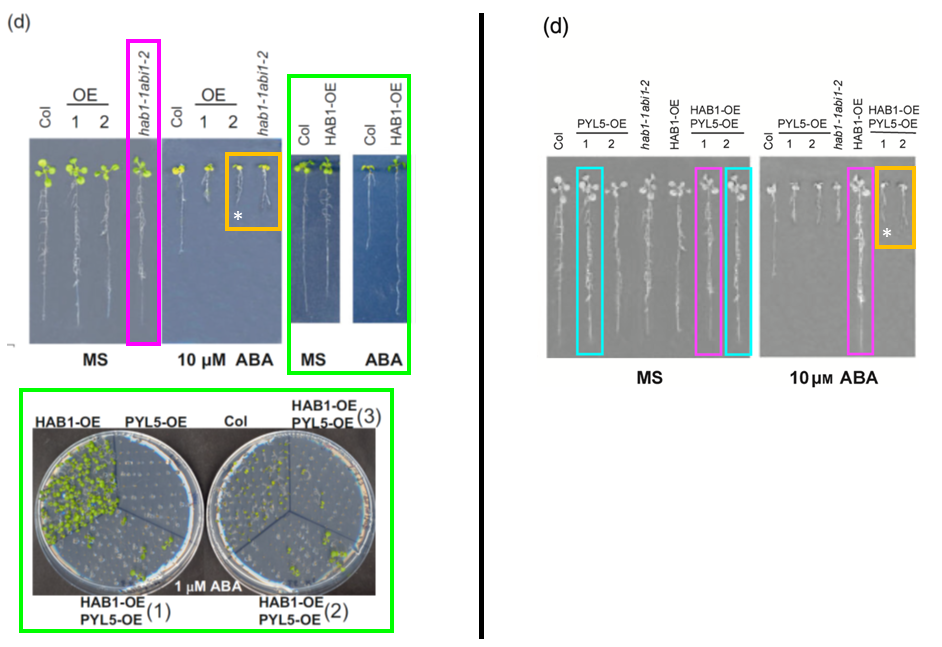
Boxes of same color highlight colonies and panels that have been either duplicated or duplicated and modified.”


As Aneurus wrote, twenty-five yeast colony assays were duplicated, some were also digitally modified. Elisabeth Bik found more in other figures:
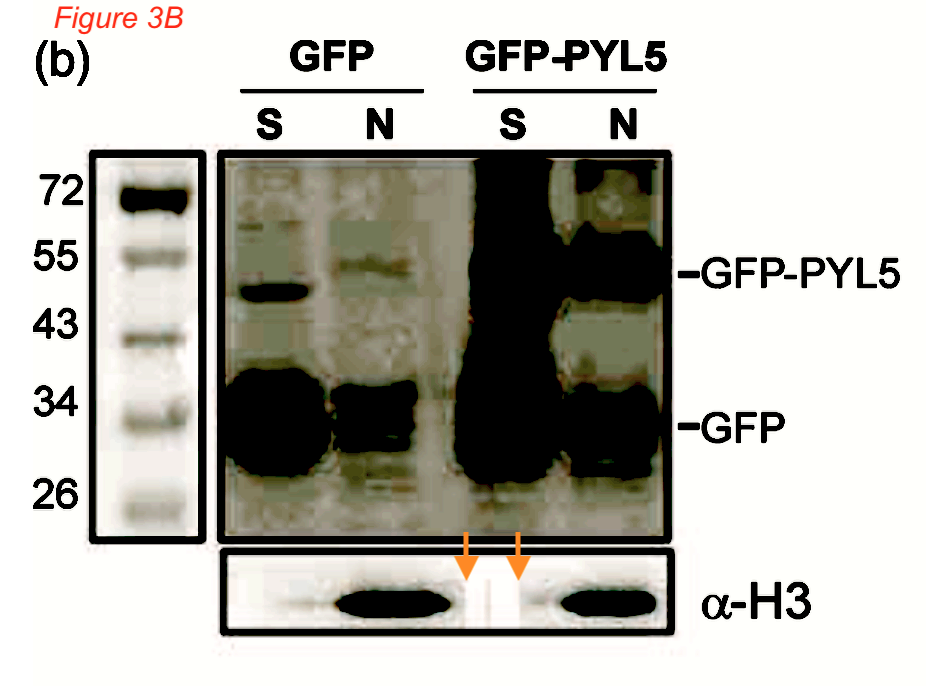

On 8 July 2024, a correction was issued, which the editor informed the sleuth was “the final decision“:
“In the above article, the authors would like to correct and update some of the Figures. Figure 1a and 1b had an accidental duplication and this has been corrected using original data (in Figure 1b the right hand panel of GAD PYL5). Figure 3a is correction of a gel splicing presentation error. Accidental duplications of some images in Figures 1d and 4d were removed and experiments repeated (Figure 1d) or additional data included (Figure 4d). […] We apologize for these errors.”
As Aneurus noted, the forged Y2H were replaced, while the Western blots of Fig. 3b remained, only that patch and the splice were highlighted. The new Figure 4d (shown below to the left) includes new data (green boxes), but also “unexpected surprises”, as Aneurus put it. One duplicated seedling (magenta boxes) changed its genotype. And so did two other duplicated seedlings marked (yellow box), while also getting mirrored in the progress.
On 17 April 2026, this Expression of Concern quietly appeared (highlights mine):
“After publication, several of the Figures were corrected and updated in 2024, including:
- An accidental duplication in Figure 1a and 1b was corrected using original data (in Figure 1b the right-hand panel of GAD PYL5).
- A gel splicing presentation error was corrected in Figure 3a.
- Accidental duplications of some images in Figures 1d and 4d were removed and experiments repeated (Figure 1d) or additional data included (Figure 4d).
After the Correction was published, co-first author Dr Julia Santiago informed the journal that, in contradiction to the statement in the correction, she was not involved in the correction process, does not agree with the decision to correct, and cannot take responsibility as an author for the data presented in the correction. While the overall conclusions of the article are not considered to be affected, the journal has decided to alert readers about the situation by publishing this Expression of Concern.
Dr. J.A. Marquez has stated that he was also not involved in the decision to correct and cannot take responsibility as an author for the data presented in the correction.
This Expression of Concern was shared with all parties, though not all authors were available to respond before publication.”
Científicos al borde de un ataque de nervios
Dead men don’t talk. A dead colleague, especially a foreigner, is a perfect scapegoat to blame for fake data in your papers. And in your own PhD thesis.
It is clear why Santiago divests from all responsibility for any bad things she and her mentor Rodriguez may have engaged, but why José Márquez also? Well, he is now head of facility at EMBL in Grenoble, France.
The new Expression of Concern basically admits that the paper and its correction are fraudulent and can’t be trusted, but the agreement seems to be that the culprit is Rodriguez alone, and that’s why it would be a cruel and unusual punishment for the authors (including himself) to retract this paper. Especially since the academic community, especially that in Lausanne, agrees that Professor Santiago is a young, beautiful, intelligent and highly charming scholar who under no circumstances must be associated with a retraction or with fraud. Especially since she is about to be made full professor and probably get another ERC grant on top.
And anyone who keeps pointing at all the fake stuff in her thesis and papers is a sexist and racist incel swine.
Destroyed by mold
The US cardiologist Frank Sellke, professor at Brown University who likes to pretend being honest and clueless, succeeded with converting an almost sure retraction into an Expression of Concern. His fraudulent papers were described here:

Mad School of Brown University
“I have filtered out several hundreds biomedical research articles from Brown containing the words “western blot” in the text, and found out the usual, unavoidable ocean of manipulated data.” – Corrado Viotti

In this six year old study, Sellke induced heart attack in pigs and then claimed to cure it with cell culture supernatant from human bone marrow:
Laura A Scrimgeour , Brittany A Potz, Ahmad Aboul Gheit , Yuhong Liu , Guangbin Shi , Melissa Pfeiffer, Bonnie J Colantuono , Neel R Sodha, M Ruhul Abid, Frank W Sellke Intravenous injection of extracellular vesicles to treat chronic myocardial ischemia PLOS One (2020) doi: 10.1371/journal.pone.0238879
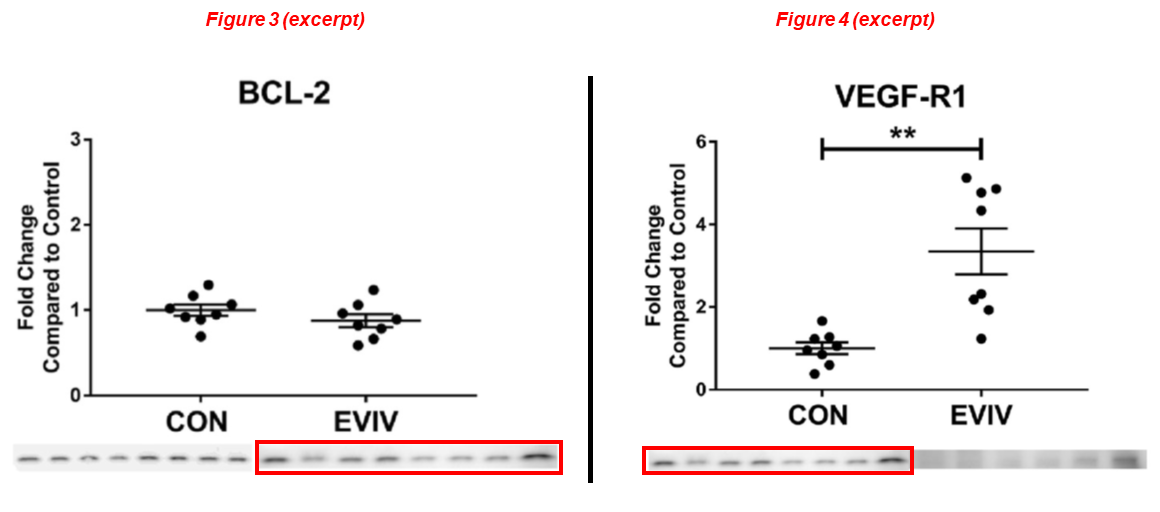
In March 2026, Sellke and his mentee and award-winning surgeon at brown University, Laura Scrimgeour, explained that the western blot reuse was irrelevant because “the numerical values when analyzed were different“, and anyway, heir “original images are unfortunately no longer available as they were collected from Western Blots done in 2018 and the research institution has wiped clean documents of that age“.
On 27 August 2026, PLOS One published this Expression of Concern which revealed serious fraud (highlights mine):
“After this article [1] was published, concerns were raised regarding Figs 3, 4, and the methods. Specifically:
- The BCL-2 EVIV panel of Fig 3 and the VEGF-R1 Con panel of Fig 4 appear similar to each other.
- The animal methodology does not report the humane endpoints used, details on animal monitoring, or the IACUC approval code for these experiments.
- The underlying images provided in S1 File in [1] do not appear to match the corresponding panels presented in Figs 3 and 4.
The corresponding author stated that the BCL-2 EVIV panel in Fig 3 is incorrect. They provided a corrected Fig 3 (S2 File) and noted that the underlying image for the correct BCL-2 EVIV panel in Fig 3 is provided in the S1 File published with [1].
With regards to the animal experiments, the first author stated that the IACUC approval code is no longer available, and that animals were monitored twice daily post-operatively for three days, then 2–3 times per week until the harvest procedure. The first author further stated that the following signs were used as humane endpoint criteria for euthanasia: clinical condition that does not respond to treatment (e.g., infected surgical site); delayed wound healing; dehiscence of surgical site; difficulty in ambulation which renders the animal unable to access food/water; persistent and progressive dermatitis or self-trauma; CNS signs such as tremors, seizures, circles that were not anticipated by the study plan; anorexia > 48 hours; other lesions interfering with eating or drinking; sudden behavioral change (e.g., aggression, guarding, hiding); weight loss of 20% or more from baseline at the start of the experiment or as compared to age/gender/strain matched controls; markedly discolored urine; excessive urine, or no urine; severe or refractory diarrhea or decreased fecal output > 48 hours; dehydration unresponsive to oral or parental therapy; rough hair coat, hunched posture, distended abdomen, reluctance to move, or lethargy; respiratory signs such as labored breathing, wheezing, or copious nasal discharge; and hemorrhage (blood loss) from any site that is estimated to be > 10% total circulating blood volume.
Contrary to the declaration in the Data Availability statement, the original raw data files supporting the article’s results were not provided with the article, and the first author stated these data are no longer available. As the original raw data files supporting the article’s results are no longer available, this article [1] does not comply with the PLOS Data Availability policy.
In light of the above concerns regarding the underlying images provided in S1 File in [1], and because the article does not comply with the PLOS Data Availability policy, the PLOS One Editors issue this Expression of Concern.”
That’s it, case closed? Raw data for a six year old paper miraculously disappeared, and the pigs were tortured without any approval or external oversight? The authors must have lied when they claimed: “All experiments were approved by the Institutional Animal Care and Use Committee of Rhode Island Hospital“, so why was this paper not retracted?
Even more puzzling is that PLOS One is usually rather tough on fraud and retracts fake or unethical stuff. The only explanation can be: Sellke and his Brown University must have threatened PLOS One with lawsuits.
Sellke claimed on another PubPeer threads that his western blots “were destroyed by mold“, incidentally the first author is his son Nicholas Sellke, now assistant professor in Vanderbilt:
Nicholas Sellke , Caroline Gordon , Isabella Lawandy , Anastassia Y. Gorvitovskaia , Laura A. Scrimgeour , James G. Fingleton , Frank W. Sellke, Jun Feng Impaired coronary contraction to phenylephrine after cardioplegic arrest in diabetic patients Journal of Surgical Research (2018) doi: 10.1016/j.jss.2018.04.045

Sellke first moved his son out of harm’s way and made his mentee Jun Feng take the full responsibility, and declare on PubPeer:
“The original uncropped bands for the cropped bands of Figure 2C were destroyed by mold. However, the missing original image (related to the expression of concern for Figure 2C) is not central to our primary findings or conclusions. The data in Figure 2C presents a negative result. Thus, we emphasize that there was no intent to manipulate the study to produce positive data or artificial statistical significance between groups. The authors are now providing a newly corrected version of Figure 2C along with the original uncropped bands (membranes) of Alpha 1B and GAPDH. This correction does not change interpretation of the results and the scientific conclusions. A formal erratum will be submitted to replace the misused images. This correction has been reviewed and approved by the co-author, my supervisor, Dr. Frank Sellke.”
They also lied to have repeated the experiments from 8 years ago using old tissue lysates. But the X-ray films were all destroyed by the mold.
The journal was satisfied
Plos One informed me that they issued a correction for an Italian paper I reported in October 2025. The lead authors are professors of pharmacology at Sapienza University of Rome, Ferdinando Nicoletti, Valeria Bruno and Giuseppe Battaglia, the paper was flagged on PubPeer and reported to the journal already in 2013:
Giuseppe Battaglia , Gemma Molinaro , Barbara Riozzi , Marianna Storto , Carla L. Busceti , Paola Spinsanti , Domenico Bucci , Valentina Di Liberto , Giuseppina Mudò , Corrado Corti , Mauro Corsi , Ferdinando Nicoletti , Natale Belluardo , Valeria Bruno Activation of mGlu3 receptors stimulates the production of GDNF in striatal neurons PLOS One (2009) doi: 10.1371/journal.pone.0006591

There were futher allegations of duplicated gel bands. In October 2025, Nicoletti declared on PubPeer:
“Dear Sirs, we already responded to Plos One 11 years ago providing all original files. The journal was satisfied. My collegues Valeria Brbno and Giuseppe Battaglia are responding to the same comments including our original file of reply.“
Nicoletti has lots of stuff on PubPeer, courtesy of the pseudonymous sleuth Claire Francis. In January 2015, Retraction Watch reported about a retraction of his paper with Battaglia, D’Onofrio et al 2001 in Journal of Neurochemistry. In that article, Retraction Watch interviewed Nicoletti, he protested against the retraction over “a representative image” and mentioned also regarding his PubPeer record: “For the Plos One paper, we already replied to the Journal demonstrating that everything was fine, but we had no feed-back so far after many months.“
Back in 2014, PLOS One indeed couldn’t care less about data manipulation, their former Editor-in-Chief used to trash all evidence sleuths sent him. But things chnaged several years ago under new leadership, and this is the huge Correction PLOS One issued on 31 August 2026:
“Following the publication of this article [1], concerns were raised regarding Figs 4 and 6.
Figure 4
The western blot image in Fig 4B includes non-adjacent lanes spliced together, but this is not clearly marked in the panel. The corresponding author stated that lanes in Fig 4B were rearranged relative to the original immunoblot for readability[…] Lane 2 appears similar to lane 9 in Fig 4B for both β-actin and GDNF bands; the corresponding author indicated that there may have been a mistake in the repositioning of the lanes during figure preparation. The underlying blots for Fig 4B are provided here in S4 File.
The contrast settings appear to be applied differently to the GDNF panel compared to the β-actin panel in the originally published Fig 4B. The corresponding author indicated the contrast may have been modified for clearer data presentation, and that this would not have affected the quantification of the results […] The underlying blot shows that lane 1 in the GDNF panel of Fig 4A originated from a different blot, and that lanes were removed from the GDNF panel of Fig 4A prior to lane 2. The corresponding author requested that this underlying blot not be included with this notice. A graph reporting a new densitometric analysis from the original blots is provided here in S8 File.
Figure 6
The β-actin panel in Fig 6D is incorrect, and erroneously represents data from the experiment reported in Fig 6C. A revised version of Fig 6 is provided in S1 File where the Fig 6D β-actin panel has been updated with the correct image from the original experiments, and the Fig 6D graph has been updated with a new densitometric analysis from both the original immunoblots and replicate data from the time of the original experiments. Original and replicate data underlying the revised Fig 6 are provided in S1 and S3 Files.
The corresponding author provided additional methodological information for Fig 6D as follows:
The GDNF and β-actin rows in the updated Fig 6D originate from the same single blot. […] A member of the PLOS One Editorial Board reviewed the updated Fig 6D and stated that it appears broadly consistent with the qualitative conclusions presented in [1], and that the updated densitometric values appear to maintain the same overall pattern described in [1]. However, they noted that the β-actin signal in the updated Fig 6D appears relatively strong, potentially approaching saturation, and that the method of between-blot normalization for the new densitometric analysis in the updated Fig 6D pooling data from two experiments is not clear.
The remainder of the underlying data for this article are available from the corresponding author with the exception of some original autoradiographic slices underlying Figs 1C-E, and the original blots for Figs 3A and C, Fig 4A (β-actin and lane 1 for GDNF) and Fig 6A.”

Top Italian Scientists
“You may think this is just a silly prank with zero impact on whatsoever, but no. […] this initiative is useful for something. It provides solid numbers for quantifying the extent of scientific misconduct in Italy and beyond” – Aneurus Inconstans
You see, the papers are old and it is very difficult to retract them despite strong evidence of fraud. Unless there’s a celebrity author: Di Paola et al 2004 was coauthored by Nicoletti and retracted in March 2024 because the last author was the ex-rector of University of Messina, Salvatore Cuzzocrea. I reported about that in April 2024 Shorts.
Here another one by Nicoletti, Bruno and Battaglia, I provided an illustration to Claire Francis’s old comments:
Gilbert Besong , Giuseppe Battaglia , Mara D’Onofrio , Roberto Di Marco , Richard Teke Ngomba , Marianna Storto , Marzia Castiglione , Katia Mangano , Carla L. Busceti , Ferdinando R. Nicoletti , Kevin Bacon , Michael Tusche , Ornella Valenti , Peter Jeffrey Conn , Valeria Bruno , Ferdinando Nicoletti Activation of group III metabotropic glutamate receptors inhibits the production of RANTES in glial cell cultures The Journal of neuroscience (2002) doi: 10.1523/jneurosci.22-13-05403.2002

“Figure 3. […] Actin panel. Please compare lanes 2,3,4 and 5 […]. RANTES panel. Please compare the tops (likely wells) of lanes 3 and 4.”
In October 2025, Nicoletti replied with:
“The manuscript has been published 23 years ago and I will try to find the orignal blot of Fig. 3 to reply. There are no signs of artifact in the actin bands or RANTES bands in the blot, at least as much as I can see. I canot comment on the origin of the hair-like structures below the actin bands.“
Here they are all again:
Antonietta Arcella , Giulia Carpinelli , Giuseppe Battaglia , Mara D’Onofrio , Filippo Santoro , Richard Teke Ngomba , Valeria Bruno , Paola Casolini , Felice Giangaspero , Ferdinando Nicoletti Pharmacological blockade of group II metabotropic glutamate receptors reduces the growth of glioma cells in vivo Neuro-Oncology (2005) doi: 10.1215/s1152851704000961


Nicoletti seemingly admitted the gel band duplication in his PubPeer reply:
“In Fig. 1E beta-actin bands look similar although the band in lane 3 has a dark spot on the side that is lacking in the other bands. For Fig. 2 the monomer bands of line 2, 4 and 5 look similar. I will look for the original immunoblot for a better understanding. I wish to highlight that Fig. 2 shows no changes under our experimental conditions.”
Nicoletti and Battaglia without Bruno:
Marco Pignatelli, Barbara Vollmayr , Sophie Helene Richter , Silvia Middei , Francesco Matrisciano , Gemma Molinaro , Carla Nasca , Giuseppe Battaglia , Martine Ammassari-Teule , Marco Feligioni, Robert Nisticò, Ferdinando Nicoletti , Peter Gass Enhanced mGlu5-receptor dependent long-term depression at the Schaffer collateral-CA1 synapse of congenitally learned helpless rats Neuropharmacology (2013) doi: 10.1016/j.neuropharm.2012.05.046

Red boxes and arrows: The b-actin in Figure 6C appears to look very similar to the b-actin panel in Figure 6D, but in mirror image, and with a change in aspect ratio.”
And it’s not just gels:
C Ciceroni , M Bonelli , E Mastrantoni , C Niccolini , M Laurenza , L M Larocca , R Pallini , A Traficante , P Spinsanti , L Ricci-Vitiani , A Arcella , R De Maria , F Nicoletti , G Battaglia , D Melchiorri Type-3 metabotropic glutamate receptors regulate chemoresistance in glioma stem cells, and their levels are inversely related to survival in patients with malignant gliomas Cell Death & Differentiation (2013) doi: 10.1038/cdd.2012.150

Nicoletti with Bruno without Battaglia, illustrations mine based on Claire Francis’s old comments:
Renata Ciccarelli, Iolanda D’Alimonte , Patrizia Ballerini , Mariagrazia D’Auro , Eleonora Nargi , Silvana Buccella , Patrizia Di Iorio , Valeria Bruno, Ferdinando Nicoletti, Francesco Caciagli Molecular signalling mediating the protective effect of A1 adenosine and mGlu3 metabotropic glutamate receptor activation against apoptosis by oxygen/glucose deprivation in cultured astrocytes Molecular Pharmacology (2007) doi: 10.1124/mol.106.031617


Nicoletti explained on PubPeer just two days ago:
“I apologize, but I am a collaborator of the study and the role of my research group was to contribute to the design of the study and provide drugs. I have no access to the origina immunoblots. Sadly, the main Author, Prof. Francesco Caciagli, left us several years ago.”
Whatever drugs Nicoletti provided to his late friend Francesco Caciagli (who died in April 2023) as well as to the above mentioned Caciagli’s wife Patrizia Di Iorio and another fellow professor Renata Ciccarelli – these drugs didn’t protect them from retractions: D’Alimonte et al 2007 , was gone already in 2015, because “A band in Fig. 8C appears to have been reproduced in at least five lanes“. And: “Due to a short circuit in the electrical power that irreversibly damaged various devices including PCs for data storage in their laboratories, the authors were unable to produce the original data“, and alas, ” without the original files, it was not possible to identify the person(s) responsible.”
The Biggest Fraudster of All
“Leonid Schneider’s replies will appear in full at the following link: https://forbetterscience.com/” – PubPeer moderator
Their oncology study Zuccharini et al 2007 departed soon after Caciagli’s death in September 2023 for reused microscopy images, and Zuccharini et al 2021 left us in September 2025, for “a partial overlap of panels presented in Figure 8a,b and two duplicate images within Figure 6a,“. This fake paper however escaped any editorial action though:
Iolanda D’Alimonte , Angela Lannutti , Caterina Pipino , Pamela Di Tomo , Laura Pierdomenico , Eleonora Cianci , Ivana Antonucci , Marco Marchisio , Mario Romano , Liborio Stuppia , Francesco Caciagli , Assunta Pandolfi , Renata Ciccarelli Wnt signaling behaves as a “master regulator” in the osteogenic and adipogenic commitment of human amniotic fluid mesenchymal stem cells Stem Cell Reviews and Reports (2013) doi: 10.1007/s12015-013-9436-5

But I actually wish to digress to another dead colleague’s of Nicoletti’s, and this paper opens a new, bigger can of worms:
Carla L. Busceti , Simona Marchitti , Franca Bianchi , Paola Di Pietro , Barbara Riozzi , Rosita Stanzione , Milena Cannella , Giuseppe Battaglia , Valeria Bruno , Massimo Volpe , Francesco Fornai , Ferdinando Nicoletti , Speranza Rubattu Dickkopf-3 Upregulates VEGF in Cultured Human Endothelial Cells by Activating Activin Receptor-Like Kinase 1 (ALK1) Pathway Frontiers in Pharmacology (2017) doi: 10.3389/fphar.2017.00111

The above coauthor Massimo Volpe is another professor and former Dean of Medicine and Vice-Rector at Sapienza University of Rome. Volpe has a smallish but scary PubPeer record, he briefly featured in January 2026 Shorts, due to his collaboration with the aforementioned Thomas Lüscher.
The last author Speranza Rubattu was also a Sapienza professor, she died in October 2025. As Ediotr-in-Chief of Springer journal High Blood Pressure & Cardiovascular Prevention, Volpe wrote the obituary for “one of my most strict and reliable collaborators for about 35 years“, it sounded as if he used to be more than just her colleague. Rubattu left behind 6 fraudulent papers on PubPeer, all coauthored by Volpe.
The Galdiero Clan
“Scientific works must be carefully reviewed, assessed, and, if necessary, corrected at the time of submission and publication. Attempting to re-evaluate articles many years later represents an unfair practice toward the authors ” – a member of the Galdiero Clan.
With a heavy heart, I must however announce that Volpe and Rubattu contributed net-negatively to medical science. Here they are with Nicoletti again, I show just some examples from that disastrous paper where all figures are outrageously fraudulent. But this being Oncotarget, expect nothing:
Speranza Rubattu , Franca Bianchi , Carla Letizia Busceti , Maria Cotugno , Rosita Stanzione , Simona Marchitti , Sara Di Castro , Michele Madonna , Ferdinando Nicoletti , Massimo Volpe Differential modulation of AMPK/PPARα/UCP2 axis in relation to hypertension and aging in the brain, kidneys and heart of two closely related spontaneously hypertensive rat strains Oncotarget (2015) doi: 10.18632/oncotarget.4033


Post mortem, Rubattu retracted this paper with Volpe:
Rosita Stanzione , Franca Bianchi , Maria Cotugno , Simona Marchitti , Maurizio Forte , Carla Busceti , Larisa Ryskalin , Francesco Fornai , Massimo Volpe , Speranza Rubattu A Decrease of Brain MicroRNA-122 Level Is an Early Marker of Cerebrovascular Disease in the Stroke-Prone Spontaneously Hypertensive Rat Oxidative Medicine and Cellular Longevity (2017) doi: 10.1155/2017/1206420


Wiley retracted this paper on 18 November 2025:
“The retraction has been agreed due to figure concerns, also raised on PubPeer [1]. On further investigation, additional concerns were identified with Figures 1 and 2:
- In Figure 1c, the SHRSP/JD 4 wks NF-kB p65 bands and the SHRSP/RD 4 wks ß-actin bands appear similar when flipped horizontally and resized.
- In Figure 1c, the ß-actin bands appear similar to the eNOS bands shown in the right hand side blots of Figure 2d.
- In Figure 1c, the SHRSP/JD 4 wks NF-kB p65 bands and the SHRSP/RD 4 wks eNOS bands shown in Figure 2d appear similar when flipped horizontally and resized.
- In Figure 2c, the two sets of ß-actin bands appear identical.
- In the SHRSR/JD 4 wks blots in Figure 2a, there are unexpected repeated elements in the background of the vWF bands.
- In Figure 2b, the two sets of ß-actin bands appear similar when vertically flipped and resized.
- In Figure 2d:
- The second and third SHRSR/RD 4 wks bands shown for p-eNOS appear identical.
- The third and fourth SHRSR/JD 4 wks bands shown for eNOS appear identical.
- The second and third SHRSP/RD 4 wks bands shown for p-eNOS appear identical.
- There are unexpected repeated elements in the background of the left-hand side p-eNOS blots.
The authors responded to the concerns, but could not provide the original western blots. “
La Banda di Ando
Germans are traditionally fascinated with Italy. Like Goethe before him, Fabian Wittmers is no exception, so please enjoy our trip to the deep south of Italy where you will meet an undignified old man named Sebastiano Andò, an emeritus professor of pathology with a pathological proficiency in fake science. As anthropologists report again and again, universities…

Returning to PLOS One, Volpe and Rubattu also retracted this paper last year, before her own demise:
Speranza Rubattu , Simona Marchitti , Franca Bianchi , Sara Di Castro , Rosita Stanzione , Maria Cotugno , Cristina Bozzao , Sebastiano Sciarretta , Massimo Volpe The C2238/αANP variant is a negative modulator of both viability and function of coronary artery smooth muscle cells PLOS One (2014) doi: 10.1371/journal.pone.0113108

The retraction from 9 May 2025 went:
“After this article [1] was published, concerns were raised regarding results presented in Figs 2, 4-5, 7, S4-5, and S7-8. Specifically:
- There appear to be similarities between regions within the following panels:
- The Fig 2A CC2238/αANP panel.
- The Fig 5D β-Actin panel.
- The following panels or parts of panels appear similar:
- The Fig S7A CONTROL panel and the Fig 2A TT2238/αANP panel when flipped vertically.
- The Fig S7A CONTROL panel and the Fig 2A CONTROL panel when flipped vertically.
- The Fig S5A CC2238/αANP+siRNA1 panel, the Fig S7A mimic miR 21 panel, and the Fig S5A CC2238/αANP+siRNA2 panel when rotated 180°.
- The Fig S7A CC2238/αANP+mimic miR 21 panel and the Fig S8A CC2238/αANP+FSK panel.
- The Fig S4E β-actin panel and the Fig 4B β-actin panel.
- When levels are adjusted to visualize the background, there appear to be regions where the background around the bands does not appear to match the overall background of the panel in the p-eNOS panel of Fig 5C.”
Raw data proved to be unavailable, Rubattu “agreed with the retraction” but announced that she “stands by the article’s findings“.

Cell Death and Depravity
Is the journal Cell Death and Disease a disease itself, parasitised by Chinese paper mills? Can it be cured? Not with this team of doctors on editorial board.
This paper by Volpe and Rubattu won’t be retracted, because the journal is operated by an Italian… I’m not supposed to use the “m word”, but what else to call its editors? Anyway, I show you just some of the many utterly fraudulent western blots there:
Speranza Rubattu , Rosita Stanzione , Franca Bianchi , Maria Cotugno , Maurizio Forte , Floriana Della Ragione , Salvatore Fioriniello , Maurizio D’Esposito , Simona Marchitti , Michele Madonna , Simona Baima , Giorgio Morelli , Sebastiano Sciarretta , Luigi Sironi , Paolo Gelosa , Massimo Volpe Reduced brain UCP2 expression mediated by microRNA-503 contributes to increased stroke susceptibility in the high-salt fed stroke-prone spontaneously hypertensive rat Cell Death & Disease (2017) doi: 10.1038/cddis.2017.278


Don’t expect a retraction here – a very importnant German is on this fake paper – Norbert Hübner, celebrated by his Max Delbrück Center in Berlin as “The discoverer of hearts” who works “With the best in his field” and is “Fascinated by medical puzzles“. Well, why don’t you solve this Volpian puzzle, Norbert:
Speranza Rubattu , Sara Di Castro , Herbert Schulz , Aron M. Geurts , Maria Cotugno , Franca Bianchi , Henrike Maatz , Oliver Hummel , Samreen Falak , Rosita Stanzione , Simona Marchitti , Stefania Scarpino , Betti Giusti , Ada Kura , Gian Franco Gensini , Flora Peyvandi , Pier Mannuccio Mannucci , Maurizia Rasura , Sebastiano Sciarretta , Melinda R. Dwinell , Norbert Hubner, Massimo Volpe Ndufc2 Gene Inhibition Is Associated With Mitochondrial Dysfunction and Increased Stroke Susceptibility in an Animal Model of Complex Human Disease Journal of the American Heart Association (2016) doi: 10.1161/jaha.115.002701


Science, especially in Italy and Europe, will become a much better place when Volpe finally follows his Rubattu to the netherworld.
Retraction Watchdogging
In light of the a previous correction
In November 2025 Shorts, I wrote about an obsessive-compulsive cheater in USA: Keigo Machida, associate professor at Keck School of Medicine of University of Southern California in Los Angeles. He had already has several retractions, but also managed to save some papers with corrections.
But now the corrections are being upgraded. Look at this insanity, and now imagine it was once corrected:
Chia-Lin Chen , Dinesh Babu Uthaya Kumar , Vasu Punj , Jun Xu , Linda Sher, Stanley M. Tahara , Sonja Hess , Keigo Machida NANOG Metabolically Reprograms Tumor-Initiating Stem-like Cells through Tumorigenic Changes in Oxidative Phosphorylation and Fatty Acid Metabolism Cell Metabolism (2016) doi: 10.1016/j.cmet.2015.12.004


Keigo Machida, George McNamara , Kevin T.-H. Cheng , Jeffrey Huang , Chun-Hsiang Wang , Lucio Comai, Jing-Hsiung James Ou, Michael M. C. Lai Hepatitis C Virus Inhibits DNA Damage Repair through Reactive Oxygen and Nitrogen Species and by Interfering with the ATM-NBS1/Mre11/Rad50 DNA Repair Pathway in Monocytes and Hepatocytes The Journal of Immunology (2010) doi: 10.4049/jimmunol.1000618

Hye Yeon Choi , Hifzur R. Siddique , Mengmei Zheng , Yi Kou , Da-Wei Yeh , Tatsuya Machida , Chia-Lin Chen , Dinesh Babu Uthaya Kumar , Vasu Punj , Peleg Winer , Alejandro Pita , Linda Sher, Stanley M. Tahara, Ratna B. Ray, Chengyu Liang , Lin Chen , Hidekazu Tsukamoto, Keigo Machida p53 destabilizing protein skews asymmetric division and enhances NOTCH activation to direct self-renewal of TICs Nature Communications (2020) doi: 10.1038/s41467-020-16616-8

Juan Carlos Hernandez , Chia-Lin Chen, Tatsuya Machida , Dinesh Babu Uthaya Kumar , Stanley M. Tahara , Jared Montana , Linda Sher, Jake Liang , Jae U. Jung, Hidekazu Tsukamoto, Keigo Machida LIN28 and histone H3K4 methylase induce TLR4 to generate tumor-initiating stem-like cells iScience (2023) doi: 10.1016/j.isci.2023.106254
RETRACTED Feb 2025

Chad Nakagawa , Manjunatha Kadlera Nagaraj , Juan Carlos Hernandez , Dinesh Babu Uthay Kumar , Vivek Shukla , Risa Machida , Jörg Schüttrumpf , Linda Sher , Patrizia Farci , Lopa Mishra , Stanley M. Tahara , Jing-Hsiung James Ou , Keigo Machida β-CATENIN stabilizes HIF2 through lncRNA and inhibits intravenous immunoglobulin immunotherapy Frontiers in Immunology (2023) doi: 10.3389/fimmu.2023.1204907


Dinesh Babu Uthaya Kumar , Chia-Lin Chen, Jian-Chang Liu , Douglas E. Feldman , Linda S. Sher, Samuel French , Joseph DiNorcia , Samuel W. French , Bita V. Naini , Sunhawit Junrungsee , Vatche Garen Agopian , Ali Zarrinpar , Keigo Machida TLR4 Signaling via NANOG Cooperates With STAT3 to Activate Twist1 and Promote Formation of Tumor-Initiating Stem-Like Cells in Livers of Mice Gastroenterology (2016) doi: 10.1053/j.gastro.2015.11.002


Chia-Lin Chen , Hidekazu Tsukamoto, Jian-Chang Liu , Claudine Kashiwabara , Douglas Feldman , Linda Sher, Steven Dooley , Samuel W. French , Lopa Mishra , Lydia Petrovic , Joseph H. Jeong , Keigo Machida Reciprocal regulation by TLR4 and TGF-β in tumor-initiating stem-like cells Journal of Clinical Investigation (2013) doi: 10.1172/jci65859 RETRACTED Oct 2024

A coauthor on one of mentioned papers, Risa Machida, is likely Keigo’s daughter, who is still at school. Another coauthor Tatsuya Machida, is likely Keigo’s son, at that time he studied psychology at USC for Bachelor.
On7 October 2025, Cell Metabolism addressed this massive fraud with a Correction:
“The authors of this study have noticed errors in the β-ACTIN immunoblot in Figures 1D, 2G, and 3E; IP: TAK1, followed by TAK1 western blot, in Figure 2F; the NANOG western blot in Figure 3E; and cytochrome c in Figure 7F. A different H&E-stained image of HCC of NS5A transgenic mice was incorporated into Figure 1E during figure preparation; these errors are not a correct representation of the data. These errors do not alter the results or conclusions of this study. The authors apologize that these errors were not detected earlier.”
The correction replaced all offending western blots with new blot pictures, and in dark blue hue. One has to be a special kind of a crooked moron to approve this as editor.

In October 2025, more fraud was found in that paper:

Chia-Lin Chen , Jeffrey Y. Huang , Chun-Hsiang Wang , Stanley M Tahara , Lin Zhou , Yasuteru Kondo , Joel Schechter , Lishan Su , Michael M C. Lai , Takaji Wakita , François-Loïc Cosset , Jae U Jung , Keigo Machida Hepatitis C virus has a genetically determined lymphotropism through co-receptor B7.2 Nature Communications (2017) doi: 10.1038/ncomms13882
Surprisingly, Elsevier and Cell Press changed their mind and retracted this paper on 15 August 2026:
“After publication of a Correction statement regarding Figures 1–3 and 7, additional concerns were raised regarding this article, as well as a PubPeer thread. An investigation conducted on behalf of the journal by Elsevier’s Research Integrity & Publishing Ethics team identified concerns around the authenticity of the following figures:
- The top and bottom left of Figure S5D appear to share an overlapping region, indicating that they depict the same source image, but are described as representing different experimental samples.
- Figures 4A and 6C appear to depict the same source but are described as representing different experimental samples.
The authors were asked to provide comments on these concerns, as well as the original unprocessed image files to aid investigation. It was felt that the explanation and data provided were unsatisfactory in resolving these concerns. Ultimately, in light of the concerns listed above and a previous Correction having already been published, the editor has lost confidence in the results and conclusions of the article and has determined it should be retracted.
The authors agree with the retraction. The corresponding author has informed the editorial team that authors Dinesh Babu Uthaya Kumar, Vasu Punk, and Linda Sher were not reachable as they have left the institution.”
Also this previously corrected paper by Machida got retracted, this time by Springer Nature:
Hye Yeon Choi , Yicheng Zhu , Xuyao Zhao , Simran Mehta , Juan Carlos Hernandez , Jae-Jin Lee , Yi Kou , Risa Machida , Mauro Giacca , Giannino Del Sal , Ratna Ray, Hyungjin Eoh , Stanley M. Tahara , Lin Chen , Hidekazu Tsukamoto, Keigo Machida NOTCH localizes to mitochondria through the TBC1D15-FIS1 interaction and is stabilized via blockade of E3 ligase and CDK8 recruitment to reprogram tumor-initiating cells Experimental & Molecular Medicine (2024) doi: 10.1038/s12276-024-01174-6

Da-Wei Yeh , Xuyao Zhao , Hifzur R. Siddique , Mengmei Zheng , Hye Yeon Choi , Tatsuya Machida , Padmini Narayanan , Yi Kou , Vasu Punj , Stanley M. Tahara , Douglas E. Feldman , Lin Chen , Keigo Machida MSI2 promotes translation of multiple IRES-containing oncogenes and virus to induce self-renewal of tumor initiating stem-like cells Cell Death Discovery (2023) doi: 10.1038/s41420-023-01427-9

Keigo Machida, Hidekazu Tsukamoto, Jian-Chang Liu , Yuan-Ping Han , Sugantha Govindarajan , Michael M. C. Lai , Shizuo Akira , Jing-hsiung James Ou c-Jun mediates hepatitis C virus hepatocarcinogenesis through signal transducer and activator of transcription 3 and nitric oxide-dependent impairment of oxidative DNA repair Hepatology (2010) doi: 10.1002/hep.23697 Corrected July 2024, RETRACTED June 2025
As mentioned, also that paper was corrected, on 28 October 2024:
“We carelessly arranged a liver tissue image of control Western diet (WD)-fed Notch1FL/FL NS5A transgenic mouse of Fig. 3e with incorrect image. The error was introduced during figure preparation and is not a correct representation of the data. The authors have provided a corrected Fig. 3e. The error in the original published manuscript does not alter the results or conclusions of this study. The authors apologize that these errors were not detected earlier. We also attached a revised panel of Figure of this paper. We sincerely apologize for this caused problem.”
Then more fraud was found, reused data from other already retracted papers, including the one discussed above:

Chia‐Lin Chen, Juan Carlos Hernandez , Dinesh Babu Uthaya Kumar , Tatsuya Machida , Stanley M. Tahara, Anthony El‐Khoueiry , Meng Li , Vasu Punj , Suresh Kumar Swaminathan , Ameya Kirtane , Yibu Chen, Jayanth Panyam , Keigo Machida Profiling of Circulating Tumor Cells for Screening of Selective Inhibitors of Tumor‐Initiating Stem‐Like Cells Advanced Science (2023) doi: 10.1002/advs.202206812 RETRACTED April 2025


Choi et al 2020

Da-Wei Yeh , Cheng Liu , Juan Carlos Hernandez , Stanley M. Tahara, Hidekazu Tsukamoto, Keigo Machida Polycomb repressive ctomplex 2 binds and stabilizes NANOG to suppress differentiation-related genes to promote self-renewal iScience (2023) doi: 10.1016/j.isci.2023.107035 RETRACTED December 2024
The retraction from 18 August 2026 went:
“The Editor-in-Chief has retracted this article because of concerns regarding the figures presented in this work. These concerns call into question the article’s overall scientific soundness. An investigation conducted after its publication discovered the following issues:
- the NICD band in Figure 6l appears partially to overlap, after a vertical flip, with the PTEN band in Fig. 5B in ref. 1;
- the Actin band in Fig. 6l appears to overlap with the aPKCζ band in Fig. 5e in ref. 2;
- the second mouse in the 10 mg/kg row of Fig. 6i appears to be identical to the third mouse in the sh-Ezh2 row of Fig. 4D in ref. 3;
- the third mouse in the 20 mg/kg row of Fig. 6i appears to be identical to the mouse shown in the E2f1 shRNA panel in Fig. 3G in ref. 4.
The Editor-in-Chief therefore no longer has confidence in the integrity of the research presented in this article.
Keigo Machida has stated on behalf of all the authors that they agree with this retraction.”
In March 2025, the fraud addict Machida joined the USC Institute for Addiction Science:

It is not clear why University of Souther California refuses to sack Machida. It sacked over 1000 other employees by now, at Keck Medical School alone at leats 27 professors were sacked by September 2025, none of whom probably ever retracted a single paper. My personal guess: Machida is protected from above because he us just too breath-takingly pretty and sexually attractive.
Frontiers would like to thank Claire Francis
The endocrinologist and former Associate Dean at the Faculty of Medicine of University of British Columbia in Canada, Peter Leung, lost one of his papers despite his expressed plans to fix them with corrections. His bad science featured in April 2025 Shorts, back then Leung informed me that he was “making every effort to retrieve the original raw data to verify and address the issues” and remains “committed to upholding the highest standards of scientific integrity and transparency“, ending with: “I applaud what you have done for better science and research integrity globally.“
So here is a Frontiers paper from Leung’s lab, reusing data from 6 years before, for different experiments:
Jiamin Xie , Hua Zhu , Hsun-Ming Chang , Christian Klausen , Minyue Dong , Peter C. K. Leung GDF8 Promotes the Cell Invasiveness in Human Trophoblasts by Upregulating the Expression of Follistatin-Like 3 Through the ALK5-SMAD2/3 Signaling Pathway Frontiers in Cell and Developmental Biology (2020) doi: 10.3389/fcell.2020.573781

Hsun-Ming Chang , Jung-Chien Cheng , Elizabeth Taylor , Peter C.K. Leung Oocyte-derived BMP15 but not GDF9 down-regulates connexin43 expression and decreases gap junction intercellular communication activity in immortalized human granulosa cells Molecular Human Reproduction (2014) doi: 10.1093/molehr/gau001
The only two common authors are Leung and his lab member Hsun-Ming Chang. The retraction was announced by Frontiers on PubPeer in August 2026, its full text appeared only later:
“Following publication, concerns were raised on PubPeer regarding the integrity of the images in the published figures. Specifically, Figure 6B and 6D contain GAPDH control western blots, which appear identical to those used demonstrate an a-tubulin control sample in the author’s previously published article: [Chang et al 2014]
The authors failed to provide a satisfactory explanation during the investigation, which was conducted in accordance with Frontiers’ policies. As a result, the data and conclusions of the article have been deemed unreliable and the article has been retracted.
This retraction was approved by the Chief Executive Editor of Frontiers. The authors do not agree to this retraction.
Frontiers would like to thank Claire Francis for contacting the journal regarding the published article.”
Handling Field Editor Professor Yakov Kuzyakov
The russian ork Yakov Kuzyakov remains professor at the University of Göttingen in Germany, which tolerated his sexual harassment and alcoholism up until the affair ended up in court (see verdict from 11 October 2023) and led to his… salary demotion, what else did you expect? The university still stands by Kuzyakov because he publishes a lot. Read the Coda here:
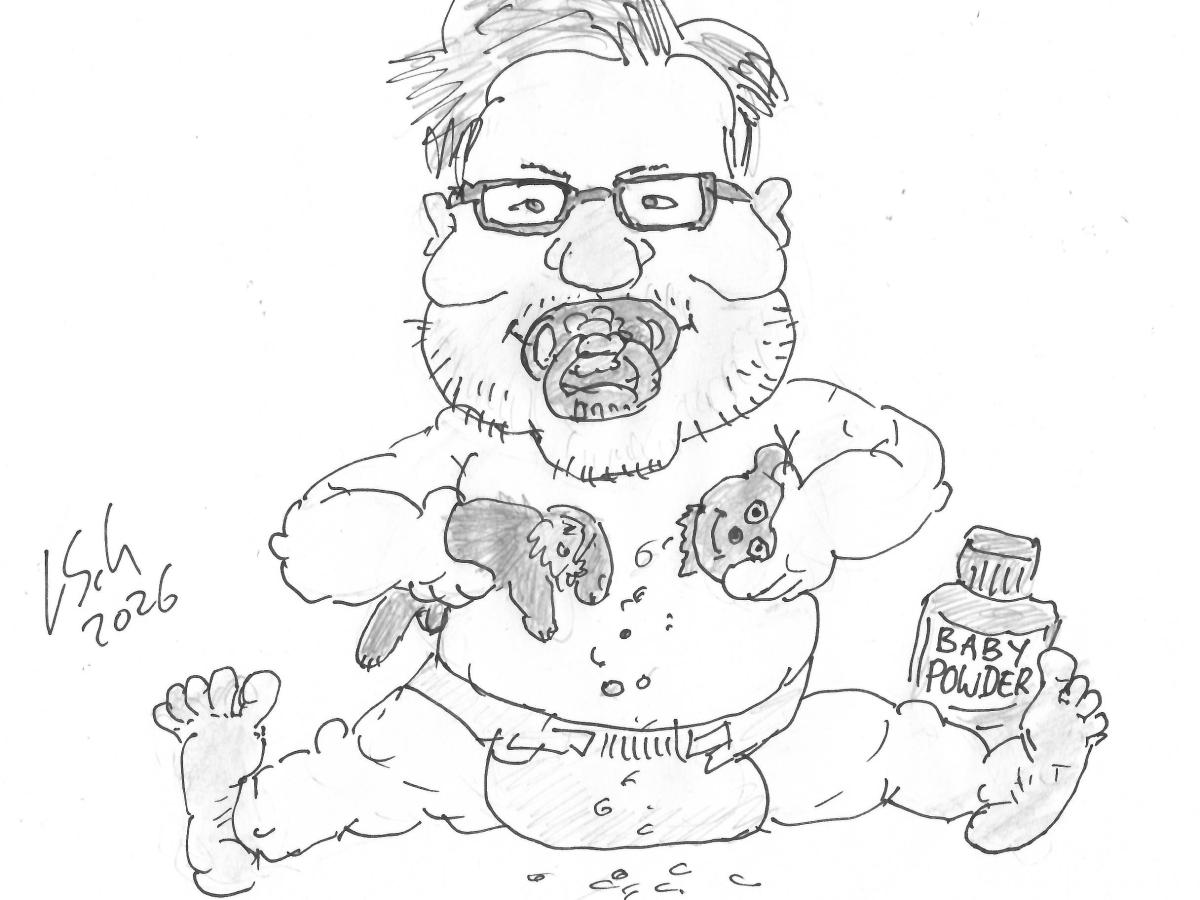
Axel Meyer’s pampered bottom
“In every respect, their behinds are pampered and any laziness and incompetence are forgiven with a lot of care and understanding.”
Naturally, Professor Kuzyakov is too drunk and too stupid to produce any actual research, but as so many great russian scholars, he knows his way around papermills. Which was just as well for the University of Göttingen, but now Elsevier journals started some spring cleaning, specifically the disastrous journal The Science of The Total Environment:
Cuiyan Wu , Wei Huang , Yixian Liu , Han Li , Shuai Ding, Zhenke Zhu , Feng Wang , Feike A. Dijkstra , Guangbin Zhang , Yakov Kuzyakov , Weiguo Cheng , Mouliang Xiao, Tida Ge Physicochemically protected organic carbon release is the rate-limiting step of rhizosphere priming in paddy soils The Science of The Total Environment (2024) doi: 10.1016/j.scitotenv.2024.176859
As you see, Kuzyakov is accompanied by another white man: Feike Dijkstra, professor at the University of Sydney in Australia. The paper wasn’t flagged on PubPeer before, and retracted on 26 August 2026 (highlight mine):
“This article is being retracted at the request of an impartial field expert acting in the role of an independent Publishing Ethics advisor.
Post-publication, an investigation was conducted on behalf of the journal by Elsevier’s Research Integrity & Publishing Ethics team with guidance from the Independent Publishing Ethics Advisor. This investigation discovered suspicious changes in authorship between the original submission and the revised version of this paper. During revision, the authors Wei Huang, Han Li, Yixian Liu, Shuai Ding, and Feng Wang were added to the revised paper without explanation and without exceptional approval by the journal editor, which is contrary to the journal policy on changes to authorship.
Elsevier’s Research Integrity & Publishing Ethics team reached out to the authors for an explanation, but they failed to provide a satisfactory explanation to these changes.
Having reviewed the findings of Elsevier’s Research Integrity & Publishing Ethics team, the Independent Publishing Ethics Advisor has lost confidence in the integrity of the article and has determined it should be retracted.
The authors disagree with retraction and dispute the grounds for it.”
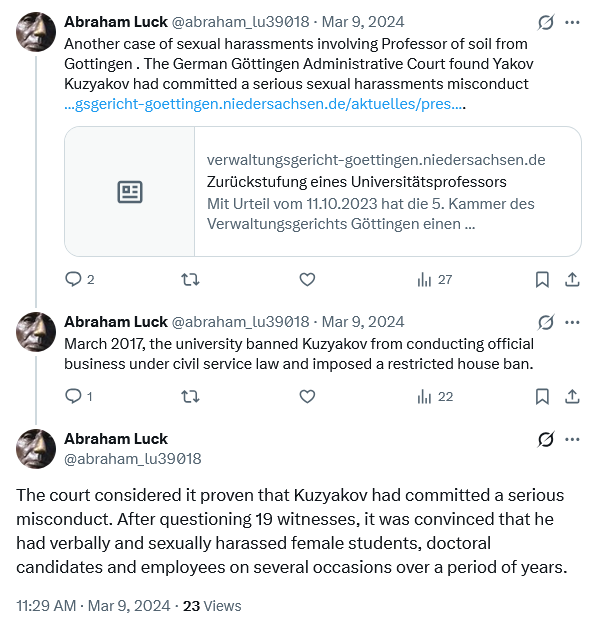
Here another retraction for Kuzyakov, in another Elsevier journal. It was flagged on Pubpeer because Kuzyakov acted as ediotr of his own paper, very openly so:
Menuka Maharjan , Deejay Maranguit , Yakov Kuzyakov Phosphorus fractions in subtropical soils depending on land use European Journal of Soil Biology (2018) doi: 10.1016/j.ejsobi.2018.04.002

Taeania maliponensis: “The editor of this article is also an author. This is unethical.”
The not yet dated retraction went:
“This article has been retracted at the request of the Editors-in-Chief.
Following an investigation, it was determined that the handling Field Editor of this article, Professor Yakov Kuzyakov, was simultaneously a co-author. Furthermore, acceptance of this article was partly based upon the positive advice of reviewers who were closely linked to one of the authors (Yakov Kuzyakov). This compromised the editorial process and breached the journal’s policies.
The authors were contacted and provided an opportunity to respond; their explanation was not considered sufficient. The Editors have, therefore, lost confidence in the results and conclusions of the article and have determined it should be retracted.”
Same happened with these two papers in the same journal:
- Husen Qiu , Tida Ge, Jieyun Liu , Xiangbi Chen , Yajun Hu , Jinshui Wu , Yirong Su , Yakov Kuzyakov Effects of biotic and abiotic factors on soil organic matter mineralization: Experiments and structural modeling analysis European Journal of Soil Biology (2018) doi: 10.1016/j.ejsobi.2017.12.003
- Husen Qiu , Xiaodong Zheng , Tida Ge , Maxim Dorodnikov , Xiangbi Chen , Yajun Hu , Yakov Kuzyakov, Jinshui Wu , Yirong Su , Zhenhua Zhang Weaker priming and mineralisation of low molecular weight organic substances in paddy than in upland soil European Journal of Soil Biology (2017) doi: 10.1016/j.ejsobi.2017.09.008


Also here, the retraction notices mentioned “that the handling Field Editor, Professor Yakov Kuzyakov, was simultaneously a co-author of this manuscript. Furthermore, acceptance of this article was solely based upon the positive advice of reviewers who were closely linked to one of the authors (Yakov Kuzyakov).“
Kuzyakov isn’t listed on this journal’s Ediotrial Board anymore. Back in 2018, he claimed to have been its Editor-in-Chief:
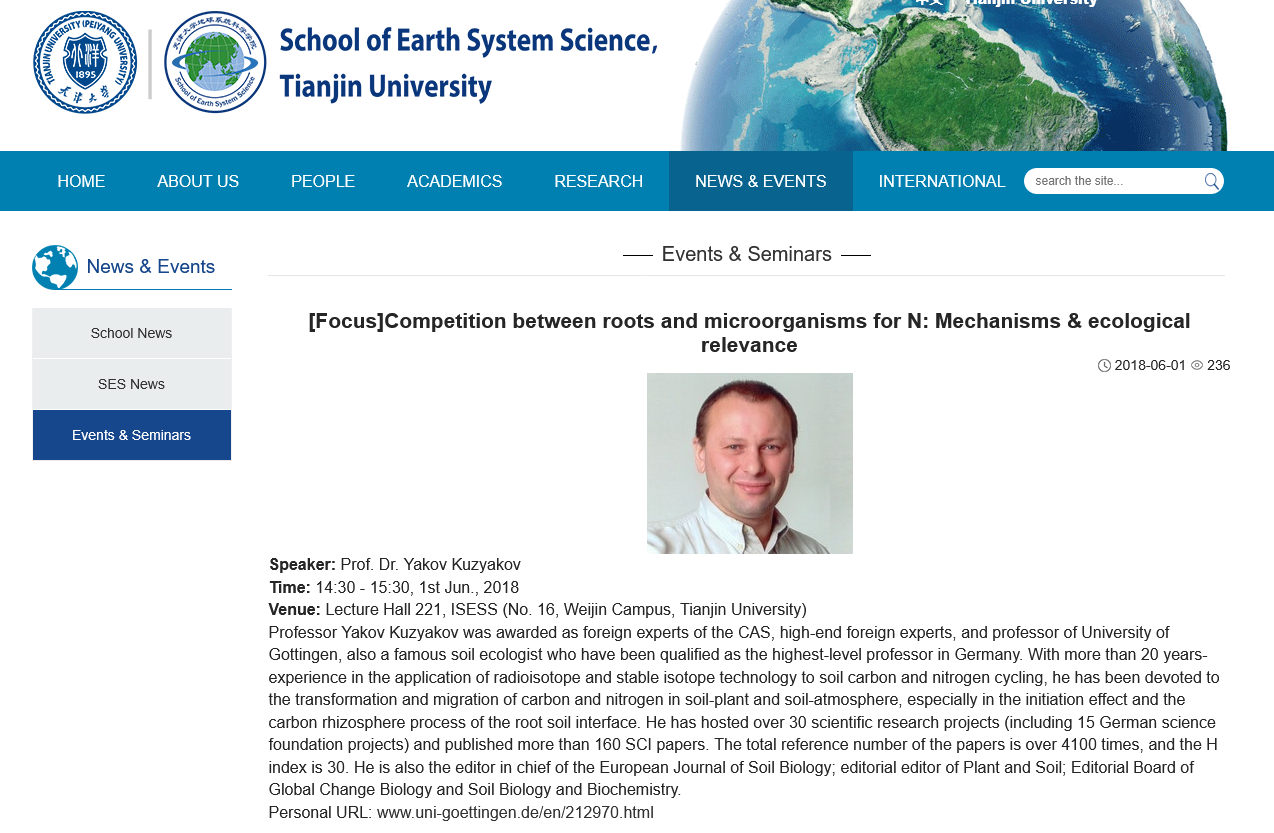
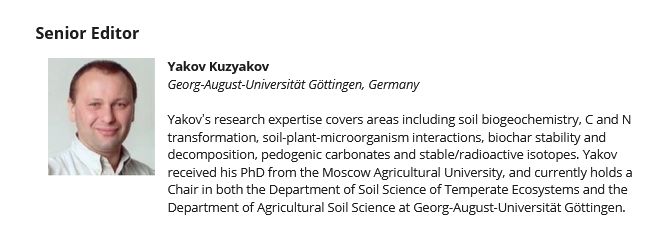
It seems, other journals and publishers may also have removed Kuzyakov from their editorial boards. But not Wiley’s Land Degradation & Development, there he still acts as Senior Editor:
Donate!
If you are interested to support my work, you can leave here a small tip of $5. Or several of small tips, just increase the amount as you like (2x=€10; 5x=€25). Your generous patronage of my journalism will be most appreciated!
€5.00


Correct me if I’m wrong Leonid but I think Cardiogeni are alive and well, they listed on the Aquis stock exchange in early 2025 and three prominent people on their website are Ajan Rejinald, Prof Sir Martin Evans and Darrin Disley
LikeLike
“Breakthrough” finding: if you let authors choose the referees they will manage to push every crap through:
https://publishing.aip.org/breakthrough-blog/integrity-in-peer-review-what-the-data-shows-about-author-suggested-reviewers_l0-b7-26_pr-ri/
LikeLike
AIP’s crap example: https://pubs.aip.org/aip/acp/article-abstract/2535/1/030009/2892334
LikeLike
” Pico technology is the advancement of nanotechnology which manipulates the matter on a scale of 10-12 m. It helps to develop new methods for improving groups of anatomical structures, drugs, engrave, enumerate, imaging, chemical catalysis, material weaving, and other fields. “
LikeLike
@Leonid
I liked that passage: “Using a coordinated microbial gas telephone (MFC)…
LikeLiked by 1 person