

Galina Selivanova, a russian cancer researcher at Karolinska Institutet in Sweden, got lucky for all of her other bad papers, but was found guilty of research misconduct over one single publication from Germany which she co-authored with none other but Klaus-Michael Debatin. The extra irony that his University of Ulm sees no problem in that same paper and their own cheating professors as innocent victims of racist persecution.
Selivanova is 69 years old and works at Karolinska Institutet in Stockholm since 1992, where she is full professor. Due to her currently 17 bad papers on PubPeer, she was investigated by her employer already a decade ago, and found innocent. Read my past reporting:

Mass investigation of 9 senior scientists at Karolinska Institutet
The scandal-shaken Swedish Karolinska Institutet (KI) invited nine of their research group leaders and professors to explain themselves about data integrity concerns raised in regard to their publications. They have time until November 24th 2016 to address of the suspicions of image duplications which were posted on PubPeer by anonymous watchdogs and subsequently reported to…

Further investigations by the Swedish authority, the National Board for assessment of Research Misconduct (NPOF), also found Selivanova innocent, either because the papers were too old to investigate, or because the infringements were allegedly too minor. But her visit to the University of Ulm in Germany and her encounter with their professor Klaus-Michael Debatin spelled the end of Selivanova’s lucky streak.
In 2000, Selivanova founded together with her Karolinska colleagues Klas Wiman (PubPeer record) and Vladimir Bykov the biotech company Aprea Therapeutics AB, which after 26 years is still stuck in phase 1 trials and can’t be doing too great, also because in 2020 Karolinska Development partially sold their shares in this business.
First NPOF investigation
The first NPOF investigation concerned a paper by Selivanova with the British cancer research bigwig and University of Cambridge professor Sir Stephen Jackson and his fraudster postdoc, Abdeladim Moumen. Read about them here:
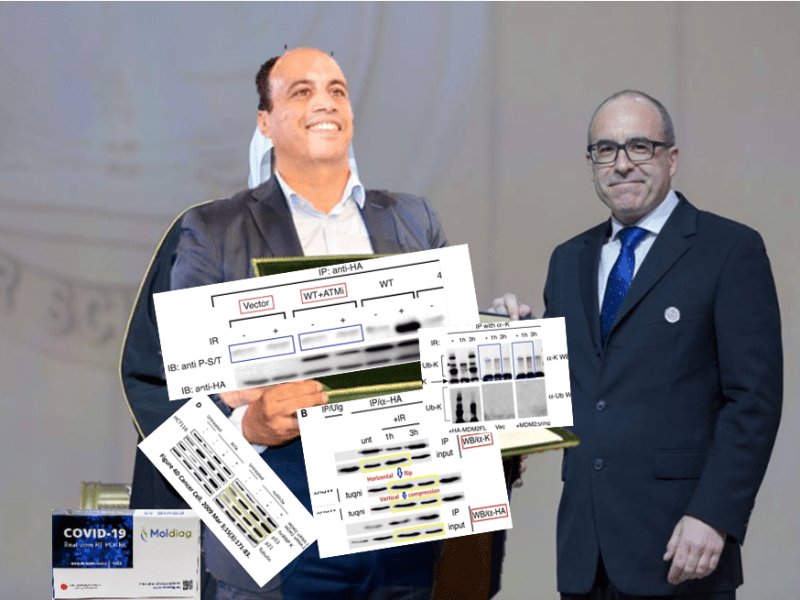
Steve Jackson and the Moumen Troll
“I take issues of research integrity very seriously and shall of course review the concerns posted on PubPeer to establish whether there are any issues that need to be addressed.” Stephen P Jackson.
Their fraudulent paper was corrected right when it was first published in 2009, because “In the right panel of Figure 6A of this article, the splicing from non-neighboring lanes was not indicated“. Then, much more was found:
Martin Enge, Wenjie Bao, Elisabeth Hedström, Stephen P. Jackson, Abdeladim Moumen, Galina Selivanova MDM2-dependent downregulation of p21 and hnRNP K provides a switch between apoptosis and growth arrest induced by pharmacologically activated p53 Cancer Cell (2009) doi: 10.1016/j.ccr.2009.01.019


In October 2021, Selivanova went to PubPeer to blame Moumen:
Galina Selivanova: “We decided to perform a new experiment for the Figure 4D in my lab in Stockholm (the previous experiment has been performed in S Jackson’s lab in Cambridge). We performed Nutlin treatment of HCT116 cells with MDM2 depleted or not by two different siRNAs and performed immunoblotting for p53 and p21. Please see below the new western blot”

The three panels definitely don’t look like they are from the same gel, for each lane, the band shapes and width do not match. Which raises concerns about Selivanova’s ethics and competence as scientist. She also posted photographs of whole gels for those replacement blots, but not for the original figures.
In their January 2022 decision, NPOF refused to investigate that paper because it was older than 10 years at the time of notification. Elsevier and its Cell Press even refused to issue a new Erratum, because that publisher has special rules for white alpha men like Jackson.
The sleuth then informed NPOF about this study from Selivanova’s lab:
Mikhail Burmakin , Yao Shi , Elisabeth Hedström, Per Kogner, Galina Selivanova Dual targeting of wild-type and mutant p53 by small molecule RITA results in the inhibition of N-Myc and key survival oncogenes and kills neuroblastoma cells in vivo and in vitro Clinical Cancer Research (2013) doi: 10.1158/1078-0432.ccr-12-2211
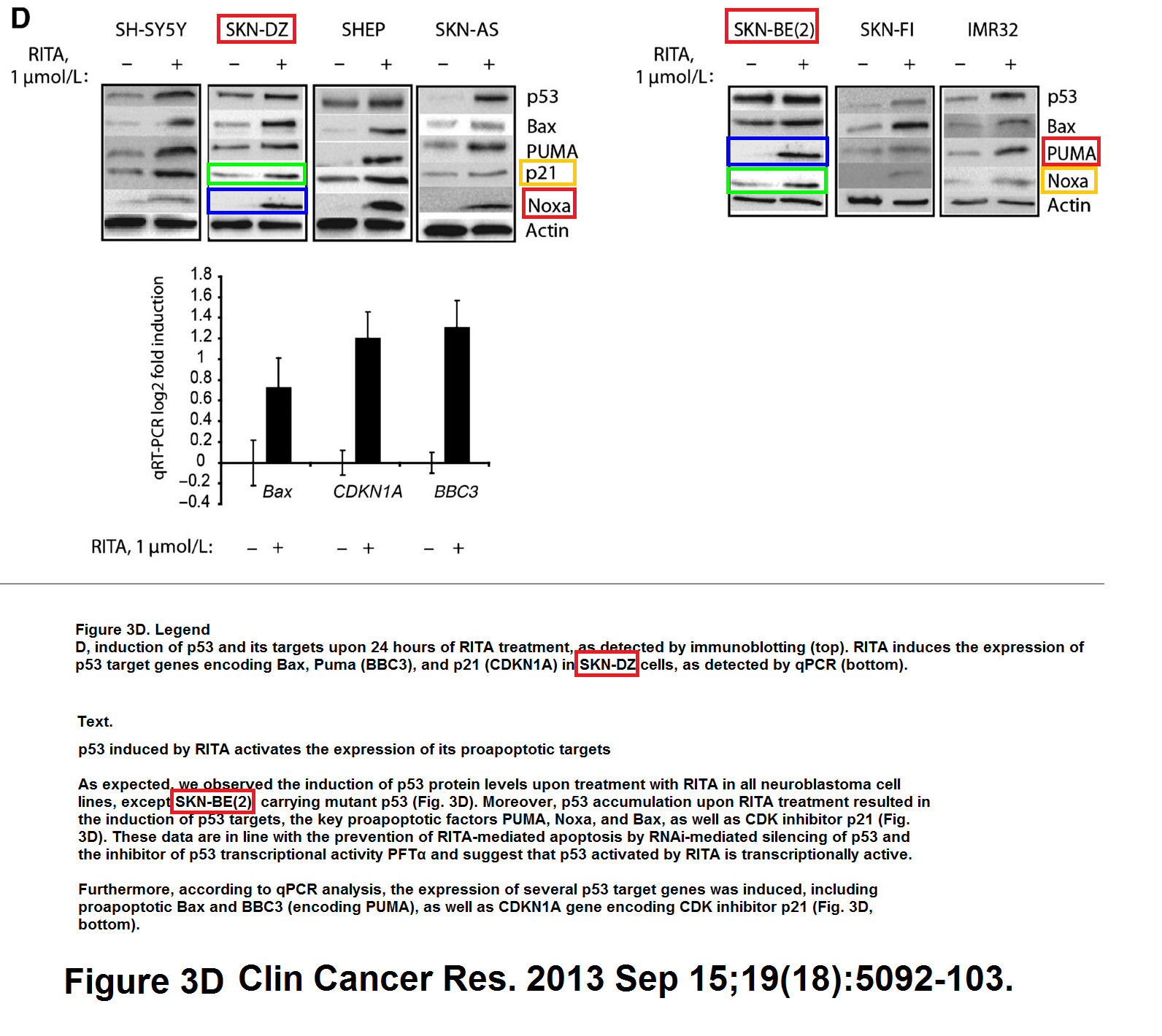
Here, Selivanova replied on PubPeer in August 2021:
Galina Selivanova: “We could not localise the original images used to generate this Figure, therefore we repeated twice the experiment in SKN-BE(2) cells.”
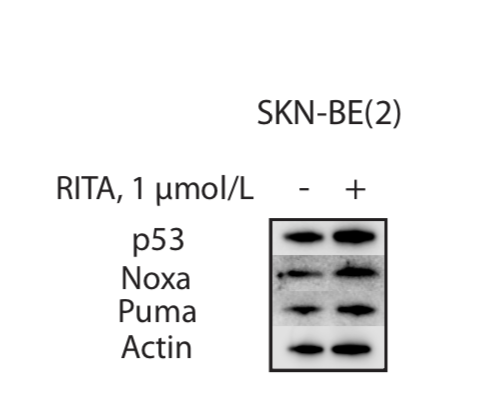
As it happens, the founder of Aprea Therapeutics (which markets the relevant drug RITA) lied about having “No potential conflicts of interest“, but that wasn’t noticed back then. An Editor’s Note followed in September 2021:
“The editors are publishing this note to alert readers to a concern about this article (1): in Fig. 3D, the p21 and Noxa Western blots for SKN-DZ were accidentally duplicated as the PUMA and Noxa Western blots for SKN-BE(2). The SKN-DZ blots were correct, and the authors have additional SKN-BE(2) blots available for review upon request. The authors regret this error and stand by the conclusions in the article.”
This is the NPOF decision and the report from 24 January 2022:
“The National Board for Assessment of Research Misconduct (hereinafter “the Board”) decides that Mikhail Burmakin, Elisabeth Hedström, Per Kogner, Galina Selivanova, and Yao Shi are not guilty of research misconduct.”
The NPOF decision was based on the advice from the expert Mikael Nilsson, professor at Sahlgrenska Center for Cancer Research:
“With regard to the 2013 article, the expert states that it is clear that two Western blot panels in Figure 3D are duplicated and reused in the same figure to represent results from different cell lines, SKN-DZ vs. SKN-BE(2), and different proteins, p21/Noxa vs. Noxa/PUMA. The expert therefore assesses that the duplication constitutes falsification. The expert states that he leaves open whether the falsification was unintentional and the result of carelessness or whether it was the result of active manipulation.”
Nilsson also opined on Selivanova’s replacement blot on PubPeer: “there is nothing indicating that the analyses on PubPeer would be manipulated.” Nobody minded that Selivanova failed to declare her Aprea business interests.

Leonard and Ada Girnita guilty of research misconduct
“The Board states in conclusion that the research leaders Ada Girnita and Leonard Girnita have a special responsibility for guaranteeing the quality of the research group’s publications and that they have failed to take this responsibility fully.”
Second NPOF Investigation
The next NPOF decision arrived in March 2022. Six papers were investigated, in this one Selivanova, Wiman and Bykov did bother to declare their Aprea interests, after all it used their company’s proprietary drug:
- X Peng , M-Q-Z Zhang , F Conserva , G Hosny , G Selivanova , V J N Bykov , E S J Arnér , K G Wiman APR-246/PRIMA-1MET inhibits thioredoxin reductase 1 and converts the enzyme to a dedicated NADPH oxidase Cell Death & Disease (2013) doi: 10.1038/cddis.2013.417
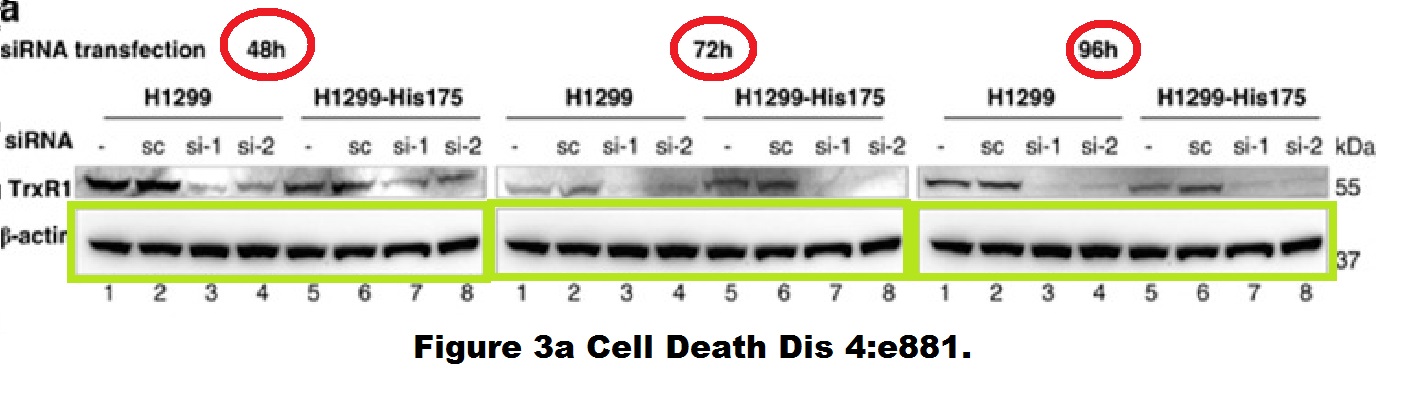
That paper was flagged in early 2016, in April 2016 Selivanova’s patron Wiman replied on PubPeer with “A revised Fig. 3a with the correct actin blots“. An Erratum followed a year later, in April 2017, explaining that “the beta-actin blot for the 48 h time point was by mistake duplicated for the 72 and 96 h time points“.
NPOF cited the expert, who was again Mikael Nilsson:
“Regarding Article 1, the expert states that it is clear that the article contains duplicated results in Figure 3A involving reuse of beta-actin control panels. The expert […] considers it clear that the incorrect panels did not affect the conclusions of the results in the article. He considers that the documented email exchange between the authors regarding the PubPeer comments in 2016 supports the authors’ claims that the duplication was an unintentional mistake and that he finds nothing indicating deliberate falsification of data in Article 1.”
It was decided:
“The National Board for Assessment of Research Misconduct (hereinafter “the Board”) decides that Elias Arnér, Francesca Conserva, Vladimir Bykov, Gihan Hosny, Xiaoxiao Peng, Galina Selivanova, Klas Wiman and Meiqiongzi Zhang have not been guilty of research misconduct.”
Here is the full report:
Number 2 on the NPOF list was the Burmakin et al 2013 paper above, it wasn’t investigated again. For the following articles 3-6, it was decided that they “were older than ten years when the case was initiated“, and that “there are no special reasons to depart from the limitation period“.
For these two papers sharing the same experimental data but for two different drugs, the authors also lied in the 2022 study about Aprea’s drug RITA-1 to have “no competing financial interests“:
- Vladimir J.N. Bykov , Natalia Issaeva , Nicole Zache , Alexandre Shilov , Monica Hultcrantz , Jan Bergman , Galina Selivanova , Klas G. Wiman Reactivation of mutant p53 and induction of apoptosis in human tumor cells by maleimide analogs Journal of Biological Chemistry (2005) doi: 10.1074/jbc.m501664200
- Vladimir J.N. Bykov , Natalia Issaeva , Alexandre Shilov , Monica Hultcrantz , Elena Pugacheva , Peter Chumakov , Jan Bergman , Klas G. Wiman , Galina Selivanova Restoration of the tumor suppressor function to mutant p53 by a low-molecular-weight compound Nature Medicine (2002) doi: 10.1038/nm0302-282
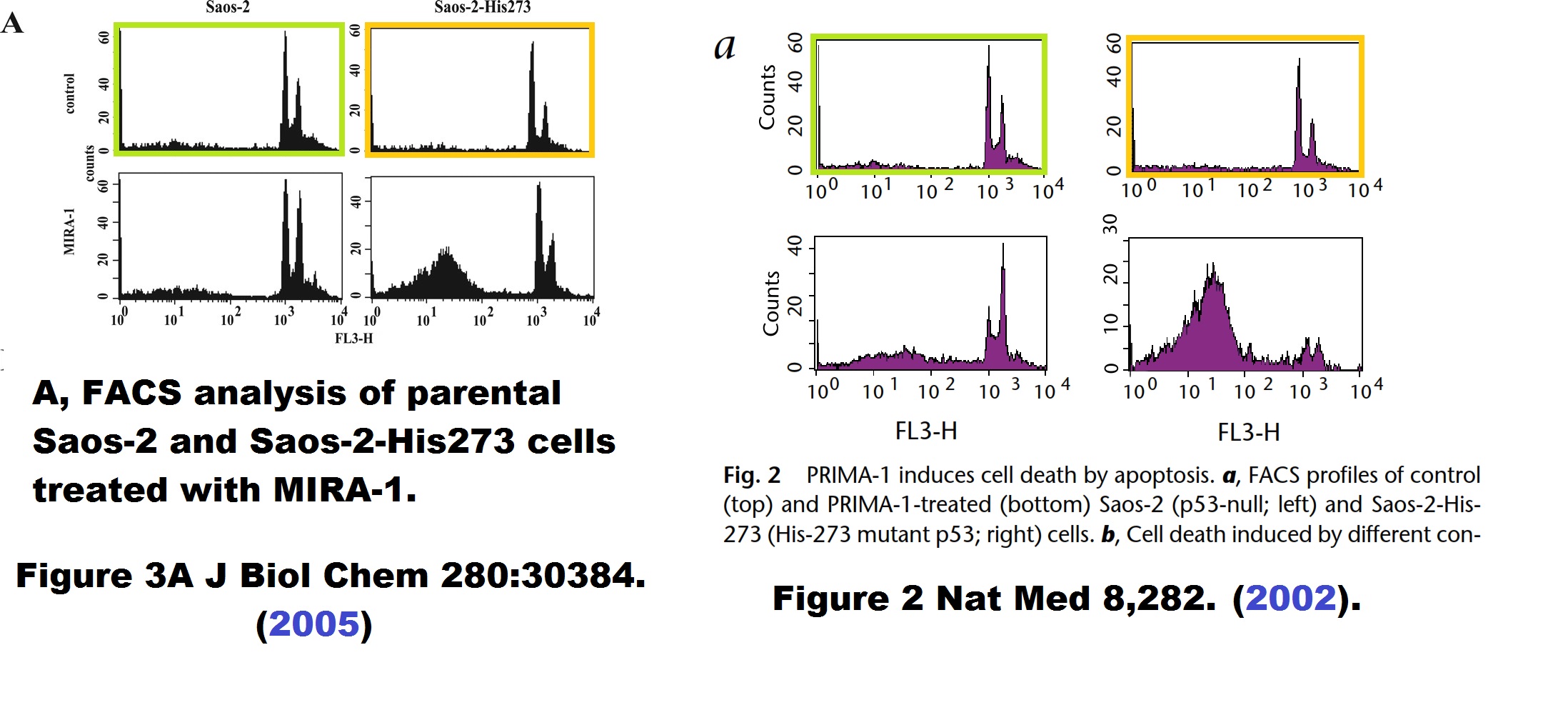
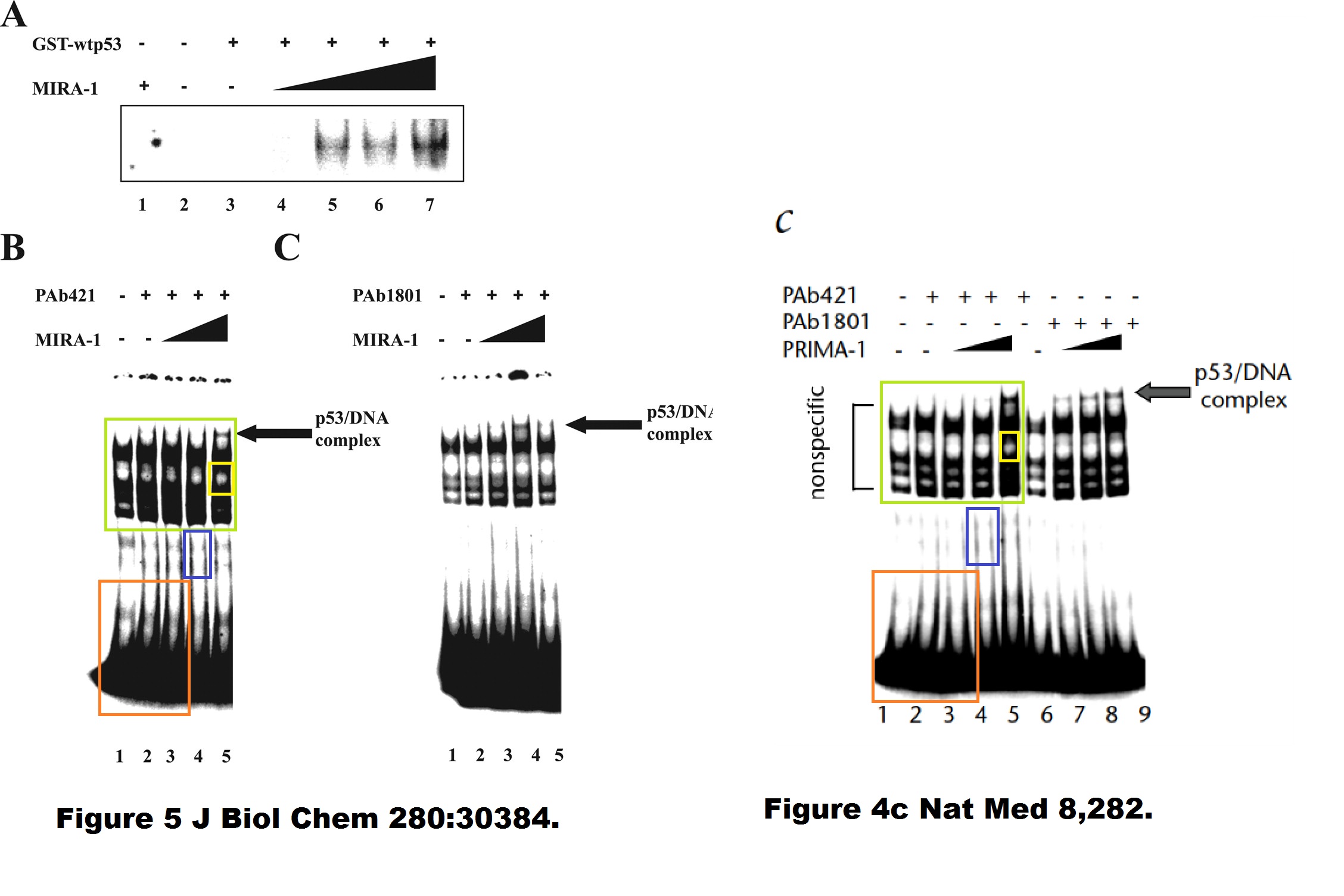
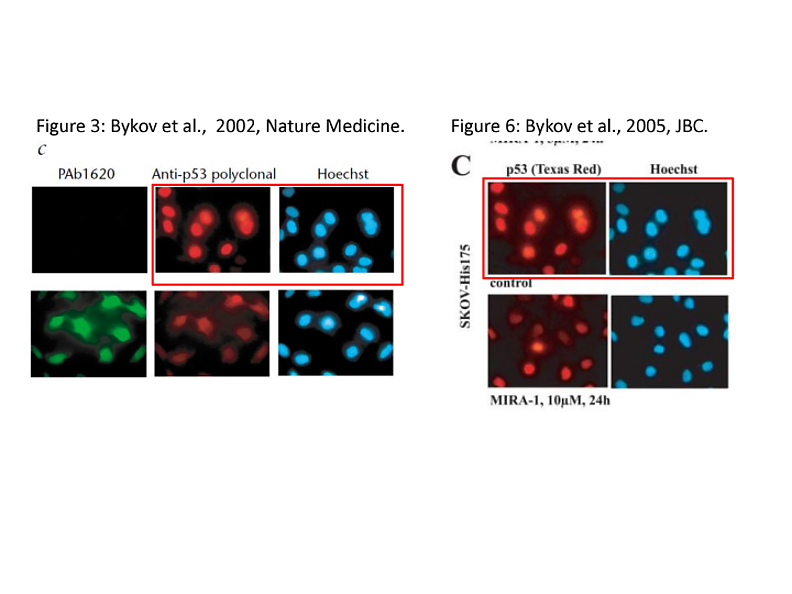
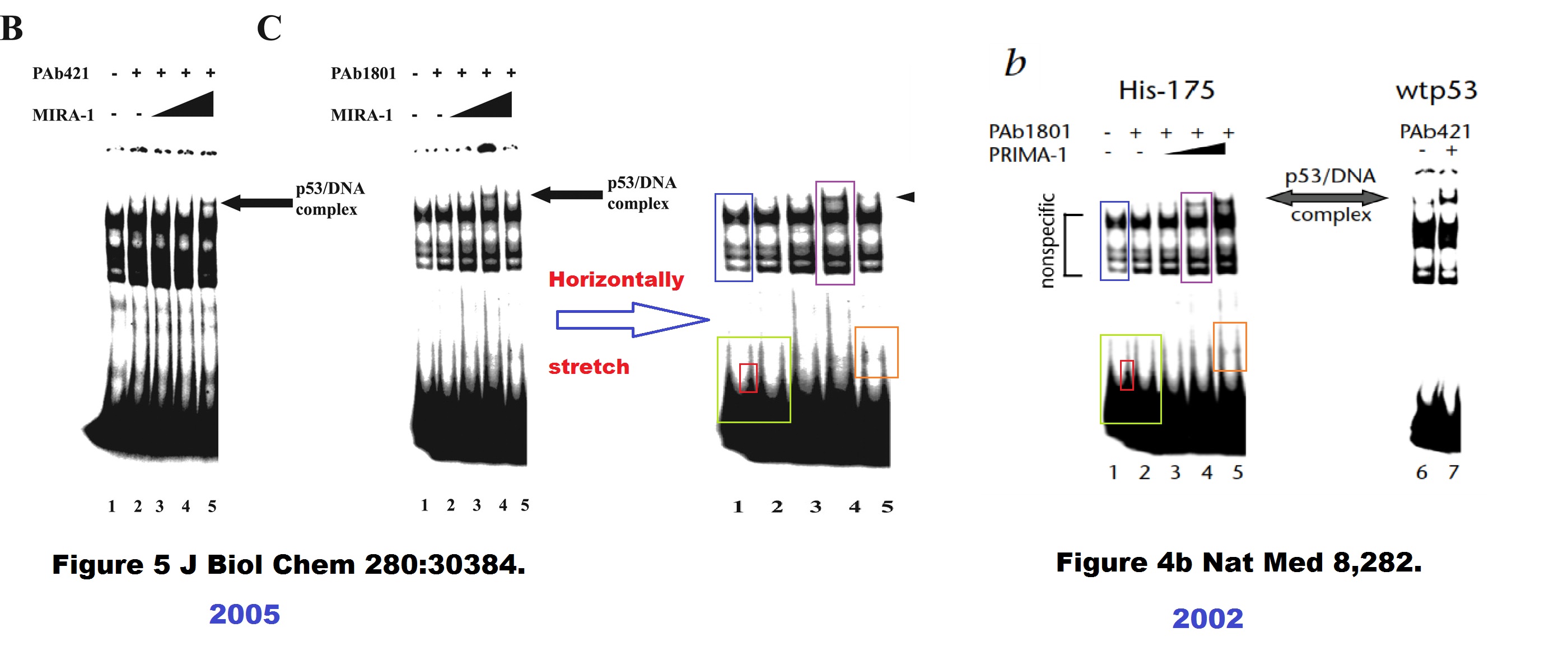
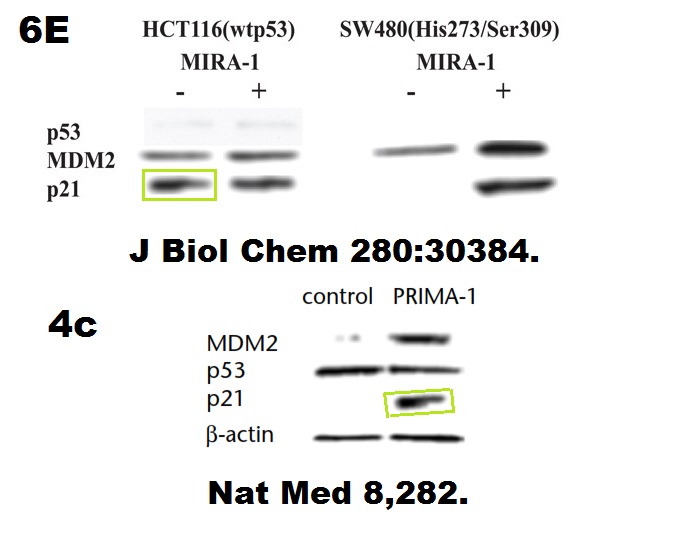
In November 2016, Selivanova, Wiman and Bykov explained on PubPeer that they “do not have the original autoradiography films“, admitted that their “cutting and fusing lanes may of course be criticized“, but then insisted that “the figures are correct” and their “conclusions from these experiments are not affected“.
For the 2005 paper, JBC published a Correction in December 2017 where the authors wished “to acknowledge that the controls shown in Fig. 5, B and C, and Fig. 6C have also been used in a previous publication” and that whatever else was found duplicated “does not change the validity of the data nor the conclusions from the experiments.“
Here, Selivanova at least admitted to be “a founder of a small biotech company, ApreaAB“, without saying that it marketed the drug this study is all about:
- Vera V. Grinkevich , Fedor Nikulenkov , Yao Shi , Martin Enge , Wenjie Bao , Alena Maljukova , Angela Gluch , Alexander Kel , Olle Sangfelt , Galina Selivanova Ablation of key oncogenic pathways by RITA-reactivated p53 is required for efficient apoptosis Cancer Cell (2009) doi: 10.1016/j.ccr.2009.03.021
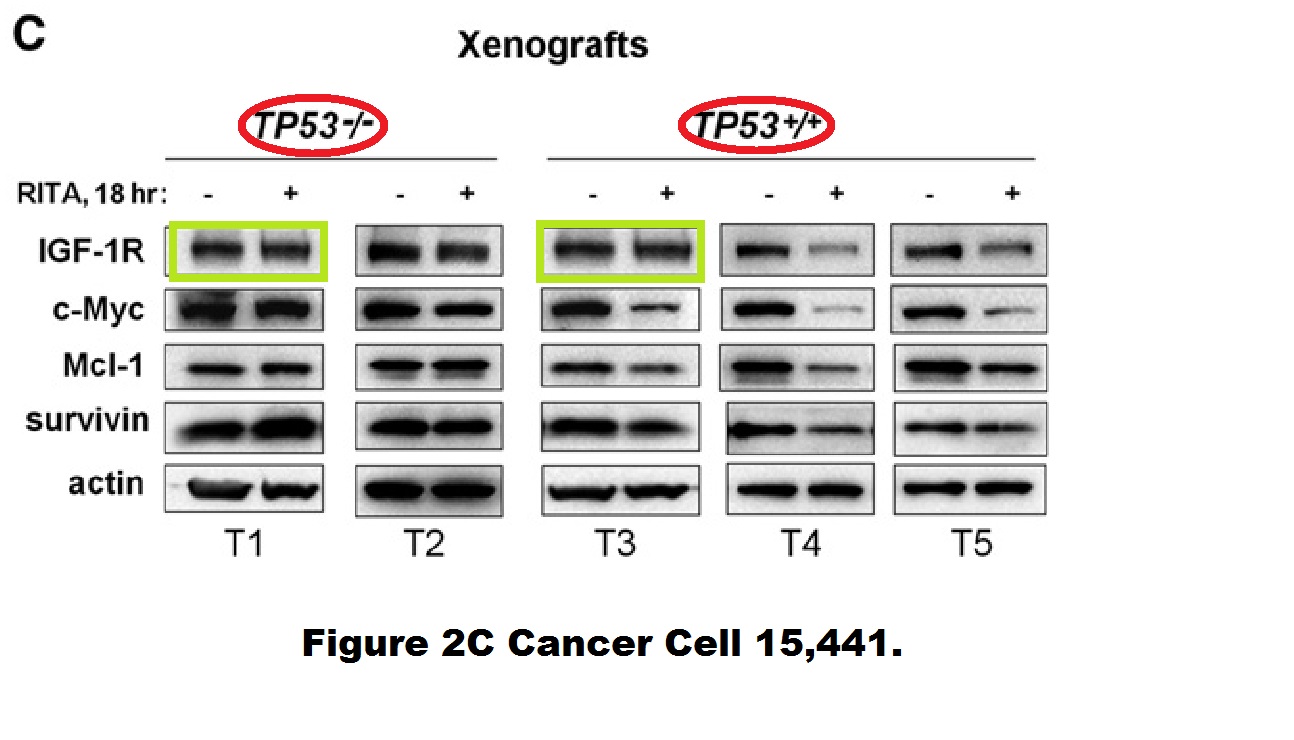
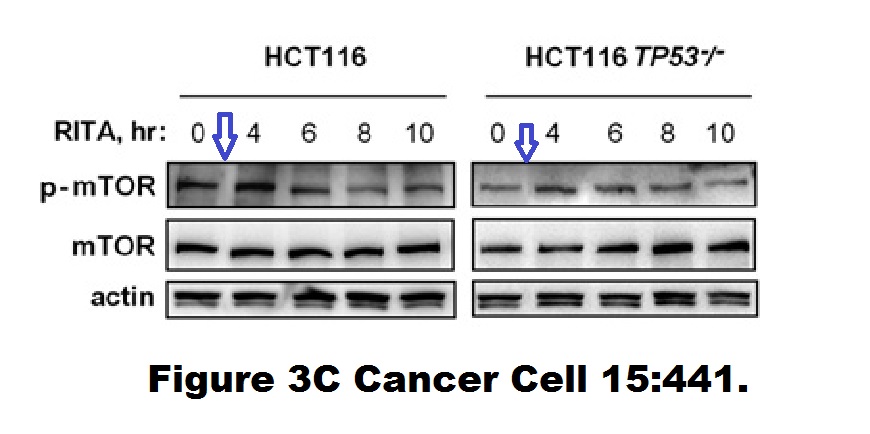
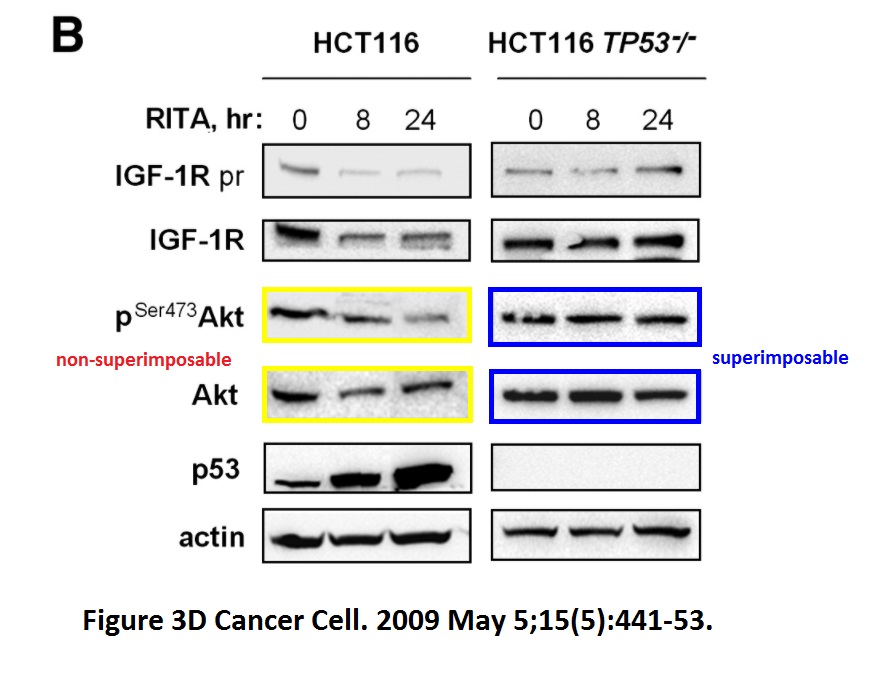
In November 2016, the authors replied on PubPeer with replacement figures. A Correction was issued in May 2017 to state that “that in the original Figure 2C, the IGF-1R subpanel of T1 in a TP53−/− mouse was accidentally duplicated and erroneously inserted in place of the subpanel showing IGF-1R in T3 in a TP53+/+ mouse“, which “does not affect any of the findings reported in the paper.“
In the last paper in this NPOF investigation, again about Aprea’s drug RITA, the company’s founder Selivanova again lied: “No potential conflicts of interest were disclosed.”
- Carolyn Ying Zhao , Laszlo Szekely , Wenjie Bao , Galina Selivanova Rescue of p53 function by small-molecule RITA in cervical carcinoma by blocking E6-mediated degradation Cancer Research (2010) doi: 10.1158/0008-5472.can-09-2787

Also here, the authors posted replacement blots on PubPeer in November 2016. A Correction was published by AACR in July 2017, but it is hidden and not accessible from the main article page:
“[…] there are errors in Fig. 2A and B. The actin blot, serving as a loading control for PARP in CaSki cells, was accidentally inserted in place of the panels showing loading control for p-histone H3 in Fig. 2B. In addition, the incorrect actin loading control for p-histone H3 in Fig. 2A was used. These mistakes were made during the assembly of the figure. The errors do not affect any of the findings reported in the article.”
As I mentioned, Wiman has much more bad stuff on PubPeer, including with Karolinska’s innocent angel Helin Vakifahmetoglu-Norberg. But all those papers of his are way too old to be investigated. Hahaha.

Data manipulation evidence in Helin Vakifahmetoglu papers “warrants no further consideration”
The Swedish Karolinska Institutet (KI) has investigated its own cell biologist and well-funded autophagy researcher Helin Vakifahmetoglu-Norberg, following my publishing of a dossier with evidence for data manipulations in her papers. Also PubPeer evidence was considered. This was a second investigation of Vakifahmetoglu-Norberg, who was fully acquitted by KI already in 2016. While the new KI…
Third NPOF Investigation
The next investigation was in 2025. Since a total of 12 articles were reported, the case was split, the investigation 3.2-25/0111 addressed the following paper, where Selivanova admitted to being “a co-founder of Aprea Therapeutics AB, developing mutant p53-reactivating compounds“:
Xiaolei Zhou , Madhurendra Singh , Gema Sanz Santos , Vincent Guerlavais , Luis A. Carvajal , Manuel Aivado , Yue Zhan , Mariana M.S. Oliveira , Lisa S. Westerberg , D. Allen Annis , John Inge Johnsen , Galina Selivanova Pharmacologic Activation of p53 Triggers Viral Mimicry Response Thereby Abolishing Tumor Immune Evasion and Promoting Antitumor Immunity Cancer Discovery (2021) doi: 10.1158/2159-8290.cd-20-1741
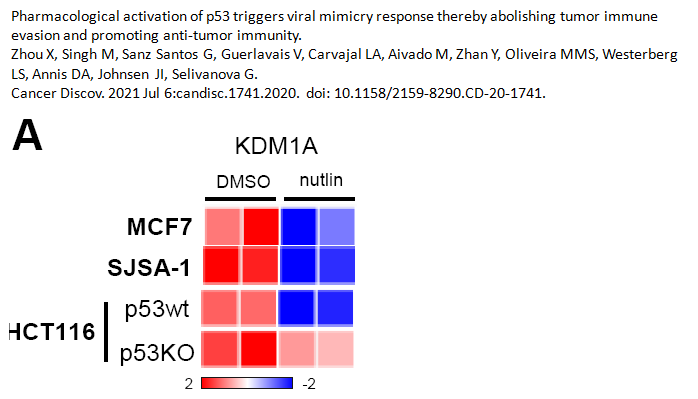
The concerns were posted in September 2021, Selivanova replied on PubPeer right away:
Galina Selivanova: “The data for heapmaps are from different cell lines and should not be assembled as one heatmap. […] Please see the correct Figure”
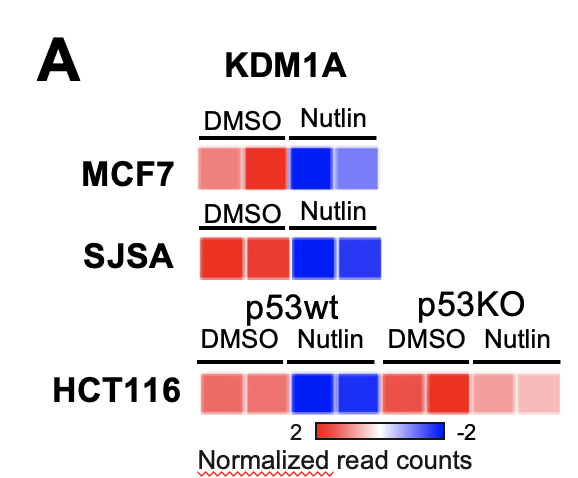
NPOF determined on 13 November 2025:
“According to the article, Figure 2A is intended to show how mRNA levels for the gene KDM1A change in four different cell lines after a certain treatment. The Board notes that the authors have submitted a corrected version of Figure 2A to the journal where it is more clearly shown that different cell lines are presented. The Board finds that the reported figure also clearly shows what the article states that the figure is intended to show and that nothing indicates that data in Figure 2A have been invented, changed, omitted or withheld without justification. The Board assesses that the figure is manually assembled but that this does not constitute falsification or fabrication.”
The final decision was:
“The National Board for Assessment of Research Misconduct (hereinafter “the Board”) decides that Galina Selivanova, Gema Sanz Santos, John I. Johnsen, Lisa S. Westerberg, Madhurendra Singh, Mariana M. S. Oliviera, Xiaolei Zhou and Yue Zhan have not been guilty of research misconduct.”
No correction was published till today. Either the society publisher AACR doesn’t care, or the authors lied to NPOF about having submitted the correction to the journal.

Fourth NPOF Investigation
Now we arrived at the most recent report. Only Article 1 was investigated there, and it is a major story in itself. First, allow me to list the other 10 papers which NPOF again didn’t investigate because they were older than 10 years:
- Bykov et al 2022, discussed above
- Bykov et al 2005 discussed above
- T Liu , C Laurell , G Selivanova , J Lundeberg , P Nilsson , K G Wiman Hypoxia induces p53-dependent transactivation and Fas/CD95-dependent apoptosis Cell Death & Differentiation (2007) doi: 10.1038/sj.cdd.4402022
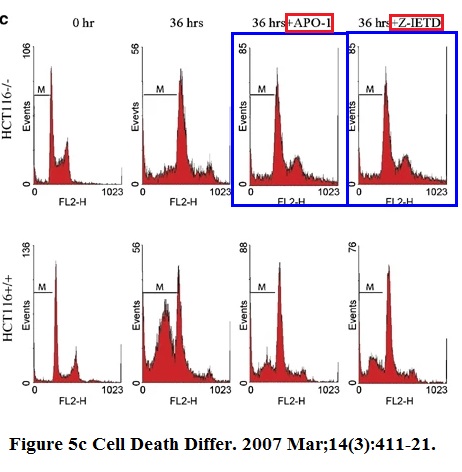
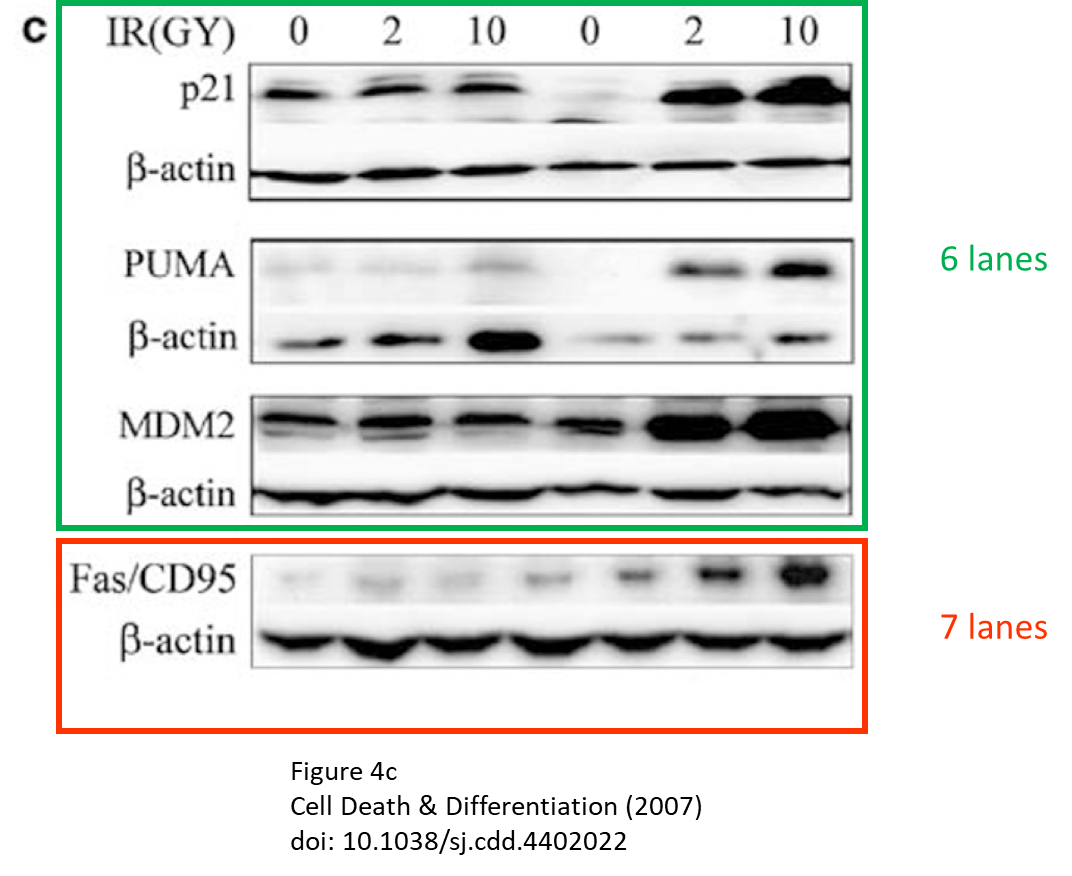
Paper Nr 4 had no Conflicts of Interests section, while two of the authors are Aprea founders. It was edited by Israeli cheater Moshe Oren, just like papers Nr 8 and Nr 9 in the same journal, in both cases Selivanova lied “The authors declare no conflict of interest.”
- Enge et al 2009, discussed above
- Grinkevich et al 2009, discussed above
- Zhao et al 2010, discussed above
- C Spinnler , E Hedström , H Li , J De Lange , F Nikulenkov , A F A S Teunisse , M Verlaan-de Vries , V Grinkevich , A G Jochemsen , G Selivanova Abrogation of Wip1 expression by RITA-activated p53 potentiates apoptosis induction via activation of ATM and inhibition of HdmX Cell Death & Differentiation (2011) doi: 10.1038/cdd.2011.45
- F Nikulenkov , C Spinnler , H Li , C Tonelli , Y Shi , M Turunen , T Kivioja , I Ignatiev , A Kel , J Taipale , G Selivanova Insights into p53 transcriptional function via genome-wide chromatin occupancy and gene expression analysis Cell Death & Differentiation (2012) doi: 10.1038/cdd.2012.89
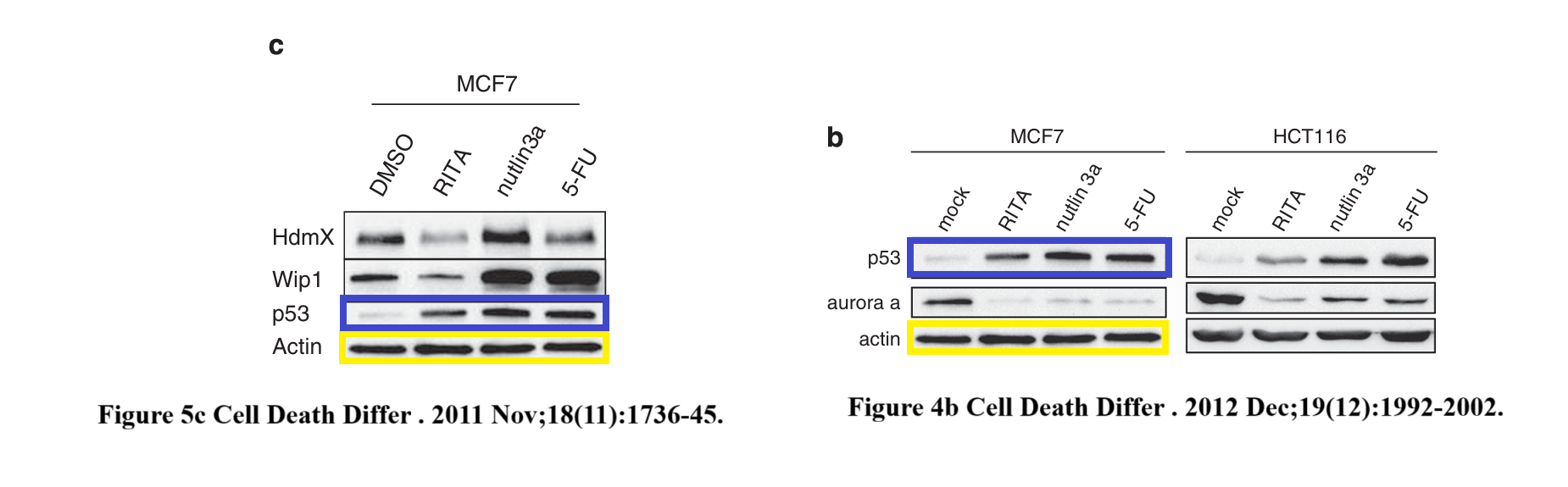
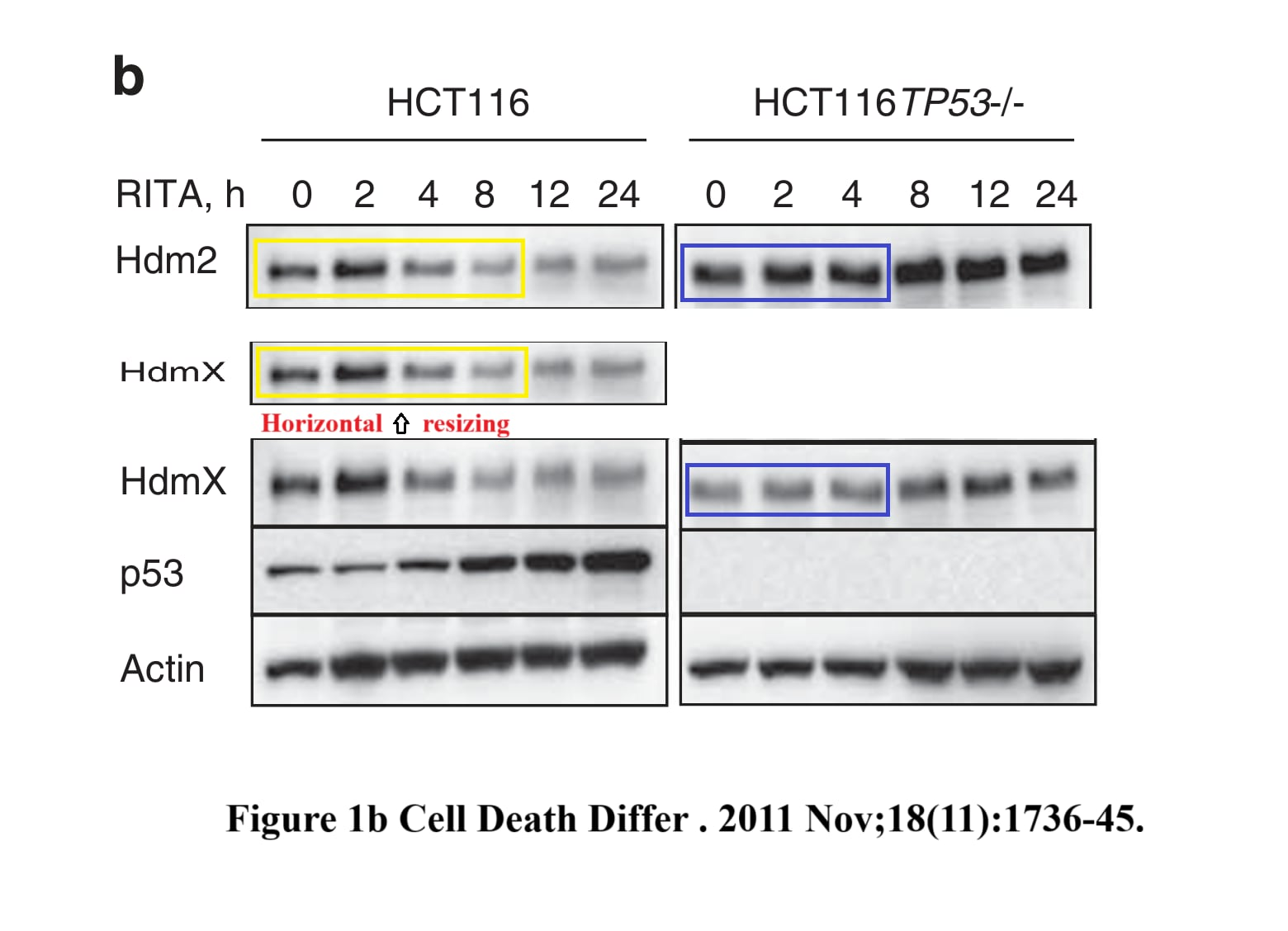
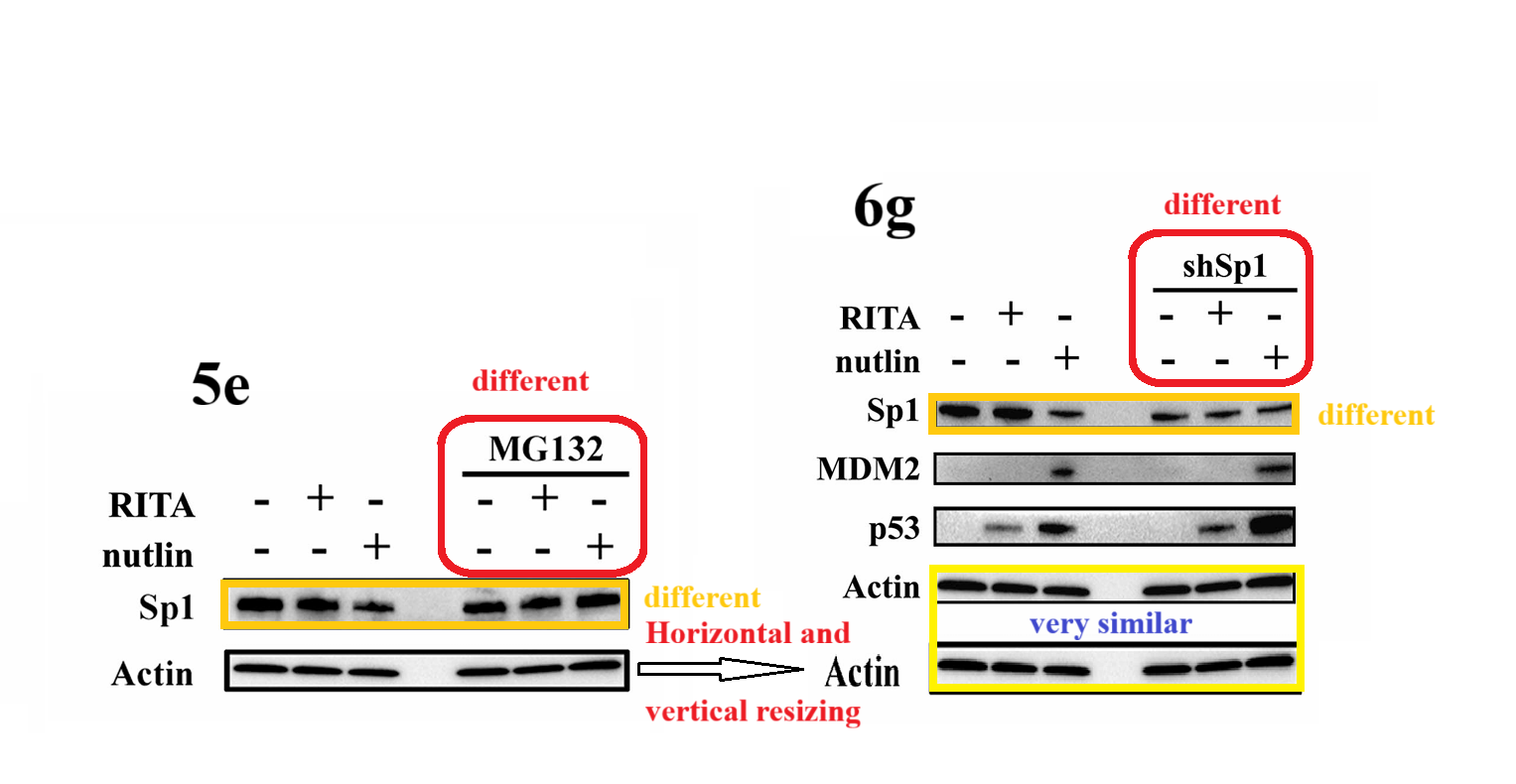
Selivanova also lied about having no conflict of interest here, in the article Nr 10, edited by yet another cheater, Karen Vousden:
- H Li , Y Zhang , A Ströse , D Tedesco , K Gurova , G Selivanova Integrated high-throughput analysis identifies Sp1 as a crucial determinant of p53-mediated apoptosis Cell Death & Differentiation (2014) doi: 10.1038/cdd.2014.69
And now we arrive to the particularly interesting article 1, where Selivanova was finally found guilty of research misconduct. Here is the full report:
The special irony is that Selivanova’s German collaborator here is none other but Klaus-Michael Debatin. Just like his former Ulmian mentee Simone Fulda (who rose and fell as Rector of University of Kiel), Debatin was declared an innocent angel and a victim of my slanderous harassment by the University of Ulm (read May 2025 Shorts), but then the German Research Council (DFG) found both Debatin and Fulda guilty of research misconduct (read July 2025 Shorts). By then, the Ulm bigwig retired in April 2024, aged 71 and celebrated by his university as a saint who saved the lives of countless sick children (read March 2024 Shorts).
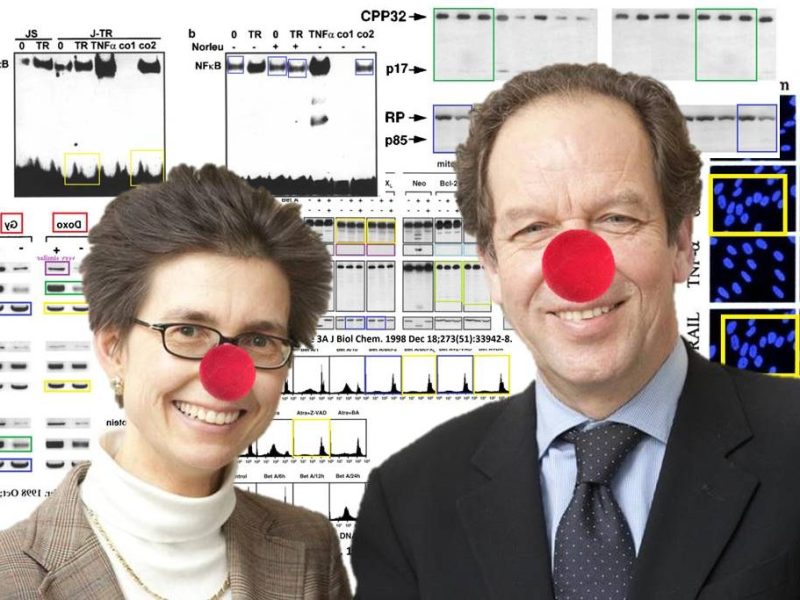
Fulda & Debatin: Reproducibility of Results in Medical and Biomedical Research
“Basic and advanced training for researchers should focus much more on self-reflection, openness and a culture of error acceptance.”
The paper which ended Selivanova’s lucky streak is in fact entirely from Germany, the last author is a certain Lüder Hinrich Meyer, who is Debatin’s former postdoc, now running the joint lab which he probably hopes to inherit once Debatin fully retires to spend more time with his money.
There are also some professors from University of Tübingen, and two authors from University of Padua in Italy, Selivanova is the only Swedish contributor. On that paper, she didn’t have to lie about her conflicts of interests, because the Italian publisher Ferrata-Storti Foundation doesn’t believe in such things:
Salih Demir, Elena Boldrin, Qian Sun, Stephanie Hampp, Eugen Tausch, Cornelia Eckert, Martin Ebinger, Rupert Handgretinger, Geertruy Te Kronnie, Lisa Wiesmüller , Stephan Stilgenbauer, Galina Selivanova, Klaus-Michael Debatin, Lüder Hinrich Meyer Therapeutic targeting of mutant p53 in pediatric acute lymphoblastic leukemia Haematologica (2020) doi: 10.3324/haematol.2018.199364
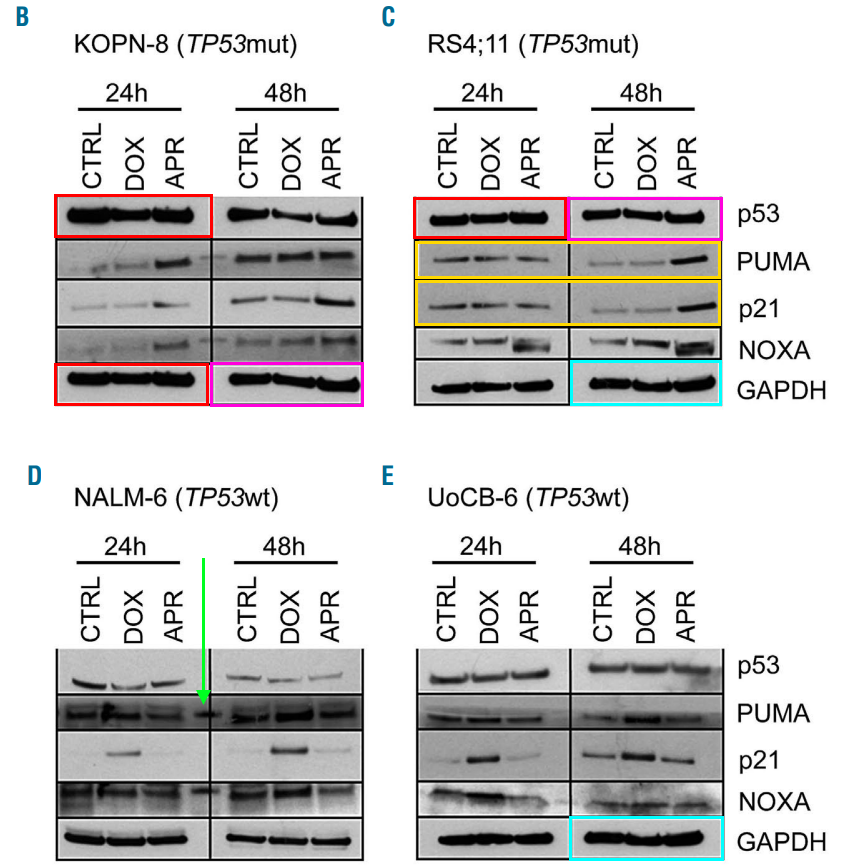
During the investigation, Selivanova once again insisted that those were all “unintentional mistakes“. She explained that she started her collaboration with Debatin and Meyer “to investigate whether the molecule APR-246, which she and her colleagues at Karolinska Institutet discovered, can be used for treatment of acute lymphatic leukemia in children” and that this “collaboration began when she presented her research at a visit of the university of Ulm.”
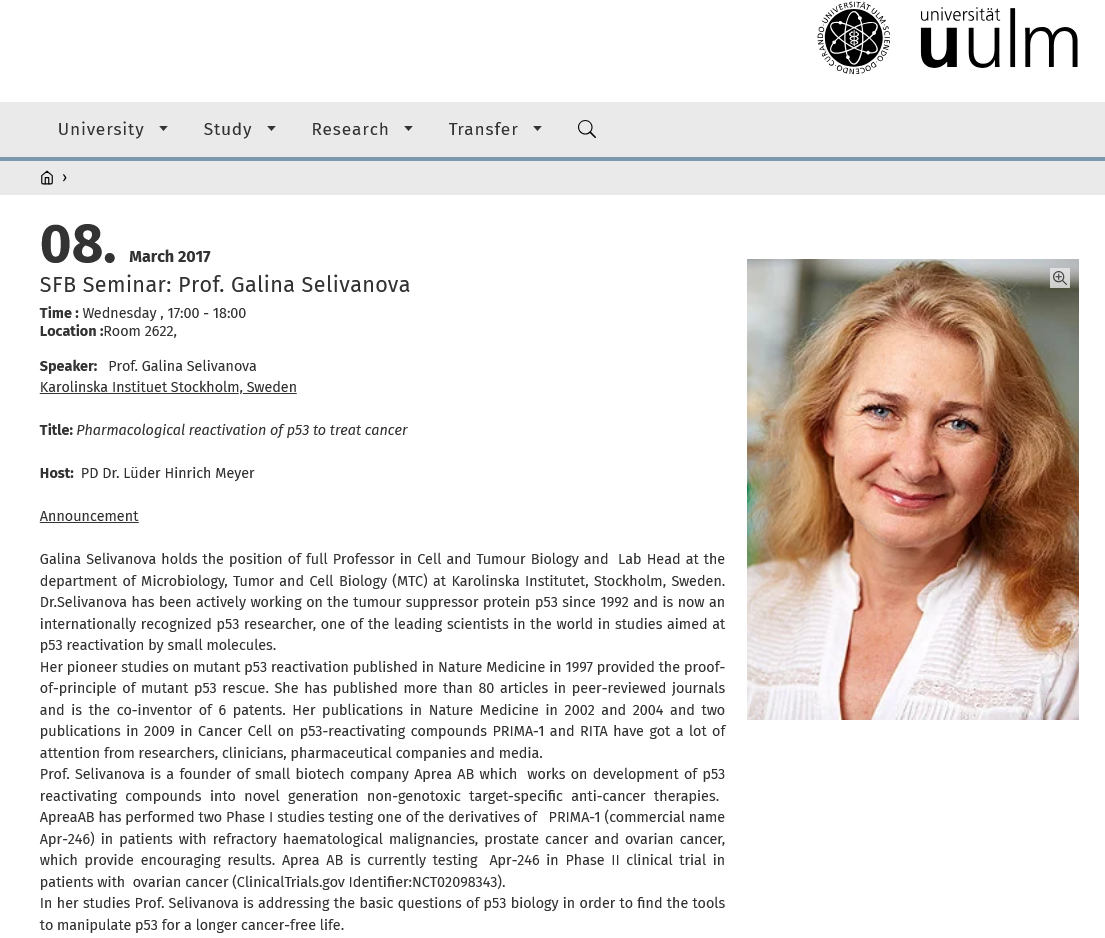
Here is this visit, Selivanova’s seminar in Ulm from 2017, charmingly on 8 March, the “International women’s day” celebrated in russia and former USSR:
Towards NPOF, Selivanova proceeded to blame the Turkish student, Salih Demir, who she said “performed most of the work“. In any case, the Karolinska professor explained, “The errors do not affect in any serious way the research conclusions of the article” and that “It is important to distinguish between conscious and intentional errors and unintentional errors.” Her defence, and she wasn’t even wrong there, was that the Germans were respeonsible:
“Galina Selivanova has discussed how it is better to control the quality and accuracy of data with her collaborators. She has carried out measures to improve the standards in her own laboratory, including a more rigorous check of how employees use research logs and ensuring that all raw data are saved.
Galina Selivanova and her colleagues take responsibility for not having discovered the unfortunate mix-up at Western blot panels. Had they discovered it, they should have corrected the error before submitting the article for publication. The error does not seriously affect the conclusions of the research in the article. She believes that it is important to distinguish between deliberate and intentional errors and unintentional errors. Neither she nor her employees has had any intention of misleading.”
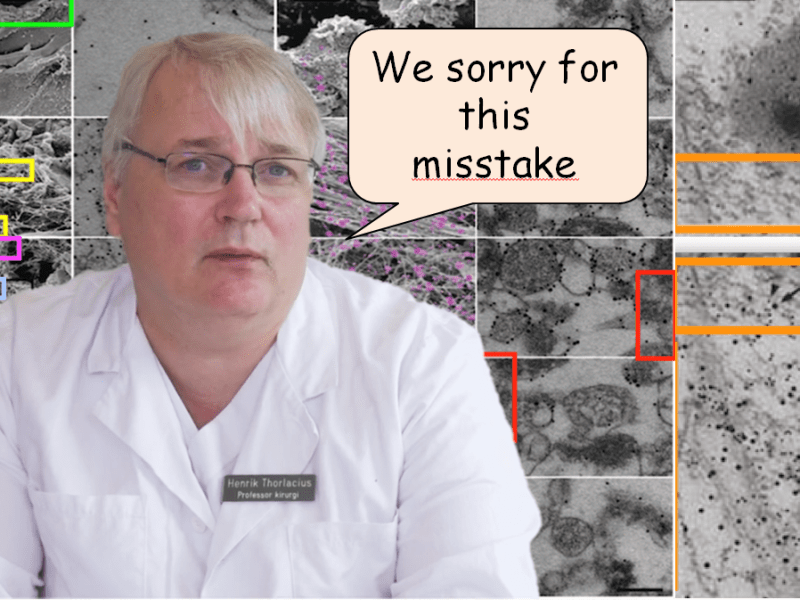
The Misunderstanding of Henrik Thorlacius
“Potential repetitive areas presumably arise from the residual bulk image (RBI) phenomenon of the CCD camera, in which structures may be digitally repeated due to charge residues in the camera wafer.”
NPOF saw it differently:
“Galina Selivanova is therefore a co-author of an article containing four falsified figures, which constitute serious breaches of good research practice. […]
A clear division of responsibilities is outlined in the article, in which the author states that she conducted the research, analysed and interpreted the data, and reviewed and approved the manuscript. Galina Selivanova is one of the researchers who discovered the anti-cancer substance APR-246, which is central to the article, and she is the founder and co-owner of the company that has produced and supplied APR-246. The Board therefore considers that she plays a central role in the research presented in the reported article. Galina Selivanova is a professor and has published similar research for many years. Given her expertise, she must be well acquainted with the type of results and experiments shown in Figure 3. The Board notes that the duplications and similarities between the Western blot results in Figure 3 are clear, and that the images that have been duplicated or resemble one another are placed side by side.
In the Board’s assessment, Galina Selivanova possesses such knowledge and expertise that – had she reviewed the article with the diligence required of a co-author under good research practice – she would have realised that at least the Western blot results in Figure 3 were duplicated and that there were therefore grounds for further scrutiny of the article. Galina Selivanova must have been aware that she had not reviewed the manuscript in the manner required by good research practice of a person with her competence and position.
Summary of the decision
In summary, the Board finds that Galina Selivanova is guilty of research misconduct.”
It didn’t help that there was a “Dissenting opinion by member Peter Allebeck” who felt that Selivanova was not grossly negligent and thus not guilty of research misconduct.

Simone Fulda: Open4Work!
“I am taking this step with a heavy heart and a sense of responsibility for the university since a sufficient foundation of mutual trust no longer remained with some parts of the university to ensure successful cooperation”, – Simone Fulda
Gender and Diversity in Ulm
The extra irony is, as I mentioned, that while in Sweden Selivanova may be guilty and this same paper may be utterly fraudulent, in Germany it will forever remain perfectly trustworthy, and all of its coauthors forever entirely innocent.
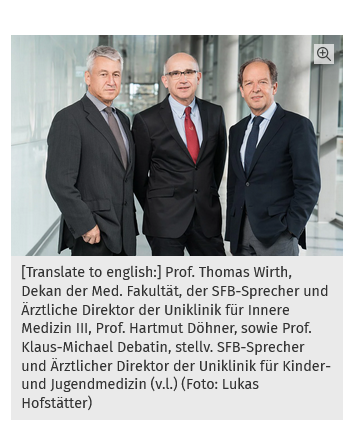
That is also because the University of Ulm is an insane place.
Guess what position Debatin held since 2010. “Vice President for Medicine, Gender and Diversity”. Seriously. In 2014, he passed on this job to another white German heterosexual male, Hartmut Döhner (whose own science is also very dodgy, read March 2024 Shorts). Döhner was just briefly holding Debatin’s seat warm, because the latter became Vice-Pesident of Medicine, Gender and Diversity again, and again. The only diversity these guys provide is the colour of their ties, but then again: this is exactly the message the University of Ulm wanted to send to any women, people of colour, LGBTQ and other minorities who might think of complaining about discrimination. One look at Debatin’s face and you’ll know to better shut up and swallow everything.
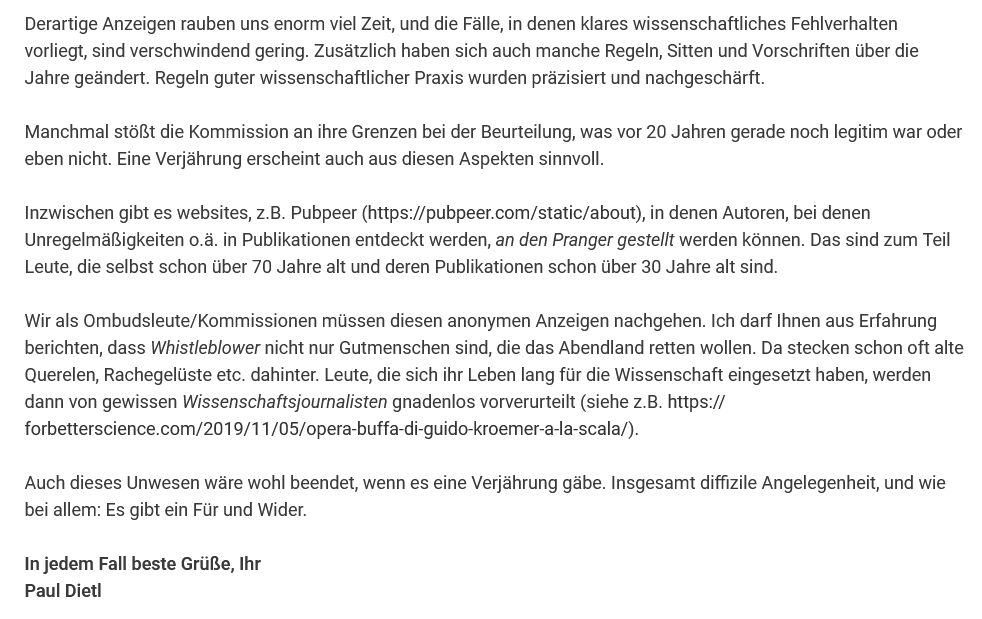
But there are more insanities in Ulm. Their ombudsman Paul Dietl once complained about me in a public letter (read March 2024 Shorts), where he for some reason felt the need to specifically defend Debatin’s friend Guido Kroemer from my slander.
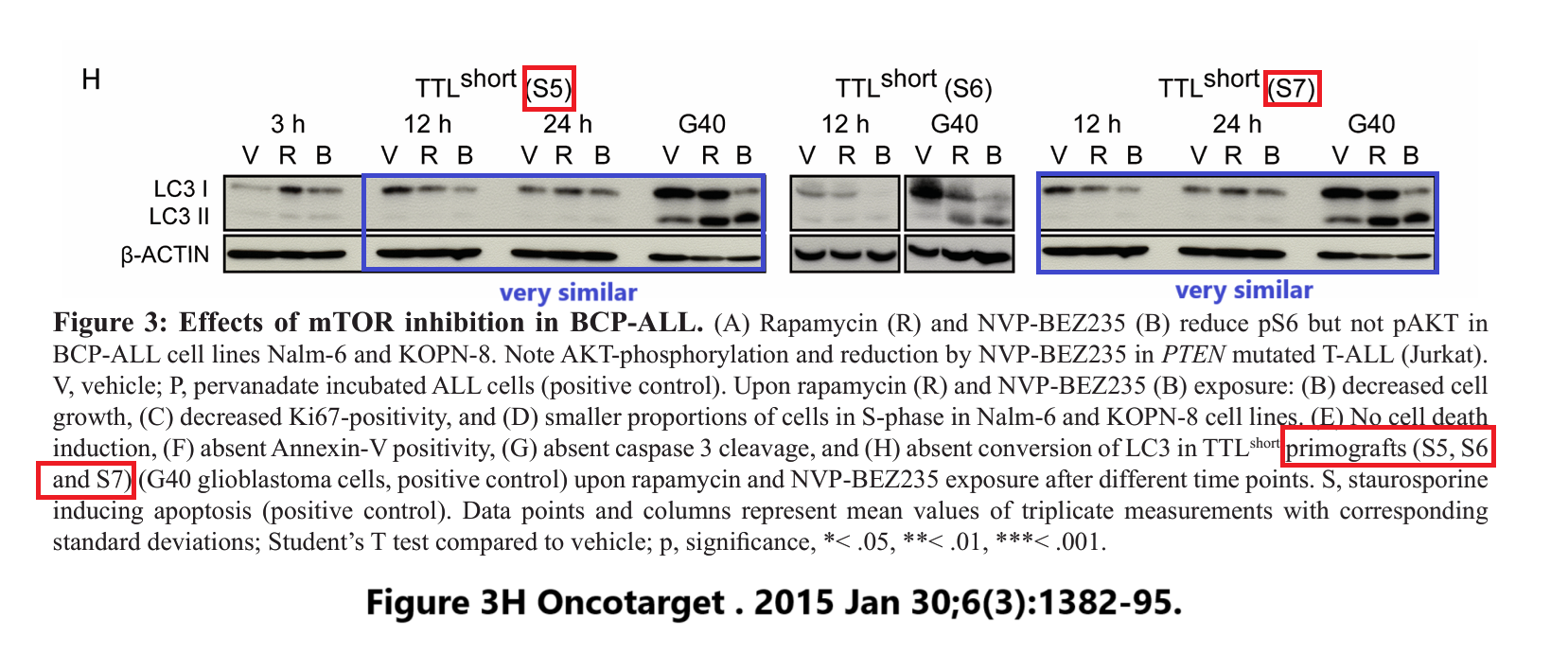
On Dietl’s watch, also this paper by Debatin, Meyer, and their coauthor at University of Padova whom you already met – Geertruy Te Kronnie – will never be found problematic:
Md. Nabiul Hasan , Manon Queudeville , Luca Trentin , Sarah Mirjam Eckhoff , Ilaria Bronzini , Chiara Palmi , Thomas Barth , Giovanni Cazzaniga , Geertruy Te Kronnie , Klaus-Michael Debatin , Lüder Hinrich Meyer Targeting of hyperactivated mTOR signaling in high-risk acute lymphoblastic leukemia in a pre-clinical model Oncotarget (2015) doi: 10.18632/oncotarget.2842
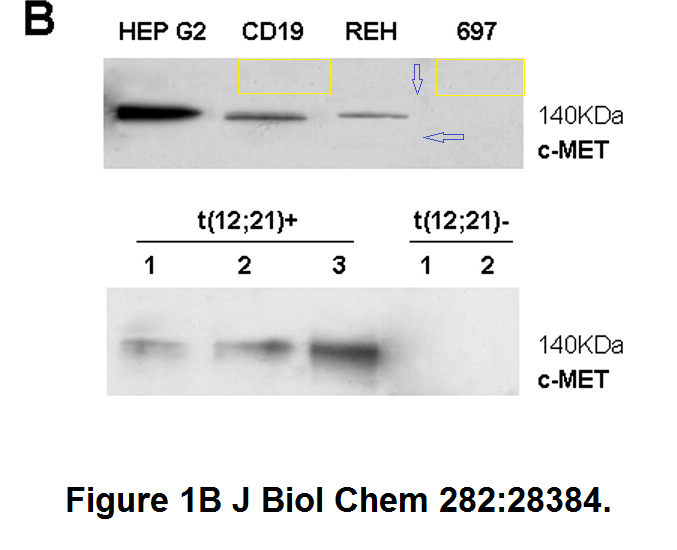
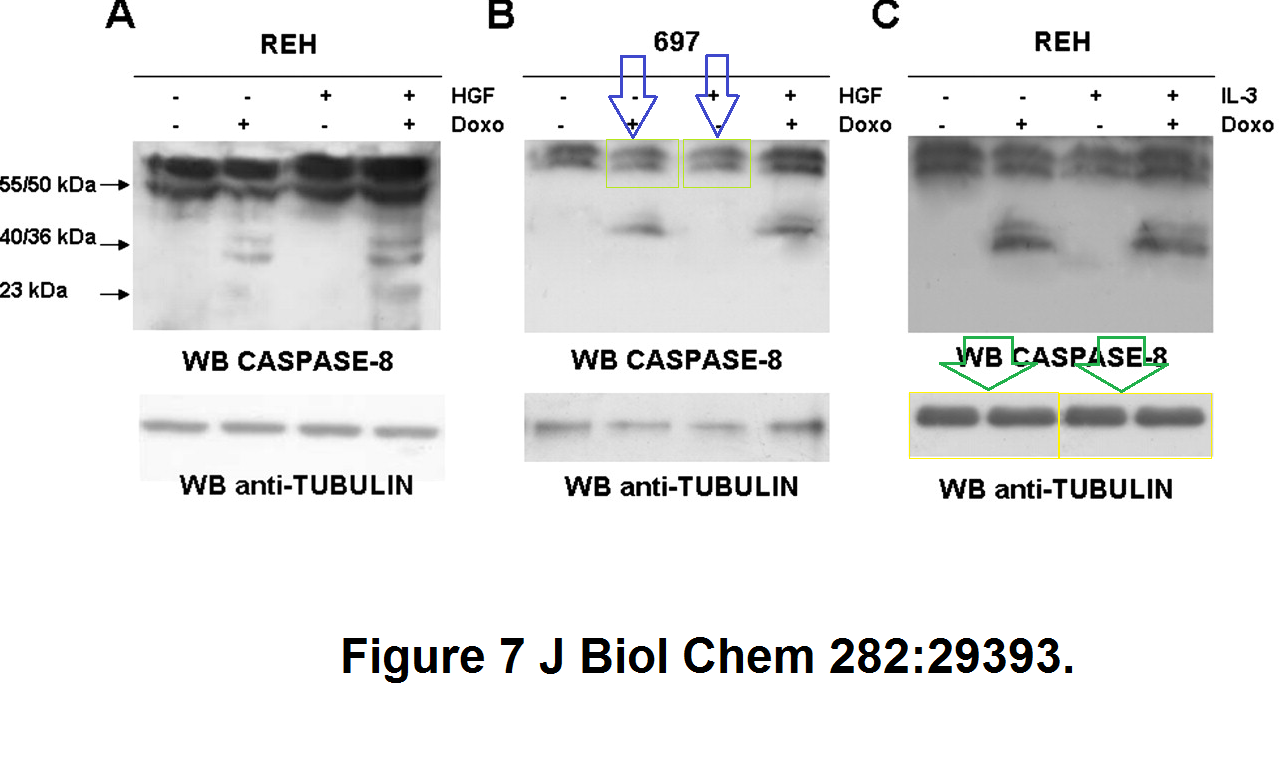
Look at this trash from Te Kronnie (who has other bad stuff on PubPeer) with her Italian friends, including Annarosa Arcangeli:
Benedetta Accordi, Serena Pillozzi , Marta Campo Dell’Orto , Giovanni Cazzaniga , Annarosa Arcangeli , Geertruy Te Kronnie , Giuseppe Basso Hepatocyte growth factor receptor c-MET is associated with FAS and when activated enhances drug-induced apoptosis in pediatric B acute lymphoblastic leukemia with TEL-AML1 translocation Journal of Biological Chemistry (2007) doi: 10.1074/jbc.m706314200

Another University of Ulm bigwig on Selivanova’s paper is Stephan Stilgenbauer, medal-winning director of the Comprehensive Cancer Center Ulm and another example of Debatin’s tireless gender and diversity efforts in Ulm – Stilgenbauer is a white German heterosexual male. He has several other problematic papers on PubPeer, including with his former department head in Ulm (now his deputy), and another aforementioned DEI-hire, Döhner:
Viola Close , William Close , Sabrina Julia Kugler , Michaela Reichenzeller , Deyan Yordanov Yosifov , Johannes Bloehdorn , Leiling Pan , Eugen Tausch , Mike-Andrew Westhoff , Hartmut Döhner , Stephan Stilgenbauer, Franz Oswald, Daniel Mertens FBXW7 mutations reduce binding of NOTCH1, leading to cleaved NOTCH1 accumulation and target gene activation in CLL Blood (2019) doi: 10.1182/blood-2018-09-874529

By the way, the above coauthor Mike-Andrew Westhoff is another protege of Debatin’s who also inherited a group from his mentor, they have several common bad papers on PubPeer, with duplicated western blots, microscopy images and other data. Here is one:
Melanie Mettang , Viola Meyer-Pannwitt , Georg Karpel-Massler , Shaoxia Zhou , Neil O. Carragher , Karl Josef Föhr , Bernd Baumann , Lisa Nonnenmacher , Stefanie Enzenmüller , Meike Dahlhaus , Markus D. Siegelin , Sebastien Stroh , Daniel Mertens, Pamela Fischer-Posovszky, E. Marion Schneider , Marc-Eric Halatsch , Klaus-Michael Debatin , Mike-Andrew Westhoff Blocking distinct interactions between Glioblastoma cells and their tissue microenvironment: A novel multi-targeted therapeutic approach Scientific Reports (2018) doi: 10.1038/s41598-018-23592-z
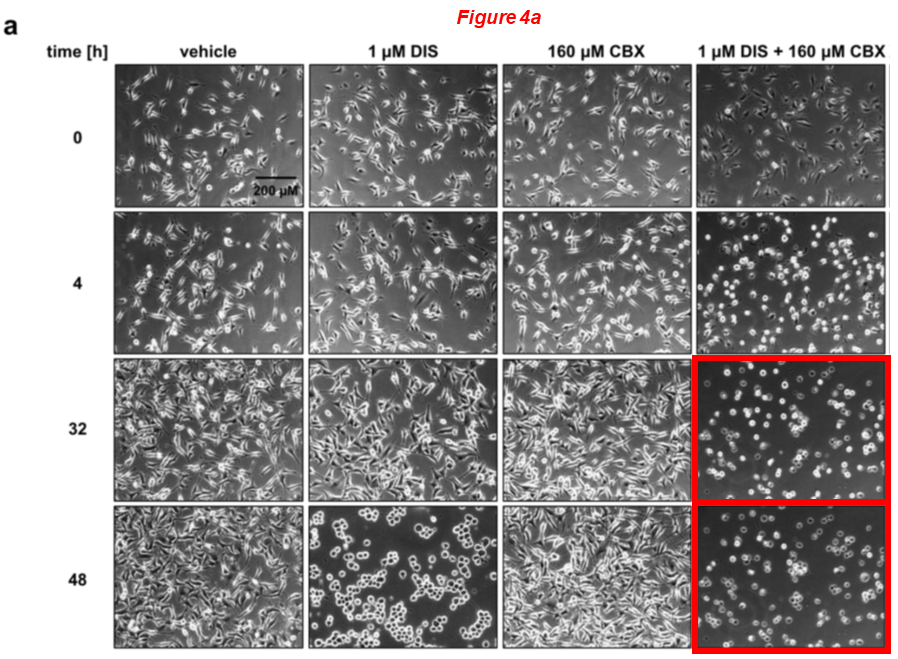
Aneurus inconstans: “Figure 4a: although not identical, micrographs of DIS+CBX treated cells at 32 and 48 hours appear to be two takes of the same field of view, likely taken a few seconds/minutes apart (red boxes).”
The University of Ulm thinks these figures are meant to be fake, or how else is one to cure cancer in children? If not sure, ask again Dietl.

I Lost My Pancreas in Heidelberg
“While papermills certainly pollute the literature the most in terms of numbers, I believe the spotlight should equally be on questionable research groups at top institutions, whose articles might have an even larger negative impact on society” – Aneurus Incostans

Returning to Stiglbauer with Döhner, this is from the time when they were both young and in Heidelberg, as mentees of DKFZ professor Peter Lichter:
Hartmut Döhner, Thorsten Pilz , Konstanze Fischer , Georges Cabot , Daniela Diehl , Thomas Fink , Stephan Stilgenbauer , Martin Bentz , Peter Lichter Molecular Cytogenetic Analysis of RB-1 Deletions in Chronic B-Cell Leukemias Leukemia & Lymphoma (1994) doi: 10.3109/10428199409114145
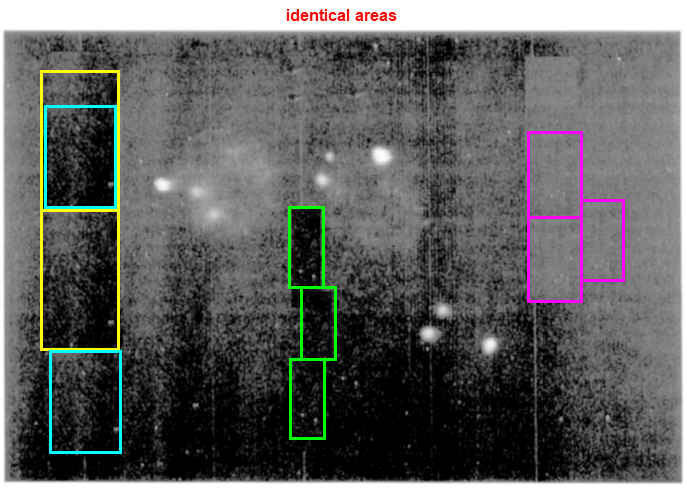
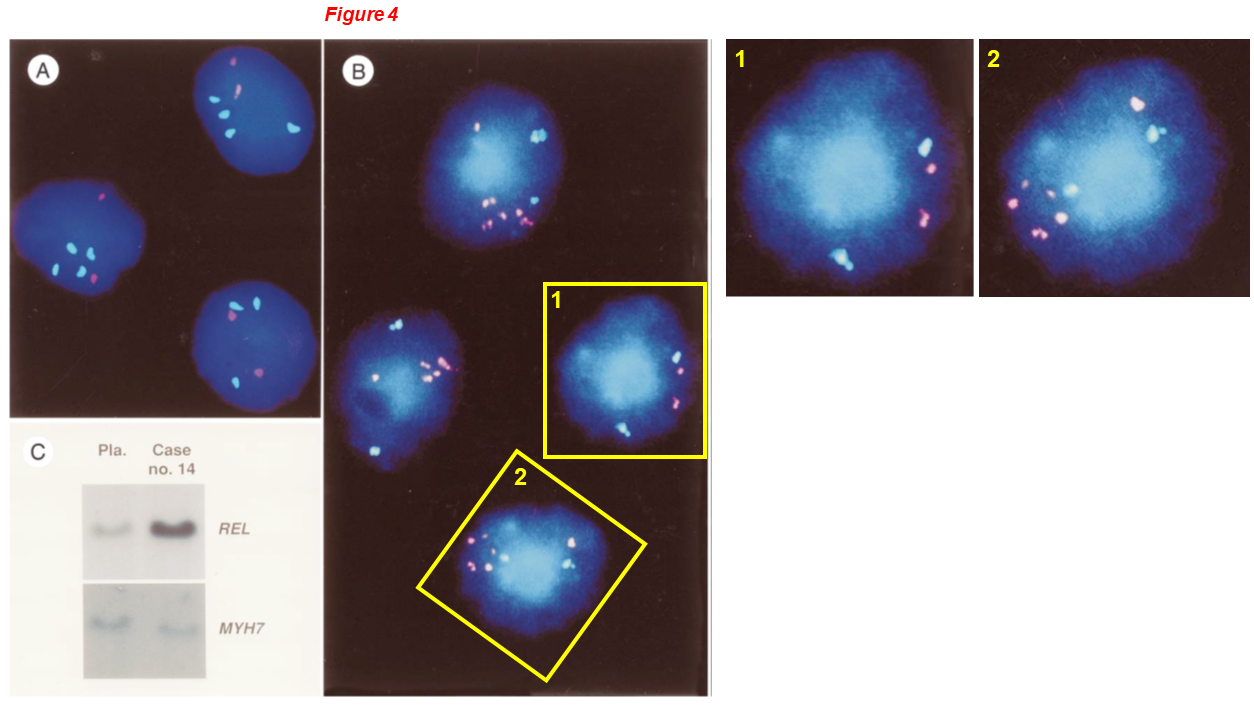
I believe that hilarious forgery was possibly done with scissors and glue, the old fashioned way, before Photoshop became a standard tool in cancer research. A few years later, Döhner and Stilgenbauer published this advanced digital artwork:
Thomas F.E. Barth , Hartmut Döhner , Claudius A. Werner , Stephan Stilgenbauer , Magdalena Schlotter , Michael Pawlita , Peter Lichter, Peter Möller , Martin Bentz Characteristic Pattern of Chromosomal Gains and Losses in Primary Large B-Cell Lymphomas of the Gastrointestinal Tract Blood (1998) doi: 10.1182/blood.v91.11.4321
Back to that paper which poor Selivanova paid the price for. Another coauthor, Lisa Wiesmüller, is Head of Division of Gynecological Oncology at University Clinic Ulm, and has other stuff on PubPeer. Here something with the Argentinian cheater Vanesa Gottifredi, it was corrected in October 2023:
María Belén Federico , Sebastián Omar Siri , Nicolás Luis Calzetta , Natalia Soledad Paviolo , María Belén De La Vega , Julieta Martino , María Carolina Campana , Lisa Wiesmüller , Vanesa Gottifredi Unscheduled MRE11 activity triggers cell death but not chromosome instability in polymerase eta-depleted cells subjected to UV irradiation Oncogene (2020) doi: 10.1038/s41388-020-1265-9

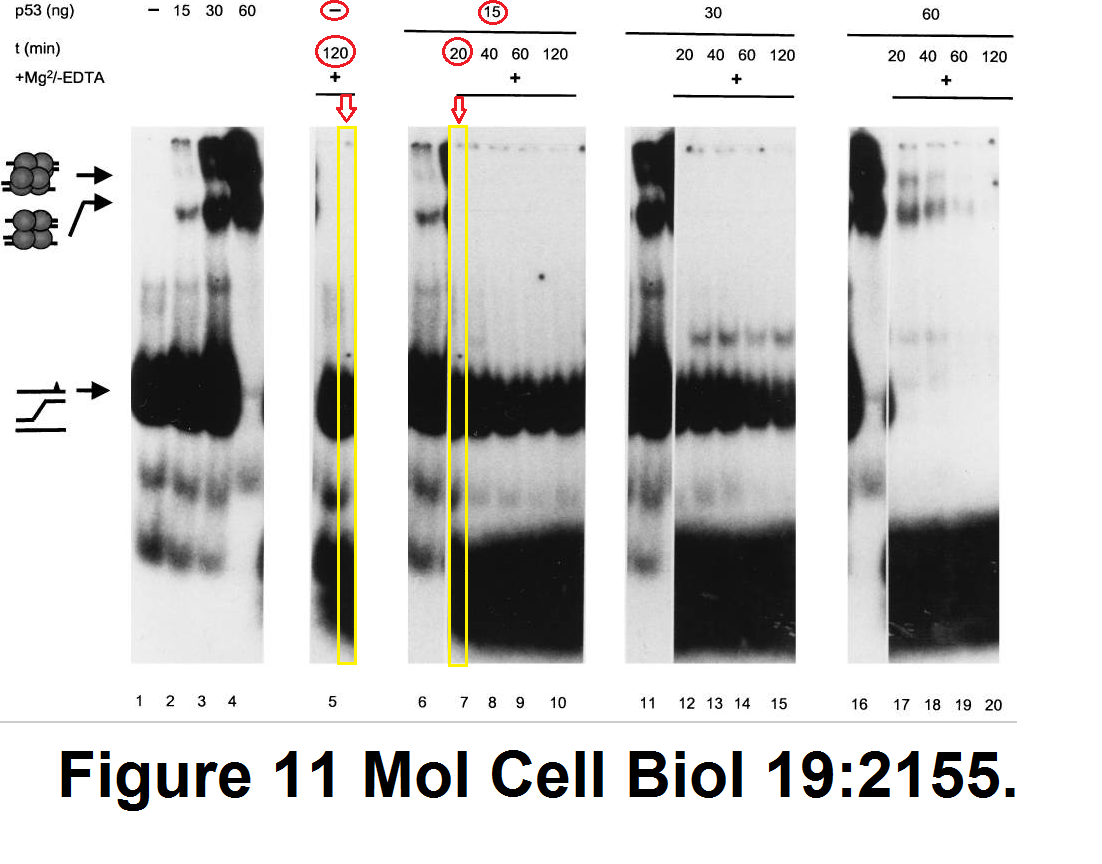
Here is Wiesemüller with a German collaborator, Uwe Knippschild, who in 2017 announced on PubPeer to get in touch with the last author and investigate this issue, and then found better things to do:
Friedemann Janus , Nils Albrechtsen , Uwe Knippschild , Lisa Wiesmüller , Frank Grosse , Wolfgang Deppert Different regulation of the p53 core domain activities 3′-to-5′ exonuclease and sequence-specific DNA binding Molecular and Cellular Biology (1999) doi: 10.1128/mcb.19.3.2155
Returning to Debatin – in my layman opinion this man must have some psychiatric issues beyond the usual narcissism. Not only had he the urge to define the real interests of women and sexual and ethnic minorities, he also wanted to be recognised as Germany’s top authority on the topic of… research integrity.
Yes, Debatin (who worked at DKFZ before coming to Ulm) was the Ombudsman for research integrity at the Heidelberg Academy of Sciences, up until his own fake science caused his resignation. Here a presentation this Ombudsman with 40 very bad papers on PubPeer once gave:
In that presentation, Debatin totally unironically discussed several science fraud cases, including the Cell paper by David Baltimore and Thereza Imanishi-Kari (“Sloppyness in data handling vs. faking data“) and the case of cancer researchers Friedhelm Herrmann and Marion Brach as “The major german scandal in biomedicine leading to the so far largest investigation of scientific fraud in Germany with subsequent action by the DFG and universities“. Debatin lamented there: “All fakes escaped the reviewers attention“.
Well, so did he and Fulda, until PubPeer, sleuth like Claire Francis and “certain science journalists” (Dietl, 2024) came along.

I contacted Selivanova and the German professorial coauthors of this paper, as well as the leadership of the University of Ulm and their medicine faculty, the Ombudspeople and members of the research integrity commission. Despite my repeated inquiries, none of them denied that they see NPOF as a bunch of stupid foreigners who had no right to investigate this perfect study from Germany and to sully the names of German Gods of Medicine.
Donate!
If you are interested to support my work, you can leave here a small tip of $5. Or several of small tips, just increase the amount as you like (2x=€10; 5x=€25). Your generous patronage of my journalism will be most appreciated!
€5.00


“In summary, the Board finds that Galina Selivanova is guilty of research misconduct.”
That’s a result.
https://npof.se/en/
NPOF is a way forward, and upwards for science. Take 10-20 minutes looking around its website (in Swedish and English). That’s the best way to understand that NOPF takes scientific misconduct seriously.
LikeLike
“The first NPOF investigation concerned a paper by Selivanova with the British cancer research bigwig and University of Cambridge professor Sir Stephen Jackson and his fraudster postdoc, Abdeladim Moumen.”
Cambridge researcher pulls Cell paper five years after Nature, Science retractions – Retraction Watch
<
p class=”wp-block-paragraph”>
This paper to join the 3 retractions above?
“Martin Enge, Wenjie Bao, Elisabeth Hedström, Stephen P. Jackson, Abdeladim Moumen, Galina Selivanova MDM2-dependent downregulation of p21 and hnRNP K provides a switch between apoptosis and growth arrest induced by pharmacologically activated p53Cancer Cell (2009) doi: 10.1016/j.ccr.2009.01.019“
There is so much to see that it should be made into a painting for the public to view. So many different characters performing different functions. It is a shame that we have lost the Victorian art of storing telling. The Victorians would have been able to read the painting much better than present day people as they firmly believed that you could tell a person’s character by their physical features. .
PubPeer – MDM2-dependent downregulation of p21 and hnRNP K provides a…
<
p class=”wp-block-paragraph”>
LikeLiked by 1 person
The other Galina:
https://pubpeer.com/search?q=G+Burdyga
LikeLike
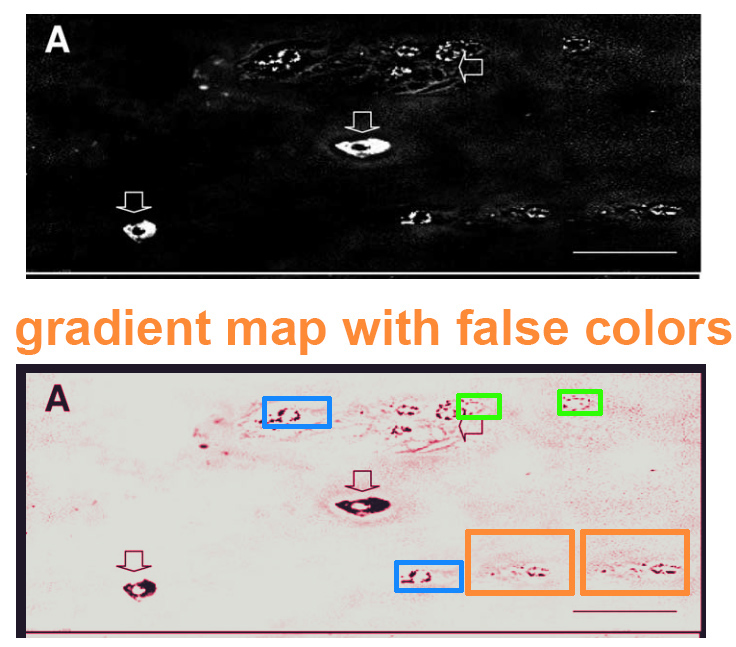
yes, great stuff by Dr Budryga:

LikeLiked by 1 person