

Schneider Shorts of 17 April 2026 – an anti-aging clinical trial with bonus eye-cancer, a papermiller turns to full-time mushrooming, an artist-scientist educates a youngster, German and Canadian cancer researchers unconcerned, retractions in Italy and Poland, Springer Nature changes history, and finally, a shrimp virus turns people blind!
Table of Discontent
Industry Giants
- Jumping up and down and high-fiving – David Sinclair to give people eye-cancer
- Saving the planet never tasted this good – Mohammad Taherzadeh now full-time mushrooming
Scholarly Publishing
- This lane does not affect the interpretation – Karl Riabowol is unconcerned
- As an artist/scientist – Jen Shen educates a jumped-up youngster about ancient past
- Change history – how Springer Nature cracks down on Egyptian papermills
Retraction Watchdogging
- Top Italian Scientist – Marina Ziche loses paper after almost a decade
- Submitted over a short space of time – Pawel Lajczak made AI his friend
Science Breakthroughs
- Covert mortality nodavirus – a seafood virus infects humans in China!
Industry Giants
Jumping up and down and high-fiving
The US FDA green-lighted David Sinclair‘s and his company’s clinical trials for anti-aging on humans. First I thought, who cares, let this greedy scammer give cancer to rich old gits, but unfortunately the victims will be actual patients suffering from blindness.

Never-ageing Anti-aging to cure COVID-19
Scientists David Sinclair and Michael Lisanti have an ingenious solution to COVID-19: anti-aging drugs. If a disease kills old people, stop being old!

Nature was very excited in their article from 7 April 2026, it opened with the classic story of scientific eureka moment:
“Yuancheng Ryan Lu could barely breathe while he waited for his labmate to adjust the microscope focus. […] Lu had spent three years trying different approaches — and had failed. But this time looked different. Lu had introduced three genes into mouse eyes that should revert cells to a younger developmental state. And there under the microscope he thought he could see signs of new growth. Now, he was asking his labmate to confirm his suspicions. “I was so nervous,” says Lu, now a geneticist at the Whitehead Institute in Cambridge, Massachusetts.
When the verdict was in, Lu remembers jumping up and down and high-fiving his colleagues in the microscope room.”
You probably have tears in your eyes now. Scientists, through hard work, study and tireless trial and error, finally discovered a cure for blindness!
The reference is to a Nature paper from Sinclair’s lab. Its other coauthors are anti-entrepreneurs George Church (and his business partner Noah Davidsohn), Steve Horvath and Vadim Gladyshev, plus Konrad Hochedlinger (the latter published also some rather dodgy science, read June 2023 Shorts):
Yuancheng Lu , Benedikt Brommer , Xiao Tian , Anitha Krishnan , Margarita Meer , Chen Wang , Daniel L. Vera , Qiurui Zeng , Doudou Yu , Michael S. Bonkowski , Jae-Hyun Yang , Songlin Zhou , Emma M. Hoffmann , Margarete M. Karg , Michael B. Schultz , Alice E. Kane , Noah Davidsohn , Ekaterina Korobkina , Karolina Chwalek , Luis A. Rajman , George M. Church , Konrad Hochedlinger, Vadim N. Gladyshev, Steve Horvath, Morgan E. Levine, Meredith S. Gregory-Ksander, Bruce R. Ksander, Zhigang He, David A. Sinclair Reprogramming to recover youthful epigenetic information and restore vision Nature (2020) doi: 10.1038/s41586-020-2975-4
The claim is: reprogramming tissues with so-called Yamanaka factors (3-4 genes which turn any cell pluripotent) leads to their rejuvenation and cures all age-related diseases. Since it was published in Nature, it is true by definition.

George Church, Colossal W*nker
From mammoths to eugenics to anti-aging scams: god-impersonator George Church knows how to make money with bullshit.
Hence, what with US Secretary of Disease Robert F Kennedy Jr‘s pronounced interests for stem cell quackery, this bullshit is going to be tested on actual human patients.
Nature also mentioned another American anti-aging genius, Juan Carlos Izpisúa Belmonte, who in his 2016 Cell paper “temporarily and repeatedly turned the Yamanaka factors on and off in mice“, which “extended the lifespan of model animals with a condition called progeria“. Read also here:
The Island of Dr Izpisua Belmonte
Human-monkey chimeras arrive to solve the problem of organ shortage. Thank Juan Carlos Izpisua Belmonte, who is ready to cure all possible diseases and even the old age. With chutzpah and Cell on his side.
Izpisua Belmonte then founded in 2022 the anti-aging reprogramming company Altos Labs, with US$3 billion investment from the russian-born billionaire Yuri Milner (russians are obsessed with anti-aging and life extension), Nature mentions other anti-aging company supported by billionaires. [Update 22.04.2026: I was contacted by Milner’s PR Manager of Rubenstein Communications, who demanded that I don’t describe her client as “russian”, but instead “as either Israeli or Russia-born Israeli, as he is an Israeli citizen” who “renounced his Russian citizenship” in August 2022. Funny that according to media “Milner built a $3.9 billion fortune, thanks to early funding from Kremlin-connected sources“.]
But it is Sinclair’s Life Biosciences which got green-lighted by FDA to experiment on patients, the company CSO informs that they plan on “treating up to 12 people with a specific type of glaucoma, and then up to 6 people with another condition, called NAION, that causes acute optic nerve damage.” The clinical trial NCT07290244 with the therapy ER-100 (the three Yamanaka reprogramming genes Oct-4, Sox-2, and Klf-4, aka OSK) seeks to recruit participants with “reasonably good vision in the study eye“, which means that these patients do have a lot to lose if the study goes haywire. But then again. Sinclair’s CSO claims that their unpublished experiments on monkeys “found no evidence of cancer or other harmful effects”, pass the puke bucket.
Paul Knoepfler is also worried. In his blog post from 11 February 2026, he warned:
“One challenge is that ER-100, even under ideal reprogramming conditions (which no one knows in the human eye), will not lower the eye pressure of glaucoma. So, if there is rejuvenation, it may not last. For NAION, which typically is a one-time ischemic event, there could be microenvironmental conditions that are problematic. The hostile environment could be toxic to the newly reprogrammed younger cells and could inhibit their functions.”

The original sins of Leonard Guarente
“Without specific and credible allegations of research misconduct, MIT is unable to take any action.”
As Knoepfler also points out, there is a real danger of teratoma formation, a kind of cancer rising from reprogramming into pluripotent stem cells:
“You don’t even have to accidentally make some iPS cells to have troubles. Reprogramming that’s not quite right could still form various tumors. Even without generating obvious tumors, OSK pulses could lead to other, unpredictable and harmful changes in cells or other areas of eye tissue.
The other thing about the ER-100 approach is that it’s not actually treating the health condition in the eye directly. It’s turning on complex gene expression programs in surviving cells that are hoped to make younger cells in the affected area, which in turn might spur regeneration or problems. There are a series of events that have to happen just right.”
But then again, in such an open-label trial the patients can be easily tricked into admitting that their sight improved, or at least didn’t worsen during the study period of 112 days. You don’t really have to follow them up for years to declare your phase 1 clinical trial a success and raise many more millions from investors.
The London Eye
How Robin Ali and other London ophthalmologists make blind mice and blind children see.
Saving the planet never tasted this good
What is it with research cheaters and businesses for meat alternatives?
On 11 January 2026, Sveriges Radio reported that the University of Borås kicked out their professor Mohammad Taherzadeh “for suspected misconduct, linked to an assignment as editor-in-chief of a scientific journal“, where he smuggled thousands of papermill fabrications as Editor-in-Chief. Taherzadeh and his sacking from Taylor & Francis journal Bioengineered, featured in this article:

Do papermillers dream of eclectic journals?
“I focus on the sprawling parody literature devoted to the three Es of Energy, Economy and the Environment. Together they […] freeload on the authentic literature on energy efficiency and pollution reduction (while diluting, distracting and discrediting them).” – Smut Clyde

The news referenced past reporting from December 2025 by Borås Tidning:
“The publisher is currently investigating several thousand articles to ascertain the extent of the fraud.
There are no suspicions that research carried out at the university has been fabricated, but following the allegations from the publisher, a complaint was lodged against Mohammad Taherzadeh with the University of Borås’s own ethics committee, for investigation there as well. […]
The journal Bioengineered usually publishes around 50-70 articles a year. But when Mohammad Taherzadeh was editor-in-chief, the journal instead published over a thousand articles a year. […]
Another allegation is that authors, including Mohammad Taherzadeh himself, were added to publications late in the process. […]
Mohammad Taherzadeh has decided to leave his employment at the university.”
Boys from Brazil
“We can always make mistakes in our publications but never acting intensionally. Regarding Prof. Eder works, I know him well and I don’t believe he has anything wrong” – Glaydson S. Dos Reis
The case is now with the Swedish national authority NPOF. In that article, the university’s pro-rector Anna Cregård assured that the papermill fraud only involved Taherzadeh’s editorial activities and not his research in Sweden. I am sorry to disappoint her and her Boras University, but also Taherzadeh’s own research consists of papermill fraud, much of that is already on PubPeer, for peer review manipulation and excessive self-citation. One of his most common coauthors is the mega-fraudster Ashok Pandey – as Smut Clyde previously wrote, the two boys run several other journals as editors, they also share common retractions, see Duan et al 2019 or Qin et al 2021. Other regular coauthors of Taherzadeh’s are the papermiller fraudsters Mukesh Kumar Awasthi and Sunita Varjani.
But before Prof Cregard objects that those papers are not from Sweden, well that retracted papermill trash is, and it features further Boras scholars, not just Taherzadeh’s former PhD students, but also the associate professor Ilona Sárvári-Horváth:
- Anette T. Jansson , Regina J. Patinvoh , Mohammad J. Taherzadeh , Ilona Sárvári Horváth Effect of organic compounds on dry anaerobic digestion of food and paper industry wastes Bioengineered (2020) doi: 10.1080/21655979.2020.1752594
- Lukitawesa , Regina J. Patinvoh , Ria Millati , Ilona Sárvári-Horváth , Mohammad J. Taherzadeh Factors influencing volatile fatty acids production from food wastes via anaerobic digestion Bioengineered (2020) doi: 10.1080/21655979.2019.1703544
The two papers were part of the wholly retracted Special Issues (one edited by Awasthi and two other crooks, another edited by Varjani and two other crooks) removed on 19 January 2026, for “concerns regarding the editorial handling“. You can read about Varjani and Awasthi here:
Bundesverdienst-Kümmerer am Bande
“Benign-by-design, circular economy in the plastics industry, biodegradable antibiotics – the sustainable design of chemistry is the central theme of Prof. Klaus Kümmerer’s work. “
There’s another retracted paper by Taherzadeh and Awasthi in that retracted Special Issue, and it finally brings us to the promised meat alternatives:
Steven Wainaina , Lukitawesa , Mukesh Kumar Awasthi , Mohammad J. Taherzadeh Bioengineering of anaerobic digestion for volatile fatty acids, hydrogen or methane production: A critical review Bioengineered (2019) doi: 10.1080/21655979.2019.1673937
Now, Steven Wainaina is not just Taherzadeh’s former student, he is currently Head of Engineering at the company Millow AB, which was founded by Taherzadeh and which specialises on growing mushrooms on organic waste and turning them into meat alternatives. Other Millow employees and Taherzadeh’s former lab members and coauthor on his trash papers are Neda Rousta and Coralie Hellwig (the latter is Millow’s co-founder), also Taherzadeh’s family members Esmaeil and Sajjad Taherzadeh are employed by this company, the former is another co-founder.

On 9 March 2026, Millow announced that their inventor and chief scientific officer “Taherzadeh, the principal investor behind Millow’s dry-state fermentation platform, is leaving his position at the University of Borås to focus on Millow full-time”. He pretends now his old boring university job was holding him back:
“Inventor and chief scientific officer Taherzadeh has worked in mycelium science and fermentation since 1999, and is ranked among the top 2% of researchers globally in his field by Stanford University.
He commented: “For a scientist, there is nothing more compelling than a place where your research has impact the same week you conduct it. Millow’s advanced laboratory and patented process allow me to do in months what would take years in a traditional academic setting.””
Fake-O-Meat by Ali Khademhosseini
Ali Khademhosseini is the greatest American researcher in regenerative medicine. His mentees are all professors themselves now. In his own Californian institute, he grows not only all possible organs, but even hamburgers!
Millow’s business model is of course based on peer-reviewed literature! Which is basically a citation delivery vehicle to Taherzadeh himself. Like these papers, coauthored by other Boras University professors, where Taherzadeh also lied about having “no conflict of interest“:
- Neda Rousta , Karin Larsson , Rikard Fristedt, Ingrid Undeland, Swarnima Agnihotri, Mohammad J. Taherzadeh Production of fungal biomass from oat flour for the use as a nutritious food source NFS Journal (2022) doi: 10.1016/j.nfs.2022.09.001
- Zohre Shahryari, Mohammad Fazaelipoor , Younes Ghasemi , Patrik Lennartsson, Mohammad Taherzadeh Amylase and Xylanase from Edible Fungus Neurospora intermedia: Production and Characterization Molecules (2019) doi: 10.3390/molecules24040721
- Neda Rousta, Coralie Hellwig, Steven Wainaina, Lukitawesa Lukitawesa, Swarnima Agnihotri , Kamran Rousta, Mohammad J. Taherzadeh Filamentous Fungus for Food: From Submerged Cultivation to Fungal Burgers and Their Sensory Evaluation-A Pilot Study Foods (2021) doi: 10.3390/foods10112774
At least those self-references are real, other references in Taherzadeh’s papers are hallucinated by the AI he uses to generate them (see for example Moronkola et al 2025). Or the references served as a source for text to plagiarise and paraphrase with tortured phrases, see Awasthi et al 2021 (other coauthors are Wainaina and Pandey).
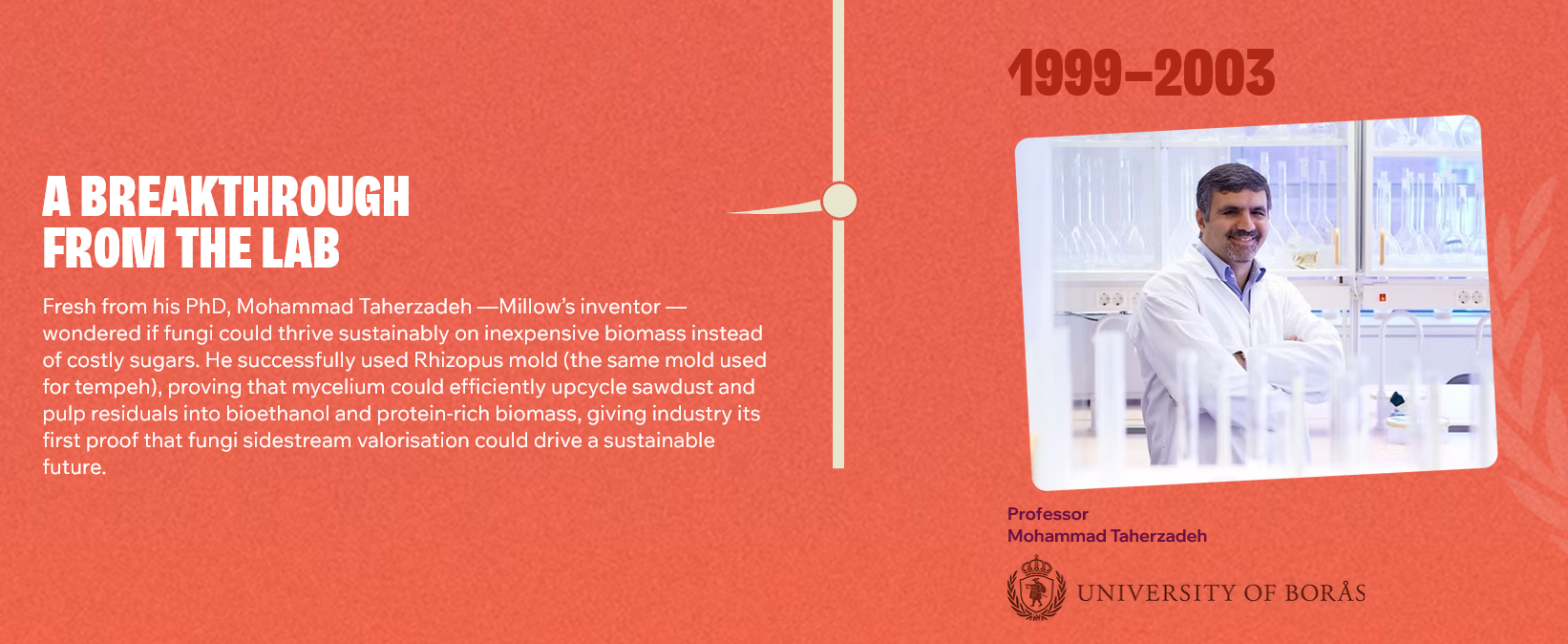
Nobody else managed to turn sawdust to food, except one sacked papermilling fraudster. No wonder the Boras University protects Taherzadeh’s “research” even now – his Millow is funded by the EU Commission. The project was celebrated already in 2018 but there is still no product on offer yet (although they claim to start in summer 2026), but you can book a tasting. Knowing what a cheater Taherzadeh is, he will probably serve you some vegan product from the local supermarket.
Scholarly Publishing
This lane does not affect the interpretation
A cancer research study from Charité Berlin, which in reality is not really from Charité or even from Germany, received an Expression of Concern. The last author Gesche Tallen then went to the University of Calgary in Canada, where she married her coauthor and mentor Karl Riabowol (professor since 1991), changed her name to Gesche Riabowol, and in 2015 became associate professor, because, I am sorry to destroy your illusions, this is how women’s careers in academia often work.
Subhash Thalappilly , Xiaolan Feng , Svitlana Pastyryeva , Keiko Suzuki , Daniel Muruve , Daniel Larocque , Stephane Richard , Matthias Truss , Andreas Von Deimling , Karl Riabowol , Gesche Tallen The p53 Tumor Suppressor Is Stabilized by Inhibitor of Growth 1 (ING1) by Blocking Polyubiquitination PLOS One (2011) doi: 10.1371/journal.pone.0021065
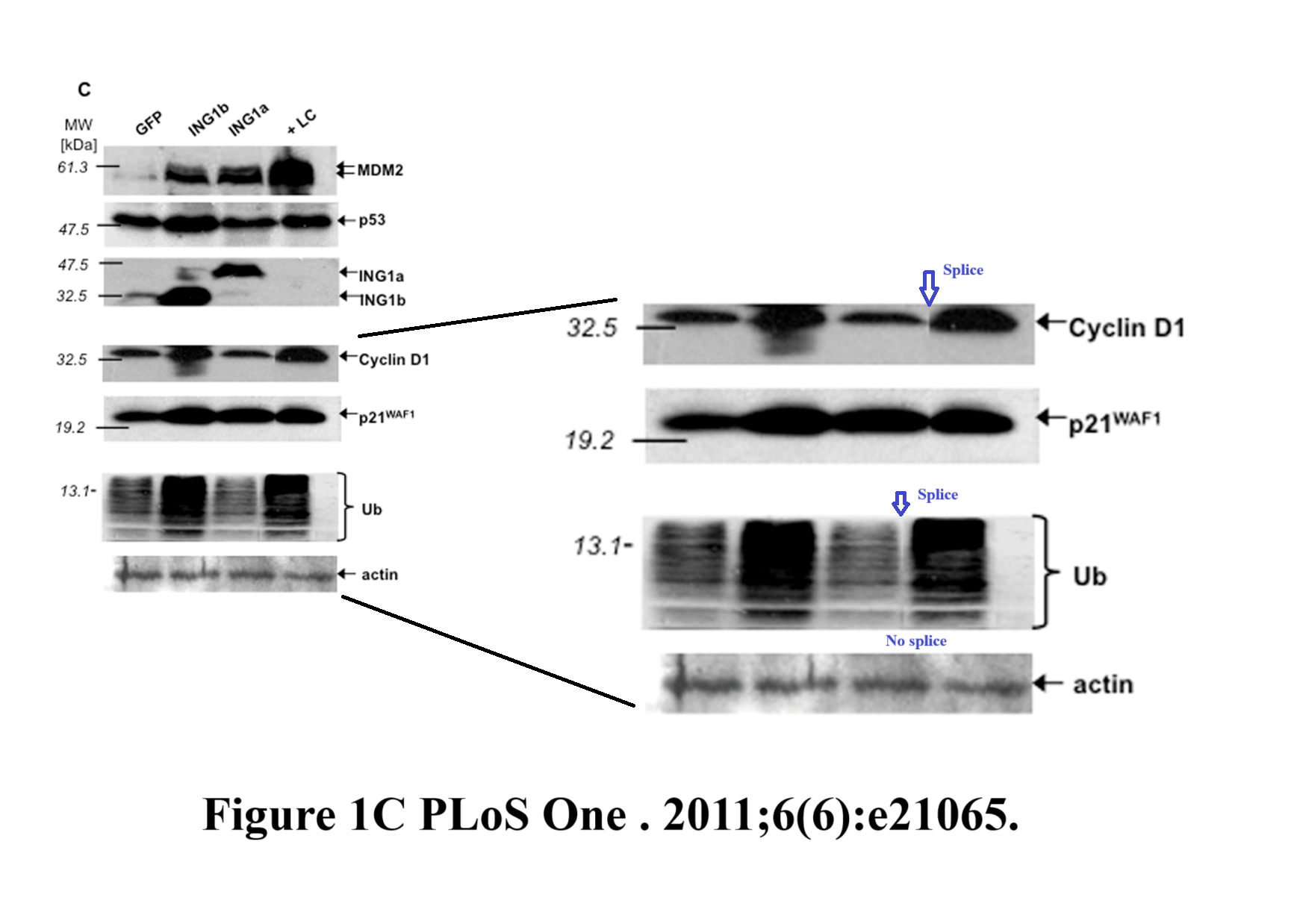
Fomitiporia bakeri: “Figure 1C. Vertical, light streak between bands lanes 3 and 4. Vertical, grey streak/change in signal between lanes 3 and 4 (splice). No splice in actin panel.”
This is the Expression of Concern from 7 Aprl 2026:
“After this article [1] was published, concerns were raised regarding Figs 1 and S7. Specifically,
- In Fig 1C, there appear to be vertical discontinuities between the ING1a and + LC lanes of the Cyclin D1 and Ub panels.
- In Fig 1D, the ING1b + P53 and ING1b lanes of the Cyclin D1 panel appear to be discontinuous with the adjacent background.
- In Fig S7, the GFP lane in the upper-right panel appears similar to the p53 lane of the middle-left panel.
Author KR agreed with the concerns noted in Fig 1C and S7 but did not agree with the concern noted in Fig 1D. They indicated that the + LC lane of Fig 1C represents a control lane added to demonstrate total ubiquitin and cyclin D1 levels increase, confirming proteosomal inhibition by LC treatment. The author KR also stated that this lane does not affect the interpretation of the data.
Author KR also stated that the original, uncropped autoradiograms underlying the figures in this article are no longer available due to the time elapsed since the submission of the article. In the absence of these underlying image data, the above concerns cannot be fully resolved.”
Gardening goats and external papermills in Tübingen
One shooting and one falling star of University Clinic Tübingen. Meet the research ethics champion Julia Skokowa and the eternally affiliated Renaissance Man Reza Akhavan-Sigari,
Note that Riabowol alone communicated with the publisher, despite his wife being the sole corresponding author. We shall not insiuate oppressive patriarchy here – this project was done entirely in Riabowol’s lab in Canada as the affiliations of other authors reveal.
Of course the big man has more on PubPeer. His postdocs and first author above, Subhash Thalappilly, is also on this paper:
Uma Karthika Rajarajacholan , Subhash Thalappilly , Karl Riabowol ING1 regulates rRNA levels by altering nucleolar chromatin structure and mTOR localization Nucleic Acids Research (2017) doi: 10.1093/nar/gkw1161

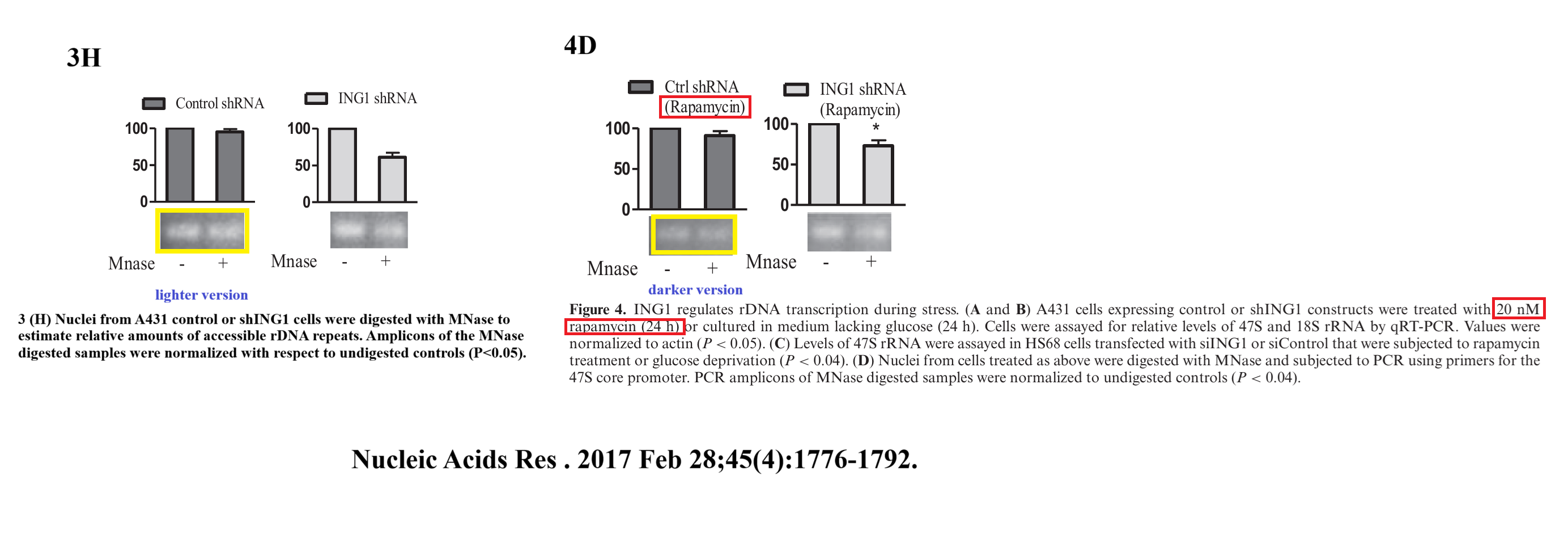

As you see, a western blot was previously used in this PLOS Biology paper by the same three authors:
Uma Karthika Rajarajacholan, Subhash Thalappilly, Karl Riabowol The ING1a Tumor Suppressor Regulates Endocytosis to Induce Cellular Senescence Via the Rb-E2F Pathway PLoS Biology (2013) doi: 10.1371/journal.pbio.1001502
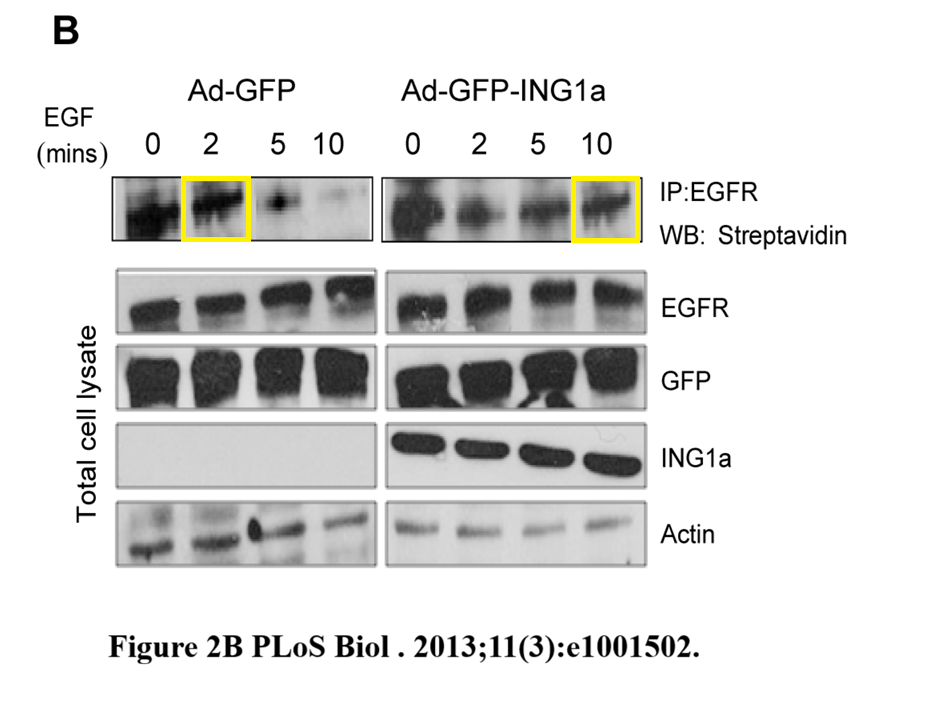
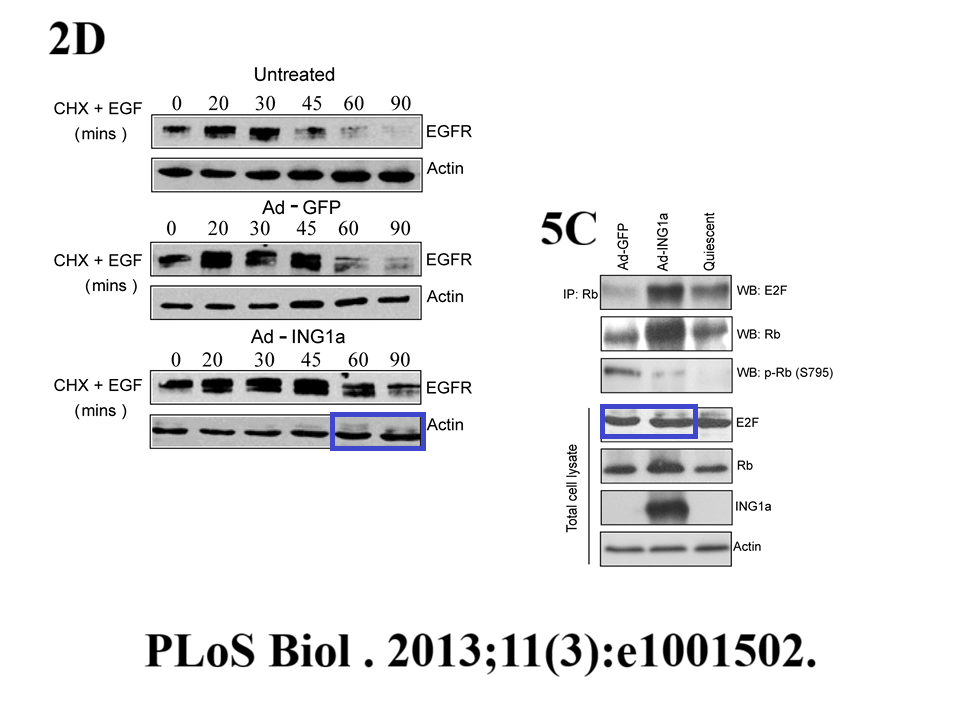
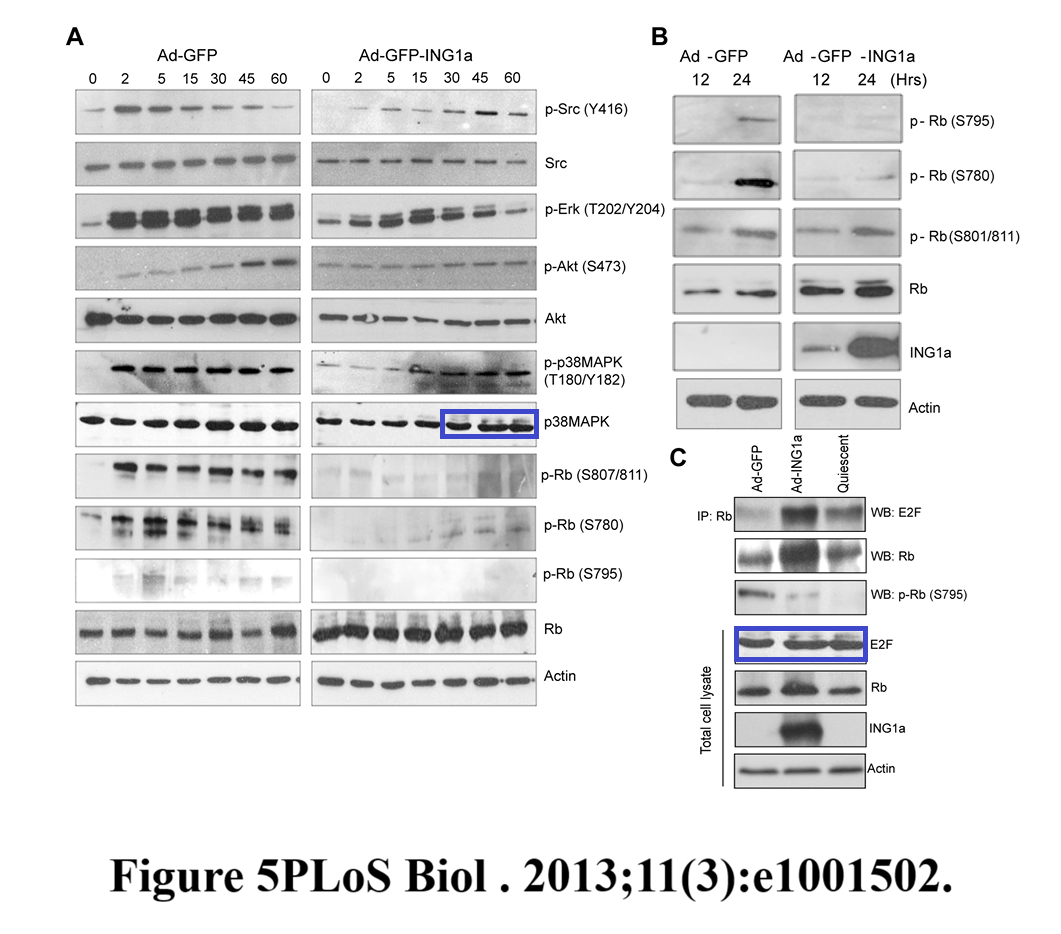
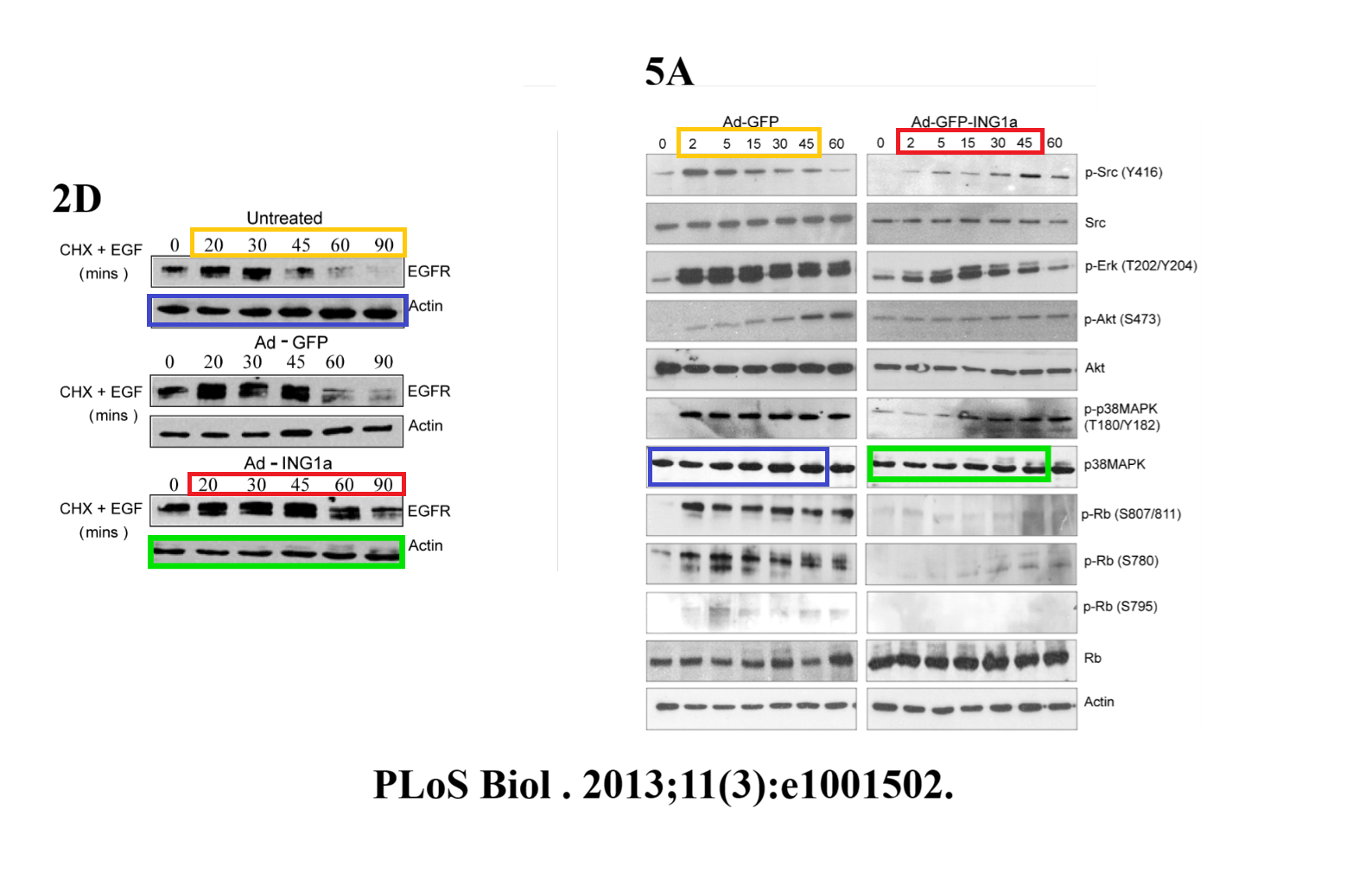
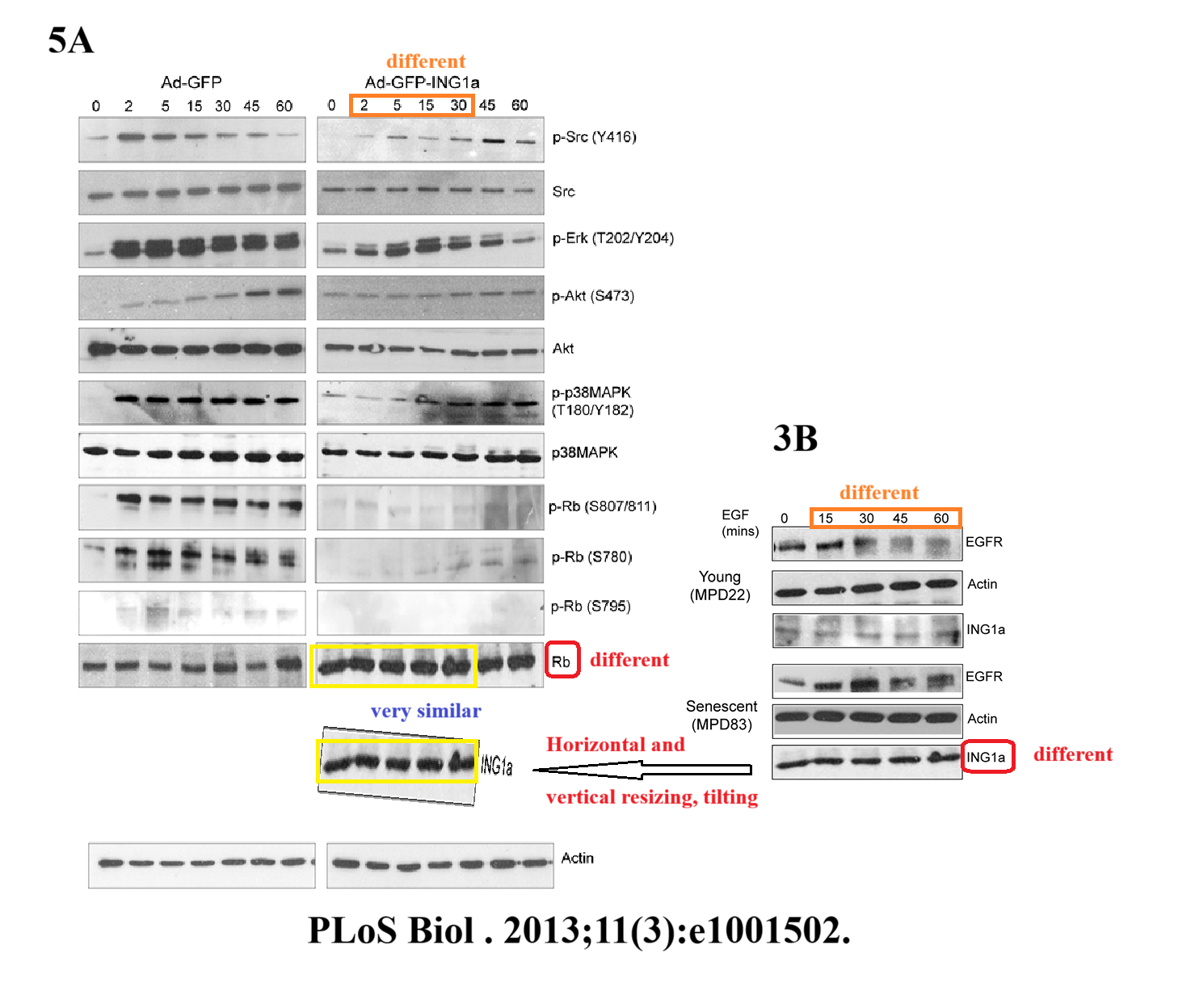
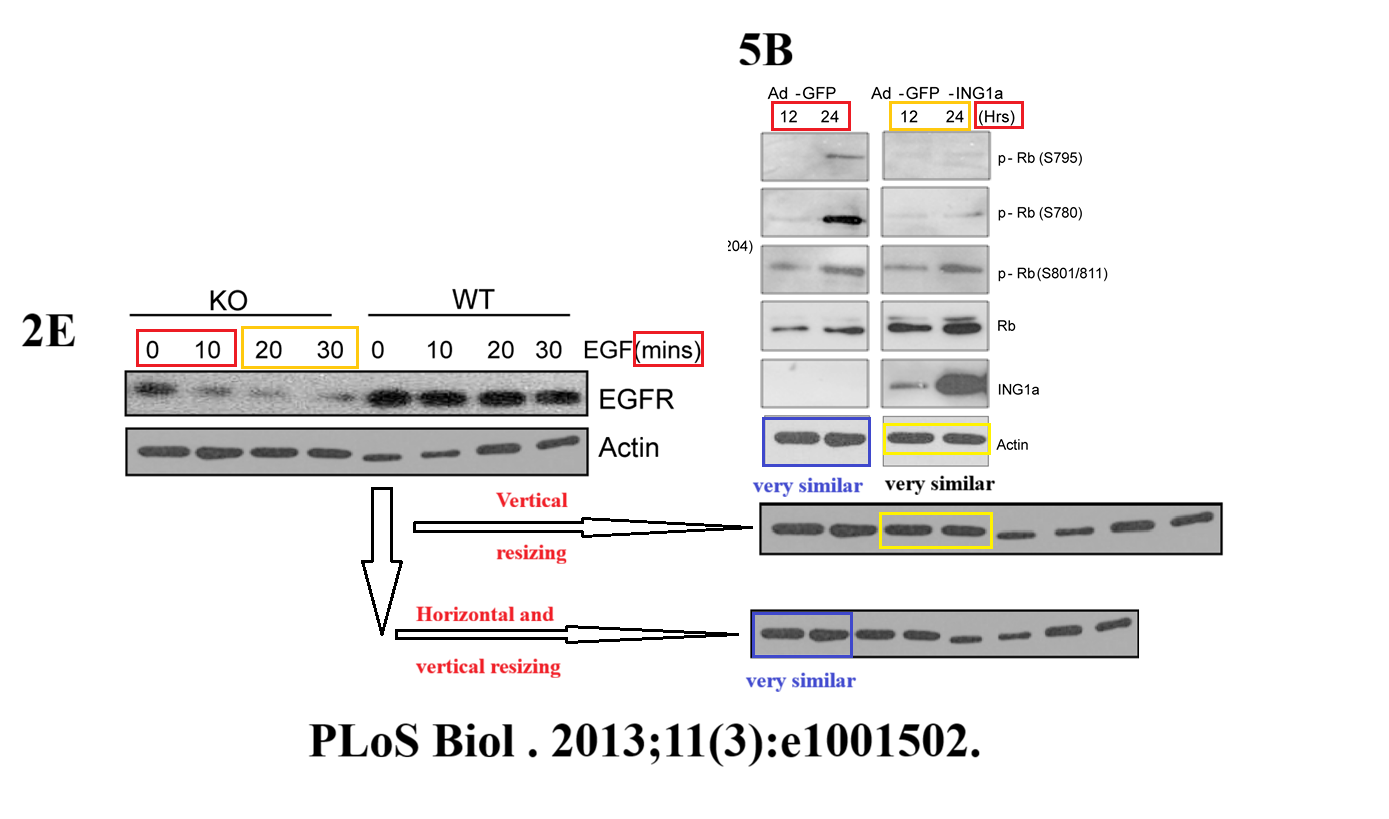
Riabowol will probably convince any editor that no conclusions were affected here either. Returning to his and his wife’s PLOS One paper, another German coauthor, Andreas von Deimling, unit head at German Cancer Research Center (DKFZ) and professor and head of department at University of Heidelberg, also has a record on PubPeer. Here a gel so badly spliced it is absolutely not trustworthy, especially since it the only western blot figure in the entire paper:
Nikola Holtkamp , Isis Atallah , Ali-Fuat Okuducu , Jana Mucha , Christian Hartmann , Victor-F Mautner , Reinhard E. Friedrich , Christian Mawrin , Andreas Von Deimling MMP-13 and p53 in the progression of malignant peripheral nerve sheath tumors Neoplasia (2007) doi: 10.1593/neo.07304

More by von Deimling, including again in PLOS One:
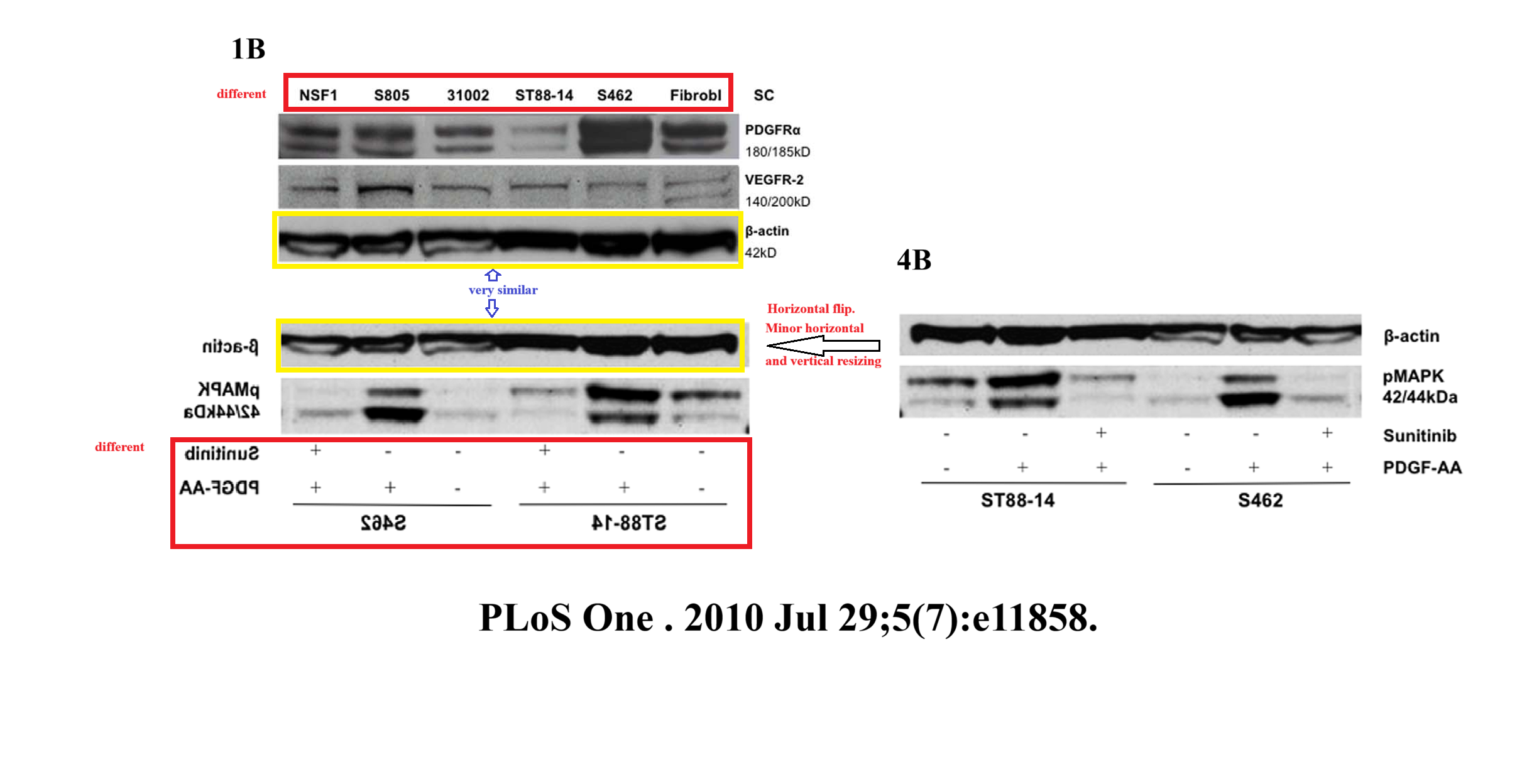
Fig 1B and 4B
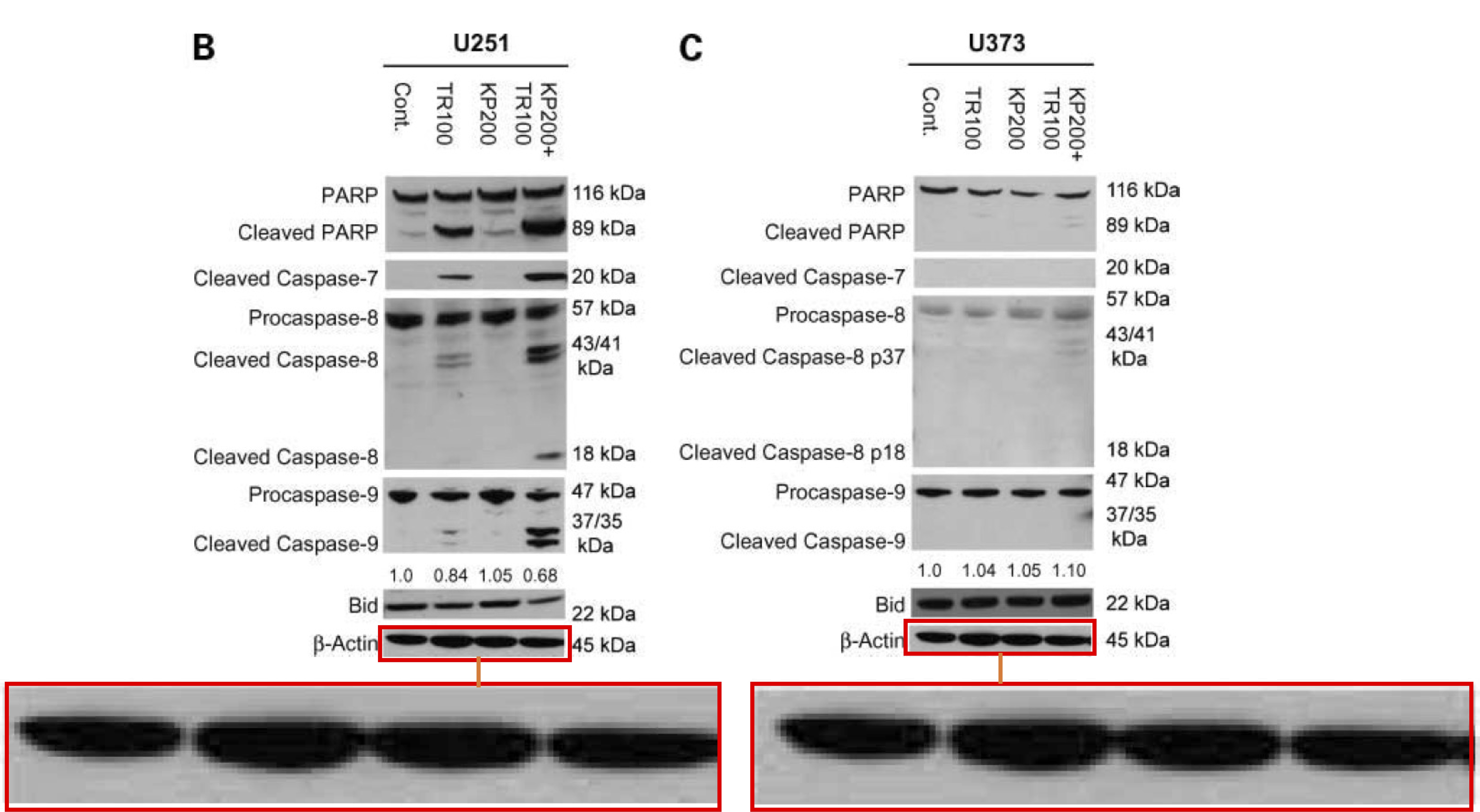
Fig 2B,C
Neither Mr & Mrs Riabowol nor von Deimling replied to my email. Here von Deimling’s paper with colleagues from the Mayo Clinic in USA:
Severa Bunda, Pardeep Heir , Julie Metcalf , Annie Si Cong Li , Sameer Agnihotri , Stefan Pusch , Mamatjan Yasin , Mira Li , Kelly Burrell , Sheila Mansouri , Olivia Singh , Mark Wilson , Amir Alamsahebpour , Romina Nejad , Bethany Choi , David Kim , Andreas Von Deimling , Gelareh Zadeh , Kenneth Aldape CIC protein instability contributes to tumorigenesis in glioblastoma Nature Communications (2019) doi: 10.1038/s41467-018-08087-9
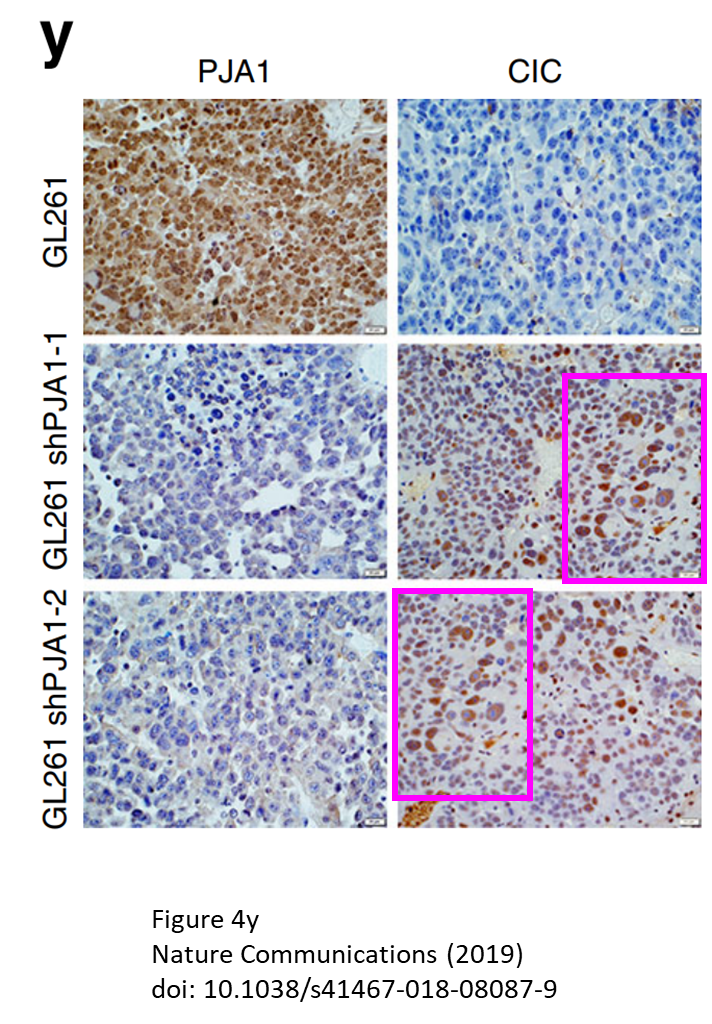

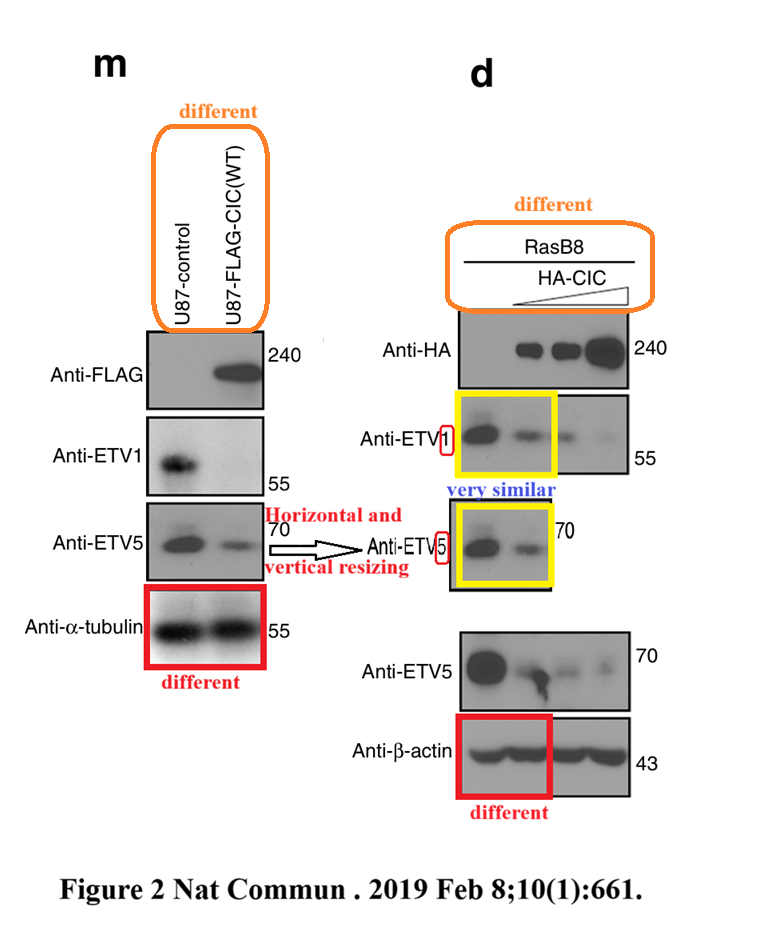
Mayo Clinic professor Kenneth Aldape has also a PubPeer record of his own, often with Zhimin Lu (who was mentioned in April 2025 Shorts). I am not following that rabbit hole now.
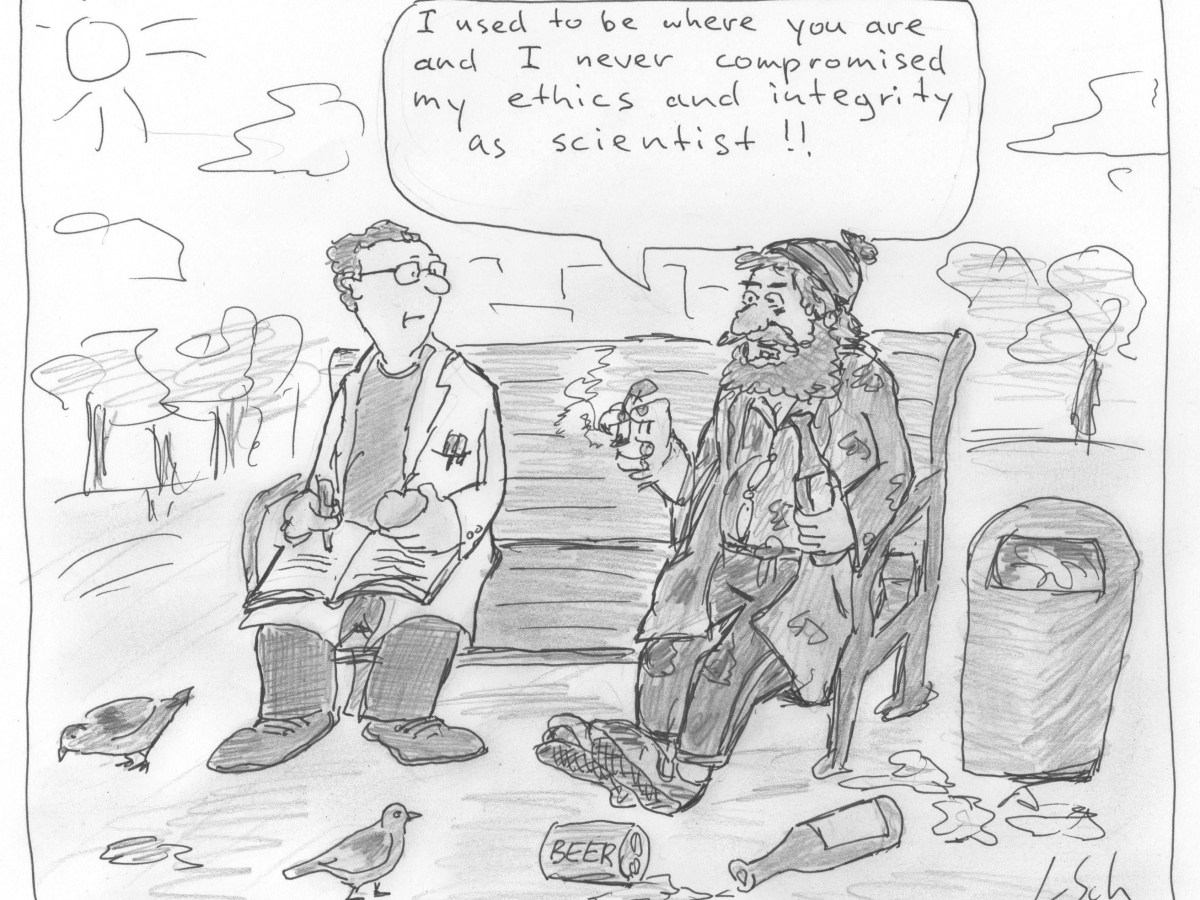
As an artist/scientist
Sholto David reported a problematic paper, and got a dressing down from the last author. The plant scientist Jen Sheen is professor at Harvard Medical School and at Massachusetts General Hospital and AAAS Fellow. Her coauthor and former postdoc Guillaume Tena is now Senior Editor at Nature Plants.
Voinnet’s sidekick Dunoyer welcomed at Nature Plants, despite retractions and admitted misconduct
The Olivier Voinnet scandal of almost two decades-long research misconduct and data manipulations has reached its logical conclusion. The French plant pathogen researcher, and everyone who helped him manipulating and publishing dishonest (and occasionally retracted) papers was either forgiven or declared as fully reformed. The siRNA-co-discoverer Voinnet who, cynically put, was too big to fail,…
Sholto flagged this paper on PubPeer and notified the authors and the publisher:
Sang-Dong Yoo, Young-Hee Cho , Guillaume Tena, Yan Xiong , Jen Sheen Dual control of nuclear EIN3 by bifurcate MAPK cascades in C2H4 signalling Nature (2008) doi: 10.1038/nature06543

Shen replied to Sholto right away, with a long email, parts of which were in large font and in bold.
“First of all, Dr. Yoo died of liver cancer on 2017-11-19 in South Korea. I sincerely hope you will kindly leave him in peace, at least in the future.
Although you found protein band pairs looking suspicious with your “tools”, as the surviving co-corresponding author, I can at least confirm that these protein bands served as protein expression “controls” and won’t change the important data presented in the top panels of the same figures and the conclusion of the paper.As an artist/scientist, I can assure you that there is no possibility of cutting these protein bands from one gel figure and copy and paste them into another protein gel figure before 2008, despite your tool may identify them as suspicious and kindly sent to us as co-authors.
First of all, these “control experiments” for protein expression are very easy, fast, and simple to conduct and reproduce as control protein bands by doing real experiments and running real gels, and there does not seem a good reason to copy from one blot “figure” and fake them in another blot “figure”, as they can all be carried out within a day of experiments using protoplast transient expression assays.
In fact, making the complicated faking gels with copy-cut-paste protein bands you suspected before 2008 is probably much more complicated and I personally do not know how to generate such perfect looking gel with fake protein bands appeared in the same gels.
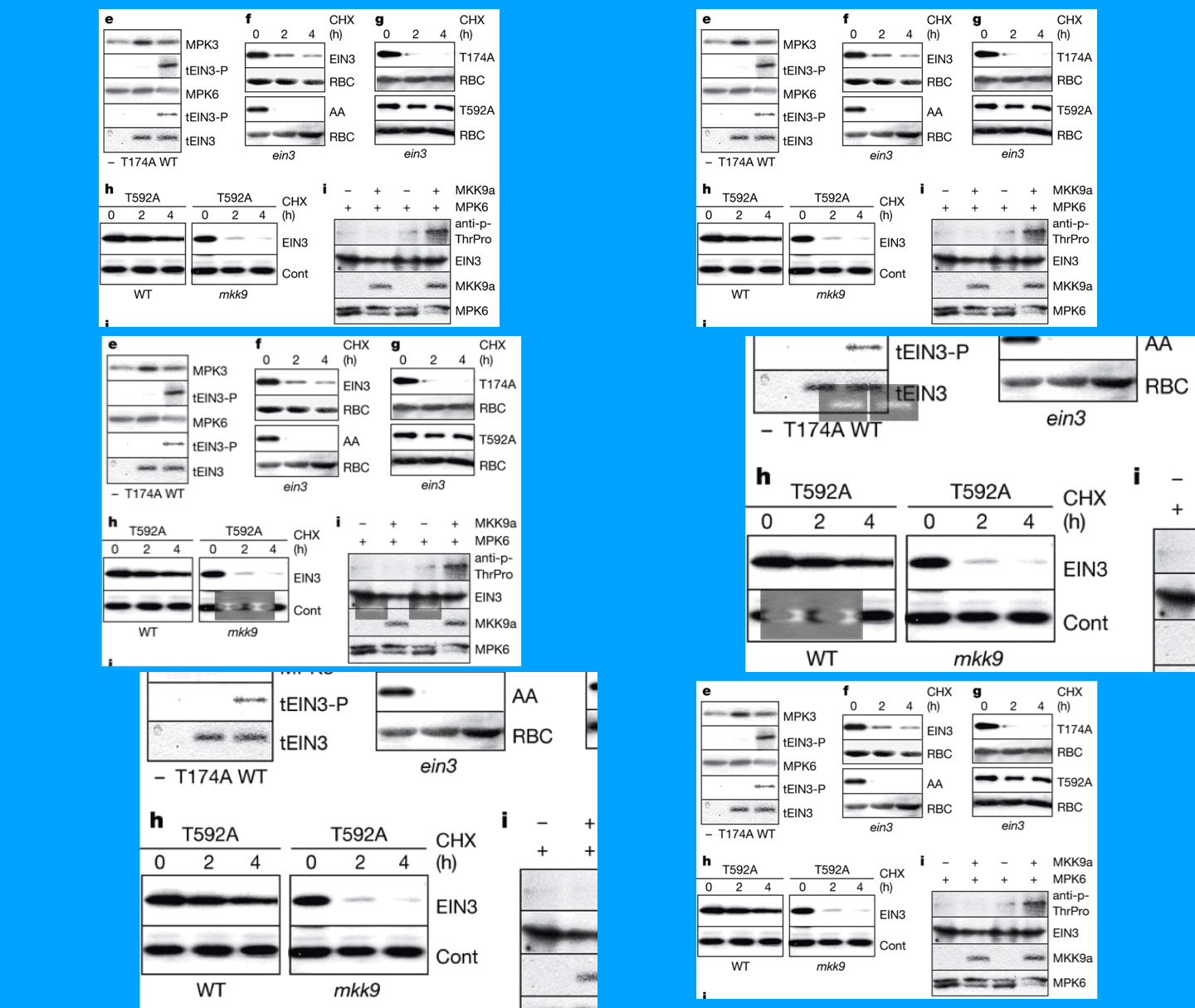
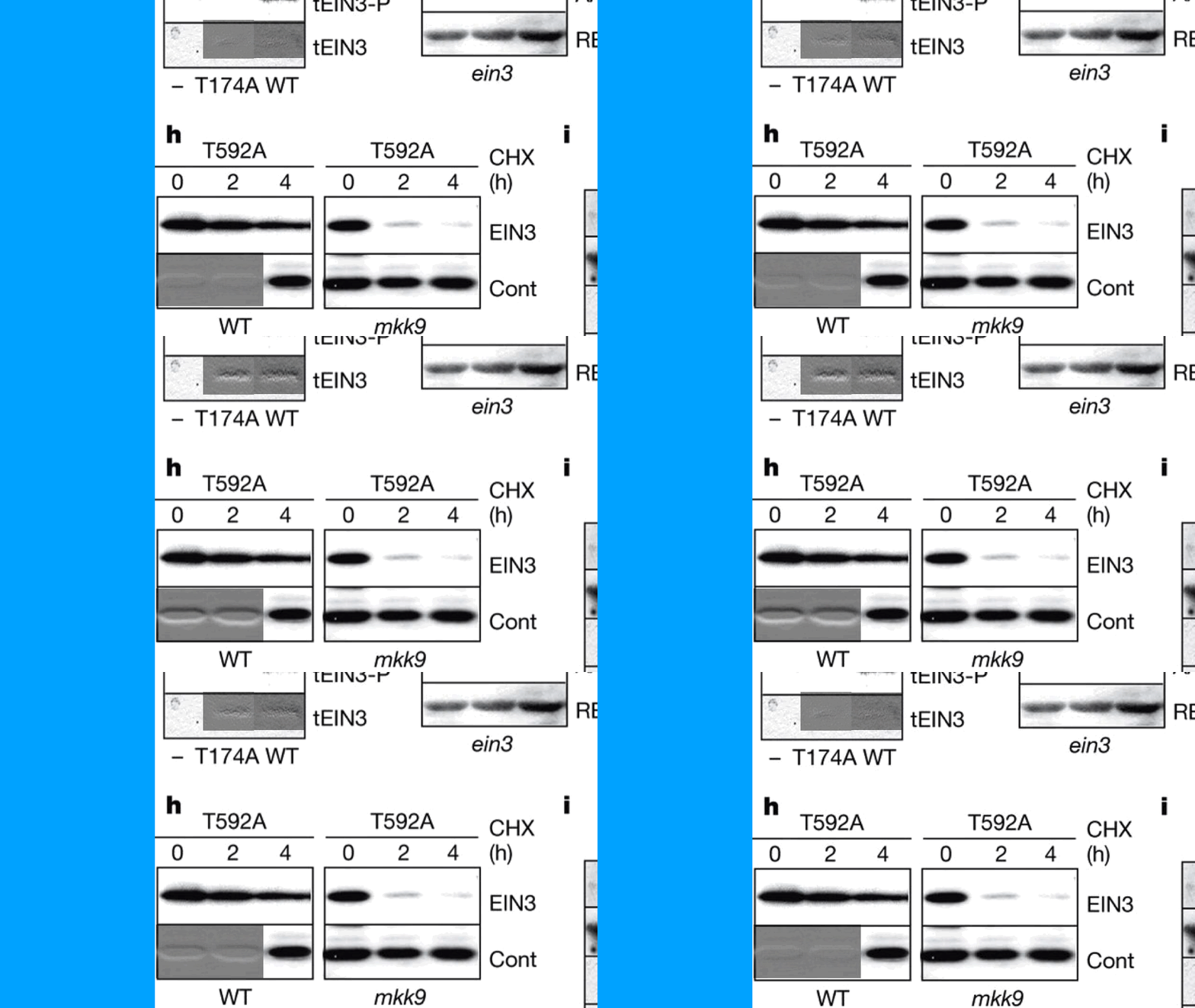
As an artist/scientist, I’m attaching the enlarged Fig. 5e, 5i, and Fig. 5h and please check carefully the precise band patterns you indicated as “duplication/faking”.
[…]
Again, these samples are in two different “intact protein gels” and their “neighbor” protein sample bands are very different inside the same gel, thus it is not possible to be generated from cut, copy and paste for a new fake gel/figure with three protein bands in the same gel.
I hope this makes sense to you.”
Actually, no, it doesn’t make sense. The paper is from 2008, not from 1988, digital technology was very advanced already then. Also, as a plant scientist, Professor Shen must be well aware that her esteemed fellow artist and scientist, Olivier Voinnet, had been faking gel bands in Photoshop already at the turn of the century. Yes, sometimes it is easier to run an experiment instead of spending hours trying to fake a gel, but what does one do if those experiments don’t deliver the desired result?
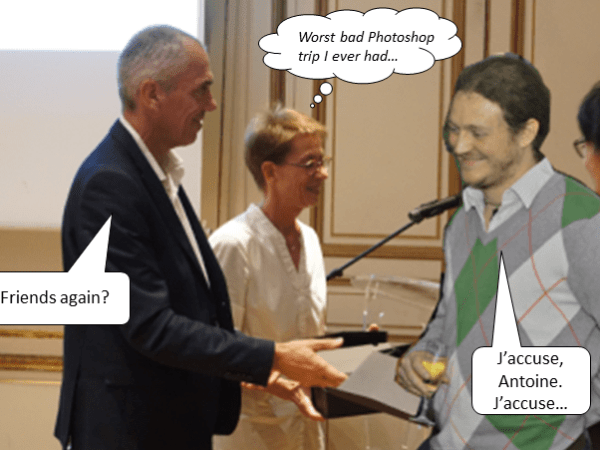
Olivier Voinnet, the new Dreyfus?
Much of French media and academia, and certainly also the international plant science community now debates a hot conspiracy theory: what if Olivier Voinnet is actually innocent, a visionary genius who fell prey to a conspiracy of fraudulent colleagues and scheming bureaucrats? I discuss here the widespread dishonesty and data manipulation among Voinnet’s co-authors and…
Anyway, another Pubpeer user, Illex illecebrosus, made a handy animation for Prof Shen:
Change history
Springer Nature issued a stealth correction for a papermill fabrication. Because this is how they are “Putting Integrity at the Heart of Springer Nature“, with their “Research Integrity Group (SN RIG)—a dedicated team of over 55 experts” armed with “AI-powered tools to help detect manipulated text, images, and references“.
So yeah, this happened, Fabian Wittmers flagged a figure in March 2026, in a paper from Egypt:
Enas A. Elshenawy , Manal Ahmed El-Ebiary , El-Refaie Kenawy , Gehan Abdelmonem El-Olimy Modification of glass-ionomer cement properties by quaternized chitosan-coated nanoparticles Odontology (2023) doi: 10.1007/s10266-022-00738-0

Archasia belfragei: “XRD patterns in Figure 4 are largely identical in noise for two different materials”
In April 2026, the author Enas A. Elshenawy replied on PubPeer with:
“this issue has been addressed to the journal and a corrected figure prepared directly from the instrument output has been submitted to the journal for formal correction. The main peak positions and conclusions of the study remain unchanged. The correction is currently proceeding in press.”
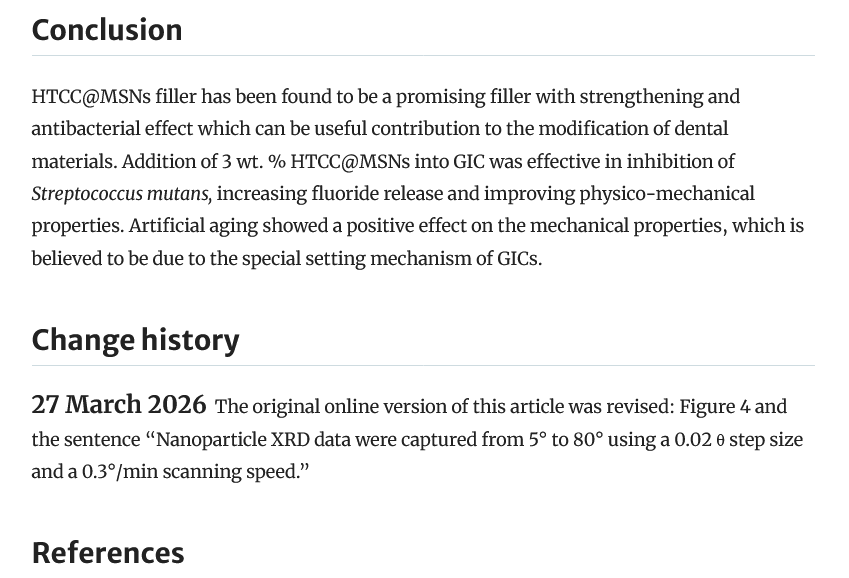
But already on 27 March 2026, Springer Nature added this note at the end of the article, and quitely replaced the Figure 4 without any formal correction:
Change history
27 March 2026 The original online version of this article was revised: Figure 4 and the sentence “Nanoparticle XRD data were captured from 5° to 80° using a 0.02 θ step size and a 0.3°/min scanning speed.””

To be fair, the journal is run by the Society of the Nippon Dental University in Japan, thus maybe the responsible for this action was the Editor-in-Chief Takeyasu Maeda. Still, corrections are always run through by the publisher. And now they will need to add another stealthy Change History:
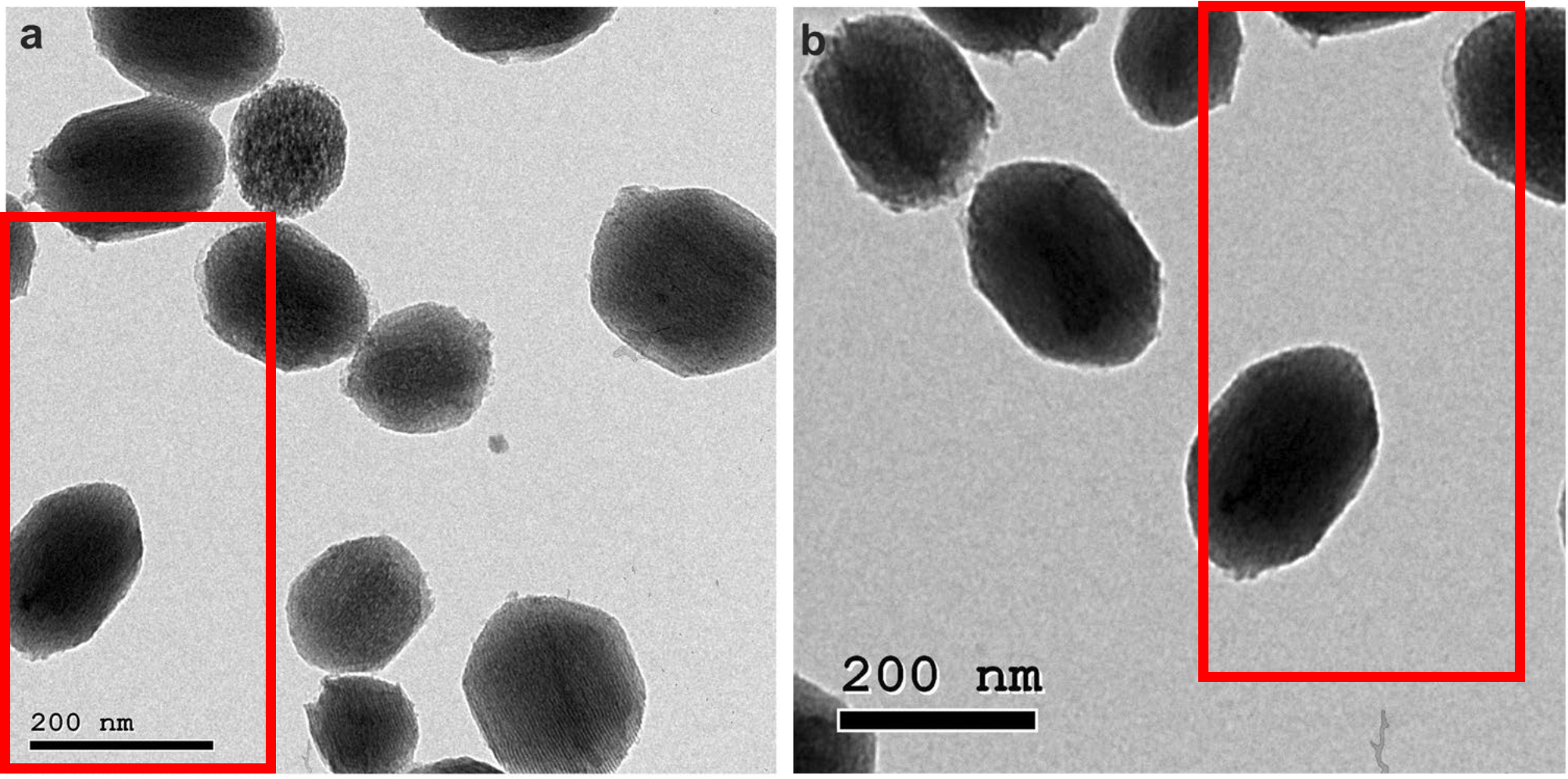
Xerotus discolor: “Same TEM image appears to have been used for two different samples.” (Fig 2)
Elshenawy swiftly informed on PubPeer that this “error that occurred during manuscript revisions upon a reviewer’s request” and that they “have already proactively contacted the Journal Editor to resolve this“.
Another coauthor, El-Refaie Kenawy (Vice-Dean at Tanta University), has more fake stuff on PubPeer, including with the papermill kingpin Mika Sillanpää. In fact, Springer Nature knows he is an utter fraudster, they previously retracted one of his papers:
Ahmed R. Ghazy , Diana. F. Abotalb , El-Refaie Kenawy , R. Ghazy , Sayed A. Abdel Gawad Optical, photo-physical and photo-stability characterizations of malachite green as a laser dye, combined with TD-DFT simulations Optical and Quantum Electronics (2024) doi: 10.1007/s11082-023-05908-0
“The Publisher has retracted this article in agreement with the Editors-in-Chief. An investigation by the Publisher found a number of articles, including this one, with a number of concerns, including but not limited to compromised peer-review process, inappropriate or irrelevant references, containing nonstandard phrases or not being in scope of the journal. Based on the investigation’s findings the Publisher, in consultation with the Editors-in-Chief, therefore no longer has confidence in the results and conclusions of this article.”
(Retraction November 2024)
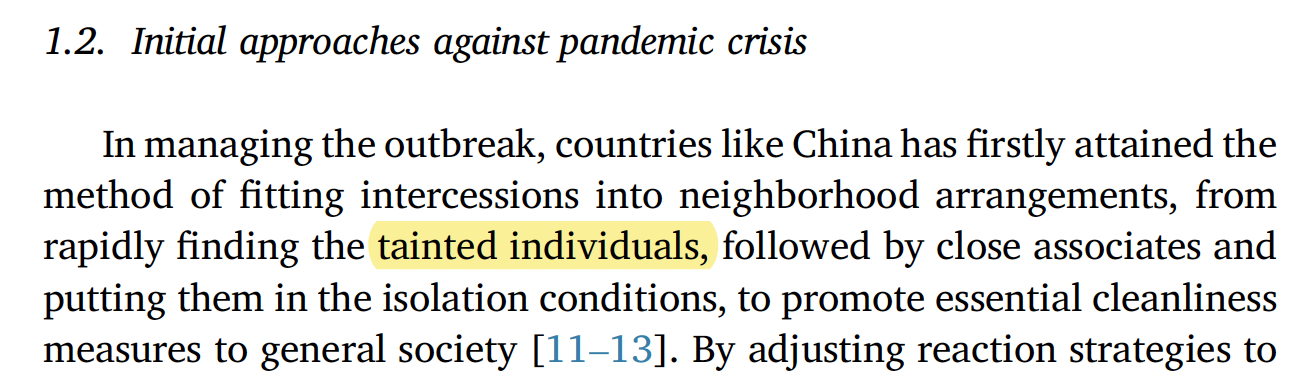
Kenawy is a shameless papermiller, he buys authorships on any papers coming his way, the subject doesn’t matter. Nanotechnology, medicine, economics, who cares:
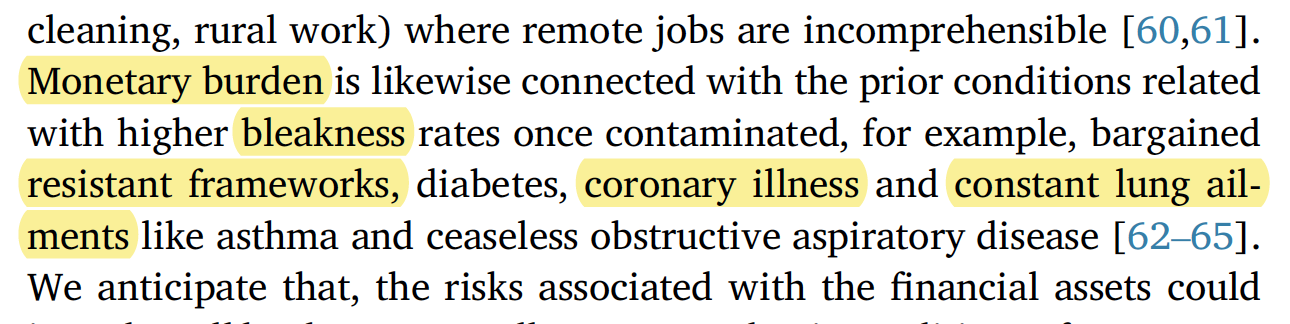
Nt Pramathesh Mishra , Sabya Sachi Das , Shalini Yadav , Wasim Khan , Mohd Afzal , Abdullah Alarifi , El-Refaie Kenawy , Mohammed Tahir Ansari , Md Saquib Hasnain , Amit Kumar Nayak Global impacts of pre- and post-COVID-19 pandemic: Focus on socio-economic consequences Sensors International (2020) doi: 10.1016/j.sintl.2020.100042

Here some wound healing, again in Springer Nature, maybe they want to issue a Change History also here:
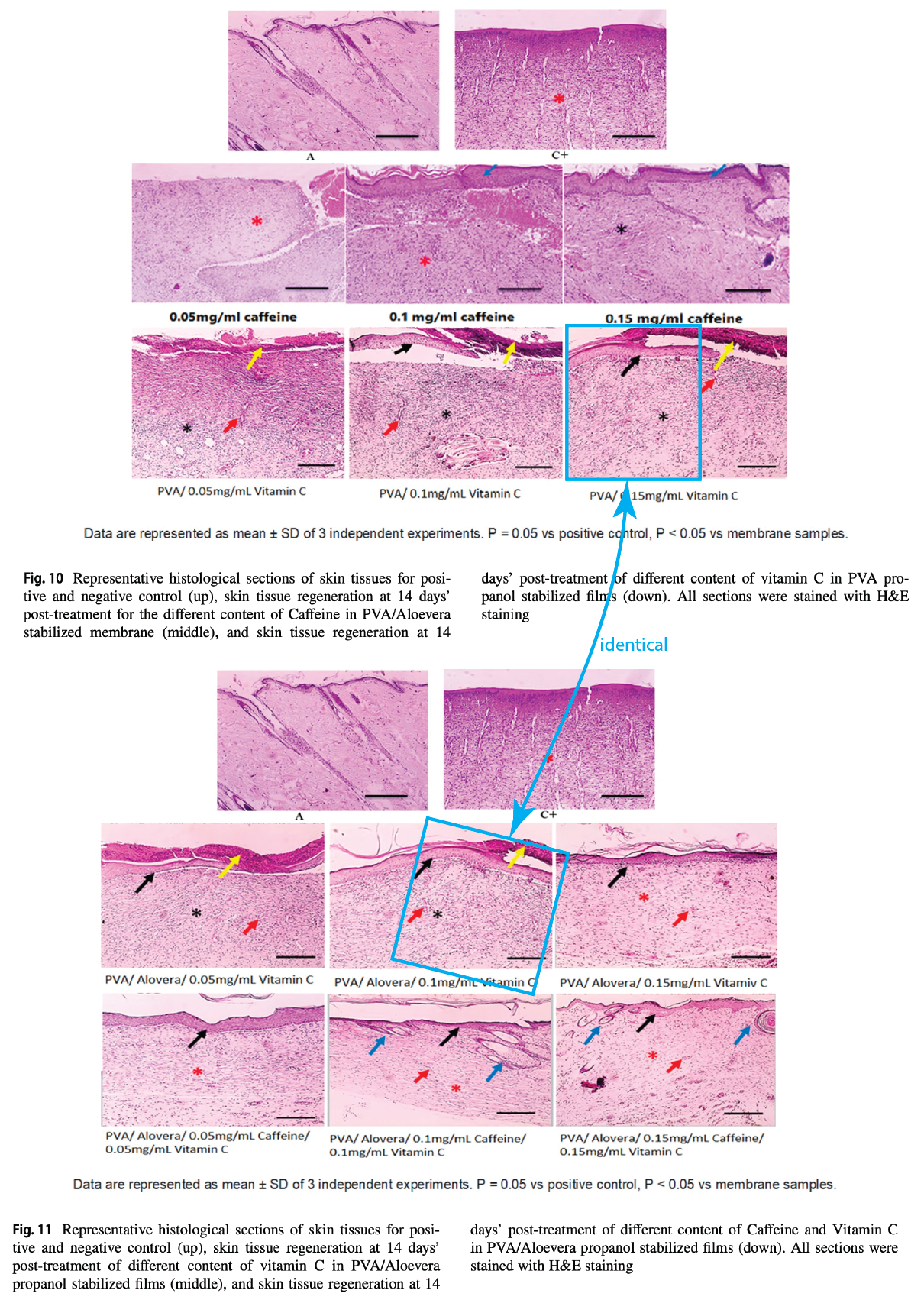
El-Refaie Kenawy, Mahmoud A. El-Meligy , Zeinab S. Ghaly , Marwa E. Kenawy, Elbadawy A. KamounNovel Physically-Crosslinked Caffeine and Vitamin C-Loaded PVA/Aloe Vera Hydrogel Membranes for Topical Wound Healing: Synthesis, Characterization and In-Vivo Wound Healing Tests Journal of Polymers and the Environment (2024) doi: 10.1007/s10924-023-03083-7
[right]:
Wound images between 4 figures are identical for different timepoints or treatment conditions:
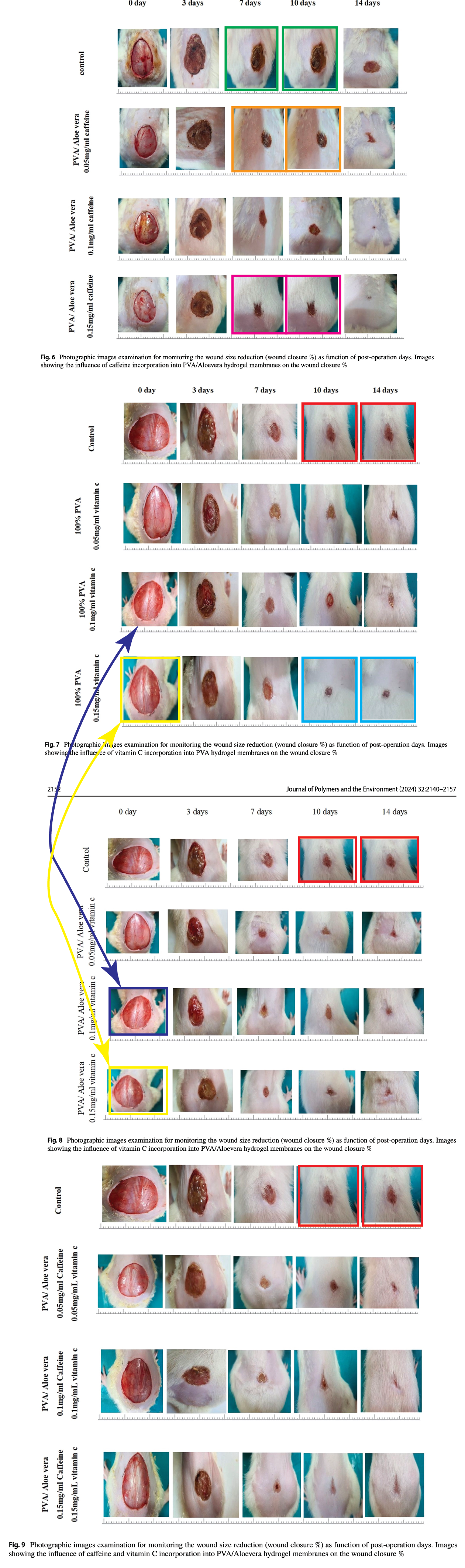
Kenawy’s coauthor Elbadawy A. Kamoun replied on PubPeer with a long text where he denied the issues in Fig 10 and 11 by blaming the sleuth with his faulty AI an dhis lack of “normal eye-vision“, and for the rest he blamed a woman:
“…this part was responsivity of Ms. (Zeinab Ghaly) (she is a Ph.D. student) was unintentional mistake, therefore we kindly request your approval to make corrections to the research formats; to preserve the efforts made and the scientific reputation of all co-authors.”
Retraction Watchdogging
Top Italian Scientist
A retraction for Italian cancer researchers led by Marina Ziche, professor at University of Siena, who in 2016 featured in local media on the occasion of her being “awarded by Onda, the national observatory on women’s health” due to her induction into the “Top Italian Scientists” ranking. A link to Onda Observatory was provided, which now goes to casino advertisement. Ziche has currently 10 fake papers on PubPeer, this freshly retracted study rotted on PubPeer since 2017, but better late than never:
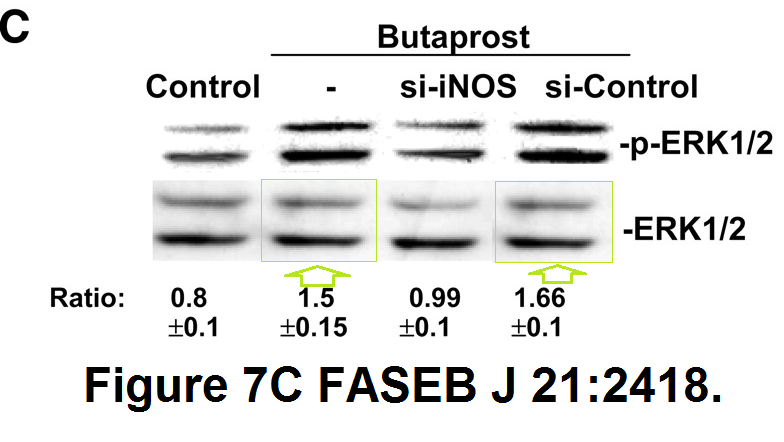
Sandra Donnini , Federica Finetti , Raffaella Solito , Erika Terzuoli , Andrea Sacchetti, Lucia Morbidelli , Paola Patrignani, Marina Ziche EP2 prostanoid receptor promotes squamous cell carcinoma growth through epidermal growth factor receptor transactivation and iNOS and ERK1/2 pathways The FASEB Journal (2007) doi: 10.1096/fj.06-7581com
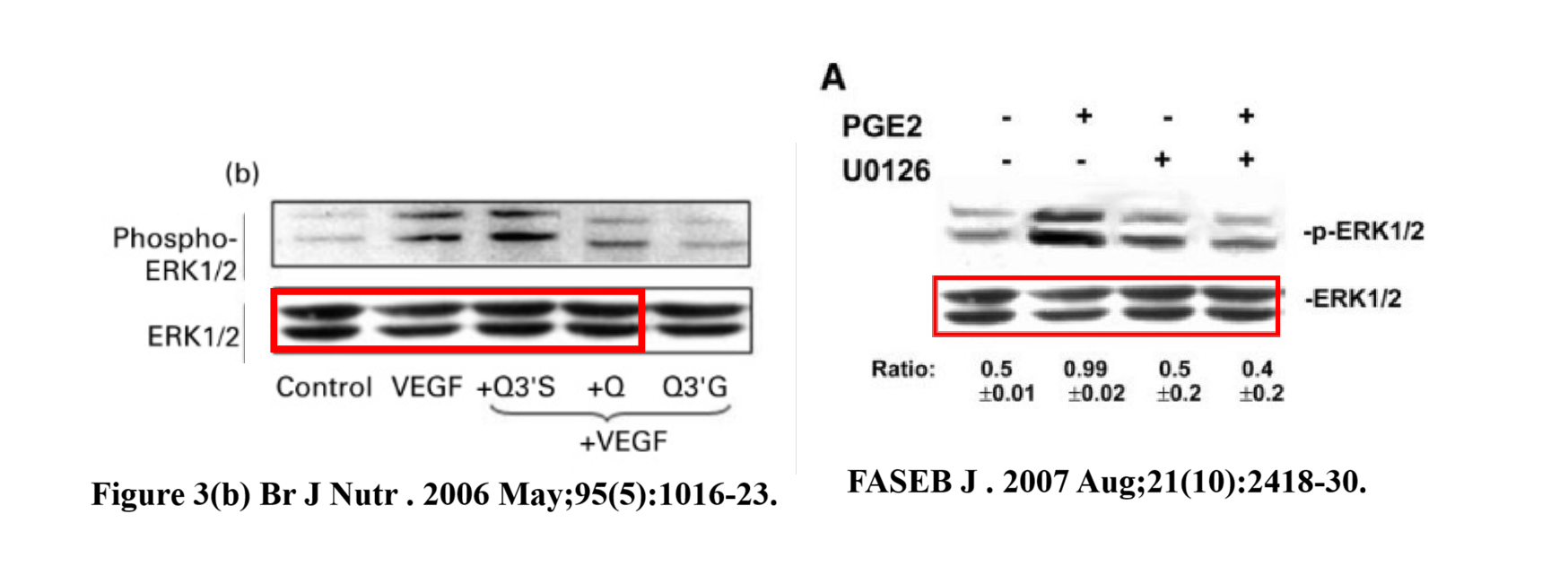
Sandra Donnini , Federica Finetti , Lorenzo Lusini , Lucia Morbidelli , Veronique Cheynier , Denis Barron , Gary Williamson , Johannes Waltenberger , Marina Ziche Divergent effects of quercetin conjugates on angiogenesis British Journal Of Nutrition (2006)
doi: 10.1079/bjn20061753

Federica Finetti , Erika Terzuoli , Elena Bocci , Isabella Coletta , Lorenzo Polenzani , Giorgina Mangano , Maria Alessandra Alisi , Nicola Cazzolla , Antonio Giachetti , Marina Ziche , Sandra Donnini Pharmacological inhibition of microsomal prostaglandin E synthase-1 suppresses epidermal growth factor receptor-mediated tumor growth and angiogenesis PLOS One (2012) doi: 10.1371/journal.pone.0040576
The two papers reusing same data contain other forgeries, click on the PubPeer links. Ziche’s mentees Federica Finetti and Sandra Donnini are now professors in Siena themselves, the former already associate, the latter still assistant. Their retraction arrived on 14 April 2026:
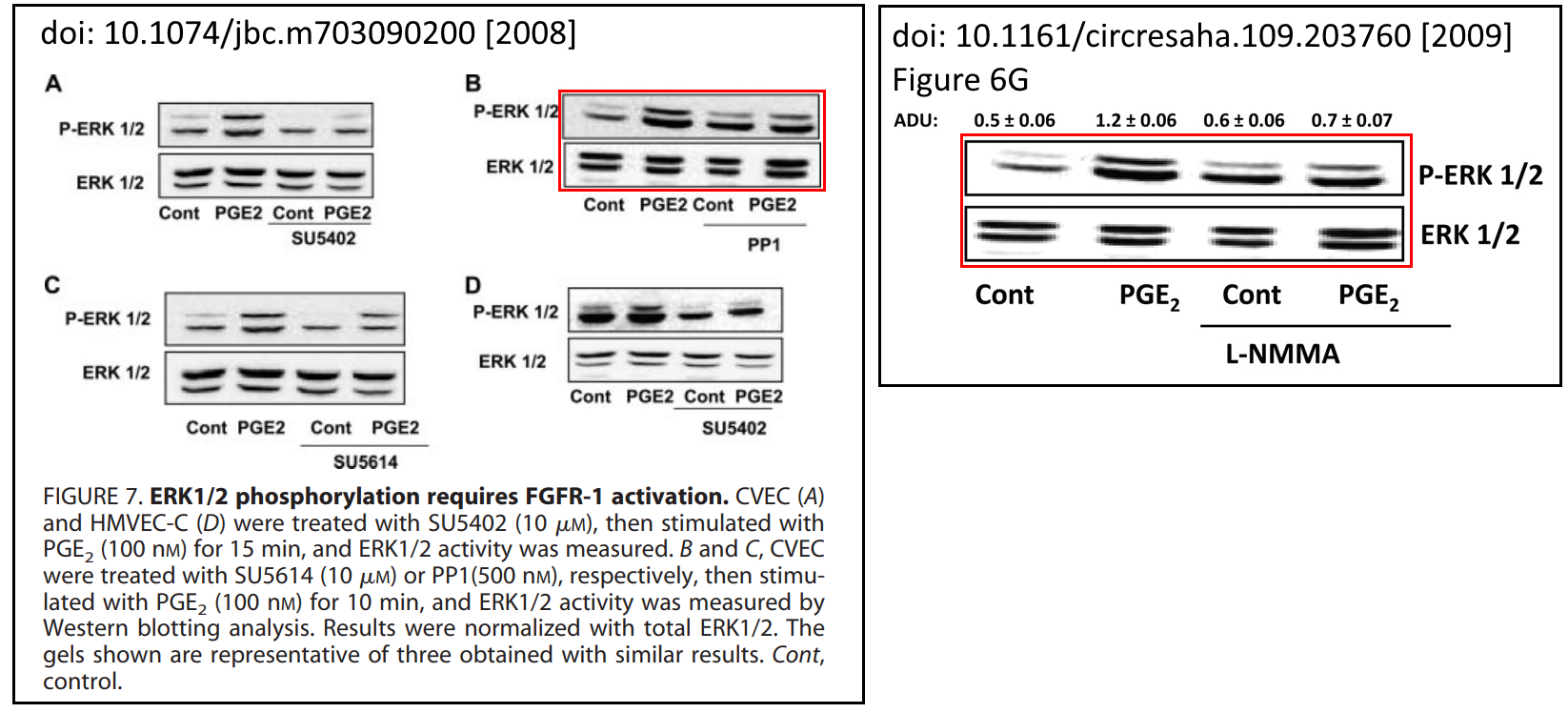
“The journal received allegations by a third party of image reuse and relabeling within the same paper and between others published by a subset of the authors. Further investigation of the article by the publisher confirmed the third-party concerns and detected evidence of additional image reuse and relabeling. Specifically, images in Figures 1A, 2A, 3B, 4A, 6G, and 7C were reused in part (with or without horizontal flipping) throughout the paper. Multiple figures have inconsistent splicing patterns among panels of the same figure, including, but not limited to: Figure 6G, Figure 7C, and Figure 8D. Figure 1A was reused as Figure 3a and Figure 3b, while Figure 4A was reused as Figure 3a in a article published contemporaneously [Donnini et al. 2007 (https://doi.org/10.1079/bjn20061753)]. Figure 3B was reused as Figure 6D in a later article [Finetti et al. 2009 (https://doi.org/10.1161/circresaha.109.203760)].
The retraction has been agreed to because of the evidence of image duplication in multiple figures and across multiple papers, which fundamentally compromises the editors’ confidence in the conclusions presented. The authors disagree with the retraction. Authors P. Patrignani and A. Sacchetti further state that their contributions to the research reported in the article were limited to the western blot shown in Figure 3A.”
Kevin Patrick pointed out that Andrea Sacchetti and Paola Patrignani (now professor at University of Chieti-Pescara) cannot disown this paper now, since also their Figure 3A was affected by fraud. Also, Patrignani considers this study to be her own in her CV, she cannot really claim differently now.
Anyway, here another fabrication by Ziche, Finetti and Donnini:
Federica Finetti , Raffaella Solito , Lucia Morbidelli , Antonio Giachetti , Marina Ziche, Sandra Donnini Prostaglandin E2 regulates angiogenesis via activation of fibroblast growth factor receptor-1 Journal of Biological Chemistry (2008) doi: 10.1074/jbc.m703090200

However, the panel B in Figure 7 is also fraudulent, it was reused here:
Federica Finetti , Sandra Donnini, Antonio Giachetti , Lucia Morbidelli , Marina Ziche Prostaglandin E(2) primes the angiogenic switch via a synergic interaction with the fibroblast growth factor-2 pathway Circulation Research (2009) doi: 10.1161/circresaha.109.203760

Ziche is an Italian patriot. Look, she proved that olive oil cures cancer, in a joint study with a fellow Italian – Giovanni Melillo, former Senior Investigator at National Cancer Institute in USA and now Vice President for Immuno-oncology at AstraZeneca:
Erika Terzuoli , Sandra Donnini , Antonio Giachetti , Miguel A. Iñiguez , Manuel Fresno , Giovanni Melillo, Marina Ziche Inhibition of hypoxia inducible factor-1alpha by dihydroxyphenylethanol, a product from olive oil, blocks microsomal prostaglandin-E synthase-1/vascular endothelial growth factor expression and reduces tumor angiogenesis Clinical Cancer Research (2010) doi: 10.1158/1078-0432.ccr-10-0156

Sholto David: “Figure 5: An actin blot is shared between part A and part F which should show different treatment conditions.”
Melillo also has a very worrisome PubPeer record, including with the late Mikhail Blagosklonny, but it will have to be a separate story another time. Maybe it was via Melillo that Ziche found Blagosklonny’s journal Oncotarget:
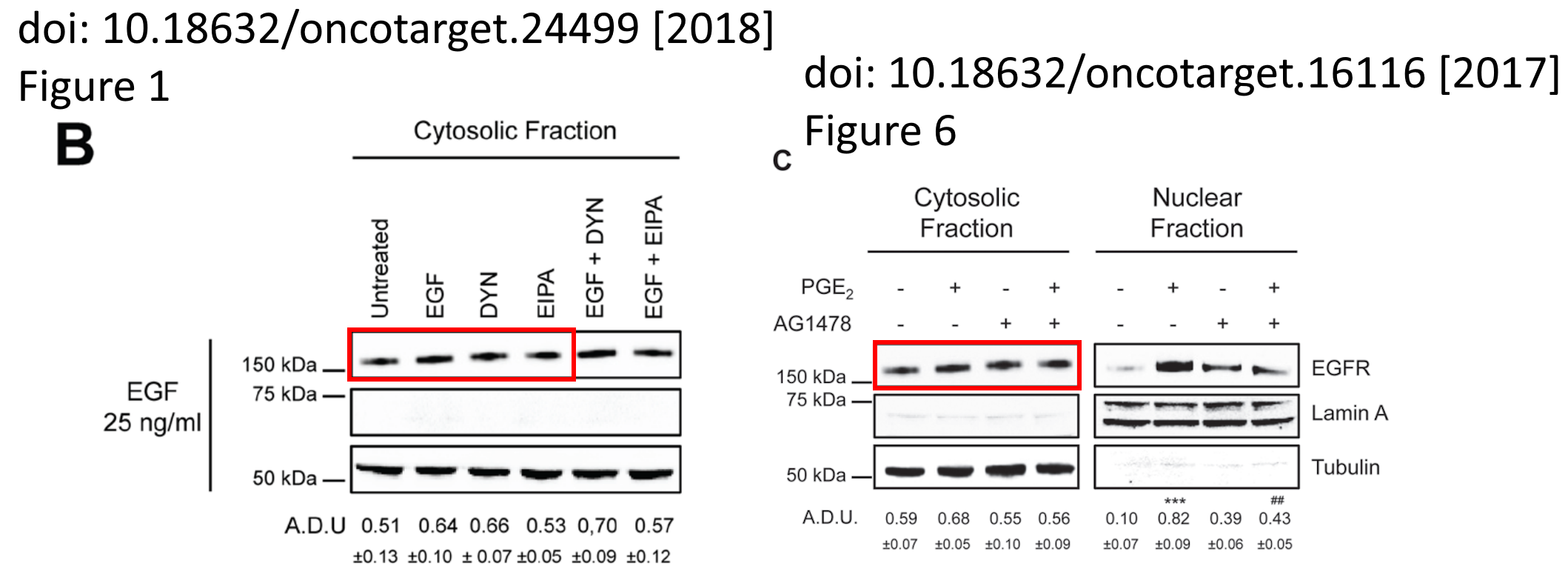
Lorenzo Bazzani , Sandra Donnini, Federica Finetti , Gerhard Christofori, Marina Ziche PGE2/EP3/SRC signaling induces EGFR nuclear translocation and growth through EGFR ligands release in lung adenocarcinoma cells Oncotarget (2017) doi: 10.18632/oncotarget.16116
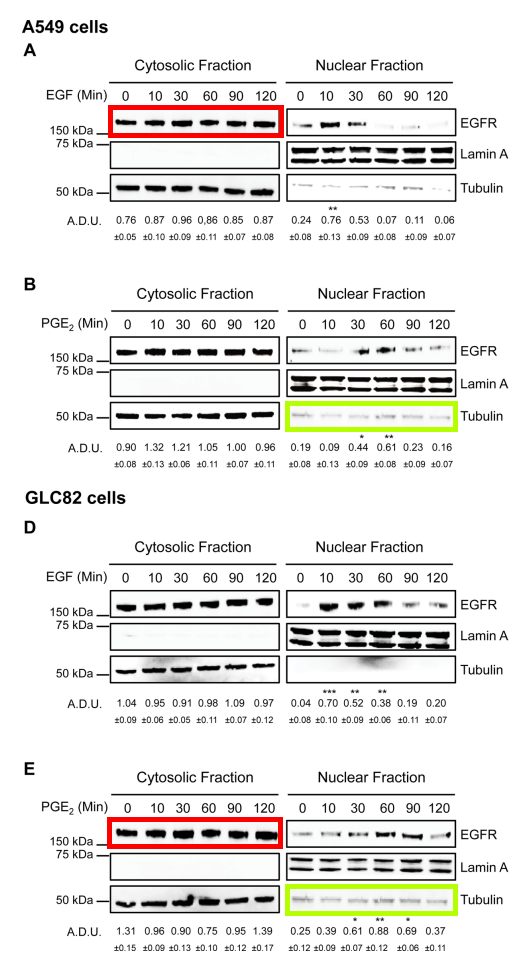
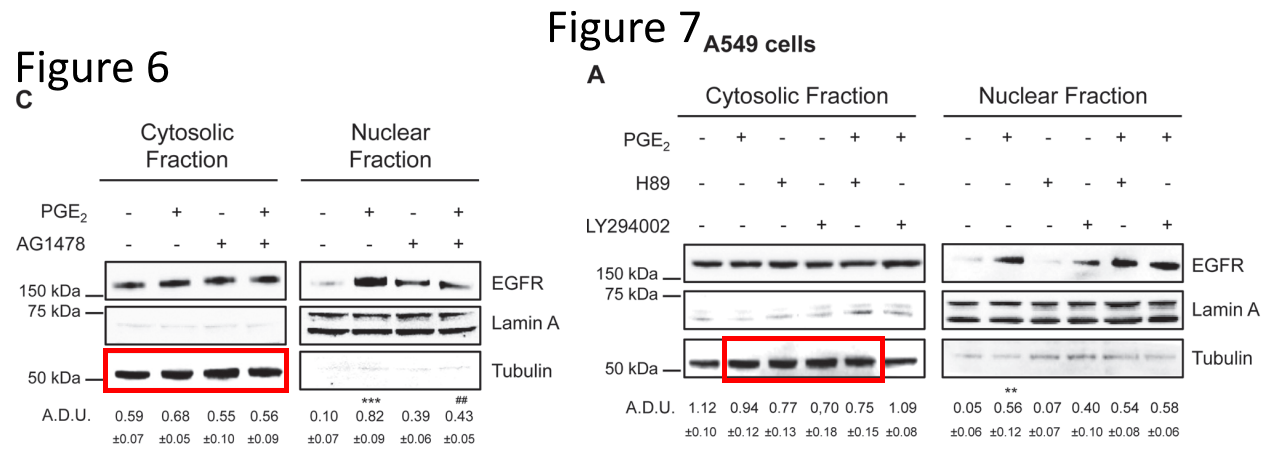
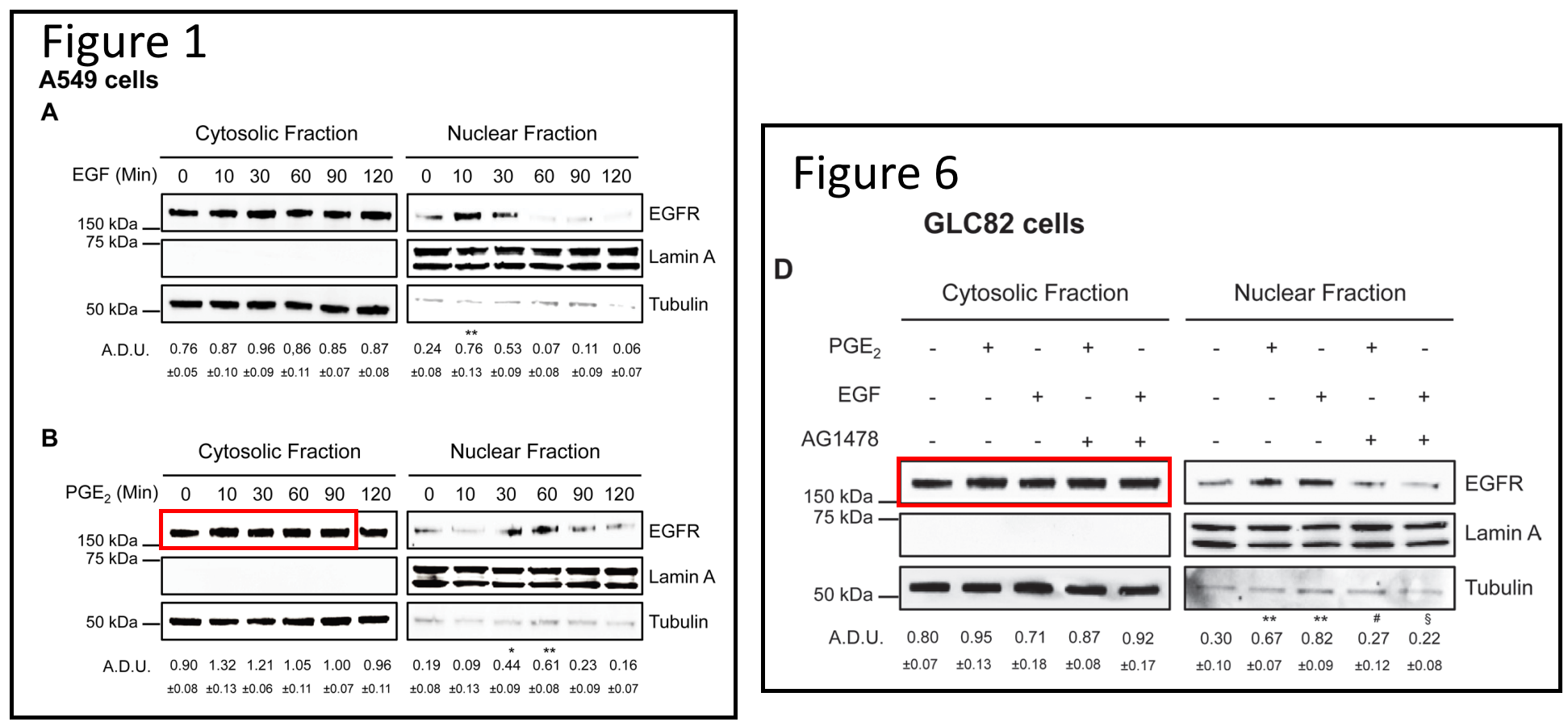
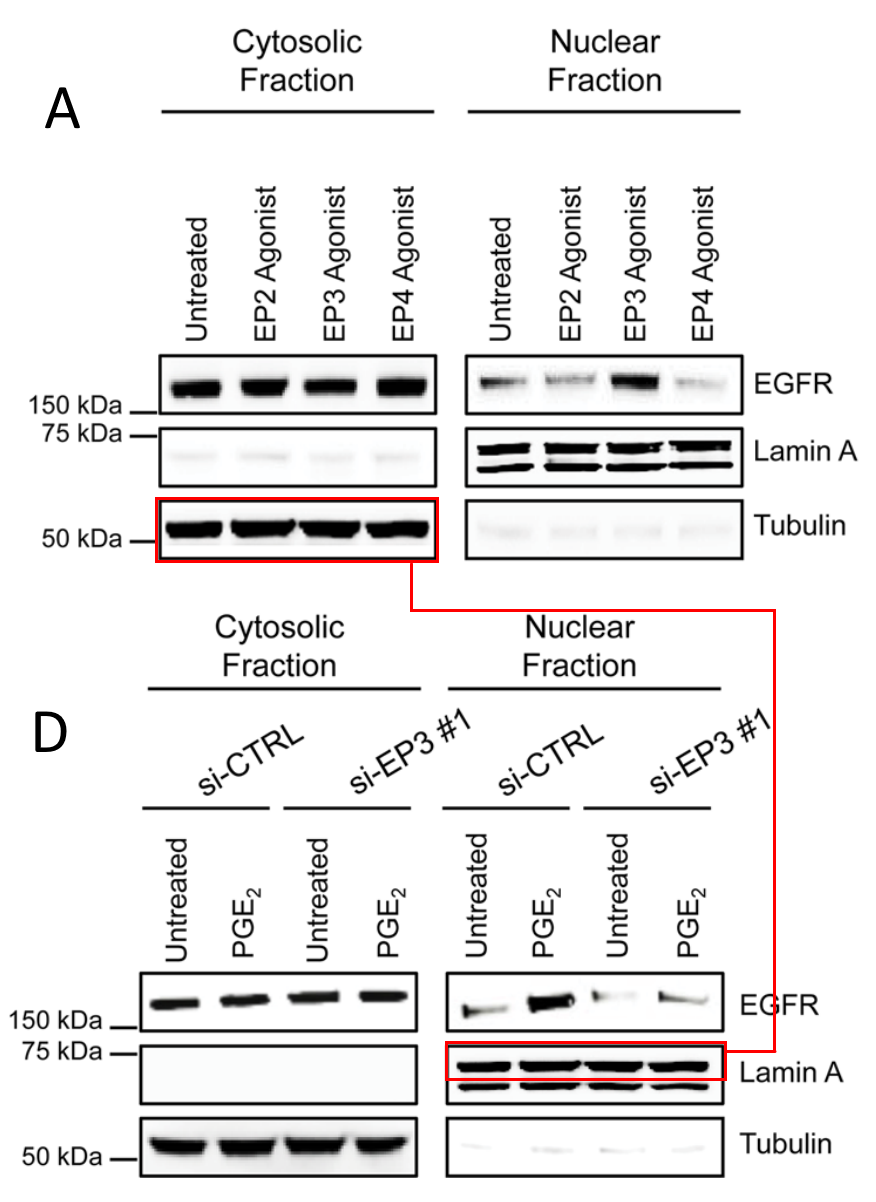
Of course that paper shared data with another fabrication from Ziche’s lab, again in Oncotarget:
Lorenzo Bazzani , Sandra Donnini, Antonio Giachetti , Gerhard Christofori, Marina Ziche PGE2 mediates EGFR internalization and nuclear translocation via caveolin endocytosis promoting its transcriptional activity and proliferation in human NSCLC cells Oncotarget (2018) doi: 10.18632/oncotarget.24499
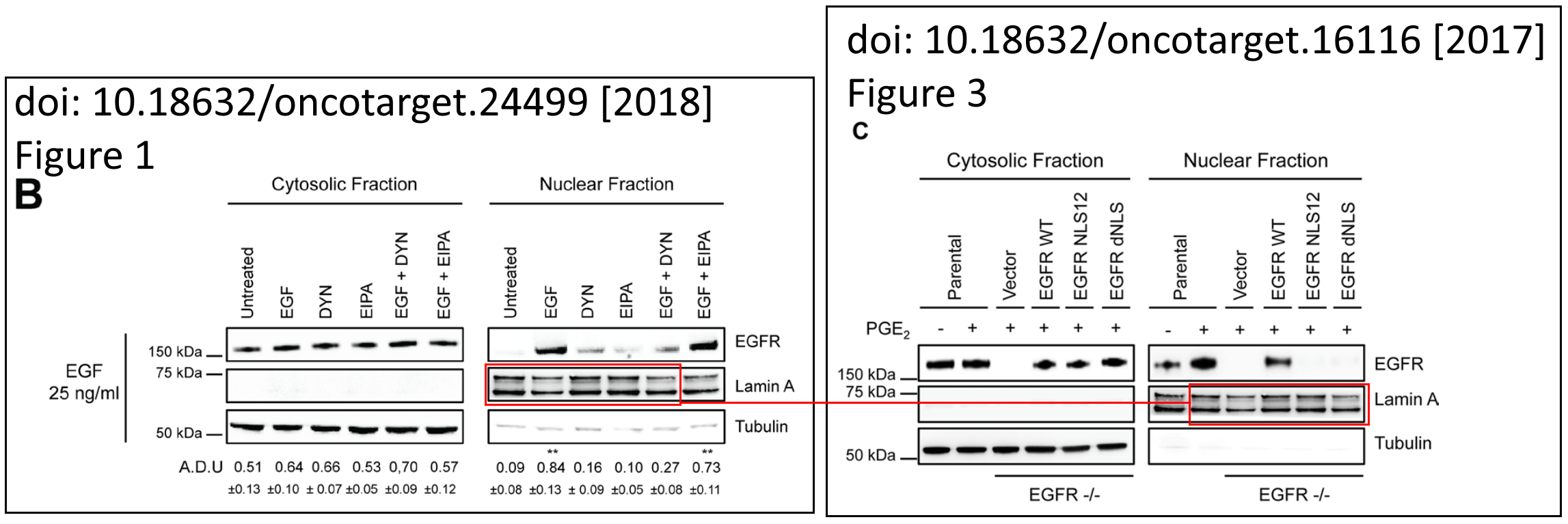
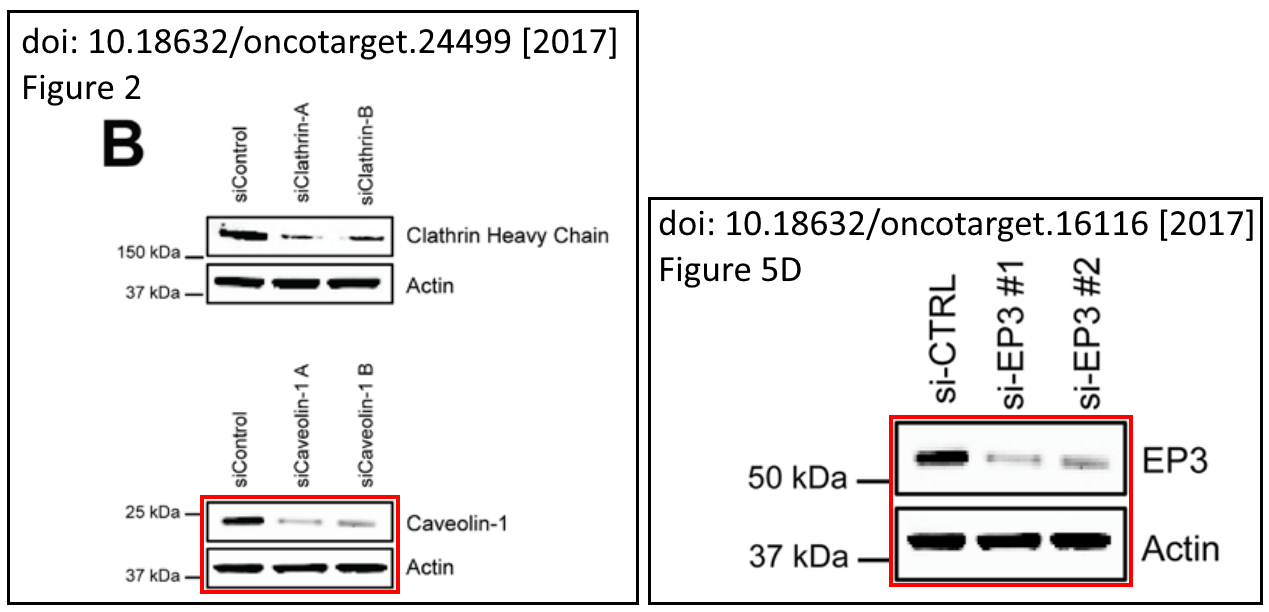
Fig 5D (2017) vs Fig 2 (2018)

Ziche’s lab seems to be a classic small Italian artisan fraud workshop. It’s a pity she won’t be able to read For Better Science, since this web site is blocked in Italy due to a lawsuit by a much bigger Italian cheater, Gabrio Bassotti:
Italian Prosecutor orders seizure of Gabrio Bassotti reporting
“…request for preventive seizure made on 12.4.2024 by the Public Prosecutor in charge, concerning the article under indictment, still accessible on the website called forbetterscience.com, although it appears to have been removed from the blog.repubblica.it website (referred to in the indictment)…”
Submitted over a short space of time
A medical student from Silesian Medical University in Katowice, Poland, just lost three papers to retractions. But never mind, since Paweł Łajczak discovered first papermills and then AI chatbots, he churns out new review and meta-analysis papers by an hour – just in the last year he produced over 50 studies with coauthors from all over the world, and is now getting close to having 90 in total.
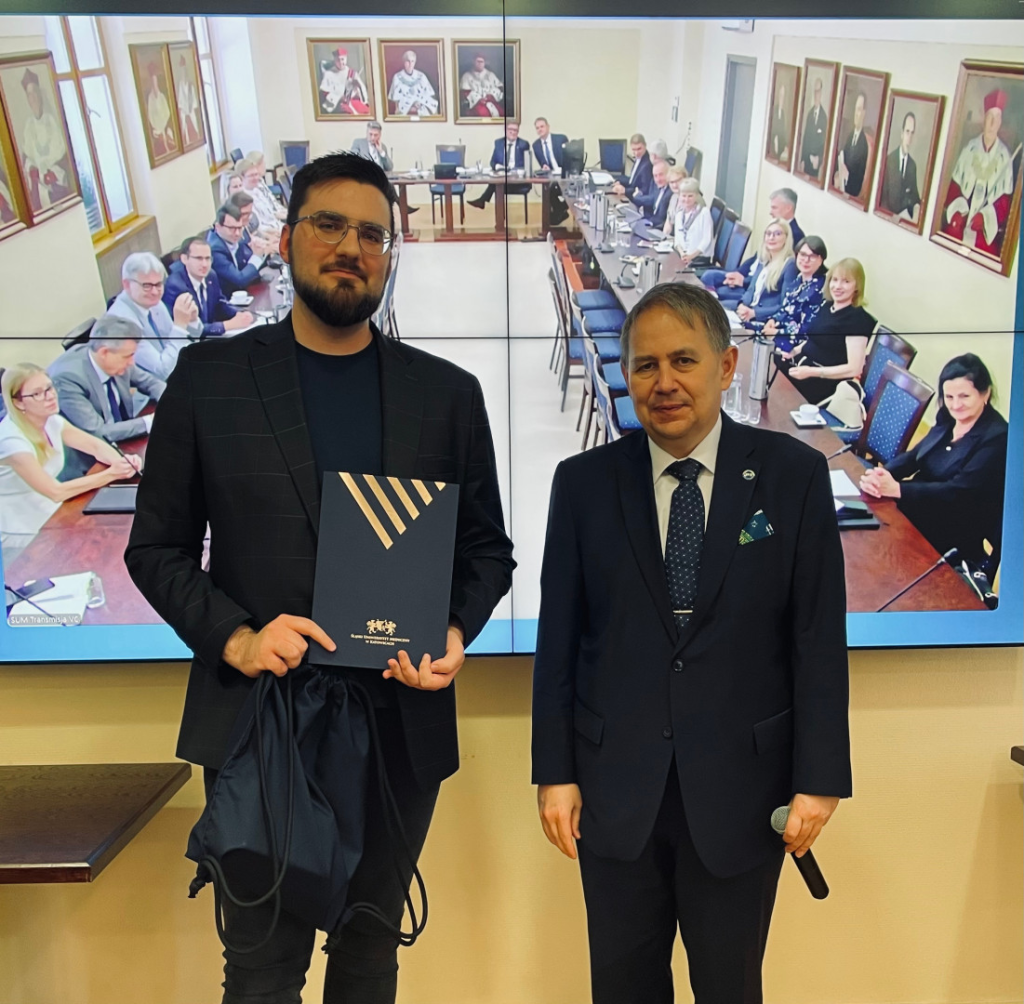
In June 2025, Lajczak was celebrated by his university and the Rector Tomasz Szczepański because he received a scholarship from the Minister of Health “for significant scientific achievements for the academic year 2024/2025“. Photo: Silesian Medical University
So here are Lajczak’s three recent retractions, all in the same Springer Nature journal. This one is coauthored with his boss, Zbigniew Nawrat, the inventor of “Robin Heart cardiac surgical robot (the first Polish and European robot for heart surgery)“:
Paweł Marek Łajczak , Bartłomiej Jurek , Kamil Jóźwik , Zbigniew Nawrat Bridging the gap: robotic applications in cerebral aneurysms neurointerventions – a systematic review Neurosurgical Review (2024) doi: 10.1007/s10143-024-02400-5
“The Editor-in-Chief has retracted this article. An investigation by the Publisher found that a number of articles, including this one, were submitted over a short space of time and show strong indications that the text was generated by a large language model (LLM) without proper disclosure by the authors. These articles are, therefore, in breach of the Journal’s editorial policy and are being retracted.
Paweł Łajczak on behalf of all authors disagrees with the retraction.”
(Retraction 26 March 2026)
The next one by Lajczak and Nawrat had a similar retraction note, about having been “generated by a large language model (LLM) without proper disclosure“:
Paweł Łajczak , Anna Łajczak , Stanisław Buczkowski , Kamil Jóźwik , Przemysław Nowakowski , Cristian Jaldin Torrico , Zbigniew Nawrat An early evaluation of robot-assisted and conventional techniques for posterior approach atlantoaxial displacement instrumentation – a systematic review and meta-analysis Neurosurgical Review (2025) doi: 10.1007/s10143-025-03256-z
And the third retraction, with the same wording, it is without Nawrat but again with Lajczak’s wife and fellow student Anna:
Paweł Łajczak, Anna Łajczak Pedal to the metal: accelerating intracerebral hemorrhage treatment with robotic-assisted surgery. A systematic review & meta-analysis of clinical effectiveness Neurosurgical Review (2024) doi: 10.1007/s10143-024-03039-y

The papermilling den of Gliwice
“As you will see, there is a lot of papermilling happening in Gliwice, as if this place has suddenly become attractive to many “researchers” from different corners of the papermilling spectrum. ” – Alexander Magazinov

Other journals however don’t mind all this LLM-papermill scam, all they ask from Lajczak is to occasionally issue corrections. Like for this global collaboration with leading experts from Poland, USA, Pakistan, Turkey and Germany, published in an Elsevier journal:
Paweł Łajczak , Sherif Eltawansy , Ogechukwu Obi , Oguz Kagan Sahin , Ayesha Ayesha , Jesus Almendral , Jeffrey Selan , Renato Apolito , Ahmad Elashery , Anna Łajczak , Stanisław Buczkowski , Kamil Jóźwik , Przemysław Nowakowski , Julita Janiec , Krzysztof Żerdziński , Michele Schincariol Robotic percutaneous coronary intervention and the clinical effectiveness debate: Is newer always better? A systematic review and frequentist network meta-analysis Cardiovascular revascularization medicine (2025) doi: 10.1016/j.carrev.2025.04.005
“The authors regret that in the originally published version of this article, the Declaration of Generative AI and AI-assisted Technologies in the Writing Process was inadvertently omitted. This oversight has now been corrected, and the declaration has been included. The authors would like to apologise for any inconvenience caused.
Declaration of Generative AI and AI-assisted technologies in the writing process
During the preparation of this work, the authors used Gemini (Google Inc.) during writing, translating, and grammar checking process. After using this tool, the authors reviewed and edited the content as needed and take full responsibility for the content of the published article. A large language model was not used for data extraction, screening, or statistical analysis. All ideas, analysis, and final content were produced and approved by the authors.”
(Corrigendum 18 March 2026)
Two very similar corrections were published in March 2026 for these papers, in another Elsevier and another Springer journal:
- Paweł Łajczak , Anna Łajczak , Stanisław Buczkowski , Kamil Jóźwik , Przemysław Nowakowski Robotic hydrocephalus surgery: A systematic review of the effectiveness in neurosurgical interventions Neuro-Chirurgie (2025) doi: 10.1016/j.neuchi.2025.101677 [March 2026 Correction]
- Paweł Marek Łajczak, Kamil Jóźwik Artificial intelligence and myocarditis—a systematic review of current applications Heart Failure Reviews (2024) doi: 10.1007/s10741-024-10431-9 [March 2026 Correction]
I know for a fact that Nawrat is very proud of his brilliant student. No, seriously, he is.

The western blot doctors of Silesia
Three whistleblowers reported the Polish medicine professor Bozena Gabryel and colleagues for data manipulation. Will the universities do anything now?
Science Breakthroughs
Covert mortality nodavirus
News worldwide are reporting a scary discovery from China: a marine virus jumped from shrimps to humans and is causing an eye disease! Here is New Scientist writing on 1 April 2026:
“Cases of a condition called persistent ocular hypertension viral anterior uveitis (POH-VAU) have been increasing in China, with no clear cause. It is defined as inflammation and high pressure within the eye, similar to glaucoma, which damages the optic nerve and can cause vision loss.
To understand why cases are increasing, a team of researchers – including scientists at the Chinese Academy of Fishery Sciences in Qingdao – recruited 70 people in China who were diagnosed with the condition between January 2022 and April 2025.
They tested this cohort for covert mortality nodavirus, which infects a range of marine animals – with all 70 tests coming back positive. “To date, no virus originating from aquatic animals has been shown to infect humans and directly cause disease,” say the researchers, who declined to be interviewed. […]
To better understand the virus, the researchers infected mice, which developed “obvious pathological changes in the cornea, iris and retina” within a month. They also noticed that mice sharing water were able to transmit the virus to each other.
Of the 70 people the researchers studied, more than half were home-based aquatic animal handlers, which may have been the source of their infections. But the team also reported that around 16 per cent were either consumers of raw aquatic products or had close contact with high-risk groups.”
Worse: the researchers analysed all possible farmed and wild aquatic animals used for food and “concluded that covert mortality nodavirus is present globally […] in 49 species – including prawns, crabs, fish, sea cucumbers and barnacles“.
Panic?
I sure endorse you going vegan, but maybe this study is not the right argument.
Shuang Liu , Die Hu , Tingting Xu , Jia Yin , Xinmiao Shan , Jitao Xia , Zhaoxi Wang , Ruidong Xu , Chong Wang , Danielle E. Anderson , Peipei Wu , Qianwen Bu , Xiuzhen Liu , Yingjie Liu , Wenjie Tan , Ting Wang , Can Zhao , Hai Zhu , Lin-Fa Wang, Lixin Xie, Xiaojing Pan, Qingli Zhang An emerging human eye disease is associated with aquatic virus zoonotic infection Nature Microbiology (2026) doi: 10.1038/s41564-026-02266-x

By the way, one of the corresponding authors, Linfa Wang of Duke-NUS Medical School in Singapore, is a pandemic celebrity: he is the “Batman” colleague of the “Batwoman” Shi Zhengli, and close collaborator of Peter Daszak, together they ran the EcoHealth Alliance which collected bat coronaviruses and performed gain-of-function research on them, up until SARS-CoV2 mysteriously emerged from nowhere and caused the COVID-19 pandemic, and everyone asking questions about that research and Chinese biosafety was called a racist conspiracy theorist.

Viral by Alina Chan & Matt Ridley – Book review
Alina Chan’s book with Matt Ridley on the Origins of COVID-19 is finally out. It is a very informative read!
The only good news is that this eye disease can surely be cured wiht David Sinclair’s reprogramming therapy, go back to page start.
Donate!
If you are interested to support my work, you can leave here a small tip of $5. Or several of small tips, just increase the amount as you like (2x=€10; 5x=€25). Your generous patronage of my journalism will be most appreciated!
€5.00


“Nature was very excited in their article from 7 April 2026, it opened with the classic story of scientific eureka moment”:”
So much so that in the diagram on page 2 of their article Nature misidentifies one of the Yamanaka factors, and the factors used in the experiments the diagram refers to, as SOX 9, when SOX2 was employed. An elementary Nature mistake.
LikeLike
So many Italian cheaters I lose track. I do remember writing some of those comments on the Ziche papers. Probably more to find!
LikeLiked by 1 person
Have another look at Millelo!
LikeLike
There is a reason FBS is banned in Italy.
LikeLike
As our blog host probably knows, FBS is banned in Italy so that no-one can read it, except anyone with access to a university or hospital network (so just about anyone who is likely to read it).
LikeLike
And many others use VPN, archives, or other tools.
It was a gigantically cunning scheme by Basotti to take revenge on Sylvie Coyaud by making her the only person in Italy unable to read FBS.
LikeLike
Science Breakthrough
Astaxanthin, meclizine, mitoglitazone, pioglitazone, alpha-ketoglutarate, mifepristone, methotrexate, and atorvastatin-telmisartan do not increase lifespan in UM-HET3 mice
https://link.springer.com/article/10.1007/s11357-026-02201-2
Who wudda thunk?
LikeLike
Correct, but what about rapamycine and other crap which the coauthor Matt Kaeberlein pushes?
https://forbetterscience.com/tag/Matt-Kaeberlein/
LikeLike
Lifespan benefits for the combination of rapamycin plus acarbose and for captopril in genetically heterogeneous mice
https://onlinelibrary.wiley.com/doi/10.1111/acel.13724
Not really worth the trouble, even in mice. I guess.
LikeLike
PS: Recognizing author contribution is important in these ITP studies.
LikeLike
Eric Verdin also involved.
https://forbetterscience.com/tag/eric-verdin/
LikeLike
For Dr. Sheen: Photoshop was invented in the late 1980’s. In 2008, they released CS4, its version 11!
LikeLike
I think Dr Sheen knows that she is making stuff up . She probably assumes young people believe the world was black and white 20.yeara ago
LikeLike
She has now posted much the same rant to pubpeer: https://pubpeer.com/publications/D82C9A29261D3C24BB87FDE390B0C8
While I do generally sympathise with the moderation team giving authors a wide berth to respond, sometimes I think they afford a little too much breathing space for idiot comments.
LikeLiked by 1 person
On the contrary, it’s great the comment was approved!
Nobody can now accuse me of making up this crap to smear poor Prof Shen.
LikeLike