Meet one of the biggest bigwigs of British ophthalmology, Robin Ali, professor at King’s College London, team leader at NIHR Biomedical Research Centre of Moorfields Eye Hospital, and director of various other clinical research centres in London specialising in gene therapy. Most of his career Ali spent at the Institute of Ophthalmology of UCL, the London university readers of this site have heard a lot about.
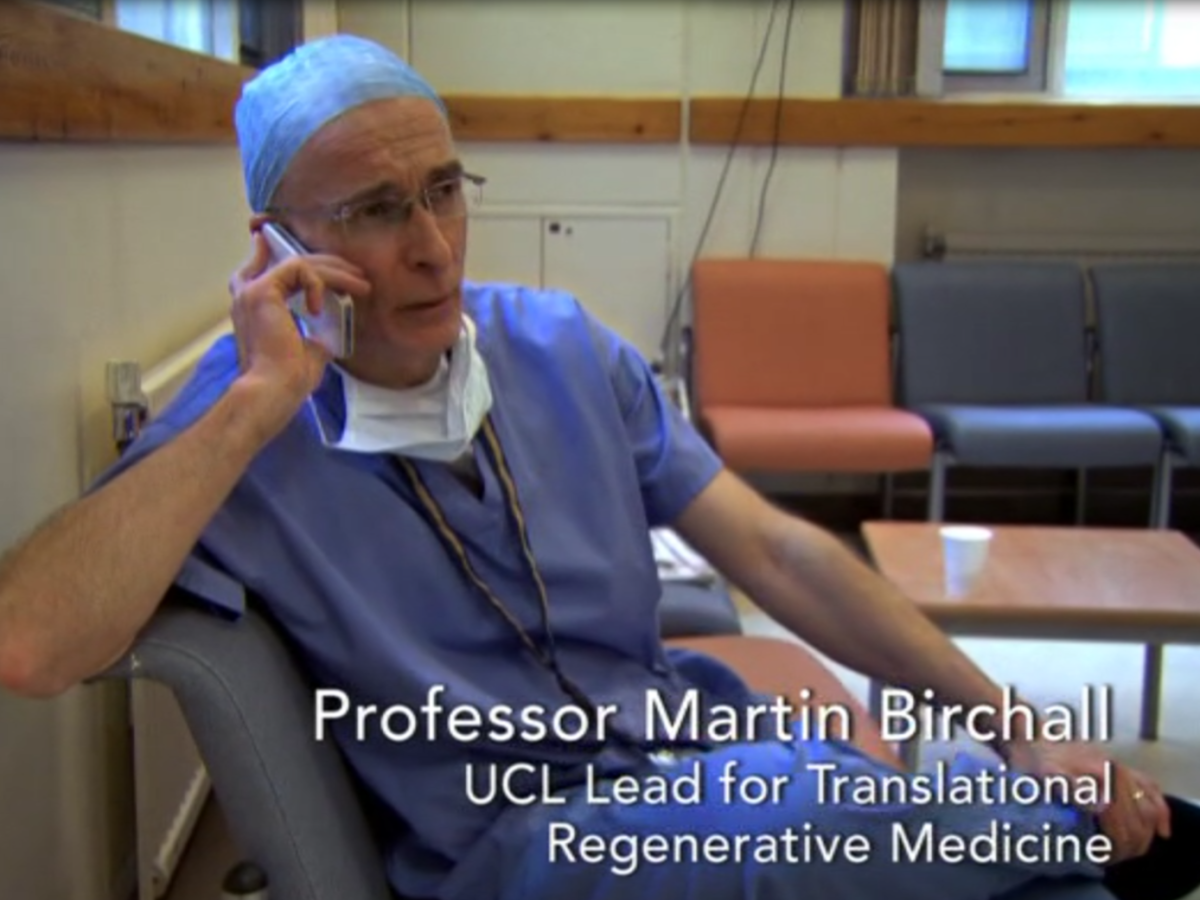
Several years ago, UCL investigated the Macchiarini affair and found their surgeon Martin Birchall was not only innocent, but also entitled to more money and more patients to experiment upon. Now, Patricia Murray was awarded for exposing this UCL malfeasance, and Sholto David scrutinised UCL papers for data manipulation.
Ali also is into business: He sits on the boards of various biotechs, and in 2015 he founded his own, the gene therapy company Athena Vision (here archived page), a spin-off by UCL and Moorfields Eye Hospital. It was immediately transformed into a new company, MeiraGtx, raising at least £425 million in investment. Ali then became Meira’s Chief Scientific Officer and Head of Preclinical Ophthalmology, but left that office some time between 2018 and 2021.
In 2018, Ali won the largest prize in vision research, the 2018 António Champalimaud Vision Award (worth €1 million), together with James Bainbridge, who is not just some ophthalmology professor at UCL and Moorfields and Chair of Retinal Studies at UCL- Bainbridge was even appointed as “Surgeon Oculist to Her Majesty’s Household”. He used to be Clinical Consultant at Ali’s company Athena Vision, and as you will see, he still holds shares in MeiraGtx. Ali and Bainbridge also performed clinical trials on human patients (adult and children) based on their preclinical research.
We are here to look at the quality of those mouse studies. Ali has almost 20 rather problematic papers on PubPeer, many with Bainbridge. And the occasional corrections do the opposite of restoring trust.
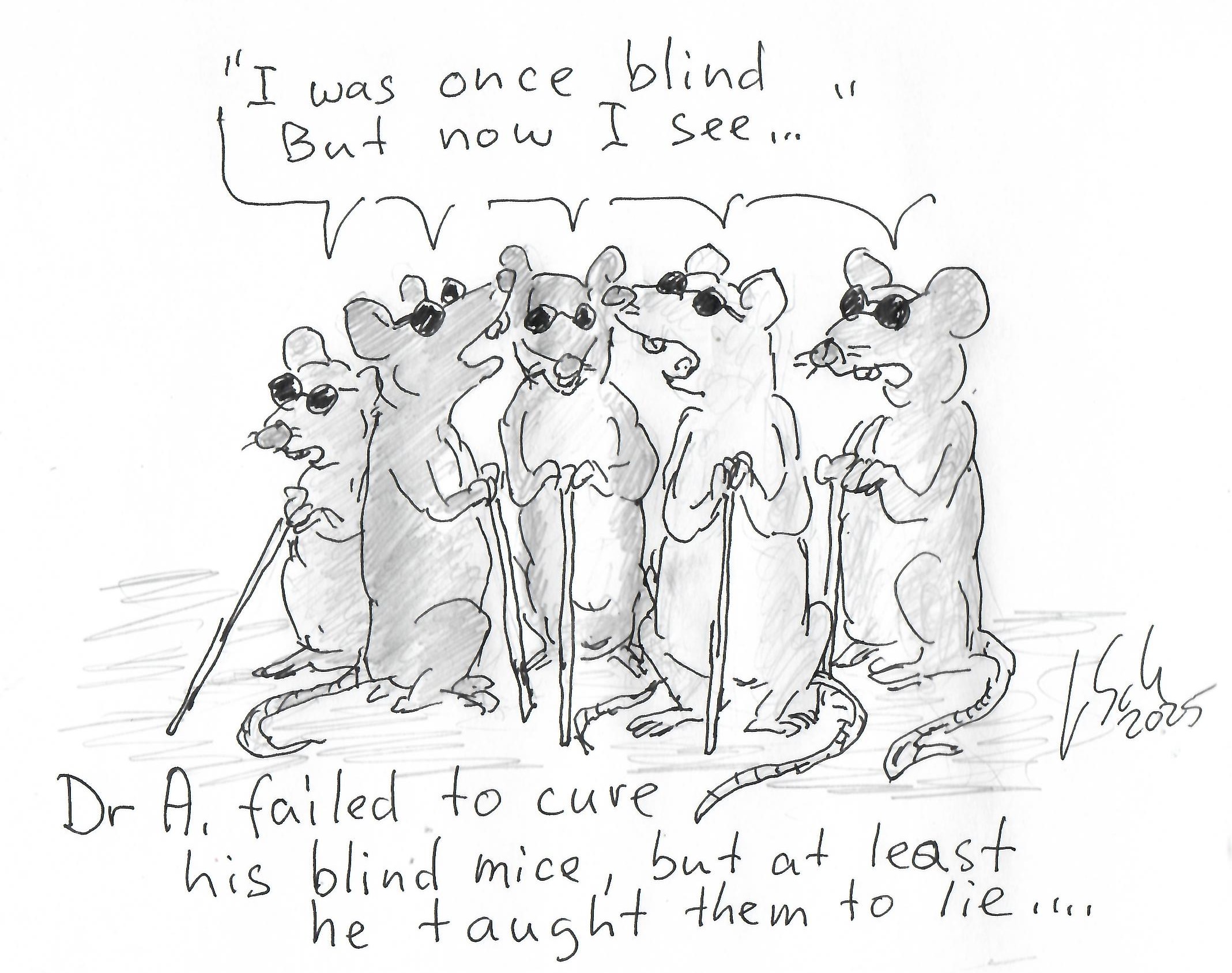
This Nature study by Ali and Bainbridge claimed to have achieved nothing less but making blind mice see, thanks to photoreceptor transplantation:
Mycosphaerella arachidis: “Figure 4: Unexpected similarity within the red areas that I have added.”
The Correction from 6 June 2024 explained (highlights mine):
“It was brought to our attention that a region in Fig. 4h, Nrl.GFP No. 6, contains a duplication. The images in Fig. 4h are cropped regions from manually aligned montages that comprise multiple overlapping images and layers to encompass the size and depth of the tissue section. When reviewing the original image files versus the published montage image, we identified that a layer from the left-most position had been accidentally shunted with respect to the others. This misalignment leads to a duplication of an area that was also in an adjacent overlapping image. When this misalignment is corrected, the duplication is lost.
Importantly, no quantitative data or interpretative conclusions were derived from the image in Fig. 4h, or from any other manually assembled images; they are for illustrative purposes only. However, we are pleased to submit the correctly aligned version of the montage for the record. We also include an amendment to the legend for Fig. 4h to note that these images are derived from montages generated by manual alignment of individual images.”
It is a load of bollocks. Now, an even more bizarre case of a correction. Ali’s relevant coauthor is Tiansen Li, then in Harvard, now senior investigator at National Eye Institute of NIH in Bethesda in USA. Their study from 16 years ago announced a successful gene therapy to prevent blindness, in mice:
Actinopolyspora biskrensis: “Figure 6H appears to have an essentially repeated region (identified in cyan)”
Fig 6I
Back in 2022, the sleuth Actinopolyspora biskrensis reported these findings to the journal, and received a rather unexpected reply from the editor Val C. Sheffield, professor at University of Iowa, USA (highlights mine):
“Dear Anonymous, I have reviewed this paper including all the figures, not just the figure in question (Figure 6 H). In my opinion there is NO evidence of image manipulation in this manuscript. While there are small parts of the image in Figure 6H that do appear to be similar to each other, it would make no sense in the context of the whole figure for it to have been manipulated. For example, even if everything to the right of the red circles were deleted, the figure would still make the point that the authors are trying to show (the complete loss of photo receptor cells). “
It turned out that the fake Figure 6H originated from the PhD thesis of the first author Mei Hong Tan (Figure 4.9D, page 263), which she defended at UCL in 2011 under Ali’s supervision. Tan now works as ophthalmologist in Australia. Thanks to the high-resolution figures in the thesis, another forged figure in the paper (Fig 3H) could be identified:
Despite Sheffield’s denial, a Correction was issued on 9 October 2023 where the offending Figure 6H was removed, but Figure 6I and 3H were left as before:
“In October 2022, a reader highlighted areas of duplication within one of the figure panels (Figure 6H). The editorial team subsequently investigated, and ultimately, agreed with the author’s suggestion to remove this panel, since the same data was adequately illustrated in Figure 6G. Figure 6H has, therefore, been removed from Figure 6, which is reprinted below along with an updated figure caption. Changes to the figure caption are presented in bold italics.”
This is why a second Correction had to be added on 3 April 2024:
“In December 2023, comments on PubPeer were brought to the journal’s attention regarding several panels within Figure 3. The editor subsequently investigated and determined there are apparent splice lines and areas of duplication in Figure 3H (corrected to 3C) and 3F. The authors explained that these panel images are a composite of several smaller images manually assembled to cover a larger area, however several images were not aligned perfectly, leading to areas of duplication where the top edge and left edge contain contiguous duplication. The editor accepts the authors’ explanation, though wants to make the method of preparation clear to readers. Below the figure is reproduced to correctly mark panel 3C, and an explanation of the image preparation for 3C and 3F have been added to the figure caption in bold. The editors find that the errors do not invalidate the article’s conclusions. […]”
For the editor Sheffield, data forgery is always acceptable and never invalidates any conclusions.
And yes, Tan’s PhD thesis is very bad, below just some examples. Did she learn the tricks from Ali?
“Figure 3.32. PhD thesis Mei Hong Tan. Detail.”“dot blot from Figure 3.4 (page 178) of the thesis seems to have a duplicate.”
“Figure 3.32. PhD thesis Mei Hong Tan.”
This, by Ali and Bainbridge, was also fixed with a correction. The first author Anastasios “Tassos” Georgiadis is a former mentee of Ali’s and now Senior Vice President at MeiraGtx:
Actinopolyspora biskrensis: “Figure 5A and Figure 5D [….] The red boxes in the published figure seem intended to show the area shown in higher magnification. First, I cannot quite match up the red outlined areas with the higher magnified image. Of greater concern, an image in Figure 5A seems to overlap with an image in Figure 5D (green boxes).”
“The sample in Fig 5A [1] was inadvertently used to represent the Fig 5D results. The panel in Fig 5D has been replaced with the correct image. Original microscopy images for Fig 5 are provided in S1 File.
Additionally, the ×20 magnification image for Fig 5A [1] does not match the corresponding ×40 magnification image. The ×20 magnification image in Fig 5A has therefore been replaced.
The primary data underlying the rest of the results reported in this article are no longer available.”
Yes, they do say that not one shred of raw data is available for this paper except for the one single picture which got duplicated. Only that one happened to have been stored properly, what coincidence.
By the way, Ali’s coauthor above, the UCL paediatrics professor Adrian Thrasher, advocated in 2012 together with the UCL trachea transplanter Martin Birchall for “compassionate studies” with trachea transplants on patients, including children, “in place of or in addition to relevant preclinical animal data” because these human experiments were “powerful ways to inform robustly designed formal trials“. If only these people would stay away from patients and just fake their groundbreaking scientific achievements in Photoshop, but no. The real money is in the human material.
Here I republish the written evidence submitted to by two UK scientists to the Science and Technology Committee of the British House of Commons and its inquiry into Research Integrity, as originally published on November 21st 2017. It deals with the trachea transplants performed by the surgeons Paolo Macchiarini and his former parter at UCL, Martin…
Here are four papers sharing images, by Ali and Bainbridge again, Ali’s former mentee from Germany, Ulrich “UFO” Luhmann, now works at Roche as “Biomarker Experimental Medicine Leader”:
Small world: the coauthor of one of these papers and another former German mentee of Ali’s, Philipp Herrmann, is the husband of Martin Birchall‘s former PhD student Peggy Herrmann (née Lange), whose secret PhD thesis at UCL contains evidence that Birchall engaged in deadly abuse of a child patient using trachea transplants of which he knew would immediately collapse and fail. Read here:
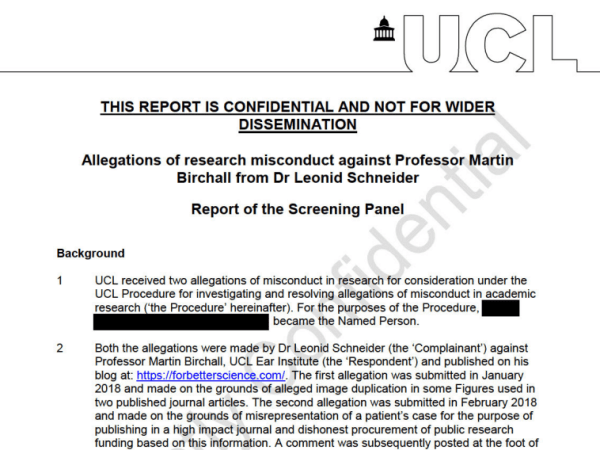
In yet another investigation, UCL whitewashed Martin Birchall of all responsibilities. I publish here the confidential report and excerpts from a secret PhD thesis, which the UCL committee carefully avoided to read.
Ali and Bainbridge again, with Georgiadis and Ali’s former postdocs UFO Luhmann and Alexander J Smith, whom you already met above, and who in 2015 became “Scientific and Pre-clinical Research Consultant” of Ali’s company Athena Vision. This Dutch native now apparently followed Ali to King’s College, as research associate at the Gene Therapy and Regenerative Medicine group (under the name of Sander Smith):
From this paper we learn that Ali, Bainbridge, Georgiadis and Smith “have financial interests in Meira GTx UK II Ltd, that may commercialise this work“, meaning that when Athena transformed into Meira, they never left but became silent partners. Another relevant coauthor is the Moorfields Eye Hospital doctor Michel Michaelides, who used to be Clinical Consultant at Athena Vision and is now Head of Clinical Ophthalmology at MeiraGtx:
Mycosphaerella arachidis: “Figure 1: I don’t think the hRPE65p.GFP show the same green channel between the left and right. Even accounting for some adjustment in the brightness, this doesn’t appear to be an image of the same thing.”
“During the preparation of Figure 1A we inadvertently provided images of two different retinal sections rather than the same section with and without DAPI staining.
We now provide a corrected figure showing the same section in Figure 1A with and without DAPI
Judging from the new figure, it is not at all clear now that “Optimized promoter (NA65p) drives expression of GFP with greater efficiency and with higher specificity for RPE cells.”
by the way, since we keep returning to MeiraGtx: the US cheater and sexual predator Arnold Levine remains on this company’s payroll as member of the Scientific Advisory Board.
Does being a science genius entitle you to sexual harassment, as academic authorities in Yale and elsewhere insist? Let’s look at papers by Michael Simons, Joseph Schlessinger and Arnold Levine.
The next paper by Ali at least got retracted. There, Ali and his US colleague Li (whom you met above) proposed “that the vector and construct design used in this study could serve as a prototype for a human clinical trial“. Other authors include Smith and Ali’s creative PhD student Tan:
“The Editor-in-Chief has retracted this article. After publication, concerns were raised regarding the western blot images presented in the figures. Specifically:
In Fig. 1b, the Cone PDE blot lanes 4–6 appear to have a different background compared with the rest of the image, and the bands appear highly similar to Fig. 1c Rod PDE lanes 4–6.
Several Ac-tubulin bands appear to be highly similar in Fig. 5a and b.
The Editor-in-Chief therefore no longer has confidence in the presented data.
None of the authors have responded to any correspondence from the editor or publisher about this retraction.”
In the same journal, again Ali’s patented gene therapy against blindness which was the basis of Ali’s and Smith’s own start-up Athena Vision (“RRA and AJS are co-founders of Athena Vision Limited with a commercial interest in gene therapy for X-linked RP“):
As you see, the figure previously appeared in another paper by Li, which reused yet another figure from yet another paper by the same team (sans Ali though):
Those papers however are also Ali’s problem, since the relevant author Xiaoqing Liu is presently research associate at Ali’s Gene Therapy and Regenerative Medicine at King’s College.
Actinopolyspora biskrensis: “Two images in Figure 6 seem to show an overlapping field of view, but appear to be described differently”
“The GNAT2 panel in Figure 2b seems to show a splice not evident in the other panels. In addition, the signal in lane 1 and lane 3 in that band seem unexpectedly similar.”
More recent, Ali, his mentees Smith and Georgiadis, plus Michaelides, reusing a figure from an older Michaelides paper:
Here is Ali with Bainbridge again, and with the Oxford professor of ophthalmology, Robert MacLaren. Another rather relevant coauthor is the UCL emeritus professor of ophthalmology Fred Fitzke. His name will keep popping up, in a rather surprising context. The first author is the Roche’s research leader UFO Luhmann:
I can assure you that the Editor-in-Chief of this Investigative Ophthalmology & Visual Science (IOVS) will have a very strong opinion about this PubPeer evidence!
“I have been following the comments on PubPeer, and have been shocked, angered and appalled by the issues […] there can be no explanation for this other than systemic fraud “- Prof Gareth Williams, UCL
Which brings us to the case of another UCL ophthalmologist, Maria Francesca Cordeiro, who spent most of her career at UCL and Moorfields, and is now professor at Imperial College London. Here is the paper by Cordeiro with our hero Ali, plus Fitzke, and the Vice-Dean of the UCL Institute of Ophthalmology, Stephen Moss.
The IOVS journal is issued by a learned society, the Association for Research in Vision and Ophthalmology. As I wrote in December 2024 Shorts, the Editor-in-Chief Joseph Carroll, himself professor in ophthalmology at the Medical College of Wisconsin in USA, informed the pseudonymous sleuth Claire Francis all PubPeer evidence of image forgery in Li et al 2005 to be false:
““We’ve reviewed these images and determined they are not manipulated or duplicated. Close inspection reveals pixel-wise differences in the regions you highlighted. Burden of proof when making an accusation like this is on the accuser. It is problematic to rely on Image Twin and then start tossing around emails that can tarnish reputations, especially when doing so from behind an anonymous email.”“
Actually, Carroll’s own analysis proved the duplications, which he explained with: “the retina is full of repeating elements“. Carroll then issued a threat towards the sleuth:
“The issue with anonymity is that when the complaint is found to be false and have no basis, there should be repercussions for the accuser as it borders on slander.“
Unable to get hold of the anonymous whistleblower, Carroll then moved to threaten me with “people should be held accountable for false accusations”.
From fake cancer research to fake ophthalmology – just follow Mitsi and Vassiliki and you’ll meet Dementios and other bad eye doctors, including a horrible German we hoped to never see again.
I don’t know what is it with editors of ophthalmology journals, remember Dr Sheffield above? Anyway, in July 2025 Carroll had to eat his stupid words, and issued this Expression of Concern, where he grudgingly admitted to the duplications (highlights mine):
“Figures 1A and 1B show DiAsp labeled cells (red), along with apoptotic cells (green). There appear to be multiple DiAsp-labeled cells within each respective panel that are nearly identical. Likewise, Figure 3A shows some regions within the inner plexiform layer that appear to have repeating elements.IOVS received a complaint suggesting that the authors must have manipulated the images and selectively duplicated these suspicious cells. The authors were contacted about the concerns with the images and were not able to locate the raw images. This was due in part to two of the key staff members no longer being accessible (one retired and one passed away). Close examination reveals pixel-wise differences and do not allow us to draw a conclusion of duplication, although we also cannot rule out duplication/cloning. Given the inability to examine the raw images, we do not feel that retraction of the article is warranted but instead are issuing this Expression of Concern. The Expression of Concern does not extend to the findings of the article, given that the alleged repeated elements were not measures or related to the primary data of the study. That said, any image manipulation would be against IOVS policy, so we feel the appropriate action is to issue this Expression of Concern so that readers are aware of the potential issue, consistent with COPE guidance (https://publicationethics.org/topic-discussions/expressions-concern). “
The first author Li Guo is presently head of in vivo studies at UCL, and it was primarily Cordeiro’s and his job to store raw data. But sure, blame others. Fitzke as I mentioned is indeed retired, and since everyone else is very much alive, it is Robert Alexander who must be deceased.
Now, Carroll has been talking out of his arse for no reason. As last author, he published 5 years ago the paper Linderman et al 2020. His collaborators there are… Ali’s business partner Michaelides! And Australian cheater Jan Provis, about whom I wrote here:
Wait, this is not all. I flagged that Linderman et al 2020 paper on PubPeer because Provis lied about her financial Conflicts of interests. But Carroll revealed there his COIs, including “MeiraGTx (F, C)“. Yes, he has a financial relationship with Ali’s company, from which he also receives grant funding. Also, Carroll sits on the advisory board of the charity Fighting Blindness, of which Ali is Chair. Which is why it is in Carroll’s own financial interests to protect Ali’s rotten papers from retractions.
This paper by Cordeiro, Guo, Fitzke and Moss received a similar passive-aggressive editorial note from Carroll:
The Expression of Concern appeared simultaneously in July 2025, and had similar wording:
“Figure 2C is republished (as cited) from an earlier article from the same research group. […] The authors were contacted about the concerns with the images and were not able to locate the raw images. This was due in part to one of the key staff members no longer being accessible (retired). Close examination reveals pixel-wise differences and do not allow us to draw a conclusion of duplication, although we also cannot rule out duplication/cloning. Given the inability to examine the raw images, we do not feel that retraction of the article is warranted but instead are issuing this Expression of Concern. The Expression of Concern does not extend to the findings of the article, given that the alleged repeated elements were in an image used to show an example of staining. […]”
I presume every single UCL cheater will be off the hook now because Fitzke retired, and took everybody’s raw data with him? In fact, Guo, Cordeiro, Fitzke and Moss previously corrected a PNAS paper which shared the fake image from above. Its handling editor was the UCL professor Avrion Mitchison (now deceased), obviously this was not seen a conflict of interests:
Li Guo , Thomas E. Salt , Vy Luong , Nicholas Wood , William Cheung , Annelie Maass , Giulio Ferrari , Françoise Russo-Marie , Adam M. Sillito , Michael E. Cheetham , Stephen E. Moss , Frederick W. Fitzke , M. Francesca Cordeiro Targeting amyloid-beta in glaucoma treatmentProceedings of the National Academy of Sciences of the United States of America (2007) doi: 10.1073/pnas.0703707104
In fact, the paper was corrected twice. The Correction from 30 May 2025 updated the Correction from 28 February 2025 by referring to the IOVS paper which Carroll saved from retraction:
“The editors note that the correction for this paper [Proc. Natl. Acad. Sci. U.S.A. 10.1073/pnas.2502362122 (2025)] should have stated that the image in Fig. 1F is from the same tissue section as figure 3A in ref. 23. Both represent control retina images. In the previous correction, the authors note, “The image in Fig. 1F was taken from the same control eye as in figure 3A in ref. 23. We thank a reader for bringing this to our attention and apologize for the oversight.”
As of July 2025, an expression of concern has been issued for reference 23 [Invest. Ophthalmol. Vis. Sci., https://doi.org/10.1167/iovs.66.9.35 (2025).]. “
Surely Fitzke must have eloped with the raw data into his retirement also here, so nothing can be done:
2017, Fig 5B: rat eyes treated with α–tocopherol polyethylene glycol succinate micelles; 2018, Fig 1: rat eyes treated with ANX776, “a fluorescently-labelled variant of human annexin A5, RhAnnexin V128.”
Returning to Ali: sometimes he forgets about all that money he makes. Like here, he joined the others in claiming “The authors declare that they have no competing interests“:
In June 2025, Ali was made Officer of the British Empire (OBE), for his “outstanding contributions to healthcare and medicine“. In February 2025, UCL proudly informed about Ali’s, Michaelides’s and Bainbridge’s achievements, while pretending they are merely collaborating with MeiraGtx:
“Four young children have gained life-changing improvements in sight following treatment with a pioneering new genetic medicine through UCL Institute of Ophthalmology and Moorfields Eye Hospital, with the support of MeiraGTx. […] Professor Michel Michaelides, professor of ophthalmology at the UCL Institute of Ophthalmology and consultant retinal specialist at Moorfields Eye Hospital, commented: “We have, for the first time, an effective treatment for the most severe form of childhood blindness, and a potential paradigm shift to treatment at the earliest stages of the disease. The outcomes for these children are hugely impressive and show the power of gene therapy to change lives.””
Who are we to ever doubt UCL and their professors when they say they cured children, right?
The Science and Technology Committee of the British House of Commons is now dealing with the trachea transplants performed by the scandal surgeon Paolo Macchiarini and his former parter at UCL, Martin Birchall as part of its inquiry into Research Integrity. Two UK scientists from Liverpool initiated this with their written submission from November 21st…
If you are interested to support my work, you can leave here a small tip of $5. Or several of small tips, just increase the amount as you like (2x=€10; 5x=€25). Your generous patronage of my journalism will be most appreciated!
€5.00
Donate!
If you are interested to support my work, you can leave here a small tip of $5. Or several of small tips, just increase the amount as you like (2x=€10; 5x=€25). Your generous patronage of my journalism will be most appreciated!
What a splendid article. BTW, I’m about to notify Editor-in-Chief Joseph Carroll about other ophthalmology cheaters. What a coincidence! Looking forward to reading from him.
Money laundering is defined in the POCA as “the process by which the proceeds of crime are converted into assets which appear to have a legitimate origin, so that they can be retained permanently or recycled into further criminal enterprises”.
Money laundering can be broken down into two categories:
Those who commit offences and then launder the proceeds of those criminal offences. The criminal offences are referred to as “predicate offences”.
Those whose only criminal involvement is to launder the proceeds of crime committed by others.















What a splendid article. BTW, I’m about to notify Editor-in-Chief Joseph Carroll about other ophthalmology cheaters. What a coincidence! Looking forward to reading from him.
LikeLiked by 2 people
“For the editor Sheffield, data forgery is always acceptable and never invalidates any conclusions.”
Money Laundering Offences | The Crown Prosecution Service
Definitions
Money laundering is defined in the POCA as “the process by which the proceeds of crime are converted into assets which appear to have a legitimate origin, so that they can be retained permanently or recycled into further criminal enterprises”.
Money laundering can be broken down into two categories:
Is that what we are seeing?
LikeLike