

Schneider Shorts of 26 June 2026 – a German university sponsors papermills, picoparticles and visiting researchers havoc in Poland, British climate warrior loses first paper, plus more retractions for a man who never was to Czechia and for men who don’t even exist.
Table of Discontent
Science Elites
- Town Musician of Bremen – how a German university sponsors papermills
Retraction Watchdogging
- Very Important Polish Innovator – Wroclaw student brings professors in trouble
- The existence of picometre-sized particles is not physically possible – or maybe it is in Gdansk?
- Net zero roadmap for accelerating papermill transition – climate warrior Farooq Sher earns first retraction, saves Europe
- I support appropriate corrective action – Rajender Varma loses another paper
- Concerns about the author identity – meet Nikolaj Jade, Mark Ivan and Esther Duflo
Science Elites
Town Musician of Bremen
Meet Dr Hui Liu, who is probably one of Germany’s greatest AI researchers. Liu is into music and signing, and according to his institutional website, he likes to dress up like an opera singer. Liu’s career happened in Germany: he studied electrical engineering at TU Berlin and is currently project leader in the Cognitive Systems Lab of the University of Bremen, where he also completed his PhD between 2016 and 2021. His lab head is Professor Tanja Schultz. In 2022, Liu won a scholarship to collaborate with a Portuguese University.

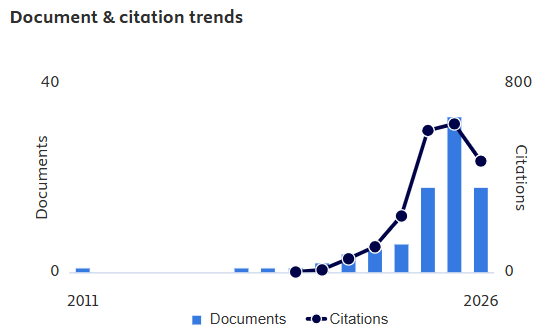
The University of Bremen informs us that Liu is “Ranked among the “world’s top 2% of scientists” and “Belongs to the “world’s best 0.05% of scientists”, in fact 5th best scientist of the entire University of Bremen.
Well, that university is used to publication malpractice, what with Kathrin Maedler or the former Rector Bernd Scholz-Reiter. Noteworthy, the latter was caught on predatory publishing, and defended it with his heroic support for Open Access. Well, Liu also loves Open Access, because his university pays for it – Smut Clyde was very happy that Germany so generously sponsors all those destitute and underfunded Saudi Arabian universities. Frontiers aren’t cheap, after all:
Naif Al Mudawi , Hira Ansar , Abdulwahab Alazeb , Hanan Aljuaid , Yahay AlQahtani , Asaad Algarni , Ahmad Jalal, Hui Liu Innovative healthcare solutions: robust hand gesture recognition of daily life routines using 1D CNN Frontiers in Bioengineering and Biotechnology (2024) doi: 10.3389/fbioe.2024.1401803

As Smut Clyde noted, the references of this study contain “a number of familiar ‘citation magnets”, i.e. citation brokers paid the papermill (or Liu) to cite these papers. Some of those listed references were added so sloppily they aren’t even cited in the text. Read about this business model here:

The Citation Payola
“The proposition that a niche of citation brokers exists, opens our eyes to other transaction options..” . Smut Clyde

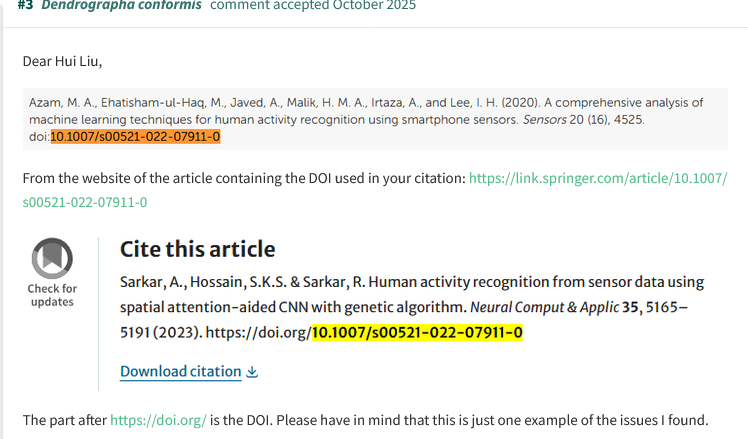
Some other references are AI-fabricated, here references 6, 11, 13, 17, 23, 24, 26, 52, 61, 114, 119 all “use DOIs of different articles“:
Mehrab Rafiq , Nouf Abdullah Almujally , Asaad Algarni , Mohammed Alshehri , Yahya AlQahtani , Ahmad Jalal, Hui Liu Intelligent biosensors for human movement rehabilitation and intention recognition Frontiers in Bioengineering and Biotechnology (2025) doi: 10.3389/fbioe.2025.1558529
A bit more in Frontiers, all with blocks of so called-citation magnets found by Smut Clyde:
- Heba G. Mohamed , Hung Tran-Huy, Trang Hoang-Thu , Iyas Qaddara , Bong Jun Choi, Asma Hassan Alshehri , Ijaz Ahad , Hui Liu A novel approach for fair incentive social physical data based on blockchain-federated learning Frontiers in Physics (2026) doi: 10.3389/fphy.2026.1778336
- Abdulwahab Alazeb , Bisma Riaz Chughtai , Naif Al Mudawi , Yahya AlQahtani , Mohammed Alonazi , Hanan Aljuaid , Ahmad Jalal, Hui Liu Remote intelligent perception system for multi-object detection Frontiers in Neurorobotics (2024) doi: 10.3389/fnbot.2024.1398703
- Danyal Khan , Mohammed Alonazi , Maha Abdelhaq, Naif Al Mudawi , Asaad Algarni , Ahmad Jalal , Hui Liu Robust human locomotion and localization activity recognition over multisensory Frontiers in Physiology (2024) doi: 10.3389/fphys.2024.1344887
The publication costs were always generously paid by the University of Bremen, i.e. the German taxpayer:
“The publication was also supported by the Open Access Initiative of the University of Bremen and the DFG via SuUB Bremen.”
Other typical papermill targets were also hit. Here is MDPI:
- Syed Jalaluddin Hashmi , Bayan Alabdullah , Naif Al Mudawi , Asaad Algarni , Ahmad Jalal, Hui Liu Enhanced Data Mining and Visualization of Sensory-Graph-Modeled Datasets through Summarization Sensors (2024) doi: 10.3390/s24144554
- Nouf Abdullah Almujally, Danyal Khan, Naif Al Mudawi, Mohammed Alonazi, Abdulwahab Alazeb, Asaad Algarni, Ahmad Jalal, Hui Liu Biosensor-Driven IoT Wearables for Accurate Body Motion Tracking and Localization Sensors (2024) doi: 10.3390/s24103032

Hoya camphorifolia: “My concern springs from their ‘citation magnet’ ability to become cited by numerous papers on unrelated topics”
Here, in IEEE, flagged for citation scams and other fraud:
Mehrab Rafiq , Naif S. Alshammari , Haifa F. Alhasson , Dina Abdulaziz Alhammadi , Mohammed Alshehri , Ahmad Jalal, Hui Liu A Deep Learning Framework for Healthy Lifestyle Monitoring and Outdoor Localization IEEE Access (2025) doi: 10.1109/access.2025.3573439

Figure 4. This collection of isolated sharp spikes, all values being multiples of 50, are not plausible as a FFT.”

Here a clue that Liu might be selling coauthorships:
Tanvir Fatima Naik Bukht , Abdulwahab Alazeb , Naif Al Mudawi , Bayan Alabdullah , Khaled Alnowaiser , Ahmad Jalal , Hui Liu Robust Human Interaction Recognition Using Extended Kalman Filter Computers, Materials & Continua (2024) doi: 10.32604/cmc.2024.053547
“I used a mix of BRISK, and SIFT methods to extract features, which helped in effectively representing and characterizing visuals and features in the data”
“I” either refers to Liu, or to AI he used. Liu is blessed with a name which is difficult to search on PubPeer, adding coauthors to the search helps. Jalal Ahmad, professor at AIR University in Pakistan, seems to be the central figure in this scam (PubPeer record).
I found an earlier retraction for our Bremen Musician, without Ahmad and in a Sage journal:
Peng Yu, Huxiong Song , Hui Liu Interval-valued pre-(quasi-)grouping functions and its application in constructing interval-valued directional monotonic fuzzy implications Journal of Intelligent & Fuzzy Systems Applications in Engineering and Technology (2024) doi: 10.3233/jifs-233318
It fell together with a long list of other fake papers, with a common retraction notice from August 2024, for compromised peer review process.
Bremen Rector Bernd Scholz-Reiter, a hero of Open Access?
Research by German journalists revealed whole lists of German academics engaging in predatory publishing and scamferences. Named on over 60 predatory conference papers is Bernd Scholz-Reiter, Rector of the University of Bremen and former Vice-President of DFG. Several such papers are even self-plagiarised, and were used in DFG project reports and Scholz-Reiter’s rectorship application from…

I informed the University of Bremen, and got this from their head of communication, Kristina Logemann:
“Thank you very much for your message and the notification. We take this very seriously. We have already noticed the publication practice and are investigating the matter.“
Oh good to know they already found out everything without our input. Then Smut Clyde can trash this spreadsheet, of Liu’s citation buy-and-sell scams? Also Liu’s boss Professor Schultz will be happy to know that her own conference proceedings papers with Liu are being randomly mass-cited by Chinese papermills (e.g, here, here, here or here), because someone paid.
Soon after my email to University of Bremen, Liu’s institutional website was deleted.
Retraction Watchdogging
Very Important Polish Innovator
A papermill retraction with Polish scientists involved. This paper, in a Springer Nature journal, was not previously flagged on PubPeer:
Sadia Irshad , Shah Jahan , José Mendes Machado , Paweł Śliwiński , Krzysztof Kedzia , Ahmed Zubair Jan MHD Casson flow across a stretched surface in a porous material: a numerical study Multiscale and Multidisciplinary Modeling, Experiments and Design (2025) doi: 10.1007/s41939-024-00628-8
“The Editor‑in‑Chief has retracted this article due to fundamental concerns regarding the mathematical formulation and reliability of the results. Several key parameters are introduced without clear definition or consistent use, including the local Rayleigh number Rax and the parameter K in the reduced concentration equation. The chemical reaction parameter kr is not consistently carried through the model, and the formulation of the skin‑friction coefficient Cf is unclear. In addition, the Sherwood number values Φ′(0) reported in Table 2 are inconsistent with the governing equations, remaining nearly constant despite dependence on parameters that are varied or omitted from the table, undermining confidence in the numerical results and conclusions.
Paweł Śliwiński has been removed as an author from this article as they did not meet the requirements for authorship.
Ahmed Zubair Jan disagrees with this retraction. Sadia Irshad, Shah Jahan, José Mendes Machado, Paweł Śliwiński and, Krzysztof Kedzia did not respond to correspondence from the Publisher about this retraction.”
(Retraction 18 June 2026.)
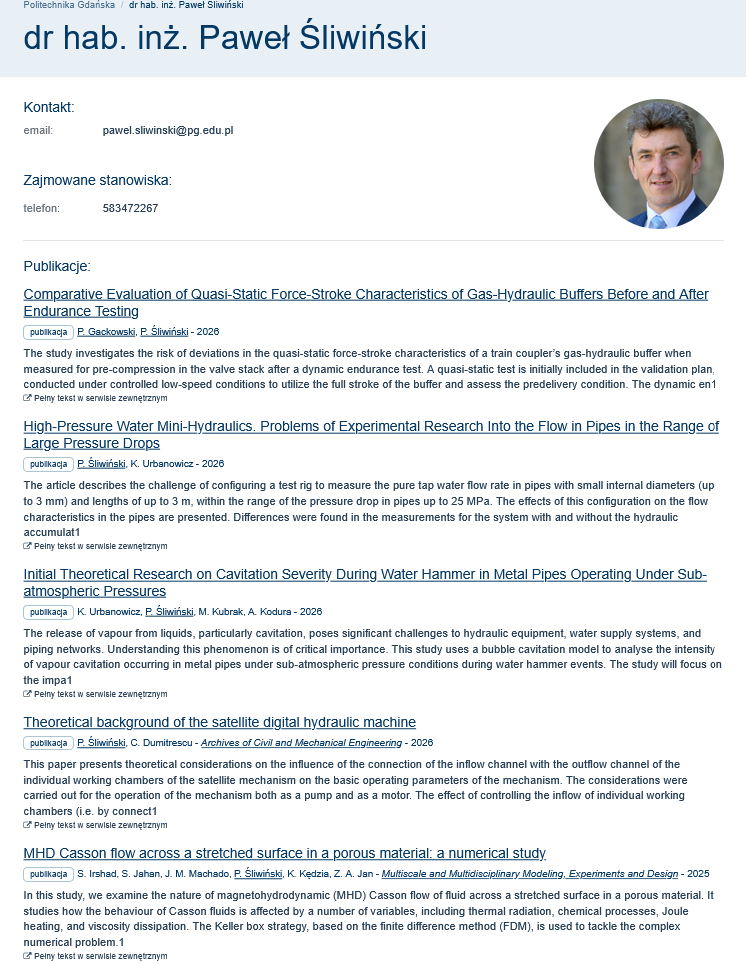
It is not clear why Paweł Śliwiński, professor and former dean of mechanical engineering at the papermill-infested Gdansk University of Technology, “Very Important Polish Innovator” and winner of numerous Gold Medals and Rector’s Awards, was removed as author of this retracted paper. To save his reputation? Well, on his institutional website he still insists the paper is his:
The other Pole on that retracted paper is Krzysztof Kedzia, professor of mechanical engineering at the Wroclaw University of Science and Technology. Together with his aforementioned student Ahmed Zubair Jan, Kedzia also dabbed in cardiology, with hilarious results:
Munawar Abbas , Ansar Abbas , Humaira Kanwal , Ahmed Zubair Jan, Krzysztof Kedzia Comparative analysis of Hamilton–Crosser and Yamada–Ota models of tri-hybrid nanofluid flow inside a stenotic artery with activation energy and convective conditions Journal of Thermal Analysis and Calorimetry (2024) doi: 10.1007/s10973-023-12803-z
“This problem has an impact on many biological science and engineering processes, including blood circulation, plasma flow, die casting, paper production, motor oil transfer wire pulling, heat rolling, copper deformation, crystal growth, and other processes.”
Alexander Magazinov was confused about this revolutionary approach to arteriostenosis “where the blood is mixed with gold, silver and copper nanoparticles“, but then again maybe it will help patients when combined with motor oil transfer wire pulling, die casting, and nudge nudge, paper production.
But I mustn’t focus on Poles! Another coauthor on that retracted papermill trash is a Portuguese scholar: José Mendes Machado, associate professor and deputy director of MEtRICs Research Center at University of Minho. Yes, the Rui Reis university.
The Kingdom of Rui Reis
“I think this story shows the debacle and corruption of entire research fields that become just a very expensive show of bad science-fiction. ” – Carabus Maleki

The existence of picometre-sized particles is not physically possible
On the topic of Gdansk University of Technology (or Gdansk Polytechnic), a funny retraction! In Scientific Reports, where the papermill fun never ends.
Scientific Reports 2025: A Year in Review
“In this blog I write about papers published by Scientific Reports in 2025, so we could consider it to be a sort of “wrap-up” of highlights and special achievements in the world’s biggest scientific journal™ in 2025.” – Sholto David

Somehow, the experts working as editors and peer reviewers decided that “picoparticles” are a thing. For reference: one single carbon atom, of which these Iranian plant-derived picoparticles are allegedly made, is already 70 picometers in diameter, water molecule (H2O) is 280 pm and methane (CH4) is 680 pm across:
Yasaman Zeynali , Hamed Niroumand, Reza Ziaie Moayed Nano-Bio Soil Improvement (NBSI) with Micro-, Nano-, and Pico- Typha latifolia: a green material approach Scientific Reports (2025) doi: 10.1038/s41598-025-93810-y
“The research investigates the changes in soil mechanical properties after the addition of Nano and Pico Typha solution as a Nano-Bio Geotechnics (NBG) technique […] After converting particles from micro to nano scale, there are also smaller pico particles.”
From the abstract
The issue of unreality of picoparticles was discussed on PubPeer, along with other issues:

Herzogiella striatella: “There is no scale on the horizontal axis of XRD patterns (Fig. 20)”
Eventually, Springer Nature agreed, and issued this retraction on 22 June 2026.
“The Editors have retracted this Article. After publication, concerns were raised regarding the veracity of the research reported in this work, as it reports the existence of picometre-sized particles of Typha latifolia, which is not physically possible. The Authors were not able to adequately explain their use of this term nor did they satisfactorily reply to requests from the Editors for the source data. The Editors therefore no longer have confidence in the reliability of this Article.
Hamed Niroumand did not explicitly state if they agree or disagree with this retraction. The remaining Authors did not respond to correspondence from the Editors about this retraction.”
However, as Springer Nature website points out, this paper was already cited, specifically by this work by the same Hamed Niroumand in the same Scientific Reports:
Reza Biabani , Hamed Niroumand, Maryam Afsharpour , Mona Khaksar Application of nano-pico geotechnics and nano-pico heritage spray techniques for restoring and protecting historical brick buildings Scientific Reports (2025) doi: 10.1038/s41598-025-16132-z
See, they already applied their picoparticles to preserving buildings, using some fictional “”pico geotechnics”. Will Springer Nature retract this also?
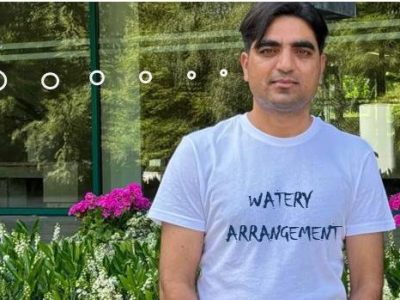
Nobelium Bilalski, a Gdansk papermiller
“To date, he has authored over 700 peer-reviewed articles, 150 book chapters, 25 edited books, and 10 editorial-type scientific articles in various areas of Science and Engineering. Dr. Bilal has a h-index of 94 with 34 000 citations (Google Scholar).”
Now you might indignantly protest that all this has nothing to do with that esteemed Polish school of higher learning, the Gdansk University of Technology. Wrong! As recorded on PubPeer, Niroumand is a regular coauthor of their the papermilling professor Lech Bałachowski, I mentioned two of their fake papers, both in Scientific Reports, in June 2026 Shorts. In fact, on his retracted and other papers, Niroumand provides two affiliations, one in Iran, and another with Department of Geotechnical and Hydraulic Engineering at Gdansk University of Technology.
In fact, Niroumand used to be until a few months ago associate professor and member of Balachowski’s team at Faculty of Civil and Environmental Engineering in Gdansk Polytechnic:
Here in fact, are more picoparticles, also not retracted:
Saeideh Jalalifar , Hamed Niroumand, Maryam Afsharpour , Lech Balachowski, Shadi Rajabi Bentonite nanoclay and spray techniques as a nano pico technology (NPT) for enhancing mortar in heritage and historical buildings Scientific Reports (2025) doi: 10.1038/s41598-025-05189-5
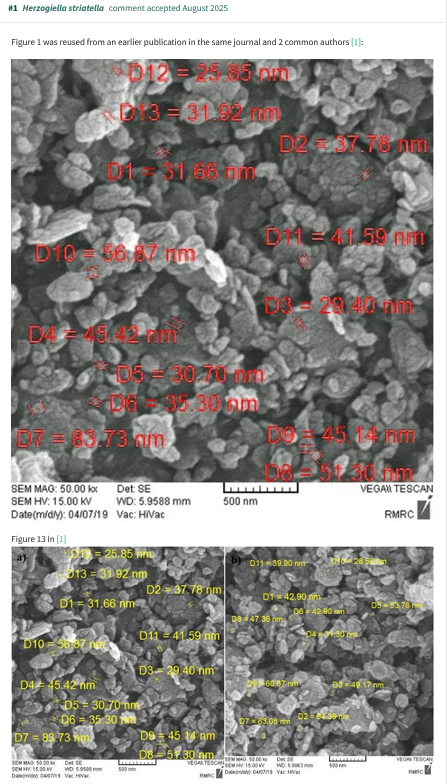
Mohadeseh Cheraghalikhani , Hamed Niroumand, Lech Balachowski Micro- and nano-Illite to improve strength of untreated-soil as a nano soil-improvement (NSI) technique Scientific Reports (2024) doi: 10.1038/s41598-024-61812-x
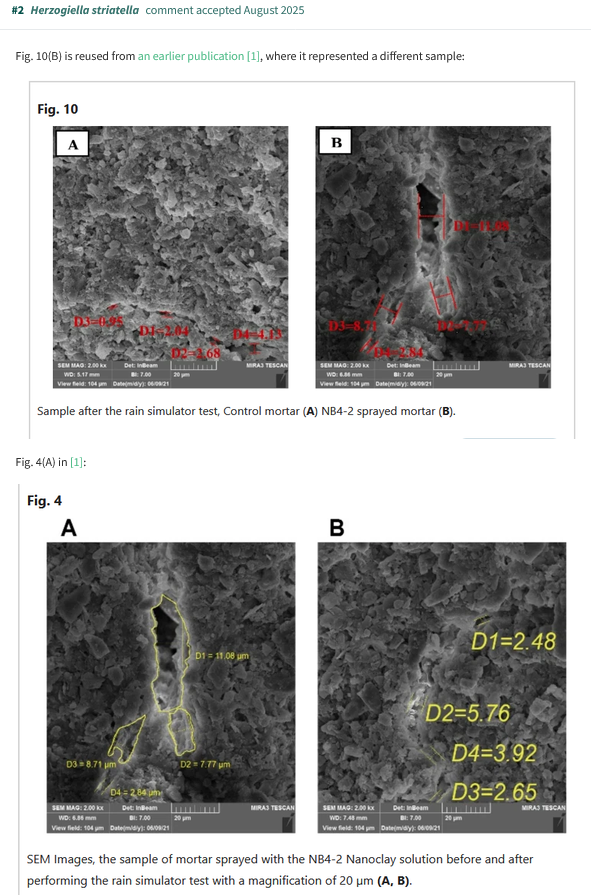
Saeideh Jalalifar , Hamed Niroumand, Maryam Afsharpour , Shadi Rajabi , Lech Balachowski Impact of spraying commercial Bentonite Nanoclay on fortification of the mortar as Nano Sprying Technique (NST) in heritages and historical buildings Scientific Reports (2024) doi: 10.1038/s41598-024-72414-y

Patersonia sericea: “Plots in Fig. 4, Fig. 9, Fig. 12A are reused from” Jalalifar et al 2024
In September/October 2025, the above mentioned Cheraghalikhani et al 2024 paper was flagged on PubPeer for reusing figures and blocks of text from yet another paper by Niroumand and Blachowski, also in Scientific Reports: Cheraghalikhani et al 2023. So far, it only received a Correction right after its publication:
“In the original version of this Article, Hamed Niroumand was incorrectly affiliated with ‘Department of Geotechnical and Hydraulic Engineering, Faculty of Civil and Environmental Engineering, Gdansk University of Technology, Gdansk, Poland’. The correct affiliation is:
Department of Civil Engineering, Faculty of Engineering, Buein Zahra Technical University, Qazvin, Iran”
That’s the only problem Gdansk Polytechnic has with his fake trash?
Anyway. To prove that picoparticles are perfectly respectable way to make money, Niroumand should show Springer Nature the work of the US papermiller Thomas Webster:
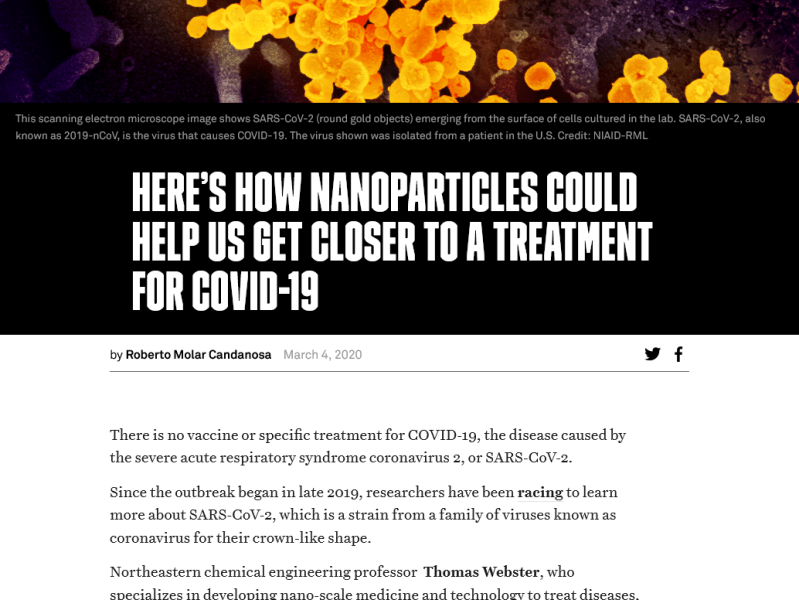
Thomas Webster to save the world with COVID-19 nanoparticles
The world is in the grip of COVID-19 pandemic. Thousands dead, infection rates explode, nations in lockdown. Perfect timing for troll scientists to offer their bullshit cures. Like Thomas Webster of Northeastern University.
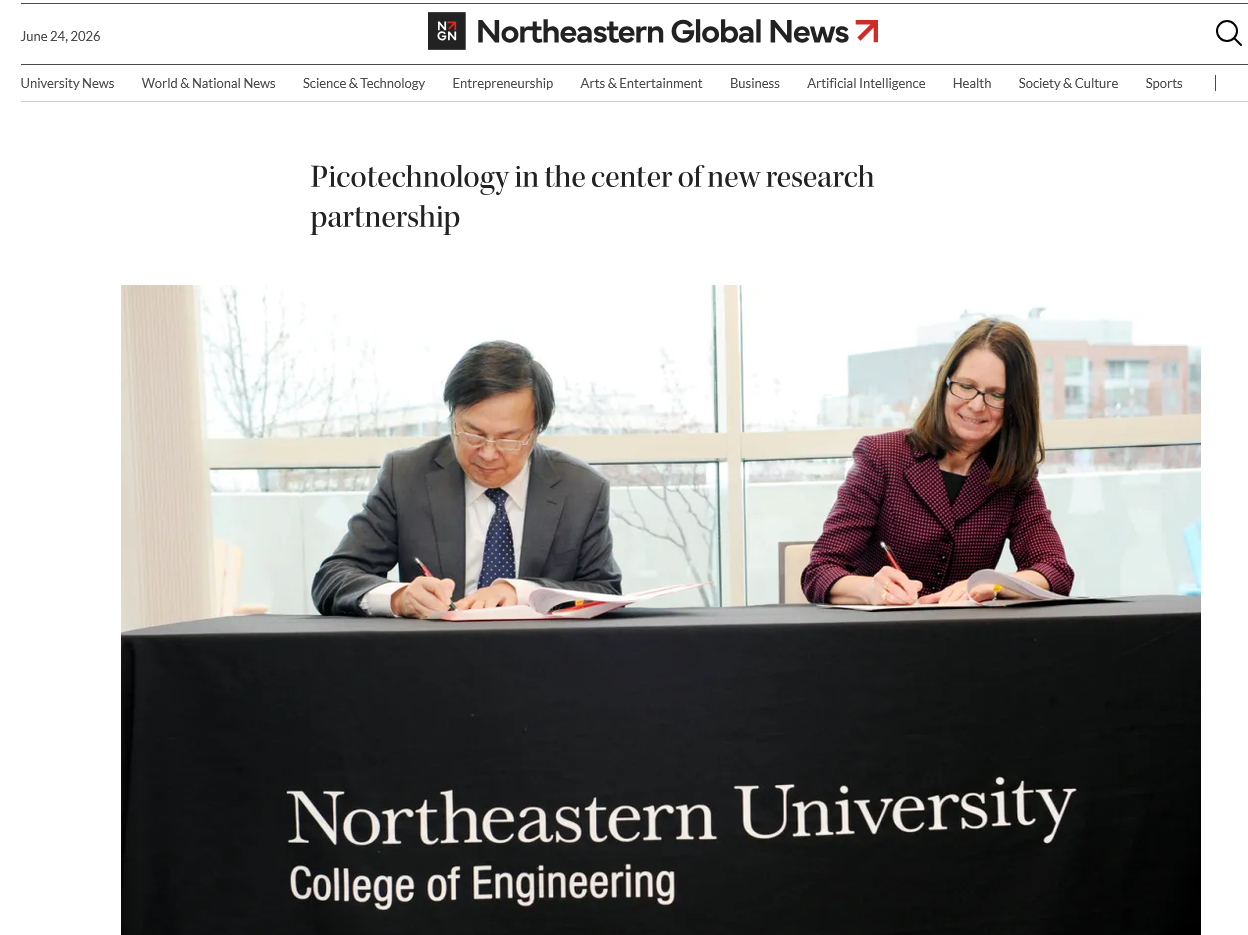
Years before he was finally out of protection and kicked out for fraud, Webster was celebrated by his Northeastern University for his discovery of picoparticles:
Net zero roadmap for accelerating papermill transition
Farooq Sher, senior lecturer at Nottingham Trent University in UK, also known as international papermill star and scamference organiser of Pakistani origin, suffered his first retraction. That of course is what qualifies him to be celebrated as England’s greatest green technologies scholar by all the authoritative scholarship sources, more on that in a moment. You can read about his scams here:
Boys from Brazil
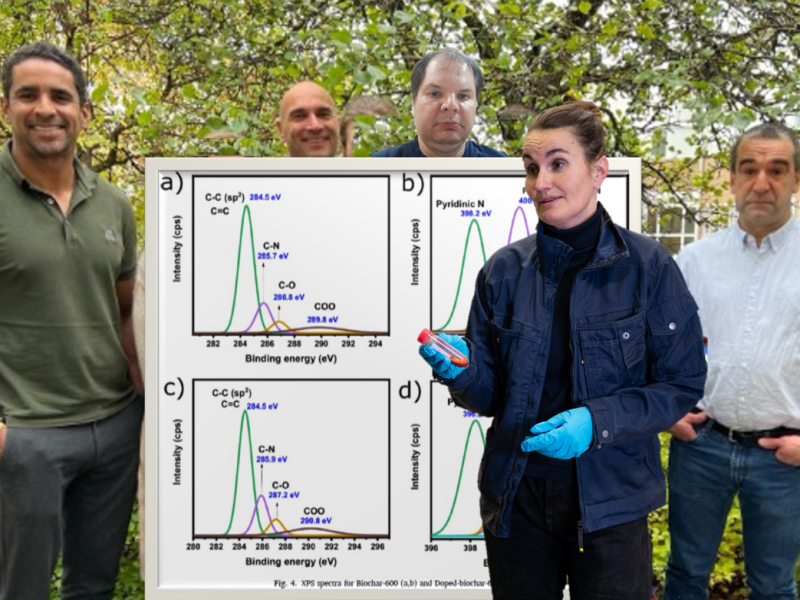
“We can always make mistakes in our publications but never acting intensionally. Regarding Prof. Eder works, I know him well and I don’t believe he has anything wrong” – Glaydson S. Dos Reis
Sher once reported me to the German police for “malicious slander”, but the police dropped the case and suggested he sues me in civil court instead, which he forgot to do, being busy with saving the planet September 2025 Shorts). The university is undecided what to with Sher, he is still senior lecturer or assistant professor. Maybe this retraction will heave him now into full professorship?
The paper features as last author Sher’s wife from Bosnia, Emina Karahmet Sher (previously in his group in Nottingham, now at De Montfort University in Leicester, owner of the cosmetics company Biosynthria):
Saleem Ahmad, Zaib Jahan, Farooq Sher , Muhammad Bilal Khan Niazi, Tayyaba Noor, Honghao Hou, Ofaira Azhar, Emina Karahmet Sher Polyvinyl alcohol and aminated cellulose nanocrystal membranes with improved interfacial compatibility for environmental applications Environmental Research (2022) doi: 10.1016/j.envres.2022.113793
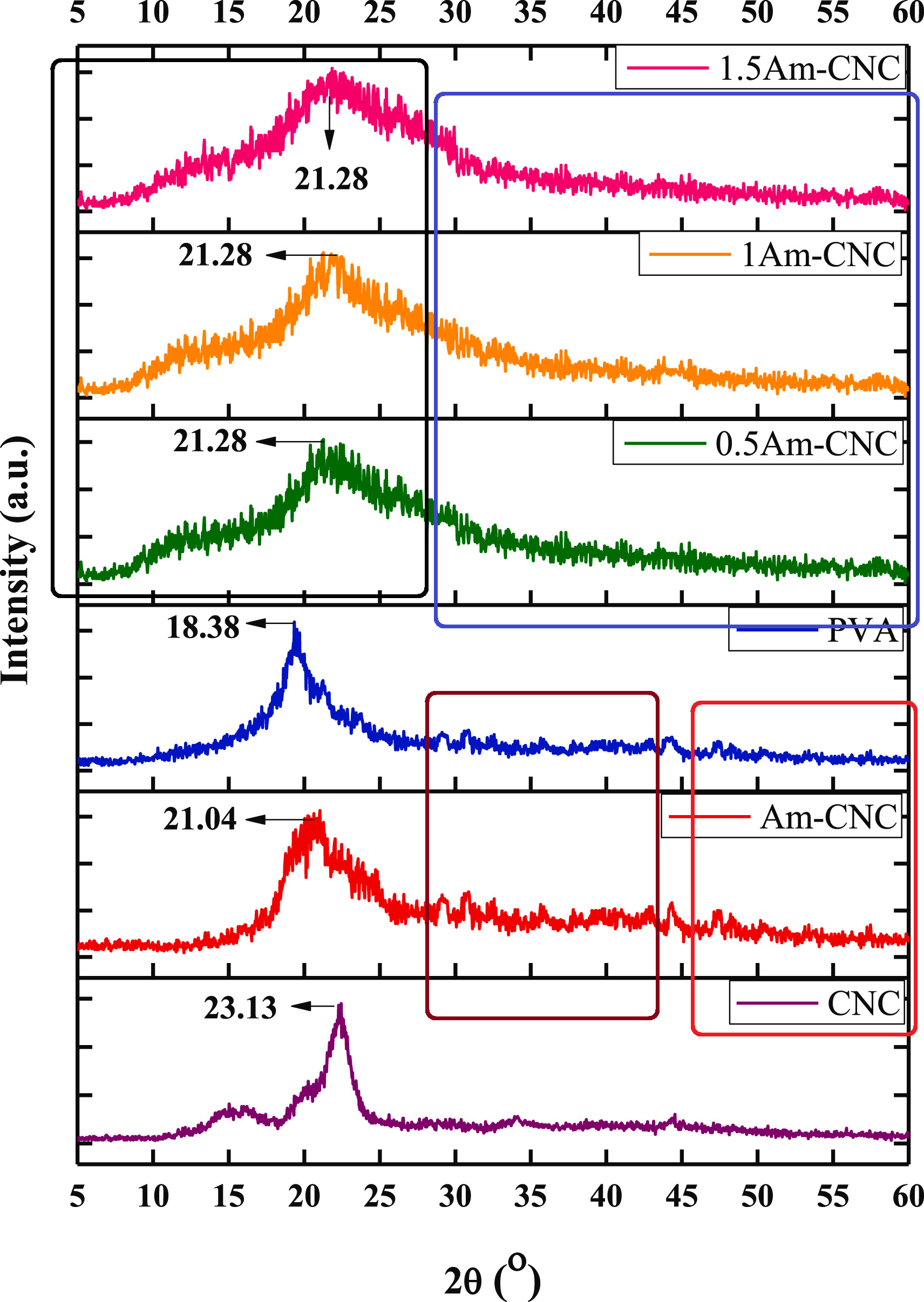
“Fig. 4. Identical and abnormal XRD analysis” by Tetraphleps parallelus and Thallarcha lechrioleuca
It was flagged on PubPeer already in 2022, Sylvain Bernès asked Sher for raw data only to be ignored. Mr and Mrs Sher are joined on this paper by their Pakistani colleagues Muhammad Bilal Khan Niazi, professor and former dean of the School of Chemical & Materials Engineering (SCME) at National University of Sciences & Technology (NUST) in Islamabad, and SCME’s associate professor Tayyaba Noor, you can read about them here:

The Three Wise Deans of Islamabad
“Here is the story about one of those institutions where nearly all senior staff members including professors, associate professors and at least 3 former Deans are exposed on PubPeer with extensive evidence of fraud in multiple papers.” – Dayo Maor
Here is the freshly issued retraction:
“This article has been retracted at the request of the Editor.
The authors provided a response to the journal regarding concerns posted on PubPeer at https://pubpeer.com/publications/62076B7E761D99C919B47C3005A7EC. This response, including raw XRD data for figure 4 of the article, was assessed by the editor who noted that:
- For almost all of the intensities recorded between 5 and 11 degrees 2 theta, the difference between the value for 1Am-CNC and 0.5Am-CNC at each angle is exactly the same as the difference between the values for 1.5Am-CNC and 1Am-CNC at each angle. This difference is always a multiple of 0.3.
- The same observation is made between 34 and 60 degrees 2 theta.
- The intensity values for 0.5Am-CNC, Am-CNC, CNC and PVA are given as integers for all values of 2 theta. The intensity values for 1Am-CNC and 1.5Am-CNC are given to one decimal place between 5 and 11 degrees 2 theta, and between 34 and 60 degrees 2 theta. Between 11 and 34 degrees 2 theta they are given to two decimal places.
- For each angle between 5 and 10 degrees 2 theta, the intensity value for Am-CNC is identical to that of CNC.
- Aside from around 10 data points situated at approximately 44 degrees 2 theta, each intensity value for Am-CNC is identical to that of PVA between 26 and 60 degrees 2 theta (spanning c.850 data points)
For these reasons, the Editor has lost confidence in the results and conclusions of the article and has determined it should be retracted.
The authors disagree with retraction and dispute the grounds for it.”

Nuttingham Trash University
“I will not by myself, or be instructing or encouraging any other person or howsoever othewise, publish or cause to be published words or otherwise howsoever make statements to others which wrongfully refer to Nottingham Trent University and/or their employees and for any person or any body associated with Nottingham Trent University”
Sher has almost 50 papermill forgeries on PubPeer, many flagged already ears ago. And yet somehow this year he was paraded in authoritative media as top expert not just for AI but also for green technologies. My guess, his trash university wanted to save his reputation, while the mighty fossil fuel industry cunningly decided to discredit all of climate-friendly engineering by making this ghoul its front man.
Earlier this year, the almighty American Chemical Society (ACS) invited Sher to contribute an opinion piece in the ACS magazine c&en, which was published in February 2026:
In April 2026, another authoritative source, Science Business, invited the English expert Sher to teach EU how to do energy security:
The Conversation just loves Sher. They don’t care that his “research” is the exact opposite of their trademark of “academic rigour” and they care even less that his texts look AI-generated. In March 2026, Sher posted an article titled “Why ‘decoupling’ energy emissions from economic growth underpins the green transition“, and in April 2026, this freak published some drivel titled “How freak weather and an old‑fashioned grid exacerbate energy insecurity“.
In April 2026, he contibute advice on how to save energy:

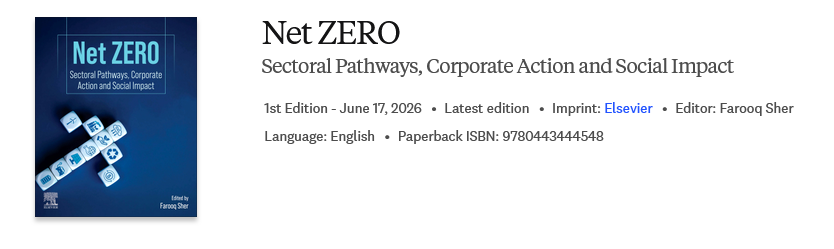
Sher is also member of the UK Carbon Capture and Storage Research Community (UKCCSRC), which is financed by UK national founder, UKRI. And just now, he edited and published an Elsevier book, titled “Net ZERO : Sectoral Pathways, Corporate Action and Social Impact“, which probabyl consists entirely of papermill fraud. The release was accompanied with some long and likely AI-generated drivel for the think tank Blue Europe, titled “Net zero roadmap for accelerating Europe energy transition“.
I support appropriate corrective action
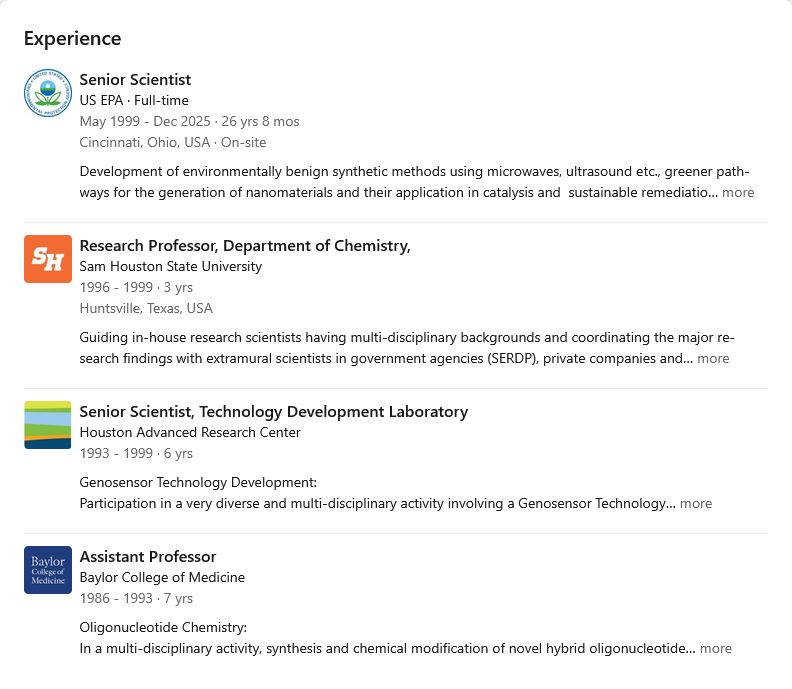
Maybe you recall the great polymath scientist Rajender S. Varma, who many years ago was kicked out from US-EPA, more recently kicked out from Palcky University of Olomouc in Czechia (having worked there for a decade), and most recently kicked out from Technical University of Liberec, also in Czechia. On LinkedIn, Varma now pretends to have never worked outside of USA since 1986, and served at EPA until his retirement in 2025.
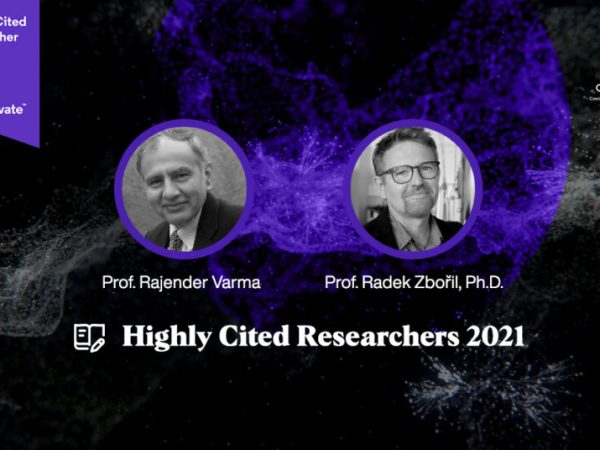
I, Rajender Varma, Highly Cited Researcher
“I could not comprehend the situation where a university picks up on individuals with an extraordinary and sterling performance and basically destroy one of the top European institutions. ” – Raj Varma
You can trust Varma to produce the worst papermill insanities, there are over 60 of them on PubPeer, some already retracted. In this case, having trapped and eaten countless town square pigeons in Olomouc, Varma and his papermill friends (including Hassan Karimi-Maleh and Mohammadreza Shokouhimehr) had an idea for a biomaterials paper:
Fariborz Sharifianjazi , Amirhossein Esmaeilkhanian , Mostafa Moradi , Amirhosein Pakseresht , Mehdi Shahedi Asl , Hassan Karimi-Maleh , Ho Won Jang , Mohammadreza Shokouhimehr , Rajender S. Varma Biocompatibility and mechanical properties of pigeon bone waste extracted natural nano-hydroxyapatite for bone tissue engineering Materials Science and Engineering: B (2021) doi: 10.1016/j.mseb.2020.114950


Amirhossein Esmaeilkhanian, Fariborz Sharifianjazi, Aliasghar Abouchenari , Amirreza Rouhani , Nader Parvin , Mohammad Irani Synthesis and Characterization of Natural Nano-hydroxyapatite Derived from Turkey Femur-Bone Waste Applied Biochemistry and Biotechnology (2019) doi: 10.1007/s12010-019-03046-6
That other paper is about turkey bones. The common author and papermill fraudster Amirhossein Esmaeilkhanian (PubPeer record) defended them both on PubPeer, with AI-generated nonsense like “Minor variations in noise or baseline do not affect the interpretation, as the key peaks (wavenumbers) remain identical” and claims to have repeatedly “re synthesized” everything, and assurances that “The consistency between the original and newly collected data supports the reliability of the reported findings.”
In May 2026, the publisher Elsevier must have informed the authors about its decision to retract this trash, because then the author and papermill fraudster Mehdi Shahedi Asl (huge PubPeer record with several retractions) switched sides on PubPeer:
“I acknowledge the concerns raised regarding this publication. I agree that the reported results cannot be considered reliable.
My involvement was limited to manuscript editing, language improvement, and scientific feedback, without participation in experimental work, data acquisition, or access to raw data.
I support appropriate corrective action.“
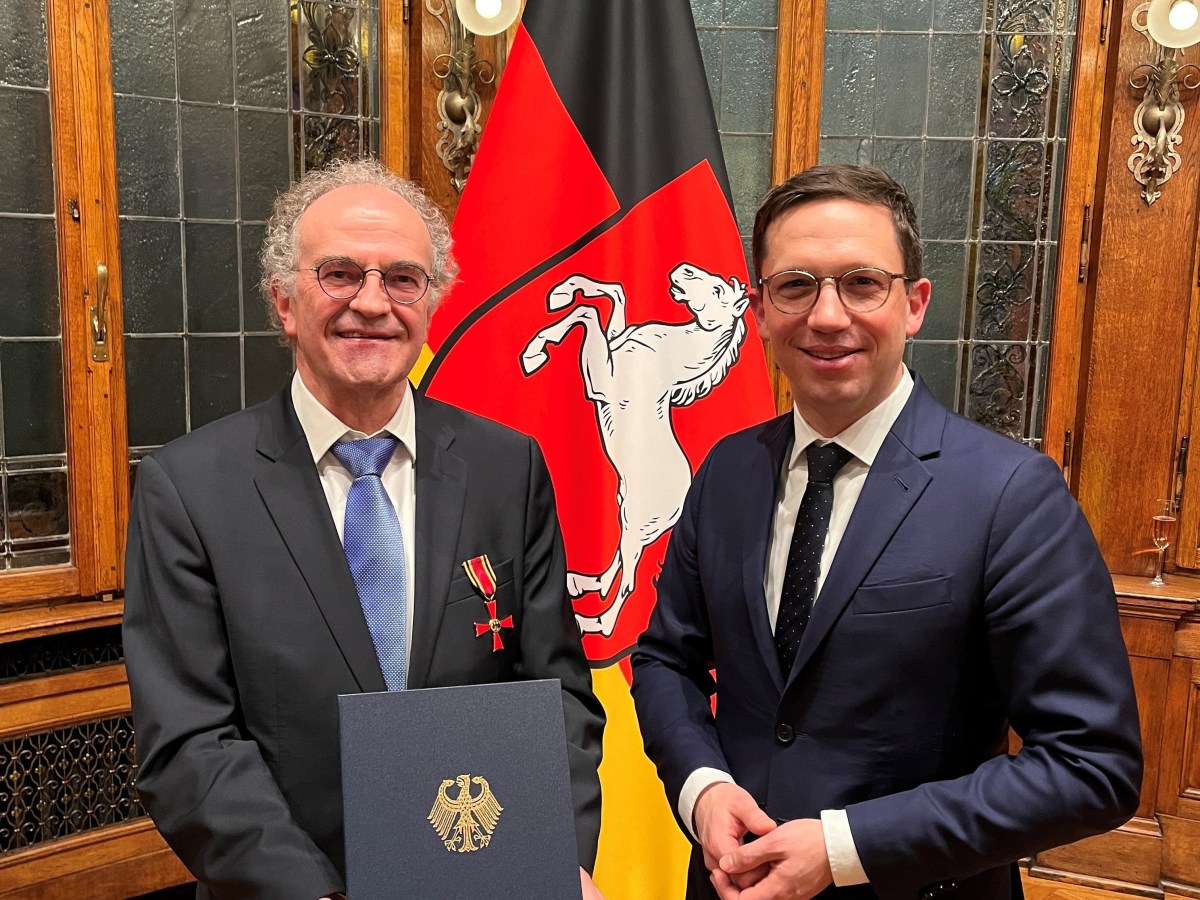
Bundesverdienst-Kümmerer am Bande
“Benign-by-design, circular economy in the plastics industry, biodegradable antibiotics – the sustainable design of chemistry is the central theme of Prof. Klaus Kümmerer’s work. “
The retraction arrived on 17 June 2026:
“This article has been retracted at the request of the Managing Editors.
The items of concern are listed below and have been raised as also described in https://pubpeer.com/publications/D08AF3B4A81C73586BD34DECF53E89
- •XRD traces of Fig. 2 seem to show an identical background noise, except for the vertical stretch, despite they represent different samples.
- •FTIR spectra in Fig. 4 look identical, despite representing samples with different compositions.
The Managing Editors requested an explanation from the authors. However, the explanation did not adequately resolve the concerns that had been raised.
The Managing Editors have, therefore, lost confidence in the results and conclusions of the article and have decided to retract it.”
Concerns about the author identity
Asian papermillers like to invent “white” coauthors to bypass the problem of editorial racism. A European-sounding name opens doors, papers get waved through peer review instead of desk-rejection. ´But it may backfire if the publisher considers retraction, a fake author isn’t helpful there.

For example this, flagged by Smut Clyde for being a massive citation vehicle “to J. Rouhi, R. Savari and their colleagues for their irrelevant papers“, other users found misreported SEM instruments and more:
Xiqiu Liu , Nikolaj Jade , Omid Rouhi Reduced graphene oxide-based sensor for triamcinolone acetonide detection: Advancements in doping agent surveillance for athletes Inorganic Chemistry Communications (2024) doi: 10.1016/j.inoche.2024.112285


“Nikolaj Jade” of “Biological Sciences, University of Wrocław, Lower Silesia, Poland“, doesn’t exist, this isn’t even a Polish name, and the email address “2021004127@poers.edu.pl” corresponds to no Polish academic intuition. In fact this poers.edu.pl domain is used by Chinese papermills, see for example Li et al 2022 (“2021002500@poers.edu.pl”), Hu et al 2022 (“cherry@poers.edu.pl”, retracted in 2023 for “systematic manipulation of the publication and peer-review process“) or Lou et al 2022 (“ljjmjhlyr@poers.edu.pl”, retracted in 2023 for same reasons). Aside from the above paper, “Nikolaj Jade” published only one other paper, with another Chinese author (Beibei & Jade 2023).
The recent yet undated retraction revealed that the fictional “Nikolaj Jade” was added later:
“Following concerns raised post-publication in PubPeer – Reduced graphene oxide-based sensor for triamcinolone aceton…, an investigation conducted on behalf of the journal by Elsevier’s Research Integrity & Publishing Ethics team identified concerns around the authenticity of the following figures/images, references and authorship changes:
- Figure 1(c) shows repeated sections within the same image, indicating duplication. Additionally, the metadata bars for Figures 1(a-c) appear to show the FEI logo rather than Hitachi.
- Figure 7 shows a repeated pattern in the electrocatalytic current.
- The SEM instrument have been misreported in the section 2.3. Characterizations and instruments (SEM; S-4800, Hitachi, Tokyo, Japan).
- A number of citations were added which are not relevant to the topic of the paper.
- Post-publication authorship changes were identified between the original submission and the revised version. During revision, the names of Xiqiu Liu and Nikolaj Jade were added and the name of Omid Rouhi, the original corresponding author, was moved to the last author position without explanation and without exceptional approval by the journal editor, which is contrary to the journal policy on changes to authorship.
The authors were requested to provide comment on these concerns but no response was received from the authors.
The Editor has lost confidence in the results and conclusions of the article and has determined it should be retracted.”
Ash Ra Template
“There is another possibility, though… that C.-C. Sun is the papermill, supplying colleagues around Wuhan with variants of the same paper, with the condition that those donated manuscripts carry self-citation payloads.” – Smut Clyde
Another recent example, this time with a fake Canadian:
Zuozhi Li , Wei Liu , Mark Ivan A Statistical Model Analysis of Economic Inequality, Disaster Risk, and Household Behavior During the Great Recession Economic Analysis and Policy (2026) doi: 10.1016/j.eap.2026.01.057
“An investigation conducted on behalf of the journal by Elsevier’s Research Integrity & Publishing Ethics team discovered suspicious changes in authorship between the original submission and the revised version of this article. During revision, the authors Zuozhi Li and Wei Liu were added to the revised paper without explanation and without exceptional approval by the journal editor, which is contrary to the journal policy on changes to authorship. In addition, Wei Liu was designated as corresponding author in the revised version without appropriate justification.
Furthermore, the investigation discovered suspicious email addresses used by the author Mark Ivan during submission that raised concerns about the author identity and affiliation.
The journal contacted the authors to request an explanation, however the responses received did not satisfactorily address the concerns. Notably, Wei Liu and Zuozhi Li stated that they did not contribute to the research and were unaware of being listed as authors on the submission.
The Editor has reviewed the matter and determined that the authorship of the article cannot be relied upon. As a result, the Editor has lost confidence in the integrity of the work and has decided to retract the article.”
(Retraction, undated)
What happened here was this: the Chinese papermill invented a white author “Mark Ivan“, of University of Concordia, Canada, with a perfectly appropriate email account “6number15@gmail.com”. After the editors were happy to take a paper from a white North American man, two authorship slots were sold to Wei Liu and Zuozhi Li. When Elsevier understood what went on and announced retraction, the two Chinese papermill customers began playing victims of an identity theft by a fictional character.

Grinding slowly but exceeding small
“I have no idea what is happening here, but fortunately it is not my job to adjudicate questions of who stole what from whom.” – Smut Clyde
Here, another white North American man with two first names was invented: “Daniel Edward” of “Center for Environmental Toxicology, School of Economics, Seattle, WA 98105, USA“, professional email address “myadvace.study@outlook.com“. The purpose was to push through this massive citation delivery vehicle:
Jinzhou Yin, Daniel Edward Smart Growth or Footprint Trap? A Quantile Approach to FinTech, Natural Resources, and Governance in Emerging Markets Sustainability (2025) doi: 10.3390/su17198673
If you now expect a retraction notice – I must disappoint you, this is MDPI after all.

Crunchy Frog and Cockroach Cluster
“On one side: late-career scientists resorting to purchased promotion of their early-career papers. On the other side: whole new genres of paper-shaped artifacts that are little more than packaging for ever-larger citation cargoes, and papermillers no longer bothering to find buyers for naming rights on their products.” – Smut Clyde
But this Chinese papermiller decided instead to steal the identity of a prominent economist – Esther Duflo, professor at at the Massachusetts Institute of Technology and laureate of 2019 Nobel Prize in Economics. The publisher Wiley removed the article soon after the publication:
Weishu Dai , Esther Duflo Socio‐Cultural Drivers of Environmental Sustainability in the Nordic Countries: Integrating Humanities, Trust, and Awareness Into the Sustainability Transition Sustainable Development (2026) doi: 10.1002/sd.70769


It is even less likely that she would use a burner mailbox as a corresponding author.”
On 28 March 2026, a Correction note was added:
“Author Esther Duflo was fraudulently added to the author list of this article and has been removed. For further information, please see the article’s retraction notice: 10.1002/sd.71035.”
Here is the retraction from 8 April 2026:
“The retraction has been agreed after Esther Duflo contacted the editorial office to inform the journal that she had not submitted this article nor was she its corresponding author. A review of the submission process revealed that a fake email address had been used to impersonate Dr. Duflo. During the investigation, it was also revealed that blocks of text in the discussion and other sections of the article were identical or nearly identical to a previously published article on a similar subject [1]. Because of evidence its authorship was misrepresented and because this article plagiarizes a previously published article, the Editor-in-Chief and publisher have lost confidence in its conclusions and are retracting it. Further, since the corresponding author was listed without her consent and under false pretenses, her name is being removed from the article’s author list. The former author and the remaining author have been informed of this retraction. Both authors agree with the retraction.
[1] C. Wang, L. Zhu, and X. Zhang, “ Environmental awareness and humanities for environmental sustainability in the 21st century: rethinking development through social science lenses in the nordic nations,” Frontiers in Environmental Science 13 (2026): 1637533, https://doi.org/10.3389/fenvs.2025.1637533.”

Doppelgängers as risk factors for illustrative bilocation
“For once I am not accusing the journal editors and peer-reviewers of incompetence and dereliction, nor calling for the literature reviewers who cite these fictions to be cashiered in the scholastic equivalent of a court-martial.”- Smut Clyde
Donate!
If you are interested to support my work, you can leave here a small tip of $5. Or several of small tips, just increase the amount as you like (2x=€10; 5x=€25). Your generous patronage of my journalism will be most appreciated!
€5.00


Oh, great! Picoparticles noticed ar last. “concerns were raised regarding the veracity of the research reported in this work” Do editors also use LLMs to write retraction notes? “veracity”, “crucial”, “safeguard”, “notably”, “pivotal” – all typical AI products.
LikeLike
I wonder who paid the APC for the picoparticle paper (I have a feeling that it wasn’t covered by iranian taxpayers 😉 )
LikeLike
New retraction from Lodz medical university:
https://pubpeer.com/publications/45C7A0CE44BD8011E030B72CA76B45
LikeLiked by 2 people
Did you know that Niroumand has also applied for about a dozen patents?
https://patents.google.com/?inventor=Hamed+Niroumand&oq=Hamed+Niroumand
LikeLike
Meanwhile in Clown Country #1…
New effort will get genome sequences for entire Endangered Species list
Colossal Biosciences will be biobanking tissues from all of them as well.
https://arstechnica.com/science/2026/06/new-effort-will-get-genome-sequences-for-entire-endangered-species-list/
LikeLiked by 1 person
It’s not funny, Trump regime does this to “backup” animals they will drive to extinction.
Not sure anyone involved believes in their own lies, but the fossil fuel industry is happy.
LikeLike
It’s a marketing ploy to generate FOMO. Next up: a pre-order shop for species that are (about to go) extinct. Investors love the vision of a real revenue stream beyond “celebrity donations.” It’s B. Lamm’s show after all.
LikeLike
Dear All,
I hereby declare that I am not a co-author of the article https://link.springer.com/article/10.1007/s41939-024-00628-8. My name was added without my knowledge! I learned that my name was included in the article only after the fact, meaning once it had already been published. I declare that before publishing the article, the publisher never asked me to confirm my co-authorship and did not inform me that it would be published.
I informed the university and faculty authorities about the entire unethical incident (in January 2025). Also in January 2025, I sent a message to the journal’s editorial office (author support@springernature.com) requesting that my name be removed from the article. I exchanged several (if not a dozen or more) emails with the publisher in an effort to have my name removed from the article. I did not request the retraction of the article itself, as I am not familiar with the core subject matter described therein.
The first email(January 2025) to the editorial office was as follows: “Dear Editors, I kindly request You to remove my name from the publication https://link.springer.com/article/10.1007/s41939-024-00628-8 (MHD Casson flow across a stretched surface in a porous material: a numerical study).
My data: Paweł Śliwiński (or Pawel Sliwinski), ORCID: 0000-0003-1332-3661, https://www.researchgate.net/profile/Pawel-Sliwinski-3
As justification for my request, I point out:
1) the article was written and published without my knowledge and without my approval;
2) none of the other authors communicated with me during the preparation of the article as well as before it was sent to the journal;
3) I did not receive an email from the journal’s editorial board prior to publication asking me to confirm co-authorship;
4) most important: the topics presented in the article are completely foreign to me. Thus, I am not in a position to assess the content of the article substantively;
5) I regard the situation as an attempt to implicate me in the unethical practice of so-called papermilling.
The following representatives of two universities were informed about the above incident:
– Dariusz Mikielewicz – vice-rector for science of the Gdansk University of Technology;
– Slawomir Milewski – Chairman of the Committee on Research Ethics of the Gdansk University of Technology;
– Zbigniew Gronostajski – Chairman of the Scientific Discipline Council Mechanical Engineering at the Wroclaw University of Technology.
In the course of the exchange of correspondence and conversation with the above-mentioned persons (because I did not know how to react and what to do about it), I decided to write the above request to remove my name from the article.”
On May 18, 2026, I received the following message from the magazine’s editorial office:
“Od: Mufty Hasanov
Wysłane: poniedziałek, 18 maja 2026 13:24
Do: Paweł Śliwiński
Temat: Re: Proposed Retraction Notice – Request for Author Feedback
Dear Pawel,
Trust you are doing well.
I checked with the Research Integrity Officer assigned to this case and they confirmed that both retraction and removal of your name will happen at the same time, so neither the original article or the retraction will appear in your publication history.”
A few days ago I demanded that the magazine’s editors correct their mistake. I received the following response: “Dear Prof. Dr. Sliwinski, Thank you for contacting Springer Nature. We value your message and the issues you’ve raised. We sincerely apologize for any inconvenience. I would like to introduce my colleagues from the relevant team who are copied in this email. They will be looking into your query and will be in touch shortly. If you have any questions, please do not hesitate to contact us ….
With kind regards,….”
The aforementioned article was included in the Gdańsk University of Technology library database for a very simple reason. I updated my publication list using my ORCID number, and it was imported. I did not pay close attention to it, and it subsequently did not occur to me to request the removal of the record from the library. Yes, this was an oversight and it is my fault. I will report this issue to the university library and request that the article be removed.
I emphasize again. It wasn’t my fault! I was the one who reported the dishonesty and the problem! To nie ja powinienem się tłumaczyć!
Best regards
Paweł Śliwiński
Gdańsk University of Technology
LikeLike
Dear Dr Sliwinski,
thank you for explaining.
However, even if the publisher “confirmed that both retraction and removal of your name will happen at the same time, so neither the original article or the retraction will appear in your publication history.”, this paper somehow appeared on your institutional profile. Can you explain that?
LikeLike
I would like to inform you that the Gdańsk University of Technology Library has removed the fake (and not mine) publication from its database.
P. Śliwiński
LikeLiked by 1 person
I would like to inform you that the Gdańsk University of Technology Library has removed the fake (and not mine) publication from its database.
P. Śliwiński
LikeLiked by 1 person
Congratulations that you managed to get it fixed and shame on the publisher for allowing such things to happen.
Unfortunatelly, the reputation of GUT as a whole is stained by the Bilal case (and numerous other examples of papermilling) and even more so by the complete lack of response by the Rector.
LikeLiked by 1 person
Dear Leonid Schneider,
at the end of my above statement, I wrote:
“The aforementioned article was included in the Gdańsk University of Technology library database for a very simple reason. I updated my publication list using my ORCID number, and it was imported. I did not pay close attention to it, and it subsequently did not occur to me to request the removal of the record from the library. Yes, this was an oversight and it is my fault. I will report this issue to the university library and request that the article be removed”.
I submitted a request to remove the article from the Gdańsk University of Technology library databases exactly three hours ago. I expect the matter will be resolved next week.
Best regards
P. Śliwiński
LikeLike
Dr Sliwinski,
I indeed missed that section in your comment, apologies.
The mystery remains why they chose to add you as coauthor? Presumably you know Kedzia?
LikeLike
Yes, I know Mr. Krzysztof Kędzia. Both he and I specialize mainly in hydrostatic elements and systems. There are very few researchers in this field in Poland, which is why our community is so small.
LikeLike
Picoparticles seem to be quite an esoteric area of science:
Revolution in biomedicine using emerging of picomaterials: A breakthrough on the future of medical diagnosis and therapy – ScienceDirect
First author found her way to the Jagiellonian University, CHIROPTICAL SPECTROSCOPY GROUP , despite apparently being in denial about the conventional chemistry and organization of matter.
Good that we have books to educate ourselves on this new, exciting field!A Journey from Nanotechnology to Picotechnology: Atomic and Molecular Scale Engineering | Springer Nature Link
LikeLike
Nobody ever read it. Nobody.
Those are the highlights:
“Extraordinary abilities of Picoparticles will revolutionized biomedicine.
•
Pico size particles could brighten scientists view to new research’s filed.
•
We hypothesis emerging of pico-technology based on GQDs on the future research and development.”
LikeLike
OMG, Poland on the way to become the Picoparticle Valley.
LikeLiked by 2 people
Guess who’s also on the picotech board…
https://www.sciencedirect.com/science/article/pii/S030698772031015X
LikeLike
Science Breakthrough
Turning back time: a comprehensive list of interventions that decrease next-generation epigenetic aging clocks in humans
https://www.frontiersin.org/journals/genetics/articles/10.3389/fgene.2026.1836446/full
Our data suggest that a diverse range of pharmaceutical, lifestyle, supplementation, non-pharmaceutical clinical, and psychosocial interventions can decrease epigenetic age, including exercise, a plant-rich diet, the GLP-1 receptor agonist semaglutide, caloric restriction, ketamine, omega-3 fatty acids, a multivitamin-multimineral supplement, umbilical cord plasma, and the cholesterol-lowering drug pitavastatin. Nicotinamide riboside, rapamycin, senolytics, and several other interventions showed no detectable effect, whereas plasmapheresis and other therapeutics accelerated epigenetic aging.
LikeLike
Lol, Sinclair ended up in Frontiers.
LikeLike
Scientific Publishing
https://arstechnica.com/science/2026/06/why-did-this-journal-retract-two-1940s-papers-by-max-planck/
German physicist Max Planck was one of the pioneers of quantum mechanics in the early 20th century, earning the 1918 Nobel Prize in Physics for his discovery of quanta. There has never been a whisper of scandal about the man’s integrity or his scientific work. So a pair of science historians were puzzled when they discovered that a scientific journal had inexplicably retracted two of Planck’s papers from the 1940s.
The journal in question is Naturwissenschaften, now known as The Science of Nature. The journal typically adds a large RETRACTED notice across digital papers that have been retracted, leaving them available for download. But it has removed the two Planck papers entirely, leaving just a blank page (and empty PDFs) with a brief note saying the articles had been “withdrawn due to article violation.”
LikeLike
AI at work?
LikeLike
Looks like the work of unguided and unreviewed algorithms. Then again, “review” has become a rather meaningless term these days.
Next up: AI generated papers vs AI generated reviews.
LikeLiked by 1 person
Niroumand recieved the infamous Nobelium scholarship (same as Bilal, Saeb & Castro-Munoz):
https://share.google/3NdZf9EJSci9IdOfY
before that, he was a NAWA ULAM scholar at the same department:
https://share.google/6uv3YixcVZ0ZdX4p5
LikeLiked by 1 person
Turns out you cannot copy-paste random cucumbers, even if you have a coauthor from Gdansk:
https://link.springer.com/article/10.1007/s11694-024-02718-0
LikeLiked by 1 person
Regarding the content: “Retraction WatchdoggingVery Important Polish Innovator”
I would like to inform you that the magazine has removed my name from the list of authors of the article https://link.springer.com/article/10.1007/s41939-024-00628-8. I personally reported the dishonesty – my name was added to the article without my knowledge or consent. But only I know how much it cost me to straighten this out and get out of this mess 😦
P. Śliwiński
LikeLiked by 1 person