
Welcome to a chemistry lesson by Dr Valentin Rodionov, professor at Case Western Reserve University in USA and a sleuth. You will learn everything about graphyne (which is different and much fancier than graphene), and how science doesn’t need to be reproducible in a lab if it is perfectly reproducible according to peer reviewed literature.
Rodionov’s nemesis is Xiaoli Cui, professor at Fudan University in China. She would be a hot candidate for a Nobel Prize, if her graphyne research made any sense, that is.
Graphyne Chronicles: A Whole Field of Carbon Nonsense
by Valentin Rodionov
A lot reporting on bad science emphasizes the visible stuff. The blatantly duplicated fluorescence microscopy. The photoshopped Western blots. The “squiggles” lovingly hand-drawn in MS Paint in lieu of actual spectra. The resulting procedural outcomes, sometimes even retractions. The retractions are rare occurrences, even when the duplications and squiggles are spelled out for the editors in big block letters.
Here’s the thing, though. The squiggles and duplications are just the visible mold. Most of the truly bad science has none of these hallmarks. The spectra are real, in the sense that they were acquired on a real instrument from a real sample. The Western blots are not duplicated. There are measurements, and numbers, and references. It all looks like science, and to a non-expert reader it looks completely legitimate. Yet, to paraphrase Vizzini from The Princess Bride, none of this means what you would think it means. The spectra do not correspond to the structures. The images tell the story opposite to what is claimed in the paper, if you can read them. The thermodynamic calculations are effectively coming from a random number generator. But because there are no squiggles, and because understanding the above requires some expertise (often just Wikipedia-level, but still, at least some!), retraction of these papers is an even harder sell to the editors than any visible fabrication. They sit in the literature for decades, contaminate review articles, and create what I have come to call local Lysenkoism in entire fields. And this has been going on for a very long time, far longer than the bona fide papermills.
In this post (and others that will hopefully follow), I will tell some stories of lies, deceit, and carbon-carbon triple bonds. I want to make it clear that this isn’t only about carbyne or graphynes. Stuff like this is pervasive in every nook and cranny of the current scientific enterprise. And fighting it is going to be hard.

Anatomy of a Retraction
From “analysis and conclusion of our paper remain valid” via drafted correction to “the authors retract this publication”. A guest post by Maarten van Kampen.

Cannonballs on the courthouse lawn
A brief intro to allotropes. These are the different ways the atoms of a given element can arrange themselves into an extended structure. Some elements only have one option, others have several. As Miss Faust explained to the narrator in Cat’s Cradle, Felix Hoenikker kept a framed photograph on his desk:
“Part of the memorial was a sign that gave the names of those villagers who had died in various wars… “That was one of his hobbies,” said Miss Faust. “What was?” “Photographing how cannonballs are stacked on different courthouse lawns. Apparently how they’ve got them stacked in that picture is very unusual.””
Real chemists also care about this sort of thing, immensely. The discovery of fullerenes and carbon nanotubes, both new ways of stacking carbon cannonballs, got a Nobel prize. Figuring out that we can peel off a single layer from graphite, and that this single-atom-thick sheet (graphene) would just sit around and be an extremely “fast” conductor that will, any day now, displace silicon from electronics, that was another Nobel prize. It’s a wonderful field for real-life Felix Hoenikkers to compete with each other.
Graphene Flagship deploys Stripy Stellacci to fight the Coronavirus
How can EU Flagships help with coronavirus pandemic? Human Brain Project offers IT power and cigarettes, while Graphene Flagship established a COVID-19 Task Force. With Francesco “Stripy” Stellacci as virology expert!

A brief history of carbyne, or how the Soviets stacked their cannonballs
The element with the most diverse and spectacular family of allotropes is undoubtedly carbon. There is sparkly diamond, where every carbon atom has four immediate neighbors. There is pitch-black graphite, where every carbon forms chemical bonds with just three neighbors. A single sheet pulled off a crystal of graphite is graphene. There are nanotubes, which could be thought of as rolled-up graphene sheets, and the Nobel prize-winning fullerenes, which are pieces of nanotubes with the ends stitched up.
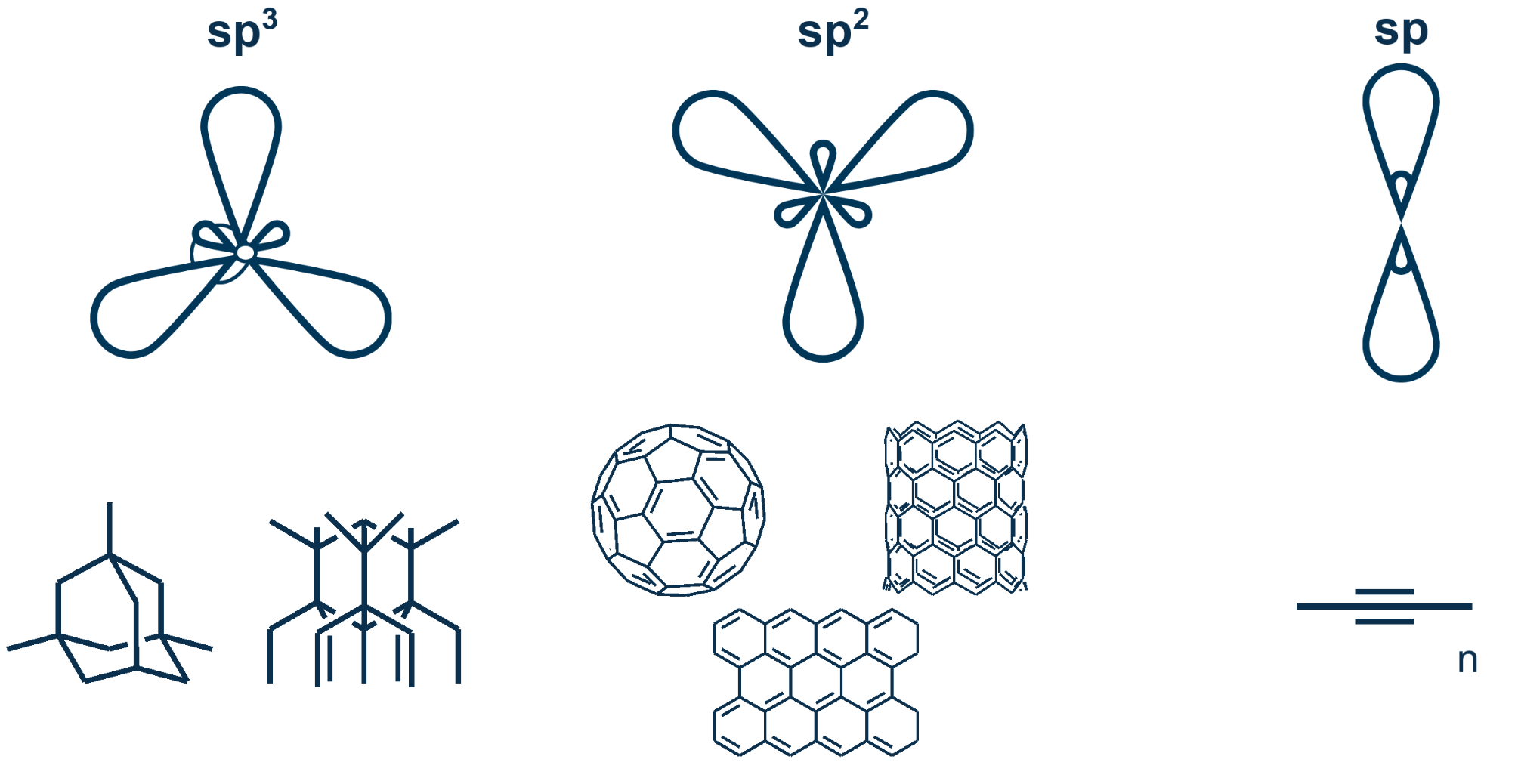
But carbon atoms can also form an arrangement where each atom has only two immediate neighbors. Organic chemists would say in this case that we formed a triple bond. The simplest possible molecule of this kind is acetylene, C₂H₂, which is great for creating high-temperature flames (for welding, or robbing banks). A discovery of a carbon allotrope built entirely from triple bonds would potentially be groundbreaking. Nobel-worthy. At the very least, it should get the discoverers a mention in freshman chemistry textbooks and a place in the pantheon of the Greatest Chemists.
In 1959, a few intrepid scientists from the Nesmeyanov Institute of Organoelement Compounds in Moscow bubbled some acetylene through a solution of a copper salt. Copper tends to react with derivatives of acetylene by “stitching” the molecules together through C-C bonds (the Glaser coupling, a real and reliable reaction). Something black formed in the flask, and our heroes assumed that they made a coveted new carbon allotrope by this stitching chemistry. After a few years and several publications (exclusively in Soviet journals), the new material was christened “carbyne.”
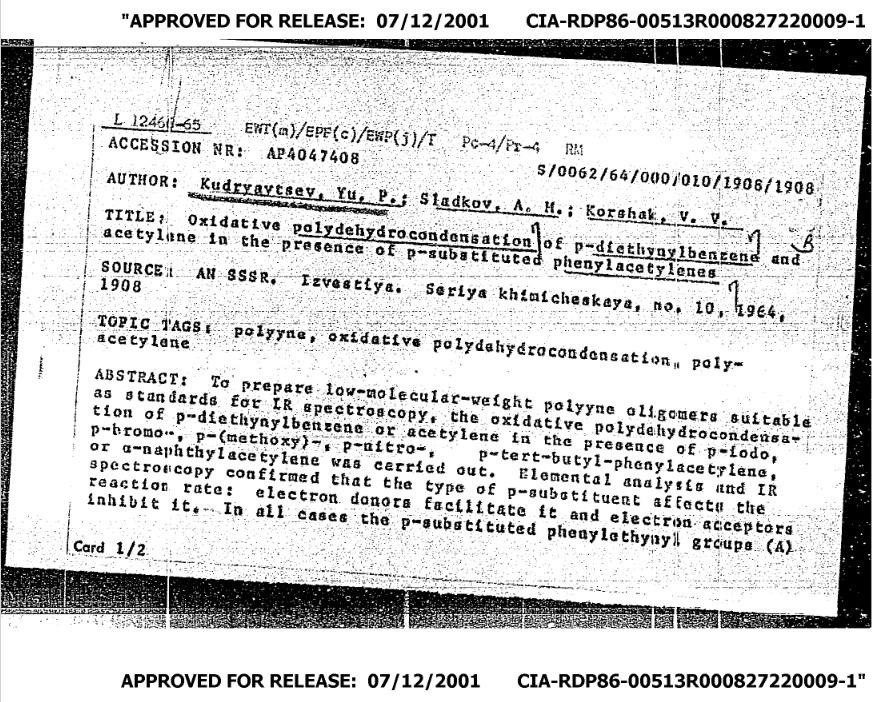
This was a triumph of Soviet science. Carbyne was hailed as a great indigenous achievement on par with Popov inventing the radio. The discoverers received state honors and awards. It got little pushback in the West, which is somewhat surprising. The Cold War was on, and the CIA index card archives suggest that at least someone at Langley was concerned about a growing carbyne gap between the USA and the USSR. The Nesmeyanov Institute still lauds the discovery on its website.
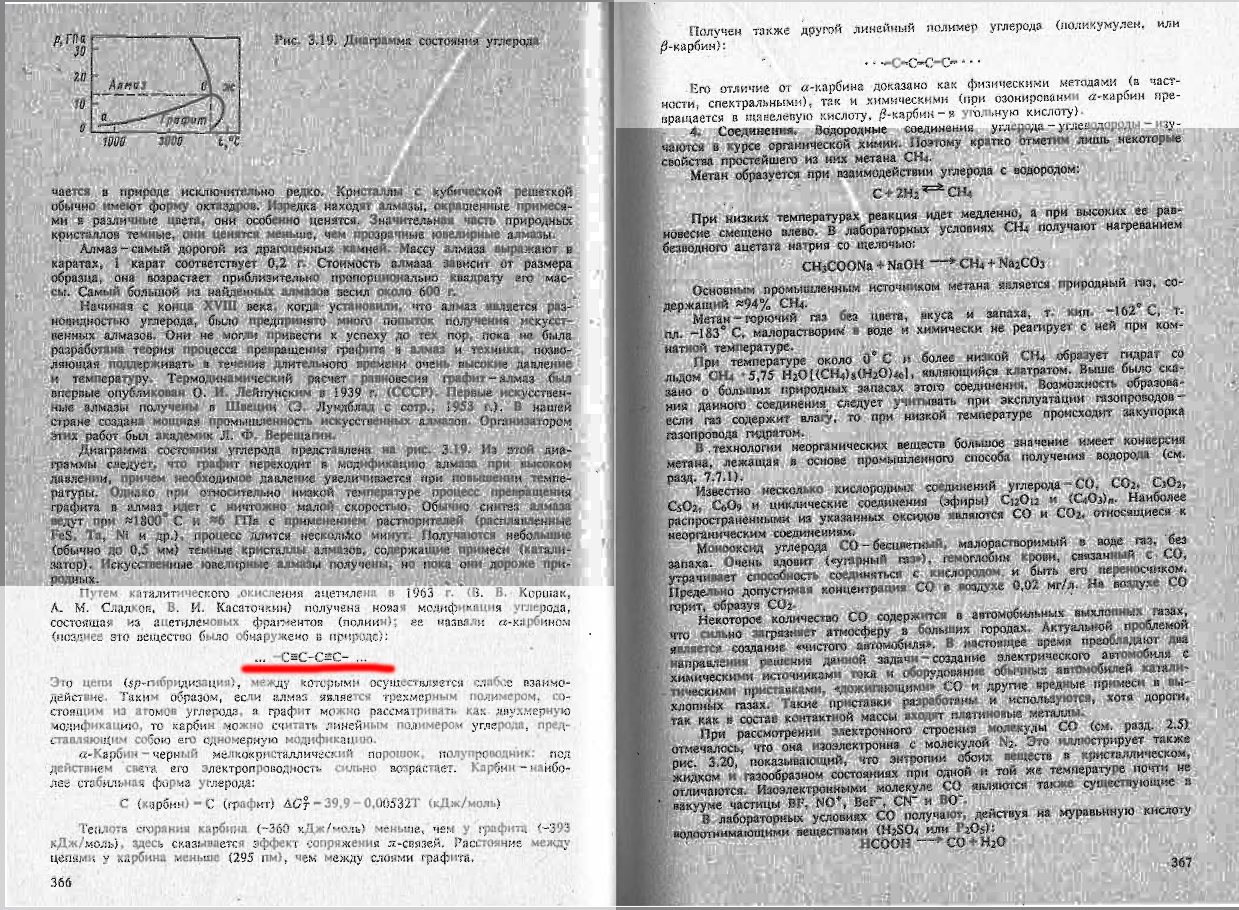
You might ask, why have you not heard about this carbyne stuff before? Why was it not in your freshman chemistry textbook next to diamond and graphite? Carbyne would absolutely have been in your chemistry textbook if you studied it in the Soviet Union or Russia sometime between 1970s and 1990s. I had one like that in 1997-98. The book proceeded to explain that the material was first synthesized by Soviet scientists, and that it has truly amazing properties: extraordinary strength, exceptional thermal conductivity, and to top it all off, it was supposedly the most stable form of carbon, more so than even graphite. The applications were equally impressive: surgical sutures, spacecraft components, super-efficient heat exchangers, and on and on.
Around the time my textbook was printed, the original discoverers published a Russian-language review on carbyne, which was helpfully translated into English (Kudryavtsev et al., Russ. Chem. Bull., 1993). Like the textbook, this review lauded the amazing properties and applications of carbyne. The review also summarized much of the experimental data from three decades of publications. None of these data are duplicated or hand-drawn in the tradition of contemporary papermills. They would not look out of place in a respectable 1970s journal. Except they are either blatantly wrong, or do not indicate the existence of carbyne.
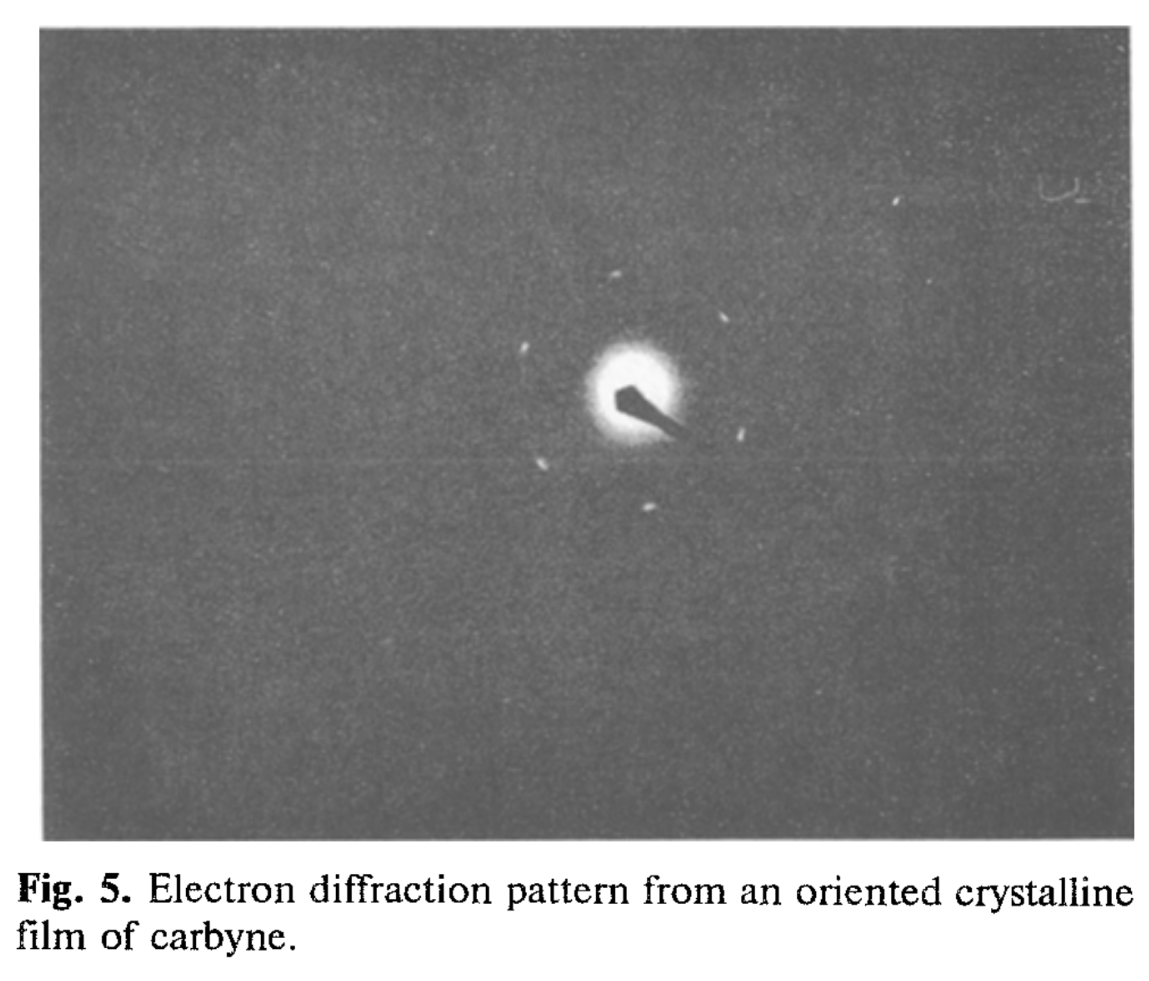
For example, the electron diffraction pattern (Fig. 5 in the review) is missing a scale bar, making it completely meaningless. The purported crystal structure in Fig. 6 has an impossibly short distance between adjacent carbon atoms of just 2.6 angstroms. This last point is worth dwelling on. While atoms have complex internal structures (which is what chemists spend all their time worrying about), they also do behave like tiny balls. Each element has a characteristic size, and large deviations from it are very rare. A typical carbon atom has a radius of about 1.7 Å, which sets the interlayer spacing in graphite at around twice that distance. The Soviets must have known that their claimed structure was geometrically implausible. They could not have accidentally misplaced a scale bar in an electron diffraction pattern either. And, naturally, there were never any carbyne surgical sutures. The entire field was simply wished into existence, data and evidence be damned.
Carbyne is, in fact, an incredibly unlikely arrangement of carbon atoms. Triple bonds are high-energy things, and there’s not much of a kinetic barrier protecting them. If you make more than around 20 or so triple bonds in a row, they will react with their neighbors in some flavor of cycloaddition, and the resulting product will be graphite. Often explosively so. Some of the actual physical data in the original carbyne papers (the explosive properties of the supposedly “stable” black powders, for example) are entirely consistent with the formation of carbon black from copper acetylide, or carbyne oligomers. And so it goes.
There are some interesting points to ponder here. Soviet education had its problems, but if there was one thing it did well, it was instilling (and testing for) solid basic knowledge. The original carbyne crowd knew crystallography as well as I do, likely better. They knew about Bondi radii. They knew about dehydro-Diels-Alder reactions. Yet they still published a crystal structure where carbons are too close together to physically coexist, and which would cycloadd into a chunk of graphite in a nanosecond. They could not have possibly believed their own claims. But it is obvious they did not care. The field had to exist, because their careers and state honors depended on it.
So, science kind of self-corrected: most chemists these days would know that carbyne is not a really thing. Except this self-correction is incomplete, because none of the original carbyne oeuvre was ever retracted. And there are still people out there trying to make carbyne today. Many of them know exactly what they are doing.

Kostya Ostrikov’s russo-iranian false friends
“Let me assure you that I totally condemn the war in Ukraine, and at the very least because my old mother is in Kharkiv and she suffers a lot… I am trying to help my colleagues and friends from Ukraine whichever way I can…” – Professor Kostya “Ken” Ostrikov
Enter graphyne
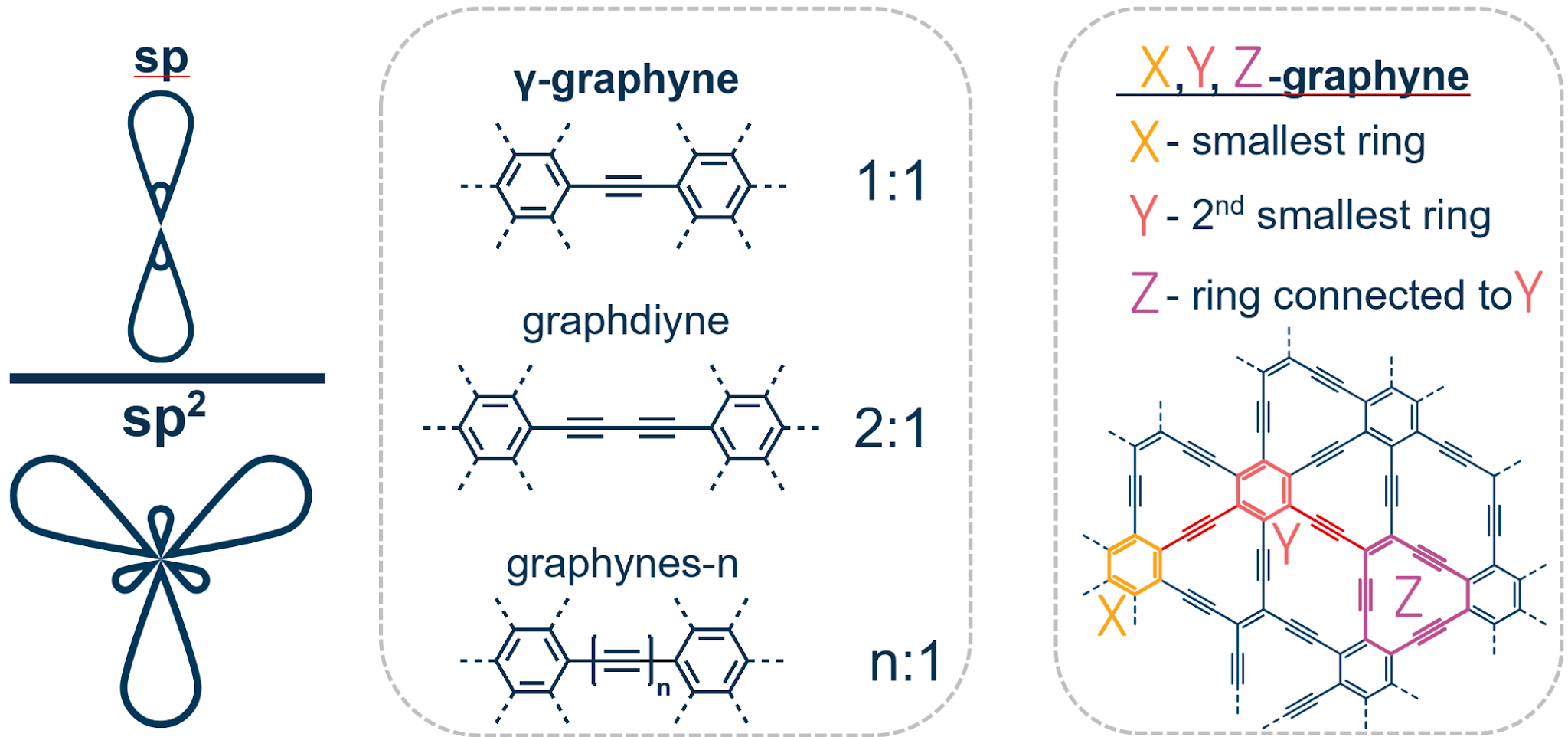
Let us shift gears and talk about another cannonball arrangement: graphynes. These were proposed in 1987 by Ray Baughman (J. Chem. Phys. 1987). Effectively, a cross between crazy carbyne and respectable graphite/graphene. We have both sp (triple-bonded) carbons and sp² (double-bonded) carbons. Some of the latter sit in six-membered aromatic rings, like those in graphene. Theory says that graphynes, at least some of them, can be stable. The triple bonds are few enough and the sheets are inflexible enough so that they wouldn’t readily cyclo-add to their neighbors. Graphynes are also predicted to have interesting properties. The simplest graphyne, where single triple bonds connect six-membered rings, is called γ-graphyne, or just graphyne for short. It is supposed to be a semiconductor (which graphene isn’t). So we could use γ-graphyne in all the applications graphene was supposed to deliver (following the €1 Billion investment by the European Union into the Graphene Flagship), but never quite did. It is potentially a Nobel-Prize material, if one could actually make it.
Making stuff like graphyne is difficult. Triple bonds are flimsy and reactive. Connecting carbons repeatedly, at scale, is really hard. People get Nobel prizes for that, too: the 2010 Nobel Prize for Pd-catalyzed cross-couplings (Heck, Negishi, and Suzuki) was awarded specifically for finding catalysts that can stitch carbon to carbon at reasonable temperatures in high yield. Furthermore, the conventional wisdom for making any large, framework-type structure (graphyne, MOFs, COFs, etc.) is that all reactions used must be reversible, so that errors in the lattice can correct themselves. That is effectively Omar Yaghi‘s legacy: an easy, digestible explanation for why a big crystal can be made with very few holes in it. Of course, you can make crystals with irreversible reactions. But if you do propose this in a grant, you won’t get funded. But I digress.
Magic crystals and Nobel Science rules
As one Nobelist retracted her Science paper, another Nobelist has stealthily corrected his. The correction opens new dimensions of probabilities and is indeed best kept hidden.
To get published (and funded), one must think outside the box. Be creative! In synthetic chemistry, being creative nowadays often means one of three things: (1) use blue light, (2) use electrochemistry, or (3) use a ball mill or ultrasound, the so-called “mechanochemistry.” Today we’ll be talking about #3.
Mechanochemistry is a simple concept. All chemists (and many non-chemists) have at some point played with a plastic or wooden molecular model. You can pull on the balls and sticks, twist your molecule into shape, and “do reactions.” Well, wouldn’t it be nice to do this on a real molecule? Apply physical force and pull things apart? That is precisely the notion of mechanochemistry. Run your reaction in a ball mill, and get an otherwise impossible result, because mechanical force.
I don’t want to be completely cynical here. You can actually do reactions with mechanical force, if your molecules are big enough (usually polymers larger than 50 kDa), and your expectations are low enough (you can fragment said 50 kDa polymers in a fairly random way). Ball mills are also very good at agitating stuff, so you can sometimes do reactions without solvent, and the results can be different from what you’d see in solution. But that’s no longer pulling molecules by force. Few “mechanochemists” make this distinction. Most importantly: if you are using mechanochemistry, you are creative. You are thinking outside the box!
Not a single molecule
“Nothing helps more to happily resolve such “scientific controversies” than replacement data, and this is exactly what Prof. Guo and his group provided in their response. ” – Maarten van Kampen
Xiaoli Cui makes graphyne (no, not really)
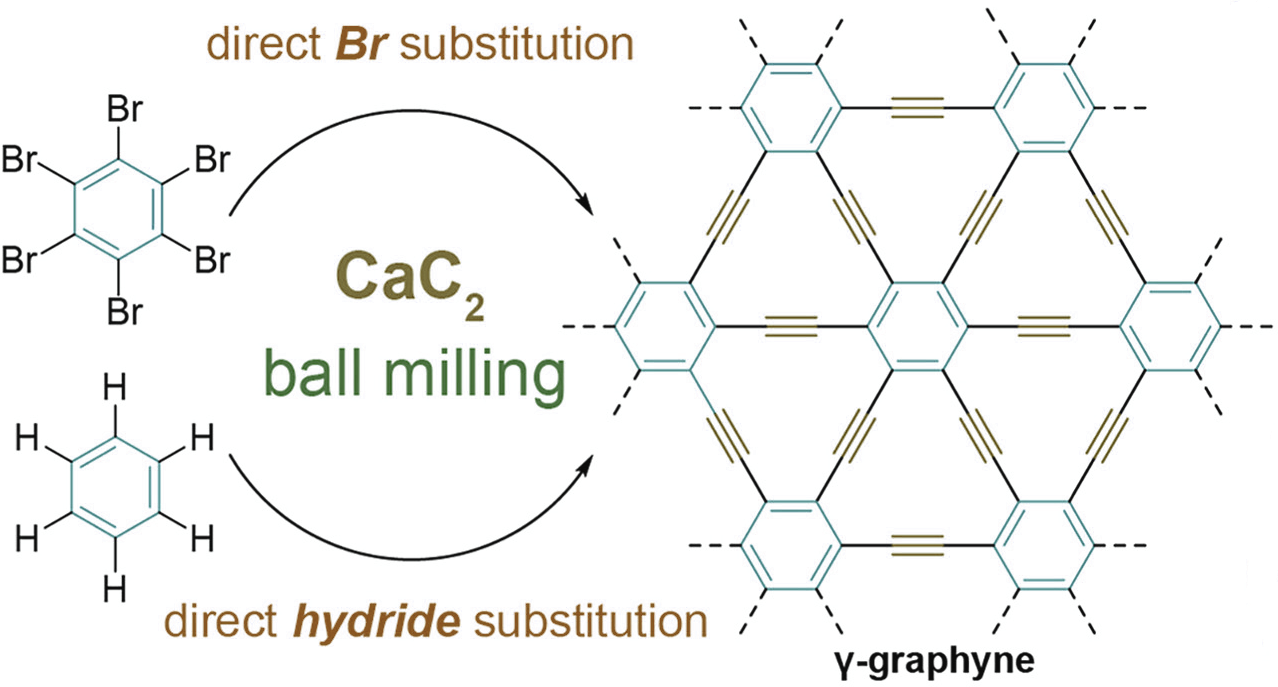
So, one Xiaoli Cui of Fudan University decided to be very creative indeed. Starting with a 2018 paper in Acta Physico-Chimica Sinica and then expanding into Carbon, Small, Journal of Materials Chemistry A, and many others, the Cui group claimed revolutionary bulk synthesis of graphynes, including γ-graphyne, by ball-milling hexabromobenzene (C₆Br₆) or benzene with calcium carbide (CaC₂).
- Jordan Lee, Yong Li, Jianing Tang, Xiaoli Cui Synthesis of Hydrogen Substituted Graphyne through Mechanochemistry and Its Electrocatalytic Properties Acta Physico-Chimica Sinica (2018) doi: 10.3866/pku.whxb201802262
- Qiaodan Li , Yong Li , Yang Chen , Lulu Wu , Chaofan Yang , Xiaoli Cui Synthesis of γ-graphyne by mechanochemistry and its electronic structure Carbon (2018) doi: 10.1016/j.carbon.2018.04.081
- Qiaodan Li , Chaofan Yang , Lulu Wu , Hui Wang , Xiaoli Cui Converting benzene into γ-graphyne and its enhanced electrochemical oxygen evolution performance Journal of Materials Chemistry A (2019) doi: 10.1039/c8ta10317h, Corrected in April 2023
- Chaofan Yang , Yong Li , Yang Chen , Qiaodan Li , Lulu Wu , Xiaoli Cui Mechanochemical Synthesis of γ-Graphyne with Enhanced Lithium Storage Performance Small (2019) doi: 10.1002/smll.201804710
- Chaofan Yang , Chong Qiao , Yang Chen , Xueqi Zhao , Lulu Wu , Yong Li , Yu Jia , Songyou Wang, Xiaoli Cui Nitrogen Doped γ-Graphyne: A Novel Anode for High-Capacity Rechargeable Alkali-Ion Batteries Small (2020) doi: 10.1002/smll.201907365
The idea, according to the papers, is that calcium carbide would act as a kind of “acetylide nucleophile” and stitch itself onto the six-membered rings of hexabromobenzene at every C-Br bond, simultaneously, in one fell swoop. The product is supposedly bulk γ-graphyne. The 2018 Carbon paper alone has, as of this writing, been cited 319 times according to Scopus.
This is, frankly, insane. Let me explain why.
The claimed reaction is a multi-site, uncatalyzed nucleophilic aromatic substitution at six C-Br bonds at once. Br is one of the absolute worst leaving groups in nucleophilic aromatic substitutions. Nucleophilic attack at the halogen atom itself (rather than at the carbon to which the halogen is attached) is kinetically favored when carbon nucleophiles react with aryl bromides. As I mentioned above, Heck, Negishi, and Suzuki got the Nobel Prize for finding palladium catalysts that finally made aryl-bromide cross-coupling possible. If it were really possible to do this kind of chemistry directly, without expensive and hard to remove palladium, by literally just shaking C₆Br₆ in a ball mill with cheap calcium carbide, it would have resulted in immediate widespread adoption and probably another Nobel Prize or two. It hasn’t, because the chemistry as described is impossible.
If you somehow find this insufficiently dramatic, consider the 2019 follow-up in Journal of Materials Chemistry A (JMCA), where Cui claimed to make γ-graphyne by ball-milling CaC₂ with plain benzene. Not hexabromobenzene. Benzene. The chemistry now requires direct activation of six aromatic C-H bonds by a carbon nucleophile, simultaneously, at room temperature, in a ball mill. There is no precedent for this. There cannot be a precedent for this. Nucleophilic substitution of hydride in aromatic molecules is categorically impossible. In fact, Sigma-Aldrich will sell you a solution of n-BuLi in toluene. No, LiH does not precipitate from that one. The thermodynamic calculation included in the SI of the JMCA paper uses the Boltzmann-Planck equation to calculate the entropy term for ball-milling of calcium carbide with benzene. Yes, this most famous Boltzmann formula for the entropy of ideal gas:
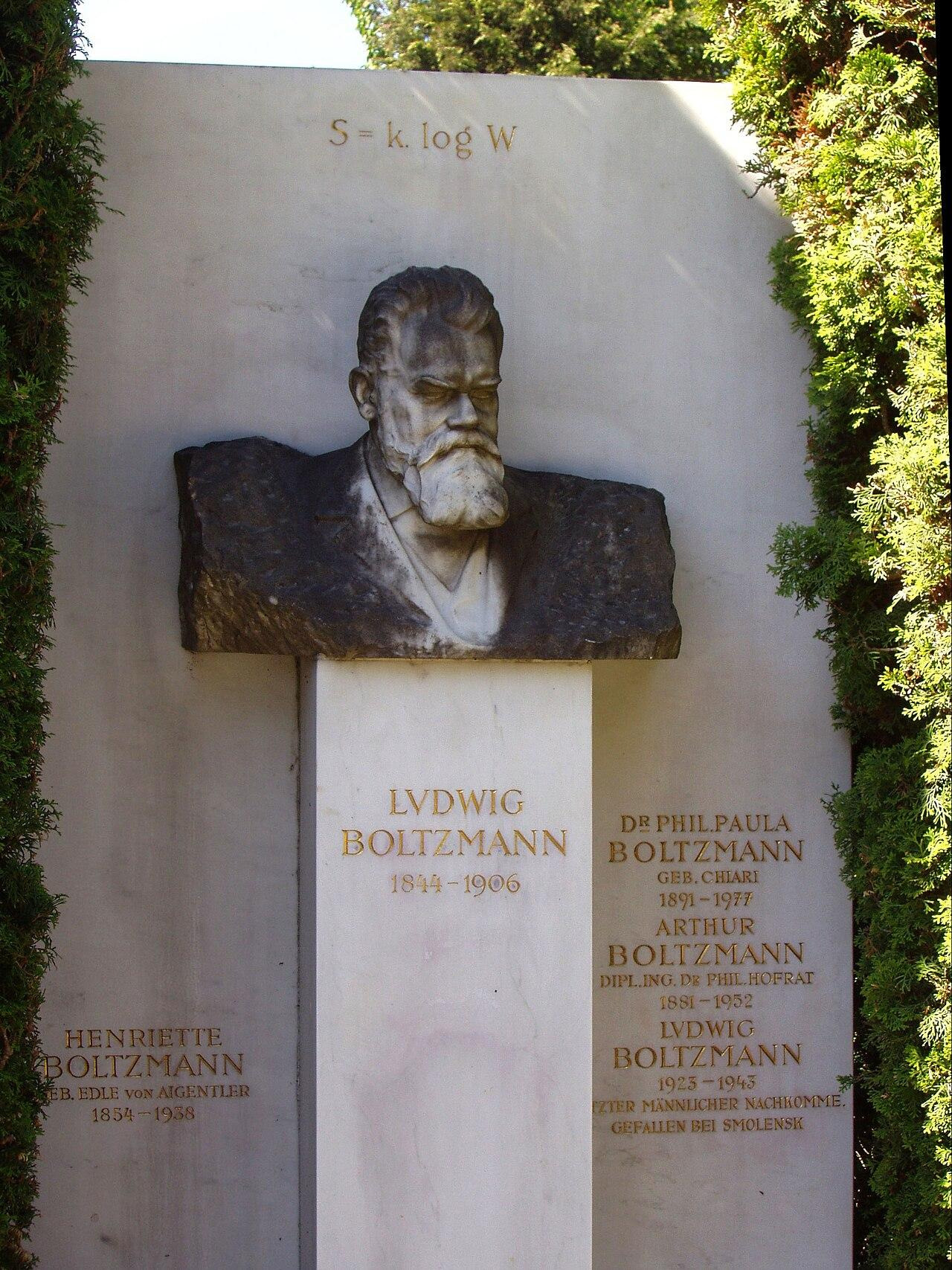
S = k×log W
Poor Dr. Prof. Boltzmann must be spinning in his grave.
What actually happens when you ball-mill calcium carbide with anything in the presence of moisture (and CaC₂ is extremely moisture-sensitive) is well-known: you get amorphous graphitic carbon char. The original SEM image from Cui’s Carbon paper is indistinguishable from previously published images of carbon black made from calcium carbide and oxalic acid (Xie et al., 2010).
So what about the characterization? Here is where it gets fun.

Fusion is a dish best served cold
“…there are no longer any batches of the palladium used by Fleischmann and Pons (because the supplier now uses a different manufacturing process)…” -FuF wisdom

The smoking gun
Among the various pieces of evidence presented for γ-graphyne, by far the most damning is the selected area electron diffraction (SAED) pattern. SAED is a technique where you shine an electron beam through a thin sample and let the electrons scatter off the atomic lattice. The result is a diffraction pattern of bright spots whose spacings tell you about the periodicity of the material. Importantly, the physical pixel distance between any two spots on the image is determined entirely by the instrument geometry, namely the accelerating voltage and the camera distance. If you use the same instrument at the same settings, the same lattice always gives the same pattern at the same pixel scale.
Cui’s group published one SAED pattern in the 2018 Carbon paper, supposedly showing the lattice of γ-graphyne made from hexabromobenzene. They published another SAED pattern in the 2019 JMCA paper, supposedly showing the lattice of γ-graphyne made from benzene. Both patterns are presented as evidence for the same material. Both were supposedly taken on the same instrument (Tecnai G2 F20 S-Twin FE-TEM). Both were taken at the same accelerating voltage (200 kV). Both were taken at the same camera distance (490 mm). These instrument settings are printed at the bottom of each image. Yet the pixel distance from the central spot to the first ring of reflections is wildly different between the two patterns. This is physically impossible if both patterns are real and both come from the same material on the same instrument.
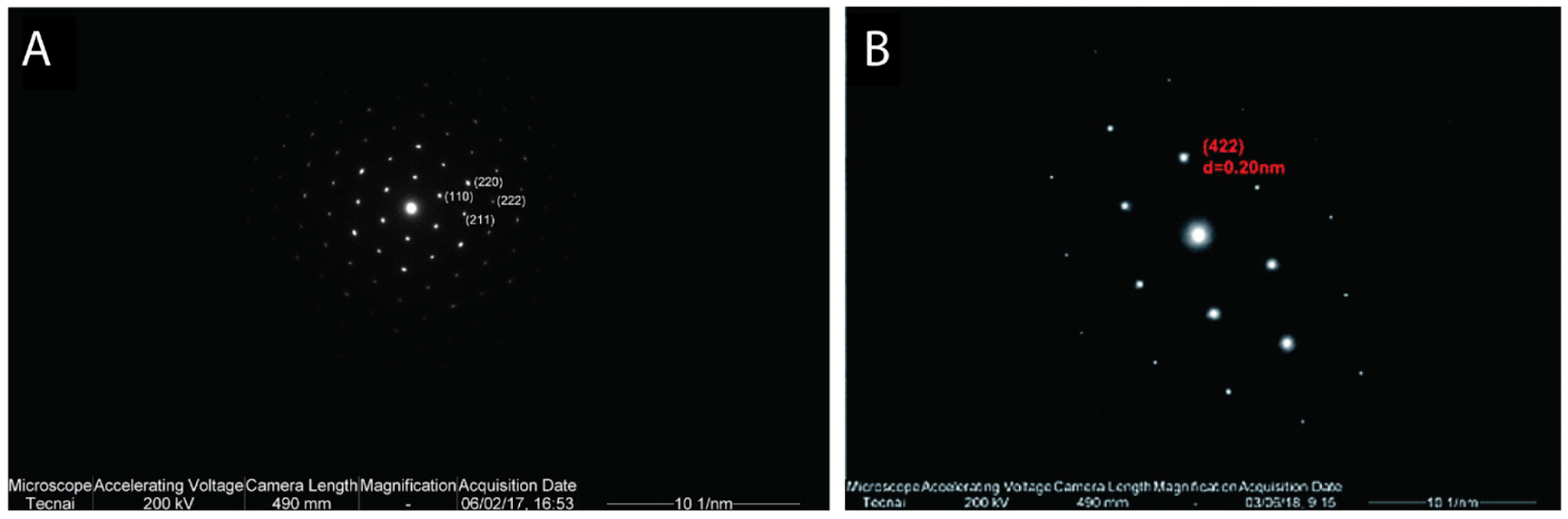
It gets better. The JMCA pattern, when overlaid on a standard SAED pattern of plain few-layer graphene, matches perfectly, pixel for pixel. The first ring of reflections has a spacing of 0.2 nm, which is suspiciously close to the expectations for (110) reflection of graphene. Cui labels this ring as the “422 reflection of γ-graphyne.” There are two problems with this. First, the actual (422) plane spacing in γ-graphyne, calculated from the lattice parameters the authors themselves cite, should be about 0.11 nm, not 0.2 nm. This is below the resolution limit of the microscope, meaning the reflection cannot even physically appear at the claimed position. Second, the (422) reflection is a symmetry-forbidden reflection in this sample orientation: in c-axis projection, only reflections of the type (hk0) can show up. A (422) reflection means there’s a non-zero contribution from spacing in the z direction, and that simply does not happen for a flat sheet viewed face-on. The pattern is most certainly just graphene with mislabeled spots.
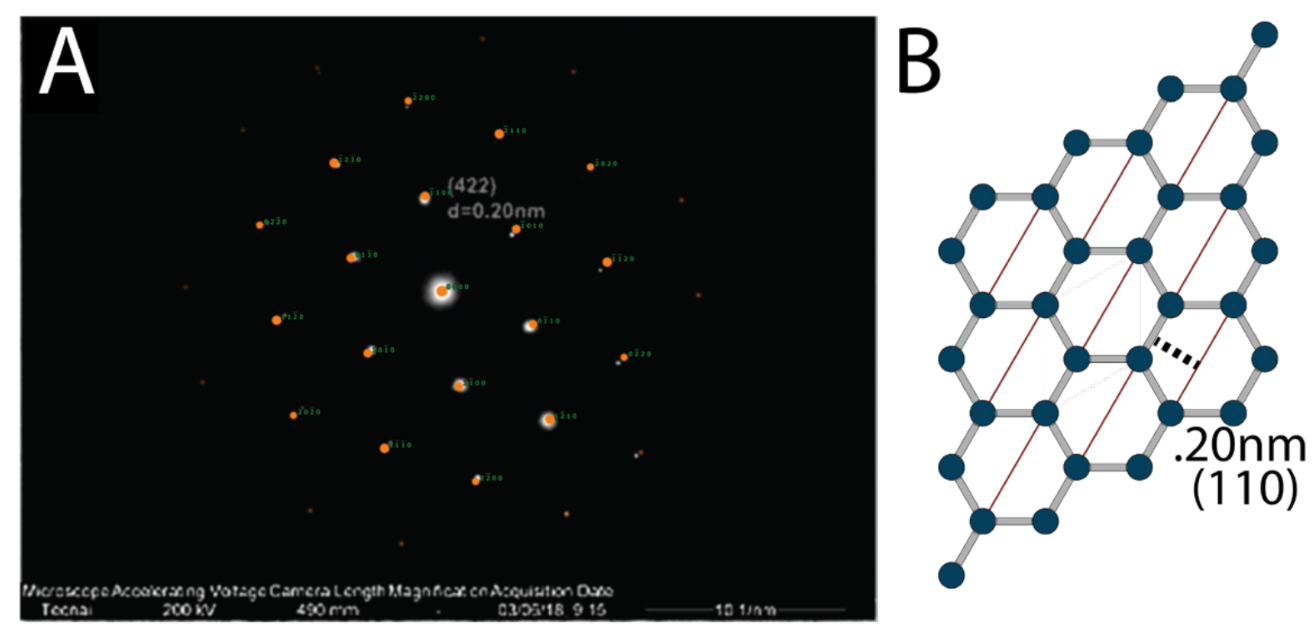
So either the Carbon scale bar is fabricated (the underlying image being graphene-like, with a made-up reciprocal-space ruler that makes the spacings look right for γ-graphyne) or the JMCA indexing is fabricated (the pattern being plain graphene with the wrong labels on the spots). Could be both. Either way, this is not γ-graphyne.
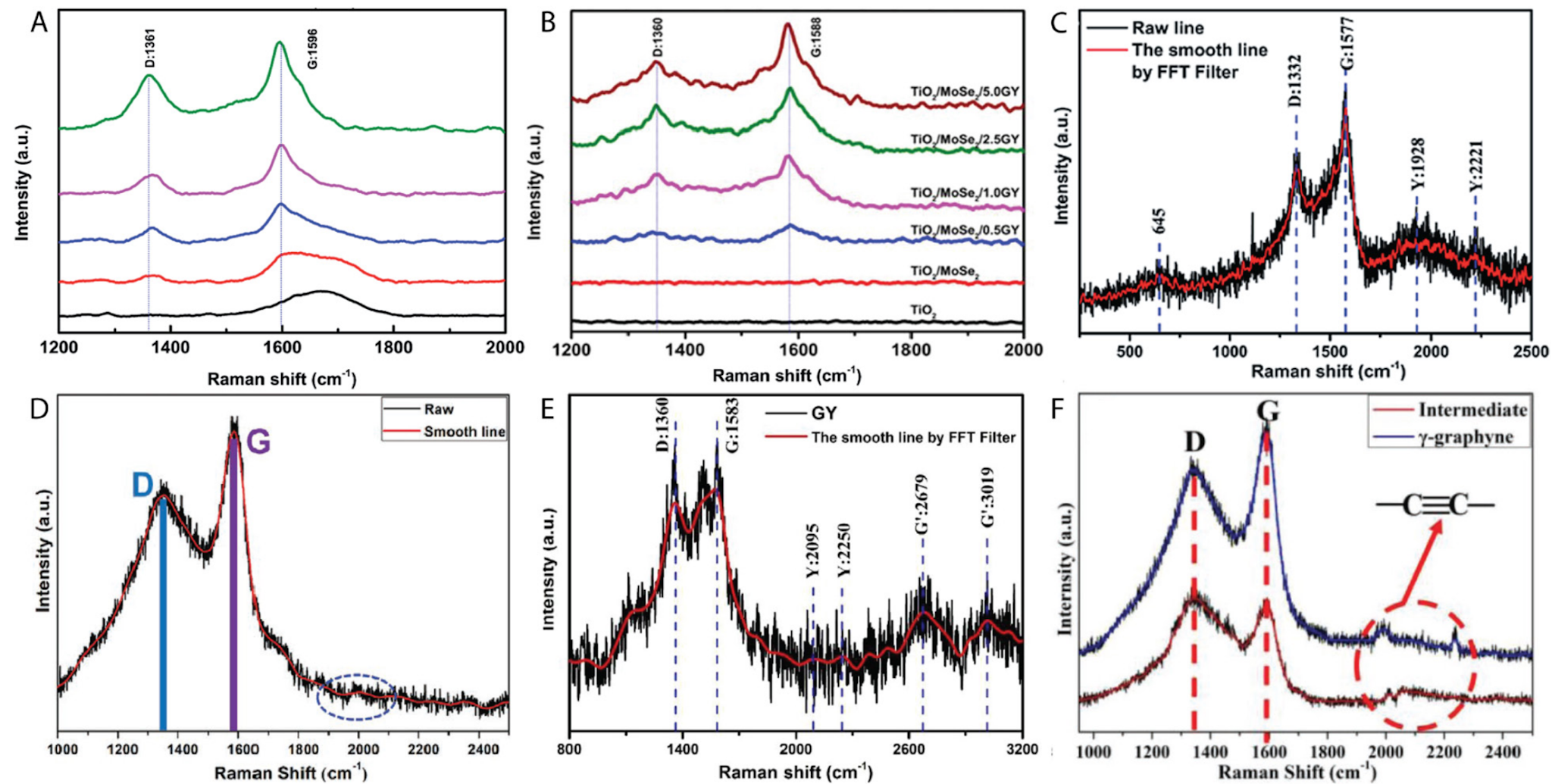
The Raman spectroscopy is hardly better. γ-graphyne has a diagnostic peak, the Y band at around 2100-2200 cm⁻¹, corresponding to the stretching of the C≡C triple bonds. Theory predicts this peak should be at least as intense as the aromatic-ring peaks. In Cui’s papers, the Y band is either invisible (lost in baseline noise) or located at a different wave number in every paper from the same group. There are also different number of “Y” peaks! One paper reports 2095 and 2250 cm⁻¹. Another reports 1950 and 2200 cm⁻¹. A third reports 2072 and 2171 cm⁻¹. A fourth says 2021 cm⁻¹. A fifth says 2080 cm⁻¹. For the same material, made by similar methods, by the same group. This is impossible. The wave number of the C≡C stretch in a given structure is set by physics, not chosen by the observer. The “peaks” are noise that has been retroactively interpreted to match whatever value the authors wanted to cite that day.
I will spare you the details on the powder X-ray diffraction (which cannot be indexed to any conceivable stacking of γ-graphyne sheets), the X-ray photoelectron spectroscopy (fit with arbitrary parameters chosen to produce the desired conclusion), and the TEM images (which show plain graphene wrinkles and layers, with annotations pointing at the wrinkles as if they were γ-graphyne lattice planes). You get the idea.
Nanotheranostics with a decisive action
“We will look in each instance thoroughly and take a decisive action in consultation with journals and university in each instance as appropriate”, Sasha Kabanov, winner of the Lenin Komsomol Prize 1988
“It is clear that the data reported in these papers are origin”
Starting in 2021, I and members of my group started trying to correct the science. We wrote up detailed analyses of the Cui papers (the originals are on PubPeer, links below) and submitted formal complaints to the journals.
The response was educational.
The Editor-in-Chief of Carbon, Mauricio Terrones, was responsive and willing to work with us. However, he told us outright that a clean retraction is likely off the table. He passed our analysis to the authors (with our permission) and asked them to respond. Our (naive) expectation was that Cui won’t be able to respond and will fold. How can you defend the indefensible?
I admit that I was wrong. We received the response after a few months, and to my surprise, yes, they were very much trying to defend the indefensible. The introduction to that response is worth reproducing here verbatim:
Response to Reader comments of j.carbon.2018.04.081
We appreciate the Reader for sustained concerns to our publications. We welcome all critical discussions, rather than subjective assumption of scientific misconduct, to get to the truth of developing new material and make progress in related topics, especially synthetic chemistry.
Actually, we received the same comments transferred from the editor of Journal of Materials Chemistry A before. We have offered a detailed response and provided original experimental data, and finally got an objective appraisal as “it is clear that the data reported in these papers are origin” from an independent expert.
1. Firmly deny the accusation of scientific misconduct
First of all, we deny the irresponsible accusation that “the results have been fabricated, and the authors committed scientific misconduct”. All data presented in our papers are origin without any artificial manipulation and concealment, and all published results are subject to rigorous peer review.
I am, as you might guess, the Reader. Several things to admire here. The word “origin,” which I think is meant to be “original,” used three times in two short paragraphs. The “independent expert” at JMCA, whose appraisal we never got to see, and which appears to consist of a single sentence that does not parse. The “firmly deny.” The use of quotes around my own words, as if to suggest the accusation was so absurd it had to be cordoned off from the rest of the response.
The remainder of the document, twelve pages of it, is structured as a point-by-point rebuttal, and the substance is even better than the framing.
They argue, for example, that their chemistry is “not without precedent” by citing a Pd-catalyzed Sonogashira coupling from 2011 (which is, of course, exactly the kind of chemistry whose absence in their reaction would have been an instant Nobel prize). They cite a 2017 paper on the destruction of hexachlorobenzene by ball-milling with calcium carbide, where the authors observed amorphous carbon and proposed a sp²-sp “framework” as a thought experiment. Cui presents this as supporting evidence: another group did the same thing, called the product “amorphous carbon,” and we’re just renaming it γ-graphyne! They acknowledge the existence of “carbonaceous impurities” but naturally the “main conclusions” still stand. They were, in their own words, simply “not aware of some issues in our early works.” Such as the wrong indexing of all the diffraction peaks. Extremely minor stuff.
Bad Choices in Dresden
“There is no reason for an investigation into scientific misconduct and therefore it will not take place.”
The PXRD response is truly special. They concede that the original peak assignments were wrong, and reattribute the peaks to a Ca(OH)₂ “impurity” that supposedly survived their nitric acid wash. Ca(OH)₂ does not survive a nitric acid wash.
And then the SAED. This is the part that should have been game over. The original Carbon paper indexed the three innermost reflections as (110), (211), and (422), with d-spacings of 0.49, 0.35, and 0.25 nm. In the response (and in the proposed correction), the same three reflections from the same image are reindexed as (100), (110), and (300), with d-spacings of 0.60, 0.35, and 0.20 nm. The middle reflection stayed put. The outer ones moved by 20% in d-spacing. From the same image. With “completely origin” scale bars.
This is, of course, impossible if the scale bar is real. A SAED scale bar, like any other physical ruler, doesn’t reinterpret itself paper to paper. The d-spacings of reflections on a given image are fixed by the geometry of the instrument and cannot be retroactively rescaled by 20% to match a different set of (still wrong) Miller indices. The very fact that Cui is willing to rescale them, on the same image, to defend a different set of indices, is the proof that the scale bar is bogus. Their defense is the smoking gun. And they don’t seem to care.
To Carbon‘s credit, this proposed “correction” (shown above) has not been published. To Carbon‘s discredit, the original paper has not been retracted either. The Cui group’s JMCA papers (JMCA was at the time edited by Anders Hagfeldt) eventually got corrected. Not retracted, corrected. The corrections were issued without consulting me or others who had raised the concerns. The corrections themselves are arguably worse than the original papers. For one of them, the authors were allowed to re-index their SAED with arbitrary d-spacings (the same trick as in the Carbon response), with a note that “this does not affect the conclusions.” It never does. And so it goes.

Swedish rector Anders Hagfeldt pronounced innocent of papermilling
“The board’s conclusion is therefore that the deviations regarding figure 2b and 2c in article 1 constitute serious deviations from good research practice”
The DOE program officers are well-read
I had also tried, back in 2020, to get DOE BES funding for my own project on the synthesis of γ-graphyne. The program officer came back with this:
“A main premise of the proposal is that gamma-graphyne has not been previously synthesized and characterized. This statement appears to be in error, and several recent publications describe the reaction of halobenzenes with calcium carbide in mechanochemical reactors (ball mill) or using ultrasound to create materials that appear to exhibit the characteristics of g-graphyne expected from theory.“
He then listed the Cui Carbon paper, the Cui Small paper, and an Ultrasonics-Sonochemistry paper (from a different group, but using the same fraudulent template) as evidence.
I had to write back and explain, point by point, why the Cui body of work was bunk:
“We are aware of the papers in this cluster… Unfortunately, none of these reports are credible… In brief, the authors claim to have performed completely unprecedented chemical transformations. However, the characterization of their materials does not withstand even very basic scrutiny… While it is impossible to say whether these publications are a result of willful misconduct or confirmation bias, it is absolutely certain the group from China has not obtained graphyne.“
See, it is just a normal academic dispute!
It then took us close to two months to prepare a properly grounded, formal debunking, and send it to our patient program officer (and yes, we did get our funding in the end).
Despite the nominally positive outcome, it was a dose of reality. We saw the Cui stuff before we have written our proposal and did preliminary experiments. But we never considered the existence of the “mechanochemical” papers would impact our research – these were just too ridiculous. But a DOE program officer, who decides who gets federal money, was, in fact, using these papers as the basis for his funding decisions. He had no idea the papers were bogus, because all the data looked like data. The PXRD pattern had peaks. The XPS had a fit. The TEM image had a lattice. He was a materials scientist who last took an organic chemistry class 50 years ago. To him, that was work that had been done, and peer-reviewed.
Bad Choices in Dresden IV
A guide on what qualities universities in Germany, Italy and elsewhere in Europe expect from their foreign PhD students and postdocs.
But what if it works?
In 2024, with the journals refusing to act, or correcting the indefensible, we did the only thing left to do: we replicated Cui’s experiments. We took CaC₂ and C₆Br₆ (and, separately, CaC₂ and benzene) and ball-milled them under the conditions described in three of Cui’s papers (Carbon 2018, Small 2019, and JMCA 2019). The point was simple: if the chemistry works, we will find graphyne. If it doesn’t, we will find whatever Cui actually made.
Black crap formed in all cases. None of it was graphyne. None of it contained any detectable sp¹ carbons by IR or Raman. XPS showed heavy contamination with calcium, bromine, and (in one case) carbonate. The materials were different from each other, even though the three Cui papers all claim to produce the same product. They were broadly consistent with what one would expect from calcium carbide ball-milled with various organics: amorphous, disordered carbon char of varying composition. Boring and ugly.
The replication was published in Carbon in 2024, on the agreed terms: science only, no misconduct allegations.
Ezra R. Kone , Sarah Nasri , Grace L. Parker , Victor G. Desyatkin , William B. Martin , John F. Trant , Valentin O. Rodionov Replication of mechanochemical syntheses of γ-graphyne from calcium carbide fails to produce the claimed product Carbon (2025) doi: 10.1016/j.carbon.2024.119808
To this day, no Cui paper has been retracted. There are now hundreds of “graphyne” papers in the literature, with more appearing almost weekly. Most of this “work” follows Cui’s template, and claims applications in batteries, photocatalysis, water splitting, electrocatalytic oxygen evolution, optical limiting, and more or less anything else that gets papers published in materials science. There are review articles on “mechanochemical graphyne.” Cui published one herself in 2024. Our replication has, as of this writing, been cited 2-3 times. In at least one case, it is cited in a “both sides” context, as if “Cui says graphyne forms, Rodionov says it doesn’t, who can tell” is a sensible position about a question of fact.
What is interesting, and somewhat expected, is that essentially no one in the field outside our group has openly questioned Cui’s work. You can find scattered hints that something is off. Some authors describe their own or Cui’s “graphyne” samples as “defected,” or “highly disordered,” or “amorphous.” Nobody seems to wonder why a supposedly well-defined carbon framework keeps coming out amorphous in everyone’s hands. Nobody says “the original papers might be wrong.” It just isn’t done.
Cui herself is, of course, fine. She runs her group. She still publishes “graphyne” and “mechanochemistry” papers. The Cui group and the adjacent literature have something like 24 threads on PubPeer at this point. Nobody at Fudan cares. Nobody at the journals cares.
Yuqing Zhang’s 10 years of fraud, a whistleblower account
“All these SEM, EDX, TEM, BET, XRD, FT-IR, and contact angles in the theses and papers from our lab, where do they come from? We made them up. “
Coda
I started this post by saying that the truly bad science doesn’t look like fraud. It looks science-shaped. The graphyne story is one of the cleanest examples of this that I have personally encountered, and I have encountered a few. There are no duplicated Western blots or microscopy images. There are no MS Paint squiggles. There is a Boltzmann equation in a supporting information file, applied to a ball mill. There are SAED scale bars that, when the indexing is challenged, quietly rescale themselves as needed on the same image. There is a twelve-page document defending the indefensible, with the word “origin” repeated in bold, as if shouting the right adjective could make it so. None of this triggers any of the standard fraud-detection antibodies of the scientific immune system, such as it is. None of it is the kind of direct fraud the system is set up to detect (after all, even most “squiggle” papers never get retracted). The papers are totally bonkers, and many of my chemist friends chuckle when I tell the story. But the outcomes are highly consequential and not funny in the least.
A whole subfield was built on work that is not even wrong. The people doing follow-up “mechanochemical graphyne” research fall into two non-exclusive categories. Some, likely the majority, are profoundly incompetent. The others know perfectly well that the chemistry is bunk and proceed anyway, because publications are publications and citations are citations. The same person can transition from one category to the other over the course of a few papers. The end result is the same: a self-sustaining citation ecosystem utterly detached from physical reality. Did you know that Pd-doped graphyne makes great sensors for dissolved gases in transformer oil? Well, now you do. To be fair, this last one is a theory paper. Okay, screw it, I don’t want to be fair.
This is a clear case where Lysenko-caliber “research” has made real work in the field all but impossible. The same people end up reviewing my papers. This is not a hypothetical. I have been asked by reviewers directly to cite Cui. I have been asked to explain the difference between “my” material and “their” material. I have had papers desk-rejected for “lack of novelty.” I have had NSF proposals rejected, and DOE funding delayed for months and years, with career-altering consequences. Yes, my group did make real γ-graphyne. But it took years, and the synthesis is complicated and is not “creative” (as was pointed out by more than one NSF reviewer):
Victor G. Desyatkin , William B. Martin , Ali E. Aliev , Nathaniel E. Chapman , Alexandre F. Fonseca , Douglas S. Galvão , Ericka Roy Miller , Kevin H. Stone , Zhong Wang , Dante Zakhidov , F. Ted Limpoco , Sarah R. Almahdali , Shane M. Parker , Ray H. Baughman , Valentin O. Rodionov Scalable Synthesis and Characterization of Multilayer γ-Graphyne, New Carbon Crystals with a Small Direct Band Gap Journal of the American Chemical Society (2022) doi: 10.1021/jacs.2c06583
Good luck getting that kind of work funded when half the field (“materials” crowd, not chemists) think Cui already solved the problem in 2018 with $5 worth of calcium carbide and a glorified rock tumbler.
Even the people you would think are world-class experts are not immune. In 2022, I met Ray Baughman himself, the guy who proposed graphyne back in 1987. He was extremely smart, and he cared about graphyne, it being his legacy and all. He was not an organic or synthetic chemist, though, coming from a more physics-y materials background. When I tried to explain why all the “mechanochemical graphyne” work was bogus, he was not unconvinced, exactly. But also not entirely convinced. He still half-believed Cui. After everything I had told him. When we submitted a joint paper on making the first real piece of graphyne, he insisted we cite Cui, because Cui would end up as a reviewer, and our paper would get rejected. We had a fight over this. In the end, I prevailed, and we did not cite Cui. It was the right thing to do. But Ray was not entirely wrong: if we had not gotten a sympathetic and reasonable editor at JACS (we got lucky that time), the paper would have been Cui’ed.

New JACS EiC Erick Carreira: “correct your work-ethic immediately”
Erick Carreira’s letter to Guido, from 1996. You all saw it probably at some point, and now it’s being discussed again.
There is power in publications, which is why there were eight million of them pumped out last year alone. Once the papers look legitimate, and once they enter the literature and the textbooks and the funding decisions, it becomes exceptionally hard to dislodge them. The Soviets understood this perfectly in 1971. So does Cui in 2026. The system rewards plausibly formatted, template nonsense, and punishes the people who try to point at it. The squiggles and the duplications are on the surface. This templated stuff is mission impossible.

I tried to do what I could within the system. I was, by some measures, way more successful than most: we published a replication, things got “corrected,” the journals knew. It changed nothing. The papers are still there, still cited, and Cui-inspired work is still funded.
Next time, we’ll talk about holey graphyne. Spoiler: it’s also fake.

Donate!
If you are interested to support my work, you can leave here a small tip of $5. Or several of small tips, just increase the amount as you like (2x=€10; 5x=€25). Your generous patronage of my journalism will be most appreciated!
€5.00


True and devastating. In my own field I have been trying to set things straight for more than a decade. Having difficulty with publishing my papers correcting the virtual reality, because they “disagreed with facts well established in the literature”. It culminated in the review of my application for the title of a professor. One of the reviewers wrote:
“In the description of his achievements in the self-assessment, the candidate focuses on finding faults in the methodology and interpretation of results of other scientists, instead of being a creator of new research directions.”
This opinion was shared by 11 in a panel of 14 professors, who didn’t see the importance of “finding faults in the methodology and interpretation of results of other scientists” and voted against granting me the title.
LikeLiked by 1 person
“The blatantly duplicated fluorescence microscopy.” Well, maybe not duplicated but blatantly fabricated.
PubPeer – Turning Toxic Nanomaterials into a Safe and Bioactive Nanoca…
You would think that any competent reviewer would notice that mammalian cells cannot be smaller than bacteria. But even when pointed out to editors it triggered no response.
LikeLiked by 1 person
There was likely no reviewer at all here. I wouldn’t be surprised if authors, editora and reviewers were the same people (or at least close collaborators) of each other.
The current state of affairs in publishing is depressing.
LikeLike
This was well written. I have to say I found it funny in a way maybe I shouldn’t. The idea of having Cui also peer review your own work is highly entertaining. Also, Cui managed to get you all standing around your own ball mill making carbon gunk, dancing to her tune! For what it’s worth I began my own “sleuthing” activities more interested in statistical and mathematical anomalies in medical papers but found communicating these problems nearly impossible. Sure you can tell people that a distribution is biologically ridiculous, even impossible, but elevating that to someone who can understand the problem and is also motivated and capable of taking meaningful action? Nearly impossible! So I look at the squiggles, at least everyone can understand them.
LikeLike
Cui reviewing my work is even more entertaining than you might think!
Last year, myself and Reese Richardson submitted a Matters Arising/Letter to ACS Catalysis, trying to get this monstrosity retracted:
https://pubpeer.com/publications/26331148EE369AF9603C2E8368C9F0
Yes, Cui-like carbide graphyne, but in fancy ACS Catalysis and with beamlines and XANES and single-atom ruthenium.
Of course, this should have never been published; and it should have been retracted on the spot once I emailed the EIC with the goods. But that’s not how they roll. So for more than a year, they have been reviewin’ and COPEin’.
Coincidantally, sust today I got the decision. Our letter won’t be published, but the monstrosity will be retracted after all (OK, good). I did get the reviews for our letter, which I hope to cover in more detail in a future post. But I will share one now, because I think it may have been Cui herself!
Here we go:
Reviewer: 3
Recommendation: Not suitable for publication in ACS Catalysis.
Comments:
I took a look to the comments from Valentin O. Rodionov, Reese A. K. Richardson First of all, I am very sorry that I have no ability to judge the results in original article by Huang, Dionysiou, and co-workers [1] since we did no research about single-atom catalysts in my group.
As for the synthesis of γ-graphyne in this paper, the mechanochemical method follows Cui’s protocol in 2018[2]. In 2018, Cui and co-workers proposed mechanochemical synthesis of γ-graphyne [2] on the base of previous reports about the mechanochemical reaction of CaC2 and hexachlorobenzene, and so on.[3,4] I have noticed that Cui’s paper has attracted extensive attention, and subsequent studies have further advanced this field. Graphyne-related carbon materials synthesized through a mechanochemical strategy have exhibited outstanding performance in various fields, including electromagnetic absorption, energy storage, adsorbents, catalysis, and so on.
Except for the work of Huang, Dionysiou, and co-workers [1], Yun et al.[5] modified conventional mechanochemical treatment by employing Nylon tank equipped ZrO2 balls to synthesize γ-graphyne, which exhibits remarkable absorbability for organic dyes. Zhang et al. [6] also synthesized γ-graphyne by the mechanochemical route using CaC2 and hexabromobenzene, demonstrating much enhanced electromagnetic wave absorbing properties from the synergistic effect of graphene/γ-graphyne.
Following the application of mechanochemical synthesis of γ-graphyne from calcium carbide and hexabromobenzene, the development of other graphyne-related carbon scaffolds, such as naphyne (naphthyl-based)[7] , and nitrogen-rich graphyne (aromatic nitrile-based)[8], were also pursued. In 2020, Li and co-workers reported the mechanochemical reaction between CaC2 and perchloronaphthy to obtain naphyne featured with an alkynyl-linked naphthyl skeleton[7]. Recently, S-doped graphyne was fabricated by the same group, taking CaC2 and tetrabromothiophene as precursors.[9] Both the high Hg(Ⅱ) adsorption capability and supercapacitor application were demonstrated. Anyway, these as-fabricated γ-graphyne-related carbon materials exhibit good performance (e.g., energy storage, catalysis, adsorption, and other applications) compared to pure graphitic carbon or amorphous carbon, thereby demonstrating their broad potential from a materials perspective.
I have noticed that Valentin O. Rodionov et al. questioned the mechanochemical method for the synthesis of γ-graphyne and did so-called Replication experiments[10]. In my opinion, the so-called “Replication” should be questionable, since the experimental conditions are different from the original case. [2]
Besides, I have noticed that Prof. Valentin O. Rodionov et al also questioned the synthesis of holey graphyne and related organic reaction mechanism[11,12] that reported by Do Hyun Ryu, Feng Ding, Hyoyoung Lee, and co-workers.[13] Hyoyoung Lee et al. have proposed a response letter to give explanations and clarification. [14]
As a new kind of two-dimensional artificial carbon allotrope that contains sp2 carbon, the synthesis and research about graphdiyne and γ-graphyne and their applications are still underway. Valentin O. Rodionov et al themself also synthesized so-called γ-graphyne[15], and claimed its thermal stability below 300 °C. While Duan et al. [16] synthesized this γ-graphyne sample independently, and proved its structural stability to at least 400 °C. It seems that even with the same predicted chemical structure, the actual characterizations may vary due to the variation in the synthetic procedures.
Just as Huang et al mentioned that the obtained γ-graphyne material, including the sample synthesized by Valentin O. Rodionov et al., still contains a lot of impurities and it is not purely 100% carbon element.
LikeLiked by 1 person
Dionysios Dionysiou! The dead papermiller!
LikeLike
Really enjoyed the read. Thanks, Valentin!
LikeLike
“But because there are no squiggles, and because understanding the above requires some expertise (often just Wikipedia-level, but still, at least some!), retraction of these papers is an even harder sell to the editors than any visible fabrication. They sit in the literature for decades, contaminate review articles, and create what I have come to call local Lysenkoism in entire fields. And this has been going on for a very long time, far longer than the bona fide papermills.”
I think it was Smut Clyde wrote of Chinese papermills and their internal-referencing, which makes the papers seem consistent, that it was like “a textbook of alternative biochemistry falling out of the sky”. I hope that Smut Clyde can clarify if he reads this.
The present article seems to be describing a textbook of alternative chemistry/near physics falling out of the sky. All very disconcerting and chilling.
LikeLiked by 1 person
“1. Firmly deny the accusation of scientific misconduct” – firmly AI-generated.
LikeLiked by 1 person
Well, I worked on graphdiyne for a while some time ago — it was mainly my senior labmate’s project, and my supervisor asked me to help out as a reference. I tried the ball-milling method a few times and did some characterization. I have to say, what I got was pretty much consistent with what’s described in the paper — a bunch of unidentifiable mess. The Raman peaks were the most hilariously frustrating part. Everyone’s out there hunting for that ~2200 cm⁻¹ peak, but honestly, it wouldn’t even be an exaggeration to say that peak is just cobbled together from measurement noise and wishful thinking. Same goes for TEM — total garbage. Forget about diffraction spots; even the diffuse rings from amorphous material didn’t match up where they should.
Then I looked into their so-called mechanism, and it became pretty obvious why this doesn’t work. The core claim is that some catalysis can strip off certain groups from benzene, allowing the acetylenic groups from calcium carbide to attach. Now, here’s the thing — this is a solid-liquid biphasic reaction, and your milling balls are the substrate. So the reaction necessarily happens at the instant of ball impact, when the solid surface is locally fractured and then reacts with whatever benzene derivative is in the liquid phase. That instant is inevitably in extreme non-equilibrium — hot-spot models, magma-plasma models, all that stuff is already well known. At that moment, the acetylenic species are at an absurdly high energy. On what grounds can you possibly demand that they follow a near-equilibrium reaction mechanism? The so-called mechanism is nothing more than molecules selectively adding on based on activation energy barriers under near-equilibrium conditions — and that whole activation energy framework fundamentally relies on the Maxwell distribution of equilibrium states. The moment of collision is clearly far from any equilibrium distribution. The acetylenic species are already highly reactive to begin with, and after getting smashed like that, whether you can even still call them “acetylenic groups” is debatable. You could just as well consider them “two high-energy carbon clusters.” Under these conditions, what are the odds of arranging them into a few orderly crystal lattices following the mechanism? One unit might occasionally emerge; two or three is already a stretch. Most likely, you just get a bunch of indescribable, chaotic junk, and after annealing it all turns into amorphous carbon.
To support my suspicion, I had a gut feeling that this whole scenario fits perfectly into polymer chemistry — under high-energy ball milling, block or alternating copolymerization could turn into random copolymerization. I flipped through the literature and indeed found cases like this, and one of them even involved a solid-phase monomer. Given the current results claimed for graphdiyne, my suspicion is probably spot on — it’s exactly the same as what others see when ball milling leads to random polymerization in polymers. So my conclusion is that all those ball-milling-based graphdiyne papers are basically fabricated.
My senior labmate didn’t quite believe it at first, but after a few more attempts, he came around and now fully agrees this is the case.
That said, there are some other synthetic approaches that seem credible. For instance, that 2018 Science paper using a solution-phase surface synthesis method to make trilayer graphdiyne — the principles and characterization in there are actually quite convincing.
LikeLiked by 1 person
Interesting story. It does not make sense to me.
Nobody claims to make graphdiyne with ball mills. At least, I’ve not seen it. The typical setup is hexaethynylbenzene (HEB) and some form of copper surface. The typical assumed mechanism is basic Eglinton/Glaser. Not to say graphdiyne literature is not problematic (it very much is). It’s just the problems are not quite the same.
Your ball milling/polymerization statement is also incorrect. No, a ball mill would not alter the mode of a co-polymerization. That will either require a change in reactivity ratios, or a more broad a mechanism change. Doing a polymerization in a rock tumbler is also not a very reasonable thing to try. The rock tumber will seize, and not tumble anymore. If you have references, do post them here. Even if there was a mechanism change and no rock tumbler seizure, telling the difference between random and alternating copolymer is really hard. It’s way beyond what a typical “mechanochemist” can do.
Lastly, the “trilayer” paper you mention is probably this:
https://www.science.org/doi/10.1126/sciadv.aat6378
– not in Science
– kind of trilayer, but not trilayer graphdiyne
– has nothing to do with ball mills or graphyne
Care to post the reference to ball-milled graphdiyne, or identify the group?
LikeLike
I really enjoyed the writing style of this piece, it made the topic entertaining and digestible even for someone like me who only has a vague memory of learning terms like “Miller indices” and “Ewald” and “the phase problem” in one class over a decade ago.
I’m curious if the author thinks the Wikipedia articles on graphyne et al are accurate?
LikeLike