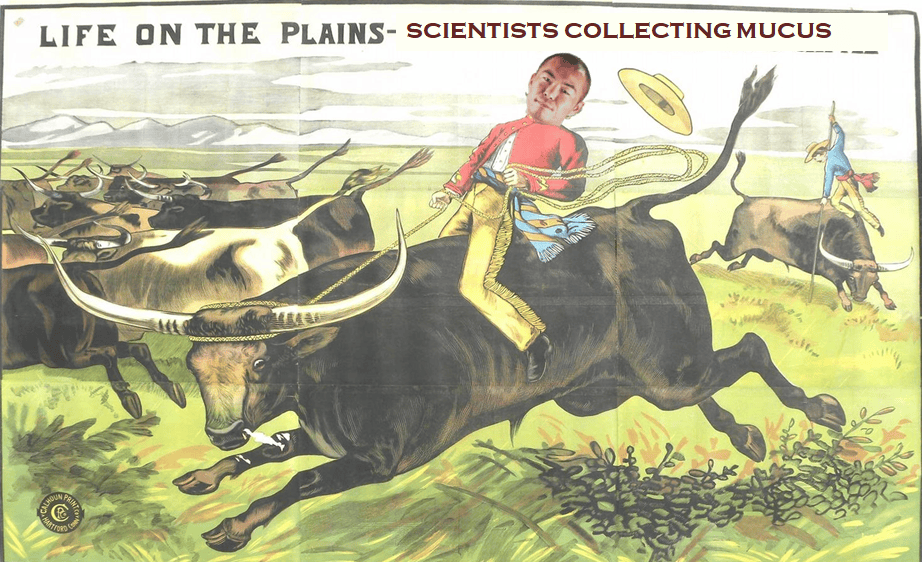

The Uppsala University in Sweden has to process yet another case of research misconduct. The Swedish National Board for Assessment of Research Misconduct (NPOF) found Hongji Yan, the inventor of cow saliva lubricant, guilty of research fraud. Together with his former host at at KTH Royal Institute of Technology in Stockholm – Thomas Crouzier, now out of Sweden as part-time associate professor at Technical University of Denmark (DTU) and biotech entrepreneur. Also guilty of research misconduct is a Ukrainian Swede: Illia Dobryden, former postdoc of Crouzier and now project leader at Research Institutes of Sweden (RISE) in Stockholm.
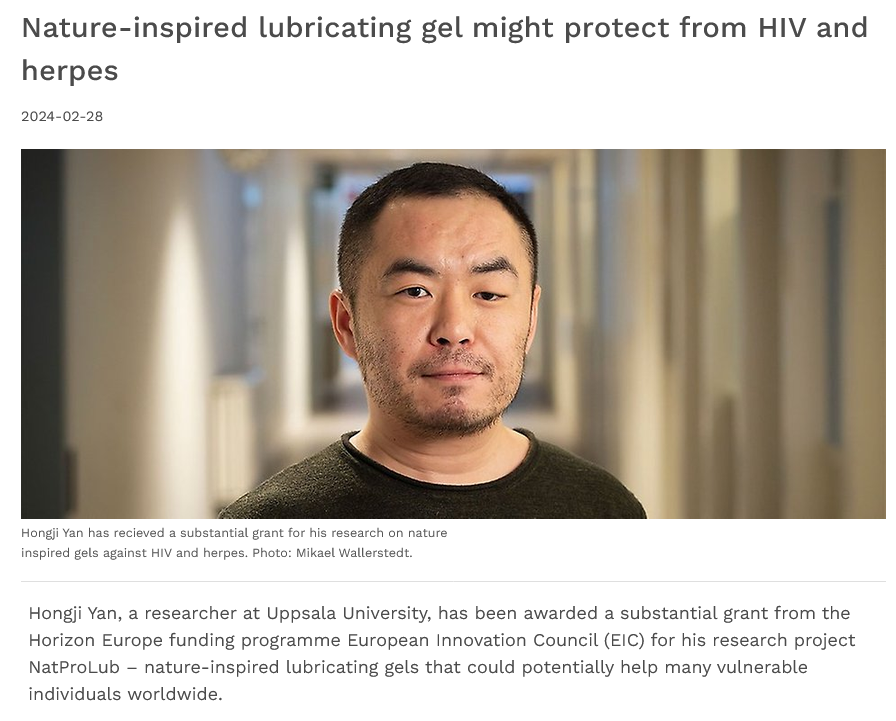
In February 2024, the Uppsala University celebrated Yan’s achievements with cow mucus:
“Hongji Yan, a researcher at Uppsala University, has been awarded a substantial grant from the Horizon Europe funding programme European Innovation Council (EIC) for his research project NatProLub – nature-inspired lubricating gels that could potentially help many vulnerable individuals worldwide.”
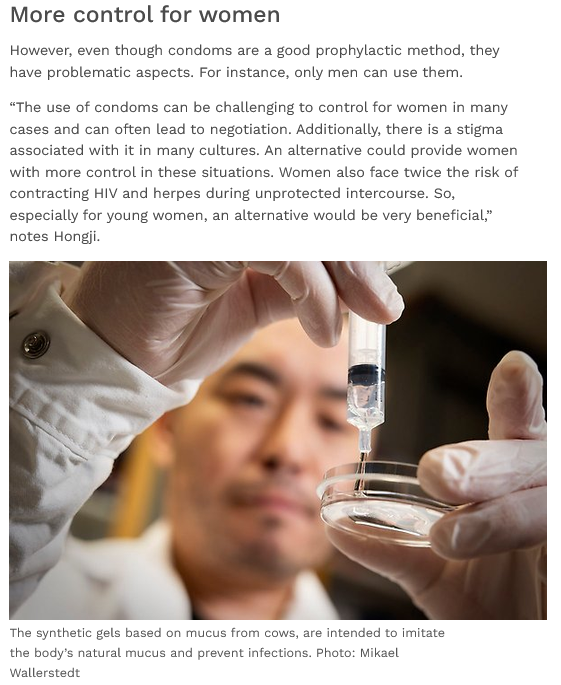
Yan’s promise is to develop lubricants from cow mucus which will protect from HIV and other infections those “young women” for whom “use of condoms can be challenging […] and can often lead to negotiation“.
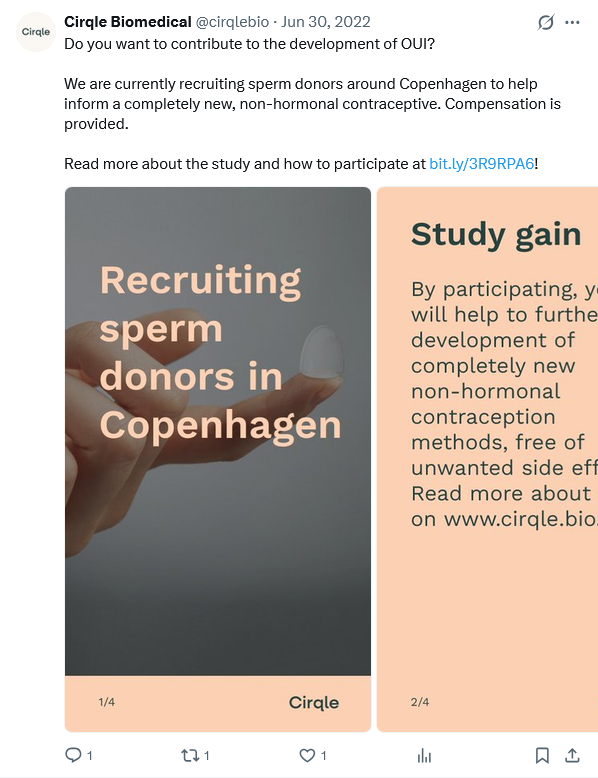
Yan started that work at Crouzier’s lab at KTH, and in fact, Crouzier co-owns a Copenhagen-based biotech company, “Cirqle Biomedical, which develops cow mucus-based contraceptive lubricant under the brand name ‘Oui‘. The company entered in 2022 a licence agreement with women’s healthcare company Organon, “entitled to receive a $10 million upfront payment, potential milestone payments of up to $360 million and royalties based on net sales“. The market entry for ‘Oui‘ was scheduled for 2025 (“Cirqle estimates that up to 37% of all women in the US who currently use a birth control product will switch to Cirqle’s Oui capsule“), but apparently the technology only worked in the controlled fraud environment.
Cirqle is currently the industry partner in the aforementioned international Consortium NatProLub (“Nature-inspired lubricants against sexually transmitted infections“). NatProLub is coordinated by Yan, and funded by the EU Commission with €3.7 Million from January 2024 until December 2027. Of that money, Uppsala University got €960k, while Crouzier’s company got €263k. Really, these fraud findings are not really helpful, I mean, what kind of final report will the NatProLubers submit to the EU Commission next year?
Yan did his PhD at Uppsala in 2016, went to KTH for a postdoc with Crouzier and returned after a brief stay at Karolinska Institutet in Stockholm and University of Turin in Italy to Uppsala University in early 2023. Both these institutions became members of NatProLub: Karolinska got €660k, University of Turin got €211k. KTH got much less: only €95k. Prior to that, the cow mucus lubricant was sponsored, among others, by the Swedish Foundation for Strategic Research (FORMAS), the Swedish Research Council, and the German Research Foundation (DFG).
We don’t know if these scholars tested their cow mucus lubricants at home and at conferences, but they quickly found other uses for it. Two years ago, Uppsala University informed that Yan’s hydrogels from cow mucus can be used for treatment of herniated discs in the spine (Wang et al 2024). That study by Yan, Crouzier and their Chinese colleagues involved a massive cheater from Portugal: Joao Mano, because such people always find each other.

Rui the Drunk
“we are talking about a dictator that systematically harassed students and other young researchers, created inhumane work conditions, forced them into scientific misconduct, systematically committed financial fraud with research money, and threatened and intimidated anyone that did not play by his rules.” – comment about Portugal’s most cited researcher

Update 1.10.2026: turns out, Mano is the co-founder and CSO of the Portuguese company Cellularis Biomodels, which is another NatProLub partner, receiving whooping €540k. Mano has 25 outrageously fraudulent papers on PubPeer, often as lead author.
And of course cow mucus can be used to cure cancer when turned into nanoparticles to deliver cancer medicine, as Yan, Crouzier and their German partner Oliver Lieleg proved (Kimna et al 2020). Lieleg then also became partner at NatBioLub Consortium, his TU Munich got €344k.
In October 2025, Yan still recruiting PhD students to his lab in Uppsala, they probably planned to make him full professor. His institutional website is still there, but he may have left already, or he will leave before January 2028 for sure.
I was only one of the notifiers of NPOF in the Yan case, in the context of my reporting in October 2025 Shorts. Another notifier was a reader of my site, under the assumed name “Leslie B. Knope”. Interestingly, yet another official notifier was the KTH. One can imagine that Crouzier didn’t leave KTH and Sweden in September 2023 entirely on his own accord, but hey – three months later he found a part-time job at DTU, and in Denmark, nobody cares about such things like research misconduct. Ask Christian Sonne, or this gentleman:

Kristian Helin gets the perfect job
ICR London has a new director. The Great Dane Kristian Helin is the perfect successor to continue the ideological line of fictional cancer research.
This is the NPOF report:
I made a machine-translation with Google. This is the decision:
“The Board for Assessment of Research Misconduct (hereinafter the Board) decides that Hongji Yan, Thomas Crouzier and Illia Dobryden are guilty of research misconduct.
The Board decides that Lars Björndahl, Matthew Blakeley, Per Martin Claesson, Yolanda Hedberg, Mia Phillipson, Ulrike Schimpf, Cédric Seignez and Xueying Zhong are not guilty of research misconduct.”
What luck indeed for professor Mia Phillipson, Yan’s current host at Uppsala and key partner in NatProLub. Do they still complement each other?
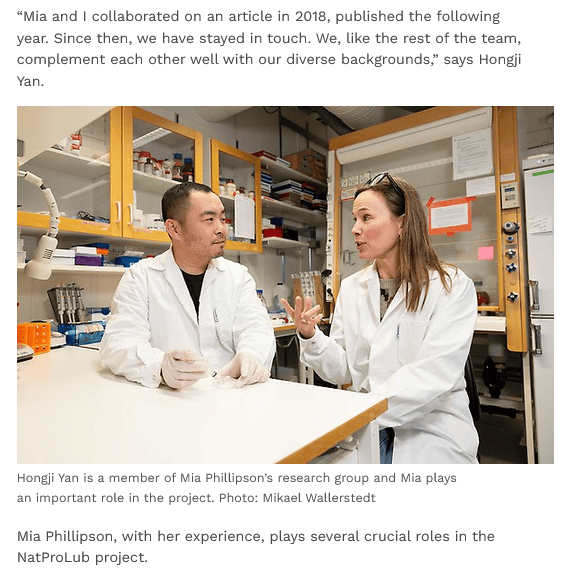
““Mia and I collaborated on an article in 2018, published the following year. Since then, we have stayed in touch. We, like the rest of the team, complement each other well with our diverse backgrounds,” says Hongji Yan.” (uu.se)
I number the investigated publications as NPOF did. The first paper is done in China, Yan’s listed affiliation is only Harbin Institute of Technology, even though he was already enlisted as PhD student in Uppsala.
- Hongji Yan , Song Zhang , Jin He , Yanbin Yin , Xiumei Wang , Xiongbiao Chen , Fuzhai Cui , Yu Li , Yongzhan Nie , Weiming Tian Self-assembled monolayers with different chemical group substrates for the study of MCF-7 breast cancer cell line behavior Biomedical Materials (2013) doi: 10.1088/1748-6041/8/3/035008

Tephroseris phaeantha: “Figure 8, panels C and D are identical.”
In July 2025, the IOP journal announced on PubPeer to be “investigating further in line with COPE guidelines“. In November 2025, Yan announced to have “contacted the journal to publish an erratum“. No correction was published though, also IOP investigation led nowhere. NPOF didn’t investigate the paper because it’s older than 10 years.
Number 2 was also not considered, being just above the 10 year statute of limitations. The authors include Karolinska’s professor Hong Qian, Yan’s PhD thesis co-supervisor, Jöns Hilborn, his other co-supervisor and now emeritus professor in Uppsala, and another Uppsala professor, Oommen Varghese:
- Hongji Yan , Oommen P. Oommen , Di Yu , Jöns Hilborn , Hong Qian , Oommen P. Varghese Chondroitin Sulfate‐Coated DNA‐Nanoplexes Enhance Transfection Efficiency by Controlling Plasmid Release from Endosomes: A New Insight into Modulating Nonviral Gene Transfection Advanced Functional Materials (2015) doi: 10.1002/adfm.201500695

In November 2025, Yan got this paper corrected: “In Figure 4 of the manuscript, the AFM images of pDNA/PEI, pDNA/PEI/CS were duplicated by mistake.”
For paper Nr 3, Yan and his colleague at of Harbin Institute of Technology, Weiming Tian, made a lubricant from the naked mole rat:
- Yufang Zhao , Shupei Qiao , Xiaolu Hou , Hui Tian , Shuai Deng , Kangruo Ye , Yongzhan Nie , Xiongbiao Chen , Hongji Yan , Weiming Tian Bioengineered tumor microenvironments with naked mole rats high-molecular-weight hyaluronan induces apoptosis in breast cancer cells Oncogene (2019) doi: 10.1038/s41388-019-0719-4


In June 2025, Tian announced to publish a Correction, which appeared on 24 July 2025 but left out the problems with Fig 3 which Tian regretted on PubPeer, promising “to address this issue and ensure the necessary corrections are made“. No second correction was published, so we stick with the first, which addressed “a figure compilation error” in Fig 4c and “improperly selected specimens” in Fig 8a-b. It also contained this strange sentence:
“I confirm that this correction does not affect the scientific conclusions of this manuscript and apologize to the journal and readers for this mistake.”
“I confirm“? The paper has 10 authors.
NPOF however was not convinced by the correction, it decided that it “shows a different result than what it claims to show in the article“, and: “Results have therefore been changed and omitted without justification, which constitutes falsification“. Worse:
“The fact that the figure material has been partially falsified limits the replicability of the research results. It is a scientific cornerstone and ensures the reliability of the research. When results are not replicable, it risks damaging trust in the research.
The fact that the researchers involved in the Board’s review have stated that the falsified figures have been corrected and do not change the scientific conclusions of the articles does not affect the Board’s assessment of the seriousness of the deviation. Dishonesty can occur in all parts of the research process. There is no requirement that the results or what the research shows should have been influenced. In addition, the incorrect figures represent research results that the authors themselves considered important enough to be presented in scientific articles. The Board can further note that corrections were sent to the journals only after the researchers were made aware of the errors by the person(s) who published the suspicions and after the matter was reported to the Board.”
If only Diana Spiegelberg had AI-based tools…
“research misconduct can occur at any stage of the research process and that there is no requirement for the results or the findings of the research to have been affected. Furthermore, the incorrect images constitute precisely those research results which the authors themselves considered important enough to be presented in scientific articles.” – NPOF
And now, we finally see a paper with Yan’s respective hosts at KTH and Uppsala, Crouzier and Phillipson, plus their German partner Lieleg and his former postdoc, now group leader Benjamin Winkeljann.
- Hongji Yan , Cédric Seignez , Morgan Hjorth , Benjamin Winkeljann , Matthew Blakeley , Oliver Lieleg , Mia Phillipson , Thomas Crouzier Immune‐Informed Mucin Hydrogels Evade Fibrotic Foreign Body Response In Vivo Advanced Functional Materials (2019) doi: 10.1002/adfm.201902581

Crouzier explained on PubPeer in October 2025 that the image “was inadvertently duplicated from the main figure, with only a minor contrast adjustment“, but “this error does not affect the scientific interpretation of the data or the conclusions presented in the manuscript.” The authors and Wiley then decided not to publish a correction.
NPOF decided however: “Results have therefore been altered and excluded without justification, which constitutes falsification“.
By the way: in that mucus paper, at least Crouzier lied when declaring “The authors declare no conflict of interest“. His mucus company Cirqle Bio was founded in 2016:

Nr 5 is another paper with Weiming Tian, Yan used the affiliations of KTH and Karolinska:
- Shupei Qiao , Yufang Zhao , Hui Tian , Ishara Manike , Liang Ma , Hongji Yan, Weiming Tian 3D Co-cultured Endothelial Cells and Monocytes Promoted Cancer Stem Cells’ Stemness and Malignancy ACS Applied Bio Materials (2021) doi: 10.1021/acsabm.0c00927


Tian explained on PubPeer in June 2025:
“Due to the large number of immunofluorescence images, there were copy-and-paste errors. However, upon reviewing the original data, these errors do not affect the conclusions of this study. We will contact the editorial office as soon as possible to make corrections.“
NPOF decided: “Results have therefore been altered and omitted without justification, which constitutes falsification“.
No correction was published though, and not because the authors didn’t try:
“The corrected figures, which Hongji Yan appends to his opinion and which he and the other authors have sent in a correction to the journal, introduce new errors and replace images that were not suspected of forgery in the original article without commenting on this. It does not require special expertise to see that several of the images in the corrected figures show the same cells as images in the original article or that previous images, which were not suspected of forgery, have been replaced.
After the Board pointed out that the corrected figures introduced new errors and replaced images that were not suspected of forgery, Hongji Yan, after discussion with a person in the Chinese laboratory where the experiments were conducted and the figures were created, sent additional corrected versions of figures 3, 4 and 5, both to the Board and to the journal. In these corrected figures, new errors have been introduced, where, for example, images of the same cell are claimed to show different cells. Some of the images that were replaced in the previous correction have been changed back in the latest correction to the images that were not suspected of forgery in the article.”
Meaning: Yan sent a fraudulent correction, got caught, and sent an even more fraudulent correction. NPOF found that “that Hongji Yan acted intentionally in his work on the corrections to Article 5“.

Swedish rector Anders Hagfeldt pronounced innocent of papermilling
“The board’s conclusion is therefore that the deviations regarding figure 2b and 2c in article 1 constitute serious deviations from good research practice”
Nr 6, with Crouzier, Lieleg and we finally meet Illia Dobryden, then at KTH:
- Hongji Yan , Morgan Hjorth , Benjamin Winkeljann , Illia Dobryden , Oliver Lieleg , Thomas Crouzier Glyco-Modification of Mucin Hydrogels to Investigate Their Immune Activity ACS Applied Materials & Interfaces (2020) doi: 10.1021/acsami.0c03645


sample values to yield the ILTRA values).
Through a similar strategy of adding or
subtracting a precise humber from each
sample: Donor 3 tMuc gel data (orange
circles) are more similar than expected for
all four data plots. Y-axis scales are
different between all four data plots. The
Donor 1 tMuc gel data are more similar
than expected in ILTRA and IL1B (red box)
and in CXCL8 and IL10 (pink box).”
Crouzier replied in October 2025 to explain the duplication in Figure 8 “as a result of an inadvertent copy–paste error” which “does not significantly affect the scientific conclusions of the manuscript“, and he said something similar about Figure S3, which “does not affect the analyses or the results presented in Figure 3“. Regarding the values in Fig 6, he stated that he “no reason to believe that they were artificial or that there is a factorial relationship between them“. But he admitted “a copy–paste error during figure assembly” in Fig 9, but warned that the “discussion of the figure in the manuscript aligns with the corrected version, and therefore, the scientific message and conclusions remain unchanged.” A huge Correction was published in January 2026, which reiterated:
“In the original publication, a duplication error occurred during figure assembly, resulting in the use of the same microscopy images to represent the tissue culture polystyrene (TCP) condition for both day 1 (D1) and day 3 (D3) in Figure 8. […] This error does not alter the scientific conclusions of the manuscript, as Figure 8 was included solely to illustrate the general morphology […]
In Figure 9, the gene expression data presented for IL1RN in donor 2 was duplicated with the data for VEGFA due to a copy–paste error during the figure assembly process. […] The discussion of the figure in the manuscript aligns with the corrected version, and as a result, the scientific message and conclusions of the study are unchanged. […]
In the Supporting Information, Figure S3, which presents the atomic force microscopy (AFM) maps illustrating nanomechanical characterization, contained a duplication error. […] The quantitative nanomechanical analyses presented in the manuscript were performed correctly using the image-processed raw data and independently of the figure layout. Therefore, the study’s conclusions regarding the mechanical properties of the mucin-based hydrogels remain valid.”
The Correction however was fraudulent. It stealthily replaced three additional panels without explanation, and added new duplicated datasets:

NPOF considered the fake paper and its fake correction, and decided that “results have been altered and omitted without justification, which constitutes falsification“. Again, Yan, but also Crouzier, were caught red-handed:
“Hongji Yan presented four different versions of Figure 9 in the article and during the investigation as the “correct” figure. One version was published in the original article, one version was sent to the journal and published as a correction, and two more versions were shared with the Board. […]
Thomas Crouzier has been involved in the development of the corrected versions of Figure 9 by reviewing the corrected figures produced by Hongji Yan. […] The fact that there is a difference between the version of figure 9 that he sends to the committee and the version of figure 9 that is published in the journal shows that he had to make several changes to correct errors.”
NPOF found that both Yan and Crouzier “acted intentionally during the work on the correction to article 6.“
Dobryden was found guilty of research misconduct based on one instance in this paper. Even though NPOF decided that he “had a limited role in the research presented in the articles“, it was found that:
“Illia Dobryden has acted grossly negligently when he did not discover the incorrect image in Figure S3A when reviewing the manuscript.”
Kostya Ostrikov’s russo-iranian false friends
“Let me assure you that I totally condemn the war in Ukraine, and at the very least because my old mother is in Kharkiv and she suffers a lot… I am trying to help my colleagues and friends from Ukraine whichever way I can…” – Professor Kostya “Ken” Ostrikov
This is paper Nr 7, featuring Crouzier and Tian:
- Juzhi Zhao , Ruiqi Wang , Jinyu Zhang , Yufang Zhao , Shupei Qiao , Thomas Crouzier , Hongji Yan , Weiming Tian A novel 4D cell culture mimicking stomach peristalsis altered gastric cancer spheroids growth and malignance Biofabrication (2021) doi: 10.1088/1758-5090/abf6bf

Arthothelium galapagoense: “Overlap between two microscopy images in figure 3, note that these are different experimental conditions.”
In June 2025, Tian announced on PubPeer that the “related pictures are indeed misused” and to have “contacted the editorial office for a correction.” The publisher IOP announced to be “aware of this matter and […] investigating further in line with COPE guidelines“. The IOP investigation resulted in exactly nothing so far, unlike the NPOF investigation, which found:
“Results have therefore been altered and omitted without justification, which constitutes falsification”
Nr 8 was also meant to be corrected by Tian, because the “related pictures are indeed misused“:
- Bongsong Zhang , Juzhi Zhao , Hongji Yan, Yufang Zhao , Hui Tian , Cao Wang , Ruiqi Wang , Jiaming Jin , Yue Chen , Chaofan Yang , Chunfeng LI , Yanwen Jiao , Kaipeng Zheng , Fuxing Zhu , Weiming Tian A novel nano delivery system targeting different stages of osteoclasts Biomaterials Science (2022) doi: 10.1039/d2bm00076h


The paper not further corrections were published by RSC. In June 2026, Tian posted on PubPeer what looked like the text of the submitted and unpublished correction, while referencing an old correction from 2024 for a misspelled name of an author:
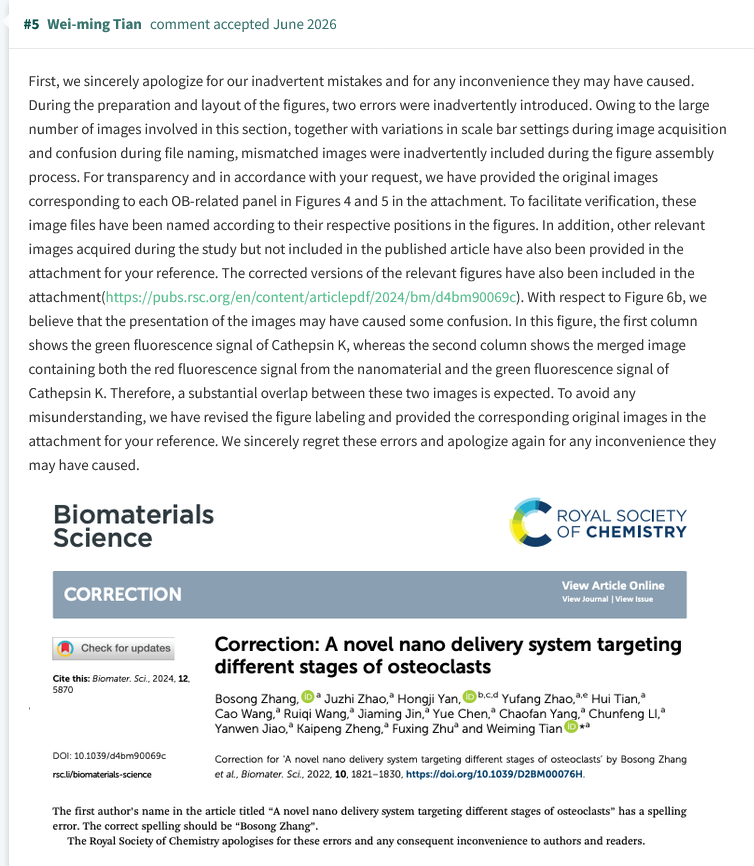
Whether or not RSC will eventually publish that correction, NPOF’s opinion is:
“Results have therefore been altered and omitted without justification, which constitutes falsification”
Unlike the papers above, paper Nr 9 did not feature in my October 2025 Shorts coverage. That’s because it wasn’t even flagged on PubPeer! I made an illustration of the whistleblower concerns from the NPOF report.
- Hongji Yan , Cristina Chircov , Xueying Zhong , Benjamin Winkeljann , Illia Dobryden , Harriet Elisabeth Nilsson , Oliver Lieleg , Per Martin Claesson , Yolanda Hedberg , Thomas Crouzier Reversible Condensation of Mucins into Nanoparticles Langmuir (2018) doi: 10.1021/acs.langmuir.8b02190
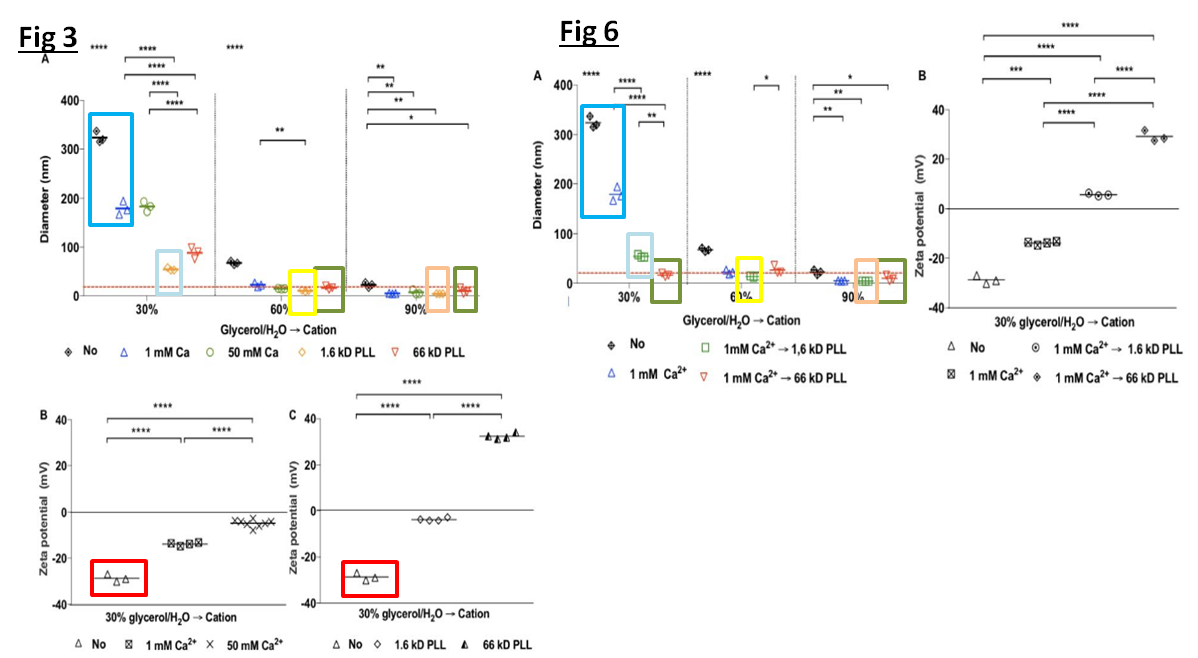
The authors were able to explain some of the duplicated values, but NPOF found discrepancies between “the values in the Excel file and the raw data files that the Board has reviewed“, and also, “The authors have not been able to present any form of raw data or other data for the data points […] in Figure 6A“. Hence:
“The results have therefore been altered and omitted without justification, which constitutes falsification”
Yan and Crouzier were found to have “acted grossly negligently“, yet Dobryden was found not to be guilty. Dobryden’s then-boss at KTH, professor Per Martin Claesson also “did not act with gross negligence“.
In bed with Hari and Aruna
Hari Shanker & Aruna, a YouTube influencer couple in Sweden. With or without Rudolph the Red-Faced Liar. And with Anca and Dafin, two totally innocent and upright Romanians. Pushing pig brain juice an SS Nazi invented. You won’t find a better story for Christmas!
Paper Nr 10 was flagged on PubPeer in August 2025, Tian is again last author:
- Evgeny Kozhevnikov , Shupei Qiao , Fengtong Han , Wei Yan , Yufang Zhao , Xiaolu Hou , Alaka Acharya , Yijun Shen , Hui Tian , Haijiao Zhang , Xiongbiao Chen , Yuanchuan Zheng , Hongji Yan , Mian Guo, Weiming Tian A dual-transduction-integrated biosensing system to examine the 3D cell-culture for bone regeneration Biosensors and Bioelectronics (2019) doi: 10.1016/j.bios.2019.111481


A Corrigendum was published by Elsevier in January 2026, which basically consisted of this text with figures and figure legends:
“The authors regret < Correction#1: The incorrect Fig. 5 b has been replaced with the new, correct one. The other elements of Fig. 5 remained unchanged. […]
Correction#2: The incorrect Fig. 6 a has been replaced with the new, correct one. […]
Correction#3: The incorrect Figure S2b a has been replaced with the new, correct one. […]
The authors would like to apologise for any inconvenience caused.
This error does not affect the original results and conclusions of this study.”
Elsevier has its views, NPOF differs:
“Results have therefore been changed and omitted without justification, which constitutes falsification”
Linköping investigation: Tiwari trips over Sharma’s fraud
The last act of the Ashutosh Tiwari travesty at Linköping University (LiU) in Sweden took place. Tiwari, the fake professor and master of predatory conferences, tripped only over his vanity of gift co-authorship on 3 papers by his Allahabad mate Prashant Sharma, a shameless nanotechnology data faker with presently 26 retractions.
Paper Nr 11 was also not flagged on PubPeer (or maybe the evidence failed moderation). It is a chitosan study on sperm, hence the involvement of the sperm expert Lars Björndahl from Karolinska. Based on the NPOF report, I asked ChatGPT to find the duplicate values in Table S2:
- Ulrike Schimpf , Gilai Nachmann , Stephane Trombotto , Petr Houska , Hongji Yan , Lars Björndahl , Thomas Crouzier Assessment of Oligo-Chitosan Biocompatibility toward Human Spermatozoa ACS Applied Materials & Interfaces (2019) doi: 10.1021/acsami.9b17605

NPOF report: “Fabrication in Table S2 in Supporting Information. The applicant suspects that data for measured pH in samples has been fabricated, as the proportion values with the same stated uncertainty (±0.01) are greater than what is expects. The complainant also bases the suspicion on the same values repeated in the table.”
This is the rare case where authors weaselled themselves out:
“The Board finds this explanation credible and therefore considers that the suspicions of falsification in Table S2 in Supporting Information are unfounded.”
Paper Nr 12 was not investigated by NPOF as no allegation of data forgery was raised. But it was flagged for a possible ethics breach.
- Hongji Yan , Marcus Melin , Kun Jiang , Martin Trossbach , Bharathesh Badadamath , Krzysztof Langer , Benjamin Winkeljann , Oliver Lieleg , Jaan Hong , Haakan N. Joensson , Thomas Crouzier Immune‐Modulating Mucin Hydrogel Microdroplets for the Encapsulation of Cell and Microtissue Advanced Functional Materials (2021) doi: 10.1002/adfm.202105967

Tuoba laticeps: “The material and methods section of this paper states that blood was drawn from healthy volunteers. […] This manuscript does not mention any ethical permit number.”
Crouzier replied in October 2025:
“The ethical approval information was inadvertently omitted from the manuscript. Informed consent was obtained from all blood donors prior to the experiment. The study was conducted in full compliance with Swedish legislation and the ethical standards of Uppsala University. Ethical approval was granted by the Regional Ethics Committee under reference number 2008/264.”
“They happened before I joined Uppsala University”
“There are therefore grounds for suspecting that there have been such serious deviations from good research practice that the matter should be referred to the National Board for Assessment of Research Misconduct for further investigation.”
Also paper Nr 13 wasn’t flagged on PubPeer before, it is about nanoparticles as cure for Parkinson’s. Also here, the authors were lucky:
- Yue Chen , Bosong Zhang , Lina Yu , Jinyu Zhang , Yufang Zhao , Lifen Yao , Hongji Yan , Weiming Tian A novel nanoparticle system targeting damaged mitochondria for the treatment of Parkinson’s disease Biomaterials Advances (2022) doi: 10.1016/j.bioadv.2022.212876

NPOF report: “Forgery in Figure 9. The complainant suspects that the images showing Control and CCCP for R6G are identical. The reporter also suspects that the images are manipulated, when one would expect some signal from light scattered in the cells.”
NPOF believed their dark mystery:
“There is no reason to suspect that the Control and CCCP under R6G panels in the article are counterfeit.”
The last paper (Nr 14) was again made in China:
- Dachuan Liu , Li Dong , Huan Wang , Jianzhong Bai , Jiaxu Shi , Weicheng Chen , Hongji Yan , Bin Li , Heng Sun , Song Chen Amorphous iron-calcium phosphate-mediated biomineralized scaffolds for vascularized bone regeneration Materials & Design (2023) doi: 10.1016/j.matdes.2023.112413

Now, no journal and no university would investigate such concerns. But NPOF did:
“The image showing GAPHD in Figure 3F is from a different membrane than OPN in the same figure. This means that the data and results have been altered and omitted without justification, which constitutes falsification”
During the investigation, Yan of course denied that there was any “deliberate forgery” or “gross negligence”, anywhere. And that corrections were submitted and conclusions unaffected. For that paper Nr 14, he explained:
“The student, who performed the experiments, was supervised by the Chinese co-author and the group leader, but did not understand the purpose of the internal control or how figures should be presented.”
About his duplicated images, Yan stated:
“He has difficulty detecting image duplicates with the naked eye, as he is not an expert in image analysis and has limited vision in his left eye.”
Also Crouzier insisted that the issues in his publications with Yan do “not affect the scientific results or the overall conclusions.“. But to be on the safe side, he occasionally blamed Yan and also Dobryden, who “produced the original images”. Dobryden in turn told NPOF that he “supplied correct images to the corresponding authors Hongji Yan and Thomas Crouzier.“. Others denied the responsibility, Phillipson blamed Yan outright.
NPOF investigated the responsibilities of Swedish-affiliated researchers only, with the exception of advanced-level students. Also Harriet Elisabeth Nilsson wasn’t investigating because she is deceased.
I wrote to the main authors, but nobody replied.
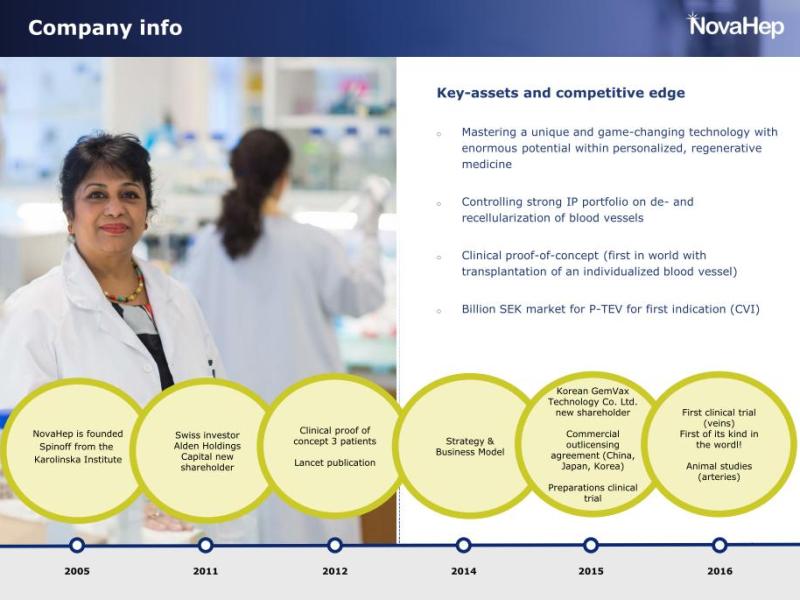
Indestructible Sumitran-Holgersson: Commit misconduct on patients, get EU funding to continue
Swedish start-up Verigraft received €2.2 Million from European Union, to further develop regenerative medicine technology tainted by research misconduct and patient abuse. The founder of this very company: Suchitra Sumitran-Holgersson. A clinical trial is scheduled based on debunked science of recellurising dead blood vessel grafts.
This is of course by far not the only case where EU money was wasted on fraud. But everywhere else, fraudsters who bring big EU money always get whitewashed, never found guilty of anything. Not in Sweden though.
Donate!
If you are interested to support my work, you can leave here a small tip of $5. Or several of small tips, just increase the amount as you like (2x=€10; 5x=€25). Your generous patronage of my journalism will be most appreciated!
€5.00


It seems that NPOF often finds Swedes not guilty, while only researchers from immigrant backgrounds are found guilty….
LikeLike
What about my article from Monday, same university?
Diana Spiegelberg is Swedish.
LikeLike
You are right!
LikeLike
The website promoting their EU research (https://www.eunatprolub.eu/) seems defunct now. Now Wayback Archive, unfortunately. But Gemini still remembers:
http://www.eunatprolub.eu is the official website for NatProLub, a European research initiative focused on developing nature-inspired prophylactic lubricants against HIV-1 and HSV-2
…
Coordination: The project is coordinated by Dr. Hongji Yan and operates as a collaborative consortium bringing together premier academic research groups and industry partners across 5 EU nations.
LikeLiked by 1 person
Great work and good to see that NPOF is willing to investigate complicated and/or extensive complaints. Also good to see that NPOF is able to merge complaints / concerns from different parties. The situation in The Netherlands is different. VU Amsterdam has recently informed me that this university is unwilling to investigate lengthy complaints about complicated issues, in this case a lengthy complaint against Ronald Meester, a mathematician and a covid contrarian, about (1) many issues in a report about nitrogen deposition, see https://www.naturetoday.com/intl/nl/nature-reports/message/?msg=34671 for an incomplete overview of these issues [in Dutch], and (2) many issues in his writings about vaccines / COVID-19.
LikeLike
Recent phonecalls with the IT Service Desk of VU Amsterdam, a university with strong christian roots, has also revealed that this university had blocked for already some years ago my e-mail account, apparently as a response to my repeated requests from that time to get access to data from several publications of the same Ronald Meester, see https://pubpeer.com/publications/907A5AB72AF2401C38C1749E387167 for an incomplete overview. I would like to note that several others, including a retired mathematician from UvA, the public university of Amsterdam, have also asked Ronald Meester to give them access to these data, but that no one has been able to get them.
LikeLike
I think the cooperation of João Mano with Hongji Yan is deeper than just paper. There is a portuguese partner on NatProLub: CELLULARIS BIOMODELS LDA, a “Private for-profit entity (excluding Higher or Secondary Education Establishments)” that has a budget of € 539 552,50, second only to the Swedish partner. The project is mentioned on their website
João Mano is listed as CSO & Co-Founder
Off course nothing will be investigated in Portugal.
LikeLike
Thank you, I updated the article!
LikeLike
As found by a reader:

https://lnkd.in/p/etiizcKD
LikeLike
An update on the number of papers on PubPeer concerning Mano: it’s 31, not 25 https://pubpeer.com/search?q=%22Jo%C3%A3o+F.+Mano%22OR%22Jo%C3%A3o+Filipe+Mano%22OR%22J.+F.+Mano%22OR%22J.F.+Mano%22
Still, this megacheater has been showered with money from the EU, not just NatProLub. A lot of this money has been channelled through two companies under his control: Metatissue (https://metatissue.com/) and Cellularis Biomodels (https://cellularisbiomodels.com/). If you check their websites, most of the people working there are PhD students. The FCT (Portuguese Foundation for Science and Technology) has been running a programme of PhD grants outside the academic environment, and setting up these companies probably makes it easier to get young people working for him. He may also be abusing the free labour of FCT-funded PhD students through the infamous 5+1 rule, which he apparently adapted from the system used at the infamous King Reis’s i3Bs, tying these young people to these scam-science enterprises until they’ve churned out five papers plus a review. To me, this looks very much like a Portuguese-style paper mill.
But Mano seems to be unstoppable. Recently, he got a €10 million Synergy Grant from the European Research Council (ERC) for a project called RODIN – Cell-mediated Sculptable Living Platforms (https://cordis.europa.eu/project/id/101224324). Pretty good for a known fraudster and abuser.
But Portugal is not like Sweden. Officially, there is no research fraud here, so no worries. And don’t expect the free press to push the issue. Newspapers only care about reporting the wonders supposedly being produced by the Portuguese R&D system, while these guys are still being worshipped… and if they get big money from the EU, nobody will question them.
LikeLike