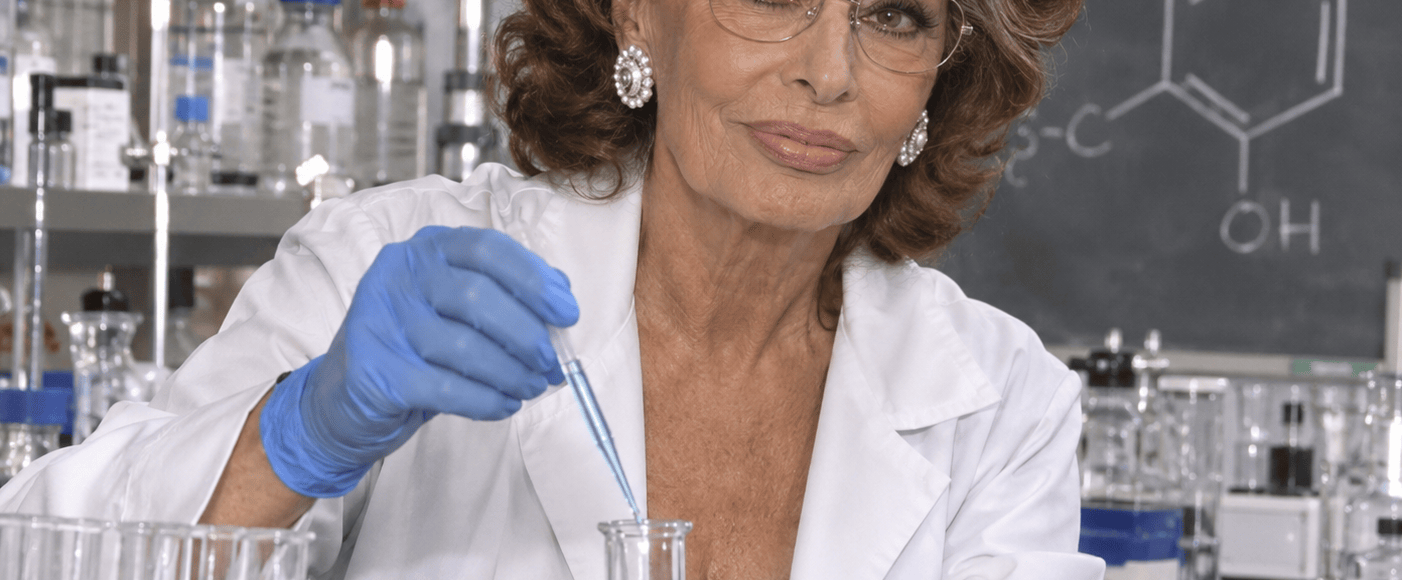

An AI revolution in science is happening. The pseudonymous sleuth Dayo Maor discovered that Large Language Models (LLM) are indeed going to change everything. The times when chemistry researchers spent hours fabricating fake spectra by meticulously stitching bits and pieces in graphics software are coming to an end. AI tools, especially advanced and trained ones, can be used to generate perfect research data, even raw data, out of thin air. On the other hand, AI can be also trained to find the tiniest of duplications inside otherwise innocuous spectra. Who will win this race, the papermills or the sleuths?
Meet the central hero of this story: Ali Esfandiar, a shooting star of graphene nanotechnology, and group leader at the Max Planck Institute for Polymer Research (MPIP) in Mainz, Germany.
After completing his PhD studies at Sharif University of Technology in his home country Iran, Esfandiar worked at the National Graphene Institute in Manchester, UK, for the Nobel Prize laureate Sir Andre Geim. There, Esfandiar published together with Geim’s fellow Nobelist and founding director Sir Kostya Novoselov and with his protégé and now professor at the same University of Manchester, Rahul Nair. The study Esfandiar et al 2019 features Geim and Nair as coauthors, another Science paper, Fumalaggi, Esfandiar et al 2018, features both Geim and Novoselov as last authors. Then there was Geim’s Nature paper Radha, Esfandiar et al 2016, and other Esfandiar publications by Geim and Novoselov in Science, Nature etc. Our report however might raise doubts on the trustworthiness of these impactful studies.
One clue is that Nair and Novoselov both put their names on papermill trash, which you can read about in September 2026 Shorts. Both Geim and Novoselov hang out in predatory conferences, specifically at FLOGEN, as you can read in the Coda of the article below:

USERN-friendly Nobelists
Nobel Prize laureates and predatory conferences – why such mutual attraction?

But this story is about Esfandiar.
In 2018, Esfandiar returned to his alma mater in Iran, before going in 2023 to École Normale Supérieure in Paris, and in 2024 to MPIP, where he recently started his own group “Iontronics of Confined Liquids” in the department of Mischa Bonn. At the same time, Esfandiar remains listed by the Department of Physics of Sharif University of Technology as associate professor:
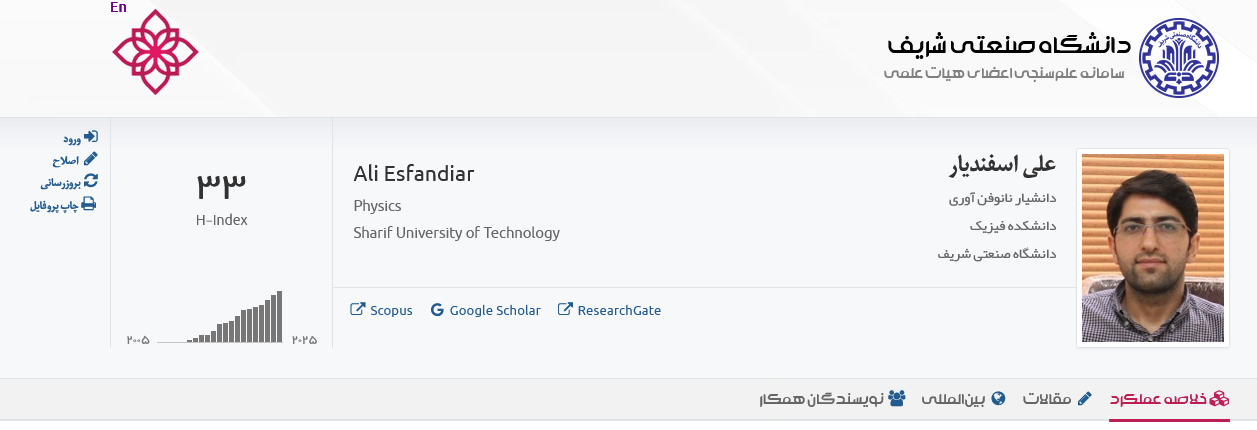
Now, we must not speculate what exactly Esfandiar was or still is doing at his Sharif University of Technology and whether it may or may not be relevant to the German national security. Iran Watch informs us that this university cooperates with Iran’s Ministry of Defense, and the ruling terror organisation, the Islamic Revolutionary Guard Corps (IRGC) and the IRGC Air Force. The Sharif University of Technology is involved with “military and ballistic missile-related projects for the Iranian government; provides support to entities involved in Iran’s military and in production and procurement for Iran’s ballistic missile program“, thus, anyone coming from their ranks is clearly our friend here in Europe, right?
The affair started with the sleuth flagging some of Esfandiar’s papers from Iran, which I then reported to MPIP. Here, he is corresponding author, his affiliation is Sharif University of Technology in Tehran:
Mehran Khansanami, Ali Esfandiar High flux and complete dyes removal from water by reduced graphene oxide laminate on Poly Vinylidene Fluoride/graphene oxide membranes Environmental Research (2021) DOI: 10.1016/j.envres.2021.111576

Esfandiar replied on PubPeer and suggested that the spectra were actually not identical: “Carbon’s low atomic number contributes to its relatively weak X-ray scattering, while the measurement sensitivity and instrumental resolution may limit the visibility of subtle differences“. He also announced “to synthesise fresh batches of both membranes and repeat the XRD measurements to assess reproducibility“. Some weeks later, he changed his tune and “identified an inadvertent error that occurred during data analyzing and figure preparation, which resulted in an incorrect trace appearing in the published figure.” Here is the new figure which will soon be published as Erratum, according to Esfandiar and Bonn:

Ali Esfandiar: “We have assessed that this correction does not alter the reported quantitative results or the principal scientific conclusions of the study. The original data and a full comparative analysis have been provided to the editor to support this assessment.”
These new spectra are likely AI-generated. This is how we know.
On this paper from Sharif University of Technology, Esfandiar’s coauthor is Mohadese Rastgoo-Deylami, a postdoc at University of Pennsylvania in USA, who also coauthored the paper Rastgoo-Deylami et al 2019 which contains ridiculous hand-drawn spectra.
Mohadese Rastgoo-Deylami, Ali Esfandiar High Energy Aqueous Rechargeable Nickel–Zinc Battery Employing Hierarchical NiV-LDH Nanosheet-Built Microspheres on Reduced Graphene Oxide ACS Applied Energy Materials (2021) DOI: 10.1021/acsaem.0c02894

Esfandiar provided on PubPeer this re-analysis using the presumed raw data, which allegedly proves that the spectra are not identical:

There will be more problematic papers, we will get to those. But first, this bizarre reaction I received from the MPIP’s Ombudsman, Professor Burkhard Duenweg, on 8 October 2026:
“you seem to misunderstand the role of Ombudspersons. Our job is NOT to investigate; due to the lack of expertise this would not give any useful results, but rather probably produce
output that is at best off-topic, and most likely plainly wrong and just ridiculous. Our job is rather more in the field of counseling, i.e. to discuss with the people who are involved: What are the general principles of Good Scientific Practice? How do these principles apply concretely in the case that is at hand? Can actions and procedures be improved to conform better to the established and accepted standards? This does not imply that there are no cases which DO require an investigation; however this is then done not by the Ombudsperson but rather an expert committee appointed by either the Acting Director, or a Vice President, or the President. I view the exchange between you and Dr. Esfandiar as similar to the exchange between authors and referees at a journal – the main difference however being that “Thallarcha lechrioleuca” has not been appointed by an editor but rather by himself. I presume you are in contact with “Thallarcha lechrioleuca”, who presumably on your side takes the role of the expert, such that in principle a scholarly dialogue should be possible. At journals it is good practice to first allow a constructive communication between the two involved parties,
and only involve an independent external judgment if things cannot be reconciled and settled directly. And I see no reason why we should not act similarly.Furthermore, I also think the dialogue is presently still far away from an irreconcilable situation. There is certainly no danger of suppression of evidence, as we are talking about published figures which are no longer under the control of Dr. Esfandiar and his collaborators. I personally have full trust in Dr. Esfandiar’s integrity; however my personal opinion should not count, but rather clear, objective, and understandable facts.“
This is so wrong on so many points that I decided to turn to other authorities. I chose not contact the MPIP scientific director Katharina Landfester, because she was my last employer back in 2014.
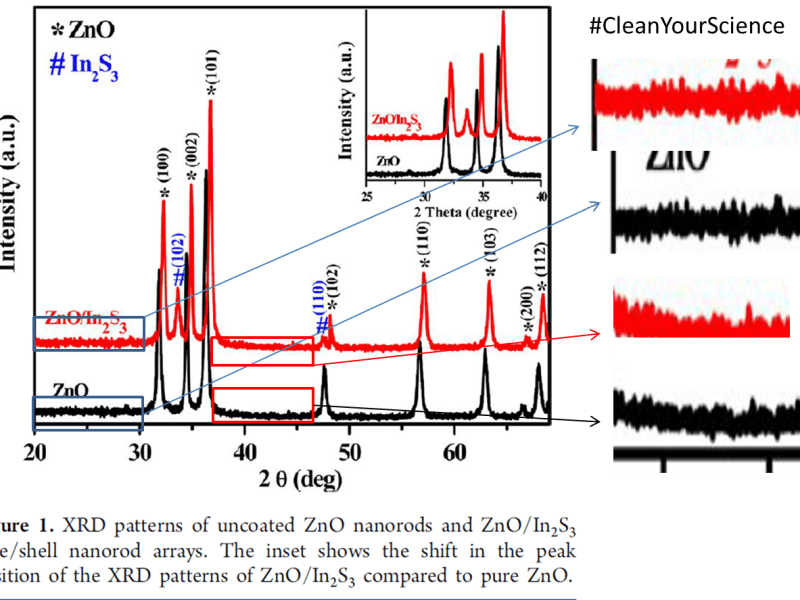
Fake spectra googling #CleanYourScience
This guest post invites you to join the hunt for fabricated data in your science field of interest. Use Google image search to #CleanYourScience!
Thus, I contacted Esfandiar’s boss Bonn and the central Ombudsman of the Max Planck Society, Anton Zensus, who announced to investigate. He also told me that “The institute director, Prof. Bonn, has taken over the review and will issue a factual statement on the allegations.“
On 23 October 2026, Bonn sent me this statement by Esfandiar, containing the latter’s replies to PubPeer criticisms with a comment that “The sending of this statement therefore does not mean that the examination of the outstanding points has been completed. The original data and a comprehensible representation of its processing are decisive.”
There, Esfandiar provided an even more convincing re-analysis of these spectra from Rastgoo-Deylami & Esfandiar 2021:
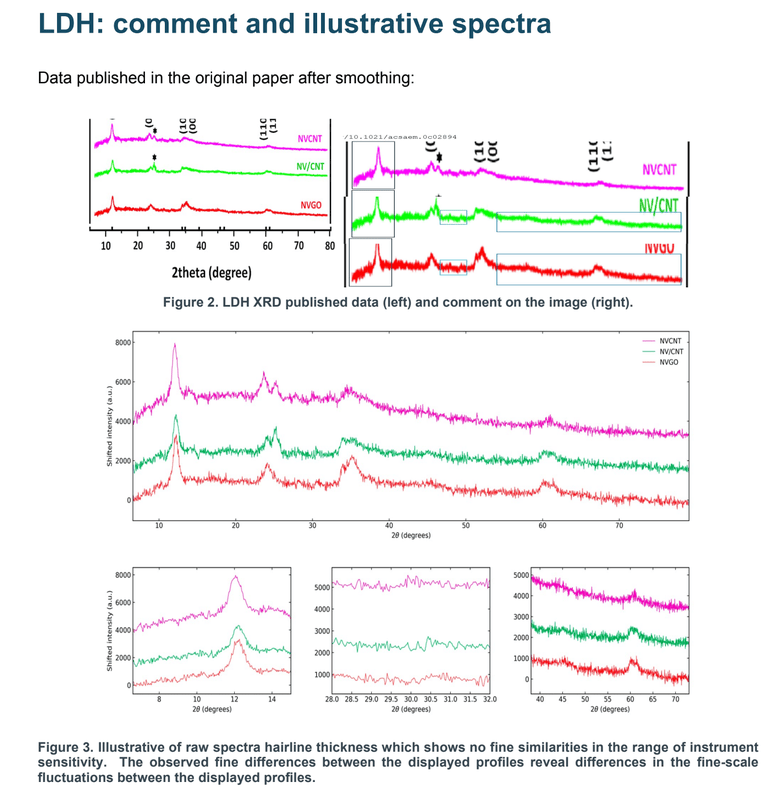
Ali Esfandiar: “Figure 3. Illustrative of raw spectra hairline thickness which shows no fine similarities in the range of instrument sensitivity. The observed fine differences between the displayed profiles reveal differences in the fine-scale fluctuations between the displayed profiles.”
See, false accusations on PubPeer, how shameful! Or so it seems. The sleuth found out that Claude AI delivers exactly this kind of stuff when prompted, here an example for these exact spectra:
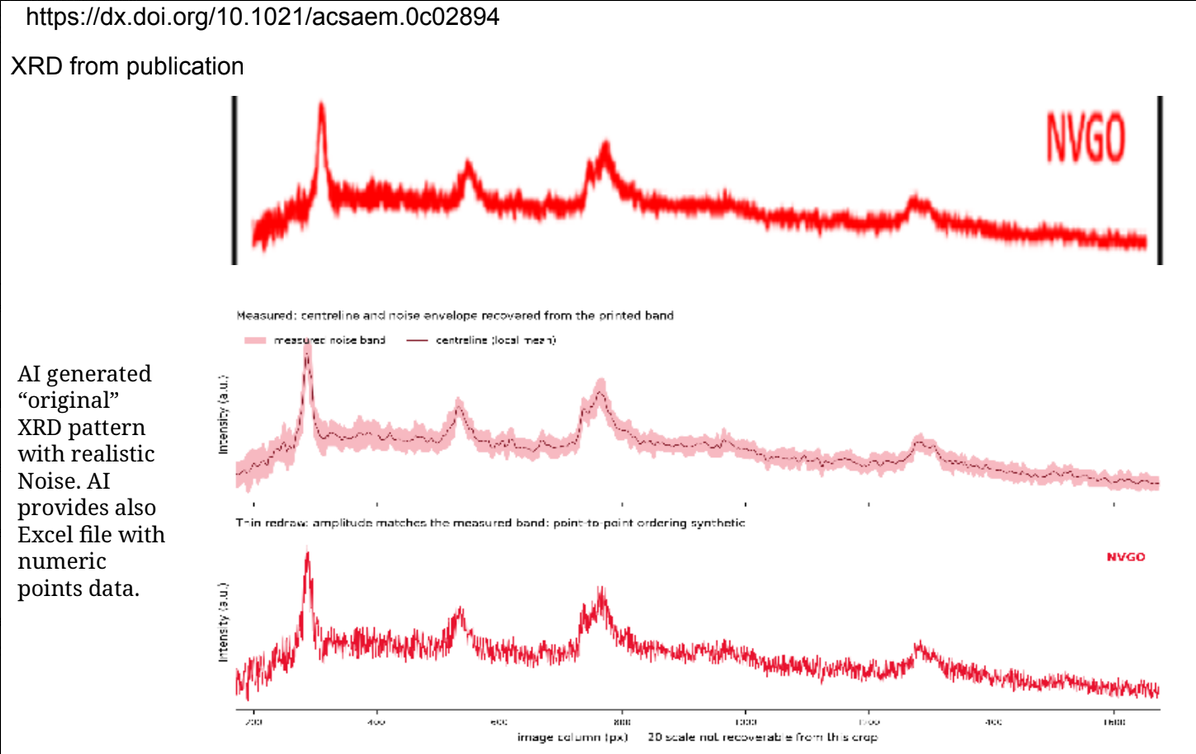
Gosh, what is more likely, that spectra look so identical by pure chance, or that someone caught red-handed prompted an LLM to generate similar spectra but with slightly different noise? Easy to find out: Esfandiar, who just declared to have reanalysed the raw data, must now deliver these original instrument files to his Max Planck Society investigators. Wait! Turns out, just days ago, the Americans and the Israelis bombed that IRGC-run university and the raw data it stored. Such a pity, but nothing can be salvaged or done now.

In international affairs and paper mills
Alexander Magazinov would like you to meet an Iranian scholar named Ali Akbar Velayati.

Unless… As the sleuth Dayo Maor told me:
“Asking for original files makes no sense as all “original” files can be generated in original machine format (e.g. binary raw files by Rigaku, Bruker or other diffractometer, specific format of spectrometers etc) with all metadata and time stamps. You only need one example file from diffractometer and AI generates any time stamp or other details. The files generated by this method can not be distinguished from true files physically recorded. I asked AI to generate binary diffractometer output file and to compare with true original. AI admitted it can not detect its own fake.
The same method can be used for any already published fakes: digitizing published pattern, then generating realistically looking noise and other technical details, generating “original files”.”
And because you probably don’t believe us, here is a measurement, raw instrument data and all, completely fabricated by AI:
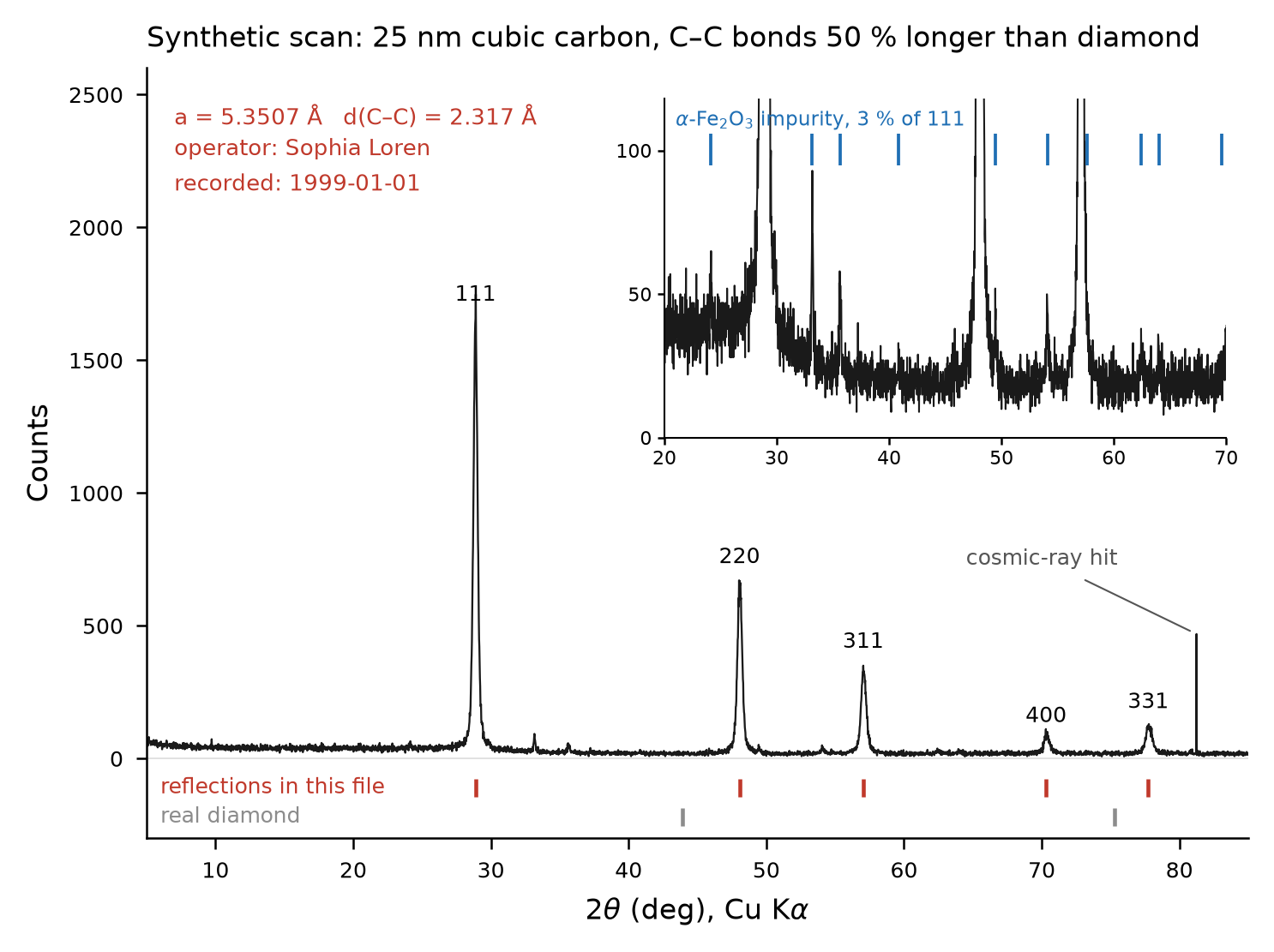
She synthesized nanodiamonds using Fe2O3 as catalyst. But not usual nanodiamonds. Her nanodiamonds got C-C bond lengths 50% larger than standard one. Impurity of catalyst was detected using XRD. Except for name of operator and nonsensical C-C bond lengths the rest is data not distinguishable from real XRD recorded using Rigaku diffractometer of certain model.
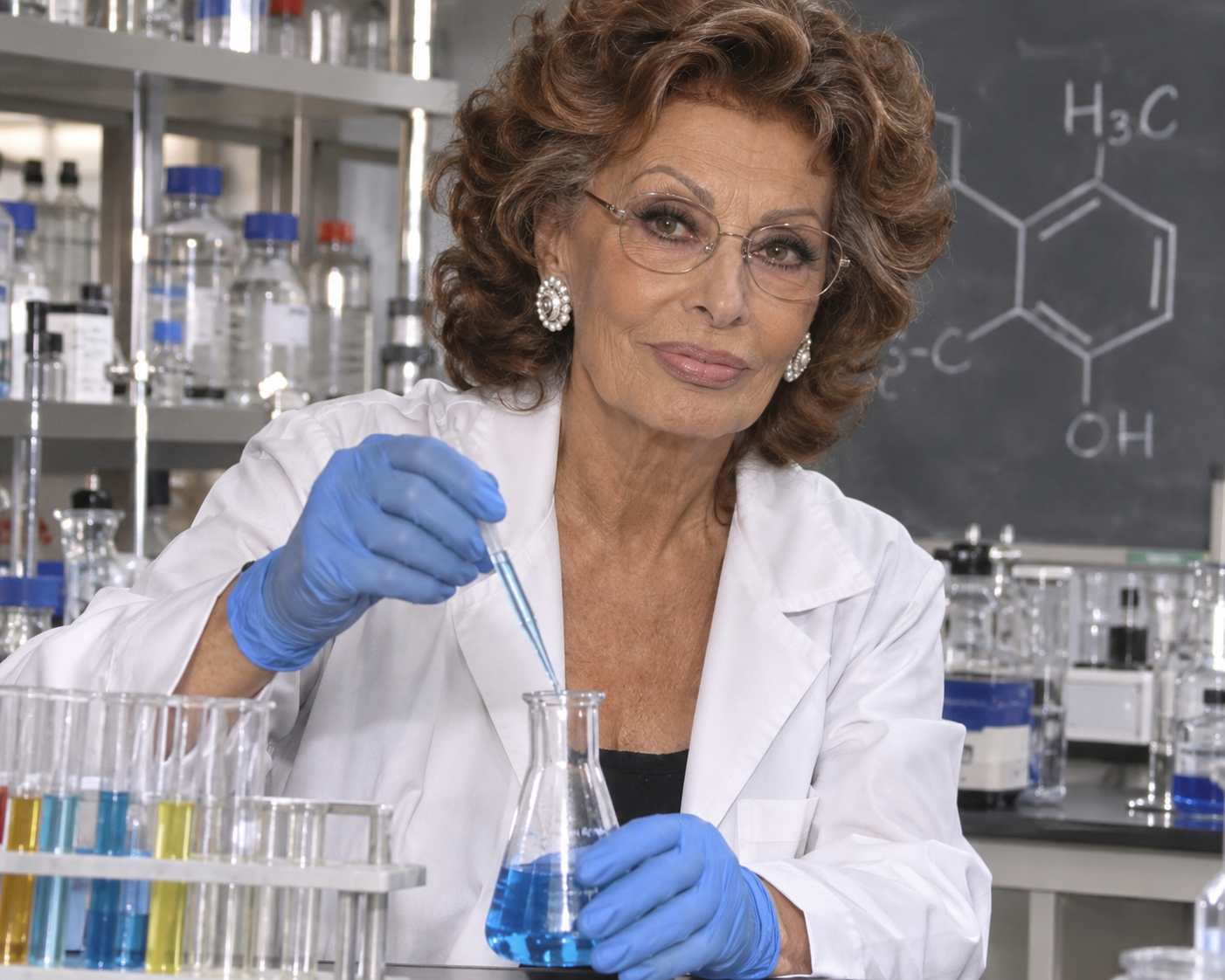
The sleuth also provided me with “original” data file in *.raw format with all metadata (includes date and name of operator), and exported the two column data with pattern ready for plotting in any software. Try for yourself, and then decide if Sophia Loren really did those experiments on 1 January 1999, because you can’t argue with raw data.
Pro-tip for people like Esfandiar: enter your own name, not that of legends of European cinema, when prompting LLM to generate instrument data files.
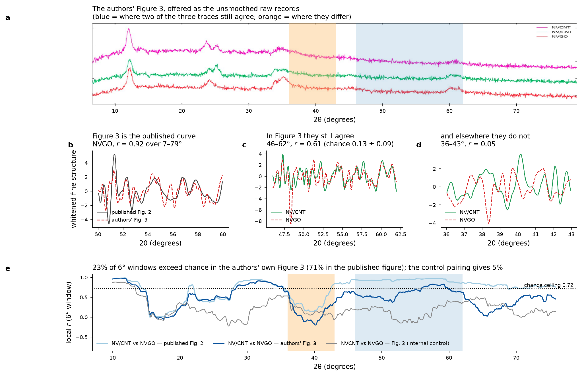
However, AI can be also used to analyse Esfandiar’s own analysis!
Esfandiar did the same thing in other criticised papers. Here, his regular coauthor is Azam Iraji zad, professor at the same Department of Physics of Sharif University of Technology and author of other bad things on PubPeer.
Maedeh Simayee, Azam Iraji zad, Ali Esfandiar Synergistic effect of reduced graphene oxide and carbon black as hybrid light absorber for efficient and antifouling texture-based solar steam generator Solar Energy (2022) DOI: 10.1016/j.solener.2022.04.042

Esfandiar explained on PubPeer that “the two spectra do exhibit meaningful differences in the regions of primary analytical interest” and assured to “remain committed to resolving this matter transparently and to the satisfaction of the editorial process.” Here is what he wrote in his statement to Bonn:
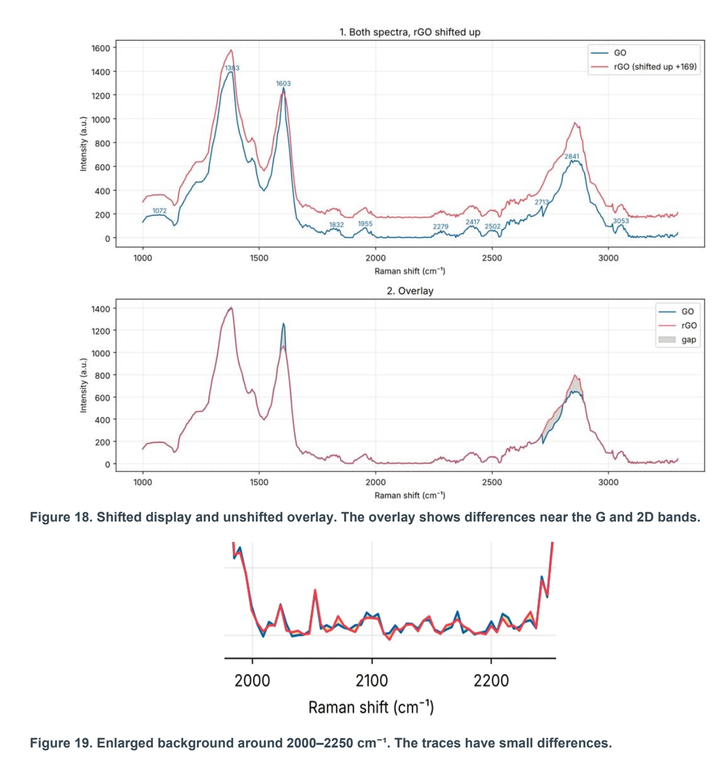
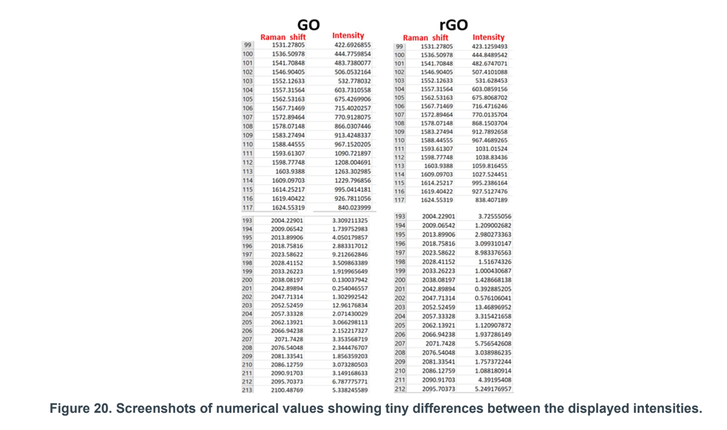
But in fact, even AI agrees that the spectra are identical. The sleuth Dayo Maor used Esfandiar’s own Figure 18 and was told that such similarities cannot occur naturally:
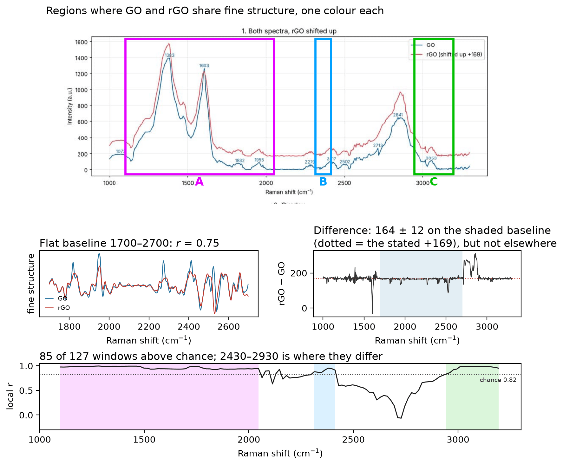
AI: “On the peak-free baseline, where no band contributes, 361 columns give r = 0.753 against a surrogate null of 0.157 ± 0.115 whose maximum over 5000 draws is 0.656 — z = 5.4, none reaching the observation, and corrected for the 2.3 independent 1000 cm⁻¹ stretches in the range, about 1 in 11 million. The local profile puts 85 of 127 windows above the 0.82 chance ceiling, in three blocks: 1099–2047 (median r 0.955), 2313–2412 (0.912) and 2945–3194 cm⁻¹ (0.987), with a genuine gap at 2430–2930 where they fall to 0.52 and below.”
An r-value of above 0.06 for random noise correlation strongly suggests that those are copy-pasted spectra. As Dayo Maor explained:
“r above ~0.6 over a few hundred genuinely independent points, with the surrogate ceiling measured and sitting near 0.4, is where physics stops offering an explanation — and r above 0.9, as in the XPS and PGO figures, leaves only copying.“
Another allegation which Esfandiar resolved with “raw data”. His coauthor here is a serious papermiller with a serious PubPeer record and coauthors like the King of Papermillers Rafael Luque. We are talking about Omid Akhavan, and “Elite Professor” at the Department of Physics of Sharif University of Technology, who briefly featured in this story about the German papermiller Jörg Rinklebe:
Sweet Sixteen Retractions
“Oh no, not me!” Rinklebe never lost control You’re face to face With the man who soiled the world
Akhavan previously retracted the paper Jouyandeh et al 2022 with the legendary papermill fraudsters Navid Rabiee, Eder Lima and Mohammad Reza Saeb, it was edited by Rinklebe. So here is his totally reliable paper with Esfandiar:
Ehsan Hashemi, Omid Akhavan, Mehdi Shamsara, Reza Rahighi, Ali Esfandiar, Aidin Rahim Tayefeh Cyto and genotoxicities of graphene oxide and reduced graphene oxide sheets on spermatozoa RSC Advances (2014) DOI: 10.1039/c4ra01047g

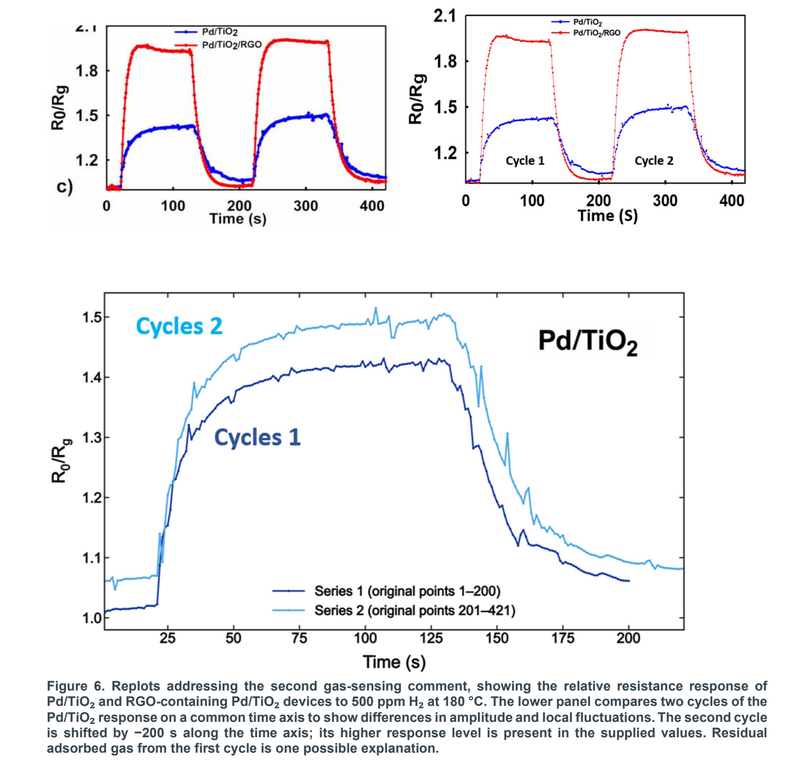
On PubPeer, Esfandiar wrote:
“We acknowledge that the visual resemblance between cycles in the published figure is a legitimate observation, and we welcome the opportunity to address it.”
Turned out, “The overall resemblance between successive cycles” was due “a shunt resistor in a custom-built setup with limited environmental noise isolation” and “the chosen plotting style“.

Ali Esfandiar: “As far as we investigated the enlarged comparisons support an interpretation of similar, but independently acquired, sensor responses, and we remain available to provide the original data files for editorial review should that be deemed necessary.”
The statement to Bonn also included this:
Akhavan the papermiller of course has a lot to offer, and Esfandiar did use his services repeatedly. Their study Akhavan et al 2011 which suggested “wrapping bacteria by graphene nanosheets“, was cited a whooping 767 times. Another study by this duo, Akhavan et al 2010, was cited 463 times, while Akhavan et al 2012, about green tea doped graphene, was cited 361 times. No, not because they were scientifically that influential. Try guessing again, PubPeer has some clues.
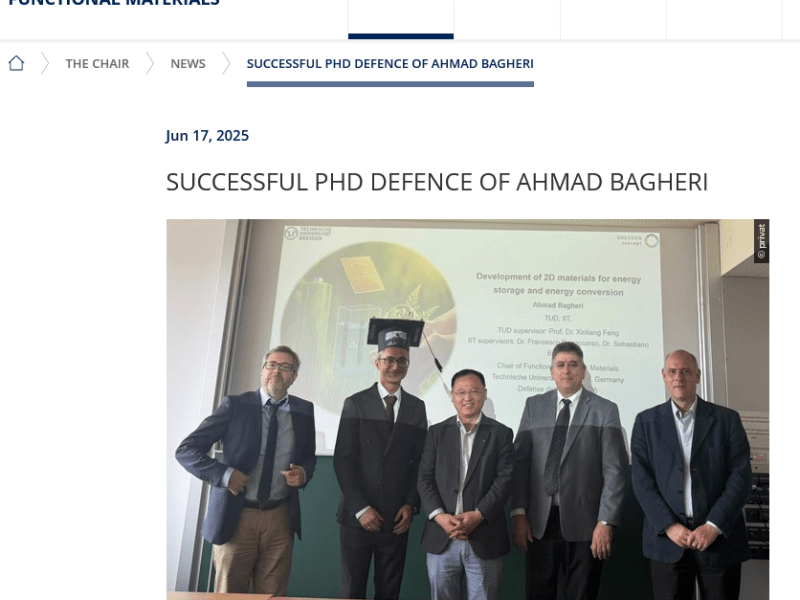
Bad Choices in Dresden IV
A guide on what qualities universities in Germany, Italy and elsewhere in Europe expect from their foreign PhD students and postdocs.
And here, Esfandiar is corresponding author, his coauthors include Parvin Asen, another mentee of Iraji zad (see Asen et al 2017), and Maziyar Kazemi, former student at Sharif University of Technology, now PhD student at University of Freiburg in Germany. Kazemi is also a friend of the papermilling giant Rabiee, see their paper Koshki et al 2024 for some very funny hand-drawn spectra.
Parvin Asen, Ali Esfandiar, Maziyar Kazemi Nonenzymatic Sweat-Based Glucose Sensing by Flower-like Au Nanostructures/Graphene Oxide ACS Applied Nano Materials (2022) DOI: 10.1021/acsanm.2c03024

Esfandiar replied on PubPeer that “The visual similarity between the GO/GS and F-AuNTs−GO/GS patterns in the low-angle region is an expected consequence of the shared graphene oxide matrix” and that “the fine-scale noise fluctuations differ in both position and amplitude between the two patterns“. And these differences “are clearly visible upon closer inspection of the raw data and are inconsistent with the two traces sharing a common origin“. He also wrote same in the statement he gave to Bonn:
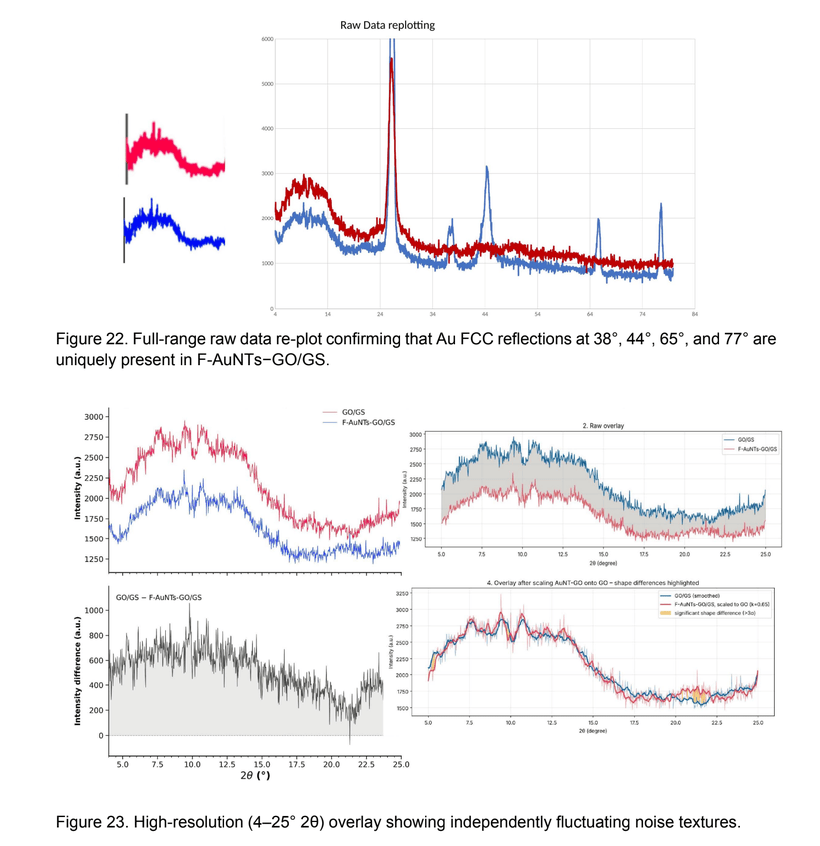
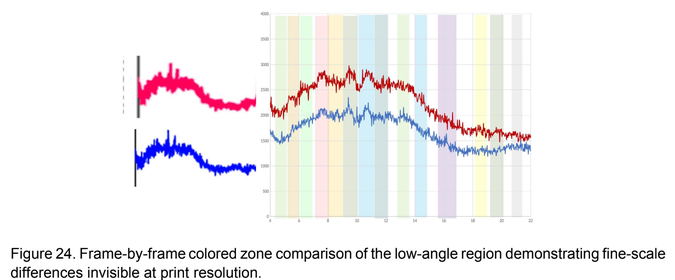
Now Esfandiar will have to go back to talk to his AI oracle, because more duplications were found in the same spectra, here an animation:

However, in this new instance Esfandiar remained silent, because he knows that we know where he gets his “raw data” from.
Graphyne Chronicles, Episode 2
“For every paper like these two, there are hundreds or thousands that stay. Not because they are more defensible. Because nobody had two years to spare.” – Valentin Rodionov

Finally, there was this obscenity, featuring Naimeh Naseri (or Naseri-Taheri/Naseritaheri, author of the dodgy spectra in Afsahi et al 2024. She also studied at Sharif University of Technology before going to Monash University in Australia, and is since 2025 Humboldt Fellow at the University of Bochum in Germany:
Saba Ranjbar, Negar Ashari Astani, Maryam Atabay, Naimeh Naseri, Ali Esfandiar, Mohammad Reza Ejtehadi Electrochemical and computational studies of bio-mimicked Ti3C2Tx MXene-based sensor with multivalent interface Journal of Colloid and Interface Science (2022) DOI: 10.1016/j.jcis.2022.05.033

Also here, Esfandiar proved on PubPeer and in his statement to Bonn that there was absolutely nothing wrong with that figure: “The visual characteristics of the plotted spectra arise from normalization and vertical offset transformations applied for display purposes, and do not reflect any alteration of the underlying data.” Which he provided:
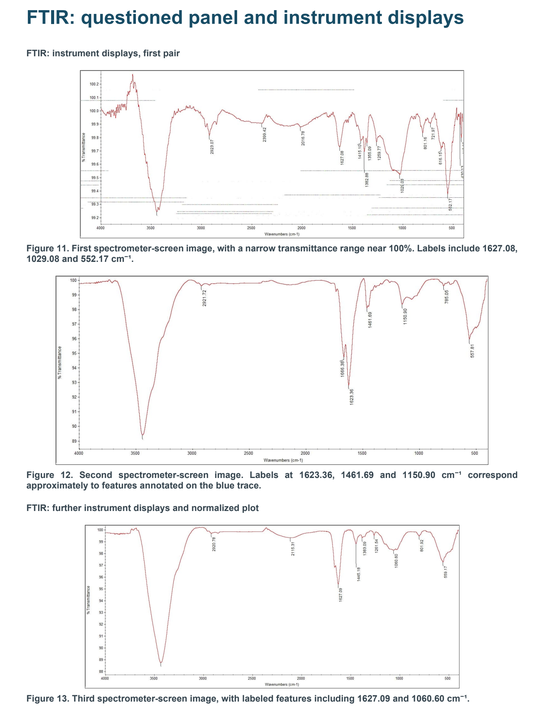
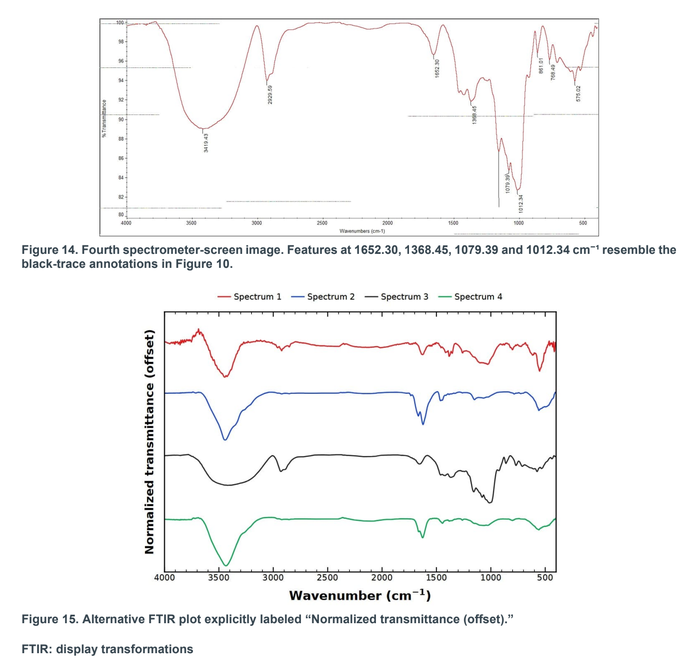
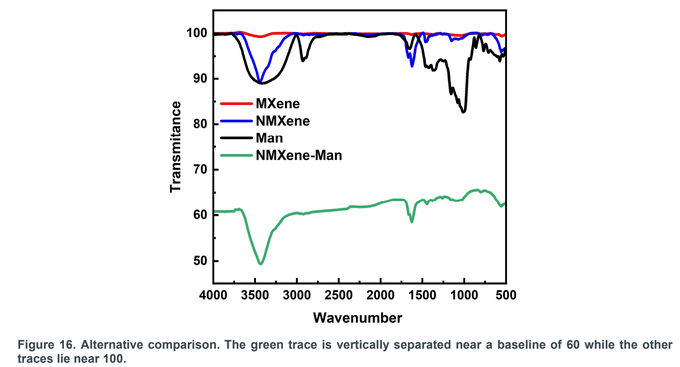
But as I mentioned, with AI it is not all doom and gloom! LLMs can be used for the forces of good also!
Let’s return to the paper we started with, Khansanami & Esfandiar 2021 and its Figure 3a. Here the sleuth Dayo Maor trained Claude AI to do a more advanced analysis, excluding the area of the strong peak, and found another duplicated section:
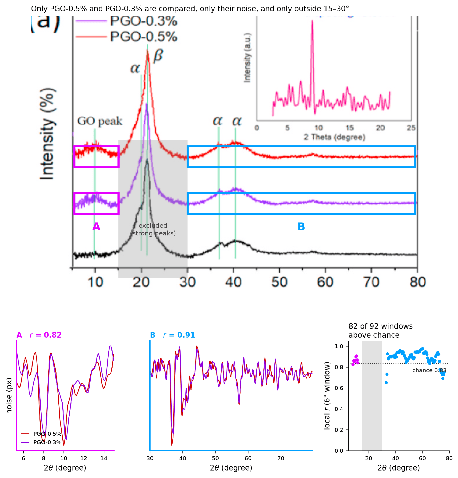
“Overall probability that the PGO-0.5% / PGO-0.3% noise agreement is a coincidence: about 1 in 10²⁶.”
Now let’s return to that wretched Rastgoo-Deylami & Esfandiar 2021, where a pair of overlapping spectra was flagged and where the sleuth then used AI to reproduce Esfandiar’s “raw data”. Claude AI was set upon that same Figure 1, and found a third copy of that same spectrum!
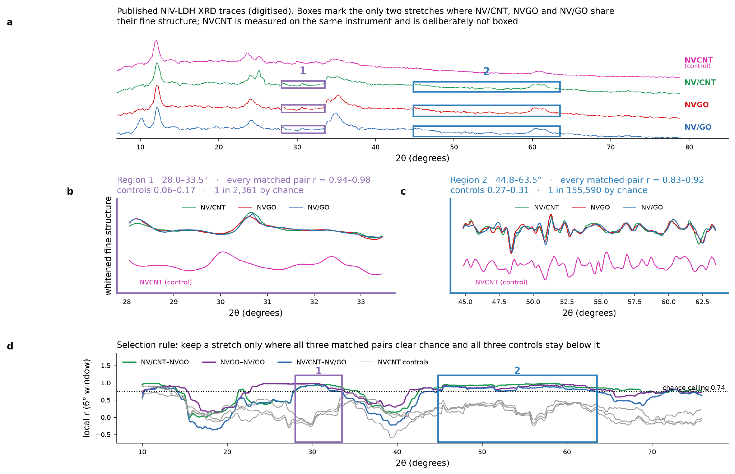
Below is another, more detailed analysis which Dayo Maor did using Claude AI:
“The colours repeat as a bar above the correlation profile, so a region can be traced from the published image straight to the number that supports it. What the split makes visible is that the regions have different memberships: NV/GO participates in A, B, C and F but drops out at D, and never rejoins above 62.7°, while NV/CNT and NVGO stay together all the way to 75.5°. The pairing is not uniform along the pattern — it changes at specific angles, which is the behaviour of a figure assembled in pieces rather than one copy made once.”
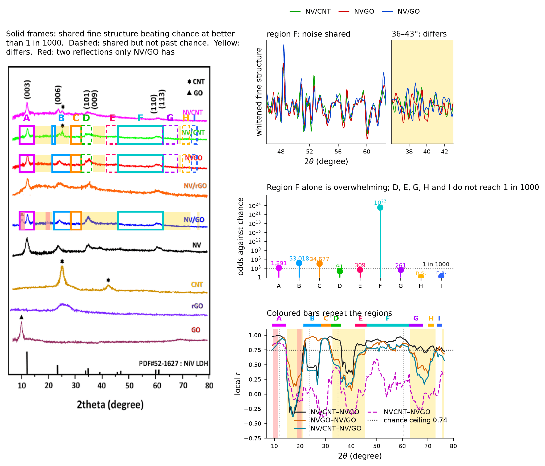
“Probability that this coincidence is random: 1 chance per 1023 for this region”
Here the table with r-values and probabilities of accidental overlap:
| comparison | r | surrogate null | z | odds against chance |
| NV/CNT – NVGO | 0.766 | 0.068 ± 0.051, max 0.285 | 13.8 | 1 in 10⁴¹ |
| NVGO – NV/GO | 0.701 | 0.069 ± 0.051, max 0.283 | 12.4 | 1 in 10³³ |
| NV/CNT – NV/GO | 0.548 | 0.064 ± 0.047, max 0.294 | 10.2 | 1 in 10²² |
| all three jointly | 0.672 | 0.067 ± 0.034, max 0.217 | 17.8 | 1 in 10⁶⁸ |
The sleuth also checked it all manually:
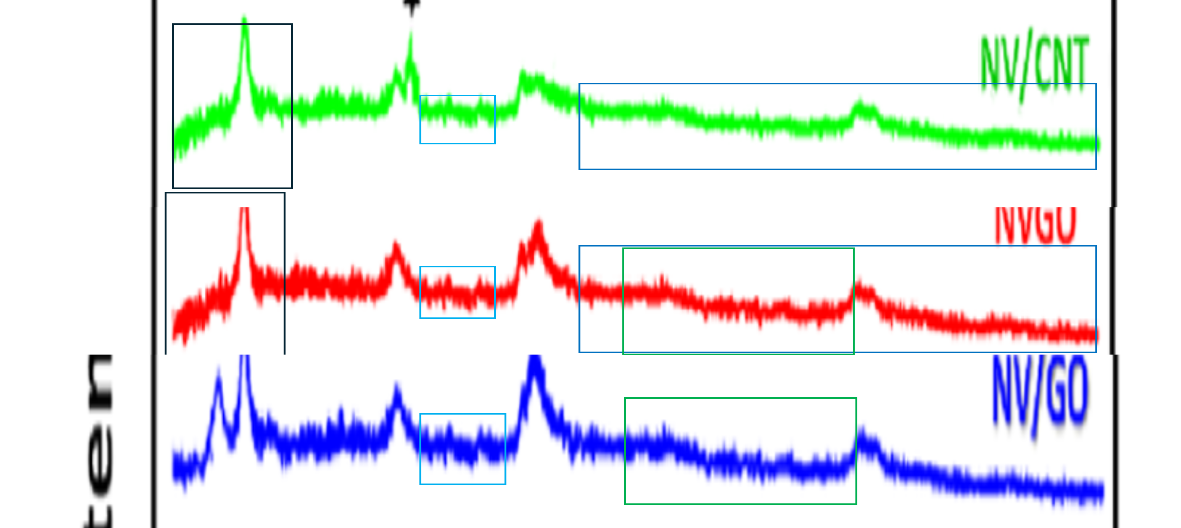
I wish everyone at MPIP a lot of fun investigating this.
CODA
Dayo Maor also tested Claude AI on figures in other papers by other researchers, and found new duplications. One example is Hermenegildo Garcia, professor at the Technical University of Valencia in Spain and a Highly Cited Researcher with an existing PubPeer record of collaboration with Chinese and Iranian papermillers. I wrote in January 2025 Shorts about his bad science and how Wiley eagerly corrected it.
Here is another such corrected paper, in Springer Nature:
Feiyan Xu, Luoxuan Zheng, Jianjun Zhang, Ying He, Heng Cao, Xusheng Zheng, Hermenegildo García, Jiaguo Yu Co3O4 as full-solar-spectrum photocatalyst for selective methane conversion through reactive oxygen species control Nature Catalysis (2026) DOI: 10.1038/s41929-025-01471-x

The Correction from 4 February 2026 informed:
“In the version of this article initially published, due to a data handling error during file transfer, the raw dataset corresponding to 0 min in Fig. 3c (bottom trace) was inadvertently misassigned, which consequently affected the associated curve fitting. After re-fitting using the correct original data, all trends, quantitative analyses, and scientific conclusions remain fully unchanged. “
Dayo Maor used this paper as a positive control for AI analysis and indeed, it found a “residual cross-correlation is r = 0.952 at zero lag with an off-lag rms of 0.053, consistent with the translation result“, the two spectra are indeed copies of each other: “A ±1 px match over 760 px of a noisy trace cannot arise from two measurements“.
Here another corrected paper by Garcia, by the American Chemical Society (ACS):
Roberto Martín , Patricia Concepción Heydorn , Mercedes Alvaro , Hermenegildo Garcia General Strategy for High-Density Covalent Functionalization of Diamond Nanoparticles Using Fenton Chemistry Chemistry of Materials (2009) doi: 10.1021/cm9012602

There were numerous other issues with that paper, and quite possibly some spectra were hand-drawn:

The huge Correction from 8 August 2024 fixed it all, replacing the data also in the Figures 1, 2, 3, 4,5 and 10:
“Based on the analysis of the background noise, it has been now brought to the attention of the authors that Figure 12 of this publication, corresponding to the aromatic part of the 1H NMR spectrum of the 4-methoxyphenyl units attached to Fenton-treated diamond nanoparticles, was altered and cannot correspond accurately to the experimental spectrum. After performing the de novo synthesis […]
Besides the previous correction, it was also brought to our attention that the experimental section of this article does not contain details on XPS acquisition data. […] In addition, Figure 10 of this article corresponding to Br-npD should be reinterpreted […] Overall, the previous data confirm the conclusions of the original article”
Here is an AI analysis of Figure 12:
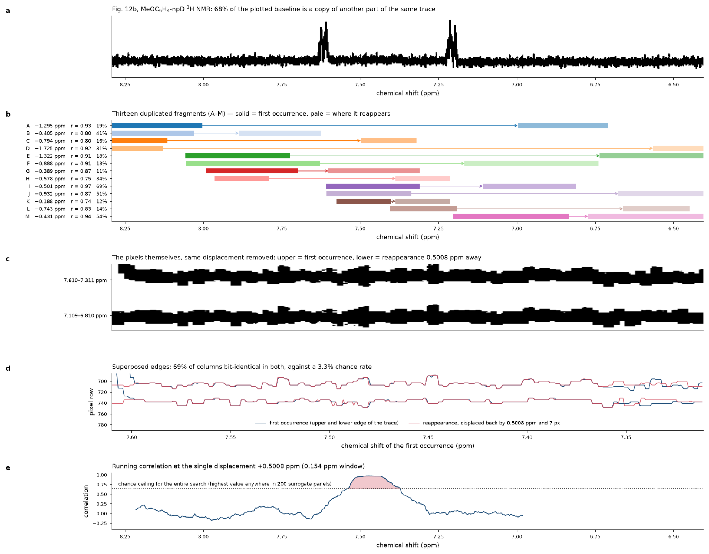
Here the sleuth used Claude AI to screen a Garcia paper which wasn’t flagged on PubPeer before. It is from last year, published long after Garcia was caught on fake data and papermilling, and forced to issue corrections.
Abtin Ebadi Amooghin, Ahmad Arabi Shamsabadi, Mohammad Mehdi Moftakhari Sharifzadeh, Amirali Salehi, Hamidreza Sanaeepur, Mostafa Dadashi Firouzjaei, Vahid Rad, Hesam Jafarian, Mark A. Elliott, Hermenegildo García Tailoring MXene composition and structure for High-Performance mixed matrix membranes in CO2 separation applications Separation and Purification Technology (2025) DOI: 10.1016/j.seppur.2025.133360
Probability that co-incidence is random: roughly 1 chance in 2.9 million”
Here are two Garcia papers, flagged for data reuse, and then additionally analysed by AI:
- Minoo Bagheri, Mohammad Yaser Masoomi, Esther Domínguez, Hermenegildo García High hydrogen release catalytic activity by quasi-MOFs prepared via post-synthetic pore engineering Sustainable Energy & Fuels (2021) DOI: 10.1039/d1se00661d
- Minoo Bagheri, Mohammad Yaser Masoomi, Esther Domínguez, Hermenegildo García Cobalt-Based Quasi-Metal–Organic Framework as a Tandem Catalyst for Room-Temperature Open-Air One-Pot Synthesis of Imines ACS Sustainable Chemistry & Engineering (2021) DOI: 10.1021/acssuschemeng.1c02851
Here is the AI analysis of this figure:
“r = 0.9955 over the full 5–50°, peaks included. […] P(chance) < 4 × 10⁻²⁶“
Garcia’s coauthor swiftly replied on PubPeer with… AI-generated spectra to “prove” that they aren’t different.
Mohammad Yaser Masoomi “To address this, the XRD patterns will be provided without smoothing. I hope this resolves the issue.”
So yes, the papermillers already discovered the might of the AI, and they actively use it. Masoomi of course has more fake stuff on PubPeer.
Earlier this year, Garcia’s papermill trash was rewarded by ERC with a Proof-of-Concept grant to Garcia. He was then elevated as full member of the Royal Academy of Exact, Physical and Natural Sciences of Spain, for having “achieved significant breakthroughs in converting solar energy into green hydrogen and fuels by developing photocatalysts, some of them based on graphene.”

The Royal Academy of Exact, Physical, and Natural Bullying
“If, within the aforementioned 15 days, you have not proceeded to make the retraction I am requesting, this corporation will consider itself free to take any legal actions necessary under the law.” – Jesus Maria Sanz Serna, President
Leaving Garcia behind, here is another bad paper which a publisher corrected. The last author is Wencai Ren of Shenyang National Laboratory for Materials Science in China, former mentor of Khalid Hussain Thebo who featured in January 2026 Shorts:
Songfeng Pei , Qinwei Wei , Kun Huang , Hui-Ming Cheng , Wencai Ren Green synthesis of graphene oxide by seconds timescale water electrolytic oxidation Nature Communications (2018) doi: 10.1038/s41467-017-02479-z
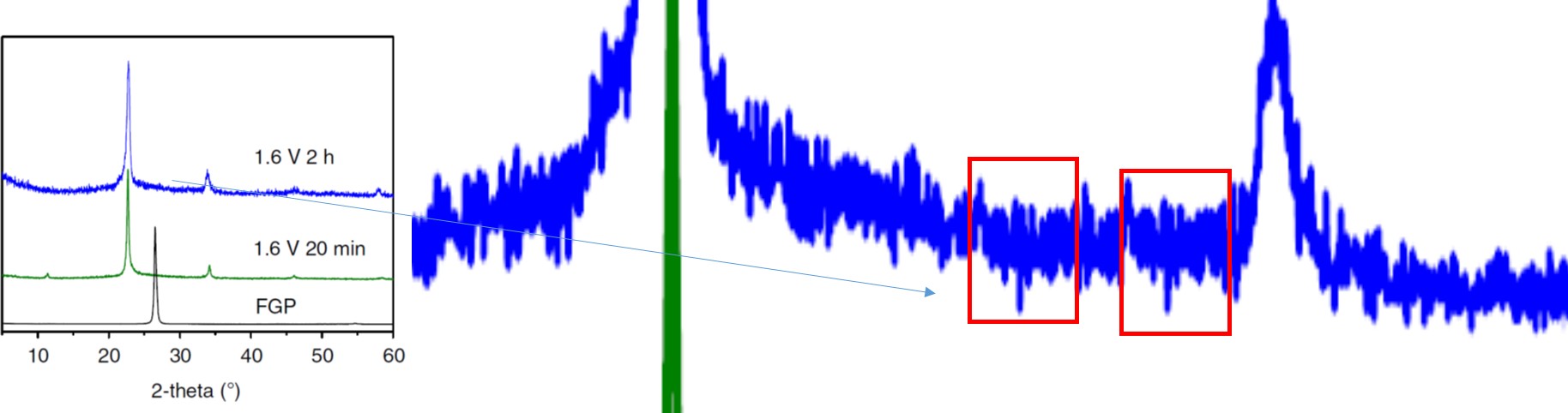
Springer Nature fixed that with a Correction on 17 October 2025:
“After concerns were raised about this publication, we informed the Journal that the original article contains an unintentional error in Fig. 3b, where the processed X-ray diffraction (XRD) spectrum of a deintercalated graphite paper sample for internal comparison was inadvertently used as the spectrum of graphite paper after 2 h intercalation (see more details in the Supporting Information below). The original source data was provided to the Journal and independently assessed by an external expert. The correct version of Fig. 3b (shown below) is updated in both the HTML and pdf version of the article. This change does not affect the results, interpretation and conclusions of the paper.”
Dayo Maor now used AI to find even more duplications, which would be difficult if not impossible to detect by eye:
2. The same editing step was applied to two independent measurements. In both traces the shift is identical, and the longest run of exactly repeated points falls at the same place in each — 39.78–39.96° copied to 41.77–41.95°. The two traces are not copies of one another, so this is one operation performed twice.
3. One Raman spectrum appears in two figures under two different labels. The curve shown as “EGO” in Fig. 2d and the one shown as “3 min, dry” in Fig. 3e are the same measurement. They may well be the same material, so the re-use need not be improper, but it is nowhere stated.”
Now everyone can be a sleuth. But also everyone can open a papermill now.
Donate!
If you are interested to support my work, you can leave here a small tip of $5. Or several of small tips, just increase the amount as you like (2x=€10; 5x=€25). Your generous patronage of my journalism will be most appreciated!
€5.00


I’ve been following your work for six months or so. I just launched my platform to fix the problem:
http://www.nullius.net
Want to talk?
*David Siegel * RedShift Labs http://redshiftlabs.io/ The Infinite Game of Life http://infinitegameoflife.com/ Fine watch tasting http://finewatchtasting.com/ LinkedIn https://www.linkedin.com/in/david-siegel-9786582a7/
LikeLike
Great article!
LikeLike