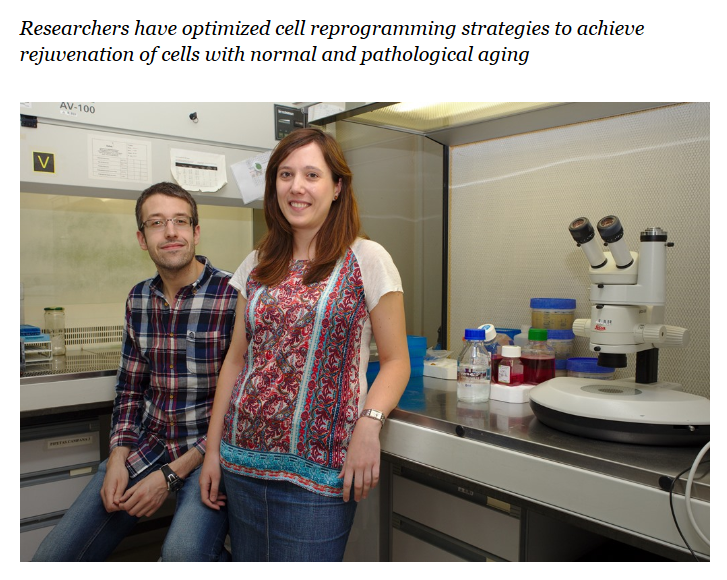

Boom, the 2015 Nature Cell Biology paper by the famous, award-winning and now fugitive Spanish cancer and ageing researcher Carlos Lopez-Otin and his US partner George Q Daley, stem cell titan and dean of Harvard Medical School, is retracted. That happens because correct original data was unavailable, prompted by a prolonged debate on PubPeer (which in turn followed my reporting on Lopez-Otin’s data integrity practices), which established that the figures do not match what the authors deposited as supplement.
The paper Soria-Valles et al 2015 established the role of the transcription factor protein NF-kB in cellular senescence and cell reprogramming, while offering a potential cure to child patients suffering from the deadly premature ageing syndrome, such as Néstor–Guillermo or Hutchinson–Gilford progeria. Under this premise, the impactful Nature-themed paper earned Lopez-Otin in 2017 an ERC grant of €2.5 million, for a project named “Deconstructing Ageing: from molecular mechanisms to intervention strategies“. Earlier this year however, Lopez-Otin abandoned his ERC funded lab at University of Oviedo and escaped to Paris, to stay with his Photoshop expert friend Guido Kroemer. If past behaviour is anything to go by, ERC will now probably again play three monkeys and pretend that Lopez-Otin is still in Spain and his grant-deciding Nature Cell Biology paper was never retracted.
Another Soria-Valles et al paper from Daley lab, which proposed a way to produce haematopoietic stem cells via iPS technology and save people with leukaemia, was meant to be already published, but it is not even submitted and might never be. This and the retracted study’s first author Clara Soria-Valles was a former PhD student of Lopez-Otin, funded by EMBO postdoctoral fellowship and delegated to the Harvard labs of Daley and his junior partner Thorsten Schlaeger, to learn cellular reprogramming technique. Daley and Schlaeger are reported to be all but ready to apply the blood cell making technique in the clinic, at Boston Children’s Hospital, but now nobody knows if Soria-Valles’ preclinical data is anywhere near reproducible.
It is indeed difficult to find out what results still might be reliable. Soria-Valles disappeared already in April 2018 on a medical leave, though Daley still pays her (neither Daley nor Harvard normally pays any medical leaves for other sick lab members). Nobody else on that manuscript is available, because the Schlaeger lab people involved also left since. Money to try and reproduce it is not an issue though: the research project was funded from Daley’s biggest grant, the NHLBI Progenitor Cell Translational Consortium (NIH U01), which is worth almost $50 million.
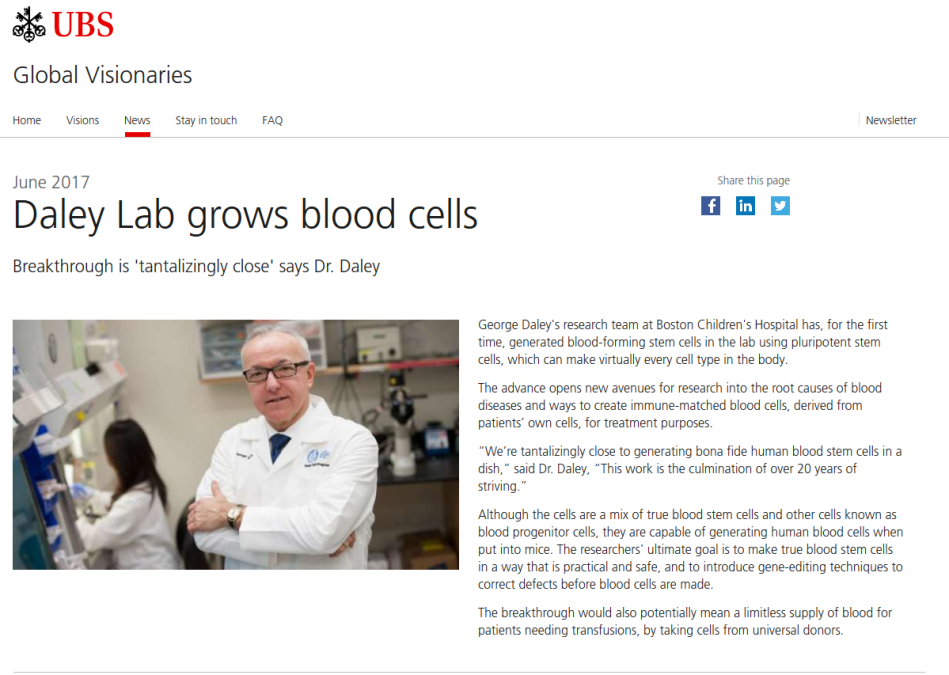
As I was informed, that Soria-Valles paper on haematopoietic reprogramming was meant to be originally submitted to the elite Cell family journal Cell Stem Cell (this is how the circulated draft was labelled in April 2018). Later on, roughly in August 2018, when my article appeared, the chosen target journal was Stem Cell Reports (published by International Society for Stem Cell Research, ISSCR). For someone like Daley this is a huge status reduction of journal venue. The results were presented earlier by Soria-Valles at the ISSCR annual meeting in 2017:
INTEGRATION-FREE SYSTEM FOR GENERATION OF HEMATOPOIETIC STEM AND PROGENITOR CELLS FROM HUMAN PLURIPOTENT STEM CELLS
Soria-Valles, Clara 1 , Sugimura, Ryohichi 1 , Kumar Jha, Deepak 1 , Lummertz da Rocha, Edroaldo 1 and Daley, George 2
1 Boston Children’s Hospital, Boston, MA, USA, 2 Stem Cell Program, Boston Children´s Hospital, Boston, MA, USA
The generation of hematopoietic stem cells (HSCs) from human pluripotent stem cells (PSCs) constitutes a valuable tool with promising applications for research and therapy. However, derivation of HSCs with in vivo long-term engraftment and multi-lineage potential remains elusive. We have described a combinatorial approach, based on the directed differentiation of hemogenic endothelium (HE) and transduction with five transcription factors (TF) (RUNX1, ERG, LCOR, HOXA5 and HOXA9) expressed in lentiviral vectors that allowed the conversion of human PSCs into hematopoietic stem
and progenitor cells (HSPCs). The resulted cells exhibited long-term and multi-lineage hematopoietic capabilities when injected into irradiated immune-deficient mice.
Despite this proof of principle, the engineered cells have a limited self-renewal capacity due to the integration of the transgenes and are still molecularly distinct from bona fide HSCs. Thus, in an attempt to achieve bona fide HSCs and make them safer for future therapeutic interventions, we have established integration-free systems that have shown comparable efficiency to the previously developed lentiviral strategy through in vitro and in vivo experiments. Therefore, this new method may overcome some limitations of the lentiviral approach and hold the key for future regenerative medicine advances in blood diseases.
Soria-Valles however was not present at the 2018 ISSCR meeting (a conference which I incidentally wrote about here, in a story about another dishonest stem cell researcher, who was set to be ISSCR 2018 keynote speaker). Nobody knows how much of Soria-Valles’ claim to make haematopoietic stem cells via iPS technology is still valid. Sources were quoted with estimates of too low a yield or even not sure of producing any haematopoietic stem cells at all. Yet just this September 2018, Daley spoke at a lecture at Dana-Farber-Institute of his future Stem Cell Reports paper and even of his plans to apply the method to treat paediatric patients with congenital bone marrow deficiencies, in particular Shwachman Diamond Syndrome and Diamond Blackfan Anemia.
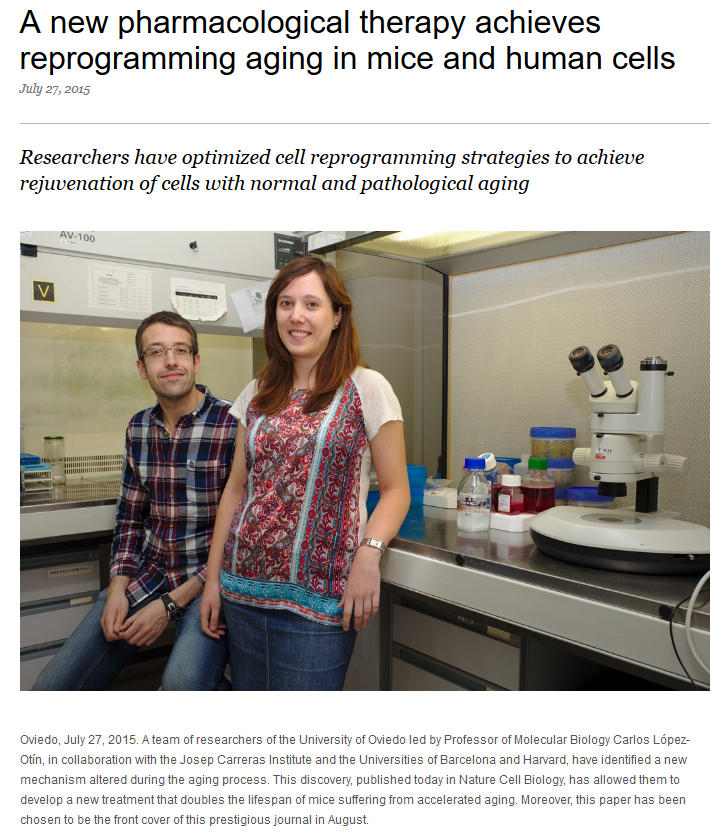
But now back to the main subject, the Nature Cell Biology retraction. The journal warned readers on 4 October 2018 with an editorial note that “that the reliability of data presented in this manuscript has been the subject of criticisms“. 4 December 2018 was the deadline imposed by the publisher to submit signatures from co-authors for a retraction. Lopez-Otin’s Oviedo colleague Jose Maria Perez Freije collected the signatures of all authors, including the elusive Soria-Valles, and submitted them to the publisher Nature.
This is the retraction notice:
“We, the authors, are retracting this Article due to issues that have come to our attention regarding data availability, data description and figure assembly. Specifically, original numerical data are not available for the majority of the graphs presented in the paper. Although original data were available for most EMSA and immunoblot experiments, those corresponding to the published EMSA data of Supplementary Fig. 8a, the independent replicate immunoblots of Fig. 8b and Supplementary Fig. 1e, and the independent replicate EMSA data of Supplementary Figs 6e, 8b, 8c and 8d, are unavailable. Mistakes were detected in the presentation of Figs 3c, 4i and Supplementary Figs 6a, 8a, 8d, 9, and in some cases the β-actin immunoblots were erroneously described in the figure legends as loading controls, rather than as sample processing controls that were run on separate gels. Although we, the authors, believe that the key findings of the paper are still valid, given the issues with data availability we have concluded that the most appropriate course of action is to retract the Article. We deeply regret these errors and apologize to the scientific community for any confusion this publication may have caused. All authors agree with the retraction.”
This slide show illustrates the data issues mentioned in the retraction notice.
And this slide show illustrates the issues the retraction notice chose not to address at all.
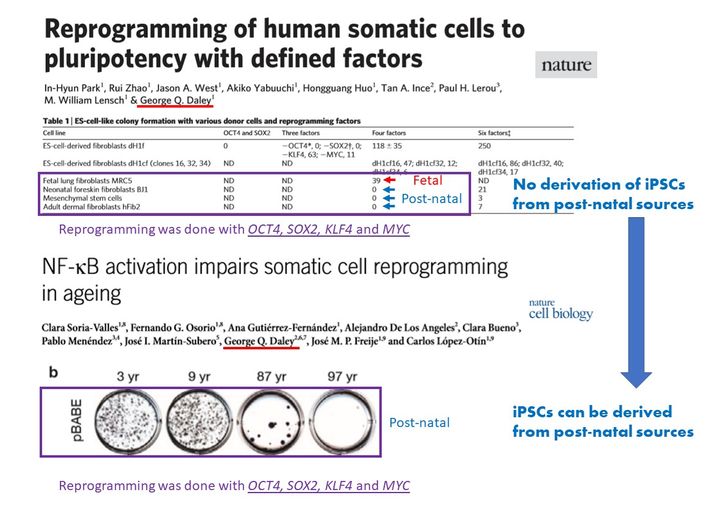
In Daley’s lab, more things do not work as expected. His most famous Nature paper, Park et al 2008 , meant to compete with Shinya Yamanaka for induced pluripotency (iPS) fame and the Nobel Prize, is being plucked apart on PubPeer, accused of not having delivered any pluripotency as such. The exogenously delivered reprogramming transgenes remained namely active, while they were supposed to become silenced as cells’ own pluripotency genes become active. Also, Daley’s method of using Large T Antigen and telomerase TERT in addition to Yamanaka’s four iPS reprogramming factors proved rather counterproductive.
For someone like Daley, all of this is not the end of the world. There are always new windows of opportunity. Just as Chinese scientist Jiankui He caused a worldwide scandal with his unethical human experiments with CRISPR-modified babies, Daley (and his Harvard colleague George Church) offered a more enthusiastic view: America cannot afford a CRISPR gap to China. Daley suggested that Harvard should take the lead and apply CRISPR eugenics to ensure the survival of the human race:
“There have even been discussions that we as a species need to maintain the flexibility in the face of future threats to take the control of our own heredity.”
Harvard’s CRISPR experiments on human germ line editing are already starting. An Alzheimer’s associated gene is to be edited in human sperm, while Daley announced big plans to design the children of the future to be resistant to various diseases. Ethics is something this Harvard dean is apparently less interested in.
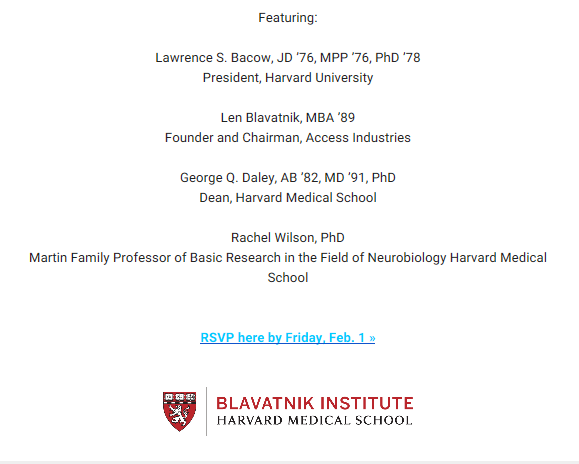
Harvard recently received a $200 million donation to set up a new institute, the money came from a controversial tycoon Leonard Blavatnik with Russian origins, whose lawyers made The Guardian apologise for erroneously calling him a “Putin pal” and an oligarch.
It is Daley’s Spanish collaborator, the fugitive Lopez-Otin, who is in deep trouble with that retraction now. Lopez-Otin did manage to bring himself into news recently with his new paper (in a Nature -themed journal!) where his Oviedo lab analysed the genome of Lonesome George, the last member of his giant tortoise species who died in 2012. The press release omitted to say whether he spoke from Oviedo or Paris, Lopez-Otin the turtle geriatrics researcher was quoted with:
“We had previously described nine hallmarks of aging, and after studying 500 genes on the basis of this classification, we found interesting variants potentially affecting six of those hallmarks in giant tortoises, opening new lines for aging research”
Nature now probably deeply regrets having awarded him with a 2017 Mentoring Award. Maybe they can give next one to Daley? Maybe Daley can get Soria-Valles to CRISPR some of those turtle genes to create a new long-lived human race of Homo harvardiensis crispri?
Update 21.12.2018. My article was apparently well received in Harvard, according to this information I was privy to:
“Daley was complaining intensely at lab meeting in front of entire lab and his junior faculty labs (Trista North and Thorsten Schlaeger) about potential lab members who might have leaked Soria-Valles information to the German blogger. It was intense”
I also learned that the now retracted Soria-Valles Nature Cell Biology 2015 paper was originally submitted to Science, were it was rejected due to some statistics issues.
Update 5.01.19. I was recently alerted by a source:
“George [Daley, -LS] has scared the lab members and provoked Stockholm syndrome among members. The Daley lab is trying to figure out who the leaks are now. Some of the members are trying to crash the German website by sending Hakenkreuz images.”
This was exactly what happened. Commenters used several fake identities to post highly defamatory comments about Daley on my site, equalling his research to Macchiarini’s trachea transplants and, indeed, using Nazi Swastika armband photoshopped on a photo of Daley. Exactly same picture was shared by Daley lab members in preparation of the campaign, it was confirmed to me. I deleted all those comments, but made backup, also of IP addresses.
Specifically, those IP addresses were located in US to Connecticut, 06902 Stamford, and New York State, 10022 New York. My source suggested I contact these Daley lab alumni: In-Hyun Park at Yale, CT, and Kitai Kim at MSKCC in NY, as well as the person allegedly orchestrating the campaign, the current Daley postdoc Deepak Jha. None of them replied, but Jha immediately blocked me on Twitter. This is how some grown men behave to please their mighty (ex-)boss. Maybe they should rather relax and read the book by Daley’s wife, Amy C. Edmondson, “The Fearless Organization: Creating Psychological Safety in the Workplace for Learning, Innovation, and Growth“.
Daley will be opening the Blavantik institute in ceremony on February 5th, at 5:30 PM. Come to talk about plans of CRISPR babies!
Donate!
If you are interested to support my work, you can leave here a small tip of $5. Or several of small tips, just increase the amount as you like (2x=€10; 5x=€25). Your generous patronage of my journalism will be most appreciated!
€5.00


PubPeer comment on Soria-Valles’ Protocol Exchange. The validity of the protocol is being argued.
Somatic cell reprogramming using NF-κB inhibitory strategies
Protocol Exchange (2015) – 7 Comments
doi: 10.1038/protex.2015.057 issn: 2043-0116
Clara Soria-Valles , Fernando Osorio , José Freije , Carlos López-Otín
https://pubpeer.com/publications/0DFD5A1F3303958FBBE3D562F455AE#7
“The most crucial technical advance in this protocol is that one can achieve visible TRA1-60+ iPSC colonies in 1 weeks of induction, which is still elusive to others in the field. Please refer figure 3e from the original article for this protocol.”
LikeLike
Soria-Valles has been selected for Juan de la Cierva-incorporación to bring her money to uniovi. 35,000 euro for 2019, and 29,000 euro for 2020. Information is as of nomination date at Sept. 28, 2018. Application number, IJCI-2017-31455, UNIVERSIDAD DE OVIED.
Click to access RESOLUCIO_DEFINITIVA_2017_arxiu_5689.pdf
LikeLike
For the nomination of 2017 Juan de la Cierva-incorporación organized by Spanish ministry, Soria-Valles has been selected to be top ranked among 63 of Biomedicina candidates. 27 candidates were selected, and rest of 36 failed. Total 64,000 euros will be spent on Soria-Valles’ research back in uniovi from 2019.
Click to access PROPUESTA_RESOLUCION_PROVISIONAL_SELECCIONADOS_RESERVAS_IJCI2017.pdf
LikeLike
PubPeer arguments over Daley’s 2008 Nature paper still continue.
Reprogramming of human somatic cells to pluripotency with defined factors
Nature (2008) – 17 Comments
pubmed: 18157115 doi: 10.1038/nature06534 issn: 1476-4687 issn: 0028-0836
In-Hyun Park author has email , Rui Zhao , Jason A. West , Akiko Yabuuchi , Hongguang Huo , Tan A. Ince , Paul H. Lerou author has email , M. William Lensch author has email , George Q. Daley
https://www.pubpeer.com/publications/A600E09BABFB5C7A28B86BBA6F8AD9#17
“The reprogramming knowledge and technology in 2008 was not as advanced as it is now. This paper is what it is for that time.
However, what you need to know dear reader, is that almost the entire discussion above is from one single troll, recently also using cross-site posting tactics. I’ve been waiting to see if anyone would notice. And now they have! But, as has happened before, the wrong person has very regrettably been identified on teh intarwebs.
Well done, very clever!
And who fed this gullible tweeter with false information? Let’s just say that the correct troll is the one trying to defend bogus Mbd3-/- reprogramming. Perhaps Professor Daley is being trolled because he knows too much?”
“Actually, the Jaenisch paper was published in 2008. Therefore, even by 2008 standards, the Park iPS cells are partially reprogrammed.”
LikeLike
PubPeer reader found image duplication in Deepak Jha’s publication.
Pictures were copied and pasted over Figures 1 and 2. They were supposed to be differentially treated samples.
An RNA polymerase II-coupled function for histone H3K36 methylation in checkpoint activation and DSB repair
Nature Communications (2014) – 2 Comments
pubmed: 24910128 doi: 10.1038/ncomms4965 issn: 2041-1723
Deepak Kumar Jha , Brian D. Strahl
https://www.pubpeer.com/publications/42A80DA0DB5523DEEF61FEE107F982#2
Figure 1
Figure 2
LikeLike
Gel splicing in Daley and Baltimore’s old article. PubPeer readers are arguing that it was acceptable practice 30 years ago.
Transformation of an interleukin 3-dependent hematopoietic cell line by the chronic myelogenous leukemia-specific P210bcr/abl protein
Proceedings of the National Academy of Sciences (1988) – 6 Comments
pubmed: 3143116 issn: 0027-8424
G Q Daley , D Baltimore
https://www.pubpeer.com/publications/61226A71F74171D4410CB1B4916745#6
LikeLike
University of Oviedo had awarded Soria-Valles “Premios Extraordinarios de Doctorado” for her outstanding Thesis study at Lopez-Otin lab based on her now retracted Nature Cell Biology.
http://www.asturiasmundial.com/noticia/90228/uniovi-aprueba-plan-propio-investigacion-transferencia-20172020/
Premios Extraordinarios de Doctorado
Por otra parte, el Consejo de Gobierno ha aprobado la propuesta de Premios Extraordinarios de Doctorado para las tesis leídas en esta Universidad en el curso académico 2014-2015, abarcando dicho curso el periodo comprendido entre el 1 de septiembre de 2014 y el 31 de agosto del 2015. Estos premios se entregarán de forma solemne el próximo día 27 de enero en el acto conmemorativo de la festividad de Santo Tomás de Aquino. La relación de las candidaturas galardonadas es la siguiente:
RAMA DE CIENCIAS DE LA SALUD
LikeLike
Todo solamente hipocresia
LikeLike
Daley’s alumnus Kitai Kim published a mega-correction at Nature Cell Biology.
They had reused bars and figure panels.
Reminds now-retracted Soria-Valles’ case in the same journal. The only difference is that they own up before PubPeer detection.
https://www.nature.com/articles/s41556-018-0269-y
Author Correction: ZSCAN10 expression corrects the genomic instability of iPSCs from aged donors
Nature Cell Biology (2019) |
Correction to: Nature Cell Biology https://doi.org/10.1038/ncb3598, published online 28 August 2017.
In the version of this Article originally published, Supplementary Fig. 6j showed incorrect values for the LS and AG4 glutathione samples, and Fig. 5c and Supplementary Fig. 6j did not include all n = 6 samples for the hESC, Y-hiPSC and AG4-ZSCAN10 groups as was stated in the legend. In addition, the bars for hESC, Y-hiPSC, AG4-ZCNAN10, AG4 and LS in Supplementary Fig. 6i and j have been reproduced from Fig. 5b and c, respectively. Figure 6e was also reproduced in the lower panel of Supplementary Fig. 6h, to enable direct comparison of the data, however this was not explained in the original figure legends. The correct versions of these figures and their legends are shown below, and Supplementary Table 5 has been updated with the source data for all numerical data in the manuscript.
Corrected Fig . 6 legend:
Impaired DNA damage response in human A-hiPSCs caused by deregulation of ZSCAN10 and GSS and recovered by ZSCAN10 expression. a, Excessive oxidation capacity with elevated glutathione in A-hiPSCs, and recovery by ZSCAN10 expression. The total glutathione level was measured to determine the maximum oxidation capacity. Excessive oxidation capacity of glutathione in A-hiPSCs is normalized to the level of hESCs and Y- hiPSCs by transient expression of ZSCAN10. Glutathione analysis was conducted with the glutathione fluorometric assay. Mean ± s.d. is plotted for three biological replicates with two independent clones (n = 6) in each sample group from each condition. Statistical significance was determined by two-sided t-test. b, ROS scavenging activity of hESCs, Y-hiPSCs, A-hiPSCs and A-hiPSCs–ZSCAN10. A cellular ROS assay kit (DCFDA assay) was used to measure H2O2 scavenging activity. A-hiPSCs show strong H2O2 scavenging activity, with a reduced response against treatment with TBHP (tert-butyl hydrogen peroxide; stable chemical form of H2O2, 3 h); the response is recovered by ZSCAN10 expression. Mean ± s.d. is plotted for four biological replicates in each sample group from each condition (n = 4). Statistical significance was determined by two-sided t-test. c, Immunoblot of pATM showing recovery of the DNA damage response after phleomycin treatment in three independent clones of A-hiPSCs with shRNA-mediated knockdown of GSS. d, Immunoblot of pATM showing that lentiviral expression of GSS cDNA impairs the DNA damage response in three independent clones of Y-hiPSCs after phleomycin treatment. e–g, Copy-number profiling analysis of human iPSCs43. Schematic diagrams represent seven rearranged A-hiPSCs, four non-rearranged A-hiPSCs and five non-rearranged A-hiPSCs– ZSCAN10 in the genetically controlled setting of A-hiPSCs. Ten non-rearranged Y-hiPSCs, which were generated from a different tissue donor, were also included. A-hiPSCs (n = 11 (7/11), P = 0.64), (These data are also presented in Supplementary Fig. 6h), A-hiPSCs–ZSCAN10 (n = 5 (0/5), P* = 6.3 × 10⁻³) and Y-hiPSCs (n = 10 (0/10), P* < 4 × 10⁻⁵). The number in parentheses represents detected rearrangements and P and P* are the observed and estimated likelihoods of detecting no rearrangements in the absence of lineage effects using a binomial distribution, respectively50. Unprocessed original scans of blots are shown in Supplementary Fig. 7.
LikeLike
The latest Nature Communication paper from Daley group has been argued over image duplication and weird uniformity in data points.
The first author Yermalovich received F99/K00 NIH’s career transition award for this project. Funded
33,026 USD as of 2016. The support continues for 6 years.
http://grantome.com/grant/NIH/F99-CA212487-01
Lin28 and let-7 regulate the timing of cessation of murine nephrogenesis
Nature Communications (2019) – 2 Comments
pubmed: 30635573 doi: 10.1038/s41467-018-08127-4 issn: 2041-1723
Alena V. Yermalovich , Jihan K. Osborne , Patricia Sousa , Areum Han , Melissa A. Kinney , Michael J. Chen , Daisy A. Robinton , Helen Montie , Dan S. Pearson , Sean B. Wilson , Alexander N. Combes author has email , Melissa H. Little author has email , George Q. Daley
https://www.pubpeer.com/publications/730D5F3BC8FD82D483604CEE8442B9#2
Image duplication.
https://imgur.com/a/L3NOa0E
“Unexpected uniformity in Serum creatinine level in fig. 3g. The data points are shown as in lattice points. The data points came from 14 independent animals, not mere technical replicates. I initially thought it would represent the feature of this assay. But the other data points of serum creatinine level at fig. 5k did not follow the the same rule… ”
https://imgur.com/a/1FCkWlD
LikeLike
It is interesting to see Lopez-Otin had actually associated his News&Views with this mega-corrected Kitai Kim’s article. Marveling lineage of Soria-Valles’ now-retracted paper.
https://www.nature.com/articles/ncb3602
LikeLike
Soria-Valles Thesis is losing credibility.
The first half part is about Oncogene (2014) paper which was alleged for missing microarray data. https://pubpeer.com/publications/8D0F4C1D83621DE5F72E92A4C39787
The later half part is about Nature Cell Biology (2015) paper which was retracted.
http://digibuo.uniovi.es/dspace/handle/10651/34063
A lo largo de esta Tesis doctoral, hemos estudiado la relevancia funcional y tumoral de varias proteasas así como las implicaciones del envejecimiento en el proceso de reprogramación celular. Así, empleando líneas celulares humanas de cáncer de mama, hemos estudiado el papel de la metaloproteasa MMP-8 en la progresión tumoral demostrando un mecanismo molecular responsable de las propiedades anti-metastásicas de MMP-8 en cáncer de mama. Por otra parte, hemos generado ratones deficientes en dos metaloproteasas, MMP-25 y MMP-14, que nos han permitido analizar su papel fisiológico y patológico. De esta manera, hemos comprobado que MMP-25 es una proteasa dispensable para el desarrollo de los ratones, pero clave en la respuesta inmune innata y en el desarrollo del cáncer colorrectal, donde ejerce una función supresora tumoral. Por otra parte, MMP-14 es indispensable para la vida y tiene una implicación en el desarrollo de senescencia celular debido a su capacidad de remodelar la matriz extracelular. Además, hemos demostrado que la senescencia generada por la ausencia de MMP-14 puede revertirse parcialmente mediante tratamiento con ácido retinoico. Para abordar los objetivos de la segunda parte de esta Tesis doctoral hemos generado un nuevo modelo de células madre pluripotentes inducidas (iPSCs) a partir de fibroblastos de pacientes con el síndrome progeroide Néstor-Guillermo (NGPS). Dado que las progerias son modelos de estudio del envejecimiento fisiológico, hemos podido estudiar las barreras que comprometen la eficiencia de la reprogramación celular de las células envejecidas, empleando células progeroides y modelos celulares de envejecimiento fisiológico. En este sentido, hemos podido describir una ruta de señalización directamente responsable de la reducida eficiencia de reprogramación que presentan las células envejecidas y cuyo estudio detallado nos ha permitido desarrollar nuevas terapias de rejuvenecimiento.
LikeLike
What will happen to Soria-Valles’ Thesis? Both Soria-Valles’ PhD papers are retracted and in doubt now. And is she still eligible to receive Juan de la Cierva postdoc fellowship to bring back her work at uniovi? If so, how corrupt Spanish scientific system is.
And what will happen to rest of Lopez-Otin papers flagged?
LikeLike
PubPeer dates back to Soria-Valles’ very first paper before Soria-Valles joins to Lopez-Otin lab.
Antioxidant responses to variations of oxygen by the Harderian gland of different species of the superspecies Spalax ehrenbergi
Canadian Journal of Zoology (2010) – 1 Comment
doi: 10.1139/z10-049 issn: 0008-4301 issn: 1480-3283
C. Soria-Valles , B. Caballero , I. Vega-Naredo , V. Sierra , C. Huidobro-Fernández , D. D. Gonzalo-Calvo , D. Tolivia , M. J. Rodríguez-Colunga , A. Joel , A. Coto-Montes author has email , A. Avivi
https://www.pubpeer.com/publications/6E08A10273C176E2A7DBE4A61D4022#1
“This study measured the level of ROS, protein damages and lipid damages in animals housed in 6%, 21% and 85% oxygen condition. The authors found that animals kept under 21% oxygen condition showed highest levels of protein and lipid damages. However, it is intriguing to know how much impact tissue froze and thaw gave on results? According to the Method, all the animals were kept, sacrificed and tissue frozen at Israel. Then all the frozen samples flew to Spain where all the measures were conducted. The authors did not explain what would be anticipated effect of tissue freeze-thaw cycle on protein and lipid damages. And any special justification why all the tissues have to fly from Israel to Spain?”
LikeLike
PubPeer reader comments uncertain identity of mice used in Soria-Valles’ Oncogene paper. Mice having identical pen marking supposed to be different.
The anti-metastatic activity of collagenase-2 in breast cancer cells is mediated by a signaling pathway involving decorin and miR-21
Oncogene (2014) – 4 Comments
pubmed: 23851508 doi: 10.1038/onc.2013.267 issn: 1476-5594 issn: 0950-9232
C Soria-Valles author has email , A Gutiérrez-Fernández author has email , M Guiu , B Mari , A Fueyo author has email , R R Gomis , C López-Otín
https://www.pubpeer.com/publications/8D0F4C1D83621DE5F72E92A4C39787#4
“Could the authors explain why all the mice in the different groups were having identical pen-marking on their back at day 1 of measurement? ”
LikeLike
Eight 2019 Withdrawals/Retractions
Withdrawal: Dm1-MMP, a matrix metalloproteinase from Drosophila with a potential role in extracellular matrix remodeling during neural development.
Elena Llano, Alberto M. Pendás, Pedro Aza-Blanc, Thomas B. Kornberg, and Carlos López-Otín
J. Biol. Chem. 2019 294: 1428. doi:10.1074/jbc.W118.007322
Withdrawal: Identification, characterization, and intracellular processing of ADAM-TS12, a novel human disintegrin with a complex structural organization involving multiple thrombospondin-1 repeats.
Santiago Cal, José M. Argüelles, Pedro L. Fernández, and Carlos López-Otín
J. Biol. Chem. 2019 294: 1429. doi:10.1074/jbc.W118.007323
Withdrawal: Matriptase-2, a membrane-bound mosaic serine proteinase predominantly expressed in human liver and showing degrading activity against extracellular matrix proteins.
Gloria Velasco, Santiago Cal, Victor Quesada, Luis M. Sánchez, and Carlos López-Otín
J. Biol. Chem. 2019 294: 1430. doi:10.1074/jbc.W118.007324
Withdrawal: Human autophagins, a family of cysteine proteinases potentially implicated in cell degradation by autophagy.
Guillermo Mariño, José A. Uría, Xose S. Puente, Víctor Quesada, Javier Bordallo, and Carlos López-Otín
J. Biol. Chem. 2019 294: 1431. doi:10.1074/jbc.W118.007325
Withdrawal: Identification and characterization of human and mouse ovastacin: A novel metalloproteinase similar to hatching enzymes from arthropods, birds, amphibians, and fish.
Víctor Quesada, Luis M. Sánchez, Jesús Álvarez, and Carlos López-Otín
J. Biol. Chem. 2019 294: 1432. doi:10.1074/jbc.W118.007326
Withdrawal: Identification of human aminopeptidase O, a novel metalloprotease with structural similarity to aminopeptidase B and leukotriene A4 hydrolase.
Araceli Díaz-Perales, Víctor Quesada, Luis M. Sánchez, Alejandro P. Ugalde, María F. Suárez, Antonio Fueyo, and Carlos López-Otín
J. Biol. Chem. 2019 294: 1433. doi:10.1074/jbc.W118.007327
Withdrawal: Identification and characterization of human archaemetzincin-1 and -2, two novel members of a family of metalloproteases widely distributed in Archaea.
Araceli Díaz-Perales, Víctor Quesada, Juan R. Peinado, Alejandro P. Ugalde, Jesús Álvarez, María F. Suárez, F. Xavier Gomis-Rüth, and Carlos López-Otín
J. Biol. Chem. 2019 294: 1434. doi:10.1074/jbc.W118.007328
Withdrawal: Tissue-specific autophagy alterations and increased tumorigenesis in mice deficient in Atg4C/autophagin-3.
Guillermo Mariño, Natalia Salvador-Montoliu, Antonio Fueyo, Erwin Knecht, Noboru Mizushima, and Carlos López-Otín
J. Biol. Chem. 2019 294: 1435. doi:10.1074/jbc.W118.007329
LikeLike
PubPeer comment suggested Soria-Valles to show all the data points used to make a table. Considering lack of numerical data in majority of graphs in Soria-Valles’ retracted NCB paper, it is sensible comment.
Antioxidant responses to variations of oxygen by the Harderian gland of different species of the superspecies Spalax ehrenbergi
Canadian Journal of Zoology (2010) – 2 Comments
doi: 10.1139/z10-049 issn: 0008-4301 issn: 1480-3283
C. Soria-Valles author has email , B. Caballero , I. Vega-Naredo , V. Sierra , C. Huidobro-Fernández , D. D. Gonzalo-Calvo , D. Tolivia , M. J. Rodríguez-Colunga , A. Joel , A. Coto-Montes author has email , A. Avivi
https://www.pubpeer.com/publications/6E08A10273C176E2A7DBE4A61D4022
“The data can be more appreciated and understandable if individual plots of measurement were shown. From Materials and Method, groups of three for each of the three oxygen conditions (hypoxia, normoxia, and hyperoxia) were used, means N=3.”
LikeLike
After the crash of the C. Soria-Valles paper and the recent retraction of eight JBC articles, I am wondering if the University of Oviedo still fully support Lopez-Otin and his research group?
From a letter from the “Ethics commitee” signed by vice-rector of research, José Ramón Obeso, addressing a report containing a long list of Pubpeer comments (please see https://forbetterscience.com/2018/05/07/the-perennial-northern-blot-of-lopez-otin/ ):
“After listening to the experts in the field, this Committee has concluded that there are no relevant irregularities in the papers you mentioned and that the research has been performed following the standards established by the different journals.
The University of Oviedo fully support professor Carlos López Otín and his research group and we are very concerned about the potential consequences of publishing this kind of doubts on the internet.”
It clearly shows how currupt the research institutes in Spain have become.
LikeLike
“It clearly shows how currupt the research institutes in Spain have become.”
What is the evidence that there has been any change? Most things continue as they have been before.
Like Newton’s first law of motion
LikeLike
I see you point Zebedee, but it all depends on from where you start the comparison. I don’t think (or hope) that the research insitutions in the beginning of 20th century at the time of Santiago Ramón Cajal were so totally currupted as they apparently are now.
Today’s research is about getting the most prestige and recognition in a world where there is little more to discover, where researchers are driven by despair or the pursuit of honor to secure a career.
There is a extreme mismatch between the number of journals/steadly increase in publications and the potential for new discoveries, which leads to the scholarly literature is being filled with nonsense and research institutions must pretend that they are running a serious business.
LikeLike
Academic institutions in Spain are very corrupt and it happens there things like sexual favours, etc in exchange of PhD thesis, etc. I know this by my own experience because I received some proposals which I refused but fortunately I also met a couple of professors which are capable, wise and with a lot of knowledge and honest who bothered that I learnt and did a good PhD thesis which was not published
I only can tell these professors please be strong get together make the difference and change the system
LikeLike
Did you report it to the authorities?
You make a blank statement about institutions, but I wonder what the extend of your experience is. The way you present pieces of data doesn’t help any one and it’s not the way to fix a system. You need to be specific with names, journals, and data if you want to be credible.
LikeLike
That is bullshit. Stop taking advantage of a very unusual (and still under investigation) situation in the country to throw such a disgusting accusation.
LikeLike
https://retractionwatch.com/2019/01/28/biochemist-in-spain-retracts-eight-papers-at-once/
LikeLike
Señor o señora Clare Francis.
Creo que está usted muy equivocado. Muestre documentos, referencias e información que verifiquen lo que afirma porque de lo contrario usted solo sabe escupir acusaciones sin pruebas.
Muy poco digno de alguien que se dedica a la ciencia (aunque se esconde bajo un seudónimo).
Aquí estoy esperando. ⏲
LikeLike
“These studies described the identification of novel protease-coding genes, and their preliminary characterization as proteolytic enzymes. There is no doubt in the scientific community that these human genes exist and have the nucleotide and amino acid sequences we had reported in these articles, that they are expressed in the tissues we showed, and that they constitute proteolytic enzymes. Therefore, the findings reported in these articles have been widely validated by the scientific community, with more than 800 citations altogether.”
The genes exist, the proteins exist and the papers were cited, therefore we were correct despite the 9 and counting retractions. Interesting logic.
LikeLike
Pues usted mismo se desmiente. Porque yo no obtuve la JdC como usted literalmente dice:
“got the Juan de la Cierva Fellowship using two retracted papers on his CV to score high and get a 3 years full-paid position.”
Y usted mismo lo ha puesto en evidencia que falta a la verdad.
Usted verá que quiere conseguir con esto.
Sigo esperando pruebas de sus afirmaciones.
LikeLike
Very similar to Antonio Herrera-Merchan case, Clara Soria-Valles chronological
2015; published Nature Cell Biology paper
2016; received EMBO fellowship and joined into George Daley lab at Harvard.
2018 September; accepted to Juan de la Cierva Incorpolacion.
2018 December; retracted Nature Cell Biology paper.
2019; supposed to start receiving Juan de la Cierva fellowship through 2020.
Soria-Valles already enjoyed EMBO fellowship and did not return the money. Juan de la Cierva is not yet funded, or at least beginning.
It is not too late yet. Spanish government should consider.
LikeLike
Paper manipulations are like doping in the sports.
With the doping you get unfairly medals. With paper manipulations you get unfairly grants.
I just have read that Ruth Beitia has won the olympic medal after the discoverment of the doping of Shkolina. Shkolina has lost retroactively all theirs medals.
https://elpais.com/deportes/2019/02/01/actualidad/1549038092_197645.html
I think that Lopez-Otin grants that came from these manipulations should be removed as well.
LikeLike
I have inquired Spanish Ministry of Science as below.
“I would like to inquire again about IJCI-2017-31455. The selected recipient Clara Soria-Valles had retracted her research paper, and her host lab Carlos Lopez-Otin at University of Oviedo retracted another eight articles last week. Please refer El Pais. https://elpais.com/elpais/2019/01/27/ciencia/1548629779_450088.html Soria-Valles is supposed to receive two-years fund from IJCI for 2019-2020. The fellowship may not be fully funded to the person yet, I guess. And credibility of her candidacy is elusive. I wonder if your agency will explain about this in public. “
LikeLike
I would ask the same questions relative to Lyden lab papers and funding
LikeLike
https://www.abc.es/ciencia/abci-lopez-otin-errores-detectados-no-tienen-ningun-impacto-sobre-investigacion-201901282207_noticia.html
“López Otín: «Los errores detectados no tienen ningún impacto sobre la investigación»”
There we have it!
LikeLike
https://www.redaccionmedica.com/secciones/sanidad-hoy/lopez-otin-se-defiende-la-retirada-de-los-articulos-es-danina–1763
LikeLike
https://www.europapress.es/asturias/noticia-cientificos-asturianos-respaldan-lopez-otin-juzgan-desproporcionada-retirada-articulos-20190128204630.html
LikeLike
https://www.20minutos.es/noticia/3548287/0/rector-muestra-total-apoyo-universidad-oviedo-lopez-otin/
“El rector muestra el “total apoyo” de la Universidad de Oviedo a López Otín”
The rector shows the “total support” of the University of Oviedo to López Otín
Rector nailing his colors to the mast.
LikeLike
https://www.asturiasmundial.com/noticia/105443/universidad-asturiana-cierra-filas-defensa-lopez-otin/
University of Oviedo threatening legal action? It should think twice before defending the indefensible.
Laughingstock already.
“Oviedo.-La Universidad de Oviedo, por boca de su rector, Santiago García Granda, cerró filas este lunes en torno al investigador Carlos López Otín, algunos de cuyos artículos fueron cuestionados en una “extraña maniobra” secundada anónimamente en las redes sociales. La Universidad asturiana anuncia, así mismo, acciones judiciales “para preservar el buen nombre y reputación de nuestra institución, así como en defensa al derecho al honor y la propia imagen de las y los miembros de nuestra comunidad universitaria en el ejercicio de sus labores investigadoras, docentes y de gestión.”
“Oviedo.-The University of Oviedo, through the mouth of its rector, Santiago García Granda, closed ranks on Monday around the researcher Carlos López Otín, some of whose articles were questioned in a “strange maneuver” anonymously seconded on social networks. The Asturian University also announces legal actions “to preserve the good name and reputation of our institution, as well as in defense of the right to honor and the image of the members of our university community in the exercise of their investigative work. , teachers and management. ”
“En todo caso, la Universidad de Oviedo se reserva su derecho a emprender acciones judiciales para preservar el buen nombre y reputación de nuestra institución, así como en defensa al derecho al honor y la propia imagen de las y los miembros de nuestra comunidad universitaria en el ejercicio de sus labores investigadoras, docentes y de gestión.”
“In any case, the University of Oviedo reserves the right to take legal action to preserve the good name and reputation of our institution, as well as in defense of the right to honor and the image of the members of our university community in the exercise of their research, teaching and management tasks.”
LikeLike
Reminds me of Frederique Vidal’s triplicated gel I published and how the Government of France threatened me with legal actions.
LikeLike
Is the University of Oviedo threatening J Biol Chem for retracting 8 papers, and Nat Cell Biol for retracting 1 paper, with legal action?
LikeLike
Like A Sandler refers I quite believe most of the fellowships in Spain are not fairly attributed…this includes countries like Portugal where Sonia Melo for example has been benefiting from the system
LikeLike
https://www.elmundo.es/ciencia-y-salud/salud/2019/01/29/5c4f1ae121efa0466b8b4663.html
“Más de 50 científicos defienden la validez del trabajo de López Otín tras la retirada de ocho de sus artículos”
“More than 50 scientists defend the validity of López Otín’s work after the withdrawal of eight of his articles”
“Los errores detectados no afectan de ninguna manera a las conclusiones de las investigaciones, que han sido validadas de forma independiente en múltiples ocasiones y han servido de base para otros trabajos, como el desarrollo de modelos animales para entender la progresión del cáncer. Nadie duda de su validez”, subraya el investigador.
Junto a él, firman la carta personalidades de primer nivel en el ámbito de la ciencia como Margarita Salas, profesora Ad Honorem del Centro de Biología Molecular Severo Ochoa; Manuel Serrano, investigador del IRB de Barcelona; Elías Campo, científico del Instituto de Investigaciones Biomédicas Augus Pi i Sunyer de Barcelona; Cristina Garmendia, ex ministra de Ciencia; José López-Barneo, del Instituto de Biomedicina de Sevilla o Juan Bueren, del Centro de Investigaciones Energéticas, Medioambientales y Tecnológicas de Madrid, entre otros.”
“The errors detected do not affect in any way the conclusions of the investigations, which have been validated independently on multiple occasions and have served as the basis for other works, such as the development of animal models to understand the progression of cancer. of its validity “, emphasizes the researcher. Next to it, the letter signed personalities of first level in the field of science as Margarita Salas, professor Ad Honorem of the Severo Ochoa Molecular Biology Center; Manuel Serrano, researcher at the IRB of Barcelona; Elías Campo, a scientist at the Augus Pi i Sunyer Biomedical Research Institute in Barcelona; Cristina Garmendia, former Minister of Science; José López-Barneo, of the Institute of Biomedicine of Seville or Juan Bueren, of the Center for Energy, Environmental and Technological Research of Madrid, among others.”
LikeLike
“Manuel Serrano, investigador del IRB de Barcelona”.
Problematic data:-
Erratum does not address many problematic western blot figures.
https://pubpeer.com/publications/76D41452BFD0AE703A3A476E77DFED
Retraction, senior author.
https://pubpeer.com/publications/A11F4C0AAB8E847EC737DBBB434D49
Last Elm standing in the Elm grove. All got Dutch Elm disease.
https://pubpeer.com/publications/ABB7746FD5493450293B8B1F2BBA61
https://pubpeer.com/publications/7726499A135DF6A597014E16753C36
LikeLike
“Elías Campo, científico del Instituto de Investigaciones Biomédicas Augus Pi i Sunyer de Barcelona”.
Elías Campo is conflicted in signing a letter of support for Carlos López Otín as he has published with Carlos López Otín.
E.g. https://pubpeer.com/publications/4981DE904810383322C1EC4CA0AA8E
Problematic Elías Campo publications without Carlos López Otín.
https://pubpeer.com/publications/644A5C8D9F37C4D82A71125F4AD723
https://pubpeer.com/publications/CF14E9147791E7D6F12FF9563ACC8E
https://pubpeer.com/publications/B22B767EE450784F83F2B51FCCD9B7
Retraction for overlap with another publication
https://pubpeer.com/publications/62EC7458A3050191B5FAED8ADD43F5
LikeLike
The problem is exactly personalities like Margarita Salas and equivalent in other countries
Salas I think if I am not mistaken was mentor of many important scientists in Spain including Manuel Serrano
LikeLike
Also, Susana Gonzalez.
https://retractionwatch.com/2017/09/18/stem-cell-scientist-appealing-dismissal-loses-another-paper/
LikeLike
As if by coincidence the senior, and corresponding, author of a 2006 Nature paper (retracted in 2017) is Manuel Serrano (Susana Gonzalez was first author), one of the signatories of the letter of support for Carlos López Otín in El Mundo. Can’t Manuel Serrano member what happened in 2017?
https://retractionwatch.com/2017/09/18/stem-cell-scientist-appealing-dismissal-loses-another-paper/
https://www.elmundo.es/ciencia-y-salud/salud/2019/01/29/5c4f1ae121efa0466b8b4663.html
LikeLike
Besides 23 times reused blots in decades ago papers from Lopez-Otin including eight retracted JBC, we should keep in mind that another retracted Nature Cell biology paper of Soria-Valles had unique and worse problems. These involved both swapping patients samples and mocking up bands from artifacts. The retraction note did not address these problems.
LikeLike
“mocking up bands from artifacts”. That is really clever as the artefacts are unlikely to be the same and will not be detected when people look for duplicate images.
LikeLike
Pingback: Spanish elites rally in support of data manipulation – For Better Science
Do you think that Soria-Valles and me are the same case?
Do you know what I did?
Please read, think and try to be honest.
Best,
LikeLike
Is there a distinction in Spanish between “error” and “fake shit”? We may be looking at a simple translation problem here, rather than a vast cultural chasm regarding the essentials of science.
LikeLike
“error” is a valid formal word, “fake shit” is highly informal, actually an expletive and would be converted into “false faecal matter” in the formal register.
You can qualify “error” with an adjective anyhow. On its own, it means an error of arbitrary size.
Spanish of course has a rich informal register, but equally, as with English, its equivalent would need to be converted to be admissible in the formal register.
LikeLike
Morty, did you read these?
https://elpais.com/elpais/2017/03/07/ciencia/1488903640_769865.html
And
https://www.tandfonline.com/doi/full/10.1080/15384101.2016.1205369
And of course. I am real Antonio Herrera-Merchan.
Please read both.
Do you think are the same case? Really?
LikeLike
Life is not black and white. Many whistleblowers were part of a fraud, if you recall Karolinska sentenced Macchiarini whistleblowers for not speaking out fast enough. Was that just? No. Antonio as we all needed money to live on. As many whistleblowers do, who remain silent for years afraid for their jobs. It is important that people speak out. There are not many heroes, but not everyone is a villain. Btw, Susana still is in pay and tenure , despite everything, am I right?
LikeLike
So, you believe in the media that you want.
But, do you believe in internal Investigation of CNIC and in legal process and judgment?
Copy and paste of judgment:
Los cuatro colaboradores/estudiantes entrevistados coinciden en manifestar que no han participado en ningún caso en la elaboración final de las figuras ni en la escritura de texto alguno, incluyendo materiales y métodos y pies de figura, de ninguno de los artículos de los que son autores. Ninguno de ellos dice haber leído el borrador final del artículo antes de ser enviado a su publicación a la revista, Estas declaraciones contradicen lo expuesto por Consuelo a este Comité. Por otro lado, se detectan además otras contradicciones entre Consuelo y los colaboradores / estudiantes sobre las autorías asignadas a los distintos paneles de figuras de las distintos manuscritos (ver Anexos III y IV).
3. Todos los investigadores del CNIC que firman como co-autores del artículo de Nature Comm 2015 (P5) coinciden en reconocer que en realidad no se les dio la oportunidad de revisar el borrador final da este trabajo antes de ser enviado pare publicación en la revista (ver Anexo VI)
Now, you and other can think whatever you want.
I have researchers that believe me and trust me, CNIC people too.
You dont have all information and you consider that you say ALL truth and of course you wrong.
Best,
LikeLike
Soria-Valles case told us both corrupt systems in Spain and US.
1. one can publish fake and still hold grant, so as to Herrera-Merchan.
2. one can disappear from the workplace while make your employer continue paying you during “medical leave” so as to Susana Gonzalez. And to surprise, it happened in Harvard in US where others won’t get payed during such leave.
We should listen to Soria-Valles’s astonishing skill of how she managed to combine two of corrupt mechanics internationally.
LikeLike
I have discovered that my site was under a troll attack using scrambled IP addresses and fake email identities. I deleted a whole collection of comments by “Clare Francis” and “Morty” (both fake ones), “A.Sandler”, “Wanderer”, “Unicorn”, which used various emails and always new, scrambled IP addresses located all over the world.
Their common target was Antonio Herrera-Merchan, a former student in the lab of Susana Gonzalez, who eventually reported her for misconduct and became a central whistleblower. I close this debate now and will delete all follow-up troll comments.
I also point here to my Comments Policy: https://forbetterscience.com/comments-policy/
and conclude with the remark that the world is not black and white, and whistleblowers should be respected even if they are not all angels and saints.
LikeLike