

Schneider Shorts of 11 September 2026 – a Spanish Catholic who saw the light, a US billionaire cured his daughter and saved science, a US businessman who talks too much, a Portuguese alcoholic is confirmed in his job, plus retractions for Epstein’s friend and other cheaters.
Table of Discontent
Science Breakthroughs
- After reanimation, survivors completed a forced-choice test – There’s light at the end of the tunnel!
- Prize for academic truth-telling – Billionaire Bill Ackman cures daughter, saves science
Science Elites
- Maintain internal cohesion and attract young talent – Rui Reis confirmed as director of Institute of Booze, Bender & Binge-Swilling (I3Bs)
- Serendipitously strengthened by novel unanticipated data – Andre Van Wijnen doesn’t know when to keep quiet
Retraction Watchdogging
- Unable to generate a benign explanation – Dan Ariely caught on fraud again
- The first author and the corresponding author disagreed – William Aird and Ruhul Abid lose first paper
- Passion for drug discovery – Raoult’s friend Nicolas Lévy also loses a paper
Science Breakthroughs
After reanimation, survivors completed a forced-choice test
Elsevier and its Cell Press published something completely outrageous, and I wouldn’t be bothering you with it were it not a) a clinical trial proving life after death, b) authored by European professors and c) published in a journal with an impact factor of… 39.5.
Here is this study, published online in March 2026, do appreciate its graphical abstract:
Álex Escolà-Gascón , Kenneth Drinkwater , Andrew Denovan , Neil Dagnall , Julián Benito-León Quantum evidence of nonlocal consciousness during clinical death The Innovation (2026) doi: 10.1016/j.xinn.2026.101355

From the abstract:
“If consciousness can operate under quantum principles, then the boundaries between life, death, and cognition are far more permeable than current science allows. In the first large-scale, randomized, double-blind, multicenter trial to test this possibility, conducted across 13 hospitals in the UK and Spain, we investigated whether the human mind can access information during clinical death—but only when exposed to auditory stimuli governed by quantum entanglement. The entangled stimulation circuit was implemented and synchronized with the 127-qubit IBM Brisbane quantum supercomputer and delivered during in-hospital cardiopulmonary arrest (CA),[…] After reanimation, 142 survivors completed a forced-choice recall test, near-death experience (NDE) scales, and other clinical control assessments. […] These findings compel a radical rethinking of clinical death: consciousness may persist—quantum bound, detectable, and not yet defeated.”
Yes, they do claim to have used the Australian billion-dollar quantum supercomputer to study the brain activity of dying and dead heart attack patients in emergency rooms of 13 hospitals, and they claim to have found evidence for life after death.

The Trivedi Effect
“Mahendrakumar Trivedi does not need a Potion to make you fatter and more delicious; his psychic emanations are enough.”- Smut Clyde

There are many clues that the study was completely made-up. The clinical trial was never registered, neither prospectively nor retrospectively, and it didn’t really have an ethics approvals:
“The research protocols and study design received favorable evaluations from the institutional ethics committees of the universities affiliated with the authors and were further reviewed and approved by the two corresponding authors. All participants were fully informed and provided their voluntary consent prior to inclusion. Moreover, we certify that all procedures conformed to the ethical standards outlined in the latest revision of the Declaration of Helsinki (2013), thereby safeguarding the dignity, rights, and well-being of all individuals involved.”
The description of “informed consent” makes no sense at all, and authors insist the 13 hospitals in Spain and UK treated exactly the same number of human patients:
” 71 patients were recruited from institutions in the United Kingdom and 71 from institutions in Spain. The international sampling process was supported by the international research consultancy CIE Consulting.”
According to LinkedIn, CIE Consulting is US company specialising in supply chain strategy and warehouse layout design.
Decline and Fall
“Gather round the campfire, everyone, while Uncle Smut regales you with another blood-chilling, spine-curdling tale… this time, about psychologists not sciencing properly.” – Smut Clyde
These 13 trial site hospitals “were operated by Catholic religious orders“, despite the fact that in UK there are only a few Catholic-run medical institutions, all are care homes and hospices, none has an Accident & Emergency facility. That is probably why these hospitals are all declared secret:
“The patients who agreed to participate in this study were recruited from 13 hospitals and clinics in Spain and the United Kingdom—all of which chose to collaborate anonymously. […]
At the beginning of the sampling process, patients at high risk of cardiovascular disease were identified. Each of these individuals was informed about the nature of the study, and consent was requested to access non-identifiable medical data […]
“The final sample of patients with CA analyzed for this study consisted of 142 participants who voluntarily and anonymously agreed to participate.”
Are they sure they describe human patients aged “45 to 65 years“, who were “hospitalized under close monitoring in an intensive care unit” for a “a high risk of suffering a CA“, while asked “to consent to participate in the study voluntarily“, or do they rather describe mice about to be subjected to inducted heart attack experimentally? This insanity suggests that we must be surely talking about mice:
“Random assignment was carried out on a 1:1:1 basis prior to the patient entering CA. The research team had a maximum window of 110 s to complete randomization, implement the appropriate quantum system, and apply auditory stimuli according to the group to which the patient had been assigned. If a patient was resuscitated within 120 s, the experimental procedure was canceled. Likewise, if the patient died during the resuscitation attempt or entered an irreversible coma, the experiment was either not conducted or, if already performed, the corresponding data were discarded on ethical grounds”

The Men Who Stare At Mice
“Do Cohen’s colleagues and superiors know or care that he hosts wizards in his lab? Or perhaps this is simply common place, wizards roam throughout MD Anderson free range, blasting the cancer-mice with their mind powers.” – Sholto David

Now you probably want to know what the experimental procedure was:
“Following this extensive screening process, a final cohort of 142 patients was assembled: 47 in experimental group A, 49 in control group B, and 46 in control group C […]
If a patient, unfortunately, suffered a prolonged CA lasting at least 2 min and was successfully resuscitated, then, from 120 s into the period of unconsciousness, up to 5 different environmental sounds representing natural phenomena were projected auditorily in 20-s intervals.”
Either they do speak about mice, or they really induced a heart attack in a computer-strapped human patient and subjected them to noise and some emergency resuscitation. Group A got to hear before, during and after their death the sounds of “crashing ocean waves, light rain, wind, fire, and birdsong.” Group B and C got to hear “new melodies, purposefully created for this research“, the former with and the latter without “qubit entanglement“. I am not making this up, it passed peer review.
Part 1: Frontiers in Paranormal Activities
This is my currently final (two-part) instalment on the topic of Frontiers listing by Jeffrey Beall as a potential, possible or probable predatory publisher. This time I will focus on the Frontiers scientists: the authors as well as the academic editors. In brief, it appears that Frontiers’ own rules for peer review and conflict of…

Now, who are the clowns who fabricated this joke?
The ringleader is Álex Escolà-Gascón, professor of psychology at Comillas Pontifical University, a private institution run by the Spanish Province of the Society of Jesus in Madrid. He is author of the Spanish-language book “The Frontiers of Possible“, where he “draws attention to the reluctance of science to investigate supernatural phenomena“. In that interview with Spanish media from May 2026, Escola-Gascon admits:
“Currently there are things that we cannot solve. I believe in the supernatural because I am a Christian, I believe in God.”
In another interview from August 2026, Escola-Gascon explains that his research involves not only NDEs, but also Holy Mary apparitions and demonic possessions.

On X, Escola-Gascon posts devout religious stuff combined with rants against the scientific community not allowing his discoveries into Nature and Science.
The other corresponding author is Julián Benito-León, clinical neurologist and associate professor Complutense University of Madrid. He publishes like crazy, on rather random medical topics, seemingly thanks to Indian papermills. Unlike Benito-Leon who probably will put his name on every paper, the three Brits are there for a reason, they are certified looneys experts in NDEs and other paranormal activities: Neil Dagnall and Kenneth Drinkwater, professor and respectively senior lecturer at Manchester Metropolitan University, plus Andrew Denovan, senior lecturer at Liverpool John Moores University.

Sperm teleportation between Massimo Fioranelli and Alireza Sepehri
“Even if we be under force and have to return to Galileo times, theories are going theirselves. […] Describing some subjects for them is similar to speaking of flying with airplane for people around 1000 years ago. I don’t wonder if they kill us for these theories as in Galileo times.” – Massimo Fioranelli, a…
But all these men apparently contributed little, while Escola-Gascon “conceived and designed the study, developed the methodology, conducted the investigation and formal analyses, curated and validated the data, prepared the visualizations, and wrote the original draft and revised versions of the manuscript.” If you want to see the trial’s data, good luck:
“The data supporting the results of this study are available from the first corresponding author upon reasonable request. Access will be granted to qualified researchers following appropriate ethical review and verification of the absence of conflicts of interest.”
I sympathise with Alex. I mean, what data do you expect? There is none, the alternative is too criminal to ponder.
What will Elsevier and Cell Press do now? Both possibilities, either the study being fictional or the study being criminal, can only mean a retraction.
But then again, this journal with a ridiculously inflated impact factor is run from China, specifically by Innovation Press and the Chinese Academy of Sciences. The vast majority of editors of The Innovation are Chinese nationals.

Qi-Gong Master’s Bigu Diet
“Without even drinking water, she sometimes gained 0.5 kg to 1 kg after a telephone conversation with Dr. Yan.”
Prize for academic truth-telling
Mitochondria transfer cures blindness, says a billionaire hedge fund manager. Bill Ackman used his money to cure his daughter, and then he used his money to celebrate it in a major newspaper.
On 6 September 2026, the Washington Post brought this big story:
“Billionaire Bill Ackman’s life was upended this February when his 26-year-old daughter collapsed in her Brooklyn apartment, suffering a brain hemorrhage that would render her unable to move, speak or see.
The hedge fund manager did what any good father would do — at least, any father with vast financial resources and what friends describe as a “Mr. Fix-It” tendency. He sprung into action, getting her topline care at New York City’s Mt. Sinai Hospital and consulting a network of well-connected friends all over the world. He helped her access a novel cell therapy that has been gaining traction among longevity enthusiasts, who are seeking ways to prolong human life. And then — motivated by a newfound desire to accelerate scientific research — he vowed to spend more than $400 million to launch an institute dedicated to longevity and brain health.”

Hymie Dearness – Confessions of a Mitochondriac
“I am not angry with the post-publication surgery that the publisher performed on the affected papers after discovering the shenanigans, scrubbing off the names of spurious reviewers. Just very disappointed.” – Smut Clyde
Washington Post refers to Ackman’s post on X from August 2026, where we learn that in May 2026 the US FDA “gave his daughter Lucy’s medical team a first-time emergency authorization to transplant mitochondria […] from her leg muscle to her eyes“. The responsible scientist was David Putrino, director of Mount Sinai Cohen Center for Recovery from Complex Chronic Illness. His neurosurgeon colleague Christopher Kellner was sponsor and principal investigator, they published the outcome of his mitochondria transfer treatment on Ackman’s daughter as preprint, where they”thank Bill Ackman, Karen Herskovitz and Lucy Ackman for their support and their commitment to advancing scientific discovery“:
David Putrino , Christopher Kellner , James McCully , Gareth Lema , Mansi Saxena , Joshua Bederson , Valerie Elmalem , Melanie Walker First intravitreal mitochondrial transplantation for bilateral vision loss Research Square (2026) doi: 10.21203/rs.3.rs-10622019/v1
“A 26-year-old woman with bilateral optic neuropathy fixed for three months after prolonged cerebral hypoperfusion received one injection into each eye, 24 hours apart, under emergency expanded access. Neither eye developed intraocular inflammation, and automated pupillary reactivity, absent across 45 readings over the preceding 71 days, returned in each eye within days of its own injection, transiently and without measurable acuity change.”
Translated: the intervention didn’t work, the patient is still blind, the briefly observed transient effect of automated pupillary reactivity (if it ever happened as described), was likely not connected to the injected mitochondria. After all, both eyes were treated with mitochondria injections and there was therefore no control. The clinical outcome is of course NOT mentioned in the masterpiece of Washington Post‘s journalism, because obviously such minor details are irrelevant and of no interest to the readership.

A bit of Frye and Rossignol
“Trapped inside every autist, a normal child with normal cognition is struggling to get out – only needing the right drug or therapy to be released”, – Smut Clyde
Then there is a certain inconsistency. The preprint declares: “Written informed consent was obtained from the patient’s legally authorized representative“, while Ackman himself describes his daughter pre-operative state as being conscious, able to understand “everything” and even beginning to speak:
“Over the last six months, she has recovered her cognition – she understands everything including her circumstance – is able to walk a hundred or more steps at a time with assistance, is making progress with sounds, vowels and consonants and the beginnings of speech, but she remains unable to see.” (Bill Ackman on X)

So why did Ackman sign the informed consent on behalf of his allegedly conscious daughter? Otherwise, why was she subjected to unproven medical experimentation to restore eyesight, when her severe brain damage wouldn’t let her to profit much from that intervention even if it worked (which it predictably didn’t)?
Little Creatures
“The entire proposition is crazier than a barrel-full of rabid wolverines that have spent a week self-medicating with bath-salts and angel dust. Yet there is this burgeoning literature on mitochondrial transplants!” – Smut Clyde
Washington Post informs us that Putrino got the idea after he “read a study in the journal Nature, in which a mitochondrial transplant was successfully used to help a mouse recover from an injury that crushed the animal’s optic nerve.” It was this paper from University of Basel in Switzerland, and Sholto David found issues in it:
Temurkhan Ayupov, Verónica Moreno-Juan , Serena Curtoni , Alex Fratzl , Upnishad Sharma , Susana Posada-Céspedes , Ramona Ratiu , Rei Morikawa , Alexandra Graff Meyer , Margherita Pezzoli , Glenn Bantug , Morgan Chevalier , Yanyan Hou , Sarah A. Nadeau , Álvaro Herrero-Navarro , Vikram Ayinampudi , Elizabeth Kastanaki , Natasha Whitehead , Rebecca A. Siwicki , Mariana M. Ribeiro , Ji Hoon Han, Annalisa Bucci, Christoph Hess, Simone Picelli, Magdalena Renner Daniel J. Müller Cameron S. Cowan, Simon Hansen, Botond Roska Cell-type-targeted mitochondrial transplantation rescues cell degeneration Nature (2026)
doi: 10.1038/s41586-026-10391-0


The authors wrote that they excluded two outlier points but there are three missing from the chart (red dashed rectangle). The data in the source file does not seem to exactly match the data in the published figure, see for example the different positions and content of the blue areas inside the blue rectangles.[…] Were there three outliers excluded?”
The first author Temurkhan Ayupov, group leader at Institute of Molecular and Clinical Ophthalmology Basel (IOB), explained on PubPeer that “There was a duplication error during data transfer for the control sample in Extended Data Figure 9l” and that “values for one recorded sample were duplicated specifically for median speed measurements resulting in n=157 instead of n=136” which “does not affect the results“. It is surprising how often blocks of numerical values accidentally get duplicated inside spreadsheets when honest scientists upload their original data to the journal! This bug should really be investigated, before it does get to affect any conclusions!
The last author and scientific director of IOB, Botond Roska received criticism on PubPeer his clinical paper Sahel et al Nature Medicine 2021(“Partial recovery of visual function in a blind patient after optogenetic therapy“), where critics were unconvinced with its central claims.
Toa dd insult to injury, Washington Post paraded a true expert on quality science to comment on Lucy’s experimental therapy:
“In recent years, scientists have discovered that mitochondria have many other functions beyond converting food into energy. They serve as clearinghouses for damaged cells, opening up the possibility that they can help with cell regeneration and healing, said Daria Mochly-Rosen, professor of chemical and systems biology at the Stanford University School of Medicine and co-author of “The Life Machines: How Taking Care of Your Mitochondria Can Transform Your Health.”
“I am one of those who believes that focusing on mitochondrial health is a way to address many human diseases, including aging itself,” she said. “It’s exciting.””
Right, Daria Mochly-Rosen, who now plays to be a hero of research integrity (read September 2025 Shorts and below).

Julius Caesar & Daria – Brazilian Tango in Stanford
The published research by Daria Mochly-Rosen and her mentee Julio CB Ferreira supports the theory that maybe Stanford is a bad place for science.
Author of papers like this one:
Vanessa Olzon Zambelli , Ana Carolina De Oliveira Fernandes , Vanessa Pacciari Gutierrez , Julio Cesar Batista Ferreira , Carlos Amilcar Parada , Daria Mochly-Rosen , Yara Cury Peripheral sensitization increases opioid receptor expression and activation by crotalphine in rats PLOS One (2014) doi: 10.1371/journal.pone.0090576

Ackman announced on X that he set up the Ackman Oxman Institute (AOI), funded with $400 million from his Pershing Square Foundation and named after himself and his wife, which “will be patient-centric” and “do neurosurgery, neuroscience, rehabilitation, nutrition, BCI and device development, human trials, hyperbaric oxygen treatments, and life extension programs“. He seriously claims that his AOI will be able to cure all diseases because he bought the real estate cheap:

Ackman also announced that his AOI’s board “includes Dean Kamen (our generation’s Thomas Edison), George Yancopoulus (CEO of Regeneron), James Rothman (Nobel Laureate), Bernardo Sabatini (neuroscientist), Chris Kellner (neurosurgeon), Olivia Flatto (CEO Pershing Square Foundation), Neri Oxman, and myself.” Kellner did not declare this conflict of interests in the above preprint.
The Washington Post also mentions Ackman’s activities as guardian of science:
“he helped lead the charge, through a series of multi-thousand word online jeremiads, to oust Harvard’s first Black president, Claudine Gay. […] After the Harvard campaign, he also announced that he was launching a think tank, now called the Carob Trust.”
Unmentioned remains that Ackman also financially sponsors two sacked scientists: the psychology fraudster Francesca Gino (sacked by Harvard) and the sexual harasser David Sabatini (sacked by MIT). That is also why David Sabatini’s brother, the Harvard professor Bernardo Sabatini is on the AOI’s board.
The Sex Privileges of mTORman David Sabatini
“The Plaintiff is Professor Sabatini […] the self-described powerful senior scientist, who had demanded sex of her when she was a graduate student ending her studies and about to start a fellowship at the Whitehead, in a program Sabatini would direct. […] And it is the man who had made it clear – throughout her…
Naturally, also Bernardo knows the right tricks to make science work:
Brian W. Chow , Vicente Nuñez , Luke Kaplan, Adam J. Granger , Karina Bistrong , Hannah L. Zucker , Payal Kumar , Bernardo L. Sabatini , Chenghua Gu Caveolae in CNS arterioles mediate neurovascular coupling Nature (2020) doi: 10.1038/s41586-020-2026-1

Sholto David: “Extended Data Figure 4c: Areas in green rectangles more similar than expected for images that should be derived from different animals. Clearly these aren’t the same image, but they are an image of the same thing.”
The last author saw no need for a correction because “this error does not affect the conclusion of the figure“. Also here, a correction was deemed unnecessary:
Tiemin Liu, Dong Kong, Bhavik P. Shah , Chianping Ye , Shuichi Koda , Arpiar Saunders , Jun B. Ding , Zongfang Yang , Bernardo L. Sabatini, Bradford B. Lowell Fasting activation of AgRP neurons requires NMDA receptors and involves spinogenesis and increased excitatory tone Neuron (2012) doi: 10.1016/j.neuron.2011.11.027

Pleopeltis intermedia: “Upper L and R panels in Fig B seem to have overlapping elements.”
In April 2019, B. Sabatini and his colleague Bradford Lowell announced to “look in to it” and “work with IT at our institution in an attempt to gain access to the old password protected computer on which we believe the complete set of tracings from 15 WT and 15 NR1 KO slices are stored“. In January 2021, the authors informed that they have “been unsuccessful in gaining access to the old computer” and therefore “view this issue as resolved.”
This B. Sabatini paper was already stealthily corrected in 2008 for a duplicated western blot, that is why a second correction was out of the question:
Ganesh M Shankar , Shaomin Li , Tapan H Mehta , Amaya Garcia-Munoz , Nina E Shepardson , Imelda Smith , Francesca M Brett , Michael A Farrell , Michael J Rowan , Cynthia A Lemere , Ciaran M Regan , Dominic M Walsh, Bernardo L Sabatini, Dennis J Selkoe Amyloid-beta protein dimers isolated directly from Alzheimer’s brains impair synaptic plasticity and memory Nature Medicine (2008) doi: 10.1038/nm1782

Sabatini explained in January 2023 that “authors DO NOT need to obtain permission from the journal to reuse data or even figures.”
Returning to Ackman’s Carob Trust, well, they just announced a prize! In an op-ed in Wall Street Journal, published on 7 September 2026, and authored by Ackman himself with a Black Harvard professor, Roland Fryer:
“One of us (Mr. Fryer) released a study in 2016—later published in the Journal of Political Economy—finding that police aren’t more likely to shoot black Americans than white Americans, after accounting for the relevant context. […] The paper was denounced on social media within minutes of release, and Mr. Fryer needed armed protection for more than a month. […]
Mr. Fryer raised the alarm about suppression of inconvenient findings in a November 2024 Wall Street Journal essay. He called for something like a MacArthur Fellowship or an X Prize for academic truth-telling. The prize should be large enough to matter, prestigious enough to serve as a public credential for scholars who were right when it was costly to be right. Shortly after that piece ran, we found each other and decided to launch the Carob Trust Prize for Academic Courage.
The prize awards $1 million each to as many as five social scientists a year who have demonstrated intellectual independence, published findings that were attacked rather than answered, and been validated by the evidence—despite the professional cost. […]
The inaugural prize is limited to the social sciences; in future years we hope to broaden it to additional disciplines and to add a category for institutional leadership. Nominations are open through Nov. 1, and the first winners will be announced in early 2027.”

The award sum is $1 Million. On social media, people already suspect that this Carob Trust Prize for Academic Courage was designed with Nathan Cofnas in mind.
Science Elites
Maintain internal cohesion and attract young talent
Rui Reis, the infamous alcoholic and pathological science cheater, has been confirmed in his position as institute director on Portugal. Apparently, the Portuguese academic elites wish to send a clear and unambiguous message to those below them. The message would have been clearer if they installed some violent drug addict from the street, but then again, violent drug addicts don’t know how to forge data for scientific papers. But Reis does. When he is sober, that is.

Rui the Drunk
“we are talking about a dictator that systematically harassed students and other young researchers, created inhumane work conditions, forced them into scientific misconduct, systematically committed financial fraud with research money, and threatened and intimidated anyone that did not play by his rules.” – comment about Portugal’s most cited researcher
Portuguese media reported on 3 September 2026 about “Portugal’s most cited scientist” staying “at the helm of the institute he founded 27 years ago“:
“Professor Rui L. Reis will be sworn in this Wednesday for a new term as president of I3Bs, with the ceremony scheduled for 9:30 am in the Avepark auditorium in Guimarães. His team includes Natália Alves, Joaquim Miguel Oliveira, and Vítor Correlo as vice-presidents.
The inauguration ceremony will take place in the I3Bs auditorium, located in Avepark, Barco, Guimarães, and will be attended by the rector of the University of Minho, Pedro Arezes. […]
The new mandate begins with the expectation of reinforcing the institute’s position as an international reference, while also seeking to maintain internal cohesion and the ability to attract young talent to the research ecosystem based in Guimarães.”
Maybe I3BS stands for Institute of Booze, Bender & Binge-Swilling?
Joaquim Oliveira is Reis’s right hand man and he also has a massive PubPeer record of fake science. Vitor Correlo also published fake science with his master, for example:
Lucília P Da Silva , Sílvia Oliveira , Rogério P Pirraco , Tírcia C Santos , Rui L Reis , Alexandra P Marques , Vitor M Correlo Eumelanin-releasing spongy-like hydrogels for skin re-epithelialization purposes Biomedical Materials (2017) doi: 10.1088/1748-605x/aa5f79
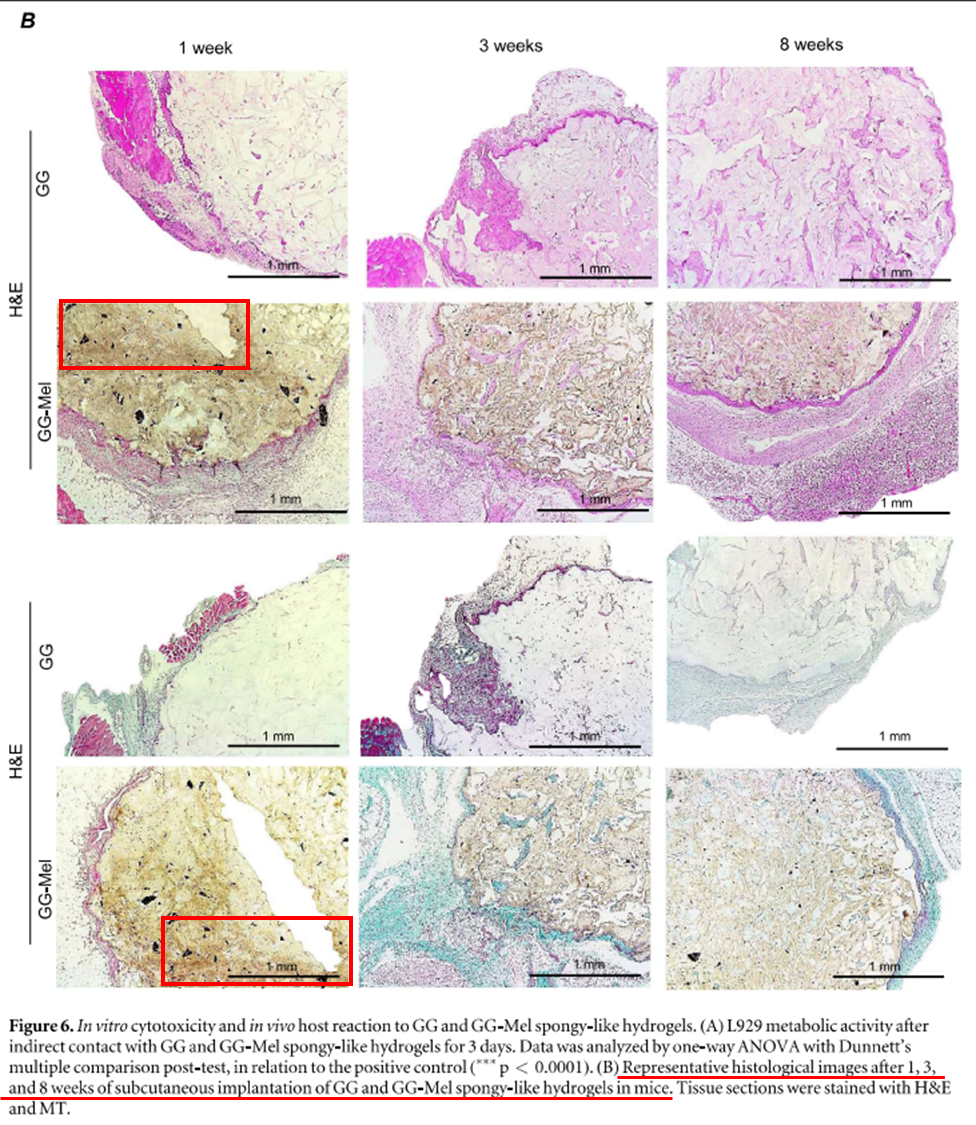
Carabus maleki: “There is an apparent overlap between two panels in Fig. 6B (red boxes), which is unexpected if the panels correspond to different representative histological images.”
Their first author Lucília Da Silva however proved that she doesn’t understand her own paper, and declared on PubPeer: “The overlap is intentional, as it was intended to show, within the same tissue area, both tissue organization and extracellular matrix deposition.”
Here’s another one, with João Mano:
Emanuel M. Fernandes, Vitor M. Correlo , João F. Mano , Rui L. Reis Novel cork–polymer composites reinforced with short natural coconut fibres: Effect of fibre loading and coupling agent addition Composites Science and Technology (2013) doi: 10.1016/j.compscitech.2013.01.021

Reis’s re-installment as Pisshead-in-Chief of I3BS was also duly celebrated by this fresh retraction:
Jae Seo Lee , Sang Jin Lee , Seok Bin Yang , Donghyun Lee , Haram Nah , Dong Nyoung Heo , Ho-Jin Moon , Yu-Shik Hwang , Rui L. Reis , Ji-Hoi Moon , Il Keun Kwon Facile preparation of mussel-inspired antibiotic-decorated titanium surfaces with enhanced antibacterial activity for implant applications Applied Surface Science (2019) doi: 10.1016/j.apsusc.2019.143675
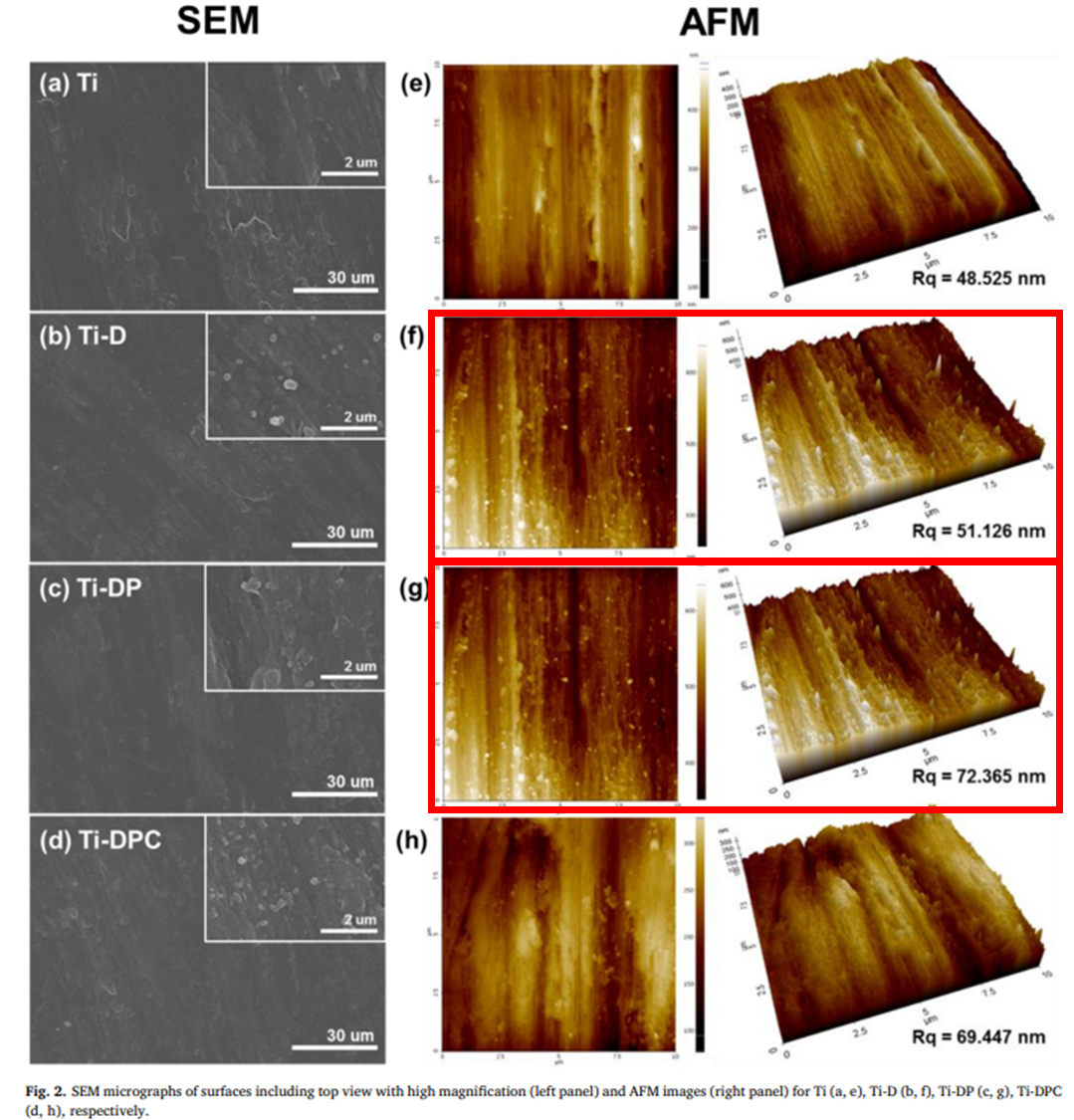
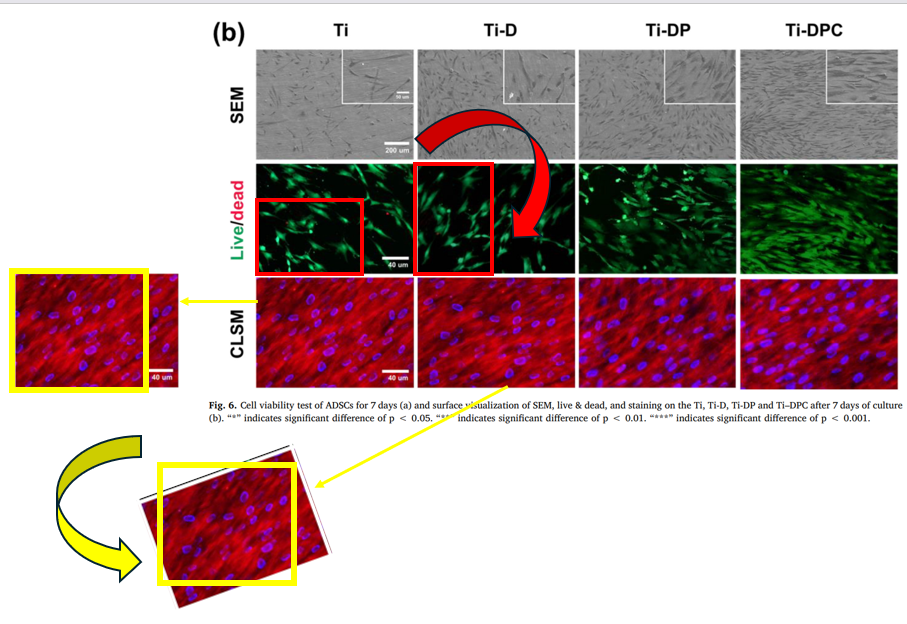
The recently issued retraction went:
“Following concerns raised post-publication in the public domain PubPeer – Facile preparation of mussel-inspired antibiotic-decorated t…, an investigation conducted on behalf of the journal by Elsevier’s Research Integrity & Publishing Ethics team identified concerns around the authenticity of the following figures/images:
– Figure 2 (f) and 2 (g) appear to depict the same source image but are described as scaffolds assigned to different treatments.
– Figure 6b (Ti-D – Live/dead) and 6b (Ti – Live/dead) appear to depict the same source image when inverted horizontally.
The authors were requested to provide comment on these concerns, as well as the original unprocessed image files to aid investigation. It was felt that the explanation and data provided were unsatisfactory in resolving these concerns.
The Editor has lost confidence in the results and conclusions of the article and has determined it should be retracted.”

The Kingdom of Rui Reis
“I think this story shows the debacle and corruption of entire research fields that become just a very expensive show of bad science-fiction. ” – Carabus Maleki

Serendipitously strengthened by novel unanticipated data
You may remember from August 2026 Shorts that Sholto David reported his blog post from 25 August 2026 another another antibody kerfuffle, where scientists used instead an antibody for pERK (phosphorylated form of Extracellular signal-Regulated Kinase) the wrong antibody for a totally unrelated protein PERK (Protein Kinase RNA-Like ER Kinase, also known as EIF2AK3).
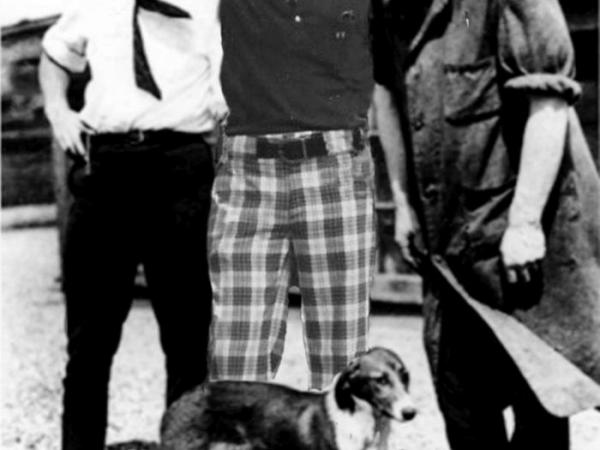
C Ronald Kahn and The Problem of Irreproducible Bioscience Research
“not everyone in the research community accepts that the problem requires such attention; some believe it is overblown.” -Jeffrey Flier, emeritus dean of Harvard Medical School
Well, now Sholto got a reply from a scientist! This paper features C Ronald Kahn, a major bigwig in Harvard:
Gurjit Singh , InSug O-Sullivan, Arivarasu Natarajan Anbazhagan, Ranjan K.C , Zeba Farooqui , Kaige Ma , Jun Wang, Fackson Mwale, Gina Votta-Velis , Benjamin Bruce , C. Ronald Kahn, Andre J. Van Wijnen, Hee-Jeong Im Loss of PKCδ/Prkcd prevents cartilage degeneration in joints but exacerbates hyperalgesia in an experimental osteoarthritis mouse model Gene (2024) doi: 10.1016/j.gene.2023.147920

Sholto David: “The authors have used Invitrogen’s, PA5-99447 which is a PERK antibody instead of the intended p-ERK.”
On 6 September 2026, a reply was posted by one of the authors. Not Kahn obviously, and not the lead author Hee-Jeong Im (also known as Hee-Jeong Im Sampen) from Veterans Affairs Medical Center and the University of Illinois Chicago, she couldn’t reply, because she was sanctioned and kicked out for fraud, as Retraction Watch reported in November 2023.
That is why we instead got a reply from Andre Van Wijnen, who in that paper only declared his adjunct affiliation with the University of Vermont. In his other day jobs, Van Wijnen is simultaneously professor at University of Connecticut in USA, and adjunct professor in The Netherlands and in Australia, plus founder and CSO at the biotech Extensor Bio and principal investigator at veterinary biotech Panthera Vax. Now, this is what Van Wijnen said about the use of the wrong antibody:
“We have verified that the identity of the ‘p-ERK antibody’ used in this paper is indeed PA5-99447 (Invitrogen). According to the manufacturer’s current documentation, PA5-99447 recognizes total PERK (EIF2AK3), rather than phosphorylated ERK1/2. Therefore, the results obtained with this antibody cannot support specific interpretations regarding ERK phosphorylation. However, this point does not invalidate the independent experimental evidence supporting the principal conclusion of the paper, as reflected in its title, regarding the role of PKC-δ in osteoarthritis. It should be noted that PERK levels have been linked to OA in other studies (e.g., see PMID: 27435272). Hence, while specific supporting statements related to the anticipated role of p-ERK in the pathophysiological activity of PKC-delta in OA would need to be reconsidered, the study may have been serendipitously strengthened by novel unanticipated data on PERK.”
Nobel Prize awaits this serendipitous discovery! The alternative explanations are that Van Wijnen is either that dumb or trolling, or maybe both.
Especially what with his friend Im being a sacked fraudster, and their common papers retracted in 2024, referencing the institutional investigation. Kim et al 2015 was retracted for “discrepancies in the reported sample sizes“, and “image elements […] used by the same author(s) for publication elsewhere in a different scientific context“, that latter issue was also why Kc et al 2015 was retracted in the same Journal of Cellular Physiology. Their paper Yan et al 2011 in Arthritis Research & Therapy was retracted because “Fig. 5B contains fabricated and/or falsified data“. Kc et al 2016 in Annals of the Rheumatic Diseases was retracted “figure 1A, B, C and E in this paper contain fabricated and/or falsified data that constitutes research misconduct“. Other papers by Im and Van Wijnen escaped retraction, like Kim et al 2010 in Arthritis & Rheumatism, or this one:
Hee-Jeong Im , Prasuna Muddasani , Viswanathan Natarajan , Thomas M. Schmid , Joel A. Block , Francesca Davis , Andre J. Van Wijnen , Richard F. Loeser Basic fibroblast growth factor stimulates matrix metalloproteinase-13 via the molecular cross-talk between the mitogen-activated protein kinases and protein kinase Cdelta pathways in human adult articular chondrocytes Journal of Biological Chemistry (2007) doi: 10.1074/jbc.m609040200


That fraudulent paper shares gel bands with another one by Van Wijnen and Im, in the same journal, with a similar title, and also never retracted:
asic fibroblast growth factor activates the MAPK and NFkappaB pathways that converge on Elk-1 to control production of matrix metalloproteinase-13 by human adult articular chondrocytes Journal of Biological Chemistry (2007) doi: 10.1074/jbc.m706508200


Van Wijnen published with other questionable characters: there are several papers of his on PubPeer with the husband and wife team at the University of Vermont, Janet and Gary Stein (PubPeer record). See for example Wu et al 2015, Shen et al 2003, Hassan et al 2006, Gutierrez et al 2007, or this:
Margaretha Van Der Deen , Hanna Taipaleenmäki , Ying Zhang , Nadiya M. Teplyuk , Anurag Gupta , Senthilkumar Cinghu , Kristen Shogren , Avudaiappan Maran , Michael J. Yaszemski , Ling Ling , Simon M. Cool , David T. Leong , Christian Dierkes , Jozef Zustin , Manuel Salto-Tellez , Yoshiaki Ito , Suk-Chul Bae , Maria Zielenska , Jeremy A. Squire , Jane B. Lian , Janet L. Stein, Gerard P. Zambetti, Stephen N. Jones, Mario Galindo, Eric Hesse, Gary S. Stein , Andre J. Van Wijnen MicroRNA-34c inversely couples the biological functions of the runt-related transcription factor RUNX2 and the tumor suppressor p53 in osteosarcoma Journal of Biological Chemistry (2013) doi: 10.1074/jbc.m112.445890

Elisabeth Bik: “Concern about Figures 5A and S3:
- Red boxes: Four lanes in Figure 5A’s left p53 panel look remarkably similar to four lanes in Figure S3’s left p53 panel
- In Figure S3’s left p53 panel only three lanes were expected, and the time points are not identical to those in Figure 5A.”
Or this typical trash about some microRNA targeting a gene in cancer:
Jason R Dobson , Hanna Taipaleenmäki , Yu-Jie Hu , Deli Hong , Andre J Van Wijnen , Janet L Stein, Gary S Stein , Jane B Lian , Jitesh Pratap hsa-mir-30c promotes the invasive phenotype of metastatic breast cancer cells by targeting NOV/CCN3 Cancer Cell International (2014) doi: 10.1186/s12935-014-0073-0

The Steins are also old friends of Carlo Croce, and here they all are with Van Wijnen, a paper they successfully corrected after Steins’ and Van Wijnen’s past employer, the University of Massachusetts; found them to be innocent angels:
Zhaoyong Li , Mohammad Q. Hassan , Mohammed Jafferji , Rami I. Aqeilan , Ramiro Garzon , Carlo M. Croce , Andre J. Van Wijnen , Janet L. Stein , Gary S. Stein , Jane B. Lian Biological functions of miR-29b contribute to positive regulation of osteoblast differentiation Journal of Biological Chemistry (2009) doi: 10.1074/jbc.m809787200

Determined to tack off all possible way to do science fraud, Van Wijnen also seems to engage in papermill activities, as his PubPeer record suggests!

The Citation Payola
“The proposition that a niche of citation brokers exists, opens our eyes to other transaction options..” . Smut Clyde
Van Wijnen’s collaboration with certain papermillers ZahraSadat Razavi (PubPeer record) and Madjid Soltani led to a peculiar citation irregularities. Their joint fabrication Sarmadi et al 2024 in Scientific Reports pretends to be about “vision transformers and convolutional neural networks in osteoporosis detection” but is in reality a citation delivery vehicle to Razavi and Soltani, and to other “citation magnets”, i.e. papers which are cited in blocks in random papermill products.
At the same time, their study Razavi et al 2024 about “CRISPR innovations in tissue engineering and gene editing” is a citation magnet itself, it was cited not just by other papers by Razavi and Soltani, but also by those with totally unrelated authors, for example Gu et al 2025.
Retraction Watchdogging
Unable to generate a benign explanation
The Duke University professor Dan Ariely was accused of fraud again and lost another paper. Once again, it was the three sleuths of Data Colada who exposed the fraud. Unlike his friend Francesco Gino, Ariely isn’t yet in any danger of sacking, although his past friendship with Jeffrey Epstein led to the closure of the Center for Advanced Hindsight at Duke which Ariely used to run.
The Duke University student newspaper The Chronicle reported on 3 September 2026:
“Dan Ariely, professor of business administration in the Fuqua School of Business, is once again under scrutiny after an article released Monday found evidence that he likely tampered with or fabricated data in an influential 2002 research paper on procrastination.
The findings — published in Data Colada, a blog run by three esteemed behavioral science professors that investigates and replicates academic research — identified four key “red flags” in the study’s data, which suggested the results were not possible without interference.
“We are unable to generate a benign explanation for all of the anomalies presented here,” the professors wrote. “Based on this evidence, we believe the data for Study 2 of Ariely and Wertenbroch (2002) were severely tampered with or fabricated to produce the desired results.”
After the founders of Data Colada contacted Ariely and his co-author Klaus Wertenbroch, a professor at business school INSEAD, with their discovery, Wertenbroch requested that the original article be retracted. “
This is the replication study by Kyle Hyndman and Alberto Bisin, and this is the retracted Ariely paper:
Dan Ariely , Klaus Wertenbroch Procrastination, Deadlines, and Performance: Self-Control by Precommitment Psychological Science (2002) doi: 10.1111/1467-9280.00441
The retraction from 2 September 2026 referenced the replication study and the two recent Data Colada blogposts (“Artificial Deadlines“, Part 1 and Part 2), and went:
“A research article published in the journal [1] that aims to replicate a study in the aforementioned article, has raised questions about the underlying data in the original study. A dataset believed to relate to the original study has been shared, but its authenticity and completeness cannot be confirmed by the lead author of that research. In addition, an investigation undertaken by Data Colada [2, 3] has called into question the veracity of the overall findings of the original publication. As a result, the second author has requested this article is retracted from the journal.
Due to details brought to light by the replication manuscript during the review process, lack of confidence in the underlying datasets, and the results of the investigation by Data Colada that call into question the veracity of the data in the original article, the Journal Editor can no longer attest to the reliability of the article’s findings. In line with the guidance issued by COPE, the Journal Editor retracts this article.
Both authors agree with the retraction.”
The first author and the corresponding author disagreed
A retraction for a major American haematologist: William Aird is professor of medicine at Harvard Medical School and practicing physician at Beth Israel Deaconess Medical Center. The first author is Aird’s mentee Ruhul Abid, who made it to professor at Brown University, and featured in this article:
Mad School of Brown University
“I have filtered out several hundreds biomedical research articles from Brown containing the words “western blot” in the text, and found out the usual, unavoidable ocean of manipulated data.” – Corrado Viotti

The paper is quarter a century old, but was flagged by Aneurus inconstans on PubPeer only in spring 2026:
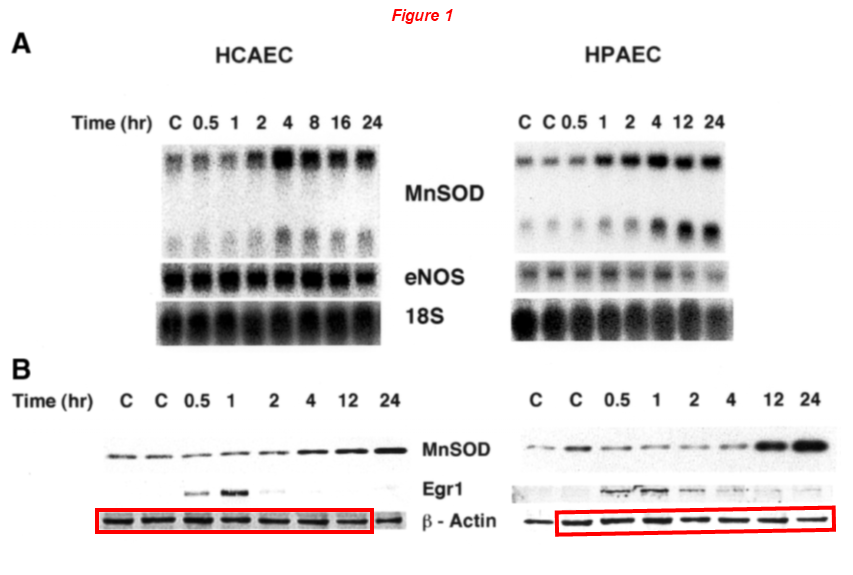
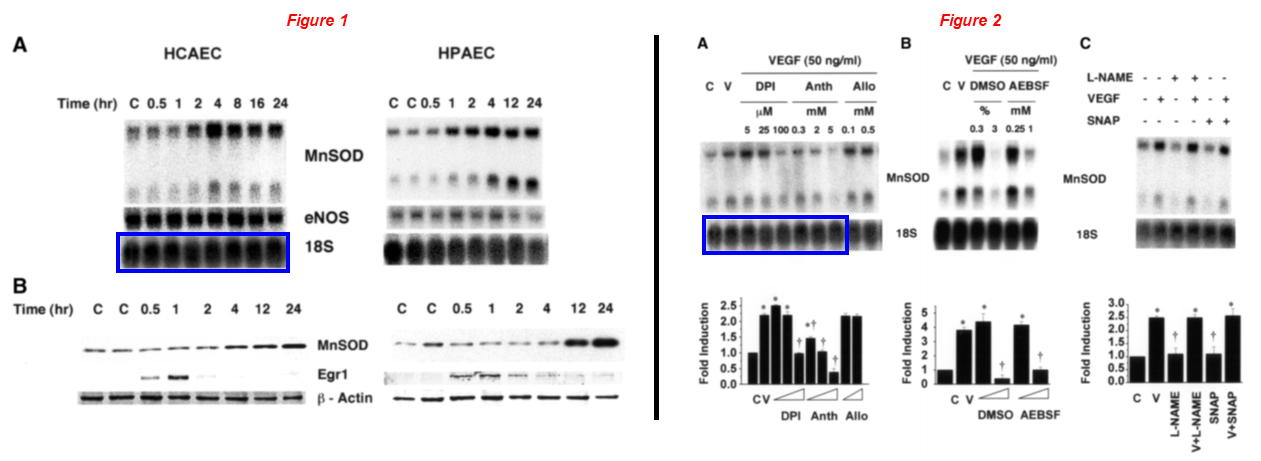
Md. Ruhul Abid , Jo C. Tsai , Katherine C. Spokes , Shailesh S. Deshpande , Kaikobad Irani , William C. Aird Vascular endothelial growth factor induces manganese‐superoxide dismutase expression in endothelial cells by a Racl‐regulated NADPH oxidase‐dependent mechanism FASEB journal (2001) DOI: 10.1096/fj.01-0338fje
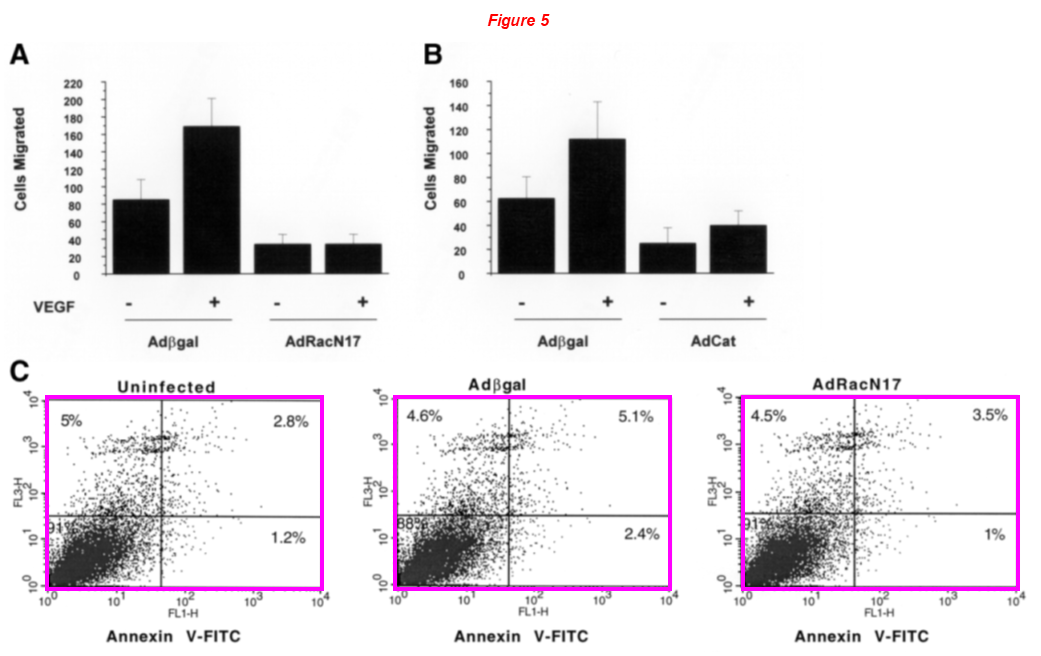
FASEB rarely retracts papers, but here they made an exception for some reason. The retraction was published on 2 September 2026:
“The retraction has been agreed due to concerns raised by third parties. Specifically, image duplications within Figure 1B, between Figure 1A and Figure 2A, and within Figure 5C have been detected, with the same panels being presented in a different scientific context. The corresponding author stated that the raw data were no longer available due to the time elapsed since publication. Nevertheless, the corresponding author and the first author cooperated with the investigation and provided their own assessment based on the available resources. They confirmed a high degree of similarity affecting the Western blot panels in question but maintained that, because the original source materials could not be located, unresolved uncertainty remained as to whether the panels were duplicated. They also disputed the characterization of the panels shown in Figure 5C as duplicated. However, the editors considered the response and supporting materials insufficient to resolve the concerns, as the similarities were found too extensive to be attributable to coincidence. Accordingly, the article has been retracted, as the editors have lost confidence in the results and conclusions presented. The first author and the corresponding author were informed of the retraction decision and disagreed with it. The remaining co-authors could not be reached.”
There was also data reuse with another paper:
Md. Ruhul Abid, Ivo G. Schoots , Katherine C. Spokes , Sheng-Qian Wu , Christina Mawhinney , William C. Aird Vascular endothelial growth factor-mediated induction of manganese superoxide dismutase occurs through redox-dependent regulation of forkhead and IkappaB/NF-kappaB Journal of Biological Chemistry (2004) doi: 10.1074/jbc.m408285200
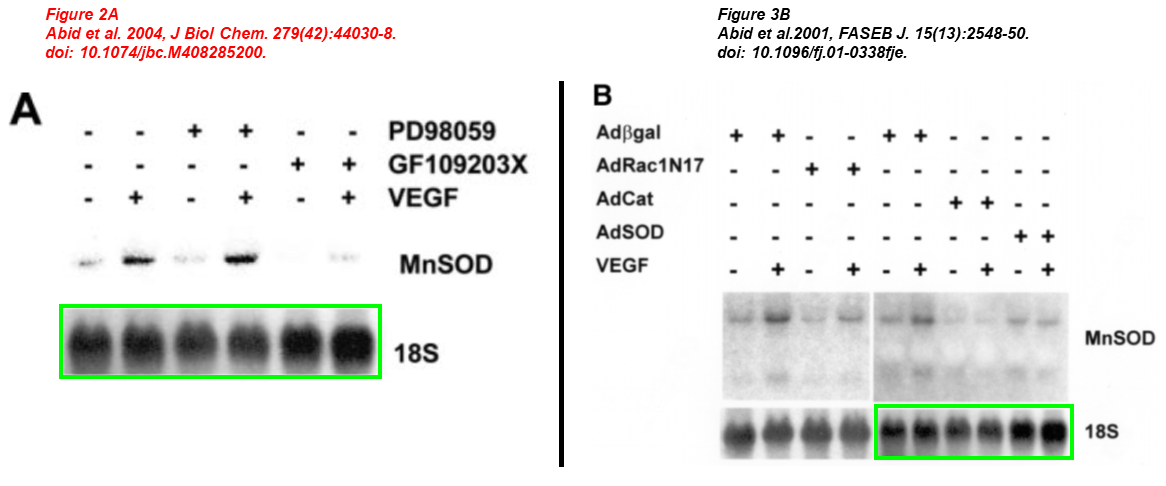
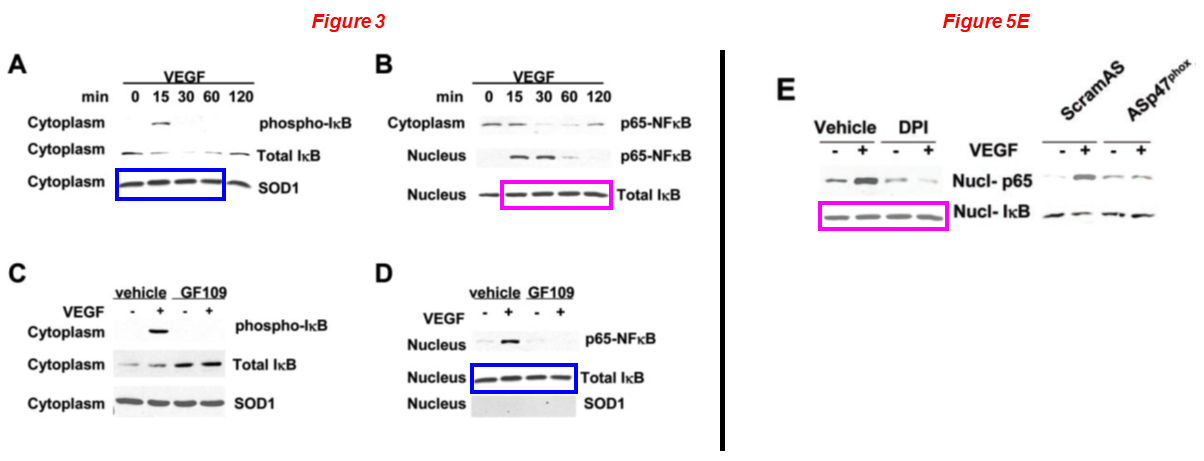
The same blot has been reused to describe Total IκB in Figure 3B and Nucl-IκB in Figure 5E (magenta boxes).”
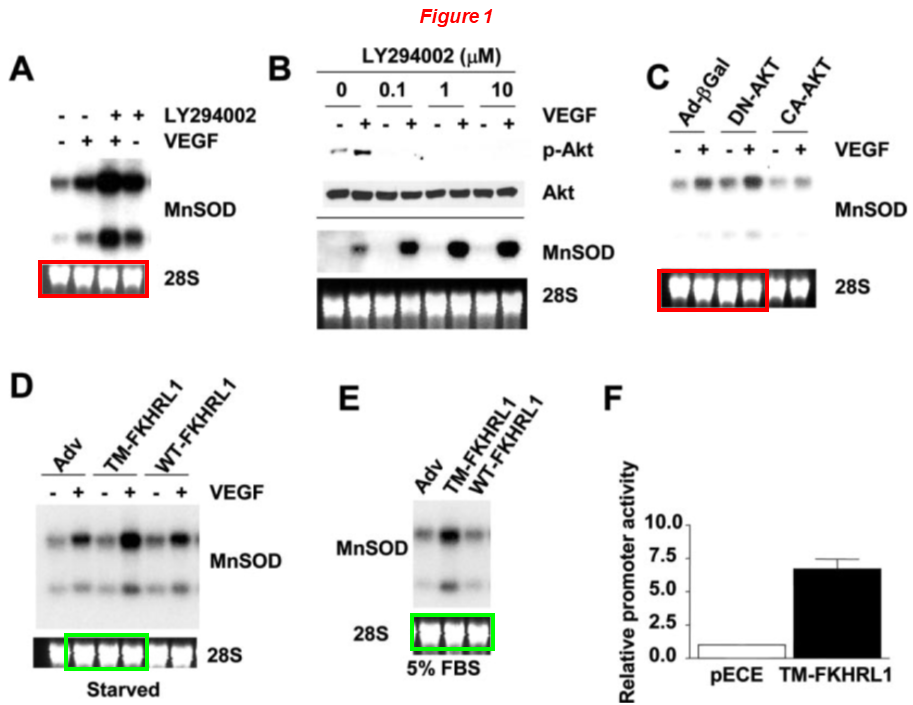
The same The 28S rRNA control has been used in Figure 1D and 1E, but conditions are different (green boxes).”
The data from that paper was reused here:
Md. Ruhul Abid , Shaodong Guo , Takashi Minami , Katherine C. Spokes , Kohjiro Ueki , Carsten Skurk , Kenneth Walsh , William C. Aird Vascular Endothelial Growth Factor Activates PI3K/Akt/Forkhead Signaling in Endothelial Cells Arteriosclerosis Thrombosis and Vascular Biology (2004) doi: 10.1161/01.atv.0000110502.10593.06

Aird has more papers on PubPeer, all with Abid.
Passion for drug discovery
And a retraction in France! Nicolas Lévy was since June 2022 and until May 2026 Chief Scientist Rare Diseases of the French pharma company Servier, we are informed he “founded several start-up biotech companies, illustrating his passion for drug discovery and his desire to transform his academic research into medicines“, one of those surviving companies is ProGeLife. Before coming to Servier, Levy was director of an INSERM lab at Aix-Marseille University and head of the department at the Timone Hospital in Marseille. There, the infamous Didier Raoult was his boss, they also published together and collaborated on the pandemic response in 2020. Back thne, Levy defended Raoult from all criticism:
““You might not find him likeable, but that’s not the point,” analyzes Nicolas Lévy, head of the genetics department at Timone in Marseille. “What is true is that he’s a visionary; he built an infectious disease structure unique in Europe. And if he didn’t have the flaws he does, particularly his tenacity, he wouldn’t have succeeded.””
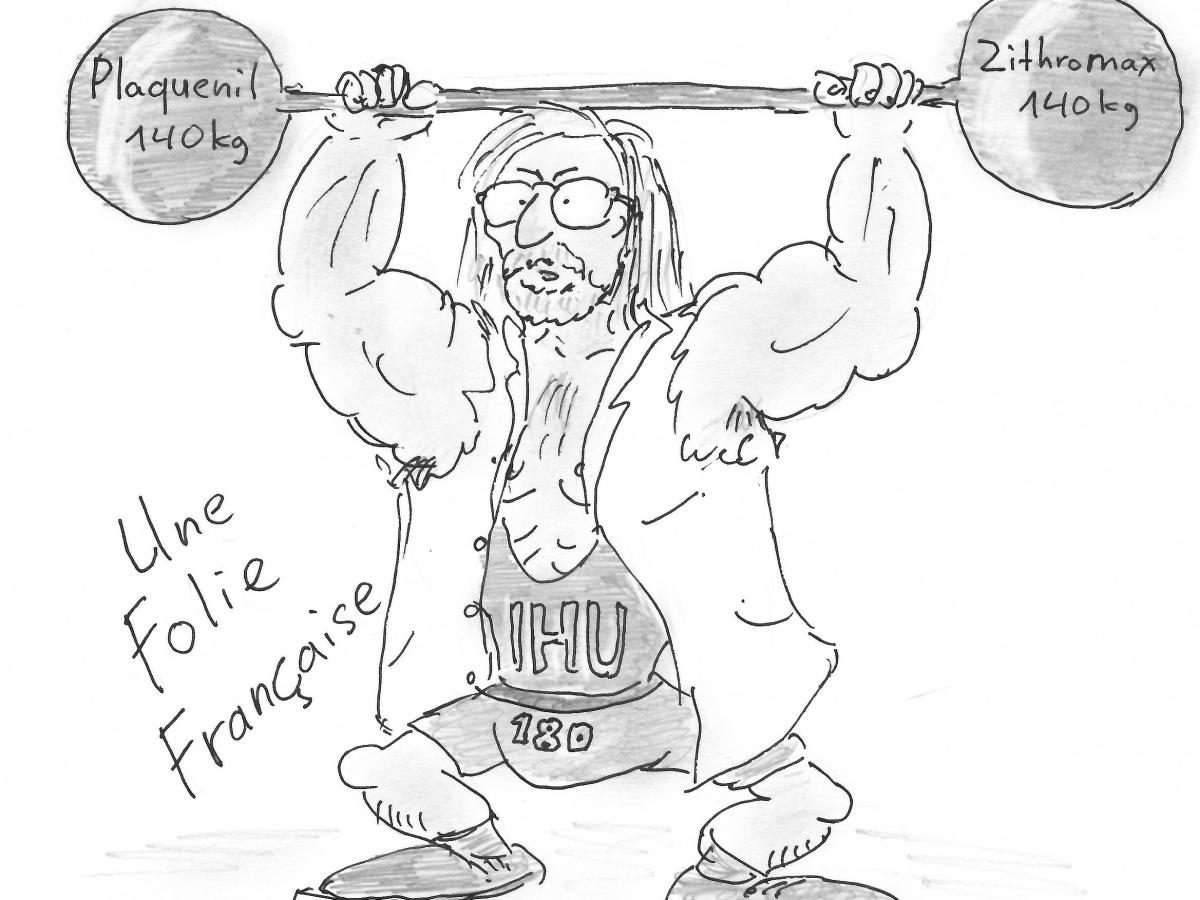
Raoult. Une folie française: book review by Alexander Samuel
A critical review of a recent book about chloroquine guru Didier Raoult and the many French politicians who let him operate above the law.
Raoult lost countless papers to retractions by now, mostly for ethics breaches, apparently at least 900 of his human research studies lacked an ethics approval (Frank et al 2026). But now also Levy lost a paper to a retraction, he is first and corresponding author here:
Nicolas Lévy , Adeline Martz , Anne Bresson , Catherine Spenlehauer , Gilbert De Murcia , Josiane Ménissier-de Murcia XRCC1 is phosphorylated by DNA-dependent protein kinase in response to DNA damage Nucleic Acids Research (2006) doi: 10.1093/nar/gkj409

Fig 1B
The issue was reported by the pseudonymous sleuth Claire Francis to the journal’s editors, who on 31 March 2026 issued an Expression of Concern “regarding potential image irregularities in Figure 1B of the above article, which were also raised on PubPeer“.
The Retraction followed on 1 September 2026:
“In November 2025, the Editors were made aware of concerns regarding potential image irregularities in Figure 1B of the above article, which were also previously raised on PubPeer (https://pubpeer.com/publications/CE8559963472A406E479A8477BA600#1). These concerns relate to the apparent duplication of input western–blot bands for Ku70 and Ku80. An Expression of Concern was published in March 2026 (https://doi.org/10.1093/nar/gkj409 ).
Subsequent image analyses by the journal also revealed splicing between the various IP blots in Figure 1B.
The first author was unable to provide the original data. The Editors therefore escalated the matter to the Scientific Integrity Officer at the institution where the research was conducted. Their investigation not only affirmed the earlier concerns but also identified splicing in Figure 3D and both duplication and rotation of a micrograph between Figures 6A and 6B.
Because the questioned figures are distributed across interaction, mechanistic, and functional experiments, and because the original data is no longer available, the Editors determined that, in totality, the issues detailed above undermine their confidence in the results and conclusions reported in the article and decided to retract the article. “
My wild guess is that it was INSERM and certainly not Aix-Marseille University who investigated Levy. Maybe their findings also explain why he now left Servier. Because he has more bad stuff on PubPeer. Like these two clinical papers sharing data in different context:
- N. Wein , M. Krahn , S. Courrier, M. Bartoli, E. Salort-Campana , K. Nguyen , C. Fernandez , J. Pouget , C. Fossat , D. Depetris , F. Leturcq , P. Cau, N. Levy Immunolabelling and flow cytometry as new tools to explore dysferlinopathies Neuromuscular Disorders (2010) doi: 10.1016/j.nmd.2009.08.004
- Martin Krahn, Nicolas Wein , Marc Bartoli , William Lostal , Sébastien Courrier, Nathalie Bourg-Alibert , Karine Nguyen , Christophe Vial , Nathalie Streichenberger , Véronique Labelle , Danielle DePetris , Christophe Pécheux , France Leturcq, Pierre Cau, Isabelle Richard , Nicolas Lévy A naturally occurring human minidysferlin protein repairs sarcolemmal lesions in a mouse model of dysferlinopathy Science Translational Medicine (2010) doi: 10.1126/scitranslmed.3000951


In May 2021, Levy explained on PubPeer that the image reuse was intentional and agreed with the editors, and as for the flow cytometry: “Often FACS analyses show similar patterns without being identical” and anyway, “the message of our publication is not altered“.
Another one by Levy with his Aix-Marseille University, colleague Pierre Cau:
Sophie Perrin  , Jonathan Cremer , Olivia Faucher , Jacques Reynes , Pierre Dellamonica , Joëlle Micallef , Caroline Solas , Bruno Lacarelle , Charlotte Stretti , Elise Kaspi , Andrée Robaglia-Schlupp , Corinne Nicolino-Brunet , Corine Nicolino-Brunet Catherine Tamalet , Catherine Tamalet , Nicolas Lévy, Isabelle Poizot-Martin , Pierre Cau , Patrice Roll HIV Protease Inhibitors Do Not Cause the Accumulation of Prelamin A in PBMCs from Patients Receiving First Line Therapy: The ANRS EP45 “Aging” Study PLOS One (2012) doi: 10.1371/journal.pone.0053035


Cau informed on PubPeer in July 2026 about Fig 1 that he and his colleagues “are looking into this and will search for the original images, both in the laboratory notebooks from that period and in the archives of the Odyssey imaging system“, while wishing “to emphasize that the main finding illustrated in this figure […] is independently corroborated by the data shown in Supplementary Figures S2 and S3“. Problem is, Fig S3 has the same problem! The first author Sophie Perrin then tried to prove something with the low resolution version of the original images.
Here another collaboration by Levy:
Sophie Blondel , Anne-Laure Jaskowiak , Anne-Laure Egesipe , Amelie Le Corf , Claire Navarro , Véronique Cordette , Cécile Martinat , Yacine Laabi , Karima Djabali , Annachiara De Sandre-Giovannoli , Nicolas Levy , Marc Peschanski , Xavier Nissan Induced pluripotent stem cells reveal functional differences between drugs currently investigated in patients with hutchinson-gilford progeria syndrome Stem Cells Translational Medicine (2014) doi: 10.5966/sctm.2013-0168


The last author and Vice President for Research at Université Evry-Paris Saclay, Xavier Nissan, replied in May 2021 that “Of course it doesnt change the message of the paper” and indicated a possibility of a correction, which of course never happened. Also here, Nissan ominously wished his critics “Have a nice day“:
Xavier Nissan , Sophie Blondel , Claire Navarro , Yves Maury , Cécile Denis , Mathilde Girard , Cécile Martinat , Annachiara De Sandre-Giovannoli , Nicolas Levy , Marc Peschanski Unique preservation of neural cells in Hutchinson- Gilford progeria syndrome is due to the expression of the neural-specific miR-9 microRNA Cell Reports (2012) doi: 10.1016/j.celrep.2012.05.015


Nissan protested that the “image refers to the same cells, same staining and the same treatment“, and for the flow cytometry: “I dont have anymore access to the raw datas to check what happened“.
In 2010, Levy and his colleagues retracted a clinical study, Ramachandran et al 2009, because the authors “detected a number of errors“, they republished it three years later in another journal and without one author, as reported in 2013 by Retraction Watch.
Donate!
If you are interested to support my work, you can leave here a small tip of $5. Or several of small tips, just increase the amount as you like (2x=€10; 5x=€25). Your generous patronage of my journalism will be most appreciated!
€5.00


In this link (Madjid Soltani – Balsillie School of International Affairs) Fraud Madjid Soltani has claimed that “He serves on the Editorial Board of several journals, including MVR, RSER, ECM, and Applied Energy.” which is completely false; he was NEVER EVER registered on the editorial board of these journals. If you search google give you such a misinformation based on his baseless claim in his academic website.
Plus, Leonid I would invite you to check some of his paper in your field like (Paradoxical angiogenic activation under anti-VEGF therapy: tip cell hyper-sprouting and vessel remodeling drive inefficient vascularization in multiscale tumor simulations | BMC Cancer | Springer Nature Link)., the Figs (1-6) of this nonsense crap are really funny… lol … he uses many various affiliations, something unbelievable…
LikeLike
I have never heard of The Innovation which kinda sums up the huge importance of this journal. Looks like another Elsevier cesspool with pumped up IF and exorbitant APCs.
LikeLiked by 1 person
An astonishing clinical trial, innovation indeed!
LikeLike
Quantum physics is in vogue, and not just among Catholics: a French astrophysicist finds the foundations of Buddhism in it (or the other way around, I didn’t quite catch which). In French, sorry: https://www.lemonde.fr/le-monde-des-religions/article/2026/08/30/laurent-nottale-astrophysicien-la-vacuite-dans-le-bouddhisme-affirme-le-meme-principe-que-la-relativite-d-einstein_6760670_6038514.html
LikeLiked by 1 person
Well Nottale is a Buddhist!
LikeLike
How much did those pseudoscientists cash in for agreeing to inject Ackman’s daughter with mitochondria? Their eyes must have turned into dollar signs the second he called. Ackman got played hard.
LikeLiked by 1 person
Ackman’s financial assistance to MIT’s Sabattini and Harvard’s Francesca Gino was motivated by his desire to “help the little guy” fight the big institutions. Hardly true –note that Gino’s faculty salary was the fifth highest at Harvard, over a million a year. Now that she has lost her payday and court case (and Harvard is suing her), she is freelancing, selling her business secrets to “senior” “ambitious” people. Too bad her insights are made up!
LikeLiked by 2 people
Wow, is Van Wijnen the Dutch for “giant balls”. I had to check the PubPeer entry to prove he really replied “Therefore, the results obtained with this antibody cannot support specific interpretations regarding ERK phosphorylation. However…” turns out PERK is actually involved as well. That is some Trump-level B.S. Just when you think you’ve seen everything!
LikeLiked by 1 person
Wow, amazing. Imagine a doctor telling you, “I gave you the wrong medication, but it turns out the drug was helpful for your condition!”
LikeLike
Pingback: De linke weekendbijlage (37-2026) - Kloptdatwel?
That’s rather a non-university, but who cares if the idiot involved is white
Ah shit, here we go again. https://retractionwatch.com/2024/12/13/researcher-who-received-settlement-to-leave-university-of-iowa-wont-be-starting-new-job/
LikeLiked by 1 person
…meanwhile in Poland:
https://forumakademickie.pl/prof-teofil-jesionowski-doktorem-honoris-causa-politechniki-bydgoskiej/?msg=moderate&add_comment=0#add_comment
https://put.poznan.pl/artykul/rektor-politechniki-poznanskiej-odznaczony-medalem-sztabu-generalnego-wojska-polskiego
LikeLike
A classic. When academia is closing ranks around their peer accused of misconduct, they give him awards. Also to warn critics
LikeLike