
Inspector Voinnet, Wollman in fraud-overdrive, and Farewell to Jessus
Catherine Jessus resigned, Olivier Voinnet solves the crime he was suspected of, and their mutual investigator Francis-Andre Wollman might want to investigate his own papers
By Leonid Schneider, on research integrity, biomedical ethics and academic publishing
Catherine Jessus resigned, Olivier Voinnet solves the crime he was suspected of, and their mutual investigator Francis-Andre Wollman might want to investigate his own papers
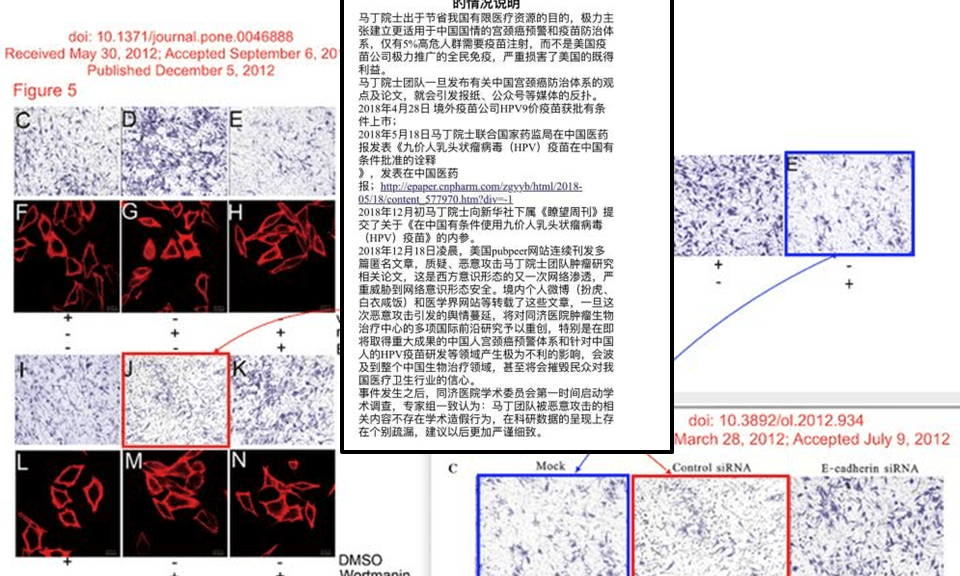
Manipulated data in 17 papers from one cancer research lab in China gets flagged on PubPeer. It ends with the university hospital in Wuhan issuing a secret statement accusing the US pharma giant a Merck of a conspiracy to slander a Chinese Academy member, Dr Ding Ma.

Professor Ruben Plentz chose to focus his career on clinical medicine in Bremen, despite his tremendous academic achievements in cancer research. Was it because malicious critics harassed him with frivolous investigations and corrections, envious at all those peer-reviewed cancer cures the great doctor invented?
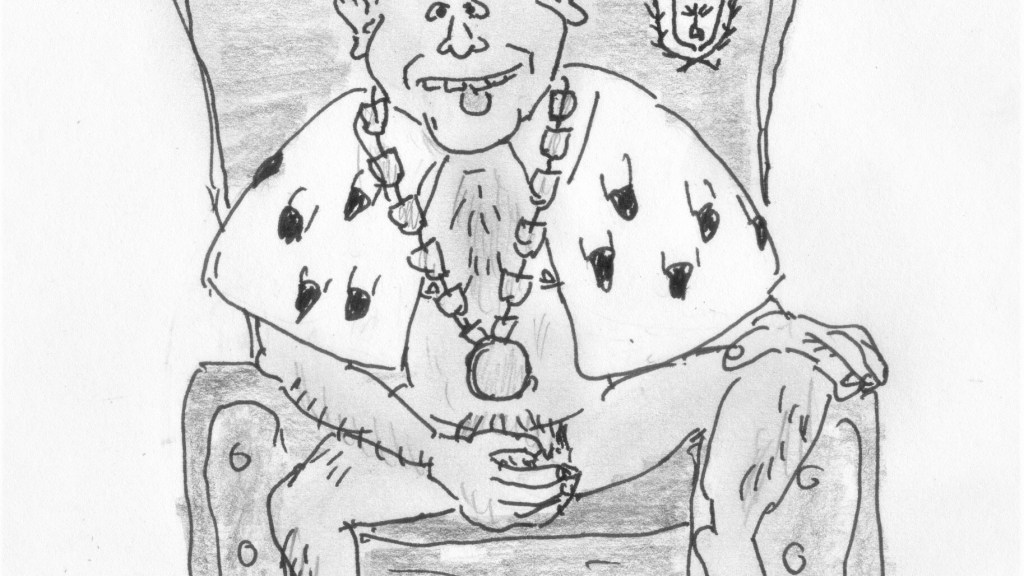
On 27 December 2018, I received an email from the Italian Office for Protection of Personal Data. A certain Professor Giorgio Zauli has reported me for publishing an official letter his University of Ferrara sent to me on his behalf.
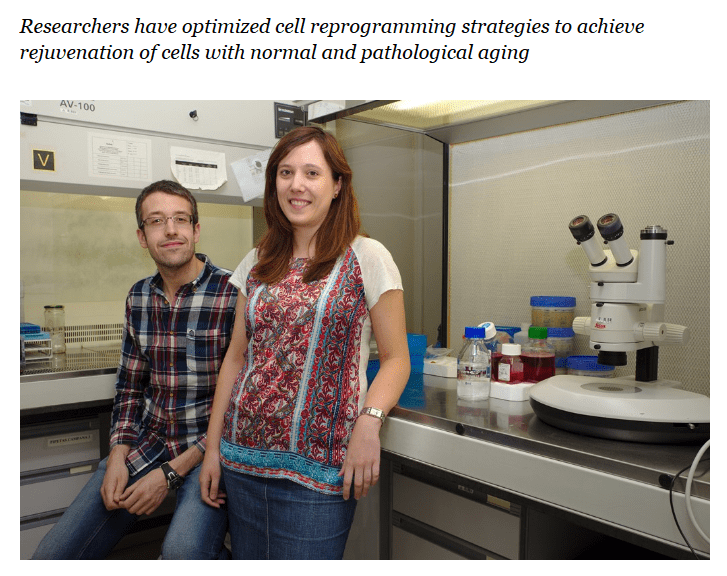
The 2015 Nature Cell Biology paper by the Spanish cancer researcher Carlos Lopez-Otin and his US partner George Q Daley, stem cell titan and dean of Harvard Medical School, is being retracted. First author and Lopez-Otin’s student Clara Soria-Valles caused Daley even more trouble: her next groundbreaking paper was meant to be already published, but it is not even submitted and might never be.
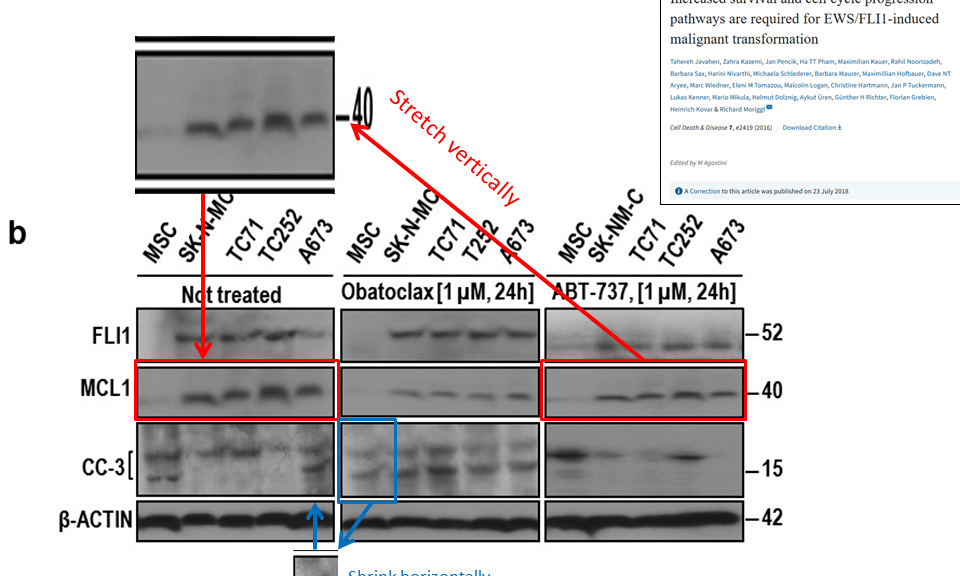
Too many scientists defend the practice of not probing for loading controls for each protein gel. They say a “library” method perfectly suffices, when one separate loading control gel is run once for reference. Such sloppiness can sometimes be a hint of even worse practices taking place.
Eric Lam is yet another of the many “Curing Cancer with Photoshop” researchers which PubPeer is full of. This professor of molecular Oncology at Imperial College in London is responsible for several papers with duplicated gel bands, but does it matter? He has 250 more.

Two and a half years after Maria Fousteri was found guilty of scientific misconduct by her former employer, the Leiden University Medical Center (LUMC), exactly nothing at all happened. ERC and Molecular Cell ignored LUMC letters from June 2016, while Fouster’s British co-authors interfered to save own papers. Of 4 scheduled retractions, none took place.
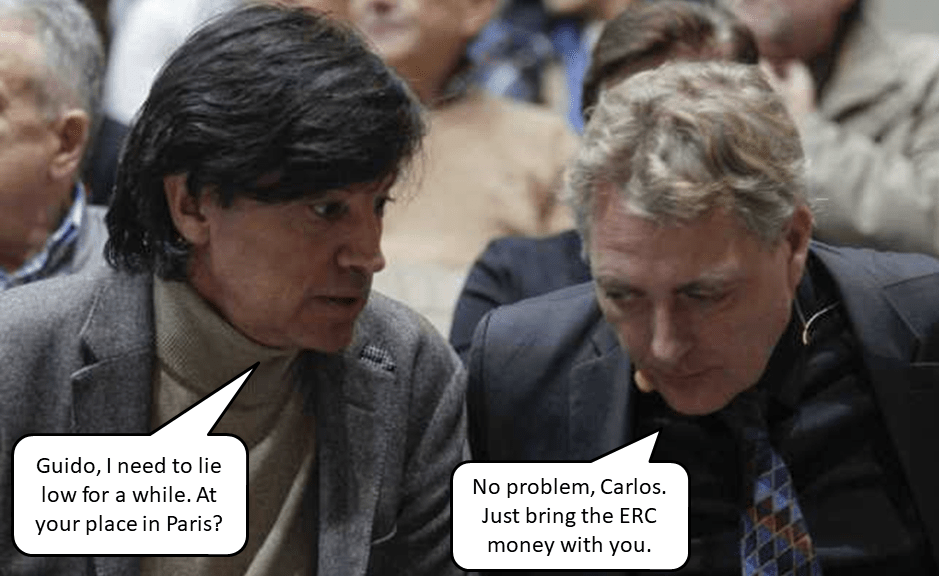
Following my reporting, the cancer researcher Carlos López-Otín abandoned his ERC-funded 36-member-strong “Degradome” lab at the University of Oviedo in Spain and moved in with his collaborator in Paris, France, Guido Kroemer. Yet Lopez-Otin’s data integrity issues seem as poppycock compared to what Kroemer and his life partner Laurence Zitvogel dished out to the scientific community.

The newspaper l’Express reported that Academie de Sciences commissioned an investigative report about the papers of former CNRS interim president Anne Peyroche, and that CNRS and the French Ministry of Research tried to suppress it. Peyroche herself could not be heard, because she is hospitalised since the affair started. So her co-authors took that as opportunity to blame Peyroche for every fake figure. Meanwhile, duplicated data was found even in Research Minister’s Frederique Vidal’s paper.
Have a WordPress.com account? Log in now.

