

Not many pre-retirement age professors abandon their running laboratories for a sabbatical to start anew as a young investigator in a different country. Yet this is what the 60 year old cancer researcher Carlos López-Otín did. This ERC-funded professor of Biochemistry and Molecular Biology left behind his 36-member-strong “Degradome” lab at the University of Oviedo in Spain and moved in with his collaborator in Paris, France, another degradome (autophagy and apoptosis) researcher Guido Kroemer.
That happened after my reporting uncovered numerous instances of inappropriate research data handling and publication from the Lopez-Otin lab, following his 2017 Mentoring Award issued by Nature. Who is going to mentor his over two dozens of postdocs, PhD and undergraduate students in Oviedo now, is anyone’s guess. But Lopez-Otin is now Professeur des universités-praticien hospitalier (PU–PH) at the Centre de Recherche des Cordeliers (CRC), which Kroemer is deputy director of.
The issues with Lopez-Otin’s research publications were mostly about re-used loading controls, retouched images and original data which did not match the published figures. It pales however when compared to what Kroemer himself has published, and this post will present some of that PubPeer evidence of duplicated gel bands. Maybe this is why Lopez-Otin moved in with Kroemer: research integrity is a relative issue, especially in France. Kroemer even signed that notorious CNRS Stalinist letter in defence of data manipulations and against whistleblowing and critical journalism.
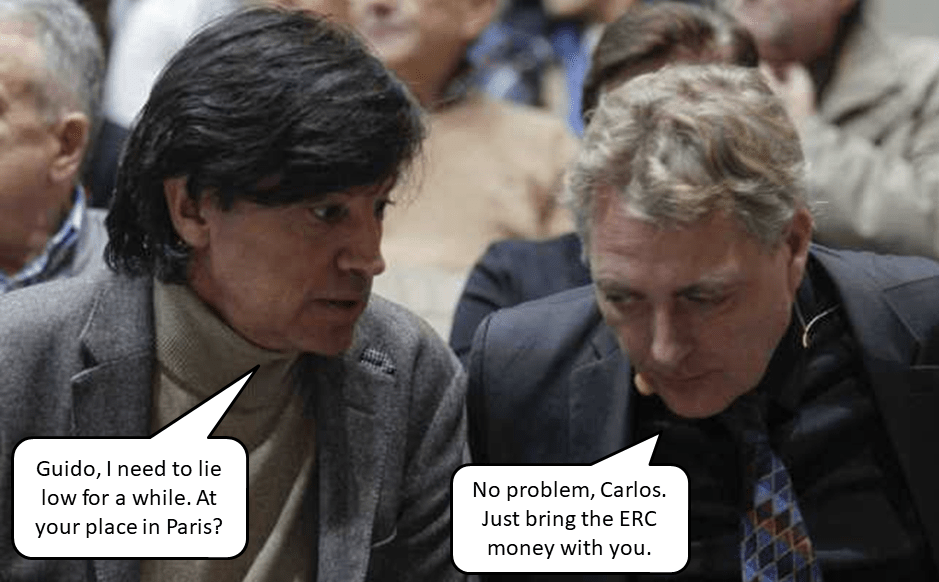
Lopez-Otin departure from Oviedo was reported by the Spanish newspaper La Nueva Espana already in July 2018:
“I do not know when Carlos Lopez Otín will return to the University of Oviedo”, said yesterday the rector, Santiago García Granda, who considers the stay of Professor of Molecular Biology at the University Pierre and Marie Curie in Paris as a natural matter. “Moving is a normal thing”. […]
The temporary departure of Otín, García Granda said,is a part of the normal trajectory of the researchers: “He asked and was granted,” said Rector, who said that the professor “went alone” to work with one of his Gallic colleagues”.
The Gallic host of this refugee from Hispania was not named, but it is most obviously Kroemer. Lopez-Otin’s is associated with Kroemer’s department Apoptose, cancer, immunité at the CRC. I tried to find out what happened with Lopez-Otin’s fresh ERC grant of €2.5 million, awarded for 2017-2022, and whether the money stayed back in Oviedo or travelled with its owner to France to meet Kroemer. But unfortunately ERC does not communicate with me, and these EU funders of elite science do not seem to believe in research integrity anyway. In any case, ERC million-heavy grants are known to open hearts and minds, only the eyes stay closed, strangely.

My first article about Lopez-Otin appeared in December 2017, on the occasion of his Nature Mentoring Award, it described the PubPeer evidence of data manipulations in his papers. Then, in May 2018, my regular contributor Smut Clyde, discovered a “perennial Northern Blot“, which appeared in no less than 23 different papers from Lopez-Otin lab, over a period of 12 years. When my last article from August 2018 addressed the mismatch between the original research data and the presented results in a Nature Cell Biology paper, Lopez-Otin was already hiding in Paris with Kroemer, appreciating the French culture, cheeses and the country’s special variety of institutionalised research fraud.
That elite journal publication earned on October 4th an editorial note:
“Editor’s Note: We would like to alert readers that the reliability of data presented in this manuscript has been the subject of criticisms, which we are currently considering. We will publish an update once our investigation is complete.”
A key contributor to that study Soria-Valles et al Nature Cell Biology, 2015 was George Q Daley, Dean of Harvard Medical School and one of the most influential people worldwide in the field of stem cell research. After my May 2018 article and the comments it ensued, Daley set up a replication effort to reproduce the results he and Lopez-Otin published. At least two people were assigned to that project. The first author Clara Soria-Valles was not part of it though. She used to be a PhD student of Lopez-Otin’s, delegated to the Daley lab, where she remained as postdoc. In April 2018 however, Soria-Valles left Harvard, just when the post-publication peer review debate of her paper took off on PubPeer and the comment section of my site. Another paper of Soria-Valles’ was about to be submitted for publication to a stem cell society journal, but the study’s future and reliability are not sure, especially since all of its appointed authors left Daley lab by now.
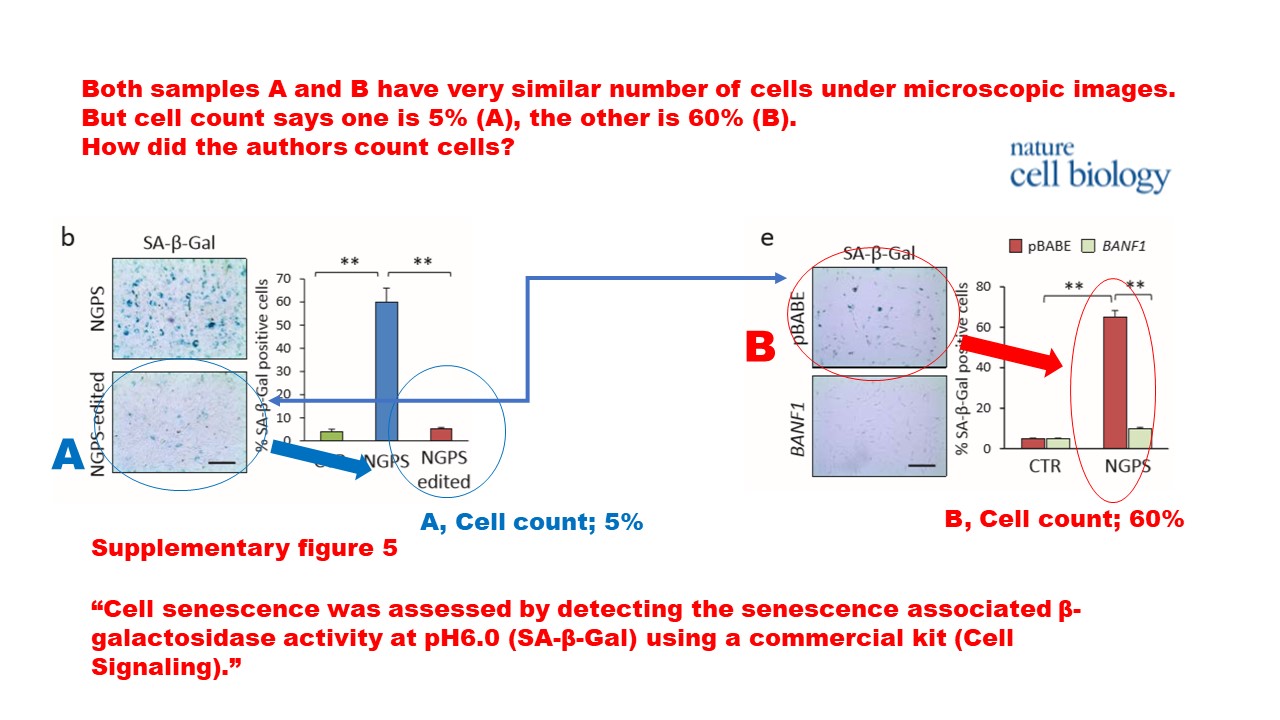
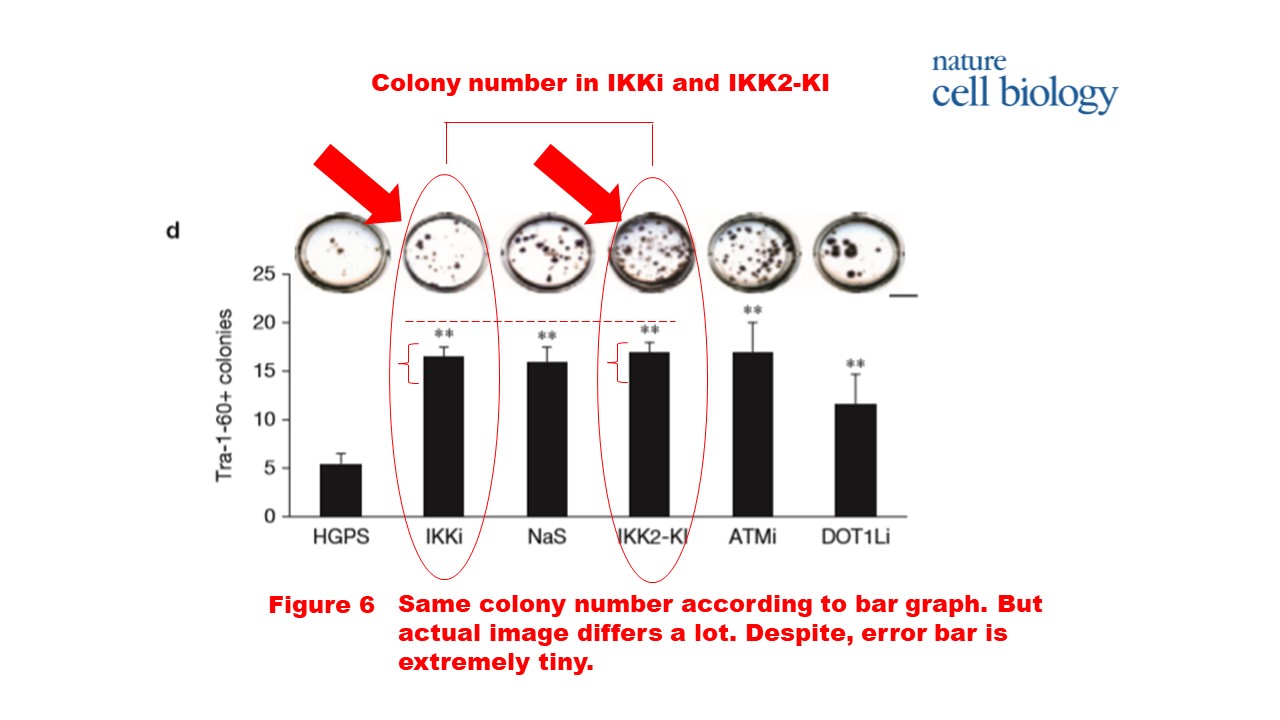
For the Nature Cell Biology paper, Soria-Valles’ special contribution was the cell colony-counting technique, and those were the results which the commenters on my site and on PubPeer could make neither head nor tail of. Here are some examples, annotated by PubPeer users:
According to my source, Soria-Valles
“is not looking for her raw data to correct Nature Cell Biology, even though i) the journal published a comment last week; ii) Freije (another co corresponding of the paper) is contacting with all authors on the paper”
Jose Maria Perez Freije is professor at University of Oviedo, now doing the job of saving that paper without the help of Lopez-Otin or anyone else. Incidentally, Soria-Valles’ second co-author on her Nature Cell Biology paper is her fiancée Fernando Garcia Osorio, who also did PhD with Lopez-Otin and in this regard is responsible for a rather problematic paper of his own, Osorio et al Genes & Development 2012.
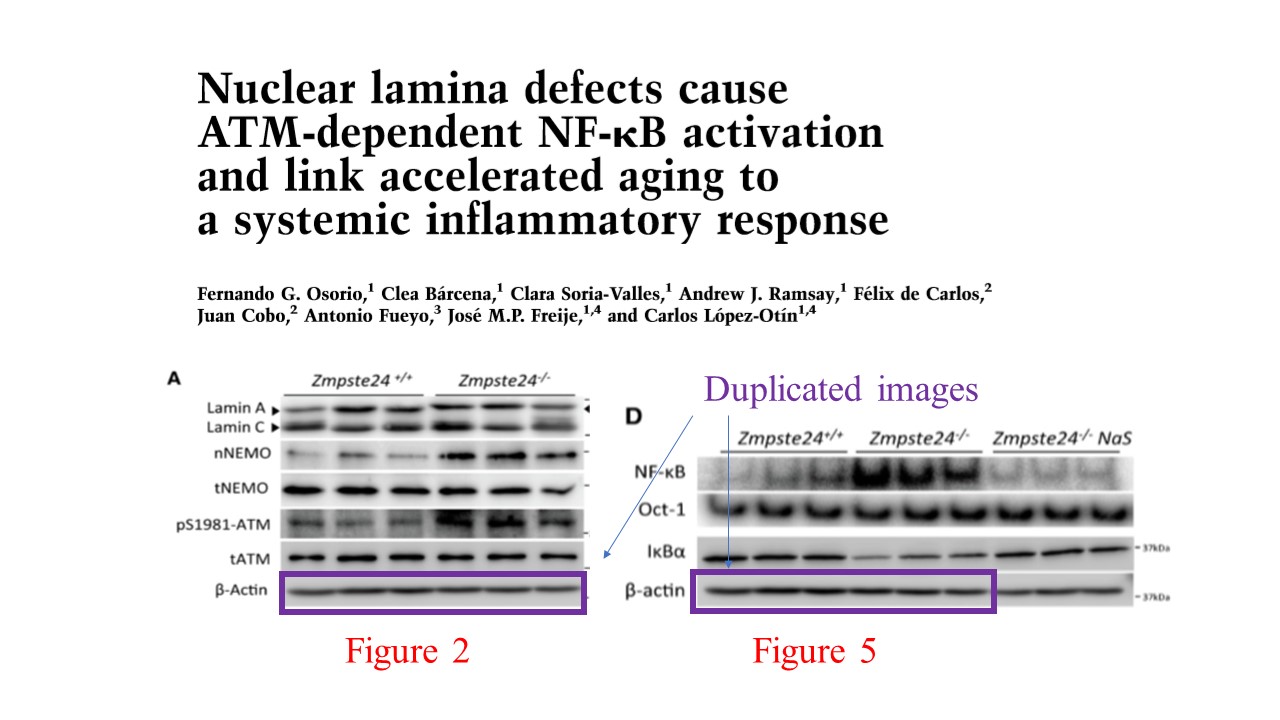
Did Soria-Valles and Osorio meet in a “creative Figure Preparation” course at Lopez-Otin lab? More on PubPeer.
Daley’s lab now published a preprint, Powers et al 2018. Apparently, for Biorxiv one duplicated and one Photoshop-assembled loading control were good enough. Will a “better” version be produced for a proper journal, with impact factor?
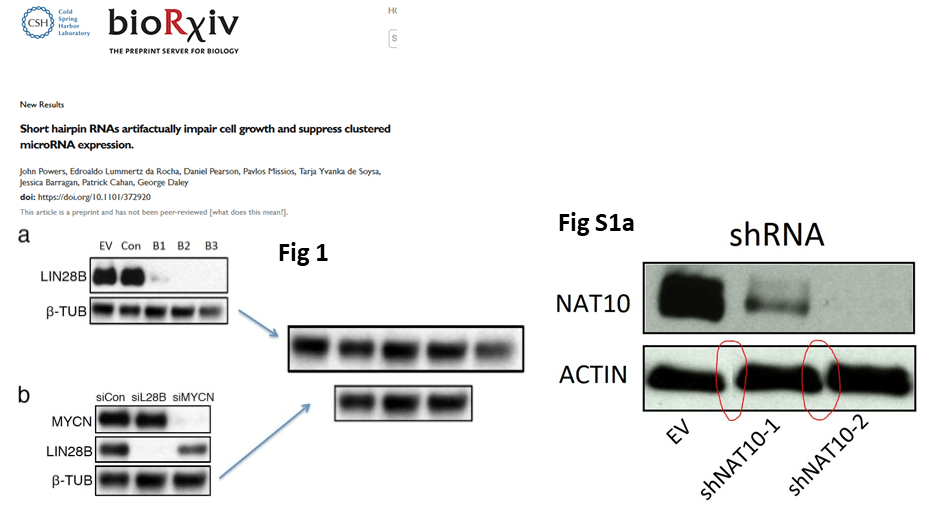
It is a mess, and probably very stressful for everyone involved, and certainly the last thing Lopez-Otin, a hero of Spanish and international cancer research at the peak of his fame, needed. One fully understands why he left behind his huge lab and all the hassle in Oviedo and went to Paris: who wouldn’t? Kroemer is in this regard an excellent choice of a host. Lopez-Otin’s data integrity issues can seem as poppycock compared to what Kroemer and his life partner Laurence Zitvogel, based at the institute Gustave Roussy, dished out to the scientific community. Le Monde described this couple as an “explosive tandem”, it might just as well apply to their PubPeer record.
This is for example what Zitvogel and Kroemer produced in the highly impactful journal Nature Medicine, Apetoh et al 2007:

The relevant PubPeer thread elucidates that the blank gel fragments highlighted with colour circles look suspiciously similar up to the most minor details, not just in that Figure 3A. It would of course be interesting to know what the real western blots of those samples probed with those antibodies looked like. Or of their loading controls, because apparently also there things got duplicated out of every reasonable context.
Or how about this apparently duplicated set of Western blot bands in a Kroemer & Zitvogel co-production, published in EMBO Journal as Criollo et al 2010?
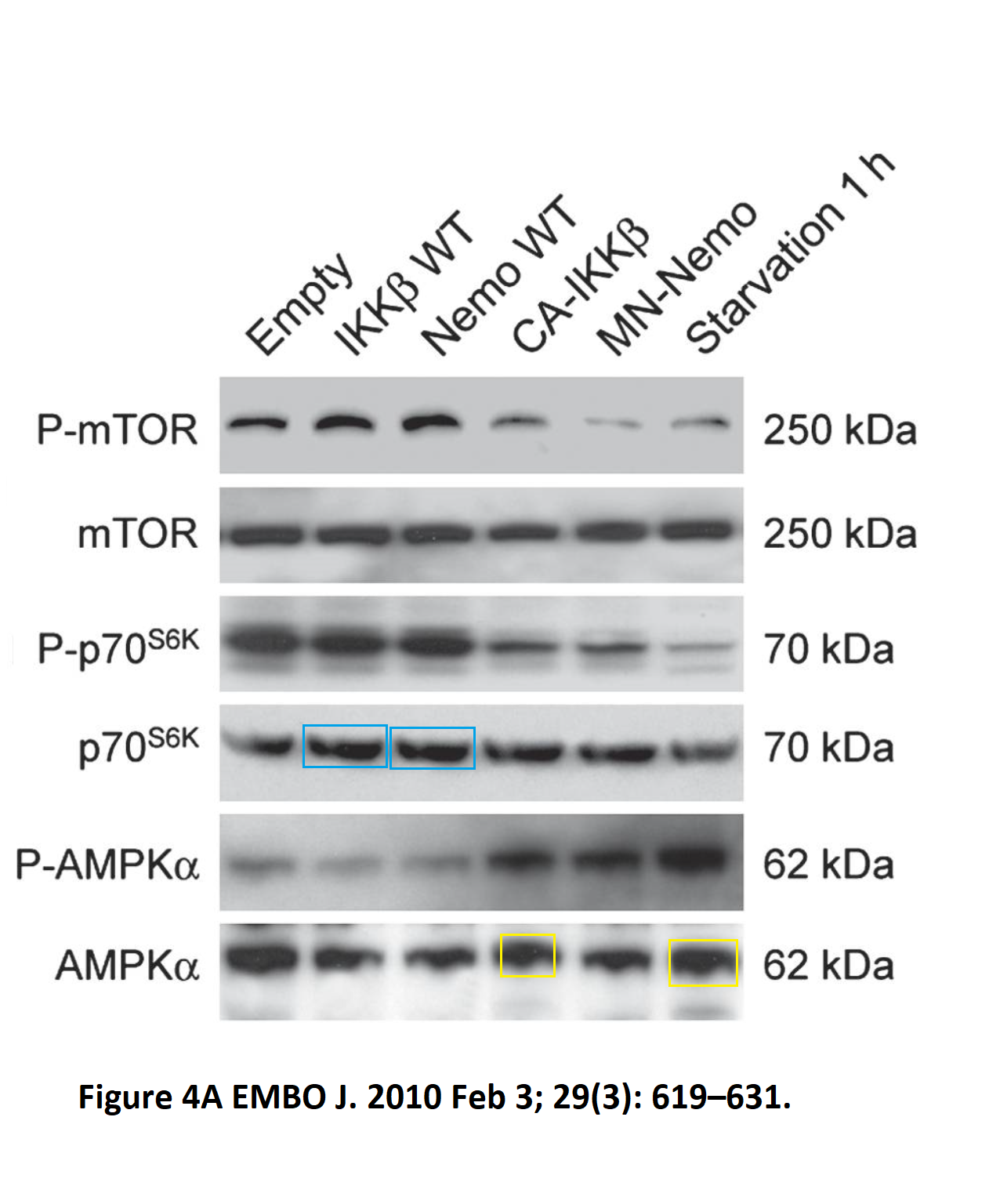
It just looks like laziness, or trolling. In any case, the lone PubPeer comment received no follow-up, from anyone. But there are many other papers on PubPeer, and some of those happened apparently before Guido met Laurence. Here is something from Kroemer’s bachelor times, again in EMBO Journal, Castedo et al 2002.
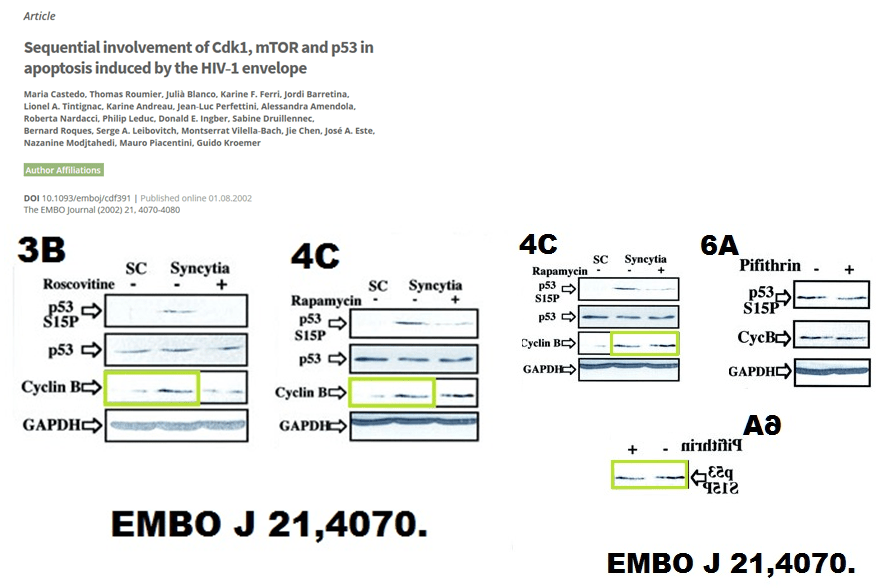
Kroemer is EMBO member, maybe this is why he is allowed to leave such beauties stand. EMBO Press seems to give a special leeway to EMBO members, like Olivier Voinnet or Maria Pia Cosma.
Here is another Kroemer-esque work of Photoshop art, same first author, Castedo et al J Exp Medicine 2001:
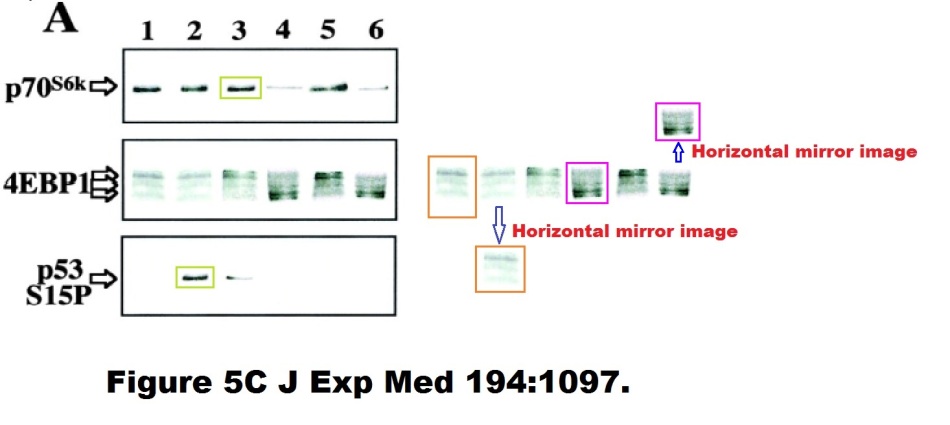
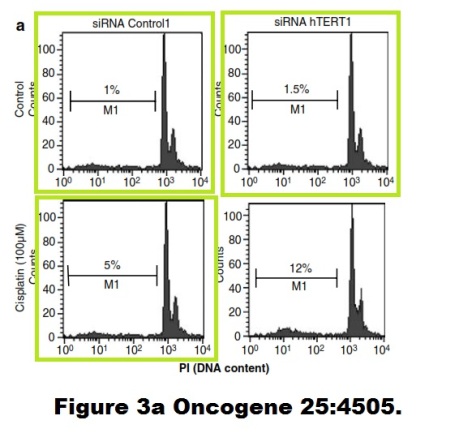
Enough for now, you got the message. If not, visit this Susin et al J Exp Medicine 1999 paper, showing some vintage western blot art by early Kroemer, or these beautifully corrected artworks Massard et al Oncogene 2006 or Zermati et al, Molecular Cell, 2007, where you can find some duplicated or even triplicated flow cytometry results for a change.
After all that, you probably will not be surprised that Kroemer was one of signatories of a recent Stalinist letter organised by CNRS. This letter defended data manipulations commited by CNRS chief biologist Catherine Jessus and the phony fraud-endorsing investigation by her friend and subordinate, the EMBO and Academie des Sciences member Francis-Andre Wollman, while calling for the heads of whistleblowers and critical journalists (more on that here).
What a company Lopez-Otin is now.

Donate!
If you are interested to support my work, you can leave here a small tip of $5. Or several of small tips, just increase the amount as you like (2x=€10; 5x=€25). Your generous patronage of my journalism will be most appreciated!
€5.00

 For Better Science
Mol Cell. 2014 Mar 6;53(5):710-25. doi: 10.1016/j.molcel.2014.01.016
2 comments on PubPeer (by: Chelonopsis Moschata, Hoya Camphorifolia)
. Epub 2014 Feb 20.
Regulation of autophagy by cytosolic acetyl-coenzyme A.
Mariño G1, Pietrocola F1, Eisenberg T2, Kong Y3, Malik SA1, Andryushkova A2, Schroeder S2, Pendl T2, Harger A4, Niso-Santano M1, Zamzami N1, Scoazec M5, Durand S5, Enot DP5, Fernández ÁF6, Martins I1, Kepp O1, Senovilla L1, Bauvy C7, Morselli E1, Vacchelli E1, Bennetzen M8, Magnes C4, Sinner F4, Pieber T9, López-Otín C6, Maiuri MC1, Codogno P7, Andersen JS8, Hill JA3, Madeo F10, Kroemer G11.
Author information
1
Equipe 11 Labelisée par la Ligue Nationale Contre le Cancer, INSERM U1138, Centre de Recherche des Cordeliers, 75006 Paris, France; Metabolomics and Molecular Cell Biology Platforms, Gustave Roussy, 94805 Villejuif, France; Université Paris Descartes/Paris 5, Sorbonne Paris Cité, 75006 Paris, France.
2
Institute of Molecular Biosciences, University of Graz, 8036 Graz, Austria.
3
Department of Internal Medicine (Cardiology), University of Texas Southwestern Medical Center, Dallas, TX 75390, USA.
4
Institute of Medical Technologies and Health Management, Joanneum Research, 8036 Graz, Austria.
5
Equipe 11 Labelisée par la Ligue Nationale Contre le Cancer, INSERM U1138, Centre de Recherche des Cordeliers, 75006 Paris, France; Metabolomics and Molecular Cell Biology Platforms, Gustave Roussy, 94805 Villejuif, France.
6
Departamento de Bioquímica y Biología Molecular, Instituto Universitario de Oncología, Universidad de Oviedo, Oviedo 33006, Spain.
7
Université Paris Descartes/Paris 5, Sorbonne Paris Cité, 75006 Paris, France; INSERM U845, 75014 Paris, France.
8
Department of Biochemistry and Molecular Biology, University of Southern Denmark, 5230 Odense, Denmark.
9
Institute of Medical Technologies and Health Management, Joanneum Research, 8036 Graz, Austria; Medical University of Graz, Division of Endocrinology and Metabolism, Department of Internal Medicine, 8036 Graz, Austria.
10
Institute of Molecular Biosciences, University of Graz, 8036 Graz, Austria. Electronic address: frank.madeo@uni-graz.at.
11
Equipe 11 Labelisée par la Ligue Nationale Contre le Cancer, INSERM U1138, Centre de Recherche des Cordeliers, 75006 Paris, France; Metabolomics and Molecular Cell Biology Platforms, Gustave Roussy, 94805 Villejuif, France; Université Paris Descartes/Paris 5, Sorbonne Paris Cité, 75006 Paris, France; Pôle de Biologie, Hôpital Européen Georges Pompidou, AP-HP, 75015 Paris, France.
See: https://pubpeer.com/publications/DD2200F5108DE05809738CABEE7015#2
LikeLike
Pingback: Inspector Voinnet, Wollman in fraud-overdrive, and Farewell to Jessus – For Better Science
Pingback: “Manipular datos es fácil y muy tentador”. Entrevista a Leonid Schneider – Investigadores En Paro
FEBS Lett. 1997 Jun 30;410(2-3):373-7.
Nitric oxide induces apoptosis via triggering mitochondrial permeability transition.
Hortelano S1, Dallaporta B, Zamzami N, Hirsch T, Susin SA, Marzo I, Boscá L, Kroemer G.
Author information
1
CNRS-UPR420, Villejuif, France.
Figure 4B. Much more similar than you would expect.
LikeLike
Pingback: Frederique Vidal, Minister for Research and gel band duplication – For Better Science
Pingback: How Andrea Cerutti molested and defiled Journal of Immunology – For Better Science
Pingback: Edinburgh saves Bird men from clutches of Bulgarian Jezebel – For Better Science
Pingback: Blagosklonny’s lawyer threatens me to love Oncotarget or else – For Better Science
Pingback: Parabola della FuF e altre amenità - Ocasapiens - Blog - Repubblica.it
Pingback: Carlos Lopez-Otin and the revoked Nature Mentoring Award – For Better Science
Kroemer lab members wear tee-shirts and exptress themselves in something close to runway posing:
http://www.kroemerlab.com/index.php/lab-members
(right side)
These Europeans do serious science and look good at the same time. Americans cannot compete.
LikeLike
And they are for sale ! (The T-shirts not the lab members): https://www.teezily.com/kroemerlab-shirt
Around $10, what are we all waiting for ? The perfect christmas gift indeed !
LikeLike
Pingback: Opera Buffa di Guido Kroemer a La Scala – For Better Science
Pingback: Amato Giaccia: too big to fall – For Better Science
J Exp Med. 2004 Mar 1;199(5):629-40.NF-kappaB and p53 are the dominant apoptosis-inducing transcription factors elicited by the HIV-1 envelope.Perfettini JL1, Roumier T, Castedo M, Larochette N, Boya P, Raynal B, Lazar V, Ciccosanti F, Nardacci R, Penninger J, Piacentini M, Kroemer G.Author information1Centre National de la Recherche Scientifique, UMR 8125, Institut Gustave Roussy, F-94805 Villejuif, France.
Figure 8. Much more similar than you would expect.
LikeLike
Pingback: The Chloroquine Elephant in the Room, by Christian Lehmann – For Better Science
Pingback: Didier Raoult: Fin de Partie? – For Better Science
Pingback: Mr ACE2 Josef Penninger, Greatest Scientist of Our Time – For Better Science
Pingback: Hyperbaric Oxygen Therapy extends life, the telomeres, and everything – For Better Science
Pingback: The Ballad of Claudio Hetz – For Better Science
Pingback: Cell Death and Depravity – For Better Science