

Schneider Shorts of 29 May 2026 – German universities struggle with papermill prodigies, a Polish rector removed for sexual harassment, American antivax papers removed, Serbian Lieutenant Colonel fights retractions, confusing PubPeer moderation, and finally, how to cure Parkinson’s with graphene and cranberries.
Table of Discontent
Science Elites
- The world isn’t ready yet – three years to find Goshtasp Cheraghian guilty
- Erotomaniac with an iron hand – Rector Miroslaw Minkina removed by government
Scholarly Publishing
- Comment refused – PubPeer moderation can be confusing
Retraction Watchdogging
- Enabled and organized by Projekt DEAL – German university subsidises Pakistani papermills
- Statistically significant evidence – Melody Goodman is expert in stats and antivaxxery
- Potential implications for medical practice – Neil Miller’s vaccine studies critically reviewed
- Everything can be achieved with extremely hard work – Lt Col Dragan Pamucar soldiers on
Science Breakthroughs
- Graphene up your nose – how Małgorzata Kujawska cured Parkinson’s
Science Elites
The world isn’t ready yet
Over three years ago, in March 2023 Shorts, I reported about a case of an Iranian papermiller in Germany. Goshtasp Cheraghian used to be a prodigy PhD student at Technical University (TU) Braunschweig, his papermill fraud with Masoud Afrand celebrated in press releases. Now he was finally found guilty of research misconduct and will lose his doctorate title.
In December 2022, Alexander Magazinov notified TU Braunschweig and Charghian’s other German employer, Humboldt University (HU) Berlin about “heavy citation manipulation” and other signs of papermilling in Cheraghian’s papers. We both then exchanged emails with TU Braunschweig’s Chair of the Investigation Committee Lars Wolf and with Cheraghian’s lab head at HU Berlin, Michael Bojdys. Both announced to investigate, Bojdis even referenced my Cheraghian reporting in his own article about AI and papermills in academic publishing (Bojdis 2023, pdf available on ResearchGate).
In between these complex and highly demanding investigations, Cheraghian suffered one retraction, for papermilling. This study he published with affiliation “Independent Researcher, 38106 Braunschweig, Germany“:
Tao Hai , Nejla Mahjoub Said , Goshtasp Cheraghian , Jincheng Zhou , Emad Hasani Malekshah , Mohsen Sharifpur Effect of air inlet and outlet cross sections on the cooling system of cylindrical lithium battery with segmental arrangement utilized in electric vehicles Journal of Power Sources (2023) doi: 10.1016/j.jpowsour.2022.232222
The references made no sense but went to the papermillers Changhe Li and Yongbing Tang, plus there were so-called “citation magnets” – references sold to papers in blocks, a business described here:

The Citation Payola
“The proposition that a niche of citation brokers exists, opens our eyes to other transaction options..” . Smut Clyde

The retraction from 19 April 2026 went (highlight mine):
“This article has been retracted at the request of the Editor-in-Chief.
The authors contacted the editor following a careful post-publication review of their work and identified significant issues related to the citation of several references. Specifically, references [24], [25], [26], [27], and [28] were cited in contexts that did not appropriately support the associated statements in the manuscript. In addition, references [20], [21], [49], and [50] are retracted articles and should not have been included, as their retracted status undermines their validity and relevance to the study.
These observations were also raised publicly on PubPeer: https://pubpeer.com/publications/6A290F3230D393B406E8CB8A8F56C0?
Following this, an investigation conducted on behalf of the journal by Elsevier Research Integrity and Publishing Ethics identified further concerns related to authorship. Substantial changes to the author list were made between the original submission and the revised manuscript, including the removal of three authors and the addition of Emad Hasani Malekshah, Mohsen Sharifpur, and Goshtasp Cheraghian, without adequate explanation or exceptional approval by the journal editor, contrary to journal policy on changes to authorship.
The editor contacted the authors to seek clarification regarding these changes; however, the explanations provided were not satisfactory. Taken together, the authorship concerns and the unusual citation practices undermine confidence in the reliability of the results and conclusions of the article. On this basis, the editor-in-chief has determined that retraction is appropriate.”
Other such papermill fabrications can be found on PubPeer.
Shake the Stupid Tree and see what falls out
“Does this mean it’s time for an update on the bogus-citation economy? Leonid thought it is, and now you all must suffer for his misdirected priorities. ” – Smut Clyde
Now, here is the totally confidential letter from 18 May 2026, TU Braunschweig’s Chair of the Investigation Committee Lars Wolf, which Alexander Magazinov and myself received by letter mail:
“The Investigation Committee has concluded in the formal inquiry that scientific misconduct has occurred. In particular. the dissertation of Dr. Goshtasp Cheraghian is affected.
Accordingly. and in accordance with section 14 (5) GWP. the Committee has decided to recommend to the President that the relevant faculty initiate proceedings to revoke Dr. Cheraghianls doctoral degree.
Other instances of misconduct may also be taken into account in this context.”
Cheraghian defended his thesis titled “Nanomaterials for Asphalt Binders” in 2021/2022 under the supervision of TU Braunschweig professor Michael Wistuba. There are no digital copies, only printed books which you can borrow by personally visiting German university libraries.
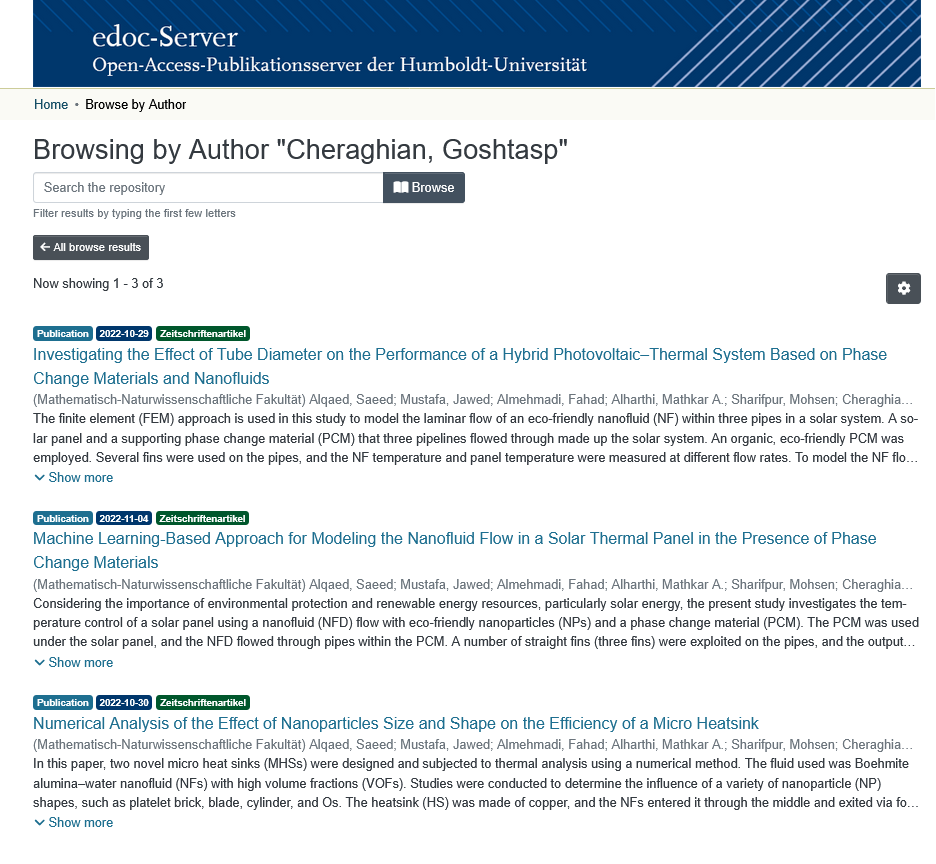
This investigation in Braunschweig took more than three whole years, and it still didn’t conclude in the revocation of the fraudster’s degree. Bojdys informed me that he also asked HU Berlin to investigate 3 years ago, but the university did nothing, having decided that “Cheraghian was never employed by HU Berlin or IRIS Adlershof“, the latter is HU’s materials science institute. HU however continues to have their cake and eat it, because while officially Cheraghian had no connection to them, his papers with HU Berlin affiliation are of course proud listed:
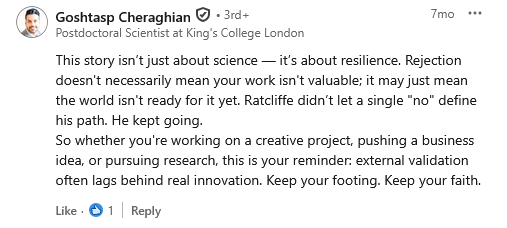
Cheragian currently claims on LinkedIn to be postdoc at HU Berlin and King’s College London in UK, but this is not true.

Under his invalid HU Berlin affiliation, Cheraghian is currently listed as “Scientific Committee” member of the German company BMF Trading GmbH, which is registered in the town of Münster and owned by a fellow Iranian named Ramin Yousefi from from Islamic Azad University. No concern to German national security at all.
Erotomaniac with an iron hand
On 19 may 2026, the Polish higher education platform Forum Academickie reported that a university rector was removed for sexual harassment:
“This afternoon, the Ministry of Science and Higher Education announced that the head of the ministry, Marcin Kulasek, took advantage of the supervisory measure and asked the Electoral College of the University of Siedlce to dismiss prof. Mirosław Minkina from the position of rector of this university.”
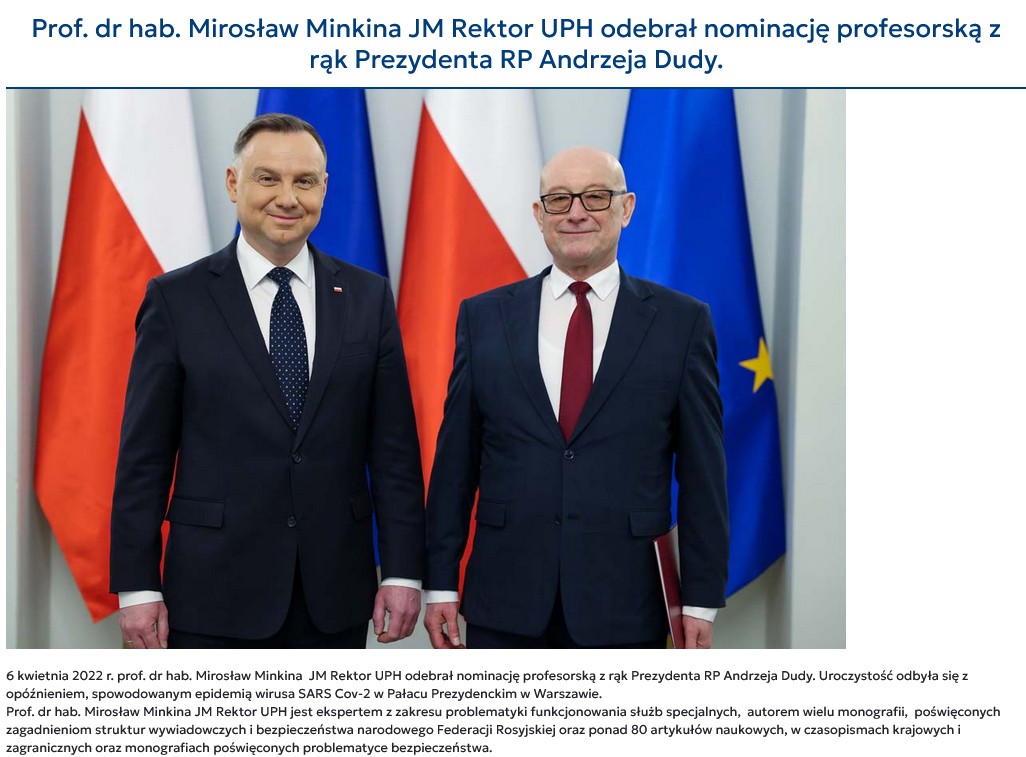
Miroslaw Minkina was Rector of the University of Siedlce since 2020. The decision was made by Polish government’s Minister of Science and Higher Education, Marcin Kulasek.
The background was this reporting by Wiadomosci from 24 April 2025:
“Minkina – as our interlocutors say – rules with an iron hand. […] At the same time, the rector shows a weakness for women, even in situations when they do not always want it.” […]
He’s an erotomaniac who doesn’t respect women. He told me about one of the employees: “You see how well she works. And yesterday she asked me to fuck her on the table.” I once informed him that I was going away for the weekend. He said: “To get laid, call me,” we hear from one of the employees.”
One female employee who reported being unwell, was offered by Minkina to be “licked”, he continued harassing her in follow-up messages. Another was sent porn pictures. Yet another was seen eating ice cream and commented by the rector that “eating ice cream requires a lot of practice and skill.”
There were other power abuses. In 2022, employees of the Faculty of Social Sciences were banned from leaving the building after a bomb treat, those who left anyway got later in trouble with the Dean Malina Kaszuba (who still defends Minkina), and with the Vice-Dean Marcin Chrząścik, who regretted his behaviour and became one of rector’s fiercest critics.
In 2024, Minkina with the help of his loyal senate rigged the rectorship elections, and got re-elected by banning his popular competitor Tamara Zacharuk from the second round. Unsurprisingly, Kaszuba has a sexual relationship with Minkina, she is became Vice-Rector after his rigged re-election.
The small and rural University of Siedlce seeks to attract external applicants by offering plots of land which after 10 years can become their private property, and it was Minkina and his lover Kaszuba who swiftly applied for such land property. Kaszuba then insulted and threatened her critics, in form of a nasty poem sent to 400 recipients. Complaining was indeed difficult:
“Minkina himself was an officer of Military Information Service, he makes no secret of it. His scientific mentee was Jarosław Stróżyk, head of the Military Counterintelligence Service.
The university’s lawyer, Jan Kurkus, is a former judge of the Siedlce court. The wife of the district prosecutor in Siedlce works in the department of vice-rector Malina Kaszuba. A number of Siedlce police officers teach at university”. And the district attorney himself comes to the university because there is a good canteen on its premises. […]
In recent years, many officers from various uniformed services have also found employment at University of Siedlce”
But now this feudal rule is hopefully over.
Scholarly Publishing
Comment refused
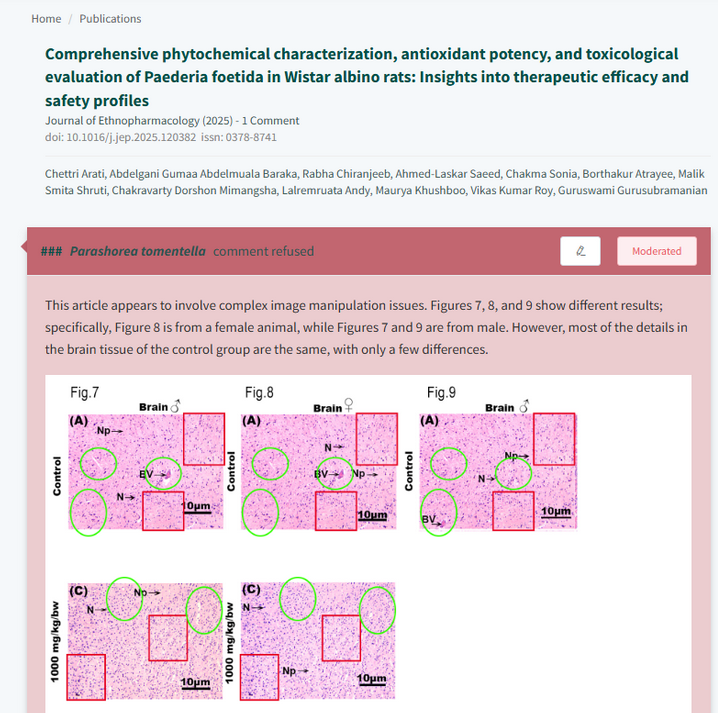
The sleuth Parashorea tomentella keeps finding massive fraud, but some of their comments get moderated by PubPeer. Here, their investigation of the disastrous Elsevier Journal of Ethnopharmacology hit a moderation roadblock.
Slipshod Self-service Ethnopharmacology
“Since Journal of Ethnopharmacology sees no reason to reject bear bile powder research like other scientific journals, that means you can expect to see anything there” – Parashorea tomentella

The following totally not unhinged papermill product from Mizoram University in India has decreed that methanol extracts from stinkvine can be safely used for medicinal purposes at 2g/kg, which is more than enough methanol to first blind and then kill a man. Yes, it passed peer review.
Chettri Arati , Abdelgani Gumaa Abdelmuala Baraka , Rabha Chiranjeeb , Ahmed-Laskar Saeed , Chakma Sonia , Borthakur Atrayee , Malik Smita Shruti , Chakravarty Dorshon Mimangsha , Lalremruata Andy , Maurya Khushboo , Vikas Kumar Roy , Guruswami Gurusubramanian Comprehensive phytochemical characterization, antioxidant potency, and toxicological evaluation of Paederia foetida in Wistar albino rats: Insights into therapeutic efficacy and safety profiles Journal of Ethnopharmacology (2025) doi: 10.1016/j.jep.2025.120382
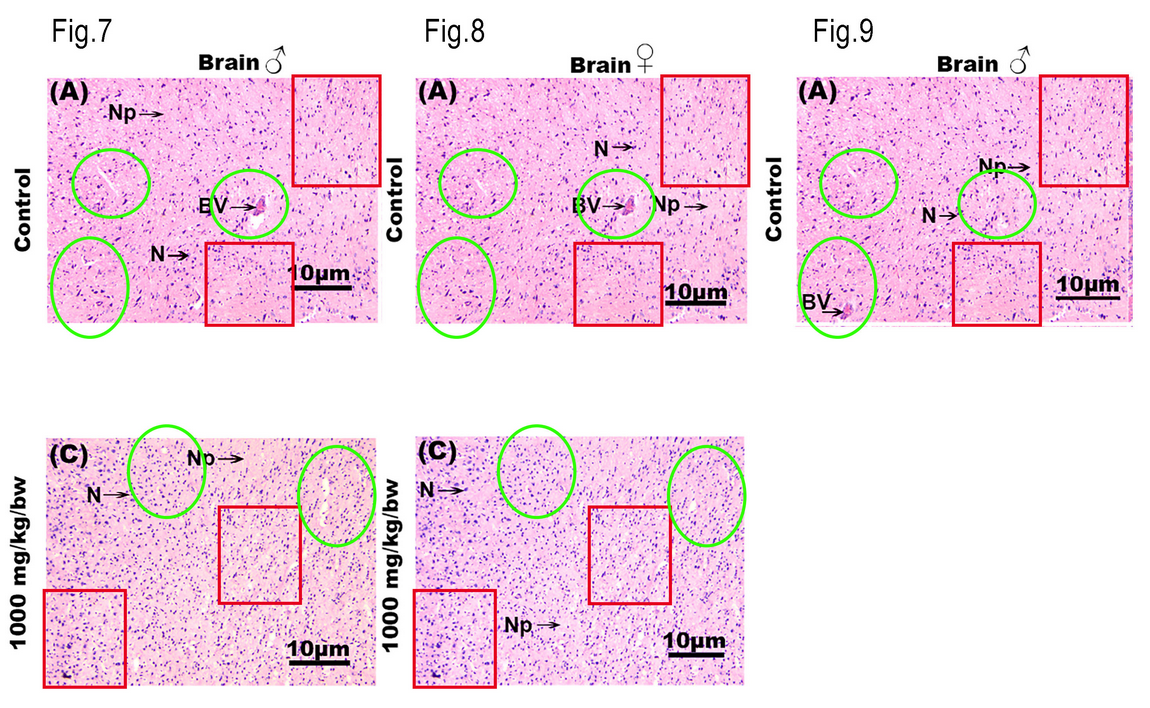
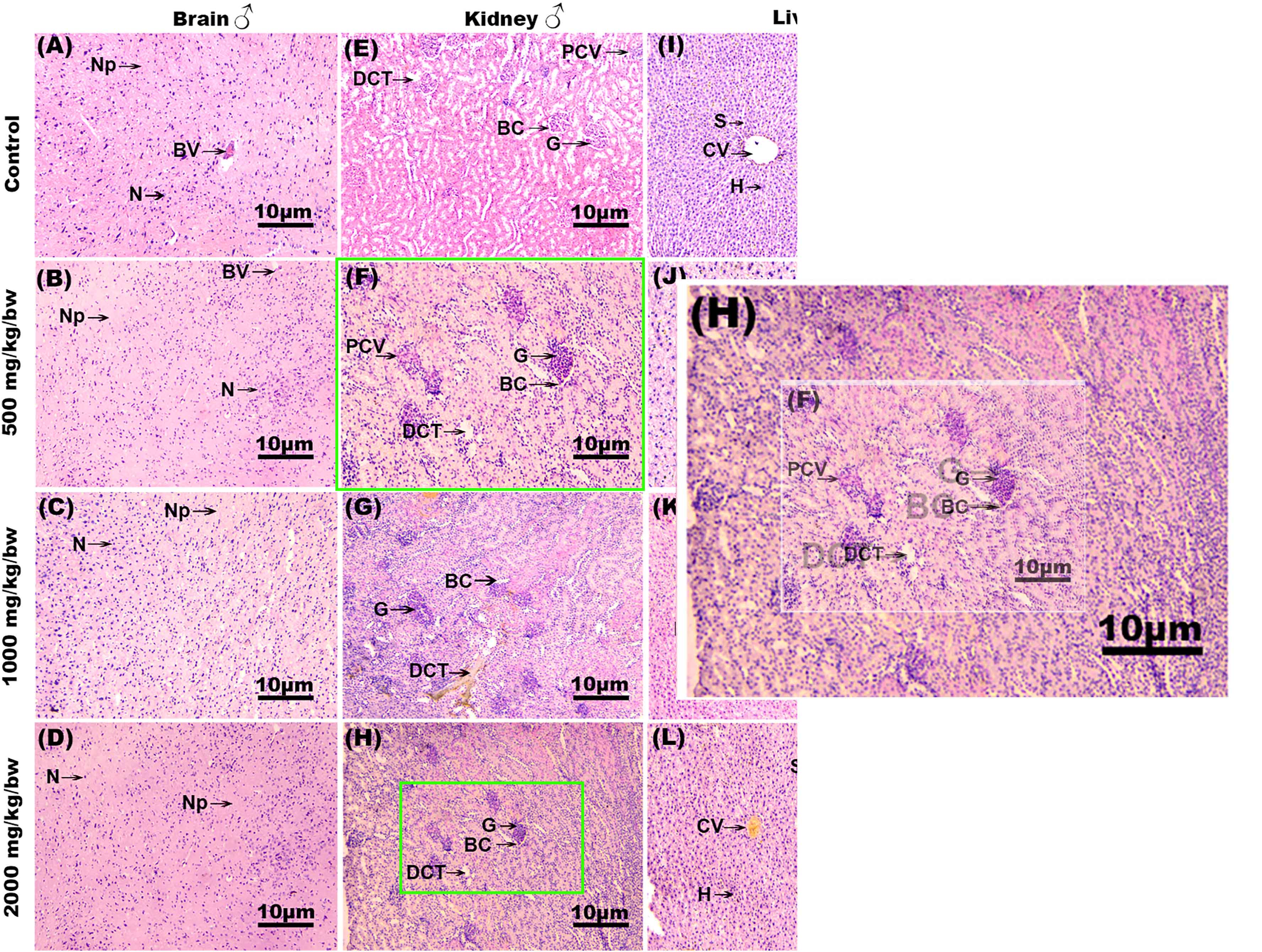
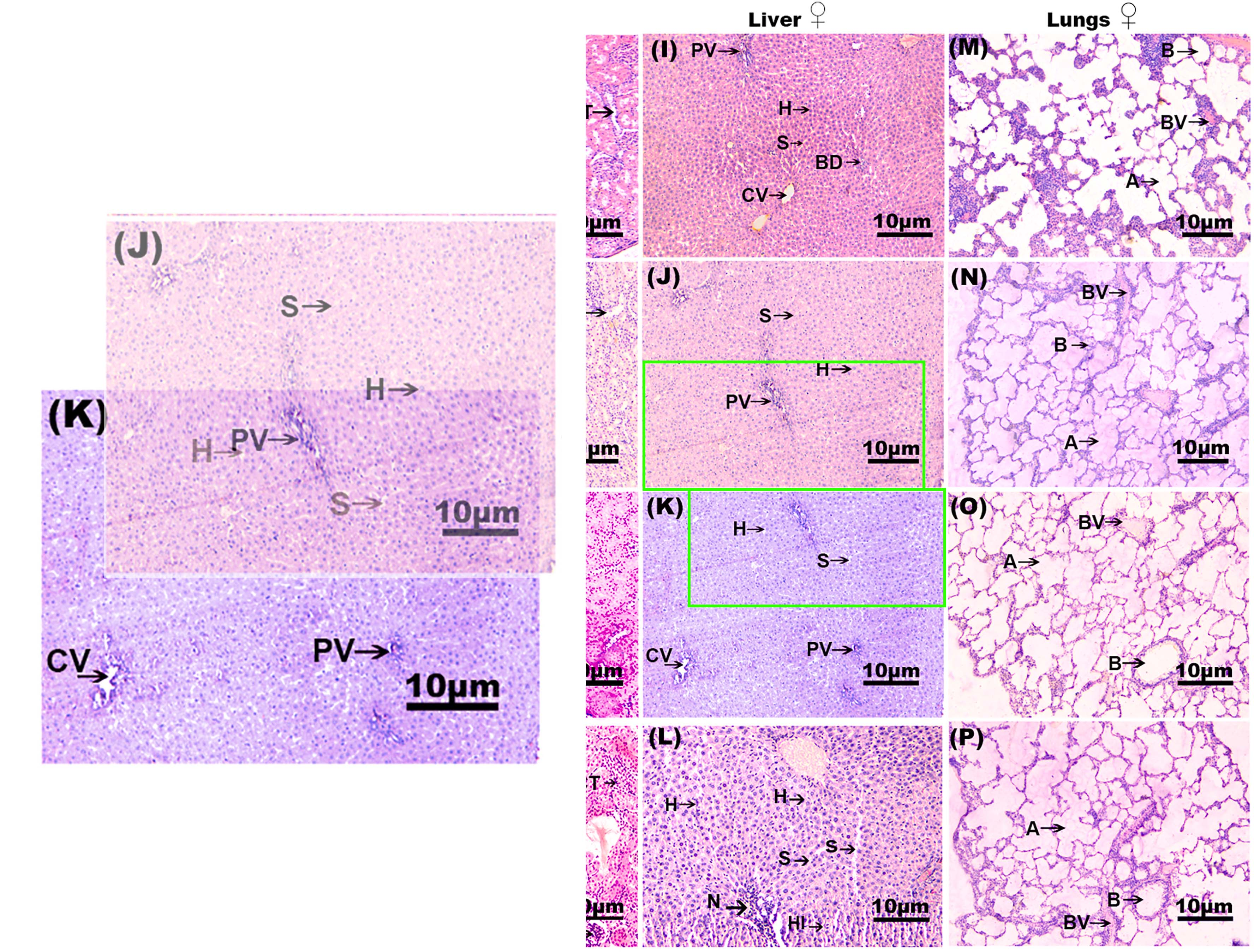
The reasons for the moderation decision are difficult to understand. Not one of these three comments was approved.
Retraction Watchdogging
Enabled and organized by Projekt DEAL
A PhD student in Germany earns another retraction. Muhammad Rizwan is since 2022 working in the lab of professors Gabriel Schaaf and Matthias Wissuwa at the INRES institute for plant nutrition at the University of Bonn.
This retraction swiftly followed a notification from Alexander Magazinov, the PubPeer comments appeared only in May 2026:
Iram Naz , Maryam, Aysha Arif Chahel, Ishtiaq Ahmad , Amber Raza , Muhammad Waseem Haider , Muhammad Saqlain Zaheer, Muhammad Waheed Riaz , Muhammad Rizwan, Salim Manoharadas Investigating the use of green synthesized copper oxide nanoparticles from Melia azedarach to combat cadmium stress in wheat Scientific Reports (2025) doi: 10.1038/s41598-025-10168-x

Abnormal non-uniform scale on the X-axis. Some peaks have meaningless annotation: (32.5), (-11).
Fig. 5B.
Abnormal non-uniform scale on the X-axis. Absorbance peaks do not match their assigned wavelengths.”


The retraction from 26 May 2026 went:
“The Editors have retracted this Article.
After publication, concerns have been raised about the validity of the data in some of the figures, in particular Figs. 4 and 5, as well as apparent overlaps between images representing different conditions in Table 1. These concerns were corroborated by the Editors. The data was not requested, since the nature of the concerns around Fig. 4 and 5 cannot be resolved with data. The Editors have therefore lost confidence in the integrity of this Article.
The Authors disagree with this retraction.”

In June 2025, Rizwan retracted another paper in the same Springer Nature journal Arafat et al 2024, authored with Mohamed Elshikh and his friends Rashid and Javed Iqbal (read the article above). And then Rizwan and these same guys, plus another known papermillee Iftikhar Ali (read September 2025 Shorts) lost this paper, again in Scientific Reports:
Muhammad Israeel , Javed Iqbal, Banzeer Ahsan Abbasi , Shumaila Ijaz , Rafi Ullah , Farishta Zarshan , Tabassum Yaseen , Gul Khan , Ghulam Murtaza , Iftikhar Ali , Khaloud Mohammed Alarjani , Mohamed S Elshikh , Muhammad Rizwan, Shoaib Khan , Rashid Iqbal Potential biological applications of environment friendly synthesized iron oxide nanoparticles using Sageretia thea root extract Scientific Reports (2024) doi: 10.1038/s41598-024-79953-4


Cisticola tinniens: “Figure 6 represents iron oxide nanoparticles (ION) synthesised using Sageretia thea root extract in this paper, but in Figure 4 (c) of this Microscopy Research and Technique (2020), it can also depict Rhamnus virgata (RV)-mediated Ag22ONPs using chromium acetate salt as a precursor.”
The retraction from 9 December 2025 stated:
“After publication, concerns were raised about the data presented in this study. Specifically, repeating fragments are observed in the background of a graph depicting XRD pattern in Figure 4. Concerns were also raised regarding the shape of the UV-VIS spectroscopy graph in Figure 2. Additionally, the SEM image presented in Figure 6 appears highly similar to Figure 4 from1, where it depicts different conditions.
The Authors could not provide all of the necessary raw data to verify the veracity of the results.”
The referenced paper Abbasi et al 2020 had only two common authors (Javed Iqbal and Banzeer Ahsan Abbasi), it was also retracted for fraud, in February 2025.
Not entirely unexpectedly, Muhammad Rizwan is a very common name in Pakistan and there are several papermill fraudsters of this name on PubPeer, and they also publish on green nanoparticles. This PubMed search combined with a PubPeer browser plugin helps.
Rizwan, Elshikh and the Iqbals repeatedly defecated into Scientific Reports, see for example Rashid et 2025, Raza et al 2025, Khan et al 2025, Haider et al 2025, Zahra et al 2024, Murtaza et al 2024, Bukhari et al 2024, or Akhtar et al 2024, the latter is also criticised on PubPeer. Another pay-to-publish Open Access journal in Springer Nature they used was BMC Plant Biology, e.g Zaheer et al 2024, Hyder et al 2024 or Muhammad et al 2025.
Guess who paid all those hefty Open Access publication fees, in all these cases.
“Open Access funding enabled and organized by Projekt DEAL.”
Yes, the Pakistani Papermill Industry is being sponsored by the University of Bonn and the German tax payers. That’s exactly why the German PhD student Rizwan was included as coauthor, quite possibly he didn’t even have to pay the papermill for the authorship.
I contacted Rizwan’s mentors and the leadership of the agricultural faculty of the University of Bonn. They chose not to reply, probably busy with preparing his PhD defence ceremony.
Bad Choices in Dresden IV
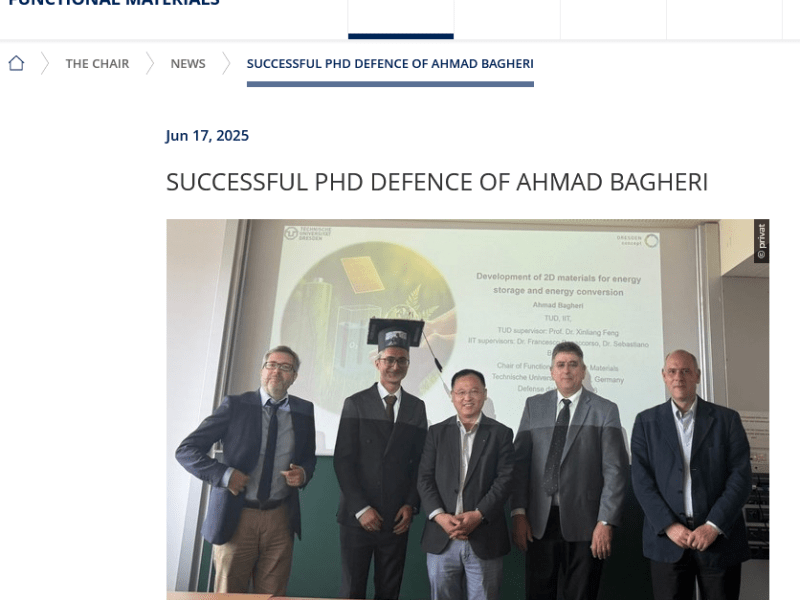
A guide on what qualities universities in Germany, Italy and elsewhere in Europe expect from their foreign PhD students and postdocs.

Statistically significant evidence
An antivax paper is retracted, 16 years after publication, authored by two scientists at Stony Brook University Medical Center in New York, USA:
Carolyn M. Gallagher, Melody S. Goodman Hepatitis B vaccination of male neonates and autism diagnosis, NHIS 1997-2002 Journal of Toxicology and Environmental Health Part A (2010) doi: 10.1080/15287394.2010.519317
I don’t have much on the pre-history of this dispute, but there was criticism already in 2009, when this study was still at the stage of a conference poster. in June 2024 the PubPeer user Eurythmia angulella commented:
“The central claim of the paper is that “Boys vaccinated as neonates had threefold greater odds for autism diagnosis compared to boys never vaccinated or vaccinated after the first month of life.” This conclusion is drawn from a cross-sectional study of data from the National Health Interview Studies (NHIS) from 1997 to 2002, involving children aged 3 to 17 years.
Detailed concerns are as follows:
Weak Study Design: The study’s cross-sectional design is insufficient to establish causal relationships and is prone to bias.
Small Sample Size: The analysis is based on a very small sample size of only 31 boys with autism, which compromises the reliability of the results. The autism group had 33 children, of whom 9 of 31 (29%) were given the Hep B vaccine, compared to 1,258 of 7,455 (17%) in the non-autism group.
Selective Data Use and Temporal Inconsistencies: The study excludes female autistic children, despite data being available, possibly due to the mentioned “paradoxically protective effect among girls.” Children aged 17 in the 1997 survey were born in 1980, before the introduction of the Hepatitis B vaccine in 1991, raising questions about the relevance of the data. […]
Correlation Misinterpretation: The study finds a correlation between neonatal vaccination and autism without proper control for type I error, leading to potentially spurious associations. The reported findings also suggest other improbable correlations, such as single motherhood causing autism. […]
In summary, the study’s weak design, small sample size, selective data use, temporal inconsistencies, potential misinterpretation of correlations, lack of adjustment for important confounders, numerous data and analysis issues, and the need for a more robust methodological approach significantly undermine the reliability of its conclusions.“

A bit of Frye and Rossignol
“Trapped inside every autist, a normal child with normal cognition is struggling to get out – only needing the right drug or therapy to be released”, – Smut Clyde
On 21 May 2026, the paper was retracted:
“Following publication, concerns were raised regarding the methodology of the study and the reported conclusions. In accordance with our policies, we contacted the authors for an explanation and engaged an independent reviewer for a post-publication statistical review.
The independent statistical reviewer concluded that due to fundamental methodological flaws the study’s conclusions are unsound. Key concerns identified:
- Insufficient study design (cross-sectional) for the causal inferences suggested
- Critically small number of autism cases (n=31) within a highly selective sample
- Inadequate statistical analysis
- Incomplete confounder adjustment resulting in likely biased effect size
- The confounded association is not statistically significant
- Overstated conclusion that inappropriately suggests causality
The study’s main conclusion is “Despite these limitations, the results of the study indicate that U.S. male neonates vaccinated with the hepatitis B vaccine prior to 1999 incurred a threefold greater risk for autism diagnosis”. Based on the statistical review, it was determined that this conclusion is not supported by the data.
Therefore, we no longer have confidence in the reported conclusions and have decided to retract the article. The authors listed in the publication have been informed. The authors do not agree with the retraction.”

Mergers & Acquisitions by Mark and David Geier
Kathleen Seidel analysed two papers by Mark and David Geier, which claimed that mercury in vaccines caused autism

It seems that 16-year-old paper only got retracted because it is being used by US Secretary of Disease Robert F Kennedy Jr to lie that vaccines cause autism, in fact he instructed CDC to investigate the hepatitis B vaccine exactly because of that now retracted study. The study was also cited by the father and son antivaxxer duo, the late Mark Geier and David Geier, who is now advising the US government about vaccines.
You might think, some incompetent antivaxxers smuggled their garbage past peer review, and were finally caught out. Well, it is not that simple.
Carolyn Gallagher is currently listed as Clinical Instructor and Project Manager at Stony Brook medicine. But Melody Goodman is professor of biostatistics and since August 2025 Dean of the School of Global Public Health at New York University. She is also Fellow of the American Statistical Association, author of the books “Public Health Research Methods for Partnerships and Practice” and “Biostatistics for Clinical and Public Health Research“, and winner of various awards for statistics, like the Societal Impact Award from the Caucus for Women in Statistics. Goodman is literally one of America’s top experts in the very topic her own clinical study spectacularly failed in.
There is however another one to be retracted:
Carolyn Gallagher , Melody Goodman Hepatitis B triple series vaccine and developmental disability in US children aged 1–9 years Toxicological & Environmental Chemistry (2008) doi: 10.1080/02772240701806501
From the abstract:
“This study found statistically significant evidence to suggest that boys in United States who were vaccinated with the triple series Hepatitis B vaccine, during the time period in which vaccines were manufactured with thimerosal, were more susceptible to developmental disability than were unvaccinated boys.”

The Dead Geier Sketch, RFK Jr version
“David Geier is the ideal fit to the purposes of RFK Jr. For the only reliably loyal underlings are incompetent ones who know they have no future anywhere else. ” – Smut Clyde
Potential implications for medical practice
Also Elsevier removed an antivax article.
It was published in a journal previously run by the antivaxxer, tobacco/Monsanto/any random industry shill, plus a russian agent Aristides Tsatsakis, his replacement, the returning new editor Larry Lash, is however a difficult character also:

Lashing out at Toxicology Reports
“What exactly will Lash and Elsevier do with these 115 problematic papers? I can only expect a painfully inadequate response.” – Sholto David

The author of the removed paper is a professional antivaxxer. Neil Miller publishes unhinged books against vaccines, like “Miller’s Review of Critical Vaccine Studies“, on its cover he angrily stares at you, dressed to impersonatinge a doctor (he is NOT a doctor in reality). The books are also available in German, Italian, Polish and Romanian. Miller’s study claimed that vaccines murder babies:
Neil Z. Miller Vaccines and sudden infant death: An analysis of the VAERS database 1990-2019 and review of the medical literature Toxicology Reports (2021) doi: 10.1016/j.toxrep.2021.06.020
“There are 130 official ways for an infant to die, as categorized in the ICD, and one unofficial way for an infant to expire: from a fatal reaction to vaccines.”
Right after its publication in 2021, it was criticised on social media.
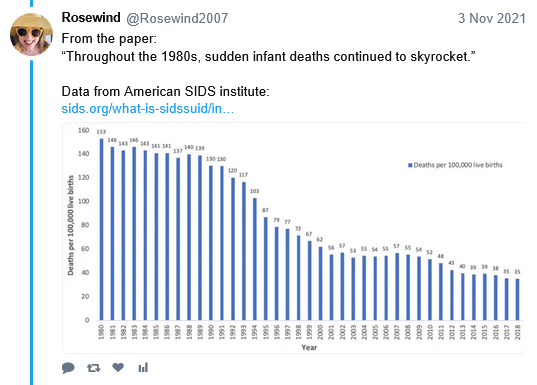
“Throughout the 1980s, sudden infant deaths continued to skyrocket.”
Data from American SIDS institute”
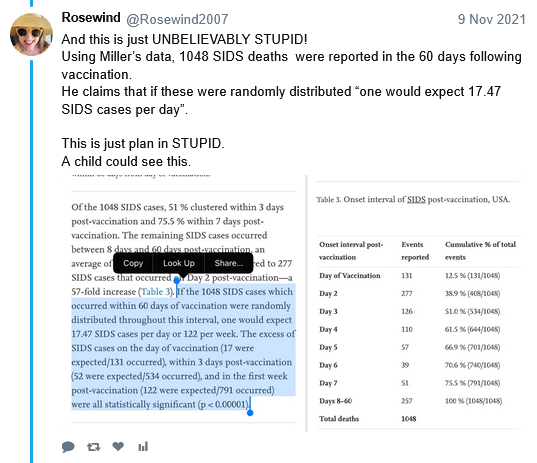
In April 2026, the paper was removed, apparently Elsevier and Lash didn’t want to punish the author with a retraction:
“This article has been removed at the request of the Editor-in-Chief.
Following post-publication concerns raised by readers regarding potential research errors and methodological flaws in this article, the journal initiated an investigation and contacted the author for clarification.
The Editor-in-Chief determined that the author’s response did not satisfactorily address the concerns raised about this article. In particular, serious methodological flaws were identified in the use of VAERS data to infer a correlation between vaccination and sudden infant death syndrome (SIDS). Given the inherent limitations of passive reporting systems, including the expected temporal clustering of events independent of causality, the conclusions presented in the article are not supported by the methodology employed. In light of these concerns, and given the potential implications for medical practice, the Editor-in-Chief has decided that the article should be removed. The author disagrees with this decision and disputes the grounds for removal.
Apologies are offered to the readers of the journal.”
Another paper by Miller, originally solicited by an antivax group, now received an Expression of Concern on 18 May 2026, informing that this “article is under investigation“:
Brian S Hooker , Neil Z Miller Analysis of health outcomes in vaccinated and unvaccinated children: Developmental delays, asthma, ear infections and gastrointestinal disorders SAGE Open Medicine (2020) doi: 10.1177/2050312120925344
By the way, Miller’s daughter, Damiana Sage Miller (aka Maya the Shaman), also writes books, like “Ambassadors Between Worlds, Intergalactic Gateway to a New Earth“, where she claims to be a “spiritual channel” who communicates with “benevolent extraterrestrials and ascended beings from advanced civilizations“, but also with “angels, archangels, and other beings of Light“.
Everything can be achieved with extremely hard work
Let’s now go to Serbia, and meet Lieutenant Colonel Dragan Pamucar, Associate Professor at the Military Academy in the Autonomous Province of Vojvodina, and full professor at University of Belgrade. In 2022, he was celebrated by the Ministry of Defence as a Serbian patriot and “one of the world’s most influential experts in operational research, especially in logistics and transport“.” as well as “creator of numerous original algorithms that optimize and rationalize the logistics processes in our armed forces“:
“Complete dedication to the job one has chosen and achieving results in proportion to the effort expended – says Pamučar.
Lieutenant Colonel Pamučar’s doctoral dissertation was declared the best dissertation in the Ministry of Defence in 2013. He was declared the best Defence University’s researcher twice (in 2017 and 2018) […]
Lieutenant Colonel’s research results, published in the world’s most esteemed publications, have been cited thousands of times, so today, he is among only two percent of the most cited, and thus the most influential world scientists in that field. […]
I hope that, in addition to making a brilliant military career, some of my present and future cadets and postgraduates will make considerable strides in science, to the benefit of our Armed Forces and our country – says Lieutenant Colonel Pamučar”
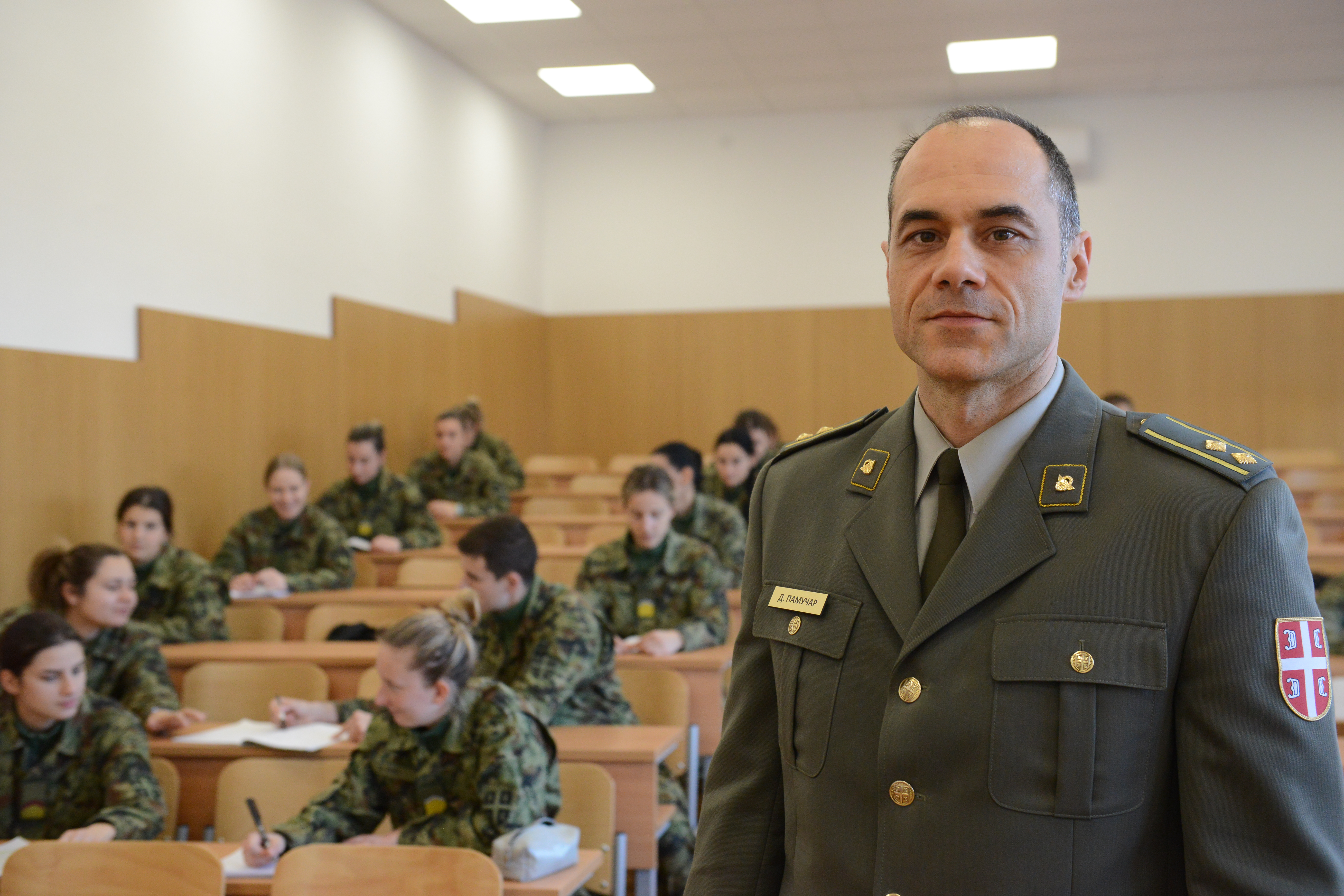
I do not doubt for a second that Lt Col Pamucar is trained to kill with his bare hands, but he is definitely unable to perform or teach any science. All he does is papermilling as if there’s no tomorrow.
Here are some of his retractions, most recent from February 2026, there may be more:
- Murugan Palanikumar , Nasreen Kausar , Ebru Ozbilge , Tonguc Cagin , Dragan Pamucar Treatment of cancer patients by generalizing a Fermatean normal vague set with aggregation operators Heliyon (2024) doi: 10.1016/j.heliyon.2024.e40252 Retracted 26 February 2026 for “passages [that are] difficult to parse” and “references that are irrelevant“.
- Tahira Karamat , Kifayat Ullah , Dragan Pamucar, Maria Akram Applications Aczel-Alsina t-norm and t-conorm for the assessment of fire extinguishers using Pythagorean fuzzy information Journal of Intelligent & Fuzzy Systems Applications in Engineering and Technology (2023) doi: 10.3233/jifs-231876 Retracted 17 April 2025 for “concerns about the authenticity of the research and the peer review process”
- Tahir Mahmood, Zeeshan Ali , Dragan Pamucar Applications to biogas-plant implementation problem based on type-2 picture fuzzy matrix game under new minkowski type measures Journal of Intelligent & Fuzzy Systems Applications in Engineering and Technology (2023) doi: 10.3233/jifs-223009 Retracted 17 April 2025 for “concerns about the authenticity of the research and the peer review process”
- Mah Noor , Muhammad Kamran Jamil , Kifayat Ullah , Muhammad Azeem , Dragan Pamucar , Bandar Almohsen Energies of T-spherical fuzzy graph based on novel Aczel-Alsina T-norm and T-conorm with their applications in decision making Journal of Intelligent & Fuzzy Systems Applications in Engineering and Technology (2023) doi: 10.3233/jifs-231086 Retracted 17 April 2025 for “concerns about the authenticity of the research and the peer review process“
- Aoqi Xu , Man-Wen Tian , Nasreen Kausar , Ardashir Mohammadzadeh , Dragan Pamucar , Ebru Ozbilge Optimal type-3 fuzzy control and analysis of complicated financial systems Journal of Intelligent & Fuzzy Systems Applications in Engineering and Technology (2023) doi: 10.3233/jifs-223396 Retracted on 15 January 2025 for “concerns about the authenticity of the research and the peer review process“
- Ilgin Gokasar , Ahmet Karakurt , Yusuf Kuvvetli , Muhammet Deveci, Dursun Delen , Dragan Pamucar Sustainable regional rail system pricing using a machine learning-based optimization approach Annals of Operations Research (2024) doi: 10.1007/s10479-023-05603-z Retracted in around 2024 for “a number of concerns“
- Hamiden Abd El Wahed Khalifa , Dragan Pamucar , Alhanouf Alburaikan , W. A. Afifi On Stackelberg Leader with Min-Max Followers to Solve Fuzzy Continuous Static Games Journal of Function Spaces (2022) doi: 10.1155/2022/4329957 Retracted 24 January 2024 for “systematic manipulation of the publication process”
- Xiaofeng Hong , Yonghui Zhao , Nasreen Kausar , Ardashir Mohammadzadeh , Dragan Pamucar , Nasr Al Din Ide A New Decision-Making GMDH Neural Network: Effective for Limited and Fuzzy Data Computational Intelligence and Neuroscience (2022) doi: 10.1155/2022/2133712 Retracted 26 July 2023 for “systematic manipulation of the publication process.“
- Kalaiarasi Kalaichelvan , Nasreen Kausar , Sajida Kousar , Yeliz Karaca , Dragan Pamucar , Mohammed Abdullah Salman Economic Order Quantity Model-Based Optimized Fuzzy Nonlinear Dynamic Mathematical Schemes Computational Intelligence and Neuroscience (2022) doi: 10.1155/2022/3881265 Retracted 26 July 2023 for “systematic manipulation of the publication process”
- Abd Elazeem M. Abd Elazeem , Hamiden Abd El-Wahed Khalifa , Dragan Pamucar, Amina Hadj Kacem , W. A. Afifi Development of an Appropriate Uncertainty Model with an Application to Solid Waste Management Planning Computational Intelligence and Neuroscience (2022) doi: 10.1155/2022/6988306 Retracted 4 April 2023 for “systematic manipulation of the publication process”
Around 90 of Pamukar’s papers are being criticised on PubPeer, many of those published very recently, after the retractions. Lieutenant Colonel soldiers on and publishes new trash with his papermill friends. As Pamucar told the Serbian francise of the russian propaganda channel Sputnik in 2022:
“Everything can be achieved with extremely hard work.”
Science Breakthroughs
Graphene up your nose
Polish scientist Małgorzata Kujawska and her international collaborators developed a cure for Parkinson’s Disease and multiple system atrophy (MSA)! The cure is of course graphene nanoparticles, applied as nasal spray.
Here a press release by the Taylor & Francis journal Science and Technology of Advanced Materials from 24 May 2026:
“A multinational research team led by Professor Małgorzata Kujawska at the Poznań University of Medical Sciences in Poznań, Poland, has found that graphene quantum dots (GQDs)—nanoscale carbon particles—can counteract this clumping process.
In a study published in the journal Science and Technology of Advanced Materials, the researchers detailed how these dots interact with ASN [𝛂-synuclein] to prevent it from forming the long, toxic fibers that characterize the disease.
“This study points to a promising new direction for strategies against neurodegenerative diseases,” says Professor Kujawska. “While clinical use of GQDs remains a long way off, these findings strengthen the case for further research.”
The study used a multi-stage approach, testing the GQDs in cell-free environments, neuronal cultures, and animal models of MSA. The researchers found that when GQDs were administered intranasally in mice, the particles significantly reduced the presence of toxic protein aggregates.”
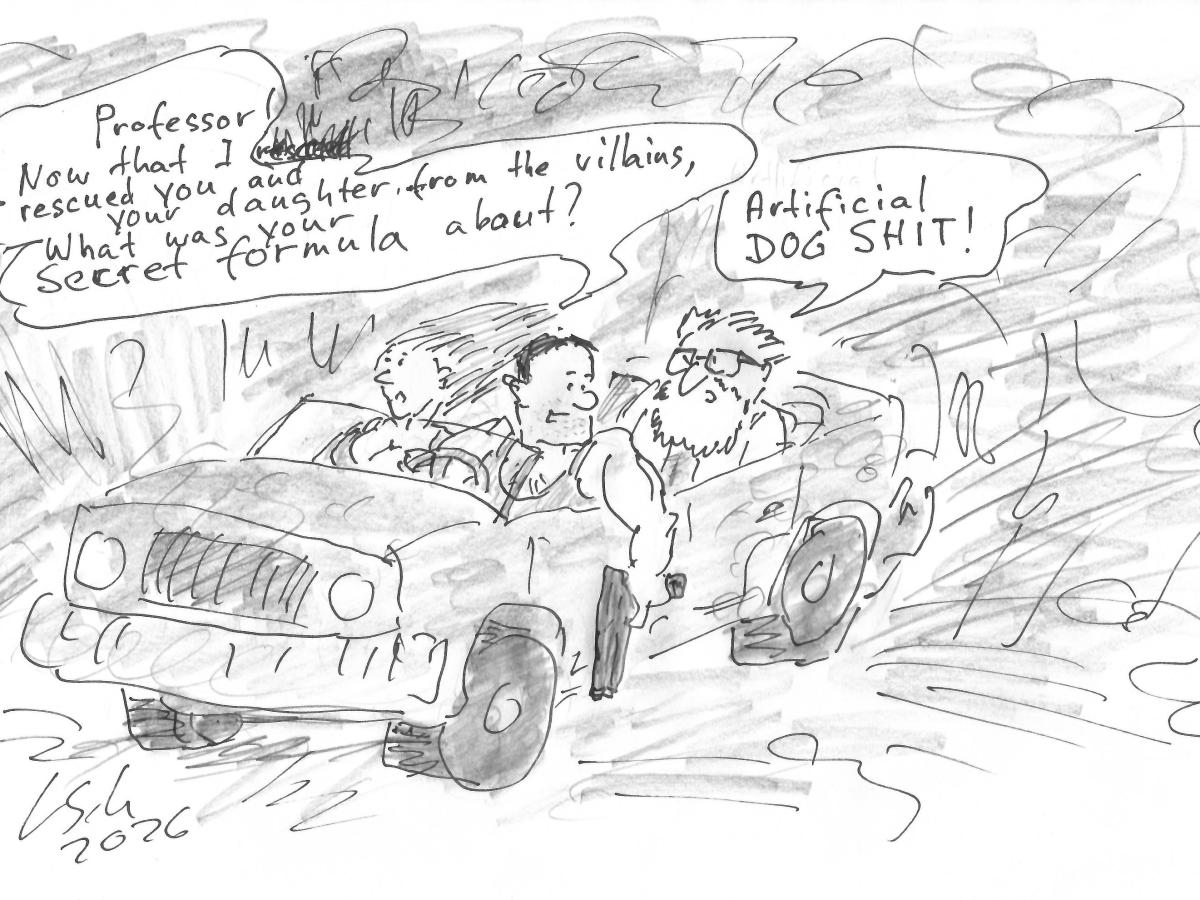
Graphyne Chronicles
“Black crap formed in all cases. None of it was graphyne. None of it contained any detectable sp¹ carbons” – Valentin Rodionov

Here is the revolutionary paper:
Tuba Oz , Anna Alwani , Agnieszka Kamińska , Barbara Jachimska , Makoto Timmon Tanaka , Yasuo Miki , Koichi Wakabayashi , Katarzyna Maziarz , Sheetal Kaushik Bhardwaj , Ajeet Kaushik , Małgorzata Figiel , Piotr Chmielarz , Małgorzata Kujawska Characterization and evaluation of the ability of graphene quantum dots to affect α-synuclein aggregation in synucleinopathy models Science and Technology of Advanced Materials (2026) doi: 10.1080/14686996.2026.2662693
One wonders, why would anyone think a complex neurodegenerative disease can be cured with graphene. But this was actually the exact subject of Kujawska’s grant from 2021, “New graphene-based approach targeting the prion-like propagation of α-synuclein in Parkinson’s disease“, funded with over €700k until 2027.
Prior to this graphene discovery, Prof Kujawska discovered that Parkinson’s and other neurodegenerative diseases can be also cured with cranberries (Wituzki et al 2022, Kurpik et al 2022), pomegranates (Kujawska et al 2019), lemon balm (Ozarowski et al 2016), rosemary (Ozarowski et al 2013), her other studies extolled protective effects of camomile and other herbs and fruits, but also of Polish staple foods like beet roots, apples, kale and of course potatoes (e.g, Kowalczewski et al 2022).

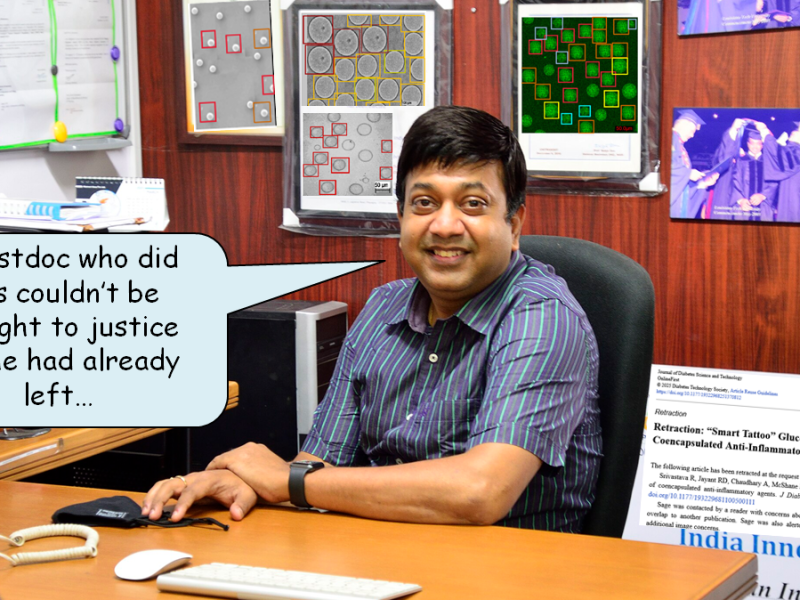
The graphene coauthors include Ajeet Kaushik from Florida Polytechnic University in USA, who has dodgy stuff on PubPeer and who briefly mentioned in this article:
Blame Your Students
“I should have checked these images more closely, but they were intended to be representative images rather than duplications or forgeries of other images.” – Crishan Samuel
Kujawska has many more joint papers with Kaushik, including a claim that Parkinson’s is caused by SARS-CoV2 infection, both of which can be cured with graphene nanoparticles (Al-kuraishi et al 2023, coauthored with papermiller Gaber El-Saber Batiha, owner of a huge PubPeer record, read March 2024 Shorts). Kujawska, Kaushik and El-Saber’s gang also established ginkgo leaves as the cure for COVID-19, that insanity was published in the German journal Archiv der Pharmazie (Al-Kuraishi et al 2022).
Donate!
If you are interested to support my work, you can leave here a small tip of $5. Or several of small tips, just increase the amount as you like (2x=€10; 5x=€25). Your generous patronage of my journalism will be most appreciated!
€5.00


Military Information Service = military intelligence and counterintelligence agency. Minkina was not just an ordinary officer; he reached the rank of full colonel. His educational background is also interesting; he is a graduate of the Felix Dzerzhinsky Political-Military Academy – political communist school, blessed by the Communist Party and the KGB.
LikeLike
Sounds like the best qualification to defend Poland from russian agents!
LikeLike
To be honest, he was most likely verified positively after the change of the political system. He graduated in 1989, so probably not as an eager communist, but rather young opportunist. Later on, he was given some important tasks in the diplomatic service and NATO. And, indeed, he specializes in a russian affairs, political, intelligence and military.
LikeLike
Rector Minkina officially removed by the Board of Electors. Before he was only suspended by minister Kulasek.
Prof. Mirosław Minkina odwołany z funkcji rektora Uniwersytetu w Siedlcach!
LikeLiked by 1 person
“111 electors (out of 123 eligible) took part in the vote. So, 56 votes were needed to get an absolute majority. 58 people voted for the dismissal, 46 against, and 7 abstained.” 😟
LikeLike
COVID can also be cured with bee venom. Gaber El-Saber seems to be popular in Poznan, not only in the Medical University.
Frontiers | Bee Venom—A Potential Complementary Medicine Candidate for SARS-CoV-2 Infections
LikeLiked by 2 people
And also in Bialystok. Michał Tomczyk, also in Frontiers
Frontiers | Ameliorative Role of Cerium Oxide Nanoparticles Against Fipronil Impact on Brain Function, Oxidative Stress, and Apoptotic Cascades in Albino Rats
A old friend of mine and Claudiu Supuran.
Full article: Oxidation of flavonoids by tyrosinase and by o-quinones–comment on “Flavonoids as tyrosinase inhibitors in in silico and in vitro models: basic framework of SAR using a statistical modelling approach” published by K. Jakimiuk, S. Sari, R. Milewski, C.T. Supuran, D. Şöhretoğlu, and M. Tomczyk (J Enzyme Inhib Med Chem 2022;37:427–436)
LikeLiked by 1 person
why did PubPeer refuse the comment?!
LikeLike
Several of my PubPeer comments have been moderated into oblivion. I am an expert in a field in which there is plenty of bullshit published, and on several occasions I have attempted to invite authors to explain how their hypotheses are purportedly supported by bad or ambiguous experiements. I find that it’s more often than not a red flag to debate this on PubPeer. Rather, I think the moderators are looking for obviously technically flawed experiments or data sets. Discussion of anything more rigorous doesn’t seem to garner a warm reception. That having been said, it’s odd they’d not accept the comments made above. Except of course for the potentially obvious reasons involving a conflict of interest.
LikeLiked by 1 person
The irony is that PubPeer was set up originally as a journal club, exactly for the kind of comments you tried to post.
LikeLiked by 2 people
I want to add something that exposes the contradiction at the heart of how PubPeer now operates.
PubPeer’s defense for rejecting comments from regular users — even clear-cut image manipulation posts with red boxes around duplicated blots as seen above—or other critiques is supposedly that moderators are overworked and don’t have time to read through lengthy submissions from unvetted accounts.
But this excuse collapses the moment you look at how whitelisted users are treated. Golden accounts post detailed, multi-point comments — often far longer and more complex than anything a regular user submits — and they sail through instantly. So it’s not about comment length. It’s not about moderator workload. It’s about who is speaking.
What we’re witnessing is a system carefully optimized to exhaust and drive away whistleblowers. A genuine expert posts a well-documented finding, gets it rejected or silently removed after author complaints, and — quite rationally — never bothers again. Meanwhile, the handful of approved users who could raise hell about this double standard stay quiet, because challenging the platform that grants them their privileged voice isn’t in their career interest.
So let’s be blunt: PubPeer is no longer an open platform for post-publication scrutiny. It is a gated venue where a select few are licensed to speak, where the critique space is not open to all, and where the very people locked out are the ones the platform was originally built to empower.
That’s not a moderation policy. That’s a structural betrayal of the founding mission. And hiding behind “moderators are busy” while giving golden accounts a free pass isn’t an explanation — it’s an admission.
LikeLike
Tragic.
https://pubpeer.com/search?q=authors%3A+%22maryam+moosavi%22+
LikeLike
Tragic too…..
https://pubpeer.com/search?q=authors%3A+%22Leonid+Schneider%22
LikeLike
Indeed. Now prove your scientific skills and check the posts for factual validity
LikeLiked by 1 person
Meanwhile, the handful of approved users who could raise hell about this double standard stay quiet, because challenging the platform that grants them their privileged voice isn’t in their career interest.
I appreciate the frustration of would-be PubPeer contributors. The platform would benefit from enough moderators to handle the load, and some kind of appeal process. That said, the “handful of approved users” (1) aren’t in a position to see the double standard, and (2) are no better placed to challenge the platform than anyone else.
How many of the whitelisted PubPeer contributors have a career interest in their morbid hobby?.
LikeLike
LikeLike
I also got a PubPeer comment refused for an obvious papermill and irrelevant citations using a comment pattern and wording which has worked for 90+ articles and worked the last time I submitted one which was about a year ago. I wonder if it of any use to use PubPeer anymore if you’re not part of the whitelisted boys’ club (which would defeat the entire purpose of the website)
LikeLike
Aneurus Inconstans lost his whitelisting and had his comments rejected.
Carabus Maleki saw all their new comments on Rui Reis rejected.
Other users report similar.
It is an utter mess. Maybe PubPeer now uses AI for moderation.
LikeLiked by 1 person
Oh, so Ajeet Kaushik was on the editorial board of Green Biomaterials with Navid Rabiee, Ali Zarrabi, Pooyan Makvandi, Mohammad Reza Saeb, Hassan Karimi-Maleh, Jacek Ryl, Eder C. Lima, Michael R. Hamblin, Rajender S. Varma, Tomasz Bączek, Agata Kot-Wasik, Justyna Kucinska-Lipka, etc.
LikeLike
A few days ago, Ariel Karlinsky informed me that the Princess Máxima Center had told him that BMJ had informed the Princess Máxima Center that BMJ has finally decided to retract a horrible antivax study in BMJ Public Health, Mostert et al. (2024), details at https://pubpeer.com/publications/BD524B3E696274C2F24DFFC8CCA546
It is unknown when BMJ will publish the retraction note and the contents of this retraction note is also unknown.
All four authors of Mostert et al. (2024) had already requested BMJ on 19 June 2024 to retract their study. It is unknown why BMJ et al. and all at BMJ Public Health have until now not fulfilled this request. BMJ et al and all at the journal BMJ Public Health do not communicate with me and with others about this topic, and already for a very prolonged period of time.
LikeLiked by 1 person
Apart of the fraud in the Ethno paper, one small clarification. Methanolic plant extract is fine to use, as it was evaporated to dryness (just some residual MeOH). Methnolic just means that methnol was used for extraction. The issue is rather that the dose which translates to more than 22g/70 kg human, what is hardly realistic.
Love your work,
Cheers!
LikeLike
Thanks for the clarification!
LikeLike
Małgorzata Kujawska has an amazing set of co-authors:
Maria Jade Catalan Opulencia (Ajman University) – 26 retractions
Walid Kamal Abdelbasset (Cairo University, Prince Sattam Bin Abdulaziz University) – 23 retractions
Yasser Fakri Mustafa (University of Mosul) – 18 retractions
Abduladheem Turki Jalil (Alsalam University College) – 12 retractions
Rahman S. Zabibah (Iraqi University) – 11 retractions
Wadi B. Alonazi (King Saud University, University of Business and Technology) – 10 retractions
Abdur Rauf (University of Swabi) – 9 retractions
Rosario Mireya Romero Parra (Universidad Continental) – 8 retractions
LikeLiked by 2 people
Instead of finally revoking Cheraghian’s PhD degree, his Technical University of Braunschweig has more important things to do.
Threatening yours truly for example.
Lars Wolf sent me this demand, with his university’s lawyers Cathleen Farr and Markus Pein in cc:
“The letter in question was therefore sent to you under the condition of strict confidentiality – that is, for your own informational purposes only.
Publication or further distribution of this report is therefore neither covered by the original purpose of transmission nor compatible with the aforementioned fundamental rights guarantees.
For this reason, we demand that you immediately remove the uploaded document to adequately protect the rights and interests of all parties involved and refrain from any further publication or distribution of this letter.”
This is clearly a threat of lawsuit. Well, Cathleen and Markus, bring it on. Earn your salary.
LikeLiked by 1 person