

Schneider Shorts of 1 November 2024 – more fictions from an old crook, society journals teach sleuth good science, Scottish investigation causes retraction, Scottish papermiller goes to China, hazardous waste in Italy, amazing achievements of transplant surgeons, and finally, editorial dedicated to those murdered by retractions.
Table of Discontent
Science Elites
- Science Fictions – Bob Gallo’s fake science exposed by Sholto David
Scholarly Publishing
- Let us know if you have any questions – Society journal in love with Frederic Checler’s fake figures
- On discussion with authors and image integrity analyst – another society journal says all fine with gels by Patrizia Agostinis
- Removal of Authors – MDPI shows why it’s important to pay your bills
Retraction Watchdogging
- In memory of scientists who may have committed suicide as result of retractions – ethics experts issue an editorial
- Sir Philip’s academic progeny – Dario Alessi retracts second paper after university investigation
- Published earlier in another article – Gabriella Marfe’s hazardeous waste
- The importance of passing on knowledge – first retraction for papermiller Pooyan Makvandi
- Something happened – Israeli transplant surgeons learn publication ethics
Science Breakthroughs
- Revived pig brains – Chinese and German transplant surgeons bring brains from dead pigs to life!
Science Elites
Science Fictions
Sad news: the fake HIV discoverer, failed Nobel Prize pretender, cheater, liar and thief Robert Gallo isn’t dead yet. Cheerful news: Sholto David found image fraud in Gallo’s papers! Read about Gallo’s HIV scams from the 1980ies in John Crewdson’s book “Science Fictions” from 2002, which is out of print because academic authorities still hate Crewdson and defend Gallo:

How USA embraced research fraud: review of two books
A review of “The Baltimore Case” by the historian Daniel Kelves and “Science Fictions” by the journalist John Crewdson, which also tell the history of the Office of Research Integrity (ORI).

To be fair, three decades ago Gallo was whitewashed completely, which certainly proves something, no? I mean, Carlo Croce, Michael Karin and C Ronald Kahn are officially innocent also.
At the age of 87, Gallo still runs an active lab at the University of Maryland, where he was sent into exile from NIH when his misconduct came out. This relatively recent paper in PNAS, “Contributed by Robert C. Gallo“, claims that mycoplasma causes leukaemia:
Davide Zella, Sabrina Curreli , Francesca Benedetti, Selvi Krishnan , Fiorenza Cocchi , Olga S. Latinovic, Frank Denaro , Fabio Romerio , Muhammad Djavani , Man E. Charurat, Joseph L. Bryant , Hervé Tettelin, Robert C. Gallo Mycoplasma promotes malignant transformation in vivo, and its DnaK, a bacterial chaperone protein, has broad oncogenic properties Proceedings of the National Academy of Sciences (2018) doi: 10.1073/pnas.1815660115

Schneider Rule postulates that cheaters always find each other, and look, here is Gallo with a surprise special guest from Ferrara, Italy, namely Giorgio Zauli‘s close associate Paola Secchiero!
D. Zella, F. Romerio, S. Curreli , P. Secchiero , C. Cicala , D. Zagury , R. C. Gallo IFN-alpha 2b reduces IL-2 production and IL-2 receptor function in primary CD4+ T cells The Journal of Immunology (2000) doi: 10.4049/jimmunol.164.5.2296

As an aside, the negative controls presented in Figure 6 look highly similar to me.”
That other paper, published 2 years later in FASEB Journal, has only two authors, Gallo’s mentees Fabio Romerio (now associate professor at Johns Hopkins University) and Davide Zella (remained at University of Maryland). Here is Romerio learning the ropes of dodgy AIDS research:
Clara Lehmann, Jill M Harper, Dirk Taubert , Pia Hartmann , Gerd Fätkenheuer , Norma Jung , Jan Van Lunzen , Hans-Jürgen Stellbrink , Robert C Gallo, Fabio Romerio Increased interferon alpha expression in circulating plasmacytoid dendritic cells of HIV-1-infected patients JAIDS Journal of Acquired Immune Deficiency Syndromes (2008) doi: 10.1097/qai.0b013e31817f97cf

Here another study by Gallo with Secchiero, Zella, Romerio, and the retired senior FDA official Frank Weichold:
Davide Zella, Oxana Barabitskaja , Luca Casareto , Fabio Romerio, Paola Secchiero , Marvin S. Reitz, Robert C. Gallo, Frank F. Weichold Recombinant IFN-α (2b) Increases the Expression of Apoptosis Receptor CD95 and Chemokine Receptors CCR1 and CCR3 in Monocytoid Cells The Journal of Immunology (1999) doi: 10.4049/jimmunol.163.6.3169


This is the other paper, it has further issues:
Davide Zella , Oxana Barabitskaja , Jennifer M. Burns , Fabio Romerio, Daniel E. Dunn , Maria Grazia Revello, Giuseppe Gerna, Marvin S. Reitz Jr, Robert C. Gallo, Frank F. Weichold Interferon-γ Increases Expression of Chemokine Receptors CCR1, CCR3, and CCR5, But Not CXCR4 in Monocytoid U937 Cells Blood (1998) doi: 10.1182/blood.v91.12.4444

How about Gallo with the former director of U.S. Centers for Disease Control and Prevention, Robert Redfield, who so masterfuilly managed the COVID-19 pandemic in USA? Here they found a cure for AIDS:
Alonso Heredia, Charles Davis , Douty Bamba , Nhut Le , Muhammad Y Gwarzo , Mariola Sadowska , Robert C Gallo, Robert R Redfield Indirubin-3′-monoxime, a derivative of a Chinese antileukemia medicine, inhibits P-TEFb function and HIV-1 replication AIDS (2005) doi: 10.1097/01.aids.0000194805.74293.11

Guess we must wait till the Max Planck Principle kicks in.
Scholarly Publishing
Let us know if you have any questions
On 25 October 2024, Andrew Lawrence, University of Melbourne professor and Editor-in-Chief of the Wiley-published society-owned Journal of Neurochemistry sent his editorial assistant to educate the pseudonymous sleuth Clare Francis about how to think properly:
“We were made aware of these concerns in May 2024, and they were fully investigated thereafter. The authors were contacted for an explanation, but since the papers were published 22-23 years ago, raw images are no longer available. For the concerns listed below, the editors determined that these do not impact the conclusions of the respective studies. Please see a detailed explanation for each“
Both papers the sleuth reported were by Frédéric Checler, who normally should never be left anywhere near science, but in France, things are topsy-turvy in this regard. This Research Director at INSERM-CNRS Institute of Molecular and Cellular Pharmacology (IPMC) in Valbonne has almost 50 very problematic or even outright fake papers on PubPeer. Checler was mentioned for example here, you might recognise his celebrity co-author:
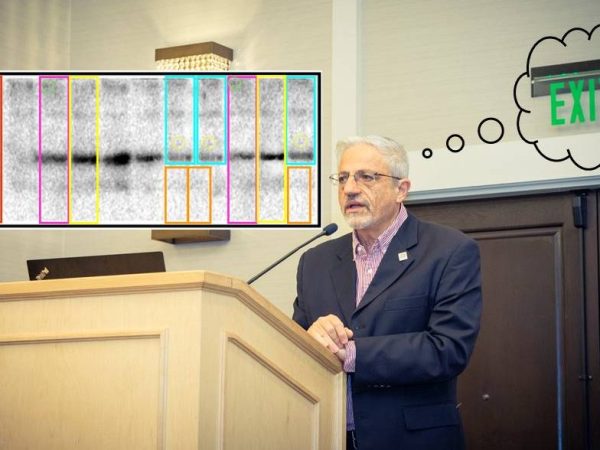
The potential problems of Eliezer Masliah
“the confusion occurred while utilizing prior panels as example ” – emeritus professor Eliezer Masliah
This contains several copy-pasted gel bands:
Elvira Lopez-Perez , Yue Zhang , Stuart J Frank, John Creemers, Nabil Seidah , Frédéric Checler Constitutive alpha-secretase cleavage of the beta-amyloid precursor protein in the furin-deficient LoVo cell line: involvement of the pro-hormone convertase 7 and the disintegrin metalloprotease ADAM10 Journal of Neurochemistry (2001) doi: 10.1046/j.1471-4159.2001.00180.x


The editorial assistant Isaline Mees forwarded Checler’s wisdom to the sleuth:
“Figure 5a: duplication/resizing of the lower MW band for pcDNA3 vector transfected LoVo cells (M) would not change the conclusions, which are based on the analysis of the higher MW bands.
Figure 5e: duplication/resizing of one of the controls (M; empty pcDNA3 vector transfected LoVo cells) would not change the conclusions.”
Here the other Checler paper, with his mentee and regular co-author Cristine Alves Da Costa, who is presently a Director of Research at the same at IPMC institute:
E. Paitel , C. Alves Da Costa , D. Vilette , J. Grassi , F. Checler Overexpression of PrPc triggers caspase 3 activation: potentiation by proteasome inhibitors and blockade by anti-PrP antibodies Journal of Neurochemistry (2002) doi: 10.1046/j.1471-4159.2002.01234.x

Mees passed on this assessment by Checler and EiC Lawrence:
“Figure 2a: the results section suggests that the un-transfected control rabbit kidney epithelial cell line (RK13) was used only as negative control on Fig. 2a and as a reference for caspase 3 immunoreactivity (c) and DNA fragmentation (d) when compared to the inducible PrPc expressing Rov9 cell line. While the RK13 lanes without (-) and with (+) 15 h doxycycline (Dox) treatment are duplicates, it is clear from other studies that RK13 cells (without transfection) do not contain endogenous PrP proteins (e.g.: see Fig. 1 in Arellano-Anaya et al 2017 DOI 10.1007/978-1-4939-7244-9_8). The -/+ Dox Rov9 lanes convincingly indicate that the PrPc immunoreactivity is reasonably specific, therefore it is very unlikely that the image manipulation was carried out to ‘hide’ nonspecific immunopositive bands. In the context of the paper and the overall validity of the findings the RK13 Dox -/+ lanes on Fig. 2a have no real significance. Please let us know if you have any questions.”
My suspicion, that we got it all wrong and that science is supposed to be fraudulent, is strengthened.
On discussion with authors and image integrity analyst
At the society journal FEBS Letters, things are not much better. Clare Francis flagged a paper by the cancer researcher Patrizia Agostinis, professor at KU Leuven in Belgium. She has many papers on PubPeer, including with Simone Fulda in Germany (in fact, Agostinis led the sleuths to Fulda, according to Clare Francis) and with a Belgian colleague, Jacques Piette in Liege:

My Liège is not so vile a sin
“The Board of Ethics and Scientific Integrity of University of Liège investigated the overlap between the aforementioned panels and recommended the article be corrected”
Here a recent PubPeer post by the sleuth for all three:
Isabelle Coupienne , Sébastien Bontems , Michael Dewaele , Noemi Rubio , Yvette Habraken , Simone Fulda , Patrizia Agostinis , Jacques Piette NF-kappaB inhibition improves the sensitivity of human glioblastoma cells to 5-aminolevulinic acid-based photodynamic therapy Biochemical Pharmacology (2011) doi: 10.1016/j.bcp.2010.12.015


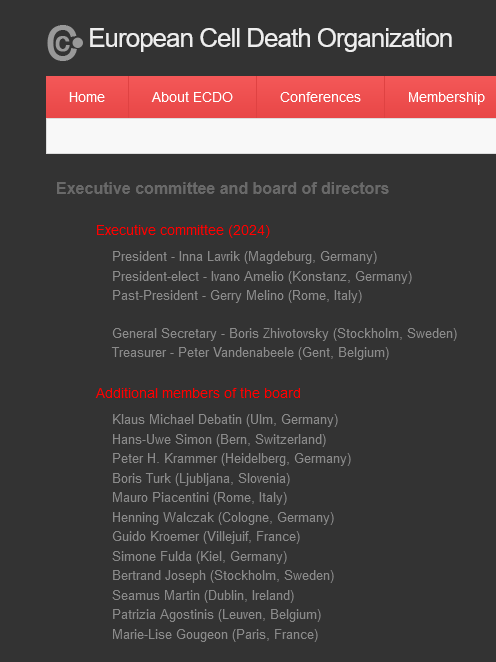
KU Leuven informs us about Agostinis:
“Patrizia is a strong advocate for Women in Science: she is Equal Opportunity Officer at the KU Leuven Department of Cellular & Molecular Medicine, and mentor of several female PhD students and Postdoctoral researchers who have successfully continued their independent carrier as scientists or specialists. […] she was co-organizer (with Gabriele Bergers) of the Women in Science congress in Leuven in 2019, which had over 300 participants.”
On 20 September 2024, the sleuth reported this paper to the German journal FEBS Letters, for some stealthy and rather dodgy gel splicing:
Zerihun Assefa , Marjan Garmyn , Annelies Vantieghem , Wim Declercq , Peter Vandenabeele , Jackie R Vandenheede , Patrizia Agostinis Ultraviolet B radiation‐induced apoptosis in human keratinocytes: cytosolic activation of procaspase‐8 and the role of Bcl‐2 FEBS Letters (2003) doi: 10.1016/s0014-5793(03)00238-2


Now, irregular gel splicing is rarely innocent, and splicing of portions of gel lanes even less so. But FEBS Letters replied on PubPeer in October 2024:
“The journal has investigated the above comments. The author has indicated that the raw data are no longer available.
PubPeer guidelines indicate that “Elision of whole lanes from a gel is not considered a concern except in recent articles (now that guidelines have been tightened)” (https://pubpeer.com/static/faq). For this reason, the investigation is now closed.”
This journal reply prompted PubPeer moderators to protest with their own comment:
“A bit more is going on here than elision of whole lanes in an old paper, otherwise we would indeed not have accepted such a comment? Bands pasted in and differential splicing…“
To Clare Francis, FEBS Letters‘ Managing Editor Duncan Wright sent on 25 October 2024 a similar message referencing PubPeer guidelines, but here the key bit (highlight mine):
“On discussion with the authors, image integrity analyst, and FEBS Press Publisher, we consider that no action is warranted…“
It should be reminded that this image integrity analyst is the famous Jana Christopher, renowned expert on image manipulation and papermills, author of authoritative editorials and celebrity speaker at every research integrity conference.
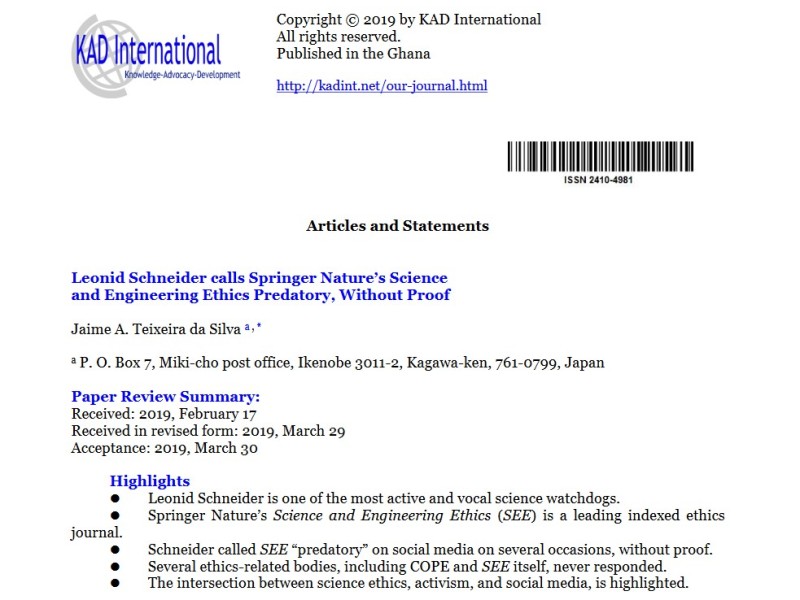
Editors and other real papermill heroes
“Long story short, we investigated our published papers and then retracted those with data integrity issues. That is it.” – Dr Heather Smith, Editor-in-Chief
One wonders if Christopher also noticed this, in the same Agostinis paper, submitted to the journal by Clare Francis on 28 October 2024:

Figure 1B is clearly fraudulent. I contacted Wright, Christopher and the FEBS Letters editors about this new evidence. Wright replied:
“The journal will examine the similarities within this paper and take all necessary action.“
The FEBS Journal editor refused to explain why the evidence was initially dismissed by their image integrity analyst. Allow me to show you some examples of what else Agostinis’ lab produced.
Again with the same Belgian colleague Peter Vandenabeele from University of Gent (who has his own dodgy stuff on PubPeer):
- Abhishek D. Garg , Dmitri V. Krysko, Peter Vandenabeele, Patrizia Agostinis Hypericin-based photodynamic therapy induces surface exposure of damage-associated molecular patterns like HSP70 and calreticulin Cancer Immunology Immunotherapy (2012) doi: 10.1007/s00262-011-1184-2
- Abhishek D Garg, Dmitri V Krysko, Tom Verfaillie , Agnieszka Kaczmarek , Gabriela B Ferreira , Thierry Marysael , Noemi Rubio , Malgorzata Firczuk, Chantal Mathieu , Anton J M Roebroek , Wim Annaert , Jakub Golab, Peter De Witte, Peter Vandenabeele, Patrizia Agostinis A novel pathway combining calreticulin exposure and ATP secretion in immunogenic cancer cell death The EMBO Journal (2012) doi: 10.1038/emboj.2011.497

Brachyhypopomus walteri: “same Actin blot in three different figures and two papers. WB bands are also stretched and adjusted for intensity. Why, to make them appear as different blots? Since there are a lot of cutting and pasting of numerous individual bands in the EMBO paper (especially in figure 2) and the fact that the same Actin blots have been used in different WBs (and in another paper) the authors needs to disclose the whole western blots for proper analysis.”


The EMBO J paper was not corrected because, get this: the simultaneously published Cancer Im Im paper was corrected by the authors, already in 2018:
“It has come to our attention that some errors resulting from accidental oversight concerning incorrect deletion/replacement of temporary placeholder images during figure assembly and mounting occurred during the assembly of the “Intracellular Proteins” immunoblots presented in Fig. 1a, d.[…] This oversight also led to erroneous duplication of certain intracellular protein lanes presented in Fig. 1a, d in a different paper of ours [2]. These corrections have no influence on the description, interpretation, or the original conclusions….”
Thanks to Agostinis and her fellow Leuven professor Peter De Witte, Abhishek Garg became assistant professor at KU Leuven. Dmitri Krysko made it thanks to Vandenabeele’s patronage to associate professor at University of Gent. WomenInSTEM, anyone? Here is this team again, the paper was also successfully corrected:
Abhishek D. Garg, Sanne Elsen , Dmitri V. Krysko, Peter Vandenabeele , Peter De Witte, Patrizia Agostinis Resistance to anticancer vaccination effect is controlled by a cancer cell-autonomous phenotype that disrupts immunogenic phagocytic removal Oncotarget (2015) doi: 10.18632/oncotarget.4754
Supplementary Figure S2 C

The Correction was issued in 2018:
“Due to erroneous figure processing and oversight, unintended mistakes occurred during the assembly of Supplementary Figure S2C – specifically, the BiP/Grp78, CHOP and Actin panels for the AY27-PDT samples only. Using the source/raw data, we have now generated the correct Supplementary Figure S2C.
The authors apologize for the oversight. The authors declare that this correction does not affect the description, interpretation, or the original conclusions of the manuscript.”
Another corrected Agostinis paper, with fellow KU Leuven professor Peter Vangheluwe:
S. Demirsoy , S. Martin , S. Motamedi , S. Van Veen , T. Holemans , C. Van Den Haute , A. Jordanova , V. Baekelandt , P. Vangheluwe , P. Agostinis ATP13A2/PARK9 regulates endo-/lysosomal cargo sorting and proteostasis through a novel PI(3, 5)P2-mediated scaffolding function Human Molecular Genetics (2017) doi: 10.1093/hmg/ddx070


That Oxford University Press journal is a known fraud cess pool, so the Correction from 24 March 2024 of course refused to address the issues in Figures 1B and 5D, only this:
“In the originally published version of this manuscript an unintended error resulted in the duplication of the beta-actin loading control of Figure 2 panel D. This error occurred during the assembly and mounting of the final panel D of Figure 2, after cropping of a middle lane, of the same western blot as indicated by the dashed line.”
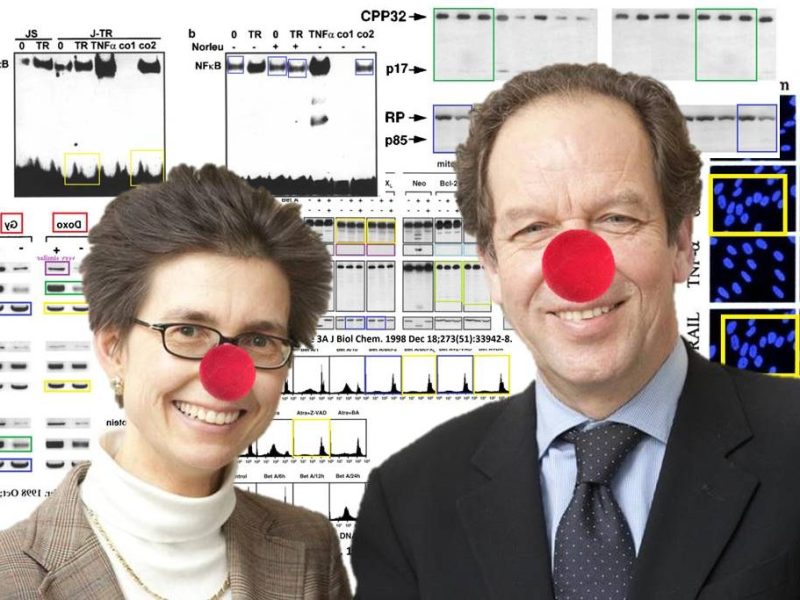
Fulda & Debatin: Reproducibility of Results in Medical and Biomedical Research
“Basic and advanced training for researchers should focus much more on self-reflection, openness and a culture of error acceptance.”
This is the paper by Agostinis which led the sleuths to the fallen German university rector Simone Fulda:
Behnaz Ahangarian Abhari , Nicole McCarthy , Patrizia Agostinis, Simone Fulda NF-κB contributes to Smac mimetic-conferred protection from tunicamycin-induced apoptosis APOPTOSIS (2019) doi: 10.1007/s10495-018-1507-2

Actinopolyspora biskrensis: “Could the authors please review the B-Actin panel shown in Figure 1B? I’m not certain that it displays the same number of lanes as the accompanying bands”
More for Agostinis on PubPeer.
Removal of Authors
Some years ago, MDPI still let you look behind the curtains. This was corrected in February 2022:
Junru Yang , Weifeng Peng , Chuan Sun A Learning Control Method of Automated Vehicle Platoon at Straight Path with DDPG-Based PID Electronics (2021) doi: 10.3390/electronics10212580

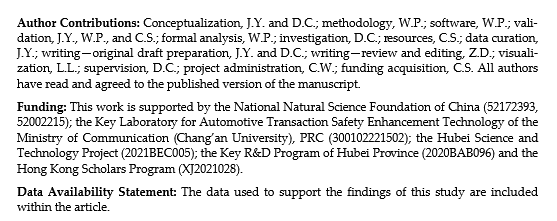
According to the ResearchGate record, this paper originally used to have more authors: Junru Yang, Duanfeng Chu, Weifeng Peng, Chuan Sun, Zejian Deng, Liping Lu and Chaozhong Wu. But the highly relevant authors Chu (“methodology, resources, project administration“, Deng (“visualization“), Lu (“supervision“) and Wu (“funding acquisition“) failed to pay the papermill, so a Correction was published by MDPI on 17 February 2022:
“1. Removal of Authors
The authors wish to make the following corrections to this paper [1].
D.C., Z.D., L.L., and C.W. were included as authors in the original publication. The corrected Author Contributions Statement appears here. The authors apologize for any inconvenience caused and state that the scientific conclusions are unaffected. The original publication has also been updated.
2. Removal of Funding
In the original publication, the funders of the National Natural Science Foundation of China (52172393), the Key Laboratory for Automotive Transaction Safety Enhancement Technology of the Ministry of Communication (Chang’an University), PRC (300102221502), the Key R&D Program of Hubei Province (2020BAB096) were included. The authors apologize for any inconvenience caused and state that the scientific conclusions are unaffected. The original publication has also been updated.”
Also some affiliations were changed, for example Weifeng Peng moved from University of Technology in Wuhan to Zhongxing Telecommunication Equipment Corporation in Nanjing. And of course the authors’ contributions had to be redistributed to those who paid the papermill and thus remained as authors.
Retraction Watchdogging
In memory of scientists who may have committed suicide as result of retractions
Retraction Watch tweeted something very strange, and Dorothy Bishop called them out.
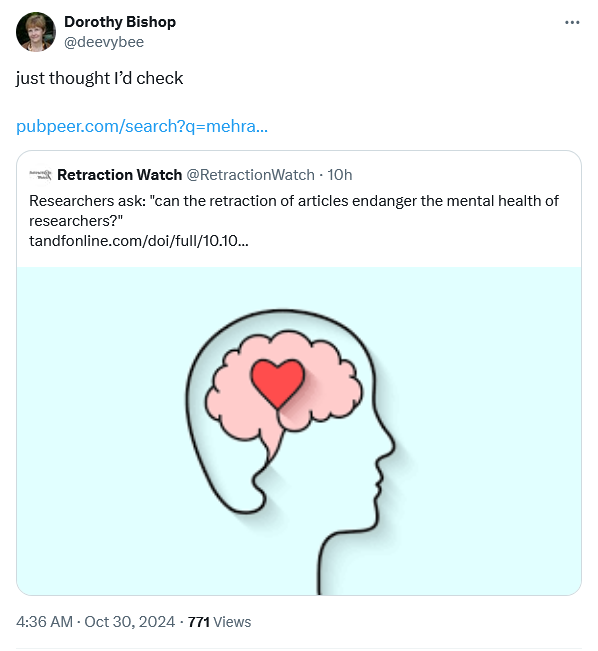
This was the scholarly expert editorial which the expert watchdogs of Retraction Watch tweeted (knowing Ivan Oransky, totally unironically):
SeyedAhmad SeyedAlinaghi , Shayan Gholami , Esmaeil Mehraeen Editorial: can the retraction of articles endanger the mental health of researchers? Journal of Mental Health (2024) doi: 10.1080/09638237.2024.2417284

Thing is, the Iranian scholars Esmaeil Mehraeen, assistant professor at Ardebil University of Medical Sciences, and SeyedAhmad SeyedAlinaghi, associate professor at Tehran University of Medical Sciences, have, according to PubPeer and even the Retraction Watch database, a pile of 10 retractions of their own, for papermill fraud. Yes, that might cause them mental distress, but I am not sure it qualify these Iranian professors as valued expert on research ethics. But then again, I must bow to the absolute authority of Ivan Oransky.
All 10 retractions happened in the Wiley journal Health Science Reports, have similar worded notices, and Mehraeen is the corresponding author:
Omid Dadras , SeyedAhmad SeyedAlinaghi , Amirali Karimi , Ahmadreza Shamsabadi , Kowsar Qaderi , Maryam Ramezani , Seyed Peyman Mirghaderi , Sara Mahdiabadi , Farzin Vahedi , Solmaz Saeidi , Alireza Shojaei , Mohammad Mehrtak , Shiva A. Azar , Esmaeil Mehraeen , Fabrício A. Voltarelli COVID‐19 mortality and its predictors in the elderly: A systematic review Health Science Reports (2022) doi: 10.1002/hsr2.657
“The retraction has been agreed given the journal has received evidence confirming that the peer review process of this paper was manipulated.”
Retraction 25 July 2023
Mehraeen replied to Bishop’s criticism of his editorial on PubPeer:
“Unfortunately, we suffered in spirit and academic position due to a journal’s unfair retraction. By publishing this article, we want to convey our experiences to others. We also try to message publications that retraction, especially if it’s unfair, will endanger the authors’ mental health. Dr. E.Mehraeen“
He then added:
“Exactly, journals should follow clear principles for the retraction of articles, and before retracting, the authors must be convinced that they made a mistake. However, our articles were retracted by a journal that was not COPE member and did not send any evidence of the authors’ fault.“
Here another retraction without authors’ fault, on COVID-19 vaccinations and with a similar retraction notice about manipulated peer review. It leads us to a rabbit hole because of a certain coauthor, the French professor from Marseille, Jean‐Marc Sabatier:
SeyedAhmad SeyedAlinaghi , Amirali Karimi , Hengameh Mojdeganlou , Sanam Alilou , Seyed Peyman Mirghaderi , Tayebeh Noori , Ahmadreza Shamsabadi , Omid Dadras , Farzin Vahedi , Parsa Mohammadi , Alireza Shojaei , Sara Mahdiabadi , Nazanin Janfaza , Abolfath Keshavarzpoor Lonbar , Esmaeil Mehraeen , Jean‐Marc Sabatier Impact of COVID-19 pandemic on routine vaccination coverage of children and adolescents: A systematic review Health Science Reports (2022) doi: 10.1002/hsr2.516
Now, Sabatier is actually a covidiot and an antivaxxer, look what and with whom he published:
Jean-François Lesgards, Dominique Cerdan , Christian Perronne , Jean-Marc Sabatier , Xavier Azalbert , Elizabeth A. Rodgers , Peter A. McCullough Toxicity of SARS-CoV-2 Spike Protein from the Virus and Produced from COVID-19 mRNA or Adenoviral DNA Vaccines Archives of Microbiology & Immunology (2023) doi: 10.26502/ami.936500110
Chloroquine quack Perronne, ivermectin quack McCullough and the far-right media entrepreneur Azalbert.

Ivermectin now against COVID-19, because
Dr Peter McCullough, Dr Sabine Hazan, and other ivermectin quacks. Follow Smut Clyde’s descent to the antivaxxer hell.

As every covidiot, Sabatier is demented and unhinged. Look what else he published, in MDPI:
Jean-Marc Sabatier , Farzan Amini Emergence of Gloomy Eyelet inside DNA Biophysica (2023) doi: 10.3390/biophysica3010003
Enjoy the abstract:
“The purpose of this article is to study gloomy eyelet (GE) inside the cell nucleus by using models of warp drive hydro (WDH), swinging spring, Rankine, co-moving reference frame, and Poincare. The beat wave frequency (ω) of blood pressure on the vessel and the swinging spring frequency (Ω) of DNA coincide together on the Rankine model. In this case, it leads to appearing as a sudden pressure drop and an accelerated cavity in the medium of the warp drive hydro (WDH) model. In transient conditions, the vortex flow inside WDH can generate gloomy eyelet (GE), and the tiny distortion of nano space–time revealed inside the gloomy eyelet (GE) inside DNA and the tiny distortion of nano space–time revealed inside the co-moving reference frame (CMRF) model of the gloomy eyelet (GE).”
Sir Philip’s academic progeny
The Parkinson’s researcher Dario Alessi OBE FRS FRSE FMedSci is MRC Director and professor at the University of Dundee in the UK. The university informs us that
“Dario is passionate about mentorship, open science, sharing, working with industry and clinicians, as well as fostering a collaborative culture. […] Dario has published approaching 300 papers (~100 000 cumulative citations) and has a h-index of 153.”
More recently, the University fo Dundee determined that two of Alessi’s papers were fraudulent. In August 2024 Shorts, i reported about an earlier retraction for Alessi in Biochemical Journal, back then it happened “at the request of the authors” who “willingly supported independent investigations“. That was only part of the truth, a more recent retraction reveals “an institutional investigation“:
Alfonso Mora , Kei Sakamoto , Edward J. McManus , Dario R. Alessi Role of the PDK1-PKB-GSK3 pathway in regulating glycogen synthase and glucose uptake in the heart FEBS Letters (2005) doi: 10.1016/j.febslet.2005.05.040

“The journal was contacted by a representative of the research integrity group at the authors’ institute, since an institutional investigation revealed inappropriate splicing and duplication of image sections within Fig. 2A, B and Fig. 3A. Consequently, the conclusions of the paper are substantially compromised, and the institute has recommended the paper to be retracted. The editors of the journal agree with the retraction based on the institutional investigation.”
Retraction 24 October 2024.
I confirmed with Paul Davies, Interim Joint Dean of the School of Life Sciences of University of Dundee, that there was indeed investigation which led to the two retractions.
These in turn prompted Clare Francis and other sleuths to screen Alessi’s papers, leading to over 20 threads on PubPeer. Davies announced to me:
“I have asked the now head of research integrity to review each of the reports on Pubpeer and provide me with a report as a priority.”
This is rather representative:
Jose M. Lizcano, Maria Deak , Nick Morrice , Agnieszka Kieloch , C. James Hastie , Liying Dong , Mike Schutkowski , Ulf Reimer , Dario R. Alessi Molecular basis for the substrate specificity of NIMA-related kinase-6 (NEK6). Evidence that NEK6 does not phosphorylate the hydrophobic motif of ribosomal S6 protein kinase and serum- and glucocorticoid-induced protein kinase in vivo Journal of Biological Chemistry (2002) doi: 10.1074/jbc.m202042200


Same first author, Alessi’s former postdoc Jose Lizcano, now associate professor at University Autonoma Barcelona in Spain:
Jose M. Lizcano, Saif Alrubaie , Agnieszka Kieloch , Maria Deak , Sally J. Leevers , Dario R. Alessi Insulin-induced Drosophila S6 kinase activation requires phosphoinositide 3-kinase and protein kinase B Biochemical Journal (2003) doi: 10.1042/bj20030577


In the same journal:


Alessi himself did postdoc with the eminent British biochemist Sir Philip Cohen in Dundee, in fact Alessi inherited the MRC unit from his mentor. Here is Sir Philip’s PubPeer record, and here is their joint paper:
Nicolas Dzamko , Francisco Inesta-Vaquera , Jiazhen Zhang , Chengsong Xie , Huaibin Cai , Simon Arthur , Li Tan , Hwanguen Choi , Nathanael Gray , Philip Cohen , Patrick Pedrioli , Kristopher Clark , Dario R. Alessi The IkappaB Kinase Family Phosphorylates the Parkinson’s Disease Kinase LRRK2 at Ser935 and Ser910 during Toll-Like Receptor Signaling PLoS ONE (2012) doi: 10.1371/journal.pone.0039132

The next study will be never retracted because Alessi and his Dutch coauthor Hans Clevers (formerly Hubrecht Institute director, now at Roche) are both EMBO members:
Jérôme Boudeau , Annette F Baas , Maria Deak , Nick A Morrice , Agnieszka Kieloch , Mike Schutkowski , Alan R Prescott , Hans C Clevers , Dario R Alessi MO25alpha/beta interact with STRADalpha/beta enhancing their ability to bind, activate and localize LKB1 in the cytoplasm The EMBO Journal (2003) doi: 10.1093/emboj/cdg490


C Ronald Kahn and The Problem of Irreproducible Bioscience Research
“not everyone in the research community accepts that the problem requires such attention; some believe it is overblown.” -Jeffrey Flier, emeritus dean of Harvard Medical School
In the same “No retractions for EMBO members” society journal, Alessi with none other but Harvard’s mega-cheater C Ronald Kahn! And the first author is the same Alessi’s former postdoc Alfonso Mora as on the retracted paper above:
Alfonso Mora , Anthony M Davies , Luc Bertrand , Isam Sharif , Grant R Budas , Sofija Jovanović , Véronique Mouton , C Ronald Kahn, John M Lucocq , Gillian A Gray , Aleksandar Jovanović , Dario R Alessi Deficiency of PDK1 in cardiac muscle results in heart failure and increased sensitivity to hypoxia The EMBO Journal (2003) doi: 10.1093/emboj/cdg469


Here is Alessi with another Harvard superstar, Stephen Elledge (read about him in April 2023 Shorts):
Jinwei Zhang , Geng Gao , Gulnaz Begum , Jinhua Wang , Arjun R. Khanna , Boris E. Shmukler , Gerrit M. Daubner , Paola De Los Heros , Paul Davies , Joby Varghese , Mohammad Iqbal H. Bhuiyan , Jinjing Duan , Jin Zhang , Daniel Duran , Seth L. Alper , Dandan Sun , Stephen J. Elledge , Dario R. Alessi , Kristopher T. Kahle Functional kinomics establishes a critical node of volume-sensitive cation-Cl− cotransporter regulation in the mammalian brain Scientific Reports (2016) doi: 10.1038/srep35986

Paola De Los Heros , Dario R. Alessi , Robert Gourlay , David G. Campbell , Maria Deak , Thomas J. Macartney , Kristopher T. Kahle , Jinwei Zhang The WNK-regulated SPAK/OSR1 kinases directly phosphorylate and inhibit the K+–Cl− co-transporters Biochemical Journal (2014) doi: 10.1042/bj20131478

—Same data are reused multiple times
—Even under different colors”
Another celebruty coauthor, Nathanael Gray, Stanford professor and an associate of David Sabatini!
- John M. Hatcher , Jinwei Zhang , Hwan Geun Choi , Genta Ito , Dario R. Alessi , Nathanael S. Gray Discovery of a Pyrrolopyrimidine (JH-II-127), a Highly Potent, Selective, and Brain Penetrant LRRK2 Inhibitor ACS Medicinal Chemistry Letters (2015) doi: 10.1021/acsmedchemlett.5b00064
- Xianming Deng , Jonathan M. Elkins , Jinwei Zhang , Qingkai Yang , Tatiana Erazo , Nestor Gomez , Hwan Geun Choi , Jinhua Wang , Nicolas Dzamko , Jiing-Dwan Lee , Taebo Sim , NamDoo Kim , Dario R. Alessi , Jose M. Lizcano , Stefan Knapp , Nathanael S. Gray Structural determinants for ERK5 (MAPK7) and leucine rich repeat kinase 2 activities of benzo[e]pyrimido-[5,4-b]diazepine-6(11H)-ones European Journal of Medicinal Chemistry (2013) doi: 10.1016/j.ejmech.2013.10.052

As it happens, Alessi’s coauthor on the previously retracted paper Mora et al 2005 in Biochemical Journal was his fellow Dundee professor Calum Sutherland, who also happens to be a former mentee of Sir Philip Cohen. Sutherland’s PubPeer record is also currently growing.


Lots to be investigated in Dundee.
Published earlier in another article
A Wiley journal needed merely 10 years to act on this Italian paper, authored by the hazardous Gabriella Marfe. The last author is Elisabetta Abruzzese, associate professor at S. Eugenio Hospital of the Tor Vergata University in Rome, accompanied by their boss Sergio Amadori. Flagged by Clare Francis on PubPeer in 2014 and illustrated in 2016:
Carla Di Stefano , Gabriella Marfe , Malgorzata Monika Trawinska , Paola Sinibaldi-Salimei , Romano Silvestri , Sergio Amadori , Elisabetta Abruzzese Pyrrolo[1,2-b][1,2,5]benzothiadiazepines (PBTDs) exert their anti-proliferative activity by interfering with Akt-mTOR signaling and bax:bcl-2 ratio modulation in cells from chronic myeloid leukemic patients Cancer Science (2010) doi: 10.1111/j.1349-7006.2010.01490.x


The extra joke is that Figure 4 was stolen by an equally fraudulent paper by Australian researchers Xu Dong Zhang and Peter Hersey, about whom I recently wrote in October 2024 Shorts.
The retraction appeared on 30 October 2024:
“The retraction has been agreed due to several instances of duplications of western blot bands observed in Figures 3, 4, 5 and 8. Furthermore, splicing and deletion of bands was uncovered in Figures 4 and 7 respectively. Finally, western blot bands presented in Figure 4 was also found published earlier in another article. The authors provided partial raw data but the inconsistencies found could not be resolved on this basis. Due to the extent and nature of the duplications, the editors consider the results and conclusions of this study invalid.”
Same team, led by Marfe. Fake gels, many stolen from other papers:
Gabriella Marfe, Carla Di Stefano , Alessandra Gambacurta , Tiziana Ottone , Valentina Martini , Elisabetta Abruzzese , Luca Mologni , Paola Sinibaldi-Salimei , Paolo De Fabritis , Carlo Gambacorti-Passerini, Sergio Amadori , Raymond B. Birge Sphingosine kinase 1 overexpression is regulated by signaling through PI3K, AKT2, and mTOR in imatinib-resistant chronic myeloid leukemia cells Experimental Hematology (2011) doi: 10.1016/j.exphem.2011.02.013


Tanya Das , Gaurisankar Sa , Ewa Paszkiewicz-Kozik , Cynthia Hilston , Luis Molto , Patricia Rayman , Daisuke Kudo , Kaushik Biswas , Ronald M. Bukowski , James H. Finke , Charles S. Tannenbaum Renal cell carcinoma tumors induce T cell apoptosis through receptor-dependent and receptor-independent pathways The Journal of Immunology (2008) doi: 10.4049/jimmunol.180.7.4687

M Marino, P Galluzzo , S Leone , F Acconcia , P Ascenzi Nitric oxide impairs the 17beta-estradiol-induced apoptosis in human colon adenocarcinoma cells Endocrine Related Cancer (2006) doi: 10.1677/erc.1.01106
The plagiarised Das et al 2008 paper has its own evidence of fraud. Maria Marino, the lead author from the 2006 paper which Marfe et al stole from, explained on PubPeer:
“Although some bands may appear similar, this does not alter the results and conclusions of the work, which have been confirmed over the years by studies published by other authors and available on PubMed.”
Gabriella Marfe, who left Rome to become professor at the Second University of Naples, is clearly the main culprit here. She has 20 papers on PubPeer with falsified or stolen data, two of which were already retracted. Here her paper with Neapolitan coauthors, flagged by Elisabeth Bik:
Gabriella Marfè , Marco Tafani , Filomena Fiorito, Ugo Pagnini, Giuseppe Iovane , Luisa De Martino Involvement of FOXO transcription factors, TRAIL-FasL/Fas, and sirtuin proteins family in canine coronavirus type II-induced apoptosis PLoS ONE (2011) doi: 10.1371/journal.pone.0027313


Hongyu Liu , Chuanbing Zang , Martin H Fenner , Dachuan Liu , Kurt Possinger , H Phillip Koeffler , Elena Elstner Growth inhibition and apoptosis in human Philadelphia chromosome-positive lymphoblastic leukemia cell lines by treatment with the dual PPARalpha/gamma ligand TZD18 Blood (2006) doi: 10.1182/blood-2005-05-2103


The “victims” of the theft by Marfe’s and her fellow Naples professor Louisa De Martino, H Phillip Koeffler and Elena Elstner featured in this article:

Cancer at Charité
New season of the popular German TV series, ” Charité”, this time set in the early 21st century! Will Jürgen ever become professor? Will Bernd ever allow science to self-correct? Will Christoph ever catch his mechanical pursuer?
Or this by Marfe, De Martino, Di Stefano and Pagnini:
L. De Martino, G. Marfe , M. Irno Consalvo , C. Di Stefano , U. Pagnini , P. Sinibaldi-Salimei Antiapoptotic activity of bovine herpesvirus type-1 (BHV-1) UL14 protein Veterinary Microbiology (2007) doi: 10.1016/j.vetmic.2007.02.026


Andrea Rasola , Dariush Farahi Farahi Far , Paul Hofman , Bernard Rossi Lack of internucleosomal DNA fragmentation is related to Cl(-) efflux impairment in hematopoietic cell apoptosis The FASEB Journal (1999) doi: 10.1096/fasebj.13.13.1711
The French paper from 1999 which the Italians stole from shows some flawed cytometry, the last author Bernard Rossi has 17 worrisome threads on PubPeer.
The rest of Marfe’s “research” on PubPeer is just as fake and stolen. Of course Marfe collaborated with other toxic cheaters like Antonio Giordano (see the utterly fake Fiorito et al 2010), but her most regular coauthors on fake papers are Ugo Pagnini and Giuseppe Iovane of the First University fo Naples and Marco Tafani at Sapienza University of Rome. For example:
Filomena Fiorito, Antonietta Cantiello, Giovanna Elvira Granato , Gabriella Marfè, Roberto Ciarcia , Salvatore Florio , Ugo Pagnini , Luisa De Martino, Giuseppe Iovane Modulation of telomerase activity, bTERT and c-Myc induced by 2,3,7,8-tetrachlorodibenzo-p-dioxin during Bovine Herpesvirus 1 infection in MDBK cells Toxicology in Vitro (2014) doi: 10.1016/j.tiv.2013.06.020

Here one retracted paper by Marfe:
Gabriella Marfe, Bruna Pucci , Luisa De Martino , Filomena Fiorito, Carla Di Stefano , Manuela Indelicato , Michele Aventaggiato , Matteo A. Russo , Marco Tafani Heat-shock pretreatment inhibits sorbitol-induced apoptosis in K562, U937 and HeLa cells International Journal of Cancer (2009) doi: 10.1002/ijc.24572


Yun Dai , Shuang Chen , Lora B. Kramer , Vanessa L. Funk , Paul Dent, Steven Grant Interactions between bortezomib and romidepsin and belinostat in chronic lymphocytic leukemia cells Clinical Cancer Research (2008) doi: 10.1158/1078-0432.ccr-07-1934
Also in this case, Marfe stole from fellow fraudsters, Paul Dent and Steven Grant from USA. Read about them here:
Fraud Simple
US cancer research professors Paul B Fisher, Paul Dent and Stephen Grant look like the characters of a Joel and Ethan Coen crime movie, unfortunately never filmed. Smut Clyde will give you a peek into their spree of data manipulation
The 2019 retraction mentioned:
“The retraction has been agreed due to the manipulation of images within the article. The Editorial Office was contacted by a reader who expressed some concerns regarding the reuse of several bands in Figures 2a and 5a, which purportedly represent different experimental conditions. After requesting the original data files from the corresponding author, the editorial team confirmed that the western blots provided contained manipulated bands.”
Now you tell me: did Marfe honorably steal from fraudsters only, or is so much of biomedical research rotten that a random paper one picks to steal from proves to be fraudulent also?
Here is another retraction notice, issued in 2014 for Marfe et al 2010:
“The authors have retracted the article [1]. Following publication of the article irregularities within the Northernblot figures were brought to the attention of the editors and subsequently confirmed by an investigation by the University of Rome Tor Vergata. We apologize to all affected parties.”
Basically, the University of Rome Tor Vergata knew since a decade that everything Marfe has published was fraudulent. But they kept it under wraps, never told anything to anyone unless asked, while the Italian academic community made sure Marfe remains on the juicy salary of a professor in Naples.
An expert on hazardous waste.


The importance of passing on knowledge
Retraction for an Iranian papermiller who almost made in big in Europe.
Pooyan Makvandi featured on this site several times, mostly in passing as co-author on some fake papermilled trash. Now wonder: he is a close associate of the a papermill fraudster Navid Rabiee. And he also published, or rather bought authorships together with Rajender Varma:

I, Rajender Varma, Highly Cited Researcher
“I could not comprehend the situation where a university picks up on individuals with an extraordinary and sterling performance and basically destroy one of the top European institutions. ” – Raj Varma
Via his papermill associations with Varma and Rabiee, Makvandi ended up as coauthor of the US professor Daniel J. Klionsky, who for his own strange personal reasons decided to befriend Iranian papermillers (read July 2024 Shorts). Klionsky submitted his most recent trash with Makvandi, Rabiee and other papermillers after he promised to stop, in August 2024, it appeared online in September 2024 (Hushmandi et al 2024).
Now Makvandi finally retracted a paper:
Hamed Manoochehri , Masoud Ghorbani, Mehrdad Moosazadeh Moghaddam , Mohammad Reza Nourani , Pooyan Makvandi, Esmaeel Sharifi Strontium doped bioglass incorporated hydrogel-based scaffold for amplified bone tissue regeneration Scientific Reports (2022) doi: 10.1038/s41598-022-14329-0


[posted by Alexander Magazinov after retraction]
Strontium is not something you would want to inject into someone’s bones, but the fake nonsense passed peer review anyway. The retraction appeared on 22 October 2024:
“After publication of this Article, concerns about the data presented were brought to the attention of the Editors. Specifically:
- The image panels for Figures 3e and 3g appear to overlap, though they are described as depicting different experimental conditions;
- In Figure 7, several image panels appear to show the same sample, though they are described as depicting different samples or different timepoints.
The Authors provided raw data files for both figures upon request by the Editors. However, further investigation revealed additional image panels in Figure 7 that appear to contain unusual repeating elements within the same image. The Editors no longer have confidence in the reliability of this data or the results presented in this article.
Hamed Manoochehri disagrees with this retraction. Pooyan Makvandi did not explicitly state whether they agree or disagree with this retraction. The remaining Authors did not respond to correspondence from the Publisher regarding this retraction.”
In July 2024 Shorts, I wrote about Makvandi’s papermilling, on the occasion of his MDPI paper “Conference Accreditation and Need of a Bibliometric Measure to Distinguish Predatory Conferences“. Yes, he is also an expert for research integrity!
At American Chemical Society (ACS), Makvandi recently used his Edinburgh affiliation to publish a book with Rabiee, titled “Logic for Metal−Organic Framework Selection: MOFs for Biomedical Applications“. Never mind that there is no logic in that outside of the insane papermill universe.

This reality-divorced ACS book will certainly revolutionise all of sciences and be cited for the next centuries. Every chapter is contributed by an Iranian papermill, 5 chapters have someone called Bahareh Farasati Far as author.

Polymer Papermillers Taking the Piss
Papermill Industry enters its Logical Growth Phage. Smut Clyde explains what coordination polymer chemistry has to do with chickenshit.
Makvandi used to work at IIT in Genua, Italy and most recently at the University of Edinburgh in UK, where he still fraudulently claims to work, on his LinkedIn profile. In reality, our fake Scotsman Poo Ian McVundy is now in China, at the Quzhou Affiliated Hospital of Wenzhou Medical University (see this pathetic interview where he admits to be playing video games and watching TV all day, catches himself, and then lies about sports, hiking and family). He also speaks of his mentor:
“One of the most influential figures in my academic journey was Professor Franklin Tay, who taught me the art of scientific writing. He showed me how to analyze data effectively and write in a way that truly engages readers. But more than that, he taught me the importance of passing on knowledge to students and colleagues—a principle I’ve tried to uphold throughout my career.”
Now, Franklin Tay of Augusta University (h-index 179) definitely needs his publications record scrutinised, having such coauthors like Makvandi, Rabiee, Ali Zarrabi, Gautam Sethi, Milad Ashrafizadeh etc.
Something happened
A clinical study from Israel was “removed” a few months ago.
A case report from Hadassah Medical Center and Hebrew University of Jerusalem, flagged by Guillaume Cabanac in March 2024:
Raneem Bader , Ashraf Imam , Mohammad Alnees, Neta Adler , Joanthan Ilia , Diaa Zugayar , Arbell Dan , Abed Khalaileh Successful management of an Iatrogenic portal vein and hepatic artery injury in a 4-month-old female patient: A case report and literature review Radiology Case Reports (2024) doi: 10.1016/j.radcr.2024.02.037

The co-author Mohammad Alnees, at that time postdoc in Harvard, explained on PubPeer:
“Dear We are very sorry for this error that occurred, as we provided an incorrect version when submitting the revised paper, as we did not use AI tools to write anything, but one of the authors did, and we removed this paragraph, as this entire paragraph does not add anything to our article.( It seems that I did not save the modifications). We wrote the conclusion ourselves, without resorting to artificial intelligence tools.“
Elisabeth Bik then found plagiarism:
“…the discussion relies heavily on reference 9, Faulds et al. Perspectives in Vascular Surgery and Endovascular Therapy, DOI: 10.1177/1531003512454580, and includes several chunks of verbatim or slightly reworded language from that reference, without including the proper citations.”
On 15 March 2024, Elsevier replied on X with an announcement to investigate. Alnees kept blaming the unnamed coauthor:
“The true fact is to return the file as it was when it was first submitted, and at that time, it had made very small revisions, namely adding some pictures and nothing more. The only error that occurred was because one of the authors used artificial intelligence to correct the grammar. As a result of this incorrect use, something happened, and the paper became as if it were written by artificial intelligence, as we wrote it ourselves. “
On 2 May 2024, Elsevier deleted the article and posted this notice in its place (highlight mine):
“This article has been removed at the request of the Editors-in-Chief and the authors because informed patient consent was not obtained by the authors in accordance with journal policy prior to publication. The authors sincerely apologize for this oversight.
In addition, the authors have used a generative AI source in the writing process of the paper without disclosure, which, although not being the reason for the article removal, is a breach of journal policy. The journal regrets that this issue was not detected during the manuscript screening and evaluation process and apologies are offered to readers of the journal.”
In 2018, the corresponding author of that case report was celebrated by his employer in 2018: “Doctor Abed Khalaileh, a Palestinian, is the Director of the Kidney Transplant Service at an Israeli hospital, Hadassah.“. In January 2023, Khalaileh was applauded in Israeli media for going to Gaza to perform two kidney transplants. Pity the celebrated transplant surgeon never learned the skills of medical ethics.
Science Breakthroughs
Revived pig brains
In China, they now brought to life brains extracted from dead pigs. Or so they claim.
The story made headlines worldwide, here detailed coverage in Science Alert from 23 October 2024:
“Scientists have revived activity in the brains of pigs up to nearly an hour after circulation had ceased. In some cases, functionality was sustained for hours through a surprising discovery by researchers in China. […]
Using 17 lab-raised Tibetan minipigs, the team compared the inclusion of a liver in a loss of circulation. In one set of experiments, two groups of pigs were subjected to brain ischemia for 30 minutes; one of the groups was also subjected to liver ischemia, and the other was not. Meanwhile a control group underwent no ischemia. […]
The next stage of the research involved attempting to incorporate an undamaged liver into the life support system reviving a brain that had been removed from a euthanized pig entirely. […]
The basic life support system involved an artificial heart and lungs to help pump fluid through the brain. For one group, a pig’s liver was integrated into the system, known as liver-assisted brain normothermic machine perfusion.
First, brains were connected to the life support systems 10 minutes after commencement of the life support procedure. For the system without a liver, electrical activity in the brain emerged within half an hour before declining over time.
The team also experimented with different delays, connecting brains to the liver-assisted system at intervals of 30 minutes, 50 minutes, 60 minutes, and 240 minutes. The longest interval that showed the most promise was 50 minutes after being deprived of blood: the brain restarted electrical activity, and was maintained in that state for six hours until the experiment was shut off.”
The study was published for some reason in a journal by the European society EMBO:
Zhiyong Guo, Meixian Yin , Chengjun Sun , Guixing Xu , Tielong Wang , Zehua Jia , Zhiheng Zhang , Caihui Zhu , Donghua Zheng , Linhe Wang , Shanzhou Huang , Di Liu , Yixi Zhang , Rongxing Xie , Ningxin Gao , Liqiang Zhan , Shujiao He , Yifan Zhu , Yuexin Li , Björn Nashan , Schlegel Andrea, Jin Xu, Qiang Zhao, Xiaoshun He Liver protects neuron viability and electrocortical activity in post-cardiac arrest brain injury EMBO Molecular Medicine (2024) doi: 10.1038/s44321-024-00140-z
The Chinese team was led by the transplant surgeon and Vice-President of the First Affiliated Hospital of Sun Yat-sen University, Xiaoshun He. His coauthor is the German surgeon Björn Nashan, who used to be “Chairman and Chief-in-Surgeon” at the Medical University Center Hamburg-Eppendorf and former President of the German Transplantation Society and deputy chairman of the Standing Commission on Organ Transplantation of the German Medical Association, up until he was let go in 2017 for “an imperious leadership style and irreconcilable differences with colleagues“. Since then, Nishan works at the First Affiliated Hospital of the University of Science and Technology of China in Hefei, a hospital where organs from executed priusoners used to to be removed and transplanted for many years.
Another German coauthor is Andrea Schlegel, who declares as her affiliation only the IRCCS Polyclinic in Milan, Italy, but not her main employment with the Cleveland Clinic in USA.
[the above section was edited post-publication to include information about Nashan]
Pah, five years ago Professor Nenad Sestan at Yale kept extracted pig brains alive for ten hours, and two years ago he brought a whole dead pig back to life! And in Nature! I wrote about it in August 2022 Shorts.
Maybe that’s why Nature didn’t want this Chinese story?
Donate!
If you are interested to support my work, you can leave here a small tip of $5. Or several of small tips, just increase the amount as you like (2x=€10; 5x=€25). Your generous patronage of my journalism will be most appreciated!
€5.00


RE: “In memory of scientists who may have committed suicide as result of retractions”
Here is the addressed article:
https://www.tandfonline.com/doi/full/10.1080/09638237.2024.2417284
Here is a real example of that:
https://www.bbc.com/news/science-environment-28658269
Comment: any tools preventing the papermill fraud would be considered as “highly justified and necessary”! No excuse though…
LikeLiked by 1 person
I know Sasai’s case very well (in fact, STAP scandal was my first journalistic foray into research fraud).
I personally don’t think Sasai killed himself over the STAP retractions. I believe he was afraid of something else coming out.
Haruko Obokata was a young, attractive and extremely cunning, ambitious and manipulative woman who just happened to get installed into PI job in Sasai’s RIKEN institute outside of all recruitment process. Draw your own conclusions.
LikeLiked by 3 people
Thanks Leo,
You enlightenedly informed us about the understandable dynamics behind the scene!
LikeLike
Thank Dr. Leonid Schneider for his answers.
Let me also talk about my understanding.
In fact, scientific researchers are more afraid of the endless malicious harm of unscrupulous media.
I’d like to talk about my feelings about those unscrupulous media in China.
There is a wechat official account platform in China’s wechat app.
These platforms will carry some posts from pubpeer, translate these posts into Chinese, and then match some eye-catching titles.
However, this behavior is definitely not allowed by pubpeer administrators and discussants.
And these accounts will only report questions, not the author’s response.
These public accounts even pretend to be the accounts of Dr. Elisabeth bik and pubpeer.
All their actions have only two goals, attracting attention and selling their own image duplicate checking services.
I think pubpeer can make a statement on every post: it cannot be reproduced without the permission of pubpeer and the discussants.
也许我的想法很难实现,所以我只能尽我所能,让我以后发表的论文更加严谨,减少错误的发生。
LikeLike
Dr. Leonid Schneider’s article mentions many very talented scientists.
But there are many errors in their published articles.
I think this requires an explanation or presenting the raw data to dispel doubts.
In addition, repeated experiments should be conducted to verify the validity of the results.
However, these scientists may already have a high scientific status.
They also won’t conduct experiments themselves.
However, these renowned scientists need to exercise control over their published papers.
Young researchers may make mistakes.
However, these are all famous scientists, how could they unintentionally make mistakes?
LikeLike
“Lots to be investigated in Dundee.”
In times of distress poetry can provide solace.
The Tay Bridge Disaster by William McGonagall – Scottish Poetry Library
LikeLike
Another University of Dundee professor with a growing Pubpeer record,
Professor Hari Hundal | University of Dundee, UK
PubPeer – Search publications and join the conversation.
LikeLike
That is a nice peace of poetry, Em. Do you see yourself as the Bridge, or rather as the wind that blew it down?
LikeLike
Somesort of Breakthrough
No students enrol at conservative Polish university established under PiS government to “forge elites”
‘Collegium Intermarium would bolster the struggle against the “absurd ideologies” of “postmodernism and neo-Marxism”…’
https://notesfrompoland.com/2024/10/31/no-students-enroll-at-conservative-polish-university-established-under-pis-government-to-forge-elites/
LikeLike
The university should move to russia!
LikeLike
“Sir Philip’s academic progeny – Dario Alessi retracts second paper after university investigation”
Reassuring to see the Louis-Jeantet Foundation and its money soon parted.
£440,000 prize for Dundee researcher | University of Dundee, UK
Interesting to know if the University of Dundee was aware of the problematic data, and impending retractions, when it boasted about the prize in January 2023. The first retraction was published 25 July 2024. University investigations and times to retraction are rarely swift.
Retraction: Deficiency of PDK1 in liver results in glucose intolerance, impairment of insulin-regulated gene expression and liver failure | Biochemical Journal | Portland Press
LikeLiked by 1 person
The University of Dundee is on a roll! It never rains, but pours!
Dundee researcher honoured with prestigious award for Parkinson’s research | University of Dundee, UK
The University of Dundee’s boasting paper is dated 14 November 2023.
That’s is even closer to the first retraction notice, July 2024. I find it hard to believe that the University of Dundee did not know about the 2 impending 2024 retractions by Dario Alessi on 14 November 2023.
Michael J. Fox Foundation for Parkinson’s Research Honors Dario Alessi, PhD, with the Robert A. Pritzker Prize for Leadership in Parkinson’s Research | Parkinson’s Disease
Reassuring to see the Michael J Fox Foundation for Parkinson’s Research and its money soon parted.
LikeLike
Even more money from the heavens!
Dundee scientists to lead new global Parkinson’s disease initiative | University of Dundee, UK
“The Michael J. Fox Foundation (MJFF) has launched a major new initiative to rapidly expedite development of therapeutic strategies targeting LRRK2”
“LITE will be led by Professor Dario Alessi, a global leader in the study of kinases, a class of cellular proteins that includes LRRK2.”
Published on 17 October 2024. That’s AFTER the first retraction, and only 7 days before the second retraction.
Second retraction. 24 October 2024.
RETRACTION: Role of the PDK1–PKB–GSK3 Pathway in Regulating Glycogen Synthase and Glucose Uptake in the Heart – FEBS Letters – Wiley Online Library
I think that’s O.K.. The people who run the Michael J. Fox Foundation don’t read, or understand, what is in the retraction notices. Shows true dedication. Constancy to purpose.
LikeLike
Multi-million dollar boost hailed as ‘once in a lifetime’ Parkinson’s research opportunity by Dundee Uni expert
“Dundee University professor Dario Alessi said the $9 million, three-year award from the Aligning Science Across Parkinson’s (ASAP) initiative will transform the quest to develop new therapies and treatments for the condition.”
LikeLike
https://www.independent.co.uk/news/science/innovation-university-of-dundee-government-medical-research-council-science-b2607281.html
“The MRC PPU have an outstanding culture of collaboration and sharing their leading research expertise, products and techniques with the wider scientific community
Professor Patrick Chinnery, MRC”
To receive £30 million funding.
LikeLike
Problematic data 2003 Dario Alessi Biochem J paper much more extensive than first reported.
https://pubpeer.com/publications/2700B87FAFB7A2601BBB1F32DF2F1E
LikeLike
Fresh problematic paper for Dario Alessi.
https://pubpeer.com/publications/FF8582A0889FE408CFC3550ED26487#1
LikeLike
Sir Philip Cohen, like Old Mother Hubbard, had so many papers he didn’t know what to do.
PubPeer – Regulation of BAD by cAMP-dependent protein kinase is mediat…
LikeLike
I would like to share the concerns of one of the articles that I had followed for the experimental development of my thesis https://pubpeer.com/publications/4C95E0FEFA8A9CB9A29F55A9061147#
LikeLike
Please also notify the journal and the research institution of the last author, who has further papers on PubPeer
https://pubpeer.com/search?q=Witt%E2%80%90Enderby+
LikeLike
I don’t feel confident enough to write; I’m not a PhD yet.
LikeLike
In relation with Esmaeil Mehraeen, I found evidence of his activity as a review miller, i.e., coping and pasting the comments in his review reports (regardless the mansucript to be assessed) and extensively using coercive citation.
I find cynical to call for acknowledgement of “the substantial effort and expertise required for a thorough review” while being a review miller in at least 8 review reports.
https://pubpeer.com/publications/1BDE24D83616C42F52A989779F4B29#2
https://pubpeer.com/publications/7F74FA26A278561CA44A80C2371D46#1
https://pubpeer.com/publications/CA1CE0F9B3413746E0E2283BAE407F#2
https://pubpeer.com/publications/BC7046FC872298801F3FA9EF63B51F#2
https://pubpeer.com/publications/F14387C62B09A0B75B85344370506B#2
https://pubpeer.com/publications/4A13C594AA8AF4751936AE22053A57#2
https://pubpeer.com/publications/52F5CD4341A26BB0BCB29E28627D1A#2
https://pubpeer.com/publications/4132A2AFA6982644A6C64F9F0CCF48#3
A summary of my findings can be read at https://x.com/maoviedogarcia/status/1852608316574175708
LikeLiked by 3 people
“On discussion with authors and image integrity analyst – another society journal says all fine with gels by Patrizia Agostinis”
The journal had a rethink.
RETRACTION: Ultraviolet B Radiation-Induced Apoptosis in Human Keratinocytes: Cytosolic Activation of Procaspase-8 and the Role of Bcl-2 – PubMed
FEBS Lett. 2025 Feb 26.
doi: 10.1002/1873-3468.70019. Online ahead of print.RETRACTION: Ultraviolet B Radiation-Induced Apoptosis in Human Keratinocytes: Cytosolic Activation of Procaspase-8 and the Role of Bcl-2
Z. Assefa, M. Garmyn, A. Vantieghem, W. Declercq, P. Vandenabeele, J. R. Vandenheede and P. Agostinis, “Ultraviolet B Radiation-Induced Apoptosis in Human Keratinocytes: Cytosolic Activation of Procaspase-8 and the Role of Bcl-2,” FEBS Letters 540, no. 1-3 (2003): 125-132, https://doi.org/10.1016/S0014-5793(03)00238-2. The above article, published online on 15 March 2003 in Wiley Online Library (wileyonlinelibrary.com), has been retracted by agreement between; the journal Editor-in-Chief, Michael Brunner; FEBS Press; and John Wiley and Sons Ltd. The retraction has been agreed due to concerns regarding the manipulation of the HaCaT/Bcl-2 blot shown in Figure 1B (in the PDF version of this article). Due to the time that has elapsed since publication, the authors were unable to provide their raw data. The editors found the authors’ explanation unsatisfactory and as a result consider the results and conclusions unreliable. The authors disagree with the retraction.
LikeLiked by 1 person
Retraction for Gabriella Marfe. https://pubpeer.com/publications/1A05035272228E992B14CEC1251BD5#3
LikeLiked by 1 person
“On discussion with authors and image integrity analyst – another society journal says all fine with gels by Patrizia Agostinis”
Some fresh problematic data for Patrizia Agostinis Catholic University of Leuven. The Roman Catholic bishops of Belgium founded the university in 1834 to help re-establish the church’s dominant position in education. More trouble than it is worth. It’s the big university in Belgium. Prolific authors, shame about the quality.
Fresh problematic data:
PubPeer – A p38(MAPK)/HIF-1 pathway initiated by UVB irradiation is re…
Scroll up for problematic data #1 and #2. Way to go KU Leuven!
LikeLiked by 1 person
“Gabriella Marfe, Carla Di Stefano , Alessandra Gambacurta , Tiziana Ottone , Valentina Martini , Elisabetta Abruzzese , Luca Mologni , Paola Sinibaldi-Salimei , Paolo De Fabritis , Carlo Gambacorti-Passerini, Sergio Amadori , Raymond B. Birge Sphingosine kinase 1 overexpression is regulated by signaling through PI3K, AKT2, and mTOR in imatinib-resistant chronic myeloid leukemia cells Experimental Hematology (2011) doi: 10.1016/j.exphem.2011.02.013 “
Often the first and last authors attract, some say mop up, all the attention, while middle authors, who can sometimes demonstrate remarkable ingenuity, go unnoticed and unsung in the background. A case in point is Carlo Gambacorti-Passerini, who is middle author in the paper above. It is quite remarkable what he has done for haematology. I am almost incredulous myself. The physics is really quite intricate and difficult to explain for the average person. I recognise my own limitations and defy others to come up with a satisfying explanation, or any explanation for that matter. I think that great strides have been achieved. Hats off for Carlo Gambacorti-Passerini!
PubPeer – Search publications and join the conversation.
LikeLike
Asleep at the wheel?
The people who run EMBO J, this may not just be the editors, but EMBO fellows, have been “out to lunch” for nearly 20 years at the highest. Even 9 years others noticed that things might not be quite right. It is EMBO J, so nothing happened. Can anything make them stir from their slumber? PubPeer – Bcr-Abl stabilizes beta-catenin in chronic myeloid leukemia…
LikeLike
Is it something about EMBO J?
Another masterpiece. FASEB J already retracted.
PubPeer – 5-Lipoxygenase regulates senescence-like growth arrest by pr…
LikeLike
How could EMBO J not see it?
Retraction Note: A promiscuous liaison between IL‐15 receptor and Axl receptor tyrosine kinase in cell death control | The EMBO Journal
“The investigation concluded that multiple figures contained PCR and western blot duplications and possible other manipulations (Figures 2A, 3A, 4A, 5, 7A and 7C, Supplementary Figures S1A, S2A and S2B, unconfirmed: Figure 1C). “
Which figures are left?
LikeLike
Good to have Carlo Gambacorti-Passerini on board. A real contribution to haematology.
PubPeer – β-catenin knockdown promotes NHERF1-mediated survival of col…
LikeLike