

The Sicilian mega-cheater Salvatore Cuzzocrea, rector on the University of Messina, has been forced to resign, i.e. sacked. No, not for his massive research fraud, even though Aneurus Inconstans flagged almost 120 of Cuzzocrea’s papers on PubPeer, and got exhausted because apparently every single one of the hundreds of Cuzzo-authored papers is fake.
Now, Aneurus will tell you about the money Cuzzocrea has stolen, and show you even more fraud from the ex-rector’s quarter-century pharmacology career.

Cuzzocrea’s Magnificent Fall
By Aneurus Inconstans
These last few days have been turbulent at the University of Messina. A flurry of events forced me to edit this article a couple of times. I was about to write a piece mainly focused on the milestone of 116 articles flagged on PubPeer (and counting) for Rector Magnificus Salvatore Cuzzocrea, but suddenly something new emerged. It’s hard to keep up with his exploits.
Cuzzocrea resigned as rector a few days ago, on October 10th. As a consequence, his position as president of the Conference of Italian University Rectors (CRUI) automatically lapsed.
Uni Messina, money for nothing & brothers in arms
“The University of Messina was, in short, a good business that appealed to many, including organized crime on both sides of the Strait of Messina.” – Aneurus Inconstans

No, the reason isn’t because he’s churning out fake papers for twenty-five years. Cuzzocrea’s innate attitude to cheat isn’t limited to science but expands to administrative and managerial matters. In my previous piece I reported several of those issues. However, a new scandal hit him and he was forced to step down.
The resignation
It turned out, Cuzzocrea received reimbursements for €2.2 million to cover expenses advanced by him with his personal credit card to carry out his research.
Apparently the money was used for reagents and research materials, laboratory services, journals expenses, maintenance and repairs of equipment, missions and trips, representation services, association fees, etc, at a rate of €40,000 per month for the last five years, which correspond to €1900 per working day, weekends and feast days excluded. A heck of a reimbursement.
Most of the money was allocated for the research actually. One and a half million spent for publishing fraud.
Paolo Todaro, a member of the Academic Senate of the University of Messina, found out the evidence and issued an official complaint to the Prosecutor’s Office, to the Financial Police, to the Court of Auditors, and to the National Anti-Corruption Association. On October 4th, all this made headlines in all the national newspapers.

You certainly can’t wait to know what the “ex-Magnifico” replied on the same day to the allegations (translated, highlights mine):
“It’s all in order, this is regular mud slinging and smear campaign. The auditors have already responded and so has the Ministry. The money are funds for scientific research. The amount of reimbursements reflects the extent of the research: 261 publications in five years, over 20 professors, as many PhD students and research fellows in the group. All activities were verified and reported, reimbursed not with university funds but on behalf of third parties for the research. That is, through private individuals who finance the research activity carried out by me as researcher, and not as rector. This is an activity acknowledged by Stanford among the first in the world”.
[Prof Salvatore Cuzzocrea]
Third parties? Private individuals? Who are those people? Philanthropists donating to Cuzzocrea and his gang for promoting their ‘cutting-edge’ research? And what does it mean “an activity acknowledged by Stanford“? Is it a business model also adopted by Marc Tessier-Lavigne, maybe?
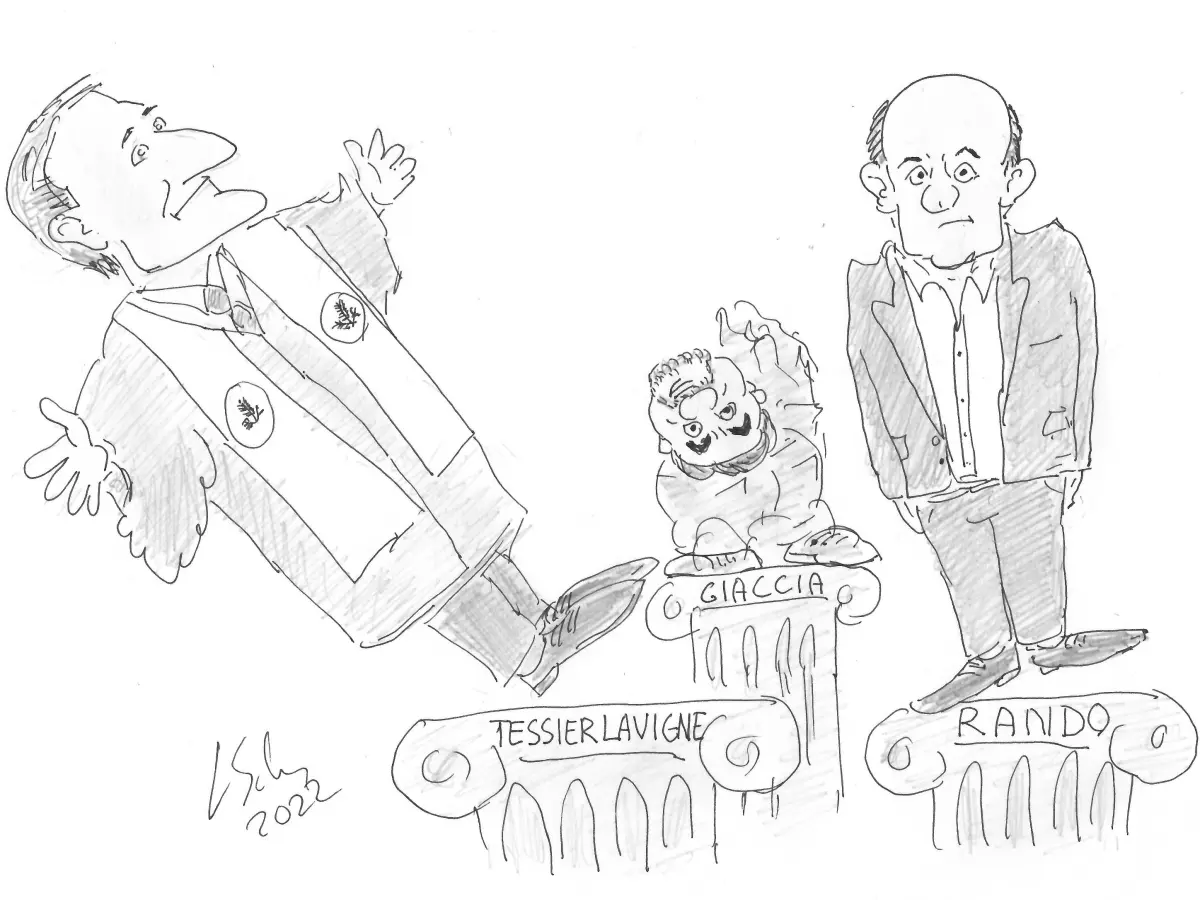
Toppling Giants in Stanford
Everyone is talking about Stanford’s President Marc Tessier-Lavigne now. OK, let’s talk about him, and how Stanford deals with research fraud. And then let’s talk about Thomas Rando.


Those publications Cuzzocrea mentioned refer to the period 2019-2023. The collaborative works with foreign groups do acknowledge grants from those countries. Instead, on the articles from Messina not only there’s no indication of private sponsors but it is rather stated that research received no external funding. No funding at all. It’s a kind of magic.
Only in the last nine months the department of Veterinary Sciences and especially the department ChiBioFarAm (that of Cuzzocrea) paid €122,300 in total to an agricultural company called Divaga Srl based in the Catania area and owned by Cuzzocrea and his wife, and managed and represented by Cuzzocrea’s mother. This farm deals with horse breeding and grape cultivation. Do they experiment on horses now? Do they feed mice with grapes maybe?
In his long resignation letter Cuzzocrea rejected all accusations and listed the amazing results obtained as rector in his almost six-year-long mandate. I bring you some worthy excerpts (highlights mine):
“I have chosen so far not to respond to the accusations made against me through the press, not out of lack of respect for the important and fundamental role of journalists who, by virtue of art. 21 of the Constitution, have the right and duty to report.“
I thought he did respond actually, when he mentioned the third parties, Stanford, etc.
“Instead, I would like to address this letter mainly to the many, many students who have chosen the University of Messina for their cultural growth. This year we reached the peak of enrollments which is the main parameter for measuring the well-being of our university.“
You can imagine what kind of brilliant doctors and researchers will come out from the biomedical departments…
“Since the beginning of my mandate I have had to deal with direct and indirect attacks which I have tried to face with the sole objective of guaranteeing the necessary serenity so that everyone could continue to carry out their work […] It was certainly not an easy task. However, I did not imagine that some people, albeit a minority, would dedicate time and energy with the sole aim of discrediting the University and the Rector ... As far as I am concerned, I cannot allow this media attack to continue to the detriment of the image of my University. Behind my work and my choices there are many people who have not spared themselves in recent years, who have worked day and night, who firmly believed that our University had considerable room for improvement. I cannot allow the electoral campaign to revolve around me […] [new elections for the rectorship were scheduled in April 2024 – A.] For the reasons stated above, calm and aware of my work, respecting the Institution, but above all respecting the work carried out by the staff who, in various capacities, has contributed to the growth of our University, and even more, respecting each of you and in order to guarantee you that serene and welcoming climate that is indispensable in my opinion, I consider it appropriate to tender my resignation, which I will formalize in the ways provided for by the current norms that regulate the functioning of our universities. A choice that derives solely from the profound respect I have for the institutions and for the Italian university system that I have the honor of representing and for each of you, for my family and for myself.“
The Cigarette Mob of Palermo
On the gate of Constantinople was written, in a steel plate, the order of the Sultan: “All the males of the Gjomarkaj, generation after generation, from the cradle to the grave, will carry the title of Kapidan”
Career and Family
Cuzzocrea has had a stellar career. He got tenured aged twenty-seven, became associate professor at thirty, full professor at thirty-nine, rector at forty-six, and then elected president of the Conference of Italian University Rectors (CRUI) in December 2022 aged fifty. That means until a few days ago Cuzzocrea used to be in the highest political-administrative position in the Italian university system.
At the University of Messina, likewise in many other universities and especially in southern Italy, most of the professors descend from academic dynasties. Professors go out of their way to promote their offspring for a tenured position first, and to a professorship later. After all, with unemployment rates of up to 30% in some areas of southern Italy, would anyone be so crazy to turn down a cushy and safe civil-servant position provided by daddy at university or in a medical institution nearby?
The Cuzzocrea family is no exception.
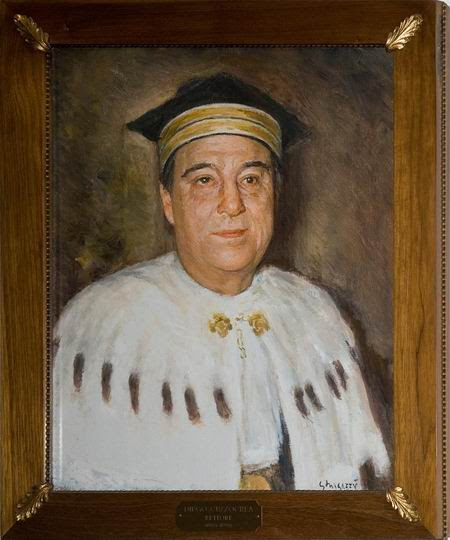
You may recall that Salvatore’s father Diego Cuzzocrea was himself professor and even former rector in Messina from 1995 to 1998. He is a controversial man with a past with many shadows. I won’t repeat myself here, for further insights you can refer to my previous article.
Salvatore’s sister Francesca Cuzzocrea is full professor of phycology at the nearby University of Catanzaro, in the Calabria region. Of note, when you enter the key “cuzzocrea” in PubPeer, the threads regarding Salvatore amount to the returned number minus one, because the oldest post concerns one of Francesca’s articles.
Elisabetta Cuzzocrea, another sister of Salvatore’s, is medical director of anaesthesia and intensive care at the Provincial Health Authority of Messina. She authored 6 papers in total in her career, of which 3 are flagged on PubPeer together with her big brother.
Here is below one of Elisabetta and Salvatore’s co-productions, the same rotated image appears in four different articles describing different things.
Salvatore Cuzzocrea, Emanuela Mazzon, Rosanna Di Paola, Tiziana Genovese, Ivana Serraino, Laura Dugo, Elisabetta Cuzzocrea, Francesco Fulia, Achille P. Caputi, Daniela Salvemini* Protective effects of M40401, a selective superoxide dismutase mimetic, on zymosan-induced nonseptic shock Critical Care Medicine (2004) doi: 10.1097/01.ccm.0000098859.67006.45


The corresponding author of the previous paper is Daniela Salvemini (3 entries in Pubpeer), professor at the obscure Saint Louis University in the United States (not to be confused with the renown Washington Universiy in St. Louis), who is another character originating from the brood of crooks trained many years ago by the Nobelist Sir John Vane in London and now spread all around the globe.
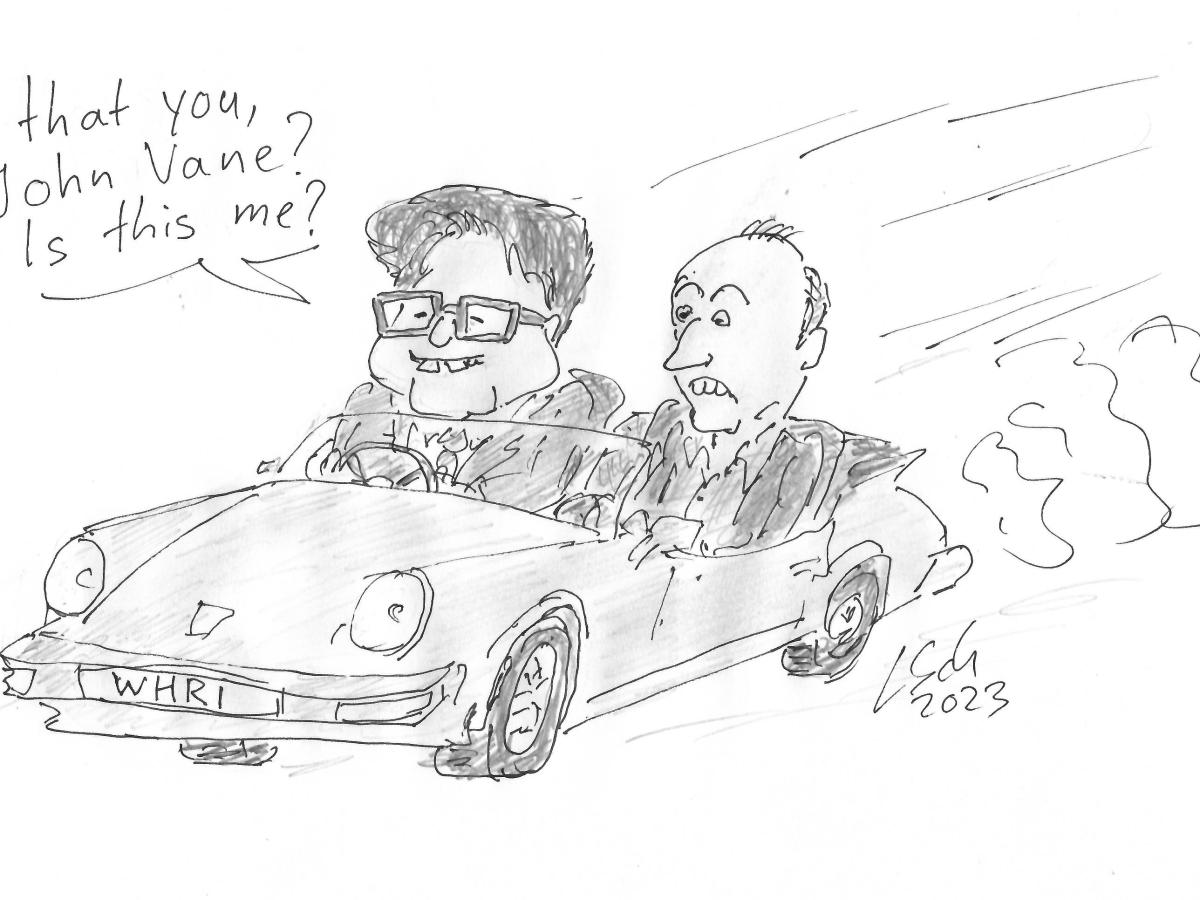
Queen Mary and John Vane’s Cowboys
Welcome to the the William Harvey Research Institute in London. Meet two proteges of its founder, the late Nobelist Sir John Vane: Chris Thiemermann and Mauro Perretti. Then meet their own rotten mentees, especially Salvatore Cuzzocrea and Jesmond Dalli.
Unfinished analysis
The yet unfinished analysis of the whole corpus of Cuzzocrea’s publications was aided by the invaluable ImageTwin. However, the final output will be likely an underestimation of the detectable fraction of irregularities (leaving alone the undetectable fraction), as the identification of reused data across papers from 1998 to 2008 is partial because mainly supported by my own semi-eidetic memory, which faded out as time passed and images multiplied.
Cuzzocrea co-authored 752 original research articles and 148 reviews, book chapters and editorials. The total is exactly 900 entries in PubMed for him as of now. An impressive output of trash science that increases weekly.
The day after Cuzzocrea’s resignation, on October 11th, the journalist Andrea Capocci wrote an article on Cuzzocrea’s fake science for the national newspaper Il Manifesto. I contacted Capocci weeks ago on the matter. For the record, Andrea Capocci wrote in the past also about the fake science of former rector of the University of Ferrara Giorgio Zauli, and more recently on the reuse of microscopy data across some papers co-authored by the rector of University of Rome Tor Vergata and current Italian Minister of Health, Orazio Schillaci.

La Piovra Ferrarese di Giorgio Zauli
Giorgio Zauli’s rectorship term ends. Will research fraud, media harassment and whistleblower persecution be a thing of the past at the University of Ferrara? Ma dai, basta cazzate.
On the same day, October 11th, a second article by Capocci was published in Il Manifesto about the chronic lack of controls and measures against fraud in the Italian academia, and how the whole matter of science fraud is currently handled in Italy.
The Gang of Messina
With so much administrative fraud that he is personally entangled with, we cannot expect the ex-Magnifico to personally deal with the scientific fraud, too. Luckily he can rely on loyal associates who churn out one fake paper per week on average.
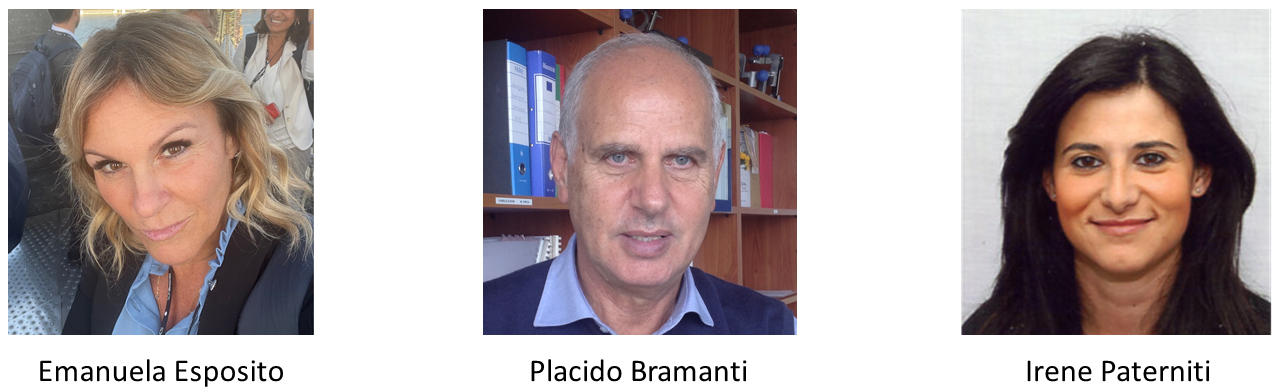
The Gang in Messina includes the vice scientific director of the IRCCS Centro Neurolesi “Bonino Pulejo” Emanuela Mazzon (78 papers in PubPeer), the emeritus professor Achille Caputi (50 in PubPeer), the full professors Rosanna Di Paola (50 in PubPeer), Emanuela Esposito (33 in PubPeer) and Placido Bramanti (24 in PubPeer), the associate professors Tiziana Genovese (27 in PubPeer), Irene Paterniti (16 in PubPeer), Daniela Impellizzeri (14 in PubPeer) and Concetta Crisafulli (10 in PubPeer), while Carmelo Muià (13 in PubPeer) seems to be no longer in academia. These are just few names, the full list is much longer.

People affiliated to the gang but operating in other Italian universities worth of a mention are the associate professor Laura Dugo (21 papers in PubPeer) at the University Campus Bio-Medico of Rome, full professor Giuseppe Cirino (17 in PubPeer) and associate professor Angela Ianaro (11 in PubPeer), both at the University “Federico II” of Naples. However, the full list of collaborators is almost endless.


Remarkably, pharmacology professor Angela Ianaro is a former Member of Parliament, from 2018 to 2022 she sat at the Chamber of Deputies. Elected with the Five Star Movement party (M5S), she then joined the Social Democrats (PD) at the end of the legislature.
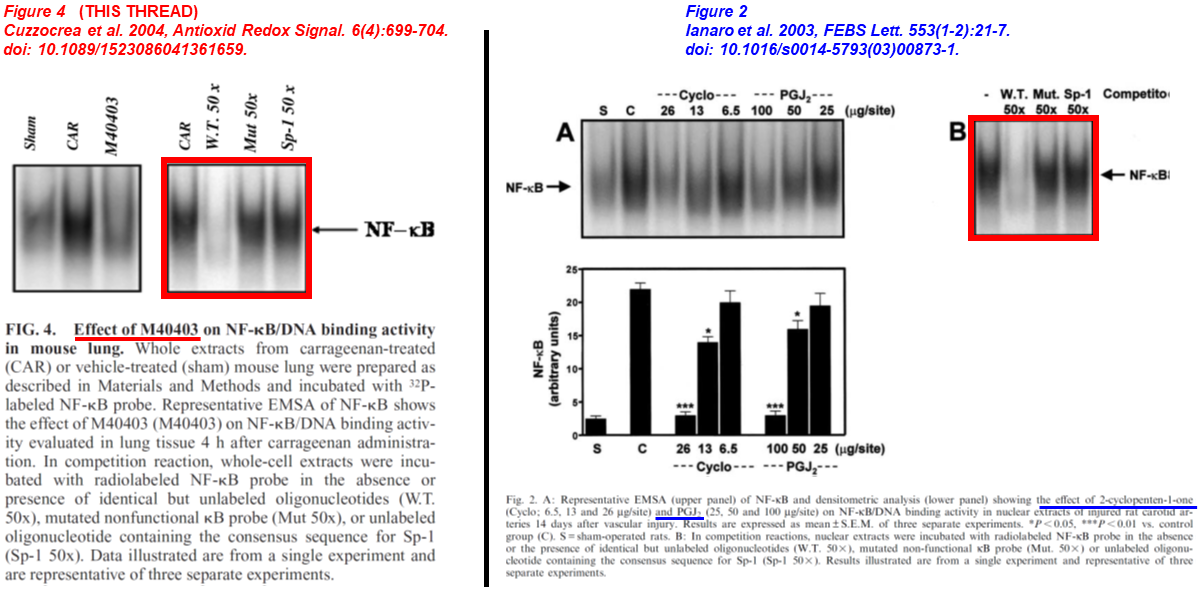
In the paper below, which has Cuzzocrea as first author, Figure 4B shows the effect of a substance called M40403 on NF-kB/DNA binding activity on the lungs of mice pre-treated with carrageeanan. The same blot appeared a year before in Ianaro et al. 2003 where it describes the effect of different substances, 2-cyclopenten-1-one and PGJ2. The only common names on both papers are Cuzzocrea and Ianaro.
Salvatore Cuzzocrea, Barbara Pisano, Laura Dugo, Angela Ianaro, Michael Ndengele, Daniela Salvemini* Superoxide-Related Signaling Cascade Mediates Nuclear Factor-κB Activation in Acute Inflammation Antioxidants & Redox Signaling (2004) doi: 10.1089/1523086041361659
Our eclectic professor Ianaro already earned two retractions, both issued by the no-nonsense journal PLoS One upon notification by the renowned image sleuth Clare Francis. The two retractions are Bucci et al. 2013 and D’Emmanuele Di Villa Bianca et al. 2015. Both papers have Giuseppe Cirino as the corresponding author, who boasts four retractions and two expression of concern in total. It’s probably thanks to this outstanding achievements that Cirino was elected president of the Italian Society of Pharmacology in November 2022.
Furthermore, how can we forget the greatest of Cuzzocrea’s collaborators, the one who contributed like no other to launching the career of The ex-Magnificent, the one and only Christoph Thiemermann (57 papers in PubPeer), pharmacology professor at the Queen Mary University of London and CEO of the William Harvey Research Ltd.
The British branch of the gang is then integrated by Nimesh Patel, reader in medical education at QMUL, and Prabal K Chatterjee, lecturer in Pharmacology at the University of Brighton. Nineteen papers on PubPeer for each.

Please enjoy this early gem by Cuzzocrea as first- and corresponding author, which includes Thiemermann, Chatterjee and many other Messina names:
Salvatore Cuzzocrea*, Nicole S. Wayman, Emanuela Mazzon, Laura Dugo, Rosanna Di Paola, Ivana Serraino, Domenico Britti, Prabal K. Chatterjee, Achille P. Caputi, Christoph Thiemermann The Cyclopentenone Prostaglandin 15-Deoxy-Δ12,14-Prostaglandin J2Attenuates the Development of Acute and Chronic Inflammation Molecular Pharmacology (2002) doi: 10.1124/mol.61.5.997


The same image (overlap) appears in Figure 5A of Cuzzocrea et al. 2002 Intensive Care Med, where it describes PAR immunoreactivity after eighteen hours following zymosan injection.
Cuzzocrea style, a 25-year-old story
The “science” carried out by the gang is pretty much always the same. Mice are subjected to some type of injury and then treated with a substance. The output consists of measuring the expression of inflammation markers via Western blot and illustrating the histological changes in different tissues from treated vs. control animals.
Each cheater has his own style of cheating. Cuzzocrea is mainly reusing micrographs and Western blots within and across his own papers. However, a rare case of made-up blot can be admired here:
Tiziana Genovese, Emanuela Mazzon, Emanuela Esposito, Carmelo Muià, Rosanna Di Paola, Concetta Crisafulli, Placido Bramanti, Salvatore Cuzzocrea* Inhibition of tyrosine kinase-mediated cellular signalling by Tyrphostins AG126 and AG556 modulates secondary damage in experimental spinal cord trauma Neuropharmacology (2007) doi:10.1016/j.neuropharm.2007.01.017


Figure 3: micrographs (A) and (B) overlap (red boxes), but are supposed to come from different mice.
(A) supposedly shows significant loss of myelin in not treated SCI mice, (B) supposedly shows attenuation of myelin degradation in AG556 SCI-treated mice.
Moreover, the white boxes drawn by the authors into the images to the left side should reflect the images presented to the right side, for being the respective zoom-ins of the formers, but it’s not the case.
Cuzzocrea started to publish manipulated data in 1998. Prof Csaba Szabó at the University of Fribourg, Switzerland, testified that Cuzzocrea was indeed the responsible person for the manipulation in Cuzzocrea et al. 1998, a paper for which a retraction has been already requested to the journal by Prof. Szabó.
Cuzzocrea’s data recycling has continued unabated for 25 years. Below you will find a new acquisition from May 2023, which is classic fraud… but with a twist.
Giovanna Casili, Sarah Adriana Scuderi, Marika Lanza, Alessia Filippone, Deborah Mannino, Raffaella Giuffrida, Cristina Colarossi, Marzia Mare, Anna Paola Capra, Federica De Gaetano, Marco Portelli, Angela Militi, Salvatore Cuzzocrea, Irene Paterniti*, Emanuela Esposito Therapeutic Potential of BAY-117082, a Selective NLRP3 Inflammasome Inhibitor, on Metastatic Evolution in Human Oral Squamous Cell Carcinoma (OSCC) Cancers (2023) doi: 10.3390/cancers15102796


No, the twist isn’t just about the twisting of our bowels, dear readers, it’s rather Irene Paterniti‘s corresponding authorship. A new star is born there in Messina, and is following in the footsteps of her great mentor. How many new names in the author list are going to become the next generation of cheaters over there?
Here is below another recent scam from March 2023, and again in an MDPI outlet. This time the corresponding author is another of Cuzzocrea’s Amazons, Emanuela Esposito:

Alessia Filippone, Laura Cucinotta, Valentina Bova, Marika Lanza, Giovanna Casili, Irene Paterniti, Michela Campolo, Salvatore Cuzzocrea, Emanuela Esposito* Inhibition of LRRK2 Attenuates Depression-Related Symptoms in Mice with Moderate Traumatic Brain Injury Cells (2023) doi: 10.3390/cells12071040
Some of the funniest fraud by Cuzzocrea comes with radiographic data. The scam consists of:
- a control image (A) showing a perfectly normal mouse joint
- the pathological condition shown in (B)
- a mouse treated with substance xyz shown in (C), where the pathological condition appears greatly ameliorated
Only problem: (A) and (C) are the same image, just with a different magnification! This happened in Cuzzocrea et al. 2006 (left) and Cuzzocrea et al. 2000 (right):


Cuzzocrea and his associates are so bold that sometimes they copy-paste entire figures even between articles published shortly apart. No one gives a damn anyway in the pharmacology field, and it doesn’t make any difference either.
All micrographs showing immuno-stainings are identical between Talero et al. 2012 and Di Paola et al 2011, but the mice are supposed to be pre-treated with different substances:
Elena Talero, Rosanna Di Paola, Emanuela Mazzon, Emanuela Esposito, Virginia Motilva, Salvatore Cuzzocrea* Anti-Inflammatory effects of Adrenomedullin on acute lung injry induced by carrageenen in mice Mediators Inflamm. (2012) doi: 10.1155/2012/717851
Rosanna Di Paola , Elena Talero, Maria Galuppo , Emanuela Mazzon , Placido Bramanti , Virginia Motilva, Salvatore Cuzzocrea Adrenomedullin in inflammatory process associated with experimental pulmonary fibrosis Respiratory Research (2011) doi: 10.1186/1465-9921-12-41


Of note, both articles include the University of Sevilla professors Elena Maria Talero Barrientos and Virginia Motilva Sanchez. That means, these people are not likely to be victims of the gang, these Spaniards must have been totally aware of the fraud.
Pharmacology, at least at the academic level, is truly a fantasy world. Traditional Chinese Medicine and Ayurveda are other branches of this field of fairy tales. Thousands of academics are free to do whatever they want, we let them attend meetings and conferences around the globe, and we keep paying this army of clowns buckets of dollars to do nothing but harm. Do we really have to keep this house of cards standing for much longer?

The Name of the Foes
“I am Jorge de Burgos. I believe research should pause in searching for the progress of knowledge. Right now, we don’t need more papers, we rather need more knowledge by going through a continuous and sublime recapitulation to figure out what is true and what is fake” – Aneurus Inconstans
Final remarks
Almost 300 articles co-authored by academics at the University of Messina have been flagged on PubPeer as of today. In addition to Cuzzocrea and his associates, you may remember the incredible case of Francesco Squadrito and his group, the notorious Fraud Squad. As a reminder, Squadrito & Co also tested a dangerous compound on children in the United States, kids who are affected by a terrible disease, the Duchenne muscular dystrophy (DMD).
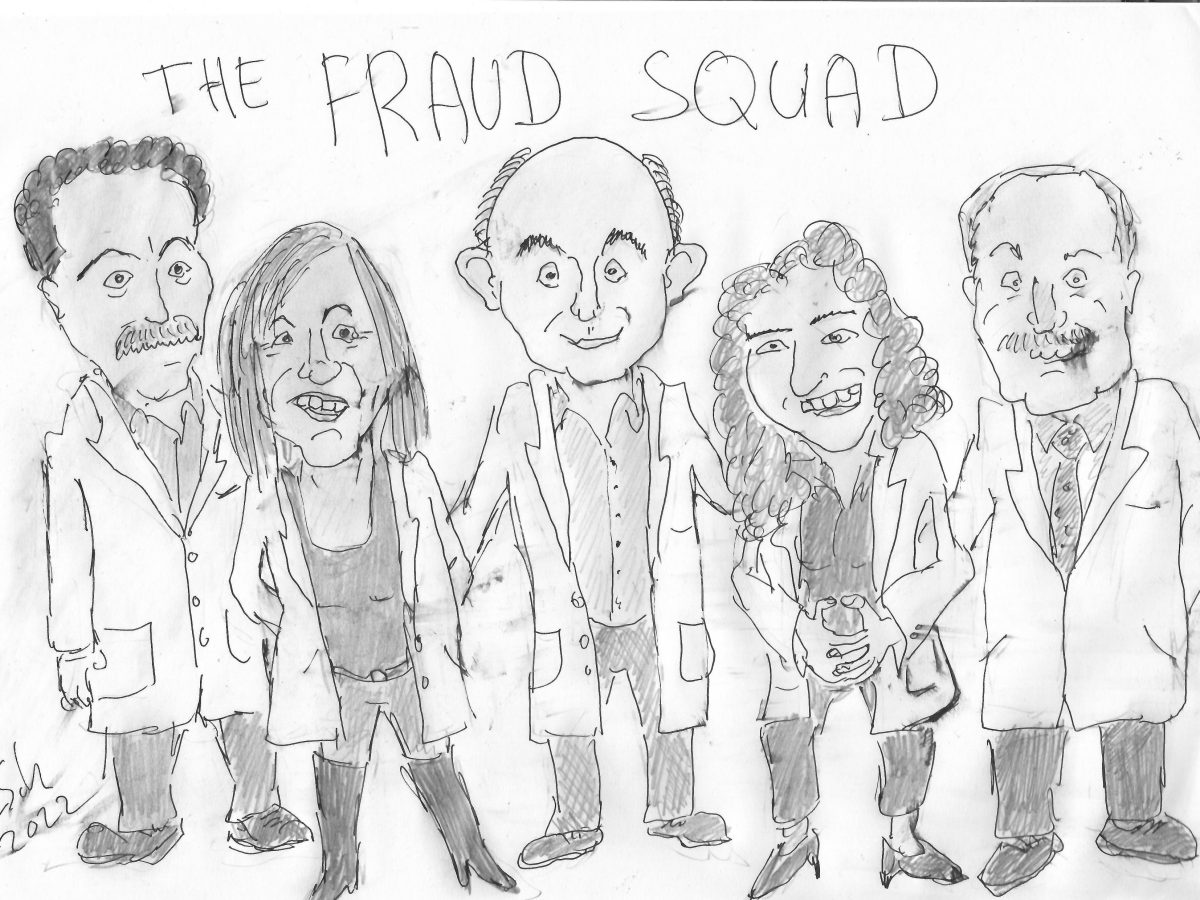
The Fraud Squad
Either a Muslim colleague or a retired technician did it. Or so these Sicilian professors insist.
The pharmacological frauds perpetrated by all these people in Messina seriously endanger public health. Enough is enough. I believe a commission of inquiry should be established by the Italian Ministry of University and Research (MUR) to shed light on the many cases of scientific fraud by professors and researchers affiliated to the biomedical departments of UNIME. The investigative bodies should focus on examining the purchase orders of antibodies that these people say they have used in their studies. This would be the most significant portion of expenditure for all those groups, and the most effective way to understand whether embezzlement of money occurred. These unscrupulous charlatans in Messina should be fired on the spot tomorrow morning, forced to return twenty years of undeserved wages and sent to work the land, which is an honest job that is much needed.
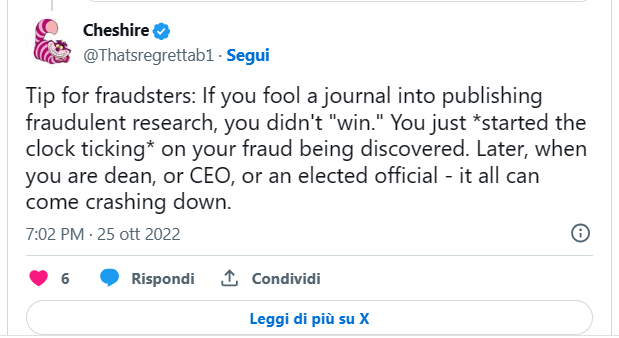
To the fraudsters in Messina and elsewhere I would like to send the following message originally elaborated by our sleuth colleague Cheshire, who, together with Leonid, greatly contributed to the Messina case. Here is Cheshire’s words, which nicely fit to the case of ex-rector Cuzzocrea:
Update 24.11.2023
The long and challenging analysis of Salvatore Cuzzocrea‘s papers is now over. The “ex-Magnifico” might be the new record holder for the highest number of flagged papers on PubPeer, that is 166. The previous limit set by Carlo Croce of 122 has been crushed.
Gang members already introduced to you who have significantly increased their booty of flagged articles are: Rosanna Di Paola who is now at the mind-blowing score of 73 papers, Emanuela Esposito now at 50, Daniela Impellizzeri with 40, Tiziana Genovese at 35, and Irene Paterniti with 25. Under normal circumstances scores of this magnitude would be reason enough to dedicate separate reports at For Better Science to each of these people.
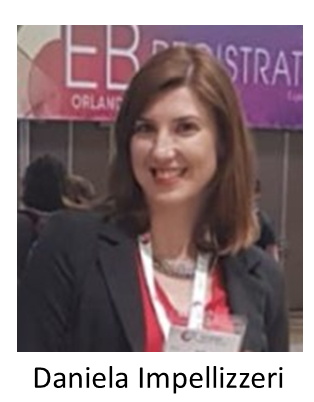
Surprisingly, other two heavy-weight of the gang, namely Emanuela Mazzon (78 articles on PubPeer) and Achille Caputi (50 on PubPeer), in the last few years were no longer included on Cuzzocrea’s papers. While for Caputi the reason might be that he has retired, for Mazzon one hypothesis that comes to mind is that she had an argument with the boss. This could be the reason why Cuzzocrea on PubPeer recently covertly accused Mazzon of being responsible for the “mistakes” of the microscopy data. Yes, indeed we finally had the honor of reading a reply from him after five months. No need to say it’s a lie that he was deceived by Mazzon, Cuzzo started cheating last century without her.
At any rate, many new names of young cheaters nurtured by Cuzzocrea came to light, and I wish to report them here for the sake of completeness and for giving them a cut of blame. Hopefully this article will prevent their appointment as permanent staff at the University of Messina and anywhere else.
Please meet the tenure-track researchers Marika Cordaro (34 articles on PubPeer), Rosalba Siracusa (33 on PubPeer), Rosalia Crupi (30 on PubPeer), Roberta Fusco (29 on PubPeer), Enrico Gugliandolo (28 on PubPeer), Ramona D’Amico (25 on PubPeer), Michela Campolo (16 on PubPeer), and Giovanna Casili (11 on PubPeer).

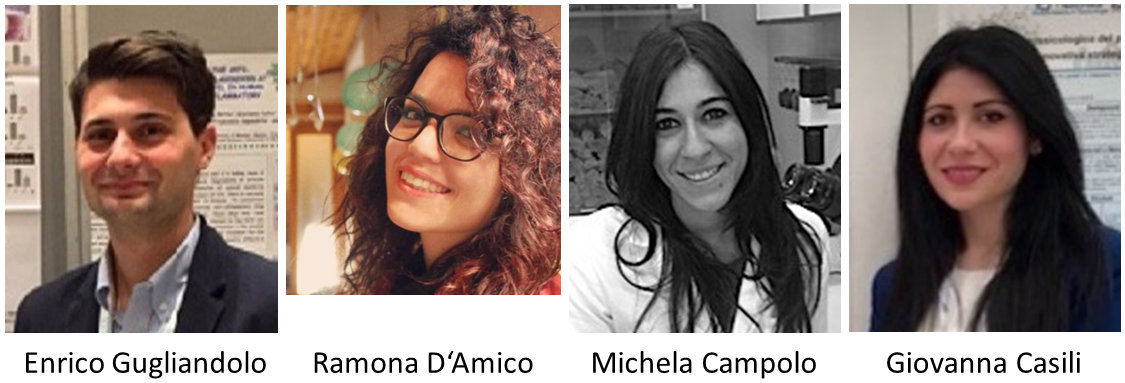
Unclear what the magic Alessio Filippo Peritore (23 on PubPeer) is up to nowadays, he is not listed as staff scientist at UNIME, which is very strange given his dreadful curriculum. Oh, and then there’s a certain Davide Di Paola (10 on PubPeer), who might be the son of Rosanna Di Paola, he works with both Cuzzocrea and the ecology professor Nunzia Carla Spanò (8 on PubPeer), because now Cuzzo somehow entered into zebrafish-related ecological matters. Another tenure-track researcher is Marika Lanza (8 on PubPeer), who is reinforcing the team of Emanuela Esposito.
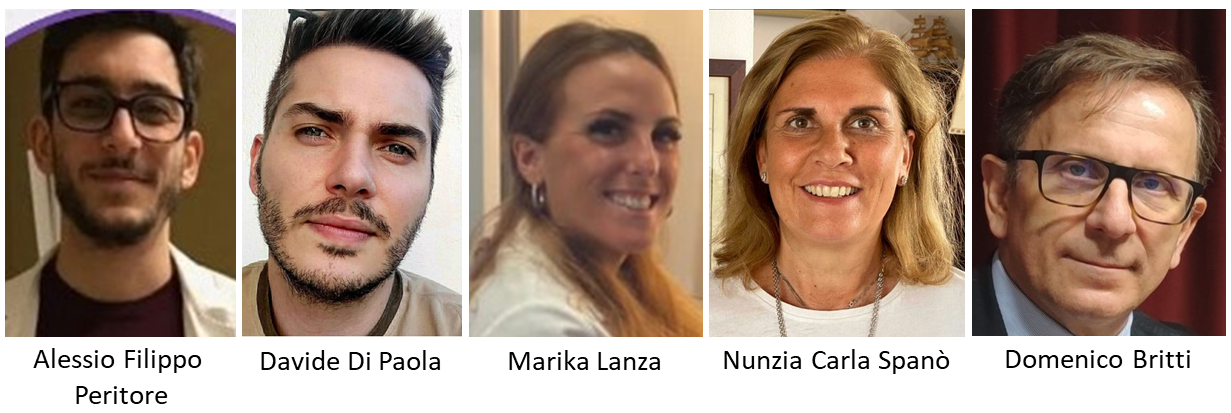
Among the external collaborators, a special mention goes to Domenico Britti (19 on PubPeer), who is full professor at the nearby University of Catanzaro. By chance I discovered that the current rector of the University of Catanzaro is another pharmacologist. No, it’s not Britti but someone else. I still don’t want to reveal his name to you. What do you say, dear readers, is it time to pay a visit there too?
I thank all my donors for supporting my journalism. You can be one of them!
Make a one-time donation:
I thank all my donors for supporting my journalism. You can be one of them!
Make a monthly donation:
Choose an amount
Or enter a custom amount
Your contribution is appreciated.
Your contribution is appreciated.


“Cuzzocrea co-authored 752 original research articles and 148 reviews, book chapters and editorials. The total is exactly 900 entries in PubMed for him as of now. An impressive output of trash science that increases weekly.”
Carlo Croce springs to mind.
https://www.ncbi.nlm.nih.gov/search/all/?term=Croce%20cm
1,222 entries in PubMed.
https://pubpeer.com/search?q=Carlo+Croce
https://retractionwatch.com/?s=Carlo+Croce+
LikeLike
“Remarkably, pharmacology professor Angela Ianaro is a former Member of Parliament, from 2018 to 2022 she sat at the Chamber of Deputies. Elected with the Five Star Movement party (M5S), she then joined the Social Democrats (PD) at the end of the legislature”.
Five Star Movement anti-corruption, what a laugh! Being comedians is its core value so at least consistency.
LikeLiked by 1 person
It all began so promisingly: taking both public and private funds for a bogus service (supposedly scientific!)… the subsequent opportunities, such as tax evasion, embezzlement, and money laundering… you’ve got to appreciate Italy’s convenient business prospects.
They had a nice run, but how will it end? Clearly, they’re not in it for the ‘science.’ So losing a job or title and maybe having a couple of retractions are probably just a small price to pay for decades of easy living and full bank accounts. Even the egos of narcissistic sociopaths will eventually get over it.
LikeLiked by 1 person
He’ll be working as a researcher before long, that’s my prediction.
LikeLike
PLOS-one is a no nonsense journal?? They have never retracted or corrected anything I’ve sent to them!
Great work by the way!
LikeLiked by 1 person
Thanks! For cases of data manipulation and fabrication PLoS One usually retract papers. One single band copy-pasted is sufficient to them for choosing retraction. Instead, for image duplications and overlaps it’s more tricky. It also depends on the amount of images, and if images across papers belong to different groups (–> papermills) or to the same one, etc.
LikeLike
“…Cuzzocrea’s collaborators, the one who contributed like no other to launching the career of The ex-Magnificent, the one and only Christoph Thiemermann (57 papers in PubPeer), pharmacology professor at the Queen Mary University of London and CEO of the William Harvey Research Ltd.
The British branch of the gang is then integrated by Nimesh Patel, reader in medical education at QMUL, and Prabal K C hatterjee, lecturer in Pharmacology at the University of Brighton. Nineteen papers on PubPeer for each”.
In an ideal world Cuzzocrea’s fall would these down, but it is not an ideal world.
QMUL will keep quiet, nothing will happen.
LikeLike
A gang involved in organized crime is called mafia which is a Sicilian originated term, what a beautiful coincidence. Who would have thought that a science fraudster is not only a science fraudster…
LikeLike
as Aneurus previously found out, the Cuzzocrea family did have mafia connections…
LikeLike
Yes, forgot about that.
Now the gang waits for the next don/capo di tutti i capi.
LikeLike
maybe this link can be of interest https://www.sifweb.org/la-societa/organi-societari
KR
BR
LikeLike
Thank you. Cuzzo the Fake as President Elect of Italian Society of Pharmacology.
Nice.
For a laugh, I put the name of the current president, Beppe Cirino, into PubPeer.
https://pubpeer.com/search?q=Giuseppe+Cirino+
He works with Jesmond Dalli and Mauro Perretti!
https://pubpeer.com/publications/FCFA456F029A6F449113A7EFD22F5E
And with Lollo Mannelli!
https://pubpeer.com/publications/9AE6690EBB68A8869ACBA847057BAB
And with the fake Nobelist Louis Ignarro!
https://pubpeer.com/publications/FC87FFBCFDAC7038F594E312A70635
And Cirino’s own papers were already retracted, by Plos One!
https://pubpeer.com/publications/9DA5F1EE2FEDA8671634F988C3F8E7
https://pubpeer.com/publications/22B01477AC245E96497C3398CA9873#4
And here is Cirino’s retraction with Stefano Fiorucci:
https://pubpeer.com/publications/A533E3D570BD293675172B3B72549A#1
LikeLike
Commissione per l’ammissione dei nuovi soci
Alessandra Bitto
Università di Messina
ROFL
LikeLike
I recognize other problematic names in the organogram of the SIF:
Emilio Clementi (University of Milan)
https://pubpeer.com/search?q=%22emilio+clementi%22 +
https://pubpeer.com/publications/F1615197FDC0C30DA3901A4C0EB4E7 +
https://pubpeer.com/publications/0837B08A4EE5AF067F5C1609B75A73
Renato Bernardini (University of Catania)
https://pubpeer.com/search?q=%22Renato+Bernardini%22
Michela Campolo (University of Messina)
https://pubpeer.com/search?q=campolo
However, there could be more.
LikeLike
In the article I wrote that Cuzzo & The Gang rarely faked blots, meant as copy-pasting of bands. Well, this is mainly true up to the years 2014-2015, then also this boundary got broken:
https://pubpeer.com/publications/0000BBCAFBF97F813218D48D5C30CF
LikeLike
He is that stupid he discovered Photoshop only a few years ago?
LikeLike
RETRACTION to Cuzzocrea et al. 2007 Intensive Care Med, dated 18 Jan 2024:
PubPeer – Glycogen synthase kinase-3beta inhibition attenuates the dev…
Retraction Note: Glycogen synthase kinase-3β inhibition attenuates the development of ischaemia/reperfusion injury of the gut | Intensive Care Medicine (springer.com)
LikeLike
RETRACTION to Siracusa et al. 2016 Mol Neurobiol, dated 12 March 2024:
PubPeer – The Association of Palmitoylethanolamide with Luteolin Decre…
Retraction Note To: The Association of Palmitoylethanolamide with Luteolin Decreases Autophagy in Spinal Cord Injury | Molecular Neurobiology (springer.com)
LikeLike
RETRACTION to Cuzzocrea et al. 1998 Eur J Pharmacol.
RETRACTED: Protective effects of 3-aminobenzamide, an inhibitor of poly (ADP-ribose) synthase in a carrageenan-induced model of local inflammation – ScienceDirect
However, no date is indicated nor a new DOI number was issued. This is classic Elsevier’s style, and the paper got retracted only because the corresponding author Prof Szabo commendably requested so.
LikeLike
here the link again:
https://www.sciencedirect.com/science/article/pii/S0014299997014179?via%3Dihub
LikeLike
RETRACTION to Di Paola et al. 2004 Clinical Immunol., 29 March 2024:
PubPeer – Prevention of carrageenan-induced pleurisy in mice by anti-C…
Retraction notice to “Prevention of carrageenan-induced pleurisy in mice by anti-CD30 ligand monoclonal antibody” [Clin. Immunol. 113/1 (2004) 64–73] – ScienceDirect
LikeLike
RETRACTION to Cuzzocrea et al. 2006 Clinical Immunol., 29 March 2024:
PubPeer – Glycogen synthase kinase-3β inhibition attenuates the degree…
Retraction notice to “Glycogen synthase kinase-3β inhibition attenuates the degree of arthritis caused by type II collagen in the mouse” [Clin. Immunol. 120/1 (2006) 57–67] – ScienceDirect
LikeLike
RETRACTION to Paterniti et al. 2017 Mol Neurobiol, 10 April 2024:
PubPeer – PPAR-α Modulates the Anti-Inflammatory Effect of Melatonin i…
Retraction Note to: PPAR-α Modulates the Anti-Inflammatory Effect of Melatonin in the Secondary Events of Spinal Cord Injury | Molecular Neurobiology (springer.com)
LikeLike
RETRACTION to Cuzzocrea et al. 2004 Eur J Pharmacol, 18 Sept 2024:
PubPeer – Rosiglitazone, a ligand of the peroxisome proliferator-activ…
RETRACTED: Rosiglitazone, a ligand of the peroxisome proliferator-activated receptor-γ, reduces acute inflammation – ScienceDirect
LikeLike
RETRACTION to Cuzzocrea et al. 2000 Br J Pharmacol, 17 November 2024:
PubPeer – Cloricromene, a coumarine derivative, protects against colla…
RETRACTION: Cloricromene, a Coumarine Derivative, Protects Against Collagen‐induced Arthritis in Lewis Rats – British Journal of Pharmacology – Wiley Online Library
LikeLike
RETRACTION to Cuzzocrea et al. 2002 Br J Pharmacol, 17 November 2024:
PubPeer – Pyrrolidine dithiocarbamate attenuates the development of ac…
RETRACTION: Pyrrolidine Dithiocarbamate Attenuates the Development of Acute and Chronic Inflammation – British Journal of Pharmacology – Wiley Online Library
This is the 9th retraction for Cuzzocrea, and the 6th for Thiemermann.
But for Thiemermann 5 more retractions are on the way from Frontiers, the publisher informed me about the decision a few weeks ago, and are preparing the retraction notes. So stay tuned.
LikeLike
RETRACTION to Cuzzocrea et al. 1999 J Pineal Res, 29 November 2024:
PubPeer – Regulation of prostaglandin production in carrageenan‐induce…
RETRACTION: Regulation of Prostaglandin Production in Carrageenan‐Induced Pleurisy Melatonin – 2024 – Journal of Pineal Research – Wiley Online Library
LikeLike
RETRACTION to D’Emmanuele Di Villa Bianca et al. 2004 J Pineal Res, 29 November 2024:
PubPeer – Melatonin prevents lipopolysaccharide‐induced hyporeactivity…
RETRACTION: Melatonin Prevents Lipopolysaccharide‐induced Hyporeactivity in Rat – 2024 – Journal of Pineal Research – Wiley Online Library
LikeLike
RETRACTION to Cuzzocrea et al. 1998 J Pineal Res, 29 November 2024:
PubPeer – Protective effect of melatonin in a non‐septic shock model i…
RETRACTION: Protective Effect of Melatonin in a Non‐Septic Shock Model Induced by Zymosan in the Rat – 2024 – Journal of Pineal Research – Wiley Online Library
So Cuzzo now boasts 12 retractions, not toobad.
LikeLike
Criminal investigation of Cuzzo extended by another 6 months.
https://messina.gazzettadelsud.it/articoli/cronaca/2024/11/26/caso-cuzzocrea-la-procura-di-messina-chiede-una-proroga-di-6-mesi-7897b041-6755-4ea7-991e-00d5ccaa848a/
“There are four types of cases, namely the now abolished abuse of office, auction rigging, fraud against the State and embezzlement.
The time span that the Prosecutor’s Office has been examining in recent months, including with a series of interrogations of people informed of the facts, especially among the professors and employees of the University rectorate, is very vast . Apparently the focused dates are around October 4, 2023, and then in a period between 2019 and June 2023. “
LikeLiked by 1 person
EXPRESSION OF CONCERN to Cuzzocrea e al. 2003 Br J Pharmacol, 02 December 2024:
PubPeer – Rosiglitazone and 15‐deoxy‐Δ<sup>12,14</sup>‐prostaglandin J…
EXPRESSION OF CONCERN: Rosiglitazone and 15‐deoxy‐Δ12,14‐prostaglandin J2, ligands of the peroxisome proliferator‐activated receptor‐γ (PPAR‐γ), reduce ischaemia/reperfusion injury of the gut – British Journal of Pharmacology – Wiley Online Library
LikeLike
British Journal of Pharmacology is an utter joke. They can shove their repeatedly expressed concerns for Cuzzo where the sun doesn’t shine.
LikeLiked by 1 person
RETRACTION to Cuzzocrea et al. 2003 Immunology, 05 December 2024:
PubPeer – 5‐lipoxygenase knockout mice exhibit a resistance to acute p…
RETRACTION: 5‐lipoxygenase Knockout Mice Exhibit a Resistance to Acute Pancreatitis Induced by Cerulein – Immunology – Wiley Online Library
LikeLike
RETRACTION to Cuzzocrea et al. 1998 Immunology, 05 December 2024:
PubPeer – Peroxynitrite-mediated DNA strand breakage activates poly (A…
RETRACTION: Peroxynitrite‐mediated DNA Strand Breakage Activates Poly (ADP‐ribose) Synthetase and Causes Cellular Energy Depletion in Carrageenan‐induced Pleurisy – Immunology – Wiley Online Library
Cuzzocrea currently sports 14 retractions and 2 Expression of Concern.
We wish many more to come.
LikeLike
RETRACTION to Di Paola et al. 2021 Toxics, 30 December 2024:
PubPeer – Combined Toxicity of Xenobiotics Bisphenol A and Heavy Metal…
RETRACTED: Di Paola et al. Combined Toxicity of Xenobiotics Bisphenol A and Heavy Metals on Zebrafish Embryos (Danio rerio). Toxics 2021, 9, 344 – PubMed
This is retraction nr. 13 for the magic Cuzzo.
LikeLike
You know this is unfair, do you?
Without Cuzzo, nobody would have ever noticed what fake crap Alessio Filippo Peritore publishes.
https://pubpeer.com/search?q=%22Alessio+Filippo+Peritore%22
LikeLike
RETRACTION to Di Paola et al. 2022a Toxics, 22 January 2025:
PubPeer – Combined Effects of Potassium Perchlorate and a Neonicotinoi…
RETRACTED: Di Paola et al. Combined Effects of Potassium Perchlorate and a Neonicotinoid on Zebrafish Larvae (Danio rerio). Toxics 2022, 10, 203
Retraction nr. 16 for Cuzzocrea.
LikeLike
RETRACTION to Di Paola et al. 2022b Toxics, 24 January 2025:
PubPeer – Environmental Risk Assessment of Dexamethasone Sodium Phosph…
RETRACTED: Di Paola et al. Environmental Risk Assessment of Dexamethasone Sodium Phosphate and Tocilizumab Mixture in Zebrafish Early Life Stage (Danio rerio). Toxics 2022, 10, 279
Retracion nr. 17 for Cuzzocrea.
LikeLike
RETRACTION to Di Paola et al. 2022c Toxics, 22 January 2025:
PubPeer – Environmental Impact of Pharmaceutical Pollutants: Synergist…
RETRACTED: Paola et al. Environmental Impact of Pharmaceutical Pollutants: Synergistic Toxicity of Ivermectin and Cypermethrin. Toxics 2022, 10, 388
Retraction nr. 18 for Cuzzocrea.
LikeLike
EXPRESSION OF CONCERN to Cuzzocrea et al. 2007 Int J Immunopathol Pharmacol, 15 Sep 2024:
https://pubpeer.com/publications/9BCEE41EF352D66E34A73012AD9988
Expression of Concern “Glycogen synthase kinase-3β inhibition attenuates the development of bleomycin-induced lung injury”, 2024
This is EoC nr. 3 for Cuzzo & the Gang.
LikeLike
RETRACTION to Esposito et al. 2011 BMC Neuroscience, 14 April 2025:
PubPeer – MK801 attenuates secondary injury in a mouse experimental co…
Retraction Note: MK801 attenuates secondary injury in a mouse experimental compression model of spinal cord trauma | BMC Neuroscience
This is the 20th retraction for Cuzzo, and we wish many more to come.
LikeLike
RETRACTION to Impellizzeri et al. 2020 Biomed Pharmacother, 14 July 2025:
PubPeer – Protective effect of a new hyaluronic acid -carnosine conjug…
Retraction notice to “Protective Effect of a new Hyaluronic Acid -Carnosine Conjugate on the Modulation of the Inflammatory Response in Mice Subjected to Collagen-Induced Arthritis” [Biomed. Pharmacother. 125 (2020) 110023] – ScienceDirect
This is the 21st retraction for Cuzzo.
LikeLike
RETRACTION to Fusco et al. 2020 Biology, 24 November 2025:
https://pubpeer.com/publications/EFE06473F6092D4DEB0F4F37C87E6A
https://www.mdpi.com/2079-7737/14/12/1656
LikeLiked by 1 person