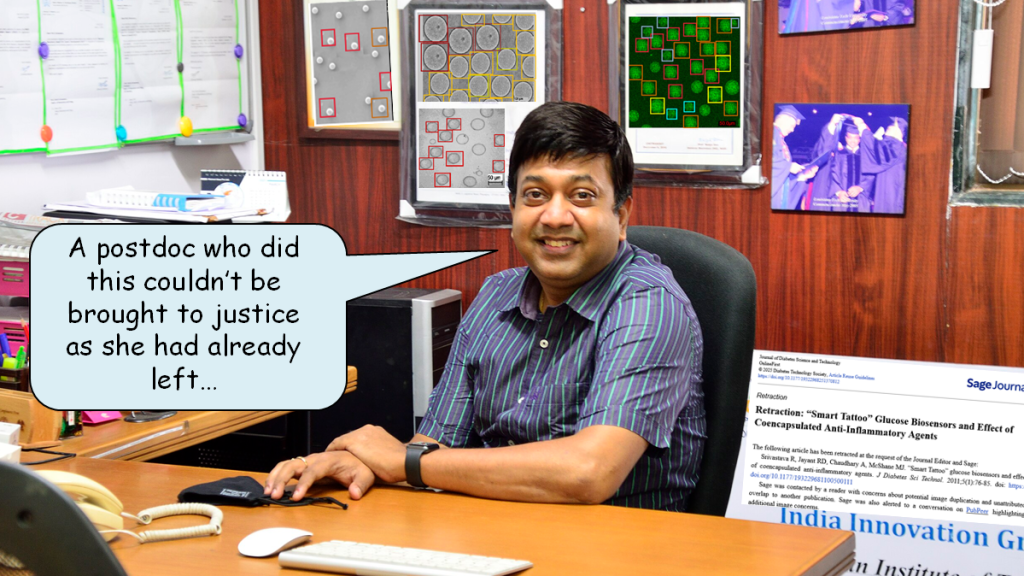
Blame Your Students
“I should have checked these images more closely, but they were intended to be representative images rather than duplications or forgeries of other images.” – Crishan Samuel
By Leonid Schneider, on research integrity, biomedical ethics and academic publishing
“I should have checked these images more closely, but they were intended to be representative images rather than duplications or forgeries of other images.” – Crishan Samuel

Schneider Shorts 28.11.2025 – a Good Russian in eastern Germany, a pensioner victimised in New York, with several MDPI retractions for papermillers and Italian bigwigs, interesting corrections, failed proper channels, and finally, even more cancers ended with nanoparticles.
Schneider Shorts 21.11.2025 – with long Shorts about a fountain of youth found in grape seeds, rodents tortured for fake science in Brazil, an Iranian papermill operating from Canada, plus second servings for French couple and a Danish wildlife ecologist.
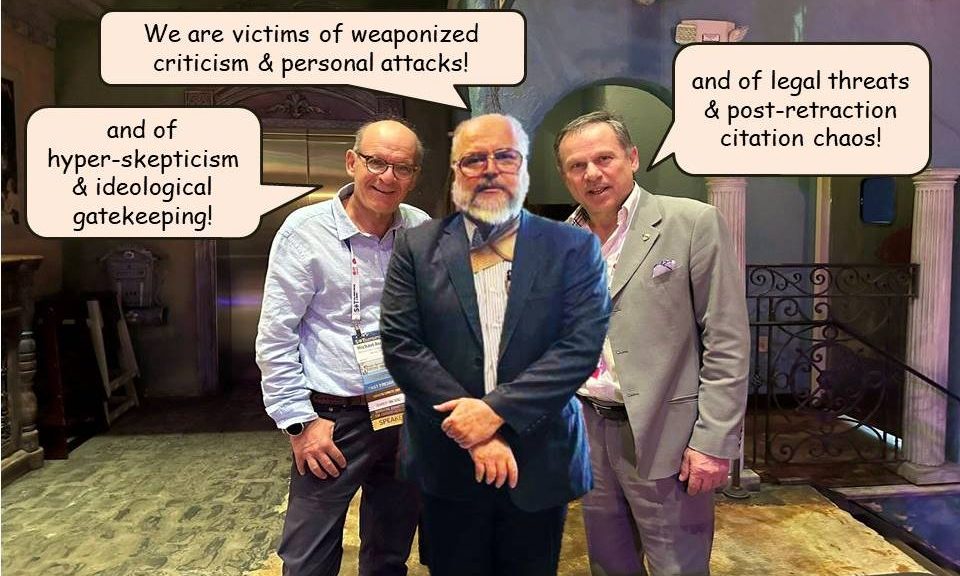
“A concerning trend is the rise of “hyper-skepticism”” – ChatGPT
Schneider Shorts 14.11.2025 – undead vampire is dead, Harvard researcher laments grant loss, BMJ concerned about having been duped, with another Italian cheater, a rascist identity thief, a Hungarian multi-professor, and finally, how Springer Nature and Elsevier fight papermill fraud!
Schneider Shorts 7.11.2025 – an obituary for a rector who published too much, another German professor pestered by sleuths, Canada’s superstar and his mentees, Wiley’s haphazard approach to papermills, and finally, when corner clones are not OK.
“Patients with weak heart function who receive stem cell therapy shortly after a heart attack are at lower risk of developing heart failure and related hospital stays compared with standard care, finds a clinical trial published by The BMJ today.”
Schneider Shorts 30.10.2025 – torturing students for science in Chile, a professor in Taiwan shaves his legs, with Scottish sustainability, universities taking distance, retractions for papermilling, insignificance and plagiarism, clogged proper channels, and finally, how AI can be used for science.
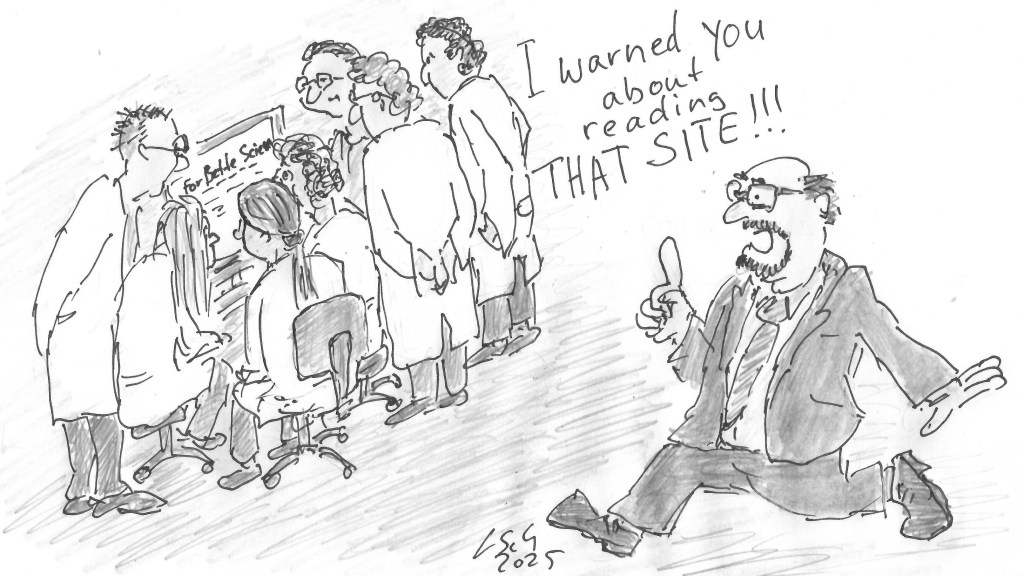
Inclusive: For Better Science is 10 years old!
Schneider Shorts 24.10.2025 – minibrained autism quacks poison Neanderthals, two sleuths expose massive FDA fail, journalists reveal secret investigation in Canada, California fraudster gets a lucky correction, Australian scholar offers discounts, and finally, how to avoid death with love hormone!

 For Better Science