

Schneider Shorts of 22 August 2025 – an obituary for an Italian haematologist, a Spanish guru returns from Bhutan, concerns for Italian cardiologist in Bristol, with an Irish mystery, a setback for Germany’s Weltlöwe, retractions issued and rescinded, failed alchemy, and finally, with Church on Friday, again!
Table of Discontent
Obituary
- A second father – Nicola Giuliani laments the loss of his teacher Vittorio Rizzoli
Science Elites
- Unbeatable sagacity and a strange form of love – St Carlos of Oviedo now officially a guru
Scholarly Publishing
- The retraction has been rescinded – Springer Nature behaving funny
- Unable to provide a satisfactory explanation – concerns for Gianni Angelini
Retraction Watchdogging
- On the fence – George Church and Liz Parrish lose promo paper
- These errors do not diminish the main findings – also Kalipada Pahan loses paper in PNAS
- We have already resumed the investigation – Jörg Rinklebe suffers first retraction
- The authors contacted the journal in April 2012 – belated retractions for elusive Denise Egan
- Replication errors in the PPT software – Xiangke Wang’s failed correction
- A non-significant result – alchemy cold fusion disappointment
Obituary
A second father
In February 2025, the emeritus professor of the Parma University Hospital in Italy, Vittorio Rizzoli, died aged 86. The obituary published by his mentees in the journal of the International Society for Experimental Hematology (ISEH), of which he was a founding member, described Rizzoli as “The visionary who built experimental hematology in Italy“, and mentioned that “Prof. Rizzoli published over 190 papers in international peer-reviewed journals and was recognized among the Top Italian Scientists Academy“.

Top Italian Scientists
“You may think this is just a silly prank with zero impact on whatsoever, but no. […] this initiative is useful for something. It provides solid numbers for quantifying the extent of scientific misconduct in Italy and beyond” – Aneurus Inconstans

Sholto David decided to pay his respects also, building on what the pseudonymous Claire Francis posted years ago (starting in 2013). Rizzoli now has 13 papers on PubPeer, post mortem.
The first author of this paper, Nicola Giuliani, now himself a full professor in Parma, described his mentor in that Experimental Hematology obituary as “a highly dedicated teacher for all his fellows” and “a second father who carefully nurtured them during their career“.
Nicola Giuliani , Simona Colla , Roberto Sala , Matteo Moroni , Mirca Lazzaretti , Silvia La Monica , Sabrina Bonomini , Magda Hojden , Gabriella Sammarelli , Sophie Barillè , Regis Bataille , Vittorio Rizzoli Human myeloma cells stimulate the receptor activator of nuclear factor-κB ligand (RANKL) in T lymphocytes: a potential role in multiple myeloma bone disease Blood (2002) doi: 10.1182/blood-2002-04-1121

Sholto David: “Figure 1 and Figure 5 […] unexpected similarities between western blots
Giuliani specifically referenced in the obituary the following paper in the same journal, as “one of the last sponsored by Prof. Rizzoli as senior author“. Its other coauthor Giovanni Roti, now associate professor in Parma, also contributed to the obituary, where he announced to “honor his memory by ensuring his legacy lives on, passing it down to future generations of fellows in Experimental Hematology“. This legacy of dodgy science, I presume:
Nicola Giuliani, Simona Colla, Mirca Lazzaretti , Roberto Sala , Giovanni Roti , Cristina Mancini , Sabrina Bonomini , Paolo Lunghi , Magda Hojden , Giovenzio Genestreti , Mirija Svaldi , Paolo Coser , Pier Paolo Fattori , Gabriella Sammarelli , Gian Carlo Gazzola , Regis Bataille , Camillo Almici , Cecilia Caramatti , Lina Mangoni , Vittorio Rizzoli Proangiogenic properties of human myeloma cells: production of angiopoietin-1 and its potential relationship to myeloma-induced angiogenesis Blood (2003) doi: 10.1182/blood-2002-10-3257

Giuliani also lauded his mentor’s “unwavering passion, energy, and altruism” and hinted at possible bullying: “Prof. Rizzoli could be tough with his colleagues when necessary, but he always treated them with great humanity.” I guess delivering the results Rizzoli wanted must have always paid off:
Nicola Giuliani, Sabrina Bonomini , Paola Romagnani , Mirca Lazzaretti , Francesca Morandi , Simona Colla , Sara Tagliaferri , Laura Lasagni , Francesco Annunziato , Monica Crugnola , Vittorio Rizzoli CXCR3 and its binding chemokines in myeloma cells: expression of isoforms and potential relationships with myeloma cell proliferation and survival Haematologica (2006) Nov;91(11):1489-97.

Giuliani continued with what he learned from his second father. This was flagged by Claire Francis already in 2013 and illustrated in 2018:
Simona Colla, Sara Tagliaferri , Francesca Morandi , Paolo Lunghi , Gaetano Donofrio , Davide Martorana , Cristina Mancini , Mirca Lazzaretti , Laura Mazzera , Lara Ravanetti , Sabrina Bonomini , Luca Ferrari , Claudia Miranda , Marco Ladetto , Tauro Maria Neri , Antonino Neri , Angela Greco , Marcellina Mangoni , Antonio Bonati , Vittorio Rizzoli , Nicola Giuliani The new tumor-suppressor gene inhibitor of growth family member 4 (ING4) regulates the production of proangiogenic molecules by myeloma cells and suppresses hypoxia-inducible factor-1 alpha (HIF-1alpha) activity: involvement in myeloma-induced angiogenesis Blood (2007) doi: 10.1182/blood-2007-02-074617


The 2005 paper sharing the above those images, also by Rizzoli and his loyal student Giuliani, has other issues:
S Colla, F Morandi , M Lazzaretti , R Rizzato , P Lunghi , S Bonomini , C Mancini , M Pedrazzoni , M Crugnola , V Rizzoli , N Giuliani Human myeloma cells express the bone regulating gene Runx2/Cbfa1 and produce osteopontin that is involved in angiogenesis in multiple myeloma patients Leukemia (2005) doi: 10.1038/sj.leu.2403976

Both Sholto and I wrote to Giuliani and Colla, Sholto specifically addressed the Colla et al 2005 paper above. I received no reply from Giuliani. From the MD Anderson professor Colla, I got first an auto-reply (“I am out of work“), and then this:
“I am out of work, but I can not help here
I was out of Parma from 2004-2006 (I was in Little Rock for a fellowship) and I was not the person who made the Figures.
I am planning to contact Dr Giuliani asap next week when I am back for the MS in which my name is inside.
I saw a big mistake in a Fig repeated twice. I am sure this is a mistake that Dr Giuliani made and not a falsification. I hope he still has the original file but after 20 years is difficult.
If not, I will ask him to repeat the experiment to confirm the data.“
Right, retrieving cell lines, patient samples and reagents to repeat experiments after 20 years is indeed much easier than just storing data. When I wondered about “out of work” and asked if she is unemployed, Professor Colla corrected me: “In US, out of work, means on vacation“. So much competence, both in cancer research and in linguistics.

La Piovra Ferrarese di Giorgio Zauli
Giorgio Zauli’s rectorship term ends. Will research fraud, media harassment and whistleblower persecution be a thing of the past at the University of Ferrara? Ma dai, basta cazzate.

Are those “the invaluable lessons he imparted to us as individuals” which Giuliani spoke of in his obituary for Rizzoli?
Nicola Giuliani , Francesca Morandi , Sara Tagliaferri , Simona Colla, Sabrina Bonomini , Gabriella Sammarelli , Vittorio Rizzoli Interleukin-3 (IL-3) is overexpressed by T lymphocytes in multiple myeloma patients Blood (2006) doi: 10.1182/blood-2005-07-2719

Mycosphaerella arachidis: “I’ve illustrated some of the above concerns [by Claire Francis, on Fig 1] with coloured shapes and lines, and added my own.”
You may have noticed a recurring lead author name on all those fake studies: Simona Colla, another former mentee of Rizzoli. She went to USA, and is nowassociate professor at MD Anderson Cancer Center in Houston, Texas, where she worked with its former president Ronald DePinho and his wife Lynda Chin. Colla now has 15 papers on PubPeer, including with DePinho and Chin.
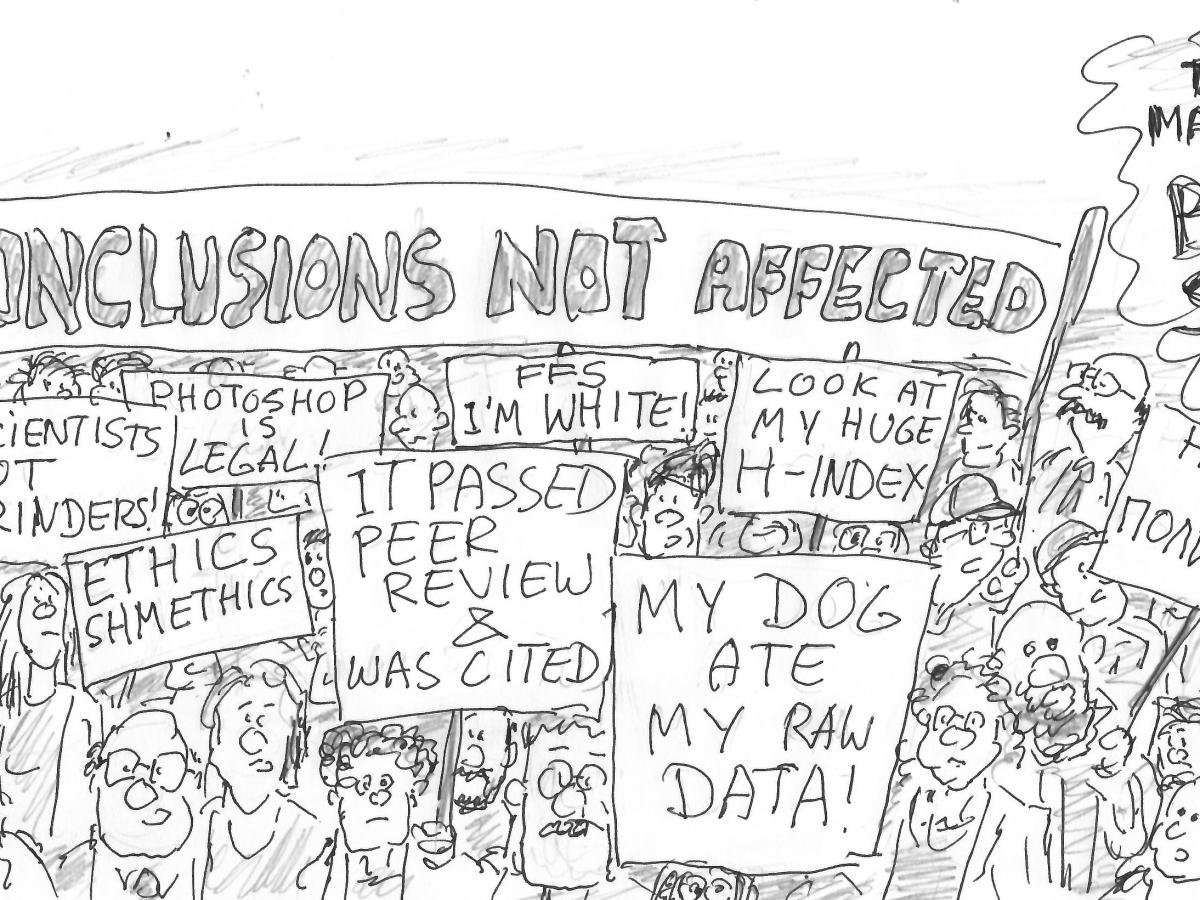
Concerns for whites, retractions for the rest?
“Expressions of Concern may be used as an interim notice to flag a potential issue that may be ultimately resolved with another amendment outcome (e.g. retraction or correction) or they may remain as the final outcome in cases where conclusive evidence cannot be obtained. ” – COPE
Here a set of two Blood papers by Rizzoli, Giuliani and Colla:
- Nicola Giuliani, Simona Colla, Francesca Morandi , Mirca Lazzaretti , Roberto Sala , Sabrina Bonomini , Maria Grano , Silvia Colucci , Mirija Svaldi , Vittorio Rizzoli Myeloma cells block RUNX2/CBFA1 activity in human bone marrow osteoblast progenitors and inhibit osteoblast formation and differentiation Blood (2005) doi: 10.1182/blood-2004-12-4986
- Lori A. Ehrlich , Ho Yeon Chung , Irene Ghobrial, Sun Jin Choi , Francesca Morandi , Simona Colla, Vittorio Rizzoli , G. David Roodman , Nicola Giuliani IL-3 is a potential inhibitor of osteoblast differentiation in multiple myeloma Blood (2005) doi: 10.1182/blood-2005-03-1080

Before going to Texas, Colla worked for 3 years at Dana Farber Cancer Institute in Boston. there, she must have introduced her fellow Italians to Dana Farber professor and coauthor on the paper above – Irene Ghobrial, whom Sholto investigated in his incredibly successful article here:
Dana-Farberications at Harvard University
“Imagine what mistakes might be found in the raw data if anyone was allowed to look!” – Sholto David

Here a paper by Giuliani and Colla, without their second father (Rizzoli retired by then), flagged by another sleuth:
M Bolzoni , G Donofrio , P Storti , D Guasco , D Toscani , M Lazzaretti , S Bonomini , L Agnelli , A Capocefalo , B Dalla Palma , A Neri , F Nicolini , G Lisignoli , F Russo , S Colla, F Aversa , N Giuliani Myeloma cells inhibit non-canonical wnt co-receptor ror2 expression in human bone marrow osteoprogenitor cells: effect of wnt5a/ror2 pathway activation on the osteogenic differentiation impairment induced by myeloma cells Leukemia (2013) doi: 10.1038/leu.2012.190


Without defending Colla, we shouldn’t fall into the classic trap of blaming everything on a woman. This, by Giuliani and his second father, doesn’t have Colla on it:
Nicola Giuliani , Francesca Morandi , Sara Tagliaferri , Mirca Lazzaretti , Gaetano Donofrio , Sabrina Bonomini , Roberto Sala , Marcellina Mangoni, Vittorio Rizzoli Production of Wnt inhibitors by myeloma cells: potential effects on canonical Wnt pathway in the bone microenvironment Cancer Research (2007) doi: 10.1158/0008-5472.can-06-4666


This is the other paper, by Giuliani and Rizzoli, and no Colla to blame:
Nicola Giuliani, Francesca Morandi , Sara Tagliaferri, Mirca Lazzaretti , Sabrina Bonomini , Monica Crugnola, Cristina Mancini , Eugenia Martella , Luca Ferrari , Antonio Tabilio , Vittorio Rizzoli The proteasome inhibitor bortezomib affects osteoblast differentiation in vitro and in vivo in multiple myeloma patients Blood (2007) doi: 10.1182/blood-2006-11-059188


Sholto David” Figure 2A: The clearest duplicated bands I can see are underlined by the blue lines”
And here is Giuliani on his one year-long fellowship stay in Nantes, France, in the lab of Régis Bataille (you already saw him on some very bad papers by Rizzoli and Giuliani above):
Nicola Giuliani , Régis Bataille , Cristina Mancini , Mirca Lazzaretti , Sophie Barillé Myeloma cells induce imbalance in the osteoprotegerin/osteoprotegerin ligand system in the human bone marrow environment Blood (2001) doi: 10.1182/blood.v98.13.3527

Sholto David: “Figure 2: The bands that I have underlined with blue appear to be duplicated. […] There appears to be a splice”
Eventually, Guiliani replied to my email:
“We confirmed the data many times even later and for sure they were authentic and reproducible. Other groups also confirm data.
If there are errors in some of the figure panels, we could correct them, but this does not mean that there are data falsifications.
We are on vacation this week (please consider that it is the hot week in summer). I need time , they are old works, and I should have the original pictures. If not, we are also happy to repeat the experiments with new technologies. “
New Photoshop technologies, I presume? Let me close the Guiliani chapter with another quote from the obituary:
“In this moment of sorrow, our thoughts are focused on preserving his memory as a guiding example and ensuring that his legacy continues to inspire new fellows in Experimental Hematology.”
Nicola Giuliani

By the way, Rizzoli’s obituary was co-written by his Parma indirect mentee Anna Rita Migliaccio, now Senior Investigator at Altius Institute in Seattle, USA. She mentions that “his influence on me and many others was profound“, which probably explains her own little PubPeer record .
Here an example, with the horrible Top Italian Scientist Lucia Altucci (read February 2024 Shorts):
Lilian Varricchio , Carmela Dell’Aversana , Angela Nebbioso , Giovanni Migliaccio , Lucia Altucci , Antonello Mai , Giuliano Grazzini , James J. Bieker, Anna Rita Migliaccio Identification of NuRSERY, a new functional HDAC complex composed by HDAC5, GATA1, EKLF and pERK present in human erythroid cells The International Journal of Biochemistry & Cell Biology (2014) doi: 10.1016/j.biocel.2014.02.019


Noteworthy: Giovanni Migliaccio, scientific director of CVBF institute in Pavia, Italy, is Anna Rita’s husband, who also enjoyed Rizzoli’s support as the obituary mentions. Another one by this Rizzoli-raised couple, with Altucci’s gang:
Antonello Mai, Katija Jelicic , Dante Rotili , Antonella Di Noia , Elena Alfani , Sergio Valente , Lucia Altucci, Angela Nebbioso , Silvio Massa , Renzo Galanello , Gerald Brosch , Anna Rita Migliaccio, Giovanni Migliaccio Identification of Two New Synthetic Histone Deacetylase Inhibitors That Modulate Globin Gene Expression in Erythroid Cells from Healthy Donors and Patients with Thalassemia Molecular Pharmacology (2007) doi: 10.1124/mol.107.036772

Aneurus inconstans: “Figure 4: two actin bands appear much more similar than expected (red boxes).”
Science Elites
Unbeatable sagacity and a strange form of love
The aging Spanish aging researcher Carlos Lopez-Otin is in the news again. Still trying to wash off the evidence of massive fraud, which led to 9 retractions, a lost his Nature Mentoring Award, and a mass-murder of mice.
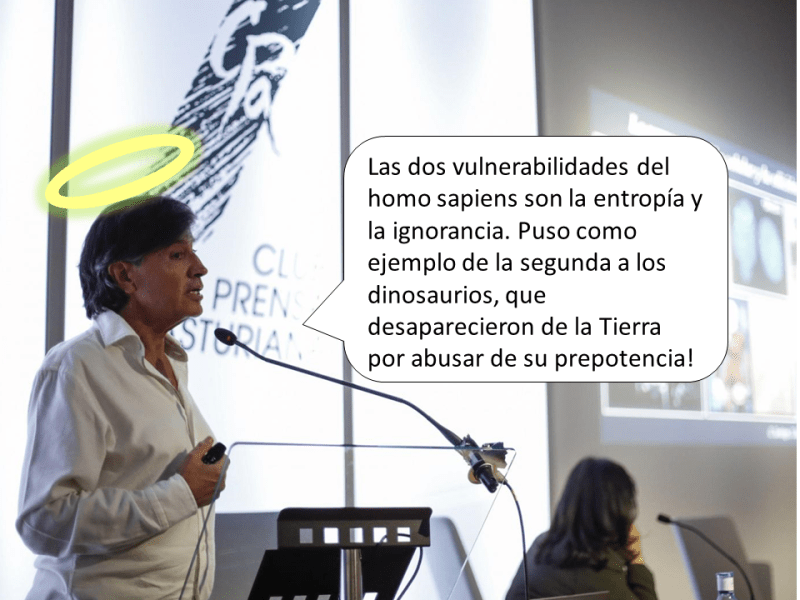
Carlos Lopez-Otin and the revoked Nature Mentoring Award
St Carlos of Oviedo almost was canonised as Spain’s first living martyr, but now Nature revoked his mentoring award. Spanish media and science elites are desperate, even the Queen is not amused. The Royal Academy of Sciences insists Lopez-Otin is a victim of journal’s failure.
I used to make fun of Lopez-Otin becoming a new-age guru, but now he really and literally became one. In Spain they now call him “un sabio“, which means a wise man, a sage, or a guru indeed.
The El Mundo article from 17 August 2025 celebrates St Carlos of Oviedo and his new book “The lightness of the dragonflies‘”, which is about achieving “physical and mental balance“. DeepL-translated:
“King Felipe VI granted him a title of marquise a few days after landing in Madrid. Carlos López-Otín arrived from Bhutan, a small country protected by the heights of the Himalayas, where television did not arrive until 2000. He left with his son on one of those expeditions (both internal and external) with which he explores wonder, forms of balance, and a happy worldly distraction. Carlos López-Otín is un sabio. […]
To tell the whole truth, it should be noted that scientist Carlos López-Otín is a handsome man, with a Sioux profile and a welcoming voice when talking about eternal and true life. […] Everything he knows and has deduced, confirmed, discovered, and told others comes from an unbeatable sagacity and is dispensed from the depths of a strange form of love. Love in this other sense: listening to him or reading one of his books ignites the desire to know. Love for the sake of sharing and also making the other person a little stronger, more serene, more attentive, less afraid. You leave listening to him in a state of grace…”
This journalistic masterpiece continues whining that Lopez-Otin is not only incredibly sexy, but also world’s greatest scientist of all times, who was betrayed by his peers.
Scholarly Publishing
The retraction has been rescinded
A fake paper has been de-retracted by Springer Nature. It featured previously in this article by Aneurus Inconstans:
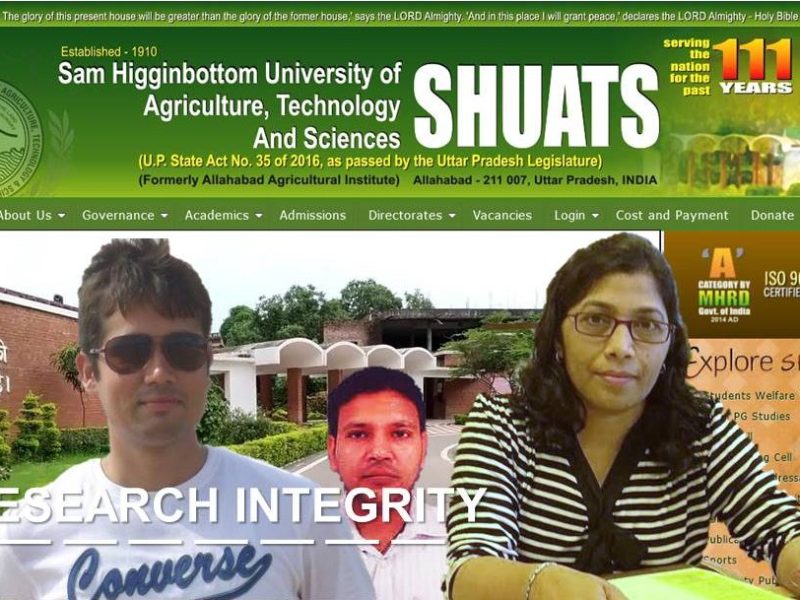
The curative plant extracts from Allahabad
Meet Danish Ahmed and other members of the Sam Higginbottom gang. I am not making those names up.
Here it is:
Danish Ahmed, Vikas Kumar, Amita Verma, Girija Shankar Shukla, Manju Sharma. Antidiabetic, antioxidant, antihyperlipidemic effect of extract of Euryale ferox salisb. with enhanced histopathology of pancreas, liver and kidney in streptozotocin induced diabetic rats SpringerPlus (2015) doi: 10.1186/s40064-015-1059-7

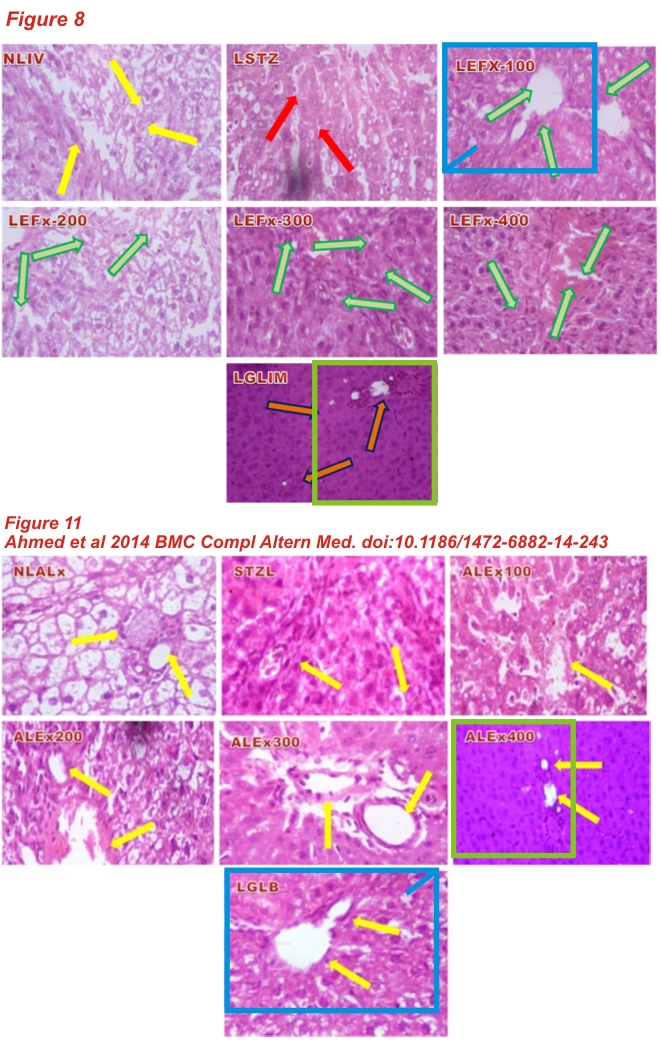

In December 2021, one of the authors posted replacement images on PubPeer, which proved fake also:

On 1 July 2023, this paper was retracted:
“The Editor has retracted this article. Concerns were raised about a number of the images presented in Figs. 2, 10 and 11. The authors provided raw data; however, as there were inconsistencies in these data the Editor no longer has confidence in the results and conclusions presented. In addition, the authors have not provided evidence of appropriate ethical oversight of this study. Vikas Kumar disagrees with this retraction. Danish Ahmed, Amita Verma, Girja Shankar Shukla and Manju Sharma have not responded to correspondence from the Editor about this retraction.”
So far, so good, science has self-corrected, applause all around. But then, at some point, this happened:
“Due to an unfortunate internal misunderstanding this article was inadvertently retracted. The retraction of this article has now been rescinded”
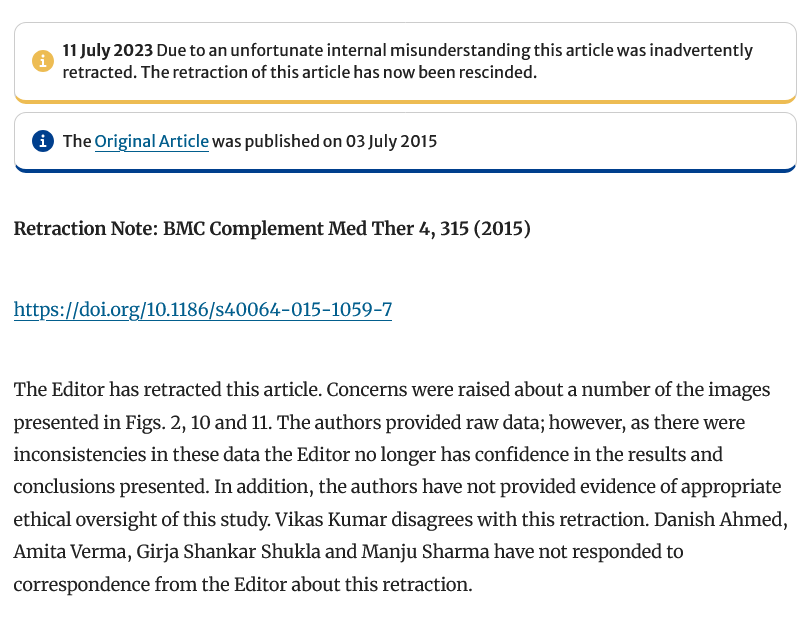
Springer Nature refused to reply to us and explain this decision.
Unable to provide a satisfactory explanation
A society journal published by Wiley issues two Expressions of Concern. This happened already in March, but the sleuth Claire Francis was informed by the publisher only on 18 August 2025.
The lead author on both is Gianni Angelini MD MCh FRCS FETCS FMedSci, Head of Bristol Heart Institute and British Heart Foundation Chair of Cardiac Surgery in the University of Bristol in UK. If this seems to ring a distant bell: Angelini used to be the superior of a certain fellow Italian: Paolo Madeddu (who retired last year, see January 2025 Shorts). In this capacity Angelini became coauthor on many fake papers by Madeddu and his ex-wife Costanza Emanueli (now at Imperial College London), read here:

Bristol Madness
“People should believe in themselves; to search the treasures that they have inside and use them to reinterpret the role.” – Paolo Madeddu,, Professor and Chair at University of Bristol.
As you see, this paper cannot be blamed on Madeddu or Emanueli:
S Muzaffar, N Shukla , M Bond , G B Sala-Newby , A C Newby , G D Angelini , J Y Jeremy Superoxide from NADPH oxidase upregulates type 5 phosphodiesterase in human vascular smooth muscle cells: inhibition with iloprost and NONOate British Journal of Pharmacology (2008) doi: 10.1038/bjp.2008.300

The Expression of Concern from 25 March 2025 referred to other issues:
“The Expression of Concern has been agreed due to concerns raised by a third party after publication regarding the similarity of certain blots in Figures 4, 5 and 8 with blots published elsewhere, and regarding the underlying data that they represent. The authors were unable to provide a satisfactory explanation and could not provide the original data given the time that had elapsed. However, the journal is issuing this Expression of Concern because the concerns regarding the integrity of the data and the results presented cannot be resolved.
Authors M. B., A. C. N., and G. D. A. agreed to this Expression of Concern.”
Also this paper by Angelini and his former PhD student Saima Muzaffar (now with Roche) received an Expression of Concern on 26 March 2025, even though it wasn’t flagged on PubPeer:
S Muzaffar , J Y Jeremy , A Sparatore , P Del Soldato , G D Angelini , N Shukla H2S‐donating sildenafil (ACS6) inhibits superoxide formation and gp91phox expression in arterial endothelial cells: role of protein kinases A and G British Journal of Pharmacology (2008) doi: 10.1038/bjp.2008.326
“The Expression of Concern has been agreed following an investigation by the journal after publication of concerns regarding the similarity of a blot in Figure 8 with one published elsewhere, and regarding the underlying data that it represents. The authors were unable to provide a satisfactory explanation and could not provide the original data given the time that had elapsed. However, the journal is issuing this Expression of Concern because the concerns regarding the integrity of the data and the results presented cannot be resolved.
Author G. D. A. agreed to this Expression of Concern.”
Angelini has other papers on PubPeer, like these:


As it happens, the Italian name above, Massimo Caputo, belongs to a Bristol Heart Institute superstar who is celebrated by BBC for curing babies with stem cell injections into their hearts (read earlier December 2023 Shorts). And where do you think Caputo used to get his umbilical cord stem cells? From Mark Lowdell, former collaborator of the trachea transplanters Paolo Macchiarini and Martin Birchall.
Retraction Watchdogging
On the fence
My Friday Shorts tend to become a Church on Friday tradition, for I have another news about George Church.
You see, Church and his business partner, the insane anti-aging entrepreneur Liz Parrish, had to retract a paper. in PNAS. A reader notified me and For Better Science readers already on 12 August 2025, apologies for the delay in reporting.
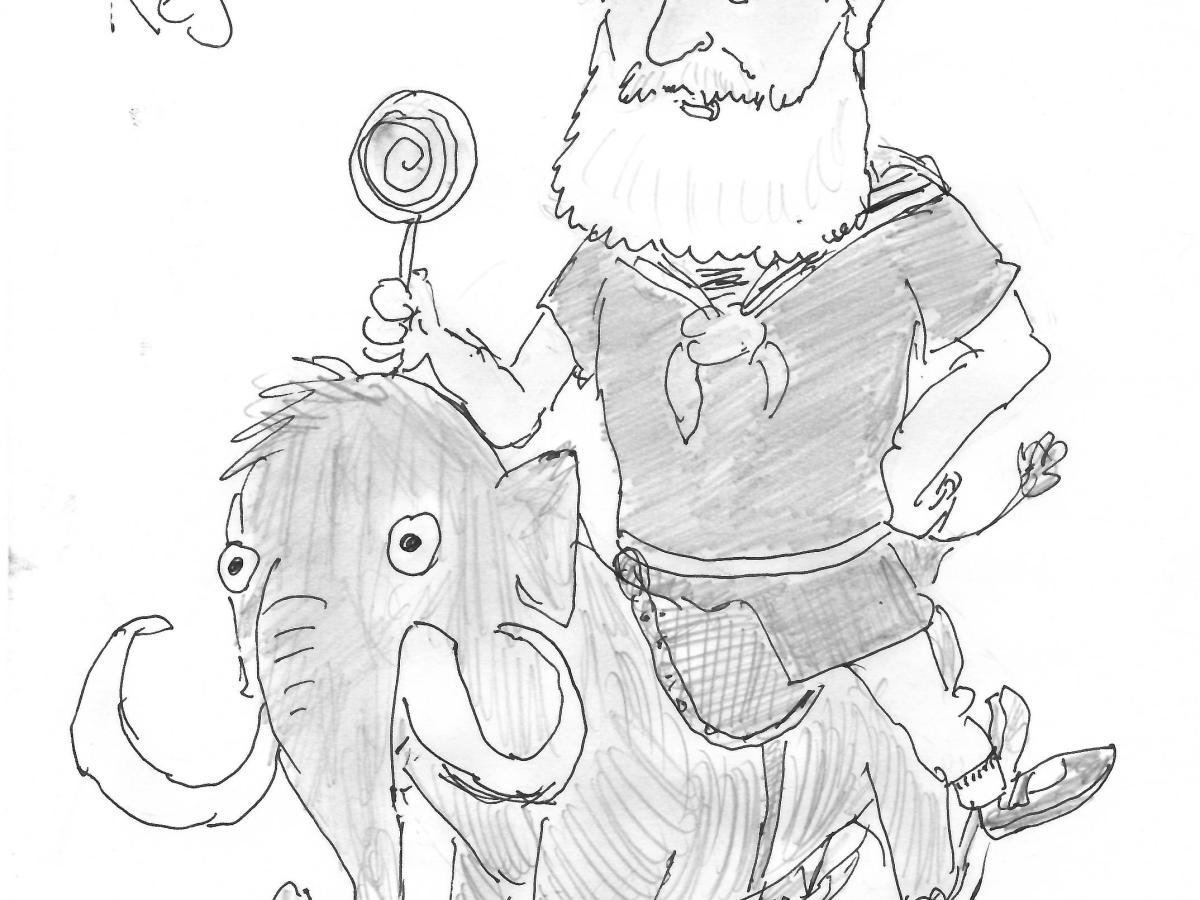
George Church, Colossal W*nker
From mammoths to eugenics to anti-aging scams: god-impersonator George Church knows how to make money with bullshit.
I ridiculed this retracted study when it was still a little preprint, in July 2021 Shorts. Since no serious journal took that preprint, Church used his status as National Academy of Sciences member to “contribute” it to PNAS, outside of proper peer review.
Dabbu Kumar Jaijyan , Anca Selariu , Ruth Cruz-Cosme , Mingming Tong , Shaomin Yang , Alketa Stefa , David Kekich , Junichi Sadoshima , Utz Herbig , Qiyi Tang , George Church , Elizabeth L. Parrish , Hua Zhu New intranasal and injectable gene therapy for healthy life extension Proceedings of the National Academy of Sciences of the United States of America (2022) doi: 10.1073/pnas.2121499119
The study was pushing a life-extension treatment via injections of the telomerase enzyme gene, which Parrish most prominently performed in 2015 on herself in Colombia. She founded a company called BioViva, which sponsored the study in question. The MIT professor Church is member of this company’s board, as is the last author, the Rutgers University professor Hua Zhu. The authors decided to omit the conflicts of interests section, but 3 months after publication, they had to admit their COIs in a correction from 24 August 2022 (highlight mine):
“The authors note, “We are updating our competing interest disclosure about several items to provide further transparency. Reviewer William Andrews currently serves on the Scientific Advisory Board of BioViva USA, Inc. However, Dr. Andrews did not become associated with BioViva until after the article was accepted for publication and he is solely responsible for having initiated the relationship. Anca Selariu has served as Chief Scientific Officer for BioViva in a volunteer capacity but has never received compensation or equity for this role and has never been an employee of BioViva. Hua Zhu is a Principal Investigator for BioViva and his Rutgers University laboratory receives funding from BioViva for his research but has never been an employee of BioViva.
“George Church’s research contributions were conducted as part of his role as a consultant for BioViva USA, Inc. and not as part of a project administered through Harvard Medical School. We also note that David Kekich died on September 9, 2021.””
The other reviewer, Noam Maoz, is himself not entirely unbiased or neutral. He is also an anti-aging entrepreneur, founder of the Israeli company Centarix, which operates the Centa Longevity Treatment Clinic, and pushes the same telomere-extension gene therapies which Parrish marketed in her PNAS paper.
And actually the anti-aging entrepreneur David Kekich, CEO of the Maximum Life Foundation, is not quite dead! His body or at least his brain has been cryopreserved, as his obituary informs. In 2015, Kekich described cryonics as his “Plan B” to live forever, and Church himself has just advocated for “Structural brain preservation: a potential bridge to future medical technologies” in his paper McKenzie et al 2024. So, don’t laugh.
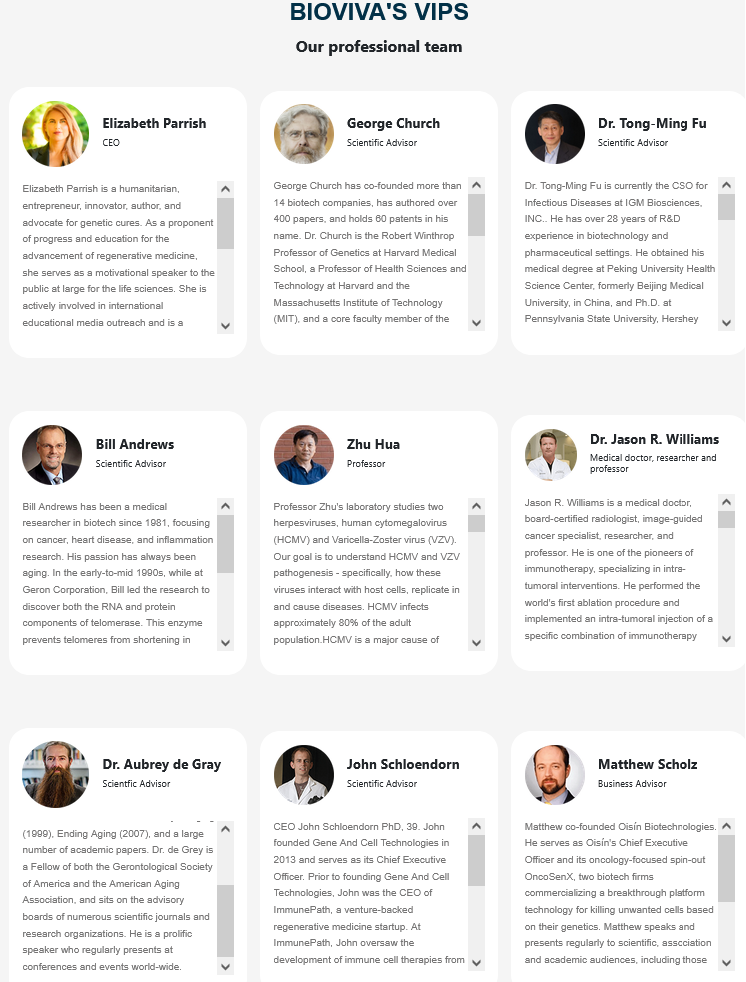
As aside, another board member at BioViva is Church’s associate and anti-aging guru Aubrey de Gray, who is a pimp and a drug addict (read April 2023 Shorts).
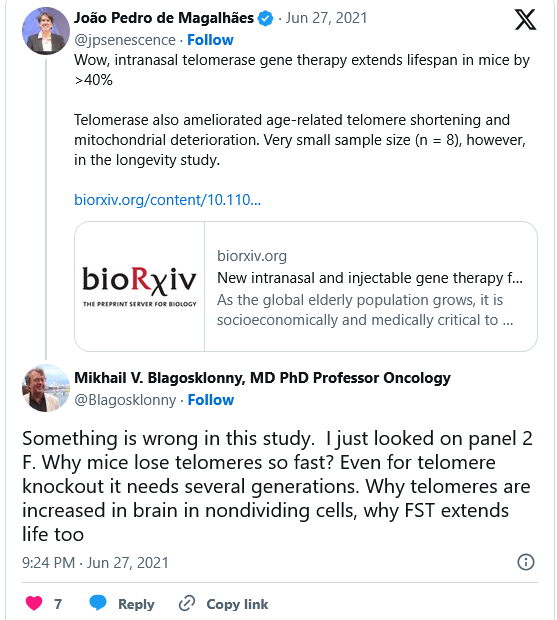
Back to the retracted PNAS paper. It promised Parrish’s rejuvenation therapy not just as injections, but also as nasal spray. As proof of principle, murine cytomegalovirus was used to treat mice with telomerase reverse transcriptase and follistatin genes, which “significantly improved biomarkers associated with healthy aging, and the mouse lifespan was increased up to 41% without an increased risk of cancer“:
Back then, even the anti-aging enthusiast Mikhail Blagosklonny (who died last year despite or maybe because of his rapamycine addiction, read October 2024 Shorts) understood that the study was completely fraudulent:
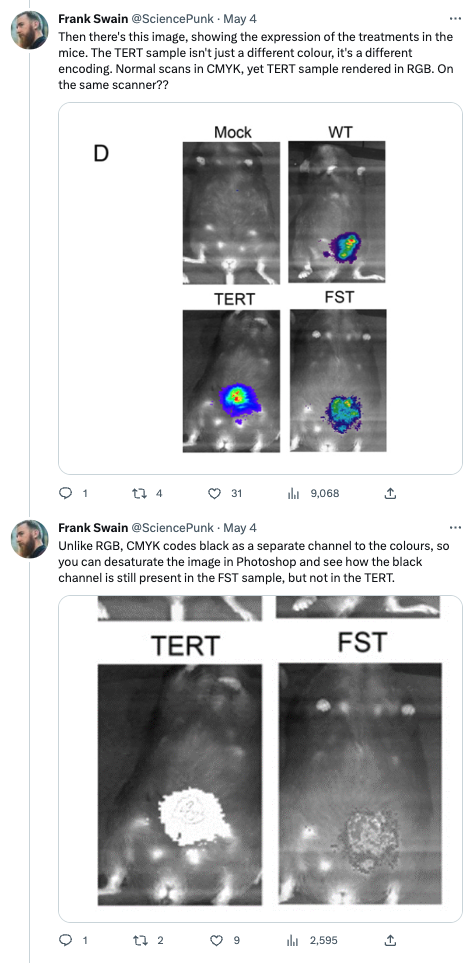
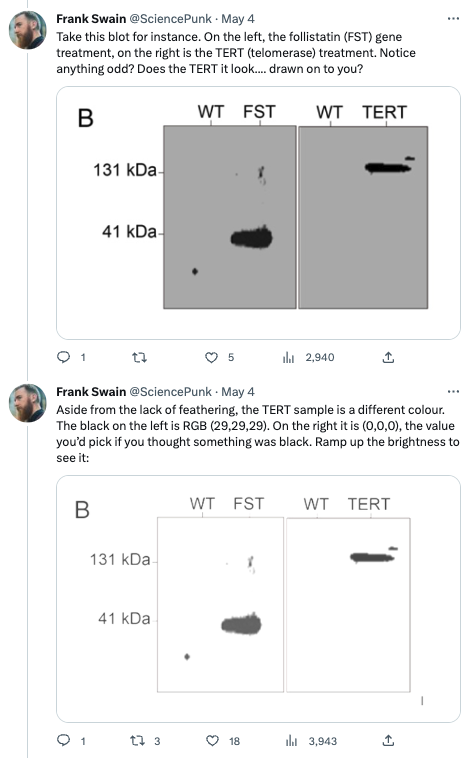
In May 2023, Elisabeth Bik and Frank Swain (in a now deleted Twitter thread, archived here) found actual forgeries:

Yellow boxes: the Uninfected panels and MCMV panels appear to be showing the same specimen, albeit at different magnifications and perhaps aspect ratios.
I have marked only the Merged panels, but the overlap is also visible in the single-channel panels.
The MCMV panels appear to have a more intense DAPI (blue) coloring than the Uninfected panels.
The magnified cell shown in the Uninfected row appears to be taken from the MCMV row. It shows a darker (less blue) ‘hole’ in the middle that is not visible in the MCMV panels. Similarly, the MCMV magnified cell appears to stem from the Uninfected row.”

In May 2023, Parrish replied on PubPeer:
“Yes, it takes time to take a drug from research to human use. It is required that the reviewers have expertise in what they are reviewing.”
Yes, we saw the reviewers’ expertise above, for both of Andrews and Maoz.
On 31 July 2023, PNAS issued a Correction:
“The authors note, “We have identified a duplicate FISH image in the uninfected and MCMV control experiments in Fig. 3B on page 4. This image was control uninfected muscle cells and will not change the conclusions and results of the paper because we have multiple controls such as MCMV and MCMV—FST in Fig. 3B that support our results and conclusion. Moreover, FISH results from kidney tissue sections (Fig. 3A) also support our conclusion of the paper. This mistake of duplication happened during the image processing of multiple sections. We accept our mistake and would like to correct it. Furthermore, the data in Fig. 3D, the absolute quantification of fluorescence intensity in image Fig. 3B, remain unchanged.”
The corrected figure seemed to be forged also:

Elisabeth Bik: “the new figure appears to have a different resolution/compression than the originals. In particular the red signal looks more ‘blocky’ than the original panels in this figure.”
The retraction from 11 August 2025 was obviously caused by an institutional investigation of the last author Hua Zhu:
“The editors are retracting this article at the request of the Rutgers University Office of Research Regulatory Affairs following an internal review of data discrepancies in Figs. 1 and 3. Authors Junichi Sadoshima and George Church agreed with the decision to retract. Authors Dabbu Kumar Jaijyan, Ruth Cruz-Cosme, Mingming Tong, Shaomin Yang, Qiyi Tang, Elizabeth L. Parrish, and Hua Zhu did not agree with the retraction. The positions of Anca Selariu, Alketa Stefa, and Utz Herbig are unknown at this time. David Kekich is deceased.”
Funny, Utz Herbig is listed as Rutgers University professor who studies telomeres. Parrish protested on PubPeer against the retraction:
“The images were updated and had no material effect on the outcome of the paper.”
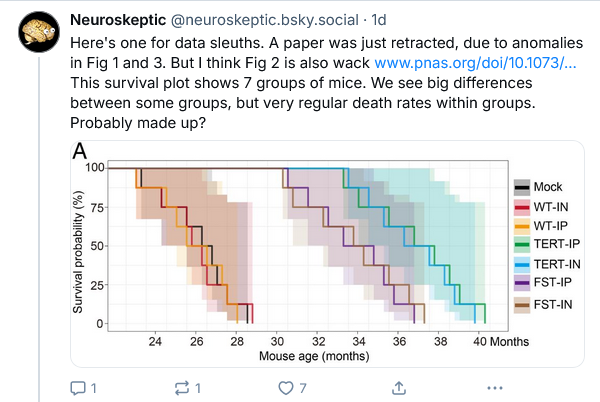
Retraction Watch interviewed both Parrish and Church, the latter admitted to hold shares in BioViva:
“Church said he was “on the fence” about the retraction, and that he considered the “evidence both pro and con” to be “weak.””
It seems, Hua Zhu was kicked out by Rutgers, he told Retraction Watch: “I have retired and I am in Greenland. I do not have to talk to you.”
These errors do not diminish the main findings
Another PNAS retraction, for Kalipada Pahan, endowed chair of neurology at Rush University in USA, about whom you can read here:
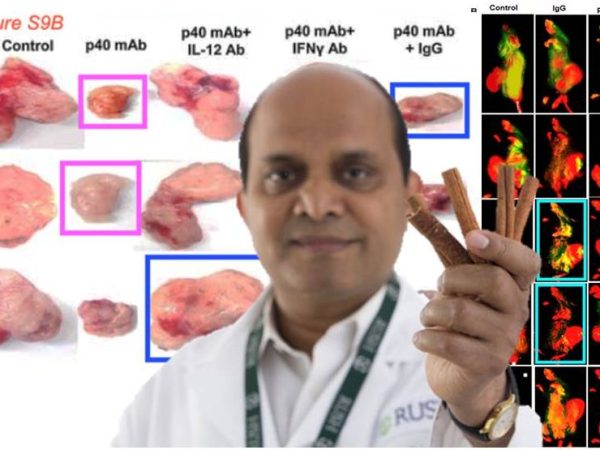
Kalipada Pahan – Cinnamon Boy in Rush
“all our PubPeer citations can be taken care of by submitting erratums and corrections.” – Prof Kalipada Pahan
This was flagged on PubPeer by Elisabeth Bik in February 2024:
Madhuchhanda Kundu, Avik Roy, Kalipada Pahan Selective neutralization of IL-12 p40 monomer induces death in prostate cancer cells via IL-12-IFN-γ Proceedings of the National Academy of Sciences of the United States of America (2017) doi: 10.1073/pnas.1705536114

Elisabeth Bik: “Figure S9B Blue boxes: One of the p40 mAb+IgG tumors looks remarkably similar to one of the p40 mAb+IL-12 Ab tumors, but is shown at a very different size.
Pink boxes: Two of the p40 mAb tumors look remarkably similar to each other, albeit shown at different sizes and color saturation.”
In March 2024, Pahan replied on PubPeer: “We have submitted a correction for this to PNAS“. Then Mu Yang found repeating numbers, and not just inside this paper, but accross another PNAS study from Pahan’s lab:

• Red boxes indicate two sets of adjacent numbers (1060 and 1018) that occurred in both tables. Rows represent different subjects in the studies.
• Blue boxes indicate two sets of adjacent 0.097 that occurred in both papers.
• Subjects control-2 and control-3 have identical p40 and p402 values (green and orange boxes) [Mondal et al PNAS 2020]“
On 21 July 2025, PNAS issued a retraction:
“The authors note: “We are retracting this article due to concerns with SI Appendix, Fig. S9B. In the p40 mAb column, the top and middle tumor images appear to be duplicated, resized, and color saturated differently. The bottom tumor image in the p40 mAb +IL-12 Ab column and the top tumor image in the p40 mAb + IgG column appear to be duplicated and resized. Although these errors do not diminish the main findings of the paper, we believe a retraction is necessary to uphold scientific integrity.””
Incidentally, both PNAS papers were edited by Xiaojing Ma of Weill Medical College. The 2020 PNAS paper is not retracted yet:
Susanta Mondal , Madhuchhanda Kundu , Malabendu Jana , Avik Roy , Suresh B Rangasamy , Khushbu K Modi , Jennillee Wallace , Yasmeen A Albalawi , Roumen Balabanov , Kalipada Pahan IL-12 p40 monomer is different from other IL-12 family members to selectively inhibit IL-12Rβ1 internalization and suppress EAE Proceedings of the National Academy of Sciences (2020) doi: 10.1073/pnas.2000653117


Orange boxes: The CIA panel looks remarkably similar to the CIA+mTIDM panel in Rangasamy et al., J Clinical Investigation (2018), DOI: 10.1172/JCI96209″


Red boxes: The EAE panel looks remarkably similar to the EAE panel in Figure 4G of Mondal et al., PLOS ONE (2015), DOI: 10.1371/journal.pone.0116566
Pink boxes: The EAE+p40 panel looks remarkably similar to the Control panel in Figure 5A of Mondal et al., Journal of Clinical and Cellular Immunology (2017), DOI: 10.4172/2155-9899.1000488″
We have already resumed the investigation
The German Lion of The World Jörg Rinklebe was finally served with his first retraction. Proving that being a white Nordic man does not always protect you when papermilling.

A year ago, the University of Wuppertal declared all PubPeer evidence meaningless and their professor innocent (read June 2024 Shorts). Rinklebe’s collaboration with the worst of papermillers like Pau Loke Show, Yong Sik Ok, Christian Sonne, Eder Lima and Navid Rabiee, was seen as utterly unproblematic. The decision not to investigate Rinklebe was made by the Ombudsman Thomas Wagner and Vice-Rector for Research of the University of Wuppertal, Stefan Kirsch.
Well, they forgot to tell Elsevier to exempt Rinklebe:
Vaseem Raja , Sami Ullah Qadir , Naveen Kumar , Abdulaziz Abdullah Alsahli , Jörg Rinklebe , Parvaiz Ahmad Melatonin and strigolactone mitigate chromium toxicity through modulation of ascorbate-glutathione pathway and gene expression in tomato Plant Physiology and Biochemistry (2023) doi: 10.1016/j.plaphy.2023.107872

Elisabeth M Bik: “Concern about Figure 1: Boxes of the same color highlight photos of plants or root systems that look remarkably similar, although they represent different treatments.”

The paper also contained false statistics, unusual expressions, data mismatch, and nonsense references. What can you expect from a papermill. The last author Parvaiz Ahmad is a papermill fraudster with around 70 fake papers on PubPeer, and several retractions (read February 2025 Shorts). Ahmad and Rinklebe published a lot together, almost 30 of their joint papers were flagged on PubPeer, mostly for peer review manipulation. The retraction appeared recently:
“This article has been retracted at the request of the Editors-in-Chief. Concerns were raised about similar panels in Figure 1, various statements not supported by the purported references, the error bars of various bar charts and the reliability of the data in the Table 2, as described on https://pubpeer.com/publications/BFB3B0DA15EDE40FC00F57CFF3FFFB. Additionally, inconsistencies were identified in the underlying datasets which were provided by the authors upon journal request. These issues undermine confidence in the findings reported. Therefore, the editors agree that retraction is necessary to maintain the scientific record’s integrity. The journal apologizes to the readers for any inconvenience caused.”
I wrote to the University of Wuppertal again and asked about their views on this retraction. Their Ombudsman Wagner replied with:
“We have already resumed the investigation of this case and are aware of this contribution. As soon as we have completed the investigation, the university will inform you of our assessment.”
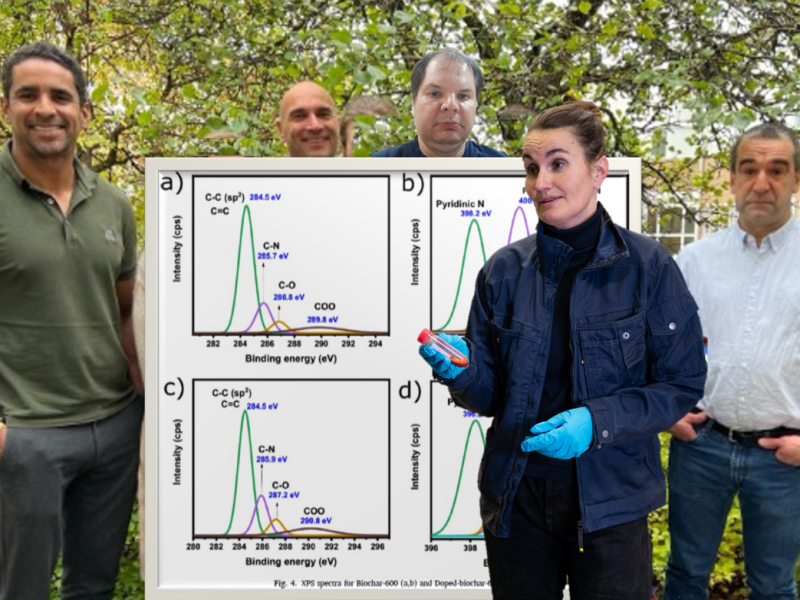
Boys from Brazil
“We can always make mistakes in our publications but never acting intensionally. Regarding Prof. Eder works, I know him well and I don’t believe he has anything wrong” – Glaydson S. Dos Reis
By the way, this recent retraction for Rinklebe’s close associates Pau Loke Show and Muhammad Mubashir reveals how these people manage to publish so much:
Umair Azhar , Muhammad Sohail Bashir , Muhammad Babar, Muhammad Arif, Afaq Hassan , Asim Riaz , Rana Mujahid , Muhammad Sagir , Saadat Ullah Khan Suri , Pau Loke Show , Jo-Shu Chang , Kuan Shiong Khoo , Muhammad Mubashir Template-based textural modifications of polymeric graphitic carbon nitrides towards waste water treatment Chemosphere (2022) doi: 10.1016/j.chemosphere.2022.134792
“This article has been retracted at the request of the Editors-in-Chief.
A journal-wide investigation by Elsevier’s Research Integrity & Publishing Ethics team identified violations of the journal’s policies on conflict of interest related to the submission and review of this paper.
Review of this submission was partly handled by the Guest Editor Pau Loke Show, who was also a co-author of the paper. Acceptance of the article was partly based upon the positive advice of reviewers who were closely linked to three of the authors (Show, Kuan Shiong Khoo, Muhammad Mubashir). This compromised the editorial process and breached the journal’s policies.
The authors disagree with this retraction and dispute the grounds for it.”
Retraction 15 August 2025
Show acted as reviewer of his own submission. We know that Rinklebe lets his friends like Show review and editorially handle his own papers, and there are clues he might even himself act as editor on those (see PubPeer).
The authors contacted the journal in April 2012
Two papers from the Institute of Technology Tallaght in Dublin, Ireland, were retracted, with a slight delay. The last author is a certain Denise Egan. Retraction number 1:
Bhumika Thati , Andy Noble , Bernadette S. Creaven , Maureen Walsh , Malachy McCann , Michael Devereux , Kevin Kavanagh , Denise A. Egan Role of cell cycle events and apoptosis in mediating the anti-cancer activity of a silver(I) complex of 4-hydroxy-3-nitro-coumarin-bis(phenanthroline) in human malignant cancer cells European Journal of Pharmacology (2009) doi: 10.1016/j.ejphar.2008.11.020
“This article has been retracted at the request of the authors and Editor-in-Chief.
The authors contacted the journal in April 2012 to request the retraction of the above article, citing concerns that they could no longer guarantee the accuracy of certain figures within the paper. A subsequent in-house investigation has found the image duplications between Figs. 6–9, 11 and the images from several other articles, including:
- Apoptotic cell death: A possible key event in mediating the in vitro anti-proliferative effect of a novel copper(II) complex, [Cu(4-Mecdoa)(phen)2] (phen = phenanthroline, 4-Mecdoa = 4-methylcoumarin-6,7-dioxactetate), in human malignant cancer cells. European Journal of Pharmacology, 569 (2007) 16–28. https://doi.org/10.1016/j.ejphar.2007.04.064
- An in vitro investigation of the induction of apoptosis and modulation of cell cycle events in human cancer cells by bisphenanthroline-coumarin-6,7-dioxacetatocopper(II) complex”. Chemico-Biological Interactions 168 (2007) 143–158. https://doi.org/10.1016/j.cbi.2007.04.003
- In vitro anti-tumour and cyto-selective effects of coumarin-3-carboxylic acid and three of its hydroxylated derivatives, along with their silver-based complexes, using human epithelial carcinoma cell lines. Cancer Letters 248 (2007) 321–331. https://doi.org/10.1016/j.canlet.2006.08.009
- A study of the role of apoptotic cell death and cell cycle events mediating the mechanism of action of 6-hydroxycoumarin-3-carboxylatosilver in human malignant hepatic cells”. Cancer Letters 250 (2007) 128–139. https://doi.org/10.1016/j.canlet.2006.10.015
Further details are available in the related PubPeer report: https://pubpeer.com/publications/1424D530280A63A15314EE572F4EC5?utm_source=Chrome&utm_medium=BrowserExtension&utm_campaign=Chrome
The Editors have reviewed the case and have decided to retract the article. The Publisher wishes to apologise to the authors for the delayed retraction.”
Retraction 14 August 2025
Wait what, “The authors contacted the journal in April 2012 to request the retraction“? Over 13 years ago?? The first paper in the list was now retracted also, with a similar notice:
Bhumika Thati , Andy Noble , Bernadette S. Creaven , Maureen Walsh , Kevin Kavanagh , Denise A. Egan Apoptotic cell death: a possible key event in mediating the in vitro anti-proliferative effect of a novel copper(II) complex, [Cu(4-Mecdoa)(phen)(2)] (phen=phenanthroline, 4-Mecdoa=4-methylcoumarin-6,7-dioxactetate), in human malignant cancer cells European Journal of Pharmacology (2007) doi: 10.1016/j.ejphar.2007.04.064
“The authors contacted the journal in April 2012 to request the retraction of the above article, citing concerns that they could no longer guarantee the accuracy of certain figures within the paper.
A subsequent inhouse investigation found the image duplications between Fig 6, 7, 8, 10 and the images from several other articles, including:
- An in vitro investigation of the induction of apoptosis and modulation of cell cycle events in human cancer cells by bisphenanthroline-coumarin-6,7-dioxacetatocopper(II) complex”. Chemico-Biological Interactions 168 (2007) 143-158. https://doi.org/10.1016/j.cbi.2007.04.003
- A study of the role of apoptotic cell death and cell cycle events mediating the mechanism of action of 6-hydroxycoumarin-3-carboxylatosilver in human malignant hepatic cells”. Cancer Letters 250 (2007) 128-139. https://doi.org/10.1016/j.canlet.2006.10.015“
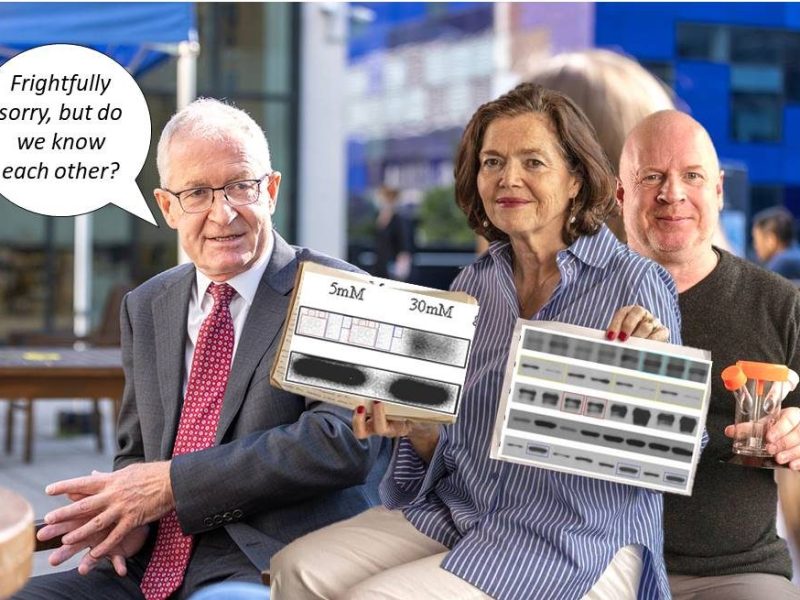
Imperial Irishman Hugh Brady (and his Dublin leprechauns)
When your Irish past catches up with your English future.
Back in 2007, these studies were celebrated in the Irish national media:
“Toxicologist Dr Denise Egan said early results are proving extremely positive, giving them the “magic bullet” to kill deadly cancer cells. “We’re using metal-based drugs and this is unique in the area of cancer treatment,” she said.
“The drugs are extremely selective and potent. They kill the cancer cells and are more likely to spare the healthy cells.” […]
“So far they’re 30-fold more effective than comparable drugs,” said Dr Egan.”
Well, maybe the excitement was premature, but the article mentioned that “the research teams have secured substantial government funding to undertake more studies to bring the compounds from ‘bench-to-bedside’ and closer to the marketplace“.
The PubPeer comments on these and 4 other cancer research papers by Egan and her Irish colleagues also refer to two previous retractions in Cancer Letters, which took place in 2013 and were covered by Retraction Watch. Egan’s institutional profile at Technological University Dublin however has been deleted since, although she can still be found as Lecturer at the department of Chemical & BioPharmaceutical Sciences.
The question is: will we have to wait another 13 years to see those other fake papers by Egan retracted?
Replication errors in the PPT software
Wiley had second thoughts about a fraudulent paper they previously corrected. Its author is the fraudster Xiangke Wang, who first featured on this site in this article:

Yubing Sun: contaminated science, Synchrotron fraud and citation scam
Smut Clyde and TigerBB8 investigate another case of nanotechnology research in China. Connected teams of authors pretended to work on cleaning up the environment of radioactive pollution, and instead released a toxic sludge of fraudulent data and citations.

This is the paper, flagged on PubPeer by Smut Clyde in 2019:
Jie Li , Changlun Chen, Rui Zhang , Xiangke Wang Nanoscale zero-valent iron particles supported on reduced graphene oxides by using a plasma technique and their application for removal of heavy-metal ions Chemistry – An Asian Journal (2015) doi: 10.1002/asia.201500242
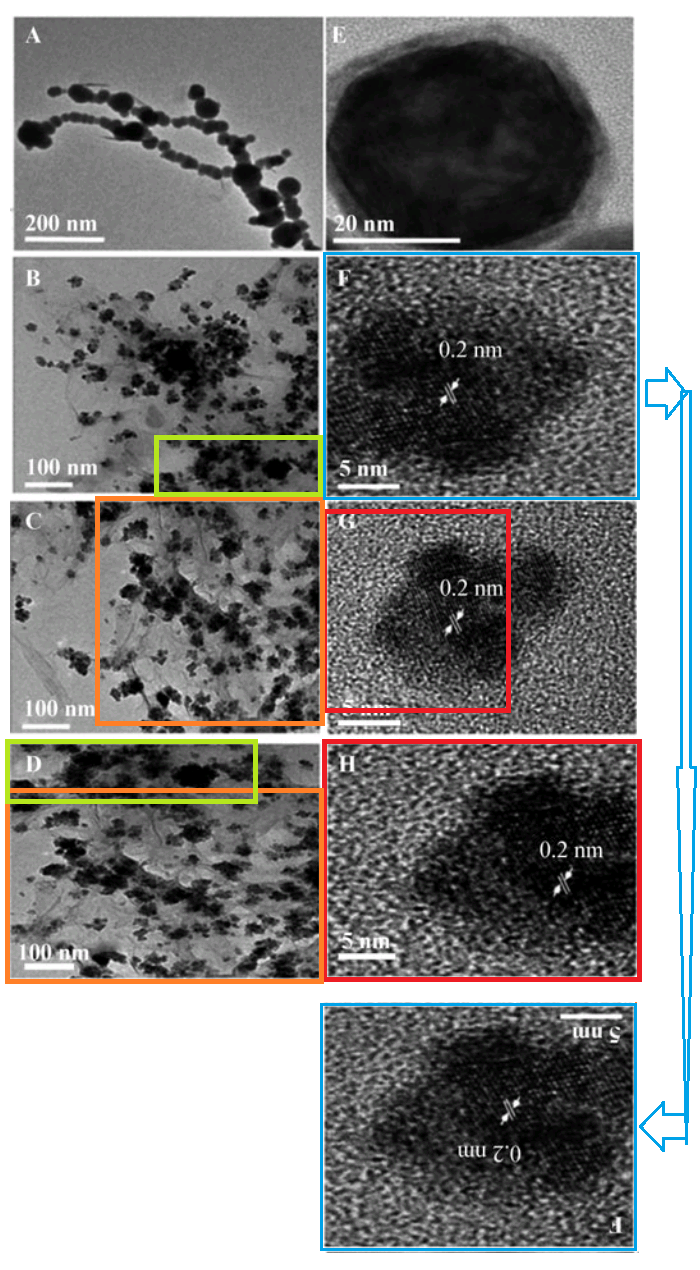
(B), (C) and (D) are in fact the same materials with different scale bars, since they overlap. Same for (F), (G) and (H).: “

According to Figure 2 of Li et al. (2015), the images depict “TEM images of … D) NZVI/rGOs (1:5)”, and “HRTEM images of G) NZVI/rGOs (1:4)”. That is, they appear to be different materials.”

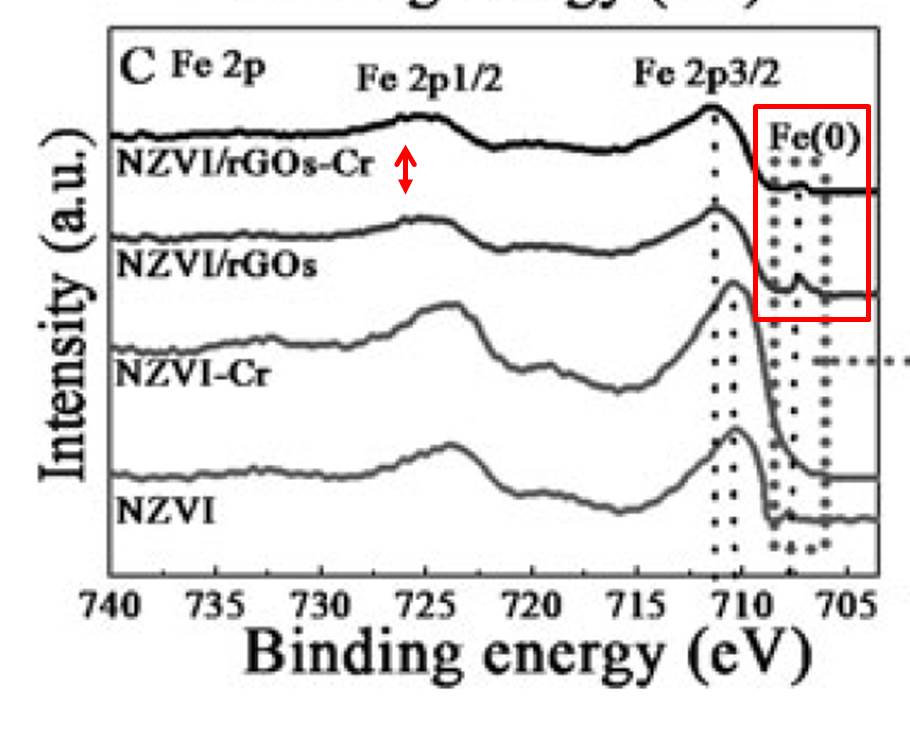

In October 2019, Wang wrote on PubPeer:
“We checked the materials and the TEM images are really same as they are the same material. We will check all the original data carefully.”
Corrections were issued in November 2019 for this paper and the equally fraudulent Li et al 2016. For Li et al 2015, the Correction from 12 November 2019 went (highlight mine):
“The authors regret errors in Figure 2, Figure 3a, Figure 3b and Figure 8c in the published article. The sample information was incorrect due to replication errors in the PPT software and an inadvertent mistake of data import when plotting. The corrected Figure 1, Figure 2a, Figure 3b and Figure 3c are shown below. The corrections do not affect the main discussion and conclusions of the original article.”
Microsoft PowerPoint did it! We don’t know what drove Wiley to change their mind. But on 9 August 2025 this paper was retracted:
“Following the publication of the correction, additional concerns were raised regarding its adequacy. The partial raw data provided by the authors failed to offer a satisfactory explanation and was deemed insufficient to verify the integrity of the results. Significant issues remain unresolved concerning the TEM images, XRD patterns, and XPS data. Additionally, unacknowledged figure duplication has been identified between this article and another publication from the same time period by the same group of authors, without proper attribution to the original source. As a result, the editors have lost confidence in the integrity of the published data and consider the conclusions of the manuscript to be compromised. The authors apologize for the errors and any inconvenience caused.”
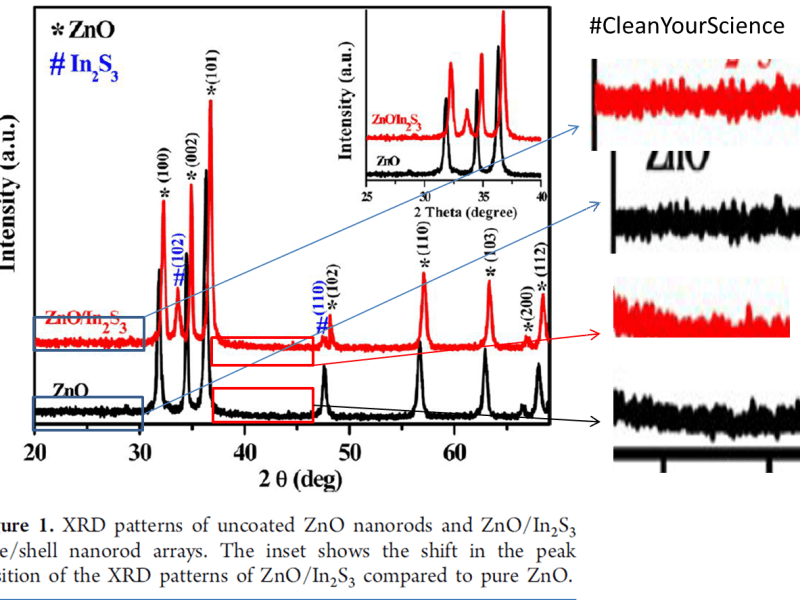
Fake spectra googling #CleanYourScience
This guest post invites you to join the hunt for fabricated data in your science field of interest. Use Google image search to #CleanYourScience!
A theory I postulate here: Wiley was screening records for unusual authorship changes, as publishers started to do these days. Maybe Springer Nature should check that Li et al 2016 paper, because the correction they issued for it was fraudulent:
Jie Li , Changlun Chen , Rui Zhang , Xiangke Wang Reductive immobilization of Re(VII) by graphene modified nanoscale zero-valent iron particles using a plasma technique Science China Chemistry (2016) doi: 10.1007/s11426-015-5452-4
“We regret that our article “Reductive immobilization of Re(VII) by graphene modified nanoscale zero-valent iron particles using a plasma technique” (Sci. China Chem., 2016, 59: 150–158) [1] contained errors. The corrections in an erratum do not change or affect the result or conclusion of the paper. The corrected Figure 2(a–c) and Figure 7 and figure captions are given below.”
Erratum 27 November 2019
As I said, the replacement figure was fraudulent, maybe Springer should care?

A non-significant result
Shockingly, alchemy doesn’t work! And neither does cold fusion.

Fusion is a dish best served cold
“…there are no longer any batches of the palladium used by Fleischmann and Pons (because the supplier now uses a different manufacturing process)…” -FuF wisdom
Springer Nature’s Scientific Reports had to retract this breakthrough study from Bhabha Atomic Research Centre in Mumbai, India, which should have revolutionised all of sciences. It claimed to have achieved cold fusion and transformed palladium into silver in the process:
Trilochan Gadly , Suhas Phapale , Sunita Gamre , Pankaj Jain , Harishyam Kumar , Sanjeev Kumar Poudel , Shraddha Desai , Arup Kumar Pathak , Ashutosh Srivastava , Amit Kumar , Rupali Pal , Pallavi Chandwadkar , Celin Acharya , A. K. Bakshi , Salil Varma , Birija S. Patro , Dibakar Goswami Experimental and theoretical validation for transmutation of palladium at electrochemical interfaces Scientific Reports (2024) doi: 10.1038/s41598-024-70597-y
The retraction appeared on 11 August 2025 (highlights mine):
“The Editors have retracted this Article.
In the process of the follow-up studies building on the work reported in this Article, the Authors re-analysed some of the raw data. However, they were not able to recapitulate some of the original results, e.g. those reported in Fig. 9A. They were also not able to locate the EDXRF data underlying Fig. 9B, whereas the re-analysis of Fig. 5 returned a non-significant result, which directly impacts the conclusions of this Article. The Authors repeated the experiments using a fresh set of anode, cathode, and electrolyte, but were not able to reproduce the original results regarding the conversion of Pd to Ag. The Authors, therefore, do not have confidence in the conclusions regarding the transmutation at the cathode, which in turn affect the mechanism of neutron generation proposed in the Article. “
Donate!
If you are interested to support my work, you can leave here a small tip of $5. Or several of small tips, just increase the amount as you like (2x=€10; 5x=€25). Your generous patronage of my journalism will be most appreciated!
€5.00

 For Better Science
The publisher even wrote: “Due to an unfortunate internal misunderstanding, this article was inadvertently retracted. The retraction has now been rescinded.” Such a statement makes them look like a jungle zoo rather than a professional academic publisher. What a joke !
LikeLiked by 2 people
That cold fusion paper is, as Australians would say, ‘an absolute shocker’ (literally). The authors seem to have used pure D2O with no conducting salts and that is why they need 122.7 Volts to perform the electrolysis rather than the typical 1.5 – 2 V. At least no-one was electrocuted… They seem to have no clue about electrochemistry and cannot even write the correct electrochemical reactions for heavy water electrolysis (they instead write the heavy water dissociation reaction). And how you manage to insert OD- ions into bulk Pd is anyone’s guess.
I would guess that the Ag is contamination from some source that is electrodeposited on to the cathode while D2 is being evolved. They do use a Ag/AgCl reference electrode which might be the culprit. If used properly it would not undergo dissolution and act as a contamination source, but who knows how it was used.
The radiation measurements and theory bits are also highly dubious, and the whole premise is absurd.
LikeLike
Alternative explanation: they never did any experiments and made it all up.
LikeLike
At least most of the authors agreed with the retraction. Except for the 2 alchemists.
LikeLike
“Italian cardiologist in Bristol. Gianni Angelini”
What about British endocrinologist in Bristol, but it probably just a mirage?
Claire M Perks – University of Bristol https://share.google/3GjMH31T8k6kDDO8d
PubPeer – Search publications and join the conversation. https://share.google/yUd0ydjTq5dWaOzsk
LikeLike
More mirages:-
PubPeer – Inhibition of FASN and ERα signalling during hyperglycaemia-… https://share.google/hx0sDeuVmMeMVRNXO
https://share.google/Vc5ixgsbdb5yqyr9v PubPeer – Effect of insulin-like growth factor binding protein-1 on in… https://share.google/D8o1dx0N7jpcz0fVb
PubPeer – Hyperglycaemia-induced resistance to Docetaxel is negated by… https://share.google/VC5IXGSbdb5yQYR9V
LikeLike
Science Breakthrough
Four people are needed to write a few pages of review. The largest part of the review: the citation section.
What is the clinical evidence to support off-label rapamycin therapy in healthy adults?
https://www.aging-us.com/article/206300/text
Jacob M. Hands , Michael S. Lustgarten , Leigh A. Frame , Bradley Rosen
Wrt Mikhail Blagosklonny’s death by cancer. This seems to be what his fellow anti-agers believe:
‘Cancer risk
There is no literature reporting cancer incidence or prevalence in healthy, non-immunocompromised cohorts with low dose rapamycin use, so inference from existing studies to an otherwise healthy cohort is challenging. In a meta-analysis of 20 randomized controls trials in kidney transplant patients, high-dose sirolimus treatment was associated with a lower overall kidney and NMSC cancer risk relative to other immunosuppressive regimens, but demonstrated no effect on other cancers with the exception of a potentially elevated prostate cancer risk. The authors of that study note the NMSC finding that this “may be partly due to removal of cyclosporine” as opposed to the addition of sirolimus [55]. Similarly, with reference to the elevation in prostate cancer risk the causality of this association is unclear and authors report that the association may be an artifactual and potentially related to rapamycin’s interference with PSA screening [55]. It is worth noting that findings of many preclinical models and approved clinical applications of rapamycin and or rapalogs have demonstrated potential mechanistic benefit with respect to cancer risk and treatment [59]. However based on outcome data in humans, we cannot comment on rapamycin’s cancer risk in healthy adults.’
But then again… the anti-aging crowd usually swallows a couple of dozen pills each day. There’s room for inadvertent interactions. #Clownworld
LikeLike
What a surprise that Giuliani and colleagues repeatedly submitted their papers to a specific journal ! Even the multiple myeloma cells must be fed up with all the narratives people write and tell about them.
LikeLike
A 2016 paper was withdrawn by the the Pahan group https://doi.org/10.1074/jbc.M116.714824. “The Journal concluded that the “MPTP” and “MPTP+(R+E) Ab” rows of Figure 8B had been derived from the same source image. Raw data was supplied, but did not sufficiently address the Journal’s concerns. The authors have decided to withdraw the article, but uphold the overall findings and conclusions.”
LikeLiked by 2 people
https://imgur.com/a/lEX1h7V
LikeLike
We all need FBS
LikeLike
Am I imagining mirages in Monaco di Baviera?
https://pubpeer.com/search?q=%22roland+m+schmid%22
LikeLike
CLO also sells miracle sunscreen with his book!
https://www.isdin.com/es/p/pack-fusion-water-magic-libelula-spf-50-y-la-levedad-de-las-libelulas-de-carlos-lopez-otin/4981
LikeLike
Protege tu piel mientras descubres las claves de una vida saludable y feliz con Fusion Water MAGIC Libélula SPF 50 y el libro ‘La levedad de las libélulas’, de Carlos López-Otín. En este trabajo, el reconocido bioquímico y divulgador propone una nueva ecuación de la salud a partir de una visión holística que une ciencia, ética, emoción y belleza. Una obra que ha inspirado la edición especial de Fusion Water MAGIC Libélula SPF 50, homenajeando sus ideas con un diseño inspirado en la sabiduría y sensibilidad de su pensamiento.

LikeLiked by 1 person