Schneider Shorts 18.04.2025 – Enhance quality of life for our growing aging population
Schneider Shorts 18.04.2025 - An oasis of fraud at UCL, Swiss professor wins a coveted medal, Britain's research integrity chair defended by Wiley, retractions for British scholars and for Nigerian one-man papermill, and the various ways of how silly science can get.
Schneider Shorts of 18 April 2025 – An oasis of fraud at UCL, Swiss professor wins a coveted medal, Britain’s research integrity chair defended by Wiley, retractions for British scholars and for Nigerian one-man papermill, and the various ways of how silly science can get.
Revivification – a dead composer’s minibrain makes noise
Science Elites
Enhance quality of life for our growing aging population
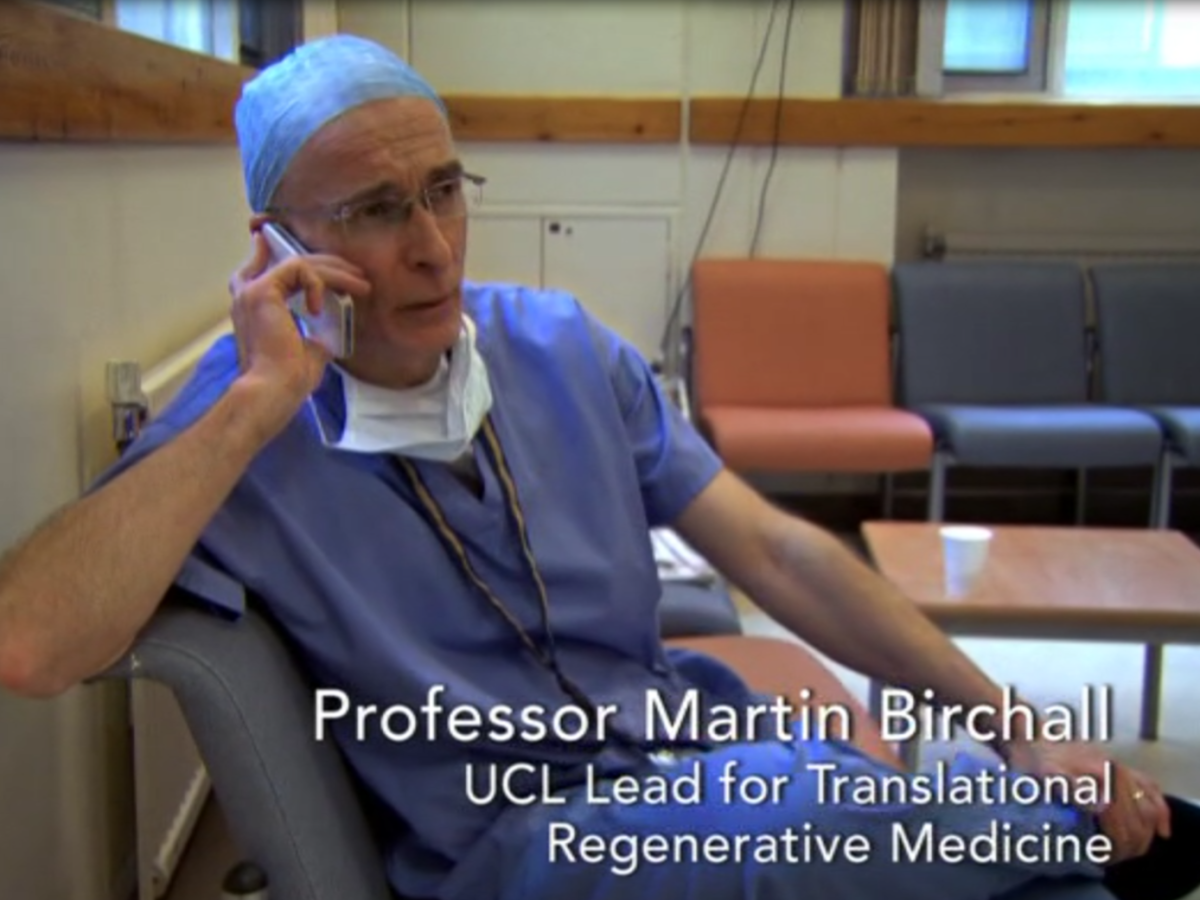
Sometimes one really gets the feeling that there is a conspiracy of sociopaths in academia. Who in the whole of United Kingdom is a better candidate to develop a cancer diagnosis tool that a otolaryngologist whose pathological obsession with degenerative medicine and human experiments led to the deaths of at least two juvenile patients? Who also published manipulated data to further his failed science claims about “stem cells” based airway transplants?
Because the unsackable UCL professor Martin Birchall, the old buddy of Paolo Macchiarini, was awarded in late 2024 millions of pounds to solve cancer. Together with another UCL cheater named Weihui Song. Read about them both here:
Several years ago, UCL investigated the Macchiarini affair and found their surgeon Martin Birchall was not only innocent, but also entitled to more money and more patients to experiment upon. Now, Patricia Murray was awarded for exposing this UCL malfeasance, and Sholto David scrutinised UCL papers for data manipulation.
It is as if UK authorities intentionally recruit highly dishonest scientists because only they can deliver the desired phony bullshit out of thin air. So here is the UCL announcement from October 2024:
“UCL will lead a £17 million surgical imaging hub to improve cancer detection and take part in a £12 million collaboration to help solve age and disability-related mobility issues, in a major funding award from the UKRI Engineering and Physical Sciences Research Council (EPSRC). […]
The UCL Optical and Acoustic Imaging for Surgical and Interventional Sciences (OASIS) Hub will be led by Professor Danail Stoyanov from UCL Computer Science. The hub will create new imaging capabilities in diagnostic and surgical imaging using light and sound, including low-cost, portable devices to detect the early signs of cancer by listening for soundwaves using optical tools. […]
Professor Wenhui Song, Head of the UCL Centre for Biomaterials in Surgical Reconstruction and Regeneration at the Royal Free Campus, said: “We are thrilled that this award will enable us to continue designing and synthesizing advanced smart materials and intelligent sensors.
“Those flexible, smart fibres and sensors will be integrated into robotic systems to assist independent living and enhance quality of life for our growing aging population.”””
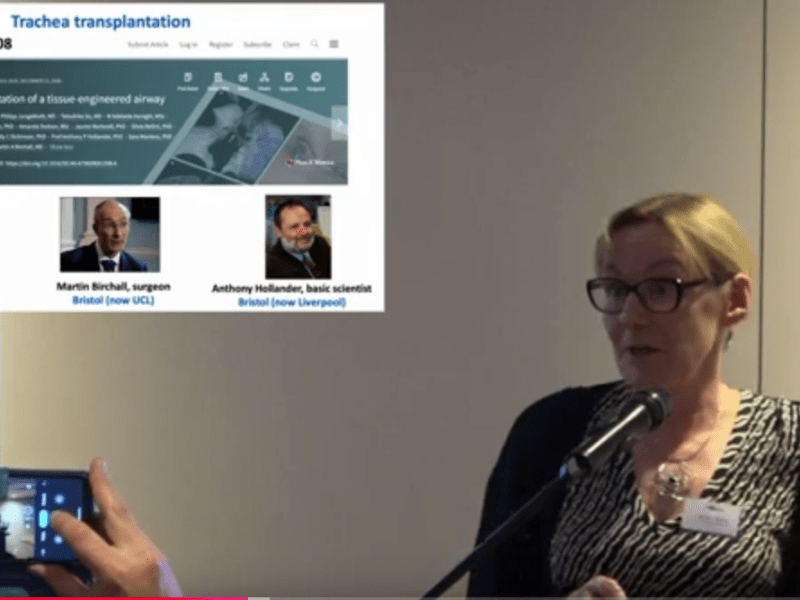
The Science and Technology Committee of the British House of Commons is now dealing with the trachea transplants performed by the scandal surgeon Paolo Macchiarini and his former parter at UCL, Martin Birchall as part of its inquiry into Research Integrity. Two UK scientists from Liverpool initiated this with their written submission from November 21st…
Sholto David: “Figure 1: Materials that are supposed to be different all overlap into each other.”
Sholto David: “Figure A and B: These are supposed to show different materials, but the image in B is just a rotation of A.”Elisabeth Bik: “Concern about Figure 6’s top part: Panels B, D, and L unexpectedly appear to share certain features. Panel L in particular appears to contain parts from both B and D.”
On 10 February 2025, just before the concerns about Fig 6 were posted, the paper received a Corrigendum:
“The authors regret to report that errors were published in Figures 1 and 3.
Figure 1 (B3, C3): The SEM images in panels A3 to C3 were intended to illustrate the cross-section morphology of 3D-TIPS scaffolds made under different thermal processing conditions. However, different areas of the 50CC scaffold (Figure 1A3) were inadvertently reused to represent the other two scaffolds (50CC+H and 500RTC+H), assuming similar structures. Correct cross-section images for Figures 1B3 and 1C3 have been included in the corrected Figure 1, provided here, along with the original figure caption.
Figure 3B: The gross image of the 50CC+H scaffold explant after 12 weeks of implantation (Figure 3B) was erroneously replaced with an incorrect image. A correct one is in the updated Figure 3 provided here with the original full figure caption.
The authors sincerely apologize for these errors. We confirm that the corrected images do not alter the findings or conclusions of the paper.”
Also the fake paper Wu et al 2018 by Song and Birchall was corrected in February 2025, because “errors were published in Figures 6 and 8“, but of course “these corrections do not alter the findings or conclusions presented in the paper.”
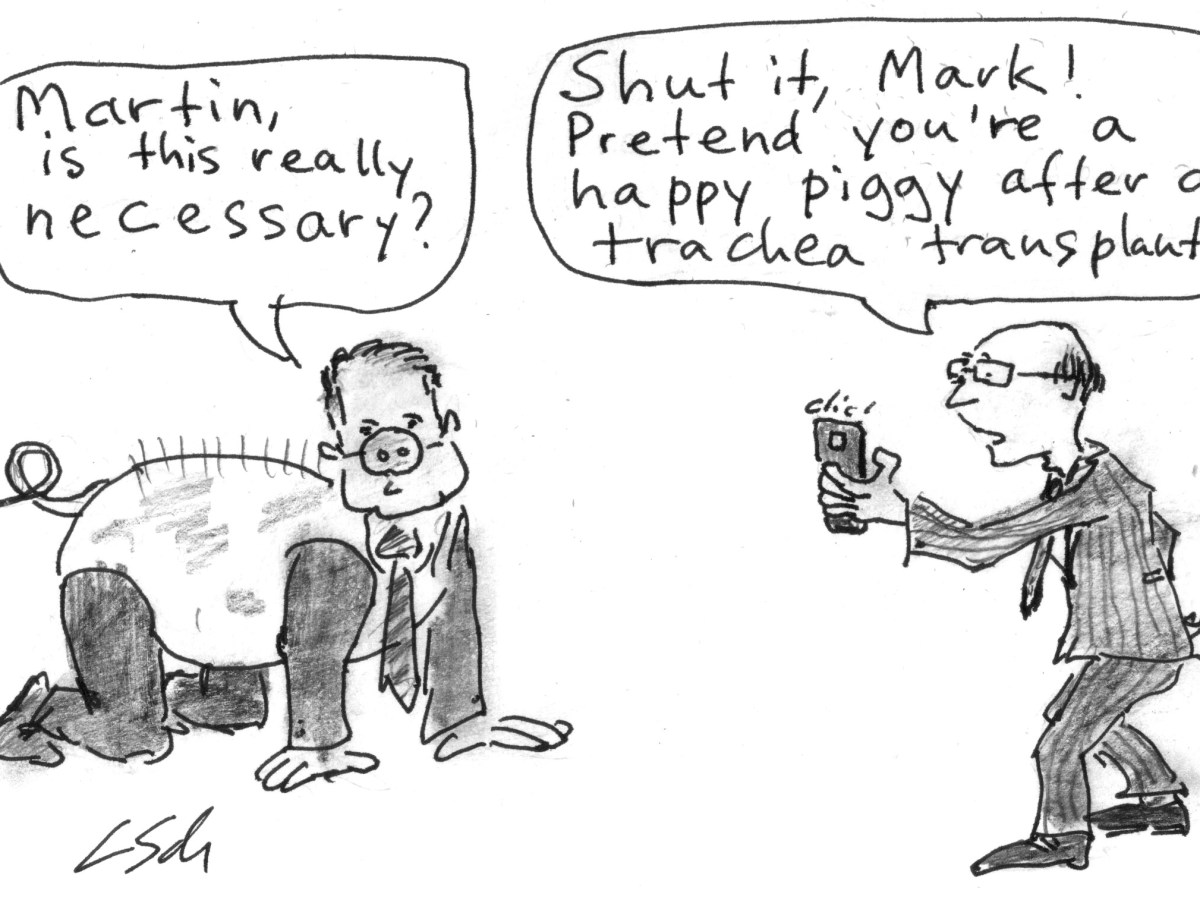
Imagine you are Martin Birchall, laryngologist and ENT surgeon, star of regenerative medicine at UCL and trachea transplant enthusiast. You and your business partner Videregen need to explain to EU bureaucrats why your technology of decellurised cadaveric trachea is perfectly safe, what with all the dead patients of yours and your former best friend Paolo…
Sholto David: “Figure 2: Unexpected similarity between images which should show different experimental conditions,”
Elisabeth Bik: “Figure 4: Green boxes: Panels B1 and C1 appear to overlap, albeit in mirror image. Yellow boxes: Panels B1 and D1 appear to overlap, albeit in mirror image”Elisabeth Bik: “Concerns about Figure 6: Red boxes: Panels B1-1 and C1-1 unexpectedly overlap”
Elisabeth Bik: “Concern about Figure 5: Pink and Cyan boxes indicate overlapping panels”
Sholto David: “Figure 5: Unexpected overlaps between images which should show different materials.”Elisabeth Bik: “Figure 4: Panels A and B appear to share many unexpected similarities. The left part of A shares similarities with the right half of B, not in the individual dots, but in the horizontal stripes and structures of the tissue The right part of A shares similarities with the left half of B, in particular in the areas that I boxed.”
Elisabeth Bik: “Figures 4 and 7: Cyan boxes: The C (50RTC+H) panels appear to overlap, although conditions (chondrogenic vs osteogenic) and time points (4 weeks vs 21 days) do not match, and the colors are shown in different ratios and mean different antibodies.”
As you see, Song might have to correct quite a lot, since Elisabeth Bik also had a look since my December 2024 article. and extended Song’s PubPeer record.
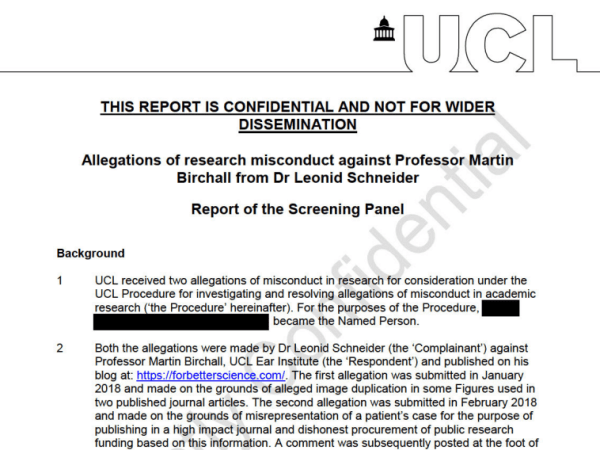
In yet another investigation, UCL whitewashed Martin Birchall of all responsibilities. I publish here the confidential report and excerpts from a secret PhD thesis, which the UCL committee carefully avoided to read.
The fourth UCL partner on this £17 million-heavy project next to Birchall, Song and Stoyanov is the UCL vascular surgery professor Janice Tsui. Here an old but very unsavoury paper of hers:
This masterpiece was successfully corrected in November 2015:
“In the March 2010 issue of the Journal of Vascular Surgery, the article by Ho et al (Ho TK, Tsui J, Xu S, Leoni P, Abraham DJ, Baker DM. Angiogenic effects of stromal cell-derived factor-1 (SDF-1/CXCL12) variants in vitro and the in vivo expressions of CXCL12 variants and CXCR4 in human critical leg ischemia. J Vasc Surg 2010;51:689-99) contained an error in the blots of panel A in Figure 4. The corrected version of Figure 4, A is as it appears below.”
Elisabeth Bik: “Figure 6E. Cyan boxes: Two panels appear to show an overlap.”
What an OASIS of Birchall, Song and Tsui…
This coveted medal
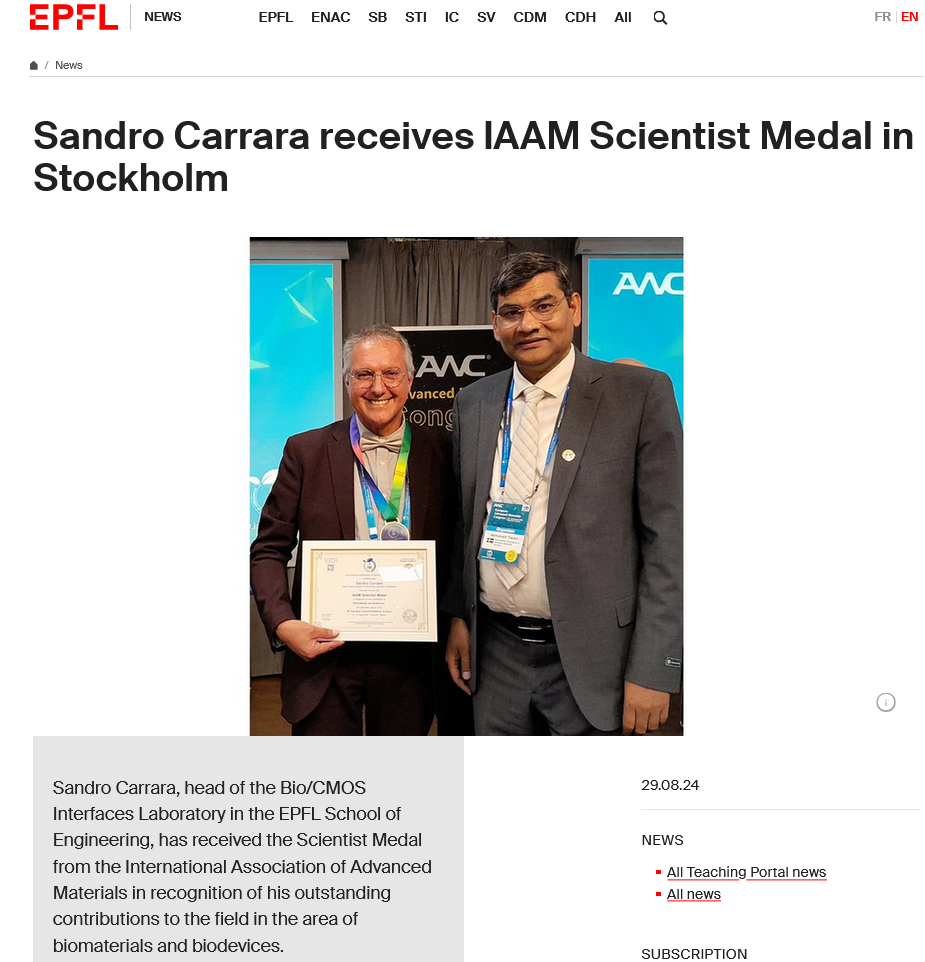
Look who prides themselves with receiving a fake IAAM medal from the science fraudster and scamferencer Ashutosh Tiwari. The Swiss elite university EPFL and their professor Sandro Carrara, and this embarrassment is being paraded in public already since August 2024:
“The Scientist Medal is a prestigious award that the International Association of Advanced Materials (IAAM) presents to distinguished researchers to recognize their distinctive contributions to the interdisciplinary fields of materials science, engineering, and technology. […]
Carrara received the award at a ceremony on August 27th at the European Advanced Materials Congress in Stockholm, Sweden, where he also delivered a lecture on “Discovery of Memristive Biomaterials for Sensory Aims”.
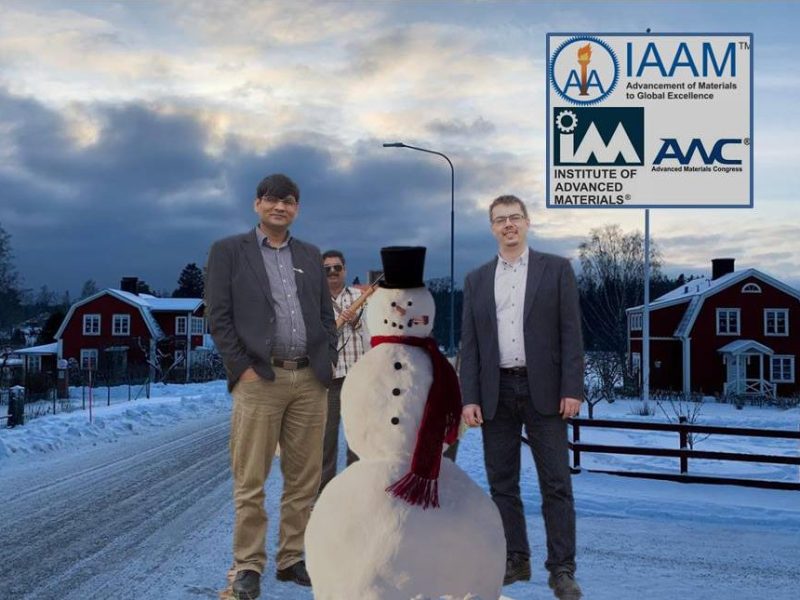
As reminder, IAAM is just an internet scam operated by Tiwari with a few associates in order to run predatory conferences of Swedish ferries.
Four years after Ashutosh Tiwari’s scamferences and research fraud were exposed, his impressive-sounding yet fictional “International Association of Advanced Materials”, or IAAM, still opens doors, hearts and wallets.
Since my reporting started in 2017, hardly any professor in the west dares to participate in Tiwari’s scamference fraud, and even if they do, their universities usually interfere. Not in this case, I contacted EPFL press office, the university’s leadership, and their adjunct professor from Italy, Sandro Carrara. Twice. Nobody replied, the announcement remains standing. They really think Tiwari is victimised genius and the world is awed and envious at Carrara’s medal.
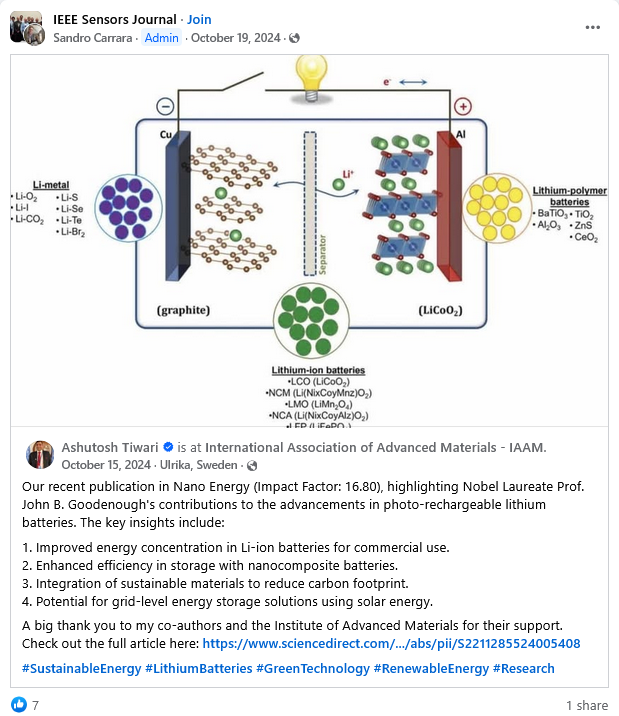
It seems, the two men become friends. Here is Carrara, in his capacity as IEEE editor, sharing on Facebook Tiwari’s recent paper in an Elsevier journal Nano Energy.
Elsewhere, a Canadian scholar is very excited. Here is a December 2024 announcement by the Western University in Ontario, Canada:
The IAAM Scientist Medal is an illustrious honour that the International Association of Advanced Materials presents to distinguished researchers and scientists to recognize their distinct contributions to the sphere of Materials Science, Engineering and Technology. IAAM presents this coveted medal to appreciate the rich involvement of worthy researchers in the field of Advanced Materials and to motivate scholars to continue on the path of producing ground-breaking research for Advancing Materials to Global excellence.
Congratulations Mark!”
Indeed, congratulations. Biesinger and his university remained silent also. Also this announcement was not deleted. If you envious, send Ashu an envelop with cash and you (or your dog) can have your own IAAM medal also.
Ashutosh Tiwari, former employee of Linköping University, built an entire industry of predatory publishing and conferences, which hosted many among the material science research elite, all from a small rented office in the industrial area of Linköping. Tiwari’s genius trick was to play at the vanity and greed of certain academics.
Publishers have very different rules on research integrity for non-white no-name cheaters in Asia on one hand and powerful white bigwigs in USA and Europe on the other.
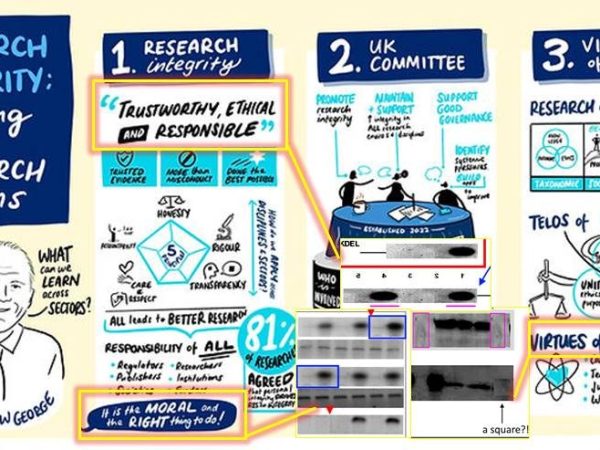
In the case of Andrew George, Deputy Vice-Chancellor at Brunel University London, Emeritus Professor at Imperial College London, Non-Executive Director of the Health Research Authority (HRA), and, most importantly, co-chair of the UK Committee on Research Integrity, Wiley should have just stayed quiet. Instead, they decided to shame me and the sleuth Sholto David for maligning a great man.
“One of the UK research system’s strengths is having established processes that allow for this review so that we maintain an accurate and robust research record. Promoting and improving this system, and encouraging more openness and transparency, is why I became involved in the UK Committee on Research Integrity.” – Andrew J T George
Mycosphaerella arachidis: “Figure 1: The blots should be examined carefully. There are unexpected similarities, distinctive patterns in the background noise when you visualize it by adjusting the image intensity.”
In February 2025, George posted this on PubPeer:
“The authors thank PubPeer reviewers for bringing their concerns about this figure to our attention. We asked Imperial College London to review the figure. Neither we nor the reviewer could reproduce the findings of similarity observed by the PubPeer reviewer. We have alerted the editors of the journal to the PubPeer comments, and shared the findings of the review with them. Given these findings we do not consider it appropriate to take any further action.“
Worth mentioning it is not onyl George’s reputation as UK research integrity czar which is at stake. The first author Adnan Khan is now a Fulbright Scholar at University of Iowa in USA, further coauthors include King’s College professor Giovanna Lombardi, George’s most regular collaborator UCL professor Daniel Larkin, and George’s fellow Imperial professor, Myra McClure. There’s also again a German ophthalmologist named Sven Beutelspacher, who trained at Imperial and at Hammersmith Hospital in London, before returning to Germany to open a private practice where he began to call himself “Professor” (without revealing at which university).
The two gels are clearly identical, except that the second one contains the same fragment TWICE. But the publisher saw it differently, and sent on 16 April 2025 this email to me, signed by Mark Paalman, Senior Manager for Integrity Assurance & Case Resolution at Wiley:
“Wiley experts in forensic image analysis have evaluated this allegation carefully, with both traditional and state-of-the-art techniques. We were unable to reproduce the alleged manipulation in Figure 1. Furthermore, we investigated the full article and were unable to find any indication of inappropriate image manipulation or splicing. In instances where our investigation proves unable to confirm an allegation, we will take no action and close the case, in keeping with COPE guidance.
We appreciate the work of respected and ethical scientific sleuths who raise research integrity concerns. Such third parties play an important role in efforts by journals and publishers to correct errors, as well as to identify and amend fraudulent literature. Given the serious implications for authors of fraud allegations, it is also the responsibility of journals and publishers to ensure that all such investigations are conducted in a fair and unbiased manner. “
Sholto then made a video:
I agree with Sholto that there are two options:
“1) All the kings experts, and all the kings (wo)men, can’t see something blindingly obvious. 2) You all really can see it, but lie because it is convenient.”
I suggested to Wiley to first anonymise authors and institutions before analysing figures for forgeries. And Sholto suggested to Wiley that they stop gaslighting people.
Dario Alessi, head of MRC Protein Phosphorylation Unit at University of Dundee in UK, loses another paper to a retraction, but saves one more with a correction. Read about Alessi’s case here, in an article about his mentor Sir Philip Cohen:
This is the retracted paper, the first author is Alessi’s and Cohen’s former postdoc Jose Miguel Lizcano de Vega, now professor at the Universitat Autonoma Barcelona in Spain.
In March 2025, the University of Dundee informed on PubPeer about the investigation by School of Life Sciences Research Integrity Group:
“…. due to the historic nature of the work, we were unable to find or identify the relevant primary data. We shared a report with the journal to facilitate any action they deem appropriate. Due to the number of concerns raised, and our being unable to confirm the data presented, the authors have proposed to retract the article, and this has been agreed with the journal. While the paper is being withdrawn based on data presentation concerns, we note that the conclusions of the work have been substantiated by many subsequent publications. “
“The authors would like to retract their article […] having been alerted by a reader of similarities in Western blot images between several figures. Given the 20 + years that have passed since the work producing these data was carried out in Professor Alessi’s laboratory at the University of Dundee, the corresponding author and the research integrity group in the School of Life Sciences at the University of Dundee have not been able to obtain the original data for this article, so feel that the best course of action given the concerns is to retract the paper. The Publisher agrees with the retraction. The authors sincerely apologise for any inconvenience caused.
The similarities identified are:
Figure 1B dPKB appears as part of Figure 7A dS6K.
Figure 2B dS6K appears as Figure 2B dPKB with horizontal transformation.
Figure 4A Kc167 cells dS6K appear in part as S2 cells dPKB in the same Figure with horizontal transformation.
Figure 4B Kc167 cells dS6K appear as S2 cells dS6K in the same Figure with horizontal transformation.
Figure 7A Kc167 cells p-dPKB appear in part as Figure 7B S2 cells p-dPKB with horizontal transformation.
The authors would like to highlight that the main conclusions reported in this article remain valid. The findings that the activation of dS6K in response to insulin requires dPKB have been thoroughly validated by subsequent research in the Drosophila S2 cell model [Miron et al., 2003 (DOI: 10.1128/MCB.23.24.9117–9126.2003), Potter et al., 2003 (DOI: 10.1042/bst0310584) and Yang et al., 2006 (DOI: 10.1073/pnas.0602282103)] and in mammalian cells by numerous laboratories [reviewed in Panwar et al., 2023 (DOI: 10.1038/s41392-023-01608-z)].”
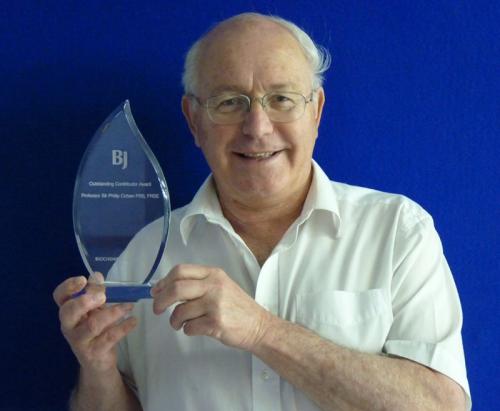
“Philip Cohen receives Outstanding Contributor Award from the Biochemical Journal”
This retraction joins another one for Alessi in Biochemical JournalMora et al 2005. In January 2025, Lizcano and Cohen retracted a paper in the same journal. Which is ironic given the fact that Alessi is this journal’s Associate Editor of many years, and he abused this position to publish 51 of his 121 last author articles there, since 1999. As it happens, another associate editor is Patrick Eyers, who is also a former and problematic PhD student of Cohen’s.
Even more ironic: in 2012, Cohen was honoured with the “Outstanding Contributor Award from the Biochemical Journal” because “the papers Philip and his research team have published in the Biochemical Journal have accumulated more than 10,000 citations, and this body of work alone has an H-factor of 37“.
This outstanding contribution by the journal’s editor Alessi was now corrected:
In January 2025, the University of Dundee informed on PubPeer:
“Analysing original data from experiments used to generate the figures presented in the publication supports the published findings and we found that the reported concerns are the result of errors that occurred during figure construction. The findings and conclusions of the publication are not affected.”
Also the correction was dated 1 April 2025, excerpt:
“It has come to the attention of the authors […] that there was a partial duplication of Western blots in Figures 2 and 7, and also a duplication within Figure 2. These were unintentional errors made during the assembly of the Figure. Corrections have been provided for Figures 2 and 7, consistent with the raw data.”
There are too many “unintentional errors” in Alessi’s papers. Even if he didn’t introduce them him himself, it still makes his science, and his qualifications as professor and institute director, more than questionable.
But of course despite its financial woes, University of Dundee will most probably sack everyone else but Alessi.
A simple honest error
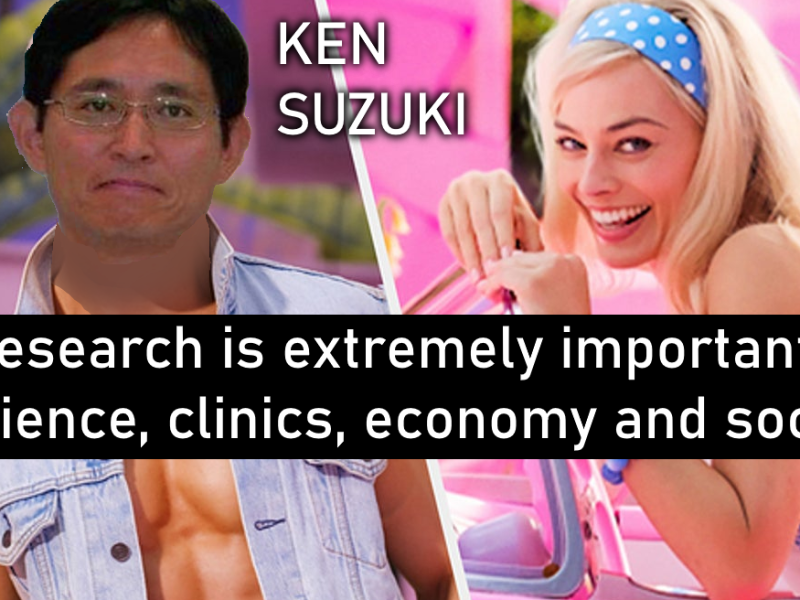
Ken Suzuki, cardiology professor at Queen Mary University London (QMUL), earns a retraction, and that despite QMUL refusing outright to investigate his papers. Read below and in October 2023 Shorts.
“The only difficult part might be deciding whether Ken has been intentionally deceptive or wildly incompetent, although the difference in practice doesn’t seem so important.” – Sholto David
Where the Great British university QMUL refused to do anything, a Japanese university ordered a retraction. Research fraud is apparently something which Brits carry with pride and Japanese carry with shame.
Mycosphaerella arachidis: “these should be two different experimental conditions, however I’m pretty sure there is an image of the same group of cells.” Fig S3C and S5C
Suzuki’s regular coauthor Manabu Shiraishi, formerly at Jichi Medical University in Japan, since 2012 research associate at QMUL, replied on PubPeer in July 2023:
“I confirmed that the sites noted were identical. However, this was not an intentional use, but a simple honest error due to the selection of the wrong folder during image selection. […] I believe this image mishandling does not affect the conclusions of the paper. I will formally request the FASEB Journal to replace the images in the Supplemental Figure.”
The sleuth then found more.
Mycosphaerella arachidis: “Supplementary Figure 1C: I think there is another overlap”
Mycosphaerella arachidis: “Figure 3F: I think the magnified insets are from the wrong panel.”
Shiraishi replied in July 2023:
“It is believed that there was a problem with the way the data was managed. I am currently looking into improvement steps in this matter and will consider appropriate action.”
“The authors report errors in assembling the versions of Figures 2C and 3F and supplemental figures that were provided for publication. The wrong images were inadvertently selected for the panels representing myocardium following HLR (HighE + TGFβ → LowE) in Figure 2C, the high-magnification panels representing normal myocardium (LowE → LowE) in Figure 3F, and some supplemental figures. [Correction added October 18, 2023; FighE + TGFβ → LowE was changed to HighE + TGFβ → LowE]. These errors do not affect the results and conclusions presented in the article. The authors apologize for any inconvenience these errors may have caused.”
This laissez faire attitude to fake science is perfectly common at the learned society FASEB and its journal, and even more so at QMUL.
But the Jichi Medical University, where the last author Atsushi Yamaguchi is (or maybe was) professor, saw things differently. The retraction arrived on 8 April 2025:
“The above article, published online on 01 March 2023, in Wiley Online Library (wileyonlinelibrary.com), and its erratum (https://doi.org/10.1096/fj.202301989), have been retracted by agreement between the authors; the journal Editor-in-Chief, Dr. Loren E. Wold, the Federation of American Societies for Experimental Biology, and Wiley Periodicals LLC. This retraction follows a previous erratum to correct image duplications in Figures 2 and 3 as well as Supplementary Figures 1, 3, and 5. The authors contacted the journal and requested retraction of their article following an investigation by Jichi Medical University, which has concluded that there was a lack of primary research data and corroborating evidence which could confirm the source of the errors and whether the experiments had been performed as described. The retraction was agreed to because the investigation performed by the university confirmed a lack of evidence to support the published erratum, and as such the errors in the article fundamentally compromise the editor’s confidence in the conclusions presented.”
It is not at all clear where Yamaguchi works now, Jichi Medical University doesn’t seem to list him anymore. But Shiraishi’s and Suzuki’s jobs at QMUL are safe as houses.
Moo taken a toll
The Iranian papermill fraudsterEhsan Kianfar earns a particularly silly retraction. Read about him here:
“Does this mean it’s time for an update on the bogus-citation economy? Leonid thought it is, and now you all must suffer for his misdirected priorities. ” – Smut Clyde
Here it is, the cheap papermiller Kianfar and a gang of his paying Iraqi customers, in an Elsevier journal with impact factor of 6, edited by Stavros Kassinos from University of Cyprus. According to the journal, this was supposed to be “scientifically sound, technically correct and provide valuable new knowledge“:
Yes, the papermill goes moo. There were other hilariously tortured phrases, like “electrostatic fascination”, “electrostatic repugnance”, “emphatically charged”, “overwhelming metals”, “particle trade”, “squander water”, “utilitarian bunches” and of course also “watery arrangement“. Plus we had “The data that has been used is confidential” and irrelevant self-citations to other trash by Kianfar.
“An investigation conducted on behalf of the journal by Elseviers Research Integrity & Publishing Ethics team found phrases that make some passages in the article difficult to parse. The authors were requested to explain the use of these passages of text but were unable to do so. The Editors have lost confidence in the findings of the article and have determined that it should be retracted.”
Among the top two percent of world scientists
A Nigerian prince one-man papermill earns some retractions, with surely many more to come. Meet Victor Sunday Aigbodion, professor of engineering and Industrial liaison officer at World Bank assisted Africa centre of excellence for sustainable power and energy development (ACE-SPED) at the University of Nigeria in Nsukka. He is also “among the top two percent of world scientists” and accordingly Aigbodion has currently over 130 papers on PubPeer, all hilariously fake and made-up. One does wonder: did this man ever do any actual research in a lab, at all?
These retracted papers, all in the same Springer Nature journal, and many others were flagged on PubPeer by Thomas Kesteman.
Thomas Kesteman: “Figure 4b in this paper is identical to figure 12a in a Chemical Papers (2024) paper, but describing different materials and different experimental conditions.”Nerita vitiensis: “All three subfigures (3A,3B,3C) also appeared in a SESAI 2024 conference paper with one author in common, seemingly describing the same experiment.”
Fig. 4b (120 °C) in this paper appears to overlap with Fig. 12a in a paper published previously by the same authors [1], despite representing different materials and experimental conditions.
Fig. 3c in this paper appears to overlap with Fig. 1b in a paper published previously by the same authors [2], despite representing different materials under different experimental conditions.
Fig. 3b in this paper appears to overlap with Fig. 2a in a paper published previously by the same authors [2], despite representing different materials and experimental conditions. The authors have failed to respond with a sufficient response to these concerns. The Editor has lost confidence in the data and conclusions of this article.
Author Victor Sunday Aigbodion has not explicitly stated whether he agrees or disagrees with this retraction. Authors Muncho Josephine Mbunwe, Agbo Alfred Ogbodo and Egoigwe Vincent Sochima have not responded to correspondence from the publisher regarding this retraction.”
Here another retraction, a paper reusing same data:
“The Editor-in-Chief has retracted this article. A number of image integrity concerns were raised by a third party, including:
Fig. 1f and 1i appear to have been edited and partially overlap, and describe different experimental conditions
Fig. 1a appears to overlap with Fig. 5b in an article under consideration at the same time [1], describing different material
The authors were unable to provide raw data or a sufficient response to the concerns. The Editor-in-Chief has lost confidence in the data and conclusions of this article.
Author Victor Sunday Aigbodion disagrees with this retraction.”
“Figure 9b is identical to figure 5a in a Chemistry Africa (2024) paper, and to figure 5 in a Chemical Papers (2023) manuscript, but present different materials”“Figure 9d is identical to figure 2a in a Chemistry Africa (2023) manuscript, but present different materials”“Figure 1 in a Chemical Data Collections (2022) paper overlaps with figure 3 in this paper, but presenting electrodes made of different materials.”
“The Editor-in-Chief has retracted this article. A number of image integrity issues were raised by a third party, between this article and several articles published before or under consideration at the same time. Specifically:
Figure 3 of this article appears to overlap with figure 1 in a previously published paper with some shared authors [1] presenting electrodes made of different materials.
Figure 9b appears to overlap with figure 5d in two papers under consideration at the same time [2, 3].
Figure 9c appears to overlap with figure 2a in [4], and to figure 3a in [5] presenting different materials.
Figure 9 d appears to overlap with figure 9a in [6], presenting different materials.
The authors have not provided a sufficient response to these concerns. The Editor has lost confidence in the data and conclusions of this article.”
Thomas Kesteman: “The four panels of figure 2 are identical to those in figure 2 of a Surfaces and Interfaces (2019) paper presenting different samples”
“The Editor-in-Chief has retracted this article. Figure 2 panels a–d appear to overlap with Fig. 3, panels a–d of a previously published article by one of the same authors [1]. Figure 2b appears to overlap with Fig. 7b of a previously published article [2]. The authors did not provided a sufficient response to these concerns or the raw data upon request. The Editor has lost confidence in the data and conclusions of this article.”
Again, Aigbodion disagreed with this retraction. Finally, retraction Number 5 is something which might traumatise you:
Thomas Kesteman: “Figure 4 overlaps with figure 2 in a RSC Advances (2024) paper, but describing different materials.”“Figure 5c is a zoomed and stretched version of figure 11b in a Fuel Communications (2023) paper, but illustrating different kind of samples.”“Figure 3a in a Emergent Materials (2023) paper is also identical to figure 4 in this paper, but describing different samples of mild steel, treated differently.”
“Figure 3 is identical to figure 2 in a RSC Advances (2023) paper, but describing different materials.”“Most of the figures in a Chemical Data Collections (2023) paper are identical to those in this paper from the same authors, but are presented as original data. Bizarrely, some labels in the XRD spectra and error bars in bar charts have been modified.”“Figure 7 in a Chemical Data Collections (2023) paper is identical to figure 7 in this paper, as explained earlier, but they are also identical to figure 13 in a Chemical Data Collections (2020) paper from the same author but presenting the analysis of a different material.”
Thomas Kesteman: “The same images were used in many different manuscripts by the same author and presented differently […] Excepted the 13th paper in the list, VS Aigbodion is a co-author of all papers
These are the descriptions in 14 papers, as noted by Thomas Kesteman, the relevant retracted one is Nr 3:
So here is Aigbodion’s fifth retraction from 14 April 2025:
“The Editor-in-Chief has retracted this article. A number of image integrity issues were raised by a third party, in different articles sharing some of the same authors, either published earlier or under consideration at the same time. Specifically:
A panel in Figure 1 appears to be similar to a number of panels in different articles, sometimes depicted with different spectra. This includes Figure 2 of [1], Figure 1 of [2], Figure 1 of [3], Figure 6 of [4], Figure 2 of [5], Figure 2 of [6].
Figure 4 appears to overlap with Figure 2 in [7], Figure 3a in [8] and Figure 2 in [9].
Figure 7 appears to overlap with Figure 7 in [10] and Figure 13 in [11].
Figure 11c appears to overlap with Figure 5b of [12] with editing, showing different samples.
The authors are unable to provide a sufficient response to concerns. The Editor-in-Chief has lost confidence in the data and conclusions of this article.”
Let me show you some more examples of Aigbodion’s amazing research. Here a paper in the same journal, likely to be soon retracted:
Thomas Kesteman: “The same figure was used in different papers to illustrate different kind of carbon nanotubes (CNT) […]Excepted the 8th paper in the list, VS Aigbodion is a co-author of all papers
These are the descriptions in 10 papers, as noted by Thomas Kesteman:
And so on. Worth mentioning that Kesteman wasn’t investigating this Nigerian papermill alone:
Nerita vitiensis: “The same photograph was used in different papers to illustrate at least three different materials (carbonized eggshell, carbonized cow bone, carbonized cassava cortex) […] All papers are from the same team.”
These are the descriptions in the 8 papers, as noted by the sleuth Nerita vitiensis:
As you know, Trump recently installed the psychopath and drug addict Robert F Kennedy Jr as Secretary of Health. RFK Jr is already doing what he is best at: spouting antivaxxery and causing epidemics of vaccine-preventable deadly diseases.
“David Geier is the ideal fit to the purposes of RFK Jr. For the only reliably loyal underlings are incompetent ones who know they have no future anywhere else. ” – Smut Clyde
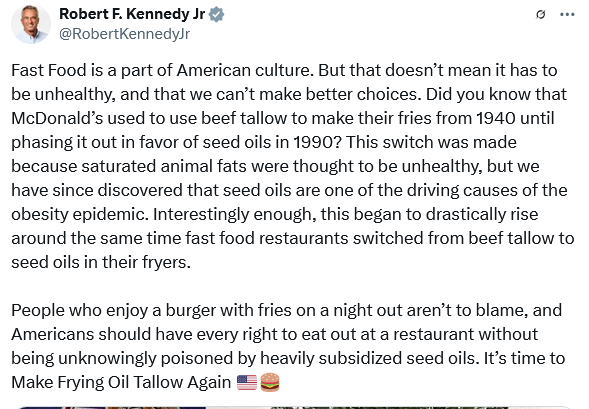
But RFK Jr has other interests besides antivaxxery and medical quackery. He also believes that seed oils from sunflowers, canola, soy or linseed kill people.
Since then, RFK Jr’s claims about seed oils have been criticised as anti-science. And they of course are. But you must never underestimate the propensity of dishonest professors to suck up to industry money and political power. Years ago, the Temple University cheater Domenico Pratico published claims about canola oil being deadly, as compared to the good, healthy Italian olive oil. Read here:
And right now, another science goblin arrived to impress RFK Jr and Trump. In Science no less. Here is the press release by Weill Cornell from 1 April 2025, and it is not satire:
“Linoleic acid, an omega-6 fatty acid found in seed oils such as soybean and safflower oil, and animal products including pork and eggs, specifically enhances the growth of the hard-to-treat “triple negative” breast cancer subtype, according to a preclinical study led by Weill Cornell Medicine investigators. The discovery could lead to new dietary and pharmaceutical strategies against breast and other cancers. […]
“This discovery helps clarify the relationship between dietary fats and cancer, and sheds light on how to define which patients might benefit the most from specific nutritional recommendations in a personalized manner,” said study senior author Dr. John Blenis, the Anna-Maria and Stephen Kellen Professor of Cancer Research in the Department of Pharmacology and a member of the Sandra and Edward Meyer Cancer Center at Weill Cornell Medicine.”
David Sabatini, remember that story? Well, it seems the conclusions were not affected. I take an ill-informed look at the mTOR signalling research field, to understand how photoshopped data gets to be independently verified by other labs.
The press release was of course picked up by the global media, citing Blenis’s warnings against linoleic acid and thus seed oils. This is the Science paper which will sure impress RFK Jr:
The study was already criticised on PubPeer for its allegedly false assumptions about the protein structure of FABP5 and its presumed interaction with linoleic acid.
This may have had health consequences
In Germany, a 71 year old chemistry professor named Dieter Schinzer discovered a cure for cancer, and it has to do with goat manure. Very fittingly for his University of Magdeburg.
Ashutosh Tiwari’s scamference activities continue. Now the University of Magdeburg in Germany is very excited about a medal from the International Association of Advanced Materials.
Also in this case, the press release was issued on 1 April 2025:
“Chemists at Otto von Guericke University Magdeburg have succeeded for the first time in synthetically recreating the naturally occurring substance, Disorazol Z1, by using a highly efficient process. With the world’s first total synthesis of this highly active natural compound, the team led by Senior Professor Dr. rer. nat. habil. Dieter Schinzer from the Institute of Chemistry has, by its own account, achieved a scientific breakthrough.
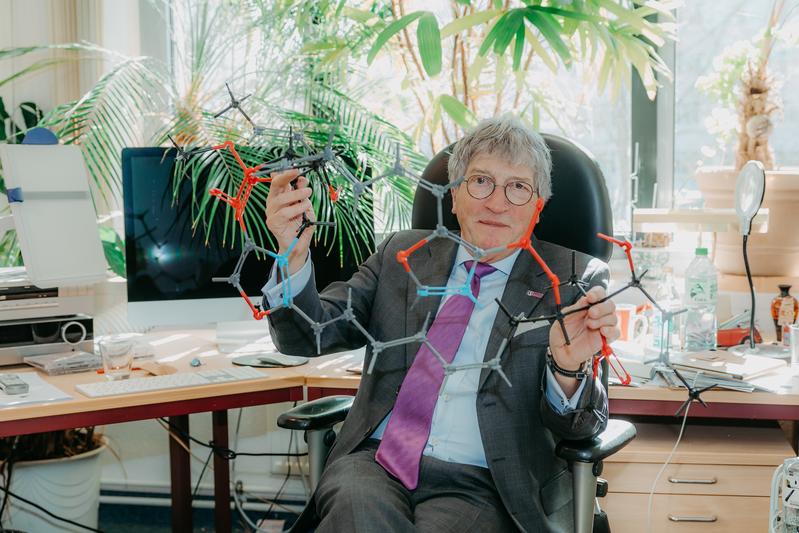
“Prof. Dieter Schinzer with the model of the disorazole molecule. | Quelle: Jana Dünnhaupt | Copyright: Uni Magdeburg”
Disorazol Z1 is among the planet’s most active cytotoxic compounds, in other words it is able to prevent the division of human and animal cells to a high level of effectiveness as well as to destroy cells. The natural substance is produced by myxobacteria, which are prevalent worldwide and frequently occur in organic wastes such as goat manure. […] “The substance is extremely active,” explains Professor Schinzer. “We are talking about picomolar concentrations, that is, twelve zeros after the decimal point. That is why, for safety reasons, we initially only manufactured two milligrams and took strict safety precautions – using gloves, face masks and closed fume cupboards. Had we produced larger quantities, this may have had health consequences. […]
The major medical optimization task is to change the molecule so that it first attaches itself to a certain protein, an antibody, and thus can be guided specifically to the tumor. Then the active substance is released and selectively impedes the division of the tumor cells. The scientist explains that cell death, known as apoptosis, will only occur where it is desirable in future. “In collaboration with industrial partners, the substance will now be developed further so that it targets cancer cells, while healthy cells are largely spared.” […] The project was financed from state funds as well as by the European Fund for Regional Development (EFRD). Overall, funding amounted to around 1.7 million euros.”
German media, including the nation-wide Focus magazine, swiftly celebrated the “breakthrough”.
This is the relevant paper which will save humanity, it was published in MDPI in March 2025, 20 days after submission:
Luca Lizzadro , Oliver Spieß , Silke Reinecke , Marc Stadler , Dieter Schinzer Synthesis of a Non-Symmetrical Disorazole C-Analogue and Its Biological Activity Molecules (2024) doi: 10.3390/molecules29051123
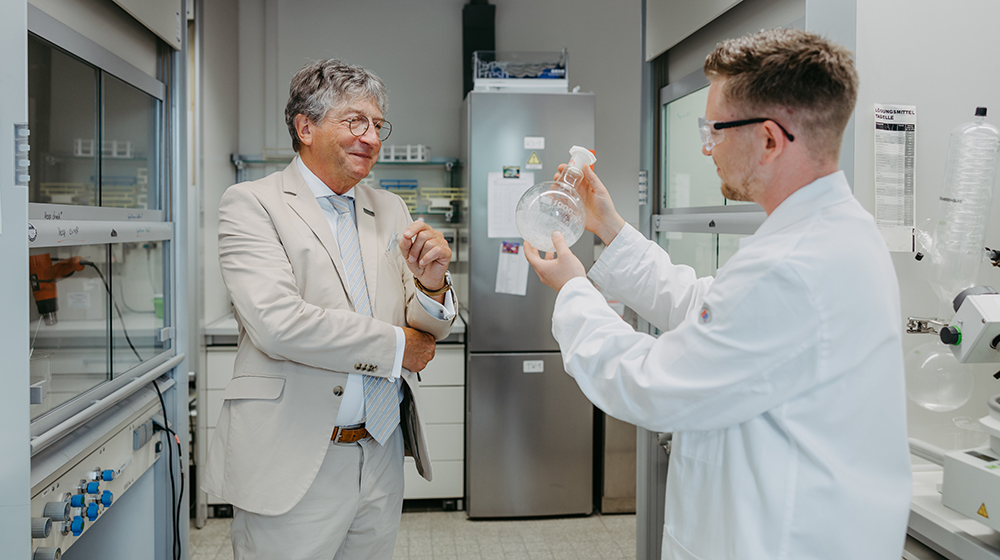
“Prof. Schinzer looks at the work of a young scientist in the laboratory” (Photo: Jana Dünnhaupt / University Magdeburg)
The silly cancer breakthrough hype aside, if Schinzer’s chemical achievement of disorazole synthesis was so revolutionary, why did it end up in MDPI? In a special issue no less, titled
“A Themed Issue in Honor of Professor Ari Mauri Petri Koskinen’s Retirement”
In May 2021, Schinzer made big news for having synthesised vegan cholesterol for COVID-19 mRNA vaccines. The relevant paper Munt et al 2023 took two more years until February 2023 to get published, and it came with the message:
“This paper is dedicated to Prof. Dr. Manfred T. Reetz on the occasion of his 80th birthday”
Now I wonder, what amazing medical breakthroughs await us very soon in a possible MDPI special themed issue In Honor of Professor Dieter Schinzer’s Retirement? And what even bigger surprises await us in merely 8 years, dedicated to Prof. Dr. Dieter Schinzer’s on the occasion of his 80th birthday?
Revivification
Science knows no limits to silliness.
And Guardian delivers it to you completely irony-free. Behold, an article from 8 April 2025, titled “The composer still making music four years after his death – thanks to an artificial brain“:
“In a darkened room, a fractured symphony of rattles, hums and warbles bounces off the walls – like an orchestra tuning up in some parallel universe. But there’s not a musician in sight.
If you look closely there is a small fragment of a performer. Albeit one without a pulse.
In the centre of the room, visitors hover around a raised plinth, craning to glimpse the brains behind the operation. Under a magnifying lens sit two white blobs, like a tiny pair of jellyfish. Together, they form the lab-grown “mini-brain” of the late US musician Alvin Lucier – composing a posthumous score in real time. […]
Revivification is the work of a self-described “four-headed monster”, a tight-knit team of scientists and artists who have spent decades pushing the boundaries of biological art – namely Thompson and his fellow artists Guy Ben-Ary and Matt Gingold, alongside a neuroscientist, Stuart Hodgetts.”
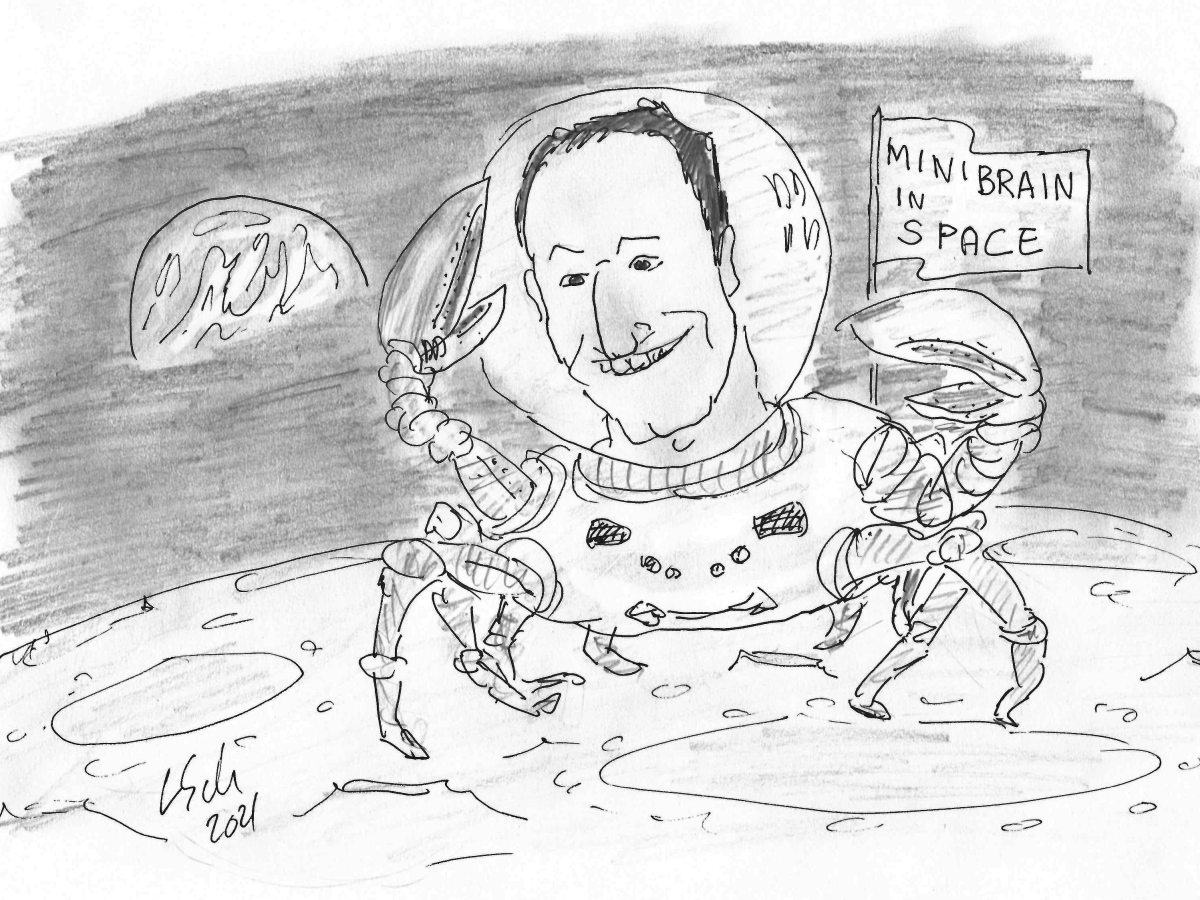
Autistic Neanderthal minibrains operating crab robots via brain waves of newborn babies are to be launched into outer space for the purpose of interstellar colonization. No, I am not insane. Science Has Spoken.
Lucier died in 2021 aged 90, having agreed the previous year to donate some blood to this Revivication project. Stuart Hodgetts, associate professor at the University of Western Australia (which hosts the Revivication art performance), generated iPS cells from Lucier’s blood, and differentiated them into neural organoids, the so-called minibrains. The Guardian narrates:
“Lucier’s organoids were grown on to a fine mesh of 64 electrodes, developed with a German bioengineer, allowing neural signals to be captured from multiple layers – much like a developing brain. Gingold then adapted an open-source platform to interpret this activity and generate sound, turning the artificial brain into a live, responsive performer.
Importantly, Lucier’s organoids don’t just produce sound – they also receive it. Microphones in the gallery pick up ambient noise, including human voices and the resonant tones of the plates, and that audio data is converted into electrical signals and fed back into the brain. “We’re very interested to know whether the organoid is going to change or learn over time,” Ben-Ary says.”
Of course, they could create the same kind of random noise music by tying electrodes to a piece of cheese.
Donate!
If you are interested to support my work, you can leave here a small tip of $5. Or several of small tips, just increase the amount as you like (2x=€10; 5x=€25). Your generous patronage of my journalism will be most appreciated!
€5.00
Donate!
If you are interested to support my work, you can leave here a small tip of $5. Or several of small tips, just increase the amount as you like (2x=€10; 5x=€25). Your generous patronage of my journalism will be most appreciated!
Teik K. Ho, Janice Tsui , Shiwen Xu , Patricia Leoni , David J. Abraham , Daryll M. Baker Angiogenic effects of stromal cell-derived factor-1 (SDF-1/CXCL12) variants in vitro and the in vivo expressions of CXCL12 variants and CXCR4 in human critical leg ischemia Journal of Vascular Surgery (2010) doi: 10.1016/j.jvs.2009.10.044
This masterpiece was successfully corrected in November 2015
Another vascular surgery professor Janice Tsui and professor David J Abraham masterpiece *with quite a lot of errors) also successfully corrected in 2015. Mission accomplished!
PubPeer – Thrombospondin 1 is a key mediator of transforming growth fa…
Erratum to: Thrombospondin 1 is a key mediator of transforming growth factor b-mediated cell contractility in systemic sclerosis via a mitogen-activated protein kinase kinase (MEK)/extracellular signal-regulated kinase (ERK)-dependent mechanism | Fibrogenesis & Tissue Repair | Full Text
After publication of this work [1], the authors became aware of some errors in the figures with respect to the loading controls for the western blots in Figure Two panel A (Figure 1 here), Figure Five panel B (Figure 2 here) and Figure Six panel A (Figure 3 here). These errors were due to genuine mistakes in generating the figures from templates and incorrect cropping of the western blot X-ray film images. These errors had no impact on the scientific conclusions of the article. The experiments reported in these figures have been repeated and new images produced.
That should be without professor Janice Tsui, but with Dame Carol M Black.
Carol Black (rheumatologist) – Wikipedia
She was President of the Royal College of Physicians from 2002 to 2006, advised the British Government on the relationship between work and health from 2006 to 2016, and was Principal of Newnham College, Cambridge, from 2012 to 2019.
After eight years in an NHS general hospital as a consultant, Black opted for a move back into academic rheumatology by taking a job at the Royal Free teaching hospital in Hampstead,[1] later becoming a professor and then the hospital’s medical director.
PubPeer – Search publications and join the conversation.
Government advisor and government grants to the institution of which she was formerly medical direct sounds interesting.
Professor Wenhui Song, Head of the UCL Centre for Biomaterials in Surgical Reconstruction and Regeneration at the Royal Free Campus, said: “We are thrilled that this award will enable us to continue designing and synthesizing advanced smart materials and intelligent sensors.
“Those flexible, smart fibres and sensors will be integrated into robotic systems to assist independent living and enhance quality of life for our growing aging population.”””
More problematic data comes to light for Dame Carol M Black and professor David J Abraham, UCL, in the already heavily corrected
Fibrogenesis Tissue Repair . 2011 Mar 31;4(1):9.
doi: 10.1186/1755-1536-4-9.
Massimo Pinzani is a Professor of Medicine, clinical hepatologist, Director of the UCL Institute for Liver and Digestive Health and the Sheila Sherlock Chair of Hepatology at UCL.
He is currently Editor in Chief of “Fibrogenesis&Tissue Repair”, on open access journal aimed at bringing new acquisitions in the area of fibrogenesis, repair and cancer across different areas of Medicine.
Has anyone been able to infer what the “moo” stuff was meant to convey (in English)? Also, re: Revivification, I’ve been awaiting the day that organoids would make seances possible.
Concomitant increases in CO2 and temperature resulted in a synergistic increase of inorganic arsenic in rice grain. The observed increase is likely to be related to changes in soil biogeochemistry that favoured reduced arsenic species. Modelled consumption of rice under these conditions resulted in projected increases in inorganic arsenic exposure and lifetime cancer and health risks for multiple Asian countries by 2050.’
Self regulating? With arsenic in food? The California wildfires are self-abating, too. Exhaust their own fuel. Yes climate change will “fix itself” maybe millions of years after we’re all dead.
























 For Better Science
Teik K. Ho, Janice Tsui , Shiwen Xu , Patricia Leoni , David J. Abraham , Daryll M. Baker Angiogenic effects of stromal cell-derived factor-1 (SDF-1/CXCL12) variants in vitro and the in vivo expressions of CXCL12 variants and CXCR4 in human critical leg ischemia Journal of Vascular Surgery (2010) doi: 10.1016/j.jvs.2009.10.044
This masterpiece was successfully corrected in November 2015
Another vascular surgery professor Janice Tsui and professor David J Abraham masterpiece *with quite a lot of errors) also successfully corrected in 2015. Mission accomplished!
PubPeer – Thrombospondin 1 is a key mediator of transforming growth fa…
Erratum to: Thrombospondin 1 is a key mediator of transforming growth factor b-mediated cell contractility in systemic sclerosis via a mitogen-activated protein kinase kinase (MEK)/extracellular signal-regulated kinase (ERK)-dependent mechanism | Fibrogenesis & Tissue Repair | Full Text
After publication of this work [1], the authors became aware of some errors in the figures with respect to the loading controls for the western blots in Figure Two panel A (Figure 1 here), Figure Five panel B (Figure 2 here) and Figure Six panel A (Figure 3 here). These errors were due to genuine mistakes in generating the figures from templates and incorrect cropping of the western blot X-ray film images. These errors had no impact on the scientific conclusions of the article. The experiments reported in these figures have been repeated and new images produced.
4 years after publication and no original data!
LikeLike
That should be without professor Janice Tsui, but with Dame Carol M Black.
Carol Black (rheumatologist) – Wikipedia
She was President of the Royal College of Physicians from 2002 to 2006, advised the British Government on the relationship between work and health from 2006 to 2016, and was Principal of Newnham College, Cambridge, from 2012 to 2019.
After eight years in an NHS general hospital as a consultant, Black opted for a move back into academic rheumatology by taking a job at the Royal Free teaching hospital in Hampstead,[1] later becoming a professor and then the hospital’s medical director.
PubPeer – Search publications and join the conversation.
Government advisor and government grants to the institution of which she was formerly medical direct sounds interesting.
Professor Wenhui Song, Head of the UCL Centre for Biomaterials in Surgical Reconstruction and Regeneration at the Royal Free Campus, said: “We are thrilled that this award will enable us to continue designing and synthesizing advanced smart materials and intelligent sensors.
“Those flexible, smart fibres and sensors will be integrated into robotic systems to assist independent living and enhance quality of life for our growing aging population.”””
LikeLike
More problematic data comes to light for Dame Carol M Black and professor David J Abraham, UCL, in the already heavily corrected
Fibrogenesis Tissue Repair . 2011 Mar 31;4(1):9.
doi: 10.1186/1755-1536-4-9.
https://pubpeer.com/publications/FCF8AC52C33CCEB2770BAA4C0AF1E7#14
Perhaps the paper should have been retracted in the first place, but that would never do as the founding editor-in-chief was at UCL.
https://www.ucl.ac.uk/inflammation-tissue-repair-fibrosis/academic-experts/pinzani-massimo
Massimo Pinzani is a Professor of Medicine, clinical hepatologist, Director of the UCL Institute for Liver and Digestive Health and the Sheila Sherlock Chair of Hepatology at UCL.
He is currently Editor in Chief of “Fibrogenesis&Tissue Repair”, on open access journal aimed at bringing new acquisitions in the area of fibrogenesis, repair and cancer across different areas of Medicine.
LikeLike
More problematic data comes to light for Dame Carol M Black and professor David J Abraham, UCL, in the already corrected
J Cell Sci 2008 Oct 15; (Pt 20):3459-67.
PubPeer – Loss of protein kinase Cepsilon results in impaired cutaneou…
LikeLike
Has anyone been able to infer what the “moo” stuff was meant to convey (in English)? Also, re: Revivification, I’ve been awaiting the day that organoids would make seances possible.
LikeLike
In any case, if you reprogram a dead composer’s cells into intestine organoids, you could listen to a deceased artist’s farts.
LikeLike
Moo is used as a substitute for low, because apparently low as a verb means ‘to make a low sound’ and thus is a synonym to ‘moo’ 😀
LikeLike
Don’t miss:
NEWS FEATURE
15 April 2025
Exclusive: the most-cited papers of the twenty-first century
A Nature analysis reveals the 25 highest-cited papers published this century and explores why they are breaking records.
https://www.nature.com/articles/d41586-025-01125-9
No Vickers… so sad!
LikeLiked by 1 person
Fresh problematic data for surgery professor Janice Tsui.
https://pubpeer.com/publications/50C938CAAC2A39C1BAC67B4BED471B
LikeLike
Science Breakthrough
Man made climate change somewhat self regulating!
Impact of climate change on arsenic concentrations in paddy rice and the associated dietary health risks in Asia: an experimental and modelling study
https://www.thelancet.com/journals/lanplh/article/PIIS2542-5196(25)00055-5/fulltext
‘Findings
Concomitant increases in CO2 and temperature resulted in a synergistic increase of inorganic arsenic in rice grain. The observed increase is likely to be related to changes in soil biogeochemistry that favoured reduced arsenic species. Modelled consumption of rice under these conditions resulted in projected increases in inorganic arsenic exposure and lifetime cancer and health risks for multiple Asian countries by 2050.’
LikeLike
Self regulating? With arsenic in food? The California wildfires are self-abating, too. Exhaust their own fuel. Yes climate change will “fix itself” maybe millions of years after we’re all dead.
LikeLike