Schneider Shorts 3.01.2025 – A flagship of science on the entire continent and in the whole world
Schneider Shorts 3.01.2025 - a Nobelist who never cared about money is dead, a board certified dermatopathologist fights hybrid attacks, with a russian papermiller in Kazakhstan, salami publishing, an unexpected retraction for a German biotech, and finally, with the most shameless corrections so far.
Schneider Shorts of 3 January 2025 – a Nobelist who never cared about money is dead, a board certified dermatopathologist fights hybrid attacks, with a russian papermiller in Kazakhstan, salami publishing, an unexpected retraction for a German biotech, and finally, with the most shameless corrections so far.
Fraser Stoddart, who used to sign his emails as “Sir Fraser Stoddart 2016 Nobel Laureate in Chemistry” died on 30 December 2024 aged 82, according to obituaries while on holiday in Australia. In September 2023, the Nobelist abandoned his Northwestern University in USA for the University of Hong Kong in China (he very unlikely physically relocated though). Rumours reached me that the main reason for this remote job was their enormous salary, which Sir Fraser unfortunately can’t take with him into the afterlife now.
Next to the Nobel Prize, Sir Fraser Stoddart had many other achievements. Let’s celebrate some of them.
Since 2010, Sir Fraser was Editor-in-Chief of the journal Applied Nanoscience, which is owned by the Saudis and published by Springer Nature. It consists of fraud and papermill garbage, but when Sir Fraser was alerted to it by Nick Wise in 2022, he brusquely reacted with: “My role at Applied Nanoscience was purely honorary. And unpaid! I have never set my eyes on any publications in the journal.” And suddenly, he was listed only as “Former Editor-in-Chief” (read this February 2022 article). Sir Fraser reiterated this attitude in his July 2022 email to another reader, who informed him that several asscoiate editors of Applied Nanoscience were outright fraudsters, in particular Ahmed Shalan: “Sorry but I cannot offer any help on this matter. I only ever occupied an HONORARY position with Springer and I relieved myself of that position some considerable time ago.” Most likely, Sir Fraser was dishonest about working for the Saudis unpaid. In any case, his journal was delisted by Clarivate in April 2024, the publisher announced a “holistic” investigation. Shalan remains associate editor, and so do other fraudsters and papermillers.
In 2017, right after receiving his Nobel prize, Sir Fraser set up an anti-aging company called Nobel Panacea to sell skin care products (read February 2023 Shorts). The magic was delivered by his patented “Organic Super Molecular VesselTM” technology which includes of course resveratrol, but also cocoa, caffeine, green and black tea, acai and goji berries, malachite, “pre and post biotics” and (whatever that is supposed to be) – orchid and orange “stem cells”! According to Sir Fraser, it is based on the “truth by scientists” like him and Einstein, as well as by Picasso, Beethoven and Dickens, and: “Noble Panacea means a universal cure of high moral excellence. It means to think beautifully.“. We can rest assured that should Sir Fraser have used his Nobel panacea skincare himself, he must have now left behind a very beautiful and youthful corpse indeed.
In 2018, Sir Fraser honoured a FLOGEN SIPS predatory conference by the scamferencier Florian Kongoli (read about him in November 2024 Shorts). After that, Kongloli started to peddle a Stoddard International Award to characters like KaterinaAifantis and whoever else joined his scamference. Read for background the investigation by Pepijn van Erp.
In 2020, Sir Fraser, his colleagues and the Science EiC Holden Thorp issued a highly dishonest stealth correction for an obviously forged figure in this paper, read the article below:
As one Nobelist retracted her Science paper, another Nobelist has stealthily corrected his. The correction opens new dimensions of probabilities and is indeed best kept hidden.
In 2021, Sir Fraser followed his fellow 2016 Nobel Prize co-recepient Jean-Pierre Sauvage, and gave a long interview to the russia-based Ukrainian papermill Big Time. Sauvage and other duped Nobel laureates eventually admitted to have given those interviews to Big Time’s owner Zvansky, only Sir Fraser angrily insisted in his emails to me: “I never agreed to collaborate with this organization. END OF STORY!” and “I don’t recall having this interview. NO MORE E-MAILS PLEASE!!!!!!!!!!!!!!!!!!!!!!!!!!!!!”“. Read here:
“I never agreed to collaborate with this organization. END OF STORY!” – Sir J Fraser Stoddart “I do not know what your business is, and I find the email below highly offensive.” – Morten Meldal
Having accepted the job in Hong Kong in September 2023, Sir Fraser defended the University of Hong Kong president and vice chancellor Zhang Xiang when the latter was under investiagtion for misconduct. Zhang was accused by whistleblowers of taking a donation from a Chinese company sanctioned by USA over forced labour of Uyghur prisoners. He was also accused of having “recruited a US head-hunter without following procurement procedures to hire a medical dean and a vice-president, as well as misappropriated school funds for renovation work“, for all of that Zhang was later completely whitewashed. Maybe also because the newly recruited Sir Fraserpublished open letters expressing his “unfettered and unequivocal support for Zhang” and protesting against that “little storm in a teacup“. Sir Fraser also said: “I think organizations often have small windows to attract top talent and if they follow the rules and use Google search, they may lose the desired individuals“, and: “Anonymous letters and e-mails are not worth listening to, much of which are probably fabricated“.
Ethics was obviously never Sir Fraser’s strong feature.
Science Elites
Hybrid activity against the USA
Meet Andrzej Slominski, dermatology professor at the University of Alabama in Birmingham, USA. who probably used to be a dialectics debate champion in his school back in communist Poland.
The penultimate author of this paper is Russel Reiter, a Highly Cited Researcher of University of Texas, San Antonio. He was previously seen papermilling with the Iranians (see April 2024 Shorts) and editing silly papers about mitochondria, read here:
“I am not angry with the post-publication surgery that the publisher performed on the affected papers after discovering the shenanigans, scrubbing off the names of spurious reviewers. Just very disappointed.” – Smut Clyde
Reiter is also also the Founding Editor of the Journal of Pineal Research where this oncological study about melatonin was published. It was flagged on PubPeer by René Aquarius in May 2024:
René Aquarius: “Dear authors, We read your study and found overlaps between several figures” (Fig 2)
In November 2024, Slominski replied on PubPeer:
“I reviewed the marked by you sections and as a board certified dermatopathologist I can see certain similarities by not the duplications. This would be expected from serial sectioning the skin with following use of the IHC. […] I do not see any evidence for manipulation with images. Can you be more specific.“
Fig 6
The user Illex illecebrosus provided overlay animations and and another user, Liebstadia humerata, asked about Figure 6 “How reliable are the spliced blots ?”.
Slominski again insisted that in the microscopy images “these were not duplications, and there are differences” and “these were only representative images” to illustrate the quantifications which “were highly significant“, and “the conclusions and data are solid“.
Then he admitted something strange: “that 7-6 years ago the reviewers” noticed the duplications yet never really insisted on replacement figures “to avoid future and potentially never ending discussion“. But:
“We would love to correct the panel as an erratum. But it would be difficult to find the images after so many years.”
On his ridiculous western blots, Slominski explained that “they are reliable and data are strong. They follow the standard protocols accepted for WB presentation […] This is acceptable for most high impact factor journals, and was accepted by reviewers of this journal“. He ended with:
“Thank you for your attention and opportunity to clarify for non-expert in molecular and WB techniques. For curiosity, do I discuss with AI or human administrator“
Once assured that Rene Aquarius was not a computer algorithm, Slominski once again blamed the duplications on the reviewers and in particular on the “editorial assistant” who failed to “screen and point weaknesses for possible corrections in advance“.
Another AI algorithm named Maarten van Kampen joined the PubPeer debate with some overlay animations, like this one:
Maarten van Kampen: “I must admit I am not dermatopathologist, nor certified. But I can tell that human and pig micrographs cannot come from consecutive slices. And I can also tell that the only difference between the images is a brightness adjustment”
Slominski was unconvinced:
“I see similarity but do not appreciate the that they are identical. Any such allegation must be beyond any doubt. Which is not in this case.“
In the same breath he again blamed the reviewers and the editorial assistant for failing to spot those duplications without AI assistance. Aquarius then said he found the duplications by eye. Slominski’s decision however was: “these data are more than 8 – 9 years old making it almost impossible to do correction.” When advised to retract the 6 year old paper, Slominski firmly stated:
“We cannot re-tract the manuscript because the data are solid, and will defend it“
His coauthor Reiter is the founding editor, the defence should be easy as pie.
Naturally, Slominski has more papers on PubPeer. Like this set of two papers, flagged in December 2024:
“There was no difference between ethanol with UVB and ethanol without uvb, and the images are representative only for this point“
Maarten found more:
“The actin band of Fig. 6(b) of the other paper shows a striking resemblance to the IVL band of Fig. 8(b) of this paper.”
“in Fig. 6(c) a region is duplicated:”
Slominski addressed the clearly copy-pasted western blots by accusing Maarten of fraud and harassment:
“No, they were not altered. Also, there is no duplication. […] Seeing the name of the current evaluator and incorrect evaluations, since you cannot manipulate autoradiogram collected on X-ray film, I conclude that the evaluator is biased against the authors.”
Eventually, Slominski agreed there was a duplication. But the biases he felt were not just against the authors (highlight mine):
“Thank you for pointing an erroneous duplication of one image between IJMS and FRBM. This will be corrected in the IJMS, which closes the case. I stop the discussion, because you are incorrect, we have the original wb files, which are correct as well as original autoradiograms I do not want to be used by hostile entity, which may be engaged in hybrid activity against the USA”
Slominski’s patriotic paranoia in face of uncovered fraud reminds me of two other Polish men, the papermilling vice rector Grzegorz Krolczyk and his rector Marcin Lorenc in Opole Polytechnic (read July 2024 Shorts).
Now we will see if an image of an autoradigraph can be manipulated. Coauthors on the following study are John A. D’Orazio, who was found guilty by University of Kentucky of having “fabricated data in at least four papers and two grant applications“, and Michael Holick, a quacking vitamin D shill about whom I wrote here:
So here is the paper by Slominski and these fine gentlemen, it was flagged for gel splicing, a concern most journal editors and academic authorities prefer not to take seriously:
Actinopolyspora biskrensis: “Could the authors please comment on the apparent splices in Figure 10B, although a splice seems to appear in a similar location on each band, they do not appear to be aligned.”
Slminski explained:
“These are there two blots run simultaneously and then combined. It is in the same position. […] The proteins were from the same experiment and separated simultaneously on two gels, because there was not enough space on the same gel.“
Actually, a standard gel comb has 15 pockets, quite enough for 13 samples and one marker lane, no need to run two gels. But then, Slominski was convinced to post unlabelled images of full gels. Observe what he eventually provided (arrows added by Pubpeer user:
Actinopolyspora biskrensis: “Dr. Slominski: The image you provided appears to show a splice, evidenced by the sharp change in contrast in the perimeter around the band.”
Yes, this autoradiography is a digital forgery. But Slominski insisted that the lines derive from the blot membrane edges, and his first author Anyamanee Chaiprasongsuk endorsed this ridiculous theory. Anyone who ever did a western blot knows that these explanation are nothing but shameless lies deployed to deny a falsification.
Other PubPeer threads of Slominski’s are collaborative studies, this one is from China, its other Polish coauthor Michal Zmijewski is vice-dean of the Medical University of Gdańsk:
René Aquarius: “Dear authors, We found unexpected overlaps between individual western blot bands in Figure 6”
No author ever educated the critics on how western blots work, but soon after the PubPeer comment, a Correction was issued on 5 October 2024:
“The authors regret < that during the assembly of Fig. 6C in the original manuscript, a wrong band (p-IκB-α) was inadvertently used due to the multitude of experimental groups. […] This correction does not change the scientific conclusions of the article in any way.”
Slominski also collaborated with the fellow Pole Konrad Kleszczyński at the University of Münster in Germany. Those works sometimes contain image duplications of this kind:
René Aquarius: “Dear authors, We found unexpected overlaps in Figure 6A”
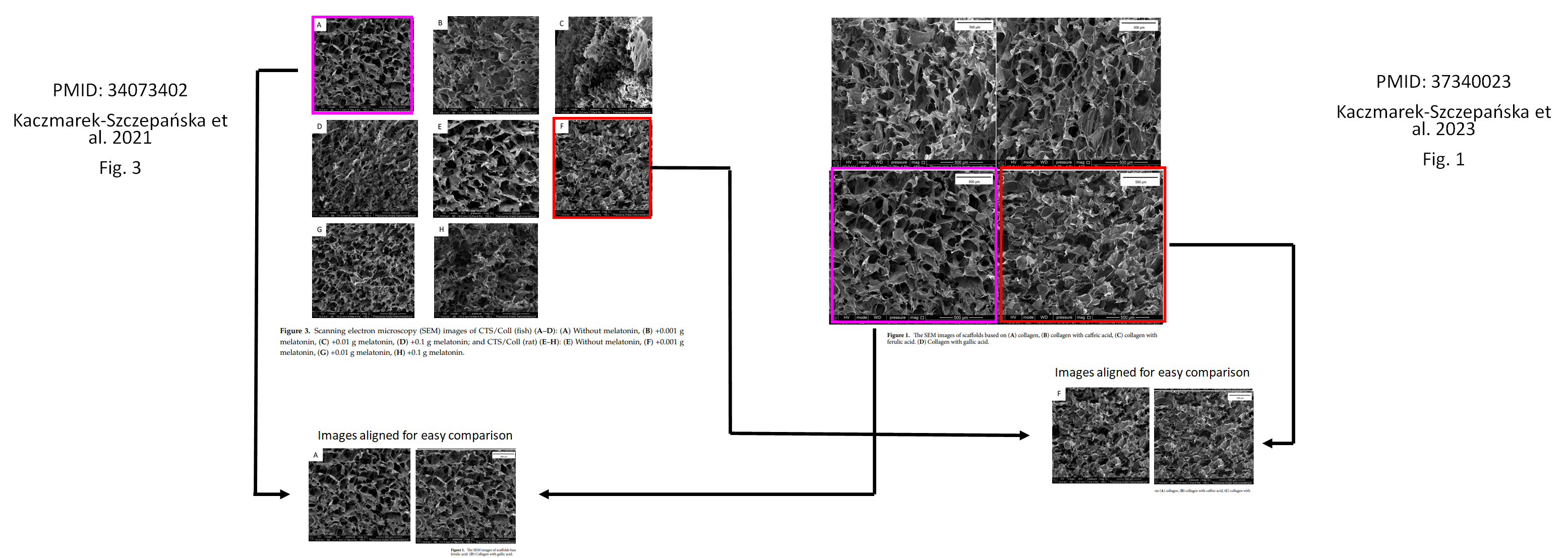
As on other PubPeer threads (for example, Bilska et al 2021 or Möller et al 2023), Kleszczyński explained the duplications with an “editorial mistake” which “was not intentional” and announced to issue a correction. Elsewhere, he was also very sure of his absolute knowledge and innocence, although the two papers have only one common author, and it’s not him but Kleszczynsky’s former PhD student Beata Kaczmarek-Szczepańska:
René Aquarius: “Dear authors, We read your study and found overlapping panels with another one of your studies”
Kleszczynski apologised “for this oversight” on “behalf of authors from the report in Sci. Rep. (2023)” (where he is not even coauthor!), and explained that “The Sci. Rep. authors (2023) made mistake preparing their panels” and that his 2021 paper is “correct“.
By the way, here an earlier case of bad science in Kleszczynski’s university:
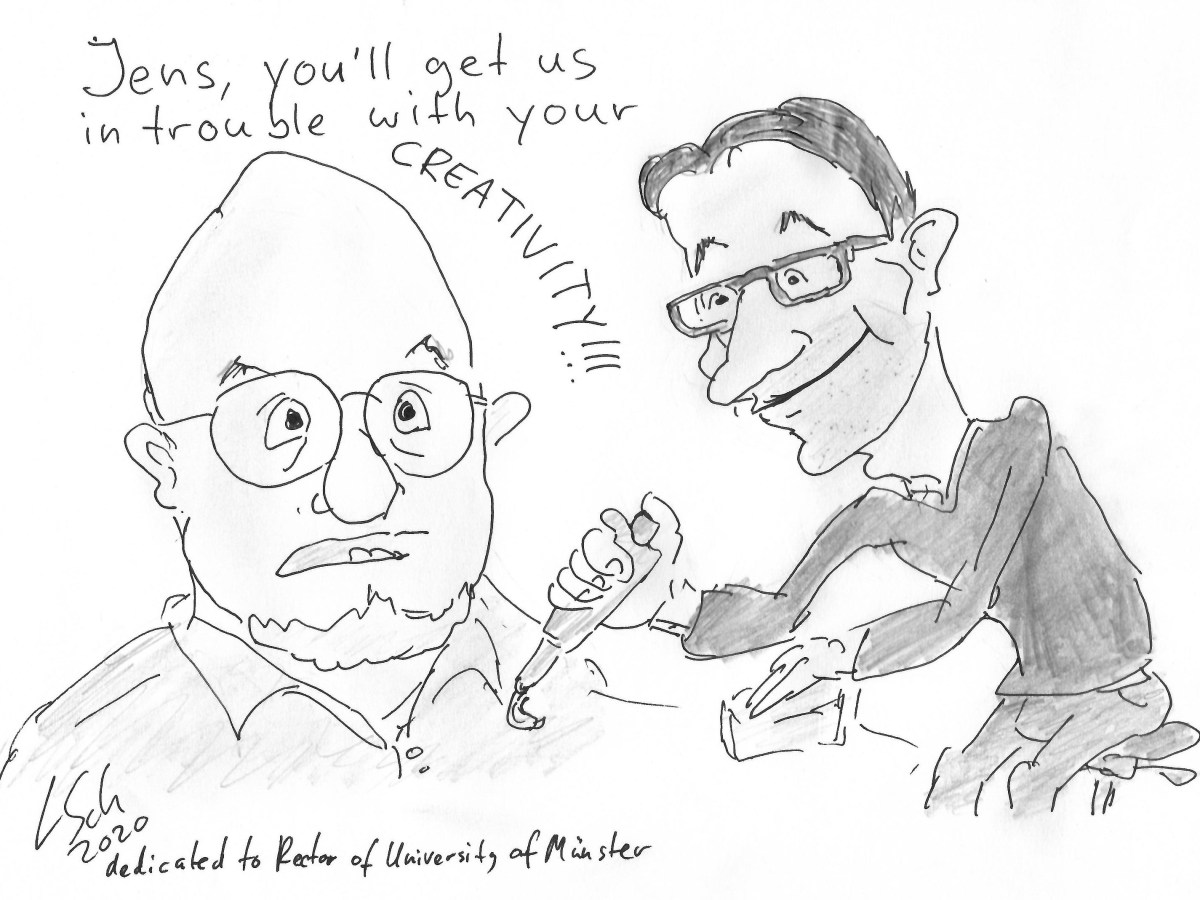
The University of Münster in Germany shows with a good example how to act on evidence of data manipulation. Neuroscientist Andreas Püschel has been found guilty of research misconduct. It was once again about a paper authored by his former PhD student and now Luxembourg stem cell researcher, Jens Schwamborn.
A flagship of science on the entire continent and in the whole world
We move to another patriot. Meet the science superstar of Kazakhstan, Maxim Zdorovets. In June 2024, The Eurasian National University celebrated his accession to the national Academy if Sciences (translated):
“Head of the Engineering Laboratory of the L.N. Gumilyov Eurasian National University, director of the Astana branch of the Institute of Nuclear Physics of the Ministry of Energy of the Republic of Kazakhstan, Maxim Zdorovets, was elected academician of the National Academy of Sciences of the Republic of Kazakhstan. […]
Maxim Zdorovets is a co-author of more than 300 scientific articles, h – index = 35, co-author of more than 20 patents. In his subject area, he is among the top 1% of authors of the most cited papers in the world. He was and is the leader of several scientific and applied projects and programs funded by the Republic of Kazakhstan, the IAEA and the ISTC.”
In 2023, Zdorovets was interviewed about his achievements and visions (translated):
“My dream is probably very unpredictable, but that’s why it’s a dream… I would really like that after some time my Motherland, Kazakhstan, in the global context is talked about not as a treasury of minerals, but as a flagship of science on the entire continent and in the whole world.”
Well, he almost achieved his dream. Thanks to this young genius, Kazakhstan may become a papermill superpower.
Zdorovets’s group in Kazakhstan consists almost exclusively of ethnic russians like himself. In fact, this is how Zdorovets was originally caught, via his connection to russian papermill fraudsters Alex and Sergei Trukhanov, based in Moscow and Minsk (Belarus). It started with this fabrication, featuring the Saudi papermill fraudster Munirah Almessiere:
Dysdera arabisenen: “Could the authors please confirm that the same data were reported in both papers? I did not find acknowledgment of re-using data with permission in the later paper.”
Planchonella sandwicensis: “Figure 3. (c) Unexpected artifacts in the XRD diffractogram.”
“In Figure 6(d) as well”
There were also datasets reused inside this paper and between its copy-cat Tishkevich et al 2019 by Zdorovets, the Trukhanov brothers, and other russians.
And of course there are also recycled electron microscopy images:
Planchonella sandwicensis: “Figure and 3 from this paper […] Was originally published elsewhere, seemingly under a different description and a different set of authors.”
A common giveaway in papermill fabrications are the misreported scanning electron microscope (SEM) devices, because papermill scribblers can’t be bothered to match the stolen images to their lies in the materials and methods section. Like here:
Conidens laticephalus: “SEM equipment is misreported. Figure 2 is produced by a Hitachi instrument (as is evident from the layout of the auto-generated legend), and not by a Philips one, as reported in the text.”
But Zdorovets doesn’t really need the Trukhanov brothers and their connections to oriental papermills in order to succeed. Most of Zdorovets’s massive PubPeer record is home-fabricated, in his lab in Kazakhstan. Like this:
Planchonella sandwicensis: “Figure 1 (c) x-ray diffractogram of test samples before and after modification.”
Or this, again by Zdorovets and his trusty associate Artem Kozlovskiy, chairman of the Kazakh National Scientific Council for “mineral and hydrocarbon raw materials”:
Planchonella sandwicensis: “In Fig. 6, parts of XRD patterns in 250 kGY and 149 kGy are more similar than one may expect for background noise (ca. 105 -150 degrees).”
Zdorovets’s pitbull Ilya Korolkov of the Institute of Nuclear Physics in Kazakhstan denied there was an issue, as he did on many other PubPeer threads:
“In our opinion, it is quite clear that the noises are different, even though they may appear somewhat similar. This becomes even more evident when analyzing a higher-quality image. Below, I have included a screenshot from the article, which is publicly available for download and reading.“
PubPeer user Actinopolyspora biskrensis pointed out that even in Korolkov’s image, “the blue and black spectra are more similar than would be expected”. Planchonella sandwicensis added that “above 100 degrees the noise in blue and black curves is identical” and “the black curve is slightly stretched in the vertical dimension“. Korolkov however kept denying the similarities, adding that “there is no point in inserting the same fragment of the diffractogram above 100 degrees, since there are no peaks in that area, and we could simply cut the diffractogram to 100 degrees if we were pursuing these goals.” Then, Maarten van Kampen extracted the vector format data and plotted the spectra in thinner lines, here is the overlay:
Maarten then pointed out that:
“This group of authors has 77(!) papers flagged on PubPeer for mostly image- and XRD duplications.
The authors managed to convince the editors that ‘technical errors’ were the reason for seemingly fabricated XRD patterns in this publication
In many other cases the authors simply deny that the curves are identical, see e.g. here, here, here, here, here, and here. The last of these papers is now retracted.
The authors have (at least) 5 papers retracted. One paper was retracted for double publishing. Four other papers where retracted for fraudulent XRD spectra, 1, 2, 3, and 4.“
Actually, 3 more retractions arrived for Zdorovets at the time of writing, all in the journal High Energy Chemistry and issued in late December 2024, for Shimas et al 2017, Kozlovskiy et al 2017 and Kozlovskii & Zdorovetsa 2019 (where both names were spelled wrong because cheap papermill). All 3 retraction notices mentioned that “The authors have been unable to provide the full underlying raw data.”
Alexander Magazinov presents you two russian professors whom Elsevier and MDPI consider respectable: a Lt Colonel of putin’s mass-murdering army, and a machine-gun totting rascist. Both buy from papermills.
Back in that Radiation Physics and Chemistry PubPeer thread, Korolkov posted a long diatribe which ended with his accusation against Maarten of “genuinely being selective in your consideration of the facts” and reanalysing his data without permission. Eventually, Korolkov admitted that the spectra do look identical:
“this may be an artifact of physical nature. This artifact is currently being studied. […] I understand your concerns that this may be data fabrication, this is the first thing that may come to anyone’s mind. but also my doubts were dispelled by this publication. since this analysis was conducted in another city, on another device and was done by another specialist about 10 years ago.“
Korolkov kept reiterating his main argument that the absence of peaks somehow proves the spectra cannot be falsified. Maarten then pointed him to another paper of his and Zdorovets’, “where the only difference between the published curves is a number of peaks that have been edited in“:
Planchonella sandwicensis: “Figure 1 D. Identical background noise, not identical peaks.”
As Maarten noted, Korolkov’s coauthor “provided you with raw data (above right) that did not match the published curves. An example is the inset, where the published curve shows peaks (with even one duplicated pair). But the raw data shows nothing in that area.” And indeed, that 2018 paper was retracted on 13 November 2024:
“After publication of this article, concerns were raised regarding the X-ray diffraction (XRD) patterns presented in Fig. 1D as the background noise of these patterns appears to be identical. The Authors provided the original XRD data upon request by the Publisher, but this data differs substantially from that shown in the article. The Editor-in-Chief no longer has confidence in the reliability of the findings and conclusions of this article.
Ilya V. Korolkov disagrees with this retraction. None of the other authors have responded to correspondence from the Publisher about this retraction.”
In that regard, also here everything is identical save for the peaks:
Planchonella sandwicensis: “Fig 3 (c) Identical background noise in XRD spectra of nickel nanotubes in solution with pH = 1.”
Eventually, Zdorovets himself chimed in on PubPeer:
“…a decision was made to conduct additional research. This research aims to determine the nature of the observed effects of “background” radiation convergence. Currently, investigations are underway to identify the nature of this effect […] The cause and nature of “background” convergence are currently being studied in detail, with additional measurements being carried out. The results will be provided to the Editorial Board and the Ethics Committee in the near future. […] It should also be noted that the comments made […] provide grounds to believe that this effect is an artifact. […] This is precisely what I intend to demonstrate through additional methodological studies, which will directly indicate the absence of any ethical violations on my part and, at the very least, the incorrectness of the reviewers’ accusations.“
Yes, Zdorovets announced to publish even more fake papers to prove that the fake results in his other fake papers were actually just artefacts. Korolkov then triumphantly referred to another PubPeer thread of his and Zdorovets’s, declaring all accusations there as false, simply because he says so:
Planchonella sandwicensis: “Concerns about data duplication in this paper and another study submitted at the same time. […] Neither paper cites its clone. Materials Today Communications paper (Fig. 5)”
“Vacuum paper (Fig. 6):”
That other paper contained more cloned spectra which Korolkov of course kept denying:
Planchonella sandwicensis: “Can the authors check seemingly duplicated panels in Fig. 8?”
80 fake papers on PubPeer, several already retracted, and these Kazakhstan russians just deny the obvious and instead use Freudian projection to accuse critics of their own crimes. As orks always do, and indeed, not just journal editors but also news media and politicians keep falling for it.
The corresponding author sincerely apologizes for the unacceptable manipulation
In March 2024 Shorts, I wrote about Wiley’s announcement to correct the fake spectra in the papers by Hermenegildo Garcia, professor at the Technical University of Valencia and a Highly Cited Researcher. Well, Wiley did correct those, and how.
In this April 2024 Correction, Wiley and their Chemistry – A European Journal, owned by “an association of 16 chemical societies from 15 European countries” simply stole the sleuth’s analysis from PubPeer and passed it off as their own (copyright: “Wiley-VCH GmbH“):
“Excerpt of altered 1H NMR spectrum of ruthenium trisbipyridyl units attached to short single-walled carbon nanotubes, altered parts highlighted (modified from Figure 6 of the original article). […] the conclusions of the manuscript remain scientifically valid. […] The corresponding author sincerely apologizes for the unacceptable manipulation and thanks Thallarcha lechrioleuca for bringing this to the authors’ attention on PubPeer.”
Since an anonymous sleuth can’t sue for copyright infringement, Wiley and the society-owned Chemistry – A European Journal did same for another Garcia paper and stole the sleuth’s analysis also for its April 2024 Correction; also here authors provided a replacement spectrum (“by Dr. Abdessamad Grirrane“):
“Excerpt of the altered 1H NMR spectrum corresponding to the azaxanthone moieties attached to short single-walled carbon nanotubes, altered parts highlighted (modified from Figure 6 of the original article). […] the conclusions of the manuscript remain scientifically valid.. […] The corresponding author sincerely apologizes for the unacceptable manipulation and thanks Thallarcha lechrioleuca for bringing this to the authors’ attention on PubPeer.”
Just so you know: Chemistry editorial board consists of European and American bigwigs, led by the Frenchman Jean-François Nierengarten of University of Strasbourg and the American Marcey L. Waters of UNC Chapel Hill. Same adding insult to injury, a shamelessly unethical correction topped off by insolent theft of intellectual property, in this April 2024 Correction:
“Excerpt of the altered 1H NMR spectrum corresponding to the azaxanthone moieties attached to short single-walled carbon nanotubes, altered parts highlighted (modified from Figure 6 of the original article) […] the conclusions of the manuscript remain scientifically valid.. […] The corresponding author sincerely apologizes for the unacceptable manipulation and thanks Thallarcha lechrioleuca for bringing this to the authors’ attention on PubPeer.”
The PubPeer user was not impressed and noted that the original fake spectra and the new ones provided in the correction “are not very similar“. Another user found more forgeries, for example:
Pityokteines curvidens: “Fig. 14 purports to present NIR emission […] every trace presents a separate measurement. The clustering of the data points highlighted in yellow (this highlighting is not exhaustive) is dramatically more similar between the data sets than could be expected.”
Under such circumstances one must thank the American Chemical Society (ACS) for at least not stealing the sleuth’s intellectual property for their own idiotic corrections for Garcia.
Thallarcha lechrioleuca: “Fig.4 Unexpected nose repetitions.”
A Correction was published in August 2024 and replaced not just Figure 4, but also Figure 5, Figure 6, Figure 7 and Figure 8:
“Based on the analysis of the background noise, it has been now brought to the attention of the authors that Figure 4 of this publication, corresponding to the aromatic region of the 1H NMR spectrum of the triarylpyrylium unit covalently anchored to a short single-walled carbon nanotube, was altered, and it cannot correspond to the experimental spectrum. Upon performing de novo synthesis of the TP-sSWNT adduct, the corrected Figure 4 and the corresponding figure caption are reproduced […]
It is to be noted that the new spectra of TP-sSWCNT do not coincide entirely with that appearing in Figure 4 of the original Article, now being corrected. This is due to possible differences between the original and de novo sSWNTs in length, exact degree of functionalization, occurrence of aggregation, material concentration in the NMR tube, and other experimental conditions. […] The conclusions of the original article regarding the photophysical properties of the TP-sSWCNT sample were confirmed […] Overall the previous data confirm the conclusions of the original Article in terms of covalent attachment of organic moieties to s-SWNT and their photochemical properties.”
The responsible Editor-in-Chief here is Sara E. Skrabalak of Indiana University Bloomington. She also corrected this paper by Garcia:
Thallarcha lechrioleuca: “This paper cited 113 time has issues with Fig.12”
There were numerous other issues with that paper, and quite possibly some spectra were hand-drawn:
Mucilaginibacter polysacchareus: “The FT-IR spectra of the purported “diamonds” in Fig. 2 do not look anything like real IR spectra of diamond.”
The Correction from 8 August 2024 fixed it all, replacing the data also in the Figures 1, 2, 3, 4,5 and 10. That was because “it has been now brought to the attention of the authors that Figure 12 of this publication […] was altered and cannot correspond accurately to the experimental spectrum” but luckily “the corrected Figure 12 of this publication and the corresponding caption are reproduced“. But:
“Overall, the previous data confirm the conclusions of the original article in terms of the covalent attachment of organic moieties to HO-npD with reinterpretation of the XPS Br 3d peaks.”
The cmmon lead author on all those papers is Garcia’s former PhD student Roberto Martin Gonzalez, who graduated in 2011 and left for industry, currently working as Head of Innovation at a pharma packaging company.
“If, within the aforementioned 15 days, you have not proceeded to make the retraction I am requesting, this corporation will consider itself free to take any legal actions necessary under the law.” – Jesus Maria Sanz Serna, President
Now, my theory is: the Technical University of Valencia must have investigated the papers by Garcia. Their fact-finding mission must have revealed that Gomez published around 500 papers, has an h-index of 134, and recently received an ERC Advanced Grant “to advance decarbonization“. The verdict must have been that Garcia is therefore a genius and thus above the rules for mere mortals. A recommendation was made to issue some corrections though.
The journal editors must have studied the correction requests very diligently and weighted the evidence against each other. On one hand, the data is Garcia’s papers is completely fraudulent. On the other hand, he not only was completely absolved by his Spanish university, he is also a white male. Thus, the corrections were entirely in agreement of state of the art science.
Dolamid Ahrdride
Reese Richardson blogged about the Salami Publishing. Like me, he also disapproves of the term, and points out that the salami tactics term was originally invented by Hungarian Stalinists in 1950ies. In his blog post from 30 December 2024, Reese presents different case studies of salami publishing.
Cureus is a bizarre journal indeed, run by John Adler, an American professor of oncology, and Alexander Muacevic, a Germany-based surgeon. It seems Springer Nature bought it to conduct business too dirty for the publisher’s “proper” journals. Here one case from Cureus:
“Stephenson […]. wants his Scientist persona to be not only a renowned computer scientist and quantum theoretician, but also a neurosurgeon. Possibly a test pilot and rock star too.” – Smut Clyde
The next example is also about Cureus, but a different supplier:
2. Same paper mill, same procedure, different subject, different authors
“At the Good Research Project, a small fee can purchase “Original Article Writing with Statistics”, although as the following articles demonstrate, “original” might be a stretch.
Each article above follows the exact same procedure of picking a microfield in the medical literature (e.g. Wolf-Parkinson-White syndrome, covering a grand total of 138 articles since 1973) and analyzing the gender of first authors of articles in that field. The paltry sample of articles this analysis recovers then gets divided even further by journal and country.”
Male boldness causes COVID-19 death, go figure. This ridiculous quackery from Brazil is based on fudged clinical trials, sponsored by an obscure Californian hair loss business, and even Torello Lotti is on board!
Now, to more serious journals featuring a certain Mahmood Ameen Abdulla:
3. Same histological images, different treatments
“This case was discovered and shared with me by Sholto David. Here are 13 articles that repeatedly use the same images to represent different experimental conditions.
The same histological image of the stomach epithelium was re-used for different conditions in seven of these papers. Image assembled by Sholto David and shared on PubPeer.
PLOS One cares, but you can’t expect anything but if Wiley’s quackery outlet “Evidence-Based Complementary and Alternative Medicine” were to retract forgeries, there would be nothing left in that journal.
Now, the oevre by M.R. Sahar and S.K. Ghoshal, where no journal is in a hurry to retract anything:
4. Eight articles, 28 different materials, one diffraction pattern
“eight articles below, all on very similar materials and featuring two common co-authors, use the exact same X-ray diffraction (XRD) pattern 28 different times.
The same X-ray diffraction pattern was used for as many as 28 different materials.
5. A web of shared data across 50+ articles
That massive case concerns a certain Bekir Sami Yilbas, this is his PubPeer record. Reese lists those papers in his blog post, but I won’t, for space reasons. The sleuth even traced how typos were gradually corrected in each new version (“”Dolamid” becomes “Dolomite”, “Quarz” becomes “Quartz” and “Ahrdride” becomes “Anhydrite”“).
“These articles share images with one another so often that I ran out of unique colors to label shared images for PubPeer comments. […]
12 articles from this set of 39 and some of the images shared between them.
Apropos of nothing, 14 of these articles are in Scientific Reports. An overlapping set of at least 25 articles with the same common co-author repeatedly use the same XRD pattern to characterize the minerals found in sampled environmental dust. […]
I only discovered this case because of another hallmark of mass-produced articles: misidentified instruments. Three of the above articles were among the 2,000+ articles we found that claim to use one model of scanning electron microscope in the Methods section while the figures imply that a completely different model was used (preprint here).”
In this article, the Methods section implies that scanning electron microscope images were taken on one instrument, while several figures in the paper show images taken on another.
I’d say this is not the classic salami publishing, as once operated by western professors. There, the experimental data which was divided into several publications, did exist (even if occasionally in falsified form). With papermillers, there never were any experiments at all, they just have a limited set of pictures which is often stolen and which get reused many times.
Retraction Watchdogging
Not suitable to bring us into disrepute
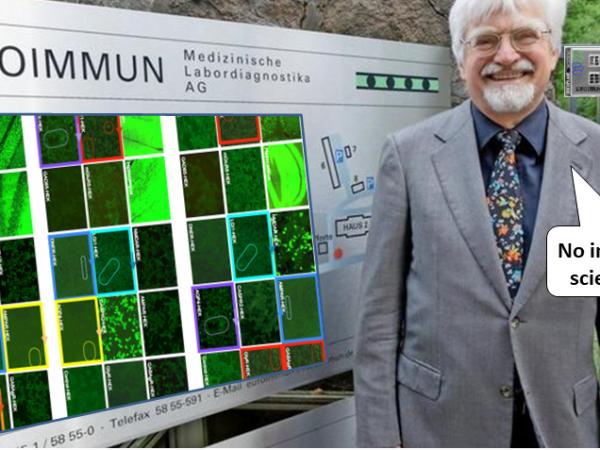
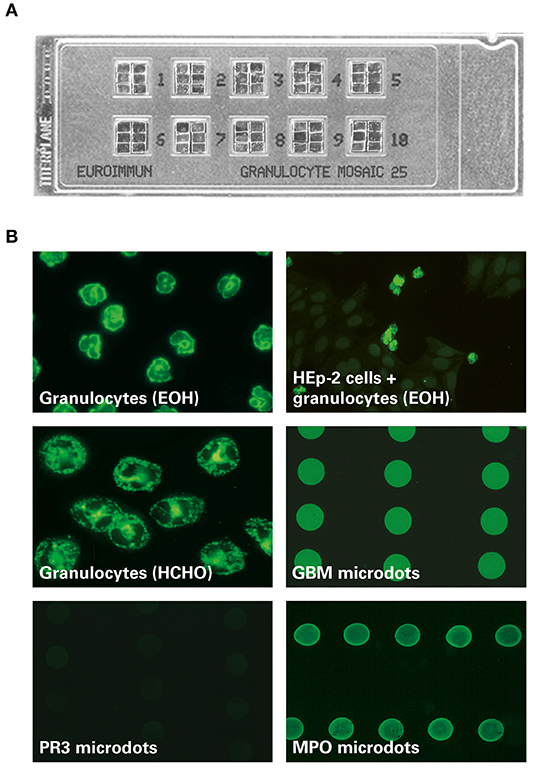
A very unexpected retraction which affects the German biotech company Euroimmun. The company was founded, owned and led by the German multimillionaire Winfried Stöcker, who sold it in 2017 to PerkinElmer for $1.3 Billion. Read about the background of the affair and Elisabeth Bik’s findings in Euroimmun’s research studies in this article:
EuroImmun is a German diagnostics biotech, founded by the most charming Professor Stöcker and recently sold to PerkinElmer. Elisabeth Bik checked some of company’s papers, many coauthored by Stöcker himself, and she raised questions. The company says this “testifies to a lack of knowledge of the matter”.
The last author of the now retracted Frontiers paper Wolfgang Schlumberger succeeded Stöcker as CEO of Euroimmun when Stöcker retired in 2019, and remains in this office today.
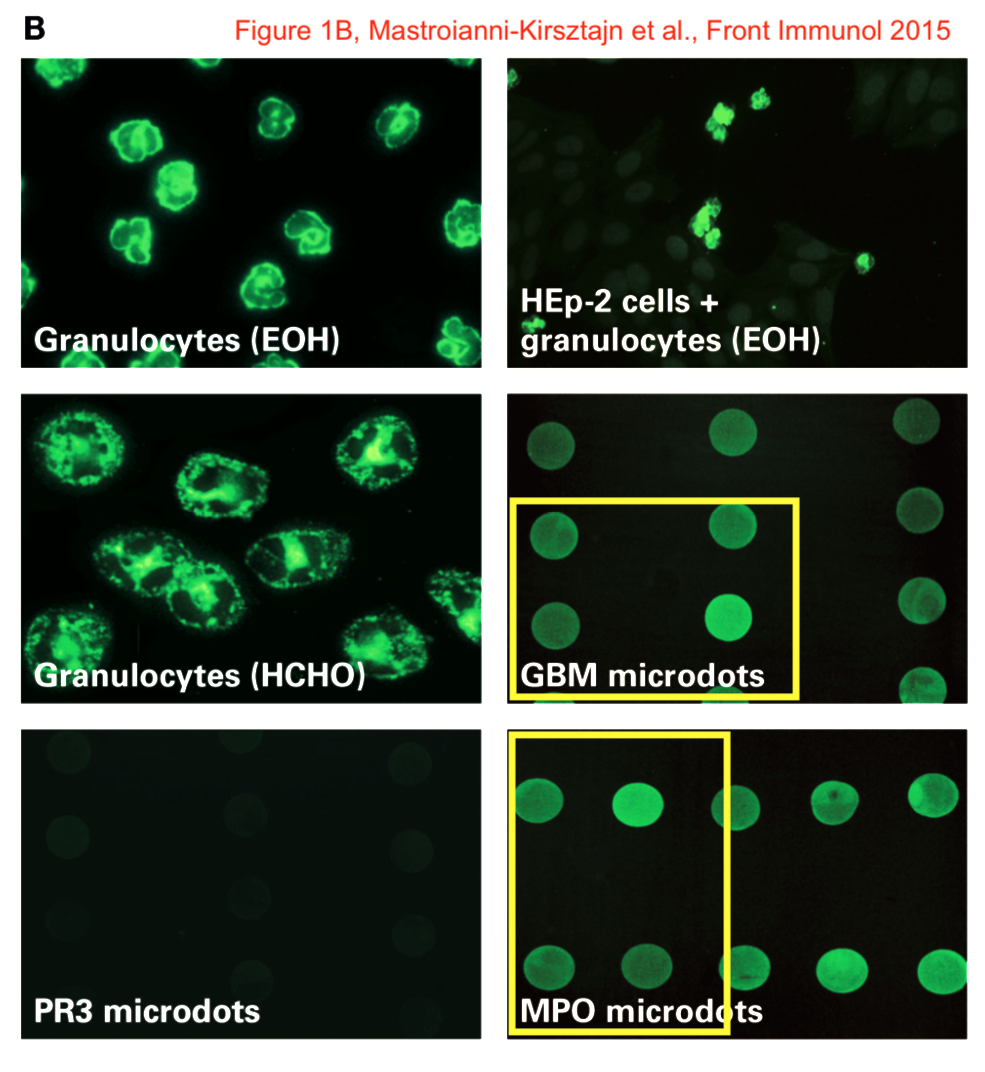
Elisabeth M Bik: “Figure 1B […] it is not expected to see similarities between the GBM microdots and the MPO microdots.”
The main problem was with the assay chip though:
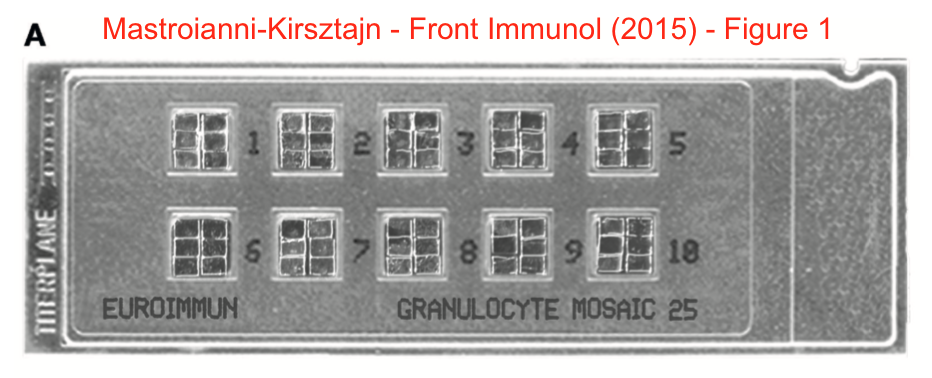
Bik: “Figure 1A of this paper features a Granulocyte Mosaic Biochip by Euroimmun that is very similar to other chips by the same company that represent different tests. It also appears to have repetitive features […] sometimes with different mosaics in the center, but with unexpected similarities in the outer areas of the biochips”
None of these 3 papers was retracted, but PLOS NTD paper was corrected in November 2020:
“Following publication of this article [1], concerns were raised about regions of similarity between the images of the indirect immunofluorescence assay (IFA) microscope slides for detection of hantavirus-specific antibodies shown in Fig 1 and images of IFA slides for detection of different antibodies published in other articles [2–4]. The authors clarify that the images in Fig 1 were digitally created using image editing software to combine images of a slide background, reaction fields and assay labels. The images in Fig 1 are for illustrative purposes only, to support understanding of slide configuration and methodology. Fig 1 does not contribute to the results data or scientific conclusions of the study.
In light of concerns that the originally published Fig 1 includes previously published image elements that are not licensed for reproduction and distribution under the terms of the CC-BY license, the original article was republished on October 22, 2020, with a revised Fig 1 in which slide configuration is shown as a schematic diagram. Please download this article again to view the correct version.”
Stöcker announced to me in early 2020:
“To investigate into the fingerprint of the plastic slide is really nonsense. The essential message of this publication is beyond any question. […] Dr. Elisabeth Bik’s observations are not suitable to bring us into disrepute.”
Euroimmun founder Winfried Stöcker replies to criticism of his company’s publications: “Dr. Elisabeth Bik’s observations are not suitable to bring us into disrepute.”
Also the Frontiers paper was corrected in March 2020:
“In the original article, there was a mistake in Figure 1 as published. The images of MPO and GBM microdots had been processed and display too high similarities. […] In addition, the legend for Figure 1 was misleading. It has to be stated more clearly that the images are shown for illustrative purposes only. The correct Figure 1 and its legend appears below.
The authors apologize for this error and state that this does not change the scientific conclusions of the article in any way. The original article has been updated.”
But now, on 16 December 2024, the Euroimmun paper in Frontiers was retracted:
“Following publication, concerns were raised regarding the integrity of the images in this article. An investigation was conducted in accordance with Frontiers’ policies.
It was found that the concerns were valid and that the article does not meet the standards of editorial and scientific soundness for Frontiers in Immunology; therefore, the article has been retracted.
The retraction was approved by the Chief Editors for Frontiers in Immunology and the Chief Executive Editor of Frontiers. The authors do not approve of the retraction.”
Stöcker was most recently in German national news because in 2021 he invented his own alternative COVID-19 vaccine, tested it on his family and friends without any ethics approvals, and then distributed it illegally to hundreds of interested antivaxxers at the Lübeck airport (which he owns). In summer 2024, Stöcker successfully avoided a criminal conviction and got away with a hefty fine of €250k, because a) he is extremely rich and b) his lawyer was a senior politician of the then-ruling party FDP which held the German Ministry of Justice. Read here:
If you are interested to support my work, you can leave here a small tip of $5. Or several of small tips, just increase the amount as you like (2x=€10; 5x=€25). Your generous patronage of my journalism will be most appreciated!
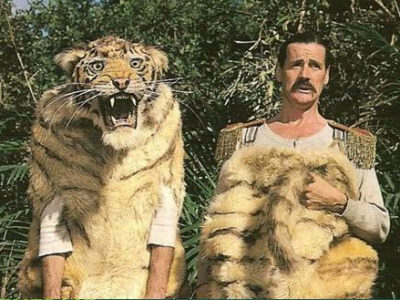
“We can rest assured that should Sir Fraser have used his Nobel panacea skincare himself, he must have now left behind a very beautiful and youthful corpse indeed.”
Euroimmun’s Wolfgang ‘Schlimmberger’ Schlumberger didn’t get his contract as CEO renewed. He became ChairmanoftheSupervisoryBoard a couple of years ago.
PerkinElmer rebranded around the same time and now wants to be known as Revvity. Euroimmun’s as well as Revvity’s top management was nearly completely replaced since PE acquired EI.
























 For Better Science
“We can rest assured that should Sir Fraser have used his Nobel panacea skincare himself, he must have now left behind a very beautiful and youthful corpse indeed.”
A too late follower of the teachings of the great philosopher Blondie? Die young, stay pretty. https://youtu.be/uUEj5EP9V8I?si=g64iJRtNCAA3iFU0
LikeLike
Euroimmun’s Wolfgang ‘Schlimmberger’ Schlumberger didn’t get his contract as CEO renewed. He became Chairman of the Supervisory Board a couple of years ago.
PerkinElmer rebranded around the same time and now wants to be known as Revvity. Euroimmun’s as well as Revvity’s top management was nearly completely replaced since PE acquired EI.
LikeLike
You are right, thanks for the correction!
https://www.euroimmun.com/legal/imprint/
LikeLike