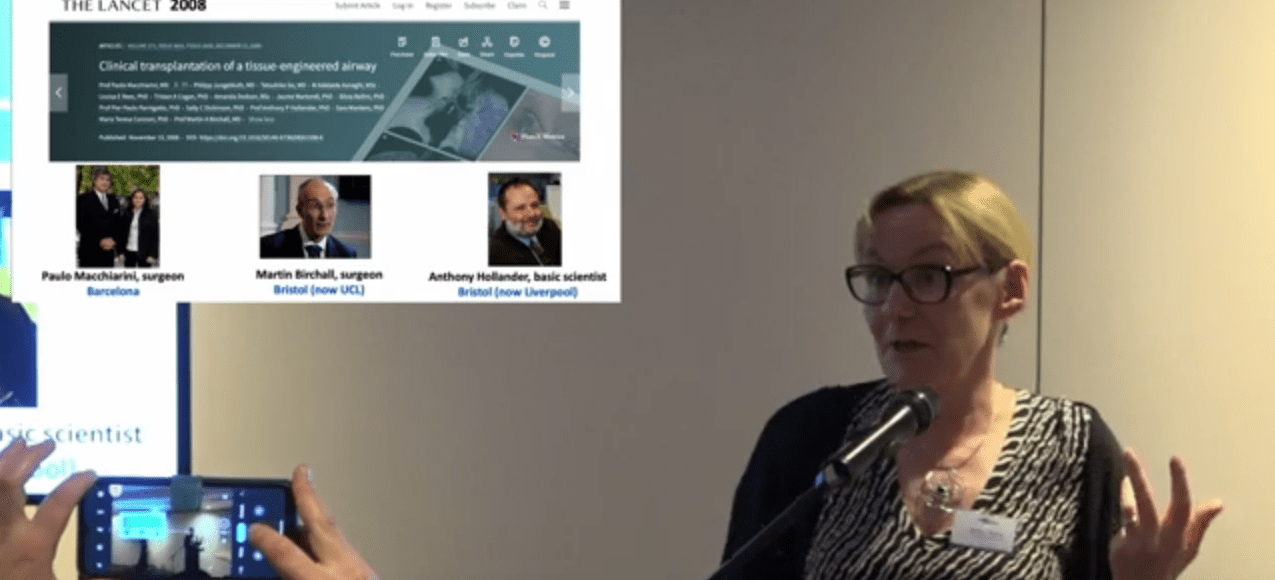

Everyone has heard of the deadly trachea transplant surgeon Paolo Macchiarini, but his former collaborators, especially those at UCL in London, especially Martin Birchall, but also Paolo De Coppi, managed to get officially whitewashed by the UCL investigation, which openly encouraged them to continue experimenting on children with trachea transplants. Even today, millions in public funding continue to flow into UCL’s degenerative medicine business, including into clinical studies which deploy the dangerous organ replacement technology developed by Birchall together with Macchiarini.
Having attended Patricia Murray‘s recent Health Sense Award ceremony, the sleuth Sholto David felt inspired (insider pun!) to put the ImageTwin tool to good use, and he swiftly found new forgeries in the papers by Birchall, De Coppi and other UCL professors. Some of those were published years after UCL whitewashed Birchall for exactly same kind of image forgery! That’s how safe these UCL professors felt and still feel. Will UCL whitewash them again?
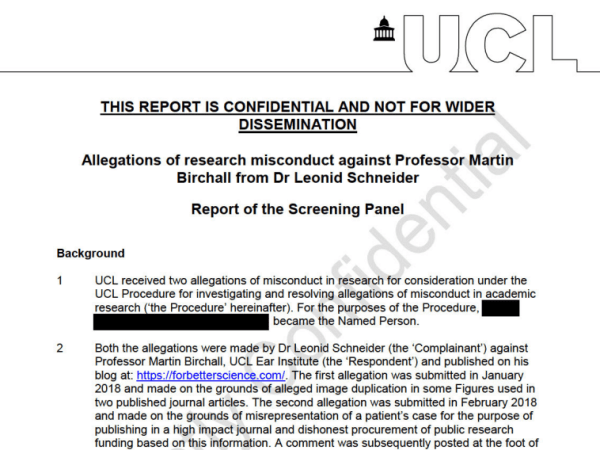
Martin Birchall innocent, UCL decides once again
In yet another investigation, UCL whitewashed Martin Birchall of all responsibilities. I publish here the confidential report and excerpts from a secret PhD thesis, which the UCL committee carefully avoided to read.

Things went good for Birchall, UCL treated him like a spoiled entitled brat he is. Data falsifications? Conclusions unaffected. Dead trachea transplant patients? Operate some more! Clinical trial cancelled by UK authorities? Here is a fat grant for another trial.
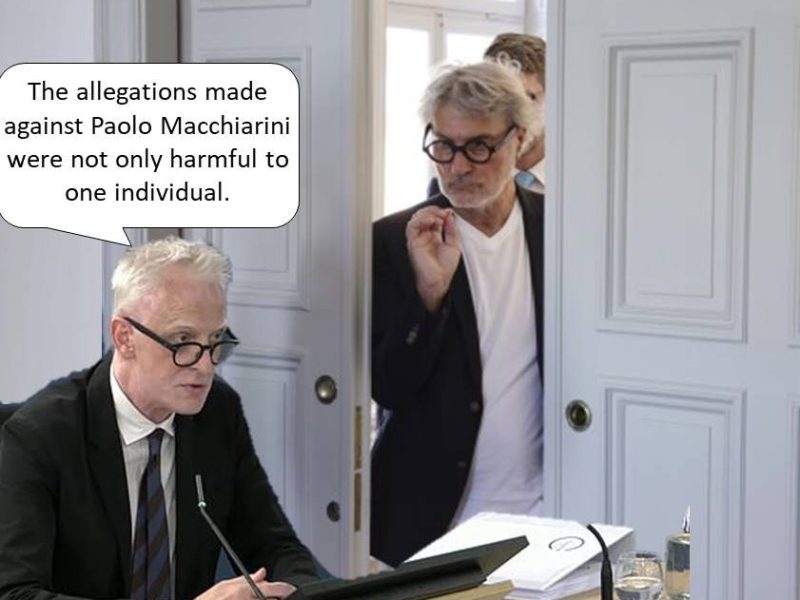
Swedish investigation spoils Macchiarini cover-up at Lancet
NPOF, again and again: “Philipp Jungebluth and Paolo Macchiarini guilty of research misconduct” Lancet: “Paolo Macchiarini is not guilty of scientific misconduct”
Missing the limelight, Martin? Stage is yours, literally! On 20 November 2024, UCL proudly announced:
“A unique opera experience that explores voice loss and identity has been produced by scientists at the UCL Ear Institute in collaboration with the Royal Opera House.
Led by Ear Institute’s researcher Professor Martin Birchall, a specialist in voice disorders, and his Robovox team the project aims to explore the intrinsic value of the human voice, what a voice is and what happens when a voice is gone.
Their work focuses on soft robotics to restore the function of voice, breathing and swallowing. And their project, funded by Wellcome, is to produce an implant to record muscle responses to control an artificial larynx (for laryngectomy patients).
In their description of the show, the Royal Opera House describe the installation as a “radically different kind of opera experience”.”
It is only fair. Macchiarini had his own opera in Stockholm (“Mytomania“), why shouldn’t Birchall have his in London indeed.
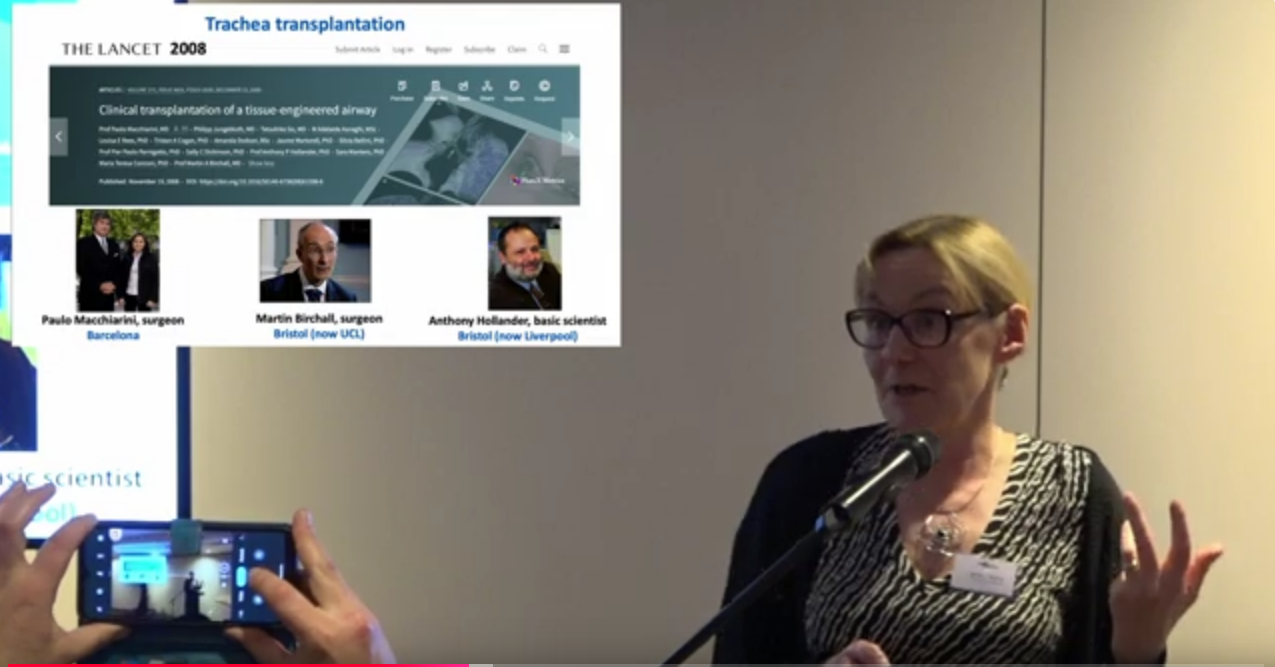
The UCL investigation into the trachea transplant affair took place in 2017, back then I was invited as a witness because UCL wanted to know how much I knew. The two parties UCL investigators found guilty of everything were Macchiarini (who used to be honorary professor at UCL) and the UCL nanotechnology professor Alexander Seifalian, who was promptly sacked, together with some unnamed whistleblowers. Everyone else at UCL was declared not only innocent, but a victim of the Seifalian-Macchiarini conspiracy.
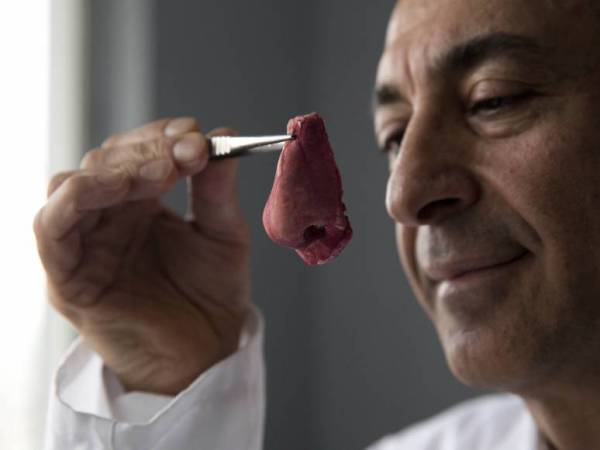
UCL trachea transplant inquiry: scapegoating, obfuscation and a lost nose
In 2017, UCL invited an external expert commission to investigate the deadly trachea transplants performed by the former UCL honorary professor Paolo Macchiarini. An already sacked UCL nanotechnology professor, Alexander Seifalian, whose lab made the two UCL plastic POSS-PCU tracheas in 2011, was announced as the main culprit on UCL side. All this despite Seifalian’s…
It is safe to assume that also for Sholto’s new findings UCL will attribute 100% of the blame to Seifalian, especially where he is listed as co-author. To be fair, the scapegoat Seifalian isn’t an angel either: after he was sacked he was seen papermilling with Iranians and pushing artificial vaginas made from pig intestine. Yes, this.
Let’s start with Birchall. Sholto’s new findings are listed, together with past evidence of Birchall’s bad science, on PubPeer.
Here is Birchall with Seifalian and their UCL colleague Gavin Jell, professor of nanotechnology & degenerative medicine. The study is all about that same POSS-PCU material which Seifalian previously used to make murderous plastic tracheas used by Macchiarini and Birchall:
Leila Nayyer , Martin Birchall, Alexander M. Seifalian, Gavin Jell Design and development of nanocomposite scaffolds for auricular reconstruction Nanomedicine : nanotechnology, biology, and medicine (2014) doi: 10.1016/j.nano.2013.06.006


Sholto David: “Figure 6: POSS-PCUs is too similar to POSS-PCUc after rotation and adjusting stretch. These aren’t the exact same image”

Macchiarini’s trachea transplant patients: the full list
This article lists all known (including those not officially declared) patients of the scandal surgeon Paolo Macchiarini, who received from him a cadaveric or plastic trachea. It will be updated whenever I receive any new evidence.
As you see, after some unpleasant experiences with tracheas, the otolaryngologist Birchall decided to switch to artificial ears because those at least don’t kill people straight away. Here are the boys playing with their plastic toys again:
Leila Nayyer , Gavin Jell, Ali Esmaeili , Martin Birchall, Alexander M. Seifalian A Biodesigned Nanocomposite Biomaterial for Auricular Cartilage Reconstruction Advanced Healthcare Materials (2016) doi: 10.1002/adhm.201500968


But I do fully trust UCL to blame Seifalian also for the papers he is not coauthor of and which were published long after he was sacked by UCL. Here is Jell, without Seifalian:
Azadeh Rezaei , Yutong Li , Mark Turmaine , Sergio Bertazzo , Christopher A Howard , Timothy R Arnett, Kaveh Shakib, Gavin Jell Hypoxia mimetics restore bone biomineralisation in hyperglycaemic environments Scientific Reports (2022) doi: 10.1038/s41598-022-18067-1

These days, Birchall the kack-handed surgeon specialises in “soft robotics“, whatever that is. He is one of the lead investigators of the £6.1 million UKRI grant titled “emPOWER“, awarded in 2020. There, Birchall and his friends promise to use degenerative medicine to fabricate “In-body artificial muscles for physical augmentation“, presumably bigger buttocks? Birchall’s co-investigator on the emPOWER grant is his former protege Nazia Mehrban, formerly senior research fellow at UCL and now lecturer at the University of Bath. Here is how Birchall and Mehrban do science:
Nazia Mehrban , Bangfu Zhu , Francesco Tamagnini, Fraser I. Young , Alexandra Wasmuth , Kieran L. Hudson , Andrew R. Thomson , Martin A. Birchall, Andrew D. Randall , Bing Song , Derek N. Woolfson Functionalized α-Helical Peptide Hydrogels for Neural Tissue Engineering ACS Biomaterials Science & Engineering (2015) doi: 10.1021/acsbiomaterials.5b00051
Sholto David: “Figure S2: Duplicated and overlapping images between different conditions and days.”

In Birchall’s and Macchiarini’s unhinged fantasy world, every dead organ can be stripped of its original donor’s cells (decellurised) and then brought back to life with the “stem cells” from the recipient, which will miraculously regenerate all living tissues and restore blood supply. So speaking of artificial muscle, here is a study by Birchall, De Coppi, Seifalian and a bunch of other toxic trachea transplanters:
Jonathan M Fishman , Mark W Lowdell , Luca Urbani , Tahera Ansari , Alan J Burns , Mark Turmaine , Janet North , Paul Sibbons , Alexander M Seifalian , Kathryn J Wood, Martin A Birchall, Paolo De Coppi Immunomodulatory effect of a decellularized skeletal muscle scaffold in a discordant xenotransplantation model Proceedings of the National Academy of Sciences (2013) doi: 10.1073/pnas.1213228110


After Seifalian was kicked out from UCL, Birchall teamed up with another UCL colleague: Wenhui Song, professor of biomaterials and medical engineering. Maybe the nanotechnologist Song was installed in place to replace Seifalian. Maybe she was told to put Birchall on her papers. In any case, what Sholto found, is all very unfortunate for both parties.
In this study, Song and Birchall fabricated plastic scaffolds for soft tissue implants (e.g., muscle), this time from POSS-PUU polymer using “indirect 3D printing guided thermally-induced phase separation process (3D-TIPS”)“:
Linxiao Wu , Adrián Magaz , Elizabeth Maughan , Nina Oliver , Arnold Darbyshire , Marilena Loizidou , Mark Emberton, Martin Birchall, Wenhui Song Cellular responses to thermoresponsive stiffness memory elastomer nanohybrid scaffolds by 3D-TIPS Acta Biomaterialia (2019) doi: 10.1016/j.actbio.2018.12.019


This is the problematic Data in Brief paper, by the same authors:
Linxiao Wu , Adrián Magaz , Elizabeth Maughan, Nina Oliver , Arnold Darbyshire , Marilena Loizidou, Mark Emberton, Martin Birchall, Wenhui Song Development data associated with effects of stiffness softening of 3D-TIPS elastomer nanohybrid scaffolds on tissue ingrowth, vascularization and inflammation Data in Brief (2019) doi: 10.1016/j.dib.2019.01.012


The above coauthor Marilena Loizidou is also a UCL professor, for “cancer nanotechnology”. As aside, here is she with yet another UCL professor, Alexander MacRobert, and their Turkish collaborators:
- Mahshid Hashemkhani, Gozde Demirci, Ali Bayir, Abdullah Muti , Alphan Sennaroglu, Layla Mohammad Hadi, Elnaz Yaghini , Marilena Loizidou, Alexander J MacRobert, Havva Yagci Acar Cetuximab-AgS quantum dots for fluorescence imaging and highly effective combination of ALA-based photodynamic/chemo-therapy of colorectal cancer cells Nanoscale (2021) doi: 10.1039/d1nr03507j
- Mahshid Hashemkhani , Marilena Loizidou , Alexander J MacRobert, Havva Yagci Acar One-Step Aqueous Synthesis of Anionic and Cationic AgInS Quantum Dots and Their Utility in Improving the Efficacy of ALA-Based Photodynamic Therapy Inorganic Chemistry (2022) doi: 10.1021/acs.inorgchem.1c03298

Worth reminding that Birchall’s coauthor Mark Emberton is not just somebody, but the dean of the medical faculty at UCL. In 2017, Emberton helped UCL to hush up the trachea transplant affair by sacking Seifalian and a bunch of whistleblowers, read here:
Alexander Seifalian, UCL’s Persian Scapegoat
UCL has completed the investigation into the affair around their past honorary professor Paolo Macchiarini and the trachea transplants. The report avoids implicating Macchiarini’s partner Martin Birchall. The only guilty party is the nuclear physicist Alexander Seifalian.
A few years later Emberton also sacked another whistleblower, for finding out that UCL researchers were syphoning off public money into their private businesses (see August 2022 Shorts).
Another study by Birchall, Emberton, Loizidou, Song and Jell (whom you met above), plus another UCL professor and former Seifalian associate Peter Butler, again on plastic implants for soft tissues. So many important professors to fabricate an artificial bum:
Linxiao Wu , Jatinder Virdee , Elizabeth Maughan , Arnold Darbyshire , Gavin Jell , Marilena Loizidou , Mark Emberton, Peter Butler , Ashley Howkins , Alan Reynolds , Ian W. Boyd , Martin Birchall, Wenhui Song Stiffness memory nanohybrid scaffolds generated by indirect 3D printing for biologically responsive soft implants Acta Biomaterialia (2018) doi: 10.1016/j.actbio.2018.09.016


Birchall and Macchiarini once decided that bone marrow cells will magically turn into cartilage when seeded of an artificial trachea scaffold. That clever theory lead to miserable deaths of many patients, including of one girl treated in London by Birchall and De Coppi without any involvement of Macchiarini’s. Read here:
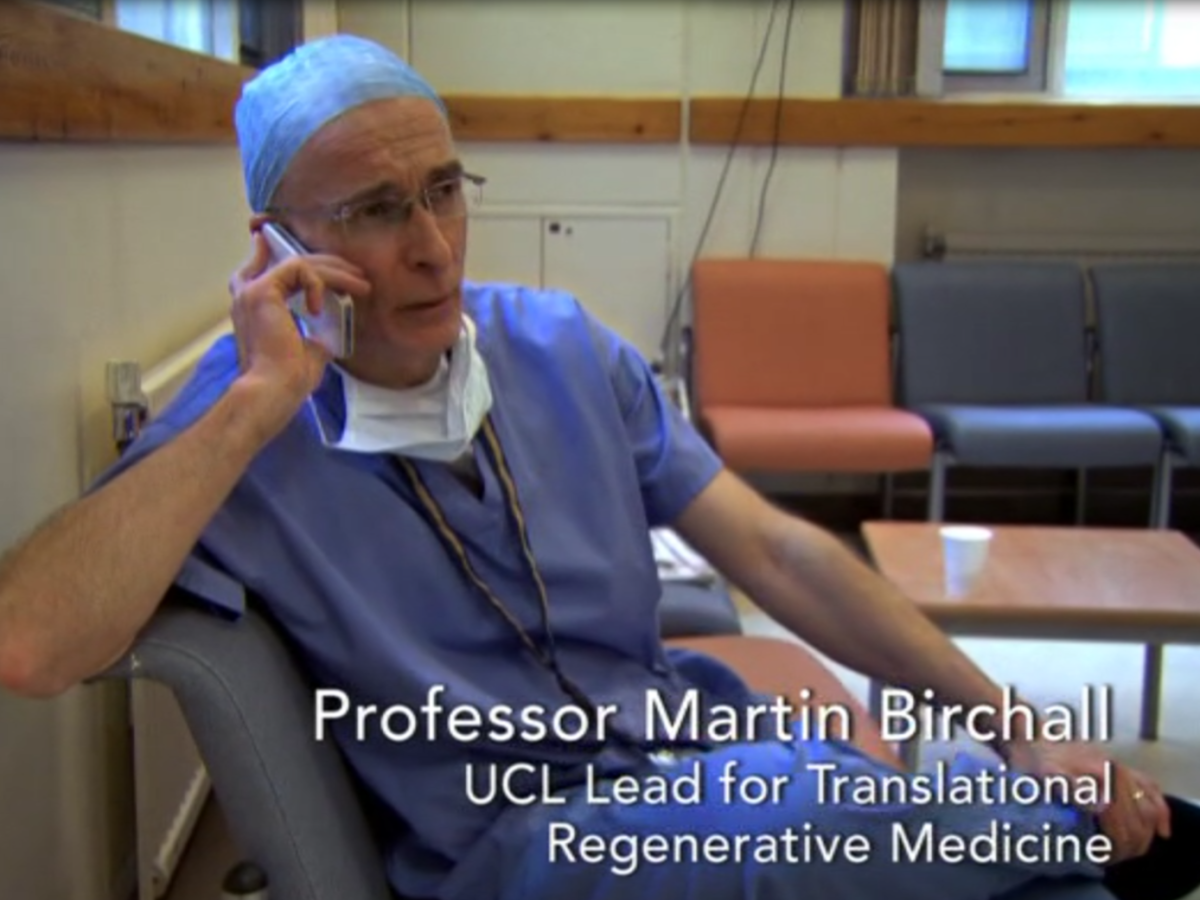
Trachea transplanters: Round 2 at UK Parliament
The Science and Technology Committee of the British House of Commons is now dealing with the trachea transplants performed by the scandal surgeon Paolo Macchiarini and his former parter at UCL, Martin Birchall as part of its inquiry into Research Integrity. Two UK scientists from Liverpool initiated this with their written submission from November 21st…
The UCL investigation from 2017 covered it all up. Birchall was even encouraged to continue, in fact in 2017 the UCL researchers performed yet another trachea transplant on a 3 year old child, the details are kept secret. Did these people even transplant a circumferential trachea graft as the UCL claimed? Were there other patients whom UCL decided never to mention?
The only reliable truth in this sad affair is that UCL, Birchall and others are incapable of telling the truth. They aren’t even capable of checking their own papers for forgeries after they were caught on those before!
Macchiarini’s trachea transplant patients: the full list
This article lists all known (including those not officially declared) patients of the scandal surgeon Paolo Macchiarini, who received from him a cadaveric or plastic trachea. It will be updated whenever I receive any new evidence.
A coauthor on the papers above is a certain UCL employee called Arnold Darbyshire. On this 2011 photo you can see this nanotechnologist with his former boss Seifalian and with Claire Crowley, the PhD student of Birchall’s and Seifalian’s, who helped Macchiarini and Birchall with their disastrous plastic trachea transplants, and was declared utterly innocent, read here:

Karolinska requests retraction of Macchiarini and Jungebluth papers
Karolinska Institutet announced its decision on 6 papers by their former professor and surgeon, Paolo Macchiarini. All are to be retracted, 7 scientists were found guilty of research misconduct, including one of the whistleblowers.
Crowley continued for some time as postdoc with De Coppi, then left academia for an Irish biotech company. UCL eventually only released a heavily censored and incomplete version of her PhD thesis. Here a paper of hers with Birchall and Seifalian, now flagged by Sholto, do appreciate the title:
G Z Teoh , C Crowley , M A Birchall, A M Seifalian Development of resorbable nanocomposite tracheal and bronchial scaffolds for paediatric applications BJS (British Journal of Surgery) (2015) doi: 10.1002/bjs.9700

In this 2018 paper, Birchall, Darbyshire, Song, Loizidou and Emberton continued pushing for plastic grafts “regenerated” with bone marrow cells:
Linxiao Wu , Adrián Magaz , Tao Wang , Chaozong Liu , Arnold Darbyshire , Marilena Loizidou , Mark Emberton , Martin Birchall , Wenhui Song Stiffness memory of indirectly 3D-printed elastomer nanohybrid regulates chondrogenesis and osteogenesis of human mesenchymal stem cells Biomaterials (2018) doi: 10.1016/j.biomaterials.2018.09.013

Stem cell magic turns plastic into living tissue, according to Macchiarini and Birchall. And actually, if you fabricate the data, it will work, if not in real life then in the alternative reality of peer-reviewed medical literature. Here is the UCL team again at it:
Linxiao Wu , Adrián Magaz , Arnold Darbyshire , Ashley Howkins , Alan Reynolds , Ian W. Boyd , Hang Song , Jin‐Hua Song , Marilena Loizidou , Mark Emberton , Martin Birchall, Wenhui Song Thermoresponsive Stiffness Softening of Hierarchically Porous Nanohybrid Membranes Promotes Niches for Mesenchymal Stem Cell Differentiation Advanced Healthcare Materials (2019) doi: 10.1002/adhm.201801556


And in 2020, this team was apparently ready to start killing people with plastic tracheas again:
Linxiao Wu , Adrián Magaz , Suguo Huo , Arnold Darbyshire , Marilena Loizidou , Mark Emberton , Martin Birchall, Wenhui Song Human airway-like multilayered tissue on 3D-TIPS printed thermoresponsive elastomer/collagen hybrid scaffolds Acta Biomaterialia (2020) doi: 10.1016/j.actbio.2020.07.013

When pressured, UCL may be prepared to sacrifice a foreigner like Song, but Englishmen like Birchall will be always untouchable. It will be easy like with Seifalian, because Song coauthored other problematic papers:
- Jiabin Luan , Jian Wu , Yudong Zheng, Wenhui Song, Guojie Wang , Jia Guo , Xun Ding Impregnation of silver sulfadiazine into bacterial cellulose for antimicrobial and biocompatible wound dressing Biomedical Materials (2012) doi: 10.1088/1748-6041/7/6/065006
- Jian Wu, Yudong Zheng, Wenhui Song, Jiabin Luan, Xiaoxiao Wen, Zhigu Wu, Xiaohua Chen, Qi Wang, Shaolin Guo In situ synthesis of silver-nanoparticles/bacterial cellulose composites for slow-released antimicrobial wound dressing Carbohydrate Polymers (2014) doi: 10.1016/j.carbpol.2013.10.093

But to be fair, in Song’s case Sholto found forged data mostly in papers co-authored by Birchall. Yes, it is unfair.
Now, what about the UCL professor and paediatric surgeon Paolo De Coppi, who was directly involved in Birchall’s disastrous trachea transplants? He became Britain’s hero in the wake of the Macchiarini scandal, The Guardian celebrated him as the good Italian counterpart in 2017 (and ever since).

Paolo De Coppi and the UCL organ factory
Paediatric surgeon Paolo De Coppi claims to grow all possible internal organs in his lab at UCL. Though his career started with his association with Macchiarini, and their regenerative medicine ideas sound strangely similar, De Coppi is celebrated as a modest genius poised to save lives of uncounted children, and the funding money flows.
Even in late 2023, De Coppi advocated for more deadly trachea transplants specifically on children, in a conference abstract with his colleagues from UCL-affiliated Great Ormond Street Hospital (read December 2023 Shorts). Shame or remorse is obviously not something this man ever felt in his life.
What De Coppi did instead was to move on to other organs, simply to beat Macchiarini, who had plans with an artificial oesophagus. De Coppi announced to start installing a decellurised pig oesophagus in babies, without any preclinical tests, the announcement was celebrated in UK media as if a bald-headed Jesus came down and announced with an Italian accent to perform a new miracle. Yet what with the pile of corpses from past tracheal transplants, De Coppi was asked by UK authorities to test his degenerative oesophagus in animals first, also this announcement was duly celebrated by the UK media as the biggest science breakthrough in recent history. Not mentioned in the media was the fact that all of the rabbits which received De Coppi’s oesophagus transplant have died (read September 2022 Shorts).

American Association of Thoracic Surgery: Macchiarini method works!
“The reviewers and editors agree there is not clear evidence to support Dr Murray’s claim.”
After such setbacks, De Coppi and his UCL associate Paola Bonfanti (whose second affiliation is with The Crick institute, also in London) moved on to growing artificial thymuses (read this 2022 article), a project which was very generously funded with public money by UKRI. To make even more money, Bonfanti teamed up with the biotech Videregen, and last year Videregen announced to progress to clinical trials with Bonfanti’s decellurised thymus. That company previously collaborated with Birchall on trachea transplants, i.e. until Patricia Murray spoiled everything, so Videregen owners (supported by UCL) sent lawyers to Murray’s university, and then fell on their arses with that.
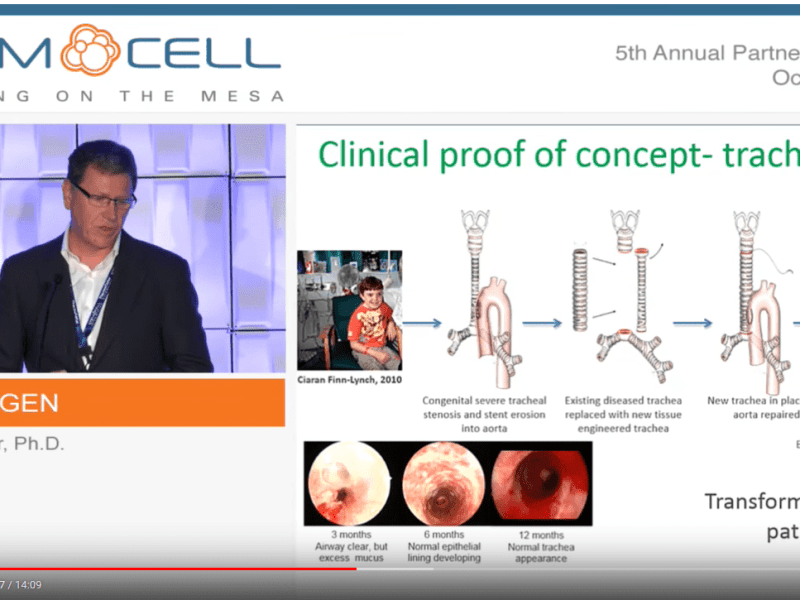
UCL trachea transplants: Videregen sets lawyers on Liverpool academics Murray and Levy
Videregen, the Liverpool-based company which bought the trachea regeneration patent from UCL, deployed lawyers against the academics Patricia Murray and Raphael Levy, precisely via their employer University of Liverpool. Main issue is the parliamentary submission by Levy and Murray, subject to absolute privilege. Yet Videregen also cites from the confidential notice of suspected research misconduct…
Well, Sholto had a look at De Coppi’s papers also. Here is an older one, from when De Coppi tested bone marrow cells to “regenerate” decellurised grafts:
Laura Iop, Vera Renier , Filippo Naso , Martina Piccoli , Antonella Bonetti , Alessandro Gandaglia , Michela Pozzobon , Adolfo Paolin , Fulvia Ortolani , Maurizio Marchini , Michele Spina , Paolo De Coppi, Saverio Sartore , Gino Gerosa The influence of heart valve leaflet matrix characteristics on the interaction between human mesenchymal stem cells and decellularized scaffolds Biomaterials (2009) doi: 10.1016/j.biomaterials.2009.04.031
Sholto David: “Figure 4: There are some cloned areas”

Again De Coppi and his Italian colleagues at the University of Padova, this time fabricating artificial muscle tissue (recall that’s what Birchall is into now):
Carlo Alberto Rossi , Marina Flaibani , Bert Blaauw , Michela Pozzobon , Elisa Figallo , Carlo Reggiani , Libero Vitiello , Nicola Elvassore , Paolo De Coppi In vivo tissue engineering of functional skeletal muscle by freshly isolated satellite cells embedded in a photopolymerizable hydrogel The FASEB Journal (2011) doi: 10.1096/fj.10-174755

Sholto David “Figure 4: The F and SC images at 6 weeks must have been derived from the same sample. […] matching sections on the right to visualise the similarities.”
More recent, by De Coppi and Bonfanti, with De Coppi’s then-postdoc Crowley:
Giovanni Giuseppe Giobbe, Claire Crowley , Camilla Luni , Sara Campinoti , Moustafa Khedr , Kai Kretzschmar , Martina Maria De Santis , Elisa Zambaiti , Federica Michielin , Laween Meran , Qianjiang Hu , Gijs Van Son , Luca Urbani , Anna Manfredi , Monica Giomo , Simon Eaton , Davide Cacchiarelli , Vivian S. W. Li , Hans Clevers , Paola Bonfanti, Nicola Elvassore, Paolo De Coppi Extracellular matrix hydrogel derived from decellularized tissues enables endodermal organoid culture Nature Communications (2019) doi: 10.1038/s41467-019-13605-4

The next paper by De Coppi, flagged by Cheshire earlier this year, already received an Expression of Concern. His coauthor, the UCL paediatrics professor Adrian Thrasher, advocated in 2012 together with Birchall for “compassionate studies” with trachea transplants on patients, including children, “in place of or in addition to relevant preclinical animal data” because these human experiments were “powerful ways to inform robustly designed formal trials“. Another coauthor was the UCL professor Mark Lowdell, a man of many business interests, none of them decent.
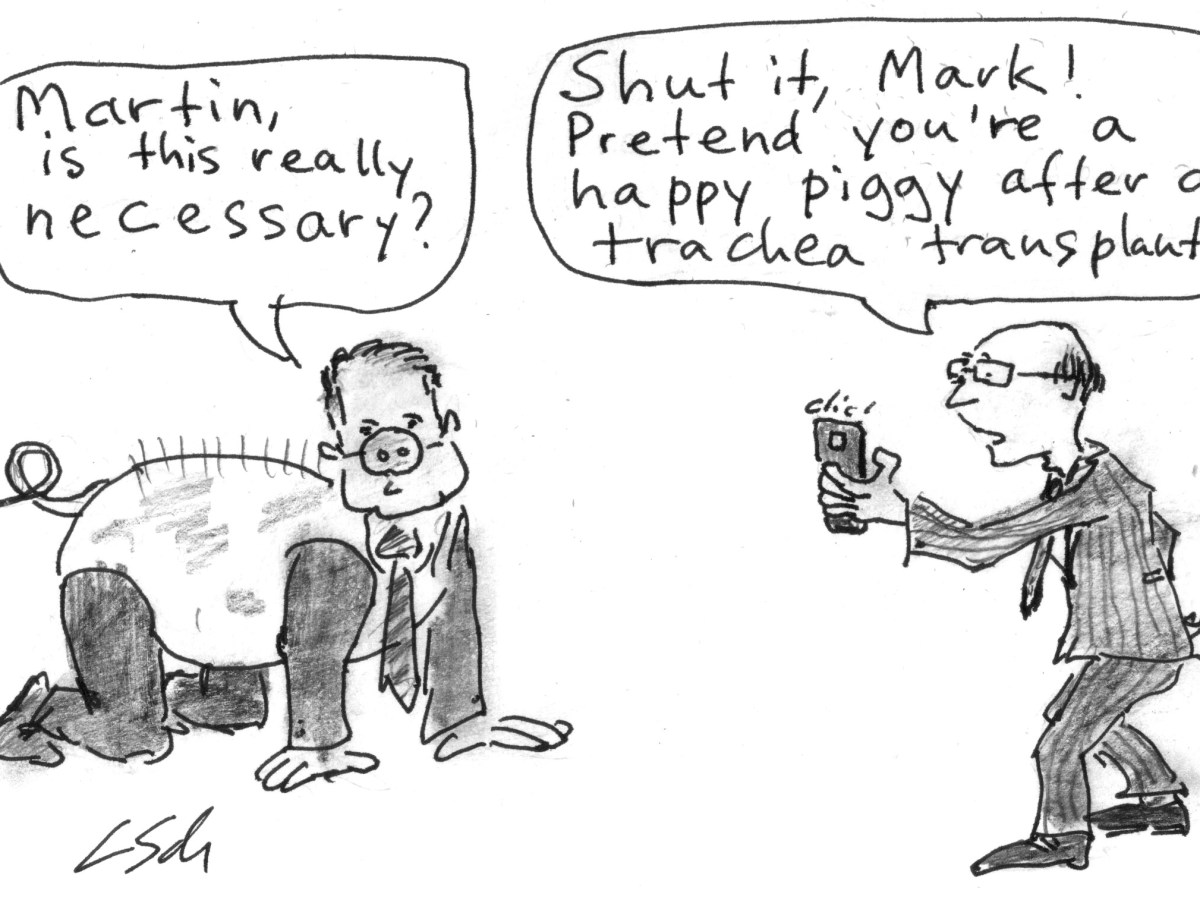
Martin Birchall’s two dead pigs to prove trachea transplants are safe
Imagine you are Martin Birchall, laryngologist and ENT surgeon, star of regenerative medicine at UCL and trachea transplant enthusiast. You and your business partner Videregen need to explain to EU bureaucrats why your technology of decellurised cadaveric trachea is perfectly safe, what with all the dead patients of yours and your former best friend Paolo…

Well, this is from the same year, by Thrasher, De Coppi and Macchiarini’s old friend Anthony Atala, maker of artificial bladders (read July 2022 Shorts), led by yet another UCL professor, Pascale Guillot (who likes to pose on yachts):
Dafni Moschidou , Sayandip Mukherjee , Michael P Blundell , Katharina Drews , Gemma N Jones, Hassan Abdulrazzak , Beata Nowakowska , Anju Phoolchund , Kenneth Lay , T Selvee Ramasamy , Mara Cananzi , Daniel Nettersheim , Mark Sullivan , Jennifer Frost , Gudrun Moore , Joris R Vermeesch , Nicholas M Fisk , Adrian J Thrasher , Anthony Atala , James Adjaye , Hubert Schorle, Paolo De Coppi, Pascale V Guillot Valproic Acid Confers Functional Pluripotency to Human Amniotic Fluid Stem Cells in a Transgene-free Approach Molecular Therapy (2012) doi: 10.1038/mt.2012.117


Gemma N. Jones, Dafni Moschidou , Hassan Abdulrazzak , Bhalraj Singh Kalirai , Maximilien Vanleene , Suchaya Osatis , Sandra J. Shefelbine , Nicole J. Horwood , Massimo Marenzana , Paolo De Coppi , J.H. Duncan Bassett , Graham R. Williams , Nicholas M. Fisk, Pascale V. Guillot Potential of Human Fetal Chorionic Stem Cells for the Treatment of Osteogenesis Imperfecta Stem Cells and Development (2014) doi: 10.1089/scd.2013.0132


Gemma N. Jones, Dafni Moschidou , Tamara-Isabel Puga-Iglesias , Katarzyna Kuleszewicz , Maximilien Vanleene , Sandra J. Shefelbine , George Bou-Gharios , Nicholas M. Fisk, Anna L. David, Paolo De Coppi, Pascale V. Guillot Ontological Differences in First Compared to Third Trimester Human Fetal Placental Chorionic Stem Cells PLoS ONE (2012) doi: 10.1371/journal.pone.0043395
The Expression of Concern issued by Molecular Therapy on 7 August 2024 briefly stated:
“Image analysis performed by the editorial office confirmed image reuse with Figures 2C and S4A of this article. Given these concerns, the editors and publisher are conducting an investigation.”
The above referenced 2012 PLOS One paper by Gillot and her section head De Coppi also contained this fabricated figure:

In July 2024, the UCL professor Gillot explained everything with a “clerical error in image presentation” which “does not modify the raw results or their interpretation of the results“, and announced an Erratum. Let’s hope PLOS One will tell her to stuff it, and retract that paper instead.
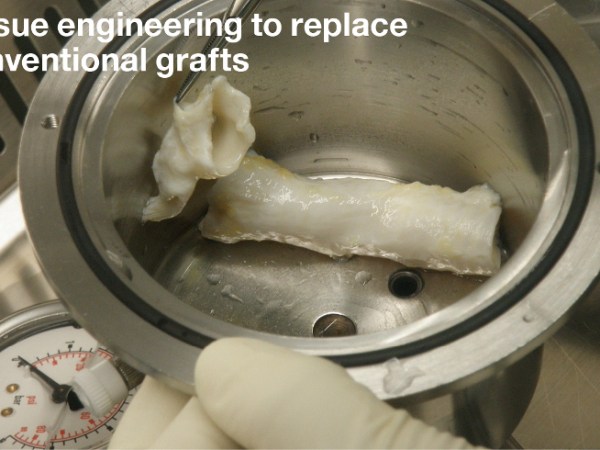
UCL’s decellurised tracheas: strong and stable?
The European Union Commission staunchly refuses to tell me what exactly their funded scientists intend to do to the scheduled 48 trachea transplant patients under the Horizon 2020-financed phase 2 clinical trial TETRA. By now the highest authority, the European Ombudsman, is engaged, and still EU Commission does not bulge. The general technology of TETRA…
It is quite possible that UCL applies very unconventional criteria when recruiting its professors for degenerative medicine. Look at this study, several UCL professors on board here, including the sacked Seifalian:
Michelle Griffin , Leila Nayyer , Peter E. Butler, Robert G. Palgrave, Alexander M. Seifalian, Deepak M. Kalaskar Development of mechano-responsive polymeric scaffolds using functionalized silica nano-fillers for the control of cellular functions Nanomedicine : nanotechnology, biology, and medicine (2016) doi: 10.1016/j.nano.2016.02.011


UCL professor of bioengineering Deepak Kalaskar replied on PubPeer with this demented insanity:
“Thanks for your comment based on AI pattern recognition. We reviewed these Images. These are representative images at different magnification as similarity highlighted has no impact on outcome of results. These seem coincidental. Images can create bias and thus we ask readers to also look at other analytical techniques used in this manuscript , which provide more comprehensive picture.“
His co-authors include the UCL professor for plastic and reconstructive surgery Peter Butler whom you met above. The man can’t even write his own name correctly (“Peter E.M. Bulter”):
Junjie Zhao , Yasmin Farhatnia , Deepak M. Kalaskar, Yanting Zhang , Peter E.M. Bulter, Alexander M. Seifalian The influence of porosity on the hemocompatibility of polyhedral oligomeric silsesquioxane poly (caprolactone-urea) urethane The International Journal of Biochemistry & Cell Biology (2015) doi: 10.1016/j.biocel.2015.08.007

More degenerative medicine by Butler, Kalaskar and Seifalian:

Fig 2

I almost pity UCL for having to run yet another whitewashing cover-up now.
Donate!
If you are interested to support my work, you can leave here a small tip of $5. Or several of small tips, just increase the amount as you like (2x=€10; 5x=€25). Your generous patronage of my journalism will be most appreciated!
€5.00

 For Better Science
At least the images regenerate into different panels. Should have been found the first time UCL “investigated”.
LikeLike
If UCL is okay with describing CF’s transplanted trachea as terrible in an earlier paper yet as a success in the Lancet the institution might not care
LikeLike
“At least the images regenerate into different panels”
Does history repeat itself? Is there a silver lining?
As exposed by Sholto David with cell and supposedly organ regeneration in the present article, and 22 years ago with “gene therapy”, an Institute of Child Health (UCL), Imperial College, and Oxford BioMedica (UK) Ltd co-production?
22 years ago with “gene therapy” they could only achieve image regeneration within the same panel, not into different panels. The present regeneration into different panels might be considered some progress over the last 22 years.
Important to put a positive spin on things at all times. Keep to message.
Repeat three times.
Things are getting better! Things are getting better! Things are getting better!
Education! Education! Education!
PubPeer – Long-term reversal of chronic anemia using a hypoxia-regulat…
LikeLike
Thank you for the update. Macchiarini’s colleagues need to be exposed. What’s going on with UCL??
LikeLiked by 1 person
“What’s going on with UCL??”
The problem with UCL has been going on for a long time. A prominent institution, which is permissive to publishing fraud, and covered for a long time and in considerable depth by Leonid.
Search Results for “latchman” – For Better Science
David Latchman, uncensored – For Better Science
Top geneticist should resign over his teams laboratory fraud – The Guardian | Medical School
“I publish exclusively two uncensored UCL screening panel reports into the David Latchman and Anastasis Stephanou affair.”
David Seymour Latchman is presently the Master of Birkbeck College, University of London, but the problematic data was committed while he was Director of the Institute of Child Health, UCL. They are all parts of the University of London, which from the evidence in papers has very lax oversight. Maybe there is something to be said for universities which are in a place, rather than flung across large areas.
LikeLiked by 2 people
Six (6) retractions and David S Latchman is still Master of Birkbeck College. That’s what the data say. It is a statement, not an opinion.
Retraction Watch Database
Others will pick up on that, it sends a signal.
LikeLiked by 2 people
“What’s going on with UCL??”
A bad penny?
Nerve regeneration paper retracted over faked data | The Transmitter: Neuroscience News and Perspectives
“This retraction marks the second for co-author Alison Lloyd, a cell biologist at University College London. She was one of seven authors of a highly cited 2005 paper on the potential of stem-cell therapies to lead to tumors.
Five authors agreed to retract that paper in 2010, concluding that their findings had likely been the result of contamination of cell samples. Lloyd reportedly declined to sign the retraction notice because she had not been involved in that aspect of the work. Lloyd did not respond to Spectrum’s multiple attempts to reach her via email.”
If five authors agreed that their findings had been the result of contamination of cell samples, how could an author who had not been involved in that aspect of the work contradict that and not agree with that? Does Alison Lloyd have evidence that work she was not involved with was not affected by contamination of cell samples?
LikeLiked by 1 person
Alison Lloyd, not one to miss a geometrical trick!
PubPeer – Dissecting the contribution of p16(INK4A) and the Rb family…
LikeLiked by 2 people
“In-body artificial muscles for physical augmentation“, presumably bigger buttocks?
Everyone needs augmented cremaster muscles. Or a prosthetic levator ani.
LikeLike
“To be fair, the scapegoat Seifalian isn’t an angel either”
Let’s not forget his active role in scamferences.
https://eusa-riddled.blogspot.com/2017/09/a-challenger-appears.html
LikeLiked by 1 person
You must understand that nanostructures, like organs, are similar and identical.
LikeLiked by 1 person
Wow, these authors are so good at transplanting, grafting, and self-generating…..digital data.
LikeLiked by 2 people
Alexander Seifalian’s daughter continues his proud legacy in 2024 from Imperial College London, publishing puff pieces for daddy’s new material in MDPI, failing to declare any conflict of interest.
https://pubpeer.com/publications/DA5CB0FB0B0F6B07530031DA3232C7
LikeLiked by 1 person
Also see further contributions to graphene hype with no conflict of interest admitted:
https://pubpeer.com/publications/172B4E518BB9E3C79370EDE86A3DE2
https://pubpeer.com/publications/A63A2082033A3DC763250F794CD896
LikeLike
I have been reading further about Amelia Seifalian’s research plan according to her innovate UK grant:
https://blogs.imperial.ac.uk/surgeryandcancer/2022/02/04/dr-amelia-seifalian-wins-2022-young-innovator-award/
Basically they want to do pelvic mesh all over again but make it with graphene, nanocomposites, and stem cells. One can only assume that the father has some influence over the daughter in this approach. Her recent 2024 paper indicates that they plan to test this on sheep, which is bad for the sheep. I think it is worth making a prediction that this will be a catastrophe if it is ever tested on humans.
LikeLike
Oh nice, Imperial College is part of this travesty now….
Whatever happened to Alexander Seifalian’s vagina though?
LikeLike
Oh nice, they discovered Elsevier’s Medical Hypotheses.
Smut Clyde blogged about Daddy Seifalian’s scamference adventures:
https://eusa-riddled.blogspot.com/2017/09/a-challenger-appears.html?m=1
“In fact his name is a virtual Rolodex of bottom-feeding lowlife scamference predators, such as the delightfully-titled Clyto Access ….”
LikeLiked by 1 person
Quite shocking to see that Innovate UK awarded public funds to Seifalian’s company in 2023: https://gtr.ukri.org/projects?ref=10072550#/tabOverview
Do they not undertake any due diligence? Seifalian was dismissed from UCL in 2017: https://www.ucl.ac.uk/news/2017/sep/ucl-publishes-independent-report-regenerative-medicine-research
He was dismissed for financial misconduct:https://www.bmj.com/content/359/bmj.j4572
He was also found to have committed research misconduct: https://www.bmj.com/content/361/bmj.k2816?hwshib2=authn%3A1733430171%3A20241204%253A8fb2bd46-8c37-4fec-9fa0-8eb3e7353c20%3A0%3A0%3A0%3AhNqmLjemaXNZQ7k3GSd8kw%3D%3D
There appears to be serious governance issues with Innovate UK: https://www.researchprofessionalnews.com/rr-news-uk-research-councils-2023-4-watchdog-raises-concerns-over-fraud-monitoring-at-innovate-uk/
LikeLike
To be fair, Innovate UK can’t give all of their public money to Videregen.
They need to diversify.
LikeLike
Deepak stole images from the head of Virus and Immunity Unit at the Pasteur Institute. Will he cause a diplomatic incident with such careless behaviour? https://pubpeer.com/publications/424B8B8EBCBD847140F08672DD2683
LikeLiked by 1 person
A retraction has been posted for one of these papers: https://doi.org/10.1002/adhm.202502374
LikeLike
Another of these papers has been retracted: https://www.sciencedirect.com/science/article/pii/S2352340919300137?via%3Dihub
LikeLike
” The inability to supply the original data, combined with inconsistencies in the authors’ explanations, undermines the reliability of the findings presented.”
Birchall’s lies stop working!
LikeLike