

Schneider Shorts of 8 December 2023 – St Carlos flees to Paris again, eye-opening ophthalmology in London, with naughty editors, retractions for papermillers and for German medical elites, some brain food, and finally, a toast to science!
Table of Discontent
Science Elites
- A campaign of personal and professional harassment – Carlos Lopez-Otin flees to Kroemer again
- Largest prize in vision research – Robin Ali got a million for bad ophthalmology
Scholarly Publishing
- Following COPE guidelines – Oxford University Press plays hide and seek
- Missing splice lines – AACR journal faked data to protect editor
- Hindawi sunset – Wiley shuts down its papermill branch
Retraction Watchdogging
- Similar but clearly not identical!! – Renate Scheibe loses first paper
- Shalan does not agree – 3 retractions for One Man Papermill
- After a thorough investigation – Elsevier retracts 3rd milled paper out of 83
- Authors who misused the papers – Serbian journal divests of Iranian papermills
Science Breakthroughs
- Drinking the right amount – get smart with Mexican scientists
- Wasabi at bedtime – Prof Rui Nouchi will work for food
- Altered Schaedler Flora – mouse abuse for relaxation
Science Elites
A campaign of personal and professional harassment
Decades ago, the cancer and ageing researcher Carlos Lopez-Otin was the left-liberal messiah of post-Franco-fascist Spain. He returned from USA to the University of Oviedo in his home province of Asturias, expected to pull Spanish academia out of the darkness of corruption, nepotism, catholic dogma, and fraud. He was Spain’s pride.
Now Lopez-Otin is Spain’s shame. He is known throughout the world as a failed scientist, a pathetic cheater whose fake data was retracted, a mouse murderer who destroyed evidence before buggering off to hide in Paris with Guido Kroemer, an old phony with dyed hair, surrounded by fraudsters, fascists and Opus Dei.
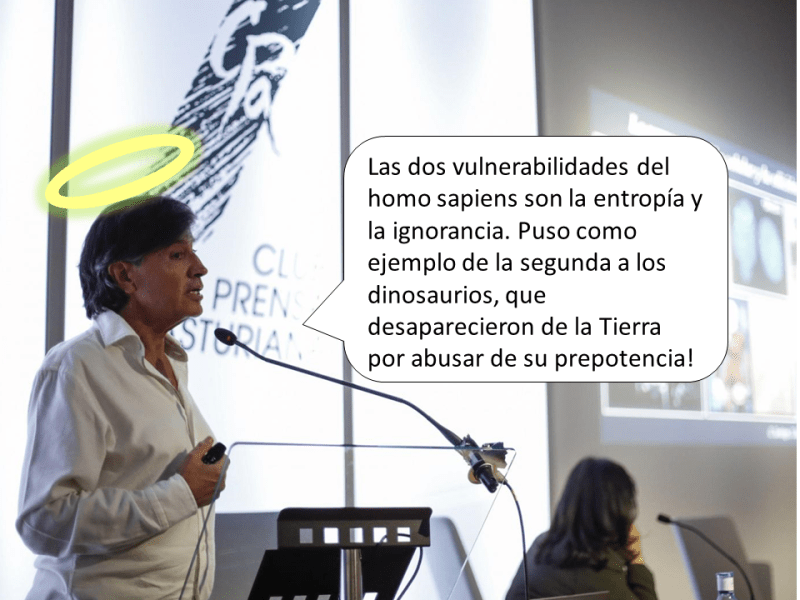
Carlos Lopez-Otin and the revoked Nature Mentoring Award
St Carlos of Oviedo almost was canonised as Spain’s first living martyr, but now Nature revoked his mentoring award. Spanish media and science elites are desperate, even the Queen is not amused. The Royal Academy of Sciences insists Lopez-Otin is a victim of journal’s failure.

I must admit, it was my reporting of the investigative work done by my colleagues which brought Lopez-Otin shame and retractions. But in Spain, his networks worked, academics, politicians and media publicly defended him and lobbied to bring him back from his Paris hide-out. St Carlos eventually returned to his University of Oviedo, discreetly supported by the Catholic Taliban of Opus Dei.
The then-rector Carlos Suarez Nieto publicly equalled me to ETA terrorists. Two of his faculty colleagues (those who dared to apply for jobs already promised to Lopez-Otin’s stooges) were put on trial at the University of Oviedo. Lopez-Otin personally deployed lawyers to force two Spanish bloggers to publicly recant and kiss his feet. The Spanish Holy Inquisition, pardon, the Royal Academy of Sciences attacked another critic, an astrophysicist, and threatened to burn him at stake.

The Royal Academy of Exact, Physical, and Natural Bullying
“If, within the aforementioned 15 days, you have not proceeded to make the retraction I am requesting, this corporation will consider itself free to take any legal actions necessary under the law.” – Jesus Maria Sanz Serna, President
Lopez-Otin was back, mightier than before, Spain’s own Jesus Christ Superstar. So it seemed.
Well, now it all went tits-up for the old fool. University of Oviedo has a new rector, who used the good old trick of mandatory retirement. It was recently deployed in France to get rid of the chloroquine fraudster Didier Raoult (who happens to be another close friend of Kroemer).
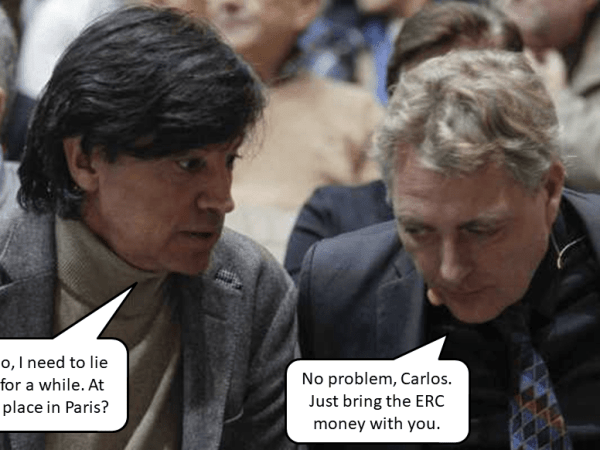
Lopez-Otin and Kroemer: birds of a feather flock together
Following my reporting, the cancer researcher Carlos López-Otín abandoned his ERC-funded 36-member-strong “Degradome” lab at the University of Oviedo in Spain and moved in with his collaborator in Paris, France, Guido Kroemer. Yet Lopez-Otin’s data integrity issues seem as poppycock compared to what Kroemer and his life partner Laurence Zitvogel dished out to the scientific…
Kroemer’s other best buddy Lopez-Otin is 65 years old, which is close to the official retirement age in Spain (66). By Spanish regulations, St Carlos could have stayed on as professor until he turns 70 at least, but such a post-retirement employment needs to be approved by the university. And in this old fool’s case, the new rector did not approve, so the retirement begins on 15 December 2023. As media reported (translated):
“The rector of the University of Oviedo, Ignacio Villaverde, assured this Friday that the scientist Carlos López-Otín “leaves because he wants” from the University of Oviedo, and has stressed that “no one has thrown him out” after his decision to retire became known.
In a press conference, the rector assured that the academic institution has given the professor of Biochemistry and Molecular Biology “all the support and help” that “according to some” has not been given to him after the episode of harassment that he experienced in 2021 and for which two professors of the University of Oviedo have been reprimanded.
López-Otín, says the rector, “wants to start a new life stage” and the University and the scientific community must respect it.”
Spanish elites rally in support of data manipulation
Carlos Lopez-Otin was forced to retract EIGHT papers in the Journal of Biological Chemistry, right after he retracted a very important paper in Nature Cell Biology. Spanish elites cry foul, a letter signed by 50 Spanish researchers was sent to JBC to prevent retractions. The ringleader is Juan Valcarcel of CRG in Barcelona, and I…
A signature campaign was started by “the former director of the FYCYT Ángeles Álvarez and the journalist Rafael Sánchez Avello“, as the far-right newspaper La Nueva Espana reported on 1 December 2023. Despite currently FOUR THOUSAND signatures, including that of star scientist Mariano Barbacid, St Carlos will still have to retire, and his critics will not be publicly flogged and beheaded. The article also mentions:
“López-Otín leaves Oviedo, but will continue with his research now in Paris.”
Well, Lopez-Otin goes full circle, back into the arms of Guido Kroemer and his charming wife, Laurence Zitvogel, two science cheaters who never retracted a single paper despite their enormous PubPeer record, because this is France. As it happens, I wrote a short play about this threesome once:

The Passion of Don Carlos
I obtained a partial script of a stage play which recently premiered in Paris: “La Passion de Don Carlos”. Any similarities with Spanish or French cancer researchers are entirely coincidental.
Another article mentioned that the University of Oviedo already gave Lopez-Otin a gold medal which he didn’t come to collect. That’s how fast he buggered off to France. Maybe Raoult will join the trio, he has lots of time on his hands and hates Schneider also? A close friend of Lopez-Otin, the fascist journalist and Opus Dei member Pablo Alvarez, wrote an opinion piece in La Nueva Espana (translated):
“It was envy. It was the envy of a few that tried to kill the star of science. We know little else for sure (and never better said). We know that today the science star is doing research in a Paris laboratory, far from the deadly intrigues of his local surroundings. And he plans, it seems, to retire from the University of Oviedo this December when he turns 65, when he could continue until he is 70. […]
The most significant is that Pedro Sánchez Lazo and Antonello Novelli, professors at the University of Oviedo, were denounced in May 2021 by Professor Otín. He considered them linked to a campaign of personal and professional harassment
that began at the end of 2017 that went beyond the walls of the University and spread through the internet, especially through a foreign blogger whose diatribes and satires went far beyond the scientific field.
Why did that blogger dedicate himself so ardently to this task of discrediting and undermining?
Perhaps for the love of scientific truth? Or are we talking about a “Wagner” soldier of science, a hitman who works for pay, on behalf of someone who puts money on the table to achieve an objective? This thesis is plausible, of course, but it is not proven and may never be proven.”
That blogger is of course yours truly (and I never heard of Sanchez-Lazo and Novelli before Oviedo’s Holy Inquisition put them on trial for conspiring with a Jew). Alvarez knows perfectly well that I am Jewish and Ukrainian. But this is exactly why this antisemite deploys the ancient Jews-money ruse and compares me to russian mass-murderers. And still, the fascist chickenshit Alvarez and his far-right newspaper are still afraid to say my name.

The Perennial Northern Blot of Lopez-Otin
Cancer researcher Carlos López-Otín published the same Northern blot no less than 23 times in 23 publications, between 1994 and 2006. Eventually Lopez-Otin et al even stopped caring what order of samples that original loading control had.
Those are the only friends Lopez-Otin is now left with: an antisemitic Opus Dei mob and two fellow research fraudsters. Those thousands of signatures the support letter reached mean nothing. People will sign anything to secure their jobs. And Lopez-Otin lost his. And he even had to leave Spain for good now.
We won.
Largest prize in vision research
Another victory for the Great English science! Moorfields Eye Hospital in London issued this press release (a copy here):
“Two Moorfields staff, Professor James Bainbridge and Professor Robin Ali have recently been named among six international winners of the largest prize in vision research, the 2018 António Champalimaud Vision Award, worth €1 million.
The team won the award for their work in developing a gene therapy to treat Leber Congenital Amaurosis (LCA), a genetic cause of childhood blindness.
Both Professor Bainbridge and Ali work across Moorfields and the UCL Institute of Ophthalmology. At Moorfields Professor Bainbridge works as a consultant retinal surgeon and also works alongside Professor Ali within the NIHR Biomedical Research Centre, a facility jointly operated by Moorfields and the UCL Institute of Ophthalmology which enables researchers to combine academic research with close contact with patients.
Commenting on the award, Alfred Sommer, Chairman of the Champalimaud Vision Award jury said: “This year’s Champalimaud laureates are recognised for their development of the many interrelated techniques necessary for human gene therapy….”
As mentioned in earlier Friday Shorts, this duo does great science indeed. Robin Ali is deputy director of NIHR Guy’s & St Thomas’ Biomedical Research Centre, ophthalmology professor at King’s College London, and formerly at UCL. James Bainbridge is another ophthalmology professor at UCL. Here is a nice paper they published almost 15 years ago, announcing a successful gene therapy to prevent blindness:
Mei Hong Tan , Alexander J. Smith , Basil Pawlyk , Xiaoyun Xu , Xiaoqing Liu , James B. Bainbridge , Mark Basche , Jenny McIntosh , Hoai Viet Tran , Amit Nathwani, Tiansen Li, Robin R. Ali Gene therapy for retinitis pigmentosa and Leber congenital amaurosis caused by defects in AIPL1: effective rescue of mouse models of partial and complete Aipl1 deficiency using AAV2/2 and AAV2/8 vectors Human Molecular Genetics (2009) doi: 10.1093/hmg/ddp133


It turned out that the fake Figure 6H originated from the PhD thesis of the first author Mei Hong Tan (Figure 4.9D, page 263), which she defended at UCL in 2011 under Ali’s supervision. Tan now works as ophthalmologist in Australia. Thanks to the high-resolution figures in the thesis, another forged figure in the paper (Fig 3H) could be identified:

Now, I wrote before about this Oxford University Press journal, Human Molecular Genetics (HMG), and their Editor-in-Chief Dame Kay Davies DBE FRS FMedSci before – she not only published fake science herself (whitewashed by her Oxford University), she also eagerly covers up fraud by HMG authors and even enjoys ratting out whistleblowers:

Bologna cover-up at Oxford University Press
This is the second part of the Bologna whistleblower account. As the university was burying their own misconduct findings, Oxford University Press and their ignoble editor were busy punishing and gaslighting the whistleblower.
A Correction was issued on 9 October 2023 where the offending Figure 6H was removed, but Figure 6I and 3H were left as before:
“In October 2022, a reader highlighted areas of duplication within one of the figure panels (Figure 6H). The editorial team subsequently investigated, and ultimately, agreed with the author’s suggestion to remove this panel, since the same data was adequately illustrated in Figure 6G. Figure 6H has, therefore, been removed from Figure 6, which is reprinted below along with an updated figure caption. Changes to the figure caption are presented in bold italics.”
Well, what else did you expect from that sociopathic fraud pusher impersonating a journal editor.

Dame Kay Davies, Commander of the Photoshop Empire
Oxford professor Dame Kay E Davies, DBE FRS FMedSci, edits the journal Human Molecular Genetics. If you are a scientist who likes Photoshop, but afraid to get caught, give Dame Kay a call!
To be fair, Davies is not EiC anymore (some Charis Eng of Cleveland Clinic is), but the Dame Commander of the British Empire still holds the reins as Honorary Editor.
Anyway, more Great British ophthalmology by Robin Ali and his colleague, where the authors “propose that the vector and construct design used in this study could serve as a prototype for a human clinical trial“:
X Sun , B Pawlyk , X Xu , X Liu , O V Bulgakov , M Adamian , M A Sandberg , S C Khani , M-H Tan , A J Smith , R R Ali, T Li Gene therapy with a promoter targeting both rods and cones rescues retinal degeneration caused by AIPL1 mutations Gene Therapy (2010) doi: 10.1038/gt.2009.104


In the same journal, another successful gene therapy against blindness:
B S Pawlyk , O V Bulgakov , X Sun , M Adamian , X Shu , A J Smith , E L Berson , R R Ali , S Khani , A F Wright , M A Sandberg , T Li Photoreceptor rescue by an abbreviated human RPGR gene in a murine model of X-linked retinitis pigmentosa Gene Therapy (2016) doi: 10.1038/gt.2015.93

I spy with my little eye something beginning with an F (and ending with raud):
Anastasios Georgiadis , Marion Tschernutter , James W. B. Bainbridge , Kamaljit S. Balaggan , Freya Mowat , Emma L. West , Peter M. G. Munro , Adrian J. Thrasher , Karl Matter , Maria S. Balda, Robin R. Ali The Tight Junction Associated Signalling Proteins ZO-1 and ZONAB Regulate Retinal Pigment Epithelium Homeostasis in Mice PLoS ONE (2010) doi: 10.1371/journal.pone.0015730

There is a bit more for Ali on PubPeer. What do we see here, another fake gel and a reused image:
Prateek K. Buch , Marija Mihelec , Phillippa Cottrill , Susan E. Wilkie , Rachael A. Pearson , Yanai Duran , Emma L. West , Michel Michaelides , Robin R. Ali, David M. Hunt Dominant cone-rod dystrophy: a mouse model generated by gene targeting of the GCAP1/Guca1a gene PLoS ONE (2011) doi: 10.1371/journal.pone.0018089


I am not sure data forgery is the right approach for human gene therapy, but then again, who am I to tell UCL how to do their business.
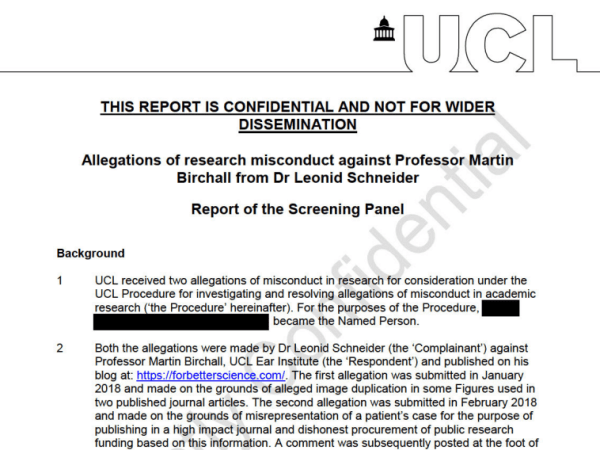
Martin Birchall innocent, UCL decides once again
In yet another investigation, UCL whitewashed Martin Birchall of all responsibilities. I publish here the confidential report and excerpts from a secret PhD thesis, which the UCL committee carefully avoided to read.
Scholarly Publishing
Following COPE guidelines
A journal named after the prestigious National Cancel Institute (NCI) of NIH informed Clare Francis of their decision on 3 papers. It is a shameful one. To be fair:
“JNCI used to be the official journal of the U.S. National Cancer Institute (NCI); however, in 1996, the NCI and JNCI agreed to grow apart. Over the next five years, JNCI became independent of the NCI.”
(Wikipedia)
For some reason (probably a bribe), the journal retained the NCI brand name, it is now owned by Oxford University Press, and this is what Clare Francis reported to them:
Sandy Azzi , Stefania Bruno , Julien Giron-Michel , Denis Clay , Aurore Devocelle , Michela Croce , Silvano Ferrini , Salem Chouaib , Aimé Vazquez , Bernard Charpentier , Giovanni Camussi , Bruno Azzarone , Pierre Eid Differentiation therapy: targeting human renal cancer stem cells with interleukin 15 JNCI Journal of the National Cancer Institute (2011) doi: 10.1093/jnci/djr451

Two fake gels with duplicated bands. Clare Francis reported in the same email string two more papers in the same journal:
Yasuhiro Tada , Romulo Martin Brena , Björn Hackanson , Carl Morrison , Gregory A Otterson , Christoph Plass Epigenetic modulation of tumor suppressor CCAAT/enhancer binding protein alpha activity in lung cancer JNCI Journal of the National Cancer Institute (2006) doi: 10.1093/jnci/djj093

A fake gel with cloned bands here also. And this is the third paper, featuring the Italian cheater Saverio Bettuzzi (read earlier Friday Shorts):
Olesya Chayka , Daisy Corvetta , Michael Dews , Alessandro E. Caccamo , Izabela Piotrowska , Giorgia Santilli , Sian Gibson , Neil J. Sebire , Nourredine Himoudi , Michael D. Hogarty , John Anderson , Saverio Bettuzzi , Andrei Thomas-Tikhonenko , Arturo Sala Clusterin, a haploinsufficient tumor suppressor gene in neuroblastomas JNCI Journal of the National Cancer Institute (2009) doi: 10.1093/jnci/djp063

On 6 November 2023, the JNCI editorial office informed Clare Francis:
“We will begin an investigation, following COPE guidelines.”
On 4 December, the JNCI Editorial Office announced the outcome, on behalf of the Editor-in-Chief Eduardo Franco of McGill University in Canada and managing editor Amanda Boehm:
“Dear Reader,
We have followed Committee On Publication Ethics (COPE) guidelines and completed our investigation. We thank you for your patience. After careful consideration of the evidence provided, discussion with the author, and additional information and data they provided, the Editors have determined the data are reliable and we consider this matter closed. We thank you for your careful reading of the journal and dedication to scientific integrity, which JNCI takes extremely seriously.“
After Clare Francis wondered about this decision, the publisher sternly admonished:
“Dear Reader,
As previously stated, the Journal followed COPE Guidelines to complete this investigation and we consider this matter closed. Thank you for your time and interest in the journal.“
Of course, COPE guidelines, at least the publicly available ones, do NOT advice journal editors that scientists are free to fake data if they believe their results are reliable anyway. But what can you expect from a predatory hijacked journal.
Missing splice lines
A journal by the American Association for Cancer Research (AACR) did a great service for its (now former) Editor-in-Chief, Kenneth Anderson, professor at Dana-Farber Cancer Institute in Harvard. His journal colleagues forged data to cover for him. Seriously.

AACR conjures undead Count Fakula Michael Karin
What better distraction than the COVID-19 pandemic to revive one of the spookiest parasites in cancer research? AACR uses the COVID-19 cover to award Michael Karin, for his over 50-paper-strong record of data fakery.
This is the paper, it was corrected 4 years ago, when Anderson was still Editor-in-Chief:
Claire Fabre , Naoya Mimura , Kathryn Bobb , Sun-Young Kong , Güllü Gorgun , Diana Cirstea , Yiguo Hu , Jiro Minami , Hiroto Ohguchi , Jie Zhang , Jeffrey Meshulam , Ruben D. Carrasco, Yu-Tzu Tai , Paul G. Richardson, Teru Hideshima , Kenneth C. Anderson Dual inhibition of canonical and noncanonical NF-κB pathways demonstrates significant antitumor activities in multiple myeloma Clinical Cancer Research (2012) doi: 10.1158/1078-0432.ccr-12-0779
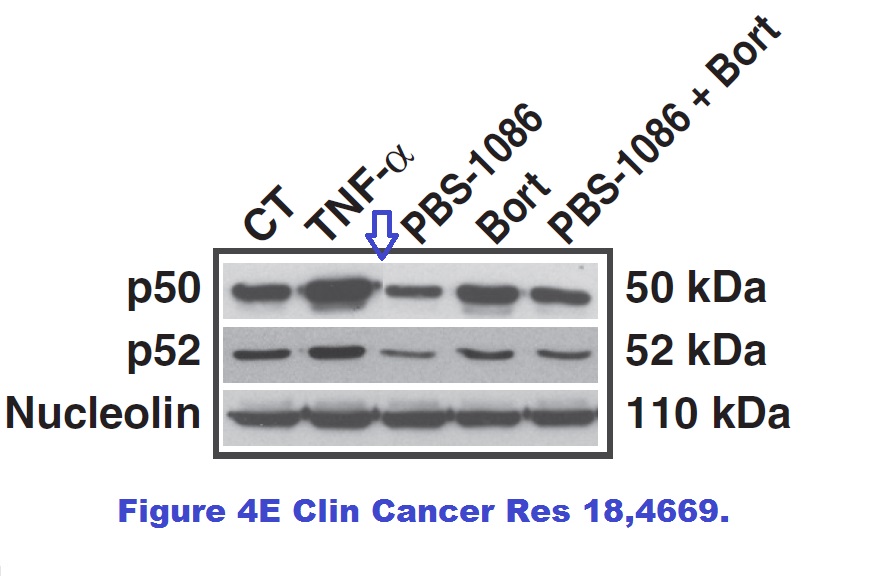

The Correction from 1 May 2019 stated:
“In the original version of this article (1), Fig. 4E was missing splice lines at p50 and p52, between TNFα and PBS-1086, and consequently the Nucleolin panel did not line up with the other two blots. These errors have been corrected in the latest online HTML and PDF versions of the article. The authors regret these errors.”
This is the new figure:

Yes, the AACR editors forged data, they invented some non-existent splicing in the p52 and nucleolin blots (the latter was also partially replaced), so they could draw “missing splice lines” in order to make the issue look like negligence and not like fraud.

AACR deploys Massimo Loda on a mission to cure cancer
Meet Massimo Loda, the new EiC of Molecular Cancer Research. Not despite, but because of his PubPeer record. Also meet his partner Michele Pagano!
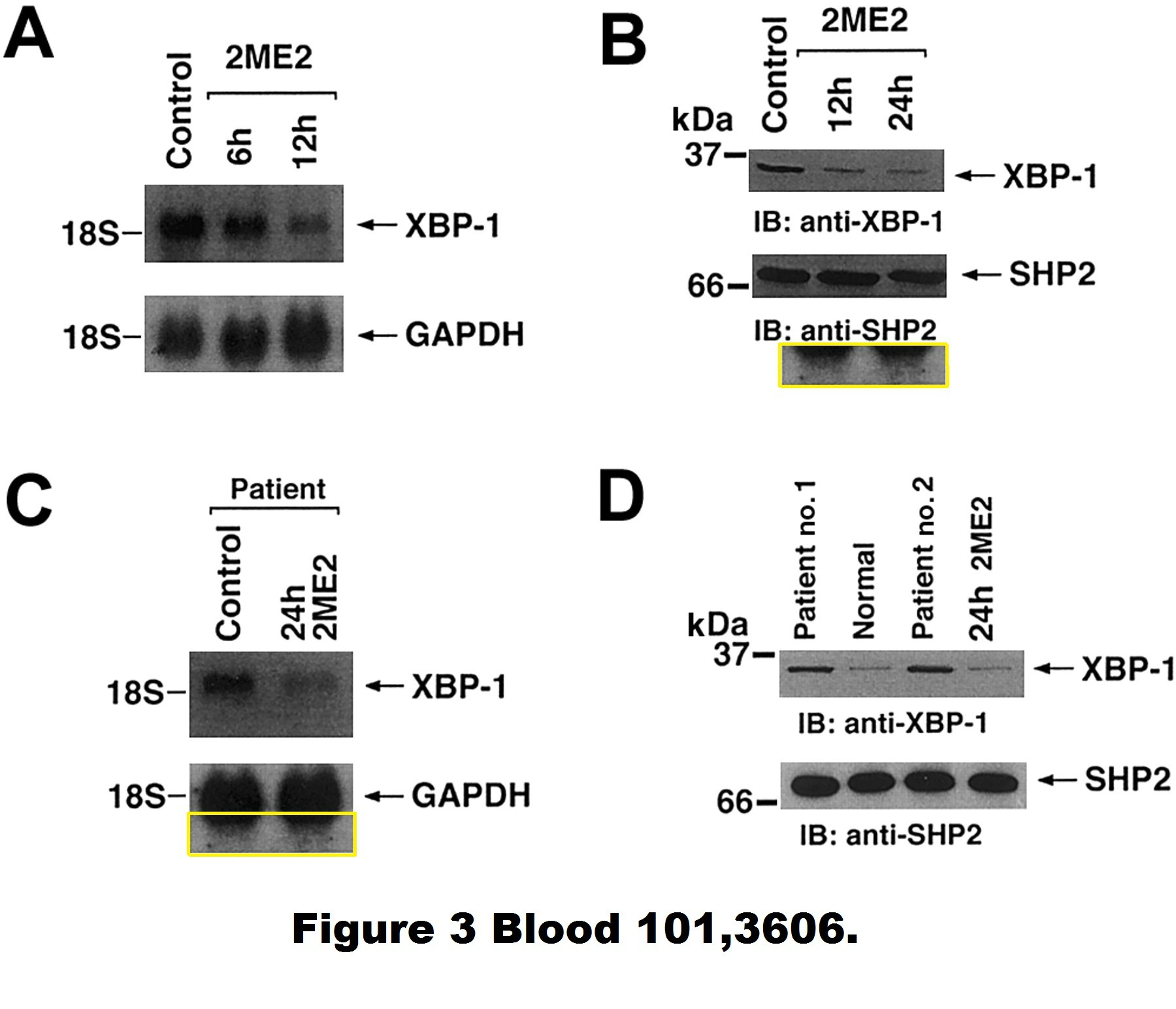
Anderson currently has almost 40 papers on PubPeer. Three of his papers were already retracted, between 2008 and 2011. Some evidence is a decade old, like this, on PubPeer since 2013:
Dharminder Chauhan , Guilan Li , Daniel Auclair , Teru Hideshima , Paul Richardson , Klaus Podar , Nicholas Mitsiades , Constantine Mitsiades , Cheng Li , Ryung Suk Kim , Nikhil Munshi , Lan Bo Chen , Wing Wong , Kenneth C. Anderson Identification of genes regulated by 2-methoxyestradiol (2ME2) in multiple myeloma cells using oligonucleotide arrays Blood (2003) doi: 10.1182/blood-2002-10-3146
Hindawi sunset
As Retraction Watch reported, Wiley is shutting down the Open Access publisher Hindawi which it bought only less than 3 years ago, in January 2021.

Hindawi Garbage Sorting System, Based on Citations
Parashorea tomentella continues their investigation of Hindawi’s uneasy collaboration with Chinese papermills. Can it be solved with the promised 511 retractions?

Maybe, and I am only wildly speculating here, this is because Hindawi became basically a papermill-only channel after the acquision, and by now retracted around EIGHT THOUSAND FIVE HUNDRED papers.
“Hindawi recovery will take time; Wiley to sunset the Hindawi brand and fully integrate its OA journal portfolio and expertise into the Wiley ecosystem. Year-over-year comparisons become less challenging in 2H”

The problem was that Hindawi started to retract papermill trash much faster than accepting it. That was a big mistake. Another likely reason: “Hindawi” (the name of original founder) just sounds too much like Global South.
MDPI hardly ever retracts anything, accepts everything, and papermills love it.

Russkiy Mir at Elsevier and MDPI
Alexander Magazinov presents you two russian professors whom Elsevier and MDPI consider respectable: a Lt Colonel of putin’s mass-murdering army, and a machine-gun totting rascist. Both buy from papermills.

Retraction Watchdogging
Similar but clearly not identical!!
Congratulations to Renate Scheibe and her friends at Hannover Medical School (MHH) in Germany on a retraction. May there be many more.
Hannover Scheibenkleister
“Dr. Scheibe presented to me the original blots […]. I think that’s pretty convincing.”
PLOS One just pulled this paper:
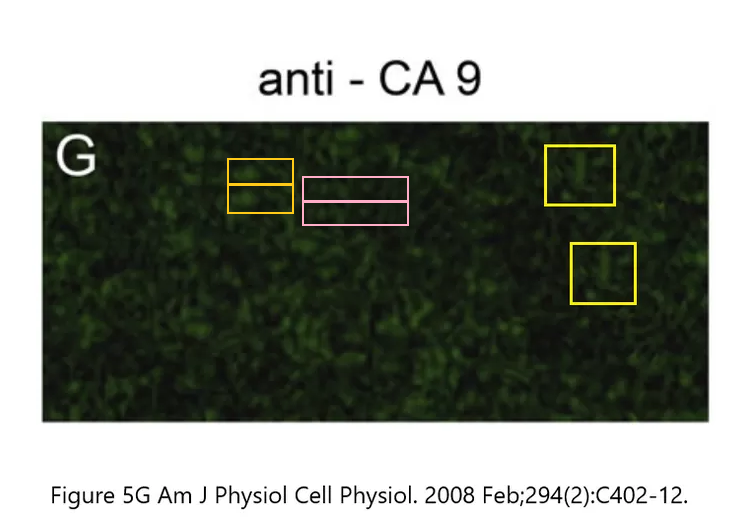
Janine Hallerdei , Renate J. Scheibe, Seppo Parkkila , Abdul Waheed , William S. Sly , Gerolf Gros, Petra Wetzel , Volker Endeward T tubules and surface membranes provide equally effective pathways of carbonic anhydrase-facilitated lactic acid transport in skeletal muscle PLoS ONE (2010) doi: 10.1371/journal.pone.0015137

The Retraction notice was published on 4 December 2023:
“After this article [1] was published, concerns were raised about some of the immunocytochemical images in Fig 1. Specifically:
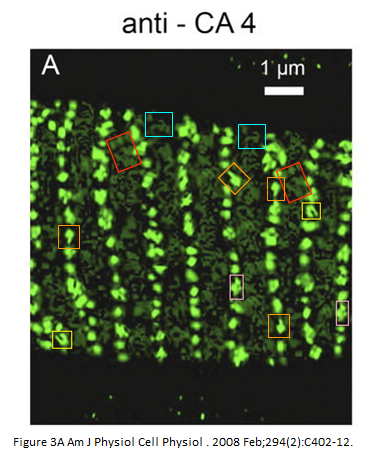
- Multiple sections of the CA IV panels in Fig 1a in [1] appear similar to sections of Figs 3A-C in [2] but the full panels are not duplicated.
- In Fig 1b, there appear to be similarities between two sets of two areas within the left CA IV panel.
During editorial follow-up on these issues, the authors stated that the histochemical images in Fig 1a in [1] and Figs 3A-C in [2] may have been from serial sections from the same muscle fiber bundle, and that areas in question are similar but not identical. The authors also stated that the raw image data underlying figures of concerns in this article [1] are no longer available.
A member of the PLOS ONE Editorial Board reviewed the concerns and authors’ responses, and advised that whilst repetitive transverse lines are expected for this type of experiment due to the striated pattern of transverse tubules, different images or different regions within an image would not be expected to have the level of similarity observed in these figures.
Without the original images we cannot resolve the concerns about the integrity and reliability of results reported in Fig 1. Therefore, the PLOS ONE Editors retract this article.
GG, SP, and RJS did not agree with the retraction. JH, AW, WSS, PW, and VE either did not respond directly or could not be reached.”
Scheibe’s and Petra Wetzel‘s mentor Gerolf Gros was since 1986 head of the Vegetative Physiology lab at MHH, he is now emeritus professor. Gros previously defended their common papers on PubPeer and denied the problems:
“Similar but clearly not identical!! […] There has been no editing of all the figures!“
The other paper with which the retracted PLOS One study shares data, is even worse:
Renate J. Scheibe , Karsten Mundhenk , Tilman Becker , Janine Hallerdei , Abdul Waheed , Gul N. Shah , William S. Sly , Gerolf Gros , Petra Wetzel Carbonic anhydrases IV and IX: subcellular localization and functional role in mouse skeletal muscle AJP Cell Physiology (2008) doi: 10.1152/ajpcell.00228.2007


Shalan does not agree
Three retractions in the same Springer journal for One-Man-Papermill from Egypt, Ahmed Shalan. Who used to be a shooting star in Spain, read about him here:

Paper Nr 1:
A. E. Shalan , M. Rasly , M. M. Rashad Organic acid precursor synthesis and environmental photocatalysis applications of mesoporous anatase TiO2 doped with different transition metal ions Journal of Materials Science: Materials in Electronics (2014) doi: 10.1007/s10854-014-1995-y


The Retraction was published on 23 November 2023:
“The Editor-in-Chief has retracted this article due to irregularities in multiple figures in this article. Specifically:
- Figure 1 overlaps with and is described differently in Fig. 1 of a previously published article [1] with shared authors.
- Figure 2 appears to be identical to Fig. 4 of a previously published article [1] with shared authors.
The Editor-in-Chief has therefore lost confidence in the veracity of the results presented in this article.
A. E. Shalan does not agree to this retraction. M. Rasly and M. M. Rashad have not responded to any correspondence from the editor about this retraction.”
Paper Nr 2 was also retracted on 23 November 2023, with a similar worded notice, mentioning “A. E. Shalan does not agree to this retraction”:
A. E. Shalan , I. Osama , M. M. Rashad , I. A. Ibrahim An investigation on the properties of SnO2 nanoparticles synthesized using two different methods Journal of Materials Science: Materials in Electronics (2014) doi: 10.1007/s10854-013-1586-3


Paper Nr 3:
E. M. Elsayed , A. E. Shalan , M. M. Rashad Preparation of ZnO nanoparticles using electrodeposition and co-precipitation techniques for dye-sensitized solar cells applications Journal of Materials Science: Materials in Electronics (2014) doi: 10.1007/s10854-014-2033-9


The retraction appeared on 6 December 2023, and looked similar, listing the reused spectra and mentioning that “A. E. Shalan does not agree to this retraction.”
Shalan has a trainee, M.K. Ahmed. Read about him here:

The Apprentice of the One-Man Papermill
“‘More than 80 articles and H-index over 25 (Scopus) have been achieved’.” – M.K. Ahmed

After a thorough investigation
Pulling papers from Elsevier is like pulling teeth. A huge special issue in Journal of Energy Storage, edited by the papermillers Nader Karimi, Mohammad Arjmand, Cong Qi and Masoud Afrand, consist of nothing but papermill fraud, 83 papers in total. Read here:
Maybe stop accepting submissions, Herr Prof Dr Sauer?
Who needs science if you can have a 75 paper strong special edition by Afrand and Karimi? A guest post by Alexander Magazinov.
I recently reported that Elsevier deigned to retract 2, now a third:
Saeed Alqaed Heating a residential building using the heat generated in the lithium ion battery pack by the electrochemical process Journal of Energy Storage (2022) doi: 10.1016/j.est.2021.103553
The retraction followed an earlier an Expression of Concern and appeared on 4 December 2023:
“In investigating concerns brought up regarding the authenticity of the article, the editor reached out to the author for an explanation. The editor did not find the author’s explanation convincing.
In parallel, the paper was also reassessed by an independent expert in the field who found that the overall scientific soundness of the research did not meet the standards of Journal of Energy Storage. In the view of the independent expert, it lacks proper description of the methodology, the assumptions made and the justifications to their validity. The results of the paper are questionable, since the reported energy consumption is several orders of magnitude lower than other studies reported under the same conditions. A proper literature review to justify this was not addressed and the paper does not supply enough data to reproduce the simulations, and therefore to check the results.
Furthermore, after a thorough investigation, the Editors have concluded that the acceptance of this article was based upon the positive advice of reviewer reports from reviewers who were closely linked to the Guest Editors. The citations included in the paper benefited some of the Guest Editors, namely Nader Karimi [9 citations] and Masoud Afrand [7 citations].
The author, Nader Karimi and Masoud Afrand disagree with the retraction of the article and dispute the grounds for it.”
Meanwhile, Hindawi mass-retracted almost 8000 papermilled publications, citing rigged peer review. Elsevier could have done same, but they decided to engage an expert to check EACH paper for the validity of nonsense and if citations to the papermilling fraudsters acting as editors were scientifically justified. A glacial approach to retractions.
Meanwhile, the same journal, now under a new Editor-in-Chief, continues publishing papermill trash. Even from the allegedly banned Karimi himself! See the freshly published nonsense Jahanpanah et al 2023.
Authors who misused the papers
The Serbian journal Genetika, delisted by Clarivate for being a trash-bin of Iranian papermills, decided to mass-retract papers. You can read about this journal here:
The Men Who Stare at Ketotic Cows
“The References dwell on bovine indigestion, seizures, and the work of N. Arunkumar.” – Smut Clyde, jazz-punk Klezmer musician.

An unreadable notice was posted online (typos theirs):
“The article listed below, published in journal Genetika has been retracted due to evidence indicating that the peer review of this paper was compromised, using of frauted data, high number of unfitting citation, overoll general misconduct related to professional codes of ethics. All papers which belong to this group have passed a regular review process. As part of the reviewing process, according to Journal policy, it is expected from reviewers to check all relevant data including citations probity. All papers were published after two positive reviewers’ opinions. The journal Genetika condemns such an unethical behavior and will take all necessary measures to ensure that such incidents do not happen again in the future.
Authors of those papers as well reviewers are barred from publishing in the journal Genetika in the future and will be blacklisted by the journal.”
There’s a more readbale version available as pdf, signed by the editor Snežana Mladenović Drinić., it has a list of 31 retractions. The editorial note added:
“In addition, Clarivate provided the publisher with evidence of inappropriate manipulation of citations of five paper published in journal Genetika in journal Bioscenece [sic!] research:
[…]
Authors who misused the papers published in Genetika by citing them unjustifiably as well as authors of the cited papers are barred from publishing in that journal in the future and will be blacklisted by the journal.
We would like to apologize authors, readers and all scientific community that we are having to make those retractions, and we will take all necessary steps to ensure our editorial and peer review processes keep pace with the evolving threat and advancements in scientific fraud.”
Science Breakthroughs
Drinking the right amount
Science has boozily spoken: Beer makes you smart.
The Sun reports:
“A pint a day was found to benefit the brain, with those who drank regularly having a superior memory to teetotallers.
The findings come from 1,652 people asked about their drinking habits and then given tests on their thinking speed and short-term memory.
Researcher Professor Selene Cansino said: “Beer drinkers showed more accurate and faster responses in verbal and spatial working memory than non-drinkers, wine drinkers and spirit drinkers.”
She said she had expected wine drinkers to perform best.
Drinking the right amount was also key as too much or too little worsened performance, the University of Mexico study showed.”
This is the paper, and as Smut Clyde would toast here – the Beverage, hicks, the Betteridge Law applies:
Selene Cansino , Frine Torres-Trejo , Cinthya Estrada-Manilla , Silvia Ruiz-Velasco Does habitual moderate alcohol consumption enhance working memory performance? Current Psychology (2023) doi: 10.1007/s12144-023-05459-3
“The optimal amount of alcohol intake to benefit working memory for women and men was 100 g per week, which is equivalent to one drink per day. After consuming 350 g of alcohol per week, equivalent to 25 drinks per week, the effects of alcohol on working memory become more negative than the effects of alcohol abstinence.”
Make your own quips about fast and accurate verbal responses of beer drinkers in the comment section.
Wasabi at bedtime
Not only beer helps. CBS reports about an amazing discovery from Japan:
“Researchers at Tohoku University found that wasabi, that spicy green condiment traditionally dabbed on the raw fish dish, improves both short- and long-term memory.
Rui Nouchi, the study’s lead researcher and an associate professor at the school’s Institute of Development, Aging and Cancer, told CBS News the results, while based on a limited sample of subjects without preexisting health conditions, exceeded their expectations.
“We knew from earlier animal studies that wasabi conferred health benefits,” he said in an interview from his office in northeast Japan. “But what really surprised us was the dramatic change. The improvement was really substantial.”
The main active component of Japanese wasabi is a biochemical called 6-MSITC, a known antioxidant and anti-inflammatory known to exist in only trace amounts elsewhere throughout the plant kingdom, Nouchi said. The double-blind, randomized study involved 72 healthy subjects, aged 60 to 80. Half of them took 100 milligrams of wasabi extract at bedtime, with the rest receiving a placebo. […]
Subjects who received the wasabi treatment saw their episodic memory scores jump an average of 18%, Nouchi said, and scored on average 14% higher than the placebo group overall.”
You are surely very impressed and want to know what elite journal this gigantic breakthrough in Japanese cuisine was published in? Nature? Science? Frontiers?
In MDPI!
Rui Nouchi , Natasha Y. S. Kawata , Toshiki Saito , Haruka Nouchi , Ryuta Kawashima Benefits of Wasabi Supplements with 6-MSITC (6-Methylsulfinyl Hexyl Isothiocyanate) on Memory Functioning in Healthy Adults Aged 60 Years and Older: Evidence from a Double-Blinded Randomized Controlled Trial Nutrients (2023) doi: 10.3390/nu15214608
“This study was supported by KINJIRUSHI Co., Ltd. The funding body had no role in the design of the study, collection, analyses, or interpretation of the data, writing of the manuscript, or the decision to publish the results.”
Yes, Kinjirushi is a wasabi company.
According to the pre-registration, the double-blinded, randomised controlled clinical trial (RCT) was set up already in 2018 and last modified in 2020, but it refuses to say how many participants were scheduled to enrol, also other important information is missing. Which kinds of makes the whole pre-registration pointless. But otherwise, wasabi wouldn’t do its magic and the Nouchi wouldn’t get rewarded.
Prof Jean Bousquet’s Sauerkraut Therapy
For some reason, Christian Drosten is the most famous COVID-19 scientist of the Charité Berlin medical school. Meanwhile, Professors Jean Bousquet and Torsten Zuberbier found and tested the pandemic cure, and it’s Brassica oleracea!
Last year, Nouchi was advertising for “cauliflower and broccoli” as a cognitive-improvement superfood for elderly people, having published this double-blinded RCT in Frontiers:
Rui Nouchi , Qingqiang Hu , Yusuke Ushida , Hiroyuki Suganuma , Ryuta Kawashima Effects of sulforaphane intake on processing speed and negative moods in healthy older adults: Evidence from a randomized controlled trial Frontiers in Aging Neuroscience (2022) doi: 10.3389/fnagi.2022.929628
“This study was supported by KAGOME CO., LTD. […] QH, YU, and HS were full-time employees of KAGOME CO., LTD.”
Kagome sells vegetable juices.

The Miracle Yogurt of Viale Shakespeare
Dried yogurt from Italy prevents not just all gut issues, but also all brain diseases and even brain ageing. I will tell you where you can buy it now, before everyone else!
Nouchi also published a double-blinded RCT about branded yoghurt which improves cognition in young adults. In the same MDPI journal earlier this year:
Rui Nouchi , Laurie T. Butler , Daniel Lamport , Haruka Nouchi , Ryuta Kawashima Acute Benefits of Acidified Milk Drinks with 10-g and 15-g Protein on Shifting and Updating Performances in Young Adults: A Randomized Controlled Trial Nutrients (2023) doi: 10.3390/nu15020431
“This study was supported by Meiji Co., Ltd. provided both protein and placebo drinks. R.N. and R.K. received research grants from Meiji Co., Ltd. However, the funder had no role in the design of the study; in the collection, analyses, or interpretation of data; in the writing of the manuscript; or in the decision to publish the results”
If you run a food business in Japan, it is a wise investment to bribe Professor Nouchi with some money, he will prove the amazing brain health effect of your product in a double-blinded RCT. Hello, Asahi Brewery?
Altered Schaedler Flora
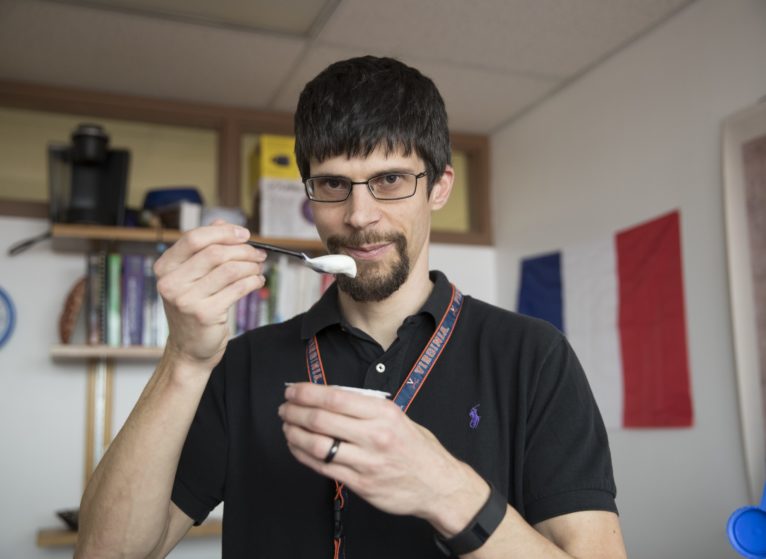
Speaking of yoghurt. A press release by the University of Virginia (UVA) School of Medicine informs us of a groundbreaking discovery of their associate professor Alban Gaultier – yoghurt can cure depression and anxiety!
““Our discovery illuminates how gut-resident Lactobacillus influences mood disorders, by tuning the immune system,” said Gaultier, of UVA’s Department of Neuroscience, the Center for Brain Immunology and Glia (BIG Center) and the TransUniversity Microbiome Initiative. “Our research could pave the way towards discovering much-needed therapeutics for anxiety and depression.” […]
“We were aware from our prior research that Lactobacillus was beneficial in improving mood disorders and was lost following psychological stress, but the underlying reasons remained unclear, primarily due to the technical challenges associated with studying the microbiome.”
Gaultier and his team decided to continue their depression research using a collection of bacteria, known as Altered Schaedler Flora, which includes two strains of Lactobacillus and six other bacterial strains. With this rarely used bacterial community, the team was able to create mice both with and without Lactobacillus, circumventing the need for antibiotics.
Sure enough, the Altered Schaedler Flora produced exciting results.”
This is the paper, in an Elsevier journal where authors pay $4830 to publish in Open Access:
Andrea R. Merchak , Samuel Wachamo , Lucille C. Brown , Alisha Thakur , Brett Moreau , Ryan M. Brown , Courtney Rivet-Noor , Tula Raghavan , Alban Gaultier Lactobacillus from the Altered Schaedler Flora maintain IFNγ homeostasis to promote behavioral stress resilience Brain Behavior and Immunity (2023) doi: 10.1016/j.bbi.2023.11.001
The study was done with mice who were subjected to “unpredictable chronic restraint stress” for 3 weeks:
“Mice were exposed to two hours of daily restraint at a different time of day. Additionally, they were exposed to one of three random overnight stressors that included moist bedding, tilted cage, or two cage changes in a 24 h period”
Also:
“mice were housed in sterile semi-rigid isolators. For the mild acute stressor, mice were removed from the isolator, placed in a biological safety cabinet, and restrained in 50 mL conical vials with ventilation holes for three hours. […] For the subclinical chronic stress, […] mice were restrained in the conical vials for two hours daily, at a different time of day, for seven days.”
All this mouse torture to prove that yoghurt can cure depression. And Gaultier’s team didn’t even use any yoghurt, they just swapped dirty bedding between cages.
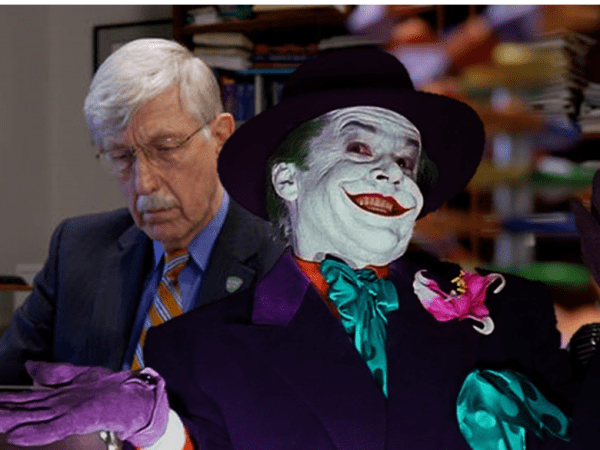
In 2020, Gaultier was celebrated by US media for discovering that antidepressant fluvoxamine can cure sepsis, multiple sclerosis (MS), and ta-da, COVID-19. Mentioned here:
Die with a smile: antidepressants against COVID-19
“Fluvoxamine could certainly be something you wanna put in the tool chest. ‘Cause it looks as if it has the promise to reduce the likelihood of severe illness.” – Francis Collins, NIH Director.
Of course, fluvoxamine never worked for COVID-19, or sepsis, or MS. No problem: earlier this year, Gaultier and his trusty PhD student Andrea Merchak presented a cure for MS as yoghurt-based supplements, here a press release from February 2023:
““We are approaching the search for multiple sclerosis therapeutics from a new direction,” Merchak said. “By modulating the microbiome, we are making inroads in understanding how the immune response can end up out of control in autoimmunity. […] “Due to the complexity of the gut flora, probiotics are difficult to use clinically. This receptor can easily be targeted with medications, so we may have found a more reliable route to promote a healthy gut microbiome,” Merchak said.”
And here is the paper:
Andrea R. Merchak , Hannah J. Cahill , Lucille C. Brown , Ryan M. Brown , Courtney Rivet-Noor , Rebecca M. Beiter , Erica R. Slogar , Deniz G. Olgun , Alban Gaultier The activity of the aryl hydrocarbon receptor in T cells tunes the gut microenvironment to sustain autoimmunity and neuroinflammation PLoS Biology (2023) doi: 10.1371/journal.pbio.3002000
Here, mice were subjected to “Experimental autoimmune encephalomyelitis” with Mycobacterium tuberculosis, and then cured with forced infusions of the content of other mice’s intestines.
I am sure Gaultier continues with his yoghurt enemas to get further ideas.
I thank all my donors for supporting my journalism. You can be one of them!
Make a one-time donation:
I thank all my donors for supporting my journalism. You can be one of them!
Make a monthly donation:
Choose an amount
Or enter a custom amount
Your contribution is appreciated.
Your contribution is appreciated.
DonateDonate monthly
 For Better Science
Seems to be to it.
https://pubpeer.com/publications/8086D75DBDA8D17DF3933D38890A78#16
Then scroll up!
MRC video (stamp of approval)!
LikeLike
https://pubpeer.com/publications/8086D75DBDA8D17DF3933D38890A78
First author.
https://visioneyeinstitute.com.au/doctors/mei-tan/
MRC Clinical Research Training Fellowship, Medical Research Council (MRC) UK (2005-2009)
Honorary Medical Retina Fellowship at Moorfields Eye Hospital, London, UK
Doctor of Philosophy, University College London, UK
Listed in own publications.
Gene therapy for Retinitis Pigmentosa and Leber Congenital Amaurosis caused by Defects in AIPL1: Effective Rescue of Mouse Models of Partial and Complete Aipl1 Deficiency using AAV2/2 and AAV2/8 Vectors
Tan MH, Smith AJ, Pawlyk B, Xu X, Liu X, Bainbridge JB, Basche M, McIntosh J, Tran HV, Nathwani A, Li T, Ali RR
Human Molecular Genetics. 2009; 18(12): 2099-2114.
LikeLike
How much better can it get? Faked 2009 Hum Mol Genet paper in fake-permissive journal, faked PhD. All the powerful fake-supporting systems are in place. UCL will fight tooth and nail not to rescind PhD, Hum Mol Genet will fight tooth and nail not to retract paper. Robin R Ali has been awarded. Fake data cemented and enshrined. Britain at its best!
LikeLike
“It turned out that the fake Figure 6H originated from the PhD thesis of the first author Mei Hong Tan (Figure 4.9D, page 263), which she defended at UCL in 2011 under Ali’s supervision.”
Figure 6I seems more problematic. Very similar bands shunted over into different lanes, representing different proteins. I don’t think that is natural.
What struck me about the PhD thesis was that it is over 400 pages long. So much of it stupefies the reader. The voluminous writing all looks fine, it’s the data that are problematic.
Perhaps generally there is an over-emphasis on writing, where the commas should go, adherence to the “style manual” that was written by a secretary, the stilted English that is used, but not enough emphasis on what actually happened. Too much writing, not enough science. I suspect that the over-emphasis on writing is because universities want their employees to be involved in white-collar crime and measure the “output” by how much is written.
LikeLike
https://pubpeer.com/publications/8086D75DB
DA8D17DF3933D38890A78#17
Which phenomenon is this?
Scroll up for more phenomena!
LikeLike
I believe that Robin Ali has been awarded an FoS.
LikeLike
“We won.”
Yes, we all congratulate you, and you sincerely deserve many acknowledgments and vegan pizzas. However, Smut gets all the beer… so who really won? It’s a quandary.
LikeLike
Yes in fact, why does this Opus Dei turd Alvarez never incite revenge on Smut?
LikeLike
You won. The rest of humanity lost because knowledge and medicine lost
LikeLike
“Drinking the right amount was also key as too much or too little worsened performance, the University of Mexico study showed.”
Still searching for just the right amount.
LikeLiked by 1 person
You still haven’t performed the necessary amount of RCT of the local craft beer bars.
LikeLike
Randomised with two arms, but just one participant.
LikeLiked by 1 person
Two arms = a beer in each hand.
LikeLiked by 1 person
Glad you got my joke!
LikeLike
Thanks for your curated breakthroughs.
I’m a bit behind this year, still working on integrating the breakthroughs below into my personal reality bubble.
Private renting is making you age faster
https://www.adelaide.edu.au/newsroom/news/list/2023/10/12/private-renting-is-making-you-age-faster
Observation of temporal reflection and broadband frequency translation at photonic time interfaces
https://www.nature.com/articles/s41567-023-01975-y
‘Our results establish the foundational building blocks to realize time metamaterials and Floquet photonic crystals, with opportunities for extreme photon manipulation in space and time.’
The latter might be able to resolve the former?
@all: Have a nice weekend!
LikeLike
Thank you!
The second study is probably papermilled, congrats to Nature Physics for their excellent peer review.
The second one is just evil. What is it with Australians and racism & social Darwinism…
LikeLike
At this point, I consider any allusion by a journal to be ‘following COPE guidelines’ to be a major red flag in and of itself. Whatever good intentions COPE maybe might have had at some point, it seems its only use in practice is to serve as excuse no to do anything.
LikeLiked by 1 person
Indeed!
https://psblab.org/?p=410
LikeLike
Agree, COPE is quite hopeless, the guidelines are just used as a smokescreen to make sure everything takes as long as possible and happens in secret.
LikeLike
COPE has the power to absolve fraud for all of eternity, so as long as journals kneel down before them and make sincere confessions after cheating….or just pay their membership subscription fees. Amen.
https://publicationethics.org/cope-membership-subscription-fees
LikeLiked by 1 person
The RJ Scheibe problematic papers stop for the most part in 2011. That’s the same year that Silvia Bulfone-Paus got into the German newspapers. Was that the shock that stopped RJ Scheibe?
https://copy-shake-paste.blogspot.com/2011/06/strange-tale-of-paus-family-and-borstel.html?m=1
LikeLike
Yes, I am almost 100% certain MHH knew about the forgeries in Scheibe’s papers for many years. And covered it up. Like they cover up Jungebluth’s fraud.
LikeLike
Shalan is on a roll. “Facile approach to prepare ZnO@SiO2 nanomaterials for photocatalytic degradation of some organic pollutant models”. retracted 9 December 2023.
The Editor in Chief has retracted this article due to irregularities in multiple figures in this article, specifically:
– In Fig. 1C the 1%, 5% and 10% appear to have identical noise and identical stretches of signal and the 20% and 17% curves appear to identical.
– Figure 2 is highly similar with with Fig. 2 from a previously published article [1] with shared authors.
– Figure 3F appears to overlap with Fig. 1C from a previously published article [1] with shared authors.
– Figure 4 appears to have an identical absorption spectra to one shown for a different particle from Fig. 3 of previously published article [2] with shared authors.
– Figure 8 is highly similar to Fig. 7 from a previously published article [2] with shared authors.
The Editor in Chief has therefore lost confidence in the veracity of results presented in this article.
Ahmed E. Shalan and Mohamed F. Sanad do not agree to the retraction. M. F. Abdel Messih and M. A. Ahmed have not responded to any correspondence from the editor about this retraction.
LikeLike
Leonid/For Better Science featured on the most recent Sabine Hossenfelder video: https://www.youtube.com/watch?v=eSGxCYNwFe4 (@ 5:38)
LikeLiked by 1 person
Nice. Although I feel even Sabine is afraid ro mention Philipp Jungebluth. The law is an asshole.
LikeLike
Thanks for sharing!
LikeLike
“Unfortunately it turned out that his procedures were more experimental than his patients knew.”
What the hell is that supposed to mean?! Could anyone explain this Sabine sentence, please. Or could the purpose of this vague statement to be hiding the real story despite later revealing it…
Another vague statement “… there’s quite some drama on his blog.”
She does not even say what this blog is about but we understand that she follows it because of the “quite some drama”. Maybe we all should focus on writing a screenplay of some multi-series sitcom as suggested very recently in the comment section of https://forbetterscience.com/2023/12/06/lille-papermille/#comments . Maybe that’s the drama that is being referred to.
I know I should post these in the comment section of her video but doubt to receive any reasonable answer before it gets deleted.
LikeLiked by 1 person
“Largest prize in vision research – Robin Ali got a million for bad ophthalmology”
Another one for Robin Ali! Nothing is a blind as Nature.
PubPeer – Restoration of vision after transplantation of photoreceptor…
LikeLike
“Two Moorfields staff, Professor James Bainbridge and Professor Robin Ali have recently been named among six international winners of the largest prize in vision research, the 2018 António Champalimaud Vision Award, worth €1 million”.
One for Professor James Bainbridge and Professor Robin Ali!
PubPeer – Von Hippel-Lindau protein in the RPE is essential for normal…
Scroll up!
LikeLike
Robin Ali, the early years. Because it is from Oxford it must be a mirage, or have some clear explanation. Perhaps the journal messed it up.
https://pubpeer.com/publications/77B02A3CB85CE4739EBA12BAE0C96E#5
Scroll up!
LikeLike
Something isn’t quite right. The company MeiraGTx touting its higher up managers, yet their scientific data are incorrect.
Our Team – MeiraGTx
Executive Team,
Stuart Naylor, Ph.D. Chief Development Officer
PubPeer – Long-term reversal of chronic anemia using a hypoxia-regulat…
Meet the Meira Team
Michel Michaelides, M.D. Head of Clinical Ophthalmology
PubPeer – Development of an optimized AAV2/5 gene therapy vector for L…
PubPeer – Dominant cone-rod dystrophy: a mouse model generated by gene…
Tassos Georgiadis, Ph.D.Vice President, Preclinical Development
Note that Tassos is the short form of Anastasios. Anatasisos Georgiadis and Tassos Georgiadis are the same person.
Anatasisos Georgiadis and Tassos Georgiadis are the same person.
PubPeer – Von Hippel-Lindau protein in the RPE is essential for normal…
PubPeer – The Tight Junction Associated Signalling Proteins ZO-1 and Z…
PubPeer – Development of an optimized AAV2/5 gene therapy vector for L…
LikeLike
Robin R Ali Retraction.
https://link.springer.com/article/10.1038/s41434-024-00505-6
LikeLiked by 1 person
Robin R Ali in the middle. How to explain the repeating cells?
PubPeer – Retinal ganglion cell apoptosis in glaucoma is related to in…
Looks like something from Star Trek!
LikeLike
“Largest prize in vision research – Robin Ali got a million for bad ophthalmology”
Despite the million Robin R Ali goes to the pawn shop after the prize.
PubPeer – Lateral gain is impaired in macular degeneration and can be…
LikeLike