

Schneider Shorts of 14 July 2023 – a Nobel-groomed German phoney in London, a Romanian papermilling thief, and a Spanish psychopath all protected by their universities, Harvard’s looney in news again, with Unesco’s blunder, insights into Elsevier’s sausage factory, some retractions, and finally, how to communicate with PubPeer critics in academic manner.
Table of Discontent
Science Elites
- “one of the 10 most cited researchers in in the word” – Chris Thiemermann, the German genius of QMUL
- Not a pleasant matter for the University – meet Simona Cavalu, plagiarist and papermiller
- A new methodology for assessing impact – UNESCO awards an exceptional young scientist
- Tell me your name, turtle grandson – Prof Pan feels persecuted
- Rafa is looking for you – Spanish university did nothing about sadist bully Maldonado
Scholarly Publishing
- The goal is 250 papers – Elsevier sacks society journal editor for failing the target
Science Breakthroughs
- Fragments of alien technology – Harvard’s UFO truther Avi Loeb is in the news again
News in Brief
Science Elites
“one of the 10 most cited researchers in in the word”
Meet Christoph Thiemermann, a German man in England, Professor of Pharmacology and Centre Lead for Translational Medicine & Therapeutics at the William Harvey Research Institute (WHRI) at the Queen Mary University London (QMUL). QMUL informs us of Professor Thiemermann’s achievements:
“He graduated with honours in Medicine (1986), obtained his MD in Medicine (1987, summa cum laude) from the University in Cologne in Germany (awarded University Prize 1987 for ’Best Doctorate Degree of all Faculties of the University of Cologne’) and received consecutive Fellowships from the Deutsche Forschungsgemeinschaft (DFG) and the Thyssen Foundation (Germany). He joined the WHRI in July 1987, where he obtained a PhD in Pharmacology under the supervision of The Nobel Laureate Sir John Vane in 1991. […]
He has published more than 470 scientific articles in peer-reviewed scientific journals (listed in PubMed; with 770 publications listed by ResearchGate), which have been cited more than 36,000-times (h-index: 99; i10-index: 365). According to Google Scholar, he is one of the 10 most cited researchers in in the word [sic!] working on translational medicine, and one of the 50 most-cited pharmacologists.”

Vane, who won the Nobel Prize for the discovery of aspirin, was the founding director and until his death in 2004 the honorary chairman of WHRI. It seems he took good care of his promising German student, who was installed as Chairman & Chief Executive of WHRI just before Vane’s death in 2003.
Some of Thiemermann’s papers are co-authored with his own former postdoc, a Sicilian cheater and now President of the University of Messina, Salvatore Cuzzocrea. Read about him here:
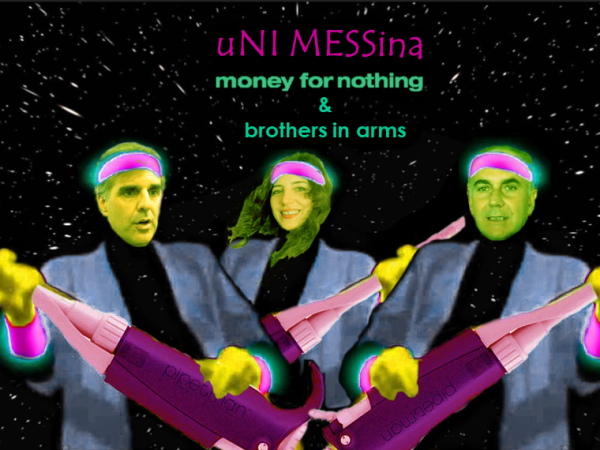
Uni Messina, money for nothing & brothers in arms
“The University of Messina was, in short, a good business that appealed to many, including organized crime on both sides of the Strait of Messina.” – Aneurus Inconstans

The magnificent rector from a mafia-connected family has currently over 40 fraudulent papers flagged on PubPeer, while many of Thiemermann’s papers on PubPeer (over 20) are with Cuzzocrea. Like this:
Salvatore Cuzzocrea , Emanuela Mazzon , Laura Dugo , Ivana Serraino , Tommaso Centorrino , Antonio Ciccolo , Fons A. J. Van De Loo , Domenico Britti , Achille P. Caputi , Christoph Thiemermann Inducible Nitric Oxide Synthase-Deficient Mice Exhibit Resistance to the Acute Pancreatitis Induced by Cerulein Shock (2002) doi: 10.1097/00024382-200205000-00013

Aneurus inconstans: “Figure 3C: “…cerulein-treated iNOS-deficient mice (C).”This micrograph overlaps (yellow goxes) with Figure 3A of Cuzzocrea et al. 2002 Cytokine, a paper submitted three months later and not yet accepted when the Shock paper was sent out, where the image is described as “No histological alteration was observed in pancreas section obtained from normal control animals not given caerulein (A).”
Or this, again with Cuzzocrea’s buddy in Messina, Achille Caputi:
Salvatore Cuzzocrea , Nicole S. Wayman , Emanuela Mazzon , Laura Dugo , Rosanna Di Paola , Ivana Serraino , Domenico Britti , Prabal K. Chatterjee , Achille P. Caputi , Christoph Thiemermann The Cyclopentenone Prostaglandin 15-Deoxy-Δ12,14-Prostaglandin J2Attenuates the Development of Acute and Chronic Inflammation Molecular Pharmacology (2002) doi: 10.1124/mol.61.5.997


Or this, same names again, and the same proud last author:
Salvatore Cuzzocrea , Prabal K Chatterjee, Emanuela Mazzon , Laura Dugo , Ivana Serraino , Domenico Britti , Giuseppe Mazzullo , Achille P Caputi, Christoph Thiemermann Pyrrolidine dithiocarbamate attenuates the development of acute and chronic inflammation British Journal of Pharmacology (2002) doi: 10.1038/sj.bjp.0704463


The rotten travelling gel appeared in a fourth paper by the same team around Thiemermann:
Salvatore Cuzzocrea , Prabal K. Chatterjee, Emanuela Mazzon , Laura Dugo , Angela De Sarro , Fons A. J. Van De Loo , Achille P. Caputi, Christoph Thiemermann Role of Induced Nitric Oxide in the Initiation of the Inflammatory Response After Postischemic Injury Shock (2002) doi: 10.1097/00024382-200208000-00014


There is much more on PubPeer, each thread reveals outrageously fake science. Also, Cuzzocrea was not the only miracle postdoc of Thiemermann’s, there was another another one whose name you may have noticed above: Prabal “Charlie” Chatterjee, now principal lecturer in Pharmacology at the University of Brighton in UK. Another example of the trio’s productivity:
Prabal K. Chatterjee , Paul A.J. Brown , Salvatore Cuzzocrea , Kai Zacharowski , Keith N. Stewart , Helder Mota-Filipe , Michelle C. Mcdonald , Christoph Thiemermann Calpain inhibitor-1 reduces renal ischemia/reperfusion injury in the rat Kidney International (2001) doi: 10.1046/j.1523-1755.2001.00722.x


The same image appears in Figure 6A of Chatterjee et al. 2000 FASEB J, where it was described as immunohistochemical localization of PARS in sham animal.”
And yet, Thiemermann can’t always blame Cuzzocrea or even Chatterjee. Sometimes they weren’t even there, so our German science genius can blame himself.


Worth noting that Muhammad Magdi Yaqoob is also a QMUL professor and member of WHRI board of directors. Or maybe Professor Thiemermann became victim of yet another Italian gang, this time of Massimo Collino and Roberto Fantozzi of University of Turin? Although… the above lead author Nimesh Patel, currently reader in medical education at QMUL, was also a postdoc of Thiemermann’s. Three dishonest postdocs and the PI never noticed?
Alternatively, it’s possible that Thiemermann actively seeks out rotten company because such people know how to publish lots and fast. Guess who else Thiemermann’s was in bed with? David Latchman and his pocket fraudsters Anastasis Stephanou and Tiziano Scarabelli!

David Latchman, uncensored
I publish exclusively two uncensored UCL screening panel reports into the David Latchman and Anastasis Stephanou affair. Now we know which papers were investigated and which requested retractions didn’t happen.

This was retracted:
Seán P. Barry , Samir Ounzain , James McCormick , Tiziano M. Scarabelli , Carol Chen-Scarabelli , Louis I.I. Saravolatz , Giuseppe Faggian , Alessandro Mazzucco , Hisanori Suzuki , Christoph Thiemermann , Richard A. Knight , David S. Latchman, Anastasis Stephanou Enhanced IL-17 signalling following myocardial ischaemia/reperfusion injury International Journal of Cardiology (2013) doi: 10.1016/j.ijcard.2011.08.849

The retraction notice from January 2019 stated:
“University College of London has undertaken an investigation into allegations received that the above publication contained images that had been deliberately manipulated. […] The panel conducting the investigation found that it was clear that the images had been intentionally manipulated as alleged, concluding that research misconduct had occurred.“
There are two more papers by Thiemermann, Latchman and Stephanou on PubPeer, McCormick et al 2006 and Barry et al 2010, both have fudged gels.
Finally, Thiemermann used to collaborate with a certain WHRI researcher and another mentee of Sir John Vane, Mauro Perretti. Now, Perretti is not only member of WHRI’s board of directors and Dean for Research at QMUL’s School of Medicine and Dentistry, but also “Founder, Director, and Chairman of Scientific Advisory Board” of the disastrous QMUL spin-off company Resolomics, about which I wrote in Friday Shorts before. Its other “Founder, Director, and Chief Scientific Officer” is the QMUL professor Jesmond Dalli, former postdoc of Harvard professor Charles Serhan. Both were accused of fraud last year, there were investigations at Harvard and QMUL, which settled on the solution to delete an embarrassing July 2021 press release with Dalli and Perretti advocating for Resolomics’ fictional “specialised pro-resolving mediators (SPM)” as a cure for COVID-19, in order to quietly close the case.
Naturally, the Nobelist-trained Perretti has his own PubPeer record (often SPM trash with Dalli, including with the Nobelist Louis Ignarro. Fiorucci et al 2002 even got in 2008 editorial expression of concern due to “the apparent duplication in the use of certain figures in the foregoing articles“.

Fake data and real pomegranate juice in Nobelist Louis Ignarro’s papers
Louis J. Ignarro knew how to monetize his 1998 Nobel Prize for discovery of nitric oxide as molecular cell signalling agent. He made many millions selling dietary supplement for Herbalife and pomegranate juice for POM Wonderful Company. Some of that found its way (without proper conflict of interest declaration) into Ignarro’s peer reviewed papers. Those,…
Alternatively, Thiemermann may himself and personally be the problem. How to explain this two-author creation? Another rotten postdoc?
H Ruetten , C Thiemermann Effects of tyrphostins and genistein on the circulatory failure and organ dysfunction caused by endotoxin in the rat: a possible role for protein tyrosine kinase British Journal of Pharmacology (1997) doi: 10.1038/sj.bjp.0701345

Now you may wish to know how QMUL reacted when the pseudonymous sleuth Clare Francis tried to report Thiemermann’s PubPeer record to them? This reply Clare Francis received on 10 July 2023:
“Thank you for your email.
At Queen Mary University of London, we take research integrity very seriously. We are committed to creating an environment that supports the highest standards, and any allegations of research misconduct are investigated robustly. Therefore, if you would like to make a complaint, I would ask you to complete our form for reporting allegations of research misconduct, which is accessible at the following link: http://www.jrmo.org.uk/performing-research/research-integrity/
Our full research misconduct policy is accessible at the link below, from Page 3 onwards:
Please let me know if you have any questions.
Best wishes,
James Patterson
Research Integrity and Assurance Officer
Joint Research Management Office
Queen Mary, University of London“
The required Form for Reporting Allegations of Research Misconduct demands of the notifier to reveal their full identity and affiliation. So that the accused QMUL cheater can retaliate.

The English science supremacy
England leads the world in science, any fule kno. Meet some more of the star jesters: Nick Lemoine, Peter St George-Hyslop and Xin Lu. They are curing cancer and Alzheimer with Photoshop.
Strangely, when I reported a whole set of QMUL cheaters (Nicholas Lemoine, Daniele Bergamaschi, Sarah Martin and Yaohe Wang, read the article above) I was not ordered to fill out a form. But then again, all I received was some automatic emails, and nothing else. QMUL never bothered to do anything at all about that fraud.
You can imagine where I suggested to QMUL they can shove their report form.
Not a pleasant matter for the University
Simona Cavalu is professor of biophysics at the University of Oradea in Romania, and she apparently buys her authorships from papermills. As you can see on PubPeer, for example this masterpiece of international scholarly collaboration between Romania and Bangladesh, Saudi Arabia, India, Morocco, and South Korea, co-authored with a certain Indian papermill fraudster named Abhijit Dey (read here):
Md. Mominur Rahman, Mst. Afroza Alam Tumpa, Mehrukh Zehravi, Md. Taslim Sarker, Md. Yamin, Md. Rezaul Islam, Md. Harun-Or-Rashid, Muniruddin Ahmed, Sarker Ramproshad, Banani Mondal, Abhijit Dey, Fouad Damiri, Mohammed Berrada, Md. Habibur Rahman, Simona Cavalu An Overview of Antimicrobial Stewardship Optimization: The Use of Antibiotics in Humans and Animals to Prevent Resistance Antibiotics (2022) doi: 10.3390/antibiotics11050667

Alexander Magazinov noticed the tortured phrases which arose when the papermillers were plagiarising a British paper by the Wellcome Trust director Jeremy Farrar: Jinks et al. 2016 . Elisabeth Bik noticed inappropriate references as well as content stolen from a study by the Erasmus University in the Netherlands, Yusuf et al 2021. Other datasets were stolen from Davies & Davies 2010, but the first author may have already negotiated a non-action with MDPI:
“In the future, we will be more careful about writing sentences in the manuscript.“
Before Cavalu discovered papermills, she was stealing scholarly work traditionally, i.e. by classic plagiarism. Romanian newspaper Bihoreanul reported in November 2021 (Google translated):
“In 2012, BIHOREANUL revealed that Simona Cavalu, professor of biophysics at the Faculty of Medicine and Pharmacy, plagiarized in the volume “Medical Biophysics”, published in 2000 with her colleague Mioara Tripşa, then in the re-edition entitled “Medical Biophysics and Electronic Medical Devices”, appeared five years later, with only her signature. Cavalu’s book copies dozens of pages, including images and sketches, from the volume “Medical Physics”, written by the Englishman Martin Hollins […]
The highlight is that, approached by BIHOREANUL , Cavalu admitted his mistake, calling it a “sin of youth” and guaranteeing that the other studies and books written later are 100% original. The first work is, however, a huge stain in her CV, which she did not want to fix.
Although her deed was as serious as possible, and Martin Hollins notified the University of Oradea, in the sweet “Sorbonic” tradition, Cavalu proved untouchable: the Ethics Commission did not even investigate her, on the grounds that… it doesn’t have the English book! The University’s ethicists were reduced to looking for Hollins’ book in the campus library. When they didn’t find it there, they didn’t bother to buy it on the Internet, where it was available, they didn’t even ask the original author for it, but simply closed the investigation quickly, on the grounds that it didn’t they have the means to do a check.”
As explainer, what the f*** is wrong with University of Oradea: a certain queen of Romanian papermilling, Simona Gabriela Bungau, is professor of pharmacology there. Bungau has an impressive PubPeer record of papermill fraud, but she is even more untouchable in Orodea than Cavalu. Because the Rector of this university is a certain Constantin Bungau and it is more likely than not that he is Simona Bungau’s husband. If the rector were to sanction Cavalu for research misconduct, his own wife would be next in line.
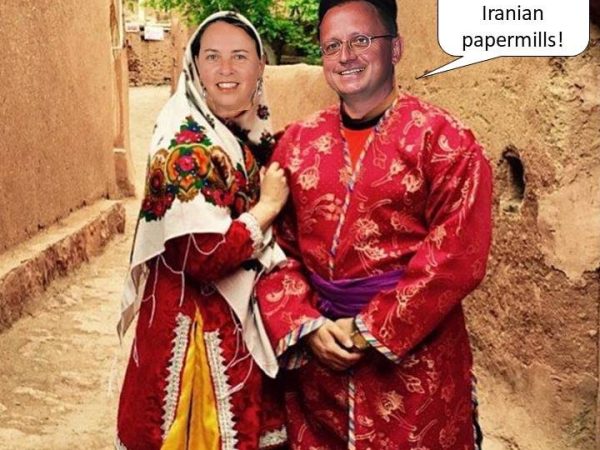
German Authorities on Papermills and Whistleblowing
“I am not familiar with Iranian papermills!” – Prof Dr med Henning Madry, Saarland University.
Wait, that’s not all!
“Easily escaped from the scandal, Cavalu gathered courage and, in 2016, sued BIHOREANUL , claiming that she was unfairly defamed, even though she herself had admitted her sin! The trial was suspended, however, because, dissatisfied with the ease with which the University trivialized the serious accusation of intellectual theft, Hollins in turn sued Cavalu, claiming that she violated his copyright.
In two court trials, Cavalu’s plagiarism was established, but she had some trumps up her sleeve:
“…a specialist professor concluded, in turn, that Simona Cavalu is guilty, establishing that 62% of her book is copied, down to the comma, from Hollins’ volume.
The expertise was not easy, because in the meantime Simona Cavalu did something that can hardly be imagined: she forged her own book, reprinting the volume from 2005, with the same unique code granted by the National Library and with the same name, but without the plagiarised content. She swiftly sent the expert a copy of the new book, as if it were the real one. However, the lawyer from Cluj who represented Hollins, Oana Lungu, detected the fraud, which could also have criminal consequences, and the judges requested the original copy, from the National Library’s depository, in order not to be misled.”

The Highly Cited Researchers of Clarivate
“here is my advice to Clarivate: better get lost. ” – Alexander Magazinov

It was “confirmed that 118.5 of the 190 pages of Cavalu’s book were plagiarized“, but Cavalu kept appealing and the trial moved to the High Court of Cassation and Justice. Cavalu lost there as well in November 2021. The story ends with rector Bungau blathering :
“When we have the sentence, I will send it to the Ethics Commission and the Legal Office, to decide what we have to do. It is clear that it is not a pleasant matter for the University”, says Bungău.
After recently having to rehire the institution’s most notorious plagiarist, Daniela Ionescu, Bungău does not even dare to say what sanction should be imposed on Cavalu. “I can’t say that, but the Ethics Commission”. Which now can no longer pretend that it doesn’t see the obvious…”
Obviously, there were no sanctions. And what about Bungau’s papermilling wife?
Muhammad Majid, Anam Farhan , Muhammad Imran Asad , Muhammad Rashid Khan , Syed Shams Ul Hassan , Ihsan-ul Haq , Simona Bungau An Extensive Pharmacological Evaluation of New Anti-Cancer Triterpenoid (Nummularic Acid) from through In Vitro, In Silico, and In Vivo Studies Molecules (2022) doi: 10.3390/molecules27082474

A new methodology for assessing impact
There is much debate these days about how useful United Nations Organisation is, if at all. You all saw their amazing non-performance in the Russo-Ukrainian war.
But how about the UN and science?
Works great as well. Here an announcement by the UN instituion UNESCO from 19 June 2023:
“On 19 June, five exceptional young scientists from Argentina, Cameroon, China, Egypt and Serbia received the prestigious UNESCO-AI Fozan International Prize for the Promotion of Young Scientists in Science, Technology, Engineering and Mathematics (STEM) during a ceremony at UNESCO headquarters in Paris, France. Each laureate took home prize money of US$50,000 and a medal.”
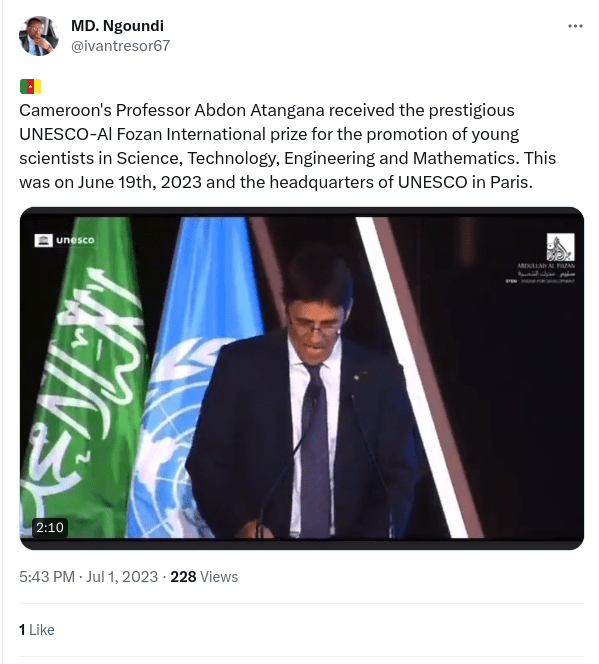
Meet one of them, as per the same press release:
“Professor Abdon ATANGANA (37 years old, Cameroon)
Prof. Atangana has made significant contributions to the field of mathematics, particularly in the areas of fractional calculus, fractional differential equations, and mathematical modelling. These allow us to model complex phenomena to solve real-life problems such as the spread of infectious diseases, heat transfer problems, groundwater flow and contamination or weather patterns.
He has suggested differential operators which can replicate complex processes that are hard to predict. He has also introduced a new methodology for assessing the impact of infectious diseases on groundwater.
This type of interdisciplinary research can be applied to industry, such as in the development of the cruise control function in cars. By using fractional calculus to further our understanding of the intricate dynamics of heat transfer, the flow of fluids and other physical phenomena, his work is contributing to new strategies for minimizing energy consumption and optimizing renewable energy systems.
Abdon Atangana is a Professor at the University of the Free State in in Bloemfontein, South Africa.”
The real reason why UNESCO awarded Atangana is of course his retractions due to phony maths.
- Rodrigue Gnitchogna , Abdon Atangana New two step Laplace Adam‐Bashforth method for integer a noninteger order partial differential equations Numerical Methods for Partial Differential Equations (2018). Retracted by Wiley in March 2023: “retraction has been agreed due to fundamental flaws in the paper which make the findings unreliable. The authors disagreed with the decision to retract the paper.“
- Kolade M. Owolabi , Abdon Atangana On the formulation of Adams-Bashforth scheme with Atangana-Baleanu-Caputo fractional derivative to model chaotic problems Chaos An Interdisciplinary Journal of Nonlinear Science (2019), published in a special issue edited by the authors and retracted by AIP in December 2021 “due to concerns that were raised about the accuracy of the numerical methods presented therein.“
- E. Bonyah , A. Atangana , A. A. Elsadany A fractional model for predator-prey with omnivore Chaos An Interdisciplinary Journal of Nonlinear Science (2019), retracted by AIP in July 2020 “due to concerns that have been raised regarding the accuracy of the results presented.“
- J.F. Gómez-Aguilar , Abdon Atangana Power and exponentials laws: Theory and application Journal of Computational and Applied Mathematics (2019) , retracted by Elsevier in October 2021: “Some inconsistencies and irregularities are detected on formulas and between sections by the readers. […] After receiving three independent reviewer reports about the concerns raised, the Editorial Board have decided that the published study should be retracted.“
- Abdon Atangana Derivative with two fractional orders: A new avenue of investigation toward revolution in fractional calculus The European Physical Journal Plus (2016), retracted by Springer in January 2021: “Following an investigation into the mathematical definitions contained in Section 2, the mathematical validity of the results (especially Theorem 1) contained in Section 3, and the physical applications presented in Section 6, the article was found to contain errors.“
- Abdon Atangana , Seda İğret Araz New numerical method for ordinary differential equations: Newton polynomial Journal of Computational and Applied Mathematics (2020), retracted by Elsevier in July 2020 because “the findings of the paper are unreliable.“
We do not know if Professor Atangana bought those mathematical nonsense papers from a papermill, but the $50k from Unesco sure can buy some more authorships for him, to compensate for the retractions.
Tell me your name, turtle grandson
Scientists often accuse me of being rude and disrespectful. Here, a scholar demonstrates how to converse about research quality in a professional and academic manner:
Wen-Tsao Pan , Qiu-Yu Huang , Zi-Yin Yang , Fei-Yan Zhu , Yu-Ning Pang , Mei-Er Zhuang Determinants of Tourism Stocks During the COVID-19: Evidence From the Deep Learning Models Frontiers in Public Health (2021) doi: 10.3389/fpubh.2021.675801
PubPeer user Rhipidura albiventris commented that “The data plotted in Fig 5 are inconsistent”


Now a polite, measured, and professional reaction from the lead author, Distinguished Professor Wen-Tsao Pan of the Hwa Hsia University of Technology in Taiwan:
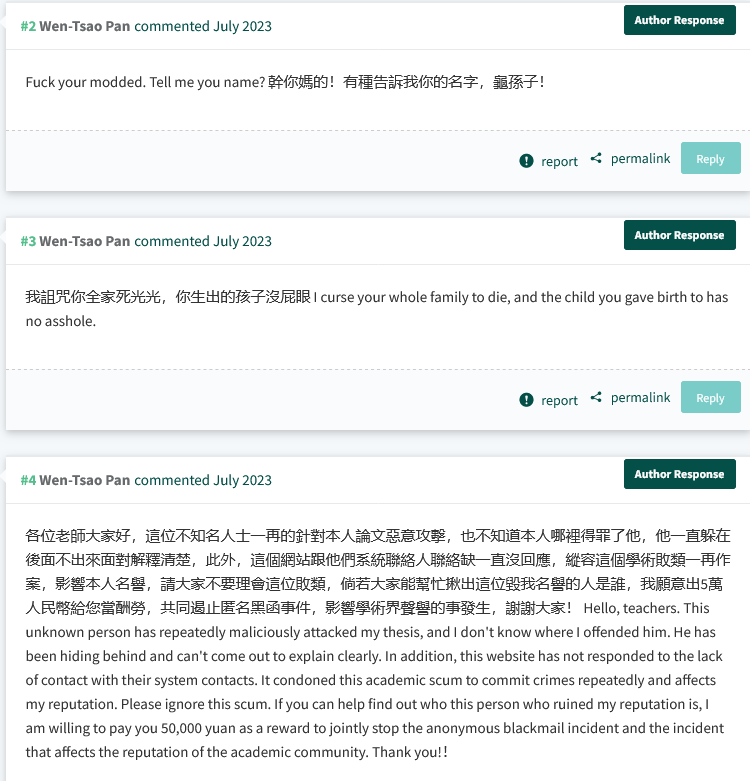
“Fuck your modded. Tell me you name? [Chinese:] fuck you! Kindly tell me your name, turtle grandson!
I curse your whole family to die, and the child you gave birth to has no asshole.“
On Twitter, Professor Pan eventually apologised:

Only to add in another tweet to Tiger BB8 (translated):
“…can you please help him to stop attacking me, my mailbox is full of his attacking paper system emails, some co-authors are about to have a nervous breakdown, and they are going to see a psychiatrist, please help stop him Thanks!“
Rafa is looking for you
The Spanish newspaper El Diario reports about the psychopath neuroscientist Rafael Maldonado (Google translated):
““Rafa is looking for you.” The phrase generated dread among the employees of Neurophar, the laboratory of Neuropharmacology of the Universitat Pompeu Fabra (UPF) and considered one of the most prestigious in Europe. From 1999, it is led by Rafael Maldonado, an acclaimed professor whom nearly a dozen researchers and investigators accuse of “abuse of power” and “workplace harassment” during the past 20 years.
The management and character of Maldonado, explained 17 former employees, has created in the laboratory a “climate of terror” —three of them define it as an “atmosphere of coercion”— which has led for at least four to anxiety and depression, panic attacks and to a number of young people with a shining record to abandoning research after the trauma. Some were prescribed anxiolytics and antidepressants, and half a dozen of them continue to this day under psychological treatment”
The university now pretends to be investigating. Yet:
“The interviews and documents obtained demonstrate that the university knew what was going on with the professor at least since December, 2017. Also that the centre received a number of warnings during the last five years and never acted. The testimonies indicate that the “abuse of power” of this professor had been happening for the least two decades.
Thing is, Maldonado was bringing millions in research funding. You sure will recognise the university’s dilemma.
“Respondents placed the abuses of power in two environments. The first of them was Maldonado’s own office, where the researchers explain that in private he used to threaten and humiliate his staff. They all say that cries could be heard from outside and it was common to see stuff come out of the room crying.
“You were shamed, you were belittled, and even you had your actions mimicked in a tone of mockery,” says one of the interviewees. “Entering his office was equivalent to leaving with you self-esteem on the floor”, says another researcher who was in Neurophar between 2013 and 2017.
The second compromised environment, explain the respondents, were the lab meetings […] “He used the lab meetings to intimidate and punish those who were on his black list”, argues a researcher who was in the laboratory between 2010 and 2016. “It was very common to see people crying after the meeting,” adds another respondent.
The 17 interviewees agree that Maldonado chose who he was talking to in those presentations according to whom he wanted to punish.”
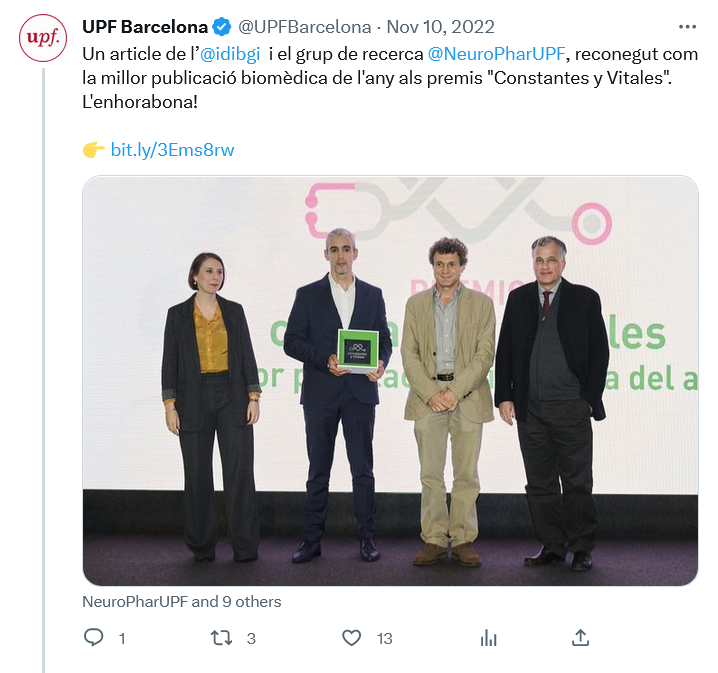
Many instances of abuse are described. For example, a PhD student who accidentally lost some samples, was terrorised, threatened with damage lawsuits, and then had her PhD graduation cancelled after 4 years. A senior postdoc who asked Maldonado to stop the terror, was sacked. Others had “to work for more than 70 days in a row without rest for a single day, with morning and afternoon shifts.” And of course:
“A dozen of testimonials explain that Maldonado forced his researchers to obtain specific results, some researchers were simply manipulating results so that the professor would not make them repeat an experiment. “He could ask you to repeat a test as many times as necessary until you get the data that he believed was optimal'”
The university and even the ministry knew for years. A PhD student was told by the university Ombudsman that he has two options: “submit a complaint and probably resign his doctorate, or “endure”“. No investigations were opened. It’s the same university which hosts the cheater Pura Munoz-Canoves.
Does Spanish Research recruit its Leaders from PubPeer?
One dishonest scientist sacked, another one is welcomed. At least this is what it looks like at the Spanish National Centre for Cardiovascular Research, CNIC, which seems to be recruiting their principal investigators through the whistleblower platform PubPeer, as the scientist who alerted me to this development quipped half-jokingly. The new recruitment at the Madrid…
Scholarly Publishing
The goal is 250 papers
A rare insight into how Elsevier sausages are made.
From a recent blog post by the Design Research Society (tweeted by Richard Poynder), concerned about the future of their journal:
“The Executive Board of the DRS condemn, in the strongest possible terms, the recent treatment by Elsevier of the Editor-in-Chief and other Editors of Design Studies, the academic journal of the Design Research Society. […]
For the last 6 years, Peter Lloyd has been Editor-in-Chief. During this period, the impact factor has grown steadily to 3.85, something that Elsevier have been extremely proud of. However, the reputation, and even the very future of our interdisciplinary journal is now under serious threat.
At the end of last year, Elsevier appointed a new publishing executive, Dr Lily Khidr, to manage the journal alongside the Editor-in-Chief. For many years this relationship between Editor-in-Chief and Publisher has been quite amicable. In February this year, Professor Lloyd received an email from Dr Khidr stating that: “the journal is not growing, financially or editorially and that is usually a recipe for closure.” In common with other leading journals in the design research discipline, Design Studies publishes around 35 papers per year. In the same email, Dr Khidr stated that: “the goal is 250 papers published in 2023”. This is a sevenfold increase in the number of publications and would represent an acceptance rate of 40% and subsequently a huge drop in quality. Whilst Professor Lloyd had long been in discussion with Elsevier about growing the journal, in his, and the other Editor’s, opinion this was simply not feasible or desirable. These concerns were voiced in a meeting between the Editorial team and Dr Khidr at the beginning of May.
On 2nd June the Editorial Team received an email from Dr Khidr stating that a new Editor-in-Chief had been appointed (on 1st June) “with immediate effect”. This decision, coming out of the blue, was made without any consultation with the existing Journal Editors, the Editorial Board, or the Executive Board of the Design Research Society. The person selected, Cara Wrigley, has never had a paper published in the journal and is not a member of the DRS (as all previous Editors-in-Chief have been).”
To sum up: the learned society naively thought that they own their journal, but turned out that the real owner Elsevier planned to use their brand to cash in on Asian papermill fraud. And when the Editor-in-Chief spoils business by rejecting this papermill crap, well, there are other, more willing characters like the Australian professor Cara Wrigley.
Elsevier’s Pandemic Profiteering
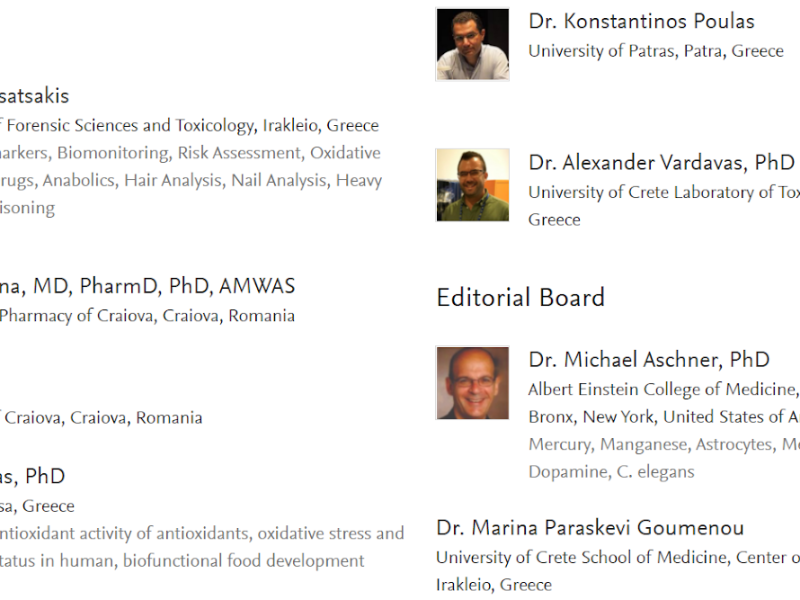
Aristidis Tsatsakis, Konstantinos Poulas, Ronald Kostoff, Michael Aschner, Demetrios Spandidos, Konstantinos Farsalinos: you will need a disinfecting shower once you read their papers.

In fact, the rest of editorial board will have to go, there’s probably a huge queue of papermilling fraudster waiting to take their place:
“The positions of all the current Editorial team are now quite uncertain, given the way the publisher is proceeding. It seems unlikely that their appointments will be continued beyond the end of this year, even if they do not resign before then. They are of course outraged, angered and distressed at what has happened
[…] Many of the Associate Editors (who with the Editor-in-Chief handle the reviewing processes) and the Editorial Board (who carry out a lot of the reviewing, along with many dozens of other volunteers annually) are likely to resign.”
Elsevier’s research integrity
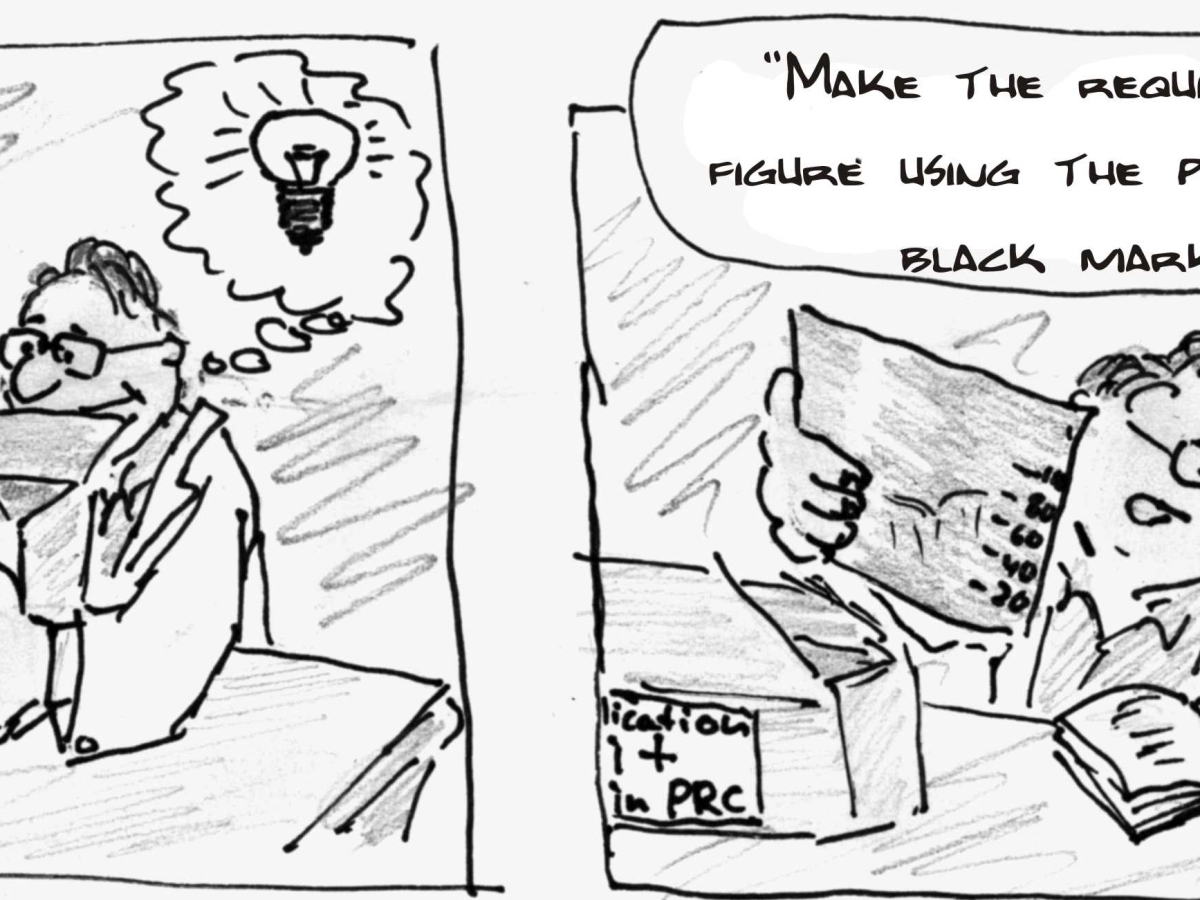
A Chinese paper gets rejected at Elsevier after reviewer spotted fraud. Same paper re-appears unchanged in another Elsevier journal, the editors refuse any action.
Science Breakthroughs
Fragments of alien technology
My humble hope that the media can’t be this stupid as to keep falling for that demented looney Avi Loeb, was way too naive. Now, this Israeli genius is simultaneously a creationist and an UFO-truther, and sees himself as the second coming of Galileo. He is also a professor in Harvard. His chair for astrology astronomy is sponsored by some investment banker, and another billionaire gave Loeb in 2021 $2mn to build telescopes for finding alien spaceships. Journalists love Loeb, to know how much, read earlier Friday Shorts.
Now Loeb is back in US and international media again. CBS reported on 7 July 2023:
“Harvard professor Avi Loeb believes he may have found fragments of alien technology from a meteor that landed in the waters off of Papua, New Guinea in 2014.
Loeb and his team just brought the materials back to Harvard for analysis.”
Well, that’s actually it. Loeb’s claim that the meteorite bits stem from an alien spaceship are supported by his hunch and Harvard credentials. Enough for all professional journalists.
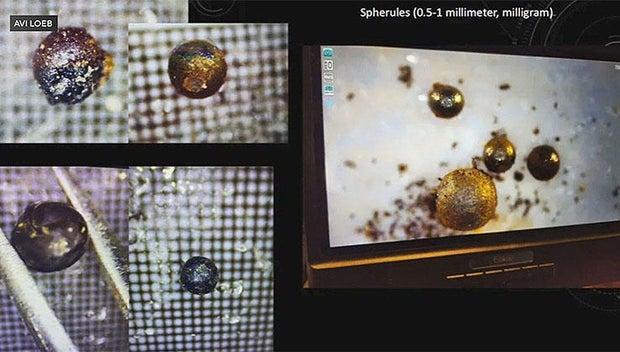
All media runs with it, most of them totally uncritically. The Times at least has this:
“Other scientists regard such speculation as premature at best, but Loeb has written excitedly of the possibility of winning the Nobel Prize and has booked the huge video screen in New York’s Times Square to make an announcement if the evidence bears out his theory.”
Yet, Loeb is not just a total pain in the a**, but he is also a colonialist a**hole, as The Times reports:
“In Papua New Guinea, however, there is bafflement and indignation that his team bypassed the conventional licensing channels and removed the meteor fragments without clear agreement as to what benefits a scientific breakthrough might bring to the country. “We’ve been cheated,” says George Penua Polon, deputy administrator of Manus Province. […]
According to Papua New Guinea’s National Research Institute, the official body that co-ordinates research applications from overseas scientists and helps to obtain the necessary permissions from government departments, Loeb’s team did not contact them at all. Members of the team entered the country on business visas rather than the special exemption visa issued to scientists. According to Polon, the ocean affairs department of the attorney-general’s office was still processing an application from the team even after they had returned to the US.”
This is the kind of scientist media loves.
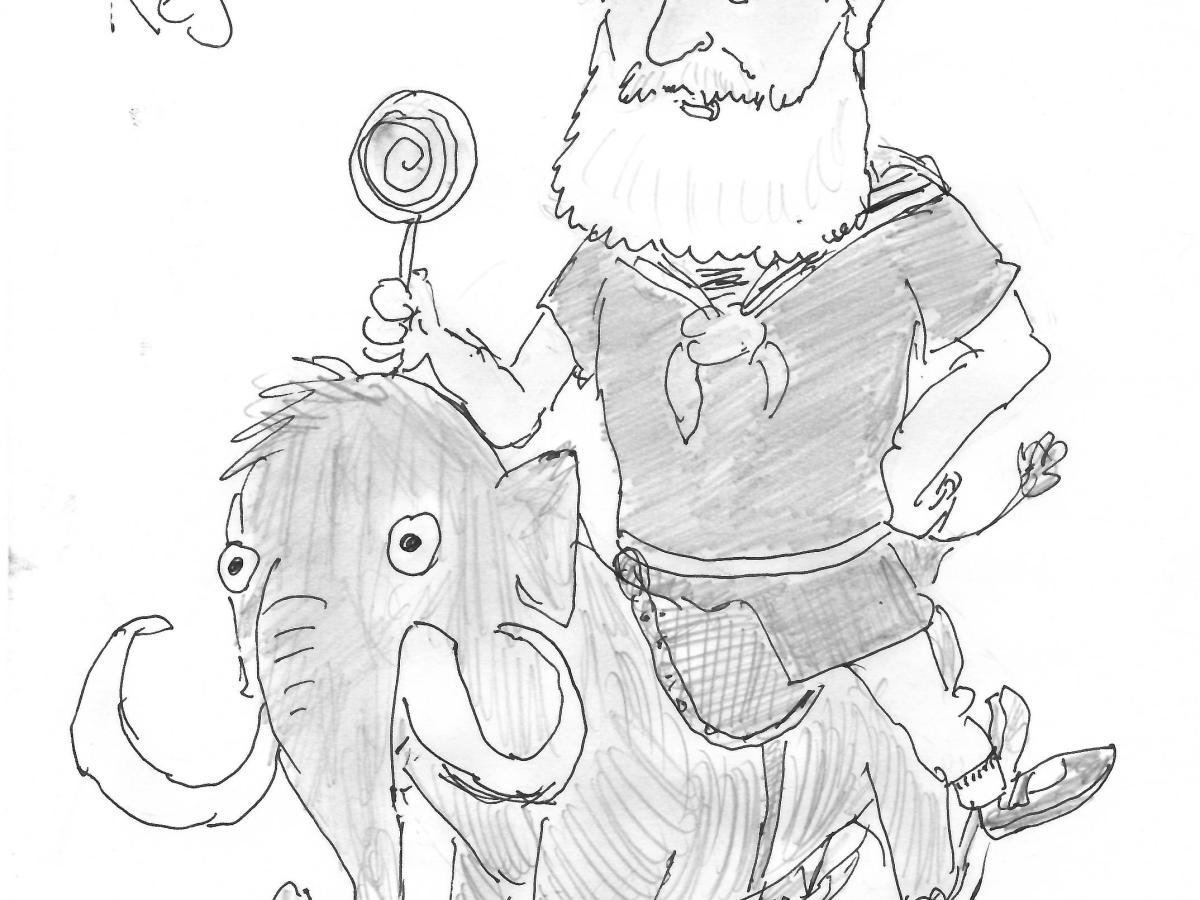
George Church, Colossal W*nker
From mammoths to eugenics to anti-aging scams: god-impersonator George Church knows how to make money with bullshit.
News in Brief
- Retraction for the Spanish self-investigator Javier González-Gallego (González-Fernández, Sánchez, Crespo, San-Miguel, De Urbina, González-Gallego, Tuñón Melatonin Attenuates Dysregulation of the Circadian Clock Pathway in Mice With CCl-Induced Fibrosis and Human Hepatic Stellate Cells Frontiers in Pharmacology, 2018), retraction notice published on 7 July 2023: “Following publication, concerns were raised regarding the integrity of the images in the published figures. Image duplication concerns were identified in Figures 1A, 2C, 6B. The authors failed to provide a satisfactory explanation during the investigation, which was conducted in accordance with Frontiers’ policies. Given the concerns about the validity of the data, and the lack of raw data, the editors no longer have confidence in the findings presented in the article.”


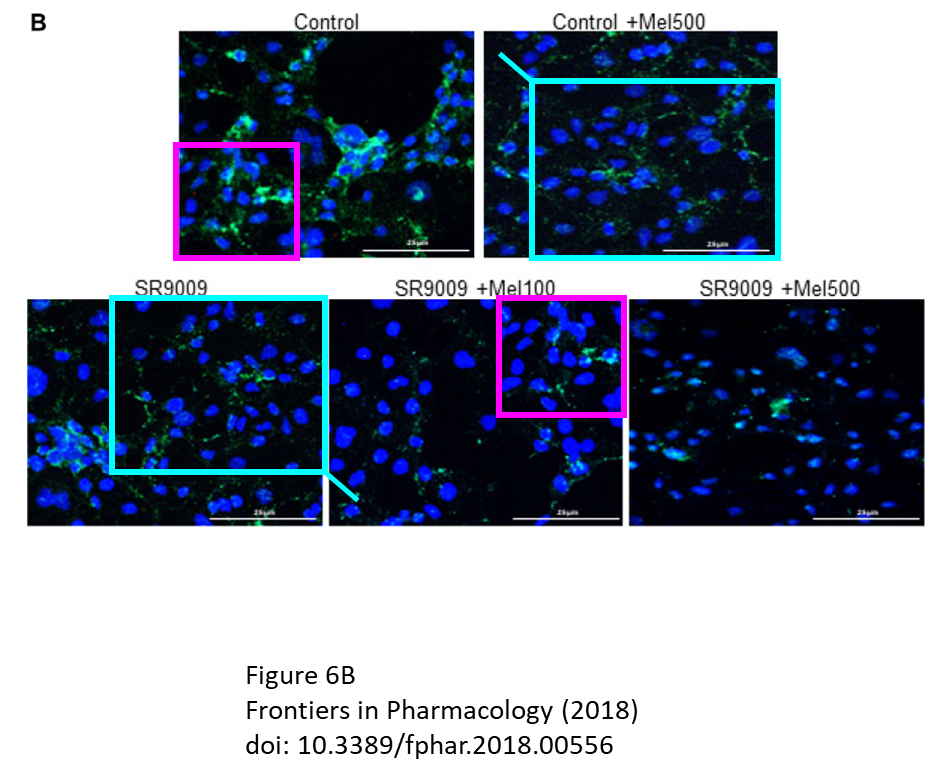

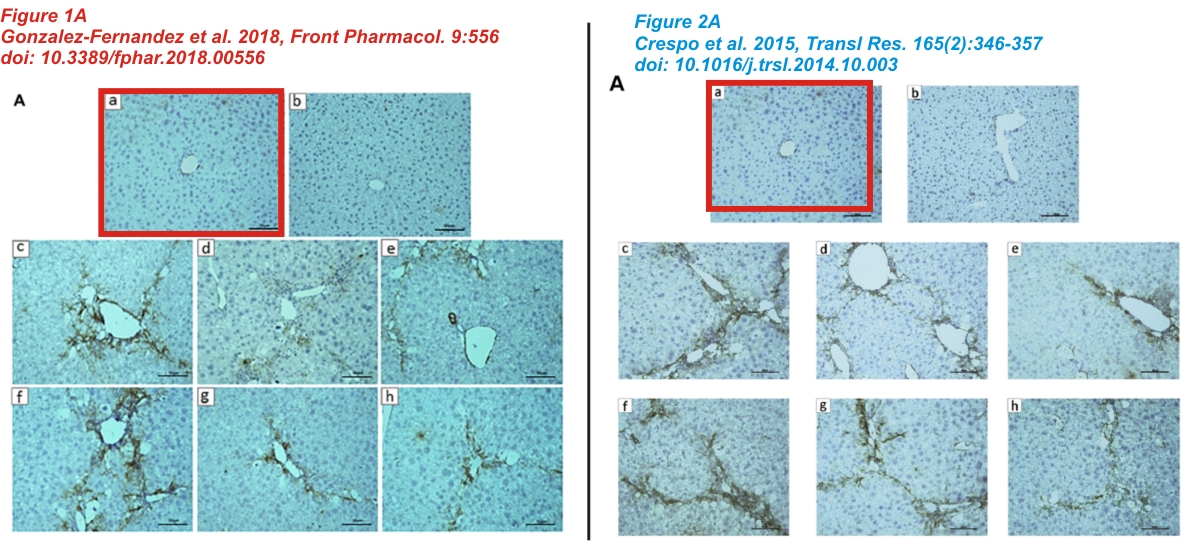

Javier suspects everyone!
“If in any case we consider that the problems with the images really affected the validity of the results, we ourselves would ask the corresponding journal to retract the article.” – Prof Javier González-Gallego
- Retraction in the same Frontiers journal for a TCM forgery by Changhua Wang from Wuhan University (Ye, Qiu, Cao, Zhang, Mi, Yu, Wang Curcumin Improves Palmitate-Induced Insulin Resistance in Human Umbilical Vein Endothelial Cells by Maintaining Proteostasis in Endoplasmic Reticulum Frontiers in Pharmacology, 2017), retraction notice published on 6 July 2023: “Following publication, concerns were raised regarding the integrity of the images in the published figures. The authors failed to provide the raw data or a satisfactory explanation during the investigation, which was conducted in accordance with Frontiers’ policies. Given the concerns about the validity of the data, and the lack of raw data, the editors no longer have confidence in the findings presented in the article.“

“How can one artifically make this happen?”
“This phenomenon is called “fraud with Photoshop”, dear Dr Wei.” – Aneurus Inconstans
- Retraction for the one-man papermill Ahmed Shalan, his first retraction in fact (Taheri-Ledari , Gharibi , Maleki , Akin , Shalan Neodymium and Praseodymium Doped Perovskite Materials for Highly Stable CuInS2‐Hole‐Transport Layer‐Based Perovskite Solar Cells Energy Technology, 2022). In April 2023, Wiley completely removed the original paper and replaced it with a retraction notice: “Data irregularities in Figures 2b and 5b were pointed out by authors S. Akin, A. E. Shalan and corroborated by peer review from a specialist in the experimental technique. The authors were unable to provide the complete original data to restore confidence in these results. The retraction was necessary as the validity of the conclusions is substantially affected by these irregularities.”

I thank all my donors for supporting my journalism. You can be one of them!
Make a one-time donation:
I thank all my donors for supporting my journalism. You can be one of them!
Make a monthly donation:
Choose an amount
Or enter a custom amount
Your contribution is appreciated.
Your contribution is appreciated.


Christoph Thiemermann 2013.
https://pubpeer.com/publications/7C3A4382C17C191E17BB2DBF76FB72
LikeLike
Nice to see that Queen Mary, University of London, has deployed the barrage balloons and James Patterson, Research Integrity and Assurance Officer (another kind of barrage balloon).
“Please let me know if you have any questions.
Best wishes,
James Patterson
Research Integrity and Assurance Officer
Joint Research Management Office
Queen Mary, University of London“
Yes, I do have a question for James Patterson. What does he make of the Pubpeer page directly below.
That is a test of his professional skills as a Research Integrity and Assurance Officer.
Will he pass the test?
https://pubpeer.com/search?q=Thiemermann+
LikeLike
“Vane, who won the Nobel Prize for the discovery of aspirin”
https://www.aspirin-foundation.com/history/the-aspirin-story/
Surely you mean?
“In 1971, Vane described aspirin’s inhibition of prostaglandin synthesis in a Nature publication8. In 1982 he was awarded the Nobel Prize for Medicine in recognition of this work and aspirin started to become established as a drug for treating and preventing cardiovascular.”
LikeLike
yeah, sorry, should have clarified he is credited with discovering the medical use of aspirin
LikeLike
Salicylates extracted from willow bark (aspirin is a salicylate) have been used for pain relief, anti-inflammatory properties since the 18th century. The medicinal use of aspirin, a synthetic salicylate, itself is over a century long, well before Vane.
LikeLike
Well, yeah. Sorry. At the end, Vane had to get a Nobel, even if for raising such science prodigies as Thiemermann and Perretti.
LikeLike
The UK has a long history of fraudsters passing it in to fraudsters.
https://en.m.wikipedia.org/wiki/Cyril_Burt
Cyril Burt was Hans Eysenck’s doctoral advisor.
https://en.m.wikipedia.org/wiki/Hans_Eysenck
If only they had looked at Eysenck’s publications when Cyril Burt was unmasked.
LikeLike
Yes, remember the Piltdown Man hoax, William Courten’s fake butterfly, and the Hastings rarities. The British pretty much invented science fraud.
LikeLike
I’d never heard of the Hastings rarities, or William Courten’s fake butterfly. I thought that David Latchman’s fakes might have caught the public imagination as the Piltdown man of molecular biology, but, alas, no.
Plants are in on the act too. If the data don’t fit the cool theory plant the plants yourself.
Rule Britannia!
John William Heslop-Harrison https://g.co/kgs/kj8yBB
LikeLike
Another English fraud.
https://en.m.wikipedia.org/wiki/Richard_Meinertzhagen
LikeLike
Worth mentioning that Wen-Tsao Pan now has a few dozen papers with comments at PubPeer, several with similar comments that have now been deleted by PubPeer mods. Several also have Expressions of Concern. In one example he actually admits to self-plagiarism and states that he will retract one of the articles: https://pubpeer.com/publications/B0C6C7BD5EFCCE0C38F4F5557BC55D
LikeLike
Proc Natl Acad Sci U S A. 1997 Jan 21; 94(2): 679–683.
doi: 10.1073/pnas.94.2.679
PMCID: PMC19573
PMID: 9012844
Inhibition of the activity of poly(ADP ribose) synthetase reduces ischemia–reperfusion injury in the heart and skeletal muscle
Christoph Thiemermann,† Joanne Bowes, Fiona P. Myint,‡ and John R. Vane*
Author information Article notes Copyright and License information Disclaimer
*The William Harvey Research Institute, St. Bartholomew’s, and the Royal London School of Medicine and Dentistry, Charterhouse Square, London EC1M 6BQ, United Kingdom; and ‡Department of Surgery, University College London Medical School Gower Street, London WC1E 6BT, United Kingdom
†To whom reprint requests should be addressed.
John R. Vane
Figures only have graphs and bar charts, no primary data!
Why should anybody believe the results, except a lot of pharmacology, a human invented subset of para-biology, is like that?
LikeLike
OT, just for teh lulz, b/c old friends involved and all that.
https://pubpeer.com/publications/8B3194548C2CEC91344F6B5CEE4A26
@all: Have a nice weekend!
LikeLike
3 relatively recent QMUL retractions, but all is well!
https://pubpeer.com/publications/43FB16ED19FAEB3AEB42F460FFCC66
https://pubpeer.com/publications/C798199E2569D1F2BBB1F62FA95D35
https://pubpeer.com/publications/F8236C631ED57858ACDC2CA1F032DE
LikeLike
A Nobel retraction: https://pubpeer.com/publications/43FC32C8CE8D6BD898847AE41B05E8#1
LikeLike
According to Queen Mary, University of London (QMUL) Christoph Thiemermann is
“one of the 10 most cited researchers in in the word”
What meaning does QMUL infer from that?
Has QMUL never heard of the saying
“if it’s too good to be true it’s too good to be true”?
LikeLike
https://www.netacademies.net/Trustees/
Christoph Thiemermann
Appointed by NET Academies Trust on 5th May 2022
Term of Office: 4 Years
Attendance 2022/23: 3/3
Interests: WHRL, Queen Mary Universty of London, Academy of Medical Services UK, British Pharmacological Society, Royal College of Physicians
Christoph Thiemermann is a trustee for a string of schools in London.
Is that appropriate considering his faking?
LikeLike
Wheels coming off Christoph Thiemermann’s waggon, insha’Allah.
LikeLike
Highly problematic QMUL publication. Exact same postcode as the Blizard Institute.
Nothing happens.
https://pubpeer.com/publications/F2D636777C93F3A7B20984459C3BC1
LikeLike
Another highly problematic QMUL publication, or am I hallucinating?
https://pubpeer.com/publications/B5F23105E2819B01007B9485C13C2A
LikeLike
On second thoughts, nothing will happen to Christoph Thiemermann, Queen Mary, University of London. It is in England after all. Now it is the summer holidays, then it with be Christmas, then Easter, then the summer holidays, ad infinitum.
Just like several cycles have already gone by and nothing has happened to this University of Cambridge fake.
https://pubpeer.com/publications/5E558FEF86ADED8E186DF6F71576D9
LikeLike
Another professor at QMUL coming up on the radar.
https://www.qmul.ac.uk/whri/people/academic-staff/items/suzukiken.html
https://pubpeer.com/search?q=Ken+suzuki
LikeLike
More shock data for Professor Christoph Thiemermann, QMUL. The data are in the journal Shock!
https://pubpeer.com/publications/C66DCFB71C25708D2FD889CE8C3DFB#1
LikeLike
QMUL informs: “According to Google Scholar, he is one of the 10 most cited researchers in in the word [sic!] working on translational medicine, and one of the 50 most-cited pharmacologists.”
Assuming “word” is “world”, how comes he is in the top-10 in the world and just in top-50 in pharmacology?
LikeLike
Queen Mary, University of London selling fake PhDs?
https://pubpeer.com/publications/694B817577A1F85F99998D118E96CC#
LikeLike
Things usually go in the same direction.
Queen Mary, University of London, has done nothing about fake data within its own walls up until now so it is highly unlikely to do anything about Christoph Thiemermann.
The British Society of Pharmacology is a rabbit breeders’ union. The next president of the rabbit breeders’ union (British Society of Pharmacology) Sir Mark Caulfield, works the the institute as Christoph Thiemermann. How come he doesn’t know what is going on?
https://www.bps.ac.uk/about/who-we-are/council/professor-sir-mark-caulfield
https://www.bps.ac.uk/about/who-we-are/council
LikeLike
Christoph Thiemermann, Queen Mary, University (QMUL), does a twirl!
https://pubpeer.com/publications/09D7494112FC89177B3A34C9992B83
He didn’t notice, the journal didn’t notice. All in a day’s chiselling away. Who should apologise to whom?
LikeLike
Deeply flawed Christoph Thiemermann Br J Pharmacol paper, yet Wiley doesn’t get it, needs more context, more explanations.
https://pubpeer.com/publications/00E0AD03C5943F5F45EB6D243FDC4D
LikeLike
https://www.williamharveyresearch.com/about-us/the-board
How come the other members of the board don’t know what Chris(toph) Thiemermann, the Chairman & Chief Executive of the board, has been up to over many years?
Extremely clever of Chris(toph) Thiemermann to gather the reins of power into his own hands. Leadership of Queen Mary, University of London, has been asleep at the wheel.
LikeLike
Christoph Thiemermann has 63 papers in Br J Pharmacol, many without primary data, just graphs, graphs and more graphs (standard practice for pharmacology, but not standard practice for the biological sciences).
https://pubmed.ncbi.nlm.nih.gov/?term=br%20j%20pharmacol%20thiemermann%20c&sort=date&ac=no
26 of Christoph Thiemermann’s Br J Pharmacol papers have Nobel Prize winner Sir John Vane as author. That is not a guarantee of authenticity.
https://pubmed.ncbi.nlm.nih.gov/?term=br+j+pharmacol+thiemermann+c+vane+jr&sort=date
https://www.nobelprize.org/prizes/medicine/1982/vane/biographical/
LikeLike
There are so many fake Chris(toph) Thiemermann papers that the “burden of proof” has shifted.
It would be quicker to retract all his papers as so many fakes suggest that forgery runs through all of them.
LikeLike
Pingback: Ken Suzuki: The King of Hearts at QMUL – For Better Science
Pingback: Queen Mary and John Vane’s Cowboys – For Better Science
Meet Simona Cavalu, plagiarist and papermiller => you might have to update this too: meet Simona Cavalu, plagiarist, papermiller and reviewer of co-authors papers. See: https://www.frontiersin.org/articles/10.3389/fnagi.2022.960246/full
https://www.mdpi.com/2073-4360/14/17/3545
https://www.frontiersin.org/articles/10.3389/fnagi.2022.960246/full
https://www.frontiersin.org/articles/10.3389/fcell.2022.923503/full
https://www.frontiersin.org/articles/10.3389/fnins.2022.895607/full
https://www.mdpi.com/1420-3049/27/11/3516
https://www.frontiersin.org/articles/10.3389/fphar.2022.903099/full
In one case she reviewed a paper of 4 (!!) co-authors with which she published at the same time a paper!
I am sure there are more to be found, but sadly only frontiers lists the reviewers. But it seems she loves to review papers from co-authors.
LikeLike