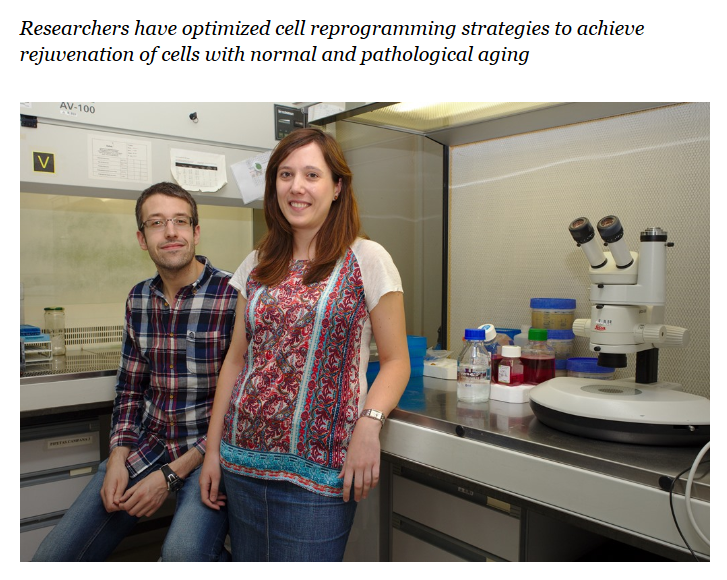

Boom, the 2015 Nature Cell Biology paper by the famous, award-winning and now fugitive Spanish cancer and ageing researcher Carlos Lopez-Otin and his US partner George Q Daley, stem cell titan and dean of Harvard Medical School, is retracted. That happens because correct original data was unavailable, prompted by a prolonged debate on PubPeer (which in turn followed my reporting on Lopez-Otin’s data integrity practices), which established that the figures do not match what the authors deposited as supplement.
The paper Soria-Valles et al 2015 established the role of the transcription factor protein NF-kB in cellular senescence and cell reprogramming, while offering a potential cure to child patients suffering from the deadly premature ageing syndrome, such as Néstor–Guillermo or Hutchinson–Gilford progeria. Under this premise, the impactful Nature-themed paper earned Lopez-Otin in 2017 an ERC grant of €2.5 million, for a project named “Deconstructing Ageing: from molecular mechanisms to intervention strategies“. Earlier this year however, Lopez-Otin abandoned his ERC funded lab at University of Oviedo and escaped to Paris, to stay with his Photoshop expert friend Guido Kroemer. If past behaviour is anything to go by, ERC will now probably again play three monkeys and pretend that Lopez-Otin is still in Spain and his grant-deciding Nature Cell Biology paper was never retracted.
Another Soria-Valles et al paper from Daley lab, which proposed a way to produce haematopoietic stem cells via iPS technology and save people with leukaemia, was meant to be already published, but it is not even submitted and might never be. This and the retracted study’s first author Clara Soria-Valles was a former PhD student of Lopez-Otin, funded by EMBO postdoctoral fellowship and delegated to the Harvard labs of Daley and his junior partner Thorsten Schlaeger, to learn cellular reprogramming technique. Daley and Schlaeger are reported to be all but ready to apply the blood cell making technique in the clinic, at Boston Children’s Hospital, but now nobody knows if Soria-Valles’ preclinical data is anywhere near reproducible.
It is indeed difficult to find out what results still might be reliable. Soria-Valles disappeared already in April 2018 on a medical leave, though Daley still pays her (neither Daley nor Harvard normally pays any medical leaves for other sick lab members). Nobody else on that manuscript is available, because the Schlaeger lab people involved also left since. Money to try and reproduce it is not an issue though: the research project was funded from Daley’s biggest grant, the NHLBI Progenitor Cell Translational Consortium (NIH U01), which is worth almost $50 million.
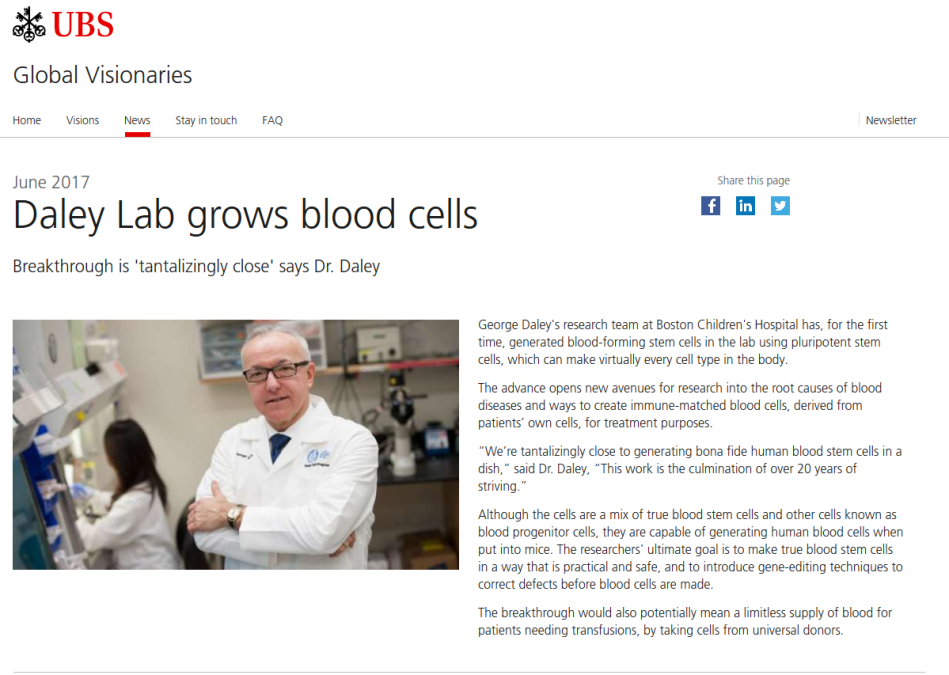
As I was informed, that Soria-Valles paper on haematopoietic reprogramming was meant to be originally submitted to the elite Cell family journal Cell Stem Cell (this is how the circulated draft was labelled in April 2018). Later on, roughly in August 2018, when my article appeared, the chosen target journal was Stem Cell Reports (published by International Society for Stem Cell Research, ISSCR). For someone like Daley this is a huge status reduction of journal venue. The results were presented earlier by Soria-Valles at the ISSCR annual meeting in 2017:
INTEGRATION-FREE SYSTEM FOR GENERATION OF HEMATOPOIETIC STEM AND PROGENITOR CELLS FROM HUMAN PLURIPOTENT STEM CELLS
Soria-Valles, Clara 1 , Sugimura, Ryohichi 1 , Kumar Jha, Deepak 1 , Lummertz da Rocha, Edroaldo 1 and Daley, George 2
1 Boston Children’s Hospital, Boston, MA, USA, 2 Stem Cell Program, Boston Children´s Hospital, Boston, MA, USA
The generation of hematopoietic stem cells (HSCs) from human pluripotent stem cells (PSCs) constitutes a valuable tool with promising applications for research and therapy. However, derivation of HSCs with in vivo long-term engraftment and multi-lineage potential remains elusive. We have described a combinatorial approach, based on the directed differentiation of hemogenic endothelium (HE) and transduction with five transcription factors (TF) (RUNX1, ERG, LCOR, HOXA5 and HOXA9) expressed in lentiviral vectors that allowed the conversion of human PSCs into hematopoietic stem
and progenitor cells (HSPCs). The resulted cells exhibited long-term and multi-lineage hematopoietic capabilities when injected into irradiated immune-deficient mice.
Despite this proof of principle, the engineered cells have a limited self-renewal capacity due to the integration of the transgenes and are still molecularly distinct from bona fide HSCs. Thus, in an attempt to achieve bona fide HSCs and make them safer for future therapeutic interventions, we have established integration-free systems that have shown comparable efficiency to the previously developed lentiviral strategy through in vitro and in vivo experiments. Therefore, this new method may overcome some limitations of the lentiviral approach and hold the key for future regenerative medicine advances in blood diseases.
Soria-Valles however was not present at the 2018 ISSCR meeting (a conference which I incidentally wrote about here, in a story about another dishonest stem cell researcher, who was set to be ISSCR 2018 keynote speaker). Nobody knows how much of Soria-Valles’ claim to make haematopoietic stem cells via iPS technology is still valid. Sources were quoted with estimates of too low a yield or even not sure of producing any haematopoietic stem cells at all. Yet just this September 2018, Daley spoke at a lecture at Dana-Farber-Institute of his future Stem Cell Reports paper and even of his plans to apply the method to treat paediatric patients with congenital bone marrow deficiencies, in particular Shwachman Diamond Syndrome and Diamond Blackfan Anemia.
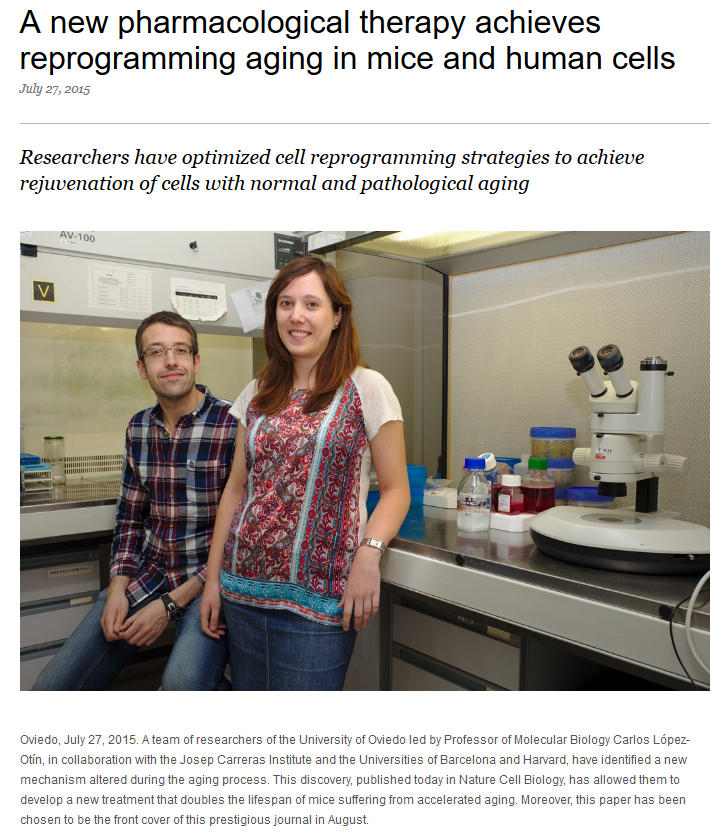
But now back to the main subject, the Nature Cell Biology retraction. The journal warned readers on 4 October 2018 with an editorial note that “that the reliability of data presented in this manuscript has been the subject of criticisms“. 4 December 2018 was the deadline imposed by the publisher to submit signatures from co-authors for a retraction. Lopez-Otin’s Oviedo colleague Jose Maria Perez Freije collected the signatures of all authors, including the elusive Soria-Valles, and submitted them to the publisher Nature.
This is the retraction notice:
“We, the authors, are retracting this Article due to issues that have come to our attention regarding data availability, data description and figure assembly. Specifically, original numerical data are not available for the majority of the graphs presented in the paper. Although original data were available for most EMSA and immunoblot experiments, those corresponding to the published EMSA data of Supplementary Fig. 8a, the independent replicate immunoblots of Fig. 8b and Supplementary Fig. 1e, and the independent replicate EMSA data of Supplementary Figs 6e, 8b, 8c and 8d, are unavailable. Mistakes were detected in the presentation of Figs 3c, 4i and Supplementary Figs 6a, 8a, 8d, 9, and in some cases the β-actin immunoblots were erroneously described in the figure legends as loading controls, rather than as sample processing controls that were run on separate gels. Although we, the authors, believe that the key findings of the paper are still valid, given the issues with data availability we have concluded that the most appropriate course of action is to retract the Article. We deeply regret these errors and apologize to the scientific community for any confusion this publication may have caused. All authors agree with the retraction.”
This slide show illustrates the data issues mentioned in the retraction notice.
And this slide show illustrates the issues the retraction notice chose not to address at all.
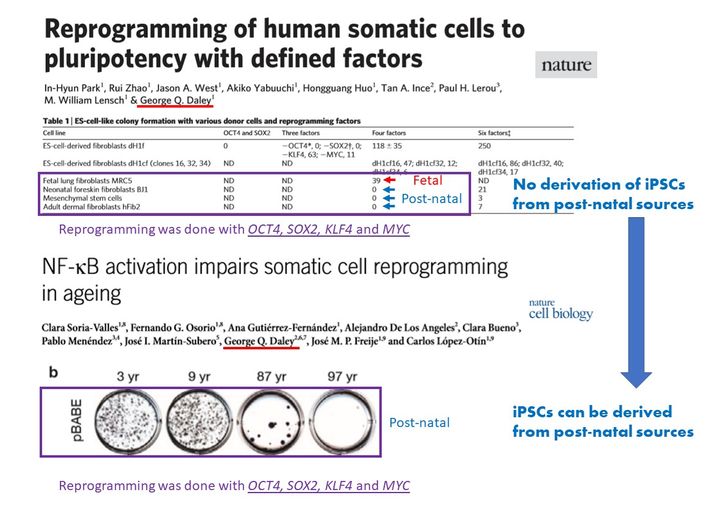
In Daley’s lab, more things do not work as expected. His most famous Nature paper, Park et al 2008 , meant to compete with Shinya Yamanaka for induced pluripotency (iPS) fame and the Nobel Prize, is being plucked apart on PubPeer, accused of not having delivered any pluripotency as such. The exogenously delivered reprogramming transgenes remained namely active, while they were supposed to become silenced as cells’ own pluripotency genes become active. Also, Daley’s method of using Large T Antigen and telomerase TERT in addition to Yamanaka’s four iPS reprogramming factors proved rather counterproductive.
For someone like Daley, all of this is not the end of the world. There are always new windows of opportunity. Just as Chinese scientist Jiankui He caused a worldwide scandal with his unethical human experiments with CRISPR-modified babies, Daley (and his Harvard colleague George Church) offered a more enthusiastic view: America cannot afford a CRISPR gap to China. Daley suggested that Harvard should take the lead and apply CRISPR eugenics to ensure the survival of the human race:
“There have even been discussions that we as a species need to maintain the flexibility in the face of future threats to take the control of our own heredity.”
Harvard’s CRISPR experiments on human germ line editing are already starting. An Alzheimer’s associated gene is to be edited in human sperm, while Daley announced big plans to design the children of the future to be resistant to various diseases. Ethics is something this Harvard dean is apparently less interested in.
Harvard recently received a $200 million donation to set up a new institute, the money came from a controversial tycoon Leonard Blavatnik with Russian origins, whose lawyers made The Guardian apologise for erroneously calling him a “Putin pal” and an oligarch.
It is Daley’s Spanish collaborator, the fugitive Lopez-Otin, who is in deep trouble with that retraction now. Lopez-Otin did manage to bring himself into news recently with his new paper (in a Nature -themed journal!) where his Oviedo lab analysed the genome of Lonesome George, the last member of his giant tortoise species who died in 2012. The press release omitted to say whether he spoke from Oviedo or Paris, Lopez-Otin the turtle geriatrics researcher was quoted with:
“We had previously described nine hallmarks of aging, and after studying 500 genes on the basis of this classification, we found interesting variants potentially affecting six of those hallmarks in giant tortoises, opening new lines for aging research”
Nature now probably deeply regrets having awarded him with a 2017 Mentoring Award. Maybe they can give next one to Daley? Maybe Daley can get Soria-Valles to CRISPR some of those turtle genes to create a new long-lived human race of Homo harvardiensis crispri?
Update 21.12.2018. My article was apparently well received in Harvard, according to this information I was privy to:
“Daley was complaining intensely at lab meeting in front of entire lab and his junior faculty labs (Trista North and Thorsten Schlaeger) about potential lab members who might have leaked Soria-Valles information to the German blogger. It was intense”
I also learned that the now retracted Soria-Valles Nature Cell Biology 2015 paper was originally submitted to Science, were it was rejected due to some statistics issues.
Update 5.01.19. I was recently alerted by a source:
“George [Daley, -LS] has scared the lab members and provoked Stockholm syndrome among members. The Daley lab is trying to figure out who the leaks are now. Some of the members are trying to crash the German website by sending Hakenkreuz images.”
This was exactly what happened. Commenters used several fake identities to post highly defamatory comments about Daley on my site, equalling his research to Macchiarini’s trachea transplants and, indeed, using Nazi Swastika armband photoshopped on a photo of Daley. Exactly same picture was shared by Daley lab members in preparation of the campaign, it was confirmed to me. I deleted all those comments, but made backup, also of IP addresses.
Specifically, those IP addresses were located in US to Connecticut, 06902 Stamford, and New York State, 10022 New York. My source suggested I contact these Daley lab alumni: In-Hyun Park at Yale, CT, and Kitai Kim at MSKCC in NY, as well as the person allegedly orchestrating the campaign, the current Daley postdoc Deepak Jha. None of them replied, but Jha immediately blocked me on Twitter. This is how some grown men behave to please their mighty (ex-)boss. Maybe they should rather relax and read the book by Daley’s wife, Amy C. Edmondson, “The Fearless Organization: Creating Psychological Safety in the Workplace for Learning, Innovation, and Growth“.
Daley will be opening the Blavantik institute in ceremony on February 5th, at 5:30 PM. Come to talk about plans of CRISPR babies!
Donate!
If you are interested to support my work, you can leave here a small tip of $5. Or several of small tips, just increase the amount as you like (2x=€10; 5x=€25). Your generous patronage of my journalism will be most appreciated!
€5.00

 For Better Science
PubPeer comment on another paper of Lopez-Otin (Soria-Valles, 2016).
iPSCs: On the Road to Reprogramming Aging
Trends in Molecular Medicine (2016) – 2 Comments
pubmed: 27286740 doi: 10.1016/j.molmed.2016.05.010 issn: 1471-4914 issn: 1471-499x
Clara Soria-Valles , Carlos López-Otín
“NF-kB is not a cytokine… (figure 2) ”
https://pubpeer.com/publications/C2309A425F37BAC231DF7DC791E77E#2
LikeLike
PubPeer readers commented text overlaps bwtween articles from Lopez-Otin.
Two papers have significant similarlity over another paper
Nuclear lamina defects cause ATM-dependent NF-κB activation and link accelerated aging to a systemic inflammatory response. Osorio FG, Bárcena C, Soria-Valles C, Ramsay AJ, de Carlos F, Cobo J, Fueyo A, Freije JM, López-Otín C. Genes Dev. 2012 Oct 15;26(20):2311-24. doi: 10.1101/gad.197954.112. Epub 2012 Sep 26. PMID: 23019125
The anti-metastatic activity of collagenase-2 in breast cancer cells is mediated by a signaling pathway involving decorin and miR-21
Oncogene (2014) – 7 Comments
pubmed: 23851508 doi: 10.1038/onc.2013.267 issn: 1476-5594 issn: 0950-9232
C Soria-Valles , A Gutiérrez-Fernández , M Guiu , B Mari , A Fueyo , R R Gomis , C López-Otín
https://pubpeer.com/publications/8D0F4C1D83621DE5F72E92A4C39787#7
https://imgur.com/a/jlB7KFy
MMP-25 Metalloprotease Regulates Innate Immune Response through NF-κB Signaling
The Journal of Immunology (2016) – 2 Comments
pubmed: 27259858 doi: 10.4049/jimmunol.1600094 issn: 1550-6606 issn: 0022-1767
Clara Soria-Valles , Ana Gutiérrez-Fernández , Fernando G. Osorio , Dido Carrero , Adolfo A. Ferrando , Enrique Colado , M. Soledad Fernández-García , Elena Bonzon-Kulichenko , Jesús Vázquez , Antonio Fueyo , Carlos López-Otín
https://pubpeer.com/publications/46D48D7AB88DC28DD57C0CC1BF8DF9#2
https://imgur.com/a/jlB7KFy
LikeLike
Now Soria-Valles and her retracted Nature Cell Biology article (2015) are removed from the lab page of HMS Dean George Daley.
https://daley.med.harvard.edu/people
LikeLike
PubPeer readers detected more splicings in a former Daley lab member, John Powers.
https://pubpeer.com/publications/995C961B41FB2660AFE6432D9422A4#2
It reminds us of Powers’ “unpublished” biorxiv paper with full of splicing and reusing control bands.
https://pubpeer.com/publications/5D8FDD6767EE6F2424B5D9B0164CF7#1
https://pubpeer.com/publications/5D8FDD6767EE6F2424B5D9B0164CF7#3
https://pubpeer.com/publications/5D8FDD6767EE6F2424B5D9B0164CF7#4
Powers was an alumnus of the Daley lab and is currently a PI at University of Texas at Austin.
https://dellmed.utexas.edu/directory/john-powers
LikeLike
The latest publication from the Daley lab (Kinney et al., Nature Biotechnology, 2019) depends on rebutted iPS cell line, which they claimed as the first evidence of human iPS cell reprogramming recently disputed by PubPeer.
A systems biology pipeline identifies regulatory networks for stem cell engineering
Nature Biotechnology (2019) – 1 Comment
doi: 10.1038/s41587-019-0159-2 issn: 1087-0156 issn: 1546-1696
Melissa A. Kinney , Linda T. Vo , Jenna M. Frame , Jessica Barragan , Ashlee J. Conway , Shuai Li , Kwok-Kin Wong , James J. Collins , Patrick Cahan , Trista E. North , Douglas A. Lauffenburger , George Q. Daley
https://pubpeer.com/publications/03DAD0E52F64925DA3B4C9B57E68F7#1
“Experiments in fig. 5c-e used only one cell line, MSC-iPS. According to the original reference (Park et al, 2008, Nature), MSC-iPS line was estalished with six factors. In addition to Yamanaka four factors, the MSC-iPS line has hTERT and SV40 large T. Other posts pointed that MSC-iPS line expresses transgenes OCT4, SOX2, and MYC. The data of hTERT and SV40 large T are not shown. Because silencing resistant pMIG vector was used, one could assume that hTERT and SV40 large T are still expressed. https://pubpeer.com/publications/A600E09BABFB5C7A28B86BBA6F8AD9#2 https://pubpeer.com/publications/A600E09BABFB5C7A28B86BBA6F8AD9#4
This concerns that
whether proliferative capacity of MSC-iPS derived cells is due to hTERT and SV40 large T (fig. 5c).
the validity of ErbB4-Wnt axis in MSC-iPS derived cells (fig. 5d-e). Indeed, the Artandi group has shown that telomerase induces Wnt signaling. https://www.nature.com/articles/nature08137
The authors could address if they have validated with other iPS lines.”
LikeLike
Someone should seriously bring these unaddressed concerns in three papers from current and former members of Daley lab to Nature Communications. What power has been silencing the journal for over 6 months – 4 years?
Alena V. Yermalovich (former member of Daley lab) and Jihan K. Osborne (current member of Daley lab). Image duplication in a paper from Daley lab.
Unaddressed for 6 months since PubPeer post.
https://pubpeer.com/publications/730D5F3BC8FD82D483604CEE8442B9#1
Deepak Kumar Jha. Current member of Daley lab. Image duplication in a paper back to his thesis at Brian Strahl lab.
Unaddressed for 6 months since PubPeer post.
https://pubpeer.com/publications/42A80DA0DB5523DEEF61FEE107F982#2
Pavlos Missios. Current member of Daley lab. Image splicing in a paper back to his thesis at Lenhard Rudolph lab.
Unaddressed for 4 years since PubPeer post.
https://pubpeer.com/publications/31B3D6A98C16815ABD9FAAC8364887#1
Daley lab current members.
https://daley.med.harvard.edu/people
Daley lab alumni.
https://daley.med.harvard.edu/people/alumni
LikeLike
In addition to Nature Communications, some power has been silencing Nature. Refer extensive discussion on PubPeer about image duplication and cell line contamination in Daley’s career-making article.
In-Hyun Park. Former member of Daley lab. Current PI in Yale. Image duplication in a paper from Daley lab.
Unaddressed for 3 months since PubPeer post.
https://pubpeer.com/publications/A600E09BABFB5C7A28B86BBA6F8AD9#19
LikeLike
Pubpeer has many unresolved cases, since Authors of the papers decide to avoid clear answers. Like here: https://pubpeer.com/publications/2D084E91EDC85D6C23BC63ACF5E6A8#26
Read comment 25: clearly states the problem. Read comments 22 and 26: talking a lot of nonsense, like loading control can be run on a separate gel with reduced volume of the samples (!). These comments are probably posted by the Authors, actually. Commenter 22 of PubPeer also posted here lengthy explanations some weeks ago about the needless nature of loading controls in Western blot.
LikeLike
Time to practice fencing. https://www.thecrimson.com/article/2019/7/10/fencing-coach-dismissed/
HMS Dean George Daley put founder of his company on the elite board of HMS.
Before, Elizbeth Holmes belonged to this board.
http://www.mpmcapital.com/press/harvard-medical-school-appoints-mpm-medical-scientific-advisory-co-chair-george-daley-new-dean/
https://hms.harvard.edu/about-hms/leadership/board-fellows
https://www.crunchbase.com/organization/mpm-capital/advisors/current_advisors_image_list#section-board-members-and-advisors
LikeLike
‘Trust Harvard,’ Said The Controller.
Shock: top US scientist Dean George Q Daley says it’s time to start editing genes.
https://www.theamericanconservative.com/dreher/crispr-gene-editing-harvard-daley/
LikeLike
While Soria-Valles (2015) Nature Cell Biology article had been removed from HMS Dean George Q. Daley Lab website, the same article still remains on HMS Dean Office website as of July 18, 2019.
LikeLike
Authors (?) reply to PubPeer comment on Lopez-Otin paper (Soria-Valles, 2016). Interesting case to see how PubPeer moderation works.
https://pubpeer.com/publications/003BE7B1C083EEA3AB412E392FB099
NovelLMNAmutations cause an aggressive atypical neonatal progeria without progerin accumulation
Journal of Medical Genetics (2016) – 4 Comments
doi: 10.1136/jmedgenet-2015-103695 issn: 0022-2593 issn: 1468-6244 pubmed: 27334370
Clara Soria-Valles , Dido Carrero , Elisabeth Gabau , Gloria Velasco , Víctor Quesada , Clea Bárcena , Marleen Moens , Karen Fieggen , Silvia Möhrcken , Martina Owens , Diana A Puente , Óscar Asensio , Bart Loeys , Ana Pérez , Valerie Benoit , Wim Wuyts , Nicolas Lévy , Raoul C Hennekam , Annachiara De Sandre-Giovannoli , Carlos López-Otín
We have received the following report relating to the above comment; readers may find it useful:
“This comment has already been posted before and lately removed by the PubPeer admin. There is no foundation in the claim as it is easy to observe nuclei with a similar size in the three panels, which demonstrates that the scale bar is the same. The panel on the right, belonging to a patient with progeria show some heterogeneity in the nucleus size distribution, but it is related with the disease and properly cited on the manuscript. Please consider this post for removal and prevent this from happening again in the future.”
Corresponding comment.
“The figure legend says that scale bar = 50uM for each panel. Though the scale bar of E55G (right panel) looks differ from others. >100uM?”
LikeLike
“NOTE: Dr. Daley cannot accept non-Harvard graduate students.”
Daley lab policy of accepting graduate students. Soria-Valles was a graduate student from Oviedo University when she worked on her now-retracted Nature Cell Biology in Daley lab.
https://daley.med.harvard.edu/opportunities
LikeLike
Potential animal abusing concern in Soria-Valles’ paper from Coto-Montes lab.
Putting rodents under too low or too highoxygen for hours to a day without sedatives. The experiment was somehow carried out in Israel, not within the reach of Uniovi guidelines.
https://pubpeer.com/publications/6E08A10273C176E2A7DBE4A61D4022#3
Antioxidant responses to variations of oxygen by the Harderian gland of different species of the superspecies Spalax ehrenbergi
Canadian Journal of Zoology (2010) – 3 Comments
doi: 10.1139/z10-049 issn: 0008-4301 issn: 1480-3283
C. Soria-Valles , B. Caballero , I. Vega-Naredo , V. Sierra , C. Huidobro-Fernández , D. D. Gonzalo-Calvo , D. Tolivia , M. J. Rodríguez-Colunga , A. Joel , A. Coto-Montes , A. Avivi
Exposing animals under low oxygen (6%) for 5 hours or too high oxygen (85%) for 24 hours is potentially violating animal welfare. The authors stated that experiments were carried out according to Spanish Government Guide for Animal Care and the European Community Guide for Animal Care, but readers should note that actual experiments were done at University of Haifa in Israel, not in Spain.
” For hypoxic conditions, six animals were placed in a 70 cm 70 cm 50 cm chamber divided into separate cells and were exposed to a gas mixture of 6% O2 that was delivered at 3.5 Lmin–1 for 5 h. For hyperoxic conditions, six animals were exposed to a gas mixture of 85% O2 that was delivered at 3.5 Lmin–1 for 24 h.”
LikeLike
Another animal abusing concern in another paper from Soria-Valles in Lopez-Otin lab.
“The mice were killed by 20 mg/kg injection of LPS. Their swollen lungs showed that the mice died as if drowning. This is ethically concerning. Not eye-catching as huge tumor harboring mice in some other papers, but this forced-death by LPS is as appalling.”
MMP-25 Metalloprotease Regulates Innate Immune Response through NF-κB Signaling
Journal of immunology (Baltimore, Md. : 1950) (2016) – 4 Comments
pubmed: 27259858 doi: 10.4049/jimmunol.1600094 issn: 1550-6606 issn: 0022-1767
Clara Soria-Valles , Ana Gutiérrez-Fernández , Fernando G. Osorio , Dido Carrero , Adolfo A. Ferrando , Enrique Colado , M. Soledad Fernández-García , Elena Bonzon-Kulichenko , Jesús Vázquez , Antonio Fueyo , Carlos López-Otín
https://pubpeer.com/publications/46D48D7AB88DC28DD57C0CC1BF8DF9#4
LikeLike
A list of PubPeer claims that Harvard Medical School Dean George Q. Daley is still sweeping under the rug.
8 papers have unaddressed figure anomalies
In-Hyun Park. Former member of Daley lab. Current PI in Yale.
https://medicine.yale.edu/stemcell/people/inhyun_park.profile
Image duplication in 2008 Nature paper from Daley lab. Unaddressed for 4 months since PubPeer post.
https://pubpeer.com/publications/A600E09BABFB5C7A28B86BBA6F8AD9#19
Kitai Kim. Former member of Daley lab. Current PI in MSKCC.
https://www.mskcc.org/research/ski/labs/kitai-kim
Image duplication in 2010 Nature paper from Daley lab.
https://pubpeer.com/publications/E8874B8B02107526F141197718C646#1
Alena V. Yermalovich. Former member of Daley lab.
Jihan K. Osborne. Current member of Daley lab.
Yermalovich and Osborne contributed equally to this paper. Yermalovich received prestigious F99 grant.
Image duplication in 2019 Nature Communications paper from Daley lab. Unaddressed for 7 months since PubPeer post.
https://pubpeer.com/publications/730D5F3BC8FD82D483604CEE8442B9#1
John Powers. Former member of Daley lab. Currently a PI at University of Texas at Austin.
https://dellmed.utexas.edu/directory/john-powers
Unpublished biorxiv preprint with full of splicing and reusing control bands. Silently corrected.
https://pubpeer.com/publications/5D8FDD6767EE6F2424B5D9B0164CF7#1
https://pubpeer.com/publications/5D8FDD6767EE6F2424B5D9B0164CF7#3
https://pubpeer.com/publications/5D8FDD6767EE6F2424B5D9B0164CF7#4
Jin Zhang. Former member of Daley lab. Unusual pattern of western blot bands.
2016 Cell Stem Cell.
https://pubpeer.com/publications/CC2645E6699CB04102B6632962552C#1
https://pubpeer.com/publications/CC2645E6699CB04102B6632962552C#4
Niels Geijsen. Former member of Daley lab. Currently a PI at Hubrecht Institute.
https://www.hubrecht.eu/research-groups/geijsen-group/
Gel splicing in 2004 Nature paper.
https://pubpeer.com/publications/A338DD5840B3ED818917AEB1B984C5#3
George Daley. His thesis work at David Baltimore lab. Gel splicing. Subject of harsh censoring from PubPeer.
1988 PNAS
https://www.pubpeer.com/publications/61226A71F74171D4410CB1B4916745#6
1990 Science
https://pubpeer.com/publications/32494494DF1BA35389D4DD4215FDB6#6
5 papers have controversial or false claims
In-Hyun Park. Former member of Daley lab. Current PI in Yale.
2008 Nature
Doubtful reprogramming.
https://pubpeer.com/publications/A600E09BABFB5C7A28B86BBA6F8AD9#1
https://pubpeer.com/publications/A600E09BABFB5C7A28B86BBA6F8AD9#2
Potential cell line contaminations in the study first claim human induced-pluripotent stem cells.
https://pubpeer.com/publications/A600E09BABFB5C7A28B86BBA6F8AD9#20
https://pubpeer.com/publications/A600E09BABFB5C7A28B86BBA6F8AD9#21
https://pubpeer.com/publications/A600E09BABFB5C7A28B86BBA6F8AD9#22
https://pubpeer.com/publications/A600E09BABFB5C7A28B86BBA6F8AD9#23
2008 Cell
Artifactual data
https://pubpeer.com/publications/921ADCB7B6A62E2BDB593B9056AA99#7
https://pubpeer.com/publications/921ADCB7B6A62E2BDB593B9056AA99#9
https://pubpeer.com/publications/921ADCB7B6A62E2BDB593B9056AA99#10
https://pubpeer.com/publications/921ADCB7B6A62E2BDB593B9056AA99#11
https://pubpeer.com/publications/921ADCB7B6A62E2BDB593B9056AA99#12
https://pubpeer.com/publications/921ADCB7B6A62E2BDB593B9056AA99#13
https://pubpeer.com/publications/921ADCB7B6A62E2BDB593B9056AA99#14
Kitai Kim. Former member of Daley lab. Current PI in MSKCC.
The conclusion of 2010 Nature paper (epigenetic memory) was debunked by others.
https://pubpeer.com/publications/E8874B8B02107526F141197718C646#2
Suneet Agarwal. Former member of Daley lab. Current PI in Harvard Medical School.
https://hsci.harvard.edu/people/suneet-agarwal-md-phd
The conclusion of 2010 Nature paper (telomere elongation by reprogramming) was debunked by others.
https://pubpeer.com/publications/265A83EC56E557C8588D151FFEBBC0#2
Niels Geijsen. Former member of Daley lab. Currently a PI at Hubrecht Institute.
Lack of reproducibility in 2004 Nature paper.
https://pubpeer.com/publications/A338DD5840B3ED818917AEB1B984C5#1
LikeLike
A continued list of PubPeer claims telling postdoc dubious history in the lab of Harvard Medical School Dean George Q. Daley
5 postdocs have unaddressed figure anomalies or retracted paper.
Deepak Kumar Jha. Current member of Daley lab. Image duplication in 2014 Nature Communications paper at Brian Strahl lab, University of North Carolina.
Unaddressed for 7 months since PubPeer post.
https://pubpeer.com/publications/42A80DA0DB5523DEEF61FEE107F982#2
Pavlos Missios. Current member of Daley lab. Image splicing in 2014 Nature Communications paper at Lenhard Rudolph lab, University of Ulm.
Unaddressed for 4 years since PubPeer post.
https://pubpeer.com/publications/31B3D6A98C16815ABD9FAAC8364887#1
John Powers. Former member of Daley lab. Gel splicings in 2004 Molecular Cancer Research paper. David Johnson lab, University of Texas MD Anderson Cancer Center.
https://pubpeer.com/publications/995C961B41FB2660AFE6432D9422A4#2
Marcella Cesana. Former member of Daley lab. Image manipulatons in 2011 Cell paper. Irene Bozzoni lab, Sapienza University of Rome, Italy.
https://pubpeer.com/publications/04C9D6AC1E5AFB2D80175A707E34EA
Clara Soria-Valles. Former member of Daley lab. Image manipulations, mocked up graphs. One retraction in 2015 Nature Cell Biology paper and one erratum in 2014 Oncogene paper. Recent PubPeer posts on animal abuse conocerns in other papers.
Carlos Lopez-Otin lab, University of Oviedo.
Retracted 2015 Nature Cell Biology
https://pubpeer.com/publications/836AB3A8AB4FD562A2D4CBFBF8ED18
Erratum 2014 Oncogene
https://pubpeer.com/publications/8D0F4C1D83621DE5F72E92A4C39787
Animal abuse concern in 2016 Journal of Immunology
https://pubpeer.com/publications/46D48D7AB88DC28DD57C0CC1BF8DF9#4
Animal abuse concern in 2010 Canadian Journal of Zoology
https://pubpeer.com/publications/6E08A10273C176E2A7DBE4A61D4022#3
Safely returned to University of Oviedo with 64,000 euros of Juan de la Cierva Incorporacion fellowship.
https://sede.micinn.gob.es/stfls/eSede/Ficheros/2018/PROPUESTA_RESOLUCION_PROVISIONAL_SELECCIONADOS_RESERVAS_IJCI2017.pdf
LikeLike
Conflict of Interest by Harvard Medical School (HMS) Dean George Q. Daley.
MPM capital and HMS Board of Fellow.
HMS Board of Fellow is an elitest club of Harvard. According to the former HMS dean Jeff flier, Elizbeth Holmes also belonged to this elite board… We should bring an attention to how the HMS Dean George Q. Daley selected his favorite people to this club. HMS Dean George Q. Daley assigned a founder of his own company on HMS Board of Fellow. He is Ansbert K. Gadicke, MD, Founder, Co-chairman, and Managing Director of MPM Capital. Appointment of MPM chair raises questions about conflict of interest. Also we can spot Len Blavatnik on HMS Board of Fellow, whom HMS Dean George Q. Daley convinced to make 200 million dollars donation to allow Harvard make CRISPR-babies.
Links.
HMS Dean George Q. Daley is MPM Capital Advisor
https://www.crunchbase.com/organization/mpm-capital/advisors/current_advisors_image_list#section-board-members-and-advisors
HMS Dean George Q. Daley assigned MPM Capital Founder Ansbert K. Gadicke on HMS Board of Fellow.
https://hms.harvard.edu/about-hms/leadership/board-fellows
LikeLike
Conflict of interest definition: “a situation in which a person is in a position to derive personal benefit from actions or decisions made in their official capacity.”
http://directorpoint.com/boardroom-ethics/4-questions-board-conflicts-interest/
LikeLike
RetractionWatch recommends to continue citing Soria-Valles rectacted Nature Cell Biology.
PubPeer thread on a paper that had cited Soria-Valles retracted Nature Cell Biology.
https://pubpeer.com/publications/826F06B76C07E8F3807EBDB99A9655#2
“It is not approapriate to refer retracted papers.”
“Retractionwatch would disagree.
https://retractionwatch.com/2018/01/05/ask-retraction-watch-ok-cite-retracted-paper/
“It’s perfectly fine to cite a retracted paper, as long as the retraction is noted. Ideally, the we’d suggest citing both the paper and the retraction notice, which (according to best practices) should have different DOIs. And you can check for retracted papers in our database.”
Please stop making broad ethical prescriptions on a concept (retraction watching) that is very new and far from settled.”
LikeLike
PubPeer reader detected figure anomalies in two old papers from Ana Coto-Montes lab in Uniovi. The pattern of copy-paste, sloppy alignment and suspiciously clean white background of bands reminds the similar pattern in the retracted 2015 Nature Cell Biology.
Coincidentaly, Clara Soria-Valles (the 1st author of the 2015 NCB) authored both papers in her stay at Ana Coto-Montes lab.
Melatonin alters cell death processes in response to age-related oxidative stress in the brain of senescence-accelerated mice
Journal of Pineal Research (2009) – 1 Comment
pubmed: 19090913 doi: 10.1111/j.1600-079x.2008.00637.x issn: 1600-079x issn: 0742-3098
Beatriz Caballero , Ignacio Vega-Naredo , Verónica Sierra , Covadonga Huidobro-Fernández , Clara Soria-Valles , David De Gonzalo-Calvo , Delio Tolivia , Mercé Pallás , Antonio Camins , María Josefa Rodríguez-Colunga , Ana Coto-Montes
https://pubpeer.com/publications/FD21B096DB4005A44D162D6B1ED316#1
Actin lanes are different from LC-3 lanes in number and pattern of blot. They are supposed to run 6 samples, but Actin has 7 lanes.
https://imgur.com/a/7gYgD7g
Sexual autophagic differences in the androgen-dependent flank organ of Syrian hamsters
Journal of Andrology (2008) – 1 Comment
pubmed: 18930906 doi: 10.2164/jandrol.108.005355 issn: 1939-4640 issn: 0196-3635
Ana Coto-Montes , Cristina Tomás-Zapico , Jorge Martínez-Fraga , Ignacio Vega-Naredo , Verónica Sierra , Beatriz Caballero , Covadonga Huidobro-Fernández , Clara Soria-Valles , Delio Tolivia , Maria Josefa Rodríguez-Colunga
https://pubpeer.com/publications/0F199E86E8C8977EC31BA7199A92D4#1
Beta-actin bands were duplicated. “These blots were representative of at least 3 different experiments”, so why need to reuse bands…
https://imgur.com/a/grpDiHk
LikeLike
The Daley lab and colleagues have published two minor corrections in Nature and Nature Biotechnology.
COI disclosure of one of co-authors.
https://www.nature.com/articles/s41586-019-1489-4
Grant number error.
https://www.nature.com/articles/s41587-019-0212-1
Bit surprising for giant labs (George Daley, Leonard Zon, Douglas Lauffenburger) to care such minor things.
But the Daley lab is still sweeping under the rug image duplications of current and former lab members in Nature and Nature Communications?
In-Hyun Park. Former member of Daley lab. Current PI in Yale.
https://medicine.yale.edu/stemcell/people/inhyun_park.profile
Image duplication in 2008 Nature.
https://pubpeer.com/publications/A600E09BABFB5C7A28B86BBA6F8AD9#19
Kitai Kim. Former member of Daley lab. Current PI in MSKCC.
https://www.mskcc.org/research/ski/labs/kitai-kim
Image duplication in 2010 Nature.
https://pubpeer.com/publications/E8874B8B02107526F141197718C646#1
Alena V. Yermalovich. Former member of Daley lab.
Jihan K. Osborne. Current member of Daley lab.
Yermalovich and Osborne contributed equally to this paper. Yermalovich received prestigious F99 grant, a road to PI for students.
Image duplication in 2019 Nature Communications.
https://pubpeer.com/publications/730D5F3BC8FD82D483604CEE8442B9#1
LikeLike