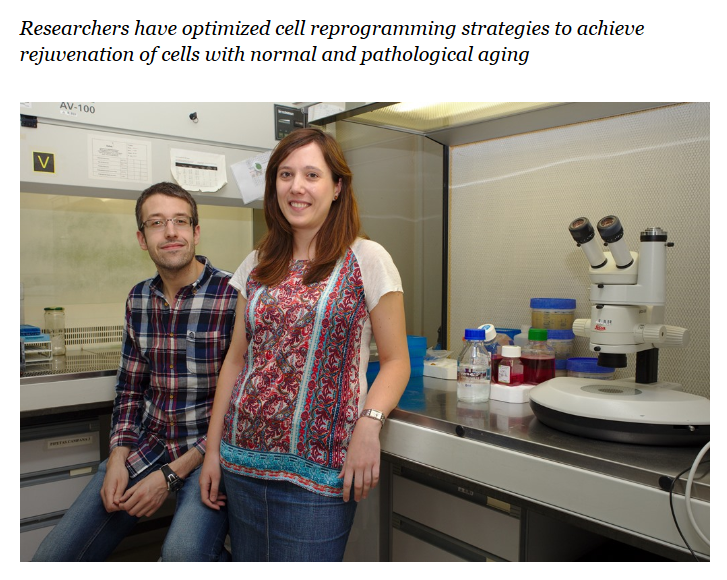

Boom, the 2015 Nature Cell Biology paper by the famous, award-winning and now fugitive Spanish cancer and ageing researcher Carlos Lopez-Otin and his US partner George Q Daley, stem cell titan and dean of Harvard Medical School, is retracted. That happens because correct original data was unavailable, prompted by a prolonged debate on PubPeer (which in turn followed my reporting on Lopez-Otin’s data integrity practices), which established that the figures do not match what the authors deposited as supplement.
The paper Soria-Valles et al 2015 established the role of the transcription factor protein NF-kB in cellular senescence and cell reprogramming, while offering a potential cure to child patients suffering from the deadly premature ageing syndrome, such as Néstor–Guillermo or Hutchinson–Gilford progeria. Under this premise, the impactful Nature-themed paper earned Lopez-Otin in 2017 an ERC grant of €2.5 million, for a project named “Deconstructing Ageing: from molecular mechanisms to intervention strategies“. Earlier this year however, Lopez-Otin abandoned his ERC funded lab at University of Oviedo and escaped to Paris, to stay with his Photoshop expert friend Guido Kroemer. If past behaviour is anything to go by, ERC will now probably again play three monkeys and pretend that Lopez-Otin is still in Spain and his grant-deciding Nature Cell Biology paper was never retracted.
Another Soria-Valles et al paper from Daley lab, which proposed a way to produce haematopoietic stem cells via iPS technology and save people with leukaemia, was meant to be already published, but it is not even submitted and might never be. This and the retracted study’s first author Clara Soria-Valles was a former PhD student of Lopez-Otin, funded by EMBO postdoctoral fellowship and delegated to the Harvard labs of Daley and his junior partner Thorsten Schlaeger, to learn cellular reprogramming technique. Daley and Schlaeger are reported to be all but ready to apply the blood cell making technique in the clinic, at Boston Children’s Hospital, but now nobody knows if Soria-Valles’ preclinical data is anywhere near reproducible.
It is indeed difficult to find out what results still might be reliable. Soria-Valles disappeared already in April 2018 on a medical leave, though Daley still pays her (neither Daley nor Harvard normally pays any medical leaves for other sick lab members). Nobody else on that manuscript is available, because the Schlaeger lab people involved also left since. Money to try and reproduce it is not an issue though: the research project was funded from Daley’s biggest grant, the NHLBI Progenitor Cell Translational Consortium (NIH U01), which is worth almost $50 million.
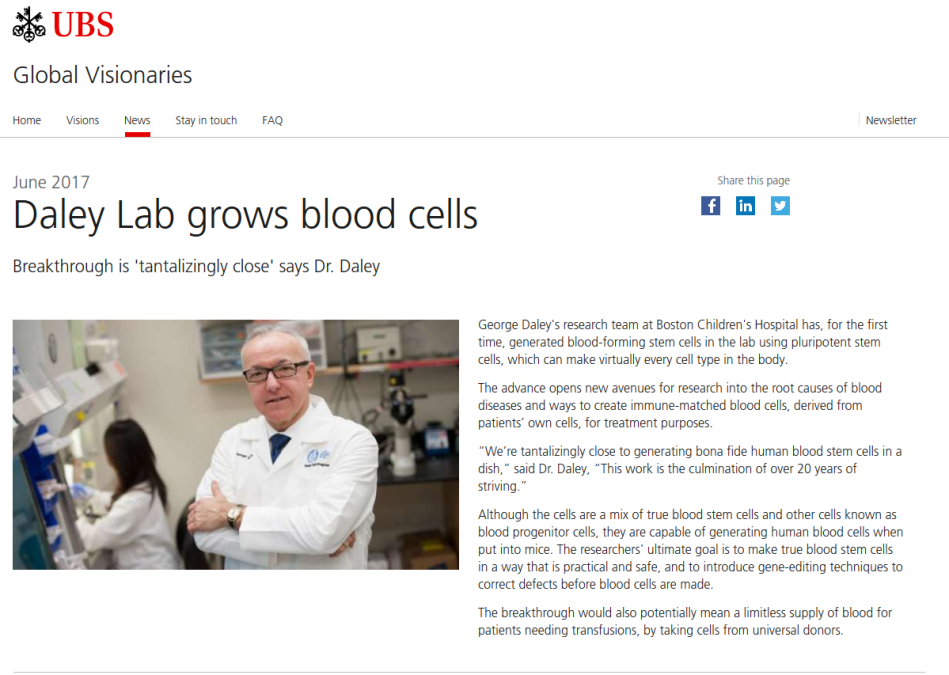
As I was informed, that Soria-Valles paper on haematopoietic reprogramming was meant to be originally submitted to the elite Cell family journal Cell Stem Cell (this is how the circulated draft was labelled in April 2018). Later on, roughly in August 2018, when my article appeared, the chosen target journal was Stem Cell Reports (published by International Society for Stem Cell Research, ISSCR). For someone like Daley this is a huge status reduction of journal venue. The results were presented earlier by Soria-Valles at the ISSCR annual meeting in 2017:
INTEGRATION-FREE SYSTEM FOR GENERATION OF HEMATOPOIETIC STEM AND PROGENITOR CELLS FROM HUMAN PLURIPOTENT STEM CELLS
Soria-Valles, Clara 1 , Sugimura, Ryohichi 1 , Kumar Jha, Deepak 1 , Lummertz da Rocha, Edroaldo 1 and Daley, George 2
1 Boston Children’s Hospital, Boston, MA, USA, 2 Stem Cell Program, Boston Children´s Hospital, Boston, MA, USA
The generation of hematopoietic stem cells (HSCs) from human pluripotent stem cells (PSCs) constitutes a valuable tool with promising applications for research and therapy. However, derivation of HSCs with in vivo long-term engraftment and multi-lineage potential remains elusive. We have described a combinatorial approach, based on the directed differentiation of hemogenic endothelium (HE) and transduction with five transcription factors (TF) (RUNX1, ERG, LCOR, HOXA5 and HOXA9) expressed in lentiviral vectors that allowed the conversion of human PSCs into hematopoietic stem
and progenitor cells (HSPCs). The resulted cells exhibited long-term and multi-lineage hematopoietic capabilities when injected into irradiated immune-deficient mice.
Despite this proof of principle, the engineered cells have a limited self-renewal capacity due to the integration of the transgenes and are still molecularly distinct from bona fide HSCs. Thus, in an attempt to achieve bona fide HSCs and make them safer for future therapeutic interventions, we have established integration-free systems that have shown comparable efficiency to the previously developed lentiviral strategy through in vitro and in vivo experiments. Therefore, this new method may overcome some limitations of the lentiviral approach and hold the key for future regenerative medicine advances in blood diseases.
Soria-Valles however was not present at the 2018 ISSCR meeting (a conference which I incidentally wrote about here, in a story about another dishonest stem cell researcher, who was set to be ISSCR 2018 keynote speaker). Nobody knows how much of Soria-Valles’ claim to make haematopoietic stem cells via iPS technology is still valid. Sources were quoted with estimates of too low a yield or even not sure of producing any haematopoietic stem cells at all. Yet just this September 2018, Daley spoke at a lecture at Dana-Farber-Institute of his future Stem Cell Reports paper and even of his plans to apply the method to treat paediatric patients with congenital bone marrow deficiencies, in particular Shwachman Diamond Syndrome and Diamond Blackfan Anemia.
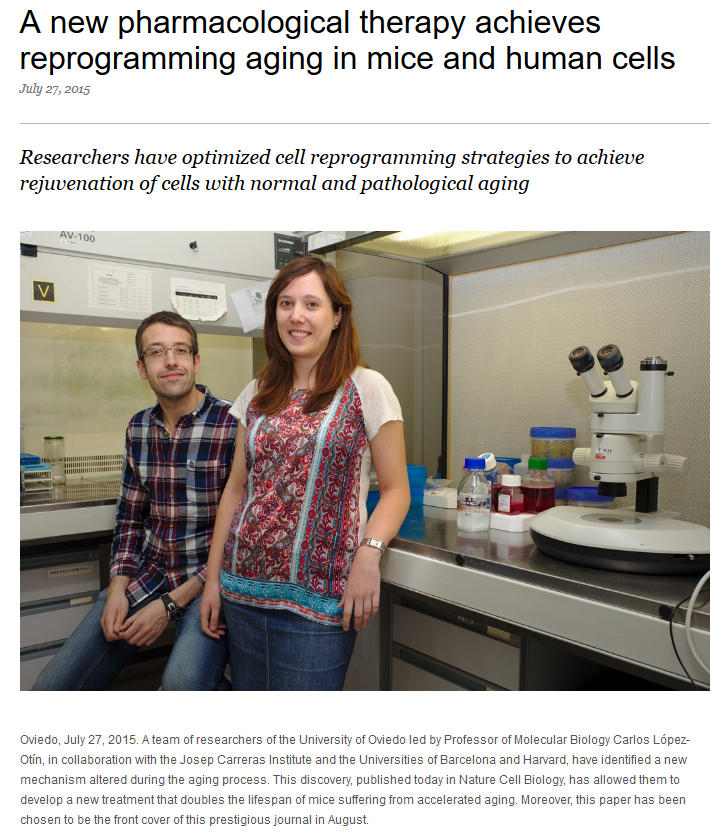
But now back to the main subject, the Nature Cell Biology retraction. The journal warned readers on 4 October 2018 with an editorial note that “that the reliability of data presented in this manuscript has been the subject of criticisms“. 4 December 2018 was the deadline imposed by the publisher to submit signatures from co-authors for a retraction. Lopez-Otin’s Oviedo colleague Jose Maria Perez Freije collected the signatures of all authors, including the elusive Soria-Valles, and submitted them to the publisher Nature.
This is the retraction notice:
“We, the authors, are retracting this Article due to issues that have come to our attention regarding data availability, data description and figure assembly. Specifically, original numerical data are not available for the majority of the graphs presented in the paper. Although original data were available for most EMSA and immunoblot experiments, those corresponding to the published EMSA data of Supplementary Fig. 8a, the independent replicate immunoblots of Fig. 8b and Supplementary Fig. 1e, and the independent replicate EMSA data of Supplementary Figs 6e, 8b, 8c and 8d, are unavailable. Mistakes were detected in the presentation of Figs 3c, 4i and Supplementary Figs 6a, 8a, 8d, 9, and in some cases the β-actin immunoblots were erroneously described in the figure legends as loading controls, rather than as sample processing controls that were run on separate gels. Although we, the authors, believe that the key findings of the paper are still valid, given the issues with data availability we have concluded that the most appropriate course of action is to retract the Article. We deeply regret these errors and apologize to the scientific community for any confusion this publication may have caused. All authors agree with the retraction.”
This slide show illustrates the data issues mentioned in the retraction notice.
And this slide show illustrates the issues the retraction notice chose not to address at all.
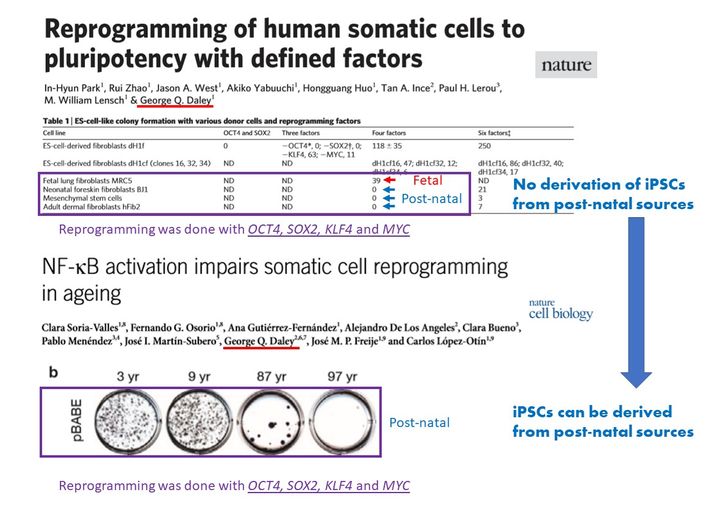
In Daley’s lab, more things do not work as expected. His most famous Nature paper, Park et al 2008 , meant to compete with Shinya Yamanaka for induced pluripotency (iPS) fame and the Nobel Prize, is being plucked apart on PubPeer, accused of not having delivered any pluripotency as such. The exogenously delivered reprogramming transgenes remained namely active, while they were supposed to become silenced as cells’ own pluripotency genes become active. Also, Daley’s method of using Large T Antigen and telomerase TERT in addition to Yamanaka’s four iPS reprogramming factors proved rather counterproductive.
For someone like Daley, all of this is not the end of the world. There are always new windows of opportunity. Just as Chinese scientist Jiankui He caused a worldwide scandal with his unethical human experiments with CRISPR-modified babies, Daley (and his Harvard colleague George Church) offered a more enthusiastic view: America cannot afford a CRISPR gap to China. Daley suggested that Harvard should take the lead and apply CRISPR eugenics to ensure the survival of the human race:
“There have even been discussions that we as a species need to maintain the flexibility in the face of future threats to take the control of our own heredity.”
Harvard’s CRISPR experiments on human germ line editing are already starting. An Alzheimer’s associated gene is to be edited in human sperm, while Daley announced big plans to design the children of the future to be resistant to various diseases. Ethics is something this Harvard dean is apparently less interested in.
Harvard recently received a $200 million donation to set up a new institute, the money came from a controversial tycoon Leonard Blavatnik with Russian origins, whose lawyers made The Guardian apologise for erroneously calling him a “Putin pal” and an oligarch.
It is Daley’s Spanish collaborator, the fugitive Lopez-Otin, who is in deep trouble with that retraction now. Lopez-Otin did manage to bring himself into news recently with his new paper (in a Nature -themed journal!) where his Oviedo lab analysed the genome of Lonesome George, the last member of his giant tortoise species who died in 2012. The press release omitted to say whether he spoke from Oviedo or Paris, Lopez-Otin the turtle geriatrics researcher was quoted with:
“We had previously described nine hallmarks of aging, and after studying 500 genes on the basis of this classification, we found interesting variants potentially affecting six of those hallmarks in giant tortoises, opening new lines for aging research”
Nature now probably deeply regrets having awarded him with a 2017 Mentoring Award. Maybe they can give next one to Daley? Maybe Daley can get Soria-Valles to CRISPR some of those turtle genes to create a new long-lived human race of Homo harvardiensis crispri?
Update 21.12.2018. My article was apparently well received in Harvard, according to this information I was privy to:
“Daley was complaining intensely at lab meeting in front of entire lab and his junior faculty labs (Trista North and Thorsten Schlaeger) about potential lab members who might have leaked Soria-Valles information to the German blogger. It was intense”
I also learned that the now retracted Soria-Valles Nature Cell Biology 2015 paper was originally submitted to Science, were it was rejected due to some statistics issues.
Update 5.01.19. I was recently alerted by a source:
“George [Daley, -LS] has scared the lab members and provoked Stockholm syndrome among members. The Daley lab is trying to figure out who the leaks are now. Some of the members are trying to crash the German website by sending Hakenkreuz images.”
This was exactly what happened. Commenters used several fake identities to post highly defamatory comments about Daley on my site, equalling his research to Macchiarini’s trachea transplants and, indeed, using Nazi Swastika armband photoshopped on a photo of Daley. Exactly same picture was shared by Daley lab members in preparation of the campaign, it was confirmed to me. I deleted all those comments, but made backup, also of IP addresses.
Specifically, those IP addresses were located in US to Connecticut, 06902 Stamford, and New York State, 10022 New York. My source suggested I contact these Daley lab alumni: In-Hyun Park at Yale, CT, and Kitai Kim at MSKCC in NY, as well as the person allegedly orchestrating the campaign, the current Daley postdoc Deepak Jha. None of them replied, but Jha immediately blocked me on Twitter. This is how some grown men behave to please their mighty (ex-)boss. Maybe they should rather relax and read the book by Daley’s wife, Amy C. Edmondson, “The Fearless Organization: Creating Psychological Safety in the Workplace for Learning, Innovation, and Growth“.
Daley will be opening the Blavantik institute in ceremony on February 5th, at 5:30 PM. Come to talk about plans of CRISPR babies!
Donate!
If you are interested to support my work, you can leave here a small tip of $5. Or several of small tips, just increase the amount as you like (2x=€10; 5x=€25). Your generous patronage of my journalism will be most appreciated!
€5.00

 For Better Science
What is going with Soria-Valles et al. paper about blood stem cells from George Daley lab? Did they publish something already? Or they have started to inject Soria-Valles stem cells to patients without publication evidence?
LikeLike
Soria-Valles stem cell transplantation work has not been published yet on any source, PubMed indexed journals, biorxiv, Stem Cell Reports, Stemjournal, Lancet’s eBiomedicine, CellPress’ iScience etc. The last time it appeared on Daley’s talk at NIH videocast, November 2018. It will very likely reappear at ISSCR2019, never know if Soria-Valles herself will present or someone replaced Soria-Valles will present.
LikeLike
Yes very probably will reappear…if just only to keep justifying spending grant funding… curiously for funding agencies retractions, misconduct, seems not be important enough to cancel grants although granting agencies may mentioned this in their regulations
LikeLike
After several inquiries, I received responses from Juan de la Cierva regarding decision on Soria-Valles’ funding number IJCI-2017-31455. Agencia Estatal de investigacion jdcincorp.seg@aei.gob.es CCed unidad responsable de la Evaluacion s.evaluacion@aei.gob.es to investigate how the funding is processed.
LikeLike
Inigo Santamaria, former staff at Lopez-Otin lab and passed away last month, had PubPeer records on two of his JBC papers. Neither of them had been corrected or retracted. JBC, why you concluded there is no more papers to be investigated after retractions of eight papers (and one retraction at NCB).
Molecular cloning and structural and functional characterization of human cathepsin F, a new cysteine proteinase of the papain family with a long propeptide domain
Journal of Biological Chemistry (1999) – 6 Comments
pubmed: 10318784 issn: 0021-9258
I Santamaría , Gloria Velasco , Alberto M. Pendás , Ana Paz , C López-Otín
https://pubpeer.com/publications/E28349CFF14CE804CF0ADD14128D31
Cathepsin Z, a novel human cysteine proteinase with a short propeptide domain and a unique chromosomal location
Journal of Biological Chemistry (1998) – 1 Comment
pubmed: 9642240 issn: 0021-9258
I Santamaría , G Velasco , A M Pendás , A Fueyo , C López-Otín
https://pubpeer.com/publications/0E0C1F23E551921ED211BF524EF95D
https://www.lne.es/oviedo/2019/02/28/muere-49-anos-inigo-santamaria/2433784.html
LikeLike
So more than 3 months past since retraction of nine papers of Lopez-Otin. We know Lopez-Otin is back to uniovi. What happens to first authors afterwards? Did decade ago JBC authors get faculty jobs? Did recent one Soria-Valles get Juan de la Cierva fellowship?
LikeLike
American Association for Cancer Research (AACR) has nomiated George Q. Daley as a 2019 class of fellow according to his pioneer work in earlier days.
https://imgur.com/a/vTJYZ6p#pfxHJ5P
https://pubpeer.com/publications/61226A71F74171D4410CB1B4916745
https://pubpeer.com/publications/32494494DF1BA35389D4DD4215FDB6
“George Q. Daley, MD, PhD, Dean, Faculty of Medicine; Caroline Shields Walker Professor of Medicine; Professor of Biological Chemistry and Molecular Pharmacology, Harvard Medical School, Cambridge, Massachusetts
For demonstrating the role of the BCR/ABL oncogene in the pathogenesis of chronic myeloid leukemia, and for his creation of pluripotent stem cell-based disease models to improve drug and transplantation therapies for malignant and genetic diseases.”
https://www.aacr.org/Newsroom/Pages/News-Release-Detail.aspx?ItemID=1284
LikeLike
Lopez-Otin’s told Elpais that they could not locate only one of triplicate, which contradicted with Retraction Notice from Nature Cell Biology where majority of original numerical data were missing.
Lopez-Otin interview (Elpais)
https://elpais.com/elpais/2019/04/10/ciencia/1554916951_385474.html
Después de un año de pedirles los datos de los experimentos, no encontraron unos triplicados de uno de ellos. Habían hecho los experimentos hacía más de cinco años y no estaban los triplicados de uno. La presión era tal que decidimos retirar ese trabajo.
English
“After a year of asking them for the data of the experiments, they did not find a triplicate of one of them. They had done the experiments more than five years ago and they were not tripled by one. The pressure was such that we decided to withdraw that job.”
Retraction Notice (Nature Cell Biology)
https://www.nature.com/articles/s41556-018-0259-0
-original numerical data are not available for the majority of the graphs
LikeLike
If Lopez-Otin leaves uniovi by June, what will happen to his lab? Closed and get lost? And what will happen to retracted Nature Cell Biology author Clara Soria-Valles, she is supposed to bring Juan de la Cierva money there?
https://www.lne.es/asturias/2019/04/10/otin-estudia-tres-ofertas-gente/2455007.html
LikeLike
Unaddressed image duplications in three Nature and its associate papers from Daley lab. Is HMS Dean status so powerful that can sweep the dirts under rug?
Reprogramming of human somatic cells to pluripotency with defined factors
Nature (2008) – 19 Comments
pubmed: 18157115 doi: 10.1038/nature06534 issn: 1476-4687 issn: 0028-0836
In-Hyun Park , Rui Zhao , Jason A. West , Akiko Yabuuchi , Hongguang Huo , Tan A. Ince , Paul H. Lerou , M. William Lensch , George Q. Daley
https://pubpeer.com/publications/A600E09BABFB5C7A28B86BBA6F8AD9#19
Epigenetic memory in induced pluripotent stem cells
Nature (2010) – 2 Comments
pubmed: 20644535 doi: 10.1038/nature09342 issn: 1476-4687 issn: 0028-0836
K. Kim , A. Doi , B. Wen , K. Ng , R. Zhao , P. Cahan , J. Kim , M. J. Aryee , H. Ji , L. I. R. Ehrlich , A. Yabuuchi , A. Takeuchi , K. C. Cunniff , H. Hongguang , S. Mckinney-Freeman , O. Naveiras , T. J. Yoon , R. A. Irizarry , N. Jung , J. Seita , J. Hanna , P. Murakami , R. Jaenisch , R. Weissleder , S. H. Orkin , I. L. Weissman , A. P. Feinberg , G. Q. Daley
https://pubpeer.com/publications/E8874B8B02107526F141197718C646#1
Lin28 and let-7 regulate the timing of cessation of murine nephrogenesis
Nature Communications (2019) – 2 Comments
pubmed: 30635573 doi: 10.1038/s41467-018-08127-4 issn: 2041-1723
Alena V. Yermalovich , Jihan K. Osborne , Patricia Sousa , Areum Han , Melissa A. Kinney , Michael J. Chen , Daisy A. Robinton , Helen Montie , Dan S. Pearson , Sean B. Wilson , Alexander N. Combes , Melissa H. Little , George Q. Daley
https://pubpeer.com/publications/730D5F3BC8FD82D483604CEE8442B9#1
LikeLike
Image duplication from Kim 2010 Nature.
LikeLike
Deepak Jha, a current postdoc at George Daley lab, has not addressed his image duplications from his former lab (Brian Struhl).
An RNA polymerase II-coupled function for histone H3K36 methylation in checkpoint activation and DSB repair
Nature Communications (2014) – 3 Comments
pubmed: 24910128 doi: 10.1038/ncomms4965 issn: 2041-1723
Deepak Kumar Jha , Brian D. Strahl
https://pubpeer.com/publications/42A80DA0DB5523DEEF61FEE107F982
“The erratum has not corrected the image duplication pointed by Adiantum Serratodentatum. https://www.nature.com/articles/ncomms7015 ”
LikeLike
Unaddressed gel splicings from Daley himself and his lab.
Transformation of an interleukin 3-dependent hematopoietic cell line by the chronic myelogenous leukemia-specific P210bcr/abl protein
Proceedings of the National Academy of Sciences (1988) – 5 Comments
pubmed: 3143116 issn: 0027-8424
G Q Daley , D Baltimore
https://pubpeer.com/publications/61226A71F74171D4410CB1B4916745#1
Induction of chronic myelogenous leukemia in mice by the P210bcr/abl gene of the Philadelphia chromosome
Science (1990) – 7 Comments
pubmed: 2406902 issn: 0036-8075
G Q Daley , R A Van Etten , D Baltimore
https://pubpeer.com/publications/32494494DF1BA35389D4DD4215FDB6#6
Derivation of embryonic germ cells and male gametes from embryonic stem cells
Nature (2004) – 4 Comments
pubmed: 14668819 doi: 10.1038/nature02247 issn: 1476-4687 issn: 0028-0836 issn: 1476-4679
Niels Geijsen , Melissa Horoschak , Kitai Kim , Joost Gribnau , Kevin Eggan , George Q. Daley
https://pubpeer.com/publications/A338DD5840B3ED818917AEB1B984C5#3
LikeLike
Retraction worthy contamination in Daley iPSC studies in both Nature (Park, 2008) and Cell (Park, 2008).
Reprogramming of human somatic cells to pluripotency with defined factors
Nature (2008) – 23 Comments
pubmed: 18157115 doi: 10.1038/nature06534 issn: 1476-4687 issn: 0028-0836
In-Hyun Park , Rui Zhao , Jason A. West , Akiko Yabuuchi , Hongguang Huo , Tan A. Ince , Paul H. Lerou , M. William Lensch , George Q. Dale
and
Disease-specific induced pluripotent stem cells
Cell (2008) – 4 Comments
pubmed: 18691744 doi: 10.1016/j.cell.2008.07.041 issn: 1097-4172 issn: 0092-8674
In-Hyun Park , Natasha Arora , Hongguang Huo , Nimet Maherali , Tim Ahfeldt , Akiko Shimamura , M. William Lensch , Chad Cowan , Konrad Hochedlinger , George Q. Daley
https://pubpeer.com/publications/A600E09BABFB5C7A28B86BBA6F8AD9
//s.imgur.com/min/embed.js
//s.imgur.com/min/embed.js
//s.imgur.com/min/embed.js
//s.imgur.com/min/embed.js
LikeLike
Soria-Valles et al. published Correction. Their 2014 Oncogene paper had been criticized for updating mock dataset of microarray. https://pubpeer.com/publications/8D0F4C1D83621DE5F72E92A4C39787
Correction: The anti-metastatic activity of collagenase-2 in breast cancer cells is mediated by a signaling pathway involving decorin and miR-21
“The original microRNA hybridization data for this article, which has been available for the scientific community upon request, has now been deposited in the GEO repository under accession number GSE124432.”
https://www.nature.com/articles/s41388-019-0825-3
LikeLike
Pingback: Does ERC help cheaters pay protection money? – For Better Science
PubPeer somehow clears up comments to Soria-Valles’ Journal of Immunology article, that had been critiqued on suspicious tight error bars in graphs.
https://blog.pubpeer.com/publications/46D48D7AB88DC28DD57C0CC1BF8DF9
MMP-25 Metalloprotease Regulates Innate Immune Response through NF-κB Signaling
The Journal of Immunology (2016)
pubmed: 27259858 doi: 10.4049/jimmunol.1600094 issn: 1550-6606 issn: 0022-1767
Clara Soria-Valles author has email , Ana Gutiérrez-Fernández , Fernando G. Osorio , Dido Carrero , Adolfo A. Ferrando , Enrique Colado , M. Soledad Fernández-García , Elena Bonzon-Kulichenko , Jesús Vázquez , Antonio Fueyo , Carlos López-Otín
“The error bars of figure 3C, blood metabolites in six mice are too small. Based on physiological variability of these parameters, it is concerning. The authors could show source data of numerics.”
LikeLike
Harvard Med School Dean George Daley still displays his Soria-Valles article, retracted half a year ago, as a representative publication on two of his webpages. Deanship is too busy to recognize his own retraction…? Even Lopez-Otin removed the Soria-Valles article from his website just after retraction.
HMS Dean Webpage
https://hms.harvard.edu/faculty-staff/george-q-daley
HMS Dean Lab Webpage
https://daley.med.harvard.edu/publications
LikeLike
ISSCR meeting in LA is approaching. Could anyone please check if Soria-Valles stem cell transplantation is updated there?
LikeLike
Soria-Valles’ thesis, composed from both retracted Nature Cell Biology and erratum Oncogene, is still valid? What will happen to her degree of PhD in Spanish system?
LikeLike
ISSCR2019 abstracts are open to all registrants. There is no update of Soria-Valles stem cell injection work in either oral or poster. More information to be followed.
Full schedule (need registration for full access).
https://www.eventscribe.com/2019/ISSCR/agenda.asp?pfp=FullSchedule
LikeLike
PubPeer commment on the latest paper from Daley (Rowe, 2019).
The developmental stage of the hematopoietic niche regulates lineage in MLL-rearranged leukemia
Journal of Experimental Medicine (2019) – 1 Comment
pubmed: 30728174 doi: 10.1084/jem.20181765 issn: 1540-9538 issn: 0022-1007
R. Grant Rowe , Edroaldo Lummertz Da Rocha , Patricia Sousa , Pavlos Missios , Michael Morse , William Marion , Alena Yermalovich , Jessica Barragan , Ronald Mathieu , Deepak Kumar Jha , Mark D. Fleming , Trista E. North , George Q. Daley
“Would the authors please clarify if a test for outliers in their datasets was performed? In Figure 3, panel D (please see image below), there seems to be a large amount of overlap between the Control and CCl5 groups, except for a single point in Control which is at ~50 (y-axis) which appears to be causing the statistical significance between the groups.
For convenience I also included the Statistics section from this publication, but cant find indication of an outlier test”
https://pubpeer.com/publications/D764C2349E16BEB3DE5B0C04A0E720
LikeLike
More PubPeer comments on Daley iPSC paper (Park, 2008 Cell).
Disease-Specific Induced Pluripotent Stem Cells
Cell (2008) – 19 Comments
pubmed: 18691744 doi: 10.1016/j.cell.2008.07.041 issn: 1097-4172 issn: 0092-8674
In-Hyun Park , Natasha Arora , Hongguang Huo , Nimet Maherali , Tim Ahfeldt , Akiko Shimamura , M. William Lensch , Chad Cowan , Konrad Hochedlinger , George Q. Daley
“Reported distinct genotype, but identical dna fingerprint. ”
https://pubpeer.com/publications/921ADCB7B6A62E2BDB593B9056AA99#19
LikeLike
PubPeer comments on another paper of Lopez-Otin (Soria-Valles, 2016).
NovelLMNAmutations cause an aggressive atypical neonatal progeria without progerin accumulation
Journal of Medical Genetics (2016) – 2 Comments
doi: 10.1136/jmedgenet-2015-103695 issn: 0022-2593 issn: 1468-6244 pubmed: 27334370
Clara Soria-Valles , Dido Carrero , Elisabeth Gabau , Gloria Velasco , Víctor Quesada , Clea Bárcena , Marleen Moens , Karen Fieggen , Silvia Möhrcken , Martina Owens , Diana A Puente , Óscar Asensio , Bart Loeys , Ana Pérez , Valerie Benoit , Wim Wuyts , Nicolas Lévy , Raoul C Hennekam , Annachiara De Sandre-Giovannoli , Carlos López-Otín
“Could the authors pin point which nuclei have irregular shapes? The presented picture is not easy to appreciate the difference claimed by the authors. ”
https://pubpeer.com/publications/003BE7B1C083EEA3AB412E392FB099#1
“The same scale bar (50uM) between all three panels in figure 7B? The nuclei of the right panel is smaller than the others, but no description in the text.”
https://pubpeer.com/publications/003BE7B1C083EEA3AB412E392FB099#2
LikeLike