

Schneider Shorts of 19 July 2026 – how to pass on a fraudster, a sex pest meets his friends in Prague, new episode of “Sleuth and the Proper Channels”, with retractions in Portugal, teenagers failing to do their duties, and finally, a British man’s dinosaur handbag!
Table of Discontent
Science Elites
- Eager to continue collaborating – how Yannick Griep moved up while known as fraud
- Prague Sex Pest Symposium – sacked sex pest Sabatini gathers his friends next week
Scholarly Publishing
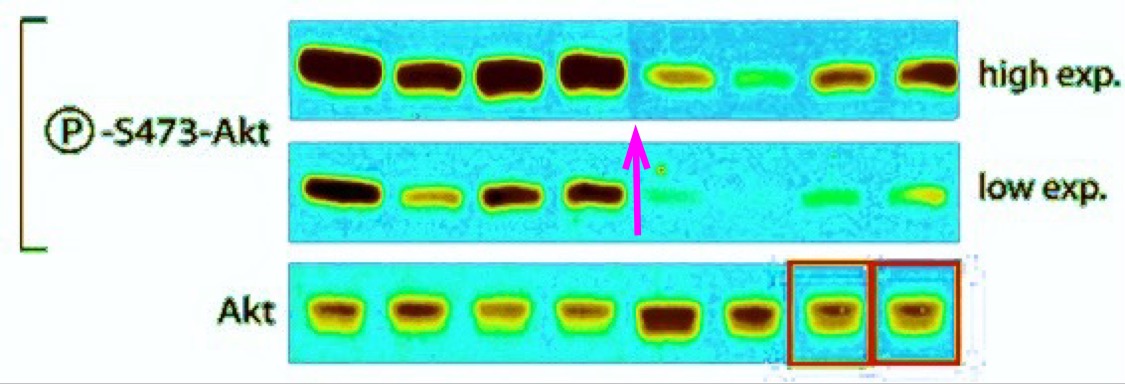
- I have always hated western blots! – sleuth tried to report Swedish fraud, ends up exposing Dutch incompetence
Retraction Watchdogging
- Further investigation noted additional concerns – Portuguese fraud ends in two retractions
Science Breakthroughs
- World’s first T-Rex leather bag – Che Connon’s clever business idea fails
- Dinner table conversations – Prof Myers seeks fertile young women for her stepson
Science Elites
Eager to continue collaborating
In April 2026 Shorts, I quoted the Vox reporting by Stan Van Pelt about a Dutch fraud case. Psychology professor Yannick Griep was fired by his Radboud University in Nijmegen for invoice fraud, then a research fraud investigation against him was opened, which he elegantly countered by destroying all raw data.
Radboud University’s investigative report from January 2026 is here, Griep tried to overthrow it by appealing to the Dutch scientific integrity authority LOWI, which rejected his appeal as inadmissible. The fraudster remains listed in his new job as senior advisor at Samergo, an institution by the Dutch Ministry of Health, Wellbeing and Sports.
In the investigative report, this paper was exposed as totally fake, yet Elsevier did nothing until after that media coverage:
Yannick Griep , Johannes M. Kraak , Wieke M. Knol , Johannes Dolislager , Elizabeth M. Beekman The ripple effect of abusive supervision: A longitudinal examination of psychological contract breach, turnover intentions, and resilience among third parties Journal of Business Research (2025) doi: 10.1016/j.jbusres.2024.115141
The retraction from 20 April 2026 stated:
“Following publication, significant issues were identified within the data file used for the analyses reported in the article, rendering the results unreliable. These issues were brought to the journal’s attention by the corresponding author.
It was subsequently confirmed that an institutional investigation had upheld complaints of data manipulation and fabrication by the corresponding author. It was noted that the co-authors were not aware of and did not contribute to any matter regarding data collection and analysis. The corresponding author takes full responsibility for any issue associated with these steps.
Consequently, the Editors have lost confidence in the results and conclusions of the article and have determined it should be retracted.”
Now, Van Pelt has a follow-up, published in Vox on 15 June 2026. Turns out, Griep’s previous emplyoers knew he was an utter fraudsters, and they elegantly solved the problem in the most typical academic way: they let him climb the career ladder but at another institution, preferably abroad. As it happened for Jens Schwamborn:
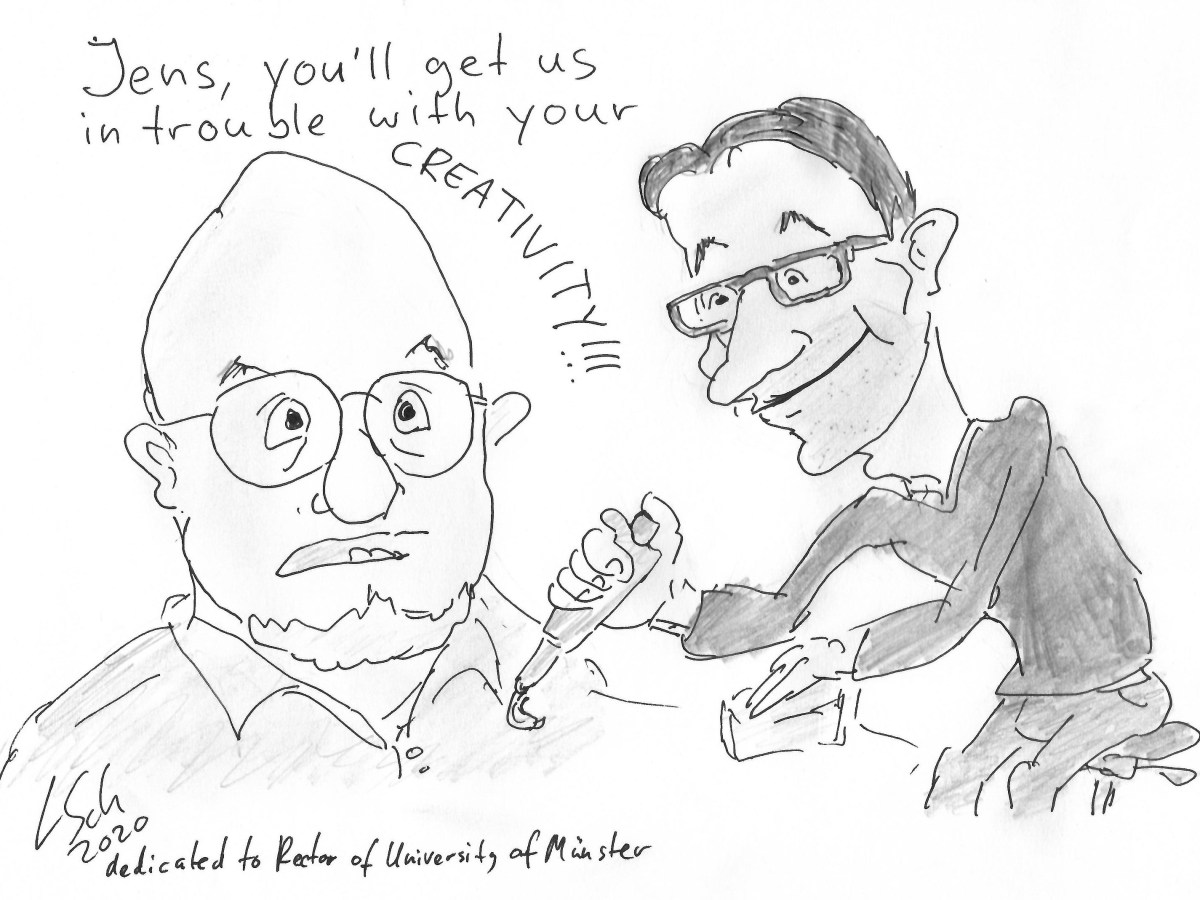
Münster charges Jens Schwamborn’s mentor Andreas Püschel with research misconduct, again
The University of Münster in Germany shows with a good example how to act on evidence of data manipulation. Neuroscientist Andreas Püschel has been found guilty of research misconduct. It was once again about a paper authored by his former PhD student and now Luxembourg stem cell researcher, Jens Schwamborn.

:
“Griep earned his PhD from the Vrije Universiteit Brussel in 2016, after which he accepted a tenure-track position at the University of Calgary. In 2019, he moved to Nijmegen. By that time, his former colleagues in Brussels had already terminated their collaboration with him.
“It was an accumulation of incidents that led to that decision”, explains Tim Vantilborgh. Vantilborgh is a professor at Vrije Universiteit Brussel (VUB) and was one of Griep’s doctoral supervisors. He continued publishing with him for another three years during Griep’s time in Canada. Vantilborgh explains: “His line of research was closely related to mine because of his doctoral work, and when he was able to start his own lab there, we were eager to continue collaborating.””
Tim Vantilborgh also mentioned that Griep “became increasingly secretive about data and equipment” and “always had a different excuse” when asked to show the raw data.
Translated: Vantilborgh knew Griep was a fraud, but one never says no to more papers, and they published a lot together: Google Scholar records around 40 common papers published mostly between 2013 and 2020, the last one was in August 2024. The mentor made sure his mentee became first assistant, then associate professor, but abroad! The fun continued in Canada:
“At the University of Calgary, too, questions arose about how Griep handled research data, according to several sources. “It’s time that people knew”, a former Canadian colleague of Griep told Vox. The researcher declined to provide further details and requested anonymity out of concern for their own position. Three other independent sources described Griep’s departure from Calgary as involuntary. According to these sources, concerns about his research practices led to an internal investigation, after which he left under the previously mentioned non-disclosure agreement.”
There’s nothing to disclose, everything you need to know about Griep’s exciting research in Calgary is in the news. BBC covered his research on why employees steal office supplies – allegedly “to seek revenge” for their bosses’ “broken promises“. What irony in Griep’s own invoice fraud case, maybe he revenge-robbed his Radboud University because they didn’t make him full professor fast enough? Or maybe, if we trust CBC, Griep was driven into “dementia” because the professor was paid too much, thus unable to do “one hour of voluntary work a week” like his retired mother?
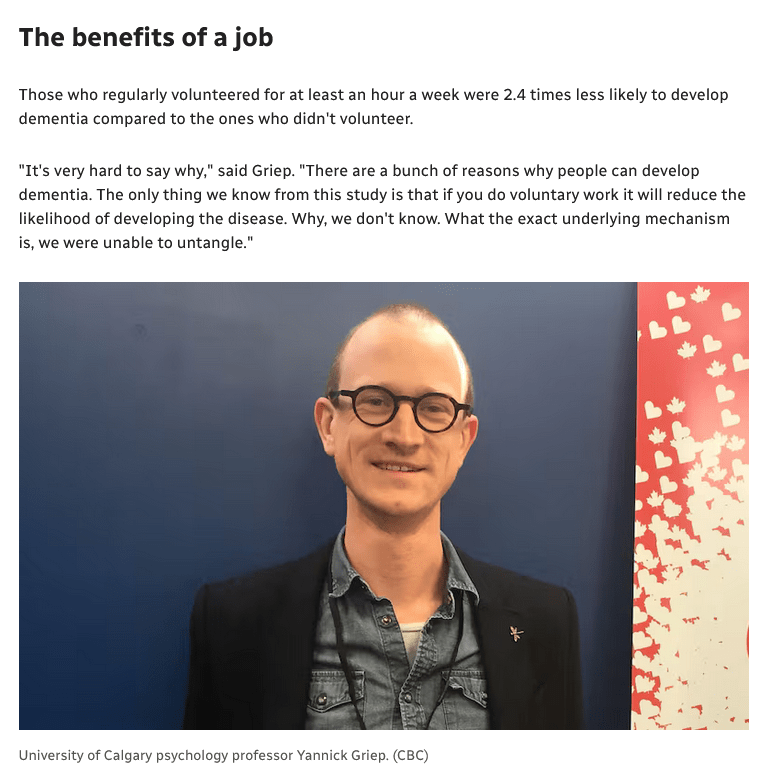
“A study led by University of Calgary psychology professor Yannick Griep looked at 1,000 Swedish seniors and found those who regularly volunteered were much less likely to get dementia. “It turns out that getting everything but the paycheque is actually what makes you more healthy and makes you more happy about your life,” Griep told the Calgary Eyeopener.” (CBC, 2017)
Aside of that, University of Calgary refuses to share any information. Why should they, they fulfilled their part of the deal by getting Griep a professorship in his home country, and he fulfilled his part by leaving Canada. Everyone is happy. Everyone got to keep their money and to make more.
Isn’t academia great.
Prague Sex Pest Symposium
Next week, a big science conference starts! The host is the sexual harasser and science cheater David Sabatini, who was sacked by MIT and then lost his lawsuits against his past employer and his former victim of sexual abuse.
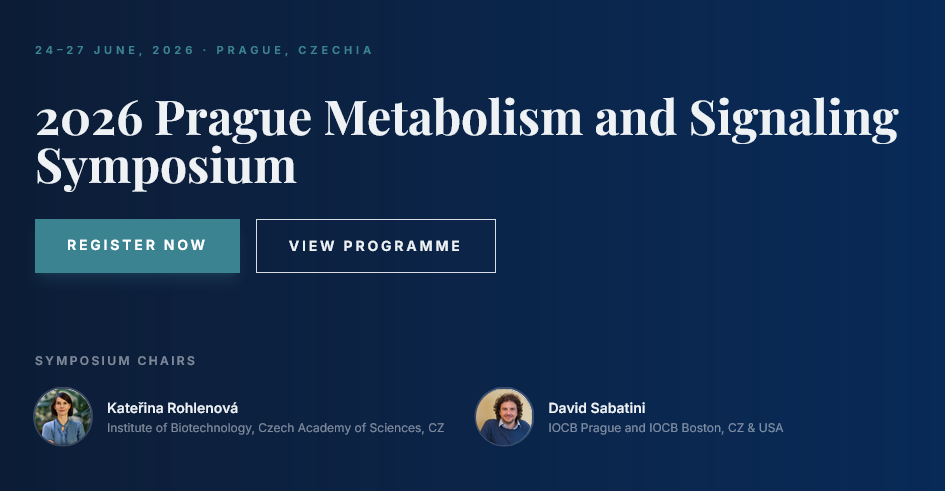
The conference (“2026 Prague Metabolism and Signaling Symposium“) takes place in 24–27 June 2026 in Prague, Czechia, that’s because Sabatini found a new employment there. It is unlikely he is moved to Czechia, Sabatini is probably mostly at home in Boston drinking whiskey from the bottle and phoning up escorts.
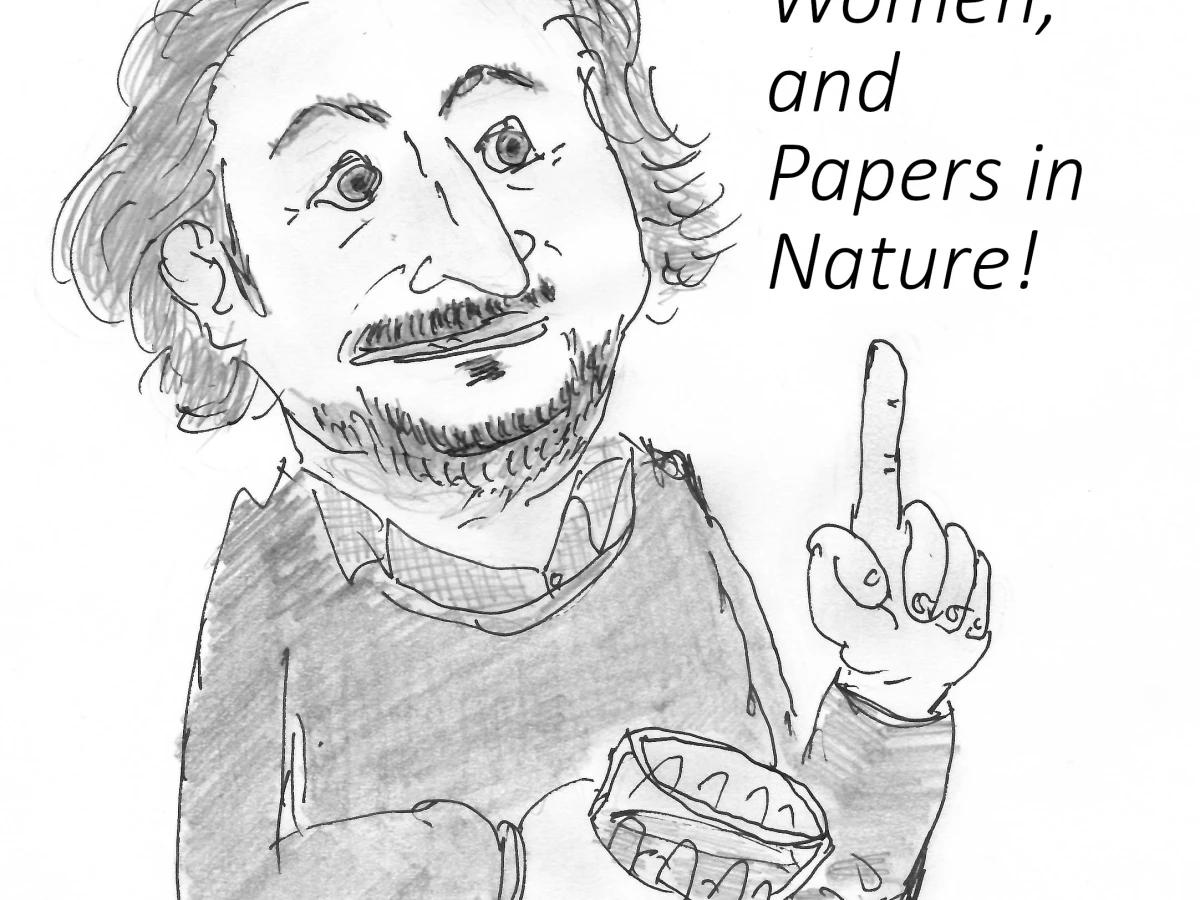
The Sex Privileges of mTORman David Sabatini
“The Plaintiff is Professor Sabatini […] the self-described powerful senior scientist, who had demanded sex of her when she was a graduate student ending her studies and about to start a fellowship at the Whitehead, in a program Sabatini would direct. […] And it is the man who had made it clear – throughout her…
So, who is coming? Who is a friend of a sex pest? Well, there are many man, but also women! With people of such low morals, it’s probably going to be a huge alcohol-infused orgy, at least everyone still going there knows what they will be expected to do.

I wrote about the announcement for this conference in July 2026 Shorts, and listed the participants. The keynote speakers are Sabatini’s fellow mTOR researcher Michael Hall of University of Basel in Switzerland, and Karen Vousden of The Crick in UK.

mTOR: conclusions not affected?
David Sabatini, remember that story? Well, it seems the conclusions were not affected. I take an ill-informed look at the mTOR signalling research field, to understand how photoshopped data gets to be independently verified by other labs.
I shall use this occasion to show you new forgeries found in their papers. Swiss media laments that Hall wasn’t given a Nobel Prize yet, he is quoted consoling himself by having won many other prizes already. I have bad news: Hall never will get the Nobel, what with his PubPeer record. Here most recent finding:
Vittoria Zinzalla , Daniele Stracka , Wolfgang Oppliger , Michael N. Hall Activation of mTORC2 by Association with the Ribosome Cell (2011) doi: 10.1016/j.cell.2011.02.014

This rots on PubPeer since 2022:
Tobias Schmelzle, Thomas Beck , Dietmar E. Martin, Michael N. Hall Activation of the RAS/cyclic AMP pathway suppresses a TOR deficiency in yeast Molecular and cellular biology (2004) doi: 10.1128/mcb.24.1.338-351.2004

In 2024, Hall was awarded in Italy with the Balzen Prize for his “groundbreaking contributions” to life extension (his own and of his rich sponsors), the plan is to use use the mTOR activator rapamycine. Which is great, more parties with Sabatini! Problem is, mTOR research seems to work only with Photoshop:
Sonja A. Dames, José M. Mulet , Klara Rathgeb-Szabo , Michael N. Hall , Stephan Grzesiek The solution structure of the FATC domain of the protein kinase target of rapamycin suggests a role for redox-dependent structural and cellular stability Journal of Biological Chemistry (2005) doi: 10.1074/jbc.m501116200
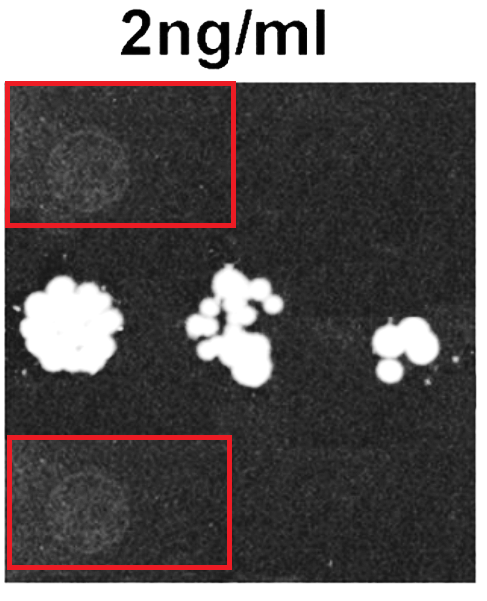
Solanum hyporhodium: “Fig. 6a: More similar than expected.”
The other keynote speaker, Karen Vousden, has currently 23 papers on PubPeer. She used to be Chief Scientist at Cancer Research UK (CRUK), maybe my past reporting helped end this:
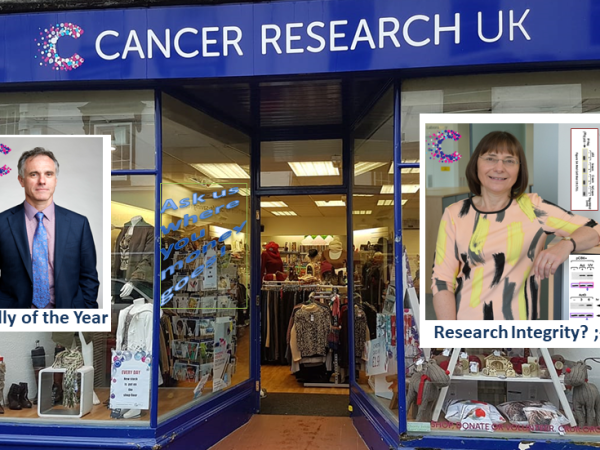
The Crooks of CRUK
Cancer Research UK is a charity which relies on donations, volunteer work and fundraising. What if these citizens knew their money goes to fund bad science?
Here some new findings:
P A J Muller , A G Trinidad , P Timpson , J P Morton , S Zanivan , P V E Van Den Berghe , C Nixon , S A Karim , P T Caswell , J E Noll , C R Coffill , D P Lane , O J Sansom , P M Neilsen , J C Norman , K H Vousden Mutant p53 enhances MET trafficking and signalling to drive cell scattering and invasion Oncogene (2013) doi: 10.1038/onc.2012.148

Paul Timpson , Ewan J. McGhee , Zahra Erami , Max Nobis , Jean A. Quinn , Mike Edward , Kurt I. Anderson Organotypic collagen I assay: a malleable platform to assess cell behaviour in a 3-dimensional context Journal of Visualized Experiments (2011) doi: 10.3791/3089
As you see, the older paper from which the images were lifted has only one common author: Paul Timpson, professor at Garvan Institute and UNSW in Australia. He is indeed a “Cell scientist to watch“.
Wagner Ring Festival in Vienna
Erwin Wagner is not related to the famous German composer but we shall enjoy the Ring Festival with him and his friends anyway.
Here is Vousden with Kanaga Sabapathy, Erwin Wagner‘s former mentee:
Faina Vikhanskaya , Wen Hong Toh , Iqbal Dulloo , Qiang Wu , Lakshmanane Boominathan , Huck Hui Ng , Karen H. Vousden, Kanaga Sabapathy p73 supports cellular growth through c-Jun-dependent AP-1 transactivation Nature Cell Biology (2007) doi: 10.1038/ncb1598


Vousden’s colleague Gordon Peters died in 2016, after his death lots of his stuff was flagged on PubPeer, like Brookes et al 2002 (with Vousden) or this:
F. J. Stott , S Bates, M C James , B B McConnell , M Starborg , S Brookes , I Palmero , K Ryan , E Hara , K H Vousden, G Peters The alternative product from the human CDKN2A locus, p14(ARF), participates in a regulatory feedback loop with p53 and MDM2 The EMBO Journal (1998) doi: 10.1093/emboj/17.17.5001


Here newly flagged trash of hers with her buddy Gerry Melino, plus Doug Green:
Mario Rossi , Vincenzo De Laurenzi , Eliana Munarriz , Douglas R Green , Yun-Cai Liu , Karen H Vousden , Gianni Cesareni , Gerry Melino The ubiquitin–protein ligase Itch regulates p73 stability The EMBO Journal (2005) doi: 10.1038/sj.emboj.7600444
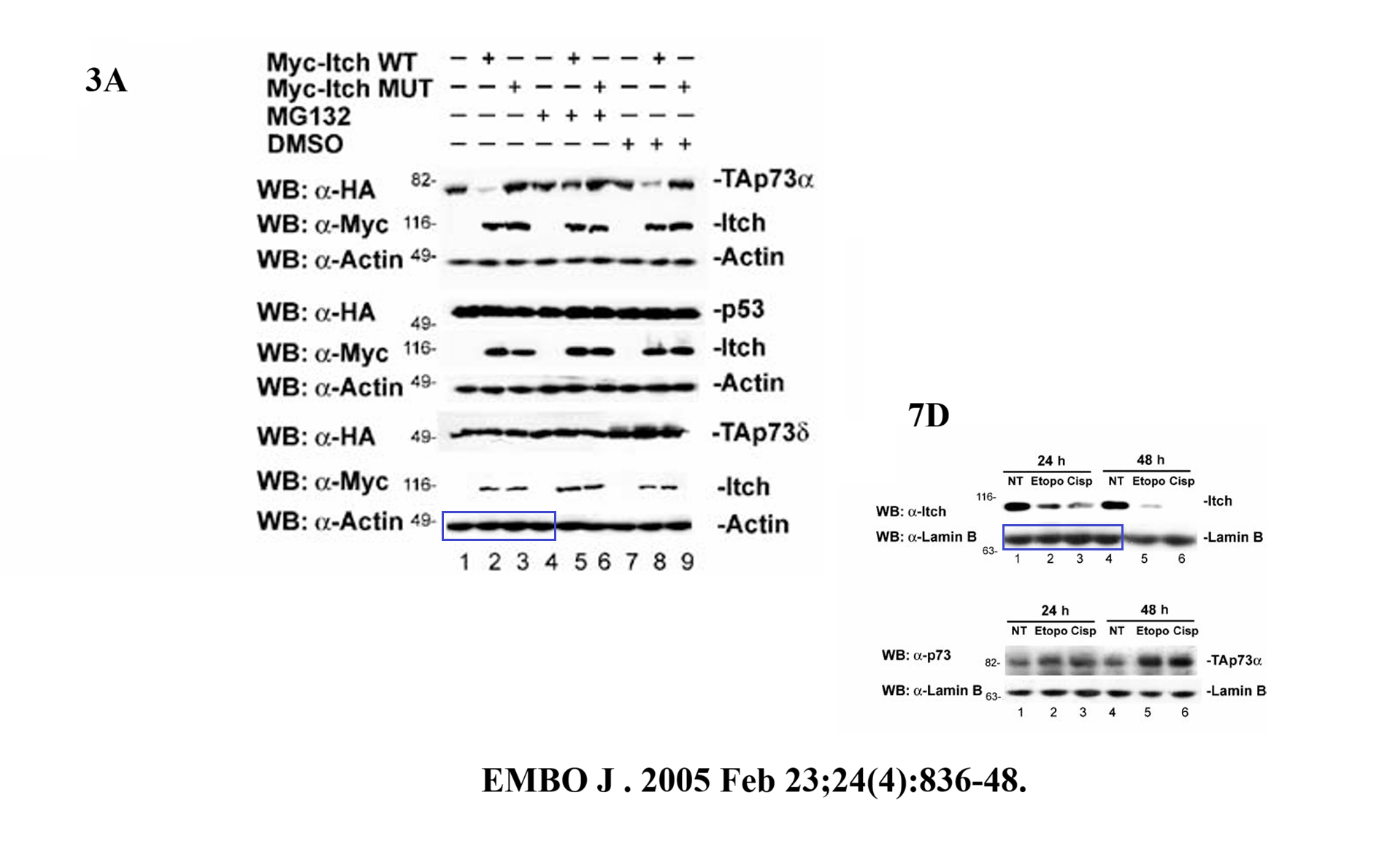
Vousden seems to have worked with every crook there is, including with another sacked sexual harasser, Pier Paolo Pandolfi, and with the sex pest Arnold Levine, who had to resign as President of the Rockefeller University for getting female students drunk and then sexually abusing them. No wonder Vousden also likes Sabatini!

Dirty Old Men
Does being a science genius entitle you to sexual harassment, as academic authorities in Yale and elsewhere insist? Let’s look at papers by Michael Simons, Joseph Schlessinger and Arnold Levine.
Next to Sabatini’s former mentees, the Prague conference also features various Sabatini collaborators, some of them rather prominent and influential, I listed them in July 2025 Shorts. Two of these speakers, Celeste Simon of University of Pennsylvania, USA (PubPeer record) and Mark Febbraio of Monash University, Australia (PubPeer record), previously donated to Sabatini’s dream of his personal lab-themed brothel, read August 2022 Shorts. Febbraio has two retractions Southgate et al FASEB J 2005 and Southgate et al JBC 2007, Simon featured very prominently in this article:

Memorial Sloan Kettering Paper Mill
“Why do successful and apparently intelligent surgeons feel the need to play pretend at biology research? Has Sam S. Yoon ever performed an invasion or migration assay? […] if this is how he “supervises” his research does anyone trust his supervision of surgery?” – Sholto David

Since we are at it, also for Sabatini more forgeries were found recently, see PubPeer. This was swiftly corrected:
Grzegorz Sienski , Priyanka Narayan , Julia Maeve Bonner , Nora Kory , Sebastian Boland , Aleksandra A. Arczewska , William T. Ralvenius , Leyla Akay , Elana Lockshin , Liang He , Blerta Milo , Agnese Graziosi , Valeriya Baru , Caroline A. Lewis , Manolis Kellis , David M. Sabatini , Li-Huei Tsai , Susan Lindquist APOE4 disrupts intracellular lipid homeostasis in human iPSC-derived glia Science translational medicine (2021) doi: 10.1126/scitranslmed.aaz4564

A short Erratum from January 2025 warned that “the conclusions and other data in the paper are not affected.” How are they so sure? Sabatini’s former Whitehead Institute colleague Susan Lindquist died in 2016, yet she somehow continued publishing, as last author even, like the above from 2021, or another problematic paper with Li-Huei Tsai, Narayan et al 2020. There’s more on PubPeer from Lindquist’s lifetime.
That Sabatini paper in Cell with Nathanael Gray was already flagged, but more was found now:
Timothy R. Peterson, Mathieu Laplante, Carson C. Thoreen, Yasemin Sancak, Seong A. Kang , W. Michael Kuehl, Nathanael S. Gray, David M. Sabatini DEPTOR is an mTOR inhibitor frequently overexpressed in multiple myeloma cells and required for their survival Cell (2009) doi: 10.1016/j.cell.2009.03.046


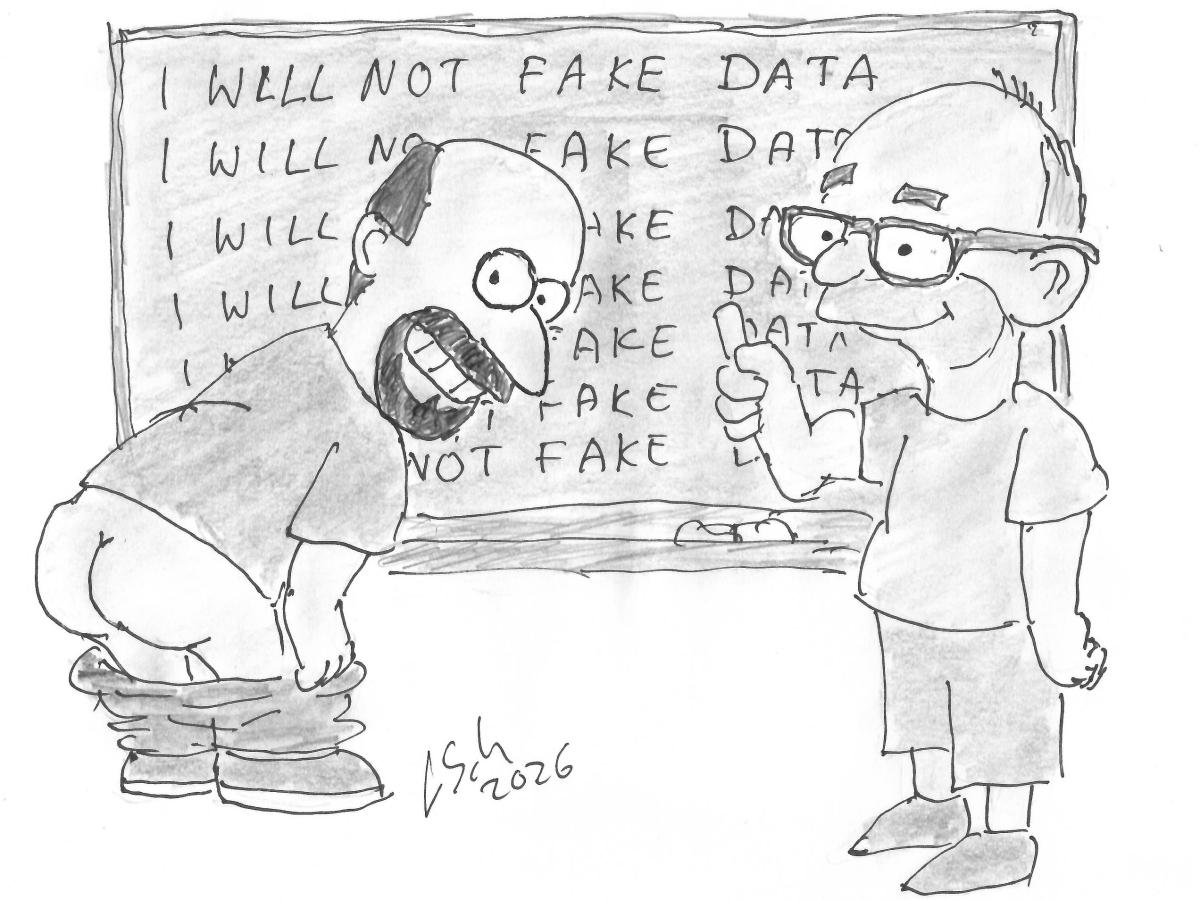
Also, rumour reached me that one of those confirmed speakers, Luca Scorrano, was often seen arriving to conferences in company of young female scientists, and then hanging out with Sabatini. I am sure they were busy pushing the cause of Women In STEM together.
The Misadventures of Luca and Bart
“this is all very time consuming and damaging. It starts to look like a witch hunt.”” – Bart De Strooper
Scholarly Publishing
I have always hated western blots!
Welcome to the new episode of our comedy show “Claire Francis and The Proper Channels”!
This time, the pseudonymous sleuth wrote to the society journal Investigative Ophthalmology & Visual Science (IOVS), whose editor Joseph Carroll loves to prove sleuths wrong, including by doing his own image analyses. Read December 2024 Shorts and here:
The London Eye
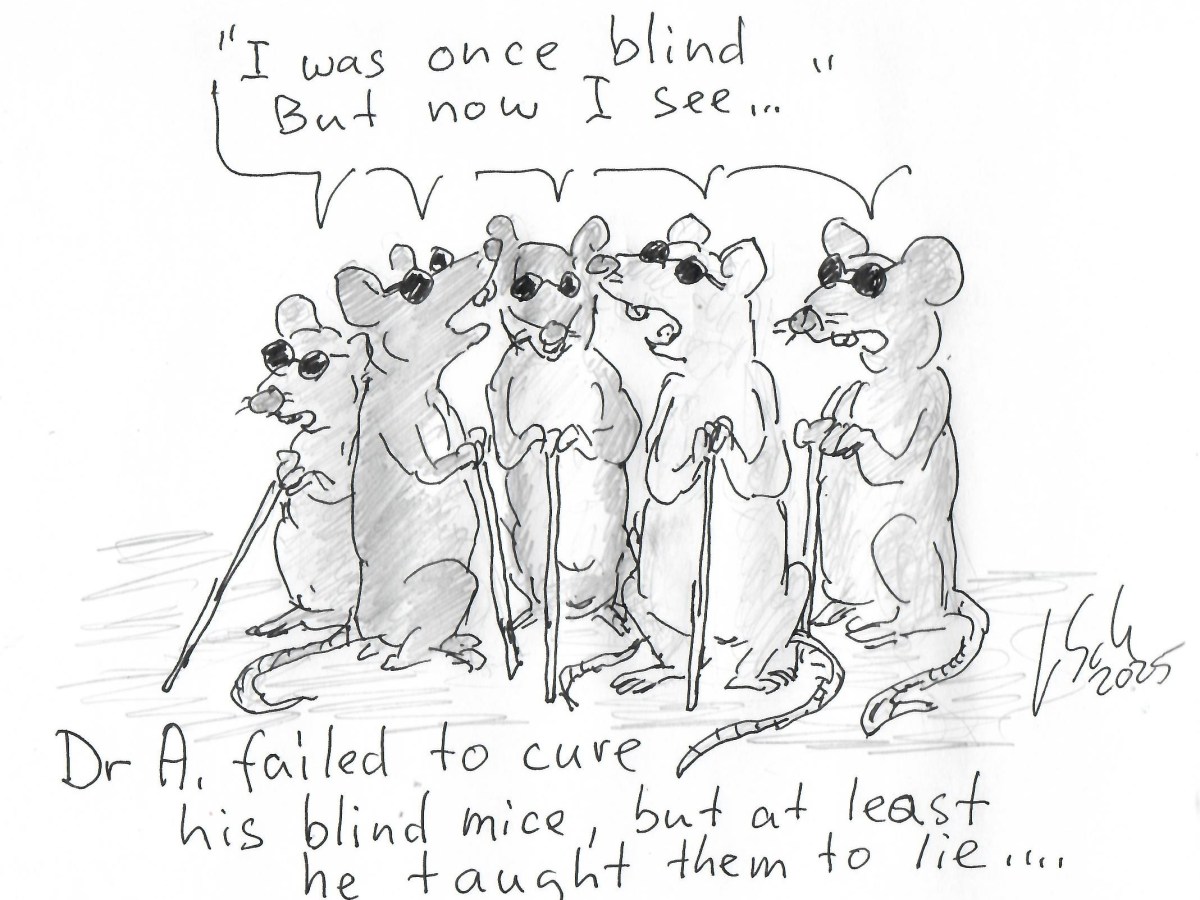
How Robin Ali and other London ophthalmologists make blind mice and blind children see.
This was the paper the sleuth reported, from Uppsala University in Sweden:
Mohammad Harun-Or-Rashid , Niclas Lindqvist , Finn Hallböök Transactivation of EGF receptors in chicken Müller cells by α2A-adrenergic receptors stimulated by brimonidine Investigative Ophthalmology & Visual Science (2014) doi: 10.1167/iovs.13-13823
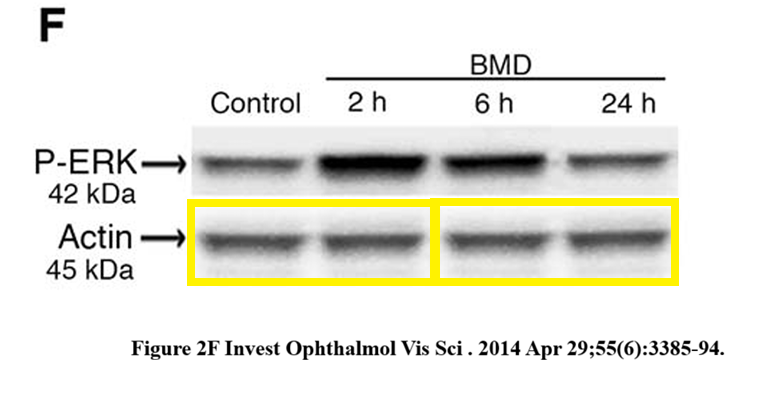
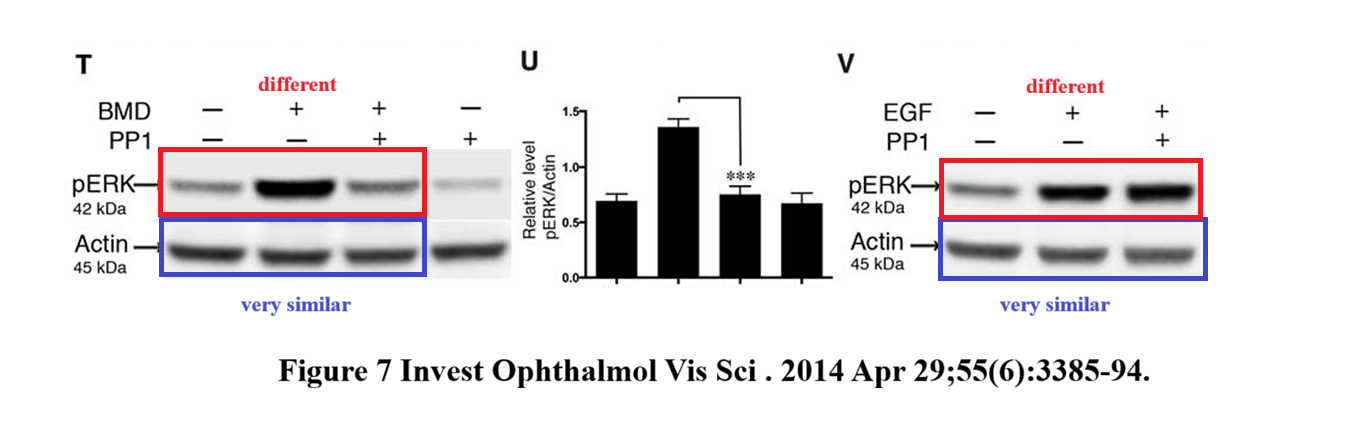
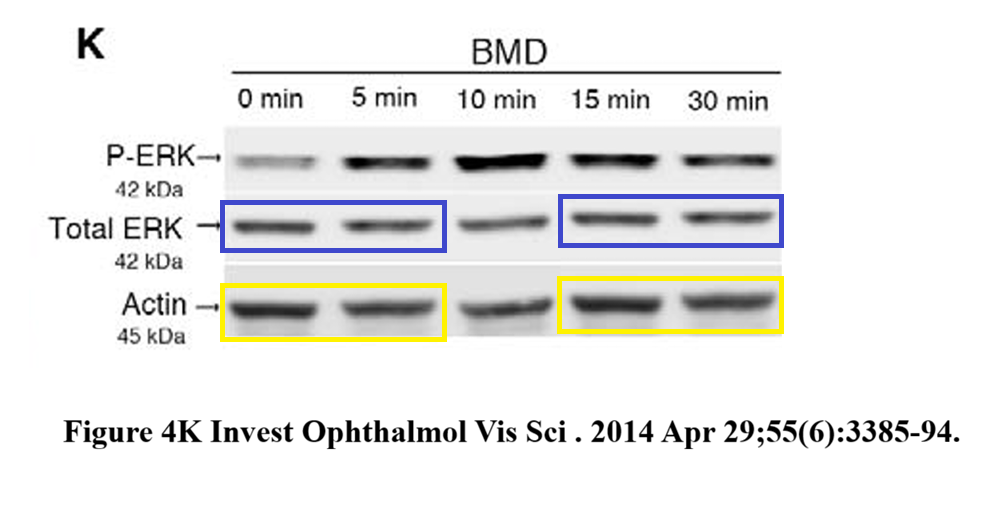
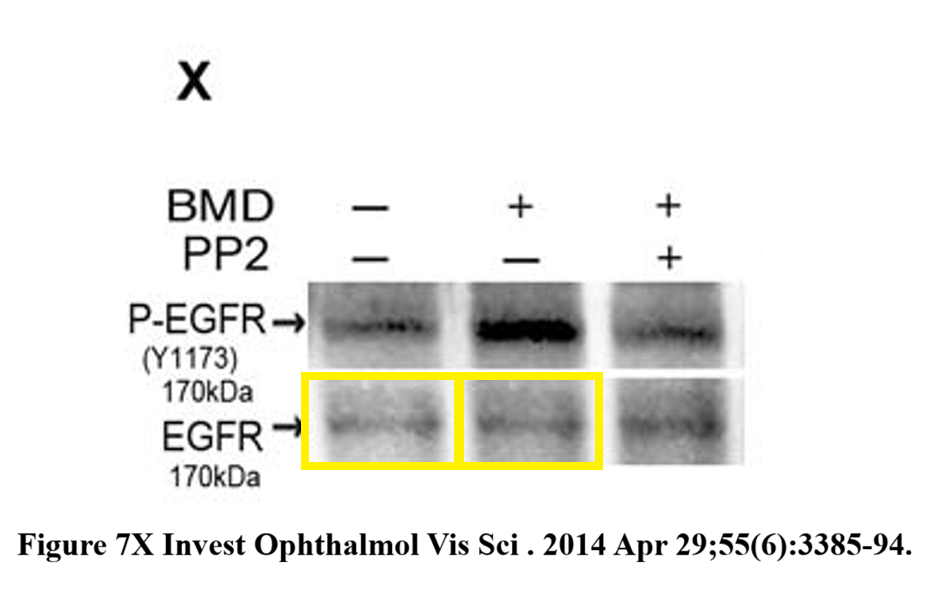
For that reason, Claire Francis notified two other editors of that journal, hoping they would be more helpful. One of them was the associate editor Martine Jager, professor at Leiden University Medical Centre, Leiden (LUMC) in The Netherlands, and she replied to the sleuth, first wondering why she became involved, that being not her area of research. The sleuth explained Carroll’s “corruption” problem, and got this reply:
“I am very anti-corruption, indeed being Dutch, but also realise that mistakes are part of being human. I have always hated western blots!
My own experience is limited to one paper where we were accused of using a facs analysis twice. As both were the same control, we tried to explain that, but only received the same answer, whatever we explained: that we published an unreliable paper. Things can go too far when not a human (such as you) but only computers “know” what is true. “
It seems, Jager referred to the following paper, which received an Expression of Concern. It was made two decades ago in collaboration with Rolf Kiessling of Karolinska Institutet in Sweden and his former postdoc Jelena Levitskaya (and her husband Victor Levitsky), right then the Levitskys left academia and work in consulting. Ironically for Jager, the paper was flagged in September 2025 on PubPeer by… Claire Francis:
Simona Vertuani , Eugenia Dubrovska , Victor Levitsky , Martine J. Jager, Rolf Kiessling , Jelena Levitskaya Retinoic acid elicits cytostatic, cytotoxic and immunomodulatory effects on uveal melanoma cells Cancer Immunology Immunotherapy (2006) doi: 10.1007/s00262-006-0185-z

So duh, Professor Jager, those are totally different experiments, and Springer Nature agreed, and issued an Editorial Expression of Concern on 28 January 2026:
“The Editors would like to alert the readers that concerns were raised regarding highly similar images in this article. Specifically, panels for Fig. 8A (control, 4°C) seems highly similar to Fig. 8B (control, anti ICAM).
Due to the age of the article, the authors have been unable to sufficiently address these concerns. While the main conclusions of the article remain supported by the rest of the data in the article, readers are advised to interpret the data listed above with caution. Authors Martine J. Jager, R. Kiessling, and J. Levitskaya disagree with this Editorial Express of Concern”
If Jager insists those were “the same control“, she should probably leave science to professionals. Especially given the following western blots of hers!
Jinfeng Cao , Renier C. Heijkants , Aart G. Jochemsen , Mehmet Dogrusöz , Mark J. De Lange , Pieter A. Van Der Velden , Sjoerd H. Van Der Burg , Martine J. Jager , Robert M. Verdijk Targeting of the MAPK and AKT pathways in conjunctival melanoma shows potential synergy Oncotarget (2017) doi: 10.18632/oncotarget.10770
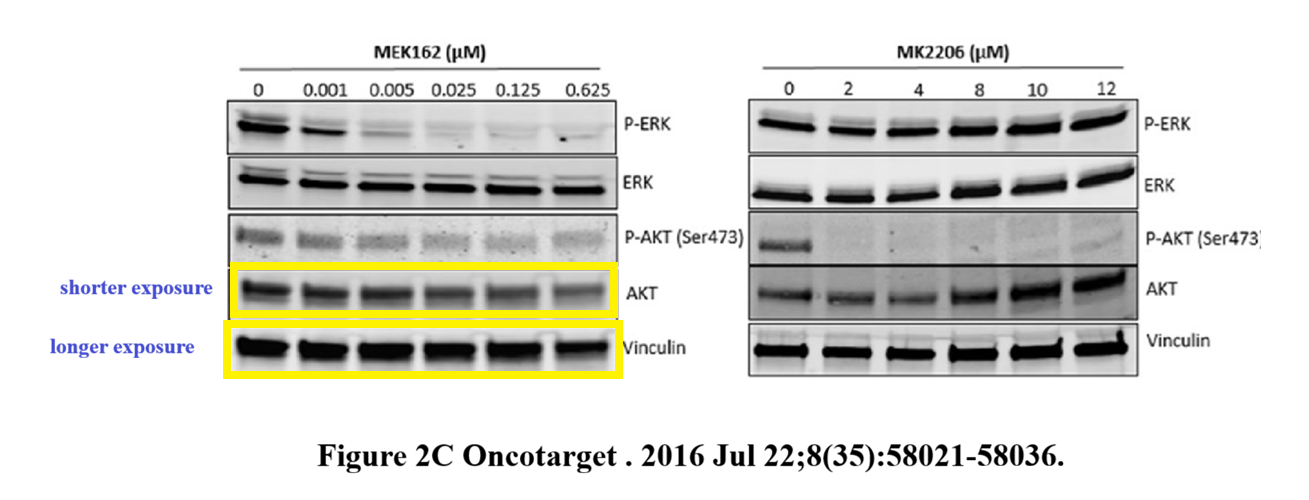
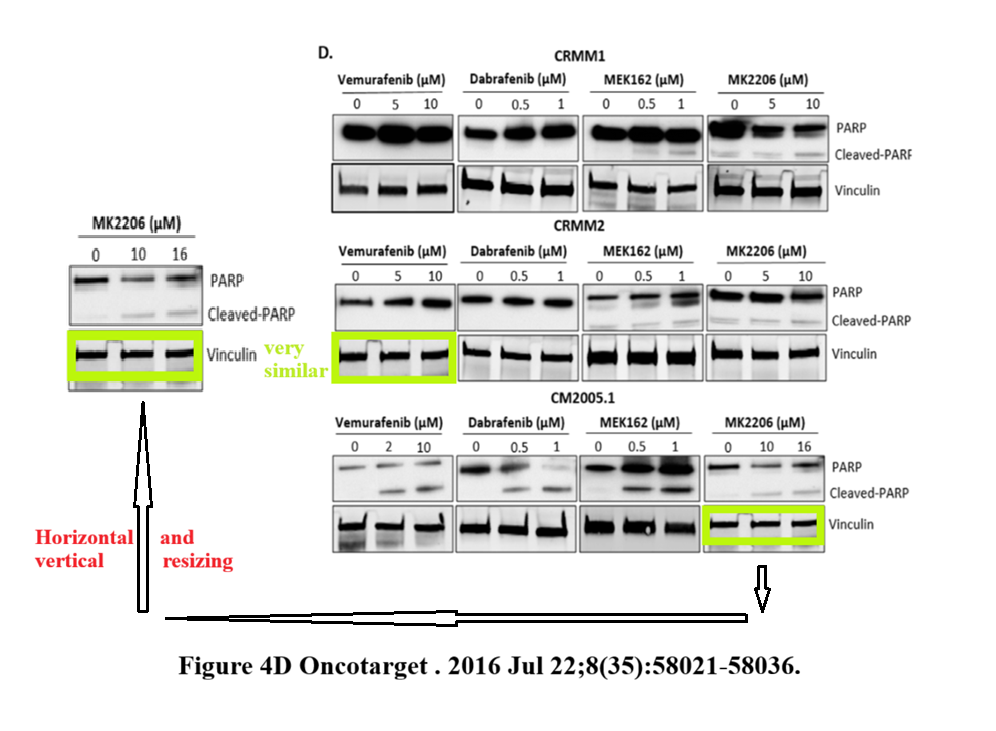
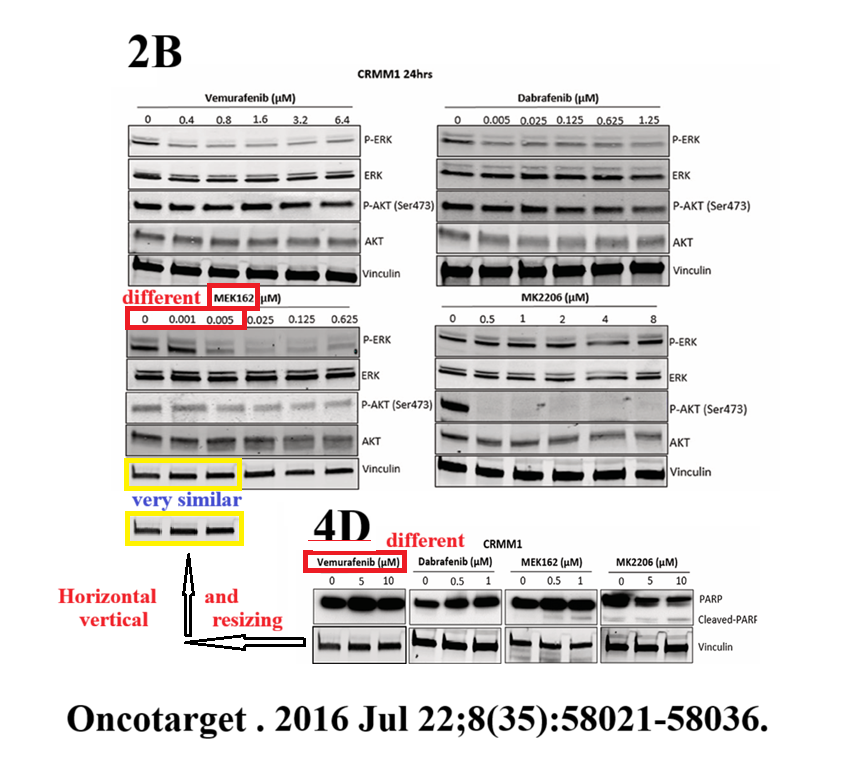
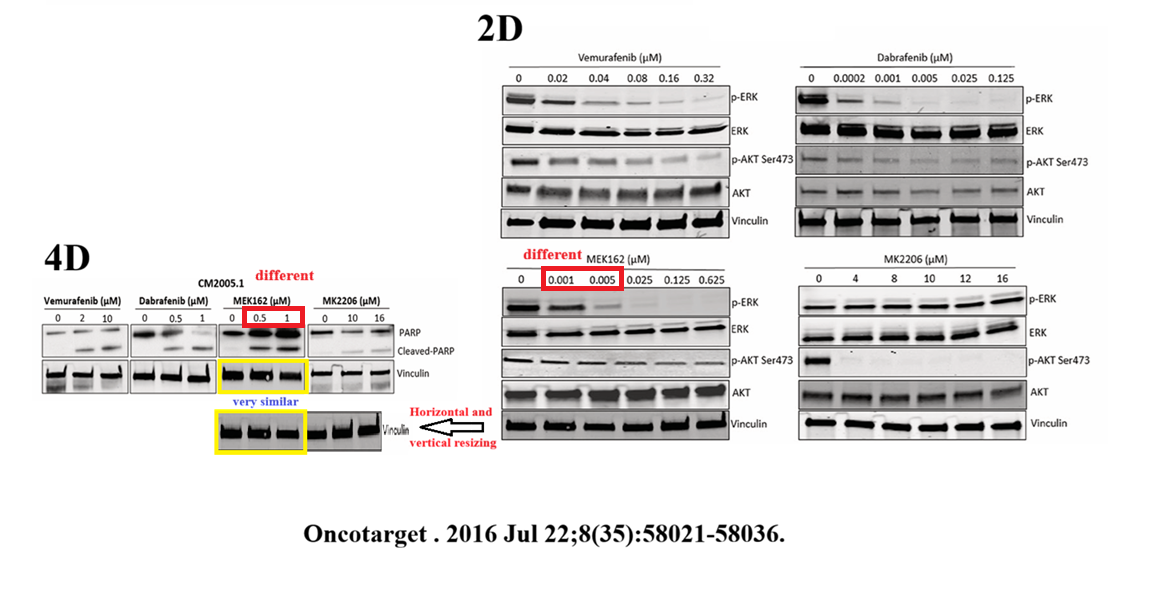
The authors of that paper in the disastrous Oncotarget wish us to know that Jager and her LUMC colleague Robert Verdijk “have shared senior authorship“, thus equally responsible. Jager’s only expressed concern to me was that the journal was informed. She mustn’t worry, the journal is Oncotarget and its editor is Wafik El-Deiry, a massive research cheater and antivaxxer.

Wafik El Deiry, the anti-qualified Science Guardian
Both Harvey Risch and Wafik El Deiry are perfectly anti-qualified candidates to lead the National Cancer Institute.
But maybe Jager’s real expertise is confocal microscopy? Apparently not:
Chieh-Lin Stanley Wu , Adrian V. Cioanca , Maria C. Gelmi , Li Wen , Nick Di Girolamo , Ling Zhu , Riccardo Natoli , R Max Conway , Constantinos Petsoglou , Martine J. Jager , Peter J. McCluskey , Michele C. Madigan The multifunctional human ocular melanocortin system Progress in Retinal and Eye Research (2023) doi: 10.1016/j.preteyeres.2023.101187

Endothenia marginana: “The authors have used to same image to represent MC3R/DAPI and MRAP2/DAPI.” (Fig 9)
Elsevier issued a Corrigendum in May 2025 to fix the Figure 9, where the authors assured us to have reviewed the original confocal images and found that the findings are “confirmed as originally reported, and no scientific advantage has occurred related to this error.“. the last author Michele Madigan of UNSW in Australia is a collaborator of the pathological ophthalmologist Jan Provis and her mentee Riccardo Natoli. their common trash paper Chu-Tan et al 2018 , with hidden Conflicts of Interests, was in fact published in Jager’s IOVS. Read here:

Jan and Ricky, two blind mouse ophthalmologists
“I am the authorised spokesperson on this matter” – Prof Jan Provis, emerita dean
Another study Jager coauthored, Chen et al Nature Communications 2018, was corrected right after publication in 2018 because “bar chart in panel f was inadvertently replaced with a duplicate of the bar chart in panel e.“. Later, a PubPeer user found other inconsistencies with confocal immunofluorescence.
So what can Jager do, science-wise? Can she at least count mice?
Ahmed M O Elbatsh , Ali Amin-Mansour , Anne Haberkorn , Claudia Textor , Nicolas Ebel , Emilie Renard , Lisa M Koch , Femke C Groenveld , Michelle Piquet , Ulrike Naumann , David A Ruddy , Vincent Romanet , Julia M Martínez Gómez , Matthew D Shirley , Peter Wipfli , Christian Schnell , Markus Wartmann , Martin Rausch , Martine J Jager , Mitchell P Levesque , Sauveur-Michel Maira, Eusebio Manchado INPP5A phosphatase is a synthetic lethal target in GNAQ and GNA11-mutant melanomas Nature Cancer (2024) doi: 10.1038/s43018-023-00710-z

More for Jager on PubPeer. I agree with her, “Things can go too far“.
“They happened before I joined Uppsala University”
“There are therefore grounds for suspecting that there have been such serious deviations from good research practice that the matter should be referred to the National Board for Assessment of Research Misconduct for further investigation.”
Returning to the IOVS paper we started with and for which Claire Francis received no editorial reaction, save for Jager’s comment I quoted: Its authors, the Uppsala University professor and former head of department Finn Hallböök and his former PhD student Mohammad Harun-Or-Rashid (now working in pharma industry) have more to answer for. The sleuth found other fake western blots, and reported it all to the Uppsala University and the Swedish national authority NPOF.
Mohammad Harun-Or-Rashid , Dardan Konjusha , Caridad Galindo-Romero , Finn Hallböök Endothelin B Receptors on Primary Chicken Müller Cells and the Human MIO-M1 Müller Cell Line Activate ERK Signaling via Transactivation of Epidermal Growth Factor Receptors PLOS One (2016) doi: 10.1371/journal.pone.0167778
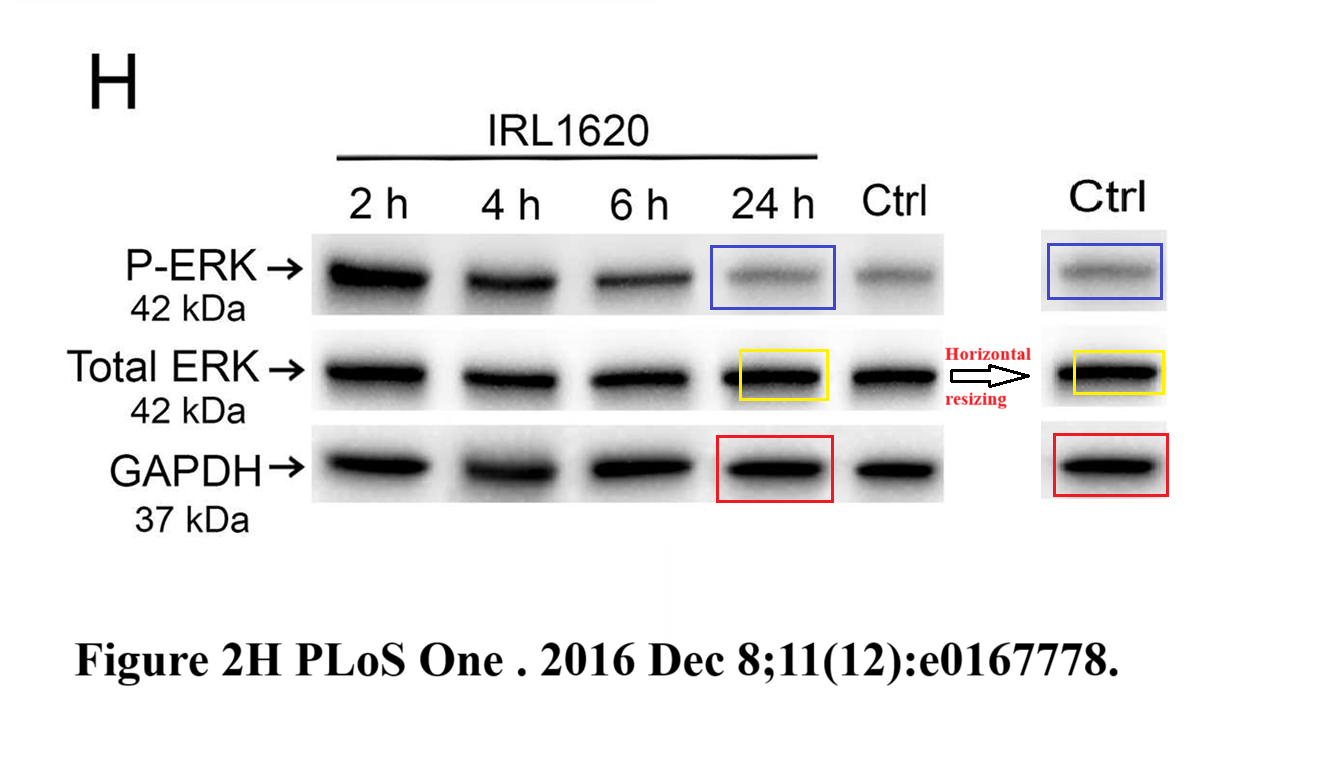
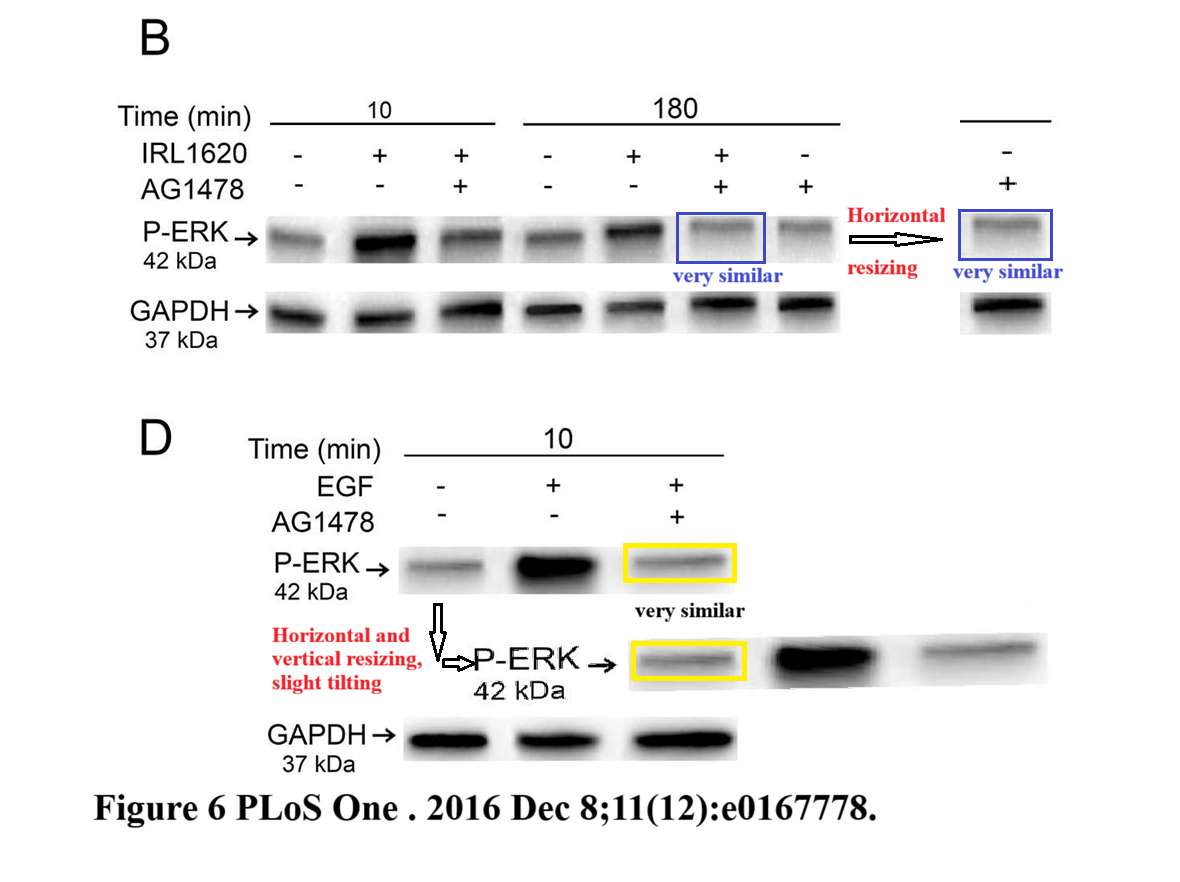
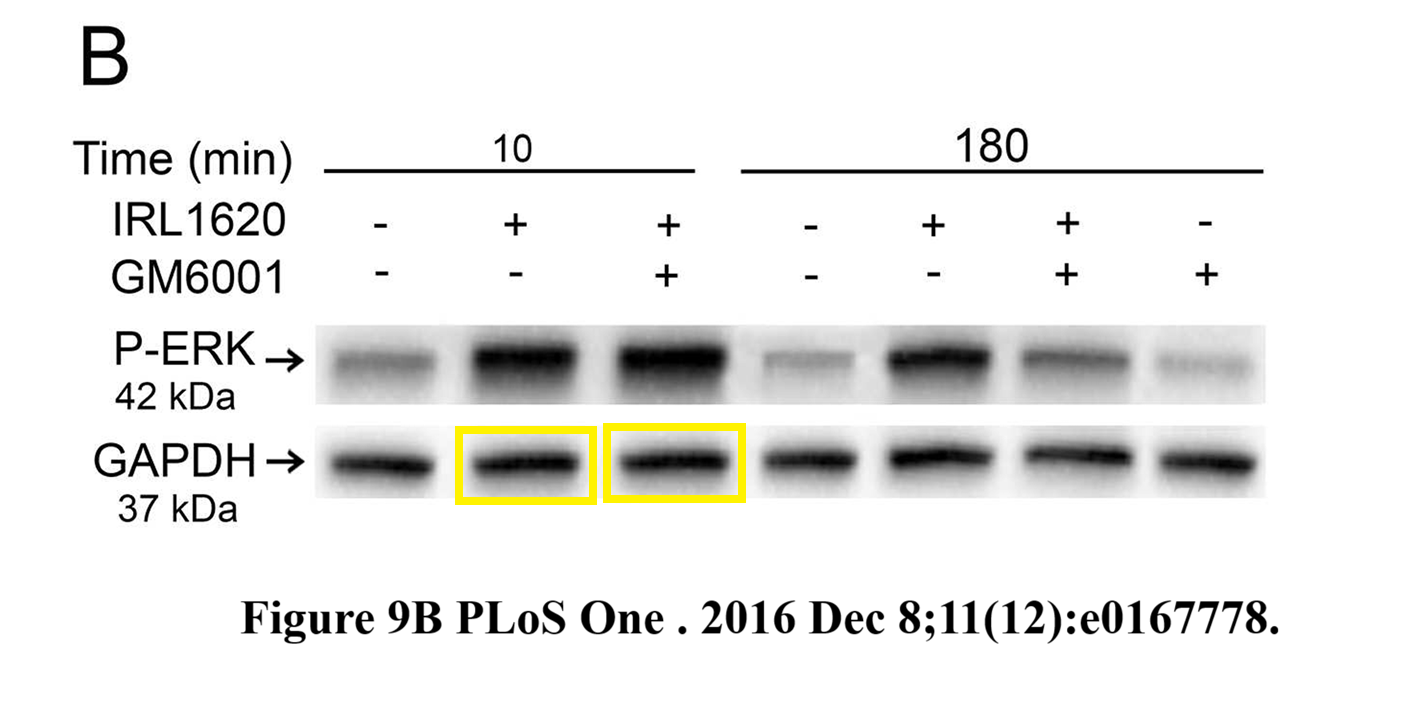
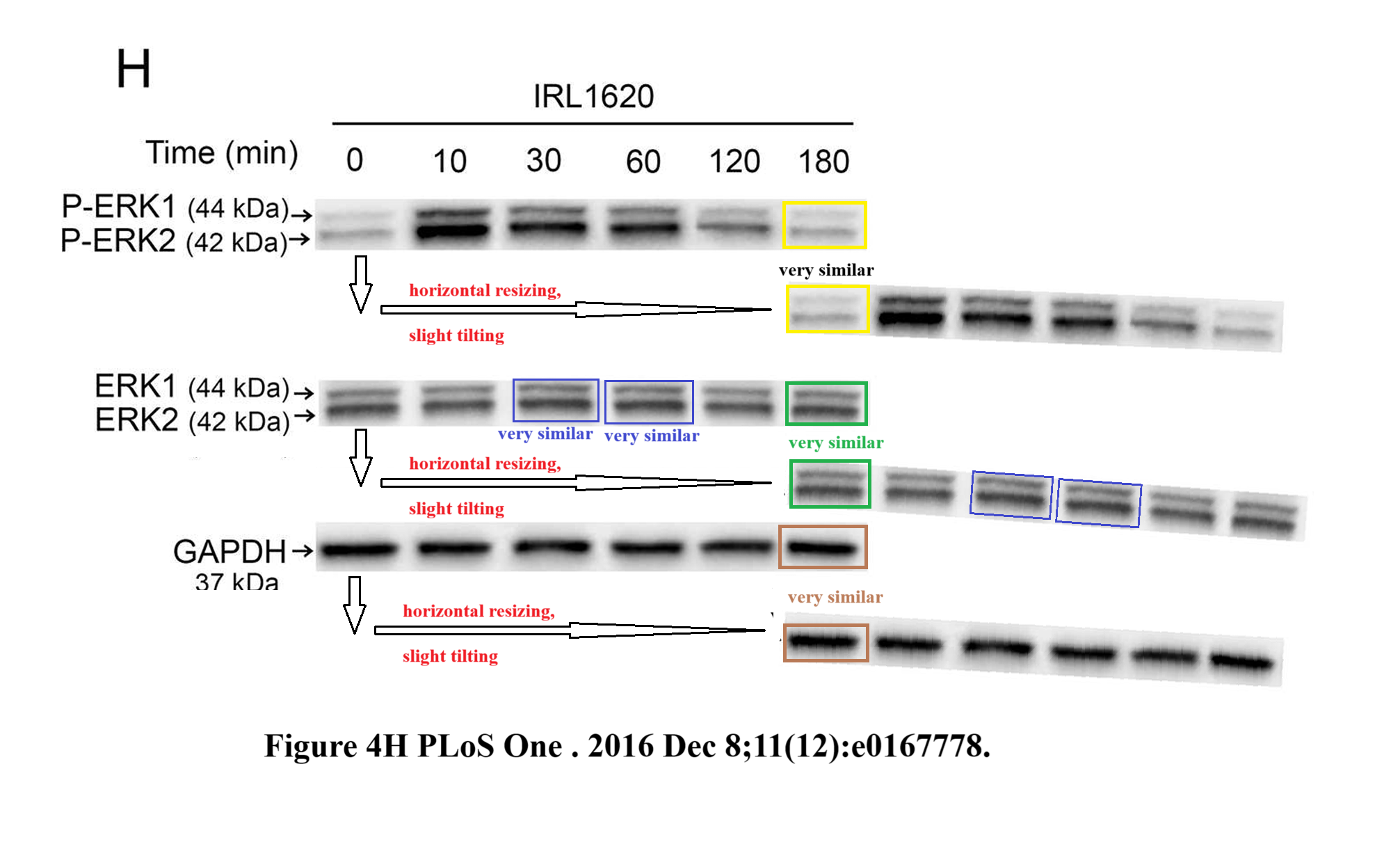
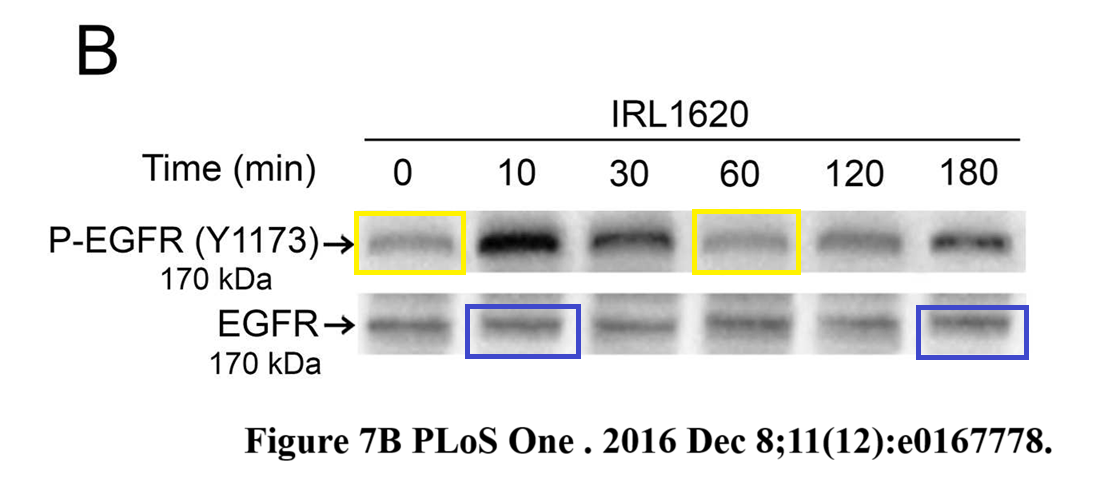
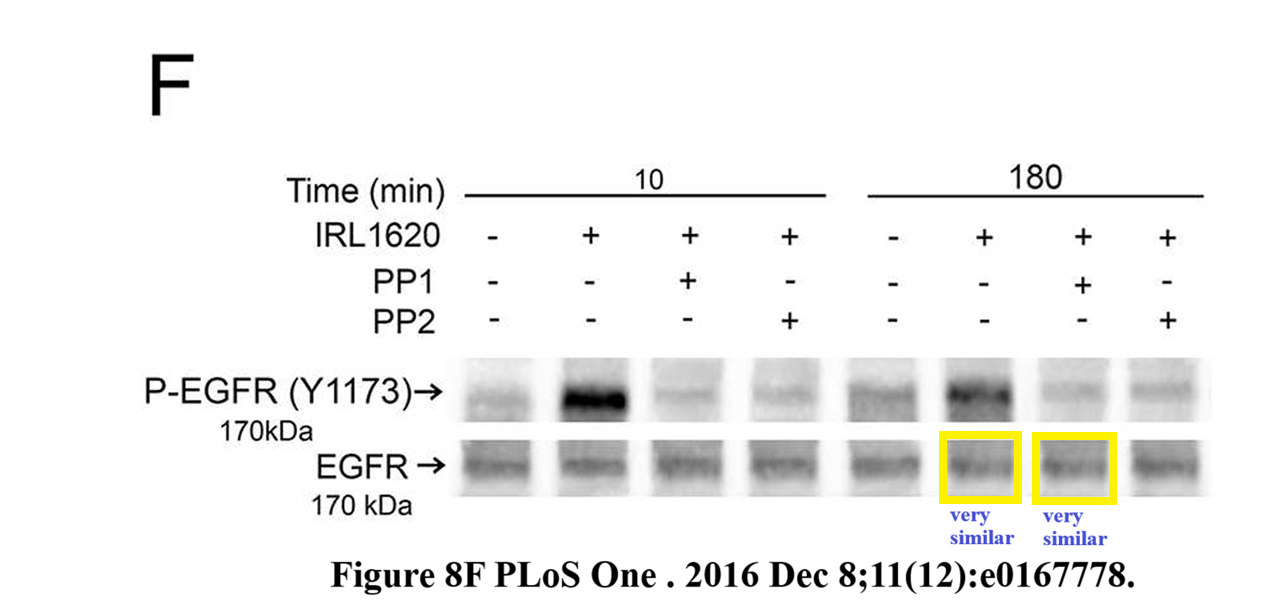
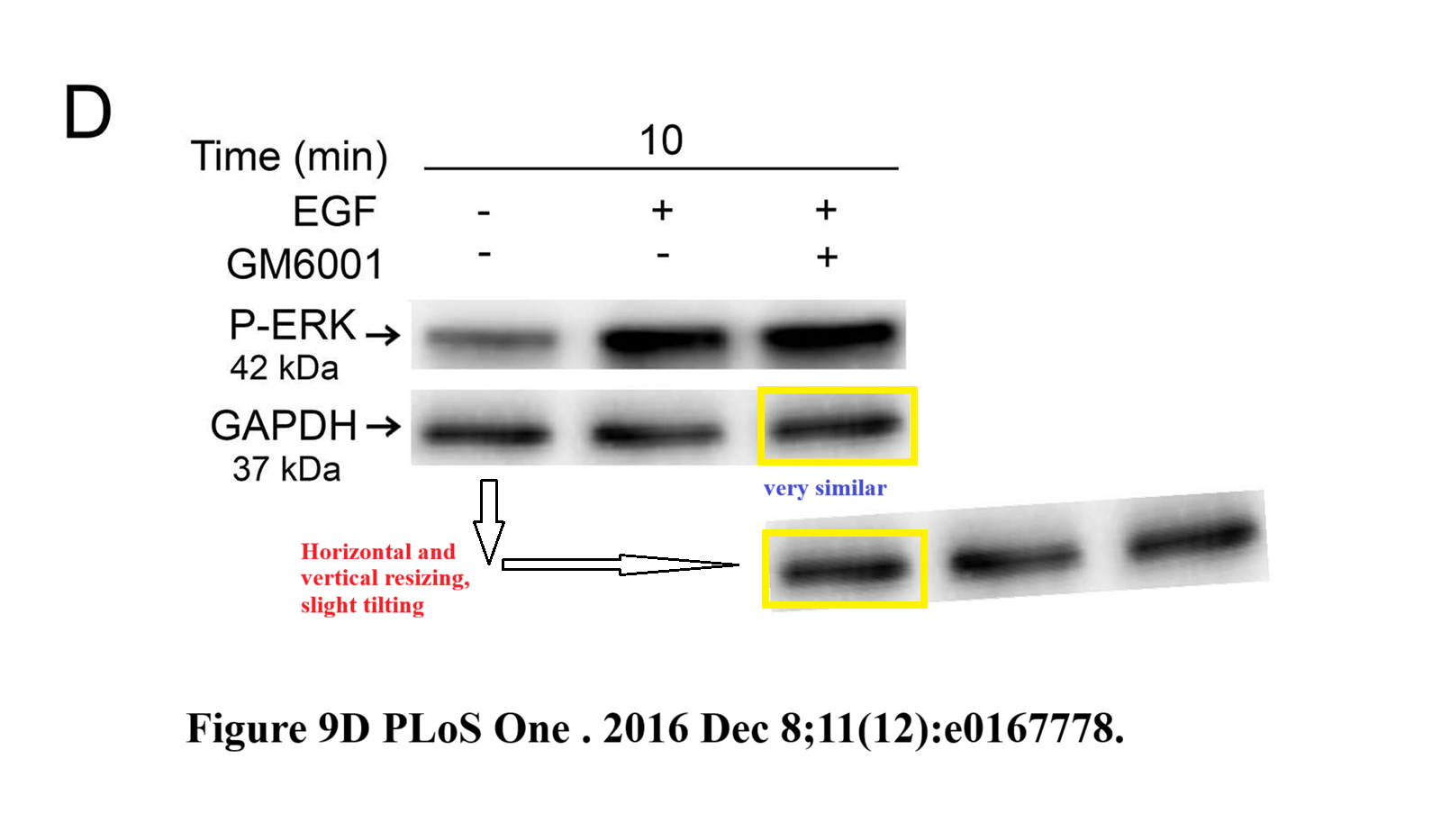
That paper and the next one are not older than 10 years and thus fresh enough to get both authors into serious trouble:
Mohammad Harun-Or-Rashid , Finn Hallböök Alpha 2-Adrenergic Receptor Agonist Brimonidine Stimulates ERK1/2 and AKT Signaling via Transactivation of EGF Receptors in the Human MIO-M1 Müller Cell Line Current Eye Research (2019) doi: 10.1080/02713683.2018.1516783
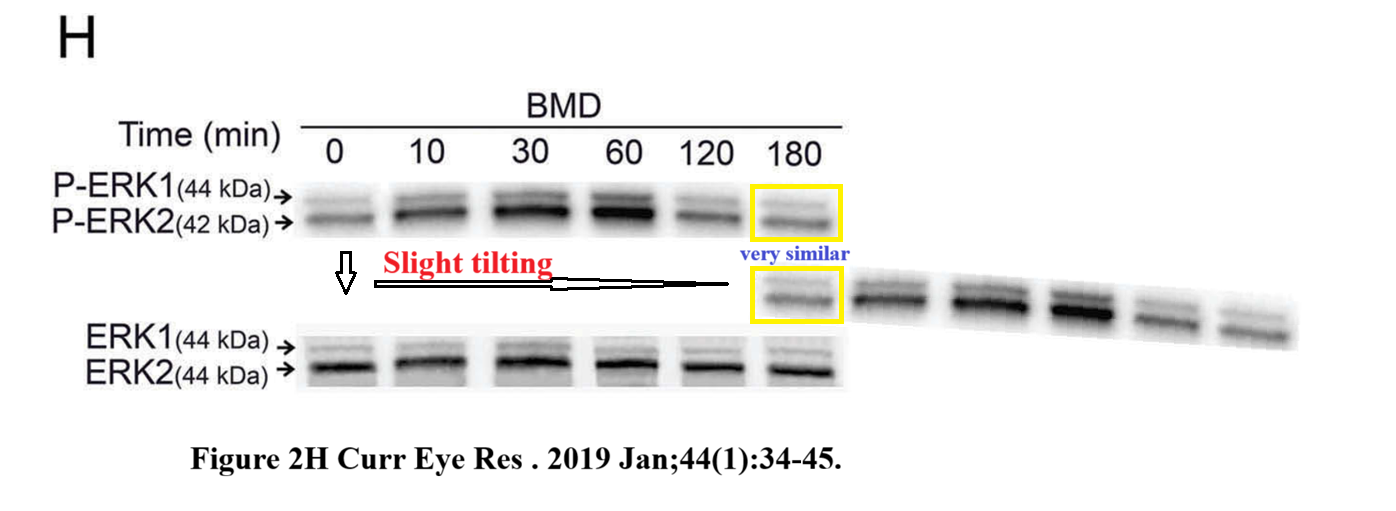
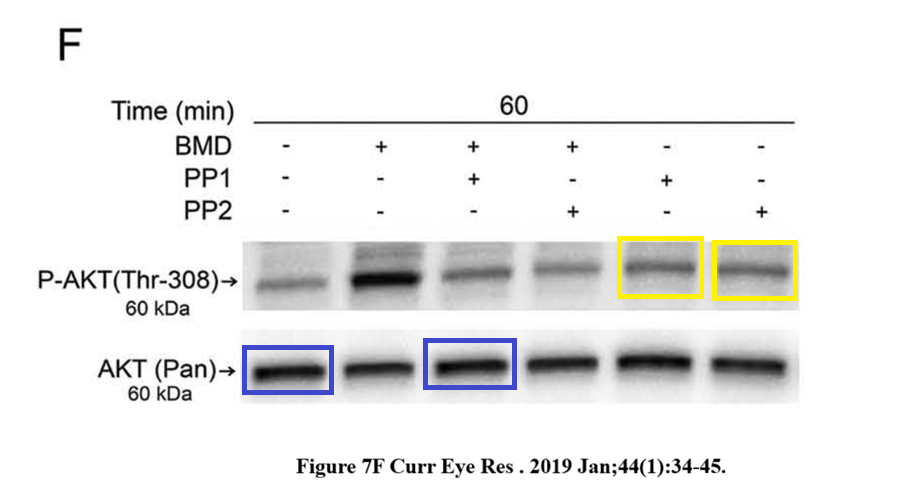
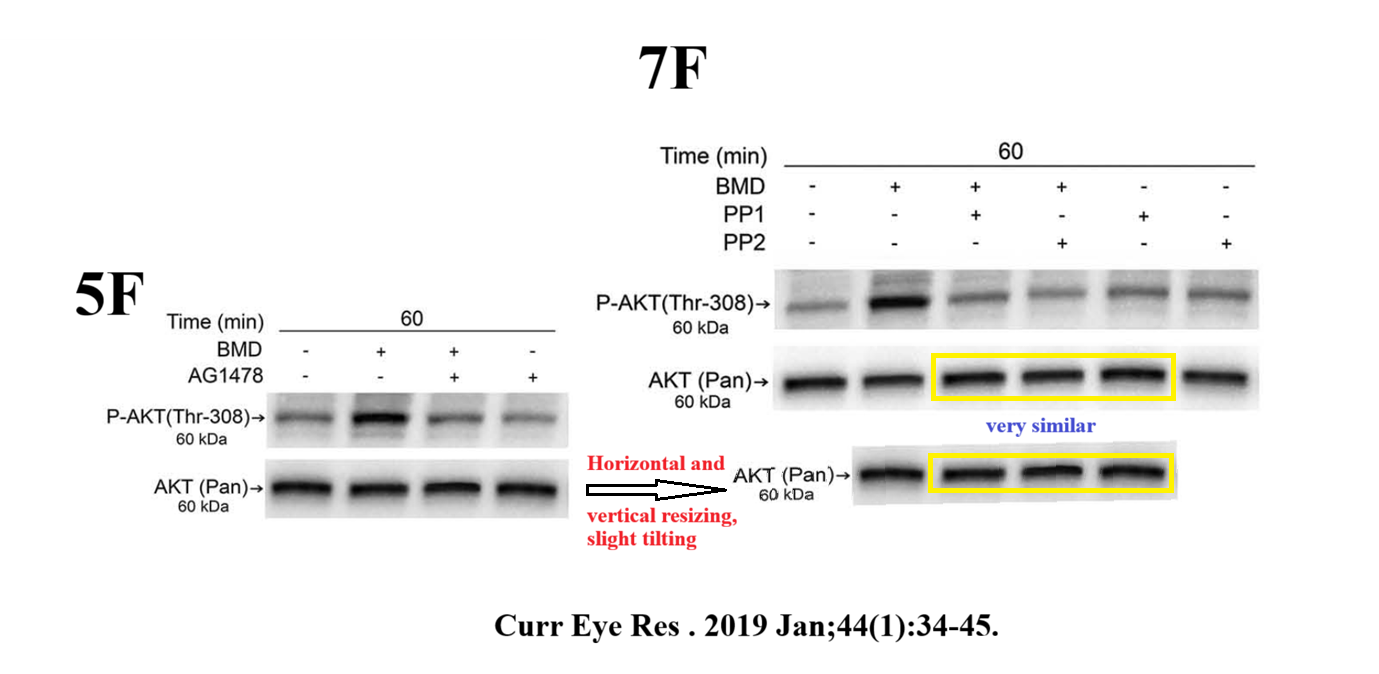
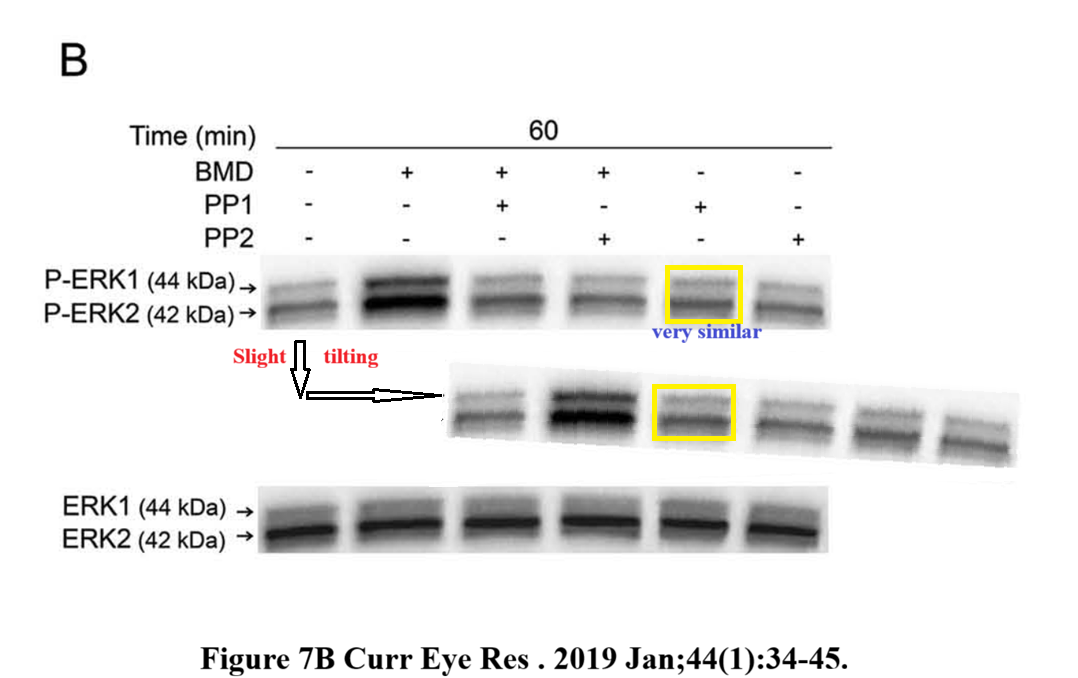
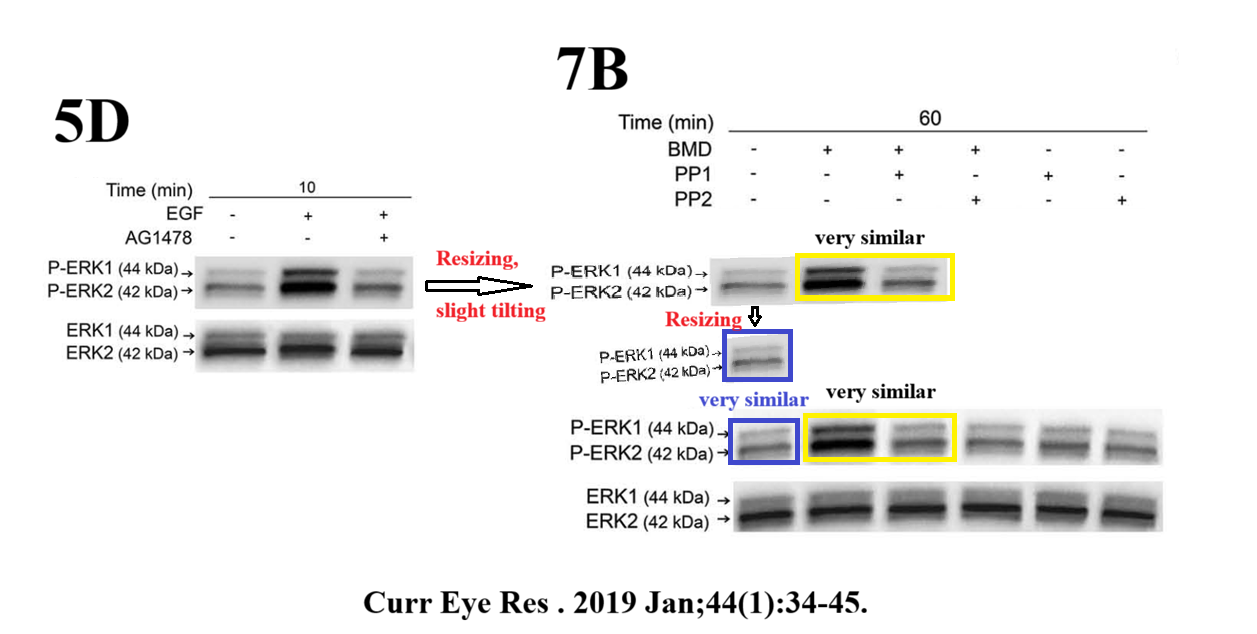
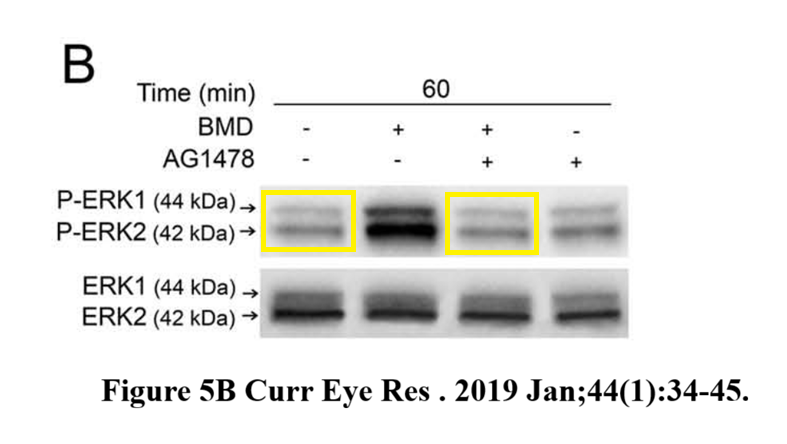
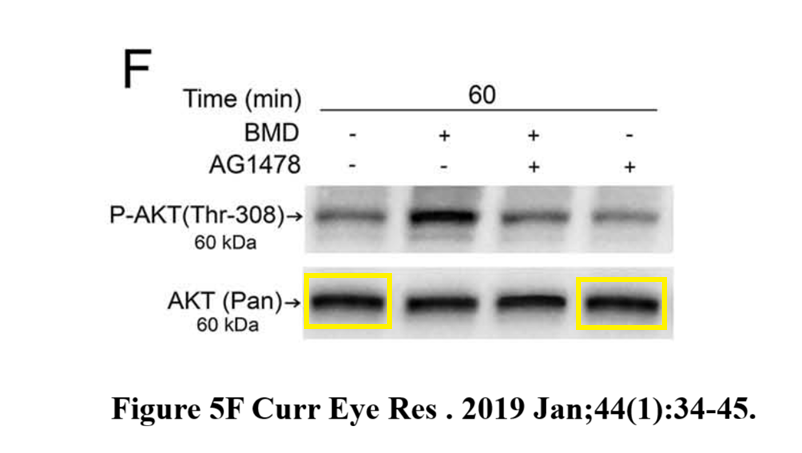
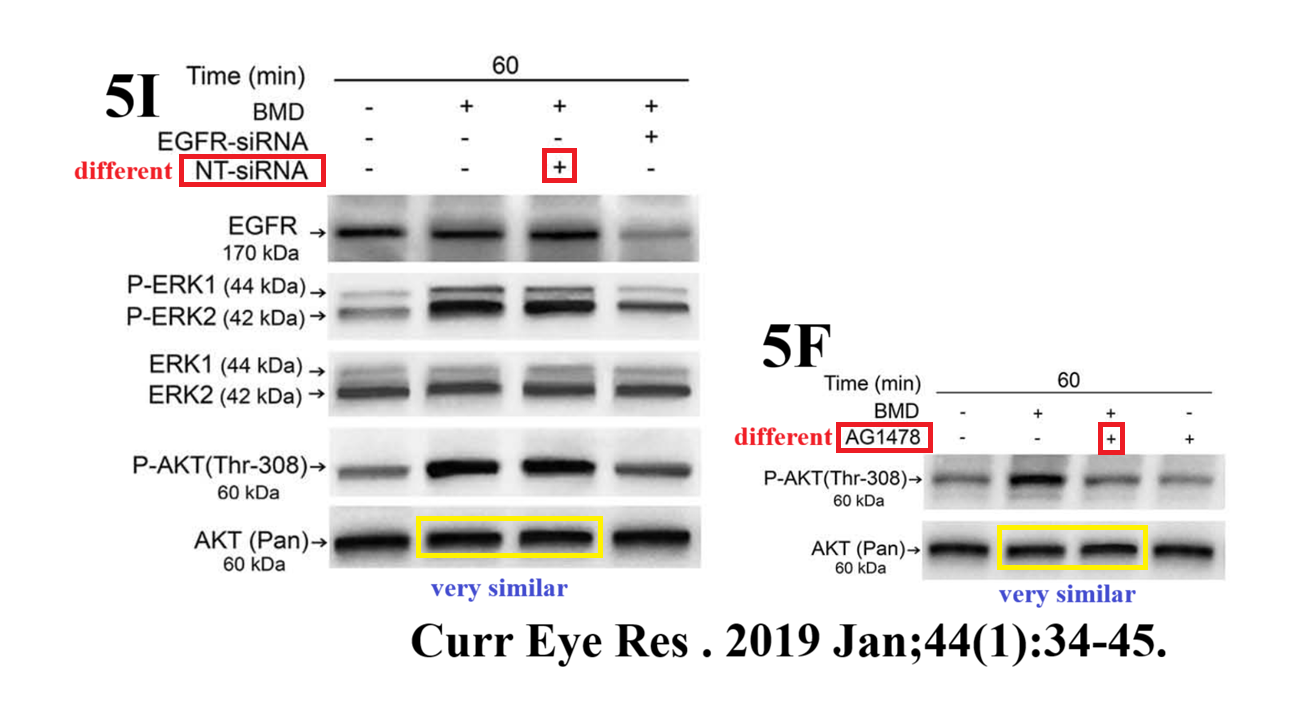
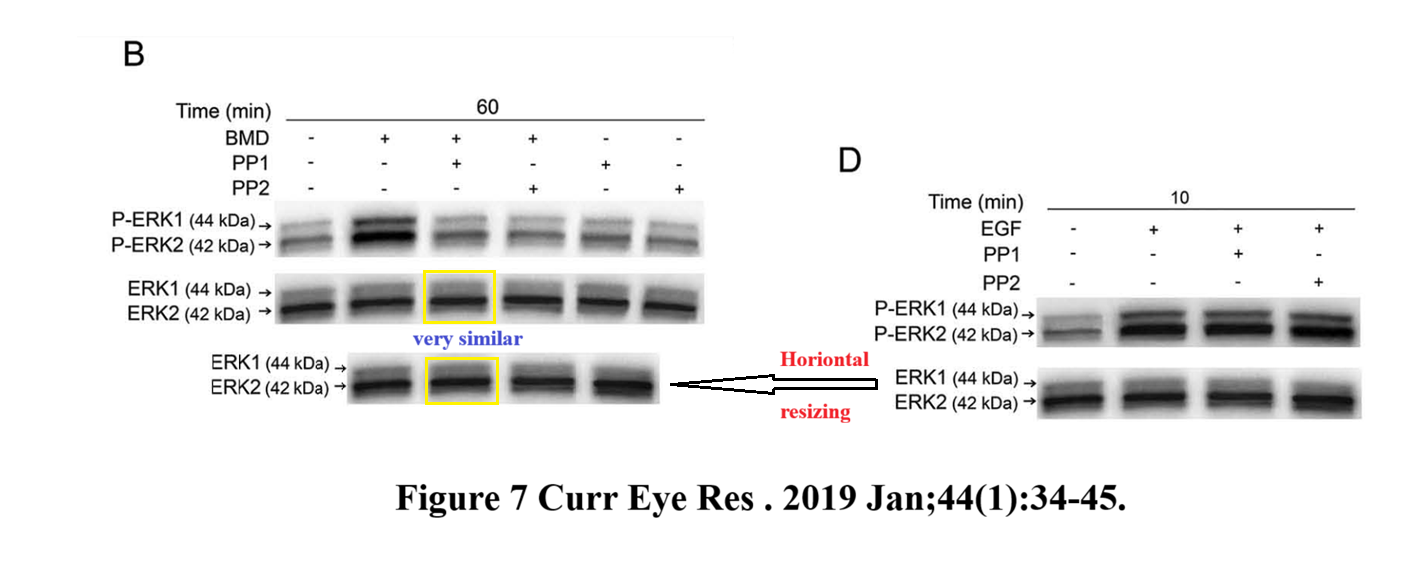
Hellböök didn’t reply to my email. He is 63 and close to retirement, which probably will happen now.
Retraction Watchdogging
Further investigation noted additional concerns
A lab from University of Coimbra in Portugal lost two papers, both in journals which used to belong to Hindawi, before that publisher was absorbed and dissolved by Wiley. The last author is Frederico Teixeira, academy member and emeritus professor:
Belmiro Parada, Flávio Reis , Raquel Cerejo , Patrícia Garrido , José Sereno , Maria Xavier-Cunha , Paula Neto , Alfredo Mota , Arnaldo Figueiredo , Frederico Teixeira Omega-3 fatty acids inhibit tumor growth in a rat model of bladder cancer BioMed Research International (2013) doi: 10.1155/2013/368178

Belmiro Parada , Flávio Reis , Ângela Pinto , José Sereno , Maria Xavier-Cunha , Paula Neto , Petronila Rocha-Pereira , Alfredo Mota , Arnaldo Figueiredo , Frederico Teixeira Chemopreventive efficacy of Atorvastatin against nitrosamine-induced rat bladder cancer: antioxidant, anti-proliferative and anti-inflammatory properties International Journal of Molecular Sciences (2012) doi: 10.3390/ijms13078482

José Sereno , Belmiro Parada , Flávio Reis , Fernanda X. Cunha , Edite Teixeira-Lemos , Patrícia Garrido , Rui Pinto , Petronila Rocha-Pereira , Paula Neto , José Ruivo , Paulo Rodrigues-Santos , Sara Nunes , Alfredo Mota , Arnaldo Figueiredo , Frederico Teixeira Preventive but not curative efficacy of celecoxib on bladder carcinogenesis in a rat model Mediators of Inflammation (2010) doi: 10.1155/2010/380937 RETRACTED 20 May 2026
Here is Wiley’s retraction from 11 June 2026:
“The retraction has been agreed due to concerns identified with the figures, both directly and on PubPeer [1]. Further investigation by the Publisher noted additional concerns. To summarize:
- • In Figure 1, Panel C is identical to Panel C in Figure 1 of [2]
- • In Figure 2, Panel B appears identical to:
- • In Figure 2, Panel C2 appears identical to Panel C2 In Figure 2 of [4]
After assessment of the concerns and the authors’ response by the editorial board, the results and conclusions can no longer be considered reliable, and the article is therefore retracted.
The authors disagree with the retraction.”
As you saw, Sereno et al 2010 paper was also retracted by Wiley a few days earlier, on 20 May 2026, again the authors disagreed with the retraction:
“The retraction has been agreed due to concerns identified with the figures, both directly and on PubPeer [1]. Further investigation by the Publisher noted additional concerns. To summarize:
These are the other duplications Wiley experts found, a fourth paper by some of the same authors is involved, but not Teixeira:
João C. Fernandes, José Sereno , Patricia Garrido , Belmiro Parada , Maria F. X. Cunha , Flávio Reis , Manuela E. Pintado , Alice Santos-Silva Inhibition of bladder tumor growth by chitooligosaccharides in an experimental carcinogenesis model Marine Drugs (2012) doi: 10.3390/md10122661

The two other papers are in MDPI. No retraction to be expected there.

The Kingdom of Rui Reis
“I think this story shows the debacle and corruption of entire research fields that become just a very expensive show of bad science-fiction. ” – Carabus Maleki

Maybe the main problem is Teixeira’s mentee Flavio Reis, now a group leader at University of Coimbra. He is NOT related to Rui Reis, and has more on PubPeer. The last author there is an associate professor at University of Porto, Lucília Saraiva. Like this, totally safe from retraction:
Joana Soares , Liliana Raimundo , Nuno A.L. Pereira , Ângelo Monteiro , Sara Gomes, Cláudia Bessa , Clara Pereira , Glória Queiroz , Alessandra Bisio , João Fernandes , Célia Gomes , Flávio Reis , Jorge Gonçalves , Alberto Inga , Maria M.M. Santos , Lucília Saraiva Reactivation of wild-type and mutant p53 by tryptophanolderived oxazoloisoindolinone SLMP53-1, a novel anticancer small-molecule Oncotarget (2016) doi: 10.18632/oncotarget.6775


This now earned an Expression of Concern:
Joana Soares , Margarida Espadinha , Liliana Raimundo , Helena Ramos , Ana Sara Gomes , Sara Gomes , Joana B. Loureiro , Alberto Inga, Flávio Reis, Célia Gomes, Maria M. M. Santos , Lucília SaraivaDIMP53-1: a novel small-molecule dual inhibitor of p53-MDM2/X interactions with multifunctional p53-dependent anticancer properties Molecular Oncology (2017) doi: 10.1002/1878-0261.12051


The Expression of Concern from 3 June 2026 mentioned not only “image duplication […] within Figure 6C“, but also “that the same loading control blot has been presented across Figures 2E and 3E in different scientific contexts“. We are now waiting until “the authors undertake the experimental work needed to address the identified issues.”
Saraiva’s self-professed dream is “helping to defeat cancer“, using “a compound studied in my laboratory“. That’s how she plans to achieve her dream:
Cláudia Bessa , Joana Soares , Liliana Raimundo , Joana B. Loureiro , Célia Gomes , Flávio Reis , Miguel L. Soares , Daniel Santos , Chetna Dureja , Saumya R. Chaudhuri , Cynthia Lopez-Haber , Marcelo G. Kazanietz , Jorge Gonçalves , Maria F. Simões , Patrícia Rijo, Lucília Saraiva Discovery of a small-molecule protein kinase Cδ-selective activator with promising application in colon cancer therapy Cell Death and Disease (2018) doi: 10.1038/s41419-017-0154-9


Saraiva’s and Reis’s coauthor above is a certain Patrícia Rijo, full professor at University of Lusofona. Rijo has lots of her own trash on PubPeer, including with yet another Portuguese colleague Armando Pombeiro (University of Lisbon) and Tomasz Śliwiński (in Poland), a fake common paper of theirs was briefly discussed here:
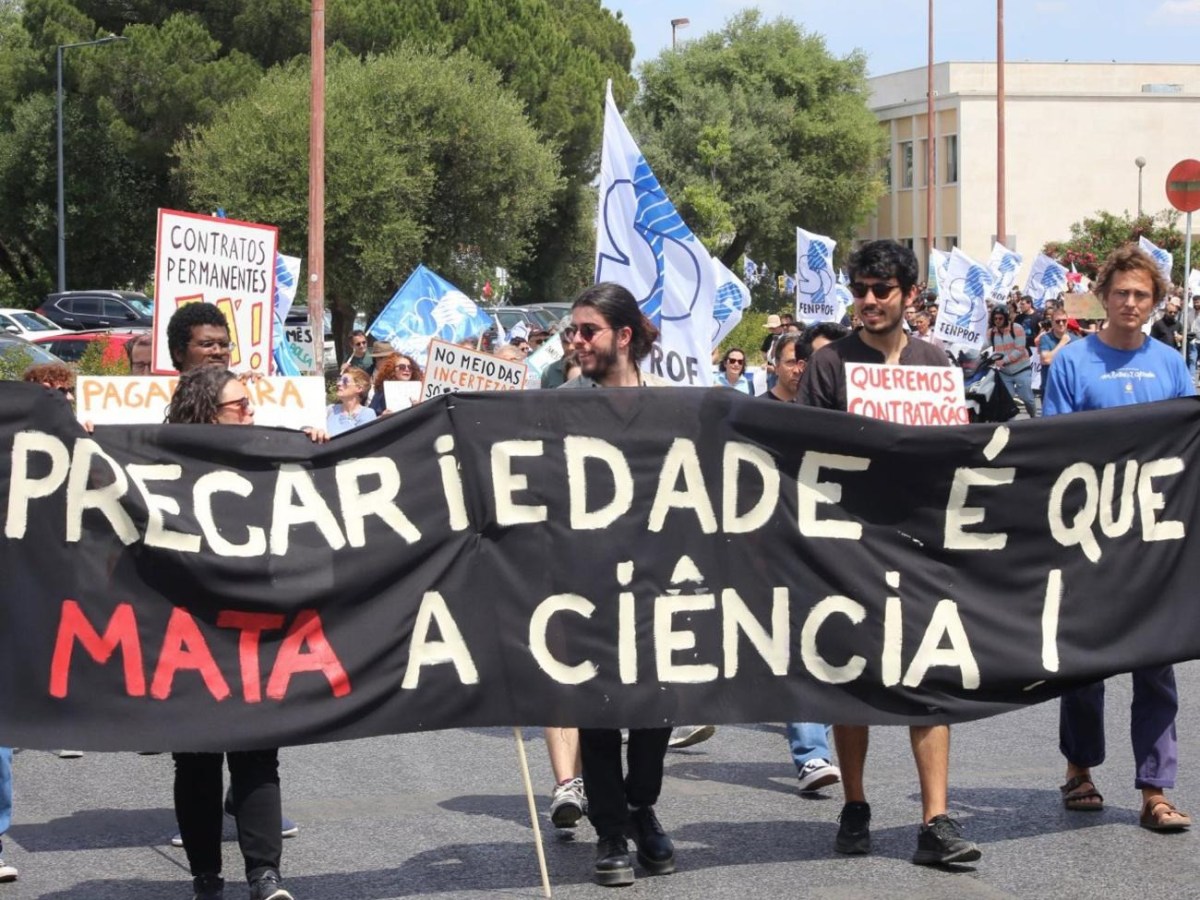
Academic precarity in Portugal
“In Portugal more than 95% of all research activities are carried out under precarious labour conditions, by undergraduate and PhD researchers employed under a variety of temporary contracts, often with limited or no benefits, and no access to a career.” –
Science Breakthroughs
World’s first T-Rex leather bag
On 11 June 2026, news arrived that “a leather bag made from Tyrannosaurus rex cells failed to sell” for the expected $500k at the Paris auction house Drouot. The lucky winner paid slightly over $150k.
A T-Rex handbag, seriously? The news of failed sale don’t even mention the biotech company which made the handbag, never mind any scientists. Only some “palaeontology expert” called Iacopo Briano is mentioned, praising the “genuine T-Rex” handbag:
“”In this case, it’s derived from a cell culture, so it’s 100 percent skin. And at the same time, it comes from an animal that went extinct 67 million years ago!”
But Briano works for the auction house, his job is to sell fossils to the ultra-rich. Who made that stupid bag then?

Let’s go back a year, when news worldwide reported those exciting handbag news, here is NBC from 30 April 2025:
“A group of researchers and bio-engineers in the U.K. say they’re working to produce high-end clutches and totes with T. rex skin grown from fossilized remains of the ancient carnivore.
The team is seeking to grow sustainable leather using collagen from the beast sometimes known as the King of the Dinosaurs […]
The project’s developers say the lab-grown material will be fully biodegradable and structurally identical to traditional leather. It will also be “innovative and ethically sound,” Che Connon, professor of tissue engineering at Newcastle University, said in a statement.
Connon also works for biotechnology company Lab-Grown Leather, which is developing the project with Dutch creative agency VML and genomic engineering firm The Organoid Company.
“We’re unlocking the potential to engineer leather from prehistoric species, starting with the formidable T-Rex,” added Connon, who is one of the project’s leaders.”
See, there is serious science behind that handbag! Che John Connon is in fact CEO of Lab Grown leather (LGL), and it proudly offers T-Rex handbags:

The April 2025 media coverage followed a public announcement that LGL entered a partnership with Dutch biotech The Organoid Company (founded by Ernst Wolvetang. professor at the University of Queensland in Australia), and the advertising company VML “to create world’s first T-Rex leather“:
“Using fossilized T-Rex collagen as a blueprint, the production process will involve engineering cells with synthetic DNA, designed by The Organoid Company, which are then integrated into Lab-Grown Leather’s Elemental-X™ product stream. Unlike other bio-based alternatives, Lab-Grown Leather’s “scaffold-free” approach allows cells to create their own natural structure, resulting in a material that is structurally identical to traditional leather.”
Connon’s company provides the dinosaur skin technology, Wolvetang’s company the cell culture facility, and VML provides the handbag design and advertising. Of course the problem started with Connon being full of crap.
Normally, Connon pretends to grown organs in a dish. In 2018, The Independent celebrated him for having bioprinted some artificial corneas, from stem cells:
“A human cornea has been produced with a 3D printer for the first time – a development which is thought could eventually help millions of people around the world suffering from corneal blindness. […]
“Many teams across the world have been chasing the ideal bio-ink to make this process feasible,” said Che Connon, professor of tissue engineering at Newcastle University, who led the study.
“Our unique gel – a combination of alginate and collagen – keeps the stem cells alive whilst producing a material which is stiff enough to hold its shape but soft enough to be squeezed out the nozzle of a 3D printer.”
Right when his short paper Isaacson et al 2018 was published (“The authors report no conflicts of interest“), Connon founded the stock-exchange-traded company BSF Enterprise, of which LGL is part of. One can widely speculate why British medicine failed to embrace Cannon’s bioprinted corneas in the past eight years… Oh well. By the way, here an ophthalmology paper by Connon with Michael Boulton and other cheaters:
Aihua Ma , Mike Boulton, Bojun Zhao , Che Connon , Jun Cai, Julie Albon A role for notch signaling in human corneal epithelial cell differentiation and proliferation Investigative Ophthalmology & Visual Science (2007) doi: 10.1167/iovs.06-1373

Cannon didn’t give up on the corneas, he tries to sell them via the BSF subsidiary Kerato. But can you guess what BSF’s main business today is? Lab grown meat, via its other subsidiary 3D Bio-Tissues, previously called CellulaREvolution. Every single regenerative medicine quack starts a lab-grown-meat company, it seems.
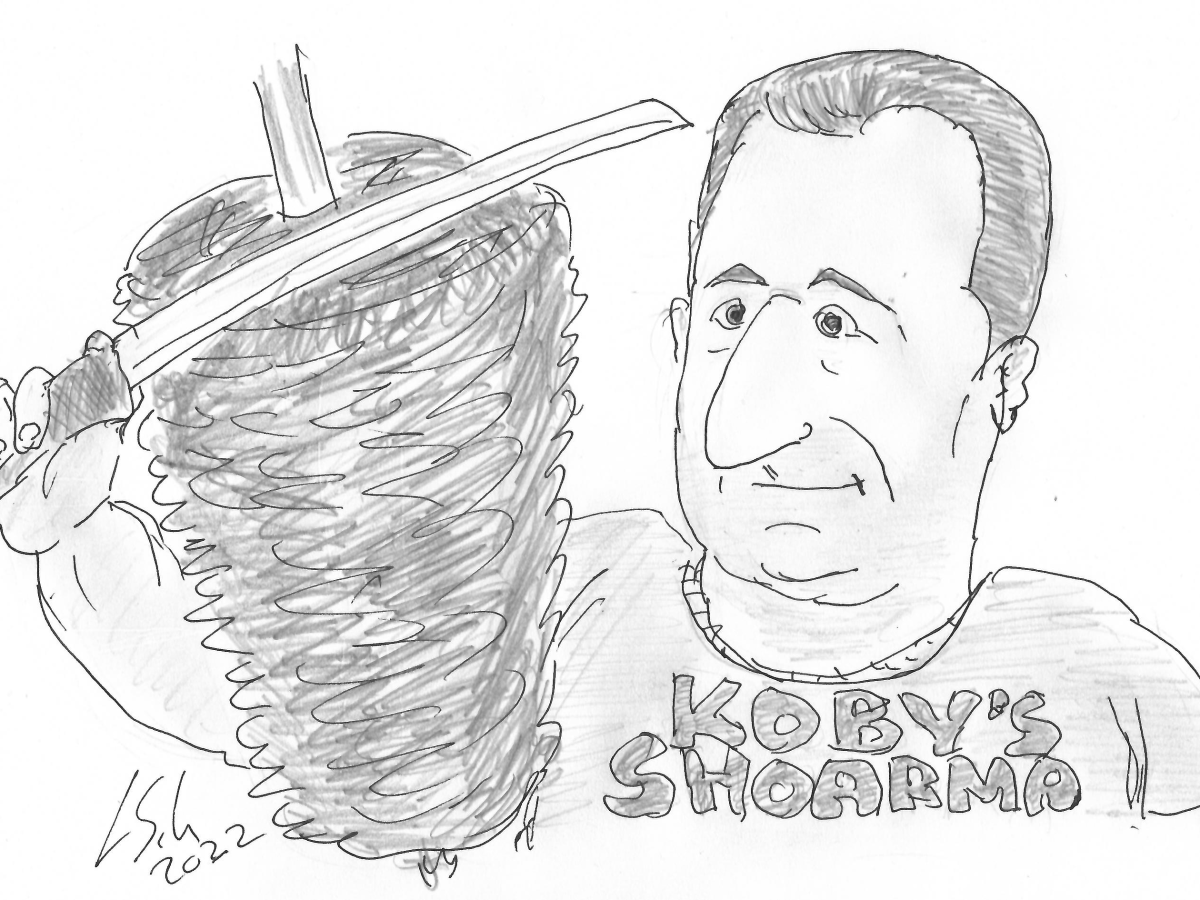
From COVID-19 to Lab-Grown Meat
Enterprising Israeli Scientists show how these things are connected.
By December 2025, Connon’s BSF rose £15 million in investment, from none other but world’s largest investment company Blackstone:
““We are hugely excited by the potential Blackstone Mercantile Group’s investment provides to BSF’s subsidiary companies,” said CEO Che Connon. “The funds will accelerate the commercial and technological roadmaps of Lab-Grown Leather, Kerato and 3D Bio-Tissues and will support their further independent fundraising activities during 2026. […]
a significant chunk of the new funds will support the expansion of BSF Enterprise’s cell-based leather tech. […]
Moreover, the capital will enable Lab-Grown Leather to introduce its first revenue-generating products to the ultra-luxury segment, as well as support direct sales to design-led partners.”
All to make that rubbish handbag which only a very bored multimillionaire wanted to buy, but only for a discount price. Will Connon’s company try to auction T-Rex burgers next?
Fake-O-Meat by Ali Khademhosseini
Ali Khademhosseini is the greatest American researcher in regenerative medicine. His mentees are all professors themselves now. In his own Californian institute, he grows not only all possible organs, but even hamburgers!
Dinner table conversations
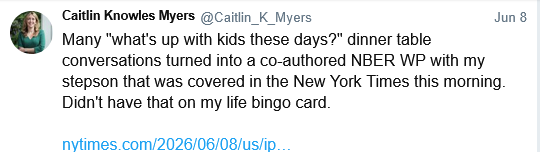
More funny stuff. Citing solid science, New York Times explained on 8 June 2026 why fertility rates in USA went down in the recent years. It’s smartphones! Proven not by one, but by two papers, by two different American economists! Neither is peer-reviewed though, here is the first:
Caitlin Myers , Ezekiel Hooper Is the iPhone Birth Control? Causal Evidence from AT&T’s 2007–2011 Carrier Monopoly National Bureau of Economic Research (2026) doi: 10.3386/w35310
“Caitlin Myers, an economist at Middlebury College, and Ezekiel Hooper, her student, used the spotty early rollout of the iPhone as a way to isolate the effects of the phone on fertility. The first iPhone was released in June 2007, they wrote, and was available only on the AT&T network until February 2011. The study compared fertility rates in U.S. counties that had near-universal AT&T coverage with counties that had little or none.
Their paper, published in the National Bureau of Economic Research, found that the iPhone caused as much as half of the fertility decline between 2007 and 2011. The most pronounced effects were among young people aged 15 to 24.
What happened in the counties with iPhones? One theory, Professor Myers said, is that young people began to socialize more on their phones and less in person, and consequently were less likely to have sex and become pregnant.
Professor Myers said iPhones may also have made pornography more accessible, which led young people to substitute it for sex, or young people may have used them to obtain better information on avoiding pregnancy, including contraception and abortion.”
Ezekiel Hooper BSc, is not only the student of Caitlin Myers , he is also her stepson.
One has to be very deep inside MAGA’s rectum to lament that underage girls nowadays have access to contraception, and don’t get pregnant as often as they used to, or, what horror, commit abortions. In any case, Myers, Hooper and some of their fellow Americans may disapprove, but some young women do not see sex as their patriotic Christian duty to produce babies.
One can’t help thinking that Myers wrote this as an advertisement for her stepson, to recruit fertile young women to bear him many offspring. After all, the boy has a fine job at Accenture and is dressed like a white American step-mother’s dream.
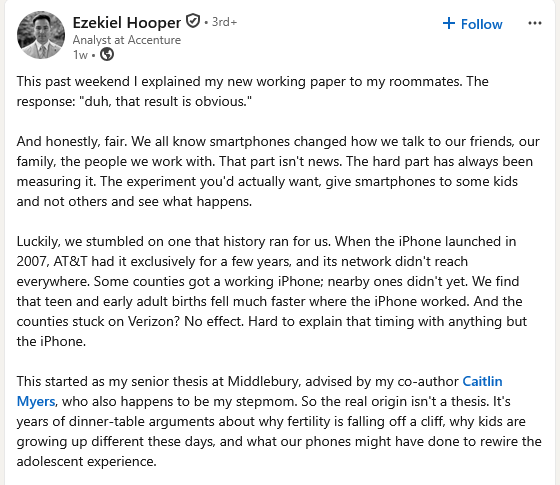
“This started as my senior thesis at Middlebury, advised by my co-author Caitlin Myers, who also happens to be my stepmom.[…] It’s years of dinner-table arguments about why fertility is falling off a cliff, why kids are growing up different these days, and what our phones might have done to rewire the adolescent experience.” Hooper on LinkedIn
This is the other paper NYT mentioned, a SSRN preprint, it found out that the faster internet is, the less babies are born:
““Countries with very different health care systems, welfare regimes, abortion laws, religious traditions, recessions and demographic trends all saw similar breaks in the same window,” wrote the authors, Hernan Moscoso Boedo, an economics professor at the University of Cincinnati and Nathan Hudson, a Ph.D. student. […]
They looked at where access was better and worse and found a substantial effect: that fertility rates for teenagers declined fastest in counties with more high-speed access.”
Donate!
If you are interested to support my work, you can leave here a small tip of $5. Or several of small tips, just increase the amount as you like (2x=€10; 5x=€25). Your generous patronage of my journalism will be most appreciated!
€5.00

 For Better Science
“I have always hated western blots! – sleuth tried to report Swedish fraud, ends up exposing Dutch incompetence”
Plug for Sweden. PubPeer – A receptor tyrosine kinase ROR1 inhibitor (KAN0439834) induc…
Sometimes scientific breakthroughs go unnoticed. In this case for 8 years. The 2018 PLos One paper, A receptor tyrosine kinase ROR1 inhibitor (KAN0439834) induced significant apoptosis of pancreatic cells which was enhanced by erlotinib and ibrutinib – PubMed without a shadow of a doubt, demonstrates transmutation of cell lines. I know that cell lines are not cells in the body, but they are cells.
The supporting paper. PubPeer – The PI3K/AKT/mTOR pathway is involved in direct apoptosis of…
One can only marvel at the Swedish clear thinking!
LikeLiked by 1 person
Swedish (look at the addresses) transmutation of species this time. PubPeer – Insulin signaling and glucose metabolism in different hepato…
LikeLike
Until now, only one other paper of Yannick Griep on Pubpeer, a paper from 2015 with a comment which was generated by Statcheck, see https://pubpeer.com/publications/F55EC750E5C1AEEAAB5256972FB9DF
LikeLike
Teixeira’s and Reis’s first author, a blockhead called Belmiro Parada, protests against the retraction (with some help from LLM):
https://pubpeer.com/publications/D15C05169F809123282FD564FF17E1#5
“Response to the Retraction Decision
We respectfully express our strong disagreement with this decision and would like to clarify the issues that have been raised.
All images used in the article originate from our own experimental work. No external, fabricated, or manipulated data were used.
The similarity of certain images across different publications is a direct consequence of the experimental design. Specifically, Figure 1 (Panel C) and Figure 2 (Panel C2) correspond to the same carcinogen-treated group (BBN).
For ethical reasons and in compliance with animal welfare standards, a single control carcinogen group (n = 20) was used as the reference group and compared across multiple treatment arms, including the Omega-3 studies.
Accordingly, the reuse of these images reflects the use of the same experimental group and does not constitute misrepresentation. The images are scientifically accurate, methodologically justified, and faithfully represent the corresponding experimental group.
We acknowledge that an incorrect image was inadvertently included to illustrate normal urothelium as a result of mislabeling.
Importantly:
The image was used solely for illustrative purposes. It was not used for data analysis, quantification, or statistical evaluation. It has no impact on the results, statistical analyses, or conclusions of the study.
This was an unintentional error, and we were fully prepared to correct it promptly.
Conclusion
We wish to emphasize that:
The studies were conducted in full accordance with applicable ethical standards. The underlying data, analyses, and conclusions remain valid, reliable, and scientifically sound. There was no intention to mislead readers or misrepresent the findings. Given that the confirmed issue is limited to a non-substantive, illustrative error with no impact on the scientific results or conclusions, we believe that retraction is a disproportionate and unnecessarily severe measure.”
LikeLike
“This was the paper the sleuth reported, from Uppsala University in Sweden:
Mohammad Harun-Or-Rashid , Niclas Lindqvist , Finn Hallböök Transactivation of EGF receptors in chicken Müller cells by α2A-adrenergic receptors stimulated by brimonidine Investigative Ophthalmology & Visual Science (2014) doi: 10.1167/iovs.13-13823 “
Pubpeer entry: PubPeer – Transactivation of EGF receptors in chicken Müller cells by…
Prediction, given its corrupted editor-in-chief: it will not go against its paying customers. No change.
LikeLike
“Mohammad Harun-Or-Rashid , Finn Hallböök Alpha 2-Adrenergic Receptor Agonist Brimonidine Stimulates ERK1/2 and AKT Signaling via Transactivation of EGF Receptors in the Human MIO-M1 Müller Cell Line Current Eye Research (2019) doi: 10.1080/02713683.2018.1516783 “
Pubpeer: PubPeer – Endothelin B Receptors on Primary Chicken Müller Cells and t…
Prediction, given that it is PLoS One (ame would go for other journals in the PLoS family): retraction.
LikeLike
Sorry, that is a mistake. Current Eye Research is obviously not PLOS One.
LikeLike
Jan Provis is Emeritas [sic] Professor at the Australian National University where she was Associate Dean (Research) in the ANU Medical School, <https://www.eyeco.com.au/board-of-directors/>
However, she is not an ophthalmologist.
She has a PhD, but not the medical degree and specialist qualifications needed to be an ophthalmologist.
LikeLike
“Hall never will get the Nobel, what with his PubPeer record”.
That is an overly optimistic statement in the times of Semenza.
Also, “scientists” lamenting over falling teen pregnancy rates is comedy gold.
LikeLike
Eh, Semenza’s fraud was found by Claire Francis AFTER the Nobel announcement! The later award ceremony must have been fun…
LikeLike
Sorry for incomplete comment. Science fraud is progressing fast, so I really hope that somebody with a proper PubPeer dossier will eventually get the Nobel Prize.
LikeLike
Here are the Nobel Heroes of Bad Science:
Louis Ignarro
Gregg Semenza
Martin Evans
Thomas Südhof
And there are many others with bad stuff on PubPeer, pseudoscience, or dodgy business scams.
We should stop treating Nobelists as idols and role models.
(trashed your incomplete comment)
LikeLike
out of topic:
https://pubpeer.com/publications/D01AC86A646DFCAE3D9C71FD063AD0
this bizzare paper just got retracted.
the middle author has a made up name and a made up, academia-like email address. The domain is registered to fake data in China.
LikeLike
Already slotted for next Shorts! 🙂
LikeLiked by 1 person
https://pubpeer.com/publications/0D6EE6A7E92F137F32E5B77938C81E
New PubPeer comment about fraud in a remarkable essay by Yannick Griep.
LikeLike