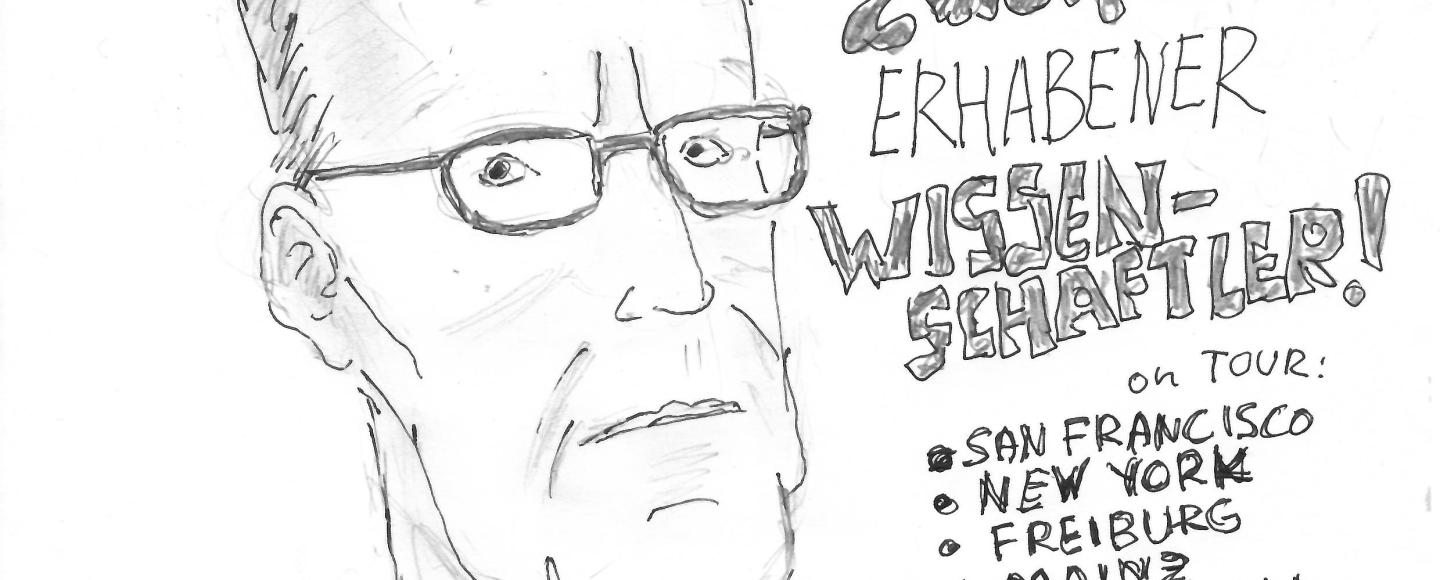

In November 2021, I received a copy of an old investigative report by the University of California Berkeley in USA. It was from 2004, a certain German postdoc XY was found guilty of research misconduct, having fabricated data for at least three papers. I am not naming this German scientist XY here, but at the end, everyone who needs to know knows his name and the full story.
When XY’s freshly established career in USA as tenure track professor at New York University with a R01 grant abruptly ended, he escaped home and became full professor at three prestigious German universities in succession, and even an academy member. The Germans knew of the fraud findings in Berkeley, but they and XY declared them invalid, because of some secret “Letter of Exoneration”, or rather because the men in power felt that those Americans had no right to judge a German man from a good family. Since his return to Germany, XY became a Highly Cited Researcher and had been funded by ERC and the national funders DFG and Einstein Foundation who, unlike XY’s academic employers, had no clue of the Berkeley findings.
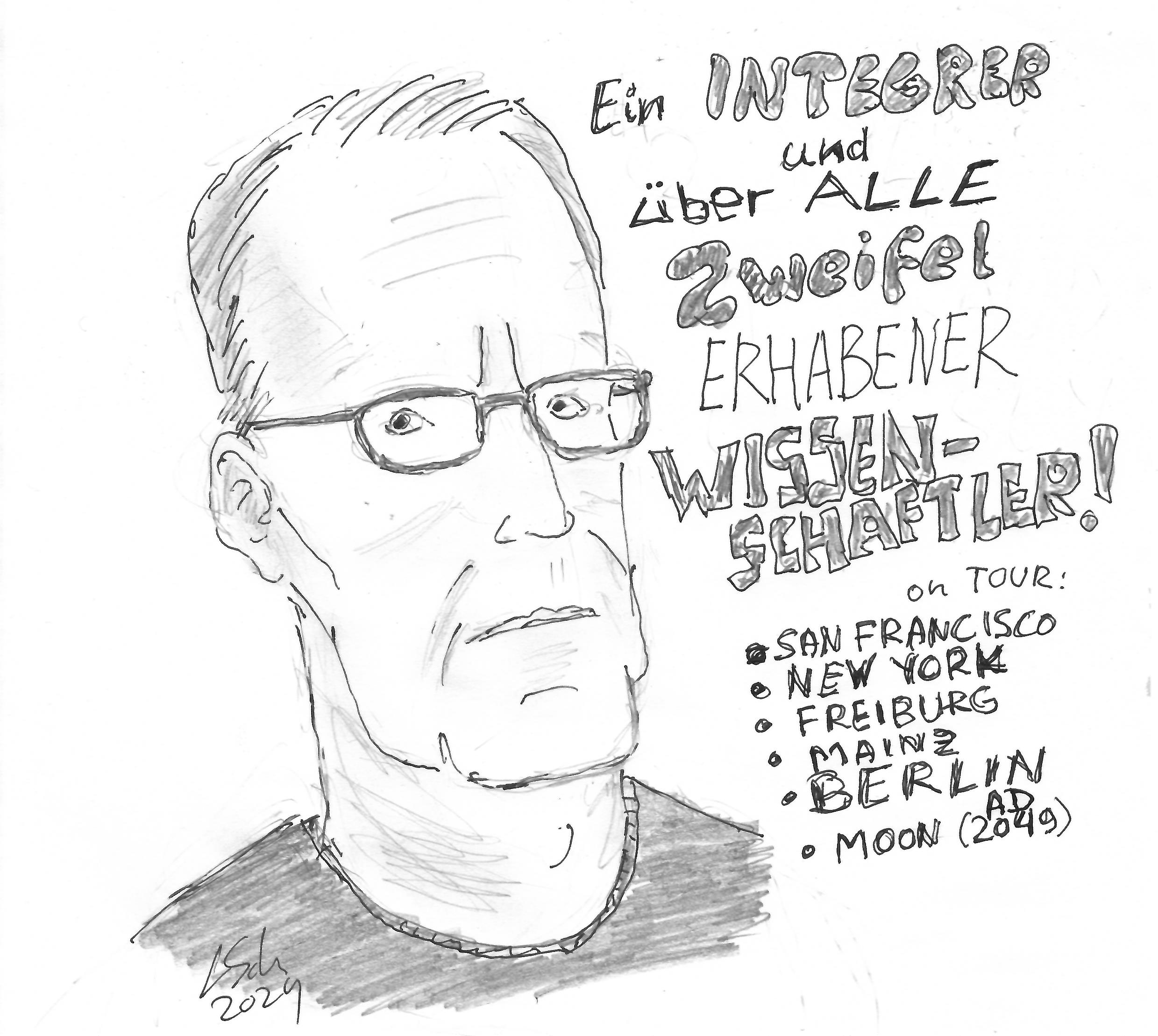
It is less a story of a deeply dishonest German opportunist, but a story of the arrogance and corruption of German universities and academies which conspired to defraud the public research.
This is the front page of the Berkeley report from September 2004. I redacted XY’s name. The full report is available to me, and actually to everyone involved.
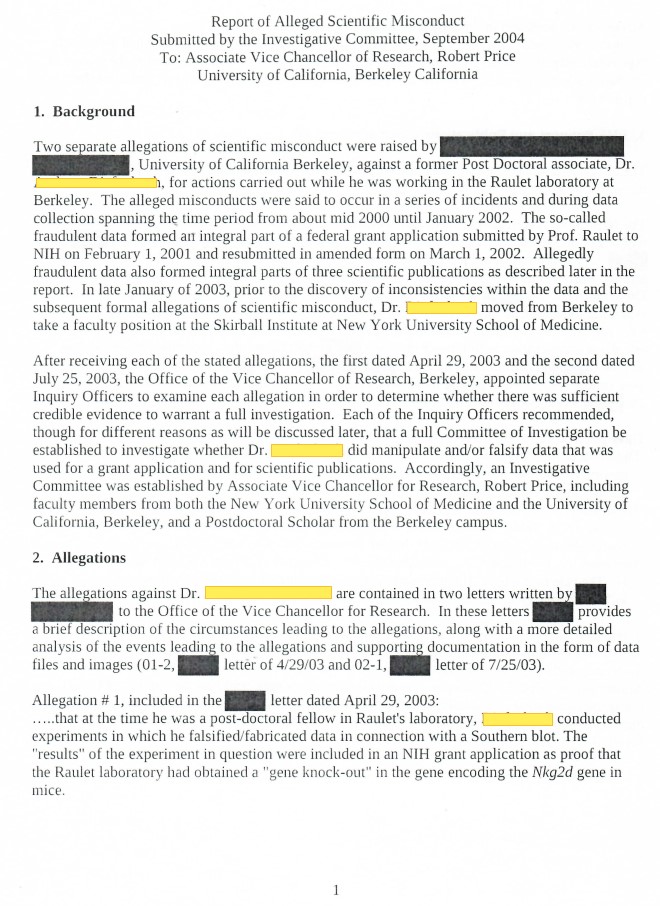
At the time of this investigation, XY was Irene Diamond Assistant Professor at the Skirball Institute of Biomolecular Medicine in New York. Between 1999 and 2003, he worked as postdoc in the lab of the immunologist David Raulet, professor in the Department of Molecular and Cell Biology at the University of California, Berkeley. It seems, a colleague blew the whistle on XY:
“Two separate allegations of scientific misconduct were raised by [name blackened], University of California Berkeley, against a former Post Doctoral associate, Dr. [XY], for actions carried out while he was working in the [David] Raulet laboratory at Berkeley. The alleged misconducts were said to occur in a series of incidents and during data collection spanning the time period from about mid 2000 until January 2002. The so-called fraudulent data formed an integral part of a federal grant application submitted by Prof. Raulet to NIH on February 1, 2001 and resubmitted in amended form on March 1, 2002. Allegedly fraudulent data also formed integral parts of three scientific publications as described later in the report. In late January of 2003, prior to the discovery of inconsistencies within the data and the subsequent formal allegations of scientific misconduct, Dr. [XY] moved from Berkeley to take a faculty position at the Skirball Institute at New York University School of Medicine.[…]
“Allegation # 1, included in the [name blackened] letter dated April 29, 2003:
…..that at the time he was a post-doctoral fellow in Raulet’s laboratory, [XY] conducted experiments in which he falsified/fabricated data in connection with a Southern blot. The “results” of the experiment in question were included in an NIH grant application as proof that the Raulet laboratory had obtained a “gene knock-out” in the gene encoding the Nkg2d gene in mice.
Allegation #2, included in the [name blackened] letter dated July 25, 2003 …..that while conducting flow cytometry experiments in the Raulet laboratory, Dr. [XY] “systematically manipulated . . . settings on the flow cyclometer machine . . . during the course of the data analysis, ostensibly with the aim of achieving the outcome that was reported for the experiment”
There were three papers listed, all had Raulet as last author:
- A 2000 Nature Immunology paper about the ligands for the murine NKG2D receptor
- A 2002 Nature Immunology paper about stimulatory versus costimulatory activity of NKG2D (corrected in June 2004)
- A 2002 Immunity paper about the NKG2D immunoreceptor in immune cell activation (corrected in June 2004)
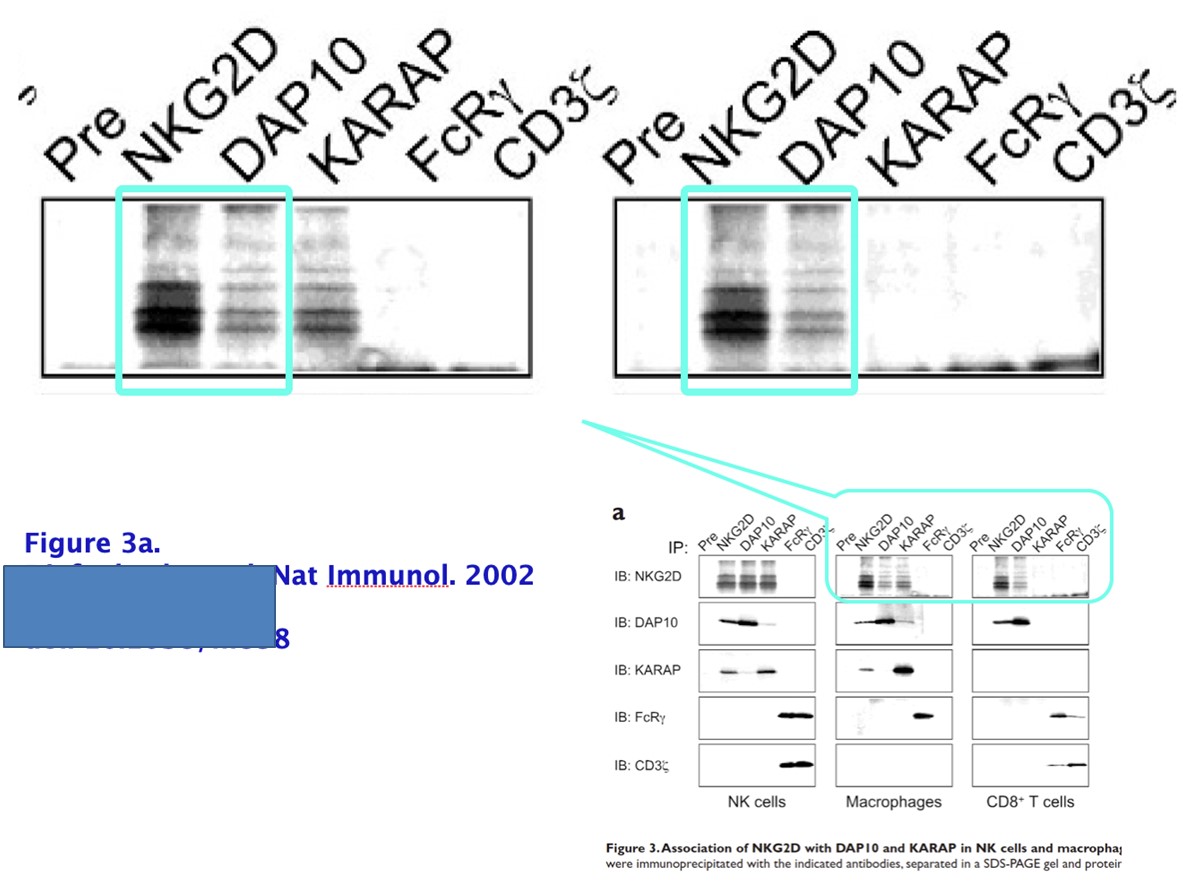
The Berkeley report mentions that
“Corrigenda intended for publication have been sent by the authors to the respective journals, Nature Immunology ([…] 2004) and Immunity ([…] 2004), alerting the readership and the general scientific community that the earlier reports of clear-cut demonstration of NKGZD receptors on activated macrophages could not be duplicated (IC-31, corrigenda submitted to journals). The authors concluded that that, contrary to their published data, bone marrow and peritoneal macrophages activated in vitro do not express easily detectable levels of NKG2D receptors on the cell surface.”
Now, to the details.
Tom Südhof’s Verfolgte Unschuld
“The professional bloggers are now trying to turn this into a question of research integrity which is deeply misleading, and claim that they are doing this not for financial gain. Judge for yourself!” – Thomas Südhof, Nobel Prize laureate

Invisible mice
Allegation 1 was about a fabricated southern blot of transgenic ES cells which were never generated, and the knock-out mice which were allegedly made with those ES cells yet in reality never existed.
“Allegation #1 Background:
Dr. [XY] had been a post-doctoral scholar in Professor David Raulet’s lab at the University of California, Berkeley. The two of them collaborated on a great many projects in the Raulet lab, one of which was to generate a colony of mice that had been genetically altered with respect to expression of an immune receptor protein known as NKG2D (so-called Nkg2d gene knockout mice). [XY] had been working unsuccessfully for some time to develop Embryonic Stem (ES) cells in which the Nkg2d gene was disrupted in one allele (i.e. knocked out), the first step in obtaining a mouse containing the disrupted gene. [name blackened] had earlier received a non-fundable score on an NIH grant application, in part because sufficient evidence had not been presented that the Nkg2d gene had been disrupted in ES cells. [name blackened] was hoping to obtain this data in time for the resubmission of his revised grant application.
Preliminary data from [XY], using polymerase chain reaction (PCR) analysis of ES cells suggested but did not prove the existence of Nkg2d gene targeted disruption of ES cells.
While they believed that targeted ES cells had been obtained, this had to be confirmed by a more rigorous analysis using genomic DNA Southern blot analysis. Using Southern blot DNA analysis, [XY] had been unsuccessful in confirming that targeted ES cells had been produced. He experienced many technical difficulties getting the technique itself to work, in addition to an inability to provide positive results for the Nkg2d gene disruption. [XY] was under pressure from to demonstrate successful targeted disruption of the Nkg2d gene in ES cells in time for the submission of the revised grant application. By late 2000, [name blackened] suggested to [XY] that another postdoctoral research fellow, who had more experience in Southern blot DNA analysis, take over this part of the project. [XY] asked for more time, and within two weeks produced the exquisitely clean and perfect Southern blot which is now in contention.
At the time that these studies were performed there was no published genomic map of the Nkg2d genomic locus. [XY]’s Southern blot showed DNA fragments which perfectly matched the unpublished map with which [XY] had been working, and was taken as positive evidence for gene disruption. This data was included in the revised application for the grant which was ultimately funded. The [XY] map was later found to be incorrect. […] By late 2002 [XY] claimed to have used the selected targeted ES cells to generate a colony of mice containing germ-line transmission of heterozygous and homozygous deletions within the Nkg2d gene locus. […]
[Name blackened] concluded that the inconsistencies and discrepancies were evidence of misrepresentation of data on the part of [XY]. With respect to the Nkg2d gene knockout mice, [XY] claimed that after leaving the lab the mouse colony that he had left behind had disappeared and that 10 cages of knockout mice were missing. He attributed the loss the entire colony of knockout mice to several possible causes, including sabotage by other members of the lab,
escape from cages or invasion of cages by other mice.”

Academic Dynasties: meet the Nussenzweigs
Star scientists Michel and Andre Nussenzweig come from a famous family of immunologists. Clare Francis looked at some of their papers.
The findings regarding Allegation #1 were devastating:
“No evidence could be found that [XY] had conducted the type of large
scale screening of many hundreds of ES cell colonies typically obtained and required to identify targeted cells, and no evidence was found for positive screening of colonies by PCR. […] No data were produced to substantiate the successful screening a large number of ES cell colonies. […]
[XY] cannot account for the whereabouts of targeted ES cells and claims that they were left behind in Raulet’s lab […]. No members of the Raulet lab recall being given the ES cells and they cannot locate them. It would be highly unusual to have no trace of any vials of frozen targeted ES cells since typically only a fraction are used for creating the chimeric mouse and the remainder are kept frozen for other attempts.”
XY blamed a technician for sabotaging his work:
“[XY] raises the issue that must have mistakenly taken the wrong vials of
non-targeted cells since the cells she used were labeled with a designation consistent with unselected parental cells”
The Berkeley report found XY entirely fabricated the results with ES cells:
“CONCLUSION: The preponderance of evidence indicates that ES cells were never targeted with a neomycin gene for G418 drug resistance, and were never selected with the drug G4l8 for resistance. The preponderance of evidence also indicates that ES cells successfully disrupted in one allele of the Nkg2d gene were not developed by Dr. [XY]. Significant differences in testimony exist between [XY], who can provide no evidence to support his view of these events, and the testimony of other individuals who can provide contemporaneous notes to back their statements and recollections.”
How Andrea Cerutti molested and defiled Journal of Immunology
Spain is where dishonest research gets rewarded, with awards, grants and media fame. No wonder the New York-based immunologist Andrea Cerutti opened a second lab in Barcelona.
And this is how XY committed the fabrication:
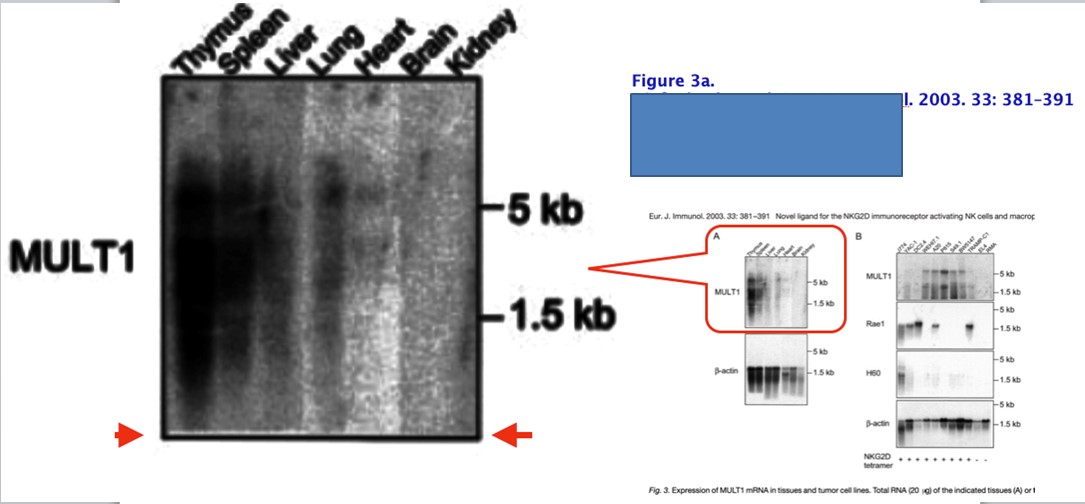
“There was a history of failed attempts on the part of [XY] to identify a positive clone of targeted ES cells and to perfect the technique of Southern blot DNA analysis. [XY] asked for one more opportunity and within a short time (2 weeks) produced the blot which is at issue. […] The blot in question looks unusually clean for a genomic Southern blot. Such blots would normally have had much higher background and some smearing of DNA fragments”
Here is the ultimate proof why the southern blot was utterly fake:
“In [XY]’s Southern blot the putative gene targeting was indicated by a band of 8.2 kb. However, the genomic DNA map for the Nkg2d gene which was used by [XY] at the time of the Southern blot analysis was incorrect. The targeted allele should have produced a band at 2.2 kb, rather than at 8.2 kb, which the incorrect map would have predicted. […] In later correspondence he attributes the 8.2 kb band to contamination with a genomic BAC plasmid which he had been using as a control for his PCR screens”
XY fabricated a gel band which couldn’t possibly exist:
“CONCLUSION: The preponderance of evidence indicates that the [XY] explanation for his results, plasmid contamination of his reagents, is extremely unlikely. The DNA band in question is present in only the clones identified as positives (five clones in the original figure, 3 in the Southern blot used for the NIH grant), but not in the sample which was designated “negative” and received the same treatment. The negative clone was presumably one that gave a negative signal in the PCR screening. A plasmid contaminant would have given the same signal in all samples, not just the positive samples for targeted disruption. Moreover, the intensity of the 8.2 kb band was equal in each of the three “positive clones.” Most unlikely, the amount of the putative plasmid signal was almost the same as that of the putative genomic signal for the undisrupted copy of the gene, which would be extraordinary by chance alone. Thus, contamination by a plasmid would require contamination capable of providing a signal equal to that of the non-disrupted allele and only in the “positive” clones but not the “negative” clones treated in an identical manner. The preponderance of evidence indicates that the genomic DNA Southern blot was falsified or fabricated to fit a genomic map for the Nkg2d which itself was later found to be incorrect.”
Yet XY accused his colleagues of “sabotage”, of having intentionally destroyed his materials and even transgenic mice:
“III. Was a Nkg2d gene targeted knockout mouse ever developed, and if so, can [XY]’s allegation of sabotage or other events account for the mysterious disappearance of the entire colony?
“As for whether knockout mice ever existed, the facts are in dispute. [XY] has claimed that he did not do the testing of mice and had little awareness of it […], yet this is contradicted in his letter to Price and Burnside (01-6, dated June 27, 2003) and in the testimony to the Committee. [Name blackened] and others state that [XY] was solely responsible for screening, maintaining and breeding the heterozygous and homozygous knockout mice, as well as for performing the
screening from tail snip DNA […]
Given the amount of effort, time and expense that is required to produce a knockout mouse, and the difficulty that was experienced in obtaining Nkg2d gene-disrupted mouse, it is suspicious that there is no evidence for animal identification. [XY] claims to have marked the animals with a permanent pen on the coat every week, but this could not be substantiated and was not lab practice”
“CONCLUSION: The preponderance of evidence could not substantiate that a Nkg2d gene knockout mouse (heterozygous or homozygous) was ever produced. No evidence could be found to substantiate by Southern blot DNA studies the claim by [XY] that knockout mice were produced, and no evidence could be found to substantiate that mice were either removed from the mouse room (whether by sabotage or mistakenly), were diluted and lost by mating with interloper mice that had escaped from their cages and invaded the cages of knockout mice, or had escaped. In fact, no discrepancy in cage numbers could be found to substantiate [XY]’s allegation of sabotage, nor could any molecular typing data be found to substantiate that knockout mice were produced.”
My Big Fat Greek Ophthalmology
From fake cancer research to fake ophthalmology – just follow Mitsi and Vassiliki and you’ll meet Dementios and other bad eye doctors, including a horrible German we hoped to never see again.
Go with the flow
Now, to the Allegation #2, about fabricated flow cytometry to compensate for an antibody which didn’t work:
“After Dr. [XY] had left Prof. David Raulet’s lab, a graduate student, [name blackened] could not repeat an experiment that [XY] had earlier contributed to a published paper (Immunity […] 2002). The experiment in question, particularly Figure 3 from that paper, depicted flow cytometry data of macrophages stained with a monoclonal antibody against the NKG2D immune receptor. The experiment apparently demonstrated that macrophages express NKG2D receptor after cells were cultured over a period of time with activators such as lipopolysaccharide or interferons (interferon α/β or γ).
However, further tests by [name blackened] failed to detect any staining of macrophages above background for the NKG2D receptor. This prompted [name blackened] to examine the electronically archived data from the flow cytometer. Primary data for the experiment in question, performed on January 11, 2002, were clearly identified, and it appeared that the electronic settings on the flow cyclometer machine were systematically manipulated in a manner to achieve the reported outcome, i.e., that surface expression of NKGQD in macrophages was enhanced by activation. […] it is alleged that the settings on the flow cyclometer machine to measure the expression of NKG2D in macrophages had been fraudulently manipulated, ostensibly with the aim of achieving the outcome that was reported in the paper (Figure 3, Immunity [..] 2002). It is further alleged that the images used in Figure 4D of a paper published in Nature Immunol. [..] 2000, were fraudulently manipulated to exaggerate the results of an experiment. Although it wasn’t included in the original allegation #2, there is at least one more publication that includes data showing that lipopolysaccharide-activated macrophages express NKG2D surface receptor (Nature Immunol [..] 2002).”
In the Correction published in Immunity in 2004, the authors admitted that they “observed either no staining or only weak staining of undemonstrated specificity” for their NKG2D antibodies, and also failed to obtain any “functional response from activated macrophages” using those antibodies.
Euroimmun founder Stöcker: “essential message is beyond any question”
Euroimmun founder Winfried Stöcker replies to criticism of his company’s publications: “Dr. Elisabeth Bik’s observations are not suitable to bring us into disrepute.”
To circumvent the problem, someone falsified the flow cytometry data. XY insisted it wasn’t him:
“Because of apparent manipulation of the data, [name blackened] brought forward allegation #2 with supporting materials making it clear that there was manipulation of the voltage settings for the flow cytometry data collected on January 11, 2002, and used in Figure 3 of the Immunity paper. For his part, [XY] argued in the original inquiry that he could not have collected the disputed data on January I I as he was clearly not in the laboratory or at the University on that date, and suggested that the issue of immunostaining of macrophages may have been the result of a contaminating antibody and/or alterations in
the primary electronic image files.”
XY claimed to have an alibi, but the investigators were soon able to prove that the alibi was as fabricated as XY’s research:
“Regarding allegation #2 and the reported systematic manipulation of the voltage settings on the flow cyclometer machine, the Investigative Committee agrees that settings on the machine were altered during the course of the analysis in an inappropriate manner. There was a systematic change in the voltage setting for individual samples so as to change the distribution stained cells expressing the antigen. In all cases for control cells, including non-stimulated cells, cells blocked with the recombinant NKG2D protein, or those challenged with isotype control antibody, the voltage settings for the FL2 detector were in the range of
470-510. For “appropriately stimulated” macrophages the voltage settings were raised: 540-560 for the time point at 24 hrs, 600-610 for 48 hr, and 600-610 for 72 hr of stimulation […]. Dr. [XY] has agreed that the manipulation of results in question “is unacceptable experimental practice” [..]. On the other hand, Dr. [XY] strongly contends that he did not perform the analysis of flow cytometry for the experiment on macrophage staining carried out on January 11, 2002. He stated that he prepared the cells, subjected them to experimental conditions, and followed a staining protocol that he prepared for the analysis. However, [XY] says that he left the cells in a refrigerator for colleagues to analyze on the flow cyclometer, along with a note requesting them to perform the analysis [..]. He further states that he was not in the laboratory from January 9, 2002 until February 7, 2002, except for brief visits on January 17 and 29 […]. Given that the actual experimental results had been fraudulently manipulated, the Committee felt that it was important to evaluate all the evidence that would support or refute Dr. [XY]’s claim that he, himself, did not carry out the flow cytometry analyses. […]
Shortly after his interview with the investigative Committee [XY] submitted a letter which included evidence pertaining to his whereabouts on January 11, 2002 [..] Among the materials is his bank statement covering the period January 9 through 18, 2002 [..]. [XY] asserts that a transaction made through his Citibank account in a Safeway store in San Francisco at 3:07 PM on January 11 establishes that he was not in Berkeley at the time of the experiment. [XY] claims that the Citibank bank account was a personal account, not a joint account, and could not have been used by his wife […] The same page of the bank statement supplied by [XY] also indicates withdrawals in Berkeley on January 14’*’ and 15th, days on which [XY] says he was not in Berkeley.”
“[Name blackened] graduate student in the Raulet lab, recalls seeing and working with [XY] in the lab on January 15th, 2002, contrary to [XY]’s testimony [..].[XY] can also be placed in the lab on January 15th because he signed in [name blackened] name, to use the FACS machine in what was to be a “training session” for [name blackened] […] An expert from the Fisher Document Forensic Laboratory has verified that the handwriting entered on January 15th in the line signed “‘[name blackened]” is the same as [XY]’s handwriting. […] This was also the day [name blackened] made the figure for the Immunity paper using the data from the experiment of January 11th.”
Fulda & Debatin: Reproducibility of Results in Medical and Biomedical Research
“Basic and advanced training for researchers should focus much more on self-reflection, openness and a culture of error acceptance.”
“CONCLUSION: The preponderance of evidence indicates that [XY] was
present in Berkeley on January 11, 2002, the day on which the flow cytometry data were analyzed. He was specifically identified in the lab on January 11th by another postdoctoral associate. The email correspondence with the French scientific collaborators does not really establish whereabouts. The one factual item of a bank account expenditure in a ‘distant’ place at the time of the experiment could not be verified as a specific expenditure made by [XY]. Dr. [XY] offered the bank statement in evidence, but then refused to allow the Committee access to information regarding account expenditures.”
Then XY tried to mislead the investigators on who performed the actual FACS measurement on 11 January 2002. This was his sole evidence:
“[XY] asserted that the post-it note was attached to a page in his lab notebook in a space that established the time of its writing. The Investigative Committee was unable to locate the lab notebook and only have copies of pages supplied by
[XY].”
Nice try.
“CONCLUSION: The preponderance of evidence indicates that [XY]
performed the flow cytometry analysis on January ii, 2002, containing data that had been manipulated for individual experimental conditions. Testimony specifically establishes that [XY] was present in the lab on that day, his verified signature is in a chronological sequence consistent with an entry at the time indicated, and he was the only one with the skill and knowledge of the protocol to alter the experiment in the defined manner of data manipulation.”
Münster charges Jens Schwamborn’s mentor Andreas Püschel with research misconduct, again
The University of Münster in Germany shows with a good example how to act on evidence of data manipulation. Neuroscientist Andreas Püschel has been found guilty of research misconduct. It was once again about a paper authored by his former PhD student and now Luxembourg stem cell researcher, Jens Schwamborn.
A junior co-author was blamed by XY of having forged the published figure, but:
“CONCLUSION: It is not possible to conclude exactly how the transfer of data was made and who converted raw data into “Flo.lo file” form, and then into some presentable format to be used for Figure 4 in the Immunity paper. However, the Committee concludes that the preponderance of other evidence indicates that [XY] was the only one who could have collected the data. Since the transfer of data would have to include knowledge of the codifying key, it is reasonable to conclude that [XY] transferred relatively complete graphical files to [name blackened]”
“[name blackened] has alleged that Figure 4D of the Nature Immunol. paper were manipulated so that certain images were purposefully selected to emphasize the result that macrophages stimulated with LPS express NKG2D receptor, and that the specific was demonstrated by blocking with the NKG2D antigen. In effect it was proposed by [name blackened] that the labeling on stored computer files of the images were different (and purposefully changed) from the labeling given in the published paper. […]
Dr. [XY] has maintained that there was no motivation or gain on his part to engage in scientific misconduct. In his Summary of Findings [..] and in his interview with the Investigative Committee [..], [XY] claimed that it is not common sense that he would falsify data for a colleague in the lab who he was helping with an experiment, and especially defies logic that he would falsify data when he already had successfully performed the same type of experiments before.”
“CONCLUSION: The Investigative Committee agrees that there was sufficient motivation for manipulation and falsification of data as specified in this analysis. It may well have been that an initial observation was misinterpreted by some simple mistake. However, there were subsequent circumstances, as detailed in this report, in which the data were stretched and changed to conform to the demonstration of a cytokine activated NKGZD macrophage surface receptor, a receptor that is very poorly expressed at best.”
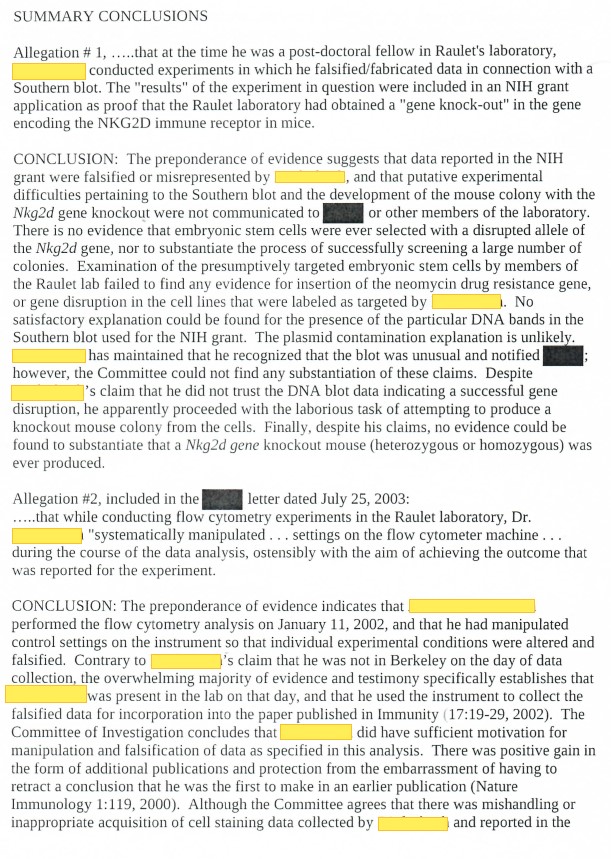
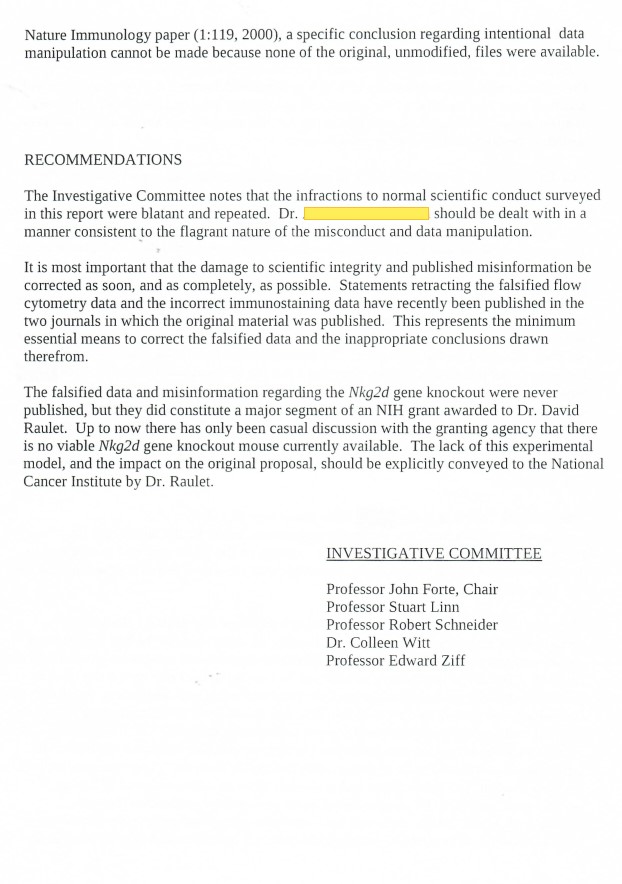
Now, the SUMMARY CONCLUSIONS:
“Allegation # 1, …..that at the time he was a post-doctoral fellow in Raulet’s laboratory, [XY] conducted experiments in which he falsified/fabricated data in connection with a Southern blot. The “results” of the experiment in question were included in an NIH grant application as proof that the Raulet laboratory had obtained a “gene knock-out” in the gene encoding the NKG2D immune receptor in mice.
CONCLUSION: The preponderance of evidence suggests that data reported in the NIH grant were falsified or misrepresented by [XY], and that putative experimental difficulties pertaining to the Southern blot and the development of the mouse colony with the Nkg2d gene knockout were not communicated to [name blackened] or other members of the laboratory. There is no evidence that embryonic stem cells were ever selected with a disrupted allele of the Nkg2d gene, nor to substantiate the process of successfully screening a large number of
colonies. Examination of the presumptively targeted embryonic stem cells by members of the Raulet lab failed to find any evidence for insertion of the neomycin drug resistance gene, or gene disruption in the cell lines that were labeled as targeted by [XY]. No satisfactory explanation could be found for the presence of the particular DNA bands in the Southern blot used for the NIH grant. The plasmid contamination explanation is unlikely. [XY] has maintained that he recognized that the blot was unusual and notified [name blackened]; however, the Committee could not find any substantiation of these claims. Despite [XY]’s claim that he did not trust the DNA blot data indicating a successful gene disruption, he apparently proceeded with the laborious task of attempting to produce a knockout mouse colony from the cells. Finally, despite his claims, no evidence could be found to substantiate that a Nkg2d gene knockout mouse (heterozygous or homozygous) was ever produced.
Allegation #2, included in the 2 letter dated July 25, 2003
…..that while conducting flow cytometry experiments in the Raulet laboratory, Dr [XY] “systematically manipulated . . . settings on the flow cyclometer machine during the course of the data analysis, ostensibly with the aim of achieving the outcome that was reported for the experiment.
CONCLUSION: The preponderance of evidence indicates that [XY]
performed the flow cytometry analysis on January 11, 2002, and that he had manipulated control settings on the instrument so that individual experimental conditions were altered and falsified. Contrary to [XY]’s claim that he was not in Berkeley on the day of data collection, the overwhelming majority of evidence and testimony specifically establishes that [XY] was present iii the lab on that day, and that he used the instrument to collect the falsified data for incorporation into the paper published in Immunity [..] 2002). The Committee of Investigation concludes that [XY] did have sufficient motivation for
manipulation and falsification of data as specified in this analysis. There was positive gain in the form of additional publications and protection from the embarrassment of having to retract a conclusion that he was the first to make in an earlier publication (Nature Immunology [..], 2000). Although the Committee agrees that there was mishandling or inappropriate acquisition of cell staining data collected by [XY] and reported in the Nature Immunology paper [..] 2000), a specific conclusion regarding intentional data manipulation cannot be made because none of the original, unmodified, files were available.”
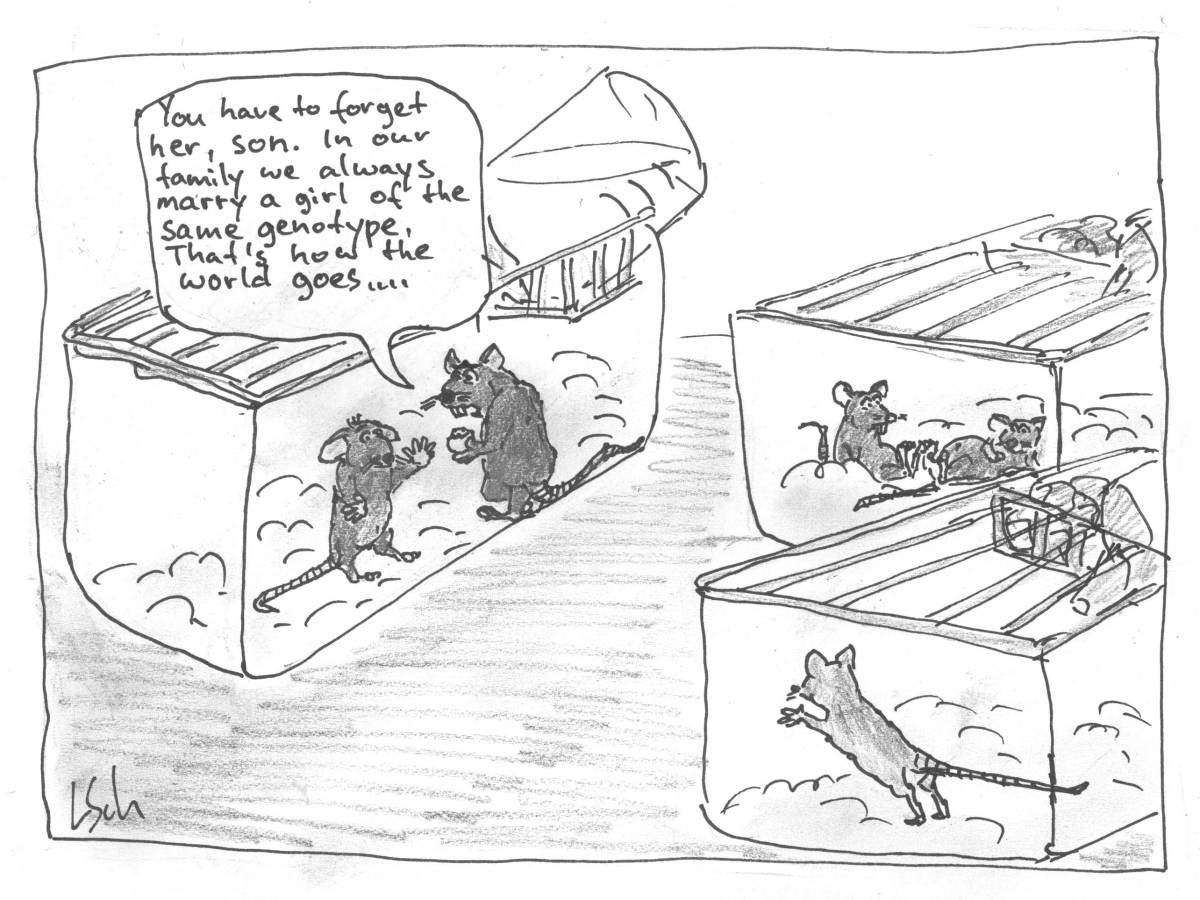
Mice don’t count
“The mice probably wouldn’t care whether the experiment they suffered and died for was meaningful or not, but it does seem to matter to me. “- Sholto David

The final part:
“RECOMMENDATIONS
The Investigative Committee notes that the infractions to normal scientific conduct surveyed in this report were blatant and repeated. Dr. [XY] should be dealt with in a manner consistent to the flagrant nature of the misconduct and data manipulation.
It is most important that the damage to scientific integrity and published misinformation be corrected as soon, and as completely, as possible. Statements retracting the falsified flow cytometry data and the incorrect immunostaining data have recently been published in the two journals in which the original material was published. This represents the minimum essential means to correct the falsified data and the inappropriate conclusions drawn therefrom.
The falsified data and misinformation regarding the Nkg2d gene knockout were never published, but they did constitute a major segment of an NIH grant awarded to Dr. David Raulet. Up to now there has only been casual discussion with the granting agency that there is no viable Nkg2d gene knockout mouse currently available. The lack of this experimental model, and the impact on the original proposal, should be explicitly conveyed to the National Cancer Institute by Dr. Raulet.”
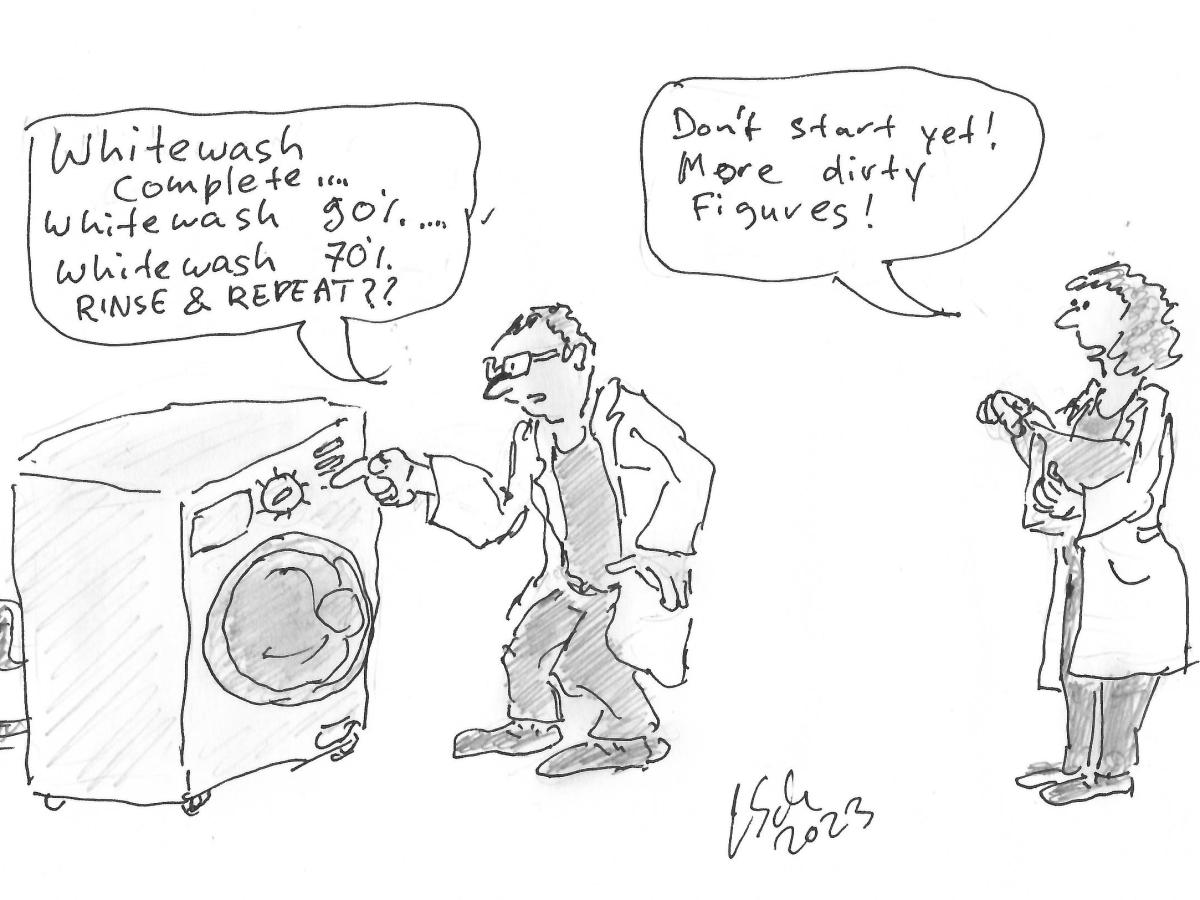
Hannover Scheibenkleister
“Dr. Scheibe presented to me the original blots […]. I think that’s pretty convincing.”
A scientist of integrity and beyond reproach
I verified the authenticity of the Berkeley report.
On 10 December 2021, Robert Sanders, Manager for Science communications at UC Berkeley Media Relations, wrote to me:
“The document that you shared with us is the final report of a committee that investigated alleged research fraud by Dr. [XY] in 2002. The university stands by the integrity of our investigative processes in general and that 2004 report in particular. The committee, which included UC Berkeley and New York University scientists, unanimously concluded that Dr. [XY] falsified or misrepresented data, based on a preponderance of the evidence. The university subsequently alerted the Office of Research Integrity (ORI) of the U.S. Department of Health and Human Services, which did not dispute the committee’s findings, though the office declined to pursue the case further for other reasons. I am attaching the letter we received from ORI, in the event you have not yet seen it. The Berkeley researchers also alerted the journals that published some of the fraudulent data, and errata and corrigenda were subsequently published to correct the literature. Furthermore, the U.S. National Institutes of Health was alerted regarding the work, which had been used to support a grant application.”
I also forwarded the entire Berkeley report to the Charité professor XY. He swiftly deployed a lawyer, some Stephan Sch. of the Berlin law firm Redeker Sellner Dahs, threatening to sue me if I ever publish anything about this Californian case. The lawyer never denied the Berkeley report’s authenticity, but he denied its validity. He insisted that it was declared as invalid by both the UC Berkeley itself and by HHS-ORI.
Which is something UC Berkeley remains unaware of. Their press speaker Sanders insisted: “We stand by everything we have previously conveyed to you” and invited XY’s lawyer to contact the university’s counsel if his needs a formal statement.
When the Berkeley report was completed at the end of 2004, XY was the Irene Diamond Assistant Professor of Immunology at the Skirball Institute of Biomolecular Medicine of New York University, with his own freshly awarded R01 grant for studying NKG2D receptor and control adaptive immunity. The R01 grant’s funding period began in February 2005, financed until January 2010. In this regard, Berkeley press officer Sanders told me:
“The campus notified the ORI about our investigation in March 2004 and sent the final report to the ORI immediately after the committee finalized it on Nov. 13, 2004.
Prof. Raulet contacted his program official at the NIH during a similar time frame, explaining that the relevant data were incorrect and an investigation was underway, and that plans were underway to generate the knockout mice anew, which were later successful.“
As it happens, XY’s R01 grant was abruptly terminated, the funding stopped in January 2006. Yet XY was never sanctioned by HHS-ORI in the wake of the Berkeley findings, most likely because he quit his job in new York, cancelled his R01 grant, and left USA for good.
Thing is, XY and his lawyer have been referring to some “Oversight Review” by HHS-ORI and their mysterious letter which allegedly overruled everything. This letter was according to them a “final official „Statement of Exoneration“ of the Departments of Health & Human Services from the year 2007“, and whatever that letter really was, fact is: it was accepted by the academic authorities in Germany. The problem however: like XY’s knockout mice, this alleged „Statement of Exoneration“ is unavailable to anyone asking to see it. Certainly not from XY or his lawyer, I asked many times to see it, they just refuse outright.
But I have an HHS-ORI letter to XY, dated 18 April 2013. It makes it perfectly clear that they never overruled anything and never exonerated XY. I removed his name:
Highlight mine:
“The Office of Research Integrity (ORI) has completed its oversight review of the allegations of research misconduct that arose upon your departure from the laboratory of David Roulet of the University o.f California, Berkeley (UCB). As you know, UCB conducted an inquiry and investigation into those allegations, and made findings of research misconduct […]
ORI’s oversight review, conducted by staff from the Division of Investigative Oversight found no basis for overturning UCB’s findings. However, for a number of reasons, ORI has determined to administratively close this case and not propose separate PHS findings and administrative remedies. This determination does not diminish UCB’s independent authority to make findings of research misconduct […] Thus, ORI’s determination not to make separate Public Health Service findings of research misconduct in this matter is not an exoneration of the UCB’s findings summarized above.“
I did check with HHS-ORI for that mysterious “Letter of Exoneration”. They informed me on 21 March 2022:
“ORI no longer has records for this matter. The records have been disposed of in accordance with the National Archives and Records Administration (NARA) approved Records Schedule“.

How USA embraced research fraud: review of two books
A review of “The Baltimore Case” by the historian Daniel Kelves and “Science Fictions” by the journalist John Crewdson, which also tell the history of the Office of Research Integrity (ORI).
No matter what XY and his German friends and lawyers imagine, HHS-ORI doesn’t even have a mandate to overrule misconduct findings by US universities. On 31 March 2022, I received this explanation from the HHS-ORI acting director Wanda K. Jones:
“ORI does not “overthrow” an institution’s findings, and in no circumstances do we provide a “statement of exoneration” to the institution or the respondent in the case. Institutions are free to draw their own conclusions and take action on research misconduct they identify; they do not have to wait for ORI’s determination. ORI conducts its own oversight of the institution’s completed proceedings, separate from the institution’s. ORI may ask the institution to pursue additional aspects of the case that are insufficiently addressed in the institutional actions, or ORI may proceed to close the case.
ORI’s oversight investigation leads to case closure in one of several ways – with PHS research misconduct findings; without findings of research misconduct (no misconduct); or decline to pursue (DTP). Sometimes ORI closes a case earlier, during the institutional assessment or inquiry stage (accession closures), based on the institution’s reporting to us. Please see our recent notice regarding ORI case closures at: https://ori.hhs.gov/blog/ori-case-closures. In cases in which ORI does not make a separate PHS research misconduct finding, institutions retain authority under their own policies and procedures to make their own research misconduct findings or to draw their own conclusions about scientific or professional misconduct by the respondent. They can apply sanctions without requiring ORI’s input. Regardless of outcome of ORI investigations, ORI’s work does not nullify an institution’s determination or actions.
Finally, ORI is not required to retain all records forever...”
To sum up: if this mysterious “Statement of Exoneration” from 2007 ever existed, it was NOT a statement of exoneration, at least to those who speak English. The “Oversight Review” by HHS-ORI must have determined that since the research misconduct was already established by UC Berkeley, and the guilty party abandoned his NIH grant and left United States forever, there was no point in trying to punish him with exclusion from NIH funding and from NIH grant review (the only sanctions available to HHS-ORI). But then again, Germans sometimes think they know English (and everything else) better than the Americans.
Having abandoned USA, XY returned to Germany. In 2007 he became full professor and deputy institute director at the University of Freiburg. In 2013, he moved to head a medical institute at the University of Mainz, where he was funded by a €1.5 million ERC grant. And in November 2016, he joined Charité Berlin, also as institute director, and as Einstein Professor. Soon after, XY became Fellow of the Berlin-Brandenburg Academy of Sciences.
Leopoldina and Tiwari’s scamferences, or what’s the point of Academies
The German Academy of Sciences, Leopoldina, advertises for Ashutosh Tiwari’s predatory conferences. Occasion: Academician Herbert Gleiter won an IAAM Award.
I contacted these institutions, and shared the Berkeley report and the HHS-ORI letter with them.
Bastian Strauch, deputy press speaker of the University of Freiburg, informed me:
“The investigation regarding [XY] became known during the ongoing appointment process for the C3 Professorship for Microbiology and Molecular Infection Immunology in 2004 – specifically at the end of September 2004 after the appointment and before the appointment. His appointment was then deferred pending a final decision in the investigation in the United States. When the Department of Health & Human Services’ final official Statement of Exoneration was presented in 2007 exonerating [XY] of the allegations against him, his appointment followed. Until then, he had a temporary contract as a deputy professor. As far as we know today, the letter from HHS-ORI from 2013 was not known within the University of Freiburg. The departure of [XY] from the University of Freiburg to the Johannes Gutenberg University Mainz in 2013 was based on an external reputation. We are not aware of any other possible reasons for his departure.“
My pleas to see that “final official Statement of Exoneration” were rejected. Strauch wrote to me: “For legal reasons, the University of Freiburg is not authorized to pass on this or other documents.” Eventually, Julia Wandt, press speaker of the University of Freiburg, ordered me to accept her authority in an email from 4 April 2022:
“Among other things, I also saw the “Statement of Exoneration” from the Department of Health and Human Services.”
The Kathrin Maedler Dynasty
German diabetologist Kathrin Maedler is a central figure of a questionable academic dynasty. Using Photoshop simulations, she discovered a cure for diabetes, which was then allegedly validated in clinical trials led by her Swiss PhD advisor Marc Donath. 15 years later, the Maedler-Donath diabetes cure was proven as utterly ineffective by same Donath, in another…
From the University Clinic of Mainz, their press speaker Tasso Enzweiler wrote to me on 17 November 2022:
“The responsible committees of the University Medical Center (UM) Mainz have thoroughly examined Prof. Dr. [XY]’s professional vita before his appointment. They were also aware of the accusations that you recently made, dear Mr. Schneider. The UM Mainz committees came to the conclusion that Professor [XY] had a very positive academic career, which was and is characterized by demonstrably excellent achievements.
The UM Mainz is aware that a procedure was discontinued by the US-ORI around ten years ago without any finding of scientific misconduct. As a general rule, we do not comment further on rumors, speculation and vague accusations.”
On 9 December 2021, Charité Berlin sent me an official letter, signed by their lawyer Patrizia Ziedek, and it was their only communication to me in the XY case. Key quote:
“...you are informed given that neither UC Berkeley nor other authorities have published the accusations against Prof. [XY] or imposed sanctions on him. The Charité has no reason to initiate measures in response to unsubstantiated allegations. Prof. [XY] is is a scientist of integrity and beyond reproach..”
That reply is very typical of Charité, a passive-aggressive way not only to defend their professors, but also to say what they think of people like me.
Ann-Christin Bolay, press speaker of the Berlin Brandenburg Academy of Sciences (BBAW), educated me on 23 December 2021:
“The case you mentioned was closed many years ago after thorough examination; The Berlin-Brandenburg Academy of Sciences therefore refrains from commenting“
On 4 January 2022, Bolay added:
“There was no investigation into the case at the BBAW. We obtain our information in this regard from the Charité. It has the necessary expertise and the BBAW sees no reason to doubt this expertise“
Inspector Schermuly Investigates!
Somebody vandalised the “bed-to-bedside” research of the pulmonology professor Ralph Schermuly. His Giessen University appointed the best investigator they had to solve the case!
The only two institutions in Germany who had absolutely no clue were incidentally the ones who financed him. First, the national funder, the German Research Council (DFG). On 14 December 2021, the DFG press speaker Marco Finetti thanked me for sharing that investigative report and the HHS-ORI letter:
“The DFG didn’t have any information about the facts you have described. We will inform you of any further steps the DFG may take.
We will also be following your possible reporting in this regard with interest – thank you in advance for letting us know.“
Also the DFG Team Scientific Integrity announced to investigate and get back in touch. Philip Ridder, DFG research integrity officer, informed me on 20 April 2022 that no investigation will be performed because there was no DFG funding involved. I then shared with Ridder the acknowledgments from one the fraudulent papers (Nature Immunology 2000) which lists a DFG grant to XY. Ridder replied:
“…we have come to the conclusion that the conduct practices which [XY] is accused of, occurred during a period in which [XY] was not funded by the DFG. For this reason, we have not initiated a preliminary review procedure in accordance with the DFG Rules of Procedure for Dealing with Suspected Cases of Scientific Misconduct. We are therefore unable to make any substantive statements about the case.“
That is standard procedure by DFG actually. All German professors are exempt from DFG investigations, unless their institution wants one. And you know where Charité stands.
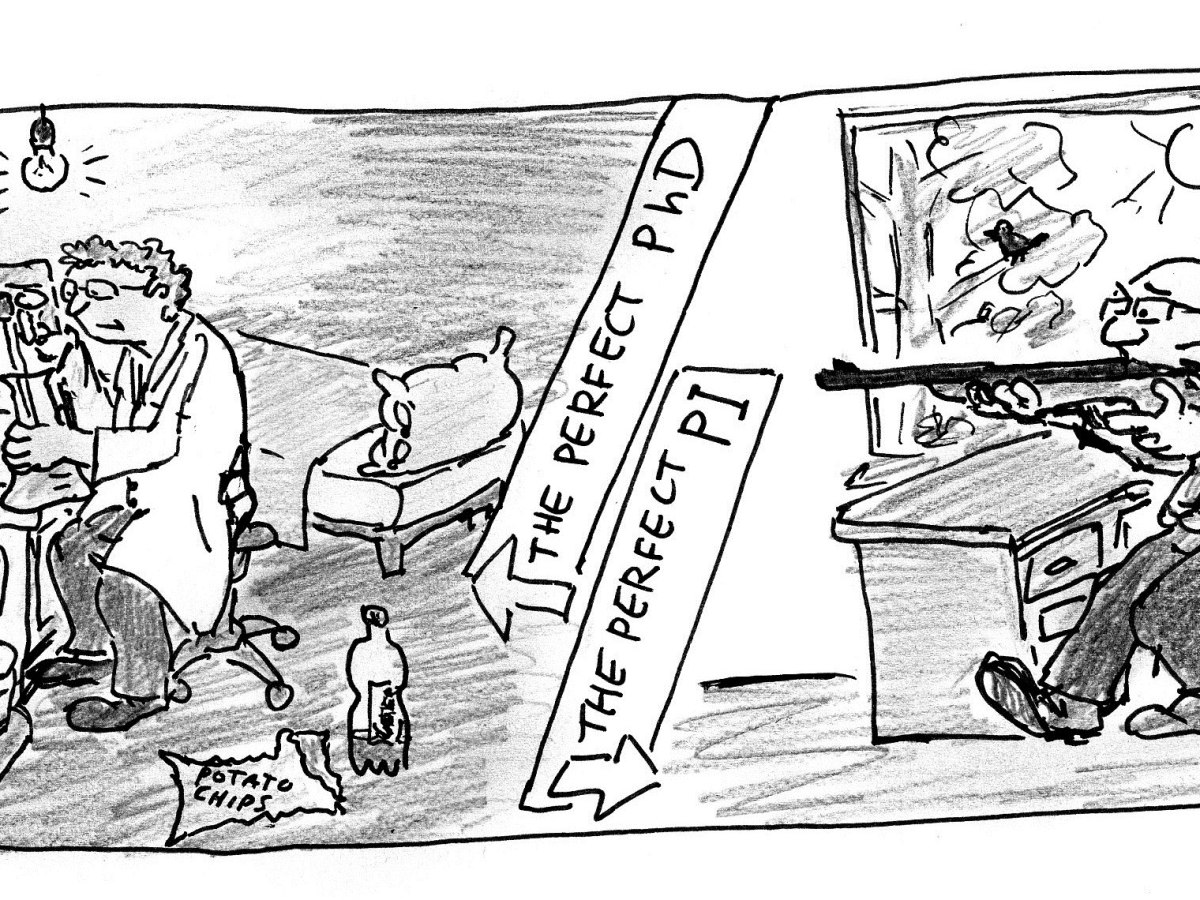
Bullies and Harassers of Cologne
“the professor insults her doctoral students, calling them “stupid”, “useless” or “retarded”, for example. She is said to sometimes require her employees to work more than 80 hours a week. The report speaks of a “quasi-feudal relationship of dependence” and a “climate of fear” at the institute in question.”
There was nothing to investigate, certainly not the later grants XY obtained from DFG using those fabricated studies.
The second institution was the Einstein Foundation Berlin, who financed XY’s professorship for microbiology at Charité between 2016 and 2019. In his email to me from 15 December 2021, the Head of Communications of Einstein Foundation, Christian Martin, thanked me also for the information from Berkeley:
“No, the foundation had no information about this process. Thank you for letting us know about this“
There was also a third major funder. Between March 2013 and February 2018, XY has been receiving €1.5 million from the EU Commission, via his personal research grant from the European Research Council (ERC), about nutrient-controlled molecular pathways in mucosa-associated innate lymphocytes. The ERC chose not to react to my messages, so I can’t tell you if they knew about the Berkeley fraud findings against XY. From my experience, ERC has no clue about anything.
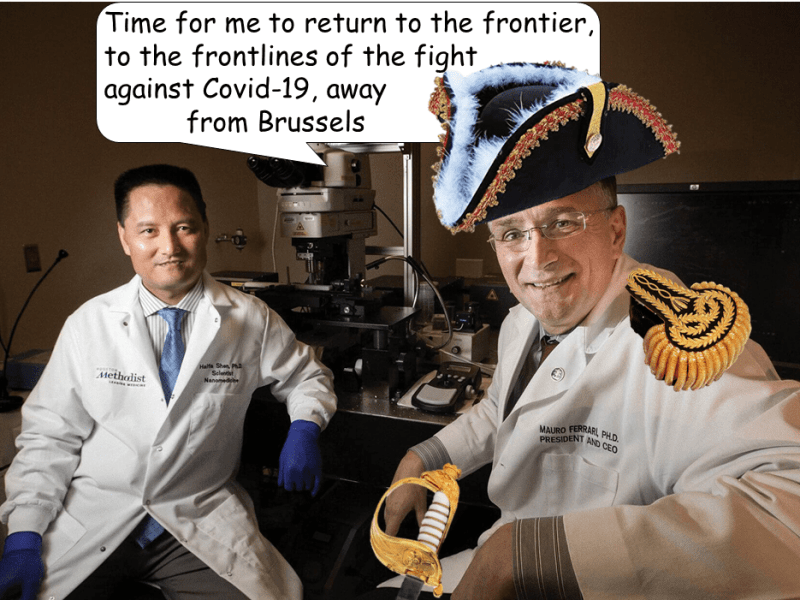
Bullshitter Mauro Ferrari out as ERC President
Mauro Ferrari was made to resign as ERC president. In his 3 months in office, he published a ridiculously fraudulent paper with Houston colleagues. Now Ferrari announces from his Texas lockdown “trenches” to cure COVID-19.
Conclusions are unchanged
It is shameful Raulet chose not to retract those fraudulent papers by XY, but instead issued corrections with statements like:
- “The conclusion in that paper that activated peritoneal macrophages express readily detectable NKG2D at the cell surface is now also in question, but the conclusions concerning natural killer cells and CD8 T cells remain unchanged.”
- “These major conclusions of the paper are unchanged. However, we wish to alert the community that in recent repetitions of the staining experiments we have failed to obtain clear-cut staining of activated bone marrow or peritoneal macrophages with antibodies to NKG2D.”
And the 2000 Nature Immunology paper wasn’t even corrected. XY’s former mentor Raulet only wrote this to me, in December 2021:
“Mr Schneider
The previous email from Robert Sanders mentioned that corrections and a corrigendum were published re the work you inquired about. Here are links to them. Note that one of the corrections refers to two articles. In each case the journal recommended this approach to address the problems with the papers.
Sincerely
David Raulet“
I informed all relevant authorities about the Berkeley report in November 2021. What changed for XY since? Not much.

Prof Jean Bousquet’s Sauerkraut Therapy
For some reason, Christian Drosten is the most famous COVID-19 scientist of the Charité Berlin medical school. Meanwhile, Professors Jean Bousquet and Torsten Zuberbier found and tested the pandemic cure, and it’s Brassica oleracea!
The microbiology institute at Charité which XY is director of, still lists the same huge team of ELEVEN research groups, led by professors and tenure-track PIs. XY’s own group currently lists 6 PhD students and 2 postdocs (7 PhDs and 3 postdocs in 2021), exactly because Charite thinks XY is the right kind of mentor to decide on the next generation of scientists in Germany. In fact, he is even the spokesman of the Fresenius-funded doctoral college for medical students.
There is definitely no problem of money for XY. He is currently the leader of one and key participant in 3 other DFG-funded German research consortia. On 2 February 2024, Charité proudly announced that XY is going to lead a new “Consortium of systems medicine, clinical and experimental medicine”.
In 2023, Charité brought a long and boring interview with XY, presenting him as “one of the most cited scientists in his field” who is about to solve immunology, colon cancer and the Hallmarks of Health thanks to some groundbreaking discovery from 2008 and his Nature paper from 2019. Indeed, XY is a „Highly Cited Researcher“ since 2017, “one of the 161 top researchers worldwide who have been identified as particularly influential in immunology“, as Charité proudly reminded everyone during the pandemic in November 2021. XY was followed by Christian Drosten in that press release.
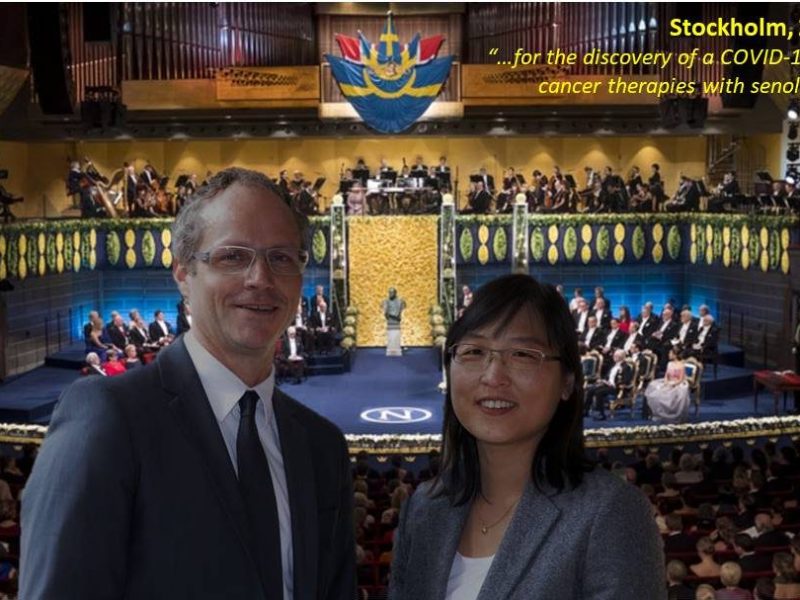
In April 2024, XY was celebrated in Berlin yellow press as “the secret star of the new Charité series“, a science-fiction show on the German public TV set in the year 2049. Predicting the shitty future of Charité, XY praised the technology of stool transplants:
“It is currently entirely conceivable that the transfer of a complex microbiome will become a clinical standard in the next few years”
In connection with that same sci-fi TV series, there was also an interview with XY by ARD magazine Brisant, a XY podcast in Deutschlandfunk Kultur, and even a Charité ‘s own announcement of a public talk “The medicine of the future – a talk about visions and realities” on 11 April 2024 with XY and the Charite CEO Heyo Kroemer.
As if, on orders of that same CEO Kroemer (hopefully not related?), Charité PR people have been pulling strings to raise XY’s profile. Such public declarations of support for questionable researchers are common practice in academia. Yet these are much more sinister than you think, the purpose is to both signal unconditional support and send a thinly veiled threat to the critics. Don’t mess with the Charité. Millions of of public money are in the game, and unlike XY, you are a nobody, an annoying bug they can squash anytime.
Coda: the Law is an Ass
Charité wasn’t always like this. Once, they did found their scientist guilty, were sued, had lost, and got taunted by German media. I wrote about some of it in November 2021 Shorts.
In brief, the neuroscientist and former Charité vice-dean Robert Nitsch and his mentee Nicolai Savaskan were subjected to three research misconduct investigations, one was led by biology professor and former GDR civil rights activist Jens Reich, who spoke of “an urgent suspicion of intentional manipulation or even falsification of data”. In August 2011, Nitsch and Savaskan both had to retract a paper (Meier et al FASEB J 2003). Later same year, another joint paper, Trimbuch et al 2009, was corrected because of duplicated in vivo recordings.
Savaskan was about to become full professor at Charité, but had to leave academia in 2009 (he eventually became public health office director in Berlin) because he was found guilty of research misconduct. Nitsch was at the time of the investigation already at the University of Mainz, just like XY. And it was the University of Mainz which publicly pushed for a total acquittal of Nitsch, with their own whitewashing report.
In 2013 Nitsch and Savaskan sued Charité in court and won spectacularly. In the name of German people, all misconduct charges were overruled, the court decreed that Charité had no right to meddle into a scientific dispute about figures in a paper, and the national newspaper Die Zeit triumphed:
“In this case, the university was apparently driven by excessive ambition, to act as a guardian of good scientific practice.”
Noteworthy: in 2007 the Charité Vice-Dean Nitsch was accused in the media of nepotism, having arranged a highly-paid job for his wife Frauke Zipp as scientific director of the outpatient clinic with Charité’s partner, the Helios-Clinic. At the same time, €15 million in public money were lost because Charité made its medical personnel to work for the private Helios-Clinic for free. The vice-dean Nitsch was responsible for this arrangement which he vehemently defended. Zipp later followed her husband to become professor in Mainz (quote: “I owe my husband my children and not my career“), but since 2017 her (former?) husband is head of medical school in Münster.

In 2019, Frankfurter Rundschau reported that Nitsch sued Charité again. In an injunction sentence, not only did the Berlin court agree with Nitsch’s lawyer that the public university “lacks the legal basis to set up investigative commissions to examine scientific misconduct“, it also ordered to reverse the retraction:
“Ultimately, the court found that the Charité should neither have published the reports of the investigative commissions nor contacted the journal. […]
“The Charité is not authorized to “evaluate research from a professional perspective and subject it to scientific criticism,” the decision states. “This would inadmissibly interfere with the constitutionally protected freedom of science.” The quality of work should be discussed by experts, not an administrative body like the Charité.”
In August 2013, the retraction was retracted and replaced with a long Correction containing a public apology by the Charite dean Annette Grüters-Kieslich, quotes from her original letter:
““In a final evaluation of the investigations carried about by reason of the letter stating the underlying facts, we find that these investigations do not proof of intentional falsifications, manipulation of plagiarism in this work.” (sic)
“As a result of our investigations, we correspondingly suggest the recommendation of the Johann Gutenberg University of Mainz to publish a written erratum from the scientist, Dr. Savaskan and Prof. Nitsch, for the correction of the mistakes contained in this publication.””
The retracted Meier et al 2003 paper was reinstalled by the journal after Nitsch “decided to repeat the experiments“, it was concluded “that the findings as reported in the paper in 2003 are valid and still stand.” But in 2021, Nitsch retracted another paper, Wulczyn et al 2007, “following an institutional investigation conducted by the Research Integrity Office at Charité” where the first author accepted full responsibility.
The Charité learned its lesson indeed: a professor is always innocent. Ask Antonia Joussen.
Donate!
If you are interested to support my work, you can leave here a small tip of $5. Or several of small tips, just increase the amount as you like (2x=€10; 5x=€25). Your generous patronage of my journalism will be most appreciated!
€5.00

 For Better Science
Splendid article by Leonid denouncing the outrageously fraudulency of XY’s career within that kind of amusement park called academia. When neither HHS-ORI and Berkeley are taken seriously by an alleged serious academic system (Germany) upon the most detailed report of misconduct ever written down, what could one expect from others? What an incredible shitshow.
LikeLiked by 1 person
There are probably dozens of such professors in Germany, kicked out in USA for fraud but welcome home. Maybe XY is the most successful of them , maybe there are even bigger successes.
As you see in Nitsch’s case, even fraud findings in Germany don’t count when your socioeconomic and genetic pedigree is right.
LikeLiked by 1 person
And there are many more who did not leave such a clear “pattern” during their US routine. XY’s tour dates make me laugh as I’ve seen a similar one before: Yale – Frankfurt – Hannover – near earth orbit, or: let’s fight cancer by shooting the most simple metazoan into space! Seriously:
https://www.tiho-hannover.de/universitaet/aktuelles-veroeffentlichungen/pressemitteilungen/detail/das-einfachste-vielzellige-tier-fliegt-ins-all
LikeLike
I’m surprised you think Germany to be worse than US in this respect. I guess you dealt with far more cases than me, but I worked at HU Berlin and at Stanford, and the former seemed totally fine, while the latter is run by comic book villains who can get away with anything. Or maybe it’s just that HU Berlin is not big enough? Maybe Max Planck is as bad as Stanford?
LikeLike
“Yale – Frankfurt – Hannover”
What about Stanford to Oxford?
https://www.oncology.ox.ac.uk/team/amato-giaccia
It’s O.K. Oxford University doesn’t really pay, the taxpayer funds the university. British universities may pretend that they are private, but nearly all of them received most of their funds from the state. Rich ones, like Cambridge and Oxford, may have riches of their own, but still apply for an receive state funding. Welfare for the rich!
LikeLike
Great article. A lot to think and digest.
LikeLike
“Yale – Frankfurt – Hannover”.
Harvard works wonders in Krems, Austria.
https://www.kl.ac.at/en/news/science-prize-awarded-ddr-klaus-podar
https://pubpeer.com/search?q=Podar
The past is starting to catch up. 20 years too late, but the retractions are happening. Poor diddums feels picked on, rather than admitting to dining out on fake papers for 20 years.
LikeLiked by 1 person
Schroedinger’s Mice!
LikeLike
Surely it’s not ethically responsible to collapse a murine waveform???
LikeLike
I hope that the Charité comes to a determination on these 10 problematic data containing papers sooner rather than later.
For the most part about a deadly skin cancer, malignant melanoma, and cancers which infiltrate the skin, so who cares? :-
PubPeer – General Sensitization of melanoma cells for TRAIL-induced ap…
PubPeer – Mutual regulation of Bcl-2 proteins independent of the BH3 d…
PubPeer – Thymic Stromal Lymphopoietin Interferes with the Apoptosis o…
PubPeer – Resistance of cutaneous anaplastic large-cell lymphoma cells…
PubPeer – ROS-dependent phosphorylation of Bax by wortmannin sensitize…
PubPeer – Disruption of the VDAC2-Bak interaction by Bcl-x(S) mediates…
PubPeer – Targeting Cutaneous T-Cell Lymphoma Cells by Ingenol Mebutat…
PubPeer – Apoptosis induction by SAHA in cutaneous T-cell lymphoma cel…
PubPeer – Sensitization of melanoma cells for TRAIL-induced apoptosis…
PubPeer – PI3K/AKT Signaling Pathway Is Essential for Survival of Indu…
LikeLike
The links to the 10 papers do not seem to have come out.
Alternatively, go to PubPeer – Search publications and join the conversation.
and choose Jürgen Eberle, or J Eberle.
LikeLiked by 1 person
4 out of 6 authors, including the first, and last (corresponding) author, write that they have Charité affiliations. Could all be slips of the pen. Ink not quite dry.
PubPeer – CDK4/6 inhibition enhances T-cell immunotherapy on hepatocel…
LikeLiked by 1 person
They certainly know what they are doing at the Charité :-
PubPeer – Induction of endoplasmic reticulum stress response by TZD18,…
PubPeer – TKI258, a multi-tyrosine kinase inhibitor is efficacious aga…
LikeLiked by 1 person
Chefarzt. https://www.vivantes.de/vivantes-experten/personen-detailseite/jan-eucker
LikeLike
I went to an academic department retreat this morning. It seemed like the number one thing on the dept chair’s mind was how much funding the department had (not enough), and how much more she wanted the department to bring in. And, to increase the number of grad students (!). And this department is ranked about 100 in the US. No wonder things like David Raulet’s fantasy, NIH-RO1-award winning blot occur.
LikeLike
“Judging scientists by the size of their portfolio is equivalent to judging art by how much money was spent on paint and brushes, rather than the quality of the paintings.” John Ioannidis, 2011.
LikeLike
According to Ioannidis, one must judge painters by the number of their paintings.
LikeLike
These types of bastards drove me and many others out of scientific research and, worse, have given false hope to patients worldwide and the people who donate money to scientific research.
LikeLiked by 1 person
Poor scientific practice, which includes making it up, I always get confused by the subtypes of making it up such as manipulation, fabrication, and falsification, which I suspect are deliberately Latinised words to remove their full meaning in the common language of making it up, not being true and accurate, does not require thinking, or planning for it to destroy science. Poor scientific practice produces more papers. There is a natural selection for poor scientific practice.
https://pubmed.ncbi.nlm.nih.gov/36844805/
Don’t feel that any particular bastards drove you out of science. They were part of Natural Selection too. The biological world is unthinking.
LikeLike
For sure, the system was designed from Day 1 to drive me out. I am mostly disappointed in myself for not realising this when I was younger.
LikeLike
“Since his return to Germany, XY became a Highly Cited Researcher and had been funded by ERC and the national funders DFG and Einstein Foundation who, unlike XY’s academic employers, had no clue of the Berkeley findings.”
The process that the funders are involved in is distributing other people’s money to other people. I think the the funders may care if the money is going to deserving recipients, but the process they are involved in is distributing the funds, that is their primary function. The funders will, like publishers and other para-academic bodies, have work flows, deadlines, by which the funds are to be distributed. The idea that they should not distribute funds may not be anathema to them, but it very unlikely does not enter their heads. Only the most advanced thinking funders entertain the notion that they may be doing more harm than good.
LikeLiked by 1 person
I agree. This post is a very good example and this comment is very fitting. As far as I have been following for a few months, personal network, number of articles and h-index are very important for ERC and EU funding (HORIZON). If you fulfil all these, you have a better chance even if your idea is weaker than others. I can elaborate as follows;
Publish a lot of articles. Increase your citations, even artificially. Get promoted from your university. Join the editorial boards of journals. Expand your contacts with your growing reputation during this process. And now you’re ready. Even if your idea is useless, the people who will evaluate your project will recognise your name. No one cares about your artificially increased citations, the useless articles you publish just to increase your article numbers. You are now part of the network. And eventually it ends up with the reviewers. The reviewers know you or see a chance of collaboration in the near future. So it’s easier to get the money from the taxpayers. And when you get an EU/ERC project, you become untouchable. In fact, it’s a Ponzi scheme. Very sad but true. It’s a commercial Ponzi scheme.
LikeLiked by 1 person
This is also true for career success = getting grants in the USA.
LikeLiked by 1 person
“…a story of the arrogance and corruption of German universities and academies which conspired to defraud the public research.”
If XY is at the Charité Berlin this organisation may not be in the best position to fairly deal with XY’s record in the U.S., or any criticisms of its defending XY on German soil.
In the article we read about the NIH Office of Research Integrity in the U.S., which deals with, and can issue orders about what should be done when it comes to scientific misconduct by individuals or organisations. It has the powers of an administrative court. Also, since 2020 Sweden has taken the investigation of scientific misconduct out of the hands of the conflicted universities and put it into the hands, and jurisdiction, of NPOF for short (SWEDISH NATIONAL BOARD FOR ASSESSMENT OF RESEARCH MISCONDUCT in full). NPOF can, and does, find people guilty of scientific misconduct.
Nämnden för prövning av oredlighet i forskning (npof.se)
Perhaps German politicians at the federal level might consider the Swedish approach for adoption in Germany. The Swedish national government set up NPOF as a solution to the problems in Swedish academia, especially at the Karolinska Institute, where the national government had to dismiss and replace half of the governing board.
I was quite impressed by Karin Prien’s (minister for Science for the German State of Schleswig-Holstein) swift dealing with the problematic data by Simone Fulda, who was the President of the University of Kiel earlier this year.
President of Kiel University resigns from office (uni-kiel.de)
“Science Minister Karin Prien expressed her thanks on behalf of the state government and the Ministry of Science: “Prof Fulda has worked with great commitment at Kiel University in recent years and has rendered outstanding services to her university. I have great respect for this decision.””
The politeness of the official record disguises the fact that Simone Fulda’s resignation happened a mere 3 days after the news of the problematic data was first broadcast by a federal news agency.
Manipulationsvorwürfe gegen Präsidentin der Uni Kiel | NDR.de – Nachrichten – Schleswig-Holstein
Karin Prien is a trained lawyer. She might be the very person to coordinate the birth of a GERMAN NATIONAL BOARD FOR ASSESSMENT OF RESEARCH MISCONDUCT.
Sweden is a nearby country, within easy reach for fact finding expeditions.
LikeLiked by 1 person