

For Better Science is where even Nobel Prize laureates are treated with disrespect. The late British pharmacologist Sir John Vane was a researcher of aspirin and was, together with two other researchers, awarded in 1982 the Nobel Prize in Physiology or Medicine for “for their discoveries concerning prostaglandins and related biologically active substances”. He died in 2004, leaving behind him… a fraudulent swamp of an institute full of cheaters he personally raised and installed, who immediately progressed to raising the next generation of cheaters. With that legacy, I am not sure if Sir John Vane was really such a great scientist after all, and I do wonder on whose credit he got his Nobel really.
This London institute, which Sir John Vane founded in 1985 with the pharma money from Glaxo, was named the William Harvey Research Institute (WHRI), after an English Renaissance physician. In 1996, the Institute became part of Barts and the Royal London School of Medicine and Dentistry at the Queen Mary University of London (QMUL). Vane retired as WHRI full-time director in 1995 but remained in charge as Honorary Chairman of the charitable William Harvey Research Foundation. Of course WHRI is not entirely non-profit, it has a business end called William Harvey Research Ltd, and this is where Sir John installed the most toxic of his proteges as directors: the German Chris Thiemermann and the Italian Mauro Perretti.
Something is off with London biomedical institutes. I previously wrote about the Institute for Cancer Research (ICR) London, where one dishonest president (Paul Workman) followed a dishonest predecessor (Alan Ashworth), and after that they recruited a third cheater president from abroad (Kristian Helin):

Kristian Helin gets the perfect job
ICR London has a new director. The Great Dane Kristian Helin is the perfect successor to continue the ideological line of fictional cancer research.

As it happens, one of the worst ICR London cheaters, Ashworth’s mentee Sarah Martin (PubPeer record here), moved to QMUL and is presently Deputy Centre Lead at Barts Cancer Institute. Not only because of her Barts is a complete and utter fraud swamp, read here:

The English science supremacy
England leads the world in science, any fule kno. Meet some more of the star jesters: Nick Lemoine, Peter St George-Hyslop and Xin Lu. They are curing cancer and Alzheimer with Photoshop.
But who would’ve thought something like this was possible: WHRI is apparently even worse than ICR London or Barts, and we can thank the late Nobelist Sir John Vane for training and appointing the crooks now responsible for this sorry state.
In 2016, WHRI was celebrating its 30th anniversary, the British Pharmacological Society reported:
“Professor Chris Thiemermann (who gave a fond and humorous history of his time with John Vane, and discussed how the antimalarial drug artesunate showed promising efficacy in reducing organ failure following experimental haemorrhagic shock).
This first session was closed by Professor Charles Serhan from Harvard University, who is a long-time collaborator and mentor to several WHRI researchers and who is widely regarded as the “father of pro-resolving lipid mediators” and the newly coined pharmacological sub discipline called ‘resolution pharmacology’. Professor Serhan shared an exciting storyline of data, demonstrating the structural elucidation of lipid mediators which stimulate bacterial clearance and tissue repair.”
Below, you will read about these men and their own mentees. I hope this fraudulent claptrap named WHRI will shut its doors for good before its 40th anniversary, in 2026 the latest.
The situation is much, much worse than this recent article about the WHRI professor Ken Suzuki suggests:

Ken Suzuki: The King of Hearts at QMUL
“The only difficult part might be deciding whether Ken has been intentionally deceptive or wildly incompetent, although the difference in practice doesn’t seem so important.” – Sholto David

Chris Thiemermann
I already wrote about the German-born PhD student of John Vane and the CEO of the William Harvey Research Ltd, Christoph Thiemermann, in earlier Friday Shorts. And Aneurus Inconstans wrote about Thiemermann’s star postdoc, Salvatore Cuzzocrea, who is now Rector Magnificus of the University of Messina in Italy:
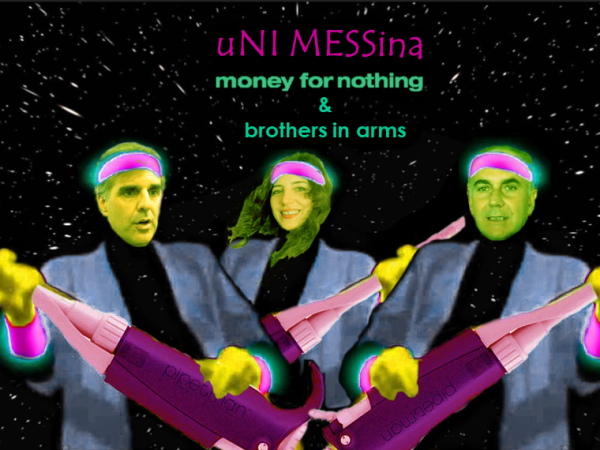
Uni Messina, money for nothing & brothers in arms
“The University of Messina was, in short, a good business that appealed to many, including organized crime on both sides of the Strait of Messina.” – Aneurus Inconstans

I won’t repeat here the already presented outrageous forgeries by Cuzzocrea and Thiemermann, and neither the forgeries Thiemermann published with his other former postdocs, Prabal “Charlie” Chatterjee (now principal lecturer in Pharmacology at University of Brighton, UK) and Nimesh Patel (now reader in medical education at QMUL), and even with the William Harvey Research Ltd co-director Muhammad Magdi Yaqoob (who in turn mentored Ken Suzuki). I also won’t repeat myself here about Thiemermann’s fake papers with David Latchman, the whitewashed Master of Birkbeck.

David Latchman, uncensored
I publish exclusively two uncensored UCL screening panel reports into the David Latchman and Anastasis Stephanou affair. Now we know which papers were investigated and which requested retractions didn’t happen.
You’ll have to read the Friday Shorts for that stuff. That is because thanks to Aneurus and helpful sleuths like Clare Francis and Sholto David, even more fraud in Thiemermann’s papers was found since! So I will show you that new material.
Thiemermann’s PubPeer record stands currently at over 40 fraudulent papers. He never replied to my email, and neither did QMUL. In any case, the university did not sound towards my anonymous colleague like they were keen to investigate anything, except the identity of the PubPeer commenters.
Let’s start with a Cuzzocrea-Thiemermann classic of recycled immunohistochemistry:
Michelle McDonald , Maha Abdelrahman , Salvatore Cuzzocrea , Christoph Thiemermann Tyrphostin reduces the organ injury in haemorrhagic shock: role of inducible nitric oxide synthase Resuscitation (2003) doi: 10.1016/s0300-9572(03)00156-4

Now look at this beauty, it seems someone stole the figures from other people’s papers but needed to edit out the original labellings, which led to pattern duplications:
Salvatore Cuzzocrea , Barbara Pisano , Laura Dugo , Angela Ianaro , Nimesh S A Patel , Rosanna Di Paola , Tiziana Genovese , Prabal K Chatterjee , Massimo Di Rosa , Achille P Caputi, Christoph Thiemermann Rosiglitazone and 15-deoxy-Δ12,14-prostaglandin J2, ligands of the peroxisome proliferator-activated receptor-γ(PPAR-γ), reduce ischaemia/reperfusion injury of the gut British Journal of Pharmacology (2003) doi: 10.1038/sj.bjp.0705419


The Editor-in-Chief of the society-run British Journal of Pharmacology is the WHRI professor Amrita Ahluwalia, of whom you will hear again below.
And here we have Thiemermann as first author, in a rare constellation, probably meant to help his postdoc Chatterjee with last authorship to get a faculty appointment:
Christoph Thiemermann , Nimesh S.A. Patel , Espen O. Kvale , Gillian W. Cockerill , Paul A.J. Brown , Keith N. Stewart , Salvatore Cuzzocrea , Domenico Britti , Helder Mota-Filipe , Prabal K. Chatterjee High Density Lipoprotein (HDL) Reduces Renal Ischemia/Reperfusion Injury Journal of the American Society of Nephrology (2003) doi: 10.1097/01.asn.0000075552.97794.8c

A Shocking case, in a journal where Cuzzocrea and his Messina colleagues published a lot of bad stuff, and where the Editor-in-Chief and Thiemermann’s past collaborator Daniel Remick currently plays silly games denying obvious fraud:
Salvatore Cuzzocrea , Prabal K. Chatterjee , Emanuela Mazzon , Laura Dugo , Angela De Sarro , Fons A. J. Van De Loo , Achille P. Caputi , Christoph Thiemermann Role of Induced Nitric Oxide in the Initiation of the Inflammatory Response After Postischemic Injury Shock (2002) doi: 10.1097/00024382-200208000-00014


1. in figure 6 of Cuzzocrea et al. 2002 BJP, where the same blot describes the effect of PDTC on IkB-a degradation in pleural macrophages.
2. in Figure 6 of Cuzzocrea et al. 1999 EJP, where the same blot describes the effect of GSH on tyrosine nitration in pleural macrophages.“

4. in Figure 3 of Cuzzocrea et al. 1997 Br J Pharm doi: 10.1038/sj.bjp.0701387, where it describes tyrosine nitration in aortic smooth muscle cells.”
These people, eh? But here is the loveliest study, among the recent finds at least:
Ahila Sivarajah , Prabal K. Chatterjee , Nimesh S.A. Patel , Zoran Todorovic , Yoshiyuki Hattori , Paul A.J. Brown , Keith N. Stewart , Helder Mota-Filipe , Salvatore Cuzzocrea, Christoph Thiemermann Agonists of Peroxisome-Proliferator Activated Receptor-Gamma Reduce Renal Ischemia/Reperfusion Injury American Journal of Nephrology (2003) doi: 10.1159/000072088


With time, the quality of image manipulation improved greatly in Thiemermann’s lab. Now it is much more subtle but just as fraudulent:

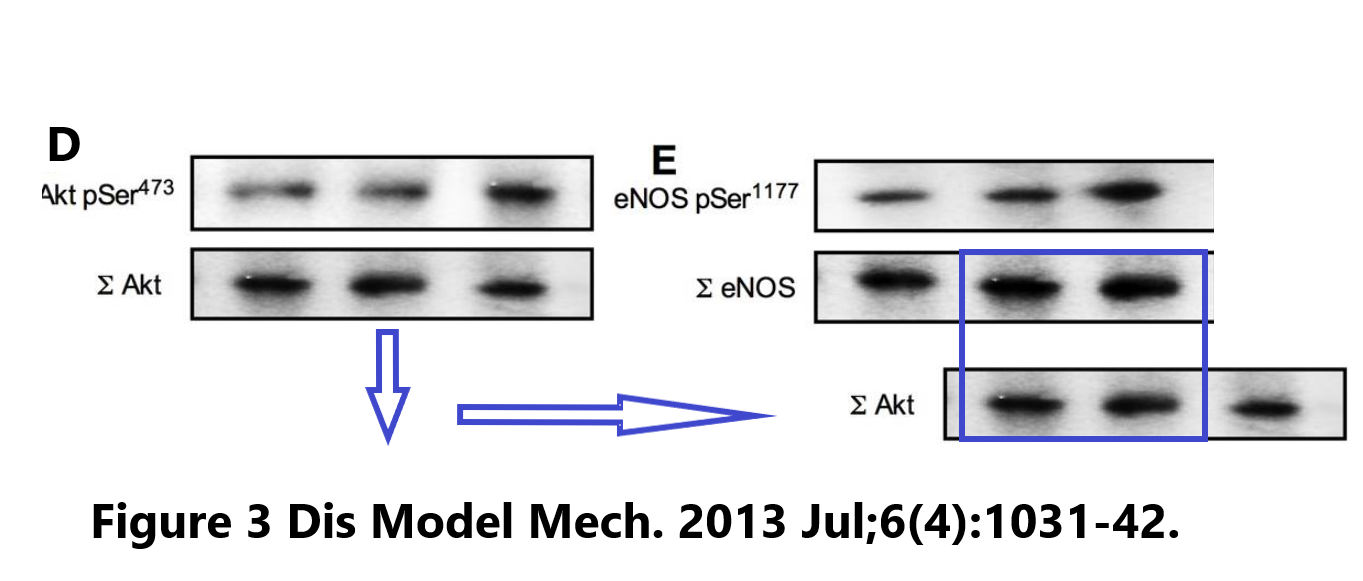


But then again, the Thiemermann lab felt that safe that they started to troll. Here, from last year, they simply copy-paste entire gel figures under different labels:
Shireen Mohammad , Caroline E O’Riordan , Chiara Verra , Eleonora Aimaretti , Gustavo Ferreira Alves , Klaus Dreisch , Johan Evenäs , Patrizia Gena , Angela Tesse , Michael Rützler , Massimo Collino , Giuseppe Calamita , Christoph Thiemermann RG100204, A Novel Aquaporin-9 Inhibitor, Reduces Septic Cardiomyopathy and Multiple Organ Failure in Murine Sepsis Frontiers in Immunology (2022) doi: 10.3389/fimmu.2022.900906

Thiemermann was most likely John Vane’s favourite postdoc. He was installed as CEO of William Harvey Research Ltd in 2003, shortly before Vane’s death. Here is Thiemermann with Vane’s widow, you can see she always liked him also:

The screen of Thiemermann’s papers continues. But rest assured, QMUL is also working behind the scenes, on a massive whitewashing. They just had another major research misocnduct scandal, at the same WHRI. And they dealt with that one also. Read the next chapter.

Dalli & Perretti
Here you will meet another one of John Vane’s proteges, Mauro Perretti, and Perretti’s own PhD student, Jesmond Dalli. Both Perretti and Dalli are WHRI-affiliated professors at QMUL. Also you need to recall Dalli’s postdoc supervisor, the Harvard professor Charles Serhan, whom WHRI so proudly celebrated at its 30th anniversary in 2016. SEVENTY of their papers are being questioned, with fraud allegations in the room.
Perretti is, next to the CEO of William Harvey Research Ltd Thiemermann, one of the directors of this WHRI business arm. He arrived to WHRI in 1991 to do PhD with its co-founder Roderick Flower (who was in turn a PhD student and protege of John Vane). Here is a paper co-authored by Rod:
Egle Solito, Abeda Mulla , John F. Morris , Helen C. Christian , Roderick J. Flower , Julia C. Buckingham Dexamethasone Induces Rapid Serine-Phosphorylation and Membrane Translocation of Annexin 1 in a Human Folliculostellate Cell Line via a Novel Nongenomic Mechanism Involving the Glucocorticoid Receptor, Protein Kinase C, Phosphatidylinositol 3-Kinase, and Mitogen-Activated Protein Kinase Endocrinology (2003) doi: 10.1210/en.2002-220592

As aside, the last author Julia Buckingham is President of Brunel University London and since last year Chair of ICR London. She brings the right qualifications to ICR, you see. Less funny is that she also used to be Chair of Athena SWAN Review Steering Group, deciding on careers of women in science. But I digress.
Thanks to the support of Vane and Flower, Perretti became in 2000 Joint Head of the Centre for Biochemical Pharmacology. In 2015, he became Dean for Research and Research Impact of the Faculty of Medicine and Dentistry at QMUL. Meaning, Perretti, a man with a very questionable attitude to research ethics, was evaluating everyone’s science and performance there. And handling whistleblower complaints. Perretti for sure used his massive power to install his PhD student Dalli as QMUL professor and WHRI group leader.
Before we proceed to the main story (which is mostly about Dalli), it is worth mentioning that also Perretti of course has his own PubPeer record, including with the Nobelist Louis Ignarro. Fiorucci et al 2002 even received an editorial expression of concern in 2008 due to “the apparent duplication in the use of certain figures in the foregoing articles“. Another one of its coauthors was Rod Flower.

Fake data and real pomegranate juice in Nobelist Louis Ignarro’s papers
Louis J. Ignarro knew how to monetize his 1998 Nobel Prize for discovery of nitric oxide as molecular cell signalling agent. He made many millions selling dietary supplement for Herbalife and pomegranate juice for POM Wonderful Company. Some of that found its way (without proper conflict of interest declaration) into Ignarro’s peer reviewed papers. Those,…
Here is Perretti on one of his several fake papers with the Italian cheater Antonello Petrella, professor at the University of Salerno. It was flagged by Elisabeth Bik:
Emanuela Pessolano, Raffaella Belvedere , Valentina Bizzarro, Paola Franco, Iolanda De Marco, Amalia Porta, Alessandra Tosco, Luca Parente, Mauro Perretti, Antonello Petrella Annexin A1 May Induce Pancreatic Cancer Progression as a Key Player of Extracellular Vesicles Effects as Evidenced in the In Vitro MIA PaCa-2 Model System International Journal of Molecular Sciences (2018) doi: 10.3390/ijms19123878


Petrella, intent to dismiss the allegations of data forgery, replied on PubPeer by providing raw data images. Which turned out to be forged as well. Another recent paper by Petrella and Perretti:
Raffaella Belvedere , Elva Morretta , Emanuela Pessolano , Nunzia Novizio , Alessandra Tosco , Amalia Porta , James Whiteford , Mauro Perretti , Amelia Filippelli , Maria Chiara Monti , Antonello Petrella Mesoglycan exerts its fibrinolytic effect through the activation of annexin A2 Journal of Cellular Physiology (2021) doi: 10.1002/jcp.30207


And yes, also here the Patrella team provided hilariously fake raw data:

Perretti remained quiet. Which is probably because he is recovering from extracting himself from a major fraud affair which was supposed to make him and his mentee Dalli very, very rich. The Resolomics scam.
This is where Dalli’s postdoctoral advisor Charles Serhan comes in. On 4 May 2022 Science reported about what could have exploded into a major research fraud affair, but it seems the big men at QMUL and Harvard swiftly brought things under control:
“For 3 decades, biochemist Charles Serhan at Brigham and Women’s Hospital has been the torch bearer for “resolution immunology”—a research field he pioneered after discovering the first molecules that seem to tamp down, or resolve, inflammation, the body’s rapid cellular and chemical response to injuries, infections, and even allergens. Ever since, research on these stop signals, formally known as specialized pro-resolving mediators (SPMs), has exploded.”
The occasion for Science reporting was this publication critical of Serhan’s and Dalli’s findings:
Nils Helge Schebb , Hartmut Kühn , Astrid S. Kahnt , Katharina M. Rund , Valerie B. O’Donnell , Nicolas Flamand , Marc Peters-Golden , Per-Johan Jakobsson , Karsten H. Weylandt , Nadine Rohwer , Robert C. Murphy , Gerd Geisslinger , Garret A. FitzGerald , Julien Hanson , Claes Dahlgren , Mohamad Wessam Alnouri , Stefan Offermanns , Dieter Steinhilber Formation, Signaling and Occurrence of Specialized Pro-Resolving Lipid Mediators-What is the Evidence so far? Frontiers in Pharmacology (2022) doi: 10.3389/fphar.2022.838782
According to Science,
“an international group of 18 scientists including specialists in lipid analysis argued that the studies identifying these molecules in people typically detect them at levels so low they are unlikely to play a major role in resolving inflammation. The critics also found that most studies of human samples merely correlate SPM levels with a phase during the arclike time course of inflammation; data proving SPMs actually resolve it are weak to nonexistent, the authors argue.
The paper’s authors offered an even more damning critique: Protocols developed by Serhan and his collaborators to detect SPMs in body fluids or tissue samples don’t conform to accepted standards, they say. What is provided as proof of SPMs in many papers should actually be interpreted as mere “noise,” they argue.”

The affair began with an earlier criticism by same critics led by the cardiff University professor Valerie O’Donnell, directed at Dalli’s paper Gomez et al Nature Comms 2020 (here its PubPeer thread). The comment was originally submitted two years ago as Matters Arising, but Nature Communications editors rejected it after peer review, and despite recent developments, still refuse to print it. So the critics had to post the letter on the preprint server Zenodo:
Valerie O’Donnell , Nils H Schebb , Ginger L Milne , Michael P Murphy , Christopher P Thomas , Dieter Steinhilber , Stacy G Wendell , Hartmut Kühn , Ian Blair , Robert C Murphy , Bruce A Freeman , Alan R Brash , Garret FitzGerald Failure to apply standard limit-of-detection or limit-of-quantitation criteria to specialized pro-resolving mediator analysis incorrectly characterizes their presence in biological samples Zenodo (2021) doi: 10.5281/zenodo.5766267
Science summed up:
“…the same group together with other specialists in lipid analysis highlighted a paper published by Dalli’s group in 2020 that identified a lipoxin, a resolvin, and a maresin in the serum of people with early rheumatoid arthritis. The paper went on to suggest the SPMs could be used as biomarkers to assess patients’ response to medications. But the critics said Dalli was not setting a limit of detection—a value representing the lowest measurable concentration that provides high confidence a molecule exists. Instead, they say, he used a different method that did not comply with accepted standards for detecting biomolecules. When O’Donnell and colleagues applied the criteria described in the paper to inert methanol and buffer fluid, they found it indicated the presence of lipids where clearly none existed.”
Dalli and his partners were measuring nothing but noise. Of course Serhan and Dalli defended their work, insisting that they were perfectly able to reproduce their results, and even issued a preprint (Dalli et al 2022) to prove it. Not just that: Dalli even found out how to treat COVID-19 with SPMs (Palmas et al, Plos One 2021)! Back then in July 2021, QMUL was so excited, they even issued a press release where Dalli and Perretti were quoted advocating for Resolomics’ fictional “specialised pro-resolving mediators (SPM)” as a cure for COVID-19. The press release was soon after quietly deleted.

Extinguish COVID-19 with hair loss stem cell nano exosomes!
“As pioneers in the field of regenerative medical therapies, we at Direct Biologics are changing the future of medicine.”
Science also mentioned that even Dalli’s collaborators took issue:
“Immunology researcher Derek Gilroy of University College London, who has collaborated with Serhan but is now moving his lab away from SPMs, tells Science he has had a “very negative experience working with these things and seen some data that makes me question whether these things are real.”
Later on, in March 2023, Gilroy published a preprint debunking his own paper with Dalli (Motwani et al Plos One 2017) as partially unreliable:
Natalie ZM Homer, Ruth Andrew, Derek W Gilroy Re-analysis of lipidomic data reveals Specialised Pro-Resolution Lipid Mediators (SPMs) to be lower than quantifiable limits of assay in a human model of resolving inflammation bioRxiv (2023) doi: 10.1101/2023.03.06.530669
“in the interest of transparency and to replace these illustrations with more meaningful images, the original data from our human UV-killed E. coli model were re-analysed by two independent experts. It transpires that the integrated areas of the chromatographic peaks of the SPM lipid mediators were below the amounts that could be reliably either detected and/or quantified using community standards for quantitation.”
Dalli did his own re-analysis, all by himself apparently, and published his own preprint (Dalli 2023) where he accused his critics of “blatant mistakes”.
What happened next was not nice. Professor Sir Mark Caulfield, former WHRI director (for 18 years!) and current Vice Principal for Health for QMUL Faculty of Medicine and Dentistry, decided to step in. Allegedly, he wrote to Gilroy’s employer UCL, asking for Gilroy to be disciplined over his public criticism of Dalli and demands to see the raw data of his own paper. Caulfield didn’t reply to me when asked to deny the allegation.
UCL trachea transplant inquiry: scapegoating, obfuscation and a lost nose
In 2017, UCL invited an external expert commission to investigate the deadly trachea transplants performed by the former UCL honorary professor Paolo Macchiarini. An already sacked UCL nanotechnology professor, Alexander Seifalian, whose lab made the two UCL plastic POSS-PCU tracheas in 2011, was announced as the main culprit on UCL side. All this despite Seifalian’s…
Caulfield’s intervention was required because this all was not some academic dispute – there was serious money involved. Dalli and Perretti (the latter was at that time Dean for Research at the medical school) founded on 11 September 2017 the QMUL spin-off company Resolomics, to exploit their research on so-called resolvins.
In spring of 2022 the Resolomics website went offline, the company itself was recorded as “Dissolved” on 17 January 2023. All that’s left is its archived website. Dalli was listed as “Founder, Director, and Chief Scientific Officer”, Perretti, who insisted in Science that “SPMs exist, they have been characterized in multiple ways, they have been synthesized, and they are active” was listed as “Founder, Director, and Chairman of Scientific Advisory Board” until he resigned on 30 July 2019.

The university varyingly held 25-50% of the shares and voting rights, Perretti held the same, and Dalli had 50-75% of shares and voting rights. Resolomics used to advertise:
“LMScan™ is a novel, functional biomarker discovery platform for rapid analysis of pro-resolving mechanisms in inflammatory diseases
LMScan™ determines the identity and concentrations of bioactive lipid mediators in biological samples. This enables the characterization of novel ‘signatures’, with powerful diagnostic and prognostic value, as well as those associated with response to therapy. It underpins the company’s growing portfolio of lipid mediator ‘signatures’ (LMS) or ‘fingerprints’ as Companion Diagnostics (CDx).”
And they used this to sell a therapy:
“ResoCell™, is a proprietary cell-based therapeutic platform which enables reprogramming of patient cells to limit inflammatory diseases.”
Thing is, there is no record of “Resocell” at the UK Intellectual Property Office. Still, Dalli has 15 other patents on resolvins from his time as a PhD student at QMUL, during his post-doc at Harvard and since 2014 when he returned to QMUL.
The Crooks of CRUK
Cancer Research UK is a charity which relies on donations, volunteer work and fundraising. What if these citizens knew their money goes to fund bad science?
In December 2021, Dalli sounded convinced that he will prove all his critics wrong. He wrote in an email which was shared with me:
“The technology we are proposing as part of ResoCell will be an autologous cell therapy whereby we are aiming to reprogram the patient’s own cells by leveraging the biology of endogenous molecules. The technology will not involve genetic manipulation. This is a novel approach which has not yet been employed elsewhere and the manuscript detailing the pre-clinical proof of concept studies we have performed is currently in review and we are presently addressing reviewers comments. Therefore I am afraid I am not in a position to share this with you at this stage. We are aiming to resubmit by mid/end of January and we hope that the manuscript will be accepted soon after since the comments we received were positive. At that stage I would be delighted to share the publication with you if it would still be of interest.
I am sorry I cannot provide any further detail at this stage. We are still in the process of developing this technology and we are hoping to be able to reach clinical trial stage in the next 2-3 years.”
It is not clear where that paper ended up, maybe where Dalli’s company is now. Instead, the WHRI professor had to issue embarrassing corrections, replacing data of which he openly admitted that it was completely made-up.
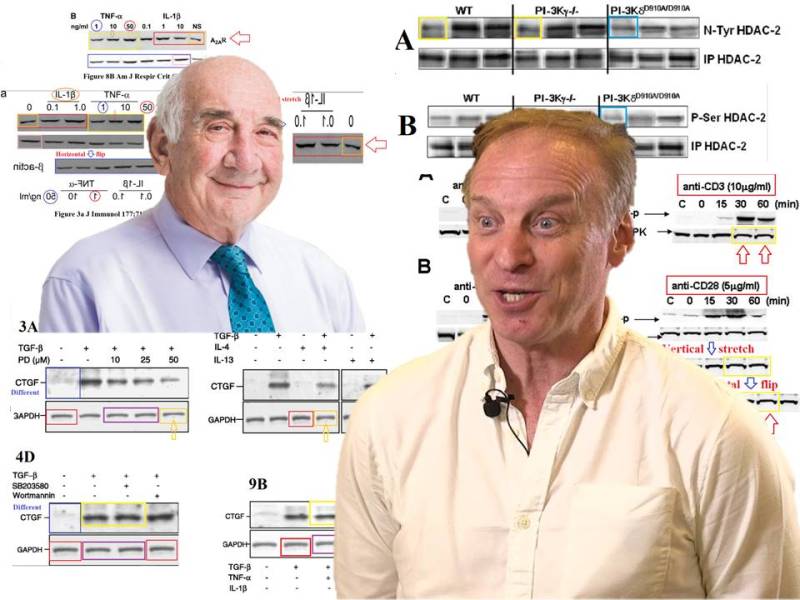
Imperial Adcock – from Barnes to Iran!
“the College would have been well within its rights to reject all of your allegations…”
On several PubPeer threads, the user Trifurcula sanctibenedicti wrote in July 2022:
“This article is one of a group of around 70 which contain LC/MS/MS data on “specialized proresolving mediators” performed by the Dalli and Serhan laboratories, published between 2015-2019. In these, mass spectrometry chromatograms appear abnormal with odd-shaped peaks and features indicative of “cut and paste”. These figures were recently confirmed by Dr Serhan to be “illustrations”.
Here is one which was corrected:
Mai NTH, Dobbs N, Phu NH, Colas RA, Thao LTP, Thuong NTT, Nghia HDT, Hanh NHH, Hang NT, Heemskerk AD, Day JN, Ly L, Thu DDA, Merson L, Kestelyn E, Wolbers M, Geskus R, Summers D, Chau NVV, Dalli J, Thwaites GE. A randomised double blind placebo controlled phase 2 trial of adjunctive aspirin for tuberculous meningitis in HIV-uninfected adults. eLife (2018). doi: 10.7554/eLife.33478.

The Correction from 21 March 2023 stated:
“We have recently been notified via PubPeer that the illustration we employed in our publications to denote presence of lipid mediators in the samples of interest has been interpreted as raw data. As this panel was strictly meant to be an illustration, we provide a revised figure presenting chromatograms supporting the presence of each of the reported mediators.”
You see, the peer-reviewed original research figures were nothing but “illustrations“. If you don’t like those pictures, Dalli has many more. The Correction also repeated the warning from the original paper that the raw data will only be shared with Dalli’s trusted friends:
“The objective is not to restrict access to data, but to monitor who uses the data and for what purpose, and to ensure those responsible for collecting and curating the data are appropriately acknowledged by those using it. Therefore, those wishing to acquire the anonymized dataset, including LC-MS/MS data, from which the results presented in this manuscript were produced should email the trial Chief Investigator and corresponding author, Professor Guy Thwaites”
Rather sad that eLife reneged on its own policy of open data and research ethics.
Also this paper, with same recycled “illustrations”, got corrected (worth noting that its last author Costantino Pitzalis is WHRI’s Deputy Director):
Magdalena B. Flak , Romain A. Colas , Estefanía Muñoz-Atienza , Michael A. Curtis , Jesmond Dalli, Costantino Pitzalis Inflammatory arthritis disrupts gut resolution mechanisms, promoting barrier breakdown by Porphyromonas gingivalis JCI Insight (2019) doi: 10.1172/jci.insight.125191
The Corrigendum from 24 October 2022 declared:
“The authors recently became aware that representative illustrations presented in Figure 2A might be mistaken for original data. As this panel was used strictly for demonstrative purposes, it has been removed from the figure for clarity.”

Requiem for Celixir
How the Nobel Prize winner Sir Martin Evans and the lying crook Ajan Reginald almost succeeded, were it not for Patricia Murray.
Dalli is very slowly correcting his 70 papers at glacial pace, always admitting that the data was indeed made-up. I guess the idea is to dely the resolution of the affair by issuing corrections until his retirement. For perspective: Dalli is born 1980, aged merely 42.
Jose Luis Ramirez , Giselle De Almeida Oliveira , Eric Calvo , Jesmond Dalli , Romain A. Colas , Charles N. Serhan, Jose M. Ribeiro , Carolina Barillas-Mury A mosquito lipoxin/lipocalin complex mediates innate immune priming in Anopheles gambiae Nature Communications (2015) doi: 10.1038/ncomms8403

The Correction, issued on 18 July 2023, stated:
“The original version of this Article contained an error in Figure 3 legend, which failed to indicate that panel b is an illustration derived, by not directly reproduced, from the original mass spectrum output. The correct Figure 3b legend should read “Illustrations derived from the chromatographs obtained by Multiple Reaction Monitoring (MRM) of the parent ion (Q1) m/z 359 and a diagnostic daughter ion (Q3) for deuterium-labelled (d8) LXA4 and LXB4”.”
Allegedly, as a source informed me, after several internal investigations at QMUL with eminent external advisors, the allegations of scientific misconduct were upheld. But not against Dalli! He was apparently exonerated by the disciplinary panel. I am sure they found some scapegoats, whistleblowers probably. In any case, Dalli is recruiting postdocs right now for his SPM research. Never mind that he, according to my information, has been banned by the Wellcome Trust from applying for grants for 3 years.

Imperial Piss-Take
“Having reviewed the Conflict of Interest disclosures made by Professor Frost, Professor Holmes and Dr Garcia-Perez, and having also reviewed additional information concerning their company, Melico, […] the College is satisfied that they have no undisclosed or unmanageable conflicts of interests” – Arts Bachelor (Honours)
Perretti’s recently appointed successor as medical faculty’s Dean for Research is the former Co-Director of WHRI (2016-2020), Amrita Ahluwalia. She is also a collaborator of Dalli. Quite a number of their common papers are discussed on PubPeer, and she is even the last author there. Poor Professor Ahluwalia, she always choses the wrong collaborators.
Dakshina M. Jandhyala, Amrita Ahluwalia , Jennifer J. Schimmel , Arlin B. Rogers , John M. Leong , Cheleste M. Thorpe Activation of the Classical Mitogen-Activated Protein Kinases Is Part of the Shiga Toxin-Induced Ribotoxic Stress Response and May Contribute to Shiga Toxin-Induced Inflammation Infection and Immunity (2016) doi: 10.1128/iai.00977-15

QMUL’s new Dean of Research Ahluwalia is now investigating Thiemermann’s papers, which she said “will take some considerable time“. Expect the same outcome as with Dalli. Here is her paper with Dalli and Thiemermann, with same made-up resolvin peaks:
Jianmin Chen , Alexander J. P. Hamers , Michaela Finsterbusch , Gianmichele Massimo , Maleeha Zafar , Roger Corder , Romain A. Colas , Jesmond Dalli , Christoph Thiemermann , Amrita Ahluwalia Endogenously generated arachidonate-derived ligands for TRPV1 induce cardiac protection in sepsis The FASEB Journal (2018) doi: 10.1096/fj.201701303r

FASEB is a learned society which never learned that fraud is wrong. So don’t expect them to even issue a correction despite Dalli’s admission, for that paper and all others:
“To address the point related to the ‘illustration’. These are indeed not quantitative in nature and do not report raw chromatography data as can be easily gleaned from many features, not least the lack of a quantitative scale in cps. Their scope is simply to illustrate the presence of molecules of interest in as much as an illustration of a mouse in a figure is not reporting the mouse that was used in an experiment but rather denoting that mice were used.“
There is no data in Dalli’s papers, just noise and illustrations. But QMUL keeps making sure none of them will be retracted.

O du lieber Augustine MK Choi
Augustine Choi is Dean of Weill Cornell and a misunderstood genius. He discovered that carbon monoxide is a cure for all possible diseases, just add a bit of Photoshop.
Oh, and one of Dalli’s and Serhan’s collaborators was Augustin MK Choi, who recently resigned as dean of Weill Cornell over fraud in his papers. The team worked both on the resolvin scam and Choi’s carbon monoxide bullshit. Dalli and Serhan also collaborated with Catherine Godson of University College Dublin, protege of its former president (and current Imperial College London president) Hugh Brady. Because cheaters are always attracted to each other.
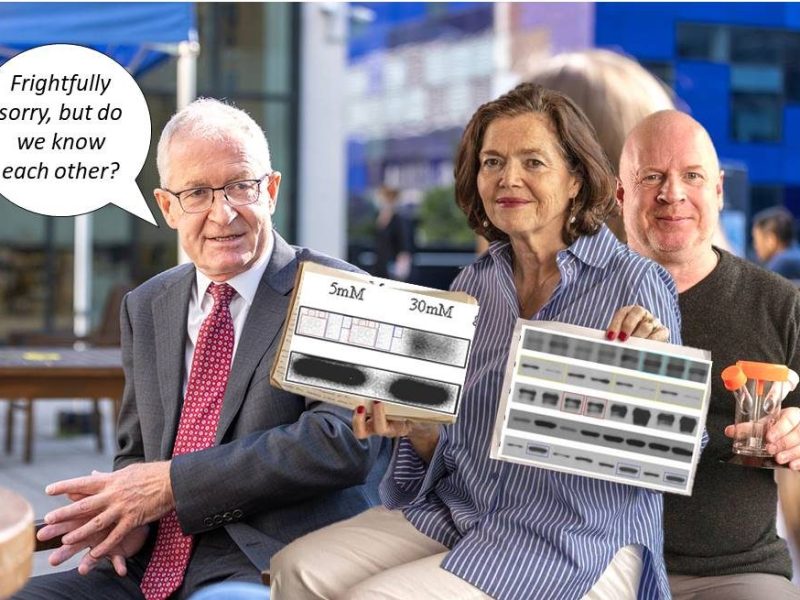
Imperial Irishman Hugh Brady (and his Dublin leprechauns)
When your Irish past catches up with your English future.
Epilogue
The expectations for QMUL and WHRI to do anything at all about their own fraud are less than nil. Former WHRI director and current QMUL Vice Principal for Health Mark Caulfield is now the boss of all biomedicine at QMUL, including of all the fraud-peddling institutes like WHRI, Barts, Blizard etc. Caulfield’s successor as WHRI director, Panos Deloukas, is unconditionally loyal to the big Englishman who recruited him to WHRI in 2013. WHRI’s deputy director Costantino Pitzalis is coauthor on Dalli’s fraudulent papers. Perretti’s successor as QMUL medicine’s Dean for Research, Amrita Ahluwalia, is the last author on several of Dalli’s fraudulent papers.
Thiemermann carries out contract animal research for pharma industry and the big pharma money flows into Thiemermann and Perretti’s labs at WHRI. Money makes you untouchable.
Nothing at all will happen. Nobody will lose their jobs, except for the whistleblowers and other “troublemakers”. There probably won’t even be a single retraction.
Gosh, what shall one do with WHRI….
I thank all my donors for supporting my journalism. You can be one of them!
Make a one-time donation:
I thank all my donors for supporting my journalism. You can be one of them!
Make a monthly donation:
Choose an amount
Or enter a custom amount
Your contribution is appreciated.
Your contribution is appreciated.
DonateDonate monthly
 For Better Science
David Latchman swears by them.
Can Queen Mary University of London afford them?
“Latchman namely engaged one of the most expensive London law firms, Mishcon de Reya, to help UCL with the investigation of his papers. The lawyers according to a source even got to edit the final misconduct reports.”
https://www.mishcon.com/
David Latchman swears by them. Able to threaten University of London.
Not cheap, and recently fined £232,500 for breeching money laundering rules. Sound like the very kind of lawyers when you don’t want too look into the abyss of serial faking, and the serial covering up of faking.
https://www.lawgazette.co.uk/news/mishcon-de-reya-fined-232500-over-numerous-aml-failings/5111049.article
LikeLike
The most likely outcome is that we will not hear anything from Queen Mary University of London about Professors Christoph Thiemermann, Mauro Perritt, or Ken Suzuki.
If we do hear anything it might be a robust defence that the images used time and again, often for different experiments, are only “representative”, and that such behaviour is time honoured and commonplace in pharmacology, and to a lesser extent in “regenerative medicine”.
LikeLike
“Thiemermann’s PubPeer record stands currently at over 40 fraudulent papers.”
54 papers. Any advance on 54?
https://pubpeer.com/search?q=thiemermann
LikeLike
Or, the forriners (not German of course) did it!
LikeLike
2 Germans.
https://pubpeer.com/publications/39FBADA02D2EC3D1560D7AEC273C54
LikeLike
Is AI getting there? Does it analyse the data. This is what is churns out. No different than the QMUL self-praising websites. The piece below is written largely on what QMUL has published.
Rubbish in, rubbish out.
“Professor Christoph Thiemermann is a distinguished educator and scientist who is currently serving as the Centre Lead for Translational Medicine & Therapeutics at the William Harvey Research Institute (WHRI) at Queen Mary University of London 1. He is an internationally recognized expert in pathophysiology and experimental therapy of shock and ischemia-reperfusion injury with expertise in target discovery and evaluation of the efficacy of drugs in small animal models 1. He has published more than 470 scientific articles in peer-reviewed scientific journals, which have been cited more than 36,000 times 1. He has also received several awards for his research, including the Sandoz Prize (British Pharmacological Society 1994), Young Investigator Award of the Surgical Infection Society Europe (1999), the Menarini-Award for CV Research (2001), and the Albert Nelson Marquis Lifetime Achievement Award (2018) 12.”
Present Pubpeer record Christoph Thiemermann.
https://pubpeer.com/search?q=thiemermann
A self-interested, defensive culture will likely throw its self-praising websites at any critics. In effect its websites about its high and mighty are propaganda. They could come back to haunt QMUL so perhaps QMUL should start deleting them now.
LikeLike
“Now look at this beauty, it seems someone stole the figures from other people’s papers but needed to edit out the original labellings, which led to pattern duplications:
Salvatore Cuzzocrea , Barbara Pisano , Laura Dugo , Angela Ianaro , Nimesh S A Patel , Rosanna Di Paola , Tiziana Genovese , Prabal K Chatterjee , Massimo Di Rosa , Achille P Caputi, Christoph Thiemermann Rosiglitazone and 15-deoxy-Δ12,14-prostaglandin J2, ligands of the peroxisome proliferator-activated receptor-γ(PPAR-γ), reduce ischaemia/reperfusion injury of the gut British Journal of Pharmacology (2003) doi: 10.1038/sj.bjp.0705419”
I wonder if those images are lifted from standard textbooks, rather than publications from journals, in that field. Text book images are likely to have labellings, textbooks are the guiding light, the images must be true. Any way, it’s a theory.
LikeLike
Useful phrases in academia.
Fight tooth and nail
The phrase fight tooth and nail comes from the descriptive imagery of a wild beast in a fierce battle, using its teeth and nails (or claws) as weapons.
It was used in Sir Thomas More’s work called “In a Dialogue of Comfort and Tribulation”:
“They would fayne kepe them as long as euer they mighte, euen with tooth and nayle.”
This was in 1535, but the phrase never really took off until the 1700s.
Usage.
Queen Mary University of London will be fighting tooth and nail to stop any corrections, or any retractions, of papers containing the same images representing different experimental conditions.
LikeLike
“Of course WHRI is not entirely non-profit, it has a business end called William Harvey Research Ltd, and this is where Sir John installed the most toxic of his proteges as directors: the German Chris Thiemermann and the Italian Mauro Perretti.”
Pubpeer record stands at 57.
https://pubpeer.com/search?q=thiemermann
A business engaged in practices which make money, but which are not true and accurate.
https://www.cps.gov.uk/legal-guidance/money-laundering-offences
“Money laundering offences are found in Part 7 of Proceeds of Crime Act 2002 (‘POCA’).
Money laundering describes offences concerning the possession, concealment, conversion, transfer or making of arrangements relating to the proceeds of crime. This is not limited to money or cash.
Definitions
Money laundering is defined in the POCA as “the process by which the proceeds of crime are converted into assets which appear to have a legitimate origin, so that they can be retained permanently or recycled into further criminal enterprises”.
Money laundering can be broken down into two categories:
Those who commit offences and then launder the proceeds of those criminal offences. The criminal offences are referred to as “predicate offences”.
Those whose only criminal involvement is to launder the proceeds of crime committed by others.”
LikeLike
2013 QMUL publication. Pubpeer comments started 2014, more accumulated since then.
Now video analysis. Scroll up to see earlier comments. Is it all a mirage?
https://pubpeer.com/publications/B5F23105E2819B01007B9485C13C2A#15
LikeLike
Silence from Queen Mary University London.
It will soon be Christmas, then Easter, then the summer holidays and finitum.
LikeLike
Aneurus inconstans uncovers more Professor Christoph Thiemermann, QMUL, fakes.
https://pubpeer.com/search?q=thiemermann
I write fakes because another explanation escapes me. Professor Christoph Thiemermann has had ample time and opportunity to assuage people’s doubts about his work, but has not taken advantage of Pubpeer, or other platforms, to engage in scientific discourse and explain the problematic data. Scientists are meant to be in response mode.
Nearly Christmas so QMUL’s wall of silence has paid off. Admit to nothing is the QMUL line.
LikeLike
Professor Christoph Thiemermann is so kind to mice and the data are dodgy. What was the point?
https://pubpeer.com/publications/D667186D2ED12E79733956DC1003DC
LikeLike
I see that QMUL is doing its bit to support the British film industry. Perhaps it will win a BAFTA.
https://pubpeer.com/publications/B454E1C2F826A6100A00179E265071#4
LikeLike
Professor Christoph Thiemermann, QMUL, up to 66 problematic publications, and may God all those who sail in them!
https://pubpeer.com/search?q=Thiemermann
It is already December, which in English academia counts as Christmas, so QMUL has won by admitting to no fraud by Christmas!
The higher-ups are already packing for their Christmas holidays, won’t come back until mid-January 2024. All will be forgotten.
LikeLiked by 1 person
The game of “Christmas”, often played by universities and journal editors, is superficially like “Mornington Crescent” except it does not require any skill, and is not humourous.
https://en.m.wikipedia.org/wiki/Mornington_Crescent_(game)
“The objective of Mornington Crescent is to give the appearance of a game of skill and strategy, with complex and long-winded rules and strategies, to parody games in which similarly circuitous systems have evolved. The apparent rules are fictional, and its appeal to audiences lies in the ability of players to create an entertaining illusion of competitive gameplay.[2]”
LikeLike
Recently, I have been receiving automated Thanksgiving “out of office” replies from journal editors and universities in the US, warning that they will take some time to reply. Quite amusing, as if they ever reply anyway.
LikeLike
I’m done analyzing Thimermann’s papers. Here is the final outcome:
Christoph Thiemermann 72, Massimo Collino 30, Nimesh S. A. Patel 26, Prabal K. Chatterjee 19, Roberto Fantozzi 15, Muhammed M. Yaqoob 13, Manuela Aragno 9, Elisa Benetti 8, Fausto Chiazza, Mara Rogazzo 7, Sina M. Coldewey 6, Gareth S. D. Purvis 6, Raffaella Mastrocola 6.
LikeLike
As it happens, Guido Kroemer also has around 70 papers on PubPeer. These two great German men need to meet.
LikeLike
I declare that QMUL has won. It is already way past Christmas for British academics and QMUL has managed to keep quiet about Christoph Thiemermann’s faking.
Nice example here, which drags in a clinician as the senior author.
https://pubpeer.com/publications/694B817577A1F85F99998D118E96CC#6
A British psychiatrist was struck off the medical register for plagiarism in a book.
https://www.theguardian.com/lifeandstyle/2008/oct/24/raj-persaud-psychiatry-maudsley
LikeLike
18 January 2024 Retraction for Christoph Thiemermann, QMUL
https://pubpeer.com/publications/09D7494112FC89177B3A34C9992B83#3
LikeLike
” The authors were unable to provide raw images and documental proof of ethical approval”
Cuzzo admits to have tortured rats illegally, without an ethics approval. And to have faked the results afterwards.
LikeLike
If you’re going to fake results in the end, why torture rats at all? (Presumably for fun.)
LikeLike
You never know what turns these people on.
LikeLike
“None of the authors have responded to any correspondence from the editor/publisher about this retraction.”
Apparently, they do not give a damn. Why should they!
LikeLike
EXPRESSION OF CONCERN, 19 January 2024, to Sivarajah et al. 2003 Am J Nephrol: https://karger.com/ajn/article/doi/10.1159/000536261/894477/Expression-of-concern-Agonists-of-Peroxisome
https://pubpeer.com/publications/FE9D4555402AAF705C8E00ABFDB745
LikeLike
01 March 2024 retraction.
https://onlinelibrary.wiley.com/doi/10.1002/jcp.31233
Retraction: “Mesoglycan exerts its fibrinolytic effect through the activation of annexin A2” by Raffaella Belvedere, Elva Morretta, Emanuela Pessolano, Nunzia Novizio, Alessandra Tosco, Amalia Porta, James Whiteford, Mauro Perretti, Amelia Filippelli, Maria Chiara Monti, Antonello Petrella, J Cell Physiol. 2020, 236: 4926–4943. The above article, published online on 7 December 2020 in Wiley Online Library (https://onlinelibrary.wiley.com/doi/full/10.1002/jcp.30207
The retraction has been agreed due to concerns raised by third parties. Some flaws and inconsistencies between results presented and experimental methods described were found. Specifically, manipulations have been detected affecting the Western Blot experiment presented in Figure 3a, and the microscopy images presented in Figure 5 and Figure S7. The corresponding author, Antonello Petrella, acknowledged not having noticed the anomalies at earlier stages and collaborated with the investigation.
The original experimental data related to the concerns identified were no longer available; the authors have performed new Western Blot experiments. However, based on the editorial evaluation, the provided material failed to adequately address the concerns. For instance, the data intended to replicate the findings in Figure 3a were provided at a quality too low to ensure its accuracy. Furthermore, the concerns regarding the manipulation of microscopy images in Figure 5 and Figure S7 remained entirely unaddressed. Accordingly, the editors no longer have confidence in the integrity of the data presented in the article and consider the conclusions to be invalid.
Antonello Petrella, on behalf of all authors, believes that the conclusions of the article are not affected by the identified issues, in part also corroborated by the new data; all authors disagree with the decision to retract the article.
LikeLike
Third retraction for Professor Christoph Thiemermann.
https://pubpeer.com/publications/B454E1C2F826A6100A00179E265071#5
Two retractions before that one.
http://retractiondatabase.org/RetractionSearch.aspx?AspxAutoDetectCookieSupport=1#?AspxAutoDetectCookieSupport%3d1%26auth%3dThiemermann
LikeLike
2024 Expression of Concern for Thiemermann and another German in British Journal of Pharmacology, where the editor-in-chief is no longer at QMUL
https://bpspubs.onlinelibrary.wiley.com/doi/10.1111/bph.16486
LikeLike
27 June 2024, 5th retraction for Professor Christoph Thiemermann.
PubPeer – Pioglitazone improves lipid and insulin levels in overweight…
4 previous retractions.
Retraction Watch Database (retractiondatabase.org)
Important to keep tabs.
Queen Mary College London still admits to nothing. That’s the best policy. Keep it up!
LikeLiked by 1 person
Another Expression of Concern for Christoph Thiemermann.
https://journals.sagepub.com/doi/10.1177/03946320241265612
LikeLike
17 November 2024 Christoph Thiemermann retraction.
RETRACTION: Pyrrolidine Dithiocarbamate Attenuates the Development of Acute and Chronic Inflammation – British Journal of Pharmacology – Wiley Online Library
LikeLike
Fresh Expression of Concern for Christoph Thiemermann, QMUL.
https://bpspubs.onlinelibrary.wiley.com/doi/10.1111/bph.17421
LikeLike
RETRACTION to Wall et al. 2019 Frontiers in Immunology, 19 December 2024:
PubPeer – Modeling Cardiac Dysfunction Following Traumatic Hemorrhage…
Frontiers | Retraction: Modeling Cardiac Dysfunction Following Traumatic Hemorrhage Injury: Impact on Myocardial Integrity
This is the 7th retraction for Christoph Thiemermann, but four more are already scheduled by Frontiers and will come in the next days/weeks.
LikeLike