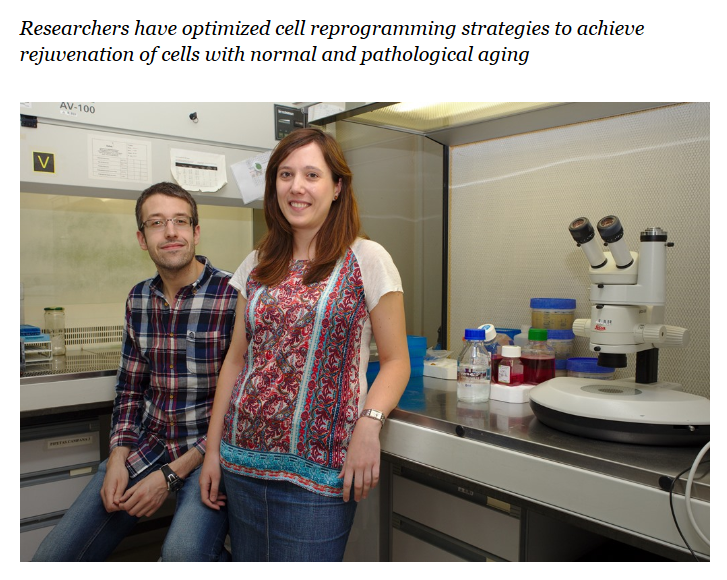

Boom, the 2015 Nature Cell Biology paper by the famous, award-winning and now fugitive Spanish cancer and ageing researcher Carlos Lopez-Otin and his US partner George Q Daley, stem cell titan and dean of Harvard Medical School, is retracted. That happens because correct original data was unavailable, prompted by a prolonged debate on PubPeer (which in turn followed my reporting on Lopez-Otin’s data integrity practices), which established that the figures do not match what the authors deposited as supplement.
The paper Soria-Valles et al 2015 established the role of the transcription factor protein NF-kB in cellular senescence and cell reprogramming, while offering a potential cure to child patients suffering from the deadly premature ageing syndrome, such as Néstor–Guillermo or Hutchinson–Gilford progeria. Under this premise, the impactful Nature-themed paper earned Lopez-Otin in 2017 an ERC grant of €2.5 million, for a project named “Deconstructing Ageing: from molecular mechanisms to intervention strategies“. Earlier this year however, Lopez-Otin abandoned his ERC funded lab at University of Oviedo and escaped to Paris, to stay with his Photoshop expert friend Guido Kroemer. If past behaviour is anything to go by, ERC will now probably again play three monkeys and pretend that Lopez-Otin is still in Spain and his grant-deciding Nature Cell Biology paper was never retracted.
Another Soria-Valles et al paper from Daley lab, which proposed a way to produce haematopoietic stem cells via iPS technology and save people with leukaemia, was meant to be already published, but it is not even submitted and might never be. This and the retracted study’s first author Clara Soria-Valles was a former PhD student of Lopez-Otin, funded by EMBO postdoctoral fellowship and delegated to the Harvard labs of Daley and his junior partner Thorsten Schlaeger, to learn cellular reprogramming technique. Daley and Schlaeger are reported to be all but ready to apply the blood cell making technique in the clinic, at Boston Children’s Hospital, but now nobody knows if Soria-Valles’ preclinical data is anywhere near reproducible.
It is indeed difficult to find out what results still might be reliable. Soria-Valles disappeared already in April 2018 on a medical leave, though Daley still pays her (neither Daley nor Harvard normally pays any medical leaves for other sick lab members). Nobody else on that manuscript is available, because the Schlaeger lab people involved also left since. Money to try and reproduce it is not an issue though: the research project was funded from Daley’s biggest grant, the NHLBI Progenitor Cell Translational Consortium (NIH U01), which is worth almost $50 million.
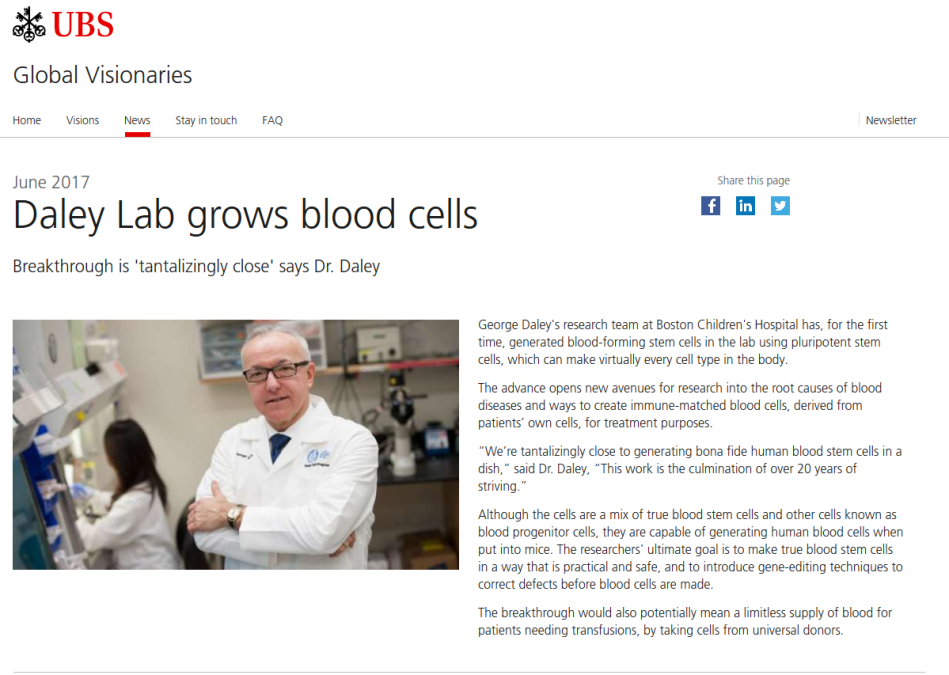
As I was informed, that Soria-Valles paper on haematopoietic reprogramming was meant to be originally submitted to the elite Cell family journal Cell Stem Cell (this is how the circulated draft was labelled in April 2018). Later on, roughly in August 2018, when my article appeared, the chosen target journal was Stem Cell Reports (published by International Society for Stem Cell Research, ISSCR). For someone like Daley this is a huge status reduction of journal venue. The results were presented earlier by Soria-Valles at the ISSCR annual meeting in 2017:
INTEGRATION-FREE SYSTEM FOR GENERATION OF HEMATOPOIETIC STEM AND PROGENITOR CELLS FROM HUMAN PLURIPOTENT STEM CELLS
Soria-Valles, Clara 1 , Sugimura, Ryohichi 1 , Kumar Jha, Deepak 1 , Lummertz da Rocha, Edroaldo 1 and Daley, George 2
1 Boston Children’s Hospital, Boston, MA, USA, 2 Stem Cell Program, Boston Children´s Hospital, Boston, MA, USA
The generation of hematopoietic stem cells (HSCs) from human pluripotent stem cells (PSCs) constitutes a valuable tool with promising applications for research and therapy. However, derivation of HSCs with in vivo long-term engraftment and multi-lineage potential remains elusive. We have described a combinatorial approach, based on the directed differentiation of hemogenic endothelium (HE) and transduction with five transcription factors (TF) (RUNX1, ERG, LCOR, HOXA5 and HOXA9) expressed in lentiviral vectors that allowed the conversion of human PSCs into hematopoietic stem
and progenitor cells (HSPCs). The resulted cells exhibited long-term and multi-lineage hematopoietic capabilities when injected into irradiated immune-deficient mice.
Despite this proof of principle, the engineered cells have a limited self-renewal capacity due to the integration of the transgenes and are still molecularly distinct from bona fide HSCs. Thus, in an attempt to achieve bona fide HSCs and make them safer for future therapeutic interventions, we have established integration-free systems that have shown comparable efficiency to the previously developed lentiviral strategy through in vitro and in vivo experiments. Therefore, this new method may overcome some limitations of the lentiviral approach and hold the key for future regenerative medicine advances in blood diseases.
Soria-Valles however was not present at the 2018 ISSCR meeting (a conference which I incidentally wrote about here, in a story about another dishonest stem cell researcher, who was set to be ISSCR 2018 keynote speaker). Nobody knows how much of Soria-Valles’ claim to make haematopoietic stem cells via iPS technology is still valid. Sources were quoted with estimates of too low a yield or even not sure of producing any haematopoietic stem cells at all. Yet just this September 2018, Daley spoke at a lecture at Dana-Farber-Institute of his future Stem Cell Reports paper and even of his plans to apply the method to treat paediatric patients with congenital bone marrow deficiencies, in particular Shwachman Diamond Syndrome and Diamond Blackfan Anemia.
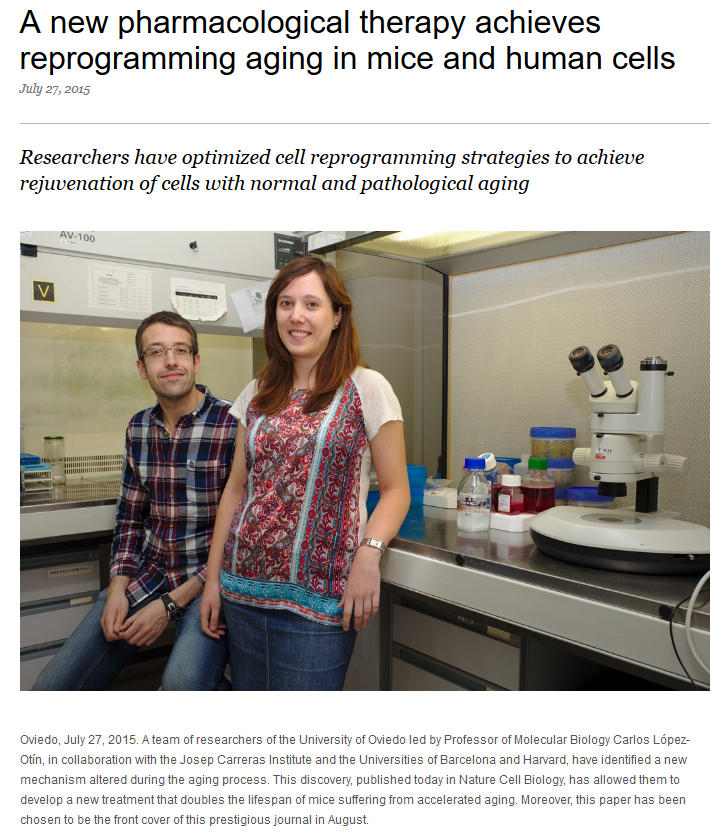
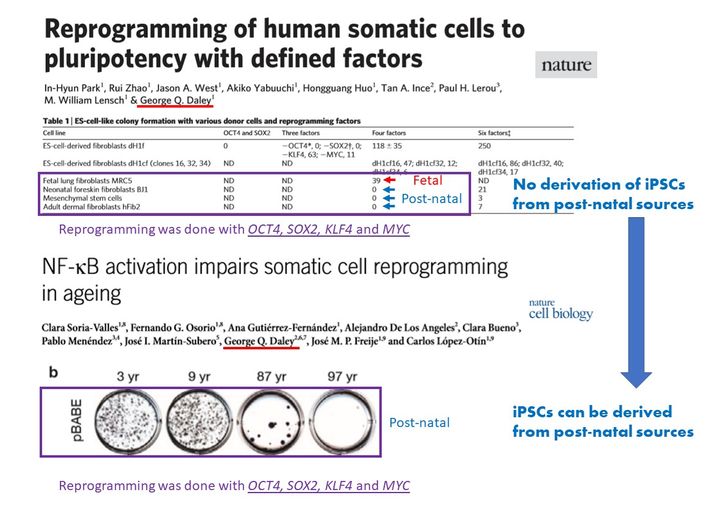
But now back to the main subject, the Nature Cell Biology retraction. The journal warned readers on 4 October 2018 with an editorial note that “that the reliability of data presented in this manuscript has been the subject of criticisms“. 4 December 2018 was the deadline imposed by the publisher to submit signatures from co-authors for a retraction. Lopez-Otin’s Oviedo colleague Jose Maria Perez Freije collected the signatures of all authors, including the elusive Soria-Valles, and submitted them to the publisher Nature.
This is the retraction notice:
“We, the authors, are retracting this Article due to issues that have come to our attention regarding data availability, data description and figure assembly. Specifically, original numerical data are not available for the majority of the graphs presented in the paper. Although original data were available for most EMSA and immunoblot experiments, those corresponding to the published EMSA data of Supplementary Fig. 8a, the independent replicate immunoblots of Fig. 8b and Supplementary Fig. 1e, and the independent replicate EMSA data of Supplementary Figs 6e, 8b, 8c and 8d, are unavailable. Mistakes were detected in the presentation of Figs 3c, 4i and Supplementary Figs 6a, 8a, 8d, 9, and in some cases the β-actin immunoblots were erroneously described in the figure legends as loading controls, rather than as sample processing controls that were run on separate gels. Although we, the authors, believe that the key findings of the paper are still valid, given the issues with data availability we have concluded that the most appropriate course of action is to retract the Article. We deeply regret these errors and apologize to the scientific community for any confusion this publication may have caused. All authors agree with the retraction.”
This slide show illustrates the data issues mentioned in the retraction notice.
And this slide show illustrates the issues the retraction notice chose not to address at all.
In Daley’s lab, more things do not work as expected. His most famous Nature paper, Park et al 2008 , meant to compete with Shinya Yamanaka for induced pluripotency (iPS) fame and the Nobel Prize, is being plucked apart on PubPeer, accused of not having delivered any pluripotency as such. The exogenously delivered reprogramming transgenes remained namely active, while they were supposed to become silenced as cells’ own pluripotency genes become active. Also, Daley’s method of using Large T Antigen and telomerase TERT in addition to Yamanaka’s four iPS reprogramming factors proved rather counterproductive.
For someone like Daley, all of this is not the end of the world. There are always new windows of opportunity. Just as Chinese scientist Jiankui He caused a worldwide scandal with his unethical human experiments with CRISPR-modified babies, Daley (and his Harvard colleague George Church) offered a more enthusiastic view: America cannot afford a CRISPR gap to China. Daley suggested that Harvard should take the lead and apply CRISPR eugenics to ensure the survival of the human race:
“There have even been discussions that we as a species need to maintain the flexibility in the face of future threats to take the control of our own heredity.”
Harvard’s CRISPR experiments on human germ line editing are already starting. An Alzheimer’s associated gene is to be edited in human sperm, while Daley announced big plans to design the children of the future to be resistant to various diseases. Ethics is something this Harvard dean is apparently less interested in.
Harvard recently received a $200 million donation to set up a new institute, the money came from a controversial tycoon Leonard Blavatnik with Russian origins, whose lawyers made The Guardian apologise for erroneously calling him a “Putin pal” and an oligarch.
It is Daley’s Spanish collaborator, the fugitive Lopez-Otin, who is in deep trouble with that retraction now. Lopez-Otin did manage to bring himself into news recently with his new paper (in a Nature -themed journal!) where his Oviedo lab analysed the genome of Lonesome George, the last member of his giant tortoise species who died in 2012. The press release omitted to say whether he spoke from Oviedo or Paris, Lopez-Otin the turtle geriatrics researcher was quoted with:
“We had previously described nine hallmarks of aging, and after studying 500 genes on the basis of this classification, we found interesting variants potentially affecting six of those hallmarks in giant tortoises, opening new lines for aging research”
Nature now probably deeply regrets having awarded him with a 2017 Mentoring Award. Maybe they can give next one to Daley? Maybe Daley can get Soria-Valles to CRISPR some of those turtle genes to create a new long-lived human race of Homo harvardiensis crispri?
Update 21.12.2018. My article was apparently well received in Harvard, according to this information I was privy to:
“Daley was complaining intensely at lab meeting in front of entire lab and his junior faculty labs (Trista North and Thorsten Schlaeger) about potential lab members who might have leaked Soria-Valles information to the German blogger. It was intense”
I also learned that the now retracted Soria-Valles Nature Cell Biology 2015 paper was originally submitted to Science, were it was rejected due to some statistics issues.
Update 5.01.19. I was recently alerted by a source:
“George [Daley, -LS] has scared the lab members and provoked Stockholm syndrome among members. The Daley lab is trying to figure out who the leaks are now. Some of the members are trying to crash the German website by sending Hakenkreuz images.”
This was exactly what happened. Commenters used several fake identities to post highly defamatory comments about Daley on my site, equalling his research to Macchiarini’s trachea transplants and, indeed, using Nazi Swastika armband photoshopped on a photo of Daley. Exactly same picture was shared by Daley lab members in preparation of the campaign, it was confirmed to me. I deleted all those comments, but made backup, also of IP addresses.
Specifically, those IP addresses were located in US to Connecticut, 06902 Stamford, and New York State, 10022 New York. My source suggested I contact these Daley lab alumni: In-Hyun Park at Yale, CT, and Kitai Kim at MSKCC in NY, as well as the person allegedly orchestrating the campaign, the current Daley postdoc Deepak Jha. None of them replied, but Jha immediately blocked me on Twitter. This is how some grown men behave to please their mighty (ex-)boss. Maybe they should rather relax and read the book by Daley’s wife, Amy C. Edmondson, “The Fearless Organization: Creating Psychological Safety in the Workplace for Learning, Innovation, and Growth“.
Daley will be opening the Blavantik institute in ceremony on February 5th, at 5:30 PM. Come to talk about plans of CRISPR babies!
Donate!
If you are interested to support my work, you can leave here a small tip of $5. Or several of small tips, just increase the amount as you like (2x=€10; 5x=€25). Your generous patronage of my journalism will be most appreciated!
€5.00

 For Better Science
And again, Soria-Valles fellowship Juan de la Cierva Incorporacion is starting this year 2019. It is still not too late. Before the money is consumed in place of others who are doing cleaner business, the Spanish ministry should take some action.
LikeLike
Si ustedes no quieren creer en mi, yo no puedo hacer nada por ello. Lamento que no me crean. Hay otros muchos que si me creen, además conocen más en profundidad todo lo que no se sabe, ni vosotros sabéis.
Lo voy a decir una vez más. Luego crean lo que quieran. Y ojo, lo dice y lo demuestra la sentencia judicial y la investigación interna del CNIC, si no quieren creerme a mi ok, pero den credibilidad a la una investigación judicial y las pruebas que se acompañan y la del CNIC.
YO NO CONOCÍA NI ERA PARTICIPE DE LAS MANIPULACIONES QUE SE REALIZARON EN TODAS LAS PUBLICACIONES HASTA SEPTIEMBRE DE 2014 (Congreso de SEBBM en Granada).
Si usted no me cree ni a mi, ni al juez ni al CNIC… usted sabrá que intereses tiene.
LikeLike
Uniovi deleted press release of Soria-Valles’ Nature Cell Biology paper. While uniovi supports Lopez-Otin, they are facing and reacting to reality.
http://www.uniovi.es/en/eliminados/-/asset_publisher/33ICSSzZmx4V/content/nueva-terapia-logra-reprogramar-envejecimiento-celular;jsessionid=670CA29B8351100B6422E9D3A32B7567?redirect=http%3A%2F%2Fwww.uniovi.es%2Feliminados%3Bjsessionid%3D670CA29B8351100B6422E9D3A32B7567%3Fp_p_id%3D101_INSTANCE_33ICSSzZmx4V%26p_p_lifecycle%3D0%26p_p_state%3Dnormal%26p_p_mode%3Dview%26p_p_col_id%3Dcolumn-1%26p_p_col_pos%3D1%26p_p_col_count%3D4%26_101_INSTANCE_33ICSSzZmx4V_advancedSearch%3Dfalse%26_101_INSTANCE_33ICSSzZmx4V_keywords%3D%26_101_INSTANCE_33ICSSzZmx4V_delta%3D9%26p_r_p_564233524_resetCur%3Dfalse%26_101_INSTANCE_33ICSSzZmx4V_cur%3D133%26_101_INSTANCE_33ICSSzZmx4V_andOperator%3Dtrue
LikeLike
Pingback: El Teatro de la Ciencia y la Academia. El Otín-Gate – Investigadores En Paro
Pingback: El Teatro de la Ciencia y la Academia. El Otín-Gate – Información Alternativa
Pingback: “Manipular datos es fácil y muy tentador”. Entrevista a Leonid Schneider – Investigadores En Paro
Pablo Menéndez comments ‘trolls are Russian maffias.
Reminding that he is an author of retracted Nature Cell Biology paper (Soria-Valles, 2015), the paper not mentioned in his commment.
I am seeing direct conflic of interest there…
NF-κB activation impairs somatic cell reprogramming in ageing
Nature Cell Biology (2015) – 168 Comments
pubmed: 26214134 doi: 10.1038/ncb3207 issn: 1465-7392 issn: 1476-4679
Clara Soria-Valles , Fernando G. Osorio , Ana Gutiérrez-Fernández , Alejandro De Los Angeles , Clara Bueno , Pablo Menéndez , José I. Martín-Subero , George Q. Daley , José M. P. Freije , Carlos López-Otín
His comment.
https://www.lavozdeasturias.es/amp/noticia/asturias/2019/02/17/pasado-otin-verguenza-pueden-ir-/00031550423048634231376.htm
«Lo que le está pasando a Carlos López Otín es una vergüenza. Que esas mafías que todos conocemos se porten así… Los rusos y esa gente que sale rebotada de la ciencia porque no le va bien. Yo estoy acojonado. Ahora le tocó a Carlos. A mí me puede tocar el año que viene. Hay plataformas profesionales que se dedican a esto. Si quieren arruinarme la carrera, leerán mis publicaciones y algo encontrará. Es como si en un artículo periodístico encuentras una coma fuera de sitio o una errata». El que se expresa en estos términos es el científico asturiano Pablo Menéndez Buján, investigador de prestigio cuyas investigaciones relacionadas con la leucemia infantil, desde la Fundación Josep Carreras, están encontrando gran repercusión en los últimos meses. Menéndez Buján se confiesa discípulo de Otín y no se ahorra halagos. «Si hay alguien riguroso, riguroso, trabajador, humilde y sensato ese es Otín», señala. Está convencido de que lo único que le pasa al bioquímico es que está siendo víctima «de le envidia de los mediocres».
English
«What is happening to Carlos López Otín is a shame. That these mafias that we all know behave like this … The Russians and those people who come out bounced from science because it is not going well. I’m scared. Now it was Carlos’ turn. It can touch me next year. There are professional platforms that are dedicated to this. If they want to ruin my career, they will read my publications and find something. It’s as if in a newspaper article you find an out-of-site comma or an erratum. ” The one expressed in these terms is the Asturian scientist Pablo Menéndez Buján, a prestigious researcher whose research related to childhood leukemia, from the Josep Carreras Foundation, is finding great repercussion in recent months. Menéndez Buján confesses to being a disciple of Otín and does not save praise. “If there is someone rigorous, rigorous, hardworking, humble and sensible that is Otín,” he says. He is convinced that the only thing that happens to the biochemist is that he is being victim “of the envy of mediocre people”.
La retirada de ocho artículos firmados por Carlos López Otín en la revista Journal of Biological Chemistry por fallos con las imágenes que soportan la investigación ha despertado una auténtica tormenta mediática y científica. El prestigioso bioquímico de la Universidad de Oviedo ha dado sobradas explicaciones. Ha reconocido la existencia de errores en las imágenes y ha señalado que incluso se ofreció a retirarlas. Pero también ha garantizado que esos fallos no comprometen el resultado de sus investigaciones. Tanto Otín como otros colegas de profesión han insinuado, de una manera más o menos directa, que está siendo víctima de una especie de trama, orquestada por plataformas especializadas en desacreditar a investigadores de todo el mundo. Esta es exactamente la misma tesis que sostiene Pablo Menéndez.
English
The withdrawal of eight articles signed by Carlos López Otín in the Journal of Biological Chemistry for failures with the images that support the investigation has awakened an authentic media and scientific storm. The prestigious biochemist at the University of Oviedo has given many explanations. He has acknowledged the existence of errors in the images and has indicated that he even offered to remove them. But he has also guaranteed that these failures do not compromise the results of his investigations. Both Otín and other colleagues have suggested, in a more or less direct way, that he is falling victim to a kind of plot, orchestrated by platforms specialized in discrediting researchers from all over the world. This is exactly the same thesis that Pablo Menéndez holds.
«En el mundo de los mediocres cualquiera de los que destaca puede ser su víctima porque hace más mediocres a los demas», argumenta el asturiano que conjuga su doble formación como licenciado en Bioquímica y doctorado en Medicina. Menéndez explica que pasa en Oviedo, al igual que pasa en todo el mundo, que siempre hay gente «dispuesta a putear al vecino». El procedimiento que utilizan es de sobra conocido dentro del círculo científico. Existen plataformas que comienzan a repasar de manera minuciosa todos los papers. En investigadores prestigiosos con centenares de artículos, señala el asturiano, siempre se pueden encontrar algunos errores. Se publica en webs y se amplifica a través de las redes. «Se produce un retuir detrás de otro. Eso genera ruido y más retuits. Sale de los círculos académicos y llega a los medios. Se generan más retuirs… Y se hace un daño irreparable a alguien», explica.
English
“In the world of the mediocre any of the highlights can be his victim because it makes others more mediocre,” argues the Spaniard who combines his dual training as a graduate in Biochemistry and PhD in Medicine. Menéndez explains what happens in Oviedo, as happens throughout the world, that there are always people “willing to bitch the neighbor.” The procedure they use is well known within the scientific circle. There are platforms that begin to review all papers in detail. In prestigious researchers with hundreds of articles, notes the Asturian, you can always find some mistakes. It is published on websites and amplified through networks. «One retuir occurs after another. That generates noise and more retuits. It leaves the academic circles and reaches the media. More retuirs are generated … And irreparable damage is done to someone, “he explains.
En este caso la persona a la que se ha dañado, Carlos López Otín. «Es una persona que lleva más de 40 años trabajando, con 400 publicaciones y con todos los premios, que imparte conferencias en todo el mundo. Ahora con 60 años van y le sacan cuatro paños. Es vergonzoso», insiste indignado Pablo Menéndez, quien sabe de primera mano lo que está sufriendo Otín y su círculo más cercano. Es más, indica que Asturias es tan conocida en el mundo por Fernando Alonso como por el propio Otín.
English
In this case the person who has been injured, Carlos López Otín. “He is a person who has been working for more than 40 years, with 400 publications and with all the awards, who gives lectures all over the world. Now with 60 years go and get four cloths. It’s shameful, “insists Pablo Menéndez indignantly, who knows first-hand what Otín and his closest circle are suffering. Moreover, it indicates that Asturias is as well known in the world by Fernando Alonso as by Otín himself.
LikeLike
If you read the original article, it might make you puke. Fake mafias and the usual bullshit tropes like posing with kids. No sane researcher could envy that fraud factory.
Get one thing straight, muchachos: If it’s fake, it’s not a mistake.
Or if you prefer: Si es falso, no es un error.
Would make a nice tattoo, si?
LikeLike
Damn mediocre Russians! I knew it!
LikeLike
Senior authors of retracted papers, it is time to stop playing victim. All those “I am a victim” comments are throwing junior first authors under a bus. I am suspecting some hush up that none of junior authors have spoken up so far. The junior authors should own up how they had been treated by senior authors.
LikeLike
PubPeer comments to CRISPR baby expert G. Q. Daley et al.
After the Storm — A Responsible Path for Genome Editing
New England Journal of Medicine (2019) – 3 Comments
pubmed: 30649993 doi: 10.1056/NEJMp1900504 issn: 1533-4406 issn: 0028-4793
George Q. Daley , Robin Lovell-Badge , Julie Steffann
https://pubpeer.com/publications/9C98ECC3CAFADA1487FA4391B4BC7F#3
“A very sensible remark from Jeanne F Loring on Paul Knoepfler’s site. https://ipscell.com/2019/02/counterpoints-to-lovell-badge-daleys-crispr-baby-rationales/ “Paul, if someone has a question about the technical challenges of CRISPR-Cas, George Daley, George Church, Robin Lovell-Badge, would NOT be the people to ask. Nor would I be, because I have no experience myself in designing or carrying out gene editing with CRISPR. They don’t either. I would ask younger scientists, those who are in the lab experimenting with these techniques, what they find to be the difficulties…do they see off-target effects? Do they do whole genome sequencing to look for other CRISPR-associated abnormalities, like the large deletions that have been reported in some cases in which people actually looked? How about mosaicism? We need to see the actual data, but those data are not generated by us. Invite the postdocs. This is not a matter of being pessimistic or optimistic…it’s just being a scientist. We have opinions, but we also have facts.””
“Nature, 02 JANUARY 2019
Human genome editing: ask whether, not how
The scientific community’s response to the CRISPR twins should not pre-empt broader discussion across society, warns J. Benjamin Hurlbut.
Nature 565, 135 (2019)
doi: 10.1038/d41586-018-07881-1 https://www.nature.com/articles/d41586-018-07881-1 ”
“(to the first comment)
I give this my strong endorse. It is time for scientists who have no experience with Cas9 to stop lecturing the rest of the field about Cas9. “
LikeLike
The first author of the Rudolph’s Nature Communications paper Pavlos Mission is currently a postdoc at George Q. Daley lab where other current members are having prominent records on PubPeer.
Clara Soria-Valles https://pubpeer.com/publications/836AB3A8AB4FD562A2D4CBFBF8ED18 Retracted.
Deepak Kumar Jha https://pubpeer.com/publications/42A80DA0DB5523DEEF61FEE107F982 duplicated image uncorrected.
Alena Yermalovich https://pubpeer.com/publications/730D5F3BC8FD82D483604CEE8442B9 duplicated image uncorrected.
“Anyway, @dfg_public named to me 3 papers proven fabricated. One in @embojournal was corrected. Two others, in @CellCellPress & @NatureComms ? Pristine and untainted. A big f*** you to science from @SpringerNature & @ElsevierNews https://www.cell.com/cell/fulltext/“
LikeLike
Since E. Pub. from last December, the retraction notice to Soria-Valles (2015, Nature Cell Bio.) finally came out physically on paper-based issue. Now people from some universities without online access, so not recognizing the retraction, can see.
Retraction | 17 December 2018
Retraction Note: NF-κB activation impairs somatic cell reprogramming in ageing
https://www.nature.com/ncb/volumes/21/issues/3
LikeLike
Intensive PubPeer discussion was going on a Cell paper from Marcella Cesana, an alumnus of Daley lab, currently a senior research scientist at TIGEM. The paper has image duplications, splicings and band erasures.
https://pubpeer.com/publications/04C9D6AC1E5AFB2D80175A707E34EA
A long noncoding RNA controls muscle differentiation by functioning as a competing endogenous RNA
Cell (2011) – 12 Comments
pubmed: 22000014 doi: 10.1016/j.cell.2011.09.028 issn: 1097-4172 issn: 0092-8674
Marcella Cesana , Davide Cacchiarelli , Ivano Legnini , Tiziana Santini , Olga Sthandier , Mauro Chinappi , Anna Tramontano , Irene Bozzoni
“Excuse me, it is Figure 6B and Figure 6D, not Figure 6A.
Control bands are identical in Figure 4B, Figure 6B/D.
This is the corrected image:”
“Identical control HPRT bands are present in Figure 4B and Figure 6A and 6B.
Bands in Figure 4B were rotated 180 degrees and flipped vertically and re-presented in Figure 6A,B, yet labeled differently. ”
https://imgur.com/a/l6B7XbM
“It looks like controls are recycled between what appear to be independent experiments.”
“To be fair, the authors do not claim that the panels in question show independent experiments. Based on reading their discussion and legends, it seems likely that the HPRT control lanes are reused because the WBs for the different muscle proteins shown in the three panels were all done on lysates from the same perturbation experiments.
Should the authors have been more explicit about what they did here? Yes!
Is there any reason to believe that the presentation is intentionally misleading, or inconsistent with the authors’ claims or interpretations? I’d say no.”
“I would agree, but it is puzzling why anyone would have to rotate and flip Western blot bands.
I’ve never rotated or flipped any gel or WB data in my career.”
“Not intentionally misleading, but just pure sloppiness.”
“How can you be so sure?!
As a senior scientist I have never flipped a western blot and duplicated it, and
never duplicated a western blot. The manuscript preparation and reviewing/submitting
process is so rigorous that it should be impossible to end up with these irregularities in
the final print!”
“What you have or have not done in your esteemed career is better discussed in threads relating to your own papers.”
“Why do you find it so hard to agree that it is NOT OK to flip blots as you duplicate them?”
“Duplications and evidence for splicing in Figure 1C.”
https://imgur.com/a/VeUKZ3q
“Not convinced by the purported duplication. Bands rather fuzzy and generic, not identical, different relative orientations. Very weak.”
“I too did not find either the duplications or splices to be very convincing. There are probably more clear examples of splicing elsewhere in the panel (e.g., between lanes 5-6 in the bottom panel) and in panel 1E.
But, I am more troubled by possible band erasure efforts in Figure 1C. In one case it looks like a remnant of a band has been lightened in the center (row 3, lane 5), and in another it looks as if a swirly erasure or dodging has been applied (row 2, lane 7). Illustrated in this linked image.”
https://imgur.com/a/trS8sKF
LikeLike
A PubPeer comment compares both Daley lab and Hanna lab Nature papers. Each result is conflicting. Daley has that Soria-Valles; Nature Cell Biology paper as a follow-up paper retracted by now, and Hanna has 2 of follow-up Cell Stem Cell papers.
Chromatin-modifying enzymes as modulators of reprogramming
Nature (2012) – 1 Comment
pubmed: 22388813 doi: 10.1038/nature10953 issn: 1476-4687 issn: 0028-0836
Tamer T. Onder , Nergis Kara , Anne Cherry , Amit U. Sinha , Nan Zhu , Kathrin M. Bernt , Patrick Cahan , B. Ogan Marcarci , Juli Unternaehrer , Piyush B. Gupta , Eric S. Lander , Scott A. Armstrong , George Q. Daley
https://pubpeer.com/publications/7E225EFEC338C6D184033584EA2E28
This study from Daley and colleagues demonstrated that the depletion of MBD3 suppressed reprogramming efficiency, which actually contradits with another prominent paper from Hanna and colleagues (Rais 2013). According to Rais et al., the depletion of MBD3 promoted reprogramming efficiency. These conflicting results could question the reliability of experimental platform from the Daley group where another gene (DOT1L) but not MBD3 came up as an obstacle to efficient reprogramming.
https://pubpeer.com/publications/1F7040DCBE8DB35DAA1328CF8B4219#100
We should take into consideration that experimental platform might differ between two groups, so even the same gene might work differentially in the same type of cells…? And we expect that further replication may resolve the conflicting conclusions.
While, Hanna group has published 2 follow-up papers back to back in Cell Stem Cells to underpin their observations in MBD3 :
https://www.ncbi.nlm.nih.gov/pubmed/30554962 Deterministic Somatic Cell Reprogramming Involves Continuous Transcriptional Changes Governed by Myc and Epigenetic-Driven Modules. Cell Stem Cell. 2018 Dec 10. pii: S1934-5909(18)30550-2. doi: 10.1016/j.stem.2018.11.014. [Epub ahead of print]
https://www.ncbi.nlm.nih.gov/pubmed/30122475 Neutralizing Gatad2a-Chd4-Mbd3/NuRD Complex Facilitates Deterministic Induction of Naive Pluripotency. Cell Stem Cell. 2018 Sep 6;23(3):412-425.e10. doi: 10.1016/j.stem.2018.07.004. Epub 2018 Aug 16.
And Daley group published one follow-up paper in Nature Cell Biology to reinforce that their original experimental platform picked up the right target. But we need to note that this paper was retracted due to multiple issues in data integrity :
https://www.ncbi.nlm.nih.gov/pubmed/26214134 NF-κB activation impairs somatic cell reprogramming in ageing. Nat Cell Biol. 2015 Aug;17(8):1004-13. doi: 10.1038/ncb3207. Epub 2015 Jul 27.
LikeLike
The Daley lab website still lists Soria-Valles as an active member of the lab. Despite the trouble to the lab she made, she seems to be very special.
Is she still receiving EMBO fellowship, and started receiving Juan de la Cierva Incorporacion?
Clara Soria Valles, Ph.D.
First Name:
Clara
Last Name:
Soria Valles, Ph.D.
Position:
Postdoctoral Fellow
https://daley.med.harvard.edu/people/clara-soria-valles-phd
LikeLike
Instead the original Juan de la Cierva scholar Clara Soria-Valles, Lopez-Otin lab hired another scholar Magda Hamczyk.
Magda Hamczyk published a progeria paper with Lopez-Otin lab this week.
Juan de la Cierva scholar at Lopez-Otin’s department in Uniovi
https://bbm.uniovi.es/personal/juandelacierva
Renewed Lopez-Otin lab members
http://degradome.uniovi.es/members.html
Magda Hamczyk’s EMBO Molecular Medicine paper
http://embomolmed.embopress.org/content/early/2019/03/11/emmm.201809736.figures-only
LikeLike
From new Lopez-Otin paper and Magda Hamczyk EMBO Molecular Medicine paper:
Is it just me that those bands look similar to each other or someone else also agrees that they are suspiciously similar…
LikeLike
Close examination reveals they are distinct bands. I see no problems in this figure.
LikeLike
CRISPR baby expert George Q. Daley comments against moratorium on creating CRISPR babies. Yes, we have Bravatnik money.
“But I’m concerned a moratorium complicates future discussions rather than clarifies them. How long should a moratorium last? How is it enforced? Who gets to decide when to rescind it?”
After the Storm — A Responsible Path for Genome Editing
New England Journal of Medicine (2019) – 8 Comments
pubmed: 30649993 doi: 10.1056/NEJMp1900504 issn: 1533-4406 issn: 0028-4793
George Q. Daley , Robin Lovell-Badge , Julie Steffann
https://pubpeer.com/publications/9C98ECC3CAFADA1487FA4391B4BC7F#8
Stat News, 13 March 2019
Leading scientists, backed by NIH, call for a global moratorium on creating ‘CRISPR babies’ By Sharon Begley
Expert opinion nonetheless remains divided on the wisdom of a moratorium. Opponents fear that a formal ban, perhaps backed up with country-by-country laws prohibiting germline editing for baby-making, would be hard to undo. The current “effective moratorium,” as** Doudna** calls it, the one every scientist supposedly recognizes, can more easily melt away if the regulated community itself — genome scientists — reaches a consensus that the technique has cleared the hurdles of safety, efficacy, benefit, and societal support. “We didn’t call for a moratorium because we didn’t think it was the right thing to do,” said Richard Hynes of the Massachusetts Institute of Technology, who co-chaired the National Academies 2017 report on genome editing. “We specified what would be required to move forward.” “I don’t disagree with the call for an international framework to set standards for both the scientific hurdles and the ethical and social concerns,” said Harvard Medical School Dean Dr. George Daley. “But I’m concerned a moratorium complicates future discussions rather than clarifies them. How long should a moratorium last? How is it enforced? Who gets to decide when to rescind it?”
https://www.statnews.com/2019/03/13/crispr-babies-germline-editing-moratorium/
LikeLike
Funny that Harvard Medical School Dean Dr. George Daley does not mention his lack of due dilligence in his retracted Nat Cell Biol paper. A victim, not his paper? He freely let his name be put on the paper and in the U.S., which means he is an author and cannot distance himself from that paper.
https://retractionwatch.com/2018/11/08/judge-dismisses-most-of-carlo-croces-libel-case-against-the-new-york-times/
Judge Graham’s (United States district Judge) ruling will aplly in Massachusetts.
“Dr. Croce contends that not all papers on which his name is listed were the product of research either conducted by him or under his supervision. But the Court believes that an ordinary reader would credit such a paper, on which Dr. Croce willingly allowed his name to appear as a co-author, to him.”
LikeLike
I was made in court in Würzburg and Bamberg to admit that Paolo Macchiarini had no contribution to papers he is corresponding author on:
https://www.uni-bremen.de/en/universitaet/organization/university-executive-board/prof-dr-ing-bernd-scholz-reiter/
In appeal court in Berlin, I was sentenced for assuming that what Philipp Jungebluth himself wrote in his own paper with Macchiarini about his contributions actually meant his contributions.
https://forbetterscience.com/2018/05/25/some-good-news-and-a-major-disaster-in-appeal-court-re-macchiarini-affair/
You think Croce lost in court? He did not, he is so obscenely rich, the money was well invested. He proved to everyone he means business. Did you read a single bad word about him since, anywhere? Did he lose his job? No and No.
LikeLike
“You think Croce lost in court? He did not, he is so obscenely rich, the money was well invested. He proved to everyone he means business. Did you read a single bad word about him since, anywhere? Did he lose his job? No and No”.
Most of his claims against the New York Times were thrown out.
The added bonus is that co-authors cannot distance themselves from the paper (in the U.S.).
Carlo Maria Croce is not longer head of department. This may have been on the cards.
https://retractionwatch.com/2019/02/04/carlo-croce-loses-a-round-in-legal-bid-to-be-reinstated-as-dept-chair/
LikeLike
Croce is 74, what is he doing heading a department? And you still didn’t point me to any follow-up articles criticising his science.
Ever been in court? I was, several times. I leave scared for my own future and for the future of democracy if media stops watching over what judges do there.
LikeLike
The Nature Communication paper from Deepak Jha, current postdoc at George Daley lab, is getting more attentions at PubPeer. A reader criticized that Brian Strahl has not addressed their image duplication.
An RNA polymerase II-coupled function for histone H3K36 methylation in checkpoint activation and DSB repair
Nature Communications (2014) – 3 Comments
pubmed: 24910128 doi: 10.1038/ncomms4965 issn: 2041-1723
Deepak Kumar Jha , Brian D. Strahl
https://pubpeer.com/publications/42A80DA0DB5523DEEF61FEE107F982
“The erratum has not corrected the image duplication pointed by Adiantum Serratodentatum. https://www.nature.com/articles/ncomms7015 ”
LikeLike
This obvious image duplication made by Deepak Jha, current member at the Daley lab, and former student of Brian Strahl, has not been corrected for long. To whom should bring the attention? Current/old PIs? Editors of Nature Communication?
LikeLike
Lopez-Otin’s progeria Nature Medicine paper gets criticized “completely unacceptable”
https://pubpeer.com/publications/11210396030EFC51C75D1AC048553E#1
Development of a CRISPR/Cas9-based therapy for Hutchinson–Gilford progeria syndrome
Nature Medicine (2019) – 1 Comment
doi: 10.1038/s41591-018-0338-6 issn: 1078-8956 issn: 1546-170x pubmed: 30778239
Olaya Santiago-Fernández , Fernando G. Osorio , Víctor Quesada , Francisco Rodríguez , Sammy Basso , Daniel Maeso , Loïc Rolas , Anna Barkaway , Sussan Nourshargh , Alicia R. Folgueras , José M. P. Freije , Carlos López-Otín
“Both AAV and the Cas9 are integrating in the genome. This should be completely unacceptable Patients should be told
Data from 5 diff studies (till date) can be found here.
https://sanchakblog.wordpress.com/2019/03/08/adeno-associated-virus-vector-delivery-method-in-gene-editing-is-not-safe-it-inserts-the-vector-including-the-bacterial-nuclease-in-the-genome-5-studies-in-mice/
Here is an example of a read has both Cas9 and target gene
SRR8205688.506.1 CAGTTGTGACACTGGAGGCAGAAGAGCCAGAGGAGATGGATCCACCCACCTGGGCTCCCGCTCCACCGGCAG CCTTGTCAGCAGGCTGCCCACACGTCCCGCACAGCACGGTGCGTGAGCGCAGGTTGTACTCTCTGGTGGCGTA TCTGGTATCCACCAGGTTCCGGTTGATGAAGTCTTTCTGCACGGAGAACCTGTTGATGTCCCGTTCTTCCAGCA GATACTCTTTCTTGGTCTTGCTGGTCCCCCGAGCCGCTGCAGTGGGAACCCTGGGAAGGGAGACAAGGCCCA GGAGGGACAG
https://imgur.com/a/Q69KA3l
The insertion encodes the 36 aa SKTKKEYLLEERDINRFSVQKDFINRNLVDTRYATR from the SaCas9 gene
Here is data from all sequencing samples … ”
https://imgur.com/a/Vcuc8pR
LikeLike