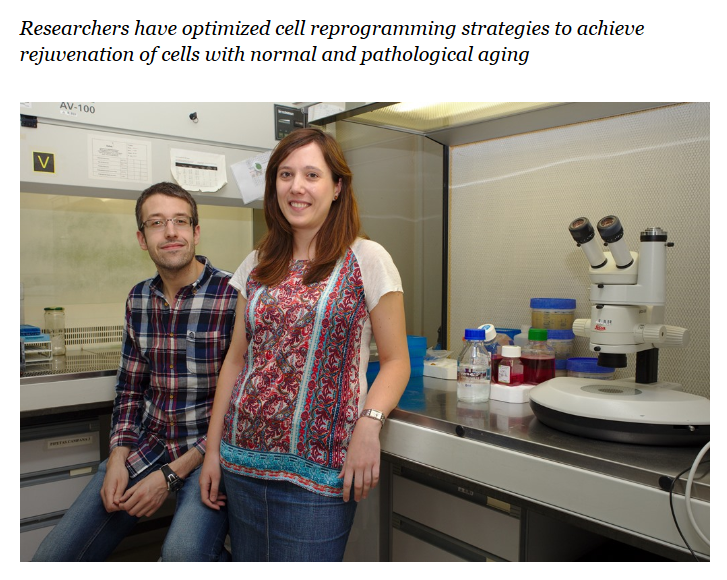

Boom, the 2015 Nature Cell Biology paper by the famous, award-winning and now fugitive Spanish cancer and ageing researcher Carlos Lopez-Otin and his US partner George Q Daley, stem cell titan and dean of Harvard Medical School, is retracted. That happens because correct original data was unavailable, prompted by a prolonged debate on PubPeer (which in turn followed my reporting on Lopez-Otin’s data integrity practices), which established that the figures do not match what the authors deposited as supplement.
The paper Soria-Valles et al 2015 established the role of the transcription factor protein NF-kB in cellular senescence and cell reprogramming, while offering a potential cure to child patients suffering from the deadly premature ageing syndrome, such as Néstor–Guillermo or Hutchinson–Gilford progeria. Under this premise, the impactful Nature-themed paper earned Lopez-Otin in 2017 an ERC grant of €2.5 million, for a project named “Deconstructing Ageing: from molecular mechanisms to intervention strategies“. Earlier this year however, Lopez-Otin abandoned his ERC funded lab at University of Oviedo and escaped to Paris, to stay with his Photoshop expert friend Guido Kroemer. If past behaviour is anything to go by, ERC will now probably again play three monkeys and pretend that Lopez-Otin is still in Spain and his grant-deciding Nature Cell Biology paper was never retracted.
Another Soria-Valles et al paper from Daley lab, which proposed a way to produce haematopoietic stem cells via iPS technology and save people with leukaemia, was meant to be already published, but it is not even submitted and might never be. This and the retracted study’s first author Clara Soria-Valles was a former PhD student of Lopez-Otin, funded by EMBO postdoctoral fellowship and delegated to the Harvard labs of Daley and his junior partner Thorsten Schlaeger, to learn cellular reprogramming technique. Daley and Schlaeger are reported to be all but ready to apply the blood cell making technique in the clinic, at Boston Children’s Hospital, but now nobody knows if Soria-Valles’ preclinical data is anywhere near reproducible.
It is indeed difficult to find out what results still might be reliable. Soria-Valles disappeared already in April 2018 on a medical leave, though Daley still pays her (neither Daley nor Harvard normally pays any medical leaves for other sick lab members). Nobody else on that manuscript is available, because the Schlaeger lab people involved also left since. Money to try and reproduce it is not an issue though: the research project was funded from Daley’s biggest grant, the NHLBI Progenitor Cell Translational Consortium (NIH U01), which is worth almost $50 million.
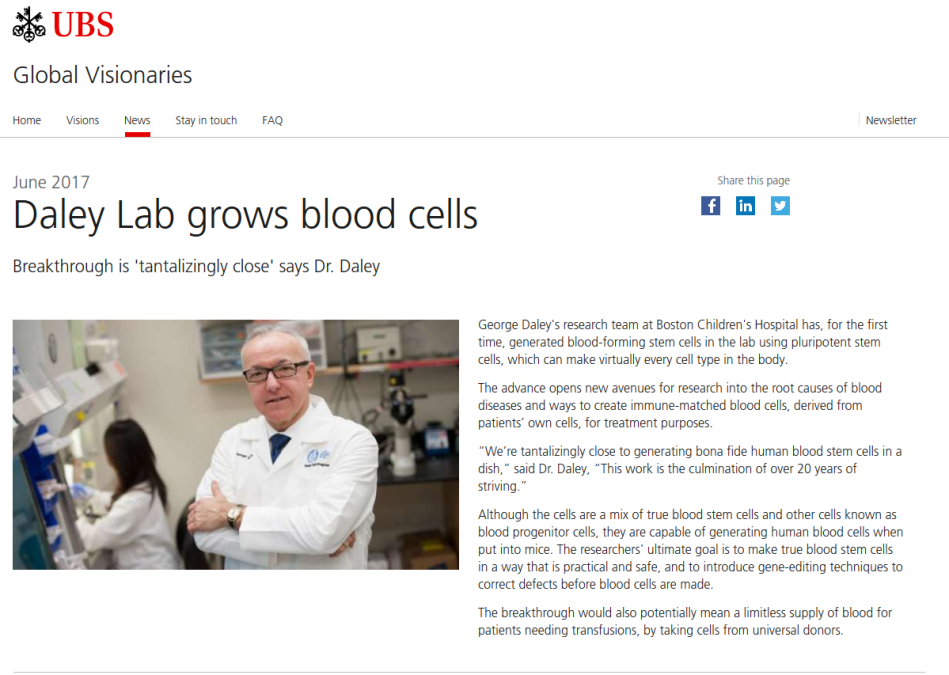
As I was informed, that Soria-Valles paper on haematopoietic reprogramming was meant to be originally submitted to the elite Cell family journal Cell Stem Cell (this is how the circulated draft was labelled in April 2018). Later on, roughly in August 2018, when my article appeared, the chosen target journal was Stem Cell Reports (published by International Society for Stem Cell Research, ISSCR). For someone like Daley this is a huge status reduction of journal venue. The results were presented earlier by Soria-Valles at the ISSCR annual meeting in 2017:
INTEGRATION-FREE SYSTEM FOR GENERATION OF HEMATOPOIETIC STEM AND PROGENITOR CELLS FROM HUMAN PLURIPOTENT STEM CELLS
Soria-Valles, Clara 1 , Sugimura, Ryohichi 1 , Kumar Jha, Deepak 1 , Lummertz da Rocha, Edroaldo 1 and Daley, George 2
1 Boston Children’s Hospital, Boston, MA, USA, 2 Stem Cell Program, Boston Children´s Hospital, Boston, MA, USA
The generation of hematopoietic stem cells (HSCs) from human pluripotent stem cells (PSCs) constitutes a valuable tool with promising applications for research and therapy. However, derivation of HSCs with in vivo long-term engraftment and multi-lineage potential remains elusive. We have described a combinatorial approach, based on the directed differentiation of hemogenic endothelium (HE) and transduction with five transcription factors (TF) (RUNX1, ERG, LCOR, HOXA5 and HOXA9) expressed in lentiviral vectors that allowed the conversion of human PSCs into hematopoietic stem
and progenitor cells (HSPCs). The resulted cells exhibited long-term and multi-lineage hematopoietic capabilities when injected into irradiated immune-deficient mice.
Despite this proof of principle, the engineered cells have a limited self-renewal capacity due to the integration of the transgenes and are still molecularly distinct from bona fide HSCs. Thus, in an attempt to achieve bona fide HSCs and make them safer for future therapeutic interventions, we have established integration-free systems that have shown comparable efficiency to the previously developed lentiviral strategy through in vitro and in vivo experiments. Therefore, this new method may overcome some limitations of the lentiviral approach and hold the key for future regenerative medicine advances in blood diseases.
Soria-Valles however was not present at the 2018 ISSCR meeting (a conference which I incidentally wrote about here, in a story about another dishonest stem cell researcher, who was set to be ISSCR 2018 keynote speaker). Nobody knows how much of Soria-Valles’ claim to make haematopoietic stem cells via iPS technology is still valid. Sources were quoted with estimates of too low a yield or even not sure of producing any haematopoietic stem cells at all. Yet just this September 2018, Daley spoke at a lecture at Dana-Farber-Institute of his future Stem Cell Reports paper and even of his plans to apply the method to treat paediatric patients with congenital bone marrow deficiencies, in particular Shwachman Diamond Syndrome and Diamond Blackfan Anemia.
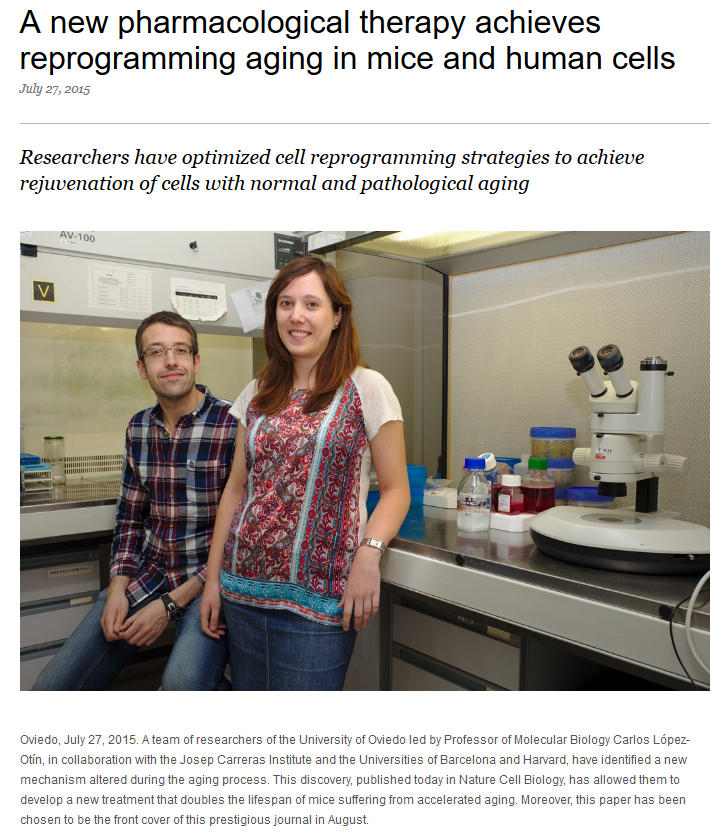
But now back to the main subject, the Nature Cell Biology retraction. The journal warned readers on 4 October 2018 with an editorial note that “that the reliability of data presented in this manuscript has been the subject of criticisms“. 4 December 2018 was the deadline imposed by the publisher to submit signatures from co-authors for a retraction. Lopez-Otin’s Oviedo colleague Jose Maria Perez Freije collected the signatures of all authors, including the elusive Soria-Valles, and submitted them to the publisher Nature.
This is the retraction notice:
“We, the authors, are retracting this Article due to issues that have come to our attention regarding data availability, data description and figure assembly. Specifically, original numerical data are not available for the majority of the graphs presented in the paper. Although original data were available for most EMSA and immunoblot experiments, those corresponding to the published EMSA data of Supplementary Fig. 8a, the independent replicate immunoblots of Fig. 8b and Supplementary Fig. 1e, and the independent replicate EMSA data of Supplementary Figs 6e, 8b, 8c and 8d, are unavailable. Mistakes were detected in the presentation of Figs 3c, 4i and Supplementary Figs 6a, 8a, 8d, 9, and in some cases the β-actin immunoblots were erroneously described in the figure legends as loading controls, rather than as sample processing controls that were run on separate gels. Although we, the authors, believe that the key findings of the paper are still valid, given the issues with data availability we have concluded that the most appropriate course of action is to retract the Article. We deeply regret these errors and apologize to the scientific community for any confusion this publication may have caused. All authors agree with the retraction.”
This slide show illustrates the data issues mentioned in the retraction notice.
And this slide show illustrates the issues the retraction notice chose not to address at all.
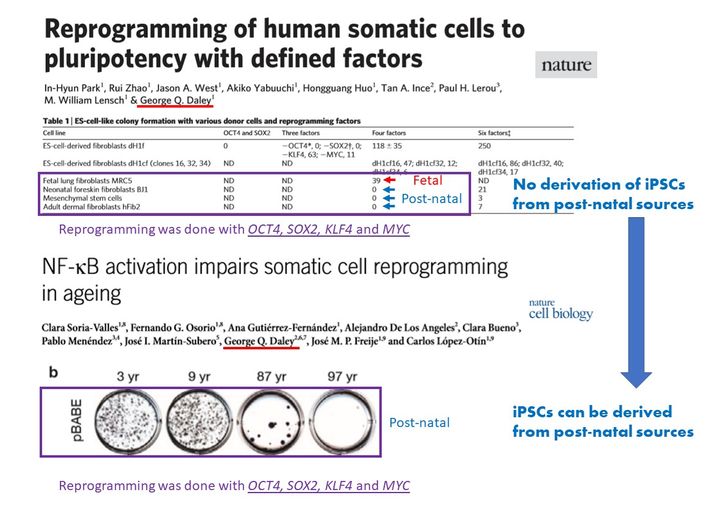
In Daley’s lab, more things do not work as expected. His most famous Nature paper, Park et al 2008 , meant to compete with Shinya Yamanaka for induced pluripotency (iPS) fame and the Nobel Prize, is being plucked apart on PubPeer, accused of not having delivered any pluripotency as such. The exogenously delivered reprogramming transgenes remained namely active, while they were supposed to become silenced as cells’ own pluripotency genes become active. Also, Daley’s method of using Large T Antigen and telomerase TERT in addition to Yamanaka’s four iPS reprogramming factors proved rather counterproductive.
For someone like Daley, all of this is not the end of the world. There are always new windows of opportunity. Just as Chinese scientist Jiankui He caused a worldwide scandal with his unethical human experiments with CRISPR-modified babies, Daley (and his Harvard colleague George Church) offered a more enthusiastic view: America cannot afford a CRISPR gap to China. Daley suggested that Harvard should take the lead and apply CRISPR eugenics to ensure the survival of the human race:
“There have even been discussions that we as a species need to maintain the flexibility in the face of future threats to take the control of our own heredity.”
Harvard’s CRISPR experiments on human germ line editing are already starting. An Alzheimer’s associated gene is to be edited in human sperm, while Daley announced big plans to design the children of the future to be resistant to various diseases. Ethics is something this Harvard dean is apparently less interested in.
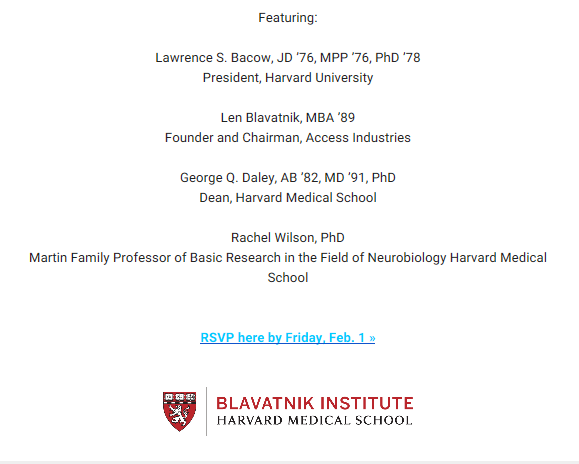
Harvard recently received a $200 million donation to set up a new institute, the money came from a controversial tycoon Leonard Blavatnik with Russian origins, whose lawyers made The Guardian apologise for erroneously calling him a “Putin pal” and an oligarch.
It is Daley’s Spanish collaborator, the fugitive Lopez-Otin, who is in deep trouble with that retraction now. Lopez-Otin did manage to bring himself into news recently with his new paper (in a Nature -themed journal!) where his Oviedo lab analysed the genome of Lonesome George, the last member of his giant tortoise species who died in 2012. The press release omitted to say whether he spoke from Oviedo or Paris, Lopez-Otin the turtle geriatrics researcher was quoted with:
“We had previously described nine hallmarks of aging, and after studying 500 genes on the basis of this classification, we found interesting variants potentially affecting six of those hallmarks in giant tortoises, opening new lines for aging research”
Nature now probably deeply regrets having awarded him with a 2017 Mentoring Award. Maybe they can give next one to Daley? Maybe Daley can get Soria-Valles to CRISPR some of those turtle genes to create a new long-lived human race of Homo harvardiensis crispri?
Update 21.12.2018. My article was apparently well received in Harvard, according to this information I was privy to:
“Daley was complaining intensely at lab meeting in front of entire lab and his junior faculty labs (Trista North and Thorsten Schlaeger) about potential lab members who might have leaked Soria-Valles information to the German blogger. It was intense”
I also learned that the now retracted Soria-Valles Nature Cell Biology 2015 paper was originally submitted to Science, were it was rejected due to some statistics issues.
Update 5.01.19. I was recently alerted by a source:
“George [Daley, -LS] has scared the lab members and provoked Stockholm syndrome among members. The Daley lab is trying to figure out who the leaks are now. Some of the members are trying to crash the German website by sending Hakenkreuz images.”
This was exactly what happened. Commenters used several fake identities to post highly defamatory comments about Daley on my site, equalling his research to Macchiarini’s trachea transplants and, indeed, using Nazi Swastika armband photoshopped on a photo of Daley. Exactly same picture was shared by Daley lab members in preparation of the campaign, it was confirmed to me. I deleted all those comments, but made backup, also of IP addresses.
Specifically, those IP addresses were located in US to Connecticut, 06902 Stamford, and New York State, 10022 New York. My source suggested I contact these Daley lab alumni: In-Hyun Park at Yale, CT, and Kitai Kim at MSKCC in NY, as well as the person allegedly orchestrating the campaign, the current Daley postdoc Deepak Jha. None of them replied, but Jha immediately blocked me on Twitter. This is how some grown men behave to please their mighty (ex-)boss. Maybe they should rather relax and read the book by Daley’s wife, Amy C. Edmondson, “The Fearless Organization: Creating Psychological Safety in the Workplace for Learning, Innovation, and Growth“.
Daley will be opening the Blavantik institute in ceremony on February 5th, at 5:30 PM. Come to talk about plans of CRISPR babies!
Donate!
If you are interested to support my work, you can leave here a small tip of $5. Or several of small tips, just increase the amount as you like (2x=€10; 5x=€25). Your generous patronage of my journalism will be most appreciated!
€5.00

 For Better Science
Here are Supporting Organizations for progeria according to NORD website. https://rarediseases.org/rare-diseases/hutchinson-gilford-progeria/
Ironically, Progeria Research Foundation (PRF) who runs clinical trials for progeria kids is based on Daley’s home ground Boston Children’s Hospital. There Soria-Valles and Daley worked for both retracted progeria paper and haematopoietic reprogramming to treat paediatric patients with Shwachman Diamond Syndrome (SDS) and Diamond Blackfan Anemia (DBA). For both diseases, Daley has been publishing intensively for years.
Genetic and Rare Diseases (GARD) Information Center
PO Box 8126
Gaithersburg, MD 20898-8126
Phone: (301) 251-4925
Toll-free: (888) 205-2311
Website: http://rarediseases.info.nih.gov/GARD/
Progeria Research Foundation, Inc.
P.O. Box 3453
Peabody, MA 01961-3453 USA
Phone: (978) 535-2594
Email: info@progeriaresearch.org
Website: http://www.progeriaresearch.org
LikeLike
At NIH this November 2018, Daley shared his roadmap to inject Soria-Valles stem cells to pediatric patients.
And graphs show that Soria-Valles stem cells successfully engrafted in mice for long-term.
LikeLike
Daley was promoting pipeline of Clara Soria-Valles to patients. Question is if he KNEW about Soria-Valles problems, yet still wanted to apply her research to children patients.
Very concerning if true.
LikeLike
The co-first author of retracted NCB paper, Fernando G. Osorio has just published a quick paper in Cell Reports with his current host lab Fernando Camargo (Boston Children’s Hospital) and Ruben van Boxtel (Princess Maxima Center).
https://www.cell.com/cell-reports/fulltext/S2211-1247(18)31760-1
Somatic Mutations Reveal Lineage Relationships and Age-Related Mutagenesis in Human Hematopoiesis
Fernando G. Osorio, Axel Rosendahl Huber, Rurika Oka, Ignacio Varela, Fernando D. Camargo, Ruben van Boxtel
Publication History
Published: November 27, 2018
Accepted: October 31, 2018
Received in revised form: October 10, 2018
Received: June 14, 2018
Nicely free from any immunoblot!
See his former research at Lopez-Otin lab.
LikeLike
Soria-Valles retraction notice is saying that they did not have original numerical data for majority of graphs. So the graphs made from scratch? And there were lots of image problems. These are terrible fraud, cannot say honest mistakes at all. And they got fund because of this fraud paper. How much fund do they have to return to funding bodies?
LikeLike
The funding source and amount of money related with Soria-Valles’ retracted NCB paper and haematopoietic stem cell paper she had done at Daley lab;
– NIH U01 grant to Daley
$1,044,680 as of the fiscal year 2016
http://grantome.com/grant/NIH/U01-HL134812-01
EMBO long-term fellowship to Soria-Valles
$45,133/first year + $49,646/second year
ERC grant to Lopez-Otin
€2,500,000. Through 2017-2022
LikeLike
That is why I keep insisting if we all have to pay taxes and support this people minimally a list of all the expenses that were covered by these grants including raw data from the research that was conducted with conclusions should be available to public
LikeLike
This means George Daley was presenting Soria-Valles’ work at NIH who is funding the project, him knowing that the work of Soria-Valles had been under investigation and been alerted by Nature Cell Biology. Knowingly presenting data which may not be right (or not exist) at the own funding body?
LikeLike
More comment on Daley’s Nature paper about deriveration of human iPS cells. The paper lacks a significant evidence to validate pluripotency of their cells. Pluripotent reporter data is missing, while J. Thomson lab has the data. They used the same reporter line originally from Thomson..
Reprogramming of human somatic cells to pluripotency with defined factors
Nature (2008) – 12 Comments
pubmed: 18157115 doi: 10.1038/nature06534 issn: 1476-4687 issn: 0028-0836
In-Hyun Park author has email , Rui Zhao , Jason A. West , Akiko Yabuuchi , Hongguang Huo , Tan A. Ince , Paul H. Lerou author has email , M. William Lensch author has email , George Q. Dale
https://pubpeer.com/publications/A600E09BABFB5C7A28B86BBA6F8AD9
“I am curious why this paper did not show GFP data from reprogrammed H1-OGN cells? The line is made from Zwaka and Thomson and can report reprogramming by reactivation of GFP. The most convincing evidence at the time. Indeed both Daley and Thomson papers used the line. You can see GFP reactivation in Thomson 2007 Science, but not in this paper. ”
LikeLike
That is the reality unfortunately of many powerful labs in USA…either you shut your mouth or you will get a ticket back to your home country or you will see your research career with no perspectives…that were the perspectives of the lab were I did my post doc
LikeLike
I am just hoping all the postdocs from these labs don’t be afraid and start telling the truth, how they are under pressure to get certain results, how they are frightened with visa and other issues
LikeLike
Hey Ana Pedro, could you give us more details on your experience as a postdoc in the USA and what happened to you?
LikeLike
Hi Sirgraphs,
You can find a summary of what happened to me in the email bellow (a response to the email Lyden and Cardoso sent Dr. Inglis from BioRxiv) also published in this blog in comments. I recently wrote an email to Cornell RARC Department and I am waiting for their response
Kind regards,
Ana Pedro
“fatimacardoso@fundacaochampalimaud.pt” fatimacardoso@fundacaochampalimaud.pt,
“joaquim.teixeira@fundacaochampalimaud.pt” joaquim.teixeira@fundacaochampalimaud.pt,
“irm2224@med.cornell.edu” irm2224@med.cornell.edu,
“dcl2001@med.cornell.edu” dcl2001@med.cornell.edu,
biorxiv biorxiv@cshl.edu,
Rod Tucker rodtucker.tucker@gmail.com,
Ronny Schmidt ronny.schmidt@sciomics.de
Dear Dr Inglis
The data published pertains to my post doc work at WCMC and Champalimaud Foundation. These data obtained before Ayuko et al 2015 was published clearly contradicts what was published in this manuscript stating that integrins determine cancer metastasis sites. I remember very well I had a meeting as well much time before Hoshino et al was published with Dr Lyden, Dr Hoshino and Dr Bruno Costa Silva and we clearly saw that sample CF33 didn’t have any integrins and the integrins content of CF27 sample was not consistent with Hoshino et al, 2015
Moreover, given that I mentioned the origin of the samples and the founders and all the intelectual work was performed by myself including project writing (I can proof it and I can mention including that Dr Cardoso and Dr. Lyden did not wrote a line of the project that was approved for funding by FCT), sample processing and analysis I believe I am on the right of publushing these data
Indeed I believe that instead the manuscript Hoshino et al 2015 should be removed by Nature as it is clearly cheated. Also I can proof there were mouse work irregularities corresponding to the period of time when Hoshino et al 2015 was published
You can consult the the hotmail address reclamacao.anapedro@hotmail.com, password:recl@m@cao for details about mouse work issues and project authorship
Given that Nature or WCMC did not undertook any measure given the mentioned misconduct allegations, instead Dr Inglis, I ask you what I can do in order to get justice and being able to publish my hard work which is a true, transparent work
I also give permission to Leonid Schneider to publish this email in his site
I also ask Dr Cardoso and Dr Lyden for some reasonability
I thank you so much your help regarding the issues I raised above
Looking forward to hearing from you
Kind regards
Ana Pedro
LikeLike
The replication study for Peinado et al, 2012 was finally published: https://elifesciences.org/articles/39944
LikeLike
Here are all four slides related with Daley’s data and roadmap to transplant Soria-Valles’ stem cells into pediatric patients at NIH talk this Nov. 1, 2018.
.
How to make Soria-Valles’ stem cells
Long-term engraftment of Soria-Valles’ stem cells in mice
FACS plots and DNA analysis of Soria-Valles’ stem cells
Roadmap to transplant Soria-Valles’ stem cells into kids
Link to NIH videocast of Daley, Nov. 2018
https://videocast.nih.gov/summary.asp?Live=28849&bhcp=1
LikeLike
Please, please stop him!
Before experiments are done with patients pre-clinical data and data from non-invasive patient samples like blood samples, etc or patient samples obtained during standard treatment (for example tumor samples obtained during breast cancer surgery) also experiments in animals must clearly show that is both safe to test a treatment in humans and that there is a strong possibility the treatment will be an effective one
LikeLike
I will be presenting the preliminary data from my “problematic” bioRXIv pre-print at the Frontiers Stem Cell 2019 meeting in the end of April in New York and I will add some independent preliminary data from Lyden lab regarding flow cytometry analysis of circulating HSCs and MDSCs in control and early and metastatic breast cancer patients. It is obvious for me that exosome integrins do not play a fundamental role in metastases and also by analysing the mentioned flow data (unfortunately I do not have the original flow cytometry files, I wrote down the flow results and returned the CDs containing the original data) if it seems obvious that MDSCs play a role in metastasis, this data does not clearly demonstrate that HSCs are involved in metastasis…if this is true we should see more HSCs in those early breast cancer patients who will develop metastases? And also in metastatic breast cancer patients? For sure MDSCs are derived from HSCs…so further experiments are needed
Discussions are open
LikeLike
If any researcher would be interested in collaborating with me by providing additional original flow data and with additional discussions I would be very grateful
If so, please write me to anapedrolaboratories@gmail.com
LikeLike
“in some cases the β-actin immunoblots were erroneously described in the figure legends as loading controls, rather than as sample processing controls that were run on separate gels”
Simply precious. Might as well have just used the blots on the manufacturer’s websites.
Just once I would like to see a journal say this paper was retracted because the authors ignored our instructions for data presentation and faked most of the results. And for heaven’s sake, don’t let them get away with “we, the authors, believe that the key findings of the paper are still valid” when the whole thing is a sham.
LikeLike
PubPeer readers are pointing out that Daley’s observation of telomere elongation in iPS cells may be due to artifact from vector system they chose. The other team Artandi at Stanford used the correct vectors and reported opposing results to Daley.
Telomere elongation in induced pluripotent stem cells from dyskeratosis congenita patients
Nature (2010) – 4 Comments
pubmed: 20164838 doi: 10.1038/nature08792 issn: 1476-4687 issn: 0028-0836
Suneet Agarwal , Yuin-Han Loh , Erin M. McLoughlin , Junjiu Huang , In-Hyun Park , Justine D. Miller , Hongguang Huo , Maja Okuka , Rosana Maria Dos Reis , Sabine Loewer , Huck-Hui Ng , David L. Keefe , Frederick D. Goldman , Aloysius J. Klingelhutz , Lin Liu , George Q. Daley
https://pubpeer.com/publications/265A83EC56E557C8588D151FFEBBC0
“The contradiction may come from vector method each paper used. Daley team used pMIG retroviral vectors which are tough to be silenced, and prevent complete reprogramming. And causing more artificial results from remaining transgenes. The issues of artificial observation using pMIG vector system are discussed here https://pubpeer.com/publications/A600E09BABFB5C7A28B86BBA6F8AD9
Artandi team used pMX retroviral vectors which can be silenced, leading to complete reprogramming. This vector system was also used by Yamanaka team (Takahashi, Cell, 2007). Artandi’s obsservation of telomere shortening in dyskeratosis iPS cells is plausible.”
LikeLike
Park (Nature 2008) Daley’s first claim of human reprogramming study, is argued intensely on PubPeer.
The paper did not report crucial data that they should have, and probably negative. The validity of their claim is vague now.
Reprogramming of human somatic cells to pluripotency with defined factors
Nature (2008) – 15 Comments
pubmed: 18157115 doi: 10.1038/nature06534 issn: 1476-4687 issn: 0028-0836
In-Hyun Park , Rui Zhao , Jason A. West , Akiko Yabuuchi , Hongguang Huo , Tan A. Ince , Paul H. Lerou , M. William Lensch , George Q. Daley
https://pubpeer.com/publications/A600E09BABFB5C7A28B86BBA6F8AD9
“In addition, OCT4-neo (geneticin/G418 resistance) was practiced by Thomson to prove acquisition of pluripotency, while not by Daley. Both teams used the same cell line.
Yu et al. (Thomson) “In this cell line, the expression of neomycin phosphotransferase, which makes cells resistant to geneticin, is driven by an endogenous OCT4 promoter, a gene that is highly expressed in pluripotent cells but not in differentiated cells. Thus, reprogramming events reactivating the OCT4 promoter can be recovered by geneticin selection….. These geneticin-resistant colonies expressed typical human ES cell–specific cell surface markers (fig. S2B) and formed teratomas when injected into immunocompromised severe combined immunodeficient–beige mice ”
Park et al. (Daley) “Selection with G418 was not required to identify cells with ES-cell-like colony morphology””
“Actually large T tends to be integrated in DNA during reprogramming. Johns Hopkins group reported that all five clones contained large T DNA in the genomic DNA.
It is difficult to assume that large T transgene was absent in all the Daley lines.
https://stemcellsjournals.onlinelibrary.wiley.com/doi/full/10.1634/stemcells.2008-0346 “When we analyzed the presence of the T transgene, we found that all five expanded clones contained the T DNA in the genomic DNA, as in the IL group with the same T vector. Similarly, all seven clones obtained by the NIL OSTM transduction (described above) also contained the T DNA. Considering that the integration rate of NIL vectors is supposed to be 104‐fold lower, these data strongly suggested that sustained presence of T is likely critical to the enhanced reprogramming of human fibroblasts under the conditions we used. ”
According to Park et al., “the human ES-cell-like colonies that we ultimately isolated failed to show integration or expression of hTERT and SV40 large T (data not shown).””
“Rudolf Jaenisch said that partially reprogrammed cells have retrovirus transgene on, lack of Oct4 reporter (Daley iPS cells). Fully reprogrammed cells have retrovirus silenced and Oct4 reporter (Yamanaka iPS cells, Thomson iPS cells). Therefore, Park et al. did not fully reprogrammed human cells. ”
LikeLike
PubPeer comments on Soria-Valles’ Oncogene article. The link to their microarray data set is dead, or the authors did not upload the data set.
https://pubpeer.com/publications/8D0F4C1D83621DE5F72E92A4C39787
The anti-metastatic activity of collagenase-2 in breast cancer cells is mediated by a signaling pathway involving decorin and miR-21
Oncogene (2014) – 3 Comments
pubmed: 23851508 doi: 10.1038/onc.2013.267 issn: 1476-5594 issn: 0950-9232
C Soria-Valles , A Gutiérrez-Fernández , M Guiu , B Mari , A Fueyo , R R Gomis , C López-Otín
“Here is the link to accession number put on the paper. Actually, this is 2007 data of Kevin Lebrigand lab in France, the samples were of human lung cancer. Does not match with breast cancer cell line microarray conducted for this paper at 2014. https://www.ncbi.nlm.nih.gov/geo/query/acc.cgi?acc=GPL4718 ”
“Reading the text more carefully one finds that the microarray data “…are available on http://www.microarray.fr:8080/merge/index (follow the link to ‘microRNA’…”.
This link seems to be dead (the same link is listed in GEO with GPL4718) – you should ask the authors to provide raw data or a working link.
The link you report refers to the “…platform referenced in GEO accession numbers GPL4718…”.
It is therefore a GEO platform ID and not a GEO data set ID and describes the type of microarray used. There are two data series in GEO using this platform, neither of which is associated with this publication.
So: dead link to data set – ask authors. Nothing else to complain about here, apart maybe from the fact that authors did not upload the raw data to GEO, too – the journal should have insisted in case that it is required by data availability policy.”
LikeLike
A message for the new year: Any researcher should be allowed to publish a paper without presenting the original data including clinical trial and animal trials protocols and the use of photoshop should be forbidden, WBs should be automated
LikeLike
Let’s not raise the technical bar so high that the cheating megalabs get a further advantage. It is also important to distinguish legitimate scientific discussion of work such as other Daley lab outputs from detection of sloppiness and fraud as occurred in this paper. Not knowing something at the time that has come out later is not a retractable offense. Also worth noting is how prominent authors and major institutions like Harvard can assert their “five hundred pound gorilla” status. This turkey was in the literature for over 3 and a half years. It lumbered along with a mass of PubPeer baggage for over a year and dragged along an official cloud of suspicion from Nature for several months. That inertia indicates powerful backing, as does the mealy-mouthed retraction notice. Last but not least, we should consider the inconsistencies in how institutions and granting agencies deal with such matters. Anversa was canned and his papers were marked for bulk retraction because his institution eventually came to the conclusion that he had fabricated an entire field of research. There is no sign of similar investigations of the major players in this paper, who appear to have been up to similar shenanigans.
LikeLike
The point is these problems are global problems. What measures can the scientific community take to:
The establishment of cheating megalabs or even cheating worldwide nets of labs?
Inconsistencies how institutions, journals and granting agencies deal with these problems?
LikeLike
Part of the solution is due diligence. If a funding agency finds out that a research group fraudulently obtained and/or used grant funding, they should cut off the offending researchers and host institutions while pursuing legal means to recover the money and punish those responsible. If research is funded by others, then research fraud is an intentional tort, and a misdemeanor or felony depending on the amounts involved. Yet in most tales of fraudulent research we find the punishments are so mild, avoidable and delayed that they offer no real deterrent, especially for those who gain the most from cheating. The top dogs get wrist slaps in the form of a temporary bans or supervision, and the worst culprits shuffle off to another plum post with minor inconvenience leaving a trail of wrecked lives behind. How else can we expect high-stakes gamblers to behave if we let them play for free?
LikeLike
The main problem is that the so called top-dogs are intimately connected with/ get protected by governments and politicians worldwide…so to solve these problems we would need to start by changing science funding and publication policies worldwide
With this goal a science petition should be organised worldwide and signatures from scientists worldwide should be obtained and this petition should be handed in at United Nations
LikeLike