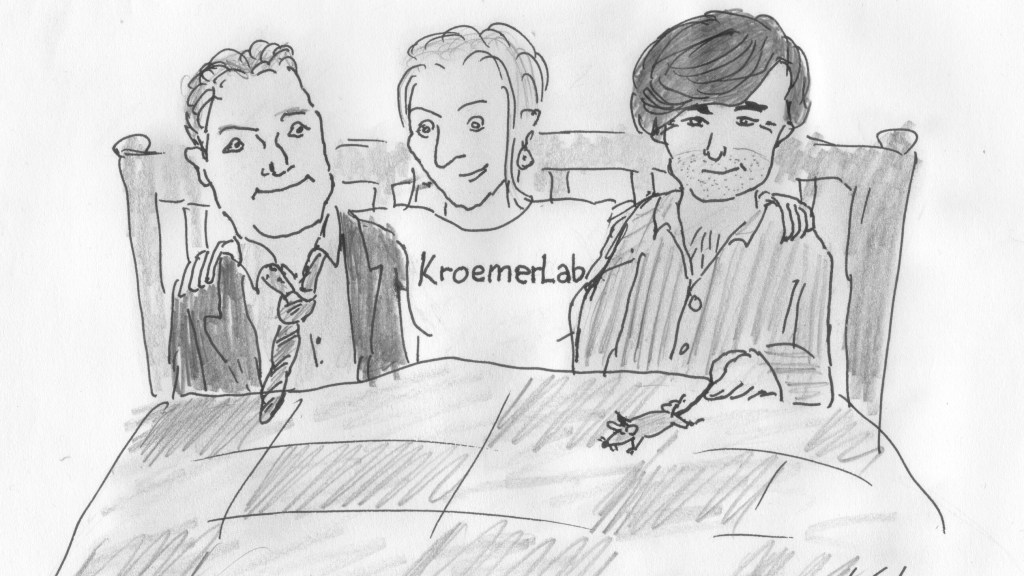
The Passion of Don Carlos
I obtained a partial script of a stage play which recently premiered in Paris: “La Passion de Don Carlos”. Any similarities with Spanish or French cancer researchers are entirely coincidental.
By Leonid Schneider, on research integrity, biomedical ethics and academic publishing
I obtained a partial script of a stage play which recently premiered in Paris: “La Passion de Don Carlos”. Any similarities with Spanish or French cancer researchers are entirely coincidental.
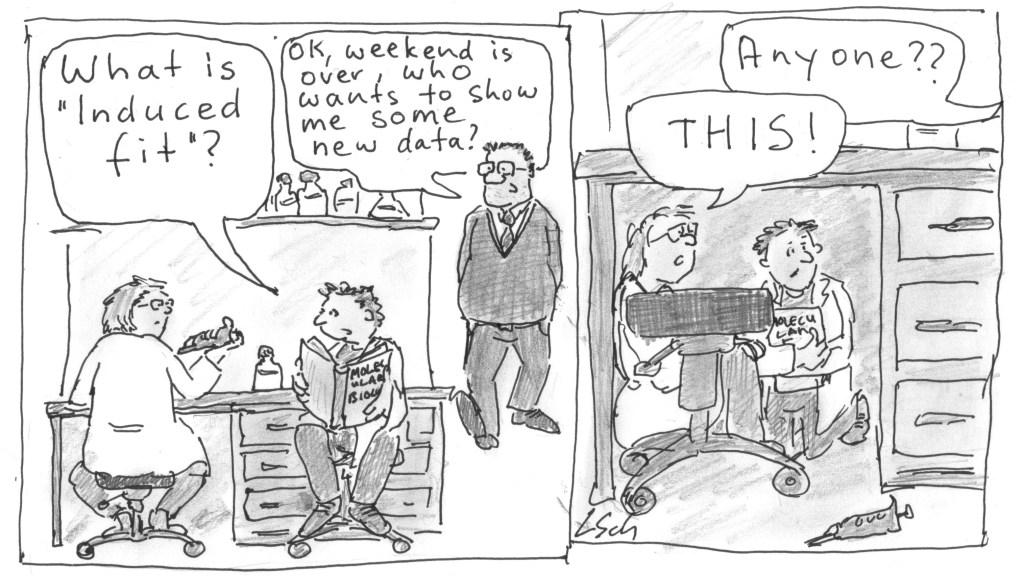
Carlos Lopez-Otin was forced to retract EIGHT papers in the Journal of Biological Chemistry, right after he retracted a very important paper in Nature Cell Biology. Spanish elites cry foul, a letter signed by 50 Spanish researchers was sent to JBC to prevent retractions. The ringleader is Juan Valcarcel of CRG in Barcelona, and I release 3 incompetent investigative reports Valcarcel commissioned in 2015 to whitewash his CRG colleague Maria Pia Cosma.
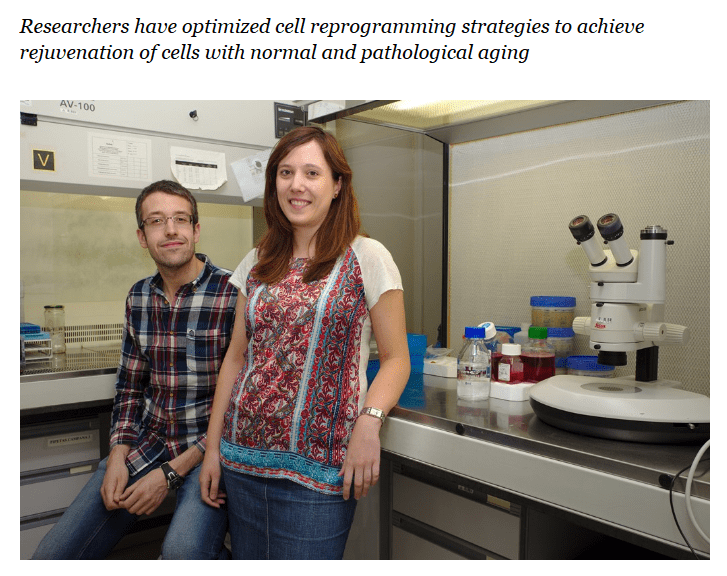
The 2015 Nature Cell Biology paper by the Spanish cancer researcher Carlos Lopez-Otin and his US partner George Q Daley, stem cell titan and dean of Harvard Medical School, is being retracted. First author and Lopez-Otin’s student Clara Soria-Valles caused Daley even more trouble: her next groundbreaking paper was meant to be already published, but it is not even submitted and might never be.
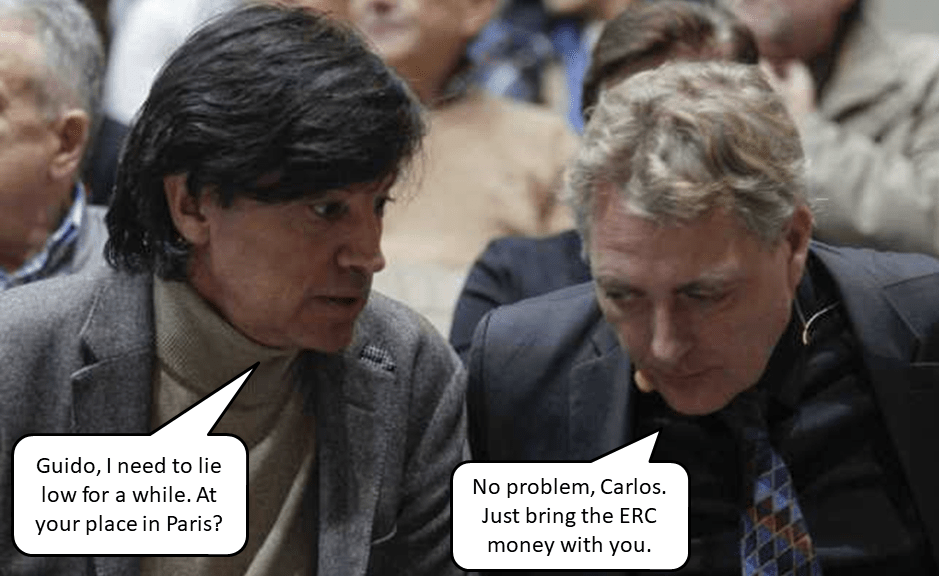
Following my reporting, the cancer researcher Carlos López-Otín abandoned his ERC-funded 36-member-strong “Degradome” lab at the University of Oviedo in Spain and moved in with his collaborator in Paris, France, Guido Kroemer. Yet Lopez-Otin’s data integrity issues seem as poppycock compared to what Kroemer and his life partner Laurence Zitvogel dished out to the scientific community.
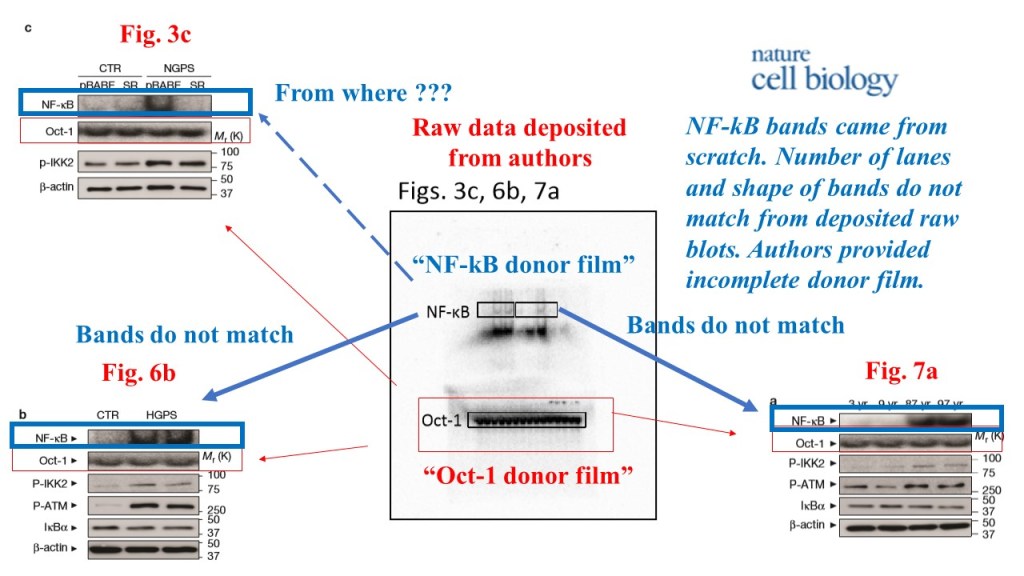
Elite journal Nature Cell Biology (NCB) requests deposition of raw data, in particular original scans of western blots and other gel analyses. Spanish star cancer researcher Carlos López-Otín, winner of 2017 Nature Mentoring Award, instead deposited whatever odd gel picture his lab had available, counting that nobody will bother to check. Yet readers did.
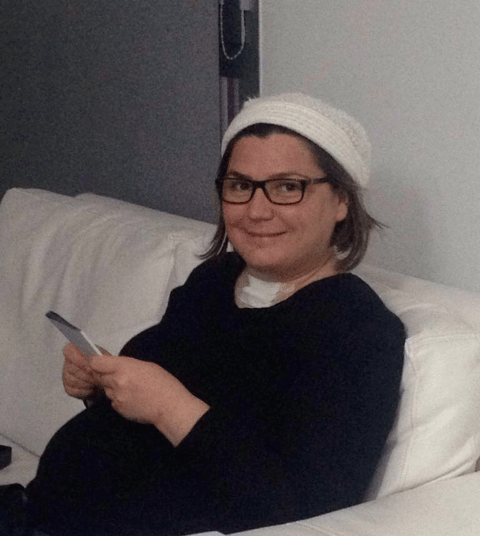
On 7 April 2010 the Spanish diabetes researcher Margarita Lorenzo died of metastatic melanoma, aged only 51. Two months after her death, Lorenzo’s colleagues submitted a paper to the journal Diabetes. The paper, which studies the mechanisms of obesity and insulin resistance, seems to be full of manipulated western blot data. While Lorenzo was dying of cancer, her colleagues advanced their careers using her reputation, using their own disreputable Photoshop skills.
Paloma was supposed to the second trachea transplant patient of Paolo Macchiarini’s in Barcelona, in summer 2008. The scandal surgeon gave her a fake diagnosis of a lethal tracheal cancer which she never had, and also “accidentally” mislocated her stent during a enforced bronchoscopy. All to coerce his patient to agree to a trachea transpalnt. Paloma had a lucky escape, twice. She namely also encountered Thorsten Walles.
Cancer researcher Carlos López-Otín published the same Northern blot no less than 23 times in 23 publications, between 1994 and 2006. Eventually Lopez-Otin et al even stopped caring what order of samples that original loading control had.
English version below. El 12 de junio de 2008, el cirujano torácico y entusiasta de la medicina regenerativa Paolo MacchiariniContinue Reading
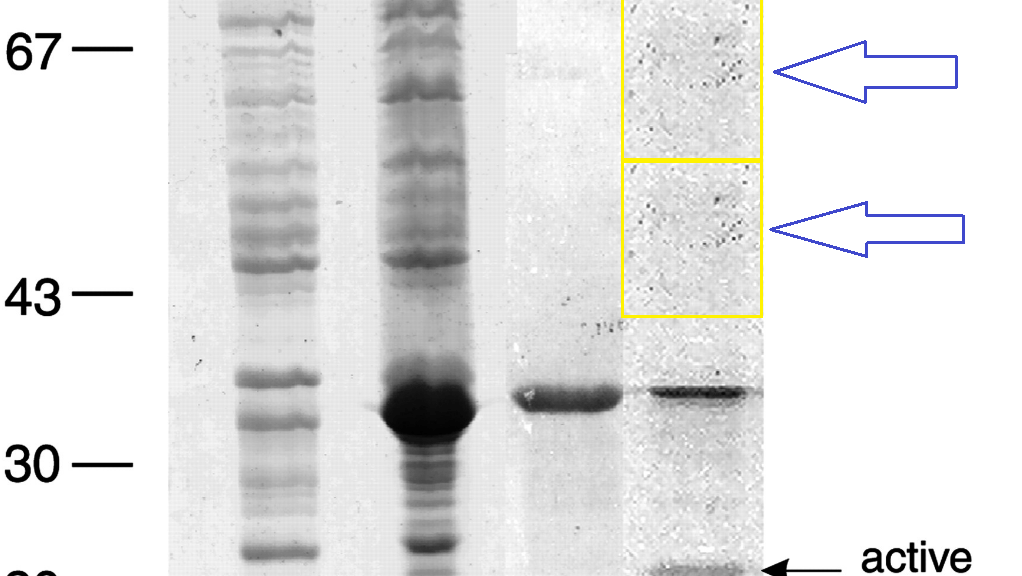
In Spain, there seems to be a tradition of reacting to emerging evidence of data manipulation with handing out prestigiousContinue Reading

 For Better Science