

Schneider Shorts of 6 March 2026 – German university saves dean from slander, Spanish sexual harasser ran a fake ethics committee, with qualified editors telling sleuth off, retractions for famous and less famous scholars in UK, Italy and Poland, and finally, whom to pay to cure old old age with young blood marrow.
Table of Discontent
Science Elites
- Not identical and also not adjusted by sequencing – dean Andrea Tannapfel is victim of false allegations
- Absolutely Soviet control of the publications – Ramon Flecha charged with all possible kind of misconduct
Scholarly Publishing
- The EIC is satisfied – why Sam W Lee is a much better human being than Claire Francis
- Practises used at the time – the right editor to defend Ian Adcock
Retraction Watchdogging
- The authors provided images – two more retractions for Christoph Thiemermann
- Representative of the entire experiment – swift action of fraud from Istituto Superiore di Sanità
- Famous eel scandal – papermiller Shafaqat Ali and fish gangster Dariusz Kucharczyk lose paper
- Mariusz of Arabia – Dr Jaremko, expert for everything, loses another paper
Science Breakthroughs
- A potent treatment for frailty – Joshua Hare to cash in with young blood marrow
Science Elites
Not identical and also not adjusted by sequencing
In May 2025, I reported about the problematic research of Andrea Tannapfel, head of Institute of Pathology and Dean of the medical faculty at the University of Bochum in Germany. I notified the university’s research integrity authorities, the Ombudsman promised me an external investigation, but then the University of Bochum decided to investigate their dean internally, and, very predictably, they quickly terminated their investigation and found Tannapfel to be completely innocent.
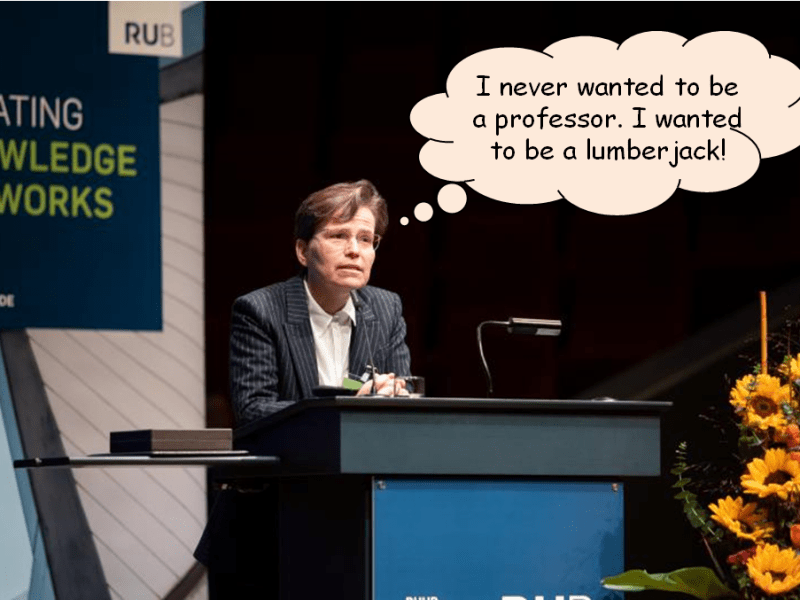
Tannapfel, a German success story
The papers are old, raw data unavailable, one can see small differences, some students probably did it, and anyway, conclusions are unaffected.

To be fair, I was informed about the outcome of the investigation of only one paper, but that is actually very representative.
This study used samples from over a hundred of cancer patients plus twenty healthy controls, and was coauthored by Tannapfel, her Vice-Dean Wolfgang Schmidt, and the dermatologist Ulrich Hengge, owner of two private clinics in Düsseldorf area (one for dermatology and another for phlebology) and adjunct professor at the University of Düsseldorf:
I Tischoff , U R Hengge , M Vieth , C Ell , M Stolte , A Weber , W E Schmidt , A Tannapfel Methylation of SOCS-3 and SOCS-1 in the carcinogenesis of Barrett’s adenocarcinoma Gut (2007) doi: 10.1136/gut.2006.111633


The yellow-framed duplication in Fig 2 is clear, and the red-framed fragments in Fig 1 are also identical (but after stretching!), however the purple-framed bits in Fig 2 seem to contain both identical fragments over a wider distance than originally labelled by Sholto, but also dissimilar gel bands and background noise like dots (on the left).

Thomas Müller’s Own Goal
“There is a justified concrete suspicion that third-party funders would from their side terminate the financial support of our client because of the above mentioned representation of our client. This would lead to significant financial losses.”
And now, the decision of the University of Bochum, signed by the Bochum professor of thermodynamics Roland Span, chair of the investigative commission:
“In accordance with Section 19 (1) of the Guidelines for Good Scientific Practice at Ruhr University Bochum, I hereby inform you as the notifier that the investigation committee has closed the aforementioned proceedings by resolution dated 14 January 2026.”
Here is the explanation, where you will learn that Sholto David is an incompetent, ignorant, stupid imposter who finds non-issues or even falsifies duplications were there are none, while Schneider, well, that one is just a racist harasser of German women in science:
“a) Figure 4
An error was made in compiling the figures. However, based on the context of the article, there is no indication that the incorrect Figure R was used deliberately or with deliberate negligence. The assumption of deliberate deception can be ruled out simply because the inserted Figure R contradicts the statement in the article.
Figure 1b) and 2a and b)
In a procedure to compare the sections in question in Figure 1b) and Figures 2a and b), it was proven that the sections are not identical and also not adjusted by sequencing.
The indications of possible scientific misconduct have not been confirmed. The proceedings were discontinued. “
What does this even mean, “not adjusted by sequencing“? Did they really resort to random fancy words to make their non-investigation sound professional?
We can already imagine how this other case of fake science in University of Bochum’s medical faculty will be resolved:
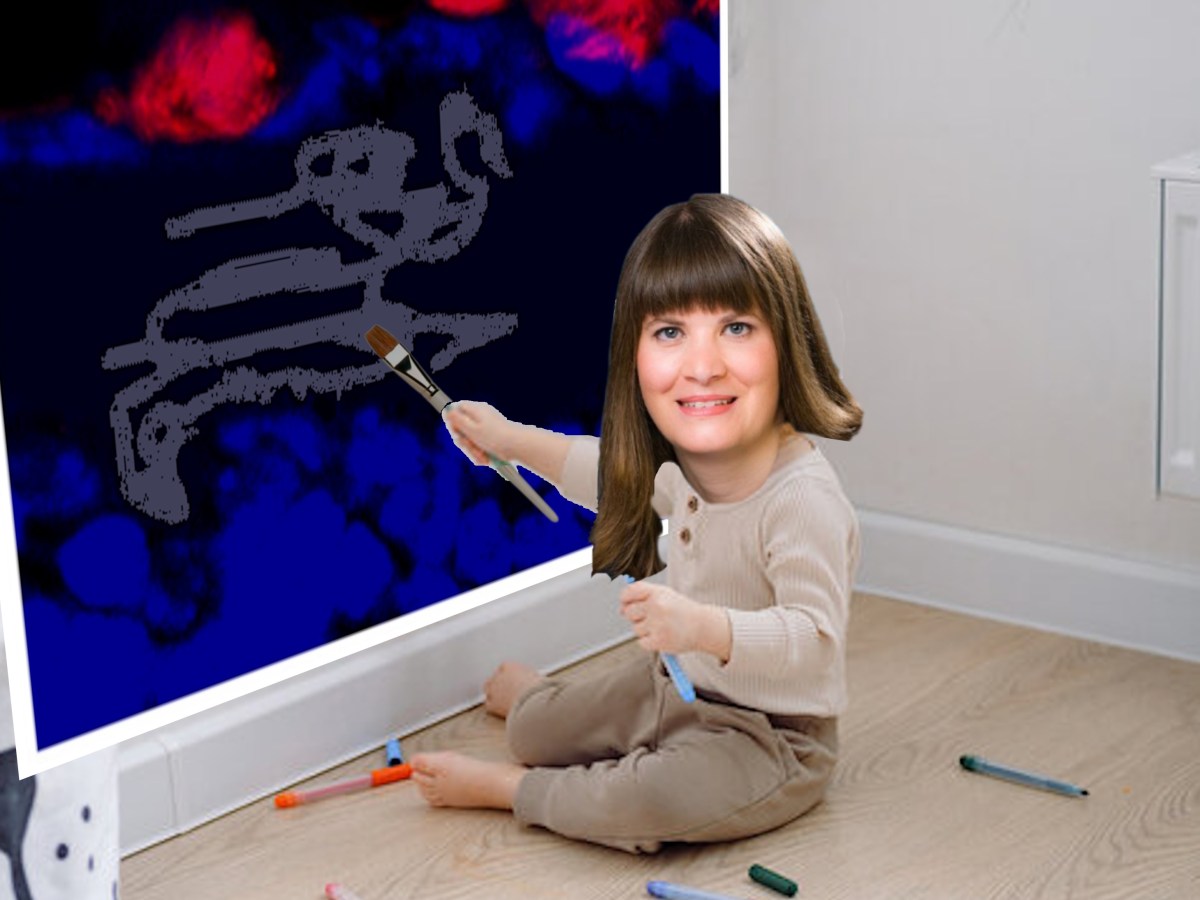
Luck in Sight
“It seems hard to accept any explanation that doesn’t somehow incriminate most of the people involved” – Sholto David

To explain what is going on: German rules on research misconduct are actually very tough, and if needed, certain undesirable people are sometimes fried for plagiarism for reusing text from their own publications in grant proposals. That is why in cases of important German professors, universities always terminate their investigations, for any random spurious reason you can think of.
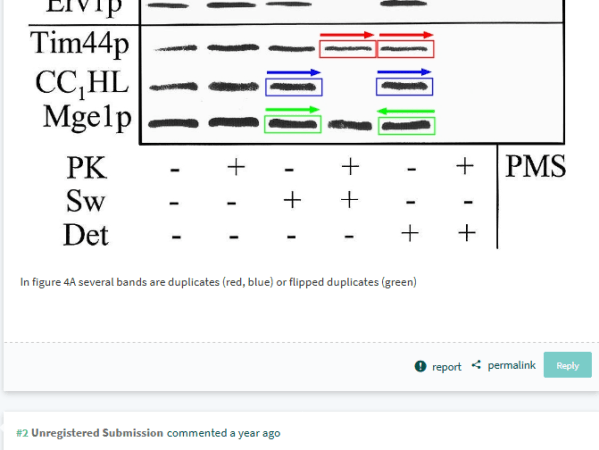
DFG and Marburg drop misconduct investigation of Roland Lill papers
German Research Foundation (DFG) terminated the investigation against their Senator and Marburg University professor Roland Lill, after having found no research misconduct. No comments are issued on the integrity of the data in his papers on yeast biochemistry, or on some unusual image manipulations which were already admitted by Lill and his former PhD students…
DFG decision: Antonia Joussen innocent victim of co-authors’ data manipulations
“The committee […] requests of you for future publications to assess well ahead and to question critically your responsibility for the contributions of the co-authors, also for your own protection.”
Absolutely Soviet control of the publications
In August 2025 Shorts, I wrote about Ramón Flecha, the 74 year old emeritus professor of sociology and founder of CREA (Community of Research on Excellence for All) centre at the University of Barcelona in Spain, who was exposed by Spanish media as a sexual harasser and then claimed to have been victim of sexual harassment himself. Turns out, Flecha did other evil things, like human studies without ethics approval.
RTVE reported on 28 February 2026 (Google-translated):
“The association Spanish Office of Research Integrity (OEII) has detected at least 104 academic articles published in the last six years that have received approval from an irregular ethics committee directed by the also former director of CREA, Marta Soler, and made up of researchers from the network itself. The OEII, after asking publishers and universities to analyze the articles, plans to request their retraction . It also warns that the number could increase, since they have 22 more articles in their sights. […]
The majority of works (71) were written as a result of research funded with at least 10,439,695 euros of public money that have received regional, national and European projects coordinated by members of CREA”

This Marta Soler, who like Flecha paints herself as a protector of “victims of gender-based violence“, previously defended her boss’s right to sexually harass female subordinates, and attacked his victims and critics as the real abusers, guilty “of coercive and retrograde machismo, which develops paternalistic attitudes towards adult women who exercise their freedom.” Soler was also the director of that fake ethics comittee, as RTVE mentions. This is how this committee, set up in 2015, worked, according to the witness Ignasi Puigdellívol:
“At the assembly, which was attended by about 40 people, they said […] that if you wanted to write an article with someone from outside, you had to ask for authorization from the ethics committee that was already functioning . […] the committee controlled who had to write and sign the articles. […]
After the assembly, Puigdellívol affirms that the committee did not review the ethics of the articles , but rather “in practice it was absolutely Soviet control of the publications.
This version is corroborated by the person who spent 15 years within the network. He states that the meeting was held “to say that no one could publish anything that had been generated by CREA without going through the ethics committee.””
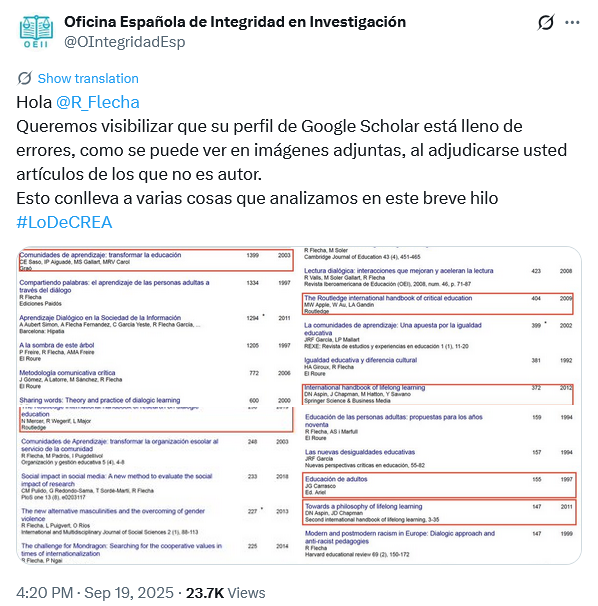
In September 2025, El Diario reported that Flecha “eliminated 7,170 “irregular” citations from his CV after […] the Higher Council for Scientific Research (CSIC) was preparing to expel him from its annual classification of Spanish scientists.” In July 2025, same newspaper reported that the sexual harasser Flecha stole a manuscript on the topic of sexual harassment from a female subordinate and published it as his own, in a journal titled Violence Against Women. Here it is:
Ramón Flecha Second-Order Sexual Harassment: Violence Against the Silence Breakers Who Support the Victims Violence Against Women (2021) doi: 10.1177/1077801220975495
Flecha even admitted to El Diario that he didn’t write this paper: “A scientific article is not a literary work. Its value is in the content it transmits, in the scientific or intellectual discovery it explains, not in its writing“; he then compared himself to a “Nobel Prize winner“.
The publisher Sage is still unsure about whether this constitutes plagiarism, an Expression of Concern from September 2025 informs that “The publisher is aware of broad concerns with the authors of this article and is consequently placing this expression of concern on this article while an investigation is undertaken by the journal and publisher.”

The Royal Academy of Exact, Physical, and Natural Bullying
“If, within the aforementioned 15 days, you have not proceeded to make the retraction I am requesting, this corporation will consider itself free to take any legal actions necessary under the law.” – Jesus Maria Sanz Serna, President
Scholarly Publishing
The EIC is satisfied
From the department of proper channels- the pseudonymous sleuth Claire Francis was once again, nay twice again, educated on what to see and how to think right.
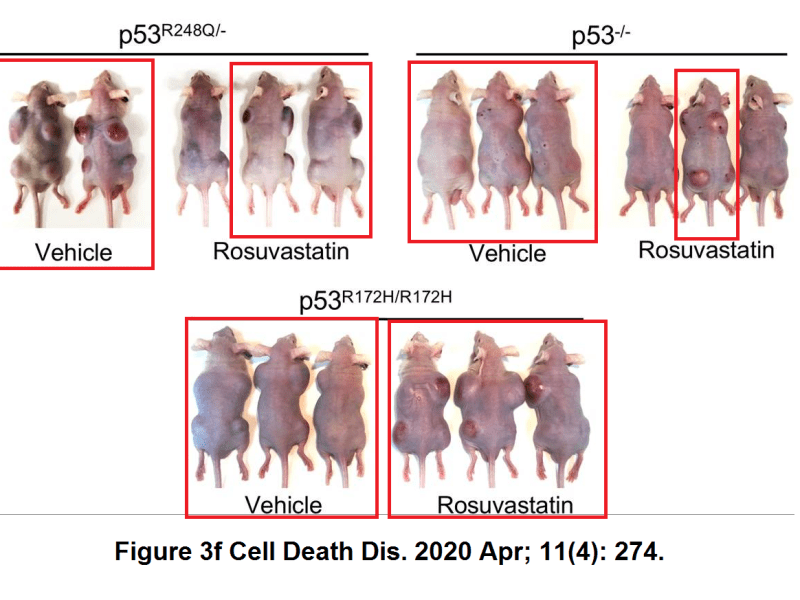
Here is a case of a known fraudster and mouse torturer: Sam W Lee, who has at least 5 retractions and over 40 fake papers on PubPeer, who was sacked by Massachusetts General Hospital for fraud, got sentenced in court to pay $215k fine, while his former employer had to return $940k in grant money, and whose other former employer, Yale University, is currently suing Lee. Read March 2025 Shorts and here;
Torturing Small Animals
Animal abuse and bad science go hand in hand. Meet professors Ute Moll, Jordi Muntané, Sam W Lee and others.
But the publisher Elsevier and its Cell Press chose to trust Lee and not the sleuth in this case, and that despite Lee’s past retractions in Cell Press (see Ongusaha et al 2006 or Ide et al 2009)! Claire Francis reported this paper:
Takushi Namba , Fang Tian , Kiki Chu , So-Young Hwang , Kyoung Wan Yoon , Sanguine Byun , Masatsugu Hiraki , Anna Mandinova , Sam W. Lee CDIP1-BAP31 Complex Transduces Apoptotic Signals from Endoplasmic Reticulum to Mitochondria under Endoplasmic Reticulum Stress Cell Reports (2013) doi: 10.1016/j.celrep.2013.09.020
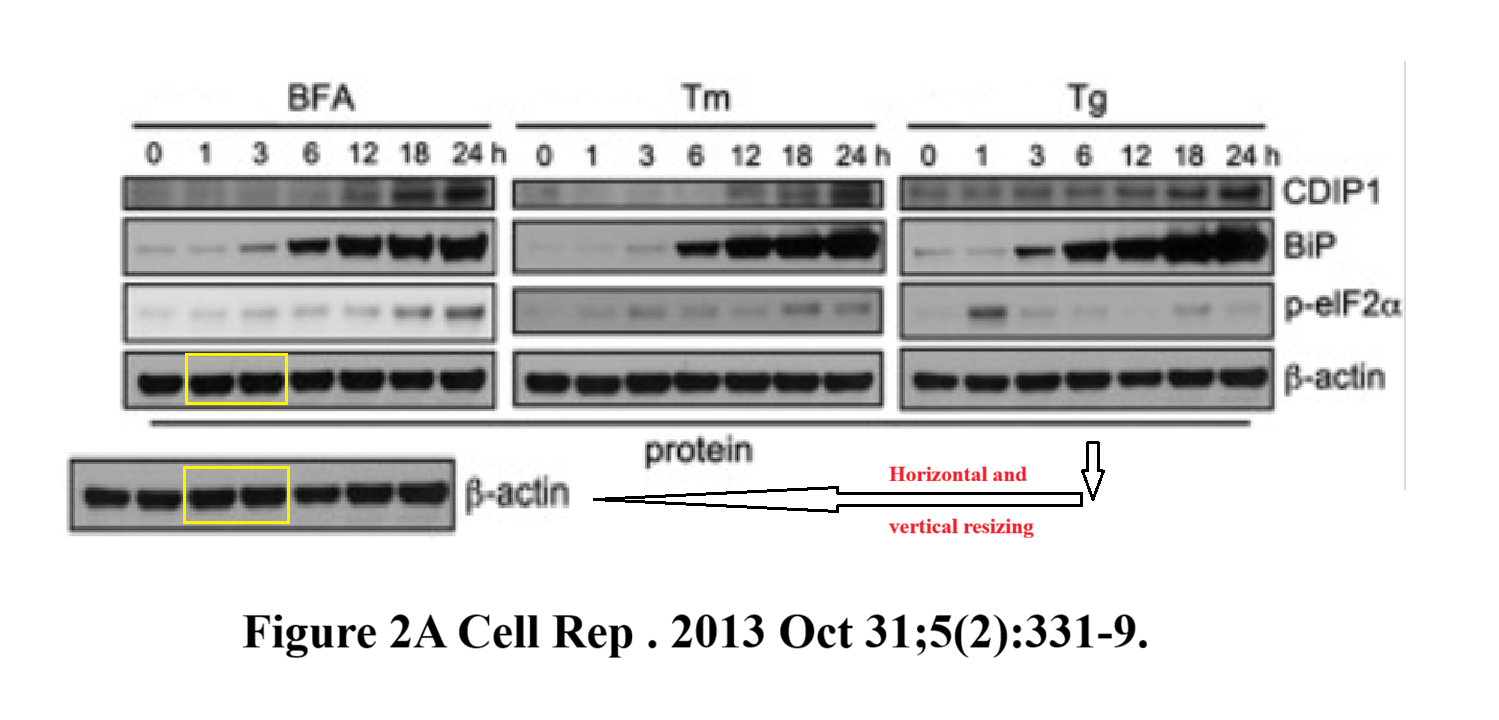
On 20 February 2026, Elsevier Research Integrity and Publishing Ethics Team informed the sleuth:
“The Editor-in-Chief of Cell Reports (copied in here) reviewed your concerns, and the authors were asked to provide detailed explanations and raw data for the images in question. Based on the information available, the EIC is satisfied with the explanation provided by the authors and has decided that no further action is required.”
The Editor-in-Chief Shawnna Buttery is directly employed by Elsevier, just imagine her exchanging chatty emails with that toxic fraudster Lee (of all people!) presumably on the topic of how mean those sleuths are, and how much do we all hate them.
Practises used at the time
Next, Claire Francis’s adventures at a journal owned by the British Society for Immunology. The author is Ian Adcock, a totally dishonest professor of pulmonology (and occasional papermiller!) at Imperial College London, UK, with at least 3 retractions and over 30 fake papers on PubPeer. Read here:
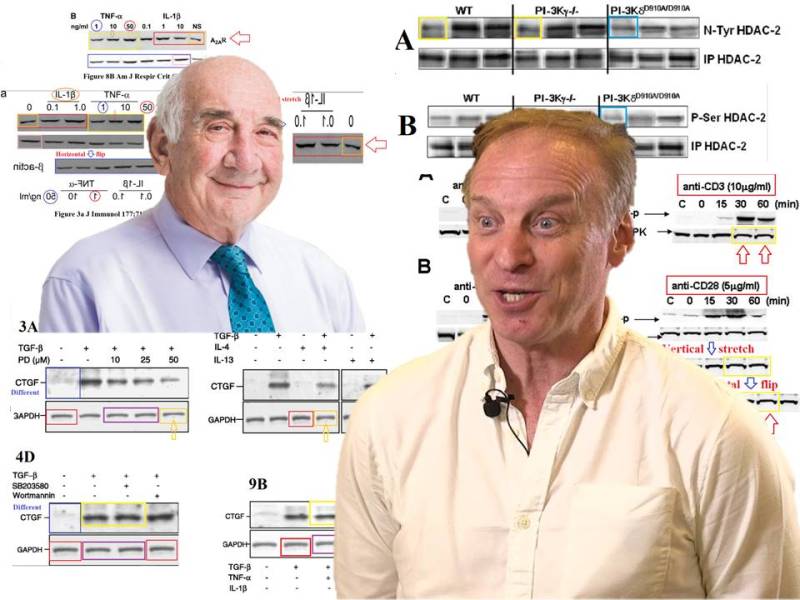
Imperial Adcock – from Barnes to Iran!
“the College would have been well within its rights to reject all of your allegations…”
Claire Francis reported this paper by Adcock:
L G Tsaprouni , K Ito , I M Adcock , N Punchard Suppression of lipopolysaccharide- and tumour necrosis factor-alpha-induced interleukin (IL)-8 expression by glucocorticoids involves changes in IL-8 promoter acetylation Clinical & Experimental Immunology (2007) doi: 10.1111/j.1365-2249.2007.03484.x
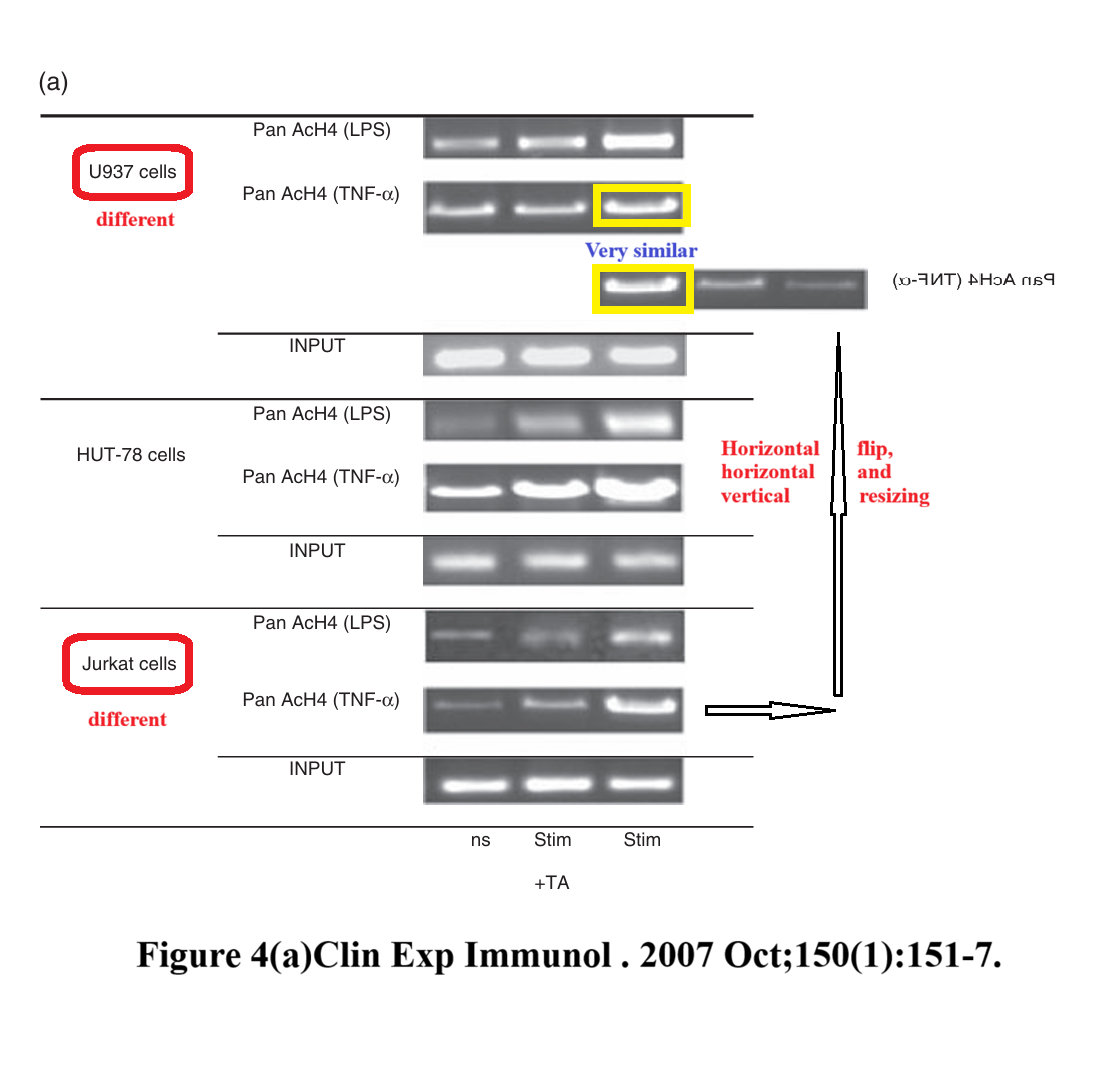
On 18 December 2025, a journal manager announced “a thorough investigation into this issue“. On 26 February 2026, the Editorial Office of the
British Society for Immunology informed the sleuth:
“We have investigated this issue, and the Editors have concluded that they are satisfied with Figure 4a and that there is no clear evidence of figure duplication.
We will be closing this case.“
In a follow-up email from 2 March 2026, the Editorial Office elaborated:
“The Editor has come to this decision after consultation with another member of the Editorial Board. They have looked closely at the diagram and while the bands appear similar, there are some differences in terms of intensity/thickness and distribution of the density of the bands. It was also agreed that any visual similarities reflect the experimental and figure-preparation practises used at the time.”
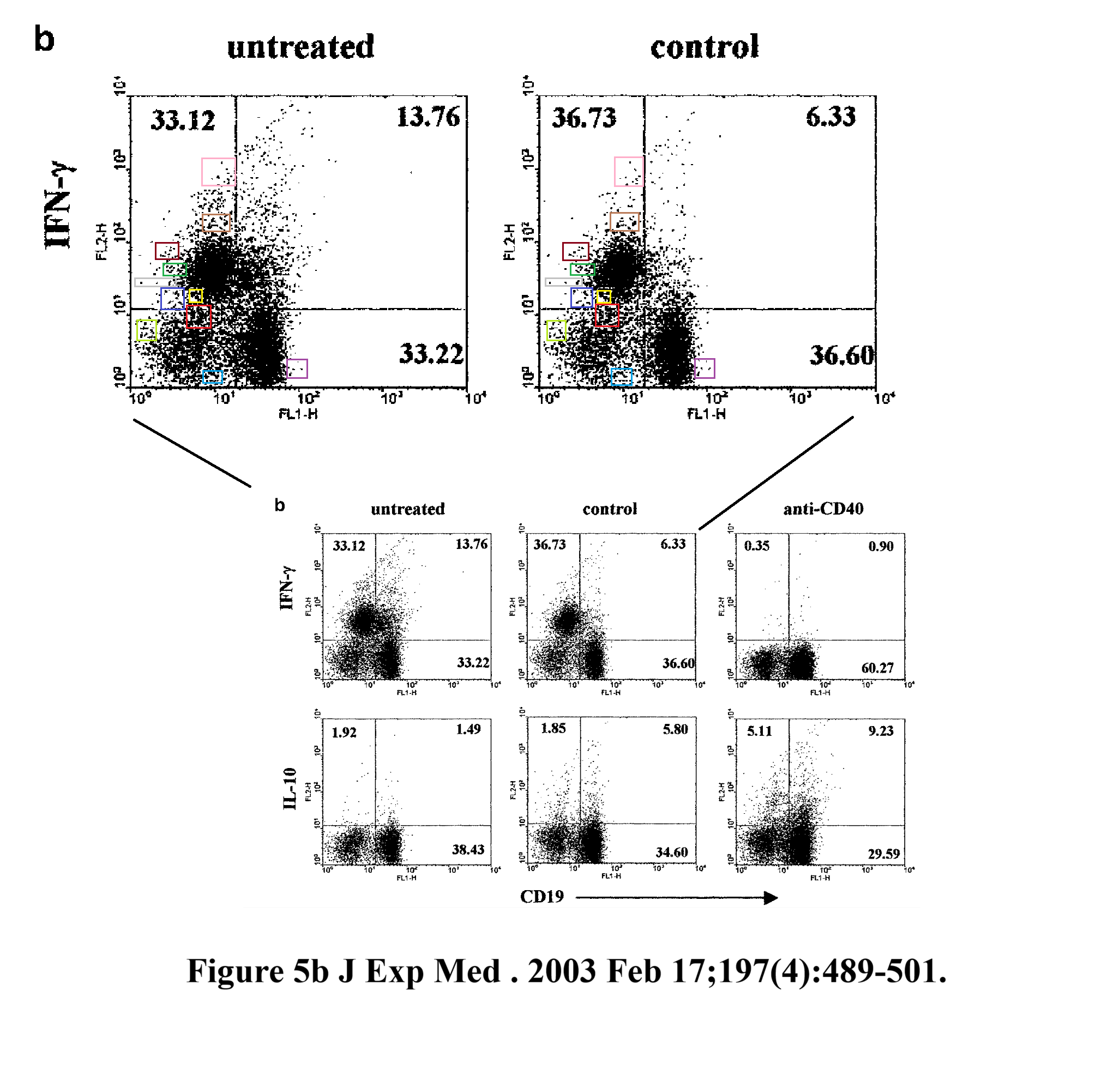
Well, actually, this Editor-in-Chief Claudia Mauri, professor at UCL in London, is indeed an expert. Observe her “experimental and figure-preparation practises used at the time”, now freshly flagged by Claire Francis:
Claudia Mauri, David Gray , Naseem Mushtaq , Marco Londei Prevention of Arthritis by Interleukin 10–producing B Cells Journal of Experimental Medicine (2003) doi: 10.1084/jem.20021293
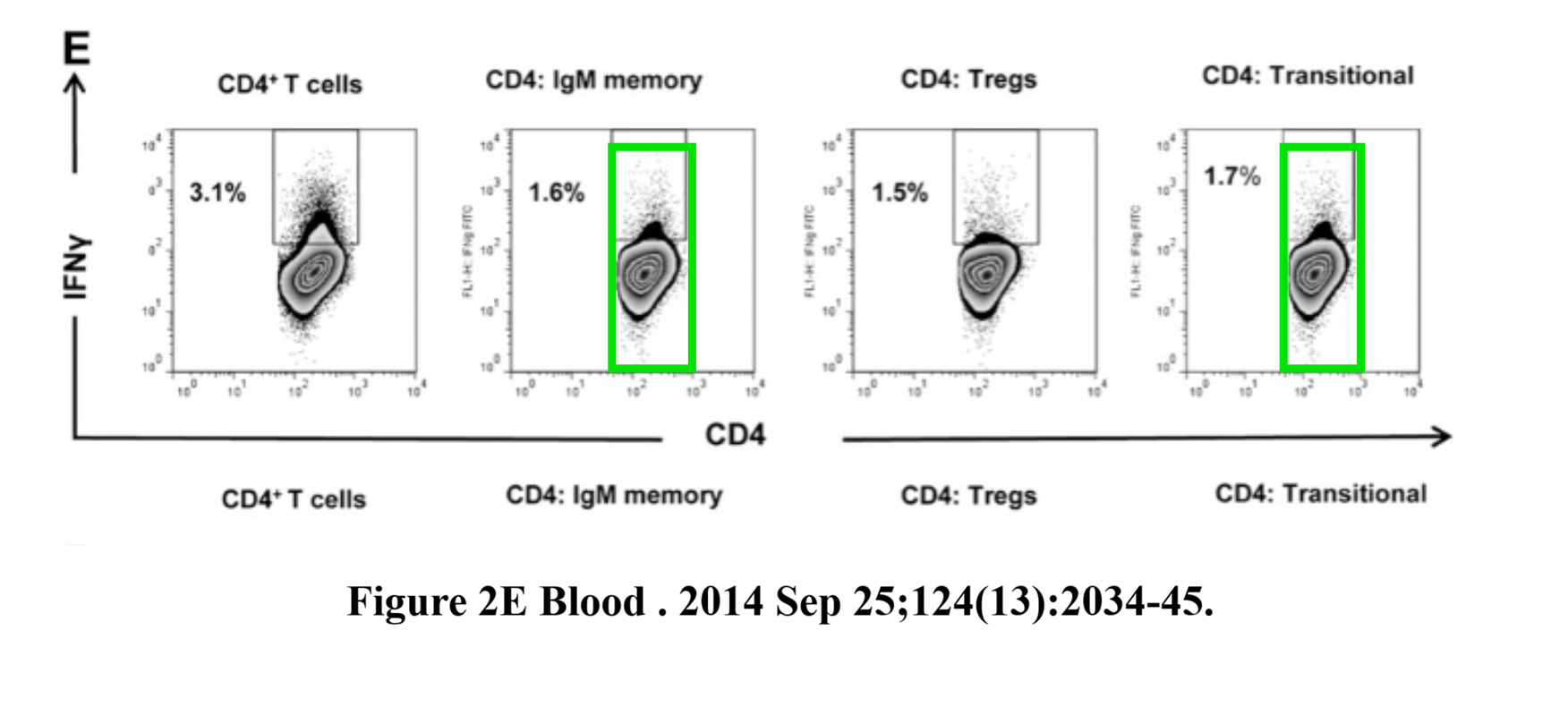
Another one by Mauri with a cloned FACS plot:
Ahmad Khoder , Anushruti Sarvaria , Abdullah Alsuliman , Claude Chew , Takuya Sekine , Nichola Cooper , Stephan Mielke , Hugues De Lavallade , Muharrem Muftuoglu , Irina Fernandez Curbelo , Enli Liu , Paolo A. Muraro , Amin Alousi , Kate Stringaris , Simrit Parmar , Nina Shah , Hila Shaim , Eric Yvon , Jeffrey Molldrem , Rayne Rouce , Richard Champlin, Ian McNiece, Claudia Mauri, Elizabeth J. Shpall, Katayoun Rezvani Regulatory B cells are enriched within the IgM memory and transitional subsets in healthy donors but are deficient in chronic GVHD Blood (2014) doi: 10.1182/blood-2014-04-571125
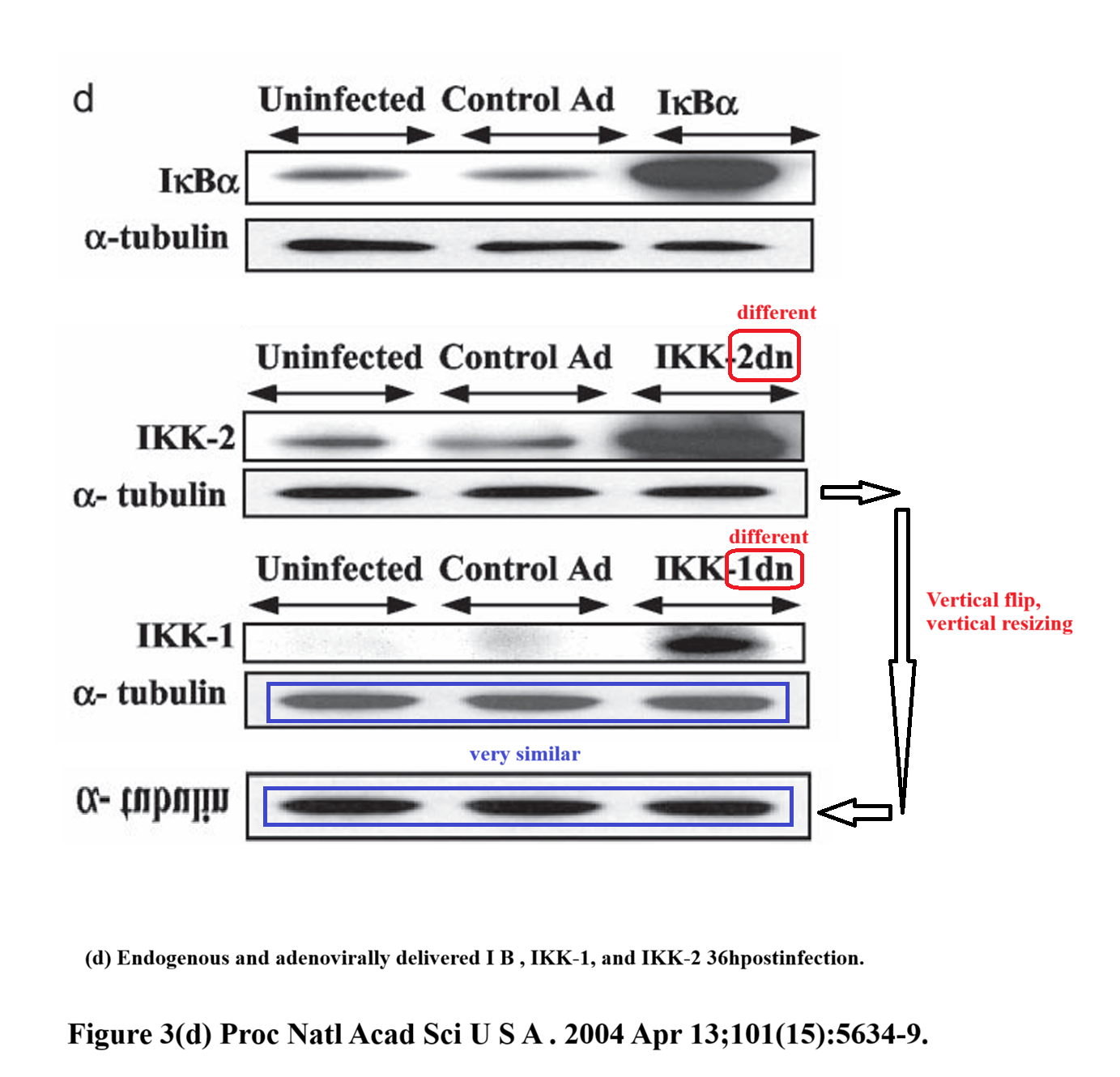
No wonder Mauri insists that western blots can never be identical:
Claudia Monaco , Evangelos Andreakos , Serafim Kiriakidis , Claudia Mauri , Colin Bicknell , Brian Foxwell , Nicholas Cheshire , Ewa Paleolog , Marc Feldmann Canonical pathway of nuclear factor κB activation selectively regulates proinflammatory and prothrombotic responses in human atherosclerosis Proceedings of the National Academy of Sciences of the United States of America (2004) doi: 10.1073/pnas.0401060101
Maybe Adcock can serve as expert to investigate Mauri’s papers now?
Retraction Watchdogging
The authors provided images
Christoph Thiemermann has two more retractions, apparently number 13 and 14. Which makes me suspect that his Queen Mary University of London (QMUL) started to use retractions as a positive indicator for academic performance.
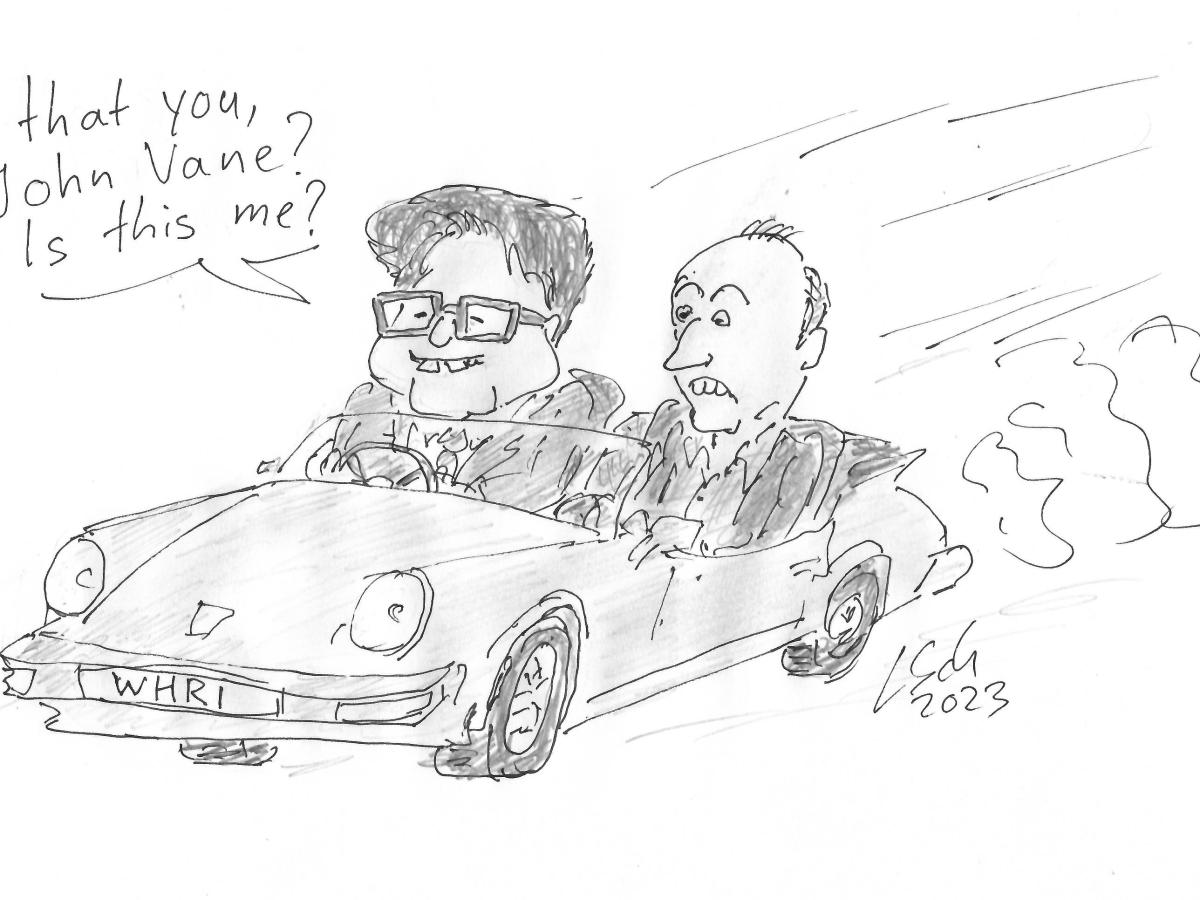
Queen Mary and John Vane’s Cowboys
Welcome to the the William Harvey Research Institute in London. Meet two proteges of its founder, the late Nobelist Sir John Vane: Chris Thiemermann and Mauro Perretti. Then meet their own rotten mentees, especially Salvatore Cuzzocrea and Jesmond Dalli.
Here is the retraction Nr 13, the last author Massimo Collino is professor at University of Turin in Italy, and a close associate of Thiemermann’s with a large PubPeer record of fake science:
Fausto Chiazza, Aurélie Couturier-Maillard , Elisa Benetti , Raffaella Mastrocola , Debora Nigro , Juan C. Cutrin , Loredana Serpe , Manuela Aragno , Roberto Fantozzi , Bernard Ryffel , Christoph Thiemermann, Massimo Collino Targeting the NLRP3 inflammasome to Reduce Diet-induced Metabolic Abnormalities in Mice World Journal of Surgery (2015) doi: 10.2119/molmed.2015.00104
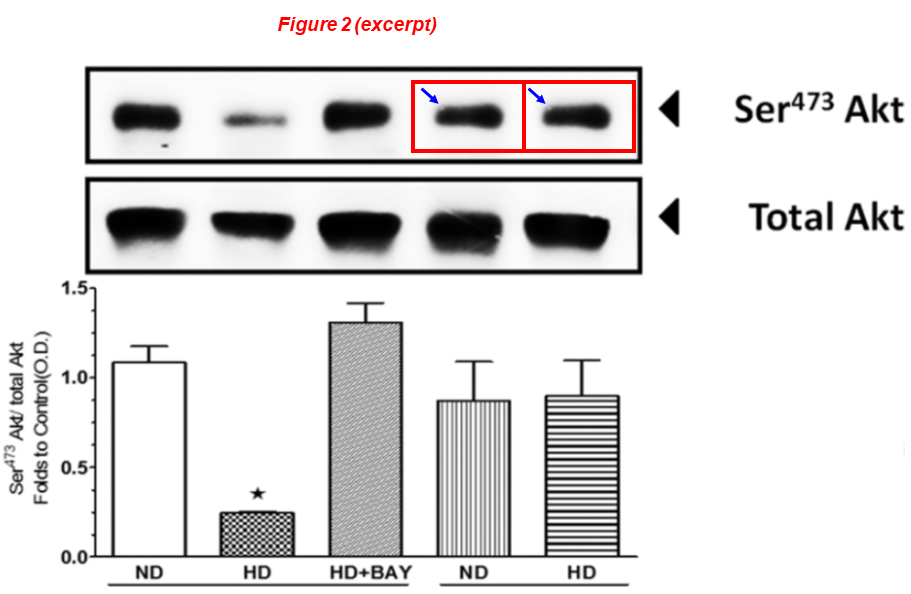
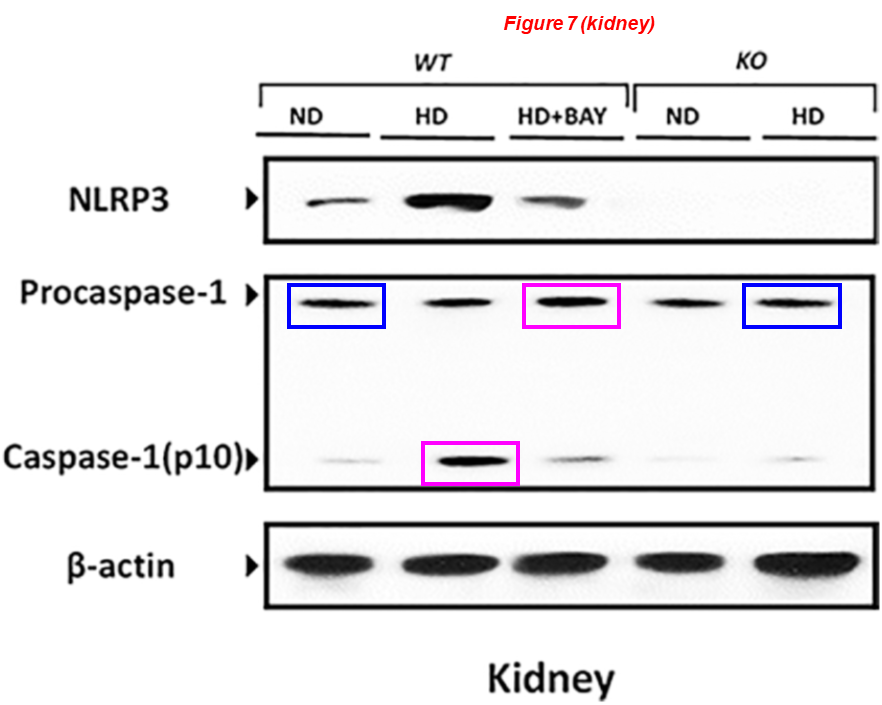
Springer Nature issued this retraction on 25 February 2026:
“The Editor-in-Chief would like to alert the readers that concerns have been raised regarding some of the data presented in this article, specifically:
- Figure 2 Skeletal muscle Ser-473 Atk lanes 4 and 5 appear highly similar;
- Figure 4a ND WT and HD + BAY WT images appear to overlap with different colour intensity;
- Figure 7 Kidney Procaspase-1 lanes 1 and 5 appear highly similar;
- Figure 7 Kidney Procaspase-1 lane 3 and Caspase-1(p10) lane 2 appear highly similar.
The Editor-in-Chief therefore no longer has confidence in the presented data.
Massimo Collino has stated on behalf of all authors that they do not agree with this retraction.”
Retraction Nr 14, in the same journal, and again with Collino. The first author Nimesh Patel used to be Thiemermann’s protege at QMUL, and is now associate professor at UCL in London:
Nimesh S. A. Patel, Hannah L. Kerr-Peterson , Michael Brines , Massimo Collino, Mara Rogazzo, Roberto Fantozzi , Elizabeth G. Wood , Florence L. Johnson , Muhammad M. Yaqoob , Anthony Cerami, Christoph Thiemermann Delayed administration of pyroglutamate helix B surface peptide (pHBSP), a novel nonerythropoietic analog of erythropoietin, attenuates acute kidney injury World Journal of Surgery (2012) doi: 10.2119/molmed.2012.00093

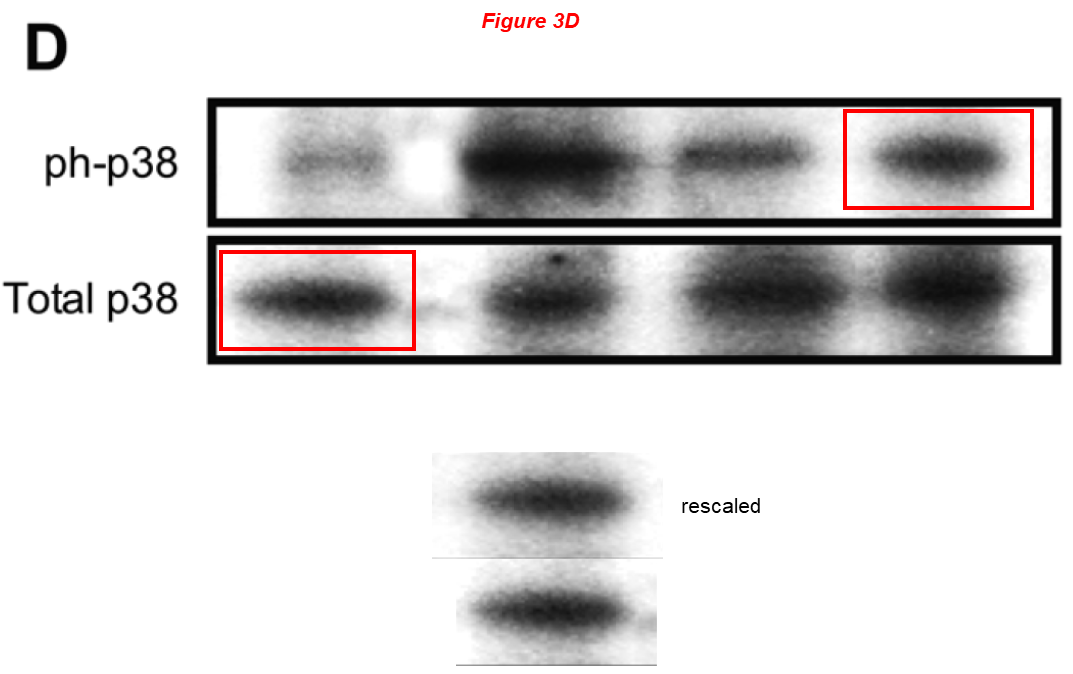
Springer Nature published the retraction on 26 February 2026:
“The Editor-in-Chief has retracted this article. After publication, concerns were raised regarding some of the blots presented in Fig. 3, specifically:
- Figure 3a Total Akt lanes 2, 3 and 4 appear highly similar;
- Figure 3d ph-p38 lane 4 appears highly similar to Total p38 lane 1.
The authors provided images of the original autoradiograms to address these concerns; however, further checks by the publisher found that a number of bands selected for publication did not appear to be representative of the observed experimental results.
The Editor-in-Chief therefore no longer has confidence in the presented data.
Massimo Collino, Christoph Thiemermann, and Nimesh Patel do not agree with this retraction. The other authors have not responded to any correspondence from the editor or publisher about this retraction.”
Yes, they submitted fake raw data to the publisher. By the way, Collino publishes fraud even without Thiemermann:
Claudia Penna, Manuela Aragno, Alessia Sofia Cento, Saveria Femminò, Isabella Russo, Federica Dal Bello , Fausto Chiazza, Debora Collotta, Gustavo Ferreira Alves , Massimo Bertinaria, Elisa Zicola , Valentina Mercurio , Claudio Medana, Massimo Collino, Pasquale Pagliaro Ticagrelor Conditioning Effects Are Not Additive to Cardioprotection Induced by Direct NLRP3 Inflammasome Inhibition: Role of RISK, NLRP3, and Redox Cascades Oxidative Medicine and Cellular Longevity (2020) doi: 10.1155/2020/9219825
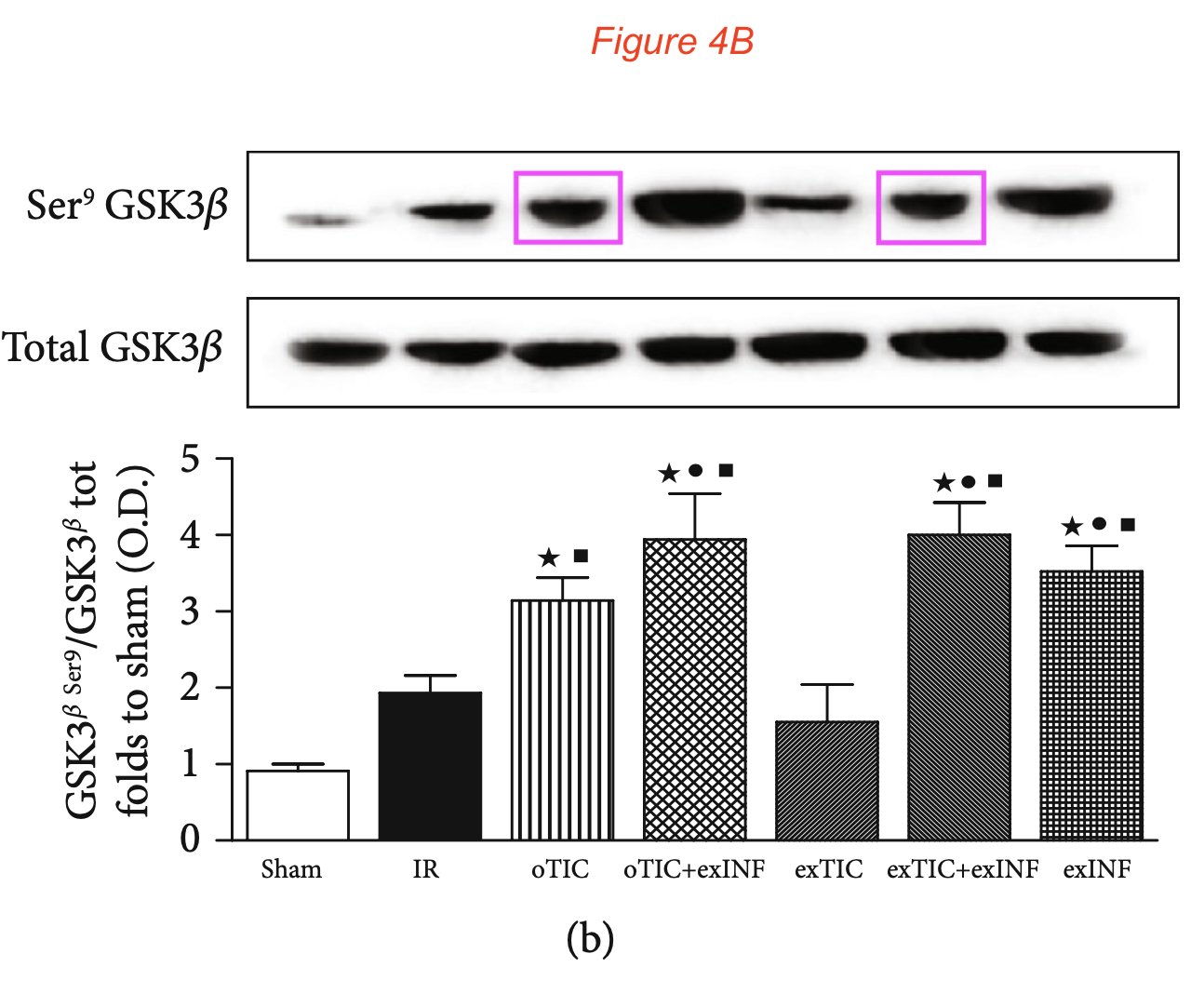
Pink boxes: Two bands in the top panel look remarkably similar”
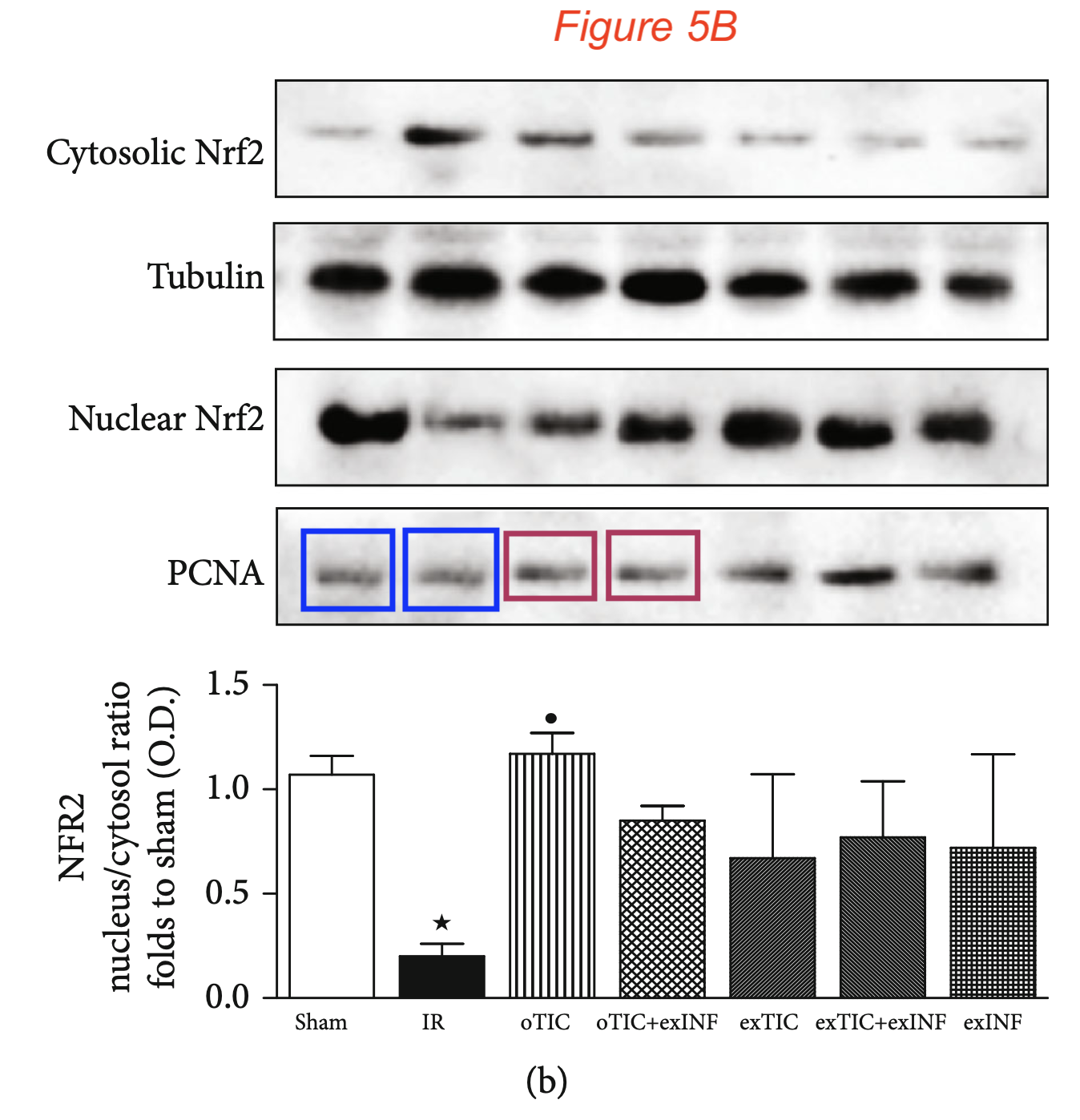
Blue boxes: Two bands in the PCNA panel look remarkably similar
Dark red boxes: Two other bands in the PCNA panel look remarkably similar”
Representative of the entire experiment
Another Italian retraction, for scholars at the Istituto Superiore di Sanità (National Institute of Health) in Rome. PLOS One acted swiftly, the PubPeer comment was placed merely in January 2026:
Massimo D’Archivio , Beatrice Scazzocchio , Stefania Giammarioli , Maria L. Fiani , Rosaria Varì , Carmela Santangelo , Augusto Veneziani , Annunziata Iacovelli , Claudio Giovannini , Sandra Gessani , Roberta Masella ω3-PUFAs exert anti-inflammatory activity in visceral adipocytes from colorectal cancer patients PLOS One (2013) doi: 10.1371/journal.pone.0077432
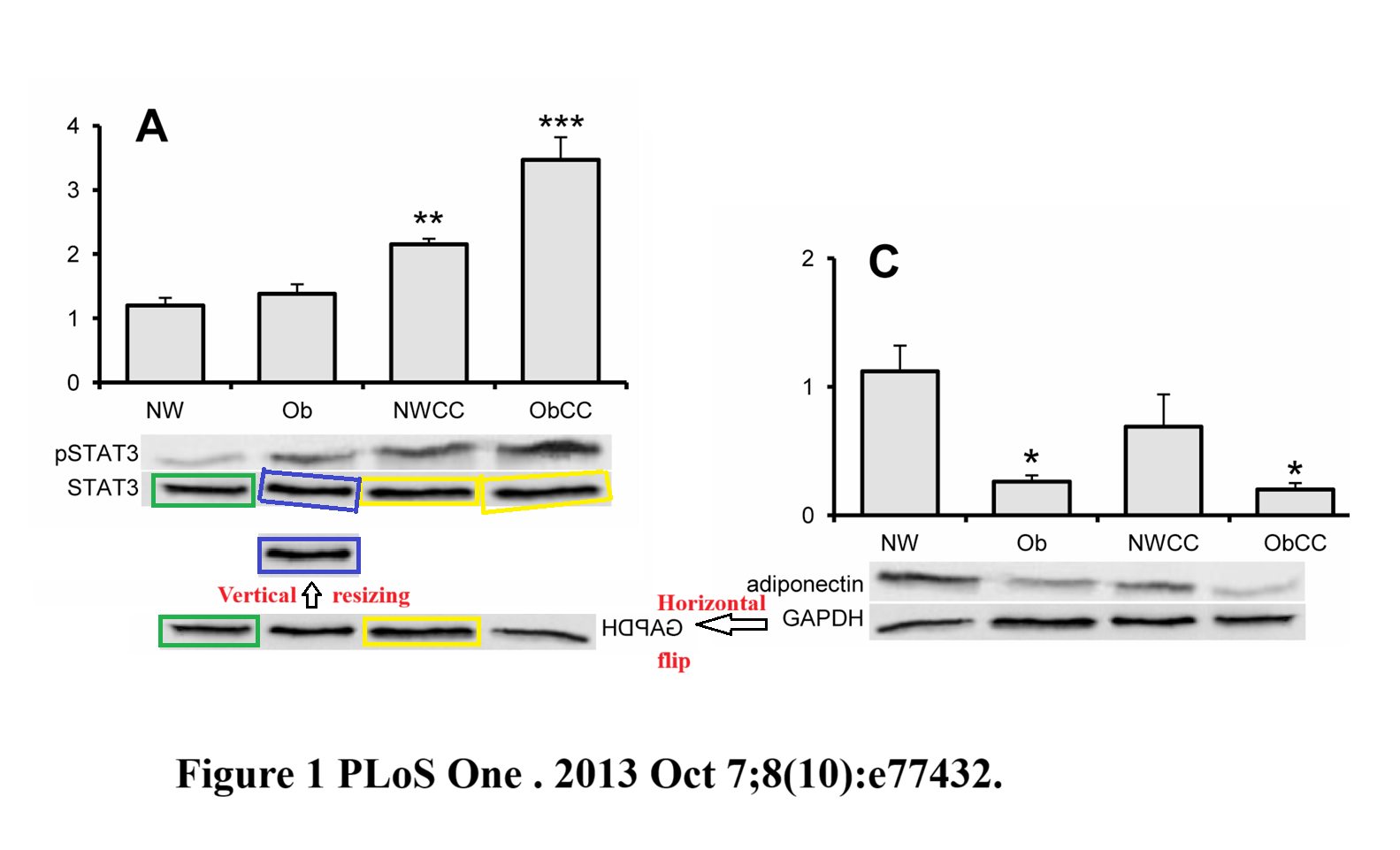
Here the retraction from 25 February 2026:
“After this article [1] was published, concerns were raised regarding results presented in Figs 1 and 3. Specifically,
- The Fig 1A STAT3 NW band appears similar to the Fig 1B Lamin B ObCC band when flipped horizontally and the Fig 1C GAPDH ObCC band when flipped horizontally.
- The Fig 1A STAT3 Ob band appears similar to the Fig 1B Lamin B NWCC band when flipped horizontally and the Fig 1C GAPDH NWCC band when flipped horizontally.
- The Fig 1A STAT3 NWCC band appears similar to the Fig 1A STAT3 ObCC band, the Fig 1B Lamin B Ob band when flipped horizontally, and the Fig 1C GAPDH Ob band when flipped horizontally.
- The Fig 3A STAT3 NW lanes 1–2 bands appear similar to the Fig 3A STAT3 NWCC lanes 5–6 bands.
- There appear to be vertical discontinuities in the following panels:
- Fig 3A Pstat3
- Fig 3A STAT3
The corresponding author stated that the data underlying [1] are no longer available and that some of the above listed blots were selected as representative of the entire experiment.
In light of the above unresolved concerns which call into question the integrity and reliability of [1], the PLOS One Editors retract this article.
MDA, BS, RV, CS, and RM did not agree with the retraction. SG, MLF, AV, AI, CG, and SG either did not respond directly or could not be reached.
MDA, BS, RV, CS, and RM stand by the article’s findings.”
Massimo D’Archivio and Roberta Masella have more on PubPeer. Like this:
Manuela Del Cornò , Massimo D’Archivio , Lucia Conti , Beatrice Scazzocchio , Rosaria Varì , Gloria Donninelli , Barbara Varano , Stefania Giammarioli , Simone De Meo , Gianfranco Silecchia , Francesco Pennestrì , Roberto Persiani , Roberta Masella , Sandra Gessani Visceral fat adipocytes from obese and colorectal cancer subjects exhibit distinct secretory and ω6 polyunsaturated fatty acid profiles and deliver immunosuppressive signals to innate immunity cells Oncotarget (2016)
doi: 10.18632/oncotarget.10998
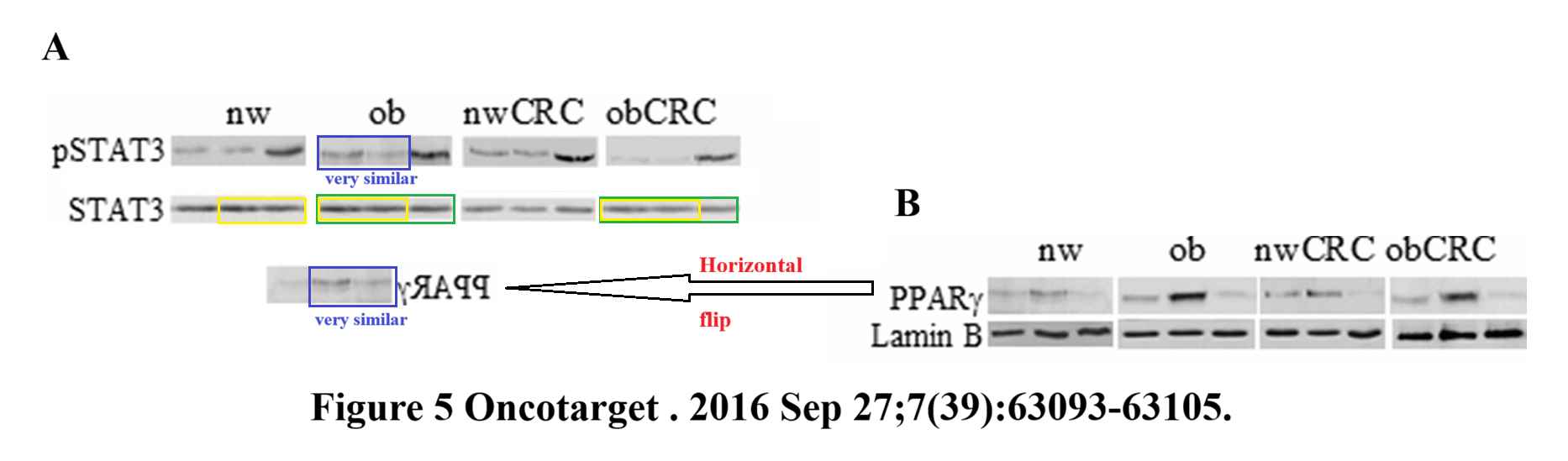
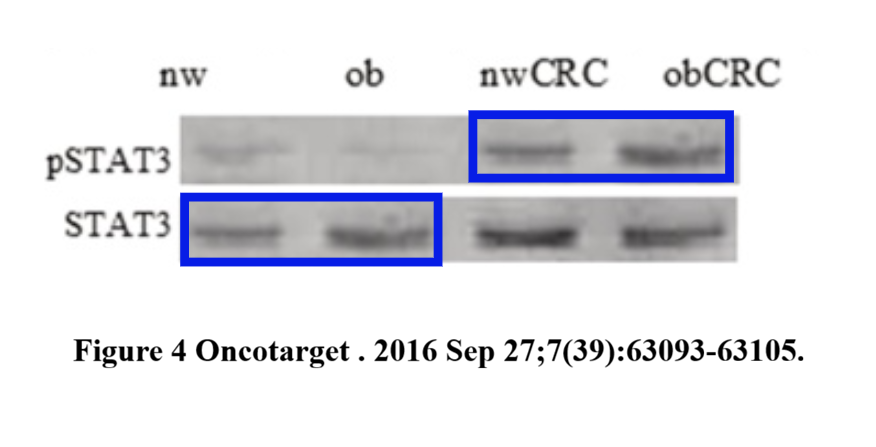
Fig 4
Or this, same gang:
Massimo D’Archivio , Beatrice Scazzocchio , Carmela Filesi , Rosaria Varì , Maria Teresa Maggiorella , Leonardo Sernicola , Carmela Santangelo , Claudio Giovannini , Roberta Masella Oxidised LDL up‐regulate CD36 expression by the Nrf2 pathway in 3T3‐L1 preadipocytes FEBS Letters (2008) doi: 10.1016/j.febslet.2008.05.029
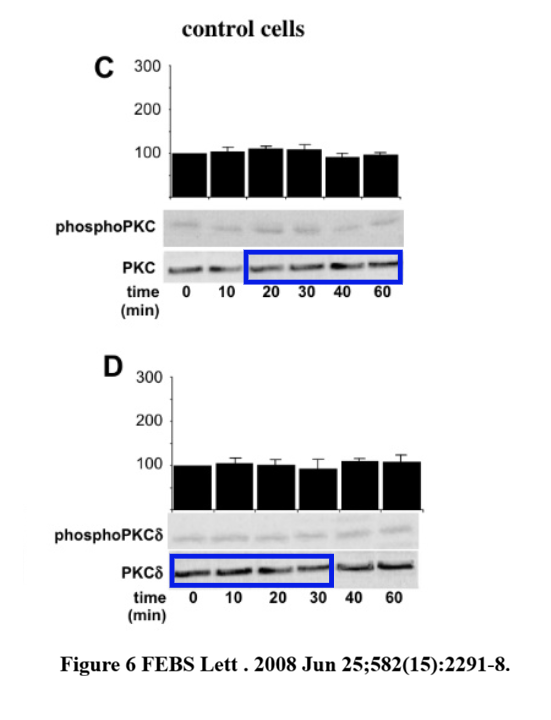
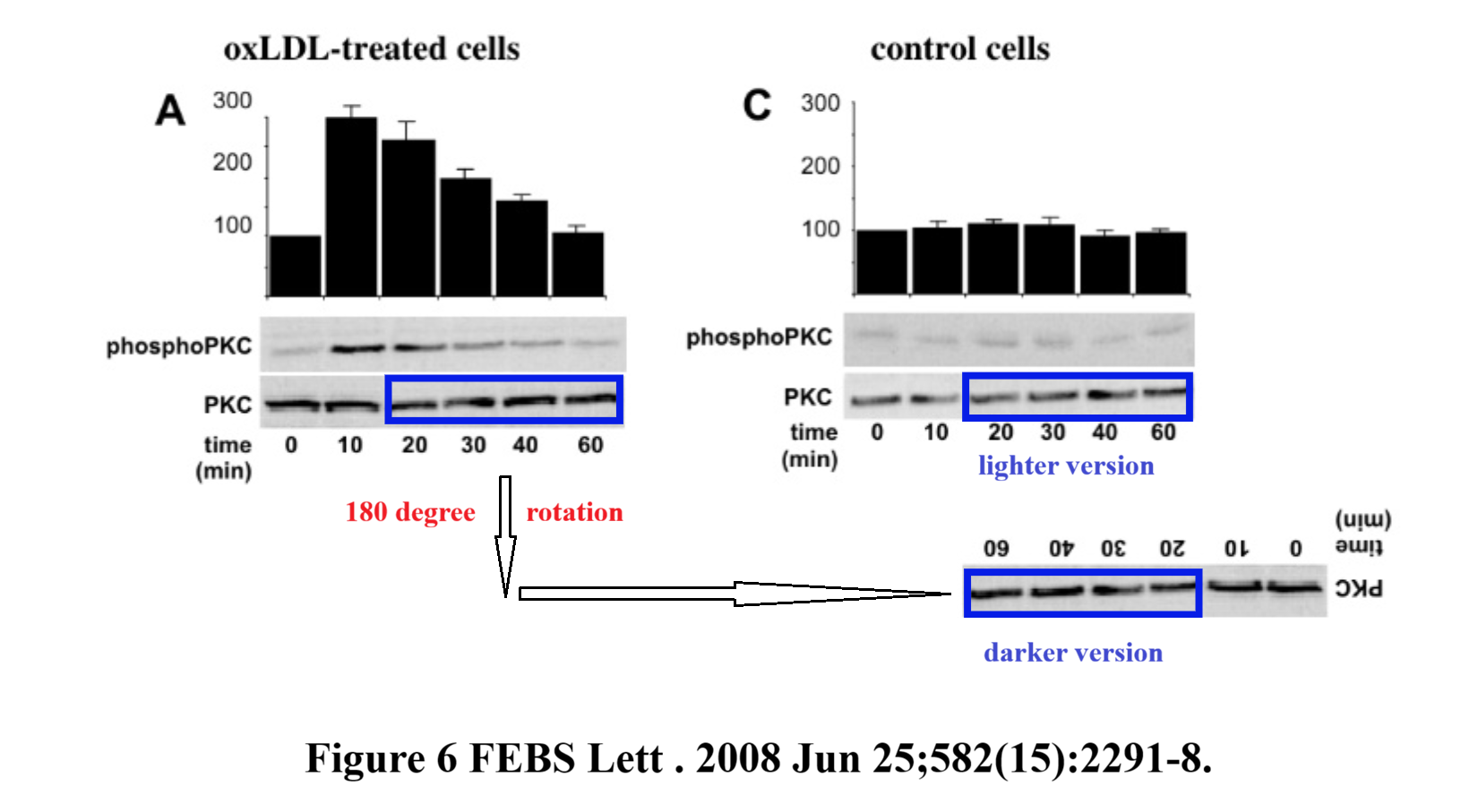
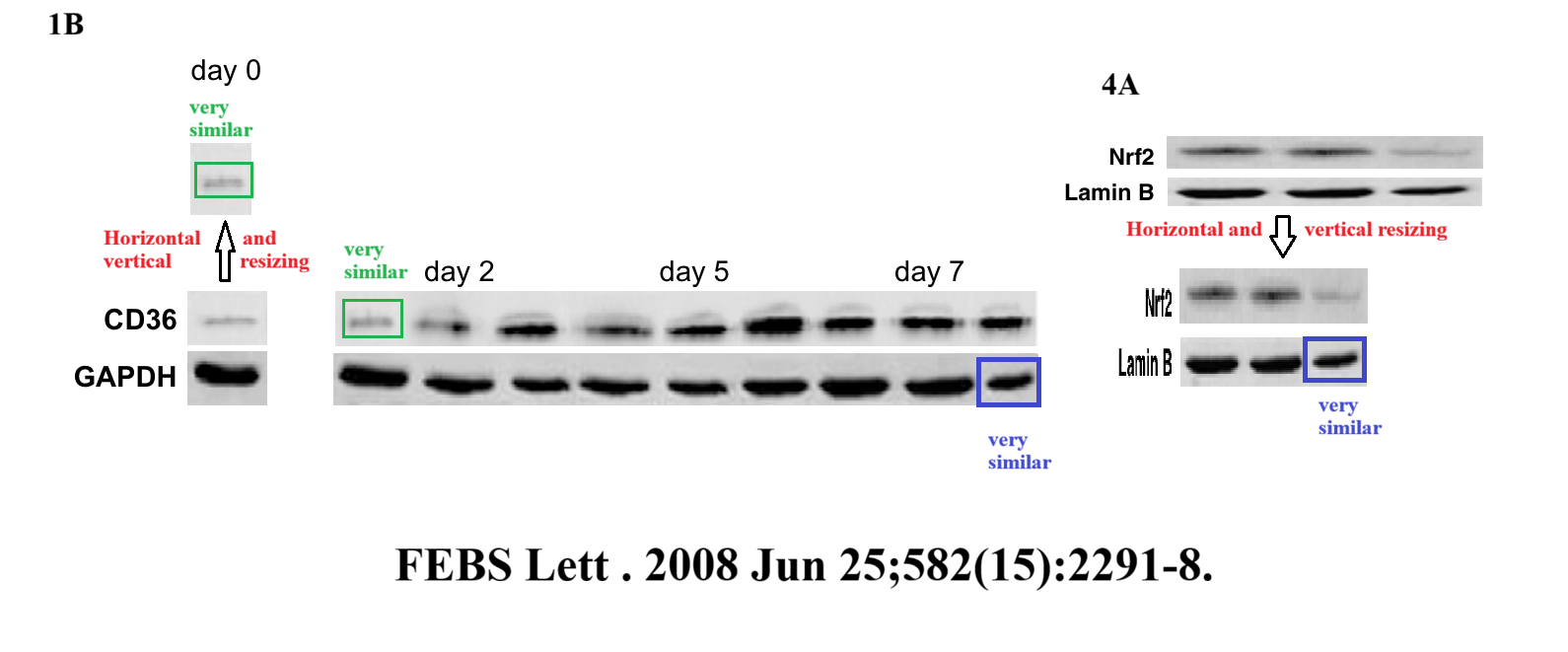
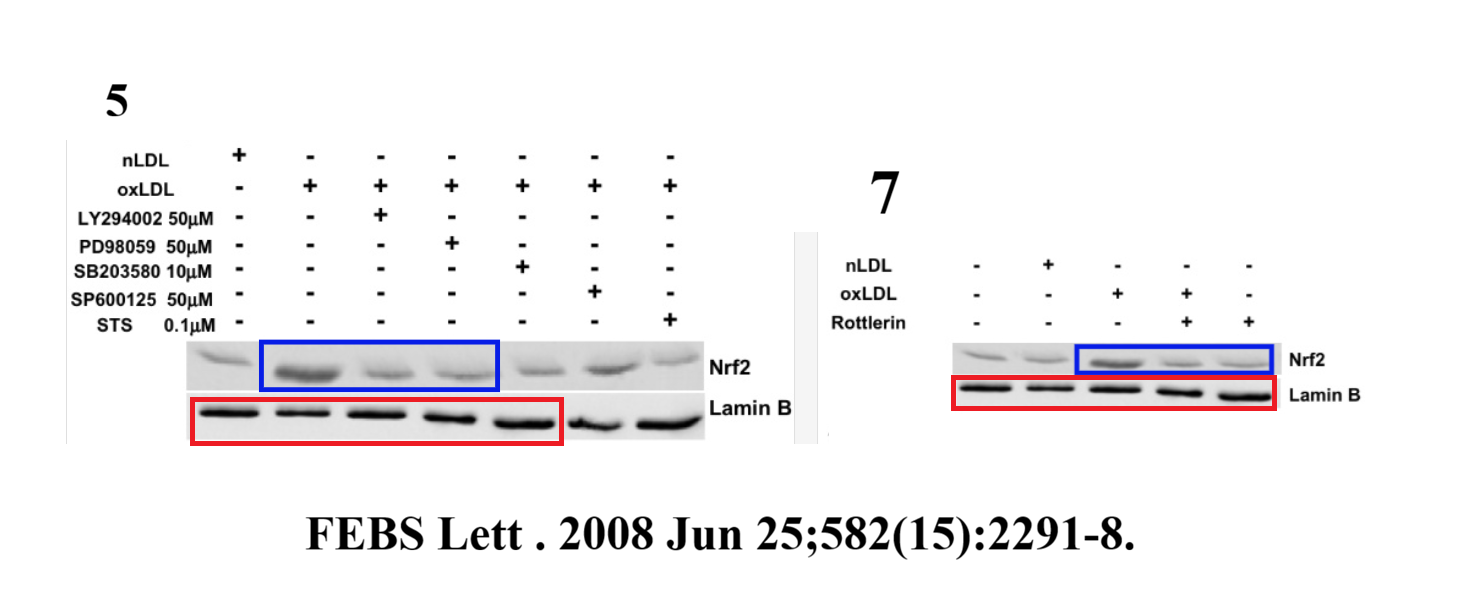
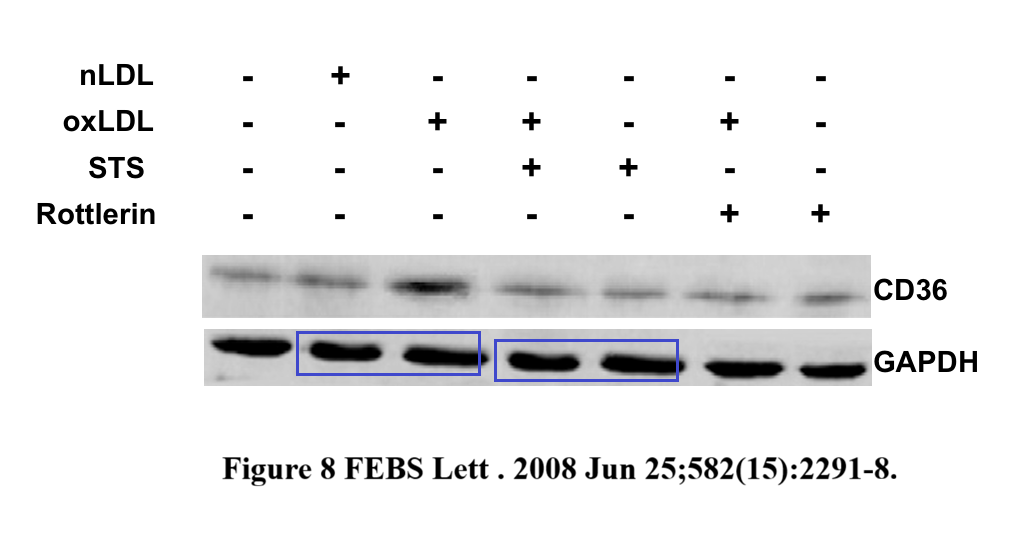
Many more fake gels by D’Archivio and Masella can be admired for example in Vari et al 2015 or Scazzocchio et al 2009. They also worked with Giovanni Li Volti in Catania, who featured prominently here:

The Name of the Foes
“I am Jorge de Burgos. I believe research should pause in searching for the progress of knowledge. Right now, we don’t need more papers, we rather need more knowledge by going through a continuous and sublime recapitulation to figure out what is true and what is fake” – Aneurus Inconstans

This is the common paper:
Beatrice Scazzocchio, Rosaria Varì, Carmelina Filesi , Massimo D’Archivio , Carmela Santangelo , Claudio Giovannini , Annunziata Iacovelli , Gianfranco Silecchia, Giovanni Li Volti , Fabio Galvano, Roberta Masella Cyanidin-3-O-β-glucoside and protocatechuic acid exert insulin-like effects by upregulating PPARγ activity in human omental adipocytes Diabetes (2011) doi: 10.2337/db10-1461

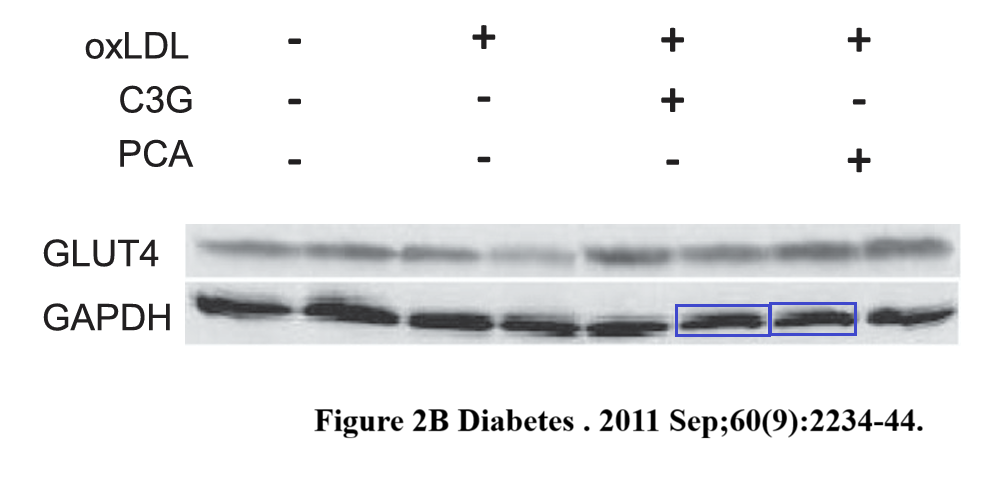
The Roman team produced not only fake gels, also microscopy data got forged in Photoshop:
Roberta Masella , Rosaria Varì , Massimo D’Archivio , Carmela Santangelo , Beatrice Scazzocchio , Maria Teresa Maggiorella , Leonardo Sernicola , Fausto Titti , Massimo Sanchez , Umberto Di Mario , Gaetano Leto , Claudio Giovannini Oxidised LDL modulate adipogenesis in 3T3‐L1 preadipocytes by affecting the balance between cell proliferation and differentiation FEBS Letters (2006) doi: 10.1016/j.febslet.2006.03.068
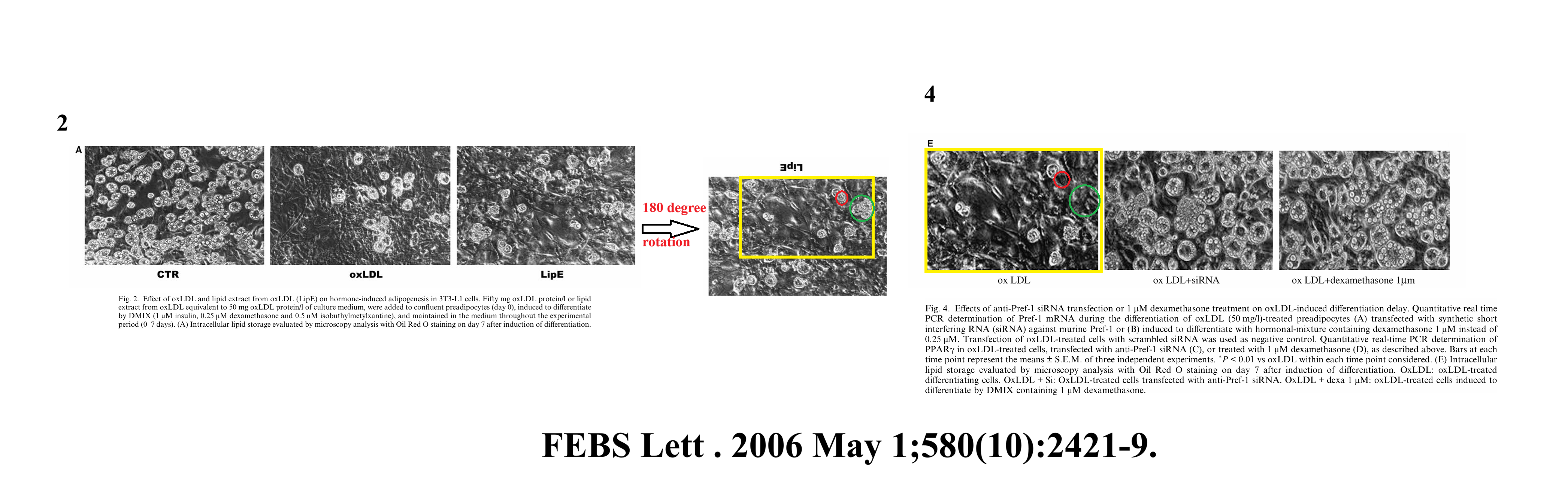
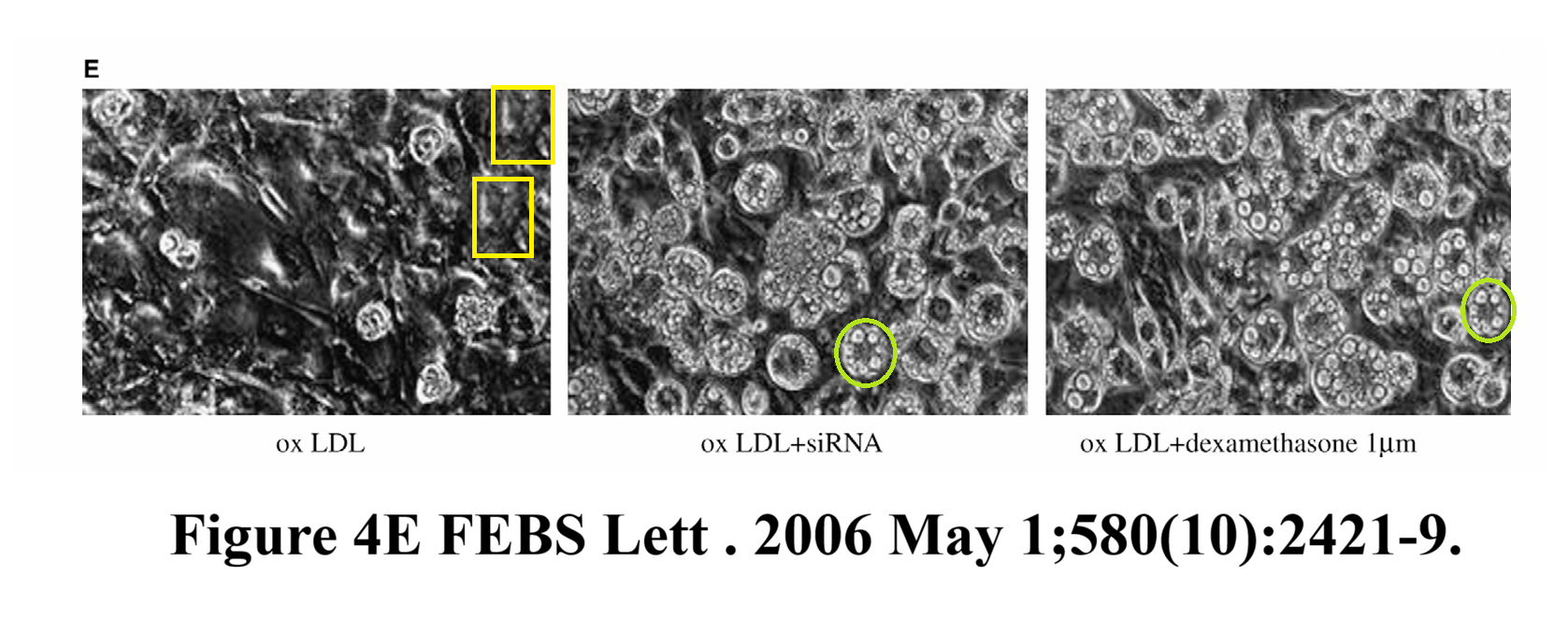
Both Masella and D’Archivio have no doctorate degrees, she started at National Institute of Health already 40 years ago as lab assistant, and rose to the position of research leader in 2021. D’Archivio arrived to the institute in the year 2000.
Dear reader, Italy actually does have many qualified candidates for such jobs, with PhD degrees and all, and they don’t cheat. But instead, these cheating clowns with personal connections get those government jobs, you see the result.
Famous eel scandal
Retraction for the Pakistani papermill fraudster Shafaqat Ali (h-index 129, 17 retractions by now), the interesting part with this retraction are his Polish coauthors.
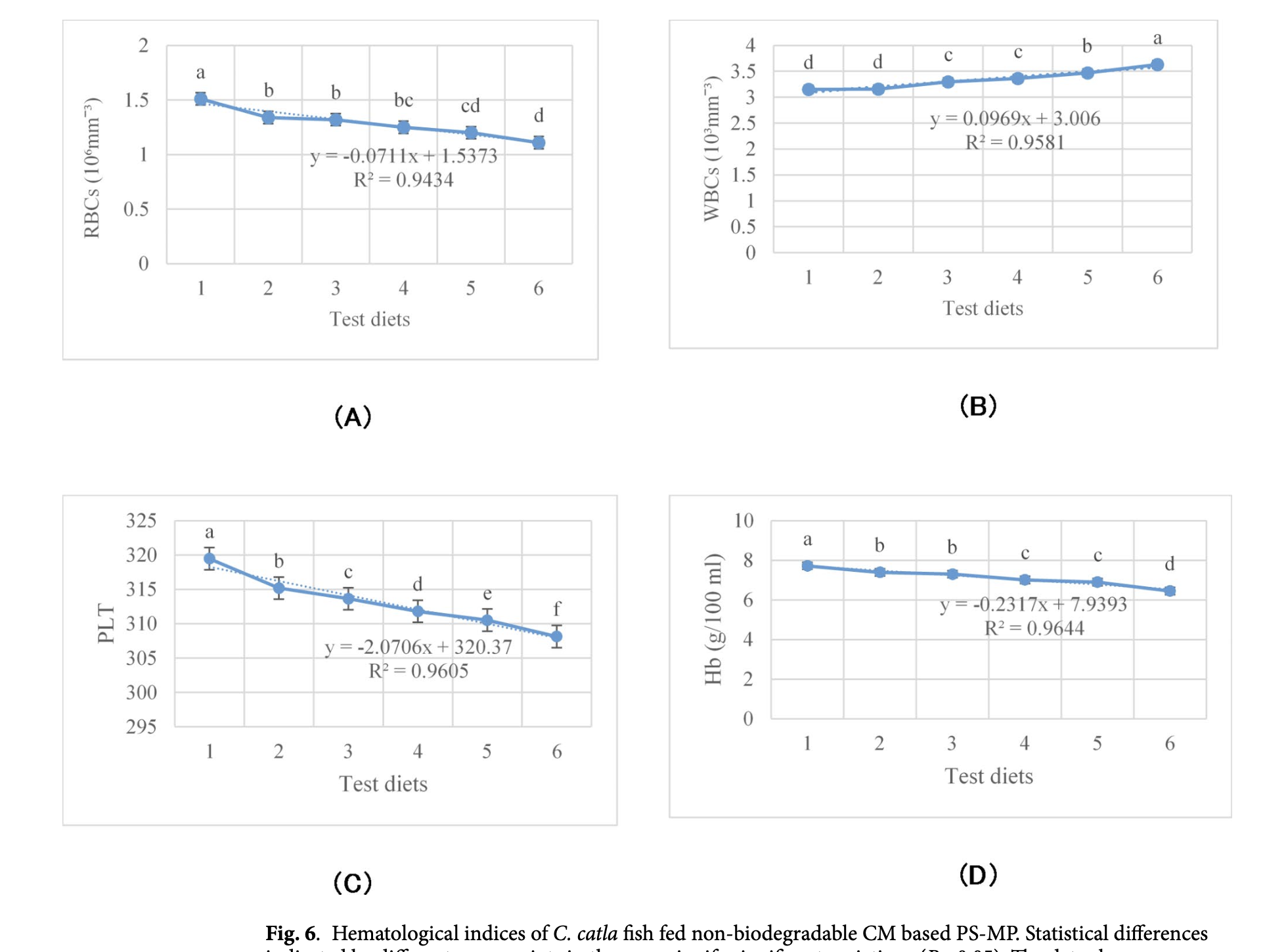
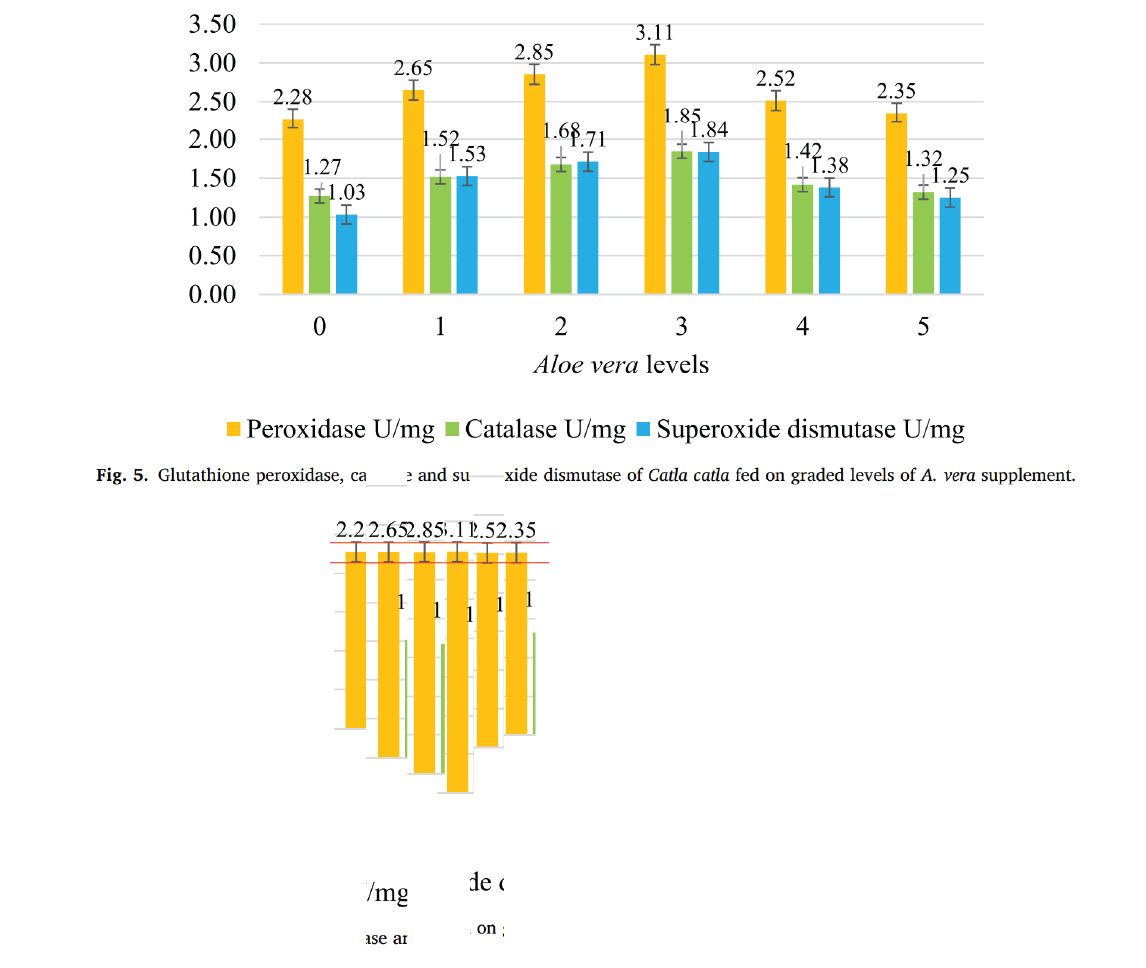
Eram Rashid , Syed Makhdoom Hussain , Shafaqat Ali, Dariusz Kucharczyk , Joanna Nowosad , Khalid A. Al-Ghanim , Nadia Nazish An assessment of physiological and health responses in Catla catla fingerlings after polystyrene microplastic exposure Scientific Reports (2025) doi: 10.1038/s41598-025-85291-w
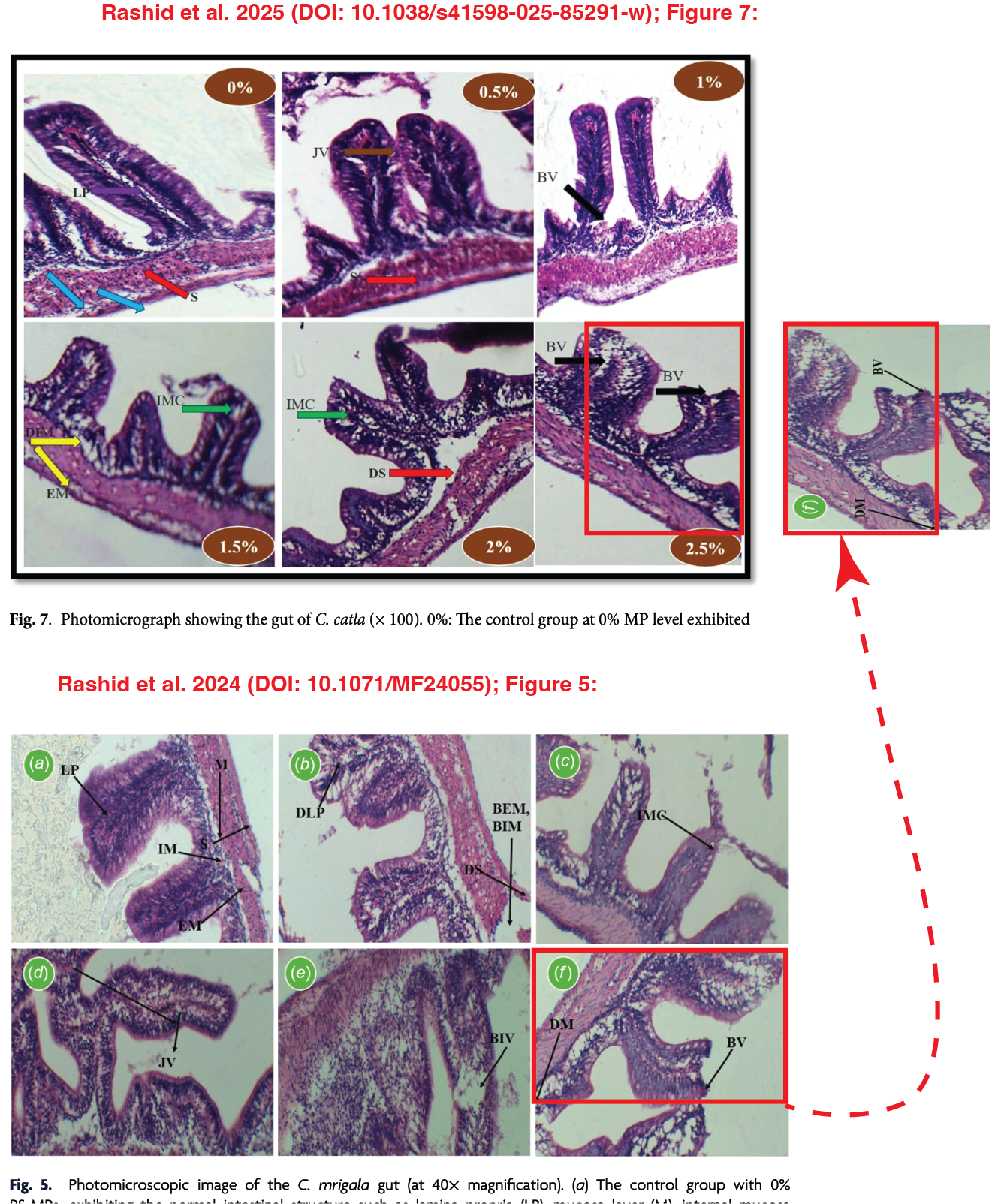
Eram Rashid , Syed Makhdoom Hussain, Shafaqat Ali, Khalid A. Al-Ghanim , Pallab K. Sarker Toxicological consequences of polystyrene microplastics on Cirrhinus mrigala: effects on growth, body composition, nutrient digestibility, haematology and histopathology Marine and Freshwater Research (2024) doi: 10.1071/mf24055
Springer Nature issued this retraction on 2 March 2026:
“The Editors have retracted this Article.
After publication, concerns were raised regarding data irregularities. Specifically, Figure 7 in the paper appears to partially overlap with Figure 4 in1, where it represents a different condition, and Figure 5 in2, where it represents a different species. Concerns were also raised regarding the error bars displayed in Figure 6. The Authors provided some of the data on request, but were unable to provide satisfactory explanation to the concerns raised. The Editors have therefore lost confidence in the contents of this Article.
Authors have not explicitly stated whether they agree or disagree with this Retraction.”
Now, to the Polish coauthors. Both Dariusz Kucharczyk and Joanna Nowosad are affiliated with the University of Olsztyn, and it is was the former, a professor of fishery, who apparently featured in Polish media before. Wyborcza reported in August 2019 about the court decision in the “famous eel scandal”:
“On August 26, 2019, the District Court in Olsztyn found Dariusz K. guilty of a number of irregularities in the implementation of the research project and sentenced him to one year of imprisonment with a conditional suspension of its execution for a period of three years. The court also fined the defendant PLN 10,000 and ordered him to pay PLN 50,000 compensation to the injured university, i.e. the University of Warmia and Mazury.
The District Prosecutor’s Office in Olsztyn accused Dariusz K. of committing five crimes in 2011–2013 in connection with a project co-financed by the European Fisheries Fund. It concerned innovations in fish aquaculture, with particular emphasis on their reproduction”
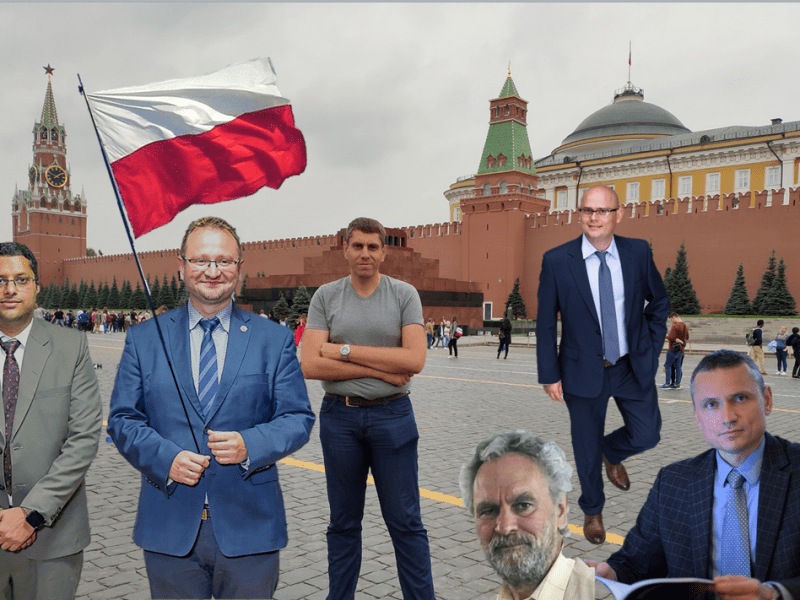
Sons of Poland
“Jeszcze Polska nie zginęła, Kiedy my żyjemy. Co nam obca przemoc dała, odpłacimy fabrykom artykułów.
No wonder someone sentenced to jail for embezzlement of public money starts papermilling….
Kucharczyk has more on PubPeer, all with Ali and mostly with Nowosad. Here for example, are they with Konrad Turkowski, Director of the National Inland Fisheries Institute in Olszyn:
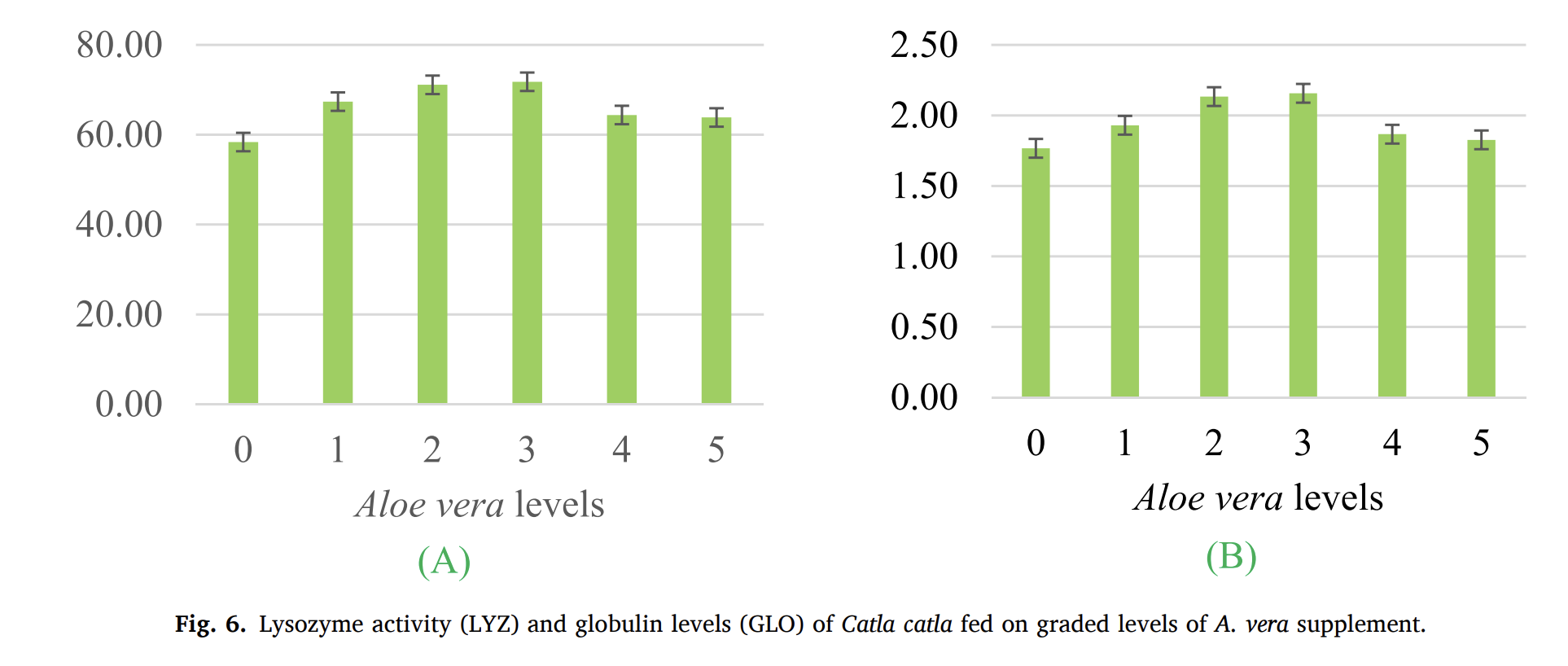
Zeeshan Yousaf , Syed Makhdoom Hussain, Shafaqat Ali, Dariusz Kucharczyk , Joanna Nowosad , Konrad Turkowski , Bilal Ahamad Paray , Adan Naeem Aloe vera: A promising natural herbal supplement for enhancing growth, physiology, antioxidant activity and immunity in Catla catla Aquaculture Reports (2025) doi: 10.1016/j.aqrep.2025.102662
Mariusz of Arabia
Here is another Polish genius in trouble: Mariusz Jaremko is since 2017 assistant professor at King Abdullah University of Science and Technology (KAUST) in Saudi Arabia, and a true polymath genius. His PubPeer record alone includes works on “lung and pancreatic cancers“, other random cancers, “COVID-19, deforestation, and green economy“, “crop productivity“, “xerophyte grass“, “Rheumatoid Arthritis“, – basically anything the papermill had on sale. I bet old Mrs Jaremko back in Poland is very proud of how clever her son is.
This, about lactoferrin as antibiotic, was retracted on 20 February 2026 in the process of Elsevier’s spring cleaning of their papermill-infested journals:
Mohamed E. Abd El-Hack , Sameh A. Abdelnour , Mahmoud Kamal , Asmaa F. Khafaga , Afnan M. Shakoori , Rehab M. Bagadood , Hind M. Naffadi , Areej Y. Alyahyawi , Hanan Khojah , Saleh Alghamdi , Mariusz Jaremko , Sylwester Świątkiewicz Lactoferrin: Antimicrobial impacts, genomic guardian, therapeutic uses and clinical significance for humans and animals Biomedicine & pharmacotherapy (2023) doi: 10.1016/j.biopha.2023.114967
“This article has been retracted at the request of the Editor.
An investigation conducted on behalf of the journal by Elsevier’s Research Integrity & Publishing Ethics team found that six citations were added to this paper which are not relevant to the topic of the paper and benefit authors, Mohamed E. Abd El-Hack and M. Jaremko. The Editor has lost confidence in the conclusions of the article and has determined that it should be retracted.
The authors disagree with retraction and dispute the grounds for it.”
(Retraction 20 February 2026)
The last author on that retracted paper is a Polish professor: Sylwester Swiatkiewicz of National Research Institute of Animal Production in Krakow. Be invited to study this important contribution to biomedical knowledge by him and his Saudi friends, El-Hack et al 2024. It is about curcumin.

Here are Jaremko’s other retractions, both in Frontiers and both for “peer review manipulation“, and will you be surprised that his coauthor is the aforementioned Shafaqat Ali?
- Sidra Khan , Gulfam Bibi , Shazia Dilbar , Aneela Iqbal , Maaz Ahmad , Ahmad Ali , Zahid Ullah , Mariusz Jaremko, Javed Iqbal , Mohammad Ali , Ihtishamul Haq , Iftikhar Ali Biosynthesis and characterization of iron oxide nanoparticles from Mentha spicata and screening its combating potential against Phytophthora infestans Frontiers in Plant Science (2022) doi: 10.3389/fpls.2022.1001499 June 2024 RETRACTION for “peer review manipulation”
- Basharat Ali , Muhammad Hamzah Saleem , Shafaqat Ali , Munazzam Shahid, Muhammad Sagir , Muhammad Bilal Tahir , Kamal Ahmad Qureshi , Mariusz Jaremko , Samy Selim , Afzal Hussain , Muhammad Rizwan , Wajid Ishaq , M. Zia-ur Rehman Mitigation of salinity stress in barley genotypes with variable salt tolerance by application of zinc oxide nanoparticles Frontiers in Plant Science (2022) doi: 10.3389/fpls.2022.973782 June 2024 RETRACTION
Maybe Frontiers should also retract this work by Jaremko:
Samy E Elshaer , Gamal M Hamad , Sherien E Sobhy , Amira M Galal Darwish , Hoda H Baghdadi , Hebatallah H Abo Nahas , Fatma M El-Demerdash , Sanaa S A Kabeil , Abdulmalik S Altamimi , Ebtesam Al-Olayan , Maha Alsunbul , Omaima Kamel Docmac , Mariusz Jaremko , Elsayed E Hafez , Essa M Saied Supplementation of Saussurea costus root alleviates sodium nitrite-induced hepatorenal toxicity by modulating metabolic profile, inflammation, and apoptosis Frontiers in Pharmacology (2024) doi: 10.3389/fphar.2024.1378249
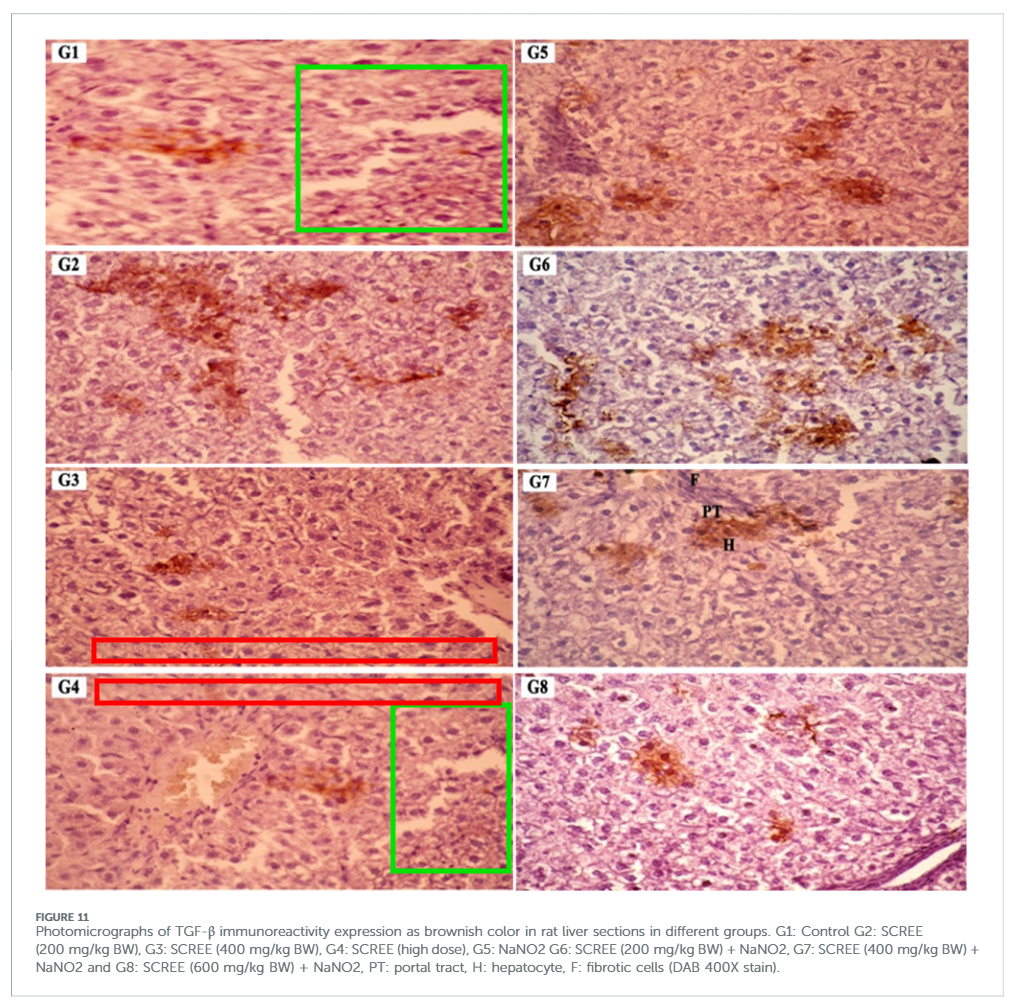
Sholto David: “Figure 11: Unexpected overlapping areas between images that should be derived from different treatment conditions, […] There is a difference in stretch and magnification in the areas labelled with the green rectangles.”
Before going to Saudi Arabia in 2017, Jaremko spent four years as postdoc at Max Planck Institute for Biophysical Chemistry in Göttingen, Germany.
His personal profile at KAUST was removed in 2025 (archived here), Maybe Jaremko has left?
Science Breakthroughs
A potent treatment for frailty
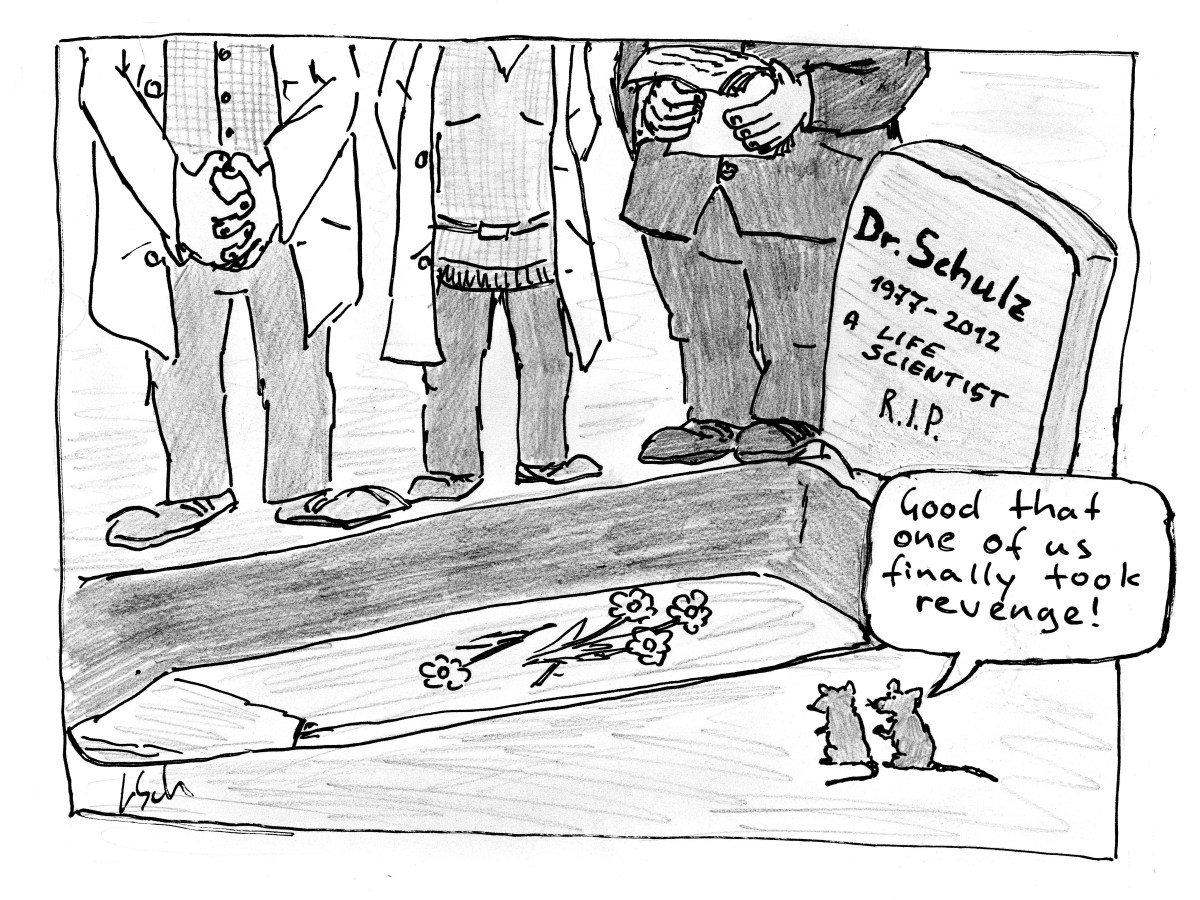
Forget young blood for anti-aging! It is young people’s blood marrow which will rejuvenate any rich old git worried about the daunting prospects of having to leave his money and power unattended.
Bleed’em while they’re young
“There’s still a long way to go – blood is complicated. But there are many excellent labs focused on this, so I am optimistic about progress.” – Aubrey de Grey.
Nature brought the headline: “Stem cells provide a potent treatment for frailty“. New Scientist reports about this major breakthrough from the US anti-aging biotech Longeveron:
“Frailty is a major source of disability and diminished quality of life in older individuals,” says Joshua Hare at Longeveron, a biotechnology company in Miami, Florida. “There is a major unmet need to find biological treatments.” […]
The therapy – called laromestrocel – is made up of mesenchymal stem cells that can develop into many different types of cells, including muscle and cartilage, taken from healthy bone marrow donors aged 18 to 45.
After success in early-stage trials for frailty – which affects around 1 in 4 people aged 65 and over – they have now tested various doses of laromestrocel against a placebo in a larger group of 148 people. […]
The researchers measured how far the participants – who were aged 74 to 76 and had mild-to-moderate frailty – could walk in 6 minutes before and after laromestrocel. They found that a single infusion improved their performance in a dose-dependent fashion, with no serious safety concerns. For instance, those who got the maximum dose could walk 41 metres further than those who received the placebo six months after the infusions – rising to 63 metres at nine months.”
Don’t you dare to laugh, or Longeveron will sue us all. This is the paper, wisely published in a Cell Press journal which specialises on preclinical research, and not on clinical trials:
Jorge G. Ruiz , Anthony A. Oliva , Kevin N. Ramdas , Julian Javier , Jeffrey Rosen , Robert Perry , Antonio Blanco , Pedro Ylisastigui , Jeremy Walston , Hidenori Arai , Elena Volpi , Anne B. Newman , Brittany Varnado , Lisa McClain-Moss , Eric Naioti , Danial Mehranfard , Dan Gincel , Chao Wang , Michael J. Mintzer , Joel Danisi , Geoff A. Green, Jeffrey Botbyl, Zarin Zainul, Brian G. Rash, Joshua M. Hare Randomized phase 2b dose-escalation trial of stem cell therapy with laromestrocel for aging frailty Cell Stem Cell (2026) doi: 10.1016/j.stem.2026.01.017
These patented “Laromestrocel” stuff is bone marrow cells from “healthy young adult bone marrow donors aged 18-45“. Paul Knoepfler took time to debunk this study in this blog post, he in particular took issue with its Figure 2A:
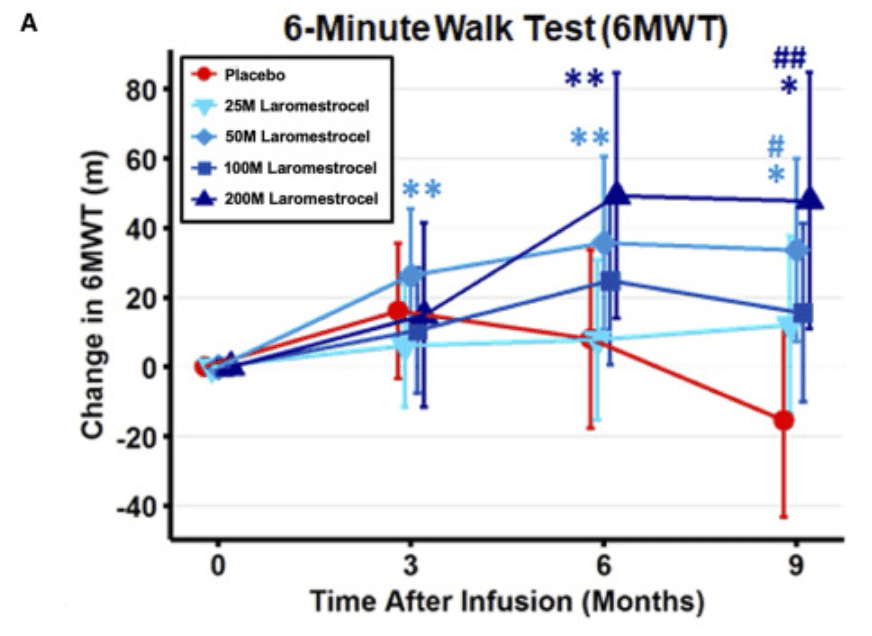
Paul Knoepfler: “I wonder what happened to the placebo group between three and nine months, and especially six and ninth months. Their ability to walk suddenly dropped, an unexpectedly steep decline.”
The Florida-based clinical trial NCT03169231 ended in September 2021, presumably the authors have been trying to publish their version of results since then, maybe serious reviewers kept wondering about the horrible deterioration of the control group. But now the timing for this study is perfect! Given how US Secretary of Disease Robert F Kennedy Jr wants to pivot US healthcare away from actual healthcare and towards quackery, especially stem cell quackery, this Longeveron study is just what was needed!
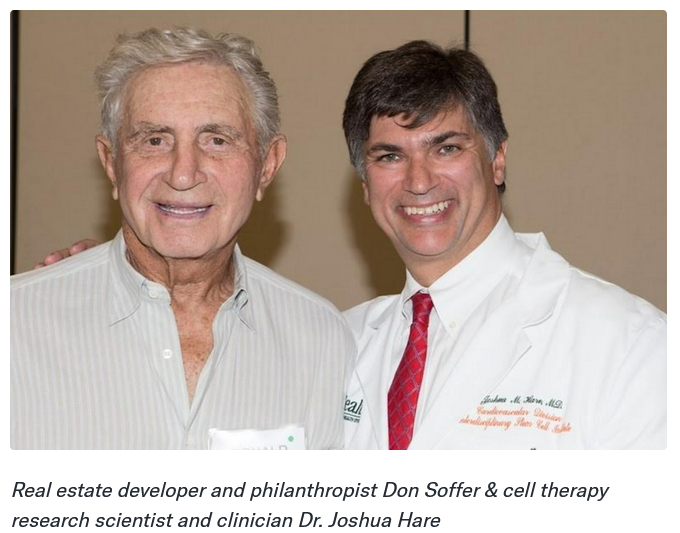
The only person to declare his financial conflicts of interests in that Cell Stem Cell paper was Longeveron’s CSO Joshua Hare, who is Senior Associate Dean at University of Miami School of Medicine, and also Director of Donald Soffer Endowed Program in Regenerative Medicine. This is relevant because Longeveron was founded in 2014 by Hare and his billionaire patron, “the man largely responsible for inventing the south Florida city of Aventura“, who died in 2025 aged 92; now Donald Soffer’s son Rock Soffer serves as member of Longeveron’s Board of Directors. Much of the clinical trial took place at the Soffer Health Institute in Aventura, FL, no biases there at all.
It is not implausible that Soffer may have tried that young blood stem cells method on himself. He may have been one of the patients of the treatment arm of the trial.
By the way, the authors Hidenori Arai (president of the National Center for Geriatrics in Japan) and Elena Volpi (professor at University of Texas Medical Branch) declare to have no COI, despite serving Longeveron as advisory board members.
But back to Hare. He has stuff on PubPeer, and not just criticism of his past clinical trials with Laromesrocel on frail patients. For example, this is how Hare does preclinical statistics:
Raul A Dulce , Rosemeire M Kanashiro-Takeuchi , Lauro M Takeuchi , Alessandro G Salerno , Amarylis C B A Wanschel , Shathiyah Kulandavelu , Wayne Balkan , Marilia S S R Zuttion , Renzhi Cai , Andrew V Schally , Joshua M Hare Synthetic growth hormone-releasing hormone agonist ameliorates the myocardial pathophysiology characteristic of heart failure with preserved ejection fraction Cardiovascular Research (2023) doi: 10.1093/cvr/cvac098
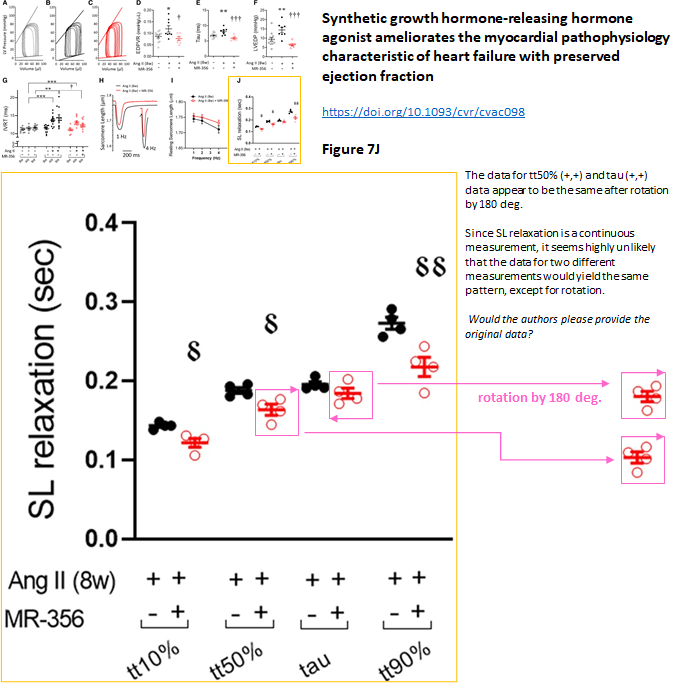
Since SL relaxation is a continuous measurement, it seems highly unlikely that the data for two different
measurements would yield the same. pattern, except for rotation”
Totally reliable and trustworthy data also here:
Alessandro G. Salerno , Amarylis C. B. A. Wanschel , Raul A. Dulce , Konstantinos E. Hatzistergos , Wayne Balkan , Joshua M. Hare S-nitrosoglutathione reductase (GSNOR) deficiency accelerates cardiomyocyte differentiation of induced pluripotent stem cells The Journal of Cardiovascular Aging (2021) doi: 10.20517/jca.2021.19
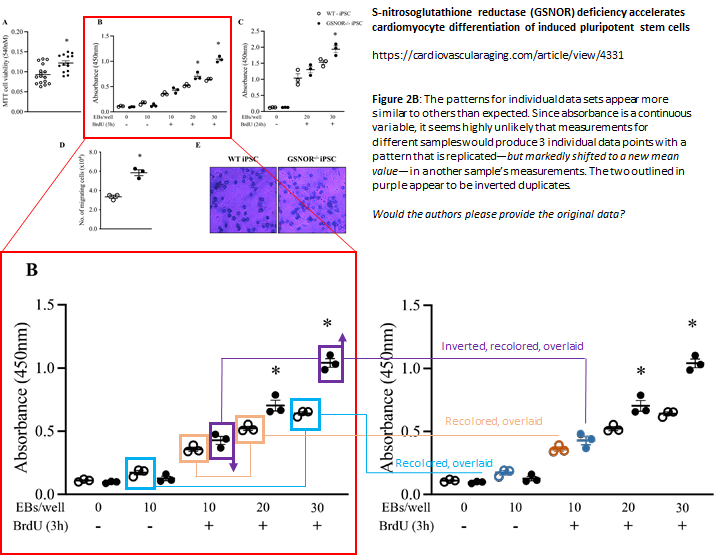
There is also image duplications:
Yenong Cao , Samirah A. Gomes , Erika B. Rangel , Ellena C. Paulino , Tatiana L. Fonseca , Jinliang Li , Marilia B. Teixeira , Cecilia H. Gouveia , Antonio C. Bianco , Michael S. Kapiloff, Wayne Balkan , Joshua M. Hare S-nitrosoglutathione reductase-dependent PPARγ denitrosylation participates in MSC-derived adipogenesis and osteogenesis Journal of Clinical Investigation (2015) doi: 10.1172/jci73780
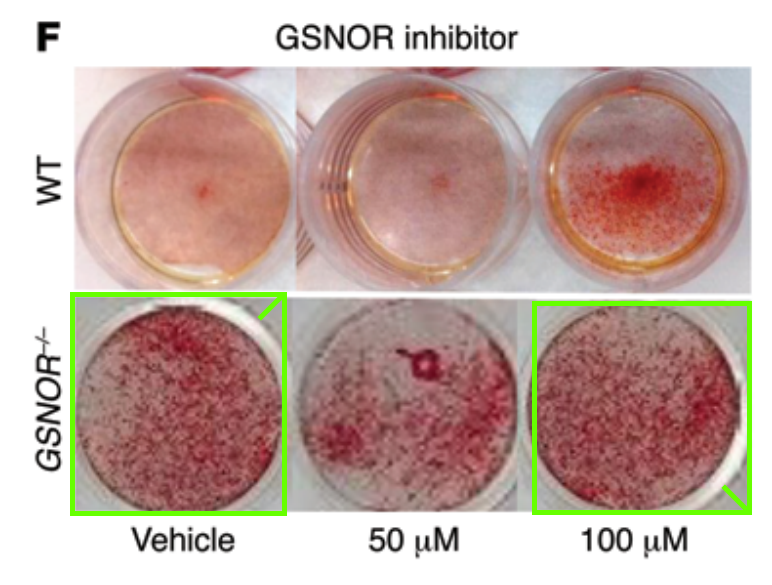
Sholto David: “Figure 2F: Unexpected similarity between images that should show different treatment conditions.”
And here is a fake gel:
Ivonne Hernandez Schulman, Ming-Sheng Zhou , Adriana V. Treuer , Kiranmai Chadipiralla , Joshua M. Hare, Leopoldo Raij Altered renal expression of angiotensin II receptors, renin receptor, and ACE-2 precede the development of renal fibrosis in aging rats American Journal of Nephrology (2010) doi: 10.1159/000318607
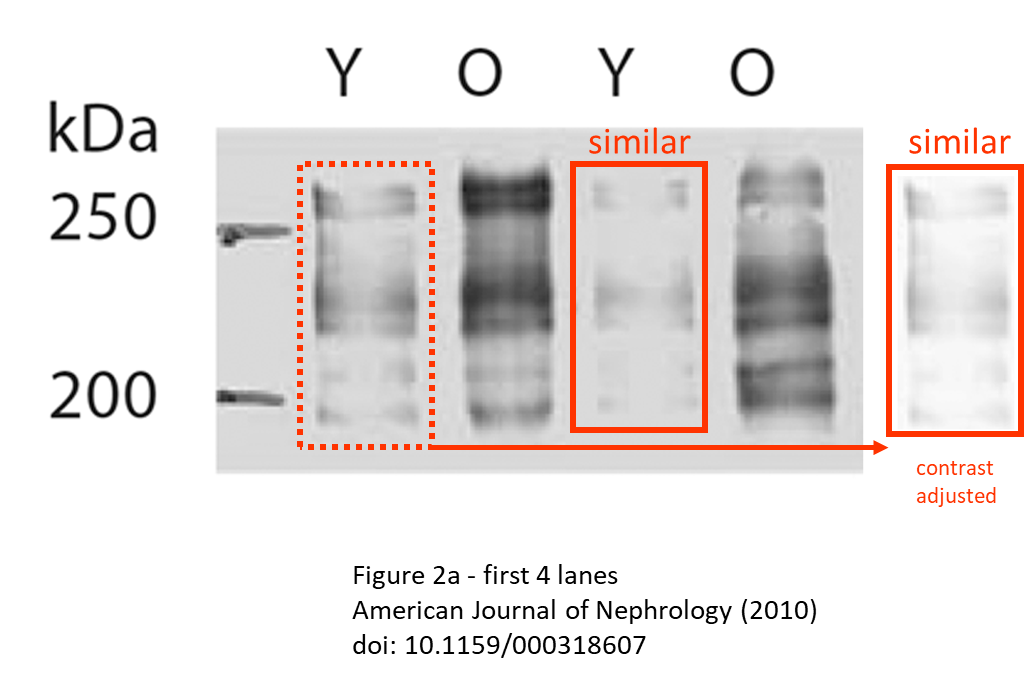
Actinopolyspora biskrensis: “two lanes of Figure 2a may share the same source at different exposures.”
The authors already fixed another duplication with a fraudulent Erratum in 2023, and here even I was able to find the true problem:
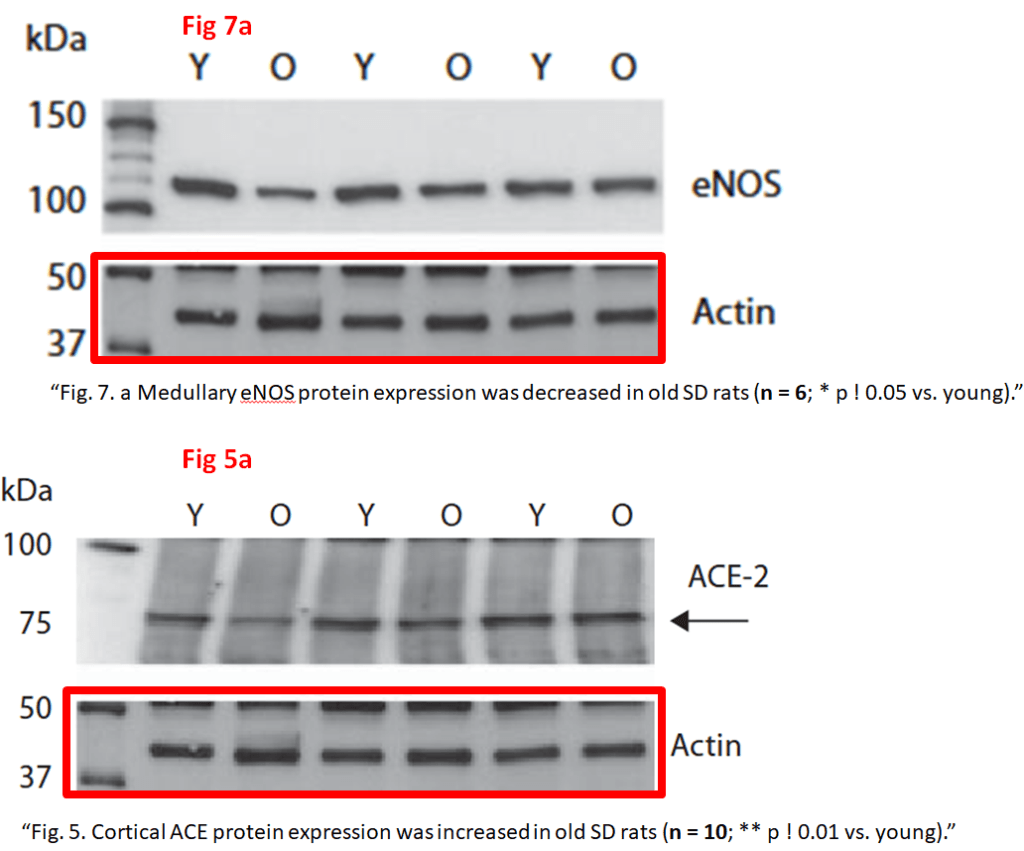
Erratum January 2023 “In the article […] the incorrect representative image for Actin was erroneously included in Figure 7a during figure preparation. The authors declare that this error does not impact the graph in Figure 7a. The authors state that the correct image is no longer available and this image should be removed from Figure 7a.”
But then again, Hare is in a very red state, Florida. And he promises to rejuvenate frail old men like Trump with the blood of young people who are desperate enough to suffer extremely painful bone marrow extraction for a bit of money. Hare is America’s greatest science hero now.
Donate!
If you are interested to support my work, you can leave here a small tip of $5. Or several of small tips, just increase the amount as you like (2x=€10; 5x=€25). Your generous patronage of my journalism will be most appreciated!
€5.00

 For Better Science
“coauthored by Tannapfel, her Vice-Dean Wolfgang Schmidt, and the dermatologist Ulrich Hengge, owner of two private clinics in Düsseldorf area”
Retracted Article:: HIV Clinical Trials: Vol 4, No 3
RETRACTED: Progress and prospects of skin gene therapy: a ten year history – ScienceDirect
Duplication earns German HIV researchers a retraction, and a 3-year publishing ban – Retraction Watch
LikeLike
Interaction of Adenovirus E1A with the HHV8 Promoter of Latent Genes: E1A Proteins are Able to Activate the HHV-8 LANAp in MV3 Reporter Cells
The Open Virology Journal (2008) – 2 Comments
doi: 10.2174/1874357900802010061 pubmed: 19440465 issn: 1874-3579
Karin Koehler-Hansner , Ornella Flore , Bertram Opalka , Ulrich R. Hengge
PubPeer – Interaction of Adenovirus E1A with the HHV8 Promoter of Late…
#1Peer 1
comment accepted October 2016
“No primary data.”
#2Peer 2
comment accepted October 2016
“Then I would advise you to contact the authors and ask for it. That’s why publications have a corresponding author.”
What is very odd. Ornella Flore:
Department of Microbiology, New York University Medical School, 550 First Avenue, New York, NY 10016, USA
PubPeer – Search publications and join the conversation.
LikeLike
Shafaqat’s network in Poland is more extensive and includes some superstars of Polish science.
Marek Jaszczur
Implementation of Modified Multi-Objective Particle Swarm Optimization to multi-machine power system stability – ScienceDirect
Grzegorz Boczkaj
Potential of nanocomposites of zero valent copper and magnetite with Eleocharis dulcis biochar for packed column and batch scale removal of Congo red dye – ScienceDirect
LikeLike
Marek Jaszczur just earned retraction #22.
RETRACTED: Mapping Europe renewable energy landscape: Insights into solar, wind, hydro, and green hydrogen production – ScienceDirect
https://www.sciencedirect.com/science/article/pii/S0160791X24000836?via%3Dihub
Climbing steadily towards Retraction Watch Leaderboard with an average of 1 per month.
LikeLike
Just out of curiosity, is this the same Shafaqat Ali in both papers, or it’s some pakistani equivalent of John Smith?
LikeLike
The same affiliation in all these papers:
Department of Environmental Science and Engineering, Government College University, Faisalabad
Although in Scopus Shafaqat Ali has at least 3 IDs and several affiliations. Such geniuses are priceless and many institutions in the world are eager to employ them to boost their rankings. Remember that the number of Highly Cited Researchers constitutes 20% of Shanghai ranking. In US News and World Report university ranking criteria associated with citations and number of papers constitute 50%.
LikeLike
Maybe just one more clarification. Shafaqat does not seem to be a very popular name in Pakistan (or in the world). Chat GPT estimates its number between 90000-110000. For comparison, 20-21 mln men in Pakistan bear the name Muhammad (roughly 20%). So, Muhammad Bilal seems to be the Pakistani equivalent of John Smith (or Jan Kowalski). 😁
LikeLike
Also Agnieszka Najda from University of Life Sciences in Lublin
A Critical Review on the Synthesis of Natural Sodium Alginate Based Composite Materials: An Innovative Biological Polymer for Biomedical Delivery Applications | MDPI
Eriodictyol attenuates Furan induced testicular toxicity in Rats: Role of oxidative stress, steroidogenic enzymes and apoptosis – ScienceDirect
LikeLike
Agnieszka Najda just suffered her second retraction as part of the pre-spring cleaning in Biomedicine & Pharmacotherapy 2 days before Mariusz Jaremko.
RETRACTED: Advanced implications of nanotechnology in disease control and environmental perspectives – ScienceDirect
https://www.sciencedirect.com/science/article/pii/S075333222201561X?via%3Dihub
This paper includes so many authors from almost the entire eastern hemishere (from Australia to Poland) that it used almost the entire alphabet for their affiliations.
LikeLike
Oh wow, just noticed. Agnieszka Najda gives 2 affiliations in this retracted article:
nDepartment of Vegetable and Herbal Crops, University of Life Sciences in Lublin, 50 A Doświadczalna Street, 20-280 Lublin, Poland
oBiology Department, College of Science, Jouf University, P.O. Box: 2014, Sakaka, Saudi Arabia
LikeLike
See how good Saudi Arabia is for women!
LikeLike
Agnieszka Najda #3 – again spring cleaning in Biomedicine & Pharmacotherapy.
RETRACTED: Natural therapeutics and nutraceuticals for lung diseases: Traditional significance, phytochemistry, and pharmacology – ScienceDirect
https://www.sciencedirect.com/science/article/pii/S0753332222004309?via%3Dihub
LikeLike
And #4. Again in Biomedicine & Pharmacotherapy.
Natural bioactive molecules: An alternative approach to the treatment and control of glioblastoma multiforme – ScienceDirect
Journal tough on science misconduct – just for “references that are irrelevant to the article”.
Jarosław Proćków was also hit.
The emergence of metal oxide nanoparticles (NPs) as a phytomedicine: A two-facet role in plant growth, nano-toxicity and anti-phyto-microbial activity – ScienceDirect
LikeLike
Another of Longeveron’s directors, Roger Hajjar, has some interesting papers too, as you previously reported here https://forbetterscience.com/2023/10/23/joe-loscalzos-drag-show/
LikeLiked by 1 person
Happens to me often, that I am told I already wrote about someone and I totally can’t remember that!
LikeLike
Just added another 7 to the 7 already on PubPeer, including this beauty… https://pubpeer.com/publications/3F0BBF1C6EA10463D0AD2F672342BA
LikeLiked by 1 person