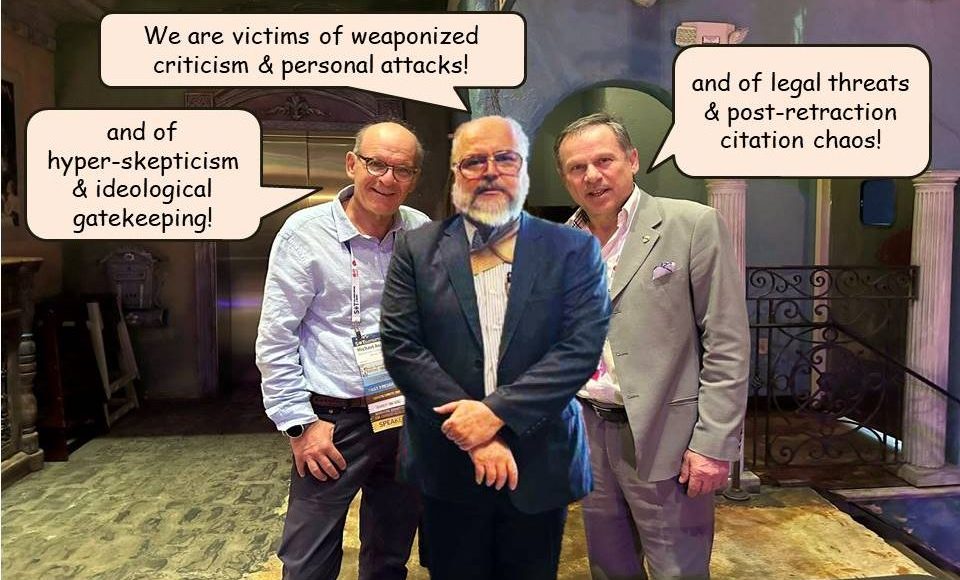

Papermilling professors gather together to protest against PubPeer, led by a rascist Greek antivaxxer. All 9 of them prove too stupid to create a coherent thought and to write something on their own, so they ask ChatGPT, which predictably hallucinates some rubbish. Without even reading the outcome, they publish it as a peer-reviewed study in an Iranian journal run by one of these “authors”.
The PubPeer Lament
This is the PubPeer Lament, published by Springer Nature on 13 November 2025:
Aristidis Tsatsakis, Michael Aschner, Dimosthenis Sarigiannis, Anca Oana Docea, Ramin Rezaee, Seyed Mojtaba Daghighi , Andrey A. Svistunov, José L. Domingo, Mohammad Abdollahi An expert criticism on post-publication peer review platforms: the case of pubpeer Daru : journal of Faculty of Pharmacy (2025) doi: 10.1007/s40199-025-00580-z

The last author Mohammad Abdollahi is Editor-in-Chief of this Iranian journal, owned by the Tehran University of Medical Sciences and published by Springer Nature. We will talk about him and others in a moment. First, to the paper itself. Since it was written by ChatGPT, one can expect some nonsense, and the best of it is in the references.
“These platforms, despite presenting specific challenges, offer significant benefits to the scientific community. They aim to uphold scientific integrity by allowing users to critique published research and identify potential errors, often anonymously [2].”
[2] Bik EM, STAT News. The dark side of post-publication peer review. 2016. Available from: https://www.statnews.com/2016/11/22/post-publication-peer-review-pubpeer/
The sleuth Elisabeth Bik stated that she never wrote that article, neither for STAT News nor for anyone else. Also the link goes nowhere, ChatGPT hallucinated this reference.
“Platforms such as PubPeer, sometimes referred to as the “guardians of science”, can blur the line between constructive feedback and destructive attack [3]. Although they claim to support scientific integrity, they can
[3] Oransky I. A new kind of watchdog is shaking up research. Nature. 2019;571:7. https://doi.org/10.1038/d41586-019-02054-z.
easily be used to undermine colleagues, silence differing opinions, or promote personal or organizational interests, a phenomenon sometimes termed “weaponized criticism” [4].”
[4] Teixeira da Silva JA. The weaponization of publishing: a case study of a predatory vigilante (PubPeer). Sci Eng Ethics. 2017;23(5):1511–7. https://doi.org/10.1007/s11948-016-9831-2.
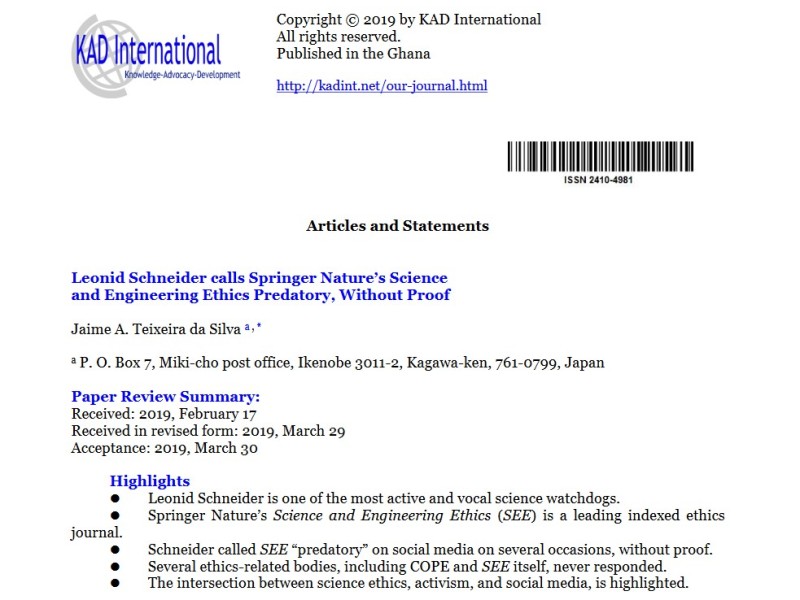
Ditto for this article in Nature which Retraction Watch‘s owner Ivan Oransky never wrote, it is hallucinated by ChatGPT, the doi link is a complete fantasy, it resolves to nothing. Same for the paper by Jaime Teixeira da Silva (JATdS), which Smut Clyde described as “a paper that he could have written, but it doesn’t exist“. But maybe JATdS will write it one day? I made a list of actually existing papers by JATdS in August 2025 Shorts, and here:
Editors and other real papermill heroes
“Long story short, we investigated our published papers and then retracted those with data integrity issues. That is it.” – Dr Heather Smith, Editor-in-Chief

Another hallucinated reference:
“A concerning trend is the rise of “hyper-skepticism” [8]. This approach involves overly critical attitudes that focus on doubt rather than understanding.”
[8] Ioannidis JPA. A new era of hyper-skepticism in science. J Orthop Res. 2021;39(1):1–3. https://doi.org/10.1002/jor.24888.
Stanford University’s metrics expert John Ionannidis has written many papers, on how broken science is and how it can be repaired. This one however doesn’t exist. The doi link is real though, it leads to a study from Stanford in Journal of Orthopedic Research (no Ionannidis on it), titled “The efficacy of core decompression for steroid-associated osteonecrosis of the femoral head in rabbits“.

The Rise of the Papermills
“Is it possible that through no fault of Zintzaras & Ioannidis, their work was incorporated into a papermill template, accruing hundreds of spurious citations?” – Smut Clyde

And another hallucinated reference:
“Researchers targeted by anonymous and harsh criticism may experience substantial damage to their reputations, even if the claims are unfounded or later proven to be false [10].”
[10] VAUX DL. Scientific misconduct: the elephant in the room. FEBS J. 2023;290(3):571–9. https://doi.org/10.1111/febs.16646.
Also the Australian professor David Vaux, who does advocate for research integrity, never wrote this. The doi link is again real, it leads to an unrelated interview with an Austrian scientist in FEBS Journal, titled “In conversation with Peter Macheroux“.
ChatGPT also fabricated a false doi link for an existing paper the authors cited, namely David Horrobin’s “The Philosophical Basis of Peer Review and the Suppression of Innovation” in JAMA (1990). Also the reference to “Committee on Publication Ethics (COPE). Responding to anonymous whistleblowers. COPE Forum. 2018” is made up, there exists only a 2013 COPE pdf under a different link. Another nonsense reference to COPE:
“For example, COPE has a principle known as 3Rs (Replacement, Reduction, and Refinement), which encourages reducing animal usage. COPE clarifies that researchers do not always require separate control groups and can use a single group across multiple parallel and non-parallel studies [15].”
[15] Russell WMS, Burch RL. The principles of humane experimental technique. London: Methuen; 1959.
This cited book from 1959 is indeed about humane animal experimenting, but COPE has nothing to do with it, it was founded in 1997 as a publisher forum to advise members on research integrity disputes. COPE never formulated any opinions on animal research ethics, most certainly not about the 3R concept. Heck, COPE doesn’t even care about the ethics of human experiments, read here:
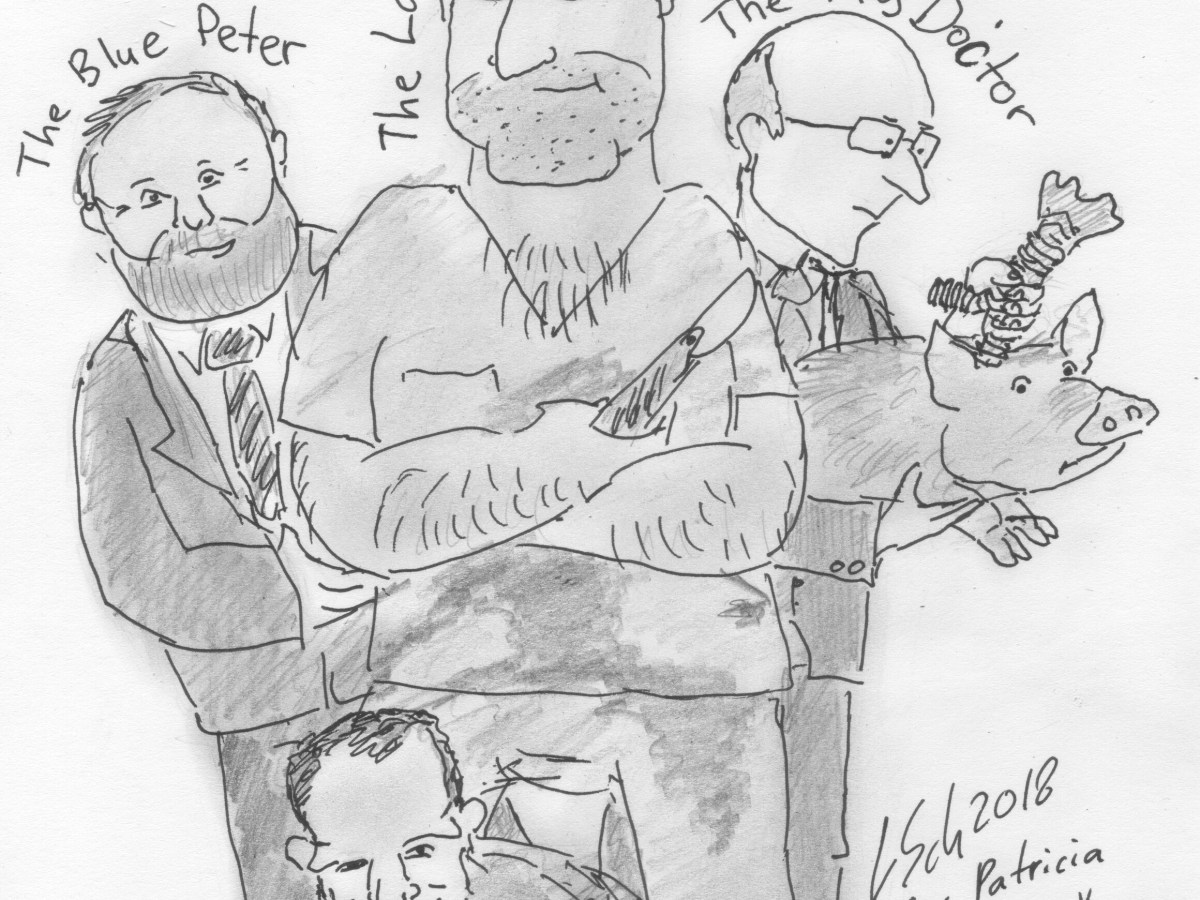
Peter Wilmshurst vs Macchiarini cult at The Lancet
The 2008 Lancet paper of Paolo Macchiarini and Martin Birchall about the world first trachea transplant might end up retracted. Until recently, the journal’s editor Richard Horton used to ignore and suppress “non peer-reviewed” evidence, but due to combined pressure of activism, media and politics, things started to move.
Funny, how LLMs hallucinate those things when prompted. A PubPeer user posted an example:
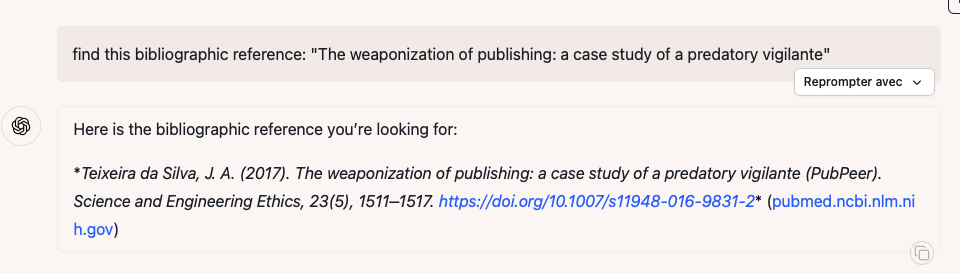
It is clear that nobody ever read this paper, even if it says at the end:
“All authors contributed to the first draft of this work and approved the final version of this article for publication”
Maybe the second part is true, but never the first. None of these nine authors ever bothered to read what ChatGPT fabricated for them. Never mind the text’s abysmal quality – it is also highly repetitive, in fact even ChatGPT says so: “This template strongly aligns with prompts like “Write a balanced academic essay on X,” indicating extensive AI involvement.”
I shall save you paying €40 to read this paywalled LLM outburst, by quoting from the summary of the main problems with PubPeer in Table 1:
- “Lack of accountability due to anonymity“
- “Weaponized criticism & personal attacks“
- “Suppression of differing viewpoints & ideological gatekeeping“
- “Hyper-skepticism & fixation on minor flaws“
- “Legal threats and post-retraction citation chaos“
- “Misinterpretation of ethical guidelines (e.g., cope)“
- “Undeclared conflicts of interest (personal, financial, academic)“
As for the latter issue, the authors themselves state:
“The authors declare that they have no conflict of interest.”
Actually, they all are very much conflicted by their own definition, being the victims of PubPeer commenting and resulting retractions!
The Authors
Most interesting, next to the last author Abdolhahi, are the first two authors of this PubPeer Lament: Aristidis Tsatsakis and Michael Aschner. They featured prominently in this article, and so did their Romanian associate Anca Oana Docea:
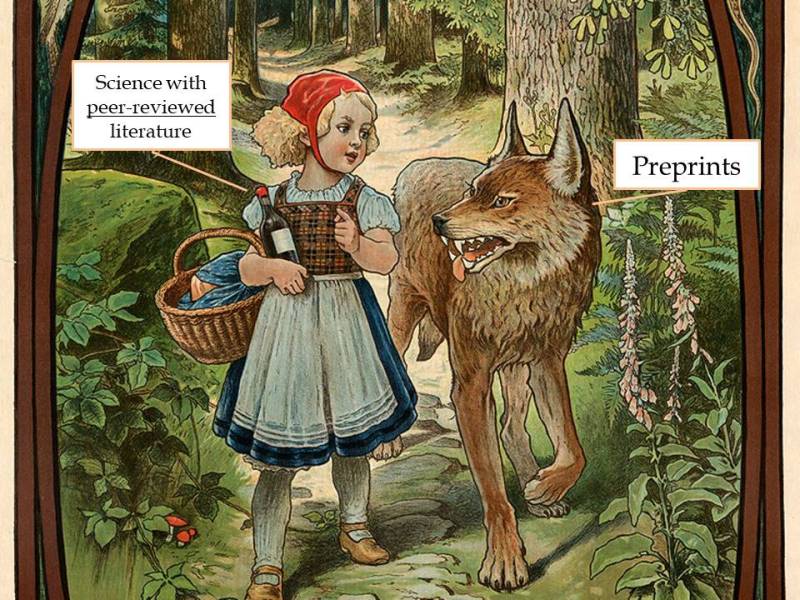
Aristididis Tsatsakis, the rascist antivaxxer
Tsatsakis used to be the Editor-in-Chief of Elsevier’s Toxicology Reports, but he overdid his antivaxxery during the pandemic and therefore had to step down and bugger off. He was replaced by the previous EiC, Lawrence Lash, who is also an amoral toxic character, but of slightly different kind. Tsatsakis is professor at University of Crete (Greece), but he in russian in all but his name: he studied for a degree in Moscow, and is now Foreign Member of the National Academy of Sciences of Russia, affiliated with various russian universities, on his PubPeer lament he lists “I.M. Sechenov First Moscow State Medical University”. Tsatsakis is clearly a russian asset, if not worse.
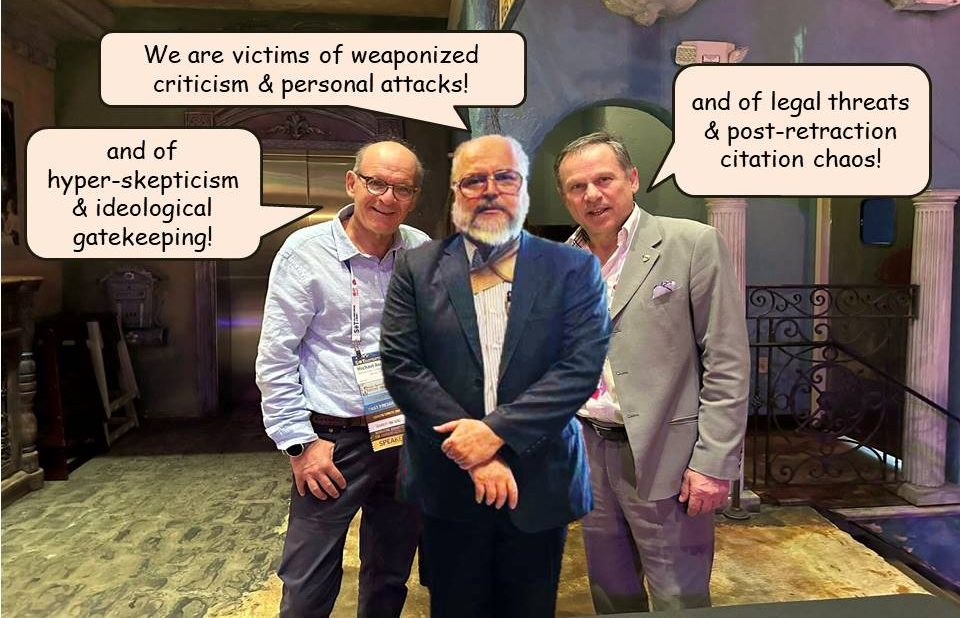
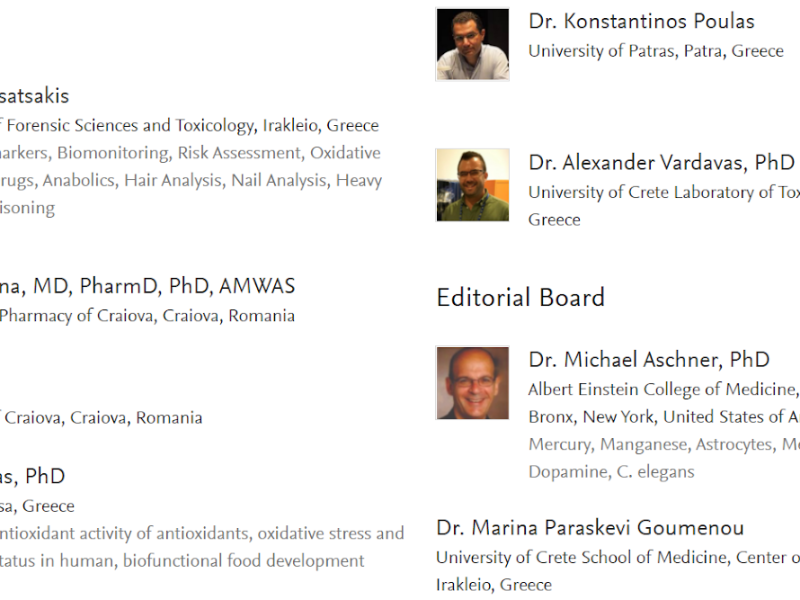
Tsatsakis, Aschner and Docea are key members of Ronald Kostoff‘s team of antivaxers and anti-science quacks, their insanities, occasionally coauthored by the Israeli quack Yehuda Shoenfeld and by Demetrios Spandidos (the owner of the Spandidos publishing empire), were described by Smut Clyde in this article:
Elsevier’s Pandemic Profiteering
Aristidis Tsatsakis, Konstantinos Poulas, Ronald Kostoff, Michael Aschner, Demetrios Spandidos, Konstantinos Farsalinos: you will need a disinfecting shower once you read their papers.
Tsatsakis has many papers on PubPeer, some were flagged for pseudoscience and antivaxxery, others for papermilling. Here examples for the latter, flagged by Sholto David and Fabian Wittmers, as you see, Aschner and Spandidos are occasionally on board:

“Figure 17: There’s an overlap between two images labelled as different experimental conditions.”

“Figure 7: Image A and D appear to be pictures of the same stomach”

“Two spectra in figure 2 seem to have the exact identical noise signature”

“Figure 10: There is an overlap in the corner between different experimental conditions.”
This paper of Tsatsakis’s with a pile of russian fraudsters and with another coauthor of PubPeer Lament, Dimosthenis Sarigiannis (professor at Aristotle University of Thessaloniki and Director of National Hellenic Research Foundation in Greece), was retracted:
Aleksei Kholodov , Alexander Zakharenko , Vladimir Drozd , Valery Chernyshev , Konstantin Kirichenko , Ivan Seryodkin , Alexander Karabtsov , Svetlana Olesik , Ekaterina Khvost , Igor Vakhnyuk , Vladimir Chaika , Antonios Stratidakis , Marco Vinceti , Dimosthenis Sarigiannis , A Wallace Hayes , Aristidis Tsatsakis , Kirill Golokhvast Identification of cement in atmospheric particulate matter using the hybrid method of laser diffraction analysis and Raman spectroscopy Heliyon (2020) doi: 10.1016/j.heliyon.2020.e03299
“This article has been retracted at the request of the Editor.
Review of this submission was handled by the Associate Editor Olga-Ioanna Kalantzi despite an ongoing collaboration on a co-publication with two of the paper authors Aristidis Tsatsakis and Dimosthenis Sarigiannis at the time this manuscript was submitted. This compromised the editorial process and breached the journal’s policies.
The authors disagree with retraction and dispute the grounds for it.”
Retraction 12 November 2025.
Tsatsakis, Docea, Svistunov and Domingo
In early 2021, Tsatsakis, Docea, her Romanian papermilling colleague Daniela Calina (of the same University of Medicine and Pharmacy of Craiova), and the tobacco shill Konstantinos Poulas blessed the world with this beauty, the peer-reviewed article was editorially handled by Tsatsakis himself:
Antonio F. Hernández, Daniela Calina , Konstantinos Poulas , Anca Oana Docea , Aristidis M. Tsatsakis Safety of COVID-19 vaccines administered in the EU: Should we be concerned? Toxicology Reports (2021) doi: 10.1016/j.toxrep.2021.04.003

As the pandemic raged in September 2021, Tsatsakis’s successor Lash decided not to retract this unhinged antivax rant, but to issue this Erratum instead:
“The publisher would like to clarify that contrary to the original Handling Editor line in this article (now corrected), Dr Aristidis Tsatsakis, the Editor-in-Chief of Toxicology Reports, had no involvement in the peer-review of this article and has no access to information regarding its peer-review. Full responsibility for the editorial process for this article was delegated to Dr Alexander Vardavas.”

Sputnik V: fraudulent халтура
Sputnik V clinical trial data seems as trustworthy as Putin’s election results.
There was also this antivax atrocity, which at least was retracted, maybe on Elsevier’s orders. Coauthor is Tsatsakis’s russian friend Andrey Svistunov, you also see this rascist ghoul also on the PubPeer Lament. Svistunov is not just some russian: he is Member of Russian Academy of Science and First Vice-rector of Sechenov State Medical University in Moscow, where Tsatsakis is officially affiliated:
Ronald N. Kostoff , Daniela Calina , Darja Kanduc , Michael B. Briggs , Panayiotis Vlachoyiannopoulos , Andrey A. Svistunov , Aristidis Tsatsakis Why are we vaccinating children against COVID-19? Toxicology Reports (2021) doi: 10.1016/j.toxrep.2021.08.010
Were Tsatsakis and Svistunov just spewing their own antivax stupidity? Or are they actually agents of russian secret service, working to sow pandemic chaos and undermine the vaccination efforts in the West? The retraction from May 2022 went:
“The article has been retracted at the request of the Founding Editor, Prof. Lawrence H. Lash, on the basis that there is clear evidence that the findings are unreliable […]
Publicly available data from the United States Center for Disease Control (U.S. CDC) were concluded by the external reviewers to be misinterpreted to make the erroneous conclusion that the vast majority of reported deaths due to COVID-19 are actually due to other comorbidities. Such an egregious misinterpretation and misrepresentation are unacceptable.”
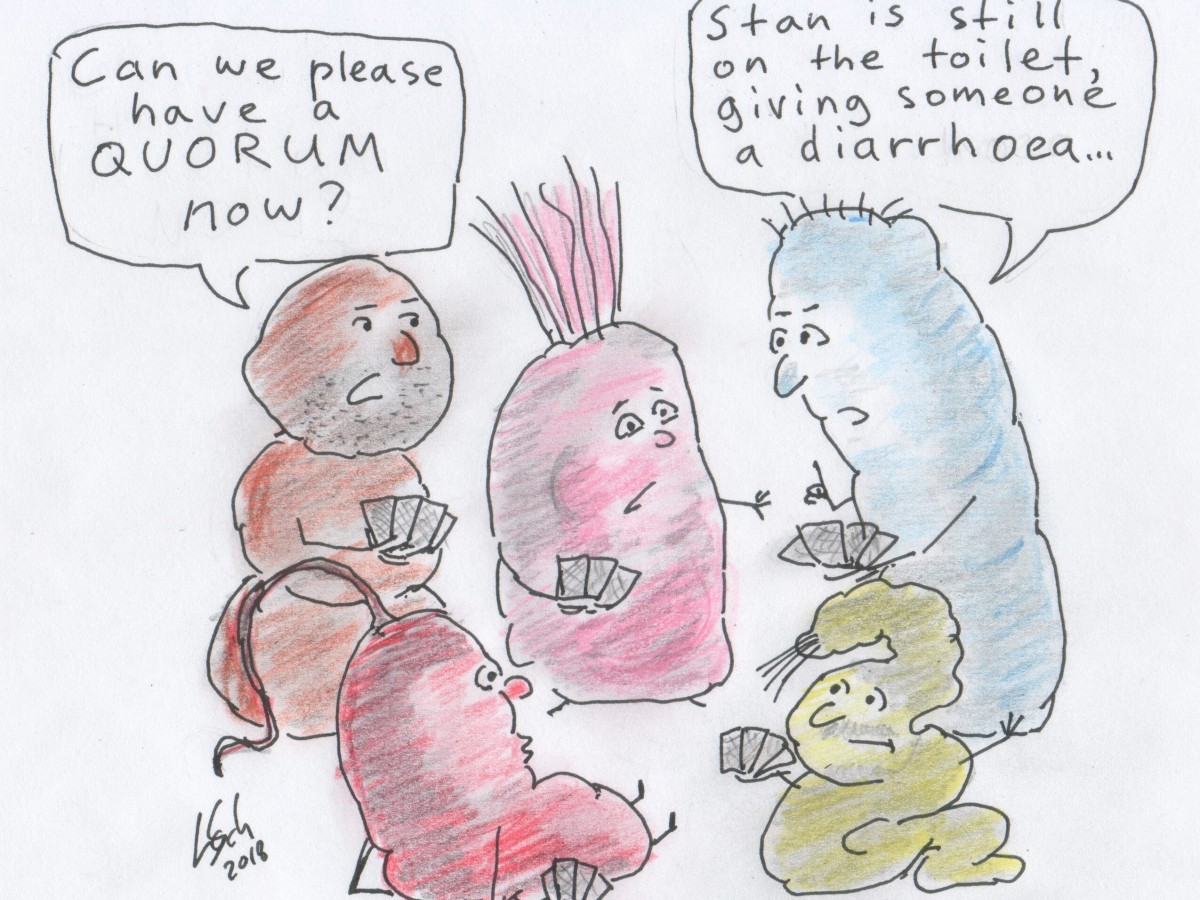
The Romanian antivaxxer Docea, who is associate professor at the University of Medicine and Pharmacy of Craiova, also coauthored papers with the Indian papermill entrepreneur Abhijit Dey and the Iranian Javad Sharifi-Rad. Read here:
I have almost 100 manpower with me at any time
“WE DONT PAY FOR PAPERS. YOU MUST KNOW THAT THESE BEST IN THE PLANET JOURNALS GO THROUGH RIGOROUS PEER REVIEW” – Abhijit Dey, papermiller
So far, Docea escaped retractions, but Calina already had some, for papermill fraud (Sharifi-Rad et al 2021, Quetglas-Llabrés et al 2022). Here a neurology paper by Docea with Tsatsakis, while Calina seems to be their primary papermill contact:
Yesim Yeni, Zeynep Cakir, Ahmet Hacimuftuoglu, Ali Taghizadehghalehjoughi, Ufuk Okkay, Sidika Genc, Serkan Yildirim, Yavuz Selim Saglam, Daniela Calina, Aristidis Tsatsakis, Anca Oana Docea A Selective Histamine H4 Receptor Antagonist, JNJ7777120, Role on glutamate Transporter Activity in Chronic Depression Journal of Personalized Medicine (2022) doi: 10.3390/jpm12020246


“The panel shown in Figure 3e looks remarkably similar to a figure in” Monleon et al 2021 (published before)
Bik concluded: “The reuse of images showing mouse experiments suggests that the authors did not actually have any photos from their own mouse experiments.” The extra irony is that the authors (or their papermill) stole from fraudsters – the paper Spencer et al 2018 is from Eliezer Masliah‘s lab, and it is totally fraudulent. In fact, as Mu Yang noticed, even that “mouse” image which Calina, Docea and Tsatsakis stole from this paper, was originally stolen from the UC Davis website. And shows a rat:

Fig 10
Another coauthor of the PubPeer Lament, Jose Domingo, was also removed as Editor-in-Chief of an Elsevier journal, also for antivaxxery, as I wrote in November 2022 Shorts. Domingo is emeritus professor at Rovira i Virgili University in Spain, and he used to run the journal Food and Chemical Toxicology, together with Tsatsakis and Ashner. That was until Domingo was kicked out for his rabid defence of the unhinged paper by the antivaxxers Peter McCullough and Stephanie Seneff in his journal: Seneff et al 2022, a rant against mRNA vaccines for COVID-19. The affair is described here:

Elsevier pandemic profiteering, again
“a scientific journal is not a social network, not even a newspaper. People reading papers in FCT are expected to be scientists with a good basis to distinguish between trash and science.” EiC Jose Luis Domingo on new paper by Peter McCullough
With RFK Jr’s support, Domingo’s friend McCullough now went on to denounce ALL vaccines, and insist that those cause autism.
Back in October 2022, Seneff’s antivaxxer friend Jennifer Margulis shared Domingo’s letter on her blog:
“Dear Drs Stephanie Seneff, Greg Nigh, Anthony Kyrikapoulos, and Peter McCullough:
A few months ago, your paper entitled “Innate immune suppression by SARS-CoV-2 mRNA vaccinations: The role of G-quadruplexes, exosomes, and MicroRNAs” was accepted for publication. It was published in the journal Food and Chemical Toxicology, for which I was then Editor-in-Chief.
Previously, I had published an editorial calling for papers on the potential adverse effects (with special emphasis in toxicological effects) on the new vaccines for COVID-19. […]
As a scientist that I am first and foremost, I do not regret having published your Review, but unfortunately since then it has been a headache for me. My name has been object of the harshest criticism including strong language on the Internet.
I have also received unpleasant e-mails of activists pro-vaccination requesting the immediate retraction of your paper, and asking for my resignation as Editor-in-Chief.
I have been ever cataloged as a murderer of potential victims of COVID-19 by having published your paper.
Since I am an experienced person, I invited some of those critics to submit a Letter to the Editor questioning your Review.
However, the submitted Letter was so scientifically poor that, after two rounds of revision, it was rejected.
Since then, the criticisms to my person increased. Even in Wikipedia my page and that of the Journal were negatively modified by the activists pro-vaccination.
This has had a clear repercussion on my role as Editor-in-Chief of Food and Chemical Toxicology. […]
In the past, I had also problems in the Journal related with Monsanto, and now, it seems that the BigPharma companies have also done their task. This paper, “Scientific Integrity Requires Publishing Rebuttals and Retracting Problematic Papers,” published on October 26, has been my end. […]
Please inform to your colleagues and your social networks and on the Internet what has happened to me for maintaining my scientific independence […]. With the difussion of this, you may help to know the handling and conniving between certain scientific journals and corporate interests.*
Thanks in advance.
Sincerely,
Dr. Jose L. Domingo
Distinguished Professor (Emeritus) of Toxicology and Environmental Health
Universitat Rovira i Virgili, School of Medicine
Sant Llorens 21, 43201 Reus, SPAIN”

Ivermectin now against COVID-19, because
Dr Peter McCullough, Dr Sabine Hazan, and other ivermectin quacks. Follow Smut Clyde’s descent to the antivaxxer hell.
Michael Aschner, the mercurial antivaxxer
Michael Aschner is an endowed professor at the Albert Einstein College of Medicine in New York, USA, specialising “on mercury and methylmercury neurotoxicity, including developmental effects, autism…” Do I need to spell out what this means, or did King Trump and his Secretary of Disease Robert F Kennedy spell this out often enough? Yes, it’s about the thimerosal preservative in vaccines, which they say causes autism in children!

Mergers & Acquisitions by Mark and David Geier
Kathleen Seidel analysed two papers by Mark and David Geier, which claimed that mercury in vaccines caused autism

This is how Aschner’s oeer-reviewed thimerosal antivaxxery works:
Beatriz Ferrer, Harshini Suresh, Abel Santamaria, João Batista Rocha, Aaron B. Bowman, Michael Aschner The antioxidant role of STAT3 in methylmercury-induced toxicity in mouse hypothalamic neuronal GT1-7 cell line Free Radical Biology and Medicine (2021) doi: 10.1016/j.freeradbiomed.2021.05.024

Corrigendum October 2022: “The authors regret an error that was inadvertently introduced in Figure 7F. The authors had mistakenly switched the representative western blot images of SOD2 and actin.”
Also Aschner has a large PubPeer record, including for papermilling. Unlike Docea, he probably gets his papermill authorships gratis, being a white male with a prestigious US affiliation. White man’s burden, it is. For example, this was flagged by Mu Yang:
Grace T Akingbade, Omamuyovwi M Ijomone , Aminu Imam , Michael Aschner , Moyosore S Ajao D-Ribose-LCysteine attenuates manganese-induced cognitive and motor deficit, oxidative damage, and reactive microglia activation Environmental Toxicology and Pharmacology (2022) doi: 10.1016/j.etap.2022.103872

Corrigendum August 2023: “The authors regret to notify that wrong histomorphological images (Control and Pre-RibCys + Post-Mn groups in Fig. 5a of original article) were mistakenly and inadvertently published in the original article.”
Before he discovered papermills, Aschner’s go-to person was Eunsook Lee, professor at Florida A&M University. Here an example, flagged by Actinopolyspora biskrensis:
Judong Kim , Edward Pajarillo, Asha Rizor , Deok-Soo Son, Jayden Lee, Michael Aschner, Eunsook Lee LRRK2 kinase plays a critical role in manganese-induced inflammation and apoptosis in microglia PLOS One (2019) doi: 10.1371/journal.pone.0210248

Expect no correction in Aschner’s old journal:
Asha Rizor , Edward Pajarillo , Deok-Soo Son , Michael Aschner, Eunsook Lee Manganese phosphorylates Yin Yang 1 at serine residues to repress EAAT2 in human H4 astrocytes Toxicology letters (2022) doi: 10.1016/j.toxlet.2021.11.007
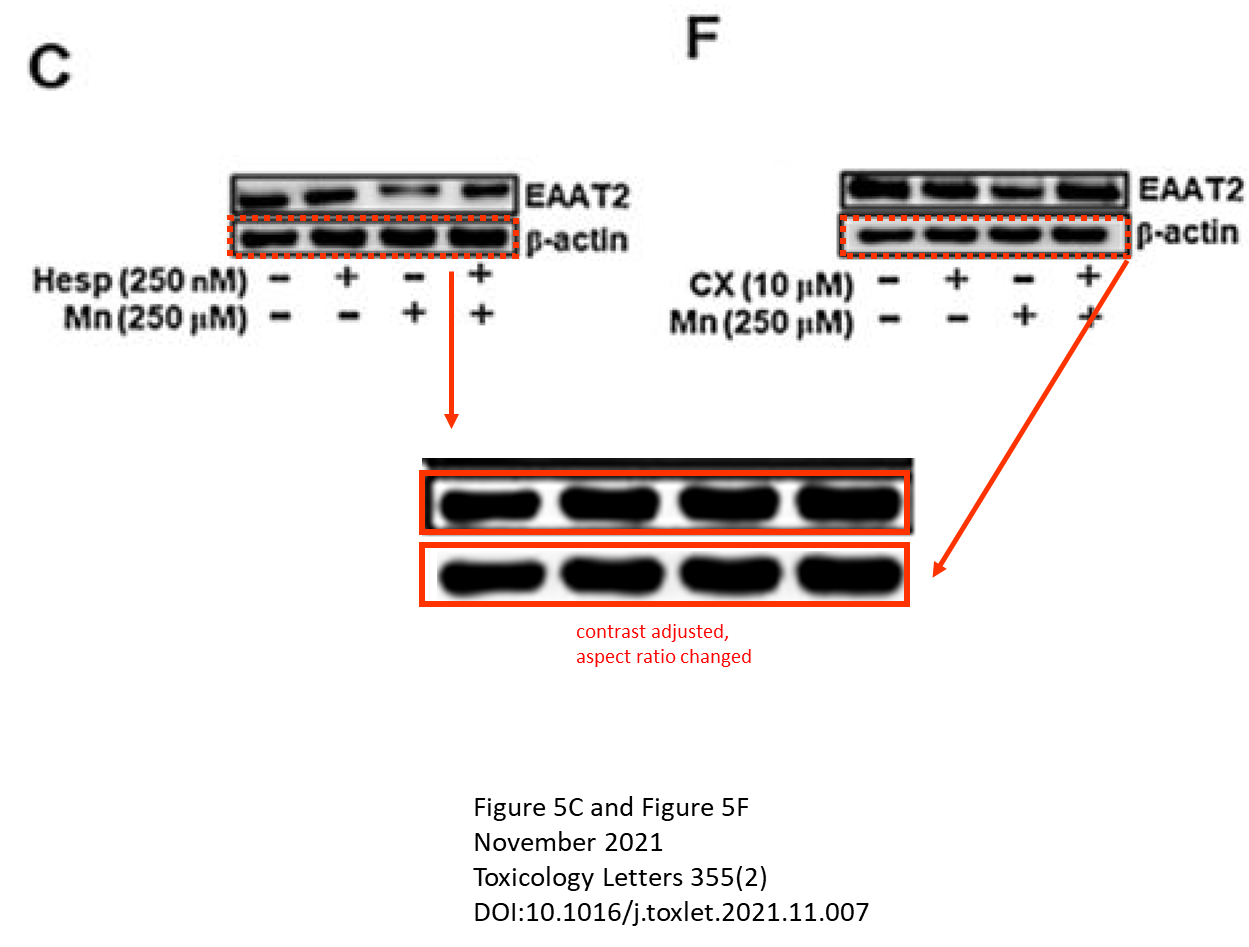
Actinopolyspora biskrensis: “The control bands in Figure 5C and Figure 5F seem unexpectedly similar.”
This pomegranate nonsense was published in Domingo’s journal, Nick Wise found it was shamelessly plagiarised in its entirety, passed through a thesaurus engine:
Salman Ahmed, Haroon Khan, Michael Aschner , Muhammad Mohtasheemul Hasan, Sherif T.S. Hassan Therapeutic potential of naringin in neurological disorders Food and Chemical Toxicology (2019) doi: 10.1016/j.fct.2019.110646

This was at least retracted in December 2023 for “errors in the images presented in Figs. 2 h, 5b and 5f“, but very pathetically, because “Editor-in-Chief has invited the Authors to submit a revised version of the manuscript for further peer review“:
Bin Li , Nannan Huang , Shengnan Wei , Qingtao Meng , Shenshen Wu , Xiaobo Li , Rui Chen, Michael Aschner Metallothionein ameliorates airway epithelial apoptosis upon particulate matter exposure: role of oxidative stress and ion homeostasis Current Medicine (2022) doi: 10.1007/s44194-022-00011-0

There are two more retractions for Aschner, according to CSIC RetractBase:
- Andreas A. Werdich , Franz Baudenbacher , Igor Dzhura , Loice H. Jeyakumar , Prince J. Kannankeril , Sidney Fleischer , Alison LeGrone , Dejan Milatovic , Michael Aschner , Arnold W. Strauss , Mark E. Anderson , Vernat J. Exil Polymorphic ventricular tachycardia and abnormal Ca2+handling in very-long-chain acyl-CoA dehydrogenase null mice AJP Heart and Circulatory Physiology (2007) doi: 10.1152/ajpheart.00382.2006 May 2007 Retraction because “the data shown in Fig. 6 of this article were falsified and/or fabricated”
- Yuankang Zou , Ziyan Yuan , Yafei Sun , Maodeng Zhai , Zhice Tan , Ruili Guan , Michael Aschner , Wenjing Luo , Jianbin Zhang Resetting Proteostasis of CIRBP with ISRIB Suppresses Neural Stem Cell Apoptosis under Hypoxic Exposure Oxidative Medicine and Cellular Longevity (2022) doi: 10.1155/2022/3627026 December 2023 Retraction for “systematic manipulation of the publication and peer-review process“
Back to Aschner’s covidiotism. Look at this pandemic joke from a Pakistani papermill:
Muhammad Ajmal Shah, Azhar Rasul , Rimsha Yousaf , Muhammad Haris , Hafiza Ishmal Faheem , Ayesha Hamid , Haroon Khan, Abdul Haleem Khan , Michael Aschner , Gaber El‐Saber Batiha Combination of natural antivirals and potent immune invigorators: A natural remedy to combat COVID‐19 Phytotherapy Research (2021) doi: 10.1002/ptr.7228


Maybe licorice, black tea, linseeds and other foodstuffs advocated in this Aschner study don’t really help against COVID-19?
Mohammad Abdollahi, the ethical papermiller
And now, we finally arrive to the last author of the PubPeer Lament, Mohammad Abdollahi, professor at Tehran University of Medical Sciences (TUMS) in Iran and the Editor-in-Chief of DARU Journal of Pharmaceutical Sciences, which is owned by his TUMS and published by Springer Nature, who charge you (yes, you) tax money for subscriptions which are then used to subsidise Iranian terror regime and its papermill industry.
I invite you to read the pathetic crap which Abdolhaha, pardon Abdolhihi, pardon Abdollahi wrote about himself on ORCID: “over 1000 papers published and more than 300 book chapters“, “an H-index of 80 and over 26,000 citations, placing him among the top 1% of scientists in his field“, “identified over 110 chemicals, 150 genes, 50 diseases, and 96 phenotypes“, “named a Clarivate Nobel-Class Influencing Scientist“, and winner of “the Alborz Nobel-Ranked Medal in 2024“. Abdollahi trained as postdoc at University of Toronto in Canada with the infamous criminal crook Gideon Koren (now back in Israel, read below).
Motherisk crook Gideon Koren now at Ariel University
The Israeli Ariel University recruited a doctor from hell to their newly established medical school: Gideon Koren, infamous for Motherisk and deferiprone scandals.
This creep has almost EIGHTY fraudulent papers on PubPeer (many are trash meta-analyses and rubbish systematic reviews). And he has a bunch of retractions already. One of them is even lamented in the PubPeer Lament, Seyed Mojtaba Daghighi (from TUMS) is also coauthor of both:
“A notable example is the retraction of a paper where concerns were first raised through PubPeer comments. The authors argue the retraction was unjust, claiming the journal misinterpreted standard practice regarding control data and ignored the comprehensive raw data they provided. This case highlights how PPPR platforms can precipitate retraction actions that many authors consider premature or unjust, especially when editorial boards do not fully engage with author responses or supporting evidence [11]. Here, the principles of fairness and clarity are crucial. The 2025 COPE Retraction Guidelines emphasize that retractions are intended to correct the literature, not to punish authors.”
This is the reference 11, a retracted paper by Abdolhaha and Daghihi. It was originally flagged because “RT-PCR primers used for the target Mitogen-activated protein kinase 14 (p38α)” were found to be “non-targeting”:
Maryam Baeeri , Mahban Rahimifard , Seyed Mojtaba Daghighi , Fazlullah Khan , Seyed Alireza Salami , Shermineh Moini-Nodeh , Hamed Haghi-Aminjan , Zahra Bayrami , Farhad Rezaee , Mohammad Abdollahi Cannabinoids as anti-ROS in aged pancreatic islet cells Life sciences (2020) doi: 10.1016/j.lfs.2020.117969
The retraction was however for plagiarism and fraud:
“The journal was initially contacted by a concerned reader asserting that primer sequence included in the paper is non-targeting and does not correspond to the p38a target that was intended, which is also concluded in PubPeer: https://pubpeer.com/publications/B83B390E2E94AAC87167605969CE9C?utm_source=Chrome&utm_medium=BrowserExtension&utm_campaign=Chrome.
This incorrect primer sequence is also found in another article by the same group published in Molecular and Cellular Biochemistry 449, (2018), 267–276. https://doi.org/10.1007/s11010-018-3363-3
More data overlap was revealed between Figure 1, 2, 3, 5 of Molecular and Cellular Biochemistry article, and Figure 1, 2, 4, 5 of Life Sciences article.”
Retraction February 2025

In international affairs and paper mills
Alexander Magazinov would like you to meet an Iranian scholar named Ali Akbar Velayati.

Here are other retractions for Abdolhihi:
- Atena Sadeghi , Roodabeh Bahramsoltani , Roja Rahimi , Mohammad Hosein Farzaei , Fatemeh Farzaei , Zahra Minoosh Siavosh Haghighi , Mohammad Abdollahi Biochemical and Histopathological Evidence on Beneficial Effects of Standardized Extract from Tragopogon graminifolius as a Dietary Supplement in Fatty Liver: Role of Oxidative Stress Journal of Dietary Supplements (2018) doi: 10.1080/19390211.2017.1343888 September 2024 Retraction for data reuse from Assodollahpoor et al 2017
- Nima Sanadgol , Fereshteh Golab , Zakiyeh Tashakkor , Nooshin Taki , Samira Moradi Kouchi , Ali Mostafaie , Mehdi Mehdizadeh , Mohammad Abdollahi , Ghorban Taghizadeh , Mohammad Sharifzadeh Neuroprotective effects of ellagic acid on cuprizone-induced acute demyelination through limitation of microgliosis, adjustment of CXCL12/IL-17/IL-11 axis and restriction of mature oligodendrocytes apoptosis Pharmaceutical Biology (2017) doi: 10.1080/13880209.2017.1319867 July 2024 Retraction for plagiarism and “data integrity concerns”
- Nourollah Ramroodi , Masood Khani , Zohre Ganjali , Mohammad Reza Javan , Nima Sanadgol , Roghayeh Khalseh , Hadi Ravan , Ehsan Sanadgol , Mohammad Abdollahi Prophylactic Effect of BIO-1211 Small-Molecule Antagonist of VLA-4 in the EAE Mouse Model of Multiple Sclerosis Immunological investigations (2015) doi: 10.3109/08820139.2015.1085391 October 2024 Retraction for “duplication of images in Figures 3 and 4”
- Majid Motaghinejad, Manijeh Motevalian , Fatemeh Babalouei , Mohammad Abdollahi , Mansour Heidari , Zahra Madjd Possible involvement of CREB/BDNF signaling pathway in neuroprotective effects of topiramate against methylphenidate induced apoptosis, oxidative stress and inflammation in isolated hippocampus of rats: Molecular, biochemical and histological evidences Brain Research Bulletin (2017) doi: 10.1016/j.brainresbull.2017.05.011 June 2024 Retraction for plagiarism from [5]
- Majid Motaghinejad , Manijeh Motevalian , Mohammad Abdollahi , Mansour Heidari , Zahra Madjd Topiramate Confers Neuroprotection Against Methylphenidate-Induced Neurodegeneration in Dentate Gyrus and CA1 Regions of Hippocampus via CREB/BDNF Pathway in Rats Neurotoxicity Research (2017) doi: 10.1007/s12640-016-9695-4 July 2024 Retraction for “a number of similarities between the articles, as well as within the figures presented in this article”


Abdolhaha also had to withdraw two Cochrane protocols:
- Atul Kumar , Chintan J Pandya , Alan Barkun , Mohammad Abdollahi , Robert J Richards Antibiotics for induction of remission in ulcerative colitis Cochrane Database of Systematic Reviews (2009) doi: 10.1002/14651858.cd007735 March 2022 withdrawn because “Authors have made no progress with this protocol in over 5 years.”
- Mohammad Abdollahi , Shekoufeh Nikfar , Azadeh Hosseini-Tabatabaei , Ali Rezaie Interventions for preventing osteoporosis in women on heparin therapy during pregnancy Cochrane Database of Systematic Reviews (2010) doi: 10.1002/14651858.cd008547 September 2015 withdrawal
Shokoofeh Nikfar is actually Abdollahi’s wife, and also “Iranian top 1% scientist in pharmacology“, as we learn from his interview with the Iranian scamference business USERN (read below). In 2018, Abdollahi donated $500 to a young female medicine student from Iran to travel to his USERN conference in Italy.

USERN-friendly Nobelists
Nobel Prize laureates and predatory conferences – why such mutual attraction?
Nikfar herself has almost 30 papers on PubPeer, thanks to her charming husband – all trash meta-analyses, all with Abdolhahi, one with Koren (Nikfar et al 2022).
Abdolhihi’s oldest PubPeer thread (as reminder, there are 80!) was raised by Smut Clyde investigating papermills:
Asieh Hosseini, Ali Mohammad Sharifi , Mohammad Abdollahi , Rezvan Najafi , Maryam Baeeri , Samira Rayegan , Jamshid Cheshmehnour , Shokoufeh Hassani , Zahra Bayrami , Majid Safa Cerium and yttrium oxide nanoparticles against lead-induced oxidative stress and apoptosis in rat hippocampus Biological Trace Element Research (2015) doi: 10.1007/s12011-014-0197-z


Abdolhoho also published with another rascist: Rafael Luque, the King of Papermillers, now hiding in Moscow just like Tsatsakis. e.g. Rajabi et al 2016, Rajabi et al 2019. Our Iranian friend is very well connected, he also works with Bagher Larijani, who is former TUMS Chancellor and brother of top figures of the Iranian regime, Sadeq and Ali Larijani:
Moloud Payab , Shirin Hasani-Ranjbar , Maryam Baeeri , Mahban Rahimifard , Babak Arjmand , Hamed Haghi-Aminjan , Mohammad Abdollahi , Bagher Larijani Development of a Novel Anti-Obesity Compound with Inhibiting Properties on the Lipid Accumulation in 3T3-L1 Adipocytes Iranian Biomedical Journal (2020) doi: 10.29252/ibj.24.3.155

Bagher Larijani is indeed himself a papermiller (read April 2024 Shorts), and here he is helping Abdolhaha with the latter’s pet project, the struggle for research ethics:
- Pooneh Salari, Hamidreza Namazi, Mohammad Abdollahi, Fatemeh Khansari, Shekoufeh Nikfar, Bagher Larijani, Behin Araminia Code of ethics for the national pharmaceutical system: Codifying and compilation J Res Med Sci. (2013) PMID: 24174954
- Mohammad Abdollahi, Armen Yuri Gasparyan & Soodabeh Saeidnia The urge to publish more and its consequences DARU Journal of Pharmaceutical Sciences (2014) doi: 10.1186/2008-2231-22-53
- Bagher Larijani, Kamal Niaz, Ata Pourabbasi , Fazlullah Khan, Jonathan Spoor, Mohammad Abdollahi NOT ONLY IRANIAN RISE IN SCIENCE MARRED BY FRAUD: MISCONDUCT IS A GLOBAL PROBLEM EXCLI Journal (2017) doi: 10.17179/excli2017-263
- Mohammad Hossein Asghari, Milad Moloudizargari, Mohammad Abdollahi, Misconduct in Research and Publication: a Dilemma That Is Taking Place Iran Biomed J (2017) PMID: 28500725
Is Abdolhihi schizophrenic? How can one simultanously write papers on research integrity and publish papermill fraud as if there was no tomorrow?
Returning to the PubPeer Lament, the aforementioned constant invocation of COPE guidelines as the Holy Scripture now makes sense – Abdollahi used to be COPE Council member from 2013 to 2017, as a PubPeer user noted. Ginny Barbour was COPE Chair then, I am sure these two became the best of friends!

It starts to make sense now. It is not COPE which so screwed up. It is us.
Science is actually supposed to be fake, those who do actual research in the lab, and report the results truthfully, are the real danger for science.
Donate!
If you are interested to support my work, you can leave here a small tip of $5. Or several of small tips, just increase the amount as you like (2x=€10; 5x=€25). Your generous patronage of my journalism will be most appreciated!
€5.00
Donate!
If you are interested to support my work, you can leave here a small tip of $5. Or several of small tips, just increase the amount as you like (2x=€10; 5x=€25). Your generous patronage of my journalism will be most appreciated!
€5.00


“Full responsibility for the editorial process for this article was delegated to Dr Alexander Vardavas.”
I am not sure that Editor Lash thought this through. The paper in question (‘Safety of COVID-19 vaccines administered in the EU: Should we be concerned?’) was published as part of a Special Antivax Issue on “COVID-19 Pandemic: Health impact and Novel research“. The editors or the publisher subsequently decided to scrub all records of the SI and pretend that it never existed, but people saved copies to the Internet Archive.
So what puzzles me is that Dr Vardavas is not credited as one of the SI Editors. So how could responsibility for the submission be delegated to him?
LikeLiked by 2 people
We must entertain the possibility that for Larry Lash all Greeks look the same.
LikeLiked by 1 person
Oh, how did I forget this advice from Tsatsakis and Greek tobacco shills that SMOKING PREVENTS COVID?
Nikolaos Alexandris , George Lagoumintzis , Christos T. Chasapis , Demetres D. Leonidas , Georgios E. Papadopoulos , Socrates J. Tzartos , Aristidis Tsatsakis , Elias Eliopoulos , Konstantinos Poulas , Konstantinos Farsalinos Nicotinic cholinergic system and COVID-19: evaluation of nicotinic acetylcholine receptor agonists as potential therapeutic interventions Toxicology Reports (2021) doi: 10.1016/j.toxrep.2020.12.013
LikeLiked by 1 person
Well, technically, when the cells in your lungs are dead from smoke there’s nothing for the virus to infect!
As regards hallucination of references by LLMs, this was a known problem at least since 2022, and does not appear to be something that later generations of these models have come anywhere close to fixing. Sure, they will give you something reference-like, with a random combination of authors, title, journal, volume, pages, etc., all pulled from different places and jumbled up.
I’m not a fan of hallucination as the term to describe this phenomenon. The model is not imagining things out of context. Rather, it is showing the user what they want to see, even though it has no proof that what is being shown actually exists. There’s a better term for this – bullshitting.
LikeLike
“Confabulating”?
LikeLike
Look what just appeared:
“19 November 2025 The Editor-in-Chief has become of aware of concerns with this article. Action will be taken as appropriate following further investigation and discussion with the relevant stakeholders.”
The sodding papermilling last author Abdolhahi is the Editor-in-Chief!
LikeLike
Stakeholders have become aware, and you are STILL complaining 😔
LikeLiked by 1 person
I propose the following Stakeholder committee:
Ginny Barbour
Lex Bouter
Chris Graf
Sabine Kleinert
Ivan Oransky
Bernhard Sabel
Kamila Markram
Jaime Teixeira da Silva
Jennifer Byrne
Iraxte Puebla
John Ioannidis
LikeLiked by 1 person
Unless you have solid evidence, I don’t think it is fair to claim that: “None of these nine authors ever bothered to read what ChatGPT fabricated for them.” Maybe they did, but they’re lazy and stupid. I hear lots of people are saying so.
LikeLiked by 1 person
I apologise. You are right.
LikeLike
The recent wave of comments on PubPeer responding to the article “An expert criticism on post-publication peer review platforms: the case of pubpeer” reveals a troubling pattern of evasion and misplaced criticism. Instead of engaging with the article’s actual arguments on the strengths and weaknesses of the PubPeer platform, several commenters have resorted to attacking the authors personally or shifting the focus toward irrelevant issues. This behavior undermines the very scientific ethos that PubPeer claims to support. A particular distraction has been the fixation on the article’s use of ChatGPT. The authors clearly stated that this tool was employed only to help organize their own structured ideas, not to generate content or conclusions, and this fact is transparently acknowledged at the end of the article. Attempting to discredit the work simply because an AI tool was used to enhance clarity and structure is, at best, a misunderstanding of contemporary academic practices and, at worst, a deliberate attempt to divert attention from the central points of discussion.Scientific discourse thrives on evidence-based reasoning, not on personal attacks or rhetorical deflection. When commenters ignore substantive issues and instead dwell on peripheral matters like the tools used in writing, they reveal an unwillingness or inability to engage critically with the actual content. This approach contributes nothing to intellectual progress or constructive debate. It is time to recentralize the conversation on what truly matters: the ideas, reasoning, and arguments presented. Tools such as ChatGPT are auxiliary; they do not define the intellectual merit of a paper. What defines it is the quality of thought and the openness to analytical discussion—qualities sorely missing in responses that focus on the irrelevant rather than the rational.
LikeLike
IP address in Iran.
Abdolhaha, I presume?
You idiot posted another ChatGPT text.
How stupid are you?
What did you use as brain substitute before ChatGPT arrived?
LikeLiked by 2 people
Attempting to discredit the work simply because an AI tool was used to enhance clarity and structure is, at best, a misunderstanding of contemporary academic practices 😄😄😄
Using your brain is definetely not a “contemporary academic practice”. It’s simply very inefficient in terms of publication output. Our brains and fingers are too slow compared to AI.
LikeLiked by 2 people
Maybe that wall-of-wordwooze would make more sense if I asked another LLM to summarise it, but probably not.
LikeLiked by 2 people
Now I am reminded of this other outburst of stupidity at the sister journal ‘Food & Chemical Toxicology: https://pubpeer.com/publications/A4C2E62F54A13C0773183F117B7F38.
Kostoff cobbled together another of his antivax-Bingo-Card compilations, placed it on a preprint server, and must have submitted it for publication. It was accepted for FCT, with the stipulation that Michael Aschner, Marina Goumenou and Aristidis Tsatsakis all became coauthors (all claiming to have contributed to data curation, ‘funding acquisition’, and helping write that Kostoff-only first draft). They really are that unscrupulous and corrupt.
It appeared in a Special Issue on “Application of novel technologies and mechanistic data for risk assessment under the real-life risk simulation (RLRS) approach”* devoted to promoting the RLRS brainfart that Tsatsakis sees as his claim to fame if anyone other than himself can be persuaded to use it. The whole SI is a pinata inviting more whacks. When RCT came under new management, the new editors did not bother cleaning up the garbage left by their predecessors.
* Guest editors: Dr. Aristides Tsatsakis; Dr.Antonio Hernández Jerez; Dr. Anca Oana Docea; Dr. Michael Aschner; Dr. Dimosthenis Sarigiannis
LikeLiked by 2 people
Must have been a hell of a peer review here.
Published in Spandidos by Spandidos.
https://www.spandidos-publications.com/ijmm/45/6/1631
LikeLike
It’s amazing to see that Domingo is still involved in fraud and fakery! I’m still expecting “the billions of lives potentially at risk” after Covid-19 vaccines, as predicted by the paper of Seneff et al. that he promoted.
By the way, I’m rather proud when a paper I published is pinpointed on PubPeer: this means that at least one colleague has read it 🙂
LikeLike
Aleksei Kholodov , Alexander Zakharenko , Vladimir Drozd , Valery Chernyshev , Konstantin Kirichenko , Ivan Seryodkin , Alexander Karabtsov , Svetlana Olesik , Ekaterina Khvost , Igor Vakhnyuk , Vladimir Chaika , Antonios Stratidakis , Marco Vinceti , Dimosthenis Sarigiannis , A Wallace Hayes , Aristidis Tsatsakis , Kirill Golokhvast Identification of cement in atmospheric particulate matter using the hybrid method of laser diffraction analysis and Raman spectroscopy Heliyon (2020) doi: 10.1016/j.heliyon.2020.e03299
As an “A Wallace Hayes,” based in the US, you normally do not want to collaborate with that funny institution in Tehran named NRITLD. Because… well, because simply search For Better Science for the answer.
Yet there we are.
Mahsa Salehirad , Fatemehsadat Mobinhosseini , A. Wallace Hayes , Malak Hekmati , Majid Motaghinejad , Mohammad Yousefi, Curcumin ZnO and MgO Nanoparticles Confer Protective Effects Against Ketamine-Induced Bipolar Disorder in Mice: Role of Brain-Derived Neurotrophic Factor, Advanced Biomedical Research (2025), doi: 10.4103/abr.abr_253_23
LikeLike
Am I surprised to hit a mis-SEM in this curcumin “study”? Nope.
https://pubpeer.com/publications/478496E2ECFAD33C7ACA53339AC5B5#
LikeLike
Hayes is in his mid 80ies. Let’s be charitable and assume dementia.
https://iit.msu.edu/directory/hayes-wallace.html
LikeLike
And then Hayes, Agathokleous, quercetin and hormesis, sadly, without Persian wisdom.
https://doi.org/10.1016/j.fct.2023.114419
Just to have a convenient link to these recent Shorts.
LikeLike