Schneider Shorts 7.11.2025 – No data were falsified or fabricated in any way
Schneider Shorts 7.11.2025 - an obituary for a rector who published too much, another German professor pestered by sleuths, Canada's superstar and his mentees, Wiley's haphazard approach to papermills, and finally, when corner clones are not OK.
Schneider Shorts of 7 November 2025 – an obituary for a rector who published too much, another German professor pestered by sleuths, Canada’s superstar and his mentees, Wiley’s haphazard approach to papermills, and finally, when corner clones are not OK.
Table of Discontent
Obituary
A center of science – Rector Michael Manns dies, leaves almost 1500 papers behind
In August 2025, the President of the Hannover Medical School Michael P. Manns died. He took over the job in 2019, after his nepotistic predecessor Christoph Baum suddenly resigned (read media reporting from 2018). I wrote about Baum’s toxic MHH before, they used to aggressively defend their then-professor Paolo Macchiarini and their award-winning graduate Philip Jungebluth.
Philipp Jungebluth, formerly right-hand man and student of the lethal trachea transplant surgeon Paolo Macchiarini, is threatening another lawsuit against me. This time, he is unhappy about being associated with the 5 trachea transplant operations Macchiarini performed in Italy (only one of these five might still be alive, with a permanent brain damage). Jungebluth freely…
Manns retired as MHH President by the end of 2024, for health reasons. The university published on 15 August 2025 this obituary (translated):
“He ensured that people live longer and better: The former president of the Hannover Medical School (MHH) and world-famous gastroenterologist Prof. Dr. Michael P. Manns died today at the age of 73. He succumbed to a tumor disease that had been affecting him for months but did not prevent him from continuing his research at the MHH until the very end. […]
In April, Stephan Weil, then Minister President of Lower Saxony, awarded Professor Manns the Grand Cross of the Order of Merit of Lower Saxony for his achievements and services in medical research and for Lower Saxony as a centre of science. At the award ceremony, Weil said: “Professor Manns ensures that people live longer and better lives.””
Even Manns failed to get the medical doctorate degree of Jungebluth (supervised by Macchiarini) revoked, despite most of his dissertation being already retracted for fraud, and the remainder exposed as, uhm, unreliable. Read here:
In early 2024, Manns unexpectedly wrote to me to inform me that Macchiarini’s adjunct professorship at MHH was terminated in 2018 (read February 2024 Shorts). Soon after, his university’s research integrity officer publicly defended a fraudulent paper by Macchiarini and Jungebluth.
As director of MHH’s Clinic for Gastroenterology, Hepatology and Endocrinology for almost two decades, and then as MHH president, Manns published almost 1500 research papers, some of them were flagged on PubPeer by the pseudonymous sleuth Claire Francis. In German university medicine, it is the law of the land to always add you clinic director to your papers, unless, that is, the boss says no (a bad sign which means he doesn’t like you). One wonders if Manns actually read all these many hundreds of his research papers.
Manns’s doctorate student Christian Trautwein is a special case. In early 2024, the German media reported that an unnamed director of Klinik III at University Hospital Aachen was fired:
“Misconduct relevant to labor law and inappropriate behavior towards employees are the reasons for the immediate termination […] A former employee filed a criminal complaint.”
The sacked clinic director is suing his former employer now, despite his being charged with sexual harassment. A criminal procedure began in February 2025:
“Specifically, this is about the professor’s behavior on a trip to Italy. According to the indictment, the professor is said to have sexually assaulted a female employee there.”
Now, archives show Christian Trautwein was director of this Klinik III in Aachen when the scandal erupted, he now works as the head of liver centre in a public hospital in Stuttgart.
Manns also authored bad papers with questionable international collaborators like Robert Gallo‘s ladyfriend Flossie Wong-Staal (Krüger et al 2001), and at his gastroenterology department at MHH, Manns raised next to Trautwein the legendary cheater, mouse abuser, and now zombie scientist, K Lenhard Rudolph, read about him here:
More bad news for Karl Lenhard Rudolph: misconduct findings and 2 year funding ban from DFG. Good news: the international scientific community stands to him in solidarity, no retractions, even some corrections won’t be implemented.
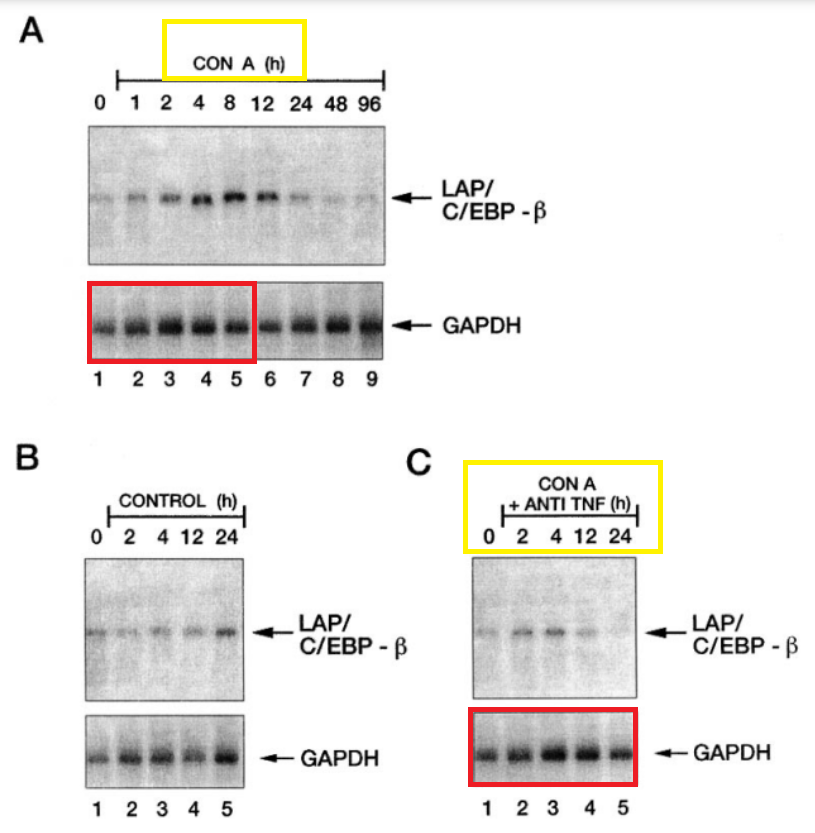
Here a common paper, it was addressed as part of Rudolph’s research misconduct investigation, and corrected:
Hong Jiang , Eric Schiffer , Zhangfa Song , Jianwei Wang , Petra Zürbig , Kathrin Thedieck , Suzette Moes , Heike Bantel , Nadja Saal , Justyna Jantos , Meiken Brecht , Paul Jenö , Michael N. Hall , Klaus Hager , Michael P. Manns , Hartmut Hecker , Arnold Ganser , Konstanze Döhner , Andrzej Bartke , Christoph Meissner , Harald Mischak, Zhenyu Ju, K. Lenhard Rudolph Proteins induced by telomere dysfunction and DNA damage represent biomarkers of human aging and diseaseProceedings of the National Academy of Sciences (2008) doi: 10.1073/pnas.0801457105
Elisabeth Bik: “I reported it to the journal in February 2016. No action was taken. In September 2017 I asked the journal for an update, and was told the following: “Resolved. The authors provided a response, and the Editorial Board decided that no further action was needed. “
After the misconduct findings against Rudolph, the “resolved” case required some action after all, so a very inappropriate Correction was published in April 2018:
“For Figs. 1B, 3B, and 3G and Figs. S2A and S5, the figure legends should have noted that the expression control of GAPDH was run in parallel on separate gels using the same lysates and loading. We apologize for not making this explicit in the figures.”
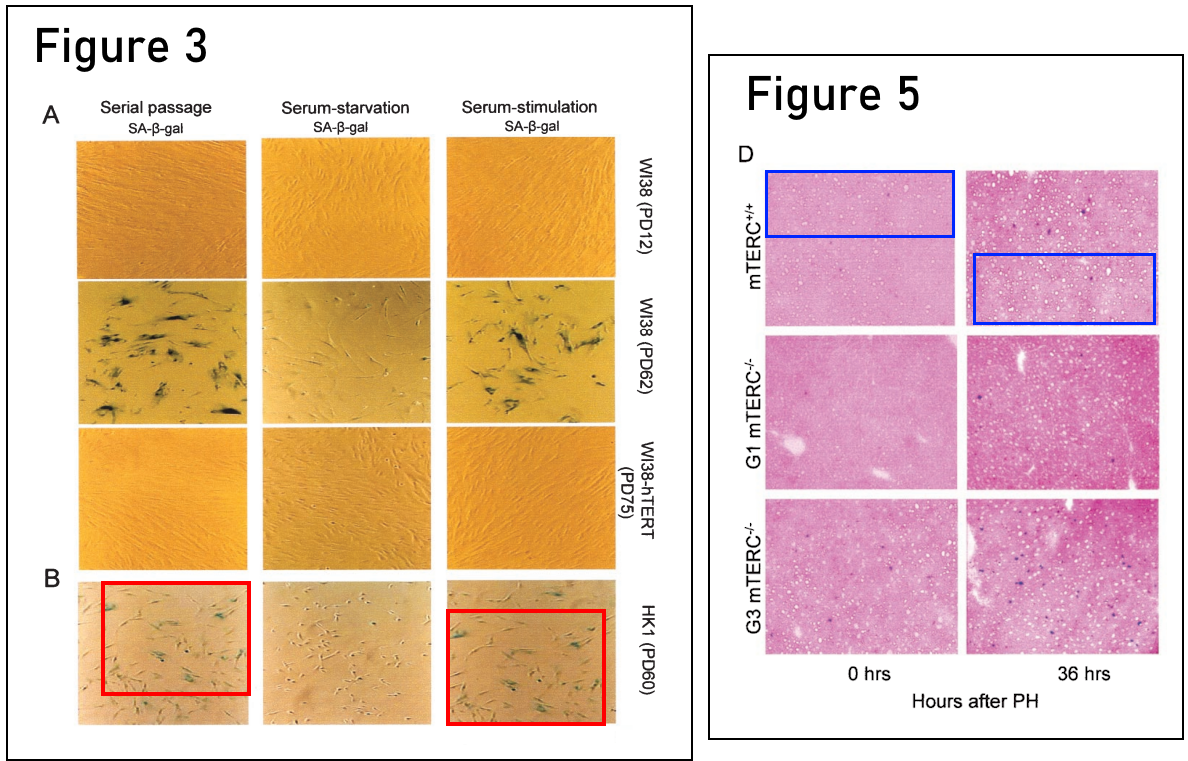
We will never know which powerful German academic bigwig made sure back in 2017 that Rudolph escaped firing and never had to retract a single paper, even those which were officially declared fraudulent. Your guess is as good as mine. Anyway, here another common paper by Rudolph and Manns which escaped retraction:
Mycosphaerella arachidis : “Figure 3 and Figure 5: There are some unexpectedly overlapping areas. “
A February 2025 Expression of Concern quoted Rudolph that “the scientific record could not be corrected given the length of time since publication and the absence of original data for these two experiments.“
Professor Ruben Plentz chose to focus his career on clinical medicine in Bremen, despite his tremendous academic achievements in cancer research. Was it because malicious critics harassed him with frivolous investigations and corrections, envious at all those peer-reviewed cancer cures the great doctor invented?
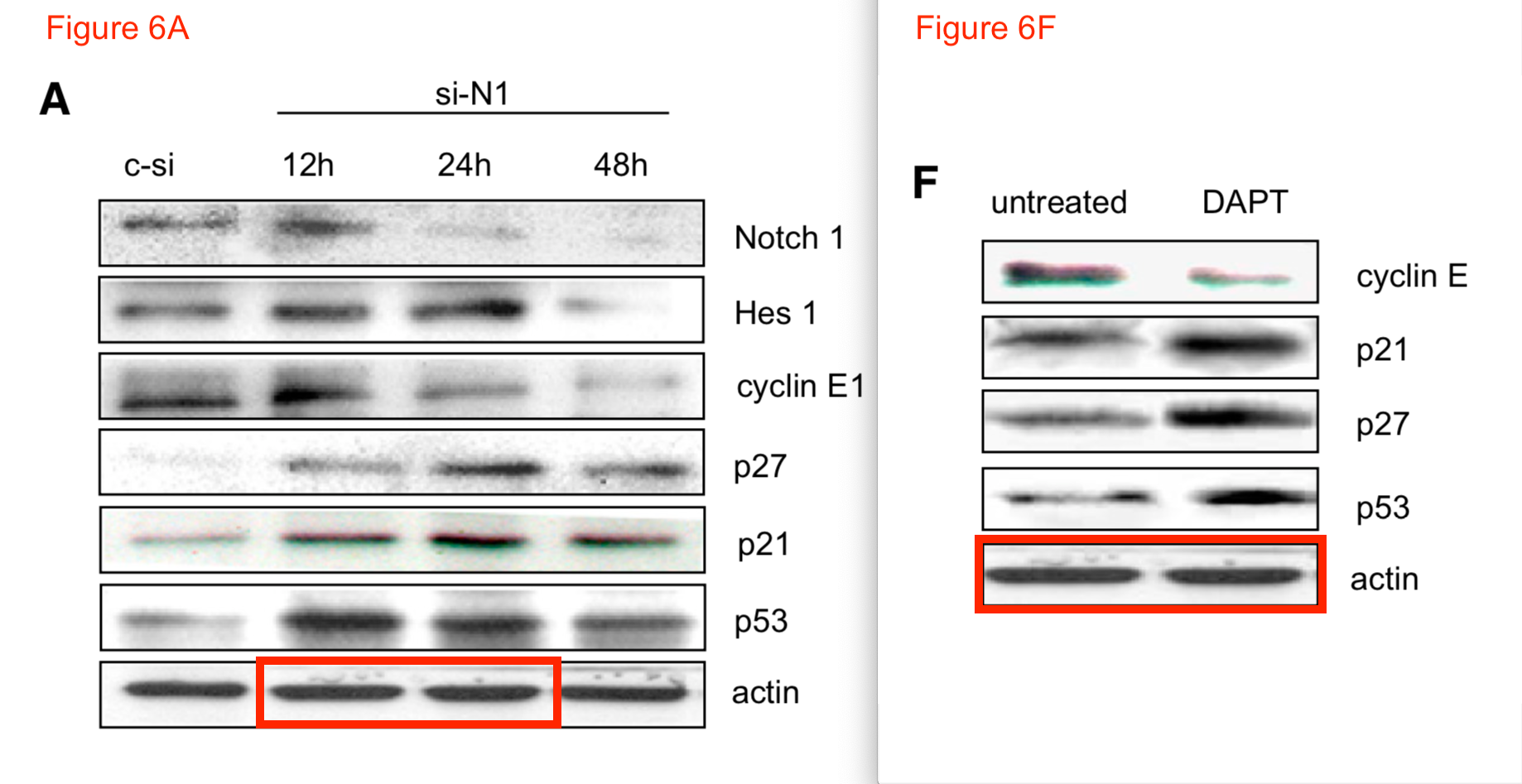
Here another mentee of Manns’s (and of Rudolph’s!): Ruben Plentz. There are bad papers by Manns and Plentz like Palagani et al 2012 and El Khatib et al 2013, and here is one led by MHH gastroenterologist Nisar Peter Malek (now clinic director at University of Tübingen), it was corrected in 2016 for “duplication of actin blots in Figures 2G, 6F, and S2F“:
Lotus azoricus: “original Figure 2G, with the duplication shown in blue boxes”“original Figure S2F, with the duplication shown in pink”
“original Figures 6A and 6F. The duplication is shown in red”
“While none of these errors affect the results or conclusions of this work, the authors would like to apologize for any confusion this might have caused.”
This study, where MHH gastroenterologists led by Heisenberg professor Amar Deep Sharma announced nothing less than a miRNA based cure for liver failure, was criticised right after it was published. The authors immediately announced to issue a correction. Almost a decade passed and nothing happened, because these MHH professors decided not to bother.
Fig 1i, author reply: “We are sorry for this unintentional error, which occurred during rearranging of figures to use space efficiently. […] feel free to contact me (yang.dakai@mh-hannover.de).”
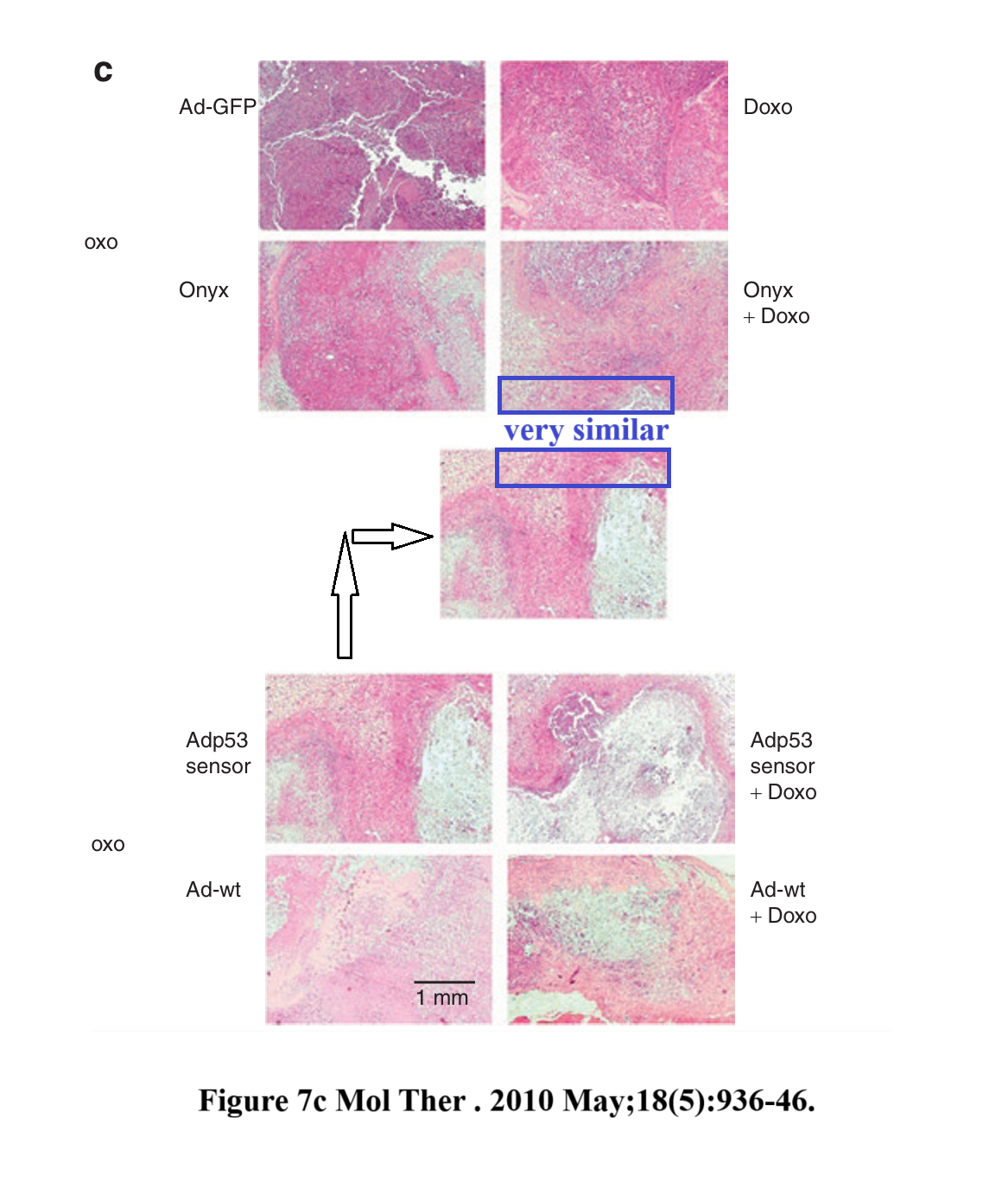
Let me close this obituary with a paper Manns coauthored with MHH’s professorial duo Florian Kühnel and Stefan Kubicka (with whom Manns and Rudolph corrected in 2018 the study Wirth et al 2003 for image irregularities):
I want to share with you an amazing reply to the sleuth regarding this paper, from the Team Scientific Integrity of the national investigative body, the German Research Council (DFG). These DFG experts replied to the veteran sleuth in German, although Claire Francis is not German and their original notification was in English. Translated:
“According to the DFG Rules of Procedure for Dealing with Scientific Misconduct (§ 14), the DFG can only initiate proceedings if the reported suspicion is sufficiently concrete.
The content of the notification must clearly indicate which specific actions or which specific findings constitute scientific misconduct. The notification of automatically identified similarities (“much more similar than expected”) generally does not meet this requirement. Such similarities initially only represent a formal agreement, but they do not contain any scientific justification or analysis as to why the agreement could constitute scientific misconduct.”
I believe DFG’s arrogance and incompetence are intentional. Maybe their goal is to discourage us?
Science Elites
No data were falsified or fabricated in any way
Meet the German biology professor Michael Brunner, Director of the Heidelberg University Biochemistry Center (BZH), Member of the German Academy of Sciences Leopoldina, and Editor-in-Chief of the society journal FEBS Letters.
A paper of his was criticised on PubPeer by Sholto David, to which Brunner eventually replied with raw data. Well, with some raw data.
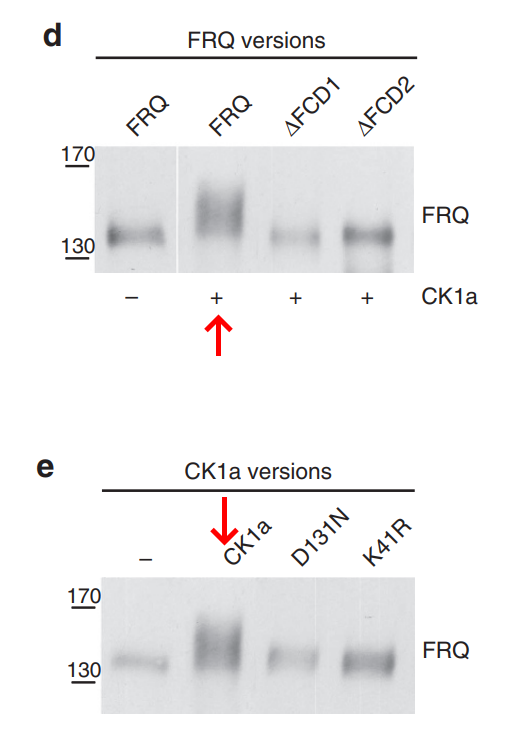
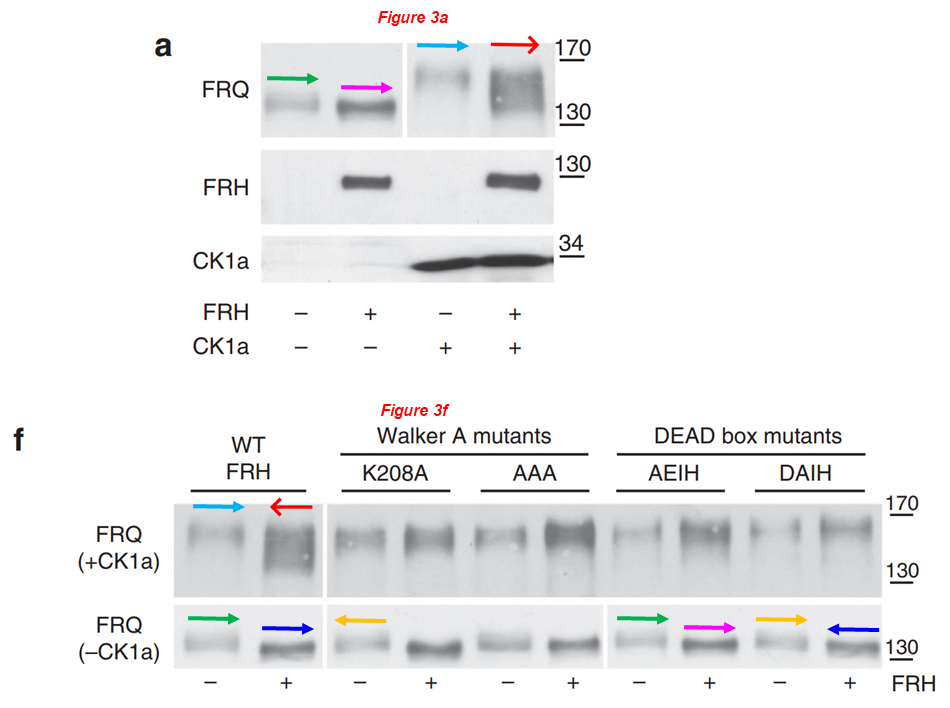
Sholto David: “Figure 3f: Very similar bands are facing the opposite direction.”Fig 3 and 3f
Sholto David: “Figure 3: The bands where I added the red arrows are near identical.”
The evidence was posted already in January 2025, but Brunner replied only in November 2025:
“We would like to thank David Sholto for his observations concerning Lauinger et al., 2014. At the outset, we would like to note that we would have greatly preferred if these concerns had been raised closer to the time of publication, rather than more than eleven years later. This delay matters for two reasons:
If any data manipulation had indeed occurred, the scientific impact/damage would have already been realized long ago.
Research records are only required to be retained for ten years. It was purely by chance – and admittedly due to our procrastination in discarding old materials – that we were still able to locate the original data. However, the student involved has since left the lab, and retrieving and reviewing the historical data has been both difficult and extremely time-consuming.
Below, we provide our detailed response to each of the points raised, together with the relevant original data from that period. All experiments reported in the paper were performed in several biological replicates with consistent results. For figure preparation, the most representative blots were chosen. We regret the confusion caused by human errors during figure assembly over a decade ago. Importantly, these errors do not affect the scientific findings of the study. No data were falsified or fabricated in any way.“
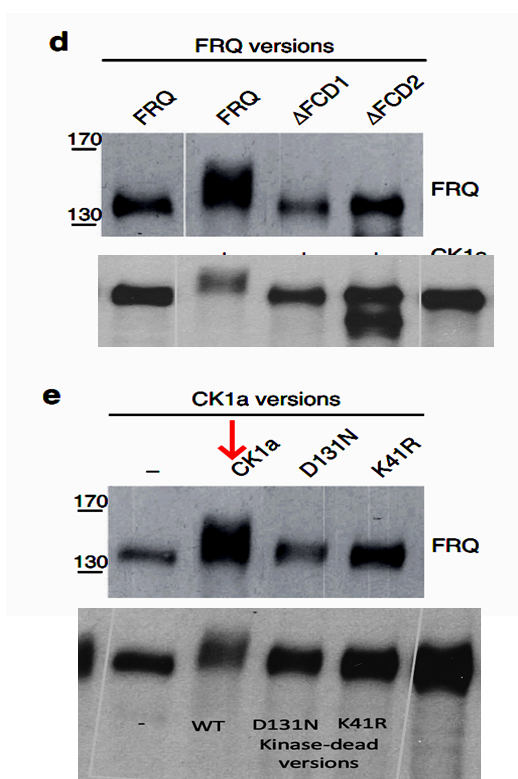
Fig 3d,e: raw data underneath published
Sholto immediately felt ashamed and sorry for wasting his time 11 years ago as a young undergraduate student at university, instead of studying Brunner’s papers so he could report problems on time. Luckily, Brunner found all the raw data, and posted it.
What Brunner shared for Figure 3f, did indeed match the gels for the WT and Walker A Mutants in the published figure, but he shared nothing for the published DEAD Box panel, where the duplication was suspected. For Figures 3d and 3e, Brunner’s raw data contained some bands which seem to match those in the published figures, while other bands clearly didn’t match, in particular those two bands suspected as duplicated. And what Brunner provided for Figures 3a and 3e – none of the bands he highlighted on the raw data blots seemed to match the bands highlighted by Sholto with red arrows.
Then, more duplications were found in this paper:
Aneurus inconstans: “Figure 3a and 3f, some additional bands appear more similar than expected (arrows of same color). In some cases the identical bands are flipped horizontally respect one another”
Maybe Brunner should talk to his own Image Integrity Analyst at FEBS, Jana Christopher. She is the world-famous expert for image integrity and used to credited (together with Jennifer Byrne) with the 2020 papermill investigation by Smut Clyde et al, read here:
“Long story short, we investigated our published papers and then retracted those with data integrity issues. That is it.” – Dr Heather Smith, Editor-in-Chief
Aneurus inconstans: “Several splices are recognizable in Figures 2B, 2C, 3A, 3C and 4B (red arrows), thus individual lanes may not come from the same blotting, which in turn would make meaningless comparing bands’ intensity.”Aneurus inconstans: “Figure 4B: as said in comment #1, splices are visible between each pair of lanes. Moreover, contrast enhancement of the upper blot reveals that no band is visible in fourth lane frq9 Δvvd, while instead a lane is supposedly showing up after longer exposure (lower blot).”
One could say, maybe in 2010 the discussion about gel splicing was still relatively young and Brunner didn’t subscribe to it, in fact the above shows he decided to troll the anti-splicers. But how could the same happen in 2023, and in eLife on top, a non-profit journal which normally puts research integrity first? The last author Kaldi is now back in Hungary as professor at Semmelweis University in Budapest:
Aneurus inconstans: “In panel 3E there’s only one LC, in panels 3B, 3C and 3D there are two LCs, and in panel 3G there are three LCs. […] Secondly, several individual cropped controls in panel 3G appear more than once across rows (boxes of same color), while in the other panels they differ (as they should be, I assume). Finally, I’m very surprised that the whole Figure 3 is composed by individually cropped bands (which makes the comparison of band intensity less trustful), instead of entire blots, which is common practice sice 20 years already.”
I contacted runner about those issues with raw data, but he never replied.
Contributed by Tak W. Mak
The 79 year old professor of the University of Toronto Tak Mak is probably Canada’s biggest cancer researcher. In a field plagued with fraud, it is almost expected to end up as coauthor of dodgy papers due to dishonest collaborators, an indeed Mak kas a serious PubPeer record, which dates back many years.
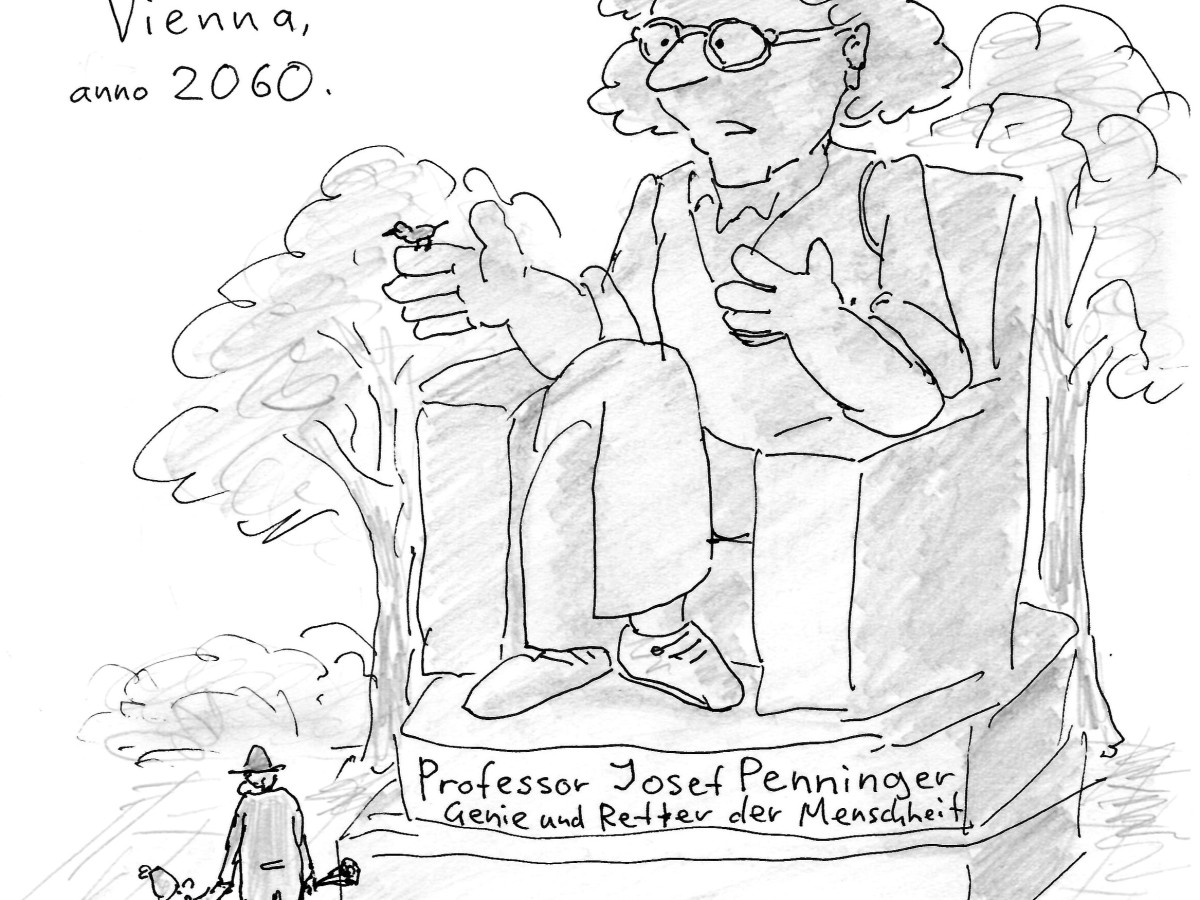
As a young Wunderkind, Josef Penninger discovered the ACE2 receptor. Now he invented the cure for the coronavirus which will work in his hands where Big Pharma failed. He was never found guilty of research misconduct and never retracted a paper. Dr Penninger is a Genius making a COVID-19 vaccine.
In fairness, Mak largely addressed the old PubPeer issues and published some corrections. This, with the Austrian researcher Andreas Villunger (read October 2025 Shorts) got corrected:
Tak promised a correction, which was swiftly published in January 2021, explaining that “a reference related to Fig. 2 A was missing […] Data in Fig. 2 A were previously published in a 2006 PNAS article“.
Also this Mak-contributed PNAS paper with Elledge was corrected:
Correction 15 December 2023: “The authors note an error related to the last two flow cytometry sub-panels of Fig. 6B […] a copy of the correct flow cytometry sub-panel is no longer available. […] The error does not alter the overall results or conclusions of the published article.”
In cases difficult to explain with honest mistakes though, Mak decides against corrections. Here again with his former mentee from Switzerland, Kathrin Zaugg (now at University Hospital Zürich):
Fig 2A and 3A“Figure 4C. Splicing in 2 panels, but not in the 3rd panel.”
“Figure 1A. Splicing in some panels, but not in others.”“Figure 3B. Splicing in some panels, but not in others.”
Already in January 2021, the authors declared raw data as unavailable, and anyway, “splices in some panels may occur due to random reasons“. Mak offered in September 2025 instead of a correction: “We will be very cautious“. Here Mak however never replied on PubPeer:
Actinopolyspora biskrensis: “In Figure 4B, it appears that the same control panel has been used for two different experiments, after flipping horizontally.”
Time to meet another mentee of Mak’s – Filio (Phyllis) Billia, now associate professor at University of Toronto. Here another PNAS paper, “Contributed by Tak W. Mak“:
This is a story of a plant scientist in France, Steffen Reinbothe. He and his sister Christiane used to hold academic positions in Germany, but now they both returned to France, to Grenoble. The move might have had to do with a dossier from 2009, made by a former lab member and circulated among peers.…
Neither Mak nor Billia replied to my emails. No journal would every dare to demand a correction from Mak anyway, never mind a retraction.
Scholarly Publishing
All fall within what is acceptable
Wiley as you know, is United2Act against papermills. And this means they have to occasionally retract a paper. While the fake rest by the same papermill fraudsters remains standing because without papermills there will be no scholarly publishing business. United2Act is basically the virtue-signalling equivalent of “Drink Responsibly” campaigns by the alcohol industry.
The central fraudster of this story is Essam R. Shaaban, Head of Department of Physics at Al-Azhan University in Egypt, and possibly brother of another Egyptian papermiller, Kh. Shabaan, about whom I wrote in January 2025 Shorts), and also mentioned here:
Mu Yang and other sleuths celebrate the scholarly publishing business of the late T Nejat Veziroglu, laureate of Santilli-Galilei Gold Medal for Lifetime Commitment to True Scientific Democracy
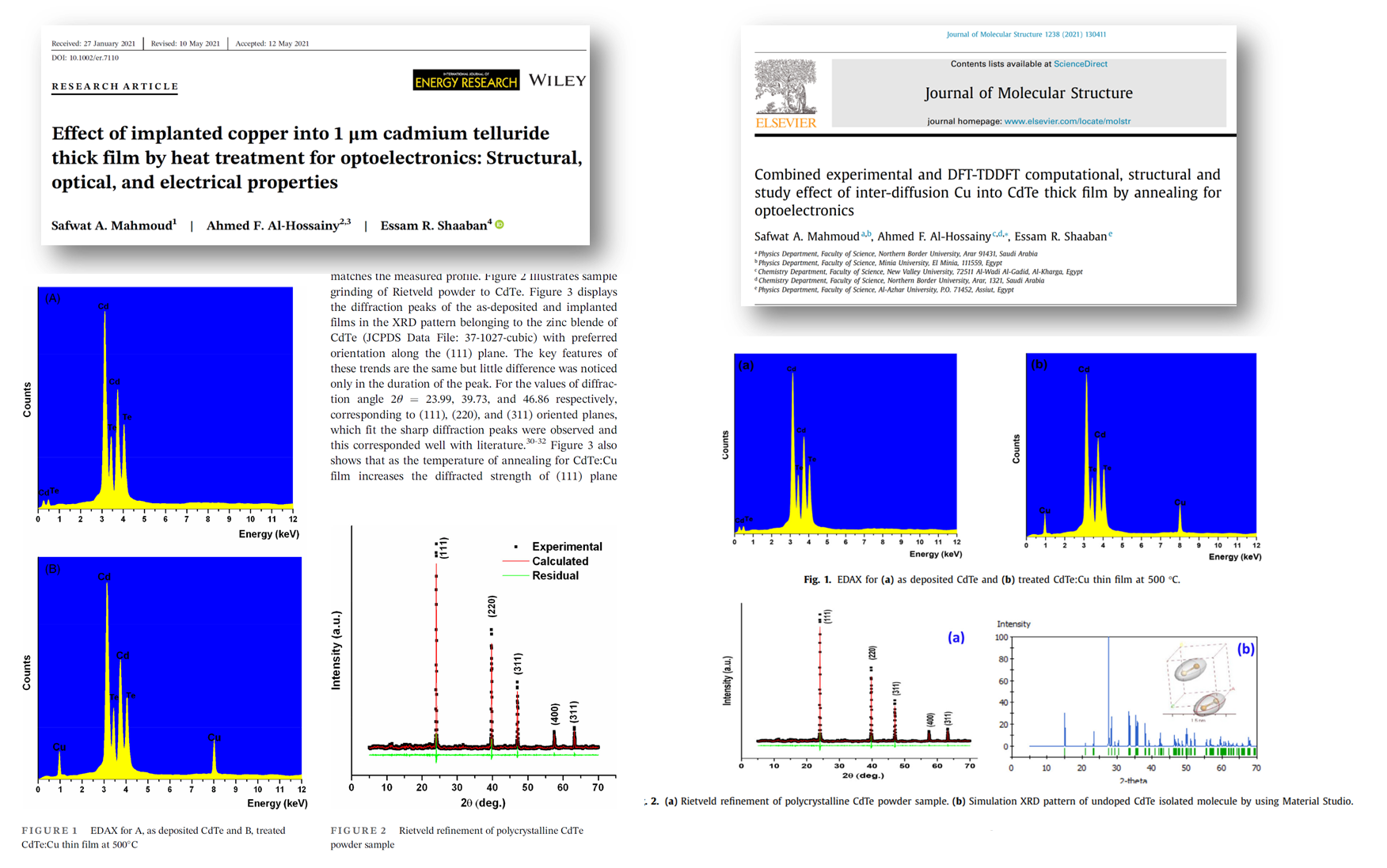
“Concerns were raised by a third party of a high level of similarity between this article’s figures and those of an article by the same author group [Mahmoud et al. (2021); https://doi.org/10.1016/j.molstruc.2021.130411] published on 12 April 2021. The editorial office compared the figures from both articles and found that Figures 2 through 8 and their captions were reused from the previous article without proper credit, permission, or explanation within the text. The authors were unable to provide a satisfactory explanation, and therefore the article must be retracted.”
In late 2024, Mu Yang shared posted Essam Shabaan’s fraud on PubPeer (20 threads presently), then made a dossier and shared it with the publishers. In October 2025, Wiley’s Research Integrity Auditor Sara Belkin thanked Mu “for identifying and sharing important concerns regarding several articles authored by Essam R. Shaaban” and announced the outcome of Wiley’s investigation of four of his Wiley papers. The current retracted paper was Nr 3. For the other three, Belkin informed the sleuth:
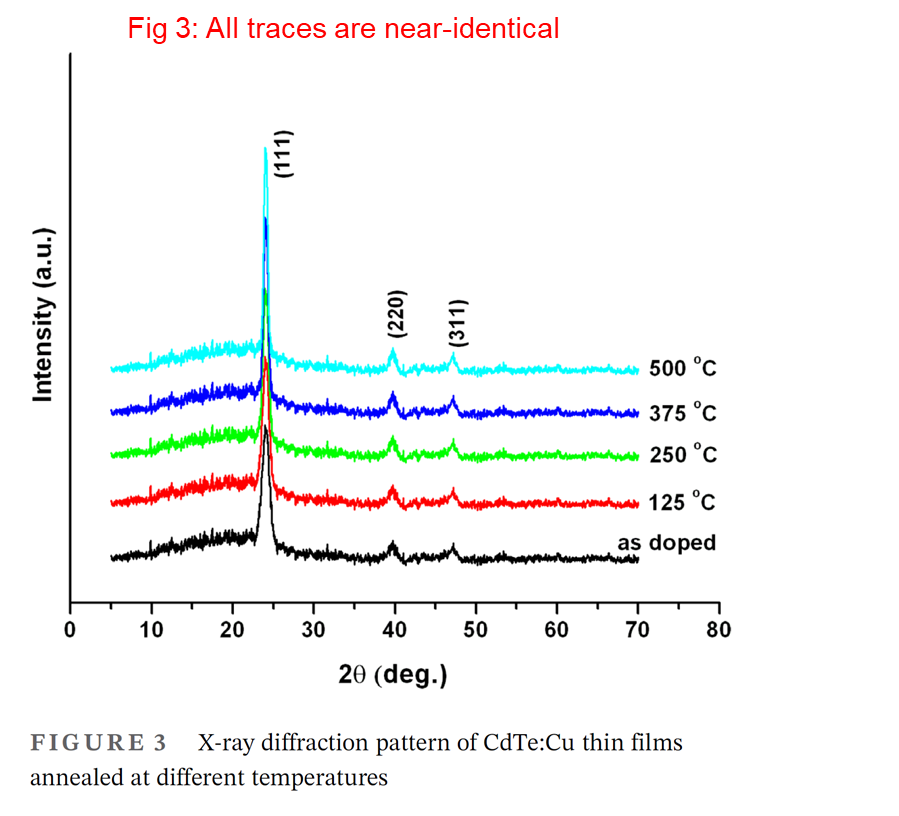
“After a detailed analysis of the concerns for each remaining article, we did not find anything to require further action on these articles. Our experts found that the noise baseline in the individual tracings all fall within what is acceptable. As such, we are now closing our investigation.”
Dysdera arabisenen “Fig 1: Baseline noises of all 4 EDX look remarkably similar. The images were stretched horizontally and vertically differently. The lower two images appear identical. Please heed section marked by the pink box”“Fig 3: x=0.1 and x=0.15 traces have near-identical noises in sections marked by green and blue boxes. There is a slight shift between these traces.”
“Figures 1: The locations of Hg peaks are very confusing: If we presume the tik where O is at is 0.5 KeV, then the first Hg peak could be correct. But the second and third Hg peaks can not be right. See reference https://xdb.lbl.gov/. If O was mis-assigned, and that we can trust the X axis scale, then Hg peaks will be at about 3.2, 6.4, and 8.4 KeV, which all are incorrect according to the reference https://xdb.lbl.gov/“
Maarten Van Kampen confirmed Mu’s analysis, but then again who are these seluths against Wiley’s own “experts”. Nr 4 also falls within what is acceptable at Wiley:
From the peer review which recommended rejection (read full version in the article above):
“Cutting things short I think this is a fraudulent paper, with all hallmarks of a paper mill product.[…] I really think Journal should have a better way to filter out fraudulent research before sending it to reviewers. “
There were two other reviewers, one was very positive, the other raised serious concerns. The editor decided for “major revisions” and the paper was published. Afterwards, my guest author found image fraud:
There appear to be repetitions in the shape and patterns of the asci in Fig. 1C.
The retraction from 9 October 2025 seems to be based on the peer reviewer’s rejected rejection:
“The retraction has been agreed upon following an investigation into concerns raised by a third party regarding inconsistencies in the homology modeling described in the article. A subsequent review and expert reassessment confirmed serious concerns regarding the integrity and reliability of the data presented. Key issues include:
Use of the native crystal structure (PDB 6WLF) while claiming to use a homology model, with no evidence of comparative modeling or validation (Figure 7).
Methodological flaws in molecular docking results, including unrealistic binding interactions, with ligands still present, contradicting the described methods (Figure 8).
Chemically implausible compound identifications, with several reported compounds unlikely to be biogenic or too reactive under the reported conditions (Table 2).
Inconsistencies in data presentation and statistical reporting (Figure 3).
While the authors cooperated with the investigation, their response did not resolve the concerns and, in some cases, further undermined confidence in the work. Given the extent and nature of the issues, the editors no longer consider the article’s conclusions to be reliable and have therefore decided to retract the publication. The authors disagree with this retraction.”
No visual similarities can be observed
A corner clone retraction! The so-called “corner clones” arise when somebody has to reformat the labels on their images to fit the journal’s standards. In this situation, a section of the image is cloned to mask the wrong label, so a correctly formatted label can be added.
There is a lot of debate about who does such things, the manuscript’s authors or publisher’s staff, and if corner clones constitute research misconduct at all. As if not having access to the original reserach data behind the figures which you are about to publish is something perfectly normal and acceptable. In several cases, the journals and publishers took the blame of corner clone editing upon themselves, see the Macchiarini case discussed in Manns’s obituary above (Go et al 2010), several other cases were mentioned here:
Thomas Südhof, victim of racist and sexist persecution, announced to retract a second paper, “even though the quantitative analyses and conclusions are correct”.
It seems however, where the authors are not importnant enough, corner clones suddenly can constitute research fraud. Even in a 14 year old paper from Romania, published in a Wiley journal:
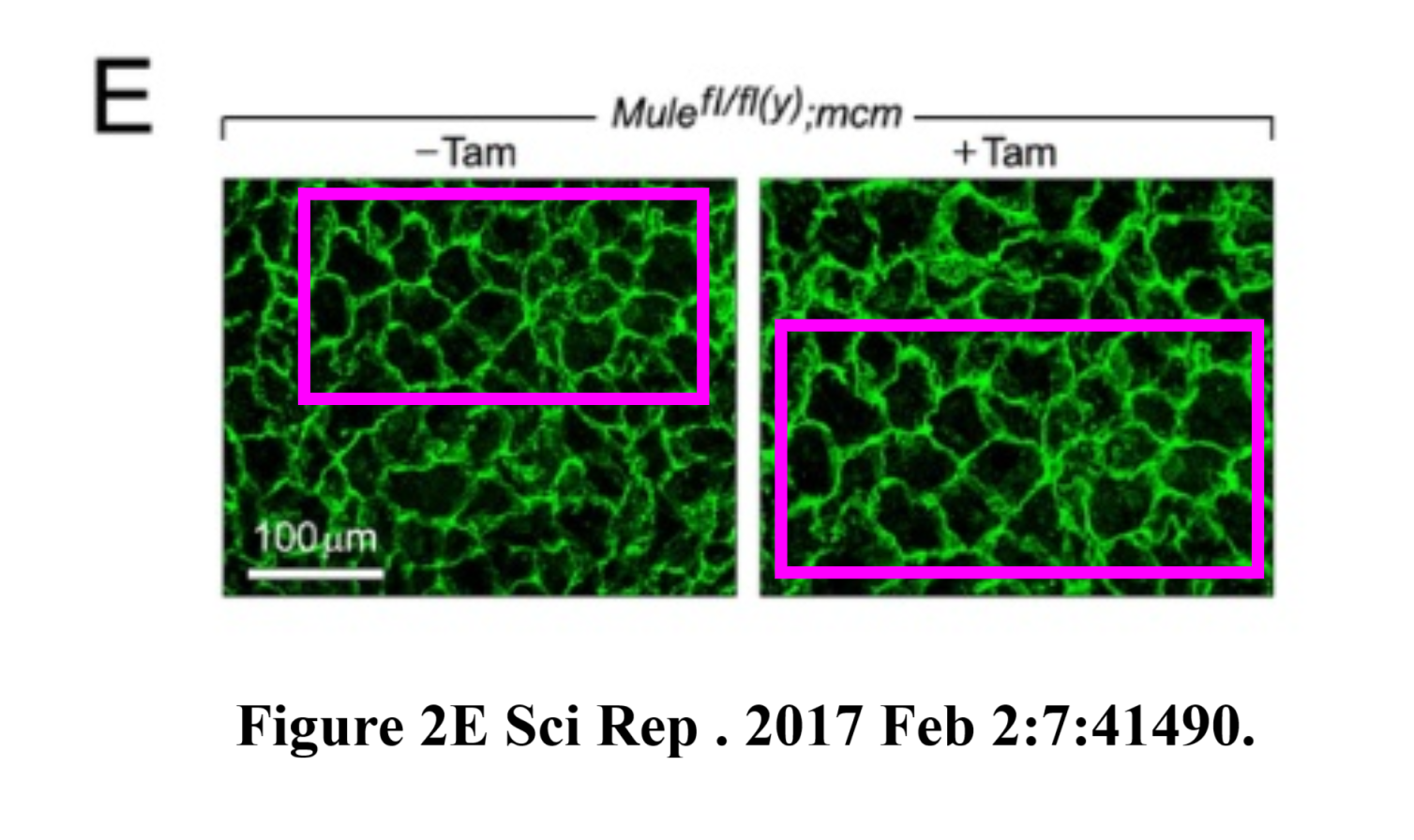
“The retraction has been agreed following an investigation of the concerns raised by Archasia belfragei on PubPeer [1], which identified concerns related to Figure 5a where a region is unexpectedly repeated.
As a result of the investigation, the data and conclusions of this article are considered unreliable.
Archasia belfragei : “This paper contains a panel that show unexpected similarity to a previously published paper:” Fig 5 vs Fig 9 Daniela Predoi , Simona Liliana Iconaru , Mihai Valentin Predoi , George E. Stan , Nicolas Buton Synthesis, Characterization, and Antimicrobial Activity of Magnesium-Doped Hydroxyapatite Suspensions Nanomaterials (2019) doi: 10.3390/nano9091295 Archasia belfragei : “A panel in Figure 4 overlaps with a previously published image by the same group representing a seemingly different material:” Fig 5: Gabriel Predoi , Carmen Steluta Ciobanu , Simona Liliana Iconaru , Daniela Predoi , Dragana Biliana Dreghici , Andreea Groza , Florica Barbuceanu , Carmen Cimpeanu , Monica-Luminita Badea , Stefania-Felicia Barbuceanu , Ciprian Florin Furnaris , Cristian Belu , Liliana Ghegoiu , Mariana Stefania Raita Preparation and Characterization of Dextran Coated Iron Oxide Nanoparticles Thin LayersPolymers (2021) doi: 10.3390/polym13142351
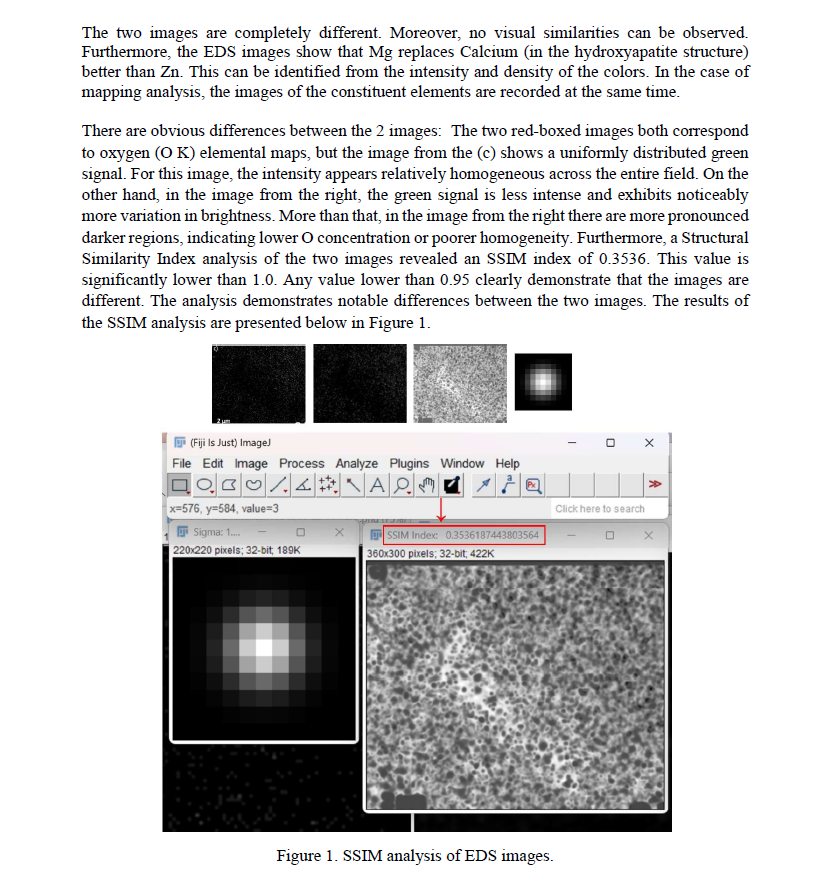
Iconaru replied on PubPeer in May 2025 with images of long texts, here about the first issue:
“The two images are completely different. Moreover, no visual similarities can be observed.”
Simona Liliana Iconaru on PubPeer
And about the second issue, an even longer text:
“One of the images has a higher contrast and appears darker overall, while the other is brighter […] More than that, by performing a Structural Similarity Index analysis of the two images the results revealed an SSIM index of 0.2303. This value is significantly lower than 1.0. Any value lower than 0.95 clearly demonstrate that the images are different. […] All of these results demonstrate that while the images might look similar, they are not the same and contain substantial structural and intensity differences”
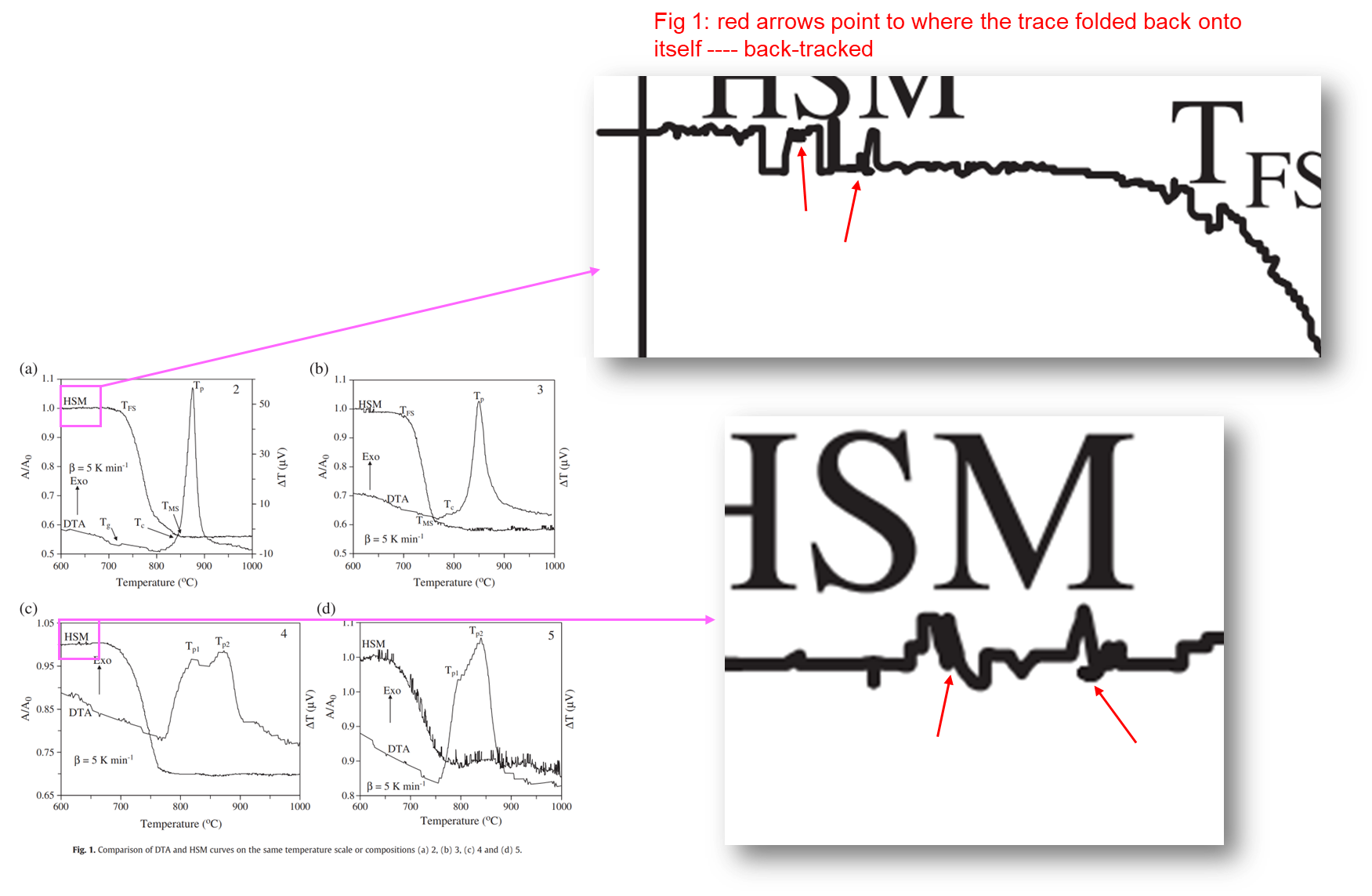
Crudely edited
A funny papermill retraction now! The paper was previously reported to Elsevier by Mu Yang, and its last author Rajasree Shanmuganathan featured in this article:
Dysdera arabisenen: “Fig 2: […] blue lines, the black trace is significantly shorter (horizontally) than the red trace, and is missinga chunk at about 45 degree (blue arrow).”
Neodiprion demoides: “near-repeating fragments in the black pattern.”
The recent and yet undated retraction went (Highlights mine):
“This article has been retracted at the request of the Editor.
The authors failed to respond to the journal’s enquiries seeking an explanation for the concerns recorded on PubPeer at https://pubpeer.com/publications/475F0FCC7DCDF8338AFD9D9891B2CE. In absence of a response, the editor evaluated the available information and concluded that:
Fig 4b, the fraudsters weren’t even trying
The XRD patterns in figure 2 show signs of editing as reported on PubPeer. The peak position has shifted significantly from that of the fresh zeolite, which is unusual and suggests that the line may have been copied and pasted into the plot. This observation, coupled with the poor editing traces, indicates that the data are not reliable.
SEM image (figure 4b) appears to be a single SEM image with the right side being a duplication of the left. However, the bottom scale and mode of operation indicate that it should actually be one continuous SEM image.
In the revised version of the manuscript, the reviewer asked the authors to provide real time images of reactors and mixers. The authors responded by saying they provided the real time images of reactors and mixers in the supplementary material section. However, there is no supplementary materials section in the final version, and the photographs of this apparatus that were supplied in response to the reviewer comments were actually taken fromhttps://www.blogs.uni-mainz.de/fb09akloewe/files/2014/06/mikroglas_mrt_catalogue_060825.pdf and https://www.seprex.co.in/bed-reactors.html, both of which appear to have no connection with the authors. In the latter case, the image that the authors supplied for the reviewers was crudely edited by the addition of some panels in the lower left quadrant that obscured background details visible in the original image.
An unauthorised authorship change was made when the revised version of this paper was submitted, following suggestions for relatively minor revisions from the reviewers and editor, with authors Ezhaveni Sathiyamoorthi and Jintae Lee added at first revision without declaration or explanation. The CRediT authorship contribution statement indicates “Ezhaveni Sathiyamoorthi: Methodology, Investigation, Formal analysis, Conceptualization. Jintae Lee: Writing – review & editing, Writing – original draft, Visualization, Supervision” which are contributions that appear to be inconsistent with the addition of these two individuals as authors at first revision. This authorship change therefore breaches the policies of the journal.
As a result of all of the above observations, the editor no longer has confidence either the contributions purportedly made by the authors to this paper or the reliability of the science contained therein, and is retracting it. The journal apologises for not having identified the problematic authorship change during the review process and for any resulting inconvenience.”
I think the journal should apologise for never even looking at the fake and stolen rubbish they publish, I don’t even bother suggesting any attempts at peer review.
Donate!
If you are interested to support my work, you can leave here a small tip of $5. Or several of small tips, just increase the amount as you like (2x=€10; 5x=€25). Your generous patronage of my journalism will be most appreciated!
Yes, we know. I discovered it yesterday and Hoya camphorifolia placed this information on PubPeer 5 hours ago. I hope it will go downhill now but any help in investigating MRS’ papers would be highly appreciated.
I don’t know which one was more frustrating. I guess I will go with a single faculty publishing ca. 1500 papers and an entire university, together with DFG looking at it and saying ‘Seems legit’. DFG can include this in its progress report. Let me help with the title, ”Outcomes of our authorship policy within the last decade: A paradoxical progress”
I don’t know which one was more frustrating. I guess I will go with a single faculty publishing ca. 1500 papers and an entire university, together with DFG looking at it and saying “Seems legit !”. DFG can include include this in its progress report. Let me help with the title: “Outcomes of our authorship policy within the last decade: A paradoxical progress“.
One second ! It needs to be in German. Here we go: “Auswirkungen unserer Autorenschaftspolitik im vergangenen Jahrzehnt: ein paradoxaler Fortschritt” (hope it’s ‘hoch’ enough)
Clair Francis, the good news is out ! Stocholm Declaration stands ready to tackle all the problems in research. And guess who was in the committee ? Vice-president of DFG. So worth emailing the research integrity team again, but of course with subtitles for the visuals which are not already self-explanatory, and with greater clarity in self-expression, if possible in Hochdeutsch. And how about changing your pseudonym to Sabine Muller ? Sabine sounds very pleasant to the ear and may be an icebreaker. Philology deserves the same rigor as science, and perhaps more.
Despite all the amazing activities mentioned in this Friday Shorts alone, what a miracle that we are still alive today ! Obviously these very same people don’t magically evolve into do-gooders when they ‘focus on clinic’.
I saw that ArtemiPet™ is an immune boost for dogs only. Would that work for Thomas, my turkey ? Is there any groundbreaking research on the way to keep turkeys young and vibrant forever ?
I hope the Vice President’s busy schedule preparing the Sabel Stockholm Declaration didn’t interfere with his world-changing discoveries both for humans and the pets.
“German biology professor Michael Brunner, Director of the Heidelberg University Biochemistry Center (BZH), Member of the German Academy of Sciences Leopoldina, and Editor-in-Chief of the society journal FEBS Letters.”
It is quite sad. I had identified Michael Brunner as a good Editor-in-Chief. He does retract deeply flawed papers, and issue Expressions of Concern, where the problematic data are difficult to explain away.
The University of Alberta’s own propaganda piece states: “Dr. Constance Chik’s contributions to the field of endocrinology, particularly in the area of pituitary disorders, have resulted in numerous awards and leadership recognitions from her peers.”































 For Better Science
https://www.sciencedirect.com/science/article/pii/S1385894724073777?via%3Dihub
The ridiculous CEJ paper got retracted! Special thanks to all the sleuths involved in the investigation!
LikeLiked by 3 people
Yes, we know. I discovered it yesterday and Hoya camphorifolia placed this information on PubPeer 5 hours ago. I hope it will go downhill now but any help in investigating MRS’ papers would be highly appreciated.
LikeLiked by 2 people
‘… may occur due to random reasons‘ !
TIL a phrase of outstanding utility—perfect for when my bosses ask why and I need to sound like I’ve thought it through.
LikeLike
Well, I suppose until papers have a formal expiry date for citation and H-index calculating they shouldn’t have one for criticism.
LikeLike
I don’t know which one was more frustrating. I guess I will go with a single faculty publishing ca. 1500 papers and an entire university, together with DFG looking at it and saying ‘Seems legit’. DFG can include this in its progress report. Let me help with the title, ”Outcomes of our authorship policy within the last decade: A paradoxical progress”
LikeLike
Indeed, a nice slogan: “Papermill Responsibly… but only occasionally” (cause you might get caught 😉 )
LikeLike
I don’t know which one was more frustrating. I guess I will go with a single faculty publishing ca. 1500 papers and an entire university, together with DFG looking at it and saying “Seems legit !”. DFG can include include this in its progress report. Let me help with the title: “Outcomes of our authorship policy within the last decade: A paradoxical progress“.
One second ! It needs to be in German. Here we go: “Auswirkungen unserer Autorenschaftspolitik im vergangenen Jahrzehnt: ein paradoxaler Fortschritt” (hope it’s ‘hoch’ enough)
Clair Francis, the good news is out ! Stocholm Declaration stands ready to tackle all the problems in research. And guess who was in the committee ? Vice-president of DFG. So worth emailing the research integrity team again, but of course with subtitles for the visuals which are not already self-explanatory, and with greater clarity in self-expression, if possible in Hochdeutsch. And how about changing your pseudonym to Sabine Muller ? Sabine sounds very pleasant to the ear and may be an icebreaker. Philology deserves the same rigor as science, and perhaps more.
Despite all the amazing activities mentioned in this Friday Shorts alone, what a miracle that we are still alive today ! Obviously these very same people don’t magically evolve into do-gooders when they ‘focus on clinic’.
LikeLike
Huh, I missed that about DFG Vice President being on The Sabel Stockholm Declaration
https://royalsocietypublishing.org/doi/10.1098/rsos.251805
But now it all makes sense… This DFG VP is… Peter Seeberger.
Fuck. Fuck. Fuck.
LikeLike
How about anti-aging ?
I saw that ArtemiPet™ is an immune boost for dogs only. Would that work for Thomas, my turkey ? Is there any groundbreaking research on the way to keep turkeys young and vibrant forever ?
https://animalwellnessacademy.org/blog/artemipet-harnesses-the-power-of-an-ancient-herb-to-boost-canine-immunity/
I hope the Vice President’s busy schedule preparing the Sabel Stockholm Declaration didn’t interfere with his world-changing discoveries both for humans and the pets.
LikeLike
“German biology professor Michael Brunner, Director of the Heidelberg University Biochemistry Center (BZH), Member of the German Academy of Sciences Leopoldina, and Editor-in-Chief of the society journal FEBS Letters.”
It is quite sad. I had identified Michael Brunner as a good Editor-in-Chief. He does retract deeply flawed papers, and issue Expressions of Concern, where the problematic data are difficult to explain away.
Michael Brunner issued this 27 September 2024 retraction of a 2004 paper by the Australian malignant melanoma researchers Xu Dong Zhang and Peter Hersey RETRACTION: Selection for TRAIL Resistance Results in Melanoma Cells with High Proliferative Potential – 2024 – FEBS Letters – Wiley Online Library
Michael Brunner has just issued this 12 November 2025 Expression of Concern about a 2004 paper by Constance L Chik and Anthony K Ho, Edmonton Canada. EXPRESSION OF CONCERN: Mitogen‐Activated Protein Kinase Phosphatase‐1 (MKP‐1): >100‐Fold Nocturnal and Norepinephrine‐Induced Changes in the Rat Pineal Gland – FEBS Letters – Wiley Online Library
It is very disappointing that Michael Brunner complains bitterly when people criticise, with evidence, one of his 2014 papers. PubPeer – The RNA helicase FRH is an ATP-dependent regulator of CK1a i…
LikeLike
I would like to give a belated plug to Constance L Chik
C Chik, BSc, MD, PhD, FRCPC – Directory@UAlberta.ca
The University of Alberta’s own propaganda piece states: “Dr. Constance Chik’s contributions to the field of endocrinology, particularly in the area of pituitary disorders, have resulted in numerous awards and leadership recognitions from her peers.”
and Anthony K Ho, Anthony K Ho – Directory@UAlberta.ca
Edmonton, Canada, for a knot of problematic papers in that murky pond on endocrinology.
Credit, where credit is due.
PubPeer – Search publications and join the conversation.
LikeLike
“Contributed by Tak W. Mak – Canada’s superstar and his mentees”
Another one for Tak W Mak.
PubPeer – Lipocalin-2 deficiency attenuates insulin resistance associa…
LikeLike