

Schneider Shorts of 5 September 2025 – An Englishman fell of his Chair, German doctors present with fake data, with Stanford’s research integrity heroes, one papermiller sacked in Australia, another awarded in Canada, how Wiley and Elsevier fight papermill fraud, and how ACS helps you lose weight.
Table of Discontent
Science Elites
- Profound gratitude – Andrew George fell off his Chair
- About Schmid – a bad look for German medicine
- Certain actions will be taken – Rabiul Awual cancelled in Australia
- Outstanding young researcher – Mo Arjmand gets another award in Canada
Scholarly Publishing
- To prevent such errors in the future – Daria Mochly-Rosen and Julio Ferreira, innocent heroes of research ethics
- This concern has been escalated – Wiley United2Act against papermills
- While these errors are regrettable – Elsevier understands papermills’ potential
Retraction Watchdogging
- A one off event – two Indian misogynists lose fake paper
Science Breakthroughs
- Easily integrated into people’s diet – ACS advertises for Chinese weight-loss scam
Science Elites
Profound gratitude
Do you remember Andrew George, Co-Chair of the UK Committee on Research Integrity (UKCORI)? He is also Non-Executive Director of the Health Research Authority (HRA) and emeritus professor of immunology at Imperial College London, and author of several research papers with manipulated data.
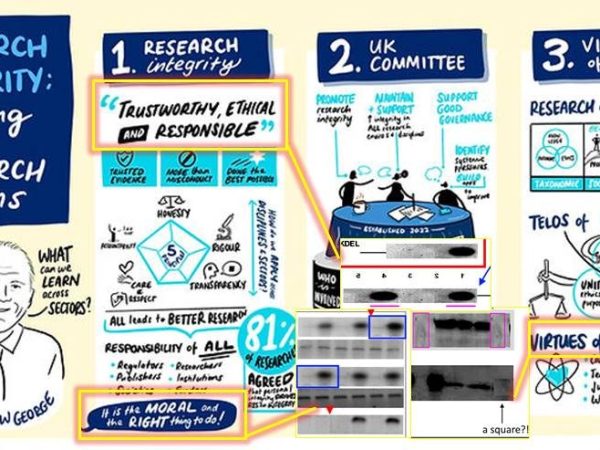
Andrew George and the Virtues of Research Integrity
“One of the UK research system’s strengths is having established processes that allow for this review so that we maintain an accurate and robust research record. Promoting and improving this system, and encouraging more openness and transparency, is why I became involved in the UK Committee on Research Integrity.” – Andrew J T George

As you might have noticed, For Better Science was the only media where George’s bad science was ever discussed, because since when is a research cheater being UK’s top authority on research integrity is newsworthy. I also wrote in April 2025 Shorts how Wiley decided to save their fellow stakeholder from our malicious allegations, and joined him in declaring the PubPeer evidence to be false.
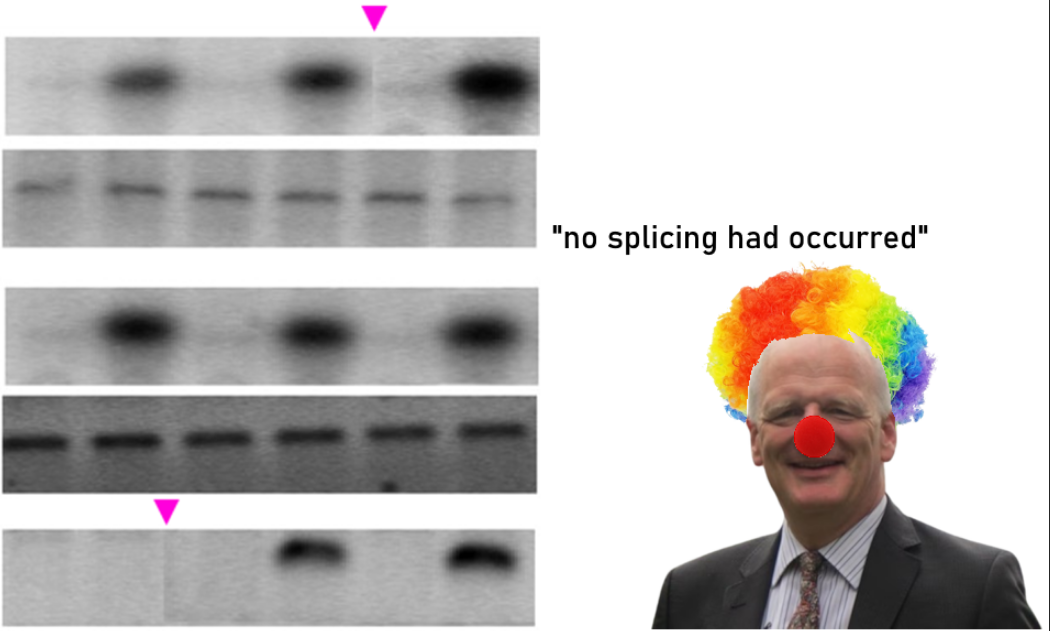
Well, George still couldn’t be saved. Maybe that’s because Sholto David even informed the British Parliament, with his email to George from 2 February 2025, where Sholto tried to explain to Britain’s Chair of Research Integrity the problems with his own papers, even with illustrations:
Now Sholto noticed that George stopped being listed on UKCRI’s website. Indeed, he left his UKCORI Chair some time ago, this was hidden in a UKCORI announcement from 13 June 2025:
“The Committee extends its profound gratitude to Professor Andrew George, who has chosen not to renew his role as co-chair, for his valuable contributions and leadership. We are pleased to announce that Dame Jil Matheson has stepped into the role in the interim, joining Professor Rachael Gooberman-Hill as co-chair of the Committee for the next 6 months.”
Not just that. George also stopped being HRA’s Non-Executive Director (the archived HRA page from March 2025 still listed him). His old HRA profile now leads to “oops” error page, and the current board doesn’t include him.
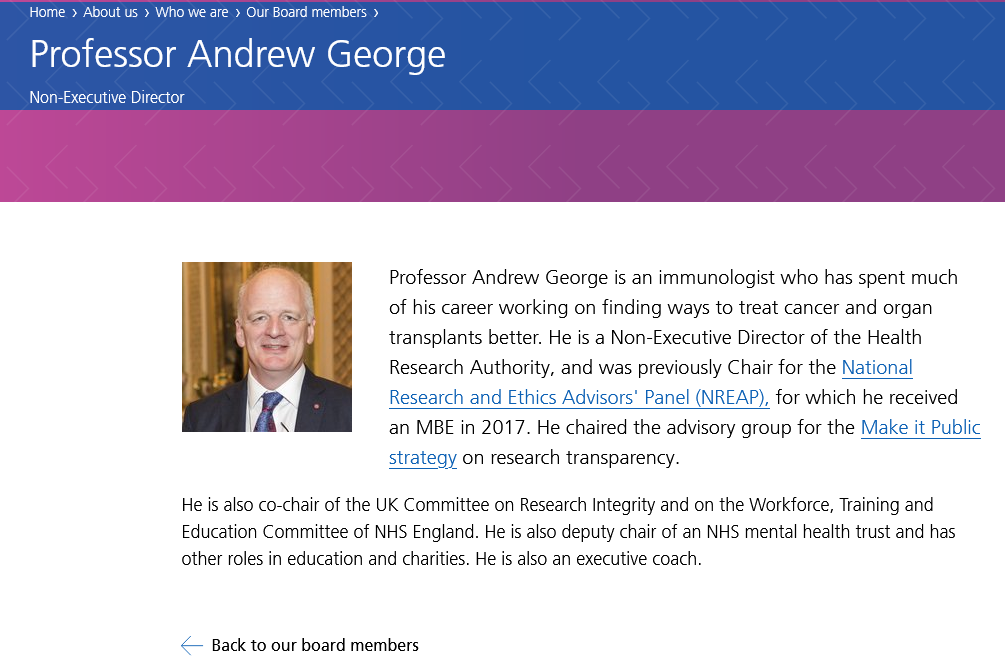
There was no announcement by HRA though. I guess their gratitude to George is not that profound.
About Schmid
Roland Schmid is professor of inner medicine, clinic head and former vice-dean at the TU Munich in Germany. He won some medals and awards and authored so many papers that you can’t expect him to have read them all. Schmid drew attention to himself via his association with Jens Siveke, former director of a cancer centre at TU Munich, now head of a cancer therapy institute and a cancer centre at the University Clinic Essen. Siveke briefly featured here:

I Lost My Pancreas in Heidelberg
“While papermills certainly pollute the literature the most in terms of numbers, I believe the spotlight should equally be on questionable research groups at top institutions, whose articles might have an even larger negative impact on society” – Aneurus Incostans

Here a common paper:
Pawel K. Mazur , Henrik Einwächter , Marcel Lee , Bence Sipos , Hassan Nakhai , Roland Rad , Ursula Zimber-Strobl , Lothar J. Strobl , Freddy Radtke , Günter Klöppel , Roland M. Schmid, Jens T. Siveke Notch2 is required for progression of pancreatic intraepithelial neoplasia and development of pancreatic ductal adenocarcinoma Proceedings of the National Academy of Sciences of the United States of America (2010) doi: 10.1073/pnas.1002423107

The first author Pawel Mazur is now assistant professor at MD Anderson Cancer Center in Houston, Texas, USA. And here another one by Siveke and Schmid with Mazur as first author, from the same year, again with Freddy Radtke, professor at EPFL in Switzerland, and Lothar Strobl, group leader at Helmholtz Institute Munich, with his wife and lab member Ursula Zimber-Strobl:
Pawel K. Mazur , Barbara M. Grüner , Hassan Nakhai , Bence Sipos , Ursula Zimber-Strobl , Lothar J. Strobl , Freddy Radtke , Roland M. Schmid , Jens T. Siveke Identification of Epidermal Pdx1 Expression Discloses Different Roles of Notch1 and Notch2 in Murine KrasG12D-Induced Skin Carcinogenesis In Vivo PLOS One (2010) doi: 10.1371/journal.pone.0013578

Erica glumiflora: “In Fig. 5D, there appears to be considerable overlap between the top and bottom panels on the right.”
Here are Siveke, his mentee Mazur, Schmid and Adriano Aguzzi‘s mentee Mathias Heikenwalder, now professor at DKFZ Heidelberg (who also featured in the article above), another problematic coauthor is the US bigwig Tyler Jacks:
Pawel K Mazur , Alexander Herner , Stephano S Mello , Matthias Wirth , Simone Hausmann , Francisco J Sánchez-Rivera , Shane M Lofgren , Timo Kuschma , Stephan A Hahn , Deepak Vangala , Marija Trajkovic-Arsic , Aayush Gupta , Irina Heid , Peter B Noël , Rickmer Braren , Mert Erkan , Jörg Kleeff , Bence Sipos , Leanne C Sayles , Mathias Heikenwalder , Elisabeth Heßmann, Volker Ellenrieder, Irene Esposito, Tyler Jacks, James E Bradner, Purvesh Khatri, E Alejandro Sweet-Cordero, Laura D Attardi, Roland M Schmid, Guenter Schneider, Julien Sage, Jens T Siveke Combined inhibition of BET family proteins and histone deacetylases as a potential epigenetics-based therapy for pancreatic ductal adenocarcinoma Nature Medicine (2015) doi: 10.1038/nm.3952

Siveke replied on PubPeer that “despite several lab members proof-reading the manuscript before final submission, these errors had escaped our attention“, and announced to publish a correction.
Worth noting that neither Siveke nor Heikenwalder are in any danger of ever being investigated. Both the University of Duisburg-Essen and DKFZ refused admitting my notifications. Schmid isn’t though: the TU Munich’s Ombudsperson announced to have a look into the evidence.
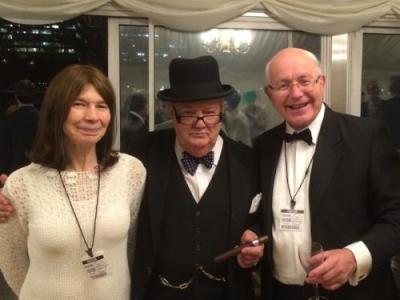
Portrait of Sir Philip Cohen’s Family
Sir Philip and Lady Tricia Cohen, and their heir Dario Alessi, plus other first and second generation offspring. A Scottish soap opera!
The paper above had a certain Günter Schneider as coauthor, now professor at University Medical Center Göttingen, and here is Schneider with Schmid again, plus Dario Alessi of University of Dundee in UK (read about him above). Another coauthor is the TU Munich professor Dieter Saur:
Stefan Eser , Nina Reiff , Marlena Messer , Barbara Seidler , Kathleen Gottschalk , Melanie Dobler , Maren Hieber , Andreas Arbeiter , Sabine Klein , Bo Kong , Christoph W. Michalski , Anna Melissa Schlitter , Irene Esposito , Alexander J. Kind , Lena Rad , Angelika E. Schnieke , Manuela Baccarini , Dario R. Alessi , Roland Rad , Roland M. Schmid , Günter Schneider, Dieter Saur Selective Requirement of PI3K/PDK1 Signaling for Kras Oncogene-Driven Pancreatic Cell Plasticity and Cancer Cancer Cell (2013) doi: 10.1016/j.ccr.2013.01.023

Schmid, Sauer and Schneider have other common papers with problems, Diersch et al 2013 and Schüler et al 2010. And this, with Schmid as last author:
Ralph M. Fritsch , Guönter Schneider , Dieter Saur , Melanie Scheibel , Roland M. Schmid Translational repression of MCL-1 couples stress-induced eIF2 alpha phosphorylation to mitochondrial apoptosis initiation The Journal of biological chemistry (2007) doi: 10.1074/jbc.m702673200

Here is Schmid with his TU Munich colleagues led by Michael Quante (now at University Clinic Freiburg), and some US collaborators, including the known fraudster Andrew Dannenberg who two years ago was retired by Weill Cornell, slapped with retractions and sanctioned by HHS-ORI (see September 2023 Shorts):
Natasha Stephens Münch , Hsin-Yu Fang , Jonas Ingermann , H. Carlo Maurer , Akanksha Anand , Victoria Kellner , Vincenz Sahm , Maria Wiethaler , Theresa Baumeister , Frederik Wein , Henrik Einwächter , Florian Bolze , Martin Klingenspor , Dirk Haller , Maria Kavanagh , Joanne Lysaght , Richard Friedman , Andrew J. Dannenberg , Michael Pollak , Peter R. Holt , Sureshkumar Muthupalani, James G. Fox, Mark T. Whary, Yoomi Lee, Tony Y. Ren, Rachael Elliot, Rebecca Fitzgerald, Katja Steiger, Roland M. Schmid, Timothy C. Wang, Michael Quante High-Fat Diet Accelerates Carcinogenesis in a Mouse Model of Barrett’s Esophagus via Interleukin 8 and Alterations to the Gut Microbiome Gastroenterology (2019) doi: 10.1053/j.gastro.2019.04.013

Here a paper with Rudolf Rupec (now CEO of dermatology clinic in Switzerland) and other colleagues at LMU Munich, plus the Universities of Tübingen and Düsseldorf:
Bernd Rebholz , Ingo Haase , Birgit Eckelt , Stephan Paxian , Michael J. Flaig , Kamran Ghoreschi , Sergei A. Nedospasov , Reinhard Mailhammer , Svenja Debey-Pascher , Joachim L. Schultze , Günther Weindl , Irmgard Förster , Ralf Huss , Athanasios Stratis , Thomas Ruzicka , Martin Röcken , Klaus Pfeffer , Roland M. Schmid, Rudolf A. Rupec Crosstalk between keratinocytes and adaptive immune cells in an IkappaBalpha protein-mediated inflammatory disease of the skin Immunity (2007) doi: 10.1016/j.immuni.2007.05.024

Schmid has more on PubPeer, including with Florian Greten, whom his University of Frankfurt officially declared utterly innocent and a victim of my malicious slander (they later did the same for their former Vice-Rector Simone Fulda). Greten trained in USA with Count Fakula Michael Karin, you can see some of their achievements here:

AACR conjures undead Count Fakula Michael Karin
What better distraction than the COVID-19 pandemic to revive one of the spookiest parasites in cancer research? AACR uses the COVID-19 cover to award Michael Karin, for his over 50-paper-strong record of data fakery.
Here is one such product, with Schmid:
Florian R. Greten, Melek C. Arkan , Julia Bollrath , Li-Chung Hsu , Jason Goode , Cornelius Miething , Serkan I. Göktuna , Michael Neuenhahn , Joshua Fierer , Stephan Paxian , Nico Van Rooijen , Yajun Xu , Timothy O’Cain , Bruce B. Jaffee , Dirk H. Busch , Justus Duyster , Roland M. Schmid, Lars Eckmann , Michael Karin NF-kappaB is a negative regulator of IL-1beta secretion as revealed by genetic and pharmacological inhibition of IKKbeta Cell (2007) doi: 10.1016/j.cell.2007.07.009

Certain actions will be taken
The papermiller and shameless citation extortionist Md Rabiul Awual was apparently kicked out from Curtin University in Australia following the notifications by Fabian Wittmers and yours truly. Awual used to be portrayed by his employer as “One of Australia’s top researchers“ and “One of Australia’s research field leaders“, read June 2025 Shorts and here:
The Citation Payola
“The proposition that a niche of citation brokers exists, opens our eyes to other transaction options..” . Smut Clyde

On 28 August 2025, Curtin University sent me this letter, signed by the Deputy Vice-Chancellor Research, Melinda Fitzgerald:
“On 27 June 2025, the Research Integrity Office at Curtin University (the University) received a referral of the complaint you made to various areas within the University.
The complaint raised concerns about Curtin Adjunct Professor Dr Rabiul Awual, which broadly relate to unethical misuse of citations, and unethical reuse/plagiarism of data and images.
I am writing to formally communicate to you that an assessment has been undertaken under the Australian Code for the Responsible Conduct of Research, 2018 (the Code), and as a result of the outcome of that assessment, certain actions will be taken in relation to the allegations made. This includes recommendations in relation to Dr Awual, along with notifying journals of the outcome of the assessment.
This matter was considered under the Code, the Guide to Managing Potential Breaches of the Australian Code for the Responsible Conduct of Research and Curtin Policy and Procedure”
Now, Awual used to be merely an adjunct professor, this can be cancelled with one email. Which clearly happened, since his profile was deleted:
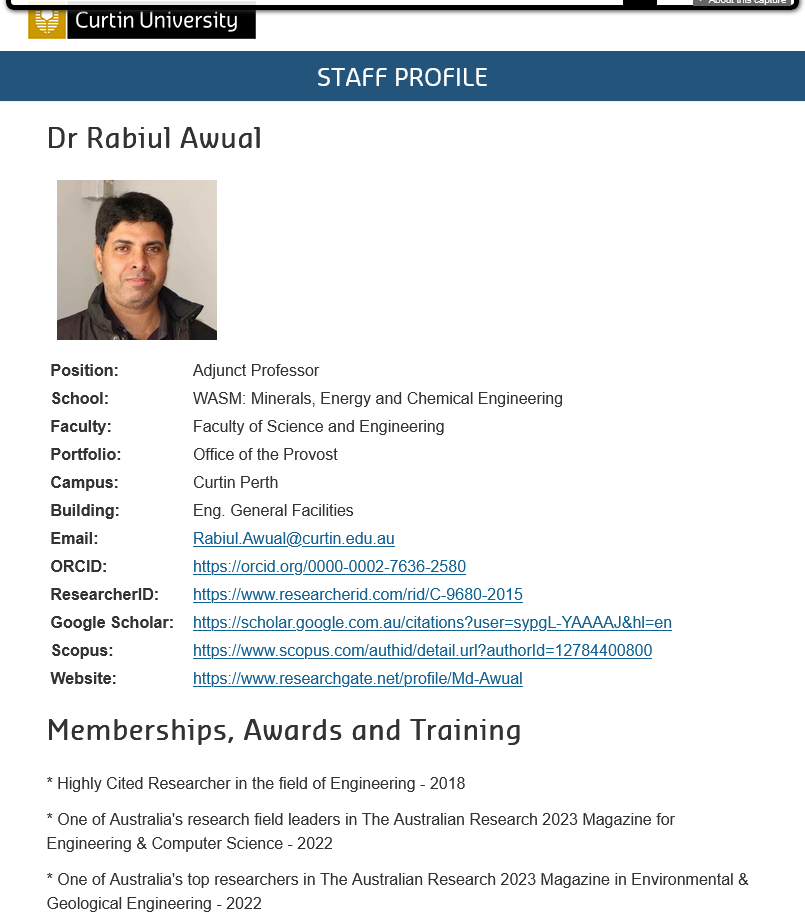
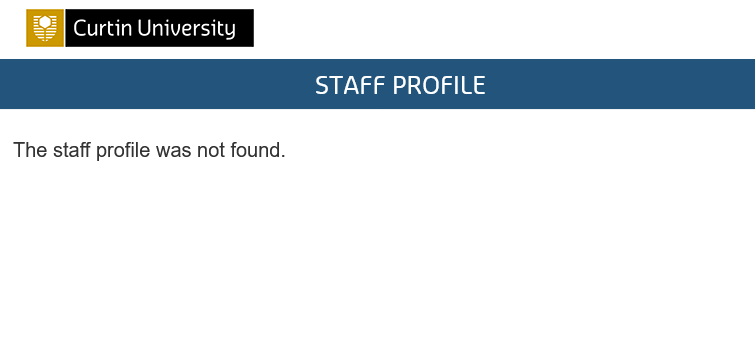
A research integrity manager at Curtin University indirectly confirmed to us that Awual was indeed kicked out: “if a person is affiliated with, or employed by Curtin University, then they would likely have a current staff profile“. Let’s now see how much of Awual’s fraud gets retracted.
Awual is originally from Bangladesh, and Fabian found this hilarious interview with him from 2019, excerpt:
“Scientific Bangladesh: What has made you a researcher?
Dr Awual: I wanted to do something in my life because one of my University Professor insulted me. At that time, I wanted to promise to exceed his research publication or citation.”
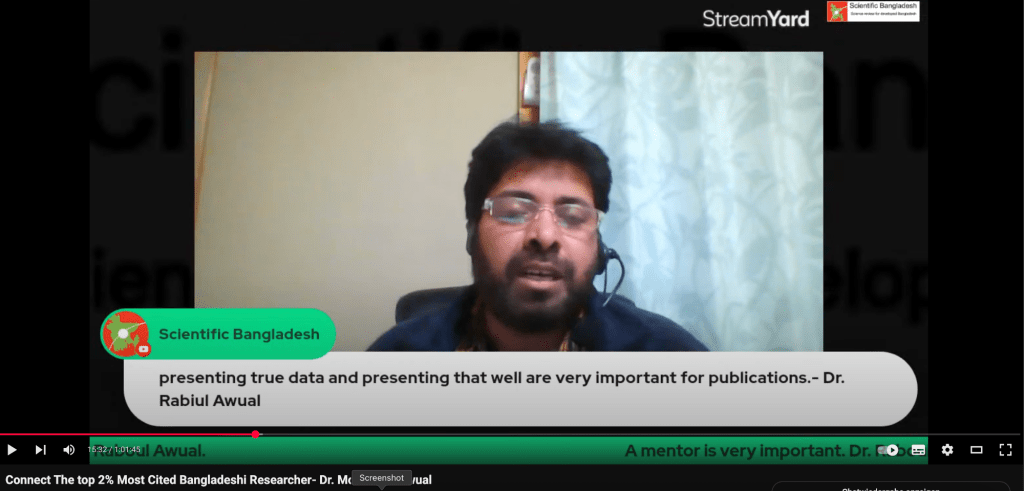
And he showed that professor and exceeded beyond his wildest dreams, all by papermilling and extorting citations. There’s also the usual virtue signalling on the importance of science in that interview. As if Awual knew what science is. And in his video interview with Scientific Bangladesh, Awual was quoted:
“presenting true data and presenting that well are very important for publications“
Dr. Rabiul Awual
Outstanding young researcher
In Canada however, the University of British Columbia (UBC) is immensely proud of their own papermiller. In 2023, UBC even introduced Mohammad Arjmand to the visiting russian asset, who serves as the German head of state, now in his second term:
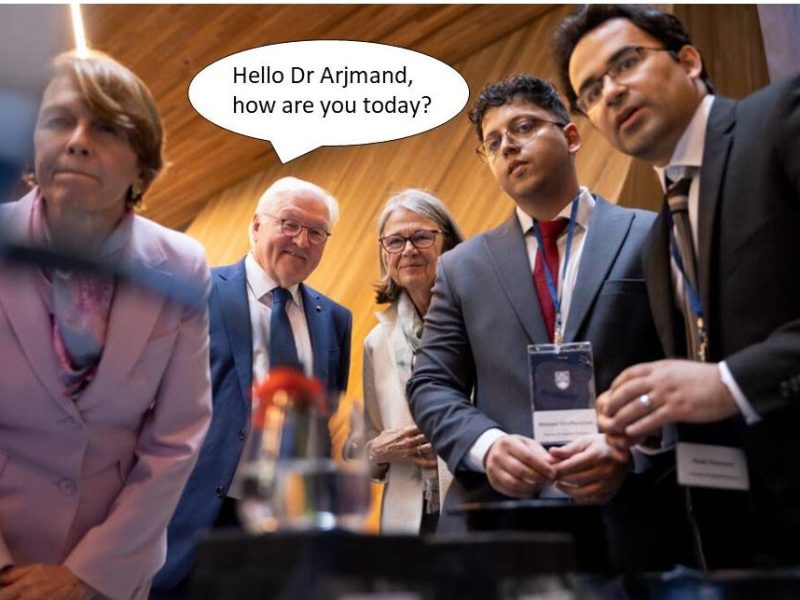
Dr. Mohammad Arjmand showcases his work to German President Steinmeier
“The German President and delegation members also spoke with researchers working on challenges relating to clean energy,…”
Here is the UBC announcement from 18 March 2025:
“Dr. Mohammad Arjmand, Assistant Professor, Mechanical Engineering at UBC Okanagan’s School of Engineering has been honoured for his transformative research that is helping build a path to a more sustainable future.
Dr. Arjmand is a 2025 recipient of the Morand Lambla Award which is bestowed upon an outstanding young researcher in the field of polymer processing. […]
According to the Society, the award aims to recognize and stimulate originality, high achievement, and potential for continuing creativity among young researchers in the science and technology of polymer processing-related areas.
“Receiving the Morand Lambla Award from the Polymer Processing Society underscores the international recognition and significant impact of the research being conducted at the School of Engineering at UBCO.” says Dr. Arjmand.
“On behalf of behalf of the School of Engineering, congratulations to Dr. Mohammad Arjmand on this honour,” said Dr. Will Hughes, Director of the School of Engineering. “Your dedication to research aligns with – and elevates – our School’s focus on driving innovation and engineering real-world solutions to pressing global challenges.””
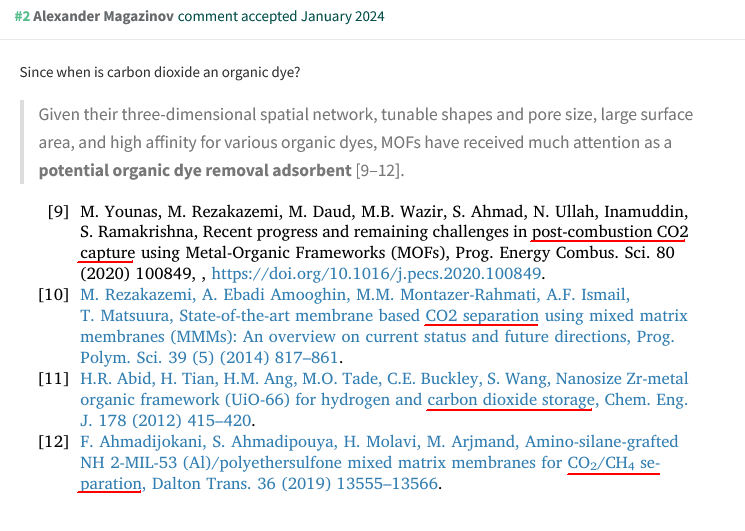
Obviously UBC’s focus is on Iranian papermill industry, which Arjmand is a integral part of (around 30 papers on PubPeer). Quality stuff like this:
Farhad Ahmadijokani , Rahman Mohammadkhani , Salman Ahmadipouya , Atefeh Shokrgozar , Mashallah Rezakazemi , Hossein Molavi , Tejraj M. Aminabhavi , Mohammad Arjmand Superior chemical stability of UiO-66 metal-organic frameworks (MOFs) for selective dye adsorption Chemical Engineering Journal (2020) doi: 10.1016/j.cej.2020.125346

Also in March 2025, Arjmand was honoured with the Charles A. McDowell Award for Excellence in Research (“one of UBC’s most prestigious research prizes“). Hughes was quoted with:
“Your outstanding work is elevating our School and our campus, driving innovation and inspiring change”
The funny thing is that Arjmand (who is in his forties) is still assistant professor. He used to be Tier 2 Canada Research Chair between April 2019 and April 2024, which however didn’t transition into a full faculty position at UBC. Huge Willy seems to be unable to install this Iranian papermiller as full professor at his School of Engineering, hence the silly awards for this “outstanding young researcher” as consolation prize. Which means that most of faculty would like to see Arjmand kicked out, and they will hopefully succeed soon.
Scholarly Publishing
To prevent such errors in the future
The Stanford professor and associate director of Stanford’s Cardiovascular Institute, Daria Mochly-Rosen, and her former mentee Julio Cesar Ferreira, professor at the University of Sao Paolo in Brazil, issue a correction, where these two cheaters manage to present themselves not just as innocent but as the biggest heroes of research integrity. Read about them here:

Julius Caesar & Daria – Brazilian Tango in Stanford
The published research by Daria Mochly-Rosen and her mentee Julio CB Ferreira supports the theory that maybe Stanford is a bad place for science.
The paper was flagged on PubPeer in September 2023 for a duplicated gel band in Fig 3. Ferreira replied in October 2023, supplied the “corrected Fig. 3B and original blots” and announced to have “already contacted the editor of the journal“. Problem was, his proposed correction was ridiculously dishonest.
Che-Hong Chen , Julio C.B. Ferreira, Amit U. Joshi , Matthew C. Stevens , Sin-Jin Li , Jade H.-M. Hsu , Rory Maclean , Nikolas D. Ferreira , Pilar R. Cervantes , Diana D. Martinez , Fernando L. Barrientos , Gibran H.R. Quintanares , Daria Mochly-Rosen Novel and prevalent non-East Asian ALDH2 variants; Implications for global susceptibility to aldehydes’ toxicity EBioMedicine (2020) doi: 10.1016/j.ebiom.2020.102753

The confused Elsevier journal first issued an Expression of Concern, on 28 February 2024:
“Concerns were brought to our attention by the readership of the journal that one or more of the images in this article may have been duplicated. This has raised questions regarding the validity of the data. In line with Committee on Publication Ethics (COPE) guidelines and Elsevier’s policies, the editors have referred to the authors’ Institute for independent investigation.
This Expression of Concern will remain appended to the article until the Institution provides an actionable update or the editorial investigation has been completed.”
On 11 June 2025, this Correction was published (highlights mine):
“Errors in assembling and labeling of some of the images in the original Fig. 3B in this article have been made. The authors provide here a corrected 3B panel as well as supplementary source data of the original blots, including each two control samples (time—t0) and four samples following 12 h treatment with cycloheximide (t12) for each variant. […]This correction pertains solely to Fig. 3B Western blot panel of this paper and does not impact the study’s results or interpretations in any way. The authors apologize for these errors in figure preparation.
To prevent such errors in the future, the laboratories of Dr. JCB Ferreira and Dr. Mochly-Rosen mandate that a lab member not involved in the preparation of the figures for publication, compares composite figures with each source data.
Daria Mochly-Rosen, on behalf of the authors.”
The new Fig 3B is exactly what Ferreira proposed in October 2023. And on 21 June 2025, this new Expression of Concern was issued (highlights mine):
“An Expression of Concern related to this manuscript was published while the paper was under investigation by the Office of Academic Affairs at the corresponding author’s institute, Stanford University School of Medicine. The institutional review found no evidence of misconduct. The editors therefore consider the matter resolved, with no further concerns regarding the paper.”
I mean, what did you expect.
Toppling Giants in Stanford
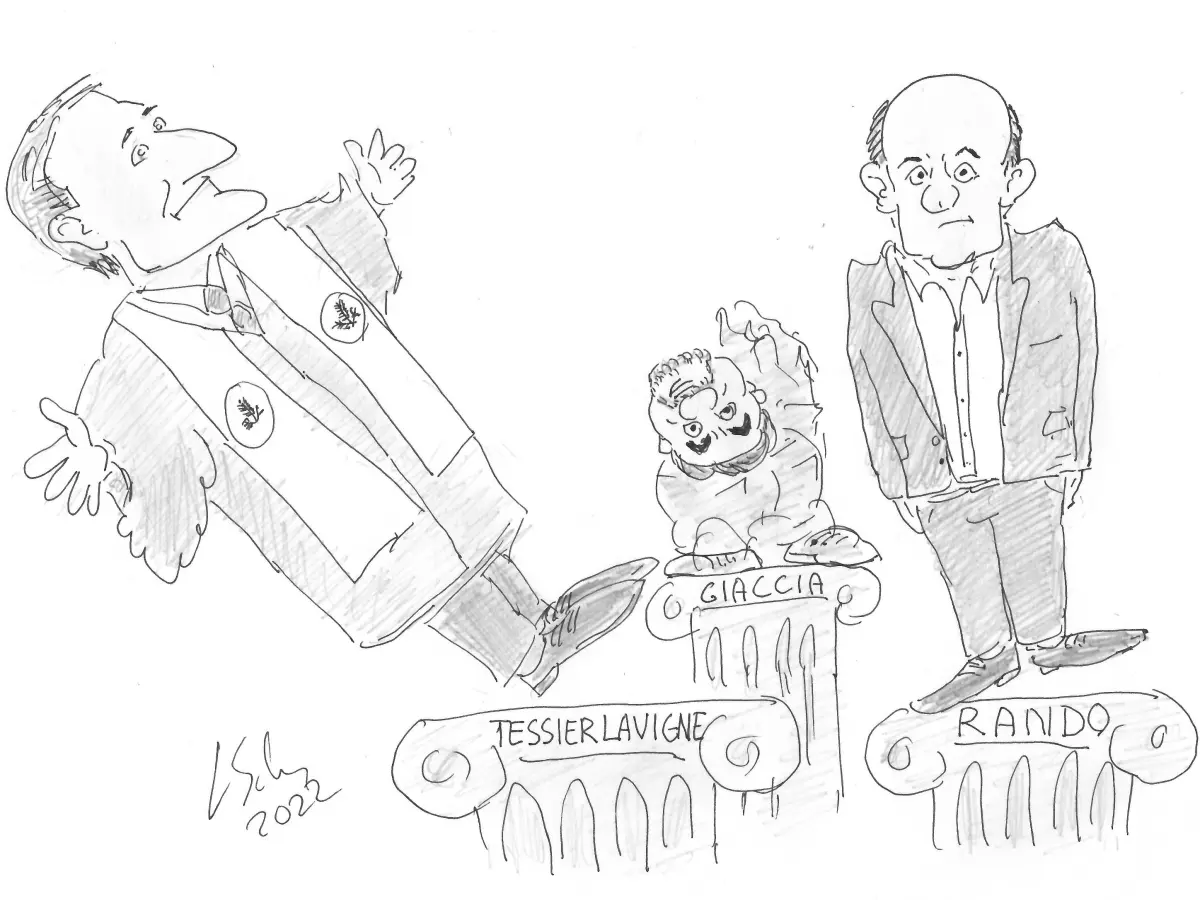
Everyone is talking about Stanford’s President Marc Tessier-Lavigne now. OK, let’s talk about him, and how Stanford deals with research fraud. And then let’s talk about Thomas Rando.
By the way, Stanford is now mass-sacking scientists. But not the bad kind, like Mochly-Rosen or their former president Marc Tessier-Lavigne. Daily Post reported in August 2025:
“Stanford announced in July that it was laying off 363 employees this fall as part of a $140 million budget cut caused by reduced federal research funding and a higher endowment tax. […]
Tessier-Lavigne still works at Stanford as the head of a laboratory and a biology professor. He made $2 million last year, making him the eighth-highest paid employee, Stanford reported.
Tessier-Lavigne’s replacement, President Jonathan Levin, made just over $1 million.”

I couldn’t find out how much Mochly-Rosen is paid, but I found that she wrote this book with her husband, the businessman and writer Emanuel Rosen (former vice president at Niles Software, maker of EndNote).
The book is a health guide to mitochondria, and will “unlock your body’s full potential” by telling you “What nutrients do mitochondria thrive on, and how is your gut microbiome involved“.
This concern has been escalated
You really must appreciated what awful papermill fraud Wiley has just corrected. United2Act indeed.
This green energy study by scholars from Pakistan, Saudi Arabia, Jordan and India even had the word “fabricated” in its title:
Muhammad Junaid , Noor‐ul‐Ain, Mohamed Sharaf , Mohammad El‐Meligy , Nazir Ahmad Investigation of CuO/ITO Photoelectrode Fabricated by PVD for Efficient Photoelectrochemical Water Splitting and Hydrogen Evolution Luminescence (2024) doi: 10.1002/bio.70020

Yes, a figure was stolen from a much earlier Japanese paper with no common authors. But not just that:


This earlier Pakistani paper also has no common authors, but quite possibly derives from the same papermill. And that’s not all, PubPeer users found nonsense text, inappropriate citations, FTIR plots which look hand-drawn and “instrument name for SEM is different in Experimental and results part.”
So what with the plagiarism, and rubbish content, Wiley had to issue an Erratum on 25 August 2025:
“In the Abstract section, the following sentences contain incorrect details:
- FTIR study showed the stretching, vibration, and the functional group of the deposited CuO thin film; the broad band of stretching of Cu-O in monoclinic CuO was observed at the range of 500–700 cm.−1
- The hydrogen generation rate was also calculated by electrochemical cell and observed to be 5325.21 mol.g−1 for 6 h.
These should read as follows:
- FTIR study showed the stretching, vibration, and the functional group of the deposited CuO thin film; the broad band of stretching of Cu-O in monoclinic CuO was observed in the range of 600–1000 cm−1.
- The hydrogen generation rate was also calculated by electrochemical cell and observed to be 5325.21 mol.g−1.for 8 h.
In the Experimental Analysis section, the sentence “X-ray diffraction (XRD) was used to determine their structural properties, while Nova Nano SEM was used to analyze their morphological properties.” should read as “X-ray diffraction (XRD) was used to determine their structural properties, while Cube II Emcraft South Korea) setup is used to analyze their morphological properties. […]
In the Hydrogen Generation Measurement section, the sentence “The hydrogen production rate of CuO under a xenon lamp was noted to be 5325.21 mol.g-1.6h-1 which is higher than other materials” should read as “The hydrogen production rate of CuO under a xenon lamp was noted to be 5325.21 mol.g−1.8h−1 which is higher than other materials.”
Additionally, the last sentence in the Conclusion section, originally written as “The hydrogen evolution of CuO under solar spectra was examined and recorded as 5325.21 mol. g-1.6h-1.” should read as “The hydrogen evolution of CuO under solar spectra was examined and recorded as 5325.21 mol.g−1.8h−1.”
We apologize for these errors.”
The Erratum also replaced Figures 2a,b, c,d, Figures 3 b,c,d. It didn’t always change the text to fit the new images though.


Now, one could say, Luminiscence is a Chinese-run journal, yet there is no need to blame the Chinese editors. The decision to issue this bizarre Erratum was entirely Wiley’s.
The sleuth Saba Saeed informed Wiley’s Director of Research Integrity Strategy & Policy Michael Streeter on 2 July 2025, who immediately replied that “this concern has been escalated to our Research Integrity team for investigation“. Wiley’s Integrity Assurance & Case Resolution team then announced that “the matter is pending further review by a member of our team“. You saw the result.
While these errors are regrettable
Elsevier is not part of United2Act because they understood that scholarly publishing cannot survive today without papermills. Still, Elsevier are masters at pretending that they care:
“…our team of over 80 ethics experts are ready to deploy our latest cutting-edge technologies and expertise to help investigate allegations of misconduct, advise on corrective action, educate editors on the latest signals of potential misconduct (such as citation manipulation and paper mills), and train editors to use investigative tools to help identify these signals in submitted articles more efficiently.”
Boys from Brazil
“We can always make mistakes in our publications but never acting intensionally. Regarding Prof. Eder works, I know him well and I don’t believe he has anything wrong” – Glaydson S. Dos Reis
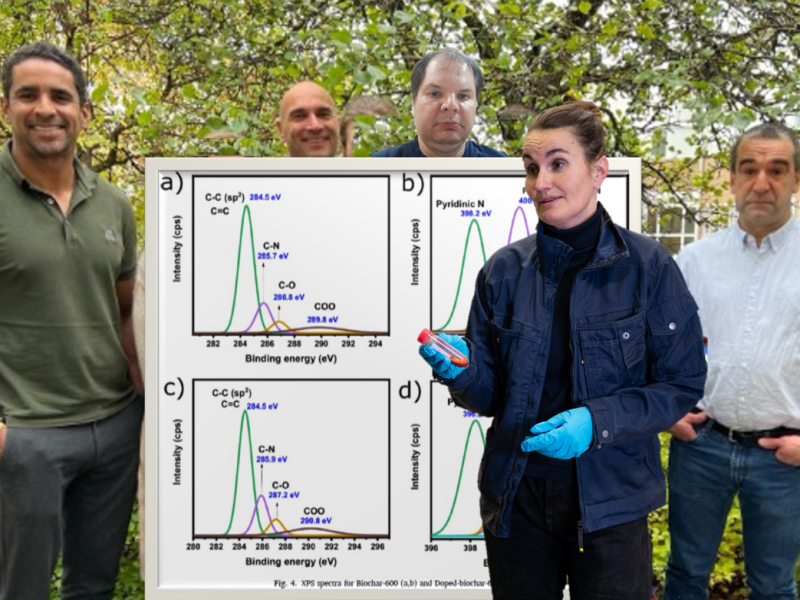
All that expertise deployed to correct this Iranian papermill travesty, by the Poland-based fraudster Mohammad Reza Saeb (read about him in the Coda of the article above):
Mohammad Chahkandi, Mahboobeh Zargazi , Khadijeh Boland Ghiasabadi , Jin Suk Chung, Mohsen Khodadadi Yazdi , Mohammad Reza Saeb , Mehdi Baghayeri Graphitic carbon nitride nanosheets decorated with HAp@Bi2S3 core–shell nanorods: Dual S-scheme 1D/2D heterojunction for environmental and hydrogen production solutions Chemical Engineering Journal (2024) doi: 10.1016/j.cej.2024.155886

Forensically image below) appears to have been spliced in”


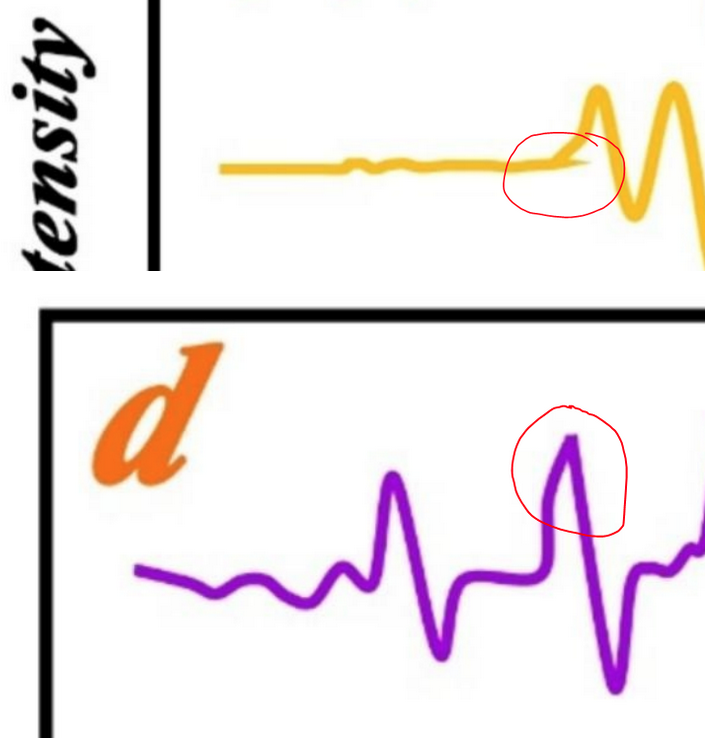

Yes, those spectra are all hand-drawn. For Elsevier, the only logical solution was to simply replace them all.
The huge Corrigendum is dated 1 October 2025 (highlights mine):
“The authors wish to clarify that some unintentional errors occurred in Figs. 2d, e, 4a, 7d, e, 8c, and d, which were published in the original version of this article ([Chem. Eng. J. 499 (2024) 155886]). These discrepancies arose from mislabeling and misplacement of data files during the processing of SEM and TEM images (Fig. 2d, e), as well as efforts to enhance visual clarity by reducing background noise and improving contrast in some XPS spectra, Mott–Schottky, transient photocurrent, and EPR measurements (Figs. 4a, 7d, e, 8c, and d). As a result, some of the published images were inadvertently substituted with incorrect data. The same base ingredients had previously been utilized in the decoration of Ag nanoparticles, as reported in [J. Mol. Liq. 399 (2024) 124423]. In the present work, they were synthesized and characterized following an identical protocol, which was cited to ensure methodological transparency.
Unfortunately, the raw EPR data are no longer accessible. Due to unforeseen disruptions, the laboratory where the EPR measurements were conducted lost the original data files, and we are therefore unable to recover or provide them. Nevertheless, as the proposed photocatalytic mechanism is adequately supported by complementary evidence (Fig. 8a and b), we recommend removing the EPR-related figures (Fig. 8c and d) and their associated discussion.
The following passage, originally located on page 11 of the published paper ([Chem. Eng. J. 499 (2024) 155886]), should be omitted:
“In addition, Electron Spin Resonance (ESR) technology was utilized to investigate the generation of
O₂− (superoxide) and
To rectify the issues described, the authors have provided revised versions of Figs. 2d, e, 4a, 7d, e, 8c, and d, which are included in this corrigendum and should replace the originally published figures.
While these errors are regrettable, they do not affect the overall findings or conclusions of the study. We are submitting this correction to uphold scientific integrity and transparency. The corrected figures have been thoroughly verified, and the relevant original data files were made available to the editorial office for reference.
The authors sincerely apologize for any inconvenience this may have caused to the readers, reviewers, or editors.”
This is plain evil, on many levels.
And no, this journal is not run by some rotten nobodies in Asia, but by two very respected and influential white men: Todd Hoare, Canada Research Chair and professor at McMaster University, and David Nisbet, director of the Graeme Clark Institute at University of Melbourne in Australia.
These two clowns conferred with Elsevier experts, and decided that yes, what Saeb does is good for business.
Retraction Watchdogging
A one off event
In March 2025 Shorts, I wrote about some ridiculously fake papers by Rohit Srivastava, professor of bioengineering at IIT Bombay in India and his mentee Rahul Dev Jayant, who then went to USA, became assistant professor at Texas Tech University, and then was sacked and found guilty of research fraud by HHS-ORI.
Now one of these papers was retracted, it has a US coauthor: Mike McShane, head of department of Biomedical Engineering at Texas A&M University in USA:
Rohit Srivastava, Rahul Dev Jayant , Ayesha Chaudhary , Michael J. McShane “Smart Tattoo” Glucose Biosensors and Effect of Coencapsulated Anti-Inflammatory Agents Journal of Diabetes Science and Technology (2011) doi: 10.1177/193229681100500111


Rahul Dev Jayant , Michael J. McShane, Rohit Srivastava In vitro and in vivo evaluation of anti-inflammatory agents using nanoengineered alginate carriers: Towards localized implant inflammation suppression International Journal of Pharmaceutics (2011) doi: 10.1016/j.ijpharm.2010.10.035
Erica glumiflora: “Notably, the images in Srivastava Fig. 7A overlap with the images in Jayant Fig. 4 2A and 2B (and Fig. 5 2A and 2B) and the images in Srivastava 7C overlap with the images in Jayant Fig. 4 2C and 2D, but which image represents day 7 and which image represents day 28 has been flipped. It is also curious that arrows do not always match between matching images.”
And then there is one completely fake image (I added some more boxes):

Erica glumiflora: “Both articles also share the same image for Fig. 1A (although the 50 micrometer scale bar is perhaps twice as long in Srivastava as in Jayant). Of interest in this image, many of the microspheres appear almost identical.”
As I wrote back then, Srivastava and Jayant decided that the most dignified way forward for educated and well-bred Hindu men like them was for blame a woman, in this case Ayesha Chaudhary (who left academia), even for other fake papers with just two authors (Jayant &. Srivastava 2007). And as for Jayant’s fraud findings in USA, well that was yet another woman to blame:
“The incident you attached for Rahul was again a one off event in his career which happened because of his carelessness with a postdoc who did this in the manuscript but later couldn’t be brought to justice as she had already left.“
Noteworthy, McShane never protested against this horrible misogyny and slander.
In March 2025, I notified IIT Bombay and the publishers, including Sage. What pleasure it is now to see these creepy women-hating fraudsters being struck with a retraction, which appeared on 19 August 2025:
“Sage was contacted by a reader with concerns about potential image duplication and unattributed overlap to another publication. Sage was also alerted to a conversation on PubPeer highlighting additional image concerns. Concerns were raised about the following figures in the article:
- a) Figure 1A contains signs of in-image duplicate and appears highly similar to Figure 1A [1].
- b) Figure 6, images labelled Plain MS, Day 7 and Day 28, appear highly similar to Figure 4, 1A and 1B [1].
- c) Figure 6, images labelled Dexamethasone-loaded MS, Day 7 and Day 28, appear highly similar to Figure 4, 1C and 1D [1].
- d) Figure 6, images labelled Dexamethasone-loaded MS, Day 7 and Day 28, appear highly similar to Figure 4, 1C and 1D [1].
- e) Figure 6, images labelled Diclofenac-loaded MS, Day 7 and Day 28, appears highly similar to Figure 5, 1C and 1D [1].
- f) Figure 7A, image labelled Plain GOx Sensor, Day 7, appears highly similar to Figure 4, 2B [1].
- g) Figure 7A, image labelled Plain GOx Sensor, Day 28, appears highly similar to Figure 4, 2A [1].
- h) Figure 7C, image labelled GOx sensor + dexamethasone, Day 7, appears highly similar to Figure 4, 2D [1].
- i ) Figure 7C, image labelled GOx sensor + dexamethasone, Day 28, appears highly similar to Figure 4, 2C [1].
- j ) Figure 7D, images labelled GOx sensor + diclofenac, Day 7 and Day 28, appear highly similar to Figure 5, 2C and 2D [1].
The article also contains substantial unreferenced overlap:
- a) Figure 4A and 4B duplicates data from Figure 2, split across two figures [1].
- b) Data for ‘Uncoated MS’, Figure 5, contains some of the same data as Figure 3 [1].
- c) Unattributed text overlap with other articles [1], [2], [3] by the same author group.
The authors were unable to provide the uncropped raw images and raw data underlying the figures.
The authors acknowledged the reuse of images in Figure 1A, Figure 6, Figure 7A/C/D and explained that any text overlap was due to an error. The authors requested to correct the article with appropriate attribution.
The Journal Editor evaluated the response and deemed the articles to contain significant overlap and image duplication. Because of the unresolved concerns about the image integrity that call into question the validity of the findings the Journal Editor and Sage retracts the article.
R. S. disagreed with the decision to retract. The remaining authors did not respond when notified.”
I thank Sage also for not allowing Srivastava to blame a female student in that retraction notice, as he did in his email to me. However, other publishers and IIT Bombay did absolutely nothing about his and Jayant’s fake papers.
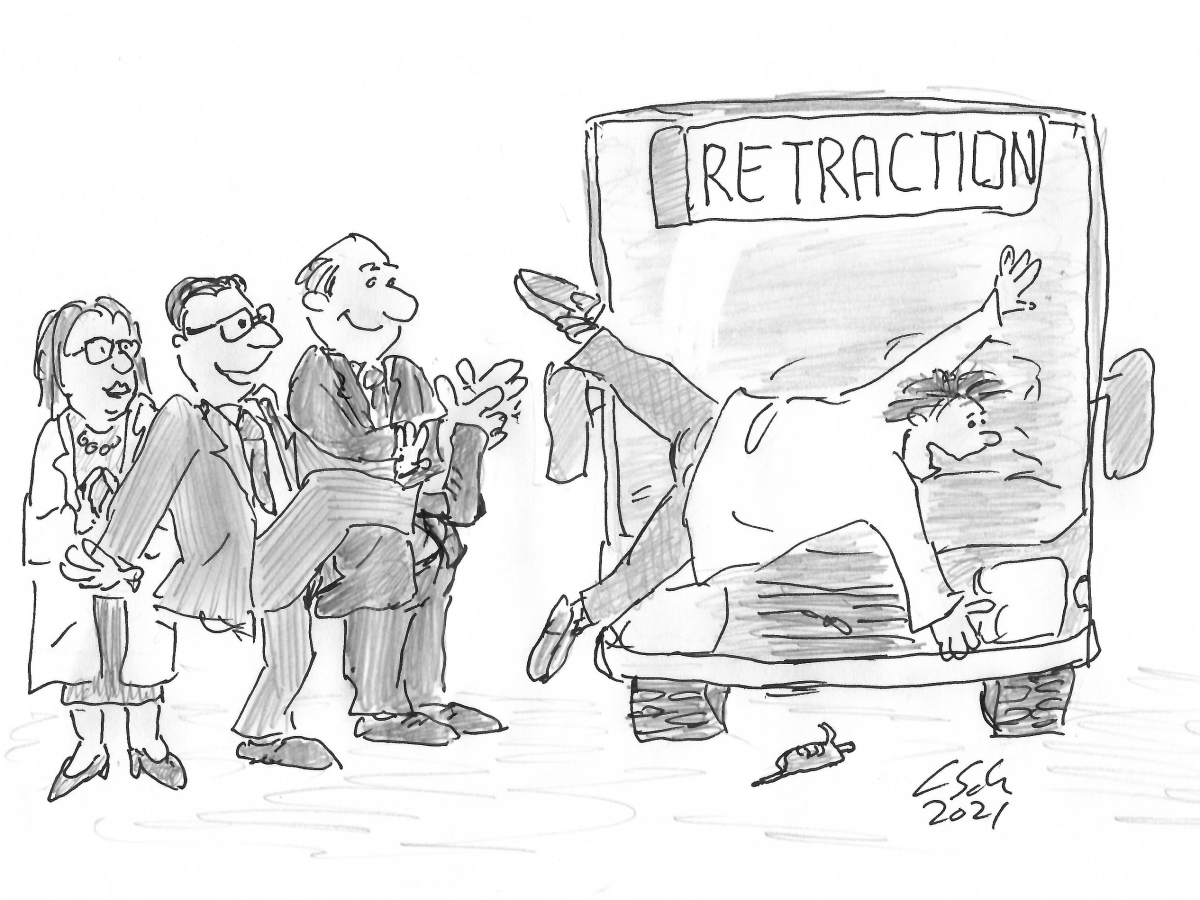
Student, Meet Bus
What led to retraction of the Sensei RNA paper by Arati Ramesh in Bangalore: the “factually inaccurate, anonymous, and unverified” version, which “quite frankly, can be termed slander”. And a guest post by “Paul Jones” at the end!
Science Breakthroughs
Easily integrated into people’s diets
The American Chemical Society (ACS) has some news for you. Thanks to science, you can lose weight while eating doughnuts and ice cream on your sofa!
Here the ACS press release from 21 August 2025:
“Now, researchers have developed edible microbeads made from green tea polyphenols, vitamin E and seaweed that, when consumed, bind to fats in the gastrointestinal tract. Preliminary results from tests with rats fed high-fat diets show that this approach to weight loss may be safer and more accessible than surgery or pharmaceuticals.
Yue Wu, a graduate student at Sichuan University, will present her team’s results at the ACS Fall 2025 Digital Meeting, a meeting of the American Chemical Society.
“Losing weight can help some people prevent long-term health issues like diabetes and heart disease,” says Wu. “Our microbeads work directly in the gut to block fat absorption in a noninvasive and gentle way.”[…]
The microbeads are nearly flavorless, and the researchers foresee them being easily integrated into people’s diets. For example, the microbeads could be made into small tapioca- or boba-sized balls and added to desserts and bubble teas.”
ACS even provides us with the video:
No research paper is mentioned as reference, but it is this Elsevier-published study from February 2025. There is one non-chinese author, the cellulose researcher from Sweden named Gustav Nyström, a lecturer at ETH Zurich in Switzerland:
Yue Wu , Qin Ma , Qinling Liu , Mengyue Wang , Wenqi Wei , Guidong Gong , Yunxiang He , Yu Wang , Yanbin Zheng , Lie Yang , Gustav Nyström , Junling Guo Oral polyphenol-based microbeads with synergistic demulsification and fat locking for obesity treatment Cell Biomaterials (2025) doi: 10.1016/j.celbio.2025.100019
“The authors declare no competing interests”
An industry-sponsored clinical trial already started in China, as ACS informs:
“Wu and her team have started working with a biotechnology company to manufacture the plant-based beads. “All the ingredients are food grade and FDA-approved, and their production can be easily scaled up,” says Yunxiang He, Sichuan University associate professor and co-author on Wu’s presentation.
They’ve also initiated a human clinical trial in collaboration with the West China Hospital of Sichuan University. “This represents a major step toward clinical translation of our polyphenol-based microbeads, following our foundational results,” says Wu. “We have officially enrolled 26 participants in our investigator-initiated trial, and we anticipate that preliminary data may become available within the next year.””
Actually, Yunxiang He, who himself graduated with PhD in 2019 in Bristol University in UK, is co-founder and CSO of the 5 year old Chinese company Novastra Biotech and its Boston-based branch Novastra Therapeutics, which offers to cure cancer, infections and all immune-related diseases by converting “patient- or pathogen-derived cells into room-temperature, gene-editing–free immune-reprogramming doses“, and this in “under three hours“. Novastra’s other founder and CEO is Junling Guo, principal deputy director of Ministry of Education Key Laboratory of Biomass Chemistry and Engineering at Sichuan University.
Why yes, the allegedly external “biotechnology company” mentioned in the ACS press release is Novastra, which now markets their green tea beads as EnteroLock™. The two boys however think none of that constitutes a conflict of interests.


So yes, ACS advertises for these Chinese scams. Yes, ACS likely got paid for this. Yes, ACS are greedy swine with no morals.
Donate!
If you are interested to support my work, you can leave here a small tip of $5. Or several of small tips, just increase the amount as you like (2x=€10; 5x=€25). Your generous patronage of my journalism will be most appreciated!
€5.00

 For Better Science
In the CEJ case corrected figures are as fake as the original ones:
https://pubpeer.com/publications/98CF3CE3B76339857710A3315617B8#14
I’d also love to see the data that was provided to the Editorial Office – in all plots the ticks are unevenly spaced. Maybe they are drawn in a non-Euclidean space?
LikeLike
Ha, missed that about fake figures in the correction. Not surprising of course.
LikeLike
As you saw I emailed my concerns about the correction to CEJ’s editors 2 days ago. Complete silence so far. BTW, first author of this study has a sizable PubPeer record.
As for CEJ, Mu Yang aka Dysdera Arabisenen recently flagged dozens of their papers:
https://x.com/mumumouse2
https://pubpeer.com/search?q=Dysdera+arabisenen
LikeLiked by 1 person
Everything can be corrected 😀
LikeLike
Thanks Mu!


LikeLike
Another article of Mohammad Chahkandi, Mahboobeh Zargazi, and Mehdi Baghayeri has just been retracted.
RETRACTED: A novel γ‒BMO@BMWO Z‒Scheme heterojunction for promotion photocatalytic performance: Nanofibers thin film by Co‒axial‒electrospun – ScienceDirect
But the presence of Mohammad Reza Saeb seems to provide a very strong shield against retraction. The question is – why?
LikeLike
Duplicate Fish, Duplicate Careers
Misconduct that might not make international headlines like Andrew George but are just as telling. Because if we only expose the spectacular ones, we let the “smaller” misconducts quietly build the same corrupt systems.
Take the case of Esam Agamy, Embryologist and since 2025, Chancellor of the University of Sharjah. His short but productive burst of research between 2012–2013 has now become the subject of uncomfortable scrutiny.
Four papers. Two years. Three respected journals (Ecotoxicology and Environmental Safety, Toxicologic Pathology, Marine Environmental Research). Enough to secure a full professorship under Sharjah’s promotion rules. But here’s the catch: the papers appear to have been stitched together with duplicated histology images, recycled text, and mirrored data tables.
And yes, PubPeer is already buzzing with side-by-side image comparisons. The comment reads “Despite reporting on different fish species the rabbitfish (Siganus canaliculatus) and the grouper (Epinephelus chlorostigma) the gill histology images in both papers appear morphologically indistinguishable, down to tissue patterns, staining intensity, and cellular structures. The general gill morphology across two such distantly related species is expected to show clear structural differences, making this similarity biologically implausible.”
Histology expert (and EES editor) confirmed what everyone can see: identical images presented as different experiments, and lesion tables with suspiciously copy-pasted numbers. For example, aneurysm counts “1, 4, 7, 7” appear in both rabbitfish and grouper studies a miracle of reproducibility.
Agamy wrote a response on PubPeer which fast was commented on by another reader which states “The author’s response tried to sidestep the central issue. The concern is not superficial similarity in organ structure across teleosts, but rather the reuse of identical histological micrographs to represent different species and experimental conditions, without disclosure. This constitutes image duplication, not anatomical convergence.
Similarly, the identical lesion score row (“1, 4, 7, 7”) in Table 1 of two separate studies allegedly involving different species is statistically implausible and consistent with data recycling.” Then he went silent.
His second pair of papers on histological changes on rabbit fish liver exposure to crude oil were also flagged on PubPeer with image manipulation and reuse claim. The comment reads “Figure 1C in the EES paper is identical to Figure 1D in the Toxicologic Pathology paper, despite representing ostensibly different experiments and exposure groups.” Agamy again tried to sidestep the issue by presenting a comparison between Fig 1A in EES paper and Fig 1B in Toxicologic Pathology.
But the problem is not just with the figures. Substantial textual similarity across papers, entire protocols lifted from older works (Güleç & Holdway, Bernet et al.), and a compressed publication timeline that seems designed to check the right boxes for promotion.
This isn’t just sloppy reporting, It’s a textbook case of engineered academic advancement.
And here comes the irony. In 2025, the same Dr. Agamy is promoted again not by paper, but by office to become Chancellor of the University of Sharjah. He now sets the very rules of academic promotion and integrity, while his own record sits under unresolved questions.
So far, the journals involved have acknowledged receipt of concerns, but no retractions or expressions of concern have been issued. The university remains silent.
Meanwhile, the four papers remain in the literature. The images remain unchanged. The questions about scholarship, accountability, and leadership remain unanswered.
And that is exactly why cases like this matter. Because fraud does not only happen in London or Boston. It also happens in Sharjah. And it should be exposed all the same.
LikeLiked by 1 person
Well written and well said ! I guess research that comes out of Boston or London is given more weight and has a greater negative impact when it is flawed. This is partly due to bias and partly due to other factors. The likelihood of these research outcomes shaping policies and guidelines, advancing into clinical trials, and, ultimately, leading to development of new drugs is higher. That being said, there are many who give equal weight to both, and language models trained on the existing literature probably do not distinguish between the two. Of course the negative impact of these improperly promoted faculty members on trainees as well as the academic staff under their leadership is the same in Sharjah and Boston.
LikeLiked by 1 person
Fig 1C in the EES paper is the smaller scale version of Fig 1D in the Toxicologic and Pathological paper. The PubPeer comment is short of stating the obvious of image manipulation and reuse. Even more serious issues in the second pair of papers that not only there are image manipulation and reuse but also data recycling. DS question why the university is silent on such grave concern is puzzling.
LikeLike
Talking about interesting interviews. I think you have not yet mentioned the interview with Krolczyk in Ekovision TV.
ROZMOWA PRZY OKNIE – prof. dr hab. Grzegorz Królczyk (cz.2)
Translation of his life motto:
“Don’t complain about the rules of the game – learn them and play better than others.”
I think it can apply to all heros of your articles. They are smart, we are losers.
LikeLiked by 2 people
https://pubpeer.com/publications/5549D5D042341EDBC8E8B302BCED2C
This other one from Mochly-Rosen had a “correction” posted to PubPeer by the first author in October 2023, but no such correction ever showed up in the journal itself. Instead, there’s an Expression of Concern dated February 2024, and crickets ever since. This is in addition to another erratum that was published in 2021.
It’s in Nature baby journal, where they never retract anything (because it would damage the brand image). My bet is we will see a mega-correction, possibly late 2027.
LikeLike
Science Breakthrough
Smartphone use on the toilet and the risk of hemorrhoids
https://journals.plos.org/plosone/article?id=10.1371/journal.pone.0329983
‘… in a multivariate logistic regression, smartphone use on the toilet was associated with a 46% increased risk of hemorrhoids (p = 0.044) after adjusting for age, sex, BMI, exercise activity, straining and fiber intake …’
LikeLiked by 1 person
Indeed, what a breakthrough, from the abstract:
“Presence of hemorrhoids were evaluated endoscopically and independently rated by two blinded endoscopists.”
Why were these endoscopists blinded?! And were they single or double blinded?
This is most probably AI-generated breakthrough. 😛
LikeLike
With a p-value of 0.044 adjusted for six parameters it would already be too generous to call the ‘findings’ borderline significant.
Funny thing is, I found it on Germany’s Statepress (The Tagesschau) website. Now the article has vanished, with no mention in their “corrections” section. I wonder why. Probably too embarrassing to admit they let their ‘Zeitgeist volunteers’ publish that garbage. But it shows how this kind of “science,” paired with incompetent—or completely absent—editorial oversight, rots the public’s mind.
LikeLike
Well, the editors are of the same blood type as the authors. Having that in mind, we can call it simply a normal editorial practice rather than an oversight.
But that would be mere nothing compared to an editorial chatbot or we should better call it editorbot armed with plagiarism check tools (not anti-plagiarism, not to be confused). And the (AI) public will cheer in ecstasy about all this in the (AI) news , what a wonderful Brave New World expects us…
LikeLike
It turns out I might have reported to wrong editors… CEJ has a huge editorial board with multiple executive editors for different sections)
I emailed the coordinating editor today and got his response almost immediately:
“Dear Sir/Madam,
Thank you for your message.
The complaint has already been forwarded to the corresponding authors. If no response is received, the article will be retracted.
Thank you for bringing this to our attention.
Warm regards,
Vítor Vilar
LikeLiked by 1 person
https://www.sciencedirect.com/journal/chemical-engineering-journal/about/editorial-board
LikeLike
Did you submit your letter to one of these editors?
PubPeer – Search publications and join the conversation.
PubPeer – Search publications and join the conversation.
Several other editors were on the editorial board of Navid Rabiee’s Green Biomaterials…
LikeLike
I juat stumbled upon this website: https://retractbase.csic.es/ – do you know if it is any better than RW (which tends to skip some retractions)
LikeLike
Personally, I would assume by default that CSIC is not necessarily free of conflict of interest in a matter such as this.
LikeLike
By the way, Baltimore is dead.
LikeLike
Thanks for the heads-up!
LikeLiked by 1 person
https://www.sciencedirect.com/science/article/pii/S0013935122024811?via%3Dihub – this one has just got retracted. It is not cited in the Chahkandi et al., 2024, but features much of their ‘signature style’.
The retraction notice contains a puzzling description: “The original submission was found to be on a completely different topic to the first and second revised versions; the authorship was changed at first revision such that four authors were removed and authors Davoud Khademi, Mahboobeh Zargazi and Mohammad Chahkandi were added. No explanation or declaration of any of these changes was provided during the peer review process, nor was a satisfactory explanation provided when the authors were subsequently requested to provide such.”
LikeLiked by 1 person