Schneider Shorts 29.08.2025 - Little Britain special with an old crab in China, Glasgow maffia, a greedy dame, perks under the holly, and a citations improvement regime, plus peculiar corrections, and the health benefits of red meat and red light.
Schneider Shorts of 29 August 2025 – Little Britain special with an old crab in China, Glasgow maffia, a greedy dame, perks under the holly, and a citations improvement regime, plus peculiar corrections, and the health benefits of red meat and red light.
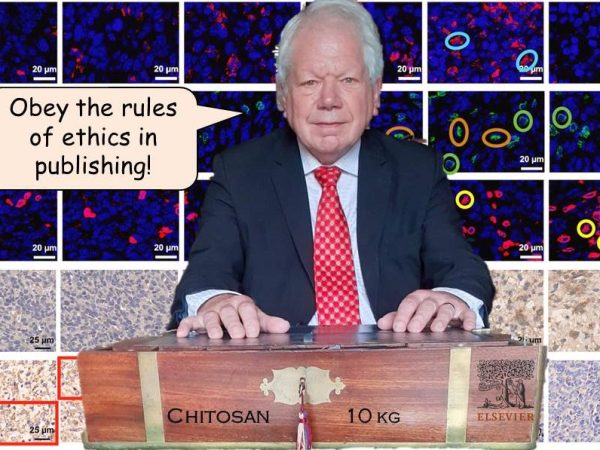
Meet Professor Michael James Cardwell Crabbe MA, BSc, MSc, PhD, DSc, FIBiol, FRSC, FRGS, FRSA, FLS, FIMarEST. This fine English gentleman is professor of biochemistry at the University of Bedfordshire, a Supernumerary Fellow (whatever that is) of Wolfson College at Oxford University, plus Visiting Professor at the University of Reading, and also in China, for example at Beijing Normal University at Zhuhai. He is also member of the Executive Committee of the UK Deans of Science and the Council of University Deans of Arts, Social Sciences and Humanities in UK. On top of everything, we are informed that Crabbe is “a SCUBA dive instructor level 1, and has made several classical recordings, one of which won an award“.
Prof Crabbe suffers from a peculiar neurological disorder which sometimes befalls old white male academics facing retirement and irrelevance – GOCPS, or Geriatric Obsessive-Compulsive Papermilling Syndrome. Which explains his interest in visiting Chinese universities.
Crabbe doesn’t really give a flying toss on which topic he publishes, and his university is beyond happy about their polymath genius. As Sholto David noticed, Crabbe is responsible for 47 out of the 100 most recent publications in University of Bedfordshire’s repository section (for biomedical and biological science).
The alleged biochemist Crabbe authors papers not only in biomedical fields like plant sciences, cancer research, entomology and microbiology, but also ground-breaking studies like
“COVID-19 in Wuhan, China: Pressing Realities and City Management” (Li et al 2021, flagged on PubPeer for editorial COIs)
“Promoting China’s green economy–policies and actions” (Crabbe, 2025)
“Daily soil temperatures at varying depths in Bangladesh during 2001–2022” (Das et al 2025)
“Carbon equality could play a positive role in mitigating the climate crisis” (Zhou et al 2025)
“Light-Induced Electrode Scanning Microscopy” (Hou et al 2025)
“Exploring small-scale optimization coupling learning approaches for enterprises’ financial health forecasts” (Zhu et al 2025)
“Satellite Image Restoration via an Adaptive QWNNM Model” (Xu et al 2025)
“Spatial Patterns and Evolution Features of Marine Cold Spells in the Arabian Sea during the Past Three Decades” (Wang et al 2024)
“The fragility of the ocean: from coral reef protection to deep-sea mining “(Crabbe et al 2024)
“Effects of urban land-use planning on housing prices in Chiang Mai, Thailand” (Lu et al 2024)
“Unlocking the power of metaverse technology in tourism: enhancing experiences and perceptions about tourism destinations” (Jafar et al 2024)
“Wavelet and Earth mover’s distance coupling denoising techniques” (Zhang et al 2023)
And I only looked at his most recent papers. For all I know, there might be older Crabbe-authored studies on Chinese poetry of the Ming dynasty and pig insemination under zero-gravity conditions.
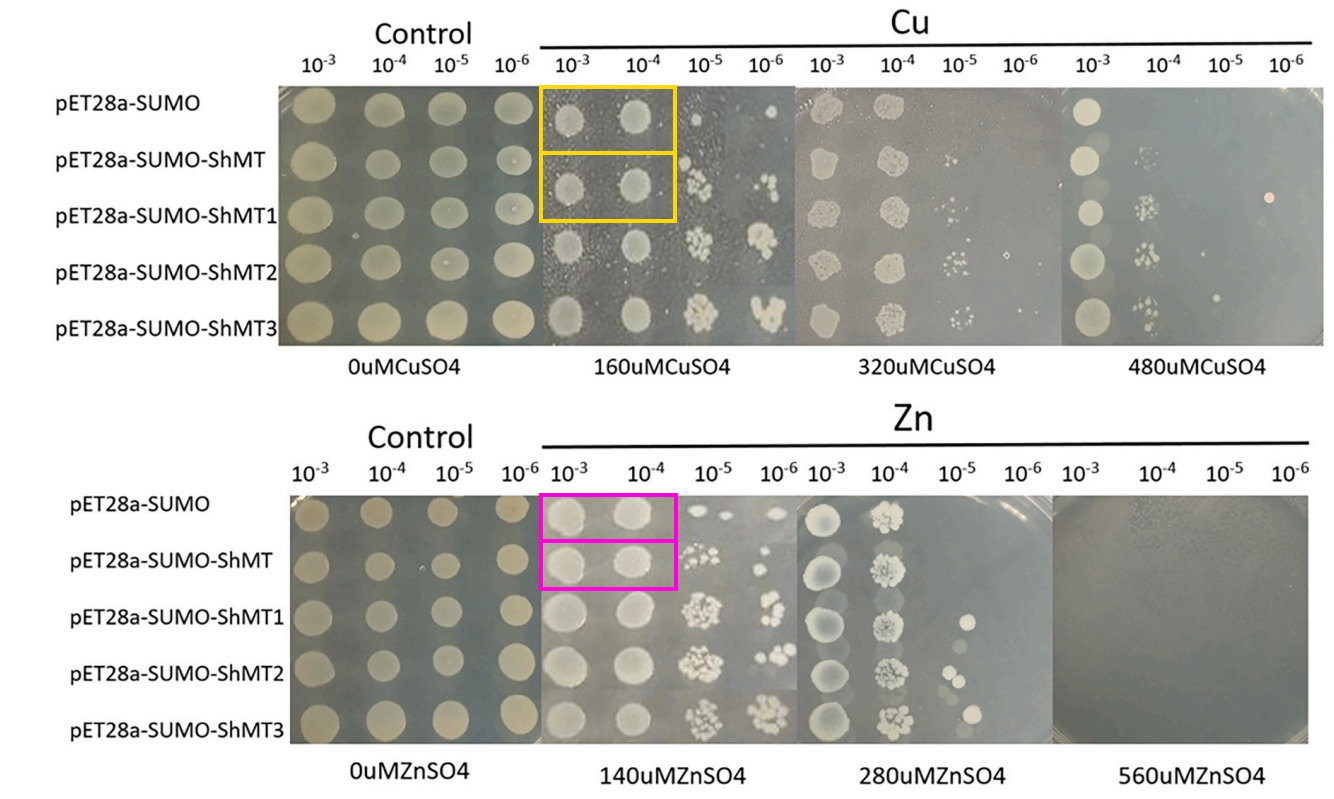
Some of Crabbe’s papermilled nonsense is already on PubPeer, like this:
Sholto David: “Figure 5: Some parts of these images have been cloned, I’ve added the pink and yellow rectangles to show where I mean.”
The following appeared in a papermill-only journal edited by a fellow old British git and another GOCPS sufferer, John F Kennedy, about whom and his journal you can read here:
Sholto David: “Figure 9: Unexpected overlapping areas between images that should show different experimental conditions. Identified and annotated with coloured rectangles”
Sholto also found three papers by Crabbe and his Chinese friends (Liu et al 2024, Yang et al 2024, Jiang et al 2024) which used the so-called “immortalized human hepatocyte cell line LO-2”. The sleuth however commented:
But then again, science was invented by the humanity for the sole purpose of publishing papers in peer-reviewed journals, these papers don’t need to mirror reality or actual research efforts, or have any sense.
Requirement to improve
In April 2025, Fabian Wittmers (who comments on PubPeer as Archasia belfragei) published the following article about the Highly Cited Researcher Zhanhu Guo, professor of engineering at Northumbria University in Newcastle upon Tyne, UK. Prior to that, Guo was associate professor at the University of Tennessee in Knoxville, USA.
Archasia belfragei: “The XRD patterns in Figure 1 seem rather similar for a and b (a seems like vertically stretched version of b)”
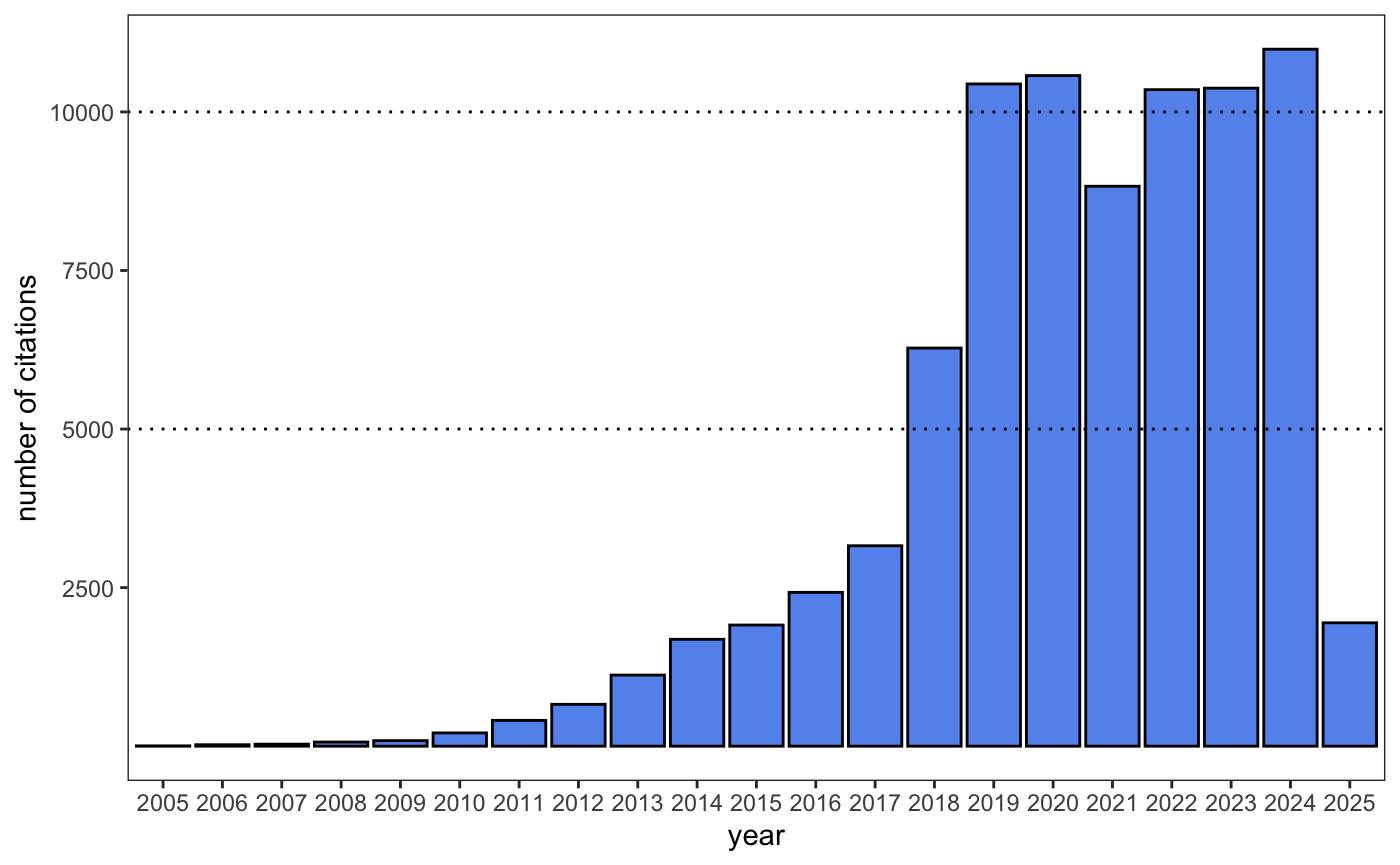
This article has 61 references, of which 37 go to Guo’s own papers. Perfectly normal for anything he publishes. But there is more.
Citations to papers co-authored by Zhanhu Guo by year (based on Web of Science data)
Guo also abused his editorial positions, including as Founding Editor-in-Chief of Springer Nature’s journal Advanced Composites and Hybrid Materials (ACHM) to extort masses of citations to his own papers from authors trying to publish in his journal (as the example of Li et al ACHM 2024 proves, where 6 references to Guo’s papers were added before publication). More is on PubPeer.
Not just that: together with his wife Peizhen Yin, Guo set up a predatory publishing business, Engineered Science Publisher LLC. Engineered Science, and he not only published masses of his own papers there, but also forced contributing authors of ACHM to cite papers published in the journals by his his own Engineered Science Publisher LLC, thus boosting their impact factor and financial value. Following Fabian’s notifications to Springer Nature, Guo was replaced as Editor-in-Chief of ACHM in December 2024, and then removed completely from the editorial board.
(Note: an earlier version of this text erroneously stated that Guo would still remain associate editor of ACHM).
Fabian duly notified Guo’s British employer, the Northumbria University Newcastle. And boy, did they take it seriously. On 22 August 2025, the sleuth received this email from Research Environment and Integrity Manager, Ellen Cole (highlight mine):
“Further to our previous correspondence, I am writing to update you in relation to the allegations of research misconduct concerning Professor John Zhanhu Guo.
Following a formal investigation, as set out in our Managing Research Misconduct Policy & Procedures, a recommendation was made that formal action was required under our staff Disciplinary Procedure. The disciplinary hearing, held on 24th July 2025, considered the investigation’s findings with regard to publication volume, citation practices, and external relationships. The outcome of this hearing was a requirement to improve being issued to Professor Guo.
This outcome will require Professor Guo to evidence improved working and research practices and engagement in relevant training activities for a 12 month period, under the supervision of his Head of School, Professor Sarah Green.
Thank you for making us aware of your concern, and for your patience in awaiting an outcome. We trust that this responds to the issues raised and offers assurances that we take matters of this nature seriously.”
Guo was ordered to take training courses on How Not To Get Caught, and they “trust this responds to the issues raised”.
Well, Guo already started improving! This Wiley-published paper, in a journal by Chemical Society of Japan, is where Fabian noted in March 2025 that “more than half (53%) of all citations in this article go to papers by Zhanhu Guo“:
Here, a block of 40 references to Guo (citations 40-80), elegantly added:
“Meanwhile, carbon-based nanocompo- sites have been employed in photocatalysis,[40,41] sensors,[42–48] solar cells,[49–52] reinforcement,[53–58] thermal conduction,[59–61] lithium ion batteries,[62] adsorbent,[63,64] metamaterials,[65] cryogenic materials,[66] insulator,[67] coating,[68] electromag- netics,[69] phototherapy,[70,71] and electrical conduction,[72,73] functional structural materials,[74,75] and energy storage/con- version materials.[76–80] All these can be studied for future research directions.”
In June 2025, some anonymous PubPeer user (who forgot to identify themselves as a member of the Guo family), explained:
“Hello Archasia belfragei , did you know the type of the paper? It is a Personal Account. It is an invited paper only for the well-estabilished researchers. You need check the journal carefully before making comments on Prof. Guo. Shame on your attack without knowing the nature of the article.“
Was this crap also written “under the supervision of his Head of School, Professor Sarah Green”?
Nor does it seem to show any malicious intent
More British whitewashing!
In February 2025 Shorts, I wrote about Pasquale Maffia, professor of cardiovascular immunology at the University of Glasgow in UK. I reported his case to the university, and below is their investigative report, addressing only 3 papers by Maffia from 13 on PubPeer.
It was sent to me by University of Glasgow’s Research Integrity Adviser Amanda McKenna, with this notice:
“Under our policy the allegations have been identified as due to poor practice but have not been upheld as breaches of research integrity. We define poor practice as work that falls short of the University’s standards but was not done with any recklessness or intention to deceive or cause harm. We are in the process of notifying journals to make the appropriate corrections but we will be taking no further action once the scientific record has been corrected. “
They strategically picked the easier cases to investigate, because if they investigated the really bad ones, the whitewash would be very difficult to justify. Case Nr 1:
Aneurus inconstans: “Figure 2: scanning electron microscopy of (B) unmodified nanotags and (C) pegylated nanotags, but the two micrographs are identical (blue boxes).”
The investigation concluded:
“The respondent has shown in the report that a new figure has been generated, and they have contacted the journal to correct the published work. Though this allegation shows poor practice in reviewing and editing the article, it does not change the conclusions of the paper, nor does it seem to show any malicious intent. As such, no further investigation is required.”
Worth mentioning that the last author Paul Garside is professor of immunology and Dean for Global Engagement (Africa and the Middle East) at the University of Glasgow. Case Nr 2 is again with Garside, here the duplicated images are shifted, which can never happen by mistake of oversight:
Aneurus inconstans: “Figure 1: micrographs (d) and (e) overlap (green boxes), but are supposed to represent control mice and mice receiving unpolarized cells.”
Nothing untoward was found:
“The respondent has shown in the report that they have located and checked the original data, with a new figure being generated. They have contacted the journal to correct the published work. Though this allegation shows poor work practice in reviewing and editing the manuscript, it does not change the conclusions of the paper, nor does it seem to show any malicious intent. As such, no further investigation is required.”
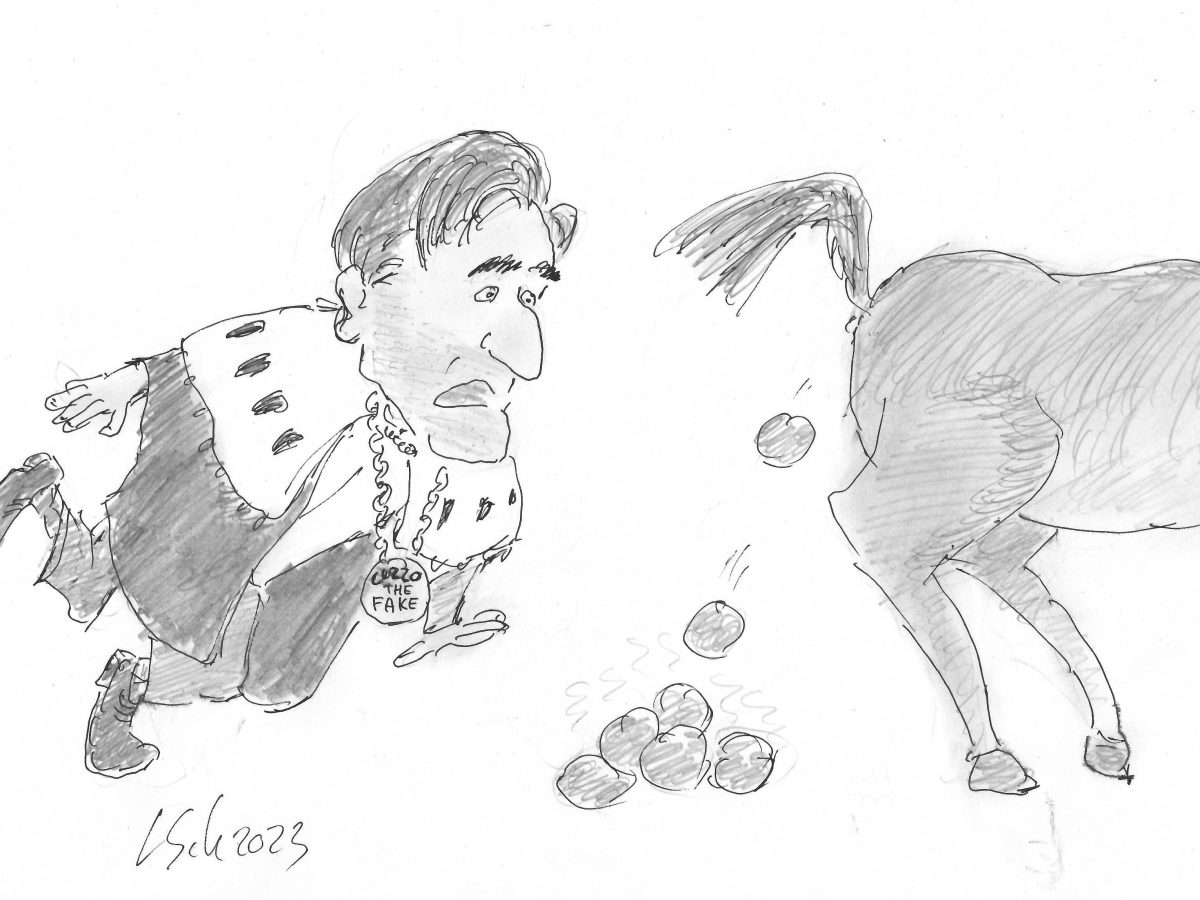
Case Nr 3 is a paper with ZERO British authors, made entirely in Italy, which proves the absurdity of the selection by Glasgow investigators. Why didn’t they investigate other utterly fake papers by Maffia and Angela Ianaro, who is now Italian politician and former MP (first for Movimento 5 Stelle and now for Partito Democratico). Ianaro is also an associate of the much-retracted former rector of University of Messina, now governmental consigliere, Salvatore Cuzzocrea, who once blamed Ianaro personally for all the fake science in his papers (read December 2023 Shorts).
“These unscrupulous charlatans in Messina should be fired on the spot tomorrow morning, forced to return twenty years of undeserved wages and sent to work the land” – Aneurus Inconstans
Bathysiphon flexilis: “Figure 1B. Much more similar than expected”
At leats we know that Maffia made that figure:
“For this allegation, after checking the figure in question and following the extra information and details provided by the respondent, the Investigator classed the allegation as a poor work practice not as a malicious action. The respondent went through their backup data and provided the original western blot, providing further evidence on the fact the western blot bands are indeed very similar but not a duplication of each other. The western blot in question, according to the respondent, looks like it was inadvertently published in the wrong orientation. The journal should be contacted to correct this issue.”
Exactly what I expected: just deny that the bands are identical.
If the Police have any concerns about Dr Birchall
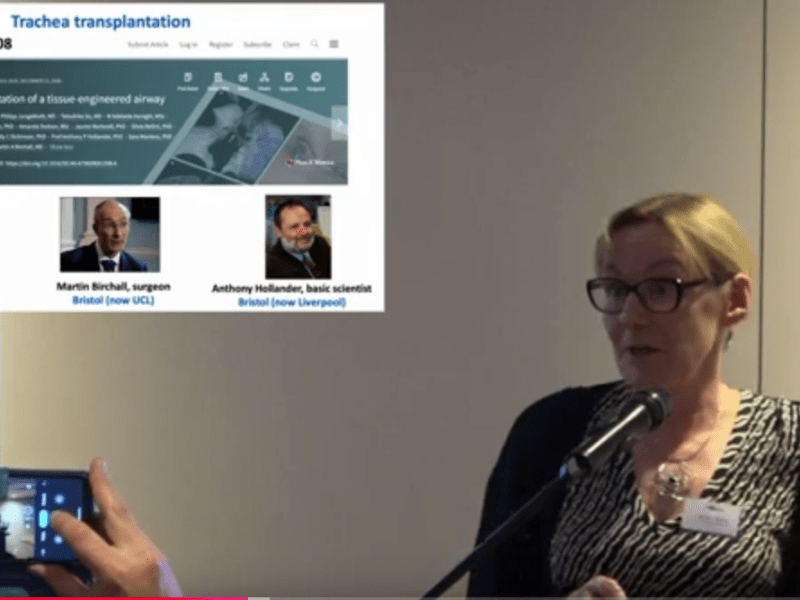
The greatest British whitewash was however that of the trachea transplanter and former associate of Paolo Macchiarini, the UCL professor of otolaryngology Martin Birchall, in London. Their experiments on children ended deadly, but while UCL found Macchiarini guilty (and Sweden eventually sent him to prison), Birchall was defended. And then defended again. And again. No matter what he was caught doing.
Several years ago, UCL investigated the Macchiarini affair and found their surgeon Martin Birchall was not only innocent, but also entitled to more money and more patients to experiment upon. Now, Patricia Murray was awarded for exposing this UCL malfeasance, and Sholto David scrutinised UCL papers for data manipulation.
In March 2023 Shorts, I quoted from a blog post by the whistleblowers Peter Wilmshurst andPatricia Murray, which eventually led to the retraction of the Lancet paper by Birchall and Macchiarini about the first-ever trachea transplant (Macchiarini et al 2008). In March 2025, they published the article “UCL rebuffs calls to retract another falsified paper by Prof Birchall“, which was about the fraudulent preclinical study by Birchall and Macchiarini (Go et al 2010). Read about it here:
Now, Wilmshurst and Murray blogged again, here the article on Wilmshurst’s blog from 19 August 2025, titled “Stem cell scandal: prison for one surgeon, pay bonus for another“.
It provides a very good summary of the deadly trachea transplant scandal and the consequences some perpetrators faced while others did not.
“Despite complicity in falsified research with Macchiarini, which resulted in harms to patients, including deaths, Birchall and his colleagues have continued to attract large amounts of grant funding. Many of the grant applications contained false information for which Macchiarini cannot be blamed, because he was not involved in that research. […]
In common with his publications and biographical claims on websites, grant applications by Birchall misrepresented as procedural successes the outcomes in individual patients that died. In particular, Birchall and UCL have repeatedly and most egregiously misrepresented the cause of death and duration of survival of Shauna Davison who died less than three weeks after she had a “tissue-engineered tracheal graft” at Great Ormond Street Hospital.”
Birchall personally profits from these lies and patient abuse:
“As stated, in Sweden Macchiarini’s failure to perform animal testing before implanting the devices in patients was judged to be unethical and criminal conduct. Several senior officials at the Karolinska who covered up his misconduct lost their jobs.
In contrast, in the UK, Birchall remains in post, with his salary boost by £30,000 per year”
In 2017, UCL invited an external expert commission to investigate the deadly trachea transplants performed by the former UCL honorary professor Paolo Macchiarini. An already sacked UCL nanotechnology professor, Alexander Seifalian, whose lab made the two UCL plastic POSS-PCU tracheas in 2011, was announced as the main culprit on UCL side. All this despite Seifalian’s…
With UCL refusing to sanction Birchall, Wilmshurst and Murray tried other British authorities (highlights mine9:
“The General Medical Council repeatedly refused to bring Birchall to account. […] On 22 October 2024, the GMC replied “We can confirm that we aware of the issues you have raised which have previously been considered through our Fitness to Practise procedures. Upon careful review it seems that these concerns are in essence a more detailed restatement of the concerns we have previously considered and we are not able to formally consider this matter again…… If you consider a crime has been committed, you may also wish to consider contacting the Police. If the Police have any concerns about Dr Birchall, they can refer him to us in line with agreed procedures.” […]
Without prompting by the GMC, we complained to the Serious Fraud Office that Birchall had obtained millions of pounds of public money by submitting grant applications containing false information. In September 2024 the Serious Fraud Office advised that we should complain to the local police about the commission of possible crimes. Therefore a complaint was made to the Metropolitan police, who said that the GMC should investigate the concerns first.“
NPOF, again and again: “Philipp Jungebluth and Paolo Macchiarini guilty of research misconduct” Lancet: “Paolo Macchiarini is not guilty of scientific misconduct”
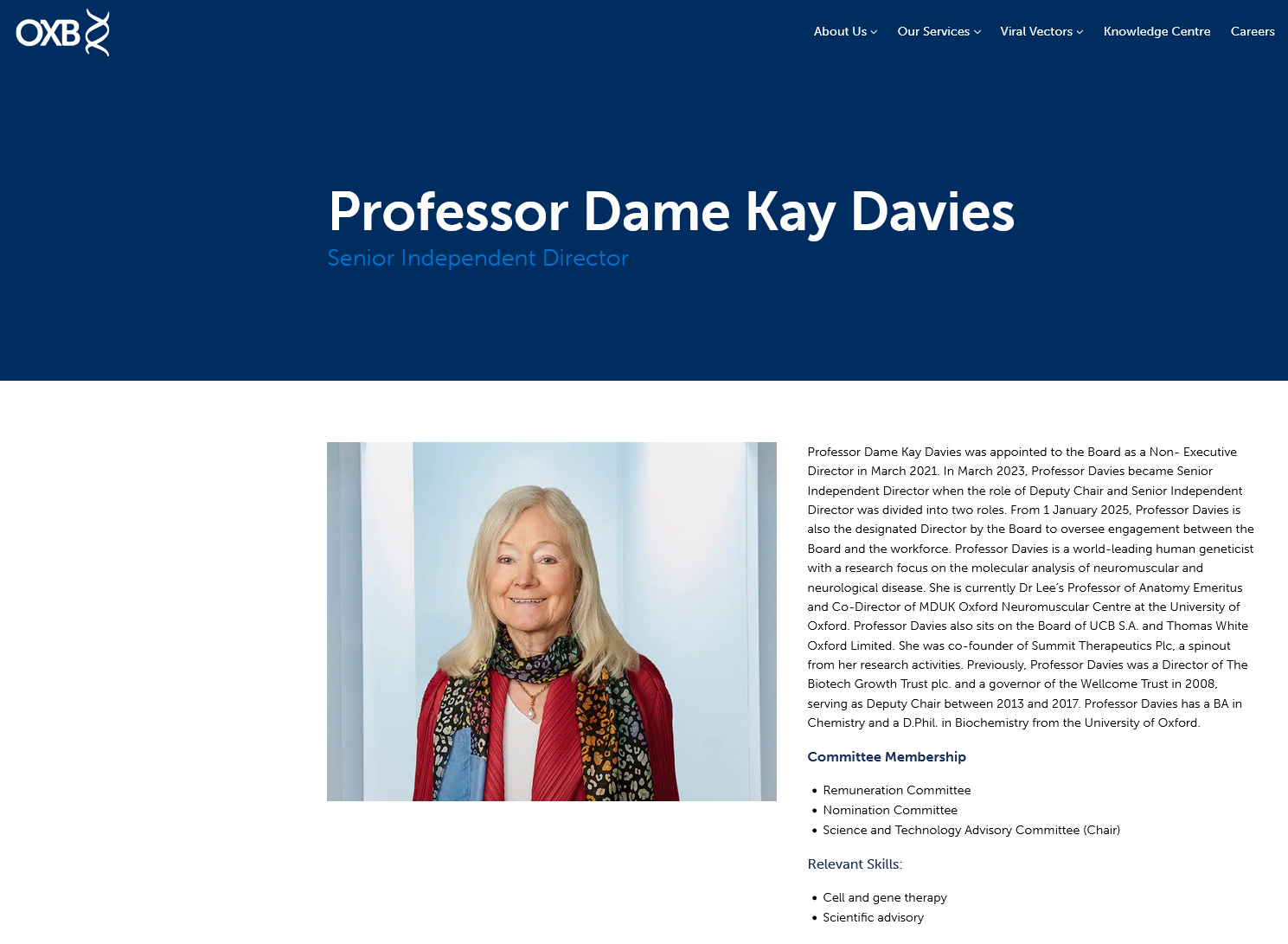
You might remember Kay Davies, Dame Commander of the British Empire and Oxford professor, but also a science cheater and in her capacity as former Editor-in-Chief of Human Molecular Genetics, a fraud-abetting bully who enjoys ratting out whistleblowers. On top of that, it turns out that Dame Kay is shamelessly greedy and suffers from the paranoia of never having enough money.
More recently, Sholto David caused a retraction of a paper by Davies and her husband Steven, where they used to enrich themselves during the COVID-19 pandemic by peddling Ayurvedic nasal spray. Read here:
Now, to business. Dame Kay is a paid “Senior Independent Director” of the Board of Directors at the biotech company Oxford Biomedica, why is not exactly evident. Can’t be her skills or expertise, rather her pedigree and the Matthew Effect.
So here is the relevant story reported by Investing.com on 22 August 2025:
“…Non-Executive Director Kay Davies inadvertently purchased and subsequently sold company shares during a closed period.
According to a company statement, Davies purchased 4,563 shares at £4.36 per share on August 11, 2025, and later sold the same number of shares at £5.0040 per share on August 18, 2025.
The transaction occurred due to an administrative error by Davies’ financial advisers, who executed the purchase without her immediate knowledge during a closed period when such transactions are restricted. Upon learning of the unauthorized trade, Davies promptly reported the matter to Oxford Biomedica, which then notified the Financial Conduct Authority.
The company stated that Davies has committed to donate any profits from the transaction to charity. The initial purchase amounted to £19,894.68, while the subsequent sale totaled £22,833.34.”
This is the second part of the Bologna whistleblower account. As the university was burying their own misconduct findings, Oxford University Press and their ignoble editor were busy punishing and gaslighting the whistleblower.
Insider trading is a criminal offence, but being rich and upper class English as she is, Davies will sure avoid punishment, but her lawyers will be expensive, and she might lose her Oxford Biomedica job now. All this for not even 3 thousand quid. Dame Kay is too stupid to even cheat properly.
Oxford professor Dame Kay E Davies, DBE FRS FMedSci, edits the journal Human Molecular Genetics. If you are a scientist who likes Photoshop, but afraid to get caught, give Dame Kay a call!
Meet Claire M Perks, associate professor of cancer endocrinology at the University of Bristol. The duplicated western blots in her papers look vintage, one hardly ever sees this kind of simple fudgery in papers from British institutions. Yet these PubPeer threads belong to rather fresh studies! Will anyone ever ask Professor Perks to search for raw data?
Certainly not the publishers. This, coauthored with Perks’ former mentor, the Bristol professor Jeff Holly, appeared in MDPI in December 2021, and was flagged by the pseudonymous sleuth Claire Francis just recently:
Elsevier corrects a fraudulent paper, then the academic Editor-in-Chief explains that his publisher routinely falsifies figures on behalf of authors. And says this practice is actually OK.
The study from Egypt found a cure for Parkinson’s, which was some beta-blocker drug. The fake figure was reported by Mu Yang to the journal in December 2022, back then only the duplications in the red boxes were found:
Dysdera arabisenen, Indigofera tanganyikensis and yours truly found duplications in Fig 6A
The Editor-in-Chief Frank Redegeld, associate professor of pharmacology at Utrecht University in The Netherlands, replied with: “We will contact the authors for an explanation.” The last author Samar S Azab is a papermill fraudster with a PubPeer record, in October 2023 he retracted a paper with similar issues (Wahdan et al 2019), coauthored with Doaa Elsherbiny, you can read about them both here:
“In the various excellent texts on paper mills the question is discussed why Naunyn-Schmiedebergs Archives of Pharmacology has become a target for fake papers. I oppose the assumption that we simply want to fill pages with pseudo-scientific content. We actually look for quality and good science.” – Prof Dr Roland Seifert, Editor-in-Chief
In September 2024, Azab retracted another paper in the same Springer Nature journal, Mounier et al 2021, also for image manipulation. And in March 2025, Naunyn-Schmiedeberg’s Archives of Pharmacologyretracted Azab’s Alafifi et al 2023, again for fraud. I’m sure Redegeld must have had fascinating conversations with Azab and his friends.
On 19 April 2023, an Erratum was issued for Kamal et al 2022, and found the explanation with the publisher:
“The publisher regrets that due to the publisher’s error in the production process, the incorrect images were compiled in Fig. 6A.
The correct composition of Fig. 6A is provided below.
The publisher would like to apologise for the error and any inconvenience caused.”
Another PubPeer user visualised in an overlay how the new “correct composition” differs from the published original:
llex illecebrosus: “Click here to see animation video based on issues reported above.”
Now, in August 2025,, Mu Yang returned to this case and contacted Redegeld for an explanation for the strange Erratum. The Editor-in-Chief replied:
“The issue observed in panel 6A was due to an error introduced by Elsevier’s production team during the preparation of the published article. Without informing the editorial board or the authors, they removed the “Fig 6” label from the original photograph that had been correctly included in the accepted manuscript […]. As such, there was no misconduct on the part of the authors. The original photograph, including the proper label, was later presented in the corrigendum published in 2022.“
Gosh, there must be many other labels Elsevier had to remove, because look, there were more duplications! But sure, using advanced Photoshop the authors were able to fabricate the “original” image, so the case is closed now. No misconduct!
“Stupid people do stupid things, After all it was an Egyptian who once told me: “10% editing is acceptable as long as we didn’t modify the significant ” – Sholto David
I really hate to be defending Elsevier here, but I don’t think they would have engaged in such massive image forgery. Look, Azab exploring the curative power of honey ingredients on liver fibrosis in another Elsevier journal:
Archasia belfragei: “Figure 1 […] Panels A and B show a lot of unexpected similarity, although they supposedly represent two different treatment groups. […] The two panels are not 100% identical in all regions”
Archasia belfragei: “this image underlying both A and B panels has been published before, by the same authors. Here is Figure 2 in Said et al. 2016 (doi: 10.21608/ajps.2016.6896).”
Does Elsevier also forge western blots when their honest authors put the labels wrong?
Actinopolyspora biskrensis: “The first two lanes of the Western blot in Figure 4A seem like they may be the same, after horizontal flip.”
But then again, the above is Elsevier. And the aforementioned retractions were in Springer Nature. Also this, by Azab and Elsherbiny, was recently retracted:
Dysdera arabisenen: “Concern: WT+4mg/kg GDP CA1 region and P3015 + 1mg/kg GDP CA2 region share a section in common (framed in green)”
The retraction was issued by Springer Nature on 1 July 2025:
“The Editor-in-Chief has retracted this article. After publication, concerns were raised regarding highly similar images in Fig. 4, specifically 2nd image in the 2nd lane (Hippocampus CA1 region) in the group (WT 4 mg/kg GPD) and with 4th image in the 3rd lane (Hippocampus CA2 region) in group (P301S + 1 mg/kg GPD). An investigation by the Publisher noted irregularities in western blots for Fig. 7 provided in Supplementary Fig. 1. The authors have provided raw data but that did not address concerns fully.
The Editor-in-Chief therefore no longer has confidence in the presented data.”
Redegeld however kept insisting that Azab and his friends were honest scholars, and neither they nor Elsevier did anything bad. In his email, the Dutch professor addressed me as “Mr Schneider/Yang“, does he really think I masquerade as a fictional Chinese woman like some male academics do (cf the cheater Ariel Fernandez and his sockpuppet “Weishi Meng”)? Anyway, here Redegeld (highlights his):
“I am afraid you still did not get the point. The corrected figure as published in the corrigendum (doi: 10.1016/j.ejphar.2023.175534) and sent to your connection Mr Yang by email is the original figure (see attachment) provided by the authors in the accepted manuscript. There is not any sign of alteration/misconduct by the authors. The marked figure have analyzed is the figure which was changed to remove the label “Fig 6” in panel A during production of the online paper. This is an unfortunate, human error introduced by production team. This adjusted figure was then published in the online paper and afterwards corrected in the erratum. […] I close this case on our side.“
.
New, original, and accurately represent the originally reported findings
Wiley is, as we all know, United2Act against papermills. Zero tolerance. Making Progress. Wiley’s Integrity Assurance and Case Resolution team is “operating from a shared playbook” and has “AI-powered Papermill Detection” in action.
Source: United2Act
This is why this amazing study got corrected, after being flagged in March 2024:
Alexander Magazinov (with Hoya camphorifolia): “Fig. 1B: a cluster of three particles shows itself too many times.”
Alexander Magazinov: “Nor Fig. 1C is free from similar issues”
The Correction is a bit older, from 14 November 2024:
“In this article, Figure 1 and Supporting Information Figure S1 include nonoriginal scanning electron micrograph images that were used had errors. The correct images are shown herein. These images are new, original, and accurately represent the originally reported findings. […]
To ensure accuracy and integrity, the entire analysis was repeated. These errors do not influence the overall data and scientific conclusions of the article. The image captions and all related details remain unchanged, as the corrected images serve the same purpose as those originally published.”
The corresponding author is an Iranian, Abdolhamid Alizadeh, who was also caught on misnamed scanning electron microscopes, a sign of papermilling (Abdi et al 2018). Normally Wiley would not save some Iranian crooks, but the last author Eveliina Repo, is associate professor and Academy Research Fellow at LUT University in Finland. She of course has more papermilled stuff on PubPeer.
For example with her former mentor at LUT and Finland’s superstar and papermill fraudster Mika Sillanpää! Read about him in the Coda of the article above. Repo must have inherited Sillanpää’s chair after her mentor was sacked for sexual harassment, theft, bullying etc.
Eubergia sinjaevorum: “The FTIR data in FIg. 1 look strange. Sharp sections, disconnected lines, and a ‘ghost spectra’ visible behind the main curve in the green box. An area of the axis has also been displaced in a strange manner (orange box).”
The spectra are clearly hand-drawn. And the author Sanna Hokkanen (now postdoc in Repo’s lab) even admitted in on PubPeer:
“The FTIR spectra obtained were visually of low quality and unclear, which is why I enhanced them using image processing software.“
Here another one by the sexual harasser Sillanpää and his academically successful female mentees:
Eubergia sinjaevorum: “The FTIR data look strange, with multiple sharp corners, flat sections, changing line widths, and even sections of ‘ghost’ spectra plotted behind the main curves.” (Fig 4)
Another coauthor of the corrected Wiley paper, Zahra Safaei, is also a former mentee of Sillanpää. She is now postdoc at University of Helsinki and has her own company called iQneiform specialising on “Smart Circular Economy”. Safaie told me that her Iranian collaborators engaged some external company, but she didn’t know what its name. It probably starts with “p” and ends with “apermill”.
Sillanpää himself continues papermilling, his Nordic whiteness still opens all gates in scholarly publishing. At the same time, Sillanpää counts as “diversity”, because he is presently affiliated with the University of Johannesburg in South Africa. ACS just published his symposium series book, “Water Neutrality: Towards Sustainable Water Management“, which Sillanpää edited with a fellow papermiller, Santanu Patra (postdoc at DTU in Denmark). It contains entirely of papermill trash.
Indeed, papermills and fake science are the best approach to circular economy: no lab resources or reagents used, no waste, no pollution, just made-up stuff. Can’t have it greener!
Science Breakthroughs
Simple intervention applied at population level
Would you like some more of Little Britain? A lifestyle website reported this on 9 July 2025:
“A breakthrough study published in Nature has added to the evidence that getting outside daily is good for us. Researchers found that sunlight penetrates deeply into the human body, improving physiological functions, including vision.
Specifically, long wavelength red light was shown to reach internal organs, boost energy production in the body, and improve physiological function, particularly in the visual system.
Study author Glen Jeffery, a professor at the Institute of Ophthalmology at University College London, says that this deep red, healing light can penetrate through clothing and improves vision even when that part of the light is not hitting the eye. […]
“The best way of harnessing this healing light energy is walking outside in sunlight or using old incandescent lights on your house that are rich in infrared light that we cannot see,” Jeffery tells Newsmax.”
Yes, it is the hilarious “mitochondria red light therapy” again. Read about it here:
But I must disappoint you: the groundbreaking study by the Professor Glen Jeffery at the UCL Institute of Ophthalmology was not really in Nature, but in Scientific Reports.
The authors insisted to have no conflicts of interests whatsoever, but Jeffery is not only a proselytiser of red light therapies of many years, he also works with the company Eyepower Red which sells such “red light therapy glasses”:
Eyepower Red on Facebook, also on YouTube: “Tested + approved by world-leading eye scientist Professor Glen Jeffery + team at the Institute of Ophthalmology at University College London + made by Stephen Allen + team of Light Power Health a top UK lighting company.”
In November 2021, UCL celebrated an earlier paper by their professor Jeffrey in the same journal:
“Published in Scientific Reports, the study builds on the team’s previous work*, which showed daily three-minute exposure to longwave deep red light ‘switched on’ energy producing mitochondria cells in the human retina, helping boost naturally declining vision. […]
Lead author, Professor Glen Jeffery (UCL Institute of Ophthalmology), said: “We demonstrate that one single exposure to long wave deep red light in the morning can significantly improve declining vision, which is a major health and wellbeing issue, affecting millions of people globally.
“This simple intervention applied at the population level would significantly impact on quality of life as people age and would likely result in reduced social costs that arise from problems associated with reduced vision.””
Also here, the authors insists (twice!) to have no conflicts of interests whatsoever.
Protection against cancer mortality
The meat industry decided it is enough to pay researchers to just defend meat as not really bad for human health, as well as climate and environment. They found a greedy university in Canada which is prepared to lie a big step further.
“Eating foods that contain animal protein is not connected to a higher chance of death and may even provide some protection against cancer-related mortality, according to new research.
The findings, published in Applied Physiology, Nutrition, and Metabolism, are based on an analysis of data from nearly 16,000 adults aged 19 and older who participated in the National Health and Nutrition Examination Survey (NHAMES III). […]
The researchers found no associations between total protein, animal protein, or plant protein and risk of death from any cause, cardiovascular disease, or cancer. When both plant and animal protein were included in the analysis, the results remained consistent, suggesting that plant protein has a minimal impact on cancer mortality, while animal protein may offer a small protective effect. [….]
“When both observational data like this and clinical research are considered, it’s clear both animal and plant protein foods promote health and longevity,” says lead researcher Yanni Papanikolaou, MPH, president, Nutritional Strategies.”
This is the study, which we are told was “funded by the National Cattlemen’s Beef Association (NCBA), a contractor to the Beef Checkoff“:
Yanni Papanikolaou, Stuart M. Phillips and Victor L. Fulgoni III, “Animal and plant protein usual intakes are not adversely associated with all-cause, cardiovascular disease–, or cancer-related mortality risk: an NHANES III analysis” Applied Physiology, Nutrition, and Metabolism (2025) DOI: 10.1139/apnm-2023-0594
His Majesty Victor L. Fulgoni III rules over a food industry lobby firm “Nutrition Impact” in Michigan, USA, while Yanni Papanikolaou rules over the food industry lobby company “Nutritional Strategies Inc.” in Ontario, Canada, his past employment was with Kellogg, feeding children with sugar. Stuart Phillips is the only academic, he is McMaster professor of exercise medicine and ageing, Tier 1 Canada Research Chair, and has an h-index of 149. He reports receiving grant money from US National Dairy Council, Dairy Farmers of Canada, Nestle, the meat giant Cargill, Dutch dairy company Friesland Campina, and “personal fees” from Nestle and other food companies.
So many studies proving that meat, especially beef, at least increases cancer risk, WHO even officially identifies meat and meat products as carcinogens. But it costs the meat industry only a modest bribe to a greedy professor in order to prove that beef actually prevents cancer!
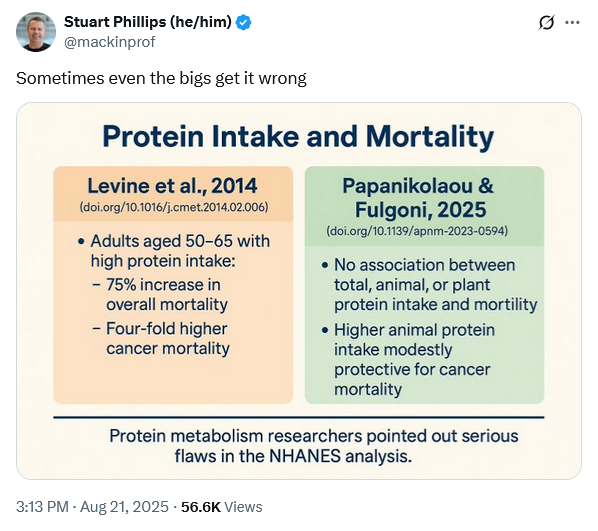
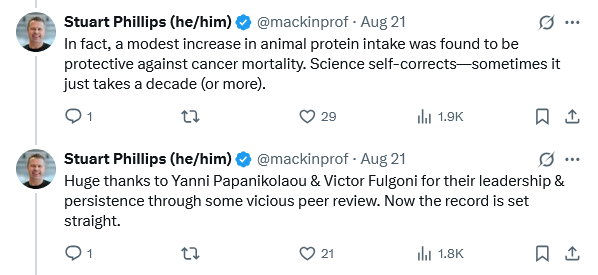
Phillips however is very cunning. He knows he cannot go against the scientific consensus on meat, so he aimed for a soft target instead, by disproving a silly study in Cell Metabolism, Levine et al 2014, which postulated that “low protein intake during middle age […] may optimize healthspan and longevity.” This NHANES study was done by the team of Valter Longo, who owns two anti-aging supplement companies (read March 2022 Shorts). Phillips wrote on X that he and his colleagues submitted a letter to the editor of Cell Metabolism, which was not accepted, so they posted it on a bodybuilder website, and then fought to get their own study “through some vicious peer review“.
“In fact, a modest increase in animal protein intake was found to be protective against cancer mortality. Science self-corrects” Source
This meat industry shill really thinks he is a hero of research ethics.
Donate!
If you are interested to support my work, you can leave here a small tip of $5. Or several of small tips, just increase the amount as you like (2x=€10; 5x=€25). Your generous patronage of my journalism will be most appreciated!
€5.00
Donate!
If you are interested to support my work, you can leave here a small tip of $5. Or several of small tips, just increase the amount as you like (2x=€10; 5x=€25). Your generous patronage of my journalism will be most appreciated!
“The FTIR spectra obtained were visually of low quality and unclear, which is why I enhanced them using image processing software. This adjustment is what has led to the points you have highlighted.”
My response I just posted on PubPeer:
All spectra are recorded by spectrometers as numbers, which are then used to draw graphs in coordinate systems (in this case transmittance vs wavenumber). I do not know of any instrument produced in the last 20 years which would not allow export of such data to any graph-drawing program, e.g. Excel. The signal intensity in the questionable region is very big (transmittance between 0 and 20%), so there is no reason for the spectra to be “visually of low quality and unclear”.
Hokkanen’s response on PubPeer continues with this:
“In the future, I will consider alternative methods to improve the clarity of the visual presentation. Unfortunately, I am unable to locate the original spectra files.” 🤣🤣🤣
The really strange part is that one can easily digitize any hand drawn curve. 😁 So things can be easily fixed in the graphing software if one’s choice. The whole thing is also incompetent…
UK’s research is a joke as it is anywhere else. I wonder how longer it will take before taxpayers start demonstrating out of universities and research centers asking for their money back. Millions of researchers should be dismissed ASAP and sent to work the land for good.
Well, scientists do get mass-sacked. But the wrong ones.
As @stanford.edu lays off workers, 18 employees made $1 million or more. Among them, former SU president Tessier-Lavigne, who resigned after concerns about his papers. He is still professor, made $2 million last year, almost 2x as current president. padailypost.com/2025/08/23/a…
I’ve wondered before in BS comments whether the satirical magazine ‘Private Eye’ might be induced to get involved. Almost the only way that powerful people can be successfully embarrased and held up to ridicule in the UK these days is if Ian Hislop et al decide to take an interest..
After several years invovled in ‘publication ethics’ why, in the endless parade of corruption, arrogance and dishonesty, is it always the communications from editors such as Redegeld that drives me to uncontrollable fury? I’ve not struck anyone since I was a boiterous 5 year old but I’d be sorely tempted if he’d delivered all of this to me verbally. Well one to you both for keeping it professional.
As Zebedee, said, Holly is Field Chief Editor of Frontiers in Endocrinology. This dude is investigating himself.
In any case, I made a notification of suspected research misconduct in Bristol. Not that they care, they ignored all my emails about Madeddu.
Adam Taylor, Bristol University’s Head of Research Governance just wrote to me:
“The University is not in a position to review complaints on third-party websites, I understand though that Professor Perks and Professor Holly are compiling evidence in order to respond to allegations made on PubPeer.
If you wish to make a formal allegation of research misconduct, please complete and return the attached form.”
The proforma attached demanded that the whistleblower reveals their identity. And it included this:
“We are not able to investigate complaints or concerns comprised solely of images. If your complaints relates to possible image manipulation please include details of any false conclusions you believe have been drawn as a result of this.”
Basically, image manipulation will not be investigated. But the whistleblower has to sign that if they report the evidence to third parties or if Bristol University finds the accused innocent, the whistleblower will be punished:
“I understand that to make a frivolous or malicious allegation may be considered a serious disciplinary offence.
I also understand that victimisation of anyone involved in a complaint of research misconduct may be considered a serious disciplinary offence.”
Regarding the University of Glasgow’s pronouncement: “Under our policy the allegations have been identified as due to poor practice but have not been upheld as breaches of research integrity. We define poor practice as work that falls short of the University’s standards but was not done with any recklessness or intention to deceive or cause harm.“
Opportunities for research publication, and more pertinently research funding, education and employment, are obtained via competition among researchers, and to a significant extent their host institutions. In a zero-sum game, all cheating causes harm. Thus the “standards” of Glasgow U seem to deliberately shield the worst kind of bad actors: the ones who don’t get caught.
There’s also another guy out there, H Phillip Koeffler, who has invented his own world in Los Angeles, a relatively uncharted swamp, as compared with the well charted swamps of Harvard and Philadelphia, in particular Thomas Jefferson university. He’s been going at it for years. Strange that nobody noticed, or perhaps they have, but were silenced.
Really early, and never stop! Some say these things come with the territory, but it is how people get the territory. Nip and tuck, and bit more than deserved here, a bit more than deserved there. That’s how you outcompete your competition. It’s called Evolution. The selection for bad science.
We should not be prejudiced. Just because they are German does not mean they do not do Italian tricks. Germans in science is no guarantee of propriety.
These leukemia-lymphoma cells are under extreme suffering for many many years. But they have been suffering in the wrong environment and for wrong reasons. They should be suffering inside the patient, not outside. And they should be suffering because they were well identified, not misidentified.
In 1980s, human Hodgkin’s disease derived cells produced at Harvard Medical School came out to be non-Hodgkin’s cells of human and owl monkey. More on this in Nytimes Jan 22 1981 ‘Cells in disease study said to come from monkeys’, Nature 289, 227 (1981) David Dickson ‘Contaminated cell lines’ and summary of Nelson-Rees vs. John Maddox (‘This it tip of the iceberg vs These are rare cases’ debate) in Harbut et al. ‘The history, landscape, and outlook of human cell line authentication and security’ – it is an interesting story for those interested.
Two decades later (year 2001), humanity advanced, we switched from landlines to mobile phones, internet enabled easy access to knowledge and exchange of knowledge, and Hans Drexler had to write a commentary, almost begging the ‘experts’ and non-experts, not to call HS-Sultan as Myeloma as it is a Burkitt lymphoma cell line, and asking them not to do Myeloma research on Burkitt lymphoma cells. https://pubmed.ncbi.nlm.nih.gov/11732505/
Misidentified cell lines in the field of hemato-oncology (among other things correctly pointed out by the beautiful name Zebedee) is an ongoing issue because many papers have not been corrected. Now imagine that People magazine publishes a story about Britney Spears and her divorce from Brad Pitt but the story indeed belongs to Angelina Jolie. They just named it wrong. When this is brought to People magazine’s attention, what are the chances that they will not correct it ? And when the use of a misidentified cell line about cancer research that set the stage for clinical trials and human lives, is brought to an academic journal’s attention, what are the chances that it will correct it ?
As someone who is new to the world of calling out missteps in scientific and journalistic integrity, at what point do you start involving the editors of these journals or the faculty heads of these institutions? And then, how do you get them to start caring? Some of the things I’ve seen in my few months of posting (anonymously) on pubpeer show blatant disregard and disrespect towards the scientific community and the broader population of people/patients being written about.
Maybe its because I don’t photoshop my comments and they don’t recognise them? If I add a border of duplicated western blot images to my posts will that get their attention?
For the last 12 months I e-mailed editors and CC the respective publisher’s integrity offices with my findings posted on PubPeer about 50% of the time. In most cases I quickly got some reply (sometimes just an automatic reply), in a few cases the editorial office followed up with further questions. Sometimes I got no response at all.
During the last 12 months 3 papers that I reported were retracted (all in Sci. Rep. and all were retracted within about 2 months from the report):
Thank you for this advice. There’s been many times where I’ve wanted to contact journals/universities/employers but have not known where to start or how to get others to listen.
I preferred to contact the editorial boards using the PubPeer pseudonym and a dedicated Proton mail account to avoid possible backlash. It didn’t cause any problems when reporting. I suppose, however, that some institutions may reject an anonymous report.





















 For Better Science
Sanna Hokkanen:
“The FTIR spectra obtained were visually of low quality and unclear, which is why I enhanced them using image processing software. This adjustment is what has led to the points you have highlighted.”
My response I just posted on PubPeer:
All spectra are recorded by spectrometers as numbers, which are then used to draw graphs in coordinate systems (in this case transmittance vs wavenumber). I do not know of any instrument produced in the last 20 years which would not allow export of such data to any graph-drawing program, e.g. Excel. The signal intensity in the questionable region is very big (transmittance between 0 and 20%), so there is no reason for the spectra to be “visually of low quality and unclear”.
Hokkanen’s response on PubPeer continues with this:
“In the future, I will consider alternative methods to improve the clarity of the visual presentation. Unfortunately, I am unable to locate the original spectra files.” 🤣🤣🤣
LikeLiked by 4 people
The really strange part is that one can easily digitize any hand drawn curve. 😁 So things can be easily fixed in the graphing software if one’s choice. The whole thing is also incompetent…
LikeLike
UK’s research is a joke as it is anywhere else. I wonder how longer it will take before taxpayers start demonstrating out of universities and research centers asking for their money back. Millions of researchers should be dismissed ASAP and sent to work the land for good.
LikeLiked by 1 person
Well, scientists do get mass-sacked. But the wrong ones.
LikeLiked by 1 person
I still think that Tessier-Lavigne will be pissed off that he was found out.
LikeLike
I’ve wondered before in BS comments whether the satirical magazine ‘Private Eye’ might be induced to get involved. Almost the only way that powerful people can be successfully embarrased and held up to ridicule in the UK these days is if Ian Hislop et al decide to take an interest..
LikeLiked by 1 person
After several years invovled in ‘publication ethics’ why, in the endless parade of corruption, arrogance and dishonesty, is it always the communications from editors such as Redegeld that drives me to uncontrollable fury? I’ve not struck anyone since I was a boiterous 5 year old but I’d be sorely tempted if he’d delivered all of this to me verbally. Well one to you both for keeping it professional.
LikeLiked by 2 people
“Here, a block of 40 references to Guo (citations 40-80), elegantly added:”
A fine specimen of the Clown-Car citational practice.
LikeLiked by 5 people
Can’t be too subtle if you want to make it to over 100k citations in less than 20 years, right?:D A true master at work.
LikeLike
Covid crank Scott McLachlan has been sacked by Kings College London, source https://x.com/_johnbye/status/1960454420682170439
LikeLiked by 1 person
Holly’s reply, LOL:
https://pubpeer.com/publications/3E476394DB7BFC7ED47ED68F5971A9#0
LikeLiked by 1 person
What a coincidence!
Middle of 3 authors is: Frontiers in Endocrinology | Editorial board
LikeLike
As Zebedee, said, Holly is Field Chief Editor of Frontiers in Endocrinology. This dude is investigating himself.

In any case, I made a notification of suspected research misconduct in Bristol. Not that they care, they ignored all my emails about Madeddu.
LikeLike
This is very lovely!
PubPeer – Effects of physiological levels of the green tea extract epi…
LikeLike
Jeff Holly last century. PubPeer – Insulin-like growth factor-binding protein (IGFBP-3) predisp…
LikeLike
Adam Taylor, Bristol University’s Head of Research Governance just wrote to me:
“The University is not in a position to review complaints on third-party websites, I understand though that Professor Perks and Professor Holly are compiling evidence in order to respond to allegations made on PubPeer.
If you wish to make a formal allegation of research misconduct, please complete and return the attached form.”
The proforma attached demanded that the whistleblower reveals their identity. And it included this:
Basically, image manipulation will not be investigated. But the whistleblower has to sign that if they report the evidence to third parties or if Bristol University finds the accused innocent, the whistleblower will be punished:
LikeLiked by 1 person
Regarding the University of Glasgow’s pronouncement: “Under our policy the allegations have been identified as due to poor practice but have not been upheld as breaches of research integrity. We define poor practice as work that falls short of the University’s standards but was not done with any recklessness or intention to deceive or cause harm.“
Opportunities for research publication, and more pertinently research funding, education and employment, are obtained via competition among researchers, and to a significant extent their host institutions. In a zero-sum game, all cheating causes harm. Thus the “standards” of Glasgow U seem to deliberately shield the worst kind of bad actors: the ones who don’t get caught.
LikeLiked by 1 person
How do you spell somersault (Sommersault)? Does it matter? It’s only in Cancer Smell, what do you expect?
PubPeer – Erk Negative Feedback Control Enables Pre-B Cell Transformat…
LikeLike
Blind as a bat. It’s their Nature.
PubPeer – BCL6 enables Ph+ acute lymphoblastic leukaemia cells to surv…
LikeLike
This is also in Cancer Smell. How to explain it? A physical phenomenon that only happens on Manhattan?
PubPeer – Tet2 loss leads to increased hematopoietic stem cell self-re…
LikeLike
Early colour television. Something has gone wrong with the horizontal and vertical hold.
PubPeer – Mechanistic rationale for targeting the unfolded protein res…
LikeLike
Ari Melnick featured here:
Melnick is bow in Spain, taking over Manel Esteller’s job.
https://en.ara.cat/society/ari-melnick-new-director-of-the-josep-carreras-institute-replacing-manel-esteller_1_5354846.html
LikeLike
Markus Müschen however is a really big German fish in Yale.
https://medicine.yale.edu/profile/markus-muschen/
LikeLike
Melnick is also friends with the Capybara. https://forbetterscience.com/2024/04/24/capybaras-adventures-in-medicinal-chemistry/
LikeLike
That’s a laugh. A screen of Ari Melnick’s publications netted, or rather re-netted, Markus Müschen.
PubPeer – Search publications and join the conversation.
There’s also another guy out there, H Phillip Koeffler, who has invented his own world in Los Angeles, a relatively uncharted swamp, as compared with the well charted swamps of Harvard and Philadelphia, in particular Thomas Jefferson university. He’s been going at it for years. Strange that nobody noticed, or perhaps they have, but were silenced.
PubPeer – Search publications and join the conversation.
Markus Müschen, Ari Melnick, and H Phillip Koeffler all big fish in rotting haematology.
LikeLike
Manel Esteller’s Pubpeer record ain’t good.
PubPeer – Search publications and join the conversation.
I’m sure nothing will happen.
LikeLike
Nature knows no bounds.
PubPeer – Signalling thresholds and negative B-cell selection in acute…
LikeLike
It’s important to start early.
PubPeer – Mimicry of a constitutively active pre–B cell receptor in ac…
LikeLike
Lol, I did my MSc in the lab of Maria Wartenberg in Cologne.
LikeLike
Really early, and never stop! Some say these things come with the territory, but it is how people get the territory. Nip and tuck, and bit more than deserved here, a bit more than deserved there. That’s how you outcompete your competition. It’s called Evolution. The selection for bad science.
PubPeer – Involvement of soluble CD95 in Churg-Strauss syndrome
LikeLike
We should not be prejudiced. Just because they are German does not mean they do not do Italian tricks. Germans in science is no guarantee of propriety.
LikeLike
These leukemia-lymphoma cells are under extreme suffering for many many years. But they have been suffering in the wrong environment and for wrong reasons. They should be suffering inside the patient, not outside. And they should be suffering because they were well identified, not misidentified.
In 1980s, human Hodgkin’s disease derived cells produced at Harvard Medical School came out to be non-Hodgkin’s cells of human and owl monkey. More on this in Nytimes Jan 22 1981 ‘Cells in disease study said to come from monkeys’, Nature 289, 227 (1981) David Dickson ‘Contaminated cell lines’ and summary of Nelson-Rees vs. John Maddox (‘This it tip of the iceberg vs These are rare cases’ debate) in Harbut et al. ‘The history, landscape, and outlook of human cell line authentication and security’ – it is an interesting story for those interested.
Two decades later (year 2001), humanity advanced, we switched from landlines to mobile phones, internet enabled easy access to knowledge and exchange of knowledge, and Hans Drexler had to write a commentary, almost begging the ‘experts’ and non-experts, not to call HS-Sultan as Myeloma as it is a Burkitt lymphoma cell line, and asking them not to do Myeloma research on Burkitt lymphoma cells.
https://pubmed.ncbi.nlm.nih.gov/11732505/
That also did not suffice, and two years later (year 2003) he wrote another article reiterating what was said back in 1980s. Page 422 explains all the problems that are being discussed today (year 2025, more progress, AI entered our lives) very clearly, and it makes an excellent summary of all the blog posts in FBS in one page.
https://www.researchgate.net/publication/10896002_False_leukemia-lymphoma_cell_lines_An_update_on_over_500_cell_lines#read
Misidentified cell lines in the field of hemato-oncology (among other things correctly pointed out by the beautiful name Zebedee) is an ongoing issue because many papers have not been corrected. Now imagine that People magazine publishes a story about Britney Spears and her divorce from Brad Pitt but the story indeed belongs to Angelina Jolie. They just named it wrong. When this is brought to People magazine’s attention, what are the chances that they will not correct it ? And when the use of a misidentified cell line about cancer research that set the stage for clinical trials and human lives, is brought to an academic journal’s attention, what are the chances that it will correct it ?
LikeLiked by 2 people
Reply to:
Leonid Schneider
August 29, 2025
Markus Müschen however is a really big German fish in Yale. PubPeer – Search publications and join the conversation.
He is a young version of Richard Flavell, so will suit Yale down to the ground. PubPeer – Search publications and join the conversation.
LikeLike
It’s on the cards that Markus Müschen is Richard Flavell’s replacement. That’s what the data say.
LikeLike
Old time religion from H Phillip Koeffler. How to explain? PubPeer – RTP801 is a novel retinoic acid-responsive gene associated w…
LikeLike
As someone who is new to the world of calling out missteps in scientific and journalistic integrity, at what point do you start involving the editors of these journals or the faculty heads of these institutions? And then, how do you get them to start caring? Some of the things I’ve seen in my few months of posting (anonymously) on pubpeer show blatant disregard and disrespect towards the scientific community and the broader population of people/patients being written about.
Maybe its because I don’t photoshop my comments and they don’t recognise them? If I add a border of duplicated western blot images to my posts will that get their attention?
LikeLike
Can you provide some links to your pubpeer comments?
LikeLike
Apologies, this was supposed to be posted under my pseudonym Viola Sheltonii, but please find some greatest hits (best of the worst?) below:
https://pubpeer.com/publications/1F6119B485E54B304D243AE8FE0AEB#0
https://pubpeer.com/publications/31A422A10875670E0F9279329F577F#0
https://pubpeer.com/publications/24CD3318EC27AB354B86C9828888DB#0
LikeLiked by 1 person
oh my god.


LikeLike
For the last 12 months I e-mailed editors and CC the respective publisher’s integrity offices with my findings posted on PubPeer about 50% of the time. In most cases I quickly got some reply (sometimes just an automatic reply), in a few cases the editorial office followed up with further questions. Sometimes I got no response at all.
During the last 12 months 3 papers that I reported were retracted (all in Sci. Rep. and all were retracted within about 2 months from the report):
https://pubpeer.com/publications/A526E45F0126999C1884F6EC2B5420
https://pubpeer.com/publications/CE79CB40906CBB5FDB98130F6A9056
https://pubpeer.com/publications/89AEB727798737E072BE91B6F307C9
Here you can find a list of integrity/ethics teams at major publishers: https://osf.io/4edk2
LikeLiked by 1 person
Thank you for this advice. There’s been many times where I’ve wanted to contact journals/universities/employers but have not known where to start or how to get others to listen.
LikeLiked by 1 person
I preferred to contact the editorial boards using the PubPeer pseudonym and a dedicated Proton mail account to avoid possible backlash. It didn’t cause any problems when reporting. I suppose, however, that some institutions may reject an anonymous report.
LikeLike