

Charité is a huge university hospital and medical school in Berlin, Germany. It even has its own TV series now, named “Charité” and with already four seasons on the public channel ARD. The series is set in the past, in late 19th century, during WW2 and then Socialist Eastern Germany, but the fourth season is set 25 years in the future, in the year 2049. Important is: there never was and never will be any research fraud at Charité!

But there was research fraud in the past and there is no reason to believe there is no fraud happening at Charité now, it is all a matter of sleuths and their tools catching up. And given the Charite’s attitude, there is also little hope for the future. Previously, I wrote about their fully whitewashed head of ophthalmology, Antonia Joussen. And I wrote about another Charité professor who even advices the Charité 2049 TV series here:
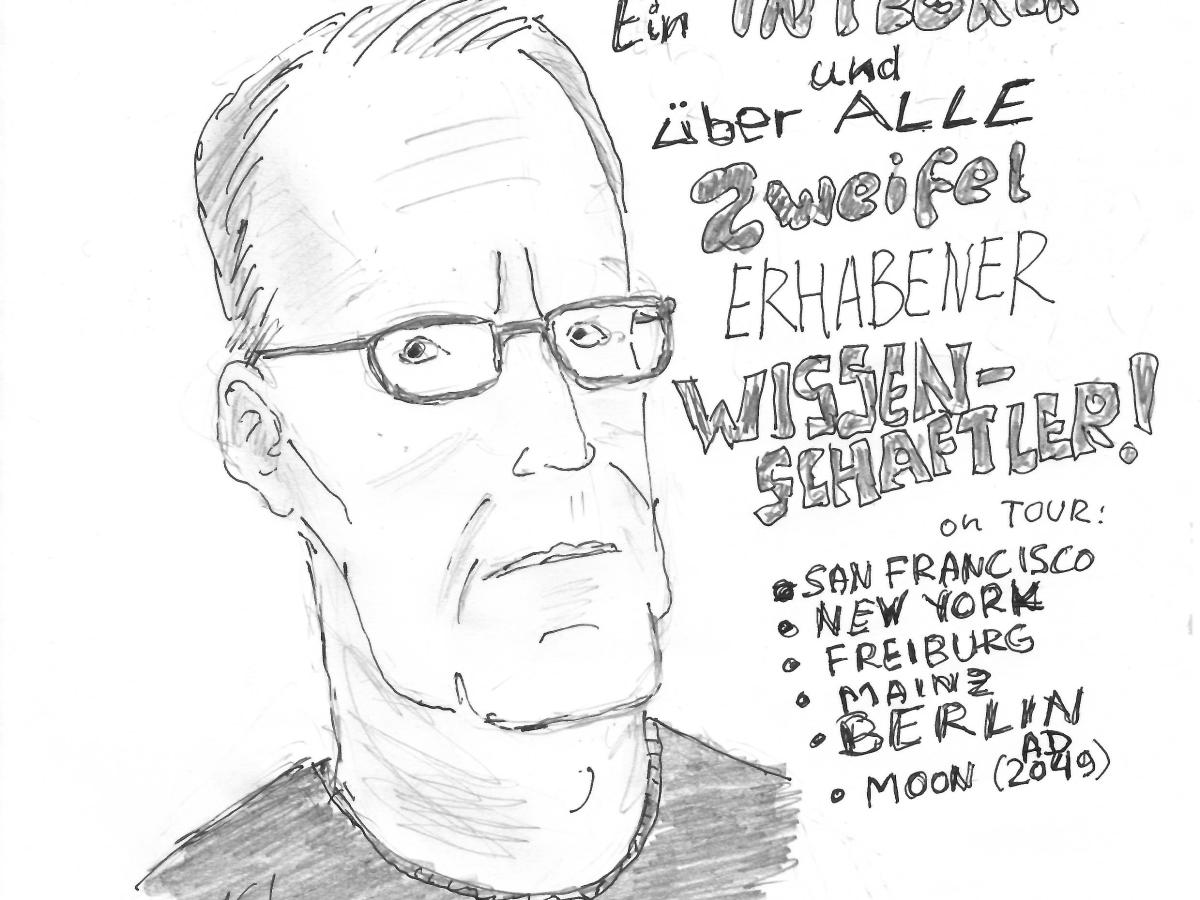
A scientist of integrity and beyond reproach
“The Investigative Committee notes that the infractions to normal scientific conduct surveyed in this report were blatant and repeated. Dr. [XY] should be dealt with in a manner consistent to the flagrant nature of the misconduct and data manipulation.” 2004 Berkeley report, illegal in Germany

Below, I collected some dodgy cancer research from Charite’s recent past. Some characters involved have retired, but they already installed their loyal mentees in power positions at Charité and elsewhere in Germany. These people decide about research integrity, at their universities, and nationally.
Chapter I: Jürgen Eberle
Jürgen Eberle never made it to a professor. Not even associate. He remains a humble faculty member at Charite’s dermatology clinic, where he also acts as “deputy in-charge of research”.
Maybe because they knew something, yet still someone powerful must have wanted Eberle to remain in his job. Claire Francis assembled a nice PubPeer record for Eberle and for his collaborators.
These two papers share same figures, but it goes beyond self-plagiarism.
- Sandra-Annika Quast , Anja Berger , Nicole Buttstädt , Kristin Friebel , Roland Schönherr , Jürgen Eberle General Sensitization of melanoma cells for TRAIL-induced apoptosis by the potassium channel inhibitor TRAM-34 depends on release of SMAC PLoS ONE (2012) doi: 10.1371/journal.pone.0039290
- S-A Quast , A Berger , J Eberle ROS-dependent phosphorylation of Bax by wortmannin sensitizes melanoma cells for TRAIL-induced apoptosis Cell Death and Disease (2013) doi: 10.1038/cddis.2013.344
- A Berger , S-A Quast , M Plötz , A Kammermeier , J Eberle Sensitization of melanoma cells for TRAIL-induced apoptosis by BMS-345541 correlates with altered phosphorylation and activation of Bax Cell Death and Disease (2013) doi: 10.1038/cddis.2012.198


More recent stuff, in MDPI. Observe the environmental-friendly recycling of loading controls, because using the proper loading controls may have revealed “accidental” misloading:
Uly Sumarni , Ulrich Reidel , Jürgen Eberle Targeting Cutaneous T-Cell Lymphoma Cells by Ingenol Mebutate (PEP005) Correlates with PKCδ Activation, ROS Induction as Well as Downregulation of XIAP and c-FLIP Cells (2021) doi: 10.3390/cells10050987


Again MDPI, by Eberle with his Charité dermatology colleague Magda Babina:
Tarek Hazzan, Jürgen Eberle, Margitta Worm, Magda Babina Thymic Stromal Lymphopoietin Interferes with the Apoptosis of Human Skin Mast Cells by a Dual Strategy Involving STAT5/Mcl-1 and JNK/Bcl-xL Cells (2019) doi: 10.3390/cells8080829


One even more interesting collaboration:
Amir M. Hossini , Annika S. Quast , Michael Plötz , Katharina Grauel , Tarik Exner , Judit Küchler , Harald Stachelscheid , Jürgen Eberle , Anja Rabien , Evgenia Makrantonaki , Christos C. Zouboulis PI3K/AKT Signaling Pathway Is Essential for Survival of Induced Pluripotent Stem Cells PLoS ONE (2016) doi: 10.1371/journal.pone.0154770


Christos Zouboulis is chair of dermatology at the Brandenburg Medical School in Dessau, which is in Berlin’s neighbourhood. He has more PubPeer enties.
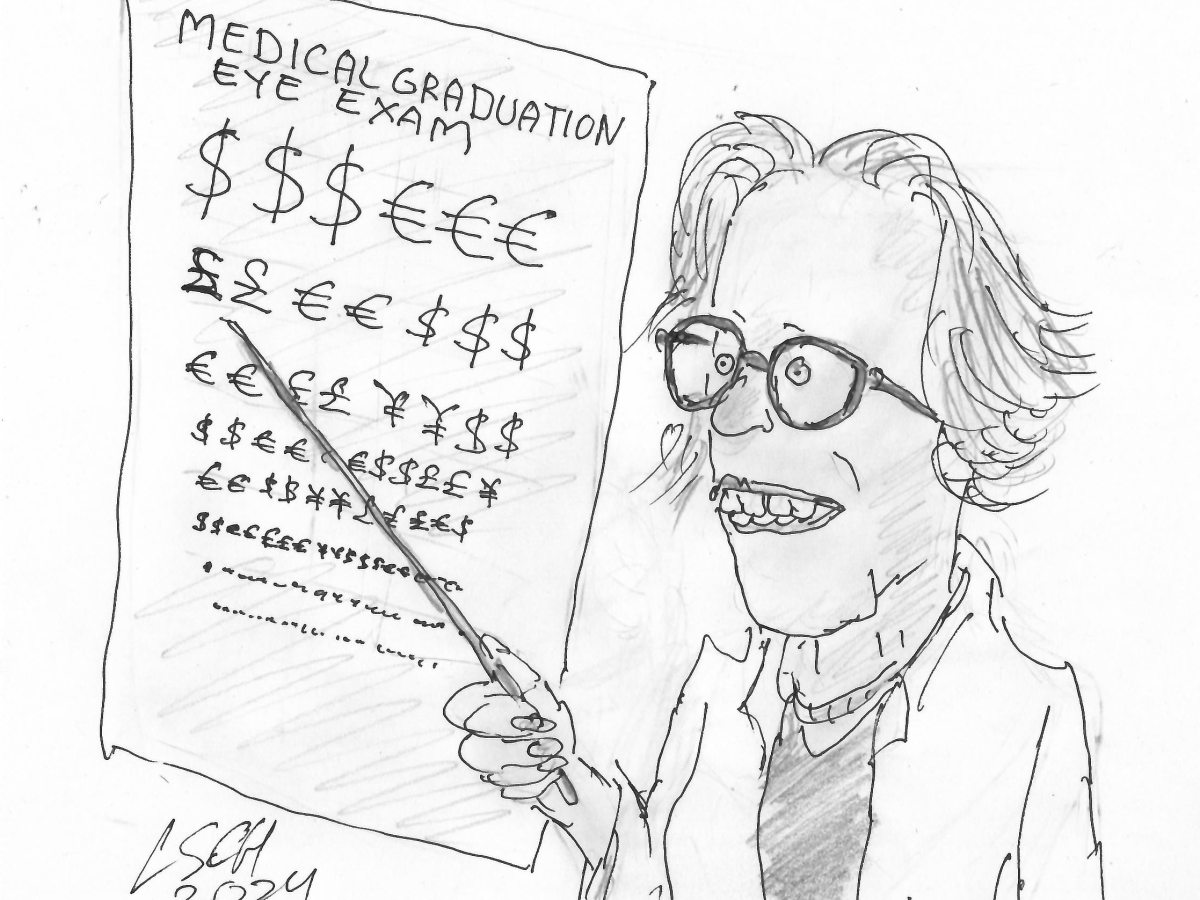
My Big Fat Greek Ophthalmology
From fake cancer research to fake ophthalmology – just follow Mitsi and Vassiliki and you’ll meet Dementios and other bad eye doctors, including a horrible German we hoped to never see again.
Chapter II: Bernd Dörken
Another set of two papers from Eberle’s lab bring us to another case of bad science at Charité, the first author is Eberle’s PhD student:
- Michael Plötz , Amir M. Hossini, Bernhard Gillissen, Peter T. Daniel, Eggert Stockfleth , Jürgen Eberle Mutual regulation of Bcl-2 proteins independent of the BH3 domain as shown by the BH3-lacking protein Bcl-x(AK) PLoS ONE (2012) doi: 10.1371/journal.pone.0034549
- M Plötz , B Gillissen , A M Hossini , P T Daniel , J Eberle Disruption of the VDAC2-Bak interaction by Bcl-x(S) mediates efficient induction of apoptosis in melanoma cells Cell Death & Differentiation (2012) doi: 10.1038/cdd.2012.71


Eberle’s senior coauthor here is Peter Daniel, professor at Max-Delbrück-Center and Charité Berlin. Daniel is a former mentee of Bernd Dörken, emeritus professor at Max Delbrück Center and former director of the clinic for haematology, oncology and tumour immunology at Charité Berlin. Much of this chapter was already covered in May 2023 Shorts, for which I suspect the Charité will find me guilty of research misconduct by plagiarism.
A paper by Dörken and Daniel was retracted last year, its lead author Guillaume Normand is now “imaging expert” at the Novartis Institutes for Biomedical Research in USA:
Guillaume Normand , Philipp G. Hemmati , Berlinda Verdoodt , Clarissa Von Haefen , Jana Wendt , Dilek Güner , Evelyne May , Bernd Dörken, Peter T. Daniel p14ARF induces G2 cell cycle arrest in p53- and p21-deficient cells by down-regulating p34cdc2 kinase activity Journal of Biological Chemistry (2005) doi: 10.1074/jbc.m412330200


The Retraction notice from April 2023 stated:
“This article has been withdrawn by the authors. The authors reported that in figure 3A the Ad-LacZ histogram for the HCT116-p21+/+ cells was inadvertently reused as Ad-p14ARF histogram for the HCT116-p21+/+ cells and provided an amended figure. However, the Journal analysis concluded there was an additional issue regarding a possible image reuse of the control blots corresponding to β-actin HCT116 p53-/- panel in figure 6A, and DU145 Ad-p14ARF (25, 50, 100) MOI β-actin panel in figure 6C. The issue could not be resolved due to the lack of original data more than 18 years after publication. The withdrawing authors stand by the overall findings and conclusions of the study.”
Standing by the overall findings and conclusions is Dörken’s and Daniel’s speciality. The other paper featuring same blots was this one, it had its own problems:
Philipp G Hemmati , Guillaume Normand , Berlinda Verdoodt , Clarissa Von Haefen , Anne Hasenjäger , Dilek Güner , Jana Wendt , Bernd Dörken, Peter T Daniel Loss of p21 disrupts p14ARF-induced G1 cell cycle arrest but augments p14ARF-induced apoptosis in human carcinoma cells Oncogene (2005) doi: 10.1038/sj.onc.1208579

In March 2022, Daniel’s mentee and former Charité clinician Philipp Hemmati, now head of internal medicine at a church-owned hospital in eastern Germany, insisted on PubPeer that these issues in his two papers were merely honest mistakes of oversights, blots and FACS plots re-used by accident, and the main conclusions were not affected. The Oncogene paper remains neither retracted nor corrected.
A similar Hemmati situation here:
P G Hemmati , D Güner , B Gillissen , J Wendt , C Von Haefen , G Chinnadurai , B Dörken , P T Daniel Bak functionally complements for loss of Bax during p14ARF-induced mitochondrial apoptosis in human cancer cells Oncogene (2006) doi: 10.1038/sj.onc.1209668

Dr Hemmati also shared raw data to address the concerns with this paper:
P G Hemmati , G Normand , B Gillissen , J Wendt , B Dörken , P T Daniel Cooperative effect of p21Cip1/WAF-1 and 14-3-3sigma on cell cycle arrest and apoptosis induction by p14ARF Oncogene (2008) doi: 10.1038/onc.2008.193


On PubPeer, Hemmati wondered: “To me, it is quite remarkable how similar blots may look like.” Indeed, remarkable.
The story of the above retraction is the following. In February 2022 I wrote to Daniel, but he never replied. There are other problematic cancer research studies of his questioned on PubPeer. For example, these two papers by Dörken as last author and his mentee Ralf Bargou (now professor and head of oncology centre at the University of Würzburg) as lead authors:
- Christian Wagener , Ralf C. Bargou , Peter T. Daniel , Kurt Bommert , Markus Y. Mapara , Hans D. Royer , Bernd Dörken Induction of the death-promoting gene bax-alpha sensitizes cultured breast-cancer cells to drug-induced apoptosis International Journal of Cancer (1996) DOI: 10.1002/(SICI)1097-0215(19960703)67:1
- R C Bargou , C Wagener , K Bommert , M Y Mapara , P T Daniel , W Arnold , M Dietel , H Guski , A Feller , H D Royer , B Dörken Overexpression of the death-promoting gene bax-alpha which is downregulated in breast cancer restores sensitivity to different apoptotic stimuli and reduces tumor growth in SCID mice Journal of Clinical Investigation (1996) doi: 10.1172/jci118715 issn: 0021-9738


On 26 July 2024, the Wagener et al 1996 paper received an Expression of Concern:
“The Western Blot shown in Figure 2 was also included as Figure 3 in another publication by this author group [1]. However, this other publication was not cited.
In Figure 1, the Western Blot bands for Bcl-2 and Bcl-xL look very similar to the tubulin bands in the right panel of Figure 3 in Bargou et al. [1] (tubulin for “bax” in MCF-7 and for “bax” in R30C, respectively). The authors are unable to retrieve the original data underlying this experiment due to the time that has elapsed and state that they cannot rule out inadvertent mislabelling of the figure.
As these issues cannot be definitively resolved, the journal is publishing this Expression of Concern to alert readers. The authors R. C. Bargou and K. Bommert agree to this Expression of Concern. C. Wagener, P. T. Daniel, M. Y. Markus, H. D. Royer, and B. Dörken were not reachable.”
They didn’t try properly. Dörken was perfectly reachable for me, and his PhD student Christian Wagener is still in Berlin, now a senior pharma executive. Anyway, another problematic paper by Dörken, Daniel, Hemmati and Daniel’s PhD student Bernhard Gillissen (whom you also saw on Eberle papers and who in 2023 was still at Charité). A recycled flow cytometry plot, yet with different quantifications:
Bernhard Gillissen , Frank Essmann , Philipp G. Hemmati , Antje Richter , Anja Richter , Ilker Oztop , Govindaswamy Chinnadurai , Bernd Dörken , Peter T. Daniel Mcl-1 determines the Bax dependency of Nbk/Bik-induced apoptosis The Journal of Cell Biology (2007) doi: 10.1083/jcb.200703040

Here I need to add a disclaimer that during my own PhD work in Düsseldorf, I closely collaborated by Daniel’s former PhD student and co-author above, Frank Essmann.
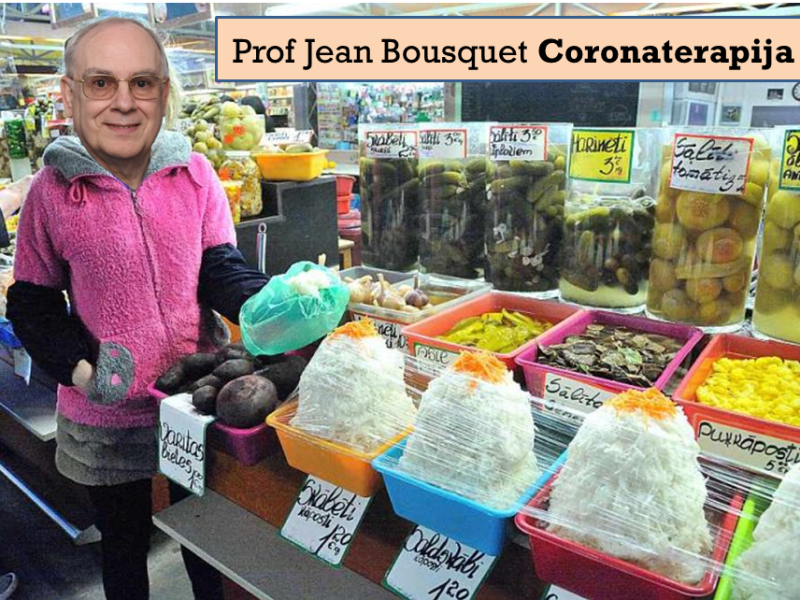
Prof Jean Bousquet’s Sauerkraut Therapy
For some reason, Christian Drosten is the most famous COVID-19 scientist of the Charité Berlin medical school. Meanwhile, Professors Jean Bousquet and Torsten Zuberbier found and tested the pandemic cure, and it’s Brassica oleracea!
When I contacted Dörken in early 2022, he immediately announced to investigate. In March 2022, Dörken informed me that he wasn’t able to reach Daniel himself, but that Charité’s commission for good scientific practice has opened an investigation and received statements from him and other authors. Dörken then issued some correction for other papers of his, there was enough on PubPeer to choose from. Here is one:
Karin Schmelz , Mandy Wagner , Bernd Dörken, Ingo Tamm 5-Aza-2′-deoxycytidine induces p21WAF expression by demethylation of p73 leading to p53-independent apoptosis in myeloid leukemia International Journal of Cancer (2005) doi: 10.1002/ijc.20797

The Erratum from April 2022 stated:
“…it came to our attention that in the Western Blot analysis in Fig.6c, in the right panel of the figure, bands representing survivin at day 2 and day 3 are most likely identical.
The authors are unable to retrieve the original data underlying this experiment due to the time that has elapsed but believe that an error when laying out the figure might have occurred. The error does not affect the scientific conclusions of the original paper.”
Also this got corrected, with Dörken’s former proteges Bargou and Markus Mapara, who used to be deputy director of the Stem Cell Transplantation unit at Charité and is now professor and director of the Blood and Marrow Transplantation Program at Columbia University in USA:
Suzanne Lentzsch, Margarete Gries , Martin Janz , Ralf Bargou , Bernd Dörken, Markus Y. Mapara Macrophage inflammatory protein 1-alpha (MIP-1 alpha ) triggers migration and signaling cascades mediating survival and proliferation in multiple myeloma (MM) cells Blood (2003) doi: 10.1182/blood-2002-08-2383

The first author Suzanne Lentzsch, who followed Mapara first to University of Pittsburgh in USA, then to Columbia University, where she also became professor, replied on PubPeer with raw data in February 2022. The Corrigendum from January 2023 explained the fake gel in Figure 5A as “an incorrect negative control” which happened “due to cutting of the wrong loading control lane“, the readers were warned that “the error does not impact the scientific message of the study.”
It seems, Lentzsch applied what she learned under Dörken in her own lab. Here with Mapara:
Shirong Li , Rekha Pal , Sara A. Monaghan , Peter Schafer , Hongjiao Ouyang , Markus Mapara , Deborah L. Galson , Suzanne Lentzsch IMiD immunomodulatory compounds block C/EBP{beta} translation through eIF4E down-regulation resulting in inhibition of MM Blood (2011) doi: 10.1182/blood-2010-10-314278


Lentzsch explained on PubPeer that “beta-actin panel and eiF-4E panel in Figure 4E come from the same blot.”, while claiming that “The pattern between eIF-4E and b-actin might differ because of different sizes of the protein bands with 25 kDa for eIF4E and 45 kDa for beta-actin”. This is nonsense, rather the actin loading control from 2C was inappropriately re-used in 4E.
Another one from Lentzsch Columbia lab, with Dörken:
Rekha Pal , Martin Janz , Deborah L. Galson , Margarete Gries , Shirong Li , Korinna Jöhrens , Ioannis Anagnostopoulos , Bernd Dörken, Markus Y. Mapara , Lisa Borghesi , Lela Kardava , G. David Roodman , Christine Milcarek , Suzanne Lentzsch C/EBPbeta regulates transcription factors critical for proliferation and survival of multiple myeloma cells Blood (2009) doi: 10.1182/blood-2009-01-201111


In February 2024, Lentzsch announced on PubPeer:
“Thank you for notifying us of the error in the western blots for Figures 3 and 5. We sumitted a corrigendum to Blood.”
8 months later, no corrigendum was issued. Of course Lentzsch has more on PubPeer. Here she is with Mapara again, how come the quantification is different while the FACS plot is the same?
Huihui Ma , Caisheng Lu , Judith Ziegler , Ailing Liu , Antonia Sepulveda , Hideho Okada , Suzanne Lentzsch , Markus Y. Mapara Absence of Stat1 in donor CD4⁺ T cells promotes the expansion of Tregs and reduces graft-versus-host disease in mice Journal of Clinical Investigation (2011) doi: 10.1172/jci43706

Mapara replied in January 2024:
“Due to an oversight, the same flow plot was shown twice in 7E. We, unfortunately, no longer have the original data for that flow experiment. We have, therefore, repeated the experiment using the same conditions and reproduced our results. […] We have also submitted a request to JCI to publish an erratum.”

Think for a moment. These Columbia professors aren’t able to store their digital raw data. Yet they claim they recovered all 13 year old mouse lines and reagents from Pittsburgh and repeated faithfully the experiment! Anyway, no correction was published.
Another case was reported by me in February 2022 to Dörken, to Charité Berlin, and to University of Würzburg, where the first author Franziska Jundt is now full professor.
Franziska Jundt, Nina Raetzel , Christine Müller , Cornelis F. Calkhoven , Katharina Kley , Stephan Mathas , Andreas Lietz , Achim Leutz , Bernd Dörken A rapamycin derivative (everolimus) controls proliferation through down-regulation of truncated CCAAT enhancer binding protein {beta} and NF-{kappa}B activity in Hodgkin and anaplastic large cell lymphomas Blood (2005) doi: 10.1182/blood-2004-11-4513

Jundt shared raw data on PubPeer, and admitted gel splicing:
“As it was common practice by that time, sections of the gel/blots were cut and pasted for image display. This procedure did not imply that all samples were separated on the same gel/protein blot, but merely to ease comparability. Further, the accompanying text does not claim that the extracts were applied to the same gel side by side, nor was any attempt made to arrange the data in such a way as to imply this. Rather, from the scientific point of view, it is irrelevant whether or not the different samples were separated in the same gel or different gels.“
Charité informed me in April 2022 that they terminated the investigation of Jundt et al 2005 because no research misconduct was found. No correction was issued.
Nothing can ever be found here, because the author Michael Hummel is the Ombudsman for research integrity at Charité!
F Jundt, Ö Acikgöz , S-H Kwon , R Schwarzer , I Anagnostopoulos , B Wiesner , S Mathas , M Hummel , H Stein , H M Reichardt , B Dörken Aberrant expression of Notch1 interferes with the B-lymphoid phenotype of neoplastic B cells in classical Hodgkin lymphoma Leukemia (2008) doi: 10.1038/leu.2008.101

Charité Office for Good Scientific Practice announced to me to investigate Eberle’s papers, but it seems Hummel will remain in charge.
Evil minds might wrongly think that almighty Dörken pulls the strings to avoid corrections and especially retractions for himself and his mentees…
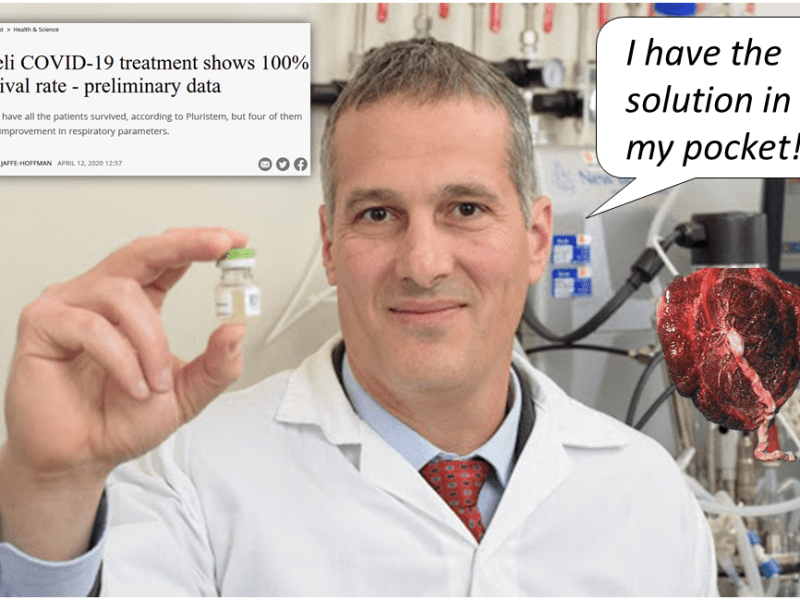
Stem cells to cure COVID-19 because why not
Israeli scientists discovered a cure for coronavirus! Their proprietary PLX cells from placenta deliver 100% survival rate both against COVID-19 and a nuclear holocaust. The stocks soar.
Chapter III: Christoph Hanski
Daniel also published problematic a paper with a (now retired) Charité professor Christoph Hanski, who has a PubPeer record of his own. As it happens, I worked on Hanski’s case already in 2015, for a possible article for a German magazine.
Mandar R. Bhonde , Marie-Luise Hanski , Jan Budczies , Minh Cao , Bernd Gillissen , Dhatchana Moorthy , Federico Simonetta , Hans Scherübl , Matthias Truss , Christian Hagemeier , Hans-Werner Mewes , Peter T. Daniel , Martin Zeitz , Christoph Hanski DNA damage-induced expression of p53 suppresses mitotic checkpoint kinase hMps1: the lack of this suppression in p53MUT cells contributes to apoptosis Journal of Biological Chemistry (2006) doi: 10.1074/jbc.m511333200


In May 2015, four years into his retirement, Hanski wrote to me (translated):
“The criticism of most of the papers was published by “Peer 1” on April 28, 2014, then supplemented with additional images in February and January 2015. It limits itself to criticizing the quality of the Western blots and completely ignores the content. Sometimes it also shows the critic’s inadequate understanding of the data and experiments presented.”
Hanski also attached his rebuttal to PubPeer comments. Regarding the above Bhonde et al 2006, he explained that his „vertically cut blot stripes“ are exactly the right way to do western blots, because “Each experiment was repeated three times“, and that the two p21 panels cannot ever be duplicated because:
“There is no p21 in p21 -/- cells. Peer 1 apparently did not understand this.“
This is level of supreme scientific knowledge and intellectual excellence with which cancer research has been done at Charité for decades, dear reader. One shoudl make a TV series about that.
An even more ancient Hanski paper, again with his wife and fellow Charité researcher, Marie-Luise Hanski:
B Mann , A Gratchev , C Böhm , M L Hanski , H D Foss , G Demel , B Trojanek , I Schmidt-Wolf , H Stein , E O Riecken , H J Buhr , C Hanski FasL is more frequently expressed in liver metastases of colorectal cancer than in matched primary carcinomas British Journal of Cancer (1999) doi: 10.1038/sj.bjc.6690202

Hanski explained the obviously duplicated gel bands with:
“The arbitrary comparison of similar-looking band groups and the resulting suggestion that they are the same samples only shows that Peer 1 evaluates the blots mechanically and ignores the overall information.”
You are not allowed to scrutinise figures using mechanical tools like your own eyes.
Also the next paper was also flagged already in 2014 on PubPeer. Back then it was “only” for inappropriately spliced gels, which Hanski admitted while dismissing it as irrelevant “because it is a qualitative statement“. I show the newer evidence from 2022:
B. Mann, M. Gelos , A. Siedow , M. L. Hanski , A. Gratchev , M. Ilyas , W. F. Bodmer , M. P. Moyer , E. O. Riecken , H. J. Buhr , C. Hanski Target genes of beta-catenin-T cell-factor/lymphoid-enhancer-factor signaling in human colorectal carcinomas Proceedings of the National Academy of Sciences (1999) doi: 10.1073/pnas.96.4.1603

Here are Hanski’s replies:
Hanski also wrote this to me, regarding yet another paper:
“The same person wrote to the editor of the International Journal of Cancer in January 2014 and expressed the same criticism of Paper 3. I refuted this by presenting the raw data. Despite this information he received, “Peer 1” posted his criticism online in April 2014, knowing full well that it was wrong. […] From this I conclude that “Peer 1” – who, by the way, is not difficult to identify – is not interested in clarifying any issues, but in devaluing the work of certain people.“
I don’t know whom Hanski suspected to have been Peer 1, but I know it was the pseudonymous Claire Francis, and this is very unlikely someone Hanski knows personally or by real name. Anyway, here is that paper, by Mr and Mrs Hanski, the old finding on the left and the new from 2022 on the right:
Mandar Ramesh Bhonde , Marie-Luise Hanski , Jenny Stehr , Britta Jebautzke , Roser Peiró-Jordán , Henry Fechner , Kazunari Kazushige Yokoyama , Weei-Chin Lin , Martin Zeitz , Christoph Hanski Mismatch repair system decreases cell survival by stabilizing the tetraploid G1 arrest in response to SN-38 International Journal of Cancer (2010) doi: 10.1002/ijc.24893


The journal accepted Hanski’s explanation and the raw data he provided. If only the editors bothered to check other figures, like Fig 4a!

Tiwari’s IAAM honours Magdeburg
Ashutosh Tiwari’s scamference activities continue. Now the University of Magdeburg in Germany is very excited about a medal from the International Association of Advanced Materials.
Hanski also used to collaborate with Michael Naumann, then a trainee at Charite, now professor for inner medicine at the University of Magdeburg in Germany. I wrote about the problems with Naumann’s science in September 2023 Shorts.
M. Naumann , C. Hanski , E. O. Riecken Expression in vivo of additional plasmid-mediated proteins during intestinal infection with Yersinia enterocolitica serotype O8 Journal of Medical Microbiology (1991) doi: 10.1099/00222615-35-5-257

Back in 2015, Hanski told me about his memories of Naumann:
“Mr. Michael Naumann was an enthusiastic, very dedicated and conscientious doctoral student. Since we were working as a team of three people at the time, each experiment was done at least three times until the result was accepted as correct and reproducible.
Therefore I can rule out intentional data manipulation.“
In 2023, the German Research Council (DFG) agreed and declared that Naumann was not just an enthusiastic, very dedicated and conscientious scientist, but also an innocent victim of false allegations.
Future outlook
Enough of old German men, their time is over! Meet a young German man, a rising star at Charité. Jan Eucker is head of oncology at the Campus Benjamin Franklin (CBF).
Chuanbing Zang , Hongyu Liu , Janina Bertz , Kurt Possinger , H. Phillip Koeffler , Elena Elstner , Jan Eucker Induction of endoplasmic reticulum stress response by TZD18, a novel dual ligand for peroxisome proliferator-activated receptor α/γ, in human breast cancer cells Molecular Cancer Therapeutics (2009) doi: 10.1158/1535-7163.mct-09-0347

Eucker coauthors are the Charité staff scientist Hongyu Liu and Charite’s now retired (or maybe even deceased) “hero in the fight against cancer” Elena Elstner. There’s also a rather notorious American collaborator, the UC Los Angeles professor H. Phillip Koeffler, has much more bad stuff on PubPeer, around 20 threads. Including with Jaydutt Vadgama, vice president for research at Drew University in LA, about whom I wrote in April 2023 Shorts.
A fresher one by Eucker with Liu:
Jan Eucker, Chuanbing Zang , Yongan Zhou , Xinhua Li , Piet Habbel , Carsten-Oliver Schulz , Christian Scholz , Hongyu Liu TKI258, a multi-tyrosine kinase inhibitor is efficacious against human infant/childhood lymphoblastic leukemia in vitro Anticancer Research (2014) 34 (9) 4899-4907;
Fig 3

And this, even if no fault of the original Charite authors, is truly funny: A figure from a 2006 paper by Elstner, Liu and Koeffler was stolen and reassembled in 2011 by an Italian fraudster gang from Naples, who routinely fake and steal data!
Gabriella Marfè , Marco Tafani , Filomena Fiorito, Ugo Pagnini, Giuseppe Iovane, Luisa De Martino Involvement of FOXO transcription factors, TRAIL-FasL/Fas, and sirtuin proteins family in canine coronavirus type II-induced apoptosis PLoS ONE (2011) doi: 10.1371/journal.pone.0027313
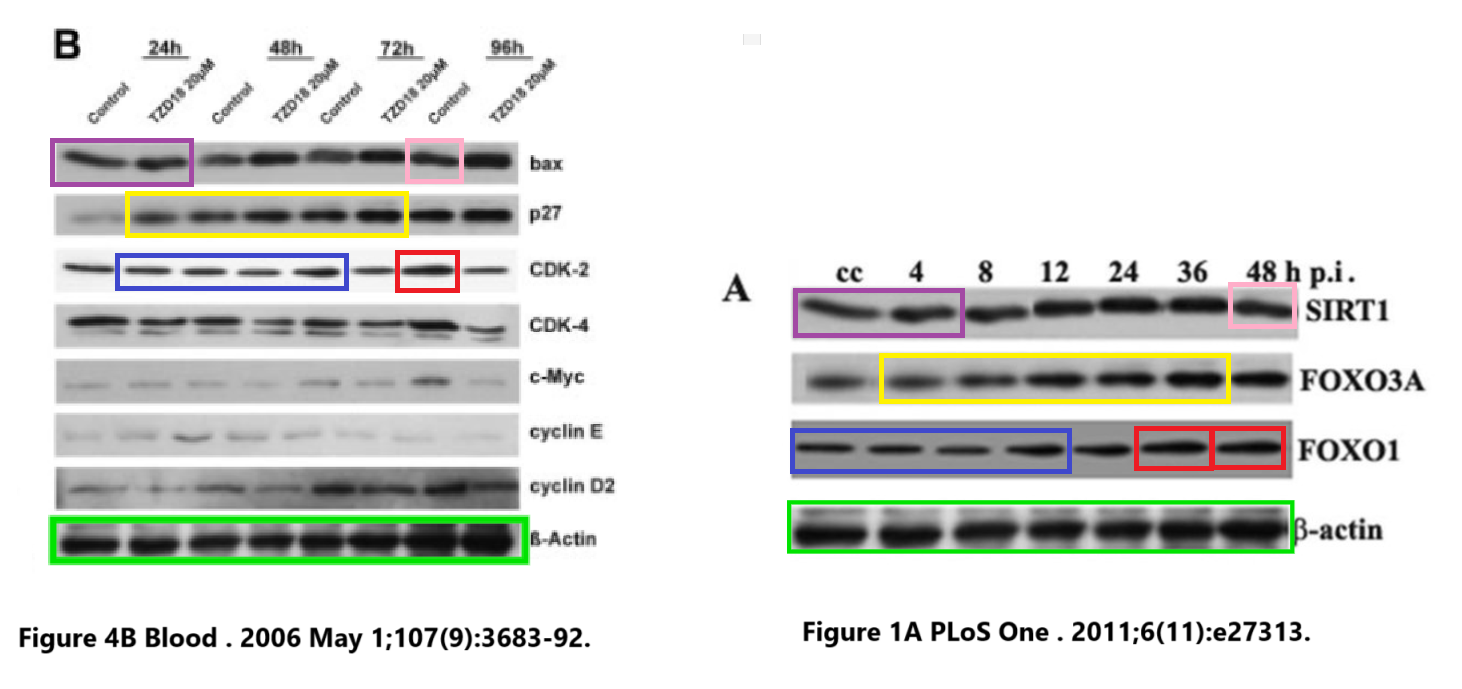
Unsurprisingly, that Neapolitan gang is associated with Antonio Giordano, who, last I heard, is suing me in Italy for dissing his fake science.
But back to Berlin. What to expect from the Charite investigation? Not much. What about the national authority, the DFG?
Well. For Eucker’s and Elstner’s Zang et al 2009, DFG replied to Claire Francis with a denial that any DFG funding went into that publication. Never mind that the study acknowledges:
“”Grant support: This work was supported by the grants (to E. Elstner.) from the “Berliner Krebsgesellschaft e.V.”, Deutsche Forschungsgemeischaft,””
After that was pointed out, DFG research integrity team pronounced that the mere pointing out of “similarities detected by ImageTwin“ does not count as admissible evidence.
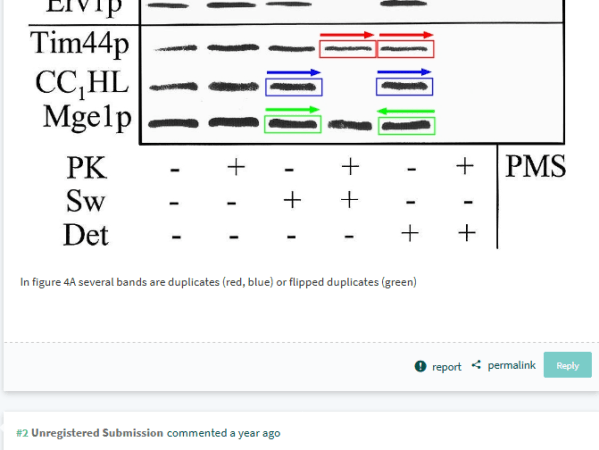
DFG and Marburg drop misconduct investigation of Roland Lill papers
German Research Foundation (DFG) terminated the investigation against their Senator and Marburg University professor Roland Lill, after having found no research misconduct. No comments are issued on the integrity of the data in his papers on yeast biochemistry, or on some unusual image manipulations which were already admitted by Lill and his former PhD students…
Yet in other cases, the DFG shows no mercy, see this rather typical press release from 30 September 2024 about a “written reprimand against a scientist for plagiarism“:
“In the second case, a scientist was also accused of having included text passages from a publication without labeling to the required extent in a funding application. The scientist was also a co-author of the publication. He told the DFG investigative committee that the journal article was largely based on his scientific achievements and that he had failed to include the correct citation due to the parallel work on the publication and application. However, the committee also saw plagiarism here. Based on his experience, the scientist should also have been aware that he should have identified the contributions of his research team from the joint publication, especially because these were extensive acquisitions.”
Hands up who ever reused your own text from your own research paper in your own grant application! To get sentenced for such non-issues while investigations into outright research fraud with many wasted millions of Euros are routinely dropped, I do wonder what the real crime of that lowly scientist really was. Maybe blowing the whistle on some German bigwig?
Donate!
If you are interested to support my work, you can leave here a small tip of $5. Or several of small tips, just increase the amount as you like (2x=€10; 5x=€25). Your generous patronage of my journalism will be most appreciated!
€5.00

 For Better Science
Is it only old farts who that think we live in a worse time? It is customary to decry the old ways as old-fashioned and lacking diversity, but in Germany the old-ways did have diversity, you just think that they didn’t have diversity. Is it reactionary to think that the old-ways, because they were elitist, had fewer people messing about, rather than the many now futzing about were better? Is it nostalgic to believe that the peak of discovery in biomedicine was around 1900-1910, that those times opened the door to everything that came since? Old farts have images in their heads of people standing in their laboratories, where they did work, looking at things, reading their books, discussing things, not hiding behind genomics, or horizon scanning to see where the next hot topic lies.
You may think that the peak of biomedical discovery is now, but you are incorrect.
Paul Ehrlich – Wikipedia
Paul Ehrlich’s most famous achievement was the first cure for syphilis in 1909. I understand from practising physicians that more of you than ever are familiar with syphilis, which although still a dreadful disease, if untreated, does not hold the horrors of the past. General paresis of the insane – Wikipedia
Paul Ehrlich knew Albert Neisser, the man who discovered the bacterium that causes gonorrhoea, at high school, Albert Neisser didn’t discover the bacterium that causes gonorrhoea at high school, but later on, but many of you will be familiar with gonorrhoea though.
Paul Ehrlich’s Ph.D. supervision was Julius Friedrich Cohnheim, one of the pioneers of experimental pathology.
In some ways we cannot live in such times again as much has been discovered so it is more difficult to be pioneers, but the more people doing “science” now may not be a good thing. So much data that it becomes useless. Handbooks for junior doctors with nearly 1,000 pages. Oxford Handbook of Clinical Medicine | Oxford Academic
Is it reactionary to think that there can be progress through science and that real human problems can be alleviated by science? Is it reactionary to think that if people only wrote down their results correctly and stuck to those results things might get better?
LikeLiked by 1 person
“DFG research integrity team pronounced that the mere pointing out of “similarities detected by ImageTwin“ does not count as admissible evidence.”
Turning to the blind eye.
“Yet in other cases, the DFG shows no mercy, see this rather typical press release from 30 September 2024 about a “written reprimand against a scientist for plagiarism“.
The DFG has a history of mild punishments for the high and mighty. If it does believe me it should read Der Spiegel!
DFG erteilt Immunologin Bulfone-Paus Rüge wegen Fehlverhaltens – DER SPIEGEL
LikeLike
Diversity in the old days, at least belated recognition. Think what Petri dishes would be like without agar.
Fanny Hesse – Wikipedia
LikeLike
More diversity in the past, at the Charité even.
The first woman in the Kingdom of Prussia to be appointed a professor of medicine.
Germany is the successor state to Prussia.
Rahel Hirsch – Wikipedia
LikeLike
Retraction for Jürgen Eberle.
22 November 2024 retraction.
https://journals.plos.org/plosone/article?id=10.1371/journal.pone.0314638
After this article [1] was published, concerns were raised about results presented in Figs 3, 4, 6, and 7. Specifically:
The following panels appear similar:
○ The Fig 3A Bak, Bax and ꞵ-actin panels of this article [1] and the Fig 3A Bak, Bax and ꞵ-actin panels of [2].
○ The Fig 6A Mel-2a VDAC panel and the Fig 6A A357-Bcl-2 VDAC panel.
○ The Fig 6A A375 Mock Bcl-xAK panel and the Fig 6A A375 Bcl-2 Bcl-xAK panel.
○ The Fig 6B Mel-2a Bak panel and the Fig 6B A357-Bcl-2 VDAC panel when flipped vertically.
○ The Fig 7A Bcl-2 panel of this article [1] and the Fig 5A Bcl-2 panel of [2] despite being used to represent results obtained from different cell lines.
The Fig 4A Control DU145 Bax-EGFP and Bcl-xAK OFF DU145 Bax-EGFP panels appear to partially overlap.
The corresponding author responded to queries about the above, stating that they were unable to provide the raw data. In the absence of the raw data the issues with these figures cannot be resolved.
In light of the above concerns which question the reliability of the published results, the PLOS ONE Editors retract this article.
JE agreed with the retraction. MP, AMH, BG, PTD, and ES either did not respond directly or could not be reached.
References
1.Plötz M, Hossini AM, Gillissen B, Daniel PT, Stockfleth E, Eberle J (2012) Mutual Regulation of Bcl-2 Proteins Independent of the BH3 Domain as Shown by the BH3-Lacking Protein Bcl-xAK. PLoS ONE 7(4): e34549. pmid:22506026
2.Plötz M., Gillissen B., Hossini A, Daniel PT, Eberle J (2012) Disruption of the VDAC2–Bak interaction by Bcl-xS mediates efficient induction of apoptosis in melanoma cells. Cell Death Differ 19, 1928–1938. pmid:22705850
Citation: The PLOS ONE Editors (2024) Retraction: Mutual Regulation of Bcl-2 Proteins Independent of the BH3 Domain as Shown by the BH3-Lacking Protein Bcl-xAK. PLoS ONE 19(11): e0314638. https://doi.org/10.1371/journal.pone.0314638
Published: November 22, 2024
LikeLike
Just so Munich doesn’t feel neglected PLoS One Expression of Concern, which if the original data cannot be found to resolve the issues should be retracted. What are they saving the paper for?
https://journals.plos.org/plosone/article?id=10.1371/journal.pone.0314637
LikeLike
To be fair, 2 authors, including first author, Munich, 1 author Berlin.
https://journals.plos.org/plosone/article/authors?id=10.1371/journal.pone.0057218
LikeLike
” Curcumin Enhances the Effect of Chemotherapy against Colorectal Cancer Cells by Inhibition of NF-κB and Src Protein Kinase Signaling Pathways”
Lead authors are Iranian, plus two Germans and an Indian in USA. Prove to me it’s not from a papermill.
LikeLike
Curcumin Enhances the Effect of Chemotherapy against Colorectal Cancer Cells by Inhibition of NF-κB and Src Protein Kinase Signaling Pathways | PLOS ONE
Editor: Bharat B. Aggarwal, The University of Texas M. D. Anderson Cancer Center, United States of America
Frankincense extract paper is 30th retracted by former MD Anderson researcher who once threatened to sue Retraction Watch – Retraction Watch
“Prove to me it’s not from a papermill.”
Doesn’t curcumin come from peppermills?
LikeLike
The editor, the editor….
LikeLike
Well, what do you say to that. Elisabeth reported that 2013 to PLOS in 2014.
Now it can’t be retracted because it’s too old to expect the authors to find the raw data.
What a shitshow.
LikeLike
“Again MDPI, by Eberle with his Charité dermatology colleague Magda Babina“
Christmas 2024 correction! Not much left!
19 December 2024 correction. https://www.mdpi.com/2073-4409/13/24/2105
Error in Figure 3 In the original publication [1], there was a mistake in the published version of Figure 3a. Dot plots from the same measurements were mistakenly used for different treatments. In Figure 3a, the treatments “w/o TSLP, non-targeting” and “w/o TSLP, STAT5-targeting” as well as “with TSLP, non-targeting” and “with TSLP, STAT5-targeting” originated from the same measurement. In the original publication, there was also a mistake in the published version of Figure 3b. The same error occurred here as described for Figure 3a; dot plots were assembled based on the same measurements and were mistakenly used to represent different treatments. In Figure 3b, the treatments “w/o TSLP, STAT5-targeting” (from Figure 3a) and “w/o TSLP, JNK-targeting” (from Figure 3b) as well as “with TSLP, STAT5-targeting” (from Figure 3a) and “with TSLP, JNK-targeting” (from Figure 3b) were apparently derived from the same measurement. The same error occurred in Figure 3c; the same dot plots were mistakenly used for different treatments. The images “w/o TSLP, w/o STAT5-Inhibitor” and “w/o TSLP, with STAT5-Inhibitor” originated from the same measurement. This results in a noticeable similarity between the dot patterns. The corrected version of Figure 3 appears below. The original figure legend remains in place.
Error in Figure 4 In the original publication, there was a mistake in the published versions of Figure 4c,d. A pipetting error (the samples were applied in the wrong order, with 4 h first and then 2 h) contributed to the erroneous preparation of the images (rotation and shifting of the b-actin blot). In addition, membranes were mixed up, resulting in the use of non-corresponding ones for the target protein and the housekeeping protein. Upon detailed inspection of all blots, these issues could be corrected. The corrected version of Figure 4 appears below. The original figure legend remains in place.
Error in Figure 5 In the original publication, there was a mistake in the published version of Figure 5a. The same error occurred here as described above for Figure 3a–c; the same measurements were mistakenly used to compile dot plots representing different treatments, such that in Figure 5a, the treatments “w/o TSLP, Mcl-1 targeting” and “with TSLP, Mcl-1 targeting” as well as “w/o TSLP, Bcl-xL targeting” and “with TSLP, Bcl-xL targeting” originated from the same measurement. The corrected version of Figure 5 appears below. The original figure legend remains in place.
The authors state that the scientific conclusions are unaffected. This correction was approved by the Academic Editor. The original publication has also been updated.
Reference Hazzan, T.; Eberle, J.; Worm, M.; Babina, M. Thymic Stromal Lymphopoietin Interferes with the Apoptosis of Human Skin Mast Cells by a Dual Strategy Involving STAT5/Mcl-1 and JNK/Bcl-xL. Cells 2019, 8, 829.
LikeLike
At the Charité 13 March 2025, 16:00-18:00 Central European Time.
Easy registration details below, you can attend in person, or virtually.
An important opportunity to hear leading people in the field. It should be well-worth the 2 hours.
https://www.einsteinfoundation.de/en/insights/events/award/2024-einstein-foundation-award-winners-colloquium
LikeLike
28 April 2025 Expression of Concern for Jürgen Eberle.
Expression of Concern: General sensitization of melanoma cells for TRAIL-induced apoptosis by the potassium channel inhibitor TRAM-34 depends on release of SMAC | PLOS One
LikeLike
Shameful, obviously Charité warned Plos One not to try to retract this trash.
LikeLiked by 1 person
Fresh incriminating evidence for the Charité.
PubPeer – The putative tumor suppressor VILIP-1 counteracts epidermal…
PubPeer – The putative tumor suppressor VILIP-1 counteracts epidermal…
LikeLiked by 1 person
04 March 2026 Expression of Concern for the Charité.
EXPRESSION OF CONCERN: Involvement of VILIP‐1 (Visinin‐Like Protein) and Opposite Roles of Cyclic AMP and GMP Signaling in In Vitro Cell Migration of Murine Skin Squamous Cell Carcinoma – Molecular Carcinogenesis – Wiley Online Library
This Expression of Concern is for the above article, published online on 10 December 2010 in Wiley Online Library (wileyonlinelibrary.com), and has been issued by Wiley Periodicals LLC. The Expression of Concern has been agreed upon following concerns raised by a third party. An investigation identified duplication between the +1 μM KT5823 image included in Figure 6D and an image published subsequently in another journal by the same author group. Evidence of splicing was also identified in several western blots. The author acknowledged that the image in Figure 6D had been duplicated, but due to the length of time that has passed, was unable to provide the original data or explain with certainty how the duplication occurred. The authors also stated that several of the western blots in the study had been spliced without delineating the splice sites, a practice that was acceptable under the journal’s standards at the time of publication. The journal has decided to issue an Expression of Concern to inform readers.
PubPeer – Involvement of VILIP-1 (visinin-like protein) and opposite r…
LikeLike