Schneider Shorts 23.02.2024 – Commitment to upholding integrity and accuracy
Schneider Shorts of 23.02.2024 - MDPI's war on Ukraine, naughty Italian editor at Elsevier, Frontiers shocked by cartoon penis, with an attention-seeking Nobelist, a half-investigation in Bochum, Finnish thief and abuser in Denmark, and a fake lizard finally exposed.
Schneider Shorts of 23 February 2024 – MDPI’s war on Ukraine, naughty Italian editor at Elsevier, Frontiers shocked by cartoon penis, with an attention-seeking Nobelist, a half-investigation in Bochum, Finnish thief and abuser in Denmark, and a fake lizard finally exposed.
In December 2023 Friday Shorts, I wrote about the case of a certain questionable scientist, Tharamani C. Nagaiah, and the falsified research she published. Nagaiah did postdoc at the University of Bochum in Germany, one of her papers there has now been investigated and found true and correct, despite manipulation.
Thallarcha lechrioleuca: “Figure 5 Unexpected similarity of two spectra, subject to small horizontal shift.”
Spectra can theoretically be duplicated by mistake, but never shifted by mistake, that requires wilful manipulation. Noteworthy, the corresponding author Wolfgang Schuhmann is also an Ombudsman for research integrity of his Bochum university. He recused himself from the investigation.
On 16 February I received this official letter from the University of Bochum Ombudsoffice:
“In the Bochum authors’ statement, the corresponding author MM [Martin Muhler, -LS] explains that the error in Figure 5a occurred when the staggered plots were created during the production of the figure. As far as the content of the work is concerned, the error in Fig. 5a only affects the curve for 400 °C. In the text the figure is mentioned as follows: “Different sulfur species can be identified in the XPS 2p spectra (Fig. 5a), including sulfur bound to oxygen (S-O) at about 168. 7 eV, sılfur bound to carbon (S-C) at about 164 eV and sulfur bound to rhodium (S-Rh) at about 162 eV [33,34].”
The change mentioned here only occurs in the already in the original correctly plotted 900 °C curve. This means that the imaging error or its correction does not result in any change the message in the work. The raw data of the measurements from 2008 (XPS data) are saved, so that the error in the image can be corrected. A corresponding corrigendum was prepared and submitted to Elektrochimica Acta. It is in print and already available online:
Assessment and suggestions for further procedure: Based on the nature of the reported aberration and the clarification of the circumstances which lead to the incorrect figure, as well after checking whether there could be a systematic approach here in connection with TCN [Tharamani C. Nagaiah, -LS], there is no evidence in the concerned publication for intentional falsification or deception on the part of the authors. Plausible in this case it is rather a technical error in the production of the image. A corrigendum to the incorrect illustration was considered necessary, but not one correction of the text or a retraction of the work, which findings are not called into question by its correction. The immediate error correction based on saved original measurement data is considered appropriate procedure in terms of the GWP [good scientific practice, -LS]. The raw data of the original measurements included in the Corrigendum are available to the ombudsman. Accordingly, in view of the accepted and published Corrigendum in Elektrochimica Acta this case will be closed.”
“In Fig. 5a, the S 2p trace labelled 400°C had been initially plotted using data of the sample treated at 650°C by mistake. Fig. 5a was replotted using the original XPS data as shown below. The content of the manuscript including discussion and conclusions is not affected by the exchange of the S 2p spectrum. The authors would like to apologize for any inconvenience caused.”
That is all very nice about unaffected conclusions and case closed because Elsevier accepted the correction, I didn’t know that a German university answers only to Elsevier, maybe the state should stop its university funding and Professors Schuhmann and Muhler should ask Elsevier to pay their hefty salaries instead?
There is just one, very minor issue left. Right after I submitted my notification in December 2023, another irregularity was found in that same paper. It was there on PubPeer at all times yet completely ignored during the entire whitewashing ceremony:
Amphidromus semitessellatus: “Identical tafel plots for 650 C and 400 C in figure 8.”
This looks like another bit of strong evidence for intentional falsification or deception on the part of (some of) the authors. The responsible Ombudsman Ulf Eysel however accused me of sabotaging the Bochum investigation (translated):
“We considered the visible and printable email to be the complete content of your notification. We will follow up on your additional information accordingly.“
I am sure professors Muhler and Schuhmann will be able to find replacement data and prove to the Commission that the message remain unaffected. No need to bother Elsevier again.
Loyalty and hard work ethic
In 2019, the Finnish papermill fraudster Mika Sillanpää was sacked by the Lappeenranta-Lahti University of Technology (LUT), for charges of theft, fraud, bullying and sexual harassment. He retorted by placing malicious accusations of misconduct against 17 whistleblowers – his PhD students and colleagues, and filing 30 police reports against them. All were dismissed, one case was solved by mediation. Read the last section here:
On 27 December 2023, the Finnish newspaper YLEpublished some additional insights (translated):
“Those who worked with Sillanpää tell MOT that the professor demanded loyalty and a hard work ethic, and did not tolerate criticism.
In order to strengthen his position of power, he tried to keep foreign students apart from Finns, so that they would not talk to each other and information would spread, the interviewees say. […]
According to sources, the professor’s position of power made it possible for him to have several relationships with graduate students from outside Europe.
Some of the relationships were consensual, but some of the women felt pressured.
According to MOT’s information, the professor demanded at least one of the women to behave as he said, if the woman wanted her career to continue. In the world of science, recommendations are of great importance to a researcher’s career development.”
One victim reported Sillanpää for sexual harassment and he received a warning for inappropriate behavior in 2008. The university was perfectly aware that Sillanpää was a sexual predator who liked to fill up female foreign students with alcohol and then abuse them, but: “Despite the reported problems, Sillanpää was allowed to keep his job.“
“The Plaintiff is Professor Sabatini […] the self-described powerful senior scientist, who had demanded sex of her when she was a graduate student ending her studies and about to start a fellowship at the Whitehead, in a program Sabatini would direct. […] And it is the man who had made it clear – throughout her…
After all, the man has been publishing a lot, Finland’s most cited researcher, you know. But it was all fraud, almost everything Sillanpää published and all his citations came from Asian papermills. Despite, or because of that, Sillanpää was allowed to run his lab like a harem:
“When Mona arrived in Mikkeli in the summer of 2015, the professor met her at the station. According to Mona, the professor managed to charm her quickly, even though she tried to resist at first.
The relationship lasted four and a half years. […] The relationship remained a secret, although other graduate students noticed that Mona was the professor’s new favorite. He was put in charge of managing the laboratory. […]
In 2019, Mona was leaving university. She gave her apartment and some of her furniture to a new graduate student who was already familiar to her. Mona soon found out that the professor had started visiting the new graduate student in her former apartment.”
It was Mona (not her real name) who then reported Sillanpää’s fraud to LUT authorities, and if there’s one thing universities have zero tolerance for, its theft of their money. As lab manager, Mona was tasked with covering up the theft: Sillanpää was using “lab’s money to buy food and goods for his own family.” It is estimated he stole from LUT “hundreds of thousands of euros” via various channels.
“Sillanpää asked his former subordinates to prepare negative statements about Mona, which he delivered to the police. Sillanpää also filed an extensive criminal complaint against Mona, but the police did not initiate a preliminary investigation.”
Where is Sillanpää now? This recent papermill fabrication from January 2024 gives a clue, and YLE confirms:
“He currently works as a professor at the Danish University of Aarhus.”
Scholarly Publishing
“Ongoing situation with Russia”
The Switzerland-based publisher MDPI did something very nasty, again. And this shortly before the second anniversary of the ongoing full scale aggression and genocide of russia against Ukraine.
This email was shared by a Ukrainian researcher in Norway, Valentyn Oksenych, on LinkedIn:
Oksenych wanted to post a preprint on the MDPI preprint server called “Preprints“. On 16 February 2024, he received a refusal from the MDPI Preprints Editor Nippitch Apiphuwasukcharoen ,who in his professional editorial capacity sees russia’s war and genocide in Ukraine as nothing but “an ongoing situation” where the Ukrainians are the real aggressors:
“Aster careful consideration, I regret to inform you that we are unable to accept your submission at this time.
The decision is based on recent developments related to international sanctions. Unfortunately, your country, Ukraine, is currently on the Swiss Federal Sanction List due to the ongoing situation with Russia. As a result, we are unable to proceed with your manuscript.”
This all is of course not just evil, but also a lie. There are no Swiss sanctions against Ukraine. Switzerland even joined some EU sanctions against russia, accepted some refugees, and gave Ukraine some money. But MDPI’s owner Shu-Kun Lin is a self-admitted fan of Donald Trump, so you can imagine where he stands on the issue of the russo-Ukrainian war. In fact, MDPI specialises on publishing papermilled trash from rascist authors and insists that Crimea is russian.
Alexander Magazinov presents you two russian professors whom Elsevier and MDPI consider respectable: a Lt Colonel of putin’s mass-murdering army, and a machine-gun totting rascist. Both buy from papermills.
I contacted MDPI and MDPI preprints for explanation. They remained silent. I assume that Apiphuwasukcharoen inadvertently vomited out the not-for-public internal guidelines at MDPI regarding the war in Ukraine.
Demonstrating the veracity
ACS very professionally and elegantly resolved a case brought to them by Sholto David.
It was about this paper, its lead author Shahzeb Khan is assistant professor at the University of Bradford in UK. He has around 20 fraudulent papers on PubPeer, two of which were already retracted. One, Khan et al 2022, was retracted by MDPI for data plagiarism, and another, Rahim et al 2019, was retracted by Dove Press (Taylor & Francis) for “alleged duplication of regions within the image“.
Sholto notified the ACS journal Crystal Growth & Design on 9 December 2023, and on 16 February 2024 he received this reply from the Editor-in-Chief Jonathan Steed, professor at the Durham University in UK:
“Dear Dr. David,
An update on this matter. The ACS ethics and image analysis team have confirmed the image manipulation and I thank you again for bringing it to my attention. The authors are preparing to replicate the work, retract the images and replace them with authentic data as well as demonstrating the veracity of the other data in the paper. This will be publicly available in a DOI and described in an addition/correction piece.
I will keep you advised on progress.
My best regards, Jon Steed.”
At the non-profit society publisher ACS, figures apparently are expected to be fake and fraudulent. And they recruit gormless academic editors like this Steed to fit their company philosophy.
Smut Clyde is back with more fraudulent nanotechnology. This time, he presents the works of Dhanaraj Gopi, who designs fabricated surfaces for surgical implants. In Photoshop, or with a pencil.
In Elsevier, a similar thing happened. A paper by the Italian mega-cheater and disgraced ex-rector of the University of Messina,Salvatore Cuzzocrea, was corrected. The chief editor is his coauthor and likely a close associate.
“These unscrupulous charlatans in Messina should be fired on the spot tomorrow morning, forced to return twenty years of undeserved wages and sent to work the land” – Aneurus Inconstans
Aneurus inconstans: “Several micrographs overlap beween Figures 4, 5, 6 and 8. Green boxes: micrographs are supposed to show staining for TNF-α (4c) and ICAM-1 (5c). Red boxes: supposed immunostaining of presumably (caption doesn’t state it clearly and the main text bears a numbering mistake) TNF-α (4a) and ICAM-1 (5a) in sham-treated mice. Yellow boxes: supposed immunostaining of IL-1β (5e) and iNOS (6e) in sham-mice. Cyan boxes: supposed immunostaining of VCAM-1 (5g) and BAX (8c).”
On 17 February 2024, the Elsevier journal issued this Correction:
“The journal has been alerted by a reader about the possibility that images 4a and 5a; 4c and 5c; 5e and 6e; 5g and 8c are partly overlapping while representing different experimental conditions. The journal requested the original data that were provided by the authors and checked by the Deputy Editor-in-Chief. The scientific integrity of the results was so confirmed. Correct versions of Fig. 4, Fig. 5, Fig. 6, Fig. 8 are now provided with this corrigendum. The authors deeply apologize for any inconvenience these errors may have caused and wish to assure their commitment to upholding the integrity and accuracy of the research findings. The conclusions of the article remain valid and are not affected by these mistakes.”
The Deputy Editor-in-Chief is Elaine L.H. Leung of University of Macau in China. It is already the second fake paper by Cuzzocrea which the journal Pharmacological research corrected, the first correction was for this paper:
“Figure 4: micrographs 4B and 4F […] coming from sham-treated mice and ibuprofen-treated mice, respectively. This seems to be impossible, as they are quite clearly consecutive sections, therefore they come from the same animal.”
“The experiments sustaining the above images were done in the laboratory in Messina led by Dr S. Cuzzocrea. The Deputy Editor-in-Chief, Dr E. Leung, contacted Dr. Cuzzocrea asking him to send to the Editorial Office the original data from the experiments from which the representative images of Figure 4 were obtained, which he did. The data were analysed by the Deputy Editor-in-Chief and it was concluded for the scientific integrity of the results. An unambiguous image for Fig 4F is now provided with this corrigendum.”
The last author incidentally happens to be the Editor-in-Chief of Pharmacological research and a fellow Italian: Emilio Clementi, professor at the University of Milan in Italy. Clementi has around 15 of fake papers on PubPeer, which in Italy presumably counts as a certificate of achievement. Only one was retracted, already in 2013, it was authored with a fellow Italian, Giulio Cossu: Pisconti et al 2006.
Here is a nice representative Clementi paper, like much of the rest, it was never even corrected. You met the first author above, she is now associate professor at Clementi’s University of Milan.
Some of the above data was re-used in the paper Sciorati et al 2006 by Clementi and Cossu, it had its own fake gels also. But let’s not blame Cossu for soiling Clementi’s papers here. Clementi also collaborated with another Italian cheater, Sebastiano Ando, with predictable results:
Maybe let’s blame Clementi? He did postdoc in London – with the bigwig Sir Salvador Moncada, FRS, FRCP, FMedSci, former director of the UCL Wolfson Institute, trained by dodgy Nobel Prize laureate Sir John Vane and who himself almost got the 1998 Nobel Prize (which then the Italo-American cheater Louis Ignarro got instead). In 2012, Moncada retracted some papers for fraud which he blamed on a sacked junior researcher, Assegid Garedew, as reported by Retraction Watch.
Welcome to the the William Harvey Research Institute in London. Meet two proteges of its founder, the late Nobelist Sir John Vane: Chris Thiemermann and Mauro Perretti. Then meet their own rotten mentees, especially Salvatore Cuzzocrea and Jesmond Dalli.
Afterwards, Moncada seems to have stopped caring about his science legacy, and nothing else from his PubPeer record was retracted or corrected. Hello again, Professore Clementi:
Nobody will be blamed, no retraction or even correction will be issued, because the Editor-in-Chief Holdon Thorp is busy publicly beating his chicken breast as world’s greatest champion of research integrity who wll fearlessly retract any fake science from Science. Not.
PS: jokes about Italian mafia are more appropriate than you think in case of Cuzzocrea.
“I am Jorge de Burgos. I believe research should pause in searching for the progress of knowledge. Right now, we don’t need more papers, we rather need more knowledge by going through a continuous and sublime recapitulation to figure out what is true and what is fake” – Aneurus Inconstans
Ingrid Herr, professor at the University of Heidelberg and mentee of Germany’s dark eminence Klaus-Michael Debatin, just corrected a paper, in a very inappropriate way.
“Dear colleagues, scientists, check your lab members’ raw data, publications, and dissertations even more thoroughly than before to protect scientific ethics and data integrity and maintain trust in science!” – Ingrid Herr
The Lithuanian co-author Rokas Račkauskas admitted that “an actin band was misassigned“, the error was “by no means intentional“, and announced a Correction. Which was published on 11 October 2023:
“After re-examining their data, the authors have realized that the control blots in Fig. 4A were inadvertently presented the wrong way around. The corrected version of Fig. 4, showing the correctly presented western blotting data in Fig. 4A, is shown on the next page. Note that this error did not grossly affect the results or the conclusions reported in this paper. The authors sincerely apologize for the error that was introduced during the preparation of this figure, and thank the Editor of Oncology Reports for allowing them the opportunity to publish a corrigendum. Furthermore, they regret any inconvenience caused to the readership.”
There was however more unintentional forgery in that figure, which the authors silently fixed (on the left the original, on the right the corrected figure):
Here is what they hid:
“Figure 4 A seems to have additional concerns. Figure 4 A of the original manuscript shows an overlap between TFK-1 and HUCCT-1 blots for p-P53 (red rectangles).”
“Figure 3 in #1 (original manuscript) and #2 (presented by the authors as the correct version) show some unexpected differences.”“Figure 3 (presented by the authors as the correct version in #2) shows a cut, illustrated with graphical adjustments.”
Obviously, the authors used that correction opportunity to “fix” further evidence of data manipulation. Question is: did they do this with knowledge or maybe upon invitation from the publisher Spandidos?
Springer Nature is different. They don’t do such embarrassing corrections. In this case, a Nature-themed journal accommodated their Chinese customers (or their papermill) with a stealth correction to hide fraud! Why? Because one non-Chinese co-authors Menachem Elimelechare is a Sterling Professor in Yale and a Highly Cited Researcher (the other white Yale man is his postdoc). Flagged on PubPeer in January 2022:
Aneurus inconstans: “Supplementary Figure 15, XRD patterns for GOm (wet) and f-GOm (dry) seem to be identical, just shifted orizontally along the X axis (orange and green lines).”
The study was also scientifically criticised by François-Xavier Coudert. In July 2022, PubPeer user Thallarcha lechrioleuca noticed:
“The journal replaced SI file with new version without considering it as a corrigendum or correction. It looks like now problematic figures can be simply replaced as a “change” in Nature journals.
“Change history 06 April 2022 In the version of the Supplementary Information initially published online, there were two errors in presentation. In Supplementary Fig 13, the contents for captions b and f and c and e were interchanged. In Supplementary Fig. 15, the orange trace in the top panel for GOm (wet) was a duplicate a center panel trace for f-GOm (dry). The captions and the GOm (wet) trace have been corrected in the revised Supplementary Information accompanying this article. None of the above corrections impacts the conclusions or discussions in the paper.”
The old version of Figure S15 is not anymore available for readers. There is no information what was “incorrect” with this figure”. The original version of Figure S15 shows two patterns which were not simple “duplicate”. The patterns were shifted along horizontal axis relative to each other. New figure shows position of XRD reflection several degrees shifted relative to original publication without any comments from authors.”
To be fair, also Science accommodates important white men at elite US universities with stealth corrections, read here:
As one Nobelist retracted her Science paper, another Nobelist has stealthily corrected his. The correction opens new dimensions of probabilities and is indeed best kept hidden.
The same PubPeer user returned in September 2023 with another discovery:
“XRD pattern published twice in original SI file (one with horizontal shift) and replaced in “update” version was also shown in the main text of paper (Fig.1e). The same XRD pattern (f-GOm) is found in another paper by the same authors representing seemingly different sample. I copy pasted text from experimental parts of tehse two papers.”
This is the other paper, Sterling Elimelech and his trusty postdoc Ritt are not on board:
“When XRD patterns suddenly end and you need to add few degrees more.”
The first author Wen-Hai Zhang explained on PubPeer in February 2024:
“We addressed this issue in February 2022 by direct correspondence with the Editor of Nature Nanotechnology (Dr. Alberto Moscatelli). […] Thus, the updated XRD result still support the original findings in the manuscript. Besides, the figure is a supporting figure, which was not detailed discussed in the main text. Due to the above two reasons, we did not give much comments for this correction.”
Interesting attitude to supplemental data, but even then, what about Figure 1e? For Nature Nanofabrications the case however is closed.
Anyway, here some vintage fraud by same authors, with a different piggy-backing white dude – Manuel De Guzman, now at University of New Hampshire in USA:
“Two papers about “fabrication” of graphene oxide materials show the same XRD patterns manipulated to represent different materials. […] Relatvive intensities and peak positions are different but the patterns can still be identified by characteristic noise.”
Retraction Watchdogging
Four enormous testicles and a giant penis
You probably all heard of that Frontiers paper with AI-generated rendering of a rat with enormous genitals and multiple testicles. It was all over social and main media, and Elisabeth Bikblogged about it on 15 February 2024. The paper was retracted, nay, erased, just the next day, but Bik stored its pdf.
“Figure 1 features an illustration of a rat, sitting up like a squirrel, with four enormous testicles and a giant … penis? The figure includes indecipherable labels like ‘testtomcels‘, ‘senctolic‘, ‘dissilced‘, ‘iollotte sserotgomar‘ and ‘diƨlocttal stem ells’. At least the word ‘rat‘ is correct.
One of the insets shows a ‘retat‘, with some ‘sterrn cells‘ in a Petri dish with a serving spoon. Enjoy!
Figure 2 appears to show an impressive scientific diagram of the JAK-STAT signaling pathway. Or does it explain how to make a donut with colorful sprinkles? Again the words and numbers are made up. What do ‘signal bıidimg the recetein‘, ‘Sinkecler‘, ‘dimimeriom eme‘, ‘Tramioncatiion of 2xℇpens‘, ‘ↄ‘, and ‘proprounization‘ mean? [my spell checker is getting very angry with me].
Yes, totally silly. On 16 February 2024 Frontiers were so afraid of public ridicule that they not only retracted the paper, but deleted it completely. This is against COPE guidelines, but then again, COPE is owned by Frontiers and fellow guideline-abusing publishers, so it would be a circular complaint. This is the retraction notice:
“Following publication, concerns were raised regarding the nature of its AI-generated figures. The article does not meet the standards of editorial and scientific rigor for Frontiers in Cell and Developmental Biology; therefore, the article has been retracted.
This retraction was approved by the Chief Executive Editor of Frontiers. Frontiers would like to thank the concerned readers who contacted us regarding the published article.”
It would go against COPE guidelines to retract a literature review over badly done illustrations. But this review was utter nonsense fabricated by a Chinese papermill. Just like the rest of Ding-Jun Hao‘s oeuvre, as Smut Clyde found out.
One of Hao’s papers could be traced to the so-called “Contractor” papermill, and it was already retracted, for concerns “about the reliability of the Western blot results in Figure 4 A+C, which appear to have a similar phenotype as seen in many other publications“, and referencing Smut Clyde’s spreadsheet:
Hoya camphorifolia: “It is not obvious why two panels of 2H reappear in 4F, one with a different title. Nor is it obvious why U266 and RPMI-8226 cells should produce si-NC results with so many points in common (red boxes). […] Also of interest are the very similar flow-cytometry results from Wang et al (2019), Fig 5C of Zhang et al (2018), Fig 4F of Wang et al (2018).”
Note to all the papermill operators out there: stay away from AI illustrators, or at least check your images for giant penises before submitting.
On behalf of all authors
Congratulations to the Columbia University professor Sam S Yoon, his fellow professor and wife Sandra Ryeom, and their personal forger Changhwan Yoon (no relation) on their first retraction. You can read the backstory by Sholto David here, about Yoon’s past adventures at MSKCC:
“Why do successful and apparently intelligent surgeons feel the need to play pretend at biology research? Has Sam S. Yoon ever performed an invasion or migration assay? […] if this is how he “supervises” his research does anyone trust his supervision of surgery?” – Sholto David
Mycosphaerella arachidis: “Images in this paper have previously appeared elsewhere, described as showing different experimental conditions.”“another image in Figure 3E has been published elsewhere,”“Figure 2F: One of the images has appeared elsewhere, described as showing a different experimental condition.”
“Figure 5D: One of the images has appeared elsewhere, described as showing a different treatment condition.”“Figure 4: An image appears twice and is labelled as showing a different cell line”
“The Editors-in-Chief have retracted this article. After publication, concerns were raised regarding overlapping images among the figures in this article, as well as with the authors’ other works [1, 2]. Specifically:
Fig. 2e TBL1XR1 blot appears highly similar to Fig. S4a KATOIII p-AKT(Ser473).
Fig. 2f TBL1XR1 image appears to overlap with Fig. 3c KRAS-G12V in [1].
Fig. 3e KATOIII sh.TBL1XR1 migration and invasion images appear to overlap with each other and Fig. S3l KATO3 top middle image.
Fig. 3e sh.TBL1XR1 images appear to overlap with Fig. 5c sh.KRAS images in [1].
Fig. 3f KATOIII Zeb1 blot appears highly similar to Fig. 5a cleaved caspase 3 lanes 2 and 3.
Fig. 4d immunostaining AGS shERK1/2 blue channel appears highly similar to Fig. 4 KATOIII sh.Scr.
Fig. 5d TBL1XR1/Cleaved Caspase 3 right images appears highly similar to Fig. 5b Cleaved Caspase 3 image in [2].
Fig. 6a right Vimentin blot appears highly similar to Fig. S2f Snail.
Fig. 6a left b-actin appears similar to Fig. S4f AKT.
Fig. S4a AGS p-AKT(Ser473) appears highly similar to Fig. S6b Snail lanes 2 and 3.
Fig. S7d bottom CD44 images 2 and 3 appear to overlap.
The Editors-in-Chief therefore no longer have confidence in the presented data.
Changhwan Yoon has stated on behalf of all authors that they agree to this retraction.”
Proceed with the retraction
Another charming husband and wife team, Sabine Szunerits and Rabah Boukherroub of University of Lille in France, may suffer a retraction soon. Read about them here:
French nanotechnologists Sabine Szunerits and Rabah Boukherroub put EU Commission’s money to good use. The EU cannot afford a papermill gap to Iran and China!
A few days ago, a French coauthor, Felix Sauvage, publicly accused them of fraud and demanded consequences (read previous Friday Shorts), now a French-Ukrainian coauthor called for a retraction of his paper with Szunerits and Boukherroub:
“Fig. 4B / Fig.5 photoimmobilization of GFP and hemagglutinin. Fluorescence patterns of GFP very similar to the one given with anti-hemagglutinin fluorescent antibodies.”
“Fig. 4C: photochemical immobilization of streptavidin revealed by biotin-conjugated Qdots 605. Identical image noise patterns as in Fig 4B and Fig 5. Different scale bars.”
The coauthor Oleg Melnyk, CNRS team leader in Lille, commented on PubPeer and demanded a retraction (highlight mine):
“First and foremost, I wish to express my thanks to the authors of the aforementioned posts for the time spent for uncovering image manipulations within this article. The following message was sent today (Feb 15, 2024) to the corresponding author of the paper, some co-authors, and the Editor-in-Chief of Langmuir:
Dear Sabine,
As revealed today by a comment posted on Pubpeer, certain figures in the article Langmuir doi: 10.1021/la903012v, of which I am a co-author for my expertise in peptide chemistry, have been evidently manipulated.
Given the large number of documented warnings regarding the integrity of the data published by your team, including some of the corrective actions you proposed recently for several papers, I request that you proceed with the retraction of this article without delay, since I do not have confidence in any correction you may propose to the journal.
It is more than shocking that you involve co-authors unwittingly in practices they strongly condemn. A copy of this message will be submitted to Pubpeer.
Sincerely
Oleg Melnyk”
Meanwhile, Szunerits and her other Ukrainian coauthors have corrected a fraudulent paper in a Wiley journal:
Also, a TEM image was reused from a different paper and described as a different material. The Corrigendum from 5 February 2024 stated:
“In Figure 3d and the Table of Contents image TEM images of ND-menthol were accidentally shown instead of ND-mannan. The corrected image is provided below. […]
In addition, in Figure 6 the fluorescence images of the lower concentrations of mannan-ND were not correctly reported and a new image has been provided. None of these changes alter the main conclusions from the original manuscript. The authors would like to apologize for any inconvenience caused.”
Thing is, there is more fraud, so the authors might need to publish another Corrigendum. Or will Wiley consider a retraction?
Science Breakthroughs
“Eureka” moment
You may recall the circus around the Nobel Prize laureate and Stanford professor of neuroscience Thomas Südhof. Manipulated data was found in his and his wife’s papers. Eventually Südhof conceded that the data was probably falsified by his postdoc(s), but decided against retractions and for sulking and whining about being anonymously hounded by Maarten van Kampen and yours truly. Read here:
Südhof also complained about being deplatformed and silenced, so to prove how much he is being censored, he got himself a journalist to write what a hero of research reproducibility our Nobel Tom really is. The result appeared in The Mercury News on 20 February 2024:
“An important paper recently published by an esteemed Stanford research team reported an unusual result: An experiment went wrong. […]
While headlines are dominated by fraud or research misconduct cases, including a scandal that led to the resignation of Stanford University President Dr. Marc Tessier-Lavigne, these instances are relatively rare. A bigger problem is experimentation that lacks robust design, methodology, analysis and interpretation of results — so arrives at the wrong conclusions.
“Our efforts highlight the importance of experimental rigor,” said Stanford postdoctoral neuroscientist Kif Liakath-Ali, who conducted the work with Nobel Laureate Thomas Südhof.
His revelation — that sometimes a negative can be a positive — came while he was trying to reproduce and build upon a 2017 study about the behavior of brain cells. He wanted to understand the regulation of brain cells, with major implications for memory, behavior and neurological disease. He discovered that the previous approach in the lab had killed cells, leading to “a skewing of results and biased conclusions,” he said. […]
Science is famed for its “Eureka” moments. […]
“Liakath-Ali did what no one else had done: He took the care to look at the cells,” said Goodman [leader of Stanford’s Program on Research Rigor and Reproducibility., -LS].
Nobel Laureate Südhof commended his perseverance.
“Science operates by a trial-and-error process in which scientists, like all other humans, also make mistakes,” he said. “To distinguish valid results from erroneous ones, it is necessary to repeat experiments independently.””
The groundbreaking study by Südhof and his postdoc was published 3 years ago and in Frontiers, addressing a 2017 Chinese paper in Nature Neuroscience.
Most likely, Südhof’s counter-study was rejected by Nature Neuroscience for a long time despite his Nobel Prize authority, until he gave up and published it in Frontiers. As it happens, Südhof’s own dodgy paper, which he admitted was based of falsified data, and which received an Expression of Concern, is also about neurexins (Lin et al PNAS 2023). Read here:
The rest of the Mercury News article for some reason compares Südhof’s Frontiers achievement to the discoveries of Alexander Fleming and Thomas Edison, and, even weirder – educates us that Andrew Wakefield and Didier Raoult were merely sloppy scientists, and not fraudsters.
It is beyond pathetic.
Tridentinosaurus antiquus
In palaeopathology, the funniest thing happened.
This strange fossil lizard, named “Tridentinosaurus antiquus“, which clearly looks like a silly fake, proved out to be a fake, to everyone’s surprise. The scam worked for almost 100 years, all the experts took the mysterious fossil comic lizard for the real thing. If someone had doubts, they remained silent or were silenced.
“Tridentinosaurus antiquus“
The scandal made it into big media the previous week because of this study, published on 16 February 2024:
Valentina Rossi, Massimo Bernardi, Mariagabriella Fornasiero, Fabrizio Nestola, Richard Unitt, Stefano Castelli, Evelyn Kustatscher Forged soft tissues revealed in the oldest fossil reptile from the early Permian of the AlpsPalaeontology (2024) doi: 10.1111/pala.12690
And here is the first author Valentina Rossi, postdoc at the University College Cork in Ireland, explaining her findings in The Conversation:
“The Tridentinosaurus antiquus was a small lizard-like reptile that lived during the Permian period (299-252 million years ago), where the Alps are today. Discovered in 1931, the specimen was prized for what scientists thought were carbonised traces of the skin visible on the surface of the rock. Generations of palaeontologists thought the fossil was genuine, perhaps the oldest animal mummy ever discovered. This is partly because the type of preservation was rare.
The fossil has been reported in books and articles but has never been studied in detail with modern techniques. Experts were unsure about which group of reptiles the fossil belonged to. Our study was hoping to resolve this and other long-running debates among scientists.
But our team discovered that the skin is actually fake. What was thought to be well-preserved carbonised skin was just a carved lizard-shaped body impression covered in black paint.
The fossil is not a complete fake, however. The bones of the hind limbs, in particular the femurs, seem genuine. We also found some tiny, bony scales (called osteoderms, like the scales of crocodiles) preserved on what perhaps was the back of the animal.”
This reminds me of biomedicine. Any fraudulent “discovery”, no matter how stupid, insane or outright ridiculous, is admired and treated seriously by all the experts, especially when published in a top journal. It even gets faithfully reproduced by other labs. At some point, the scam fizzles out and everyone pretends it never happened, or, like in the affair of Paolo Macchiarini, patients die, the media gets wind of the scandal, and the fraud gets retracted and debunked.
But in palaeontology it is indeed possible for 100 years to keep up the pretence and to silence everyone who laughs at ridiculous forgeries like that cartoon lizard. Even Rossi and her colleagues were hopeful that it was real:
“We were hoping that, beneath the coating layer, the original soft tissues would still be in good condition. But chemical techniques found the material actually matched a kind of black paint made from animal bones, meaning the skin was indeed totally forged. Sadly, this means we will never know what the original fossil really looked like.”
“A photo of the specimen next to a UV image showing there isn’t soft tissue beneath the black covering layer.” Valentia Rossi, CC BY-NC-ND
Rossi gives a brief historical excursion:
“The history of fossil forgery goes as far back as the dawn of palaeontology itself, with early reports dating back to the late 18th and 19th centuries.
This was mainly driven by the lucrative market of selling fossil specimens to private collectors and museums. For instance, an original specimen of _Archeopteryx_ (an avian dinosaur) was sold for the current equivalent of £85,000 back in the early 1860s. Some people forged fossils for scientific and social recognition, too.
Famous examples span a range of fossil types, from the Piltdown man (1912), an elaborate fraud involving the construction of a hominid from an amalgamation of human and ape bones, to Archaeoraptor (1990), a chimaera (a fossil reconstructed with elements coming from more than a single species or genus of animal) formed by different dinosaurs’ skeleton parts to form a new specimen that was initially reported in National Geographic magazine as genuine in 1999.
Other examples include cases of partial skulls of extinct mammals that were completed with bones made of plastic. Sometimes a mixture of cement, resins, rock fragments and dust is used for this kind of forgery. Forgers can also use dark brown or black paint to change the appearance of poorly preserved specimens that otherwise would not be of interest to researchers or collectors.
This happened in the case of Mongolarachne chaoyangensis, a supposedly giant spider found in China. It turned out to be a poorly preserved crayfish after palaeontologists took a closer look the same year the first paper about it was published in 2019.
Scientists have discovered that natural history museums around the world have counterfeit specimens in their collections. While new technology is helping to study fossil trilobites, a kind of ancient marine invertebrates in more detail, it is also showing that many specimens are fake.
The same is happening with animal and plant remains fossilised in amber (fossil tree resin), acquired in historical times and only recently analysed in detail with modern techniques.
The market for fake fossils is a huge problem today. This is particularly the case in countries with less regulation.”
One-Time
Monthly
I thank all my donors for supporting my journalism. You can be one of them! Make a one-time donation:
I thank all my donors for supporting my journalism. You can be one of them! Make a monthly donation:
What an excursion these Shorts are. It’s globetrotting taking us by the hand through unimaginable realities in Bochum, Aarhus, Bradford, Messina, Milan, Heidelberg, at Yale, in New Hampshire, Xian, New York, Lille and Stanford. And now a whole new field of investigation opens up on the horizon! Paleontology!
Actually I don’t consider Justin Stebbing’s Oncogene to be a scientific journal either.
In defence of Misha Blagosklonny, owner of Oncotarget: he is also a phony like Stebbing, fake science and all, but AFAIK Misha did’t scam his terminally ill cancer patients for money like Stebbing did.
how could such an obvious flat rat fake pass for a real fossile ? How do we trust other fossils are real now? Maybe paleontology papers should start with “prove the fossile is real”. Science really should stop assuming authors are in good faith. This is obviously often enough not the case. I am quite young and from the new generation of svjentists. How my peers and I are supposed to take peer review seriously? Physicists and mathematicians who routinely use and cite preprints are doing the right thing: letting the reader critically assess the matter. We don’t need peer review. It has failed too many times. Let’s move to community review and let time decide what is worthy or not. Remember how the young woman Felisa Wolfe-Simon was vilipended for her arsenic in DNA paper? I have never heard any of her critics on the “phone book pile” of fake microbiology (Raoult, bacterial nanotubes to give two examples). Harassing a young woman who was a bit careless, of course. Criticising the ones in power publishing truckload of fake science? Almost no one. This is disgusting.
indeed, that’s Leonid, Elizabeth Bik, a few anonymous people… I would have liked to see the self important professors who taught publicly harassing a woman for sloppy science was a good idea (it was not), use the same energy against publishers who publish paper mills and cover up frauds. But apparently it was much more important to show that the arsenic paper that couldn’t be true, was indeed not true. Good job.
“A bit careless” doesn’t fit here. Extraordinary claims require extraordinary data, and that arsenic thing was a non-starter from word one. Although to be fair, the reviewers and editors should have been named and shamed as well.
The infamous Wolfe-Simon et al paper was far worse than just sloppy science. The authors, particularly the headlining author, and everyone else NASA et al involved appeared to cynically try to use a mix of mainstream and social media to glory hunt, to dodge the professional standards expected (mandated even) and to try to shut down their critics. The authors were hardly alone in trying that approach to boost their careers and gain some fortune and glory, but if people are going to play those games in science then they shouldn’t be shocked if it all goes pear-shaped. While fraud in science is getting worse and needs to be tackled more effectively, the arsenic based-life bandwagon copped such ridicule because it played out so publicly and with such obvious cynical intent.
GFAJ! Dear christ on sale, that should have got the red flags waving from the start. As has been pointed out elsewhere, Wolfe-Simon did herself no favours with her approach to using social media to self promote (do you remember her professional website at the time?), in the end that strategy rebounded on her. Her scientific career appears to have been more severely impacted than did the (tenured) co-authors by the whole trainwreck, which is unfair in that respect, but Wolfe-Simon has had many years to consider her approach and actions and doesn’t seem to have learnt a thing. I am not sure that she is any more deserving of sympathy than the fraudsters.
Once you start, there’s no way back. Any expectations of reconsideration and learning are out of question. This time she was exposed, next time most probably will not be.
Look at Dr. Herr’s “heartbreaking” plea for Good Scientific Practice and her actions after that. This is at least the 2-nd generation of “good scientific practitioners”, the “most skilled” of them become academia presidents and rectors, journal chief editors, enormous grant holders, and of course highly cited researchers and Nobel Prize laureates. The fall from such highness is extremely painful and none of these surrenders without a fierce battle.
KM Debatin is not the only one who appointed himself Ombudsman for research integrity. I dealt with several other research integrity officers who were personally involved in research fraud as authors, sometimes as lead authors.
Brigitte Voit at Leibniz, Ombudsahmad in Jena, William Plunkett at MD Anderson, Julia Skokowa in Tübingen, there are many more.
We need a psychiatric study why these people are so keen on becoming research integrity officers.
Not a psychiatrist but giving it a try: to protect themselves and their fellows.
This is the most secure way of research integrity not fulfilling its purpose, while having it existent with “respectable scientists” at helm, a classic win-win situation.
I think Wolf-Simons “scientific personality” is now quite common in research: 1.) lots of personal ambition. 2) getting excited by a hypothesis that she thought of that would rewrite the textbooks 3.) cherry picking data to support this hypothesis, without trying to rigorously disprove the hypothesis to make sure that it is correct. Perhaps also mix in 4.) as a woman (or minority), I am underrepresented in science, and this is evil, so being a little sloppy with the data is rationalized, and 5.) good self-promotion skills. I think this is common now. DEI, which is pretty hot in American academia right now, will only make this worse.
that’s exactly my point, it was easy, it was public, it was a good occasion to play the virtuous scientists. While none of them, as far as I know, are combating the truck loads of frauds inside their field. Frankly the reproduction experiments were ridiculous, because the authors hadn’t succeeded to prove anything in the first place. You didn’t need a reproduction experiment. Except, if you want to play by the same rules the NASA did . And it worked. They made a lot of headline showing “we can’t reproduce a result we all knew were impossible”. Who won? Science? No. People photobombing their work for public attention? Yes. Where are the reproduction experiment of the many cancer and Alzheimer frauds Leonid exposes here regularly? And as you point out, the young first author lost any chance at a career, while the 10 senior scientists who should have told her she needed more control, took literally zero responsibility. This is exactly the same pattern we see here when the answer is “not me a foreign postdoc did it”. Wolfe-Simon was not the senior author. The senior scientists should have been questioned. Instead it’s a young woman who was used as a shield and was ditched out. I believe this is not how accountability works or should work. Remember Jonathan Einsen blog post at the time asking for restrain because he feared for Wolfe Simon life? I share your opinion about how ridiculous the paper was. But the lynching of Wolfe Simon as if she made all that herself, I don’t want that.
To clarify, my comment looks like a reply to the “incel guy”. It was not, and I do NOT agree with his opinion of the problem getting worse because there are more women in science. Probably a troll though
LOL! Im not a troll. Just a guy (man) with a different opinion than yours. I call myself an an incel because that was the ad homnien thrown at me by a commentor at Retraction Watch (!)
“While none of them, as far as I know, are combating the truck loads of frauds inside their field”
And there’s your problem, everything you say is based upon a naive and even arrogant assumption that if you don’t know about it then it couldn’t possibly happen. You ask what are the critics of that paper doing to combat other fraud “in their field” without spending the two seconds it requires to remember that “their field” in this case is astrobiology. A rather nebulous term and as it’s interdisciplinary by design it will obviously bring in researchers from multiple classically defined scientific disciplines. But to give the field a name, it’s astrobiology. You then seem to expect those same critics, i.e. the astrobiology community, to be weighing in publicly on fraud in papers conducting cancer and Alzheimer’s research. How ridiculous, those aren’t “their field” so what do you expect astrobiologists to be doing policing every other field of science (and what else, all of medicine, how about fraud in the humanities, finance and marketing theory fields etc). That makes as much sense as me demanding that you Citrus should be doing more to combat crime rates, solve the wars in Ukraine and Gaza, reduce price gouging in local supermarkets and fix climate change and those potholes I saw last week. So why haven’t you fixed all of those problems? Does my demand for you to do more seem a little unfair and ridiculous considering that you probably have nothing to do with any of those? It should because it is, but it’s no more ridiculous than what you wrote.
The key point is that you seem to think if you haven’t heard of it then it couldn’t possibly happen. Websites like this one perform a useful service to the scientific community , and society as a whole, because they highlight fraud and questionable activities that too often get brushed under the carpet. And when money, the hunt for fame and ego come into it then the problems get worse. There are certainly bad apples out there because scientists are human beings with all the ethical baggage that all humans carry around with them BUT perhaps you might contemplate that there are many, many, many scientists on good ole planet Earth, close to 9 million apparently, the great majority of which are quietly getting on with their lives and work as best they can. As part of those working lives, most scientists are trying to follow ethical approaches in “their field” while also trying to solve new challenges. That also involves self-policing their own work and the work of their students, group etc, peer reviewing of others’ research and critical thinking about published work and new ideas. It’s not a 100% perfect system by any means, and fraud and sloppy science both obviously happen, but it goes on behind the scenes every single day.
To get back to the original case, the critics of Wolfe-Simon’s paper didn’t have it easy, they were battling a media machine that the authors were happy to use. Wolfe-Simon and her co-authors chose their battlefield, they chose to follow the media-hype strategy, so that’s where the critics had to tackle it. All of her co-authors were also seriously questioned at the time but for whatever reason the authors had, Wolfe-Simon became the spokeperson for that paper. Whether that was her choice, whether she got shafted by her coauthors as a sacrificial lamb, or whether the media machine she tried to use turned on her, I don’t know BUT it certainly wasn’t the choice of the critics. As for the possibly/arguably unfair outcome of her being the one author who paid the biggest price (Wolfe-Simon seems to be happily working in a community college in California), that is not the fault of the critics either. It is not, and should not, be the role of fraud hunters to determine punishments. If you somehow hold the critics of Wolfe-Simon et al’s paper as responsible for the outcome in respective career trajectories then you would be wrong. It was their role/duty as experts in “their field” to question the research being reported, but it wasn’t their job to be judge and jury on the consequences as well. Nor should it be.
I will add that I am not an astrobiologist and had no skin in that fight.
It is quite difficult to know where Mika Sillanpää actually hides. He is a contact of mine in LinkedIn (which I keep only for fun) and he adds new affiliations in Asian/Indian/African universities every few weeks. He added a new one few days ago.
I have a sort of personal rule. I do not trust academics with more than 2 affiliations. Mika Sillanpää brings this to a new level.
I don’t know how and who organised what. There are dozens of people who should have stopped that papper. And giving a corresponding author position to the youngest team member is frankly suspicious, in the kind “if she is right I am there, but if she is wrong I can tell I just contributed a western blot or a reagent”. Honestly I have never worked at NASA but if it’s like in any lab as a postdoc she doesn’t have much power. Could be she is a master manipulator, could equally be she was pushed in that direction by people at NASA whom we will never know of. I tend towards the second hypothesis because they made sure the NASA name was everywhere. She was not Wolfe Simon, but a NASA researcher. Dozens of people at NASA agreed to pay for the paper and advertising it. The rest seems more a problem with science journalism than her. I mean it would have taken 5 min for the wsj NOT to make their decision (and find another woman scientist) . Maybe I am too indulgent. But I find everything ridiculous in this story. It’s too easy to put your institution name out there and then pretend the work was done alone in a cave by someone you barely know. Why the people who were so eager to replicate her paper, are invisible with candidate drugs for severe diseases (I have one, god knows the amount of bullshit I see that arr never questioned or that are mysteriously dropped) ? Where are the people calling for replication of Casavas science? Why we don’t see call for reapplications of breakthrough discoveries flagged by Leonid (and others here)? They say the arsenic bacterium is a proof science corrects itself, I say it’s a proof some scientists love to get some spotlights quite easily , because it was OBVIOUS to anyone her paper couldn’t be true. I remember their were calls NOT to waste funds trying to replicate it, precisely because it couldn’t be true (I sincerely apologise here I can’t give you names). Like Raoult paper couldn’t be true, but we still got dozens of stupid chloroquine studies, where a simple pharmacology multiplication would have shown the drug was inactive against virus at those doses, and would be lethal at the right anti viral doses. I am sorry I don’t want to argue against you or anyone. It’s just I have always found this unfair because I have a sense far too many people get away with their wrongdoing, and far too many could get some media attention for no good scientific reason.
As I said earlier, as a sufferer of a serious diseases I am convinced we would make better progress with MORE replication of the paper that are central to our understanding of those diseases (to be clear I am not against replication). I would love to have Leonid or Elizabeth Bik’s opinion on this perceived imbalance, and on this particular case, actually.
@ incel guy, well since you chose that name here, what else was I supposed to call you? I don’t want to argue with anyone, just my thoughts.
It should be pointed out here why the Arsenic Life paper was never retracted. Science and AAAS hate retractions. They only issue them when they absolutely have to. Like recently with Tessier-Lavigne. And now Holden Twerp prances around dressed up as a research integrity hero and demands you adulation.
This downplays her own role quite a lot in the affaire. I would say her worst mistake is not to admit this was a mistake. And I can’t stop thinking the bacteria name is an acronym for “Get Felisa A Job”, which explains a lot . . . Anyway, sorry for the very long digression. But it’s also true that it doesn’t look like “good faith” mistake, those games with standard deviations. I should have remembered that @Albert Varonov. This indeed makes “sloppy science” maybe not the most accurate description. Manipulation can’t be excluded. This is why I would really love if she finally spoke out and told the insider story. I was graduating at the time, and this paper cemented in me the opinion peer review is a joke, and that since you must be critical of everything that comes out of peer review, why not get rid of it entirely and work with preprints / open review, whatever, trusting your own judgment and what others have to say.
You are too positively naive towards contemporary scientists (it’s a shame that I use such reasoning for the few real scientists that still hold the line). Yes, most probably she was pushed for more papers but if she didn’t like it, she should have left. It’s not an easy decision but if you feel that something is wrong, you should try correcting it if possible. If not, do not abide it, at least in the US you have the most opportunities for development in science and technology. But she enjoyed the fame and glory pointing to her eager desire and we get to the points of the NMH failed scientist.:)
The topic of replication you raise is important. There are several reasons why this rarely happens, I can come up with 2. First, some experiments are so complex and expensive (G$ range) that can only be made with only one project, for instance JWST, LHC @ CERN (although there are 2 detectors), ITER and many more. Second, replicating an experiment as a scientist is a total waste of time and resources, which will lead to missed funding opportunities and career development. This replication doesn’t lead to a publication and stops your and your colleagues publication output, it’s like committing mutual professional suicide.
Indeed, life is unfair, modern society even more. Together with the authors, positive reviewers, journal editors and editorial board members should be scrutinized and accounted for that, however the grim reality is that the arsenic paper has not even been retracted yet, as noted by Leonid.
“it’s a shame that I use such reasoning for the few real scientists that still hold the line”
Hang on a minute, what do you (or anyone) mean by “few real scientists”? Apparently there are around 9 million scientists on the planet, so what exactly does a “few real scientists” equate to in terms of those numbers?
It’s a little ironic than this whole thread of comments discussing fraud and sloppy science is littered with grandiose assumptions and casually thrown around claims that seem to be based on nothing more than brainfarts. So why don’t we exercise just a little of the rigour in our statements that we are all demanding from others?
What scale of numbers do people think are involved? 9 million scientists, give or take, around 7-8 million papers being published each year now (others probably have more definitive numbers) and apparently over 10,000 papers retracted in 2023. The level of critical thinking that goes on in some of these comments would shame a naive undergrad, so why not try to get some idea of the scale of the problem by considering the data?
For a start, what is meant by a “few real scientists that still hold the line”? Is that 1%, 50%, 99%? Would that guess be a higher or lower value than the proportion of people that never break the law? Or a higher or lower proportion of the populace that never ever lie to their bosses? Or to their families? Or a higher or lower proportion than drivers who never speed? Or a higher or lower proportion of fellow citizens that are scrupulously honest when it comes to tax time?
What is a “few”? As a scientist, I know from experience that there are bad people out there, and I know that the system is unfair and that unfair things happen, but from my experience the great majority of my colleagues are ‘real scientists that still hold the line’. They (and I) may not be perfect, they (and I) may make mistakes, but they (and hopefully I) try to do the right thing and ‘hold the line’.
But if I am wrong, let’s hear some figures that show me why I’m wrong.
I agree with those points re: the challenges in replicating others’ research. I’d go even further:
7-8 million papers each year leads to an awful lot of replication needing to be done. Who is doing it and who is paying for it? As an academic scientist with teaching to do, my group to look after, funding to beg for, admin responsibilities to sort out etc etc I am already working far longer hours than I get paid for. Just like most academic, and probably industry-based, scientists. Do I get to drop some of those duties that my employer expects me to do, or shall I just learn how not to sleep for a couple of days per week? And then there’s the cost of course.
Many research papers utilise specialist instrumentation and techniques that aren’t available everywhere. Even without worrying about access to multibillion dollar national facilities no university or industry lab in the world possesses all benchtop scientific equipment in any single scientific field, let alone across several fields. What happens then? Do we just dispense with those replicates, which would invalidate the whole concept, or do we have to hunt around the world to find out who has the required equipment and skills? Do they get a choice in doing this task or do I have to convince them? I can picture already the absolute mess that would involve as many thousands if not millions of emails fly around the world each month plaintively begging “Dear stranger, can you help me do this unpaid unpublishable time-consuming replication study? Form an orderly queue.”
Just who assigns the replication tasks? Do we choose our own, in which case baggsies on the easy, quick and cheap ones. What happens to all of those difficult, lengthy, dangerous or expensive studies when no one volunteers? Or would you have a bunch of master controllers assigning duties? Are you giving people a choice here or do we just get dictatorial? Who appoints them? Gee, no possibility of any problems with that!
Many research papers are interdisciplinary and cooperative efforts these days. So who puts together an independent team of experts from different fields to try to replicate the work of the first group of experts from different fields? That’s an administrative conjuring trick and a half alright.
And what happens if somehow you do this and the replication attempts are not 100% successful? Do we allow the authors to publish or if not what happens? What if it’s 95% successful (based on some arbitrary scoring method which may or may not be reliable)? What about if it’s 90%, 81%, 68.5%? 50%? Who decides if the replicating team did their job correctly or not?
These checks actually do happen, in their way, post publication. Self policing is slow and it’s imperfect I know but it’s still better than any alternative anyone has come up with.
I would like to interject that Piero Amversa’s discovery of heart stem cells has been INDEPENDENTLY reproduced many times by other labs. Even more reproductive success had Catherine Verfaillie’ discovery of pluripotent nature of bon marrow cells.
Both discoveries proved fake and killed people.
I am not naive as you think about her , I just find it unfair to blame only the person with the most precarious position, and not NASA or the famous physicists who pushed the work and photobombed it. And also Science, who first of all published, and then doesn’t retract. Who is more accountable here? As for replication, there are several levels… A huge amount (if not all?) of the fraud Leonid exposes here can be discovered by plotting the data yourself in excel, or just by looking at different plots in the literature, and see for yourself if you could come up with the same figures/plots or conclusion . Even checking if people haven’t faked imaginary results can be somewhat tested with statistical distributions. For me all those are forms of replications, and do not involve re-running the experiment. They require an engaged community, though, who has time for it and is rewarded for that job (which is not currently the case). Indeed, I still don’t get why the arsenic paper was really replicated, since the original data clearly couldn’t hold the conclusion.
That being said as a sufferer of a serious chronic disease, I am really happy some experiments about treatment options were rerun from scratch (even if, as Leonid correctly pointed to, it’s not bulletproof). I concede this could be unpractical for everything. But, as Higgs said, if we let scientists do research without asking for how many papers per year they published, maybe we would have less papers to deal with to begin with.
I don’t know what to think of your point “if you don’t agree you quit”. It’s probably feasible in some circumstances, but not all. I am gonna stretch this a lot, but what if she was a foreign postdoc from a country with a civil war? Again it’s a stretch and I noticed you took the precaution to highlight this is a US scientist from the USA with an already valid PhD which to my knowledge is not questioned, so she probably had several cards in hands, but after all, who knows?
it’s a long reply, sorry, but basically yes, it’s a political decision at some point to choose what is rewarded in science, and how to hold fraudsters accountable.
I meant as a whole, not towards her only. In general, anyone can and will find a sincere excuse, it would be civil war, concentration camp country, personal problems, people tend to be very ingenious when it comes to that. But try explaining that to the victims of research fraud, in medicine a decent part of them are not alive, another one are mutilated for the rest of their lives. And that’s not a wild claim in any way, just look at COVID’s wonder drugs here in the blog, for example. It’s very easy to have this reasoning when you have not been directly harmed (yet) by science fraud. We have an extremely serious problem nowadays which is still successfully being kept hidden from the public, even relatives and friends of mine do not believe it is that bad. And in the meantime I have to explain myself to a useful … what my estimate is… I sincerely sympathize with you and in no way wish to destroy your hope of a new drug or treatment for your disease but as a person involved in science research, feel obliged at least to support the struggle with fraud, which of course includes discussing it.
The topic “if you don’t agree you quit” is very a complex one and as far as I know there are lots of decent psychological studies on it. Basically, this is the problem of the concentration camp warden guarding inmates going for torture or execution, or both. If you refuse to guard the inmates, you can easily become one. On the other hand, if almost everyone refuses to guard the inmates, there would be much less concentration camps. But this is a case of an ideal society, history shows that even for democratic societies upon favorable circumstances, it takes very little time (less than a decade) to transform into tyrannic ones. But luckily in science nowadays it is still not that complex and we must not allow to get there at all costs.
Citrus, peer review is flawed but as per all the old jokes about both peer review and democracy, ‘that they are the worst possible approaches except for everything else we have tried’, there isn’t an obvious solution, at least not obvious to most of us. Arxive type real time response platforms play a useful role in some areas of physics but they don’t stop fraud either. Preprints themselves don’t prevent fraud or bad science. You should be critical about any scientific literature whether it’s been peer reviewed, appears on Arxive or in preprint form. Just as you should be critical in reading anything in the media or on a website. Regardless of the format, as scientists we are supposed to be critical of everything whether we or someone else wrote or said it.
I will answer here to your rant above. It does not matter what I think “few” is, in fact the reason I am using this wording means that either I do not have an estimate or I do not want to share it.
There are no “grandiose assumptions and casually thrown around claims that seem to be based on nothing more than brainfarts”, whatever is discussed can be easily found in the blog or in journals to be real. The fact that you react with such rage and try defiling and abusing the whole normal discussion, means you are greatly insulted by it. Normal critical thinking points to the fact that you are not the one who you present to be.
Rant? What an interesting appraisal, I thought I had asked a series of quite reasonable questions about your unsupported claim. Looking back again at my post/rant … yep, I still think those are all fair questions.
As for “rage” and “defiling and abusing the whole normal discussion”, what, by asking for some definitions and numbers? Really? If that’s what you read into my posts then you should take a few deep breaths, open both eyes and reread the posts. And think a little more about the questions asked. This is a discussion centered in basic scientific principles (fraud/authenticity, good science/bad science) that should be able to be answered, one way or another, with some evidence or logic. If you can’t answer a question as obvious as “what do you mean by ‘few'”, then what does that tell you about your original post?
If you are going to use a phrase like “the few real scientists that still hold the line” you should expect to have that claim questioned. I spent a whole three minutes on Google to get some general numbers related to your claim. No doubt there are more accurate numbers out there but until someone presents them those seem to be a reasonable place to start a discussion about the scale of scientific fraud. So, how big is the problem? That shouldn’t be a surprising question to be asked here.
“it does not matter what I think “few” is” – yes it does if you used the label in the first place, otherwise that just shows you will say any old crap without thinking about it.
“either I do not have an estimate or I do not want to share it” – what? You ‘might have an estimate but don’t want to share it’? You went on and on sharing far more detailed opinions than a mere estimate of the scale of the problem so don’t waffle, it’s clear that you have no idea of what the answer might be and you can’t figure out what you yourself mean. There’s no shame in admitting that, but don’t waffle and obfuscate when your answer is clearly “I don’t know”. We try to teach undergrads that in their first year, if you trot out such nonsense in a forum discussing (dis)honesty in science then don’t get sniffy when it gets critiqued.
“means you are greatly insulted by it” – I’m always insulted by stupidity pretending to be informed discussion. I think you are feeling insulted by being asked some simple and rather obvious questions related to the topic that you clearly haven’t thought about, and are struggling to come up with answers for.
“Normal critical thinking points to the fact that you are not the one who you present to be.”
Ah, so you’re also a self-annointed detective? Able to divine the truth through analyzing clues with that razor sharp intellect? Lovely, do tell Sherlock, what are your “Normal critical thinking points” and in what way am I “not the one who (I) present to be”? Let’s see how good your critical thinking is then? But please try to make it more precise than the “few”, ‘I don’t know how many a few are’, ‘maybe I do know but I don’t want to share it’ path you took us down in your last post.
Haha, one more longer and even more spiteful rant by “a self-annointed detective” trying to imply some emotions or characteristics to me by distorting my words.
Relax, this is only a discussion, if you don’t like it, fair enough. Just stay away from it and do not sh1t on it. When you do not want to see any evidence, you will never see it. And it’s not on Google, I wrote where it is but you have conveniently disregarded it.
Do not hope on next answer, “great scientist”, I am not on your “razor sharp intellect” level.
What, not even an original insult? How disappointing.
You post nonsense, can’t explain what you mean by “a few”, and just throw around statements without thought or the ability to back them up. What happened to your pronouncement that “Normal critical thinking points to the fact that you are not the one who you present to be.” Come on now, don’t back down from your accusation that quickly, show us your investigative mind at work. Who do you think I am if not who I “present to be”? You made the accusation, so back it up. I’m sure that everyone reading this thread will be interested to see if you can back up the accusations that you throw around?
So go on, tell us all what you meant by your accusation. Let’s hear these normal critical thinking points of yours.
“I would like to interject that Piero Amversa’s discovery of heart stem cells has been INDEPENDENTLY reproduced many times by other labs. Even more reproductive success had Catherine Verfaillie’ discovery of pluripotent nature of bon marrow cells. Both discoveries proved fake and killed people.”
Yes, even the replication of experimental results either post- or pre-publication is no guarantee of perfect science, or even common sense. There was no shortage of excited announcements of new cold fusion discoveries back in the 90s. Amazing results were being proclaimed weekly at one stage along with gossip about beakers of D2O burning through concrete tables. The story of the French self-deception about N-rays reads like a script about a cult, and of course Aristotle’s 1500 year throttle hold on Western science certainly gave the Inquisition a number of excuses to light bonfires. I have no doubt that there are even worse examples.
I’ll answer here the question you asked above: what is the percentage of cheaters in science. My estimate is anywhere between 10% and 50%. I can’t be more precise, we don’t have enough data about it. This rough estimate comes from the following. Firstly, over 50% of what is published is irreproducible. You can search in Google for this data or look here: https://en.wikipedia.org/wiki/Replication_crisis . You say that 10,000 retractions in 2023 is small compared to 7-8 million articles published in a year. True, but the retractions represent just a fraction of the articles proven to carry manipulated data on Pubpeer. I’m saying ‘manipulated’, not ‘duplicated’. Publishers, EiCs and universities do not act. I have posted myself 1022 articles with irregularities as of today on PubPeer, of which 791 are serious cases. Do you know how many have been withdrawn so far? Fifty-two (52) were retracted, and 13 more got an Expression of Concern. Moreover, the articles scrutinized by science sleuths like me are just a small percentage of all indexed articles. And even if ALL the published papers were scrutinized, those found to contain irregularities would only be those with detectable irregularities, as the undetectable fraction (by definition) cannot be spotted. The more I search the more I find.
Thank you for taking the time to answer my question Aneurus. I know that any estimate of the scale of fraud in scientific publications will be hand wavey because of the limited information but it is amazing in the discourse of this topic how few people even stop to consider such an obvious question. As scientists it seems that it would be the first question we would be asking ourselves.
“You say that 10,000 retractions in 2023 is small compared to 7-8 million articles published in a year.”
Actually no, I didn’t say that 10,000 retractions is small, that is not what I mean and I am definitely not inferring that fraud is a minor problem. But those are numbers related to the topic which should get anyone concerned about the issue thinking. Which you clearly do in your reply, thanks for taking the time to do that. I know that the number of retractions is likely far lower than the number of cases with serious problems, and of all the issues that arise when trying to hold people to account. To clarify, as an academic and a scientist who does okay but has never been in the ‘star league’, I’ve had my experiences identifying dodgy work, both formally and informally. Fraud and just poorly conducted science are serious problems, but the figures that get thrown around in discussions of scientific fraud don’t seem to be very rigorous either. As I mentioned elsewhere, many people’s comments on the topic seem to blithely rely on a level of rigour that as lecturers we would condemn a first year undergrad for.
For example, when you say “Firstly, over 50% of what is published is irreproducible” I don’t think that is what the stats on this do say. As the wiki article mentions there are now a range of stats-based assessments out there of the scale of the problem (of lack of reproducibility) and of >50% of researchers in a poll who have anonymously admitted to not doing the proper job (presumably meaning anything from cutting corners to outright faking it), but that is not the same things as >50% of all papers being irreproducible. Assessments of irreproducibility tend to focus on specific subsets of the literature, medicine, psychology, nanomaterials etc, and then are almost casually extrapolated to anything and everything. As a community of experts who are supposedly trained to be careful analysts we should be able to recognise some pretty clear limitations in such an approach.
To clarify again, I am not having a go at you Aneurus, and I appreciate your reply, but I’ve seen the >50% of published papers quote used many times but I don’t think I have ever seen any data which actually says that. That doesn’t mean I dismiss the seriousness of the problem or the potential levels it’s getting to in either certain fields of research or overall, but I think as a community we aren’t exercising great standards ourselves in considering how to deal with the problem. A lot of the discourse flits between serious analysis and outright gossip. As with most people, I too enjoy a bit of salacious gossip and we all have our stories to tell of things we have heard of, or seen, but if we are serious as a community in trying to deal with fraud and poor science (or research in general, can’t leave the humanities etc out) then a bit more professionalism in our deliberations might not be a bad idea when the level of thinking in comments drops to the intellectual standards of 4chan (again, not from you, it’s a general comment).
I know it must be difficult to retain objectivity when there are so many examples of fraud and poor work being swept under the carpet by the people who are meant to police professional standards (and in response we all get angry and cynical), but we also need to keep our objectivity as scientists when we consider the problem of fraud. For example, I am a physical chemist, I measure things, and of course many other chemists make things. If the >50% of all papers are irreproducible claim was true then logically it would apply to these fields (as they aren’t minor disciplines with only a few people working in them, they have been substantive fields of work for many decades), so does that mean that over half the publications in chemistry are complete rubbish? Does it mean that over half the time people have claimed to make a new compound they haven’t made anything at all, or it’s actually a different compound than reported, or is less pure, or has lower yield, or is incorrectly characterized, or it doesn’t have the properties claimed?? Obviously there are too many variables to provide a single concise answer to that, but I think even that basic example does raise questions about the widely thrown around claim of ‘>50% of what’s published is irreproducible’. Yes, there is definitely fraud in the chemistry literature (and far too much for comfort), but I highly doubt that >50% of all the chemistry literature is irreproducible. So am I naive and wrong about that, or is the average achieved by some other fields of science being 90+% irreproducible (looking at you biologists – just kidding, it’s my area of research too)? Or is there another explanation?
Thank you again for taking the time to seriously reply.
Tons of fraudsters also in chemistry, actually. If you haven’t done so before, you can read several interesting pieces here at For Better Science.
This one has been posted right today from Bielefeld, Germany. Another very recent one from Lille, France. And then a shameful collaboration between Ukraine, Russia and Iran, here. From the Uppsala’s rector himself, here. Blasts from the past from China, here, here and here. German-Indian collaboration in China, here. Iran again, here. If you are thinking mainly crapy institutions are culprits, then have a look at UBC in Vancouver, here. How could we forget the ridiculous case of superconductivity by Ranga Dias from the US, here and here.
These are just few examples. You may wish to explore For Better Science further.
There is ample published evidence (ironically) of the size of the problem. It’s not gossiping and the 50% argument is so serious than in some fields they considered to REDO everything. There are, however, questions regarding what is a trustable replication (and how far it should go, isbkt enough to redo the statistical analysis?) , since if there are incentives for a specific type of results, even something as intengible as hype, this will skew the replications.
Okay, to clarify a few things. Yes, I am familiar with many articles featured on For Better Science. It’s not my first time reading these blogs and comments threads, not by a long shot.
Yes, I read the Bielefeld article yesterday just after it was posted.
Yes, I am well aware that there is a lot of fraud in chemistry, I actually did write that above!
And this again highlights one of the problems with trying to solve academic and research fraud. Everyone operates on assumptions. Just look at the assumptions you made Aneurus in your last comment. I really am not having a go at you because we all make assumptions, but you assumed I was a noob here without thinking to ask “have you read these articles?”. Such an obvious first step and it would have saved you embedding those links to articles that I have read. I am mentioning this to highlight the limitations of assumptions, not trying to criticize you personally as I appreciate your efforts above to discuss the issue.
More generally, look back at these comments on just this article, but the same applies to many of the comments threads. Individual cases of fraud, which are very serious and far too common and should be publicly raised and even shouted about, are discussed in detail but then unsubstantiated claims are then piggybacked on those without much, or any, critical thought. Fraud in science is a serious problem but everyone throwing around wild claims about its prevalence and scale without some critical thinking first does nothing to solve the problems.
Look back to where I asked in another comment “how big is the problem”? When one obviously contentious claim was made that only a “few scientists hold the line”, I was not able to get an answer to the obvious question of ‘how many is a few’? It’s a blindingly obvious question to ask. How many? The dolt who made the claim waffled on but couldn’t even come up with a personal guess. It’s also a difficult question to answer, I’m well aware of that, but we are scientists for christ’s sake, trying to answer difficult questions is supposed to be what we try to do.
As I already wrote previously, as a chemist I am well aware that substantial fraud gets committed, I’ve even had some roles in identifying it, but I strongly doubt that over 50% of ALL chemistry related publications are irreproducible. I don’t believe that there is any evidence that actually shows that, but if I am wrong I am still waiting for anyone to show that data. But that’s where the problem crops up, people jump from detailed fact based analyses of specific cases to wild conjecture without much apparent thought. Is this how people do their own research? Is this how they teach their students to discuss results and draw conclusions? Of course not, so when discussing a serious issue like research fraud and shoddy science why don’t we exercise a little critical analysis?
Re Citrus: I’ve written a longer reply to Aneurus so don’t want to bore everyone by rewriting those points. Thank you for your reply, but I did not say that reports of science fraud are gossip, I said that the commentary often descends into gossip. I also pointed out earlier that we all like to gossip, it’s a human trait, but we are also scientists who should be able to retain some objectivity. I agree that even something as ‘relatively’ benign as hype, or overhyping impact in the Conclusions, is too common and is shoddy. It’s also a subjective failing aka to paraphrase a more famous quote “I have a vision, you overhype, they bullshit”. And yes, I know of many cases of it happening, it’s probably a sin we all fall to from time to time, in every grant application for a start, and the worst cases can have catastrophic outcomes.
But that’s not the same thing as saying that over 50% of all reported results in the literature are irreproducible. No one here has yet said they believe that’s the case, no one else has said they categorically believe it isn’t, so it’s amazing to me that in a scientific discussion involving experienced professionals, on such a serious matter, that such claims get thrown around without people first asking “does that seem correct”? This is when discussion morphs into gossip.


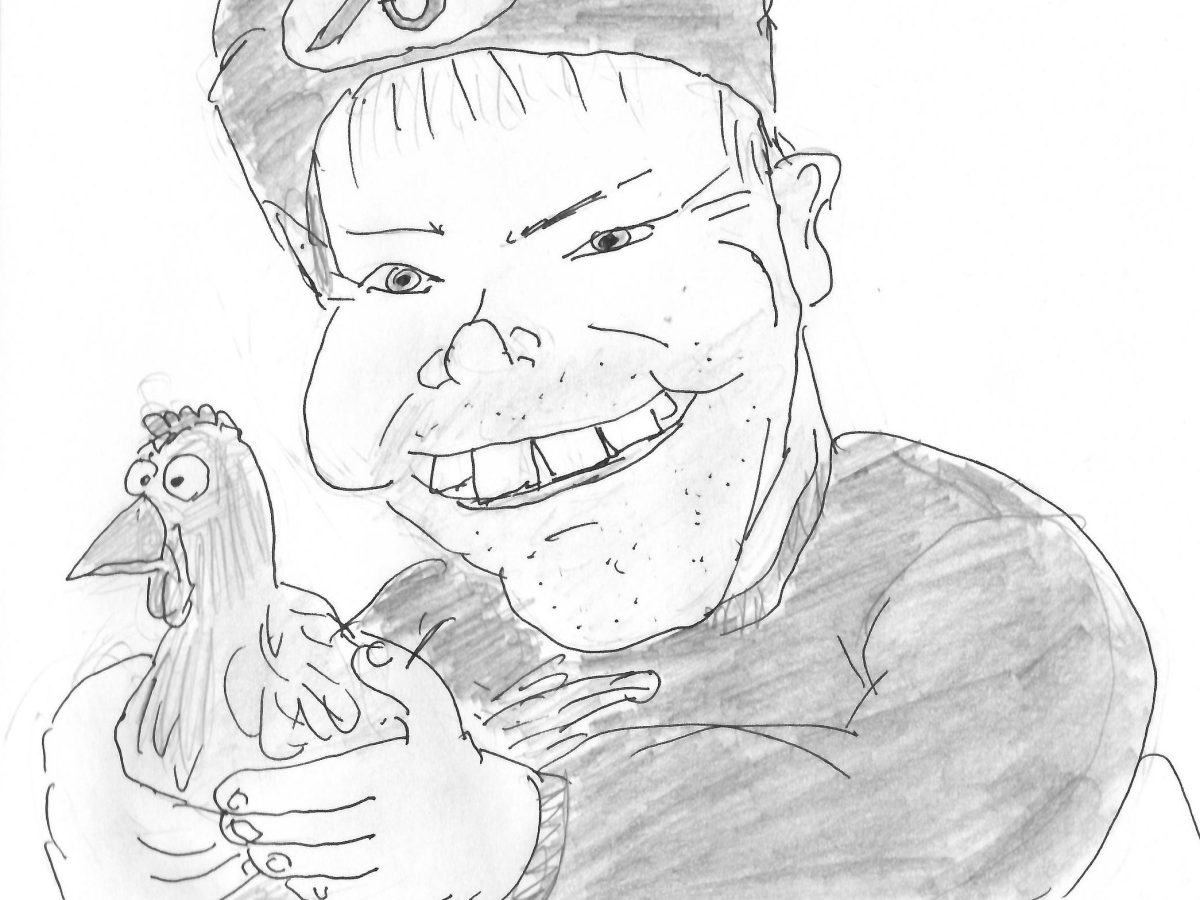

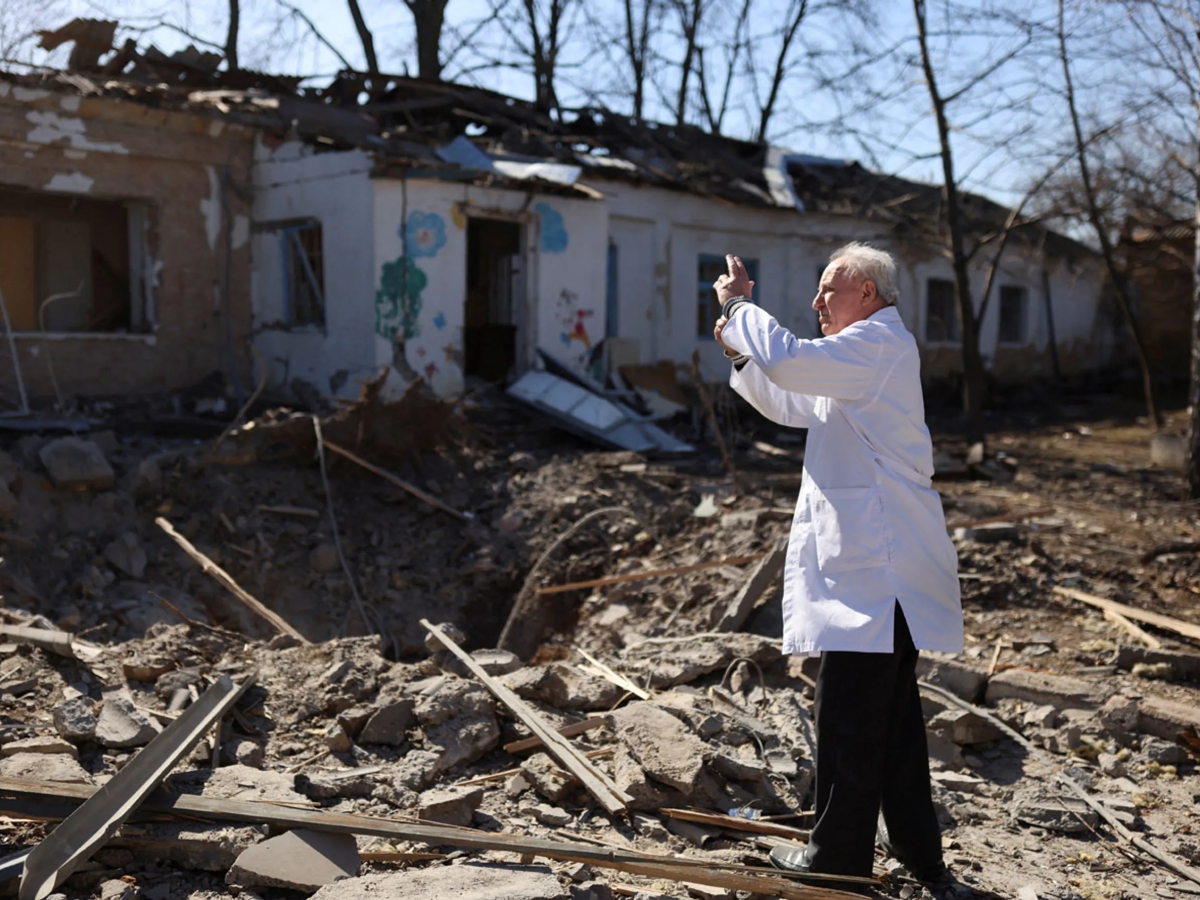




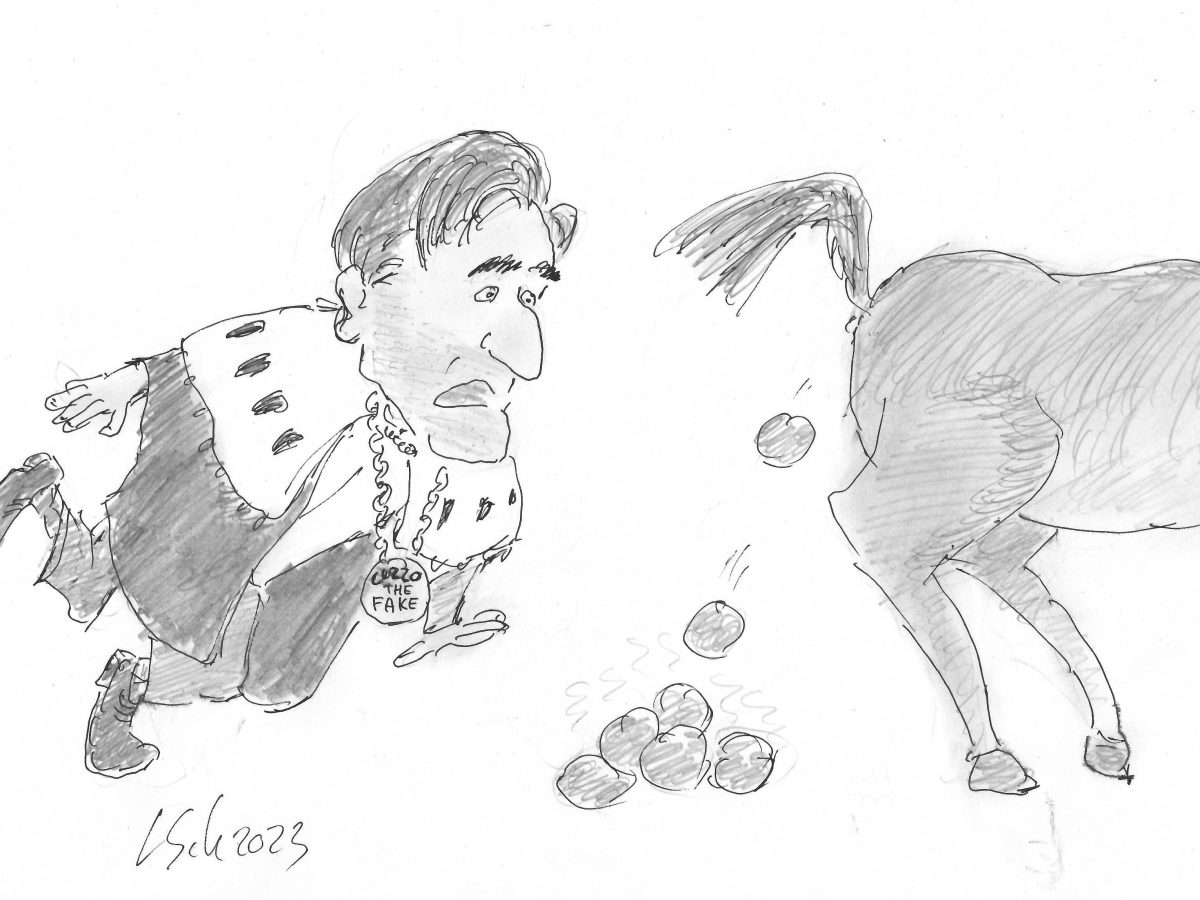


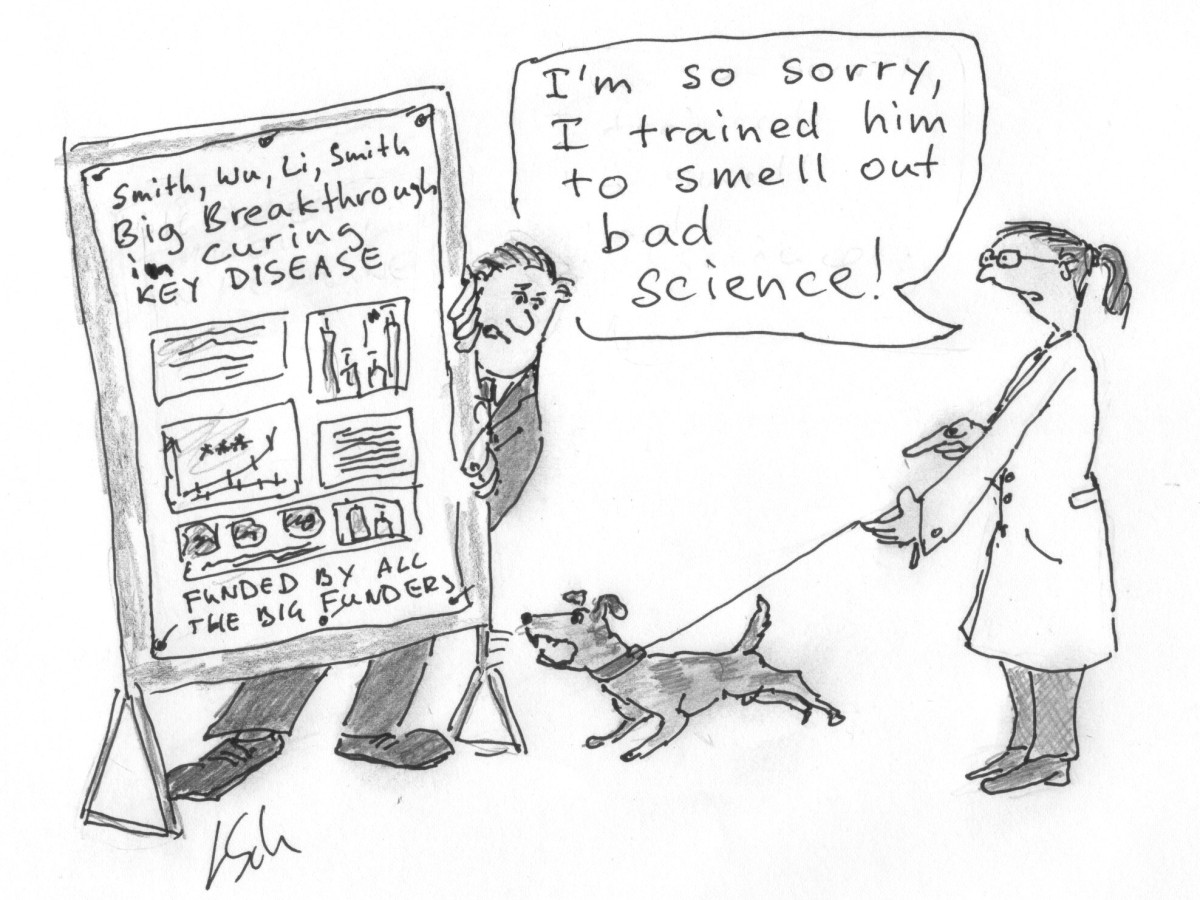


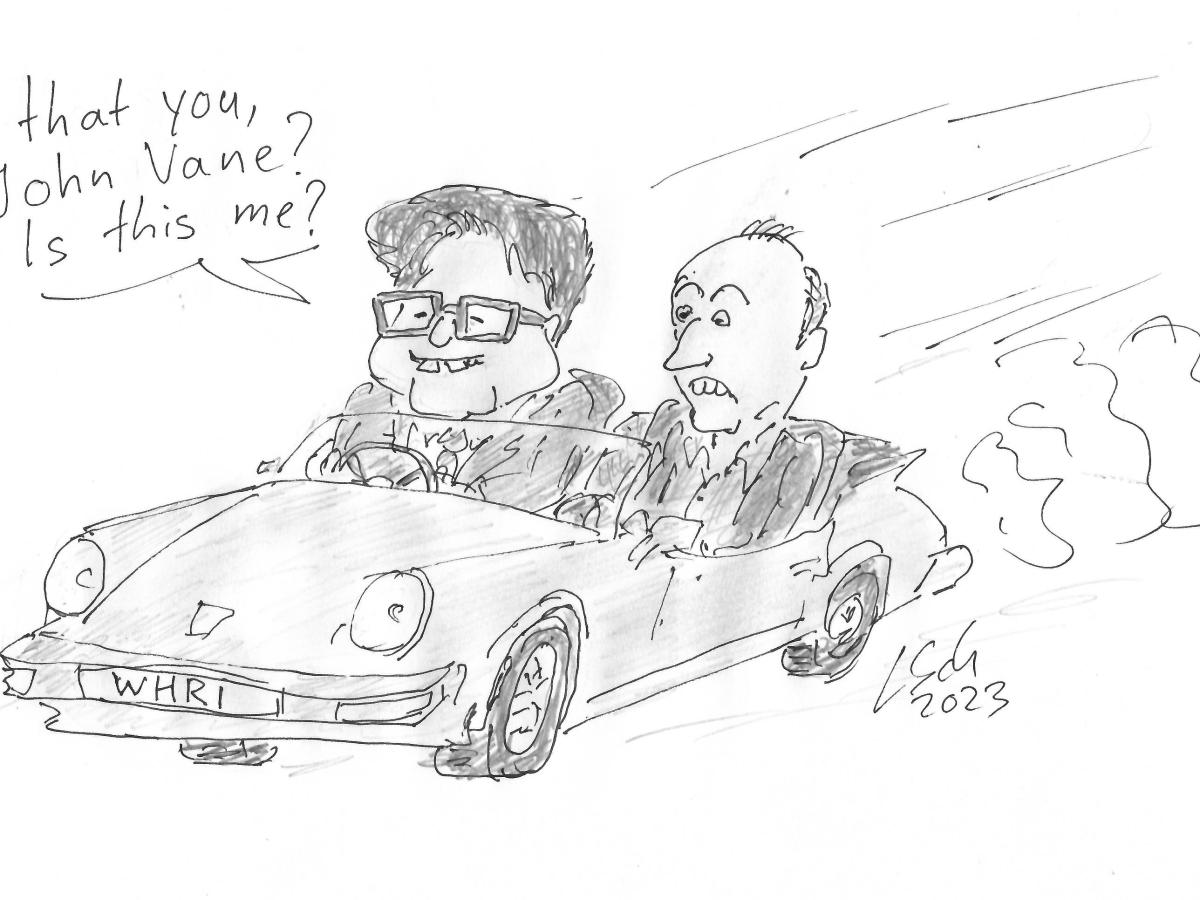


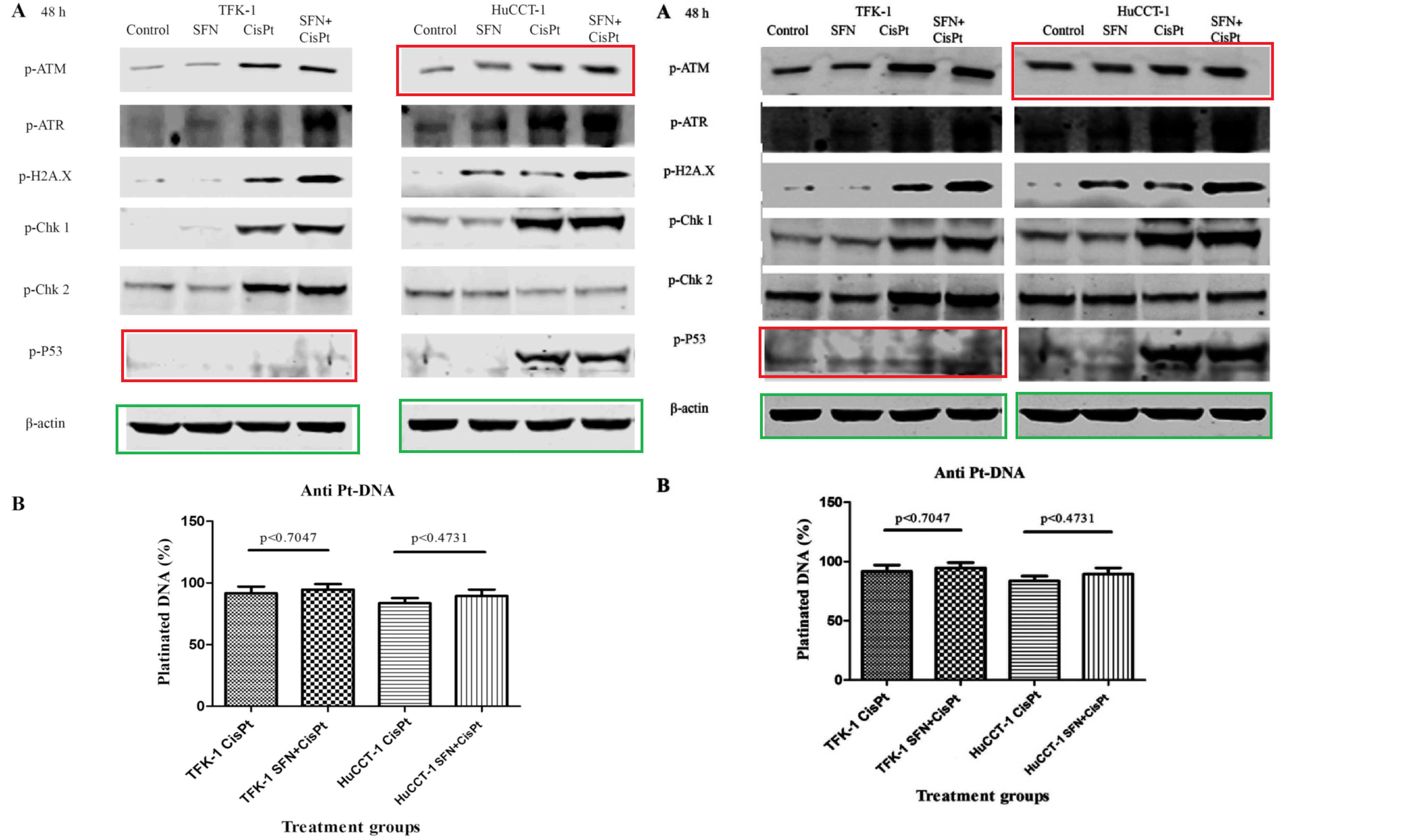
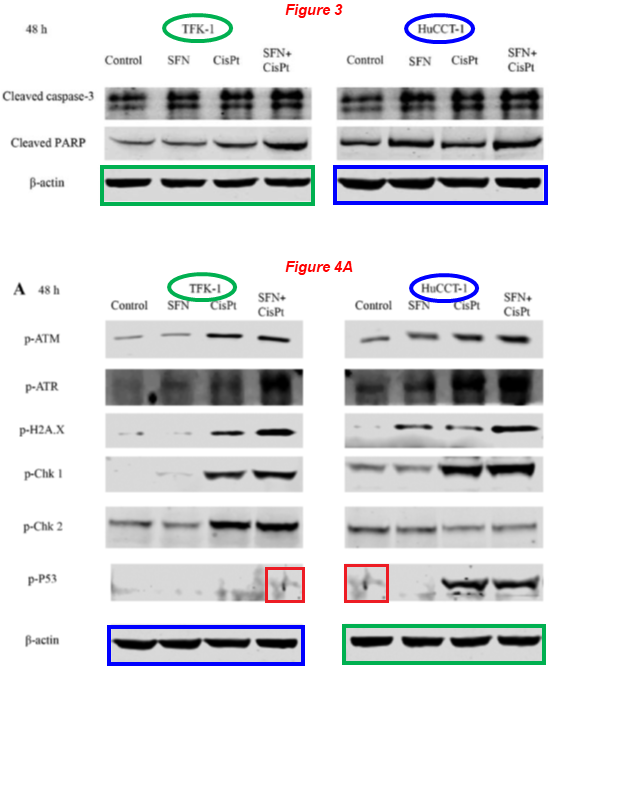



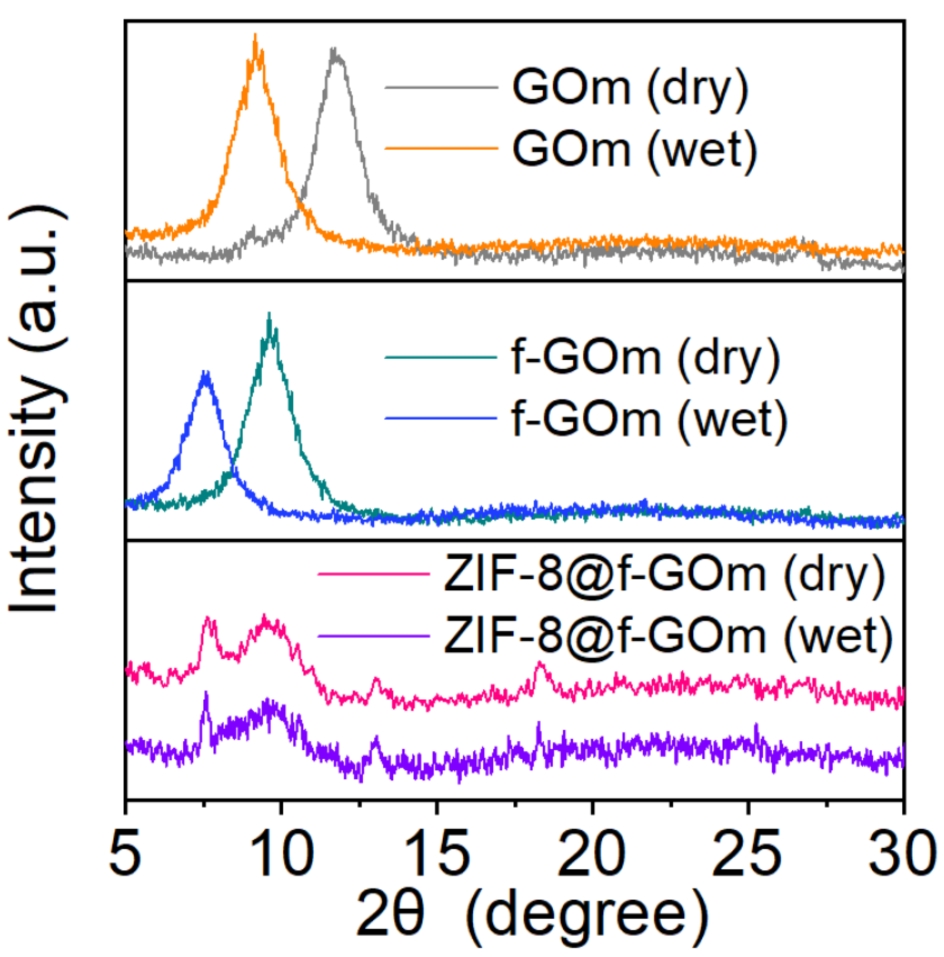
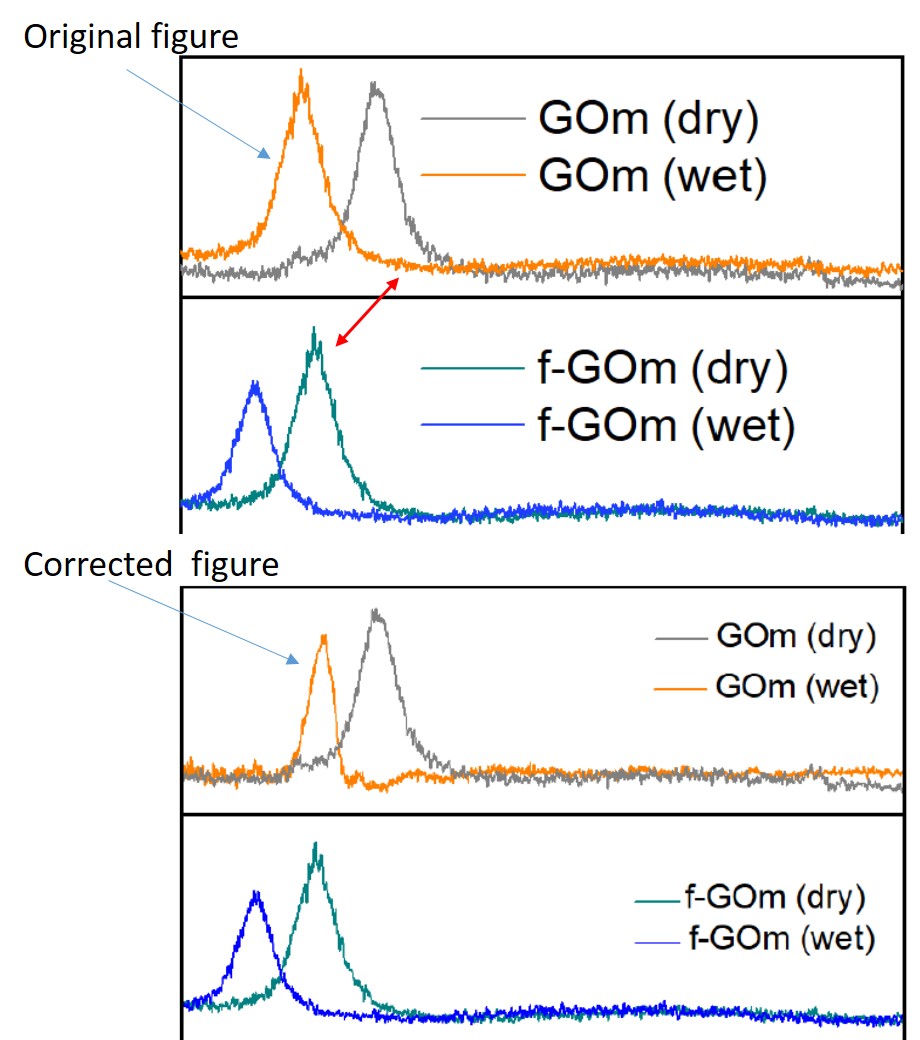


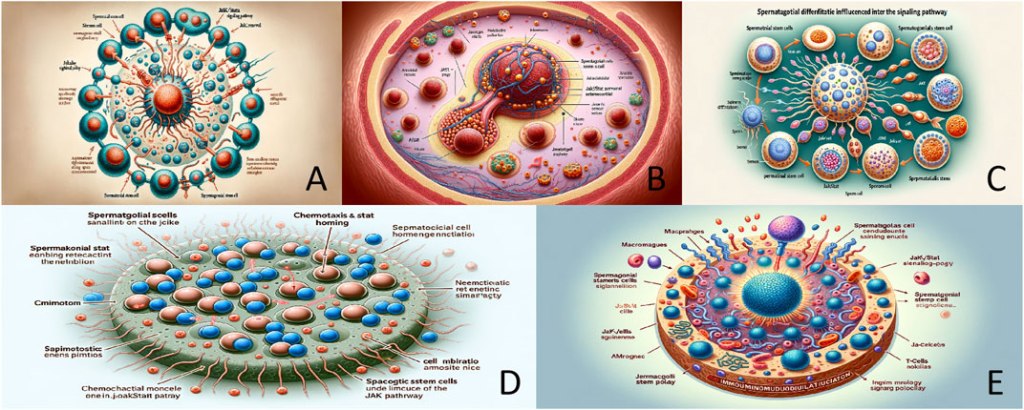

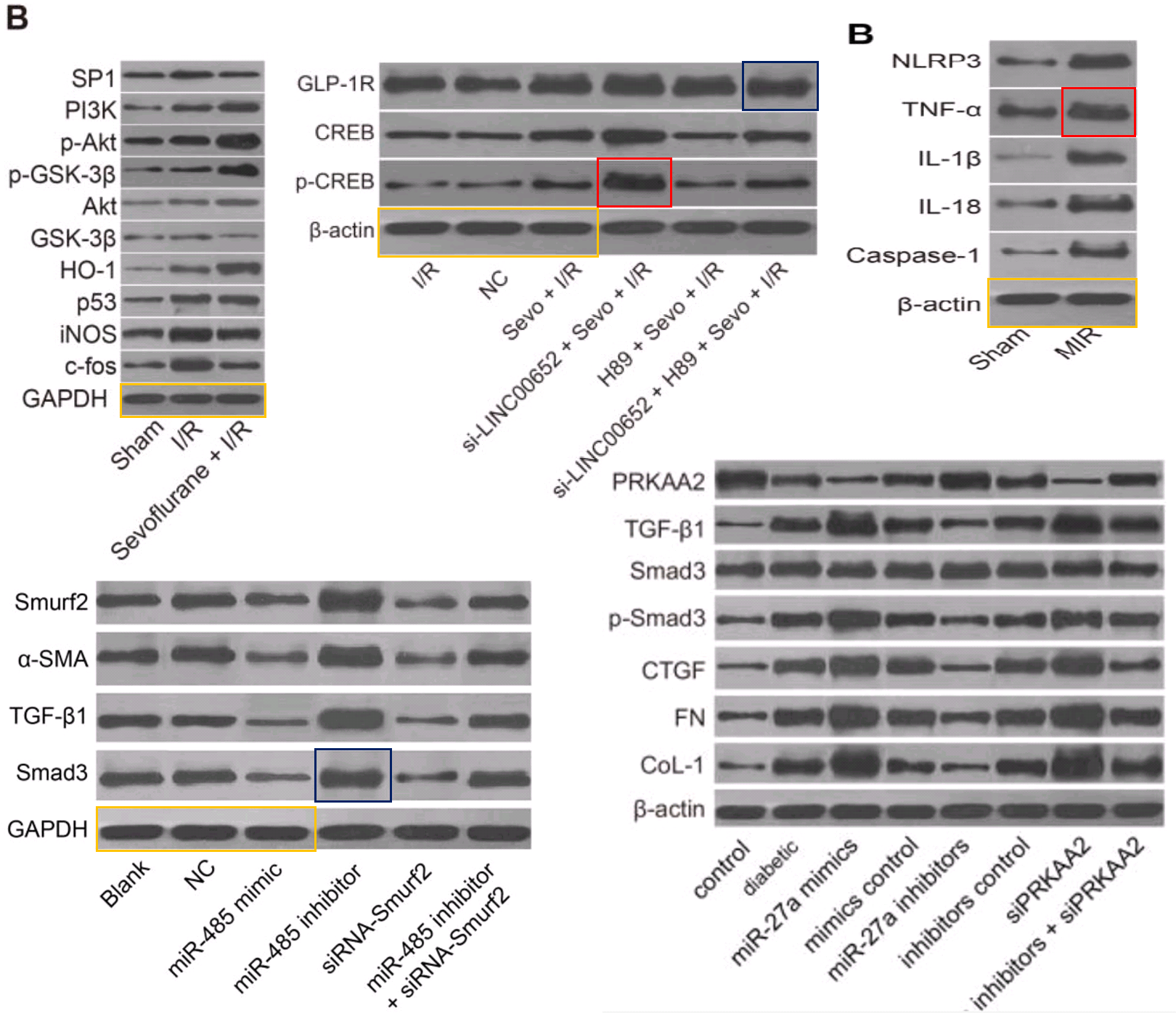




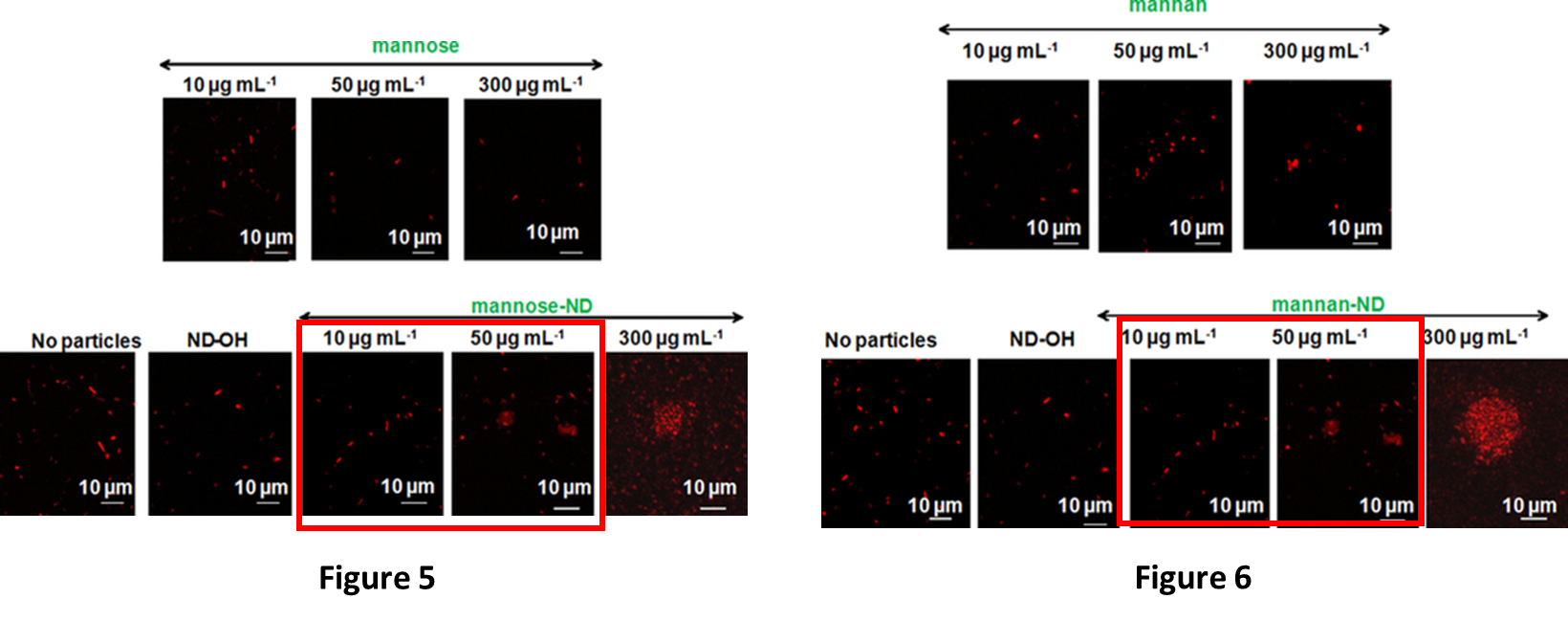


 For Better Science
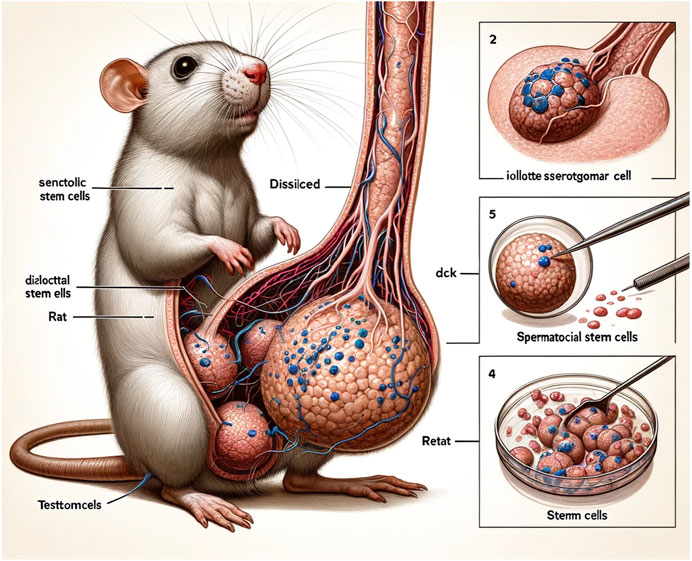
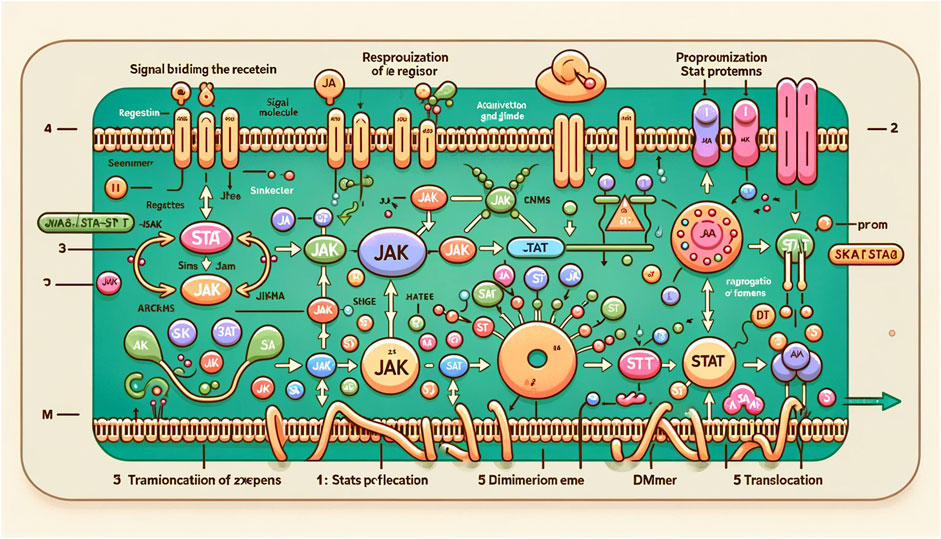
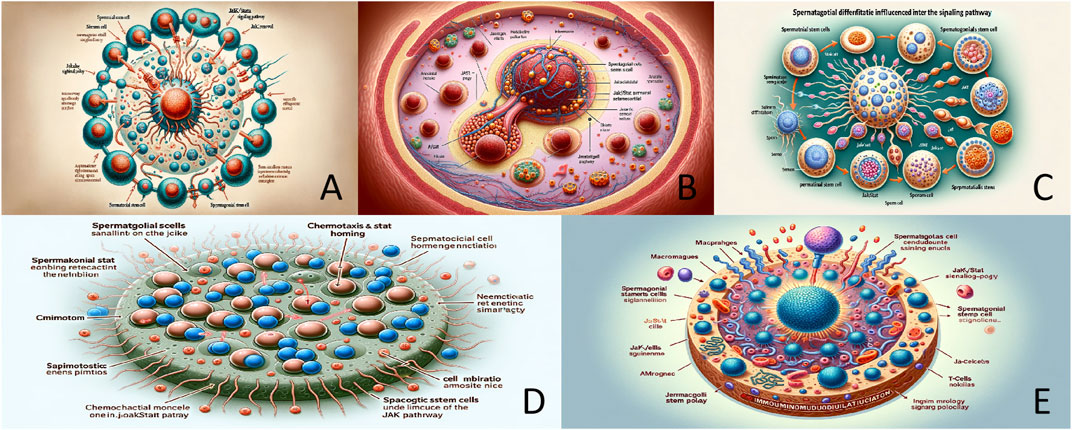
What an excursion these Shorts are. It’s globetrotting taking us by the hand through unimaginable realities in Bochum, Aarhus, Bradford, Messina, Milan, Heidelberg, at Yale, in New Hampshire, Xian, New York, Lille and Stanford. And now a whole new field of investigation opens up on the horizon! Paleontology!
LikeLiked by 1 person
“as Smut Clyde found out”
Must credit Elise Bik for pointing out to me that the Ratwurst paper was not Dingjun Hao’s first papermill purchase, just his most unfortunate one.
LikeLiked by 2 people
“Other examples include cases of partial skulls of extinct mammals that were completed with bones made of plastic.”
It may be that a translation problem has crept in here. The <i>Acinonyx kurteni</i> skull was faked from plaster-of-paris, not from plastic.
LikeLiked by 1 person
Oncotarget rushed out a Yoon retraction after the NYTimes started sniffing around.
https://www.oncotarget.com/article/28560/
But if you don’t consider Oncotarget to qualify as a scientific journal, perhaps this Oncogene retraction really is the first.
LikeLike
Actually I don’t consider Justin Stebbing’s Oncogene to be a scientific journal either.
In defence of Misha Blagosklonny, owner of Oncotarget: he is also a phony like Stebbing, fake science and all, but AFAIK Misha did’t scam his terminally ill cancer patients for money like Stebbing did.
LikeLike
There appear to be 3 Sam S Yoon retractions. The affiliations tally.
http://retractiondatabase.org/RetractionSearch.aspx?AspxAutoDetectCookieSupport=1#?AspxAutoDetectCookieSupport%3d1%26auth%3dYoon%252c%2bSam%2bS
LikeLike
how could such an obvious flat rat fake pass for a real fossile ? How do we trust other fossils are real now? Maybe paleontology papers should start with “prove the fossile is real”. Science really should stop assuming authors are in good faith. This is obviously often enough not the case. I am quite young and from the new generation of svjentists. How my peers and I are supposed to take peer review seriously? Physicists and mathematicians who routinely use and cite preprints are doing the right thing: letting the reader critically assess the matter. We don’t need peer review. It has failed too many times. Let’s move to community review and let time decide what is worthy or not. Remember how the young woman Felisa Wolfe-Simon was vilipended for her arsenic in DNA paper? I have never heard any of her critics on the “phone book pile” of fake microbiology (Raoult, bacterial nanotubes to give two examples). Harassing a young woman who was a bit careless, of course. Criticising the ones in power publishing truckload of fake science? Almost no one. This is disgusting.
LikeLike
“Criticising the ones in power publishing truckload of fake science” – sounds like Leonid’s job description to me.
LikeLiked by 1 person
indeed, that’s Leonid, Elizabeth Bik, a few anonymous people… I would have liked to see the self important professors who taught publicly harassing a woman for sloppy science was a good idea (it was not), use the same energy against publishers who publish paper mills and cover up frauds. But apparently it was much more important to show that the arsenic paper that couldn’t be true, was indeed not true. Good job.
LikeLike
“A bit careless” doesn’t fit here. Extraordinary claims require extraordinary data, and that arsenic thing was a non-starter from word one. Although to be fair, the reviewers and editors should have been named and shamed as well.
LikeLike
The infamous Wolfe-Simon et al paper was far worse than just sloppy science. The authors, particularly the headlining author, and everyone else NASA et al involved appeared to cynically try to use a mix of mainstream and social media to glory hunt, to dodge the professional standards expected (mandated even) and to try to shut down their critics. The authors were hardly alone in trying that approach to boost their careers and gain some fortune and glory, but if people are going to play those games in science then they shouldn’t be shocked if it all goes pear-shaped. While fraud in science is getting worse and needs to be tackled more effectively, the arsenic based-life bandwagon copped such ridicule because it played out so publicly and with such obvious cynical intent.
GFAJ! Dear christ on sale, that should have got the red flags waving from the start. As has been pointed out elsewhere, Wolfe-Simon did herself no favours with her approach to using social media to self promote (do you remember her professional website at the time?), in the end that strategy rebounded on her. Her scientific career appears to have been more severely impacted than did the (tenured) co-authors by the whole trainwreck, which is unfair in that respect, but Wolfe-Simon has had many years to consider her approach and actions and doesn’t seem to have learnt a thing. I am not sure that she is any more deserving of sympathy than the fraudsters.
LikeLike
Once you start, there’s no way back. Any expectations of reconsideration and learning are out of question. This time she was exposed, next time most probably will not be.
Look at Dr. Herr’s “heartbreaking” plea for Good Scientific Practice and her actions after that. This is at least the 2-nd generation of “good scientific practitioners”, the “most skilled” of them become academia presidents and rectors, journal chief editors, enormous grant holders, and of course highly cited researchers and Nobel Prize laureates. The fall from such highness is extremely painful and none of these surrenders without a fierce battle.
LikeLike
KM Debatin is not the only one who appointed himself Ombudsman for research integrity. I dealt with several other research integrity officers who were personally involved in research fraud as authors, sometimes as lead authors.
Brigitte Voit at Leibniz, Ombudsahmad in Jena, William Plunkett at MD Anderson, Julia Skokowa in Tübingen, there are many more.
We need a psychiatric study why these people are so keen on becoming research integrity officers.
LikeLike
Not a psychiatrist but giving it a try: to protect themselves and their fellows.
This is the most secure way of research integrity not fulfilling its purpose, while having it existent with “respectable scientists” at helm, a classic win-win situation.
LikeLiked by 1 person
I think Wolf-Simons “scientific personality” is now quite common in research: 1.) lots of personal ambition. 2) getting excited by a hypothesis that she thought of that would rewrite the textbooks 3.) cherry picking data to support this hypothesis, without trying to rigorously disprove the hypothesis to make sure that it is correct. Perhaps also mix in 4.) as a woman (or minority), I am underrepresented in science, and this is evil, so being a little sloppy with the data is rationalized, and 5.) good self-promotion skills. I think this is common now. DEI, which is pretty hot in American academia right now, will only make this worse.
LikeLike
that’s exactly my point, it was easy, it was public, it was a good occasion to play the virtuous scientists. While none of them, as far as I know, are combating the truck loads of frauds inside their field. Frankly the reproduction experiments were ridiculous, because the authors hadn’t succeeded to prove anything in the first place. You didn’t need a reproduction experiment. Except, if you want to play by the same rules the NASA did . And it worked. They made a lot of headline showing “we can’t reproduce a result we all knew were impossible”. Who won? Science? No. People photobombing their work for public attention? Yes. Where are the reproduction experiment of the many cancer and Alzheimer frauds Leonid exposes here regularly? And as you point out, the young first author lost any chance at a career, while the 10 senior scientists who should have told her she needed more control, took literally zero responsibility. This is exactly the same pattern we see here when the answer is “not me a foreign postdoc did it”. Wolfe-Simon was not the senior author. The senior scientists should have been questioned. Instead it’s a young woman who was used as a shield and was ditched out. I believe this is not how accountability works or should work. Remember Jonathan Einsen blog post at the time asking for restrain because he feared for Wolfe Simon life? I share your opinion about how ridiculous the paper was. But the lynching of Wolfe Simon as if she made all that herself, I don’t want that.
LikeLike
To clarify, my comment looks like a reply to the “incel guy”. It was not, and I do NOT agree with his opinion of the problem getting worse because there are more women in science. Probably a troll though
LikeLike
LOL! Im not a troll. Just a guy (man) with a different opinion than yours. I call myself an an incel because that was the ad homnien thrown at me by a commentor at Retraction Watch (!)
LikeLike
Yes, all authors are equally accountable but here you are defending her by blame shifting since no other author beside her was questioned or took responsibility. So, the glory for her (TED talk from her website https://www.felisawolfesimon.com/ted-talk-felisa-wolfe-simon and only her name as discoverer https://www.wsj.com/articles/SB10001424052748703989004575652940497021092), the shame shared between the authors, right? And the poor young girl has corner author position and is corresponding author in this paper https://www.science.org/doi/10.1126/science.1197258.
This is exactly the same pattern we see here when the answer is “not me a foreign postdoc did it”, albeit this time is “it’s not only me who did it”.
LikeLike
“While none of them, as far as I know, are combating the truck loads of frauds inside their field”
And there’s your problem, everything you say is based upon a naive and even arrogant assumption that if you don’t know about it then it couldn’t possibly happen. You ask what are the critics of that paper doing to combat other fraud “in their field” without spending the two seconds it requires to remember that “their field” in this case is astrobiology. A rather nebulous term and as it’s interdisciplinary by design it will obviously bring in researchers from multiple classically defined scientific disciplines. But to give the field a name, it’s astrobiology. You then seem to expect those same critics, i.e. the astrobiology community, to be weighing in publicly on fraud in papers conducting cancer and Alzheimer’s research. How ridiculous, those aren’t “their field” so what do you expect astrobiologists to be doing policing every other field of science (and what else, all of medicine, how about fraud in the humanities, finance and marketing theory fields etc). That makes as much sense as me demanding that you Citrus should be doing more to combat crime rates, solve the wars in Ukraine and Gaza, reduce price gouging in local supermarkets and fix climate change and those potholes I saw last week. So why haven’t you fixed all of those problems? Does my demand for you to do more seem a little unfair and ridiculous considering that you probably have nothing to do with any of those? It should because it is, but it’s no more ridiculous than what you wrote.
The key point is that you seem to think if you haven’t heard of it then it couldn’t possibly happen. Websites like this one perform a useful service to the scientific community , and society as a whole, because they highlight fraud and questionable activities that too often get brushed under the carpet. And when money, the hunt for fame and ego come into it then the problems get worse. There are certainly bad apples out there because scientists are human beings with all the ethical baggage that all humans carry around with them BUT perhaps you might contemplate that there are many, many, many scientists on good ole planet Earth, close to 9 million apparently, the great majority of which are quietly getting on with their lives and work as best they can. As part of those working lives, most scientists are trying to follow ethical approaches in “their field” while also trying to solve new challenges. That also involves self-policing their own work and the work of their students, group etc, peer reviewing of others’ research and critical thinking about published work and new ideas. It’s not a 100% perfect system by any means, and fraud and sloppy science both obviously happen, but it goes on behind the scenes every single day.
To get back to the original case, the critics of Wolfe-Simon’s paper didn’t have it easy, they were battling a media machine that the authors were happy to use. Wolfe-Simon and her co-authors chose their battlefield, they chose to follow the media-hype strategy, so that’s where the critics had to tackle it. All of her co-authors were also seriously questioned at the time but for whatever reason the authors had, Wolfe-Simon became the spokeperson for that paper. Whether that was her choice, whether she got shafted by her coauthors as a sacrificial lamb, or whether the media machine she tried to use turned on her, I don’t know BUT it certainly wasn’t the choice of the critics. As for the possibly/arguably unfair outcome of her being the one author who paid the biggest price (Wolfe-Simon seems to be happily working in a community college in California), that is not the fault of the critics either. It is not, and should not, be the role of fraud hunters to determine punishments. If you somehow hold the critics of Wolfe-Simon et al’s paper as responsible for the outcome in respective career trajectories then you would be wrong. It was their role/duty as experts in “their field” to question the research being reported, but it wasn’t their job to be judge and jury on the consequences as well. Nor should it be.
I will add that I am not an astrobiologist and had no skin in that fight.
LikeLike
It is quite difficult to know where Mika Sillanpää actually hides. He is a contact of mine in LinkedIn (which I keep only for fun) and he adds new affiliations in Asian/Indian/African universities every few weeks. He added a new one few days ago.
I have a sort of personal rule. I do not trust academics with more than 2 affiliations. Mika Sillanpää brings this to a new level.
LikeLiked by 1 person
I don’t know how and who organised what. There are dozens of people who should have stopped that papper. And giving a corresponding author position to the youngest team member is frankly suspicious, in the kind “if she is right I am there, but if she is wrong I can tell I just contributed a western blot or a reagent”. Honestly I have never worked at NASA but if it’s like in any lab as a postdoc she doesn’t have much power. Could be she is a master manipulator, could equally be she was pushed in that direction by people at NASA whom we will never know of. I tend towards the second hypothesis because they made sure the NASA name was everywhere. She was not Wolfe Simon, but a NASA researcher. Dozens of people at NASA agreed to pay for the paper and advertising it. The rest seems more a problem with science journalism than her. I mean it would have taken 5 min for the wsj NOT to make their decision (and find another woman scientist) . Maybe I am too indulgent. But I find everything ridiculous in this story. It’s too easy to put your institution name out there and then pretend the work was done alone in a cave by someone you barely know. Why the people who were so eager to replicate her paper, are invisible with candidate drugs for severe diseases (I have one, god knows the amount of bullshit I see that arr never questioned or that are mysteriously dropped) ? Where are the people calling for replication of Casavas science? Why we don’t see call for reapplications of breakthrough discoveries flagged by Leonid (and others here)? They say the arsenic bacterium is a proof science corrects itself, I say it’s a proof some scientists love to get some spotlights quite easily , because it was OBVIOUS to anyone her paper couldn’t be true. I remember their were calls NOT to waste funds trying to replicate it, precisely because it couldn’t be true (I sincerely apologise here I can’t give you names). Like Raoult paper couldn’t be true, but we still got dozens of stupid chloroquine studies, where a simple pharmacology multiplication would have shown the drug was inactive against virus at those doses, and would be lethal at the right anti viral doses. I am sorry I don’t want to argue against you or anyone. It’s just I have always found this unfair because I have a sense far too many people get away with their wrongdoing, and far too many could get some media attention for no good scientific reason.
As I said earlier, as a sufferer of a serious diseases I am convinced we would make better progress with MORE replication of the paper that are central to our understanding of those diseases (to be clear I am not against replication). I would love to have Leonid or Elizabeth Bik’s opinion on this perceived imbalance, and on this particular case, actually.
@ incel guy, well since you chose that name here, what else was I supposed to call you? I don’t want to argue with anyone, just my thoughts.
Take care everyone.
LikeLike
It should be pointed out here why the Arsenic Life paper was never retracted. Science and AAAS hate retractions. They only issue them when they absolutely have to. Like recently with Tessier-Lavigne. And now Holden Twerp prances around dressed up as a research integrity hero and demands you adulation.
LikeLike
Why it was published in the first place, also… I doubt it was because of the author name. But possibly because of the NASA affiliation ?
LikeLike
You answered your own question!
LikeLike
I was rereading this piece: https://retractionwatch.com/2021/01/21/why-one-biologist-says-its-not-too-late-to-retract-the-arsenic-life-paper/
This downplays her own role quite a lot in the affaire. I would say her worst mistake is not to admit this was a mistake. And I can’t stop thinking the bacteria name is an acronym for “Get Felisa A Job”, which explains a lot . . . Anyway, sorry for the very long digression. But it’s also true that it doesn’t look like “good faith” mistake, those games with standard deviations. I should have remembered that @Albert Varonov. This indeed makes “sloppy science” maybe not the most accurate description. Manipulation can’t be excluded. This is why I would really love if she finally spoke out and told the insider story. I was graduating at the time, and this paper cemented in me the opinion peer review is a joke, and that since you must be critical of everything that comes out of peer review, why not get rid of it entirely and work with preprints / open review, whatever, trusting your own judgment and what others have to say.
LikeLike
You are too positively naive towards contemporary scientists (it’s a shame that I use such reasoning for the few real scientists that still hold the line). Yes, most probably she was pushed for more papers but if she didn’t like it, she should have left. It’s not an easy decision but if you feel that something is wrong, you should try correcting it if possible. If not, do not abide it, at least in the US you have the most opportunities for development in science and technology. But she enjoyed the fame and glory pointing to her eager desire and we get to the points of the NMH failed scientist.:)
The topic of replication you raise is important. There are several reasons why this rarely happens, I can come up with 2. First, some experiments are so complex and expensive (G$ range) that can only be made with only one project, for instance JWST, LHC @ CERN (although there are 2 detectors), ITER and many more. Second, replicating an experiment as a scientist is a total waste of time and resources, which will lead to missed funding opportunities and career development. This replication doesn’t lead to a publication and stops your and your colleagues publication output, it’s like committing mutual professional suicide.
Indeed, life is unfair, modern society even more. Together with the authors, positive reviewers, journal editors and editorial board members should be scrutinized and accounted for that, however the grim reality is that the arsenic paper has not even been retracted yet, as noted by Leonid.
LikeLike
“it’s a shame that I use such reasoning for the few real scientists that still hold the line”
Hang on a minute, what do you (or anyone) mean by “few real scientists”? Apparently there are around 9 million scientists on the planet, so what exactly does a “few real scientists” equate to in terms of those numbers?
It’s a little ironic than this whole thread of comments discussing fraud and sloppy science is littered with grandiose assumptions and casually thrown around claims that seem to be based on nothing more than brainfarts. So why don’t we exercise just a little of the rigour in our statements that we are all demanding from others?
What scale of numbers do people think are involved? 9 million scientists, give or take, around 7-8 million papers being published each year now (others probably have more definitive numbers) and apparently over 10,000 papers retracted in 2023. The level of critical thinking that goes on in some of these comments would shame a naive undergrad, so why not try to get some idea of the scale of the problem by considering the data?
For a start, what is meant by a “few real scientists that still hold the line”? Is that 1%, 50%, 99%? Would that guess be a higher or lower value than the proportion of people that never break the law? Or a higher or lower proportion of the populace that never ever lie to their bosses? Or to their families? Or a higher or lower proportion than drivers who never speed? Or a higher or lower proportion of fellow citizens that are scrupulously honest when it comes to tax time?
What is a “few”? As a scientist, I know from experience that there are bad people out there, and I know that the system is unfair and that unfair things happen, but from my experience the great majority of my colleagues are ‘real scientists that still hold the line’. They (and I) may not be perfect, they (and I) may make mistakes, but they (and hopefully I) try to do the right thing and ‘hold the line’.
But if I am wrong, let’s hear some figures that show me why I’m wrong.
LikeLike
I agree with those points re: the challenges in replicating others’ research. I’d go even further:
7-8 million papers each year leads to an awful lot of replication needing to be done. Who is doing it and who is paying for it? As an academic scientist with teaching to do, my group to look after, funding to beg for, admin responsibilities to sort out etc etc I am already working far longer hours than I get paid for. Just like most academic, and probably industry-based, scientists. Do I get to drop some of those duties that my employer expects me to do, or shall I just learn how not to sleep for a couple of days per week? And then there’s the cost of course.
Many research papers utilise specialist instrumentation and techniques that aren’t available everywhere. Even without worrying about access to multibillion dollar national facilities no university or industry lab in the world possesses all benchtop scientific equipment in any single scientific field, let alone across several fields. What happens then? Do we just dispense with those replicates, which would invalidate the whole concept, or do we have to hunt around the world to find out who has the required equipment and skills? Do they get a choice in doing this task or do I have to convince them? I can picture already the absolute mess that would involve as many thousands if not millions of emails fly around the world each month plaintively begging “Dear stranger, can you help me do this unpaid unpublishable time-consuming replication study? Form an orderly queue.”
Just who assigns the replication tasks? Do we choose our own, in which case baggsies on the easy, quick and cheap ones. What happens to all of those difficult, lengthy, dangerous or expensive studies when no one volunteers? Or would you have a bunch of master controllers assigning duties? Are you giving people a choice here or do we just get dictatorial? Who appoints them? Gee, no possibility of any problems with that!
Many research papers are interdisciplinary and cooperative efforts these days. So who puts together an independent team of experts from different fields to try to replicate the work of the first group of experts from different fields? That’s an administrative conjuring trick and a half alright.
And what happens if somehow you do this and the replication attempts are not 100% successful? Do we allow the authors to publish or if not what happens? What if it’s 95% successful (based on some arbitrary scoring method which may or may not be reliable)? What about if it’s 90%, 81%, 68.5%? 50%? Who decides if the replicating team did their job correctly or not?
These checks actually do happen, in their way, post publication. Self policing is slow and it’s imperfect I know but it’s still better than any alternative anyone has come up with.
LikeLike
I would like to interject that Piero Amversa’s discovery of heart stem cells has been INDEPENDENTLY reproduced many times by other labs. Even more reproductive success had Catherine Verfaillie’ discovery of pluripotent nature of bon marrow cells.
Both discoveries proved fake and killed people.
LikeLiked by 1 person
I am not naive as you think about her , I just find it unfair to blame only the person with the most precarious position, and not NASA or the famous physicists who pushed the work and photobombed it. And also Science, who first of all published, and then doesn’t retract. Who is more accountable here? As for replication, there are several levels… A huge amount (if not all?) of the fraud Leonid exposes here can be discovered by plotting the data yourself in excel, or just by looking at different plots in the literature, and see for yourself if you could come up with the same figures/plots or conclusion . Even checking if people haven’t faked imaginary results can be somewhat tested with statistical distributions. For me all those are forms of replications, and do not involve re-running the experiment. They require an engaged community, though, who has time for it and is rewarded for that job (which is not currently the case). Indeed, I still don’t get why the arsenic paper was really replicated, since the original data clearly couldn’t hold the conclusion.
That being said as a sufferer of a serious chronic disease, I am really happy some experiments about treatment options were rerun from scratch (even if, as Leonid correctly pointed to, it’s not bulletproof). I concede this could be unpractical for everything. But, as Higgs said, if we let scientists do research without asking for how many papers per year they published, maybe we would have less papers to deal with to begin with.
I don’t know what to think of your point “if you don’t agree you quit”. It’s probably feasible in some circumstances, but not all. I am gonna stretch this a lot, but what if she was a foreign postdoc from a country with a civil war? Again it’s a stretch and I noticed you took the precaution to highlight this is a US scientist from the USA with an already valid PhD which to my knowledge is not questioned, so she probably had several cards in hands, but after all, who knows?
it’s a long reply, sorry, but basically yes, it’s a political decision at some point to choose what is rewarded in science, and how to hold fraudsters accountable.
LikeLike
I meant as a whole, not towards her only. In general, anyone can and will find a sincere excuse, it would be civil war, concentration camp country, personal problems, people tend to be very ingenious when it comes to that. But try explaining that to the victims of research fraud, in medicine a decent part of them are not alive, another one are mutilated for the rest of their lives. And that’s not a wild claim in any way, just look at COVID’s wonder drugs here in the blog, for example. It’s very easy to have this reasoning when you have not been directly harmed (yet) by science fraud. We have an extremely serious problem nowadays which is still successfully being kept hidden from the public, even relatives and friends of mine do not believe it is that bad. And in the meantime I have to explain myself to a useful … what my estimate is… I sincerely sympathize with you and in no way wish to destroy your hope of a new drug or treatment for your disease but as a person involved in science research, feel obliged at least to support the struggle with fraud, which of course includes discussing it.
The topic “if you don’t agree you quit” is very a complex one and as far as I know there are lots of decent psychological studies on it. Basically, this is the problem of the concentration camp warden guarding inmates going for torture or execution, or both. If you refuse to guard the inmates, you can easily become one. On the other hand, if almost everyone refuses to guard the inmates, there would be much less concentration camps. But this is a case of an ideal society, history shows that even for democratic societies upon favorable circumstances, it takes very little time (less than a decade) to transform into tyrannic ones. But luckily in science nowadays it is still not that complex and we must not allow to get there at all costs.
LikeLike
Citrus, peer review is flawed but as per all the old jokes about both peer review and democracy, ‘that they are the worst possible approaches except for everything else we have tried’, there isn’t an obvious solution, at least not obvious to most of us. Arxive type real time response platforms play a useful role in some areas of physics but they don’t stop fraud either. Preprints themselves don’t prevent fraud or bad science. You should be critical about any scientific literature whether it’s been peer reviewed, appears on Arxive or in preprint form. Just as you should be critical in reading anything in the media or on a website. Regardless of the format, as scientists we are supposed to be critical of everything whether we or someone else wrote or said it.
LikeLike
I will answer here to your rant above. It does not matter what I think “few” is, in fact the reason I am using this wording means that either I do not have an estimate or I do not want to share it.
There are no “grandiose assumptions and casually thrown around claims that seem to be based on nothing more than brainfarts”, whatever is discussed can be easily found in the blog or in journals to be real. The fact that you react with such rage and try defiling and abusing the whole normal discussion, means you are greatly insulted by it. Normal critical thinking points to the fact that you are not the one who you present to be.
LikeLiked by 1 person
Rant? What an interesting appraisal, I thought I had asked a series of quite reasonable questions about your unsupported claim. Looking back again at my post/rant … yep, I still think those are all fair questions.
As for “rage” and “defiling and abusing the whole normal discussion”, what, by asking for some definitions and numbers? Really? If that’s what you read into my posts then you should take a few deep breaths, open both eyes and reread the posts. And think a little more about the questions asked. This is a discussion centered in basic scientific principles (fraud/authenticity, good science/bad science) that should be able to be answered, one way or another, with some evidence or logic. If you can’t answer a question as obvious as “what do you mean by ‘few'”, then what does that tell you about your original post?
If you are going to use a phrase like “the few real scientists that still hold the line” you should expect to have that claim questioned. I spent a whole three minutes on Google to get some general numbers related to your claim. No doubt there are more accurate numbers out there but until someone presents them those seem to be a reasonable place to start a discussion about the scale of scientific fraud. So, how big is the problem? That shouldn’t be a surprising question to be asked here.
“it does not matter what I think “few” is” – yes it does if you used the label in the first place, otherwise that just shows you will say any old crap without thinking about it.
“either I do not have an estimate or I do not want to share it” – what? You ‘might have an estimate but don’t want to share it’? You went on and on sharing far more detailed opinions than a mere estimate of the scale of the problem so don’t waffle, it’s clear that you have no idea of what the answer might be and you can’t figure out what you yourself mean. There’s no shame in admitting that, but don’t waffle and obfuscate when your answer is clearly “I don’t know”. We try to teach undergrads that in their first year, if you trot out such nonsense in a forum discussing (dis)honesty in science then don’t get sniffy when it gets critiqued.
“means you are greatly insulted by it” – I’m always insulted by stupidity pretending to be informed discussion. I think you are feeling insulted by being asked some simple and rather obvious questions related to the topic that you clearly haven’t thought about, and are struggling to come up with answers for.
“Normal critical thinking points to the fact that you are not the one who you present to be.”
Ah, so you’re also a self-annointed detective? Able to divine the truth through analyzing clues with that razor sharp intellect? Lovely, do tell Sherlock, what are your “Normal critical thinking points” and in what way am I “not the one who (I) present to be”? Let’s see how good your critical thinking is then? But please try to make it more precise than the “few”, ‘I don’t know how many a few are’, ‘maybe I do know but I don’t want to share it’ path you took us down in your last post.
LikeLike
Haha, one more longer and even more spiteful rant by “a self-annointed detective” trying to imply some emotions or characteristics to me by distorting my words.
Relax, this is only a discussion, if you don’t like it, fair enough. Just stay away from it and do not sh1t on it. When you do not want to see any evidence, you will never see it. And it’s not on Google, I wrote where it is but you have conveniently disregarded it.
Do not hope on next answer, “great scientist”, I am not on your “razor sharp intellect” level.
LikeLike
What, not even an original insult? How disappointing.
You post nonsense, can’t explain what you mean by “a few”, and just throw around statements without thought or the ability to back them up. What happened to your pronouncement that “Normal critical thinking points to the fact that you are not the one who you present to be.” Come on now, don’t back down from your accusation that quickly, show us your investigative mind at work. Who do you think I am if not who I “present to be”? You made the accusation, so back it up. I’m sure that everyone reading this thread will be interested to see if you can back up the accusations that you throw around?
So go on, tell us all what you meant by your accusation. Let’s hear these normal critical thinking points of yours.
LikeLiked by 1 person
“I would like to interject that Piero Amversa’s discovery of heart stem cells has been INDEPENDENTLY reproduced many times by other labs. Even more reproductive success had Catherine Verfaillie’ discovery of pluripotent nature of bon marrow cells.
Both discoveries proved fake and killed people.”
Yes, even the replication of experimental results either post- or pre-publication is no guarantee of perfect science, or even common sense. There was no shortage of excited announcements of new cold fusion discoveries back in the 90s. Amazing results were being proclaimed weekly at one stage along with gossip about beakers of D2O burning through concrete tables. The story of the French self-deception about N-rays reads like a script about a cult, and of course Aristotle’s 1500 year throttle hold on Western science certainly gave the Inquisition a number of excuses to light bonfires. I have no doubt that there are even worse examples.
Humanity is a fanciful species.
LikeLike
I’ll answer here the question you asked above: what is the percentage of cheaters in science. My estimate is anywhere between 10% and 50%. I can’t be more precise, we don’t have enough data about it. This rough estimate comes from the following. Firstly, over 50% of what is published is irreproducible. You can search in Google for this data or look here: https://en.wikipedia.org/wiki/Replication_crisis . You say that 10,000 retractions in 2023 is small compared to 7-8 million articles published in a year. True, but the retractions represent just a fraction of the articles proven to carry manipulated data on Pubpeer. I’m saying ‘manipulated’, not ‘duplicated’. Publishers, EiCs and universities do not act. I have posted myself 1022 articles with irregularities as of today on PubPeer, of which 791 are serious cases. Do you know how many have been withdrawn so far? Fifty-two (52) were retracted, and 13 more got an Expression of Concern. Moreover, the articles scrutinized by science sleuths like me are just a small percentage of all indexed articles. And even if ALL the published papers were scrutinized, those found to contain irregularities would only be those with detectable irregularities, as the undetectable fraction (by definition) cannot be spotted. The more I search the more I find.
LikeLiked by 1 person
Thank you for taking the time to answer my question Aneurus. I know that any estimate of the scale of fraud in scientific publications will be hand wavey because of the limited information but it is amazing in the discourse of this topic how few people even stop to consider such an obvious question. As scientists it seems that it would be the first question we would be asking ourselves.
“You say that 10,000 retractions in 2023 is small compared to 7-8 million articles published in a year.”
Actually no, I didn’t say that 10,000 retractions is small, that is not what I mean and I am definitely not inferring that fraud is a minor problem. But those are numbers related to the topic which should get anyone concerned about the issue thinking. Which you clearly do in your reply, thanks for taking the time to do that. I know that the number of retractions is likely far lower than the number of cases with serious problems, and of all the issues that arise when trying to hold people to account. To clarify, as an academic and a scientist who does okay but has never been in the ‘star league’, I’ve had my experiences identifying dodgy work, both formally and informally. Fraud and just poorly conducted science are serious problems, but the figures that get thrown around in discussions of scientific fraud don’t seem to be very rigorous either. As I mentioned elsewhere, many people’s comments on the topic seem to blithely rely on a level of rigour that as lecturers we would condemn a first year undergrad for.
For example, when you say “Firstly, over 50% of what is published is irreproducible” I don’t think that is what the stats on this do say. As the wiki article mentions there are now a range of stats-based assessments out there of the scale of the problem (of lack of reproducibility) and of >50% of researchers in a poll who have anonymously admitted to not doing the proper job (presumably meaning anything from cutting corners to outright faking it), but that is not the same things as >50% of all papers being irreproducible. Assessments of irreproducibility tend to focus on specific subsets of the literature, medicine, psychology, nanomaterials etc, and then are almost casually extrapolated to anything and everything. As a community of experts who are supposedly trained to be careful analysts we should be able to recognise some pretty clear limitations in such an approach.
To clarify again, I am not having a go at you Aneurus, and I appreciate your reply, but I’ve seen the >50% of published papers quote used many times but I don’t think I have ever seen any data which actually says that. That doesn’t mean I dismiss the seriousness of the problem or the potential levels it’s getting to in either certain fields of research or overall, but I think as a community we aren’t exercising great standards ourselves in considering how to deal with the problem. A lot of the discourse flits between serious analysis and outright gossip. As with most people, I too enjoy a bit of salacious gossip and we all have our stories to tell of things we have heard of, or seen, but if we are serious as a community in trying to deal with fraud and poor science (or research in general, can’t leave the humanities etc out) then a bit more professionalism in our deliberations might not be a bad idea when the level of thinking in comments drops to the intellectual standards of 4chan (again, not from you, it’s a general comment).
I know it must be difficult to retain objectivity when there are so many examples of fraud and poor work being swept under the carpet by the people who are meant to police professional standards (and in response we all get angry and cynical), but we also need to keep our objectivity as scientists when we consider the problem of fraud. For example, I am a physical chemist, I measure things, and of course many other chemists make things. If the >50% of all papers are irreproducible claim was true then logically it would apply to these fields (as they aren’t minor disciplines with only a few people working in them, they have been substantive fields of work for many decades), so does that mean that over half the publications in chemistry are complete rubbish? Does it mean that over half the time people have claimed to make a new compound they haven’t made anything at all, or it’s actually a different compound than reported, or is less pure, or has lower yield, or is incorrectly characterized, or it doesn’t have the properties claimed?? Obviously there are too many variables to provide a single concise answer to that, but I think even that basic example does raise questions about the widely thrown around claim of ‘>50% of what’s published is irreproducible’. Yes, there is definitely fraud in the chemistry literature (and far too much for comfort), but I highly doubt that >50% of all the chemistry literature is irreproducible. So am I naive and wrong about that, or is the average achieved by some other fields of science being 90+% irreproducible (looking at you biologists – just kidding, it’s my area of research too)? Or is there another explanation?
Thank you again for taking the time to seriously reply.
LikeLike
Tons of fraudsters also in chemistry, actually. If you haven’t done so before, you can read several interesting pieces here at For Better Science.
This one has been posted right today from Bielefeld, Germany. Another very recent one from Lille, France. And then a shameful collaboration between Ukraine, Russia and Iran, here. From the Uppsala’s rector himself, here. Blasts from the past from China, here, here and here. German-Indian collaboration in China, here. Iran again, here. If you are thinking mainly crapy institutions are culprits, then have a look at UBC in Vancouver, here. How could we forget the ridiculous case of superconductivity by Ranga Dias from the US, here and here.
These are just few examples. You may wish to explore For Better Science further.
LikeLike
The links I added to my previous post disappeared. Here again:
LikeLike
There is ample published evidence (ironically) of the size of the problem. It’s not gossiping and the 50% argument is so serious than in some fields they considered to REDO everything. There are, however, questions regarding what is a trustable replication (and how far it should go, isbkt enough to redo the statistical analysis?) , since if there are incentives for a specific type of results, even something as intengible as hype, this will skew the replications.
LikeLike
Okay, to clarify a few things. Yes, I am familiar with many articles featured on For Better Science. It’s not my first time reading these blogs and comments threads, not by a long shot.
Yes, I read the Bielefeld article yesterday just after it was posted.
Yes, I am well aware that there is a lot of fraud in chemistry, I actually did write that above!
And this again highlights one of the problems with trying to solve academic and research fraud. Everyone operates on assumptions. Just look at the assumptions you made Aneurus in your last comment. I really am not having a go at you because we all make assumptions, but you assumed I was a noob here without thinking to ask “have you read these articles?”. Such an obvious first step and it would have saved you embedding those links to articles that I have read. I am mentioning this to highlight the limitations of assumptions, not trying to criticize you personally as I appreciate your efforts above to discuss the issue.
More generally, look back at these comments on just this article, but the same applies to many of the comments threads. Individual cases of fraud, which are very serious and far too common and should be publicly raised and even shouted about, are discussed in detail but then unsubstantiated claims are then piggybacked on those without much, or any, critical thought. Fraud in science is a serious problem but everyone throwing around wild claims about its prevalence and scale without some critical thinking first does nothing to solve the problems.
Look back to where I asked in another comment “how big is the problem”? When one obviously contentious claim was made that only a “few scientists hold the line”, I was not able to get an answer to the obvious question of ‘how many is a few’? It’s a blindingly obvious question to ask. How many? The dolt who made the claim waffled on but couldn’t even come up with a personal guess. It’s also a difficult question to answer, I’m well aware of that, but we are scientists for christ’s sake, trying to answer difficult questions is supposed to be what we try to do.
As I already wrote previously, as a chemist I am well aware that substantial fraud gets committed, I’ve even had some roles in identifying it, but I strongly doubt that over 50% of ALL chemistry related publications are irreproducible. I don’t believe that there is any evidence that actually shows that, but if I am wrong I am still waiting for anyone to show that data. But that’s where the problem crops up, people jump from detailed fact based analyses of specific cases to wild conjecture without much apparent thought. Is this how people do their own research? Is this how they teach their students to discuss results and draw conclusions? Of course not, so when discussing a serious issue like research fraud and shoddy science why don’t we exercise a little critical analysis?
LikeLike
Re Citrus: I’ve written a longer reply to Aneurus so don’t want to bore everyone by rewriting those points. Thank you for your reply, but I did not say that reports of science fraud are gossip, I said that the commentary often descends into gossip. I also pointed out earlier that we all like to gossip, it’s a human trait, but we are also scientists who should be able to retain some objectivity. I agree that even something as ‘relatively’ benign as hype, or overhyping impact in the Conclusions, is too common and is shoddy. It’s also a subjective failing aka to paraphrase a more famous quote “I have a vision, you overhype, they bullshit”. And yes, I know of many cases of it happening, it’s probably a sin we all fall to from time to time, in every grant application for a start, and the worst cases can have catastrophic outcomes.
But that’s not the same thing as saying that over 50% of all reported results in the literature are irreproducible. No one here has yet said they believe that’s the case, no one else has said they categorically believe it isn’t, so it’s amazing to me that in a scientific discussion involving experienced professionals, on such a serious matter, that such claims get thrown around without people first asking “does that seem correct”? This is when discussion morphs into gossip.
LikeLike