

Schneider Shorts of 1 August 2025 – Norwegian university fights against retractions, obituary to an American giant, Indian retraction leads to cheaters in Wisconsin, with Turkey’s Elon Musk, some amusing corrections, and finally, with a sexually harassed sexual harasser in Spain!
Table of Discontent
Science Elites
- The worst kind of retrograde machismo – sexual harasser Ramon Flecha plays victim of sexual harassment
Obituary
- By any metric, a giant in his field – belated condolences to Jack Wands’ bereaved protégé Xiaoqun Dong
Scholarly Publishing
- Incorrect parameters being set by an inexperienced reseacher – Elsevier prepares a correction
- To meet the originality requirements – Wafik El-Deiry’s plagiarism problem solved
Retraction Watchdogging
- No reason to doubt the validity and veracity – Norwegian university defends Dhayalan Velauthapillai from retractions
- Pulling a string – from Srikanta Goswami in India to Vladimir Spiegelman and Hasan Mukhtar in Wisconsin
- A way to hide – plant society journal finally retracts Bernd Müller-Röber’s paper
- Turkey’s Elon Musk – Oytun Erbas’ antivax-autism study debunked by Mu Yang
Science Elites
The worst kind of retrograde machismo
Meet Ramón Flecha, 73 year old emeritus professor of University of Barcelona, Falling Walls Winner in the Science & Innovation Management category in 2023 and former “Chair of the Expert Group hired by the EC to elaborate the criteria of co-creation and social impact of all sciences in the Horizon Europe“.
Flecha is founder of CREA (Community of Research on Excellence for All) centre at his university, he is also an internationally renowned expert on gender violence. Turns out, he is an active practitioner of what he studies: student victims describe this professor as a sexual predator and abuser.
El Diario revealed on 2 July 2025 the “testimony of six women […] over more than two decades, between the year 2000 and the present“. Google-translated:
“…all report an enveloping behavior that ends in sex and/or massages: the professor introduces them into his team when they are very young, he offers participation in research and projects, and initiates a personal relationship – alone and with other members of the group – through which he obtains intimate information from them, which he later uses.
“Whenever you did something wrong at work, that was the fault of your past relationships,” summarizes one of them. “He brought everything to the sexual,” adds another. A third affected concludes: “He tells you that having relations with him is what will redeem you and get you have a better life.””
Detailed testimonies are in the El Diario article.
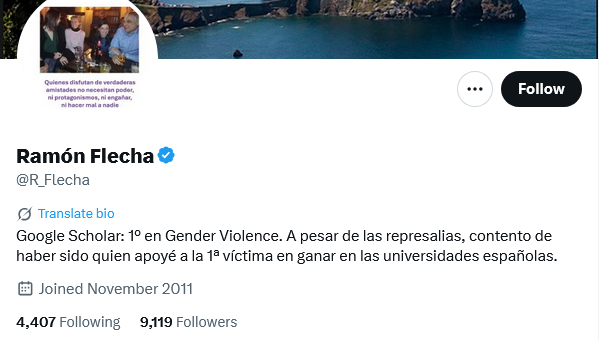
“Google Scholar: 1st in Gender Violence. Despite the reprisals, happy to have been the one who supported the 1st victim to win in Spanish universities.” (Flecha on X)
There were of course past complaints, and they were of course suppressed. Already in 2004, the university set up a file of Flecha’s abuse, based on a testimony of a student he sexually abused. It was recommended: “a rigorous investigation and taking preventive measures immediately“. In 2006, Flecha moved out of the building while continuing running CREA from outside. Problem solved. Then,
“In 2016, the University sent to the Prosecutor’s Office three complaints that accused CREA of functioning as a sect and practicing a high degree of “psychological manipulation.” Some time later, the Prosecutor’s Office shelved the case because, he said, there were no sufficient elements to consider describing the facts as a crime, since people had the freedom to enter and leave CREA.”
14 women, all former victims of Flecha’s sexual abuse, got themselves legal representatives and are now apparently preparing to sue the university. Flecha himself replied to journalists:
“…the professor refused to elaborate further: “Asking me questions about sex is sexual harassment.” Nevertheless, Flecha emphasizes that he is a “world leader” in research on gender violence and a “pioneer” in denouncing sexual harassment in universities, and that for this very reason he is a “victim of isolating gender violence.”
Flecha now announced to sue the media:
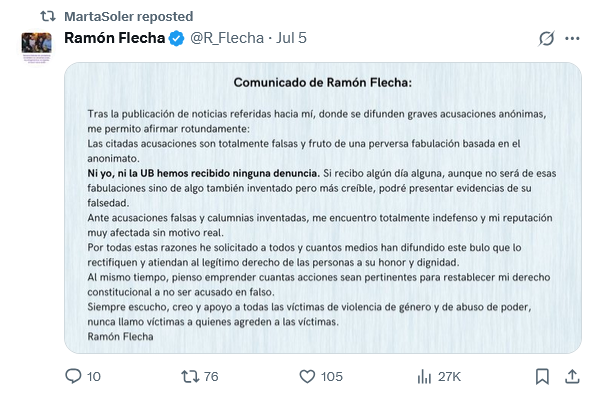
No wait, it gets even better:
“In response to questions from elDiario.es, the current director of CREA (in office since 2006), Marta Soler, has reiterated the same arguments as Ramón Flecha and claims that the testimonies are part of a smear campaign against her for her support of victims of gender-based violence. At the same time, when asked whether CREA had at any time been aware of the events reported by these women, Soler replied: “This question conveys another falsehood that reproduces the worst kind of coercive and retrograde machismo, which develops paternalistic attitudes towards adult women who exercise their freedom. This is a discourse typical of anti-democratic contexts that infantilizes women as if we were incapable of choosing our personal or friendship relationships with discernment or even of managing our own lives.”
Modern feminism is to advance your own career by supplying dependent victims to your pervert boss for sexual abuse.
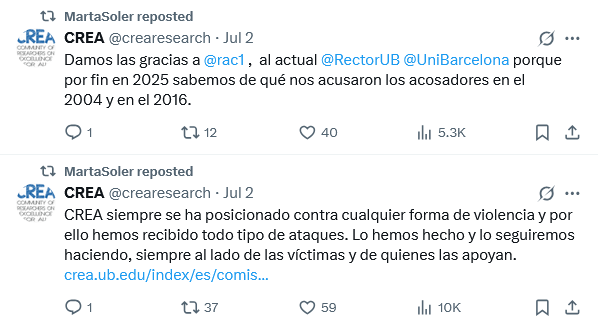
A few days after the revelations, the Spanish government suspended Soler’s Career of Excellence award.
Obituary
By any metric, a giant in his field
A belated obituary, for Jack Wands, chief of the Division of Gastroenterology at The Warren Alpert Medical School of Brown University, who died already in July 2023 aged 80.
An In Memoriam was written by his colleagues, and published on university’s website:
“Jack’s most significant impact, however, was made in the field of liver research. His dominant scholarly accomplishments included improving our understanding of the molecular pathogenesis of chronic hepatitis B and C, and dissecting pivotal intracellular signaling networks that govern the progression of alcohol-related liver disease to either cirrhosis or liver cancer. Those efforts led to pioneering research and the discovery of tumor-associated molecules that drive the invasive and metastatic spread of liver cancer cells. Importantly, the lessons learned were found highly relevant to many other malignancies, holding promise for novel diagnostic and therapeutic strategies for tumors that still lack effective treatments.
By any metric, Jack was a preeminent physician-scientist and giant in his field.”
Now, post mortem, also by the PubPeer metric.
In July 2017, Elisabeth Bik reported a paper by Wands and his Brown University colleagues, which was promptly fixed with a dishonest correction:
Karen Kwei , Xiaoli Tang , Anna S. Lok , Camille Sureau , Tamako Garcia , Jisu Li , Jack Wands , Shuping Tong Impaired virion secretion by hepatitis B virus immune escape mutants and its rescue by wild-type envelope proteins or a second-site mutation Journal of Virology (2013) doi: 10.1128/jvi.02701-12

Elisabeth Bik: “the finding as reported to the journal in July 2017 was that the WT lane in the right panel of D appeared to have been duplicated from the T115A panel, as marked below with red boxes. A false-color version of both panels appeared to support that.”
Yet in their Correction from November 2017, the authors and editors chose to lie about what panel they duplicated:
“Panel D was added at the revision stage due to a reviewer’s request. The WT lane in the right panel of panel D was duplicated from the WT lane in the left panel due to sample loss. “
This was flagged in June 2018, and corrected soon after:
Xiaoqun Dong, Qiushi Lin , Arihiro Aihara , Yu Li , Chiung-Kuei Huang , Waihong Chung , Qi Tang , Xuesong Chen , Rolf Carlson , Christina Nadolny , Gregory Gabriel , Mark Olsen , Jack R. Wands Aspartate β-Hydroxylase expression promotes a malignant pancreatic cellular phenotype Oncotarget (2015) doi: 10.18632/oncotarget.2840
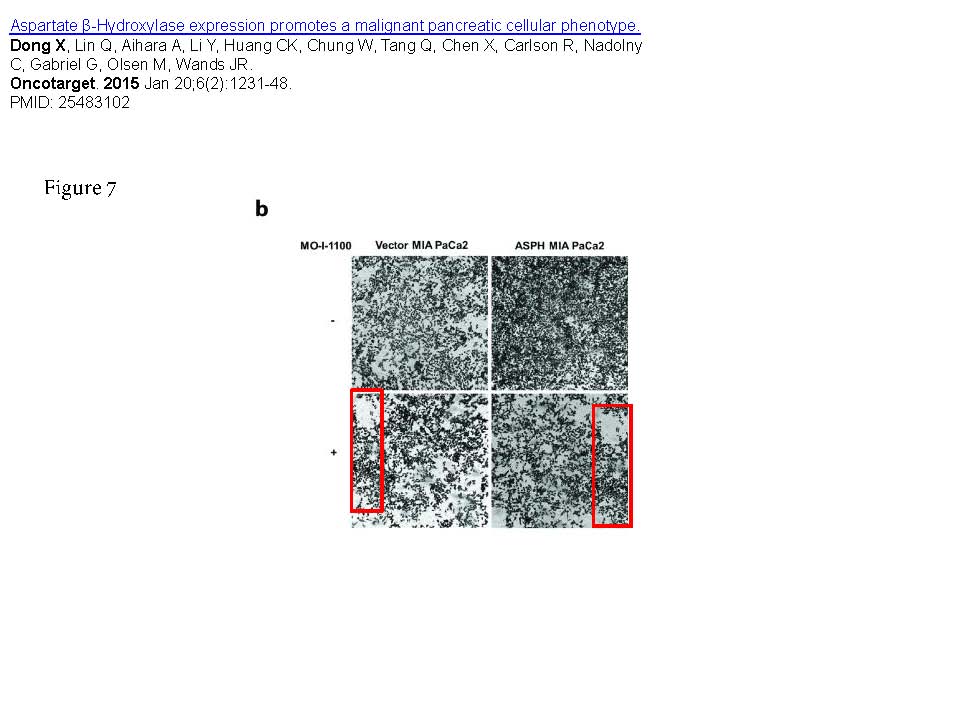
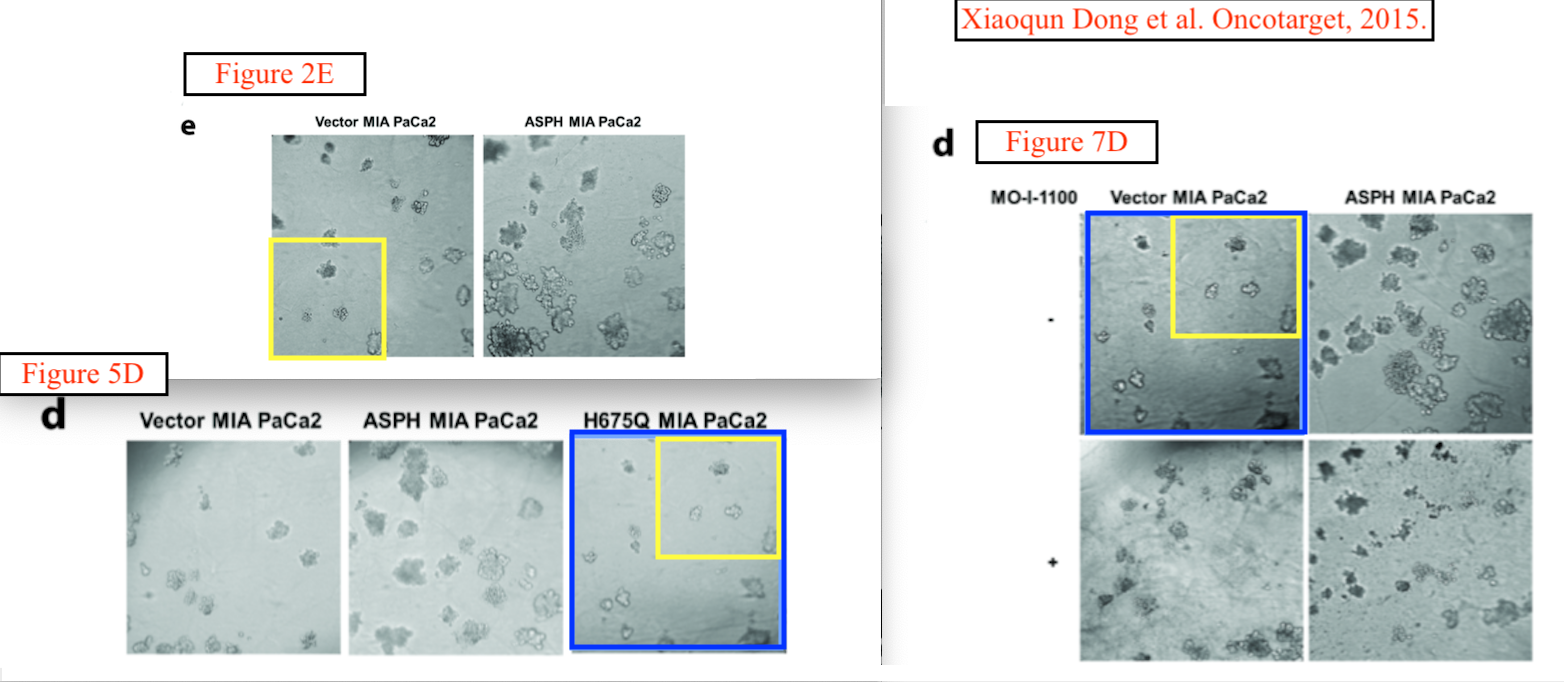
Indigofera tanganyikensis: “In figure 7 there is duplication of data.”
The Correction from November 2019 went:
“Due to errors during processing, Figure 5D contains an incorrect image of H675Q MIA PaCa2. In addition, in Figure 7B, the images of ASPH MIA PaCa2 treated with or without MO-I-1100 were also incorrect. In panel 7D, the image of Vector MIA PaCa2 (upper left) was incorrect as well. The corrected figures 5 and 7 are shown below. The authors declare that these corrections do not change the results or conclusions of this paper.”
More bad papers by Wands were flagged very recently. Pity he is not there to explain. But then, in July 2025, Wands’ protege and assistant professor at Brown, Xiaoqun Dong (apologies for my past confusion with a namesake at Michigan State University, which Corrado Viotti pointed out), went to PubPeer to clarify:
“Figures 2E and 7D are from the same group, so some overlap in the microscopic field is possible.”
Dong had more to explain:
- Katsuya Nagaoka , Xuewei Bai , Kosuke Ogawa , Xiaoqun Dong, Songhua Zhang , Yanmei Zhou , Rolf I. Carlson , Zhi-Gang Jiang , Steve Fuller , Michael S. Lebowitz, Hossein Ghanbari , Jack R. Wands Anti-tumor activity of antibody drug conjugate targeting aspartate-β-hydroxylase in pancreatic ductal adenocarcinoma Cancer Letters (2019) doi: 10.1016/j.canlet.2019.02.006
- Kosuke Ogawa , Qiushi Lin , Le Li , Xuewei Bai , Xuesong Chen , Hua Chen , Rui Kong , Yongwei Wang , Hong Zhu , Fuliang He , Qinggang Xu , Lianxin Liu , Min Li , Songhua Zhang , Katsuya Nagaoka , Rolf Carlson , Howard Safran , Kevin Charpentier , Bei Sun, Jack Wands, Xiaoqun Dong Prometastatic secretome trafficking via exosomes initiates pancreatic cancer pulmonary metastasis Cancer Letters (2020) doi: 10.1016/j.canlet.2020.02.039
- Kosuke Ogawa , Qiushi Lin , Le Li , Xuewei Bai , Xuesong Chen , Hua Chen , Rui Kong , Yongwei Wang , Hong Zhu , Fuliang He , Qinggang Xu , Lianxin Liu , Min Li , Songhua Zhang , Katsuya Nagaoka , Rolf Carlson , Howard Safran , Kevin Charpentier , Bei Sun , Jack Wands, Xiaoqun Dong Aspartate β-hydroxylase promotes pancreatic ductal adenocarcinoma metastasis through activation of SRC signaling pathway Journal of Hematology & Oncology (2019) doi: 10.1186/s13045-019-0837-z


Dong blamed “a typographical error” in generation labelling, and insisted the data was rightfully reused. Also, all these papers were cited, and not just them: 22 of 44 references (50%) were authored by Wands. Dong explained on PubPeer that Wands had to be so heavily cited because he discovered the protein ASPH in 1998, and “holds several patents on this molecule, particularly in the fields of cancer diagnosis and therapy“. Indeed Wands, together with Dong, holds patents on ASPH inhibition against cancer. And still, the paper states:
“The authors declare no competing interest”

Similar situation in a journal by the predatory publisher e-Century, reusing data from the same Ogawa et al 2019. and from a clinical study with mismatched patient cohort numbers (Lin et al 2019). Also here, 25 of 43 references (almost 60%) were authored by Wands, while the authors declared to have no conflicts of interests whatsoever:
Qiushi Lin , Xuesong Chen , Fanzheng Meng , Kosuke Ogawa , Min Li , Ruipeng Song , Shugeng Zhang , Ziran Zhang , Xianglu Kong , Qinggang Xu , Fuliang He , Dan Liu , Xuewei Bai , Bei Sun , Mien-Chie Hung , Lianxin Liu, Jack R Wands, Xiaoqun Dong Multi-organ metastasis as destination for breast cancer cells guided by biomechanical architecture American Journal of Cancer Research (2021) PMCID: PMC8263653

Ogawa et al 2019

Qiushi Lin , Xuesong Chen , Fanzheng Meng , Kosuke Ogawa , Min Li , Ruipeng Song , Shugeng Zhang , Ziran Zhang , Xianglu Kong , Qinggang Xu , Fuliang He , Xuewei Bai , Bei Sun , Mien-Chie Hung , Lianxin Liu, Jack Wands, Xiaoqun Dong ASPH-notch Axis guided Exosomal delivery of Prometastatic Secretome renders breast Cancer multi-organ metastasis Molecular Cancer (2019) doi: 10.1186/s12943-019-1077-0
Dong explained on PubPeer that the figure reuse was definitely fine, because a) “These two manuscripts were prepared and submitted simultaneously“, and b) “The animal studies were conducted and validated independently by different research teams“.
Indeed, what’s wrong with data recycling. Returning to e-Century predatory claptrap:
- Xuewei Bai , Yanmei Zhou , Qiushi Lin , Chiung-Kuei Huang , Songhua Zhang , Rolf I Carlson , Hossein Ghanbari , Bei Sun, Jack R Wands, Xiaoqun Dong Bio-nanoparticle based therapeutic vaccine induces immunogenic response against triple negative breast cancer American Journal of Cancer Research (2021) pubmed: 34659881
- Xuewei Bai , Yanmei Zhou , Yuki Yokota , Yoshihiro Matsumoto , Bo Zhai , Nader Maarouf , Hikaru Hayashi , Rolf Carlson , Songhua Zhang , Aryanna Sousa , Bei Sun , Hossein Ghanbari , Xiaoqun Dong, Jack R. Wands Adaptive antitumor immune response stimulated by bio-nanoparticle based vaccine and checkpoint blockade Journal of experimental & clinical cancer research (2022) doi: 10.1186/s13046-022-02307-3


Dong started with “These IHC assays were performed on serial, continuously sliced sections from the same tissue block, which is why the staining fields appear very similar, or in some cases, nearly identical“, but then wasn’t so sure anymore and announced a correction:
“We will thoroughly review all the results, replace any duplicated images, and submit an erratum to the journal.”
We don’t know how close the collaboration between the late Wands and his protege Dong was, but in 2018 they even visited China together, specifically the First Affiliated Hospital of Sun Yat-sen University:
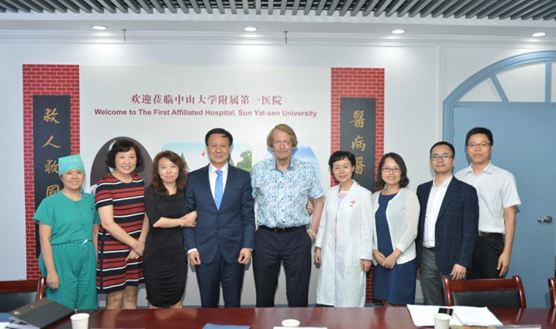
5 years later, Wands died, hopefully as a happy man, and Dong inherited the responsibility for their joint bad papers. This one doesn’t have Dong as coauthor, but incidentally she acted as editor of Cancer Letters until recently, maybe we can guess who handled this submission:
Chiung-Kuei Huang , Yoshifumi Iwagami , Jing Zou , Sarah Casulli , Shaolei Lu , Katsuya Nagaoka , Chengcheng Ji , Kousuke Ogawa , Kevin Y. Cao , Jin-Song Gao , Rolf I. Carlson , Jack R. Wands Aspartate beta-hydroxylase promotes cholangiocarcinoma progression by modulating RB1 phosphorylation Cancer Letters (2018) doi: 10.1016/j.canlet.2018.04.041

Chiung-Kuei Huang , Yoshifumi Iwagami, Arihiro Aihara , Waihong Chung , Suzanne De La Monte , John-Michael Thomas , Mark Olsen, Rolf Carlson, Tunan Yu , Xiaoqun Dong, Jack Wands Anti-Tumor Effects of Second Generation β-Hydroxylase Inhibitors on Cholangiocarcinoma Development and Progression PLOS One (2016) doi: 10.1371/journal.pone.0150336
Remarkably, Wands continued publishing dodgy science even after his death. Again, without Dong but with other Brown University colleagues:
Xiaojuan Sun , Jesse Hart, Ross Taliano , Janine Molino, Joseph H. Schwab, Sjoerd Nota , Katsuya Nagaoka, Songhua Zhang , Mark Olsen, Rolf Carlson, Jack Wands , Richard M. Terek ASPH Is a Metastatic Factor and Therapeutic Target in Chondrosarcoma Cancers (2025) doi: 10.3390/cancers17060951


Sorely missed, etc.
Scholarly Publishing
Incorrect parameters being set by an inexperienced researcher
An Elsevier journal is correcting a paper from China, which proposed some TCM plant ingredient as a cancer cure:
Yuhua Li, Yang Sun, Qian Zhang, Yongsheng Liu, Yinbo Niu, Xiaoqiang Li, De Cai Bolbostemma paniculatum (Maxim.) Franquet extract suppresses the development of colorectal cancer through downregulation of PI3K/Akt pathway Journal of Ethnopharmacology (2022) doi: 10.1016/j.jep.2021.114937


If one looks closely into those FACS figures, one finds some very unusual features, not just the duplications. I tried to post it on PubPeer, but PubPeer moderators disagreed with my analysis, and deleted those comments:
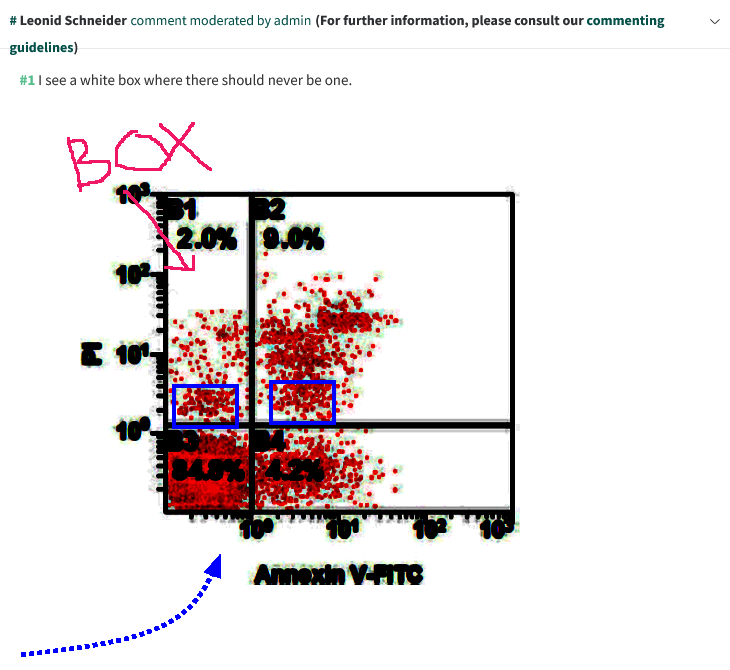
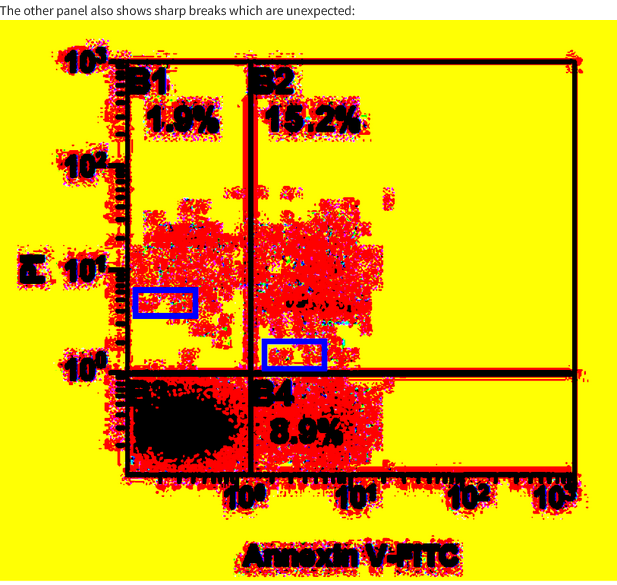
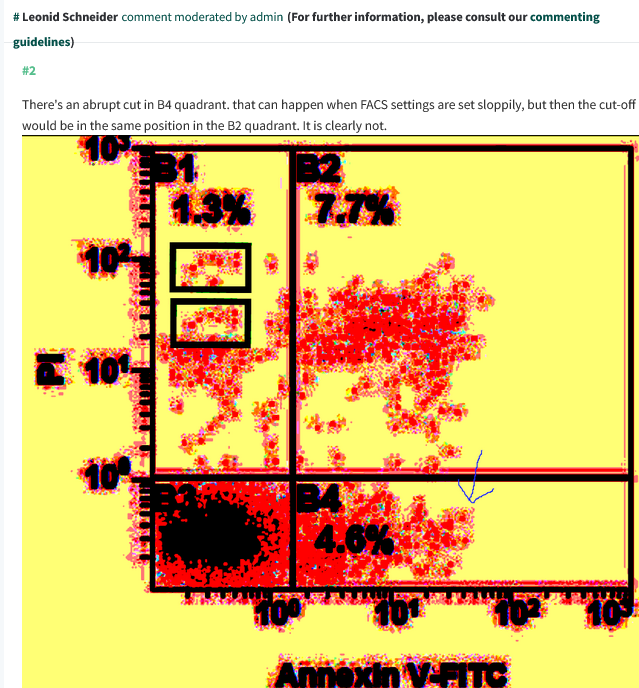
Aneurus Inconstans reported this case to Elsevier on late June 2025. One month later, on 25 July 2025, the sleuth received this reply from the Senior Publisher for Pharmacology & Pharmaceutics:
“Following up on the case you flagged below, a decision has been made. Because this case was a bit tricky, I wanted to update you on what steps were taken which led to the decision taken by the Editors.
The day before I received your email, the authors had also contacted us requesting to publish a correction, but your email and the PubPeer report drew the Editor’s attention to several issues, in particular, the repeat pattern in the figure. We requested the raw data from the authors and a more detailed explanation, but the Editor handling the case was not satisfied. The most serious concern was the author’s statement that the error resulted from incorrect parameters being set by an inexperienced researcher, but if that were the case it called into question the validity of the results and their interpretation.
We then sought data of identical evaluations under a variety of parameters to demonstrate the validity of their explanation. The supplied the additional data, and this did support the case and most importantly, it showed that the errors did not affect the interpretation of the study. To be certain, we asked another Editor to review the full case and that second Editor verified the conclusion. For these reasons we will publish the correction requested by the authors.”
The Elsevier officer clarified in the next email:
“The response is that because the conclusions are sound (or at least are not affected by this image), and because it can’t be conclusively proved that fraud occurred and this wasn’t the error of an inexperienced researcher, the decision was made to correct rather than retract.“

Tooth-Fairy-Meets-Easter-Bunny Science of TCM
Smut Clyde follows the dark path of Traditional Chinese Medicine again. What will he find there? As usual, all the big publishers peddling TCM fraud, that’s what.

To sum up: the authors admitted the data was fake and blamed some unnamed “inexperienced” student. But Elsevier, always mindful of their billion-heavy TCM publishing business in China, decided to nudge the authors into saving the paper with a correction. Win-win!
To meet the originality requirements
A journal of the American Society for Clinical Investigation figured very swiftly which way their bread is buttered. The lead author of a plagiarised paper, Wafik El-Deiry, is a friend of Trump’s and RFK Jr’s darling Jay Bhattacharya (whom these two fascist leaders appointed as NIH director to supervise the destruction of US science). El-Deiry is also a candidate for the directorship of the National Cancer Institute (NCI) at NIH, for which he had qualified by publishing both antivaxxery and an immense amount of fake science:

Wafik El Deiry, the anti-qualified Science Guardian
Both Harvey Risch and Wafik El Deiry are perfectly anti-qualified candidates to lead the National Cancer Institute.

This review by El-Deiry was plagiarised from several publications by unrelated authors:
Xiaobing Tian , Praveen R. Srinivasan , Vida Tajiknia , Ashley F. Sanchez Sevilla Uruchurtu , Attila A. Seyhan , Benedito A. Carneiro , Arielle De La Cruz , Maximilian Pinho-Schwermann , Andrew George , Shuai Zhao , Jillian Strandberg , Francesca Di Cristofano , Shengliang Zhang , Lanlan Zhou , Alexander G. Raufi , Arunasalam Navaraj , Yiqun Zhang , Nataliia Verovkina , Maryam Ghandali , Dinara Ryspayeva , Wafik S. El-Deiry Targeting apoptotic pathways for cancer therapy The Journal of clinical investigation (2024) doi: 10.1172/jci179570
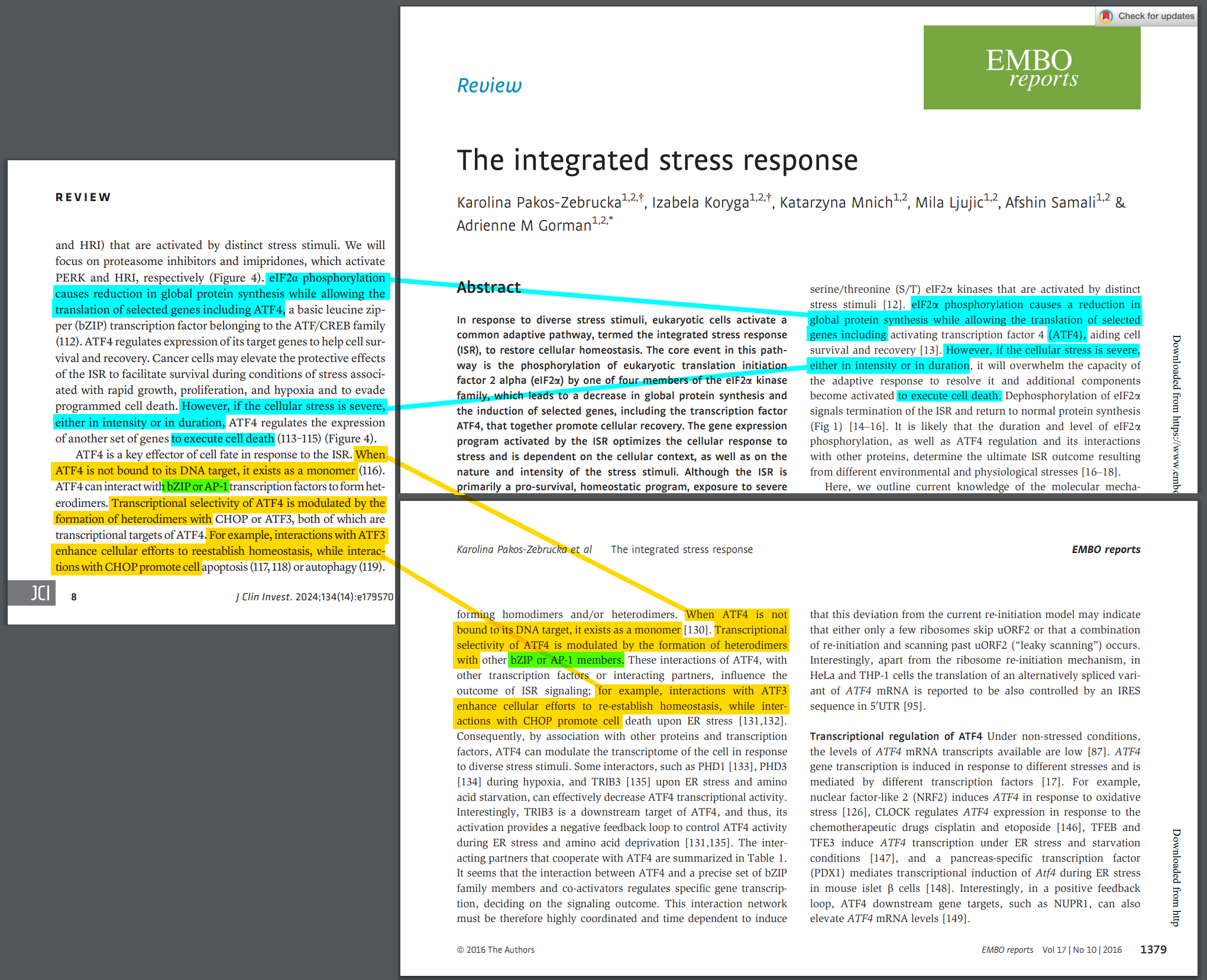
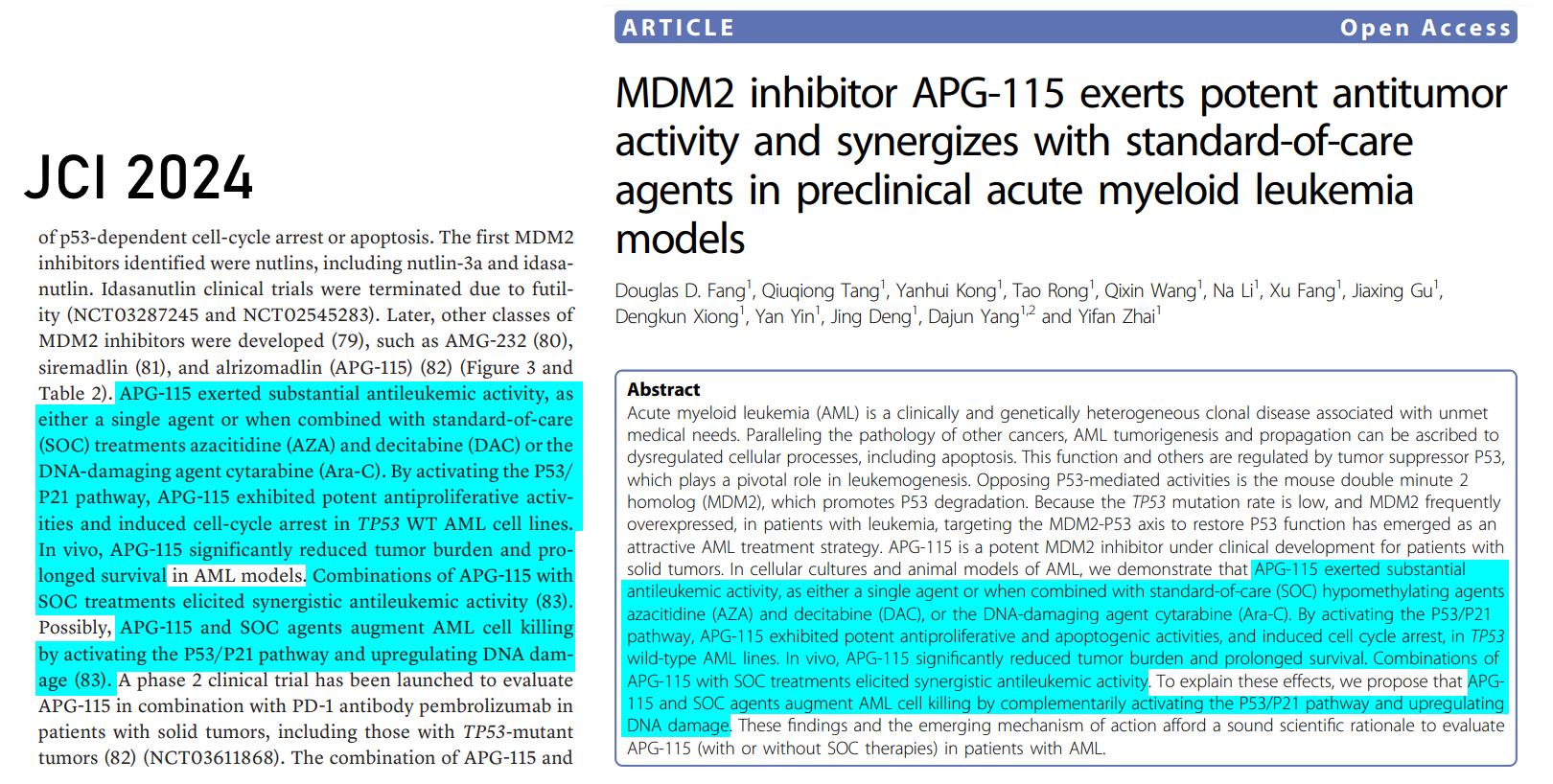
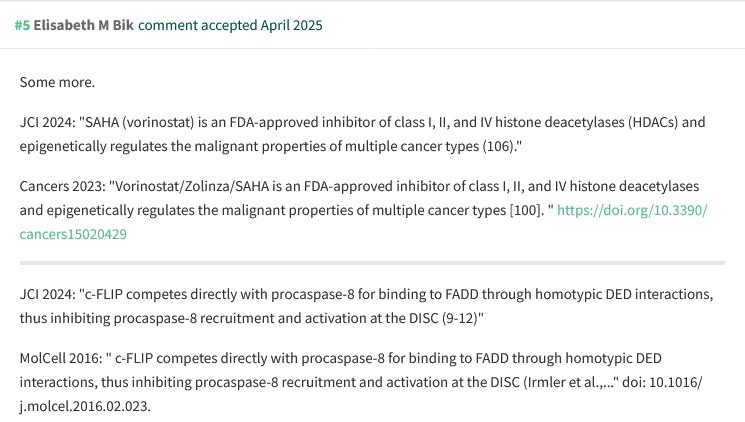
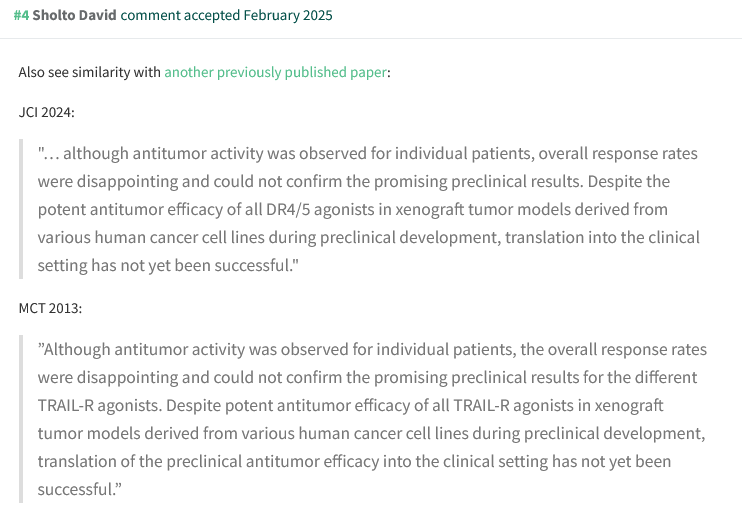
As I wrote in June 2025 Shorts (where also the above El-Deiry paper featured), the Editor-in-Chief of Journal of clinical investigation, the Northwestern University professor, Elizabeth McNally, hates whistleblowers and suspects them all to be unscrupulous greedy swine with vested financial interests. Which El-Deiry never is, of course.
On 15 July 2025, McNally helped Wafik with this Corrigendum (highlight mine):
“Following publication of this Review, the Editors became aware that portions of the text overlapped with text in prior publications by others (1–7) and by some of the Review authors (8, 9). To meet the originality requirements of the JCI, the authors have rewritten those portions of the review. The HTML and PDF versions have been updated online. In addition, the Journal has published an online version of the original article marking the edited text (Supplemental File, Redaction).
The authors regret the errors.”
Retraction Watchdogging
No reason to doubt the validity and veracity
Meet the Norwegian scholar Dhayalan Velauthapillai, originally from Sri Lanka. He did PhD and postdoc at University of Bergen and is since 2013 professor for Advanced Nanomaterials for Clean Energy and Health Applications at Western Norway University of Applied Sciences (HVL), also in Bergen. The university proudly informs us that Valauthapillai runs two additional labs abroad: one at Coimbatore Institute of Technology in India, and another at University of Jaffna in Sri Lanka. They are funded by Norwegian Agency for International Cooperation and Quality Enhancement in Higher Education (DIKU), Norwegian Embassy, and HVL.
All this Norwegian money buys a lot of Indian papermill trash. Some gets retracted.

The Highly Cited Researchers of Clarivate
“here is my advice to Clarivate: better get lost. ” – Alexander Magazinov

Velauthapillai’s coauthor here is a papermiller called P. Senthil Kumar (countless papers on PubPeer, possibly the same person as Senthil Kumar Ponnusamy). Their papermill fabrication was published in the papermill-infested Elsevier journal Chemosphere, which was delisted by Clarivate at the end of 2024:
S.P. Keerthana , R. Yuvakkumar , P. Senthil Kumar , G. Ravi , S.I. Hong , Dhayalan Velauthapillai Investigation of PEG directed Sb2WO6 for dyes removal from wastewater Chemosphere (2022) doi: 10.1016/j.chemosphere.2021.132677

Dysdera arabisenen: “Fig 1: The red and black traces are more similar than expected”
The recent retraction notice went (highlights mine):
“This article has been retracted at the request of the Editor.
Concerns were raised on PubPeer at https://pubpeer.com/publications/B78E3FE15107EC75C3428CA36E3F78, and the authors responded to a request for an explanation which was subsequently assessed by the editor. The editor confirmed that Figure 1 shows exactly the same XRD spectra for the pristine sample and the 5 mL PEG sample. When conducting XRD analysis, the noise patterns will not be exactly the same, even when analyzing the same sample twice. When smoothing the representation, obtaining the same profile of noise is also almost impossible. What generally maintains the same shape are the positions of the main peaks positions; additionally the relative intensities might be similar although not identical. Note that the intensity is proportional to the number of scatterers per unit area of a given atomic plane and therefore the peak intensities in an XRD experiment will vary. It is clear that in this figure, the red and black XRD are the exact same spectra.
The authors provided raw data which was assessed by the editor, which for the following reasons was unsatisfactory: this data, provided to prove the reliability of the data, is completely different to the one shown in the figure. It was also noted that the level of noise in the raw data provided is so high with respect to the signal that it is impossible to identify a single peak. For these reasons, the Editor has therefore lost confidence in the reliability of the findings presented in this article as a whole and is retracting it.”
Issues of global relevance
“I like ImageTwin, but seeing things with just eyes is like hand-to-hand combat….” – Mu Yang
The Norwegian professor Velauthapillai has around 30 papers on PubPeer now, courtesy of Mu Yang and colleagues. Here an earlier retraction, in another papermill-infested Elsevier journal:
Subramanian Keerthana , Balasubramanian Jansi Rani , Rathinam Yuvakkumar , Ganesan Ravi, Balasubramaniam Saravanakumar , Mehboobali Pannipara , Abdullah G Al-Sehemi , Dhayalan Velauthapillai NiMoO nanorods photocatalytic activity comparison under UV and visible light Environmental Research (2021) doi: 10.1016/j.envres.2021.111073

Dysdera arabisenen:: “Fig 2: Sections of the black, red, and blue spectra are more similar than expected”
After an Expression of Concern from February 2025, the rather confusing retraction arrived on 1 March 2025 (highlights mine):
“Unauthorised authorship changes were made when the revised version of this paper was submitted, following suggestions for relatively minor revisions from the reviewers and Guest Editor, with authors Balasubramaniam Saravanakumar, Mehboobali Pannipara and Abdullah G. Al-Sehemi being added to the paper. No satisfactory explanation was given for this change, nor was it approved by the editor. This authorship change breaches the policies of the journal and as a result, the editors no longer have confidence in this paper and are retracting it. The journal apologises for not having identified the problematic authorship change during the review process and for any resulting inconvenience.
Following separate concerns raised on PubPeer (https://pubpeer.com/publications/3312F3F1460199AE9E813A07BED8DD) regarding the authenticity of the FT-IR data in the paper, the editor carefully inspected the raw data (both SPA and excel files) and found no clear sign of image/data manipulation and therefore has no reason to doubt the validity and veracity of the presented FT-IR data in Figure 2.”
If only the papermillers were not so greedy as to sell additional authorships, because look, the editor loved their fake data!
Veziroglu Journal of Papermill Energy
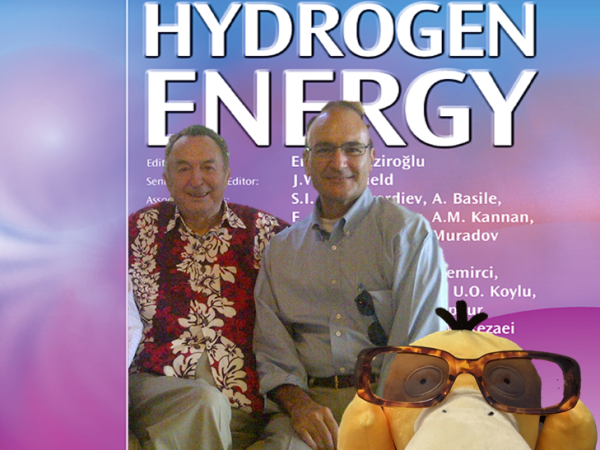
Mu Yang and other sleuths celebrate the scholarly publishing business of the late T Nejat Veziroglu, laureate of Santilli-Galilei Gold Medal for Lifetime Commitment to True Scientific Democracy
This was published in a Special Issue of a disastrous Elsevier journal and edited by Senthil Kumar Ponnusamy, who, as I already mentioned, is likely the same person as the author P Senthil Kumar:
M. Isacfranklin , B. Jansi Rani , P. Senthil Kumar , R. Yuvakkumar, G. Ravi , A. Manigandan , M. Thambidurai , Cuong Dang, Dhayalan Velauthapillai Electrochemical energy storage and conversion applications of CoSn(OH)6 materials International Journal of Hydrogen Energy (2022) doi: 10.1016/j.ijhydene.2021.08.001

Dysdera arabisenen: “Fig 1c: Raman spectra of IP-2 and IP-3 seem identical, including fingerprint noises”
In the same special issue edited by Senthil Kumar Ponnusamy, this time we see the third reincarnation of the same Indian fraudster, now as P. Senthilkumar:
S. Swathi , R. Yuvakkumar, P. Senthilkumar , G. Ravi , Dhayalan Velauthapillai Surfactant-assisted tungsten sulfide mesoporous sphere for hydrogen production International Journal of Hydrogen Energy (2022) doi: 10.1016/j.ijhydene.2021.08.233


Here is Velauthapillai with the fraudster Fuad Ameen, in yet another papermill-infested Elsevier journal:
M. Isacfranklin , Turki Dawoud , Fuad Ameen , G. Ravi , R. Yuvakkumar, P. Kumar , S.I. Hong, Dhayalan Velauthapillai, B. Saravanakumar Synthesis of highly active biocompatible ZrO2 nanorods using a bioextract Ceramics International (2020) doi: 10.1016/j.ceramint.2020.07.076

Dysdera arabisenen: “Fig 2a: The [three] traces are more similar than expected”
There were also nonsense references. Same journal, similar author collective:
M. Isacfranklin , Fuad Ameen , G. Ravi , R. Yuvakkumar, S.I. Hong , Dhayalan Velauthapillai , M. Thambidurai , Cuong Dang Single-phase Cr2O3 nanoparticles for biomedical applications Ceramics International (2020) doi: 10.1016/j.ceramint.2020.05.050


This equally fake papermill trash was however corrected by the Royal Society of Chemistry:
M Sangeetha Vidhya, G Ravi, R Yuvakkumar, Dhayalan Velauthapillai , M Thambidurai , Cuong Dang , B Saravanakumar Nickel-cobalt hydroxide: a positive electrode for supercapacitor applications RSC Advances (2020) doi: 10.1039/d0ra01890b

Correction 21 May 2025: “The authors regret an error in Fig. 3 of the original article where the data for Co-Ni(OH)2 was accidentally used for Ni(OH)2. “
I contacted Velauthapillai and the HVL leadership, and Velauthapillai eventually replied on his university’s behalf:
“We understand your interest in ensuring integrity in scientific research and agree that transparency and accountability are important in research dissemination.
Regarding the matter you have raised, we would like to clarify the following:
We, HVL have been collaborating with Alagappa University, India since 2020 under multiple Indo-Norwegian collaborative projects. We have signed two institutional MoU’s between HVL and Alagappa University to work together on higher education and research. […]
We have informed our partner institution Alagappa University on your concern. According to Alagappa University, the mentioned retractions were made not because of any malpractices, but because of minor human error. They have appealed to the journal against retraction.
One paper was retracted because of the inclusion of new author contributions late during the review process. According to the corresponding author from Alagappa University, the editor was informed on the changes and addition of acknowledgment during the submission of revised version after peer-review, but the journal had meant now that the names should have been included during the first submission. […]
In the second article, the PhD research fellow had mistakenly pasted the same raw data in Origin for plotting the XRD for two different samples. As an expert in this field, you would surely see that there will be no motive to have the same graph for two different samples in the same figure. This was nothing else than a human error by the first author, a PhD student who had just started her career. These types of mistakes are difficult to register. As XRD is just one of several characterization methods used to verify the samples in this study, this unfortunate mistake has no implication on the discussion or conclusion of the article. We are informed that the Raw data for all samples are submitted to the journal by the first author from Alagappa University, with a corrected figure. The authors have also asked the journal to withdraw retraction and print an erratum instead.
We hope that this clarification addresses your concerns.
For further information, please contact the first author or the corresponding author Dr. Yuvakkumar at Alagappa University, India.”
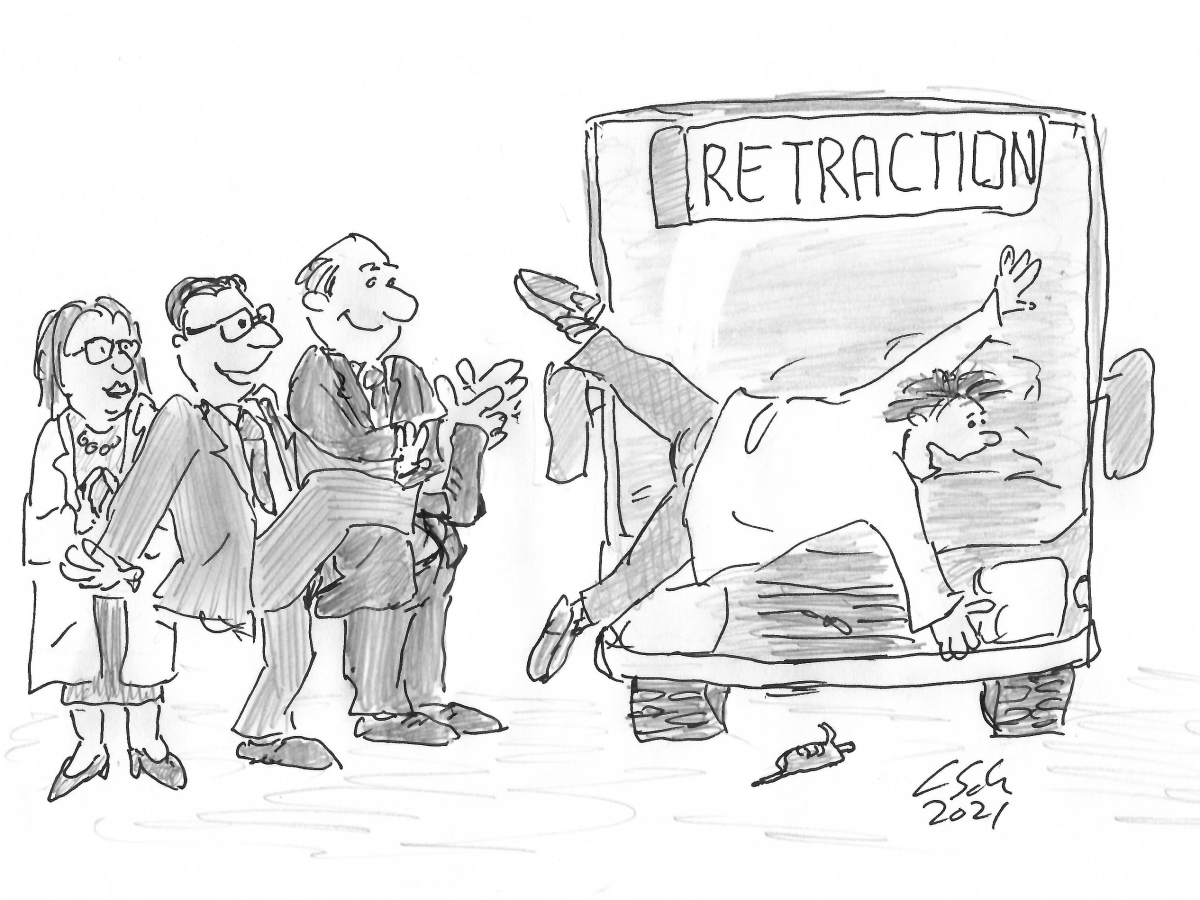
I start to wonder that throwing students under the bus must be some thousands-years-old Vedic tradition of Hindu learning. Indian cheaters seem to do this at the drop of a hat.
Student, Meet Bus
What led to retraction of the Sensei RNA paper by Arati Ramesh in Bangalore: the “factually inaccurate, anonymous, and unverified” version, which “quite frankly, can be termed slander”. And a guest post by “Paul Jones” at the end!
Norway has a central insitution to investigate these HVL clowns, called National Research Ethics Committees. I will submit the case there.
Pulling a string
PNAS retracted an almost two decade old paper from India which was not flagged on PubPeer before.
Srikanta Goswami , Gunjan Dhar , Saikat Mukherjee , Bidesh Mahata , Saibal Chatterjee , Pratik Home , Samit Adhya A bifunctional tRNA import receptor from Leishmania mitochondria Proceedings of the National Academy of Sciences (2006) doi: 10.1073/pnas.0510869103
On 30 April 2010, an Expression of Concern was published, which didn’t become a permanent one:
“The editors wish to note that a reader has raised questions about the apparent duplication of certain figures in this article. We have reviewed the matter and are concerned about the validity of the results. The matter has been forwarded to the Indian Institute of Chemical Biology (IICB) to investigate further. We are awaiting the findings of IICB to determine the appropriate next steps.”
The retraction notice appeared 15 years later, on 25 July 2025, and was signed by the Editor-in-Chief May Berenbaum:
“The editors are retracting this article due to concerns with Figs. 3 and 5. The same data appear to be presented in the two tRY/tRR/tRW panels of Fig. 3C despite being labeled as distinct. In addition, the same data appear to be presented in the leftmost lanes of Fig. 5 E and F despite being labeled as distinct. An investigation by the Indian Institute of Chemical Biology was inconclusive, and so we are proceeding independently to correct the scientific record. The authors do not agree with the retraction.”
I illustrated the issues:


Now, Srikanta Goswami, associate professor at National Institute of Biomedical Genomics in India, has an older retraction, from his time in the lab of Vladimir Spiegelman, then at University of Wisconsin in USA, now at Penn State:
Srikanta Goswami , Rohinton S. Tarapore , Jessica J. Teslaa , Yevgenya Grinblat , Vijayasaradhi Setaluri , Vladimir S. Spiegelman MicroRNA-340-mediated degradation of microphthalmia-associated transcription factor mRNA is inhibited by the coding region determinant-binding protein Journal of Biological Chemistry (2010) doi: 10.1074/jbc.m110.109298
The April 2014 withdrawal notice went:
“This article has been withdrawn by the authors.
The antisense morpholino used to knock down CRD-BP expression in zebrafish was designed incorrectly. Therefore, the data shown in Fig. 5, A and B, which were generated using the morpholino, are invalid. No other results are affected by this error. We wish to withdraw the article and submit a corrected version for review after the proper experiment has been completed.”
Indeed, the paper was promptly republished in the same journal as Goswami et al 2015, gaining a new author (Ashley Poenitzsch Strong), Yet, there are reasons to ask what exactly Spiegelman and his Wisconsin colleagues taught Goswami. Because of Spiegelman’s PubPeer record (not to be confused with that of another diabetes researcher, Bruce Spiegelman).

AACR deploys Massimo Loda on a mission to cure cancer
Meet Massimo Loda, the new EiC of Molecular Cancer Research. Not despite, but because of his PubPeer record. Also meet his partner Michele Pagano!
Here is Spiegelman as first author, another questionable author is Michele Pagano:
Vladimir S. Spiegelman , Pete Stavropoulos , Esther Latres , Michele Pagano , Ze’ev Ronai , Tomas J. Slaga , Serge Y. Fuchs Induction of beta-transducin repeat-containing protein by JNK signaling and its role in the activation of NF-kappaB Journal of Biological Chemistry (2001) doi: 10.1074/jbc.m100031200

Here is Spiegelman with dermatology professor Hasan Mukhtar and other Wisconsin colleagues:
Rohinton S Tarapore , Imtiaz A Siddiqui , Mohammad Saleem , Vaqar M Adhami , Vladimir S Spiegelman , Hasan Mukhtar Specific targeting of Wnt/β-catenin signaling in human melanoma cells by a dietary triterpene lupeol Carcinogenesis (2010) doi: 10.1093/carcin/bgq169

Actinopolyspora biskrensis: “In addition to this concern, with which I agree, there appears to be another band which has been used twice, after vertical flip.”
PNAS should also consider addressing this paper by Spiegelman, Mukhtar and another Wisconsin dermatology professor, Vijayasaradhi Setaluri (whom you met on the withdrawn and republished JBC paper):
Mohammad Saleem , Mee-Hyang Kweon , Jeremy James Johnson , Vaqar Mustafa Adhami , Irina Elcheva , Naghma Khan , Bilal Bin Hafeez , Kumar M. R. Bhat , Sami Sarfaraz , Shannon Reagan-Shaw , Vladimir S. Spiegelman , Vijayasaradhi Setaluri , Hasan Mukhtar S100A4 accelerates tumorigenesis and invasion of human prostate cancer through the transcriptional regulation of matrix metalloproteinase 9 Proceedings of the National Academy of Sciences (2006) doi: 10.1073/pnas.0606747103

Spiegelman with Setaluri again, and another Wisconsin dermatology professor named Nihal Ahmad:
Travis L Schmit , Weixiong Zhong , Vijayasaradhi Setaluri , Vladimir S Spiegelman , Nihal Ahmad Targeted depletion of Polo-like kinase (Plk) 1 through lentiviral shRNA or a small-molecule inhibitor causes mitotic catastrophe and induction of apoptosis in human melanoma cells The Journal of investigative dermatology (2009) doi: 10.1038/jid.2009.172

It is like pulling a string, because Mukhtar has over 30 fake papers on PubPeer, some with Ahmad or Setaluri. For example:
Nihal Ahmad, Katrin Kalka , Hasan Mukhtar In vitro and in vivo inhibition of epidermal growth factor receptor-tyrosine kinase pathway by photodynamic therapy Oncogene (2001) doi: 10.1038/sj.onc.1204313


Or this, again by Mukhtar and Ahmad:
Mayank Srivastava , Nihal Ahmad , Sanjay Gupta , Hasan Mukhtar Involvement of Bcl-2 and Bax in Photodynamic Therapy-mediated Apoptosis Journal of Biological Chemistry (2001) doi: 10.1074/jbc.m006920200


Mukhtar also suffered this retraction:
Maria Shabbir , Deeba N. Syed , Rahul K. Lall , Muhammad Rashid Khan , Hasan Mukhtar Potent anti-proliferative, pro-apoptotic activity of the Maytenus royleanus extract against prostate cancer cells: evidence in in-vitro and in-vivo models PLOS One (2015) doi: 10.1371/journal.pone.0119859

Fig 2B vs Fig 1C of:
Suhail Razak, Tayyaba Afsar , Asad Ullah , Ali Almajwal , Musaed Alkholief , Aws Alshamsan , Sarwat JahanTaxifolin, a natural flavonoid interacts with cell cycle regulators causes cell cycle arrest and causes tumor regression by activating Wnt/ β -catenin signaling pathway BMC cancer (2018) doi: 10.1186/s12885-018-4959-4
Actinopolyspora biskrensis:: “whomever prepared the figures seems to have had access to the original data as the images in the later paper are of higher resolution and are missing the labels in the published figure in PLoS ONE.
There does not seem to be any authors in common,”


The retraction from 11 January 2024 described concerns “regarding results presented in Figs 2, 3, 4, 5, 6, and 7“, specifically “multiple instances in which western blot panels […] representing different experiments appear highly similar” and reuse of images from Fig 2B, 5B, 3C and 4D in the above mentioned Razak et al 2018 paper, while “PLOS was unable to clarify the origins of the images that appear to be reused between [1] and [2].“.
Actually, Suhail Razak (the first author on the seemingly unrelated 2018 paper) and Mukhtar know each other very well:
Maria Shabbir, Hasan Mukhtar , Deeba Syed , Suhail Razak, Tayyaba Afsar , Ali Almajwal , Yasmin Badshah , Dara Aldisi Tissue microarray profiling and integrative proteomics indicate the modulatory potential of Maytenus royleanus in inhibition of overexpressed TPD52 in prostate cancers Scientific Reports (2021) doi: 10.1038/s41598-021-91408-8

I don’t have the space here to parade Mukhtar’s outrageously fake science here, but will you be surprised he worked together with the sacked fraudster Shaker Mousa, e.g. on Chamcheu et al 2018?
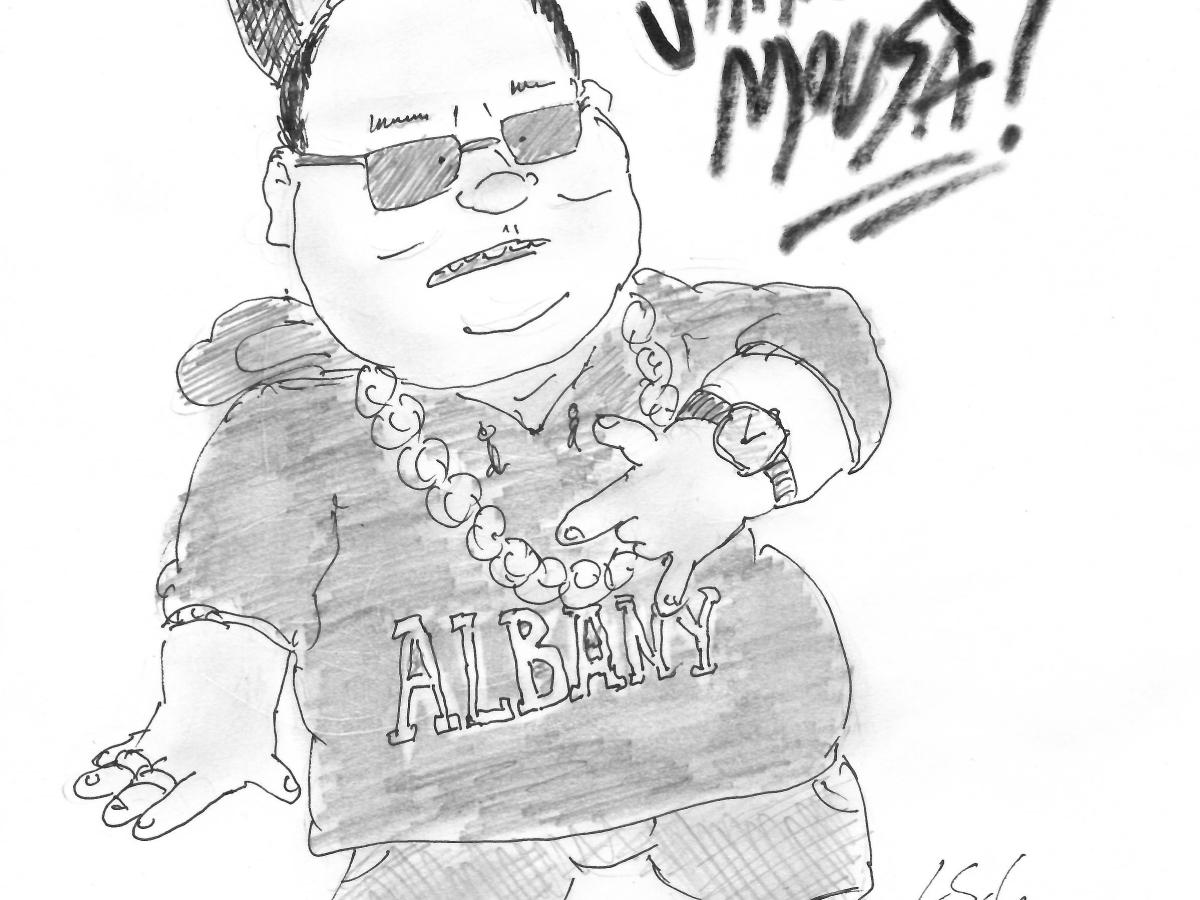
Somehow these cheaters always find eatch other.
A way to hide
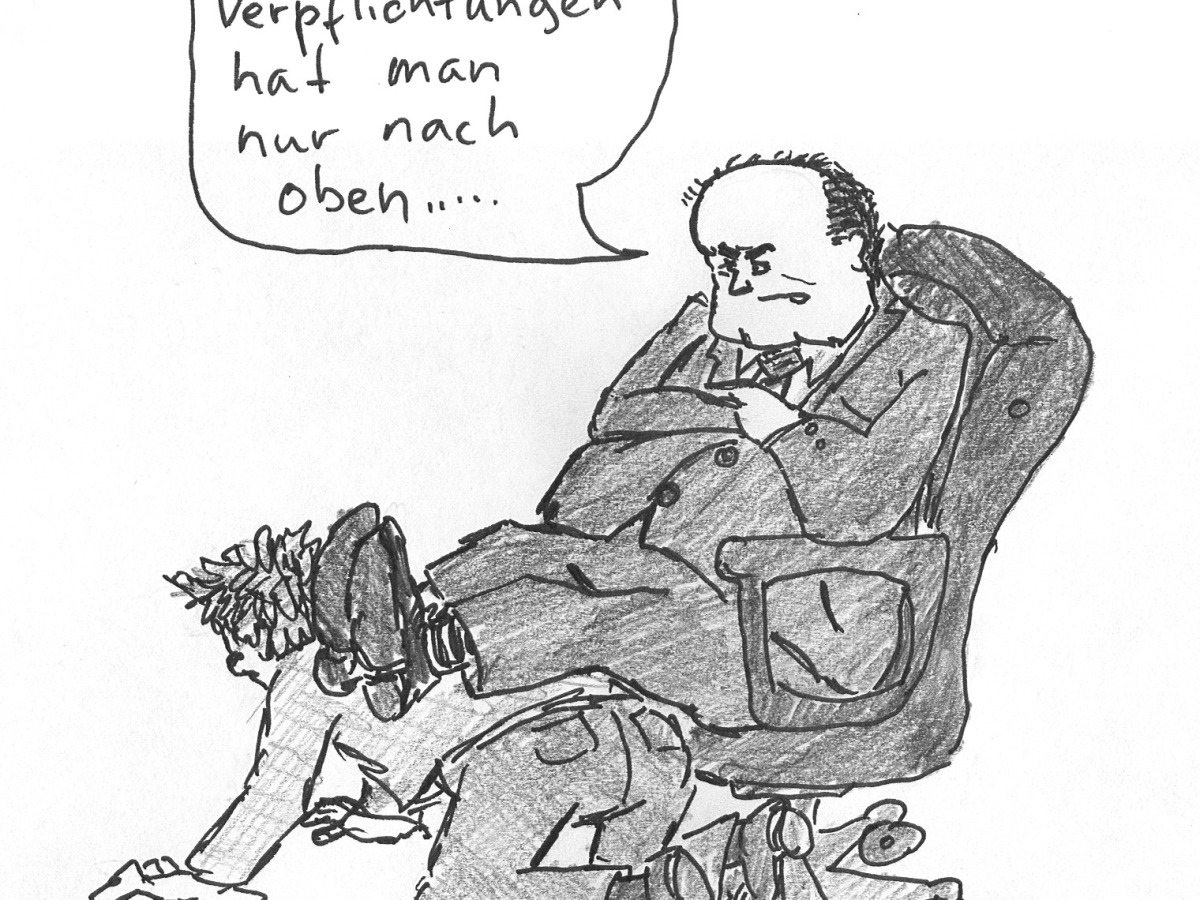
The long-awaited retraction for some elite researchers from Germany finally arrived. The lead authors is Bernd Müller-Röber, a highly cited researcher, plant science professor at the University of Potsdam, and former group leader at the neighbouring Max Planck Institute (MPI) of Molecular Plant Physiology, but this affiliation was terminated when the PubPeer evidence appeared. The penultimate author Salma Balazadeh is his former mentee and a very, very close associate, more recently she became associate professor at the Leiden University in the Netherlands, where she was declared an innocent victim of PubPeer slander. Read here:
The Man Who Fed The World
“Bernd Müller-Röber […] had guest status in the MPI for Molecular Plant Physiology but this status has been terminated”
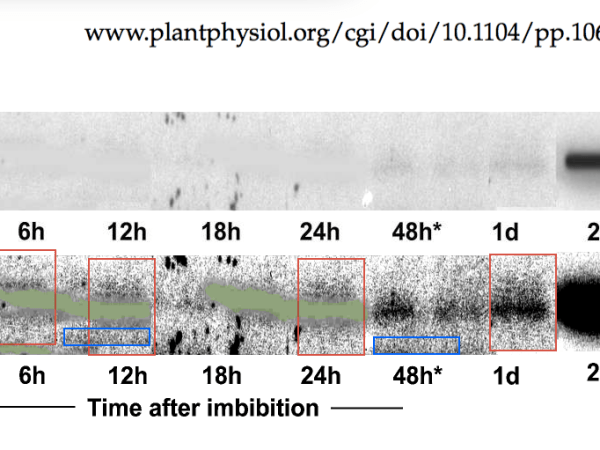
The paper was flagged by Aneurus Inconstans:
Mamoona Rauf, Muhammad Arif, Joachim Fisahn , Gang-Ping Xue , Salma Balazadeh, Bernd Mueller-Roeber NAC Transcription Factor SPEEDY HYPONASTIC GROWTH Regulates Flooding-Induced Leaf Movement in Arabidopsis The Plant Cell (2013) doi: 10.1105/tpc.113.117861


The first author Mamoona Rauf, now associate professor at Abdul Wali Khan University in Pakistan, wrote a long notice on PubPeer where she apologised for “the presentation errors“, announced to “revise the figures 2C, 3A and 5A only” and insisted that all quantifications were correct yet that she will “perform all measurements again for the final corrections of the presentation of results“.
Müller-Röber, who was accused by whistleblowers of absenteeism and creating a toxic climate in his lab, blamed Rauf in his email to me:
“I had immediately (same day) contacted Dr. Rauf, the first author of the publication (Rauf et al., 2013) who performed most of the experiments reported. Dr. Rauf clearly stated that she did not purposefully manipulate any of the data presented, and so far I have no reason to doubt her response. “
Yet the dean of the science faculty of the University of Potsdam, Ralph Gräf, felt more strongly about that paper, as he wrote to me:
“I have now contacted The Plant Cell myself to ensure that the case is handled in accordance with good scientific practice. I assume that it has to be retracted, because the cheating is obvious even to me as a somewhat outsider.“

Did Plant Cell learn from Voinnet Affair?
The Plant Cell is an elite journal, its authors and editors are some serious heavyweights whose labs cannot be associated with data manipulation.
That was in early 2024. It took the society journal almost one and a half year to investigate the obvious, but at least they complied with the retraction request. The retraction appeared on 17 June 2025:
“In February 2024, the corresponding author of the above article notified the journal that several concerns had been raised via PubPeer (https://pubpeer.com/publications/2B199168969C0CEB5BB4622459CCCA), and requested retraction of the article. The concerns relate to Figures 2, 3, 4, 5, and 6, as well as Supplementary Figures 4 and 5, for which the co-first authors conducted the experiments and assembled the images. Specifically, some plant images were reused in different contexts, assigned different genotypes, and rescaled or mirrored to fit experimental expectations, and some figures contained duplicated or manipulated images, where identical plants were described inconsistently.
Following an investigation, which included reviewing the raw data underlying these figures, the journal’s editorial team concurred that the first author’s explanations for the errors could not be verified with certainty and that article retraction was warranted, because the quantifications based on these images are unreliable, undermining the validity of the conclusions reported.
The first, second, and fifth named authors agree with the retraction. The third and fourth named authors could not be contacted to obtain their agreement on the retraction. The corresponding author has apologized that these errors were not identified prior to article publication.”
The unreachable third-named author Joachim Fisahn may be old, but he is still listed as MPI Golm group leader.
By the way, the Editor-in-Chief of The Plant Cell, Blake Meyers, revealed in his email to me the outcome of his own investigation into the real identity of Aneurus Inconstans:
“I’ve always assumed that Aneurus is your masked, alter ego, a way to hide. You write with the same voice.”
One must really think like a professor to convince oneself that Schneider is hiding from justice. By the way, Meyers owes his EiC job to this reporting of mine:
Sally Assmann, right EiC choice for Plant Cell?
The Plant Cell is getting a new Editor-in-Chief, Sally Assmann. In a sense, she brings with her the necessary expertise in research integrity this journal sorely needs.
Turkey’s Elon Musk
Mu Yang helped cause another retraction. She wrote about it on LinkedIn on 30 July 2025:
“This paper showed male rats with prenatal exposure to COVID vaccine exhibited autism-like behaviors. For once, I was consulted because of what I do for a living —- behavioral analysis of preclinical models of diseases. Other sleuths pointed out very critical issues as well. The retraction was far from straightforward. The case was once considered closed.“
This is the paper, from Turkey. 8 pregnant female rats were injected with bizarre amounts of BionTech’s mRNA-based COVID-19 vaccine, which caused in their offspring “pronounced autism-like behaviors, characterized by a marked reduction in social interaction and repetitive patterns of behavior“, plus “substantial decrease in neuronal counts in critical brain regions“, “impaired motor performance“, but only in male pups!
Mumin Alper Erdogan, Orkun Gurbuz , Mehmet Fatih Bozkurt , Oytun Erbas Prenatal Exposure to COVID-19 mRNA Vaccine BNT162b2 Induces Autism-Like Behaviors in Male Neonatal Rats: Insights into WNT and BDNF Signaling Perturbations Neurochemical Research (2024) doi: 10.1007/s11064-023-04089-2
As soon as the paper appeared in January 2024, it was criticised on social media and PubPeer:
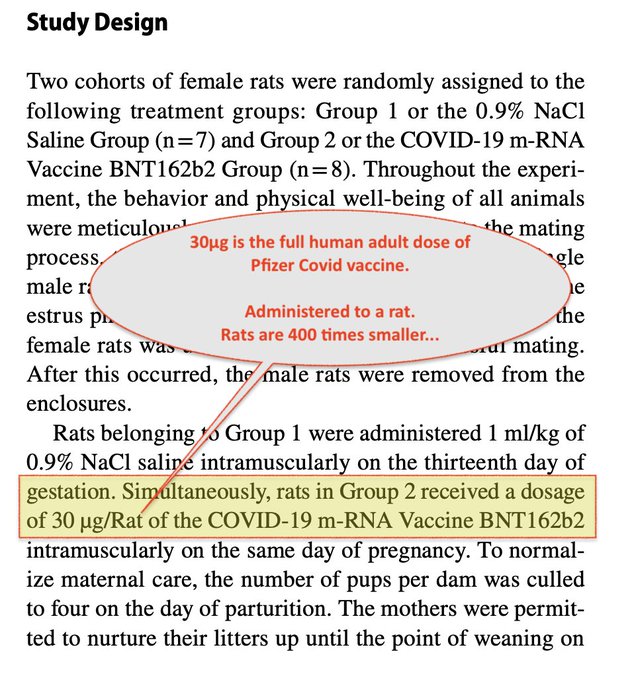
Osteocephalus germani referencing James Neill on X: “the authors administered a full human dose to a mice that weigh several hundred times less.”

The published Springer Nature was informed about the issues with the 2024 COVID-19 vaccine study, but they chose to disregard the evidence. In April 2024, the sleuth Actinopolyspora biskrensis shared this email on PubPeer:
“Thank you for raising your concern. I would like to inform you that we have investigated this matter and no editorial action needs to be taken.
I hope to have informed you sufficiently.
Wish best wishes,
Research Integrity Group, Springer Nature“
Do COVID-19 vaccines cause autism in males? And why only in males, is it because Turkish geniuses proved that females have no brain to speak of so it can’t be vaccine-damaged? Just before Antivaxxer-in-Chief RFK Jr could take resolute action, the paper was retracted. Because Mu Yang could prove the the conclusions of that antivax study were a steaming pile of manure.
As it happens, Mu is an expert on this exact methodology, being the first author of the standard-setting study Yang et al., 2011, which was cited almost 700 times. Unlike the peer reviewers of the Erdogan et al 2024 paper, Mu saw the fatal flaws:


Bottomline: The “autism-like behavior” interpretation is NOT supported by the data as published.”
In february 2025, Springer Nature reached out to Mu Yang and asked her to provide an expert look into that paper. The retraction was published on 19 July 2025:
“The Editor-in-Chief has retracted this article. After publication, several concerns were raised regarding the methodology described in this article. The authors have provided raw data for validation. However, a post-publication review found inconsistencies in the number of subjects reported in the Methods and raw data. The Editor-in-Chief therefore no longer has confidence in the presented data.
None of the authors have responded to correspondence regarding this retraction.”
The last author of this world-shattering (and now shattered) study, the Demiroğlu Bilim University professor Oytun Erbaş, is a somewhat of a national TV celebrity who self-describes as “Turkey’s Elon Musk“. He is also an expert on both COVID-19 and autism, for Erbas announced in 2021 that a) ethnic Turks were genetically immune to COVID-19, and b) autism was caused by the consumption of ayran (traditional Turkish salty yoghurt drink). The latter claim was based on Erbas’s study where 6 (six) pregnant rats were fed with ayran:
Evrim Senkal , Erman Bagcioglu , Umut Eryigit , Oytun Erbas , Volkan Solmaz Exposure to hypertonic solutions during pregnancy induces autism-like behaviors via the NFAT-5 pathway in offspring in a rat model Physiology & Behavior (2021) doi: 10.1016/j.physbeh.2021.113545

Same kind of nonsense error bars were found in Figures 1 and 2.
In 2018, Erbas and the corresponding author of the 2024 COVID-19 vaccine paper, the Izmir Katip Celebi University professor Mumin Alper Erdogan, declared that autism was caused by mothers’ obesity, based on another rat study:
Oytun Erbas , Mümin Alper Erdogan , Asghar Khalilnezhad , Fulya Tuzcu Gürkan , Gürkan Yiğittürk , Ayfer Meral , Dilek Taskiran Neurobehavioral effects of long-term maternal fructose intake in rat offspring International journal of developmental neuroscience (2018) doi: 10.1016/j.ijdevneu.2018.07.001


In August 2024, Erbas blamed autism on mothers going to work instead of staying at home, and thus their increased “stress and testosterone“. The young professor also diagnosed young people of today:
“Generation Z is an autistic generation. I think the diagnosis of Z generation is autism. They have recurrent behaviors, they can play on the computer until the morning. They can talk in WhatsApp, they can be stuck on Instagram. They are repetitive. They consume the same type of foods.
They eat hamburgers, they eat pizza. […] In 10 years, the autism rate will increase by 50 percent. 5 out of 10 children will have autism .”
See how fast those COVID-19 vaccines do damage? Probably combined with ayran.
The 2024 COVID-19 mRNA vaccine study is based on Erbas’ and Erdogan’s previous discovery about the SARS-CoV2 spike protein causing autism, where again mouse-sized chambers were used to test rats.
Mumin Alper Erdogan, Miray Turk , Gizem Dinler Doganay , Ibrahim Halil Sever , Bahattin Ozkul , Ibrahim Sogut , Ebru Eroglu , Yigit Uyanikgil , Oytun Erbas Prenatal SARS-CoV-2 Spike Protein Exposure Induces Autism-Like Neurobehavioral Changes in Male Neonatal Rats Journal of neuroimmune pharmacology (2023) doi: 10.1007/s11481-023-10089-4


Noteworthy: Erbas and Erdogan combined the spike protein injection with aluminium, for not obvious reason but because the vaccine adjuvant aluminium is popular in the antivax “research” community as the cause of autism, read here:
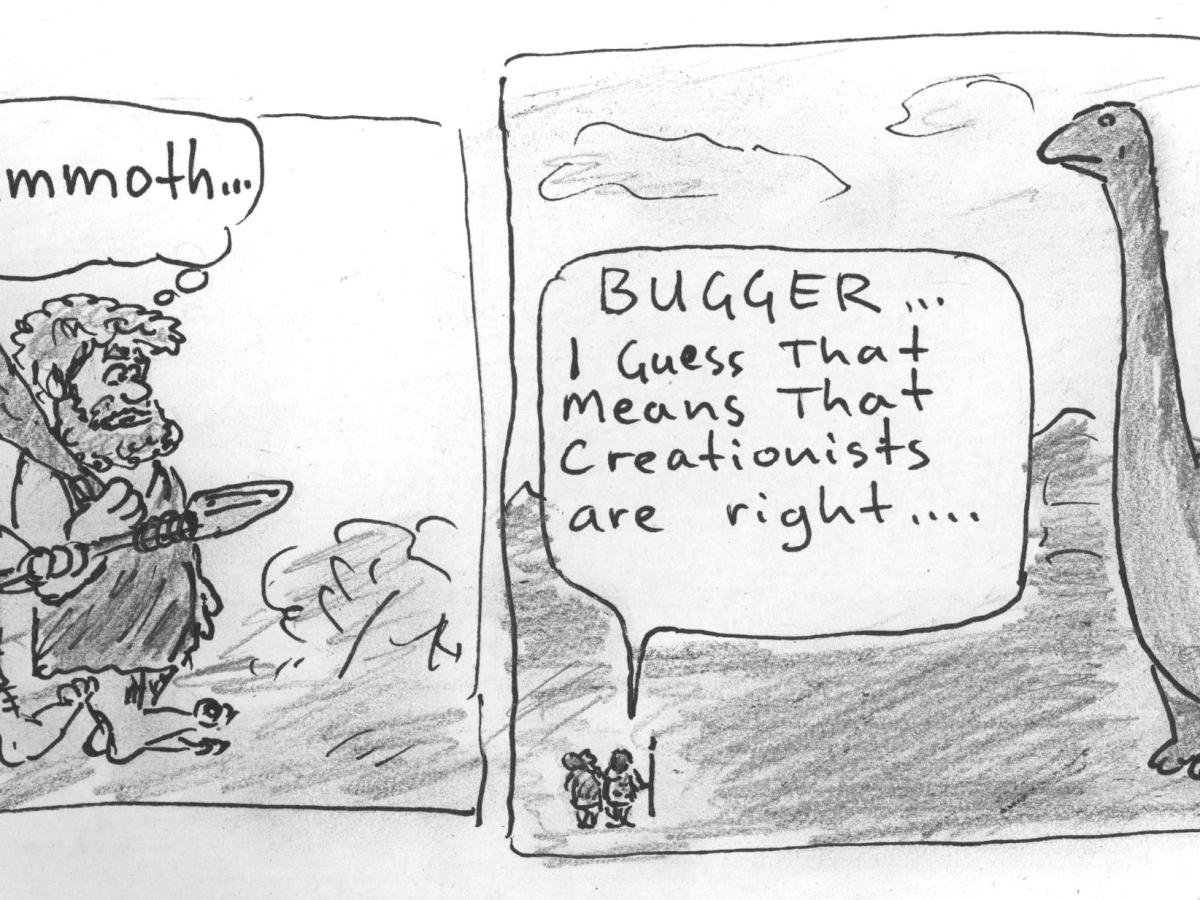
The good thing is that Erbas, who has a very prominet presence of Turkish television, never runs out of ideas. Also in 2024, he postulated that autism and schizophrenia can be cured with tetracycline antibiotics (Acar et al 2024), or with insulin injections (another rat study, Arda et al 2024). And he just now postulated in Springer Nature’s Naunyn-Schmiedeberg’s Archives of Pharmacology that autism can be also treated with the heavy metal bismuth (Kilic et al 2025). Erbas publishes rat studies as if there’s no tomorrow, assigning all possible random chemicals as cures for all possible diseases.
There’s also evidence of data forgery on PubPeer, like this by Erbas and Erdogan:
A. Erdogan , M. A. Erdogan, A. Y. Kara , S. Bora , G. Yigitturk , O. Erbas Effect of fluid resuscitation on acute lung injury in a rat model of sepsis Bratislava Medical Journal (2021) doi: 10.4149/bll_2021_047

Actinopolyspora biskrensis: “All of the images in Figure 1 seems to have “corner clones,” regions that appear duplicated around the figure labels.”
Some inappropriate data reuse:
- Süleyman Kardaş, Osman Sezer Çınaroğlu, Ejder Saylav Bora, Oytun Erbaş Gallic Acid Protects from Sepsis-Induced Acute Lung Injury Current Issues in Molecular Biology (2023) doi: 10.3390/cimb46010001
- C. Dibekoğlu, Y. Uyanıkgil, O. Erbaş Sulfasalazine prevents lung injury due to intra-abdominal sepsis in rats: possible role of Nrf2 and angiopoietin-2 Brazilian Journal of Medical and Biological Research (2023) doi: 10.1590/1414-431x2023e12698

Actinopolyspora biskrensis: “Images seem uncomfortably similar […] However, the treatments appear to be described differently.”
Here the specta were hand-drawn:
Edip Gonullu , Gozde Dagistan , Yakup Ozsezer , Mumin Alper Erdogan, Oytun Erbas Aesculus hippocastanum Alleviates Diabetic Neuropathy by Reducing MMP-9 and MMP-10 Levels International Journal of Pharmacology (2023) doi: 10.3923/ijp.2023.862.871

Finally, this forgery was again found by Mu Yang:
Cansu Bilister Egilmez, Burcu Azak Pazarlar , Mumin Alper Erdogan , Oytun Erbas N-acetyl cysteine: A new look at its effect on PTZ-induced convulsions Epilepsy Research (2023) doi: 10.1016/j.eplepsyres.2023.107144

We must brace ourselves for the worst. Turkey’s Elon Musk might be not a genius, but a fraud.
Donate!
If you are interested to support my work, you can leave here a small tip of $5. Or several of small tips, just increase the amount as you like (2x=€10; 5x=€25). Your generous patronage of my journalism will be most appreciated!
€5.00

 For Better Science
“Now, Srikanta Goswami, associate professor at National Institute of Biomedical Genomics in India, has an older retraction, from his time in the lab of Vladimir Spiegelman, then at University of Wisconsin in USA, now at Penn State”. something else developing. PubPeer – Specific targeting of Wnt/β-catenin signaling in human melan…
LikeLiked by 1 person
Science Breakthrough
Lying increases trust in science
B. V. E. Hyde
https://link.springer.com/article/10.1007/s11186-025-09635-1
‘This study begins by outlining the transparency paradox: that trust in science requires transparency, but being transparent about science, medicine and government reduces trust in science. A solution to the paradox is then advanced here: it is argued that, rather than just thinking in terms of transparency and opacity, it is important to think about what institutions are being transparent about. By attending to the particulars of transparency – especially with respect to whether good or bad news is disclosed – it is revealed that transparency about good news increases trust whereas transparency about bad news decreases it, thus explaining the apparent paradox. The apparent solution: to ensure that there is always only good news to report, which might require lying. This study concludes by emphasizing how problematic it is that, currently, the best way to increase public trust is to lie, suggesting that a better way forward (and the real solution to the transparency paradox) would be to resolve the problem of the public overidealizing science through science education and communication to eliminate the naïve view of science as infallible.’
LikeLike
“resolve the problem of the public overidealizing science through science education and communication to eliminate the naïve view of science as infallible.” The public are not the ones making things up. That would be educating the wrong group.
LikeLiked by 1 person
Is there a contradiction in this statement? “part of Holtzbrinck, the majority shareholder in Nature’s publisher, Springer Nature. Nature’s news and features team is editorially independent of its publisher.” Exclusive: These universities have the most retracted scientific articles
LikeLike
It’s nice to see Nature at least virtue signalling about retractions. Ay one time, not very long ago Nature was trying its best to suppress any uncovering of scientific misconduct. Language not far off an authoritarian regime. A destabilizing force | Nature
LikeLike
Nature writes “libellous messages “, yet how can that be true when this was the result? Silvia Bulfone-Paus und die wilde 13 « Laborjournal Blog and Funding agency sanctions Bulfone-Paus and former postdoc – Retraction Watch
LikeLike
Is that blackwhite, or doublethink, or both?
LikeLike
Flagged another article related to PNAS mentioned here in PubPeer. The authors might be repeating the same figures of Fig 5E-F in one more publication.
Fig 1C of
https://www.sciencedirect.com/science/article/pii/S0021925819352391
LikeLiked by 1 person
The Xiaoqun Dong reported to be “now at Michigan State University” is not the same person who worked at Brown with Jack Wands. In the CV of the MSU Dong there is no mention of Brown University, nor there is Wands in her publication list: Precision Health Program.
Moreover, they look similar, but are not the same person.
LikeLike