

Schneider Shorts of 2 May 2025 – German ex-university president once again innocent, US ex-university president heads a big company, a Noble Genius awarded, with talking mice, papermills reaching Science, concerns expressed for male bigwigs, and finally, how to escape heart attack while drunk.
Table of Discontent
Science Elites
- A gross negligence is not detectable – University of Ulm dropped investigation of Simone Fulda
- Noble Genius – David Sinclair honoured at The World Forum
- Only if Tessier-Lavigne led it – Fallen Stanford president heads a $1 billion business
Scholarly Publishing
- Now part of common knowledge – concerns for Alberto Mantovani
- No longer available for verification – concerns for Dana Farber cheaters and Massimo Loda
- We stand by the findings and conclusions – concerns for Roche’s Levi Garraway
Retraction Watchdogging
- Further discrepancies were observed – 12th retraction for Christoph Thiemermann
- To maintain transparency and uphold the integrity – first two retractions for Ayman Atta
- He was requested by a reviewer – Arash Karimipour had no choice but to comply!
Science Breakthroughs
- Human-caused pollution – papermills reach Science
- Drink champagne! – to avoid a heart attack
- They talked differently to the female mice – why mice and Neanderthals don’t speak
Science Elites
A gross negligence is not detectable
The German paediatric oncologist Simone Fulda, who in February 2024 was forced to resign as President of the University of Kiel over my reporting of her massive PubPeer record, has been declared officially innocent by yet another one of her former employers, the University of Ulm. Previously, the University of Frankfurt – whereto Fulda went after Ulm and before Kiel, and rose to Vice-Rector for Research – declared her innocent. That was duly celebrated by the German magazine Der Spiegel, even with a hit-piece on yours truly, possibly on behalf of Fulda’s lawyers (read January 2025 Shorts).
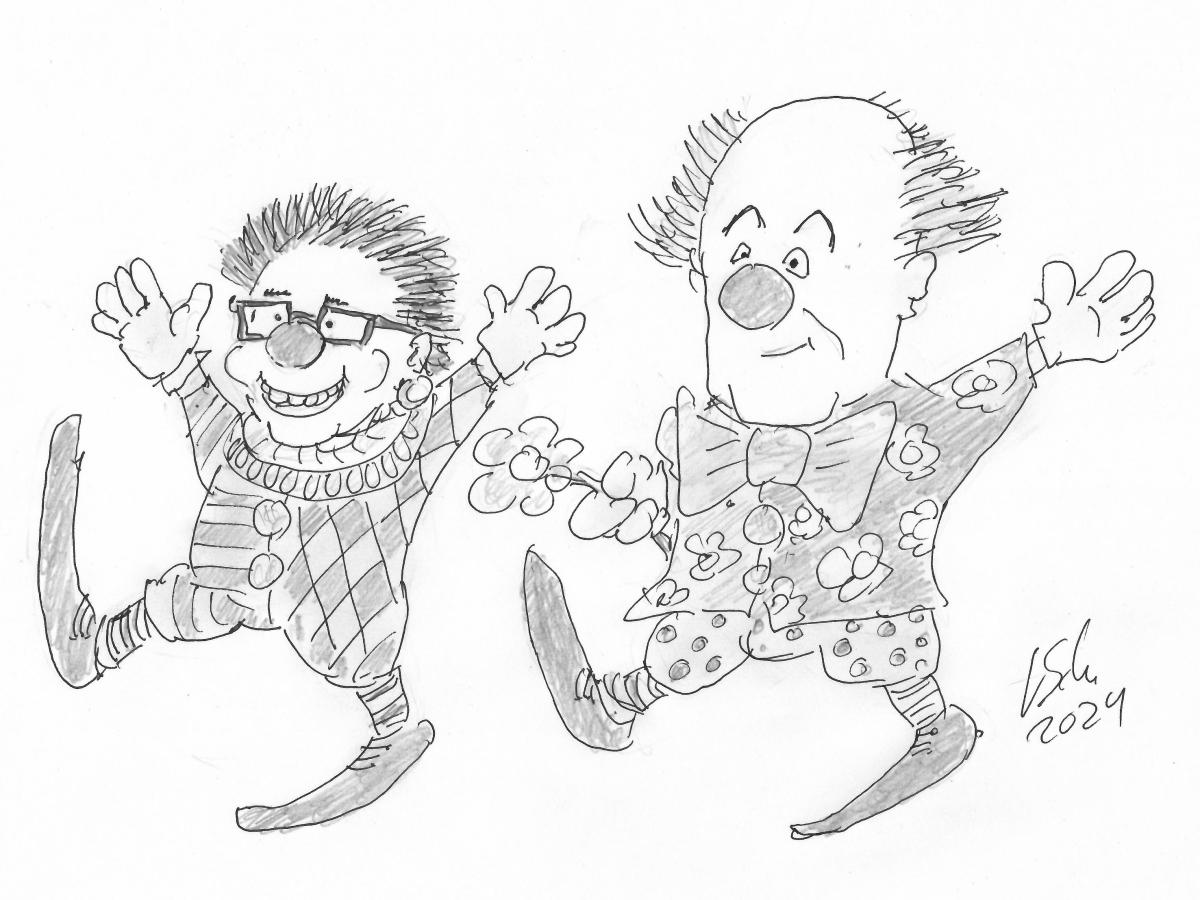
Simone Fulda: Open4Work!
“I am taking this step with a heavy heart and a sense of responsibility for the university since a sufficient foundation of mutual trust no longer remained with some parts of the university to ensure successful cooperation”, – Simone Fulda

No wonder that this time Spiegel was invited to exclusively report about Fulda’s whitewashing in Ulm. Which is a much more serious affair than in Frankfurt, because the majority of bad papers are from Ulm. Here is the Spiegel’s new masterpiece of investigative journalism, from 28 April 2025 (translated):
“In the case of the allegations of plagiarism against the former Kiel University president Fulda, another decision has been made: the University of Ulm terminated the investigations against her and another medical professor. A gross negligence is not detectable. However, the Senate Commission “Responsibility in Science” saw a violation of the principles of good scientific practice.
A science blogger had accused the former Ulm professor Fulda and the retired medical director of the Ulm Clinic for Pediatric and Adolescent Medicine, Klaus-Michael Debatin, at the end of 2023 to manipulate image data in their -partially jointly written- scientific publications.”
It was my evil article about Fulda and her recently retired mentor Klaus-Michael Debatin, who also happens to be a former Vice-Rector of the University of Ulm:
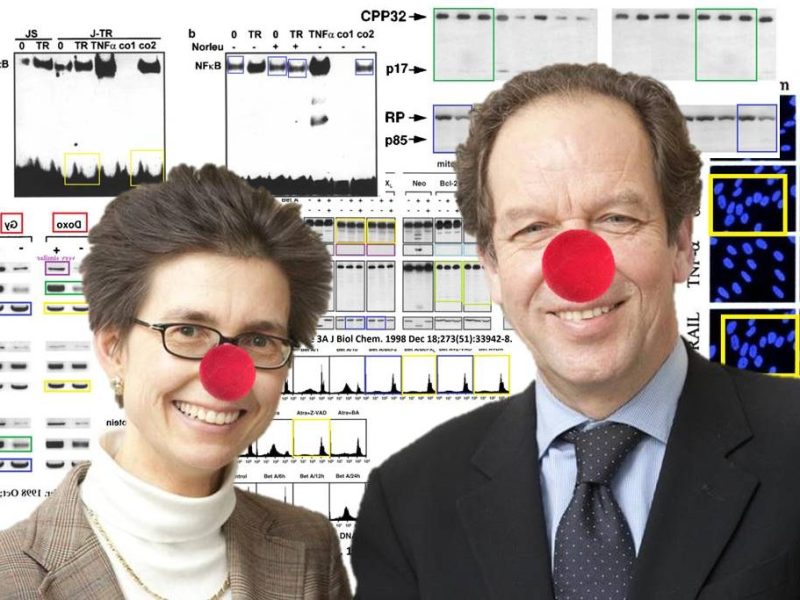
Fulda & Debatin: Reproducibility of Results in Medical and Biomedical Research
“Basic and advanced training for researchers should focus much more on self-reflection, openness and a culture of error acceptance.”
Spiegel continues:
“In the course of the procedure, Fulda admitted errors or mix-ups of representations and illustrations for her younger work, of which the original data is still available, the University of Ulm said. During her hearing, she was unable to clear the doubts about her scientific integrity. However, since scientific misconduct due to gross negligence by falsifying or manipulating representations and illustrations could not be demonstrated, the procedure was discontinued at the end of February, as the university now announced. […]
The German Research Foundation (DFG) currently is still examining allegations against Fulda. A decision by the responsible main committee is pending. The case is not completely over in Ulm either: a sub-procedure for image manipulations is still pending, the university said.”
The Spiegel article was then corrected with a notice: “In fact, the sub-procedure is not about image manipulation“, also the newspaper Kieler Nachrichten referred to a statement by a university speaker in this regard, and cited a DFG spokesman:
“”Prior to the meeting of the main committee, Ms. Fulda asked for a lawyer in the short-term access to procedural documents, for which she was given the opportunity to comment before the decision,” DFG spokesman Marco Finetti told the Kieler Nachrichten. The case couldn’t therefore be brought into the March meeting of the main committee. “It is now intended to decide it in the upcoming main committee meeting in early July.””
The higher education magazine Forschung und Lehre mentioned on 29 April 2025 that the university Senate terminated the investigation against both Fulda and Debatin.
Basically, the University of Ulm had to urgently stop investigating because they saw no way to save Fulda (and Debatin) otherwise. Since the obvious nature of data manipulation was not deniable, the usual excuse of absence of intent to deceive was deployed. Who knows why those figures were faked, and indeed who cares. Professors are supremely intelligent and supremely creative people, if they feel like fabricating some western blots in Photoshop, who are we to criticise the mysterious workings of genius minds. Fulda might even escape a reprimand for negligence. And then sue everyone for causing her reputational and financial damage, what fun.
Of course not a single paper by Fulda or Debatin will be retracted, both have very good lawyers to make sure of that. Usually corrections go through, the worst things Fulda and Debatin suffer are permanent Expressions of Concern, read here:
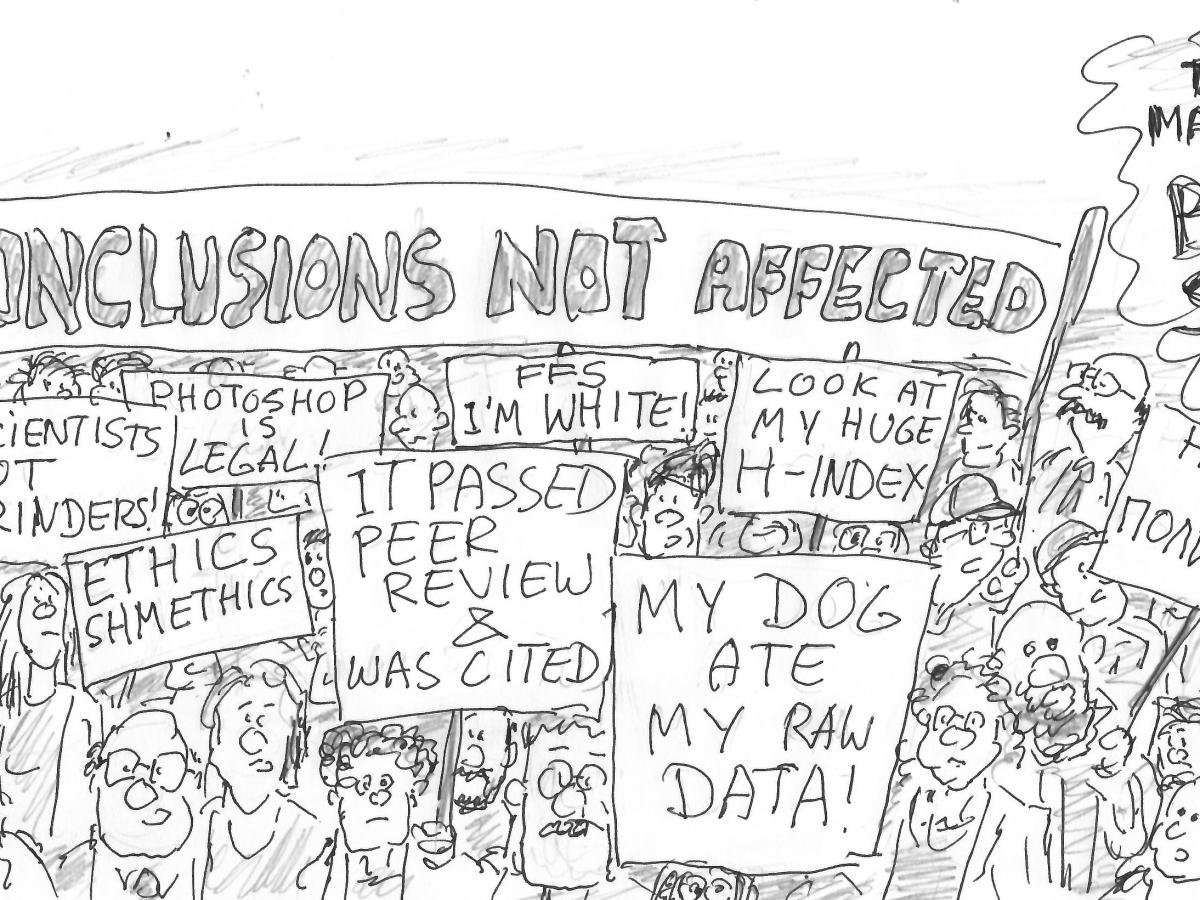
Concerns for whites, retractions for the rest?
“Expressions of Concern may be used as an interim notice to flag a potential issue that may be ultimately resolved with another amendment outcome (e.g. retraction or correction) or they may remain as the final outcome in cases where conclusive evidence cannot be obtained. ” – COPE
Noble Genius
The anti-aging entrepreneur and Harvard professor David Sinclair won another award. He is now officially the “Noble Genius”.
Which is very helpful, since Sinclair’s academic peers with their own anti-aging businesses all turned on him when Sinclair’s startups started marauding in their own anti-aging markets (read December 2024 Shorts).

Never-ageing Anti-aging to cure COVID-19
Scientists David Sinclair and Michael Lisanti have an ingenious solution to COVID-19: anti-aging drugs. If a disease kills old people, stop being old!
In 2020, Sinclair announced to cure COVID-19 with his anti-aging supplements, and maybe this is what prompted the German musical and film entrepreneur, Jaka Bizilj (who once almost died from COVID-19), to invite Sinclair to The World Forum organised by his Cinema for Peace Foundation, and award Sinclair with the Noble Genius Medal. The event took place in March 2025 in Berlin.
Here the announcement:


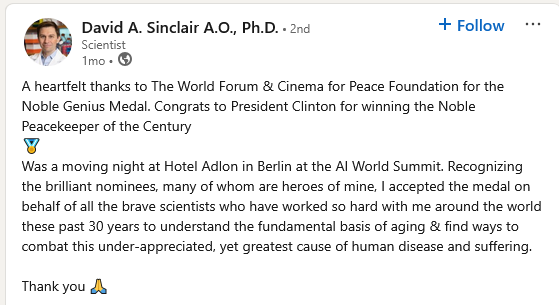
And Sinclair celebrating:
Now, the crazy thing was that I was also invited to this forum. On 12 March 2025, 6 days before the event started, I received this message from Shirali Mirjafarov of
The World Forum:
“Dear Mr. Leonid Schneider,
On behalf of The World Forum and Cinema for Peace,
We are pleased and honoured to invite you as Moderator to The World Forum and AI World Summit, taking place on March 18-19, 2025, in Berlin, Germany. This event will bring together global leaders, stakeholders and decision-makers to work towards establishing a Global AI Law, updating the Universal Declaration of Human Rights for the Digital Age, and defining global rules and rights for robots and AI.
Please contact with us to see the formal invitation attached. We would be happy to cover your travel and accommodation expenses. Please advise if you are interested in partaking in this opportunity.
Currently Bill & Hillary Clinton, Katarina Barley Vice-President of the European Parliament and Philosopher Yuval Noah Harari are confirmed guests of The World Forum and AI World Summit on 18 & 19 March 2025 and we look forward to continuing to develop this list of esteemed guests.
We look forward to your positive response.”
I didn’t take that message seriously and didn’t reply. But now that I heard of Sinclair’s Noble Genius award, it all makes sense. They must have logged me under “Sinclair reporters”, without reading what I wrote about him.
Only if Tessier-Lavigne led it
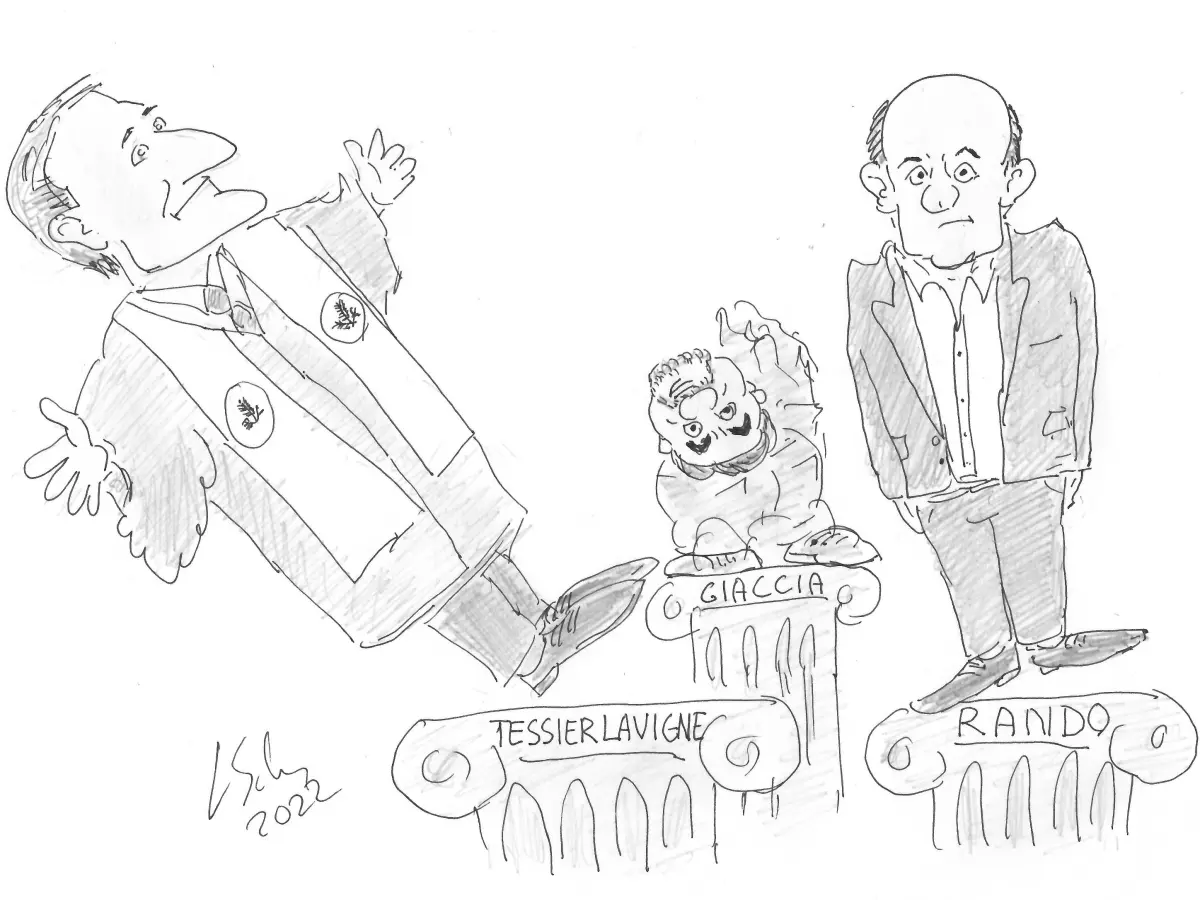
The Devil always shits on the biggest pile, certainly in academia. Marc Tessier-Lavigne was forced to resign as Stanford president over all that fake data he published (and then had to retract), and shamed as fraud-enabler by his prior employer Genentech, but his special skills and talents are still much in demand.
Toppling Giants in Stanford
Everyone is talking about Stanford’s President Marc Tessier-Lavigne now. OK, let’s talk about him, and how Stanford deals with research fraud. And then let’s talk about Thomas Rando.
The student newspaper The Stanford Daily informed on 24 April 2025:
“Former Stanford President Marc Tessier-Lavigne is now the CEO of a biopharma startup, reported Endpoint News. The company, Xaira, seeks to use artificial intelligence (AI) technology to generate molecules to treat diseases. […]
With names like Tessier-Lavigne, Stanford Nobel laureate Carolyn Bertozzi, Former United States Commissioner of Food and Drugs Scott Gottlieb and venture capitalists Bob Nelsen and Vik Bajaj onboard the project, the startup has attracted significant media attention. Vik Bajaj is also an adjunct professor at Stanford.
The company has already secured $1 billion in capital commitments from Silicon Valley firms. Tessier-Lavigne’s name brought in support from investors — according to Bloomberg, “some [investors] said they would back the company only if Tessier-Lavigne led it.”
Incidentally, the Stanford Nobel laureate Carolyn Bertozzi coauthored some papers with the questionable US scientists Valerie Weaver and Tony Wyss-Coray.
Pound of Flesh, or Is Cancer Fraud Inevitable?
Ashani Weeraratna and Valerie Weaver, two women in STEM, harassed by trolls.
Scholarly Publishing
Now part of common knowledge
Another journal expressed concerns for the careers of white authors who published fraud. This time, it’s about the scientific director of the Humanitas University in Milan, Alberto Mantovani, who featured several times on For Better Science, like here:

Top Italian Scientists
“You may think this is just a silly prank with zero impact on whatsoever, but no. […] this initiative is useful for something. It provides solid numbers for quantifying the extent of scientific misconduct in Italy and beyond” – Aneurus Inconstans

Alfonsina Desiderio and her pathological Bully Boys
Smut Clyde and Clare Francis studied the works of Milanese cancer researchers around Maria Alfonsina Desiderio. There are even ideas for T-shirts!

Here is the problematic paper, one of many Mantovani has on PubPeer:
Alessandra Valerio , Marina Ferrario , Fernando O. Martinez , Massimo Locati, Valentina Ghisi , Laura Grazia Bresciani , Alberto Mantovani, PierFranco Spano Gene expression profile activated by the chemokine CCL5/RANTES in human neuronal cells Journal of Neuroscience Research (2004) doi: 10.1002/jnr.20250


Mantovani joined the PubPeer debate in June 2024:
“This paper was published 20 years ago, with experiments done years earlier, as a collaboration started when I was serving the University of Brescia as Professor of Pathology with Valerio (first and corresponding author) and Spano (senior full professor; he passed years ago), Pharmacology. Understandably, I have no access to the original data.“
The Italian bigwig then explained that the fake gels were merely an utterly irrelevant “internal technical control” and do not affect “the actual message of the paper, which is now part of common knowledge“, as proven by 50 other papers which quoted this one.
The journal’s Editor-in-Chief Lawrence S. Sherman agreed and issued on 22 April 2025 this short Expression of Concern (highlight mine):
“Following publication, concerns were raised by a third party that the control actin bands had been duplicated within Figure 2. While the image manipulation does not seem to affect the conclusions of the paper, the journal has decided to issue an Expression of Concern to inform and alert readers. The authors have been notified of the Expression of Concern.”
Very Fulda-eaque view on how science works, I shall say.

Pier Paolo and Pier Giuseppe, the titans of IFOM-IEO
Meet two grand cancer researchers from Milan: Pier Paolo Di Fiore and Pier Giuseppe Pelicci. Then decide if you want to give them your tax and charity money.
Here another paper by the same lead authors from University of Brescia, PierFranco Spano (who died in January 2018) and Alessandra Valerio (who has more on PubPeer):
Marina Pizzi, Flora Boroni , Andrea Bianchetti , Costantinos Moraitis , Ilenia Sarnico , Marina Benarese , Francesca Goffi , Alessandra Valerio , PierFranco Spano Expression of functional NR1/NR2B‐type NMDA receptors in neuronally differentiated SK‐N‐SH human cell line The European journal of neuroscience (2002) doi: 10.1046/j.1460-9568.2002.02403.x
Fig 3

No longer available for verification
Another case where editorial concerns for white bigwigs overruled basic decency.
Dana-Farberications at Harvard University
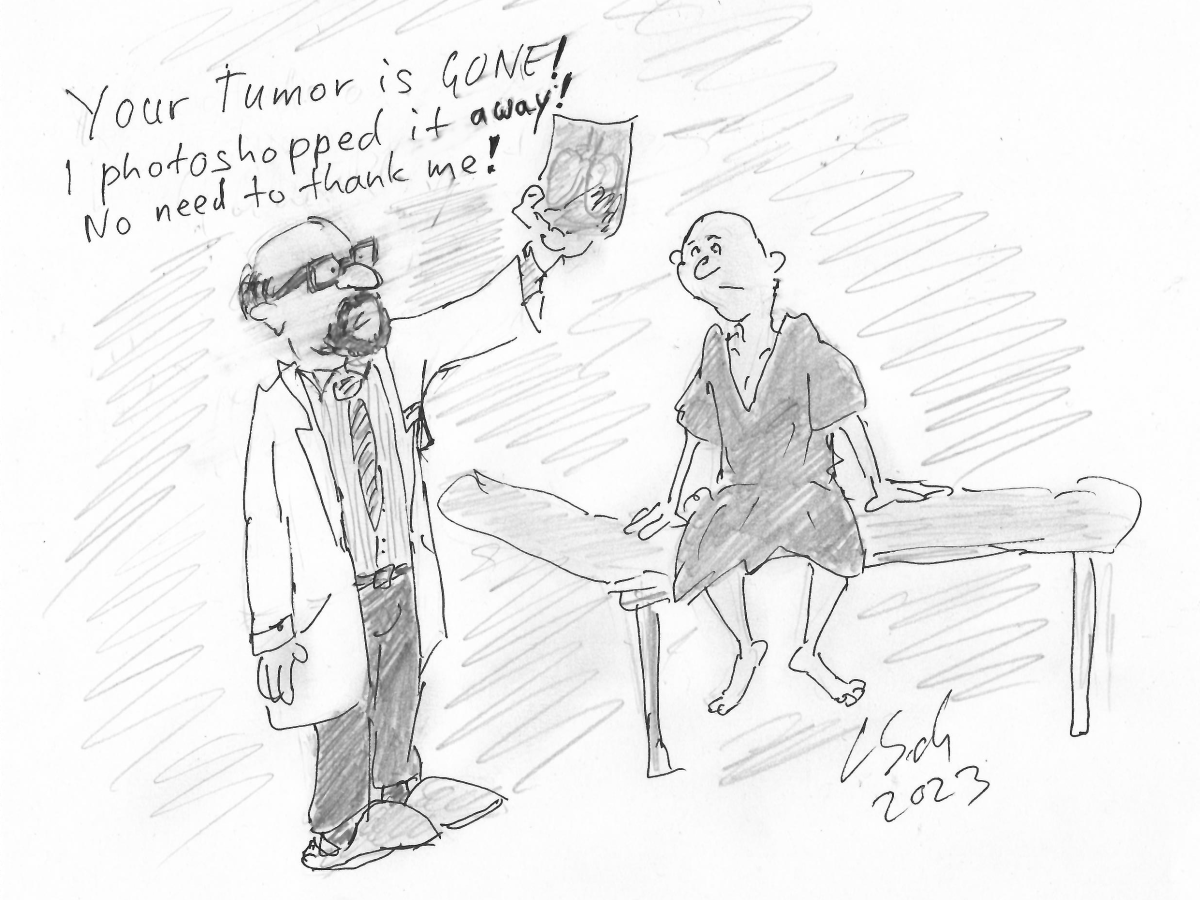
“Imagine what mistakes might be found in the raw data if anyone was allowed to look!” – Sholto David

This Nature paper from the Harvard-affiliated Dana Farber Cancer Institute (DFCI) was celebrated with a press release in 2008, titled “Researchers identify promising cancer drug target in prostate tumors“. In 2016, it was corrected because someone may have blown the whistle:
Shidong Jia , Zhenning Liu , Sen Zhang , Pixu Liu , Lei Zhang , Sang Hyun Lee , Jing Zhang , Sabina Signoretti , Massimo Loda, Thomas M. Roberts , Jean J. Zhao Essential roles of PI(3)K-p110beta in cell growth, metabolism and tumorigenesis Nature (2008) doi: 10.1038/nature07091

In February 2024, more was found:

You see the DFCI authors, the Harvard professors Thomas M. Roberts (Co-Chairman for DFCI’s Department of Cancer Biology) and his former postdoc Jean Zhao, the disastrous Sabina Signoretti, plus from Weill Cornell we have Massimo Loda. Certainly the last three can’t be trusted. In that NIH and DoD funded study, which proposed to use p110 inhibitors against cancer, Roberts, Loda and Zhao disclosed consulting relationships with Novartis Pharmaceuticals (the maker of p110 inhibitors).
There’s too much money at stake, Roberts and Loda are white and very influential, if they get angry they won’t publish in Nature again. So here is the Expression of Concern from 24 April 2025:
“The Editors would like to alert the readers that concerns have been raised about a duplication between the tubulin control in Fig. 2b and the vinculin control in Fig. S6b. Given the age of the paper the raw data are no longer available for verification. The authors have provided contemporaneous data for the listed panels supporting the conclusions.
Zhenning Liu, Sabina Signoretti, Massimo Loda, Thomas M. Roberts and Jean J. Zhao agree with this Editorial Expression of Concern. Shidong Jia, Sen Zhang, Pixu Liu, Lei Zhang, Sang Hyun Lee and Jing Zhang did not respond to correspondence from the Publisher about this Editorial Expression of Concern.”
We stand by the findings and conclusions
Nature with even more concerns, again about (former) Dana Farber scientists. This time even more money is at stake, because the last author Levi Garraway left DFCI to become the Head of Global Product Development and Chief Medical Officer at Roche. You can read about him in March 2024 Shorts. The first author Cory Johannessen is now Global Head and Executive Director for Oncology at Novartis. Back then both were affiliated with Harvard’s DFCI and the Broad Institute:
Cory M Johannessen, Laura A Johnson , Federica Piccioni , Aisha Townes , Dennie T Frederick , Melanie K Donahue , Rajiv Narayan , Keith T Flaherty, Jennifer A Wargo, David E Root , Levi A Garraway A melanocyte lineage program confers resistance to MAP kinase pathway inhibition Nature (2013) doi: 10.1038/nature12688

“Mycosphaerella arachidis: “Do the authors have access to the original scans of the blots show in Extended Data Figure 4B? I’ve underlined two in red that look very similar to me”
In March 2024, Garraway replied on PubPeer with:
“We have reviewed the matter and have shared relevant information with the journal editors for their consideration in accordance with the journal’s policies. Also, we stand by the findings and conclusions of both the specific experiment and the paper as a whole“
On 24 April 2025, Nature issued this Editorial Expression of Concern:
“The Editors would like to alert the readers that concerns have been raised regarding a potential duplication in Extended Data Fig. 4b (pERK for A375 and WM266.4 cells).
Although the affected figure does not alter the results or conclusions of the article, we are advising readers of this information, as the original raw data are no longer available.
Cory M. Johannessen agrees with this Editorial Expression of Concern. Levi A. Garraway disagrees with this Editorial Expression of Concern. The Publisher has not been able to obtain current email addresses for Laura A. Johnson, Aisha Townes, Melanie K. Donahue and Rajiv Narayan. None of the other authors have responded to any correspondence from the Publisher about this Editorial Expression of Concern.”
Retraction Watchdogging
Further discrepancies were observed
Christoph Thiemermann gets his 12th retraction and still nobody, no journalist and no watchdog of retractions, still reports anything. I can’t blame these professionals: Porsche Chris after all is a rich German man installed by his late Nobelist mentor in charge of the William Harvey Research Institute (WHRI) of Queen Mary University London, which apparently declared him innocent. Such men are off limits. Except on For Better Science of course.
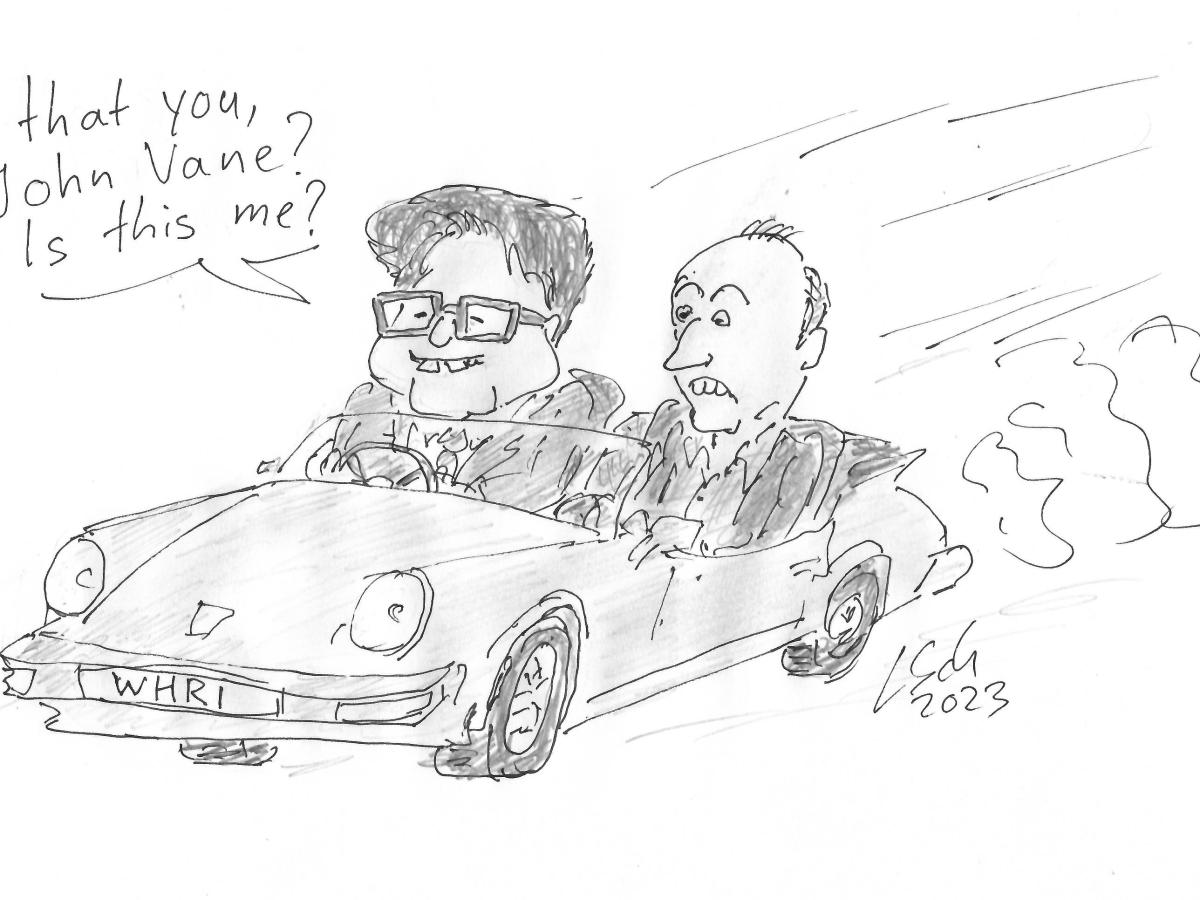
Queen Mary and John Vane’s Cowboys
Welcome to the the William Harvey Research Institute in London. Meet two proteges of its founder, the late Nobelist Sir John Vane: Chris Thiemermann and Mauro Perretti. Then meet their own rotten mentees, especially Salvatore Cuzzocrea and Jesmond Dalli.
Anyway, this now went plop:
Gareth S. D. Purvis, Fausto Chiazza, Jianmin Chen , Rodrigo Azevedo-Loiola , Lukas Martin , Dennis H. M. Kusters , Chris Reutelingsperger , Nikolaos Fountoulakis , Luigi Gnudi , Muhammed M. Yaqoob , Massimo Collino, Christoph Thiemermann, Egle Solito Annexin A1 attenuates microvascular complications through restoration of Akt signalling in a murine model of type 1 diabetes Diabetologia (2018) doi: 10.1007/s00125-017-4469-y

Figure 2f and 4c: the same Western blot (red boxes) describes degrees of phosphorylation of JNK for heart and kidney samples.

Thiemermann’s 12th retraction arrived on 29 April 2025:
“The Editor-in-Chief has retracted this article after concerns were raised about some of the data reported. The blots for Thr183/Tyr185 JNK appear to have been duplicated between Figures 2F and 4C, and between Figures 7C and 7D. The Authors provided the original raw data upon request by the Editors, but upon review further discrepancies were observed between the raw and published blot data. The Editor-in-Chief therefore no longer has confidence in the reliability of findings and conclusions of this article.
Gareth Purvis, Fausto Chiazza, Jianmin Chen, Chris Reutelingsperger, Luigi Gnudi, Muhammed Yaqoob, Massimo Collino, Christoph Thiemermann, and Egle Solito disagree with this retraction. The remaining authors did not respond to correspondence from the Publisher about this retraction.”
Yes, it looks like they submitted fake raw data. The last author Egle Solito is reader at WHRI, here she is with another untouchable WHRI leader and a fellow Italian, Mauro Perretti:
Catherine De Coupade , Maureen N. Ajuebor , Françoise Russo-Marie , Mauro Perretti , Egle Solito Cytokine Modulation of Liver Annexin 1 Expression during Experimental Endotoxemia American Journal Of Pathology (2001) doi: 10.1016/s0002-9440(10)62530-8

Solito has an extra affiliation in Naples, and here is another paper of hers, with a certain Antonello Petrella of University of Salerno:
Antonello Petrella , Michela Festa , S.F. Ercolino , M. Zerilli , Giorgio Stassi , Egle Solito , Luca Parente Annexin-1 downregulation in thyroid cancer correlates to the degree of tumor differentiation Cancer Biology & Therapy (2006) doi: 10.4161/cbt.5.6.2700

To maintain transparency and uphold the integrity
First retractions for the Egyptian cartoonist Ayman Atta, about whom you can read here:
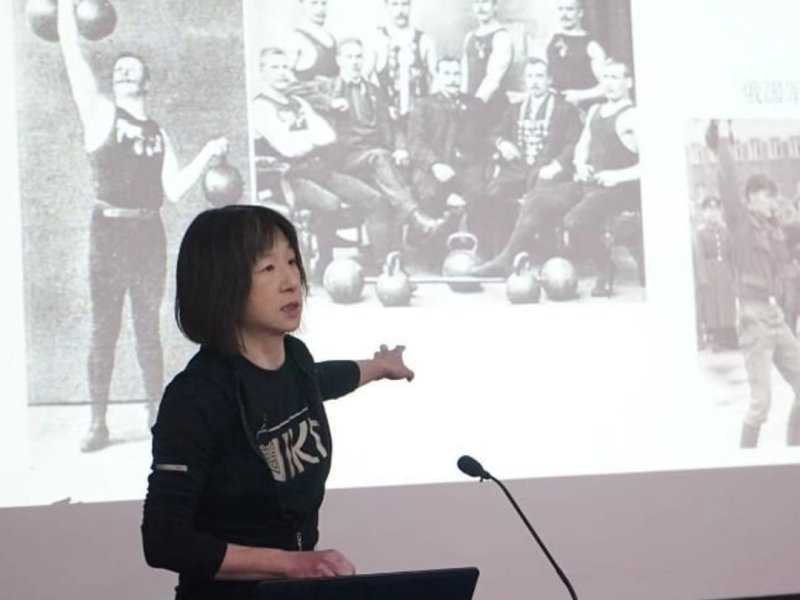
Journal of Molecular Liquids vs One-Man Papermills
Mu Yang catches two crooks, Ayman Atta and S Muthu, who flooded one Elsevier journal (and several others) with ridiculous hand-drawn fraud. Whom to believe, the peer review, or your own eyes?
Atta is professor at Egyptian Petroleum Research Institute with around 170 fake papers on PubPeer. His bizarrely excessive fraud was exposed by Mu Yang and Thomas Kesteman.
And now Atta earned his first two retractions. Nr 1, all spectra are hand-drawn (badly):
Ihab Shawish , Samha Al Ayoubi , Mohamed Bououdina, Abeer A. El-Segaey , Alia A. Melegy , Ayman M. Atta New Functionalized Di-substituent Imidazolium Ionic Liquids as Superior Faster Absorbents for Carbon Dioxide Gas ACS Omega (2024) doi: 10.1021/acsomega.4c02335


On 26 March 2025, ACS published this short retraction:
“The authors retract “New Functionalized Di-substituent Imidazolium Ionic Liquids as Superior Faster Absorbents for Carbon Dioxide Gas” (DOI: 10.1021/acsomega.4c02335) because adjustments were made to the spectra presented in Figure 1a,b and Figure 7, which affect the interpretation of the data. To maintain transparency and uphold the integrity of the scientific record, the authors have decided to retract the article.”
Applause to Atta and his friends for their heroic maintaining and upholding research ethics. Retraction Nr 2, in the same ACS journal, showcases the borderless decency of these great Egyptian men:
Ayman M. Atta , Eid. M. S. Azzam , Khalaf M. Alenezi , Hani El Moll , Lassaad Mechi , Walaa I. El-Sofany New Epoxy and Hardener System Based on an Imidazolium Ionic Liquid as an Anticorrosive Coating for Steel in the Marine Environment ACS Omega (2023) doi: 10.1021/acsomega.3c00979

No, the study from University of Latvia, in Riga doesn’t have any Egyptian coauthors. Atta just stole the pictures, the retraction notice from 20 Feberuary 2025 puts it diplomatically:
“The Editor retracts “New Epoxy and Hardener System Based on an Imidazolium Ionic Liquid as an Anticorrosive Coating for Steel in the Marine Environment” (DOI: 10.1021/acsomega.3c00979) because parts of Figure 6b were improperly duplicated and manipulated from Figure 1b of a previous publication (DOI: 10.3390/ma15217502). These concerns are significant enough to lose trust in the reliability of the study. As such, the article is being retracted.”
He was requested by a reviewer
A funny retraction for a gang of notorious papermillers, led by the corresponding authors Arash Karimipour from Iran and Zhixiong Li, professor at the Opole Polytechnic in Poland. Also on board is the papermiller Iskander Tlili, based in Saudi Arabia.
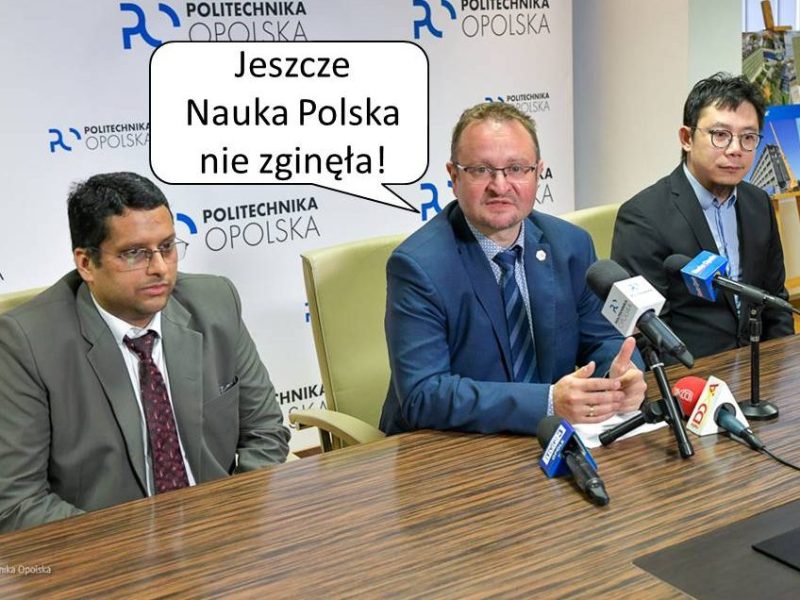
Polish science eaten by Papermill Krolczyk
“Prof. Grzegorz Królczyk, Vice-Rector for Science and Development of the Opole University of Technology, was elected President of the Council for Innovation in Higher Education and Science.”
It was not flagged on PubPeer previously, but the Elsevier journal was subject to an investigation by Mu Yang, which led to a spring cleaning:
Xinglong Liu , Mitra Adibi , Mohamad Shahgholi , Iskander Tlili , S. Mohammad Sajadi , Ali Abdollahi , Z. Li , Arash Karimipour Phase change process in a porous Carbon-Paraffin matrix with different volume fractions of copper oxide Nanoparticles: A molecular dynamics study Journal of Molecular Liquids (2022) doi: 10.1016/j.molliq.2022.120296
Journal of Molecular Liquids vs One-Man Papermills
Mu Yang catches two crooks, Ayman Atta and S Muthu, who flooded one Elsevier journal (and several others) with ridiculous hand-drawn fraud. Whom to believe, the peer review, or your own eyes?
Here is the retraction notice (highlights mine):
“Post-publication, the editor discovered suspicious changes in authorship between the original submission and the revised version of this paper.
During revision, the authors Mohamad Shahgholi and Iskander Tlili were added to the revised paper without explanation and without exceptional approval by the journal editor, which is contrary to the journal policy on changes to authorship.
Post-publication, an investigation conducted on behalf of the journal by Elsevier’s Research Integrity & Publishing Ethics team also discovered that acceptance of this article was partly based upon the positive advice of a reviewer who was closely linked to two of the authors, Arash Karimipour and Iskander Tlili. This compromised the editorial process and breached the journal’s policies.
The Ethics team has also determined that the authors were requested by one of the reviewers to insert redundant references to their papers, and papers of their close collaborators, during the peer-review process. The corresponding author has admitted that he was requested by a reviewer to add citations during revision, however there are no indications of citation prompting within the reviewer reports themselves. It therefore appears that a reviewer may have reached out to the author(s) directly, which is another breach of the journal’s policies.
The investigation also discovered suspicious email addresses used by the authors during submission that were not associated with legitimate researcher accounts.
Overall, the editor has determined that the authorship and the findings of the article cannot be relied upon, and has decided to retract the article.”
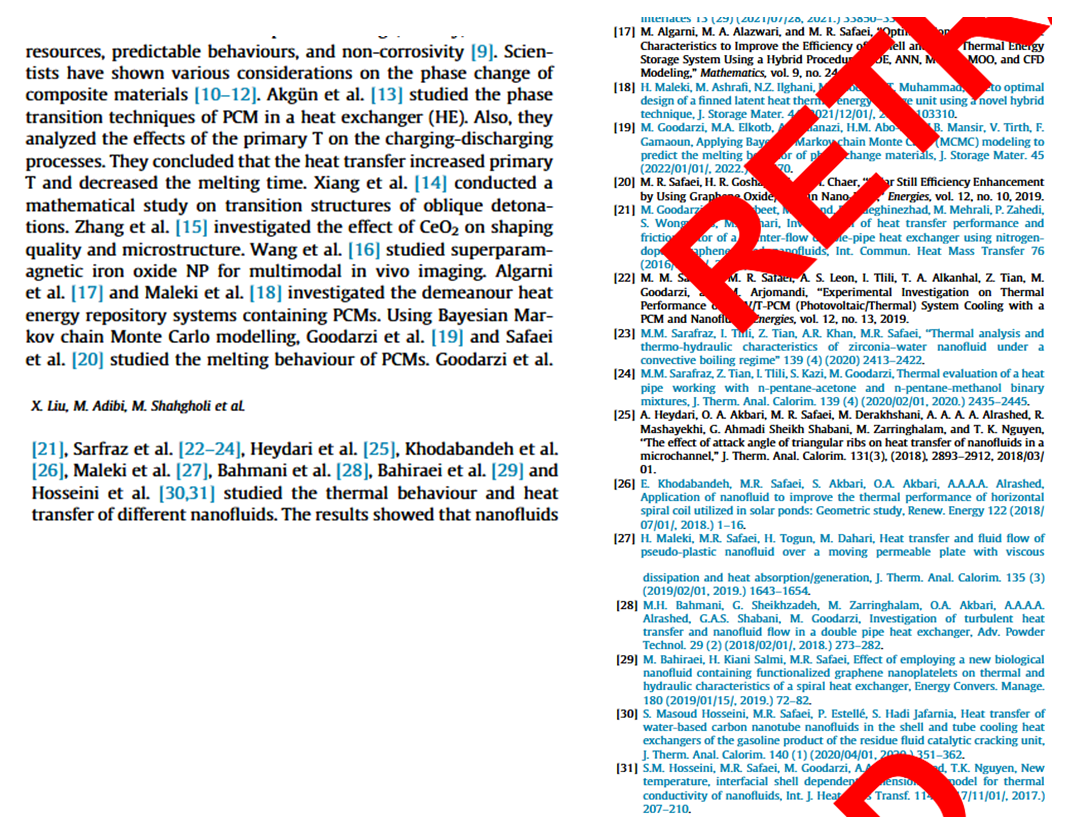
I found a block of 14 references to Mohammad Reza Safaei (PubPeer record) and Marjan Goodarzi (PubPeer record), both are Iranian papermillers working with Karimipour. Most likely one of them or even both acted as reviewers or editors of this paper.

Karimipour Saga I: Setting Boundaries
“The business of selling authorships and citations needs a steady supply of paper-shaped vehicles. It is most efficient to produce these in assembly lines that focus on a narrow topic.” – Maarten van Kampen

Science Breakthroughs
Human-caused pollution
A Science study with a very special lead author.
Deyi Hou, Xiyue Jia, Liuwei Wang, Steve P. McGrath, Yong-Guan Zhu, Qing Hu, Fang-Jie Zhao, Michael S. Bank, David O’Connor, and Jerome Nriagu Global soil pollution by toxic metals threatens agriculture and human health Science (2025) DOI: 10.1126/science.adr5214
El Pais reported in English on 17 April 2025:
“The massive study, published Thursday in Science, estimates that up to 17% of farmland worldwide contains excessive levels of one or more metals and metalloids.
A team of researchers from the U.S., Europe, and China reviewed thousands of existing studies on the presence of metals in the soil. They found over 82,000 papers.”
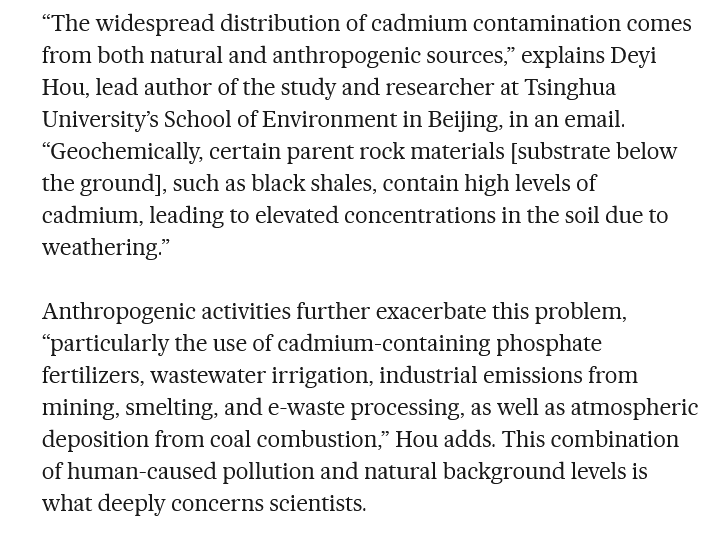
A large fraction of these existing studies may stem from papermills though. In fact, the Science paper’s lead author seems to be a loyal customer.
This first author is a certain Deyi Hou, Vice-Chair of the FAO’s International Network on Soil Pollution and professor at Tsinghua University in Beijing, China, which also celebrated this Science paper in an announcement.
He has a massive PubPeer record, mostly for compromised peer review. Another paper by Hou was celebrated by his university in 2023:
Deyi Hou, Abir Al-Tabbaa , David O’Connor, Qing Hu , Yong-Guan Zhu , Liuwei Wang , Niall Kirkwood , Yong Sik Ok, Daniel C. W. Tsang, Nanthi S. Bolan , Jörg Rinklebe Sustainable remediation and redevelopment of brownfield sites Nature Reviews Earth & Environment (2023) doi: 10.1038/s43017-023-00404-1
Well, do you recognise the papermillers Yong Sik Ok, Daniel C.W. Tsang and the ringleader, the German professor Jörg Rinklebe?
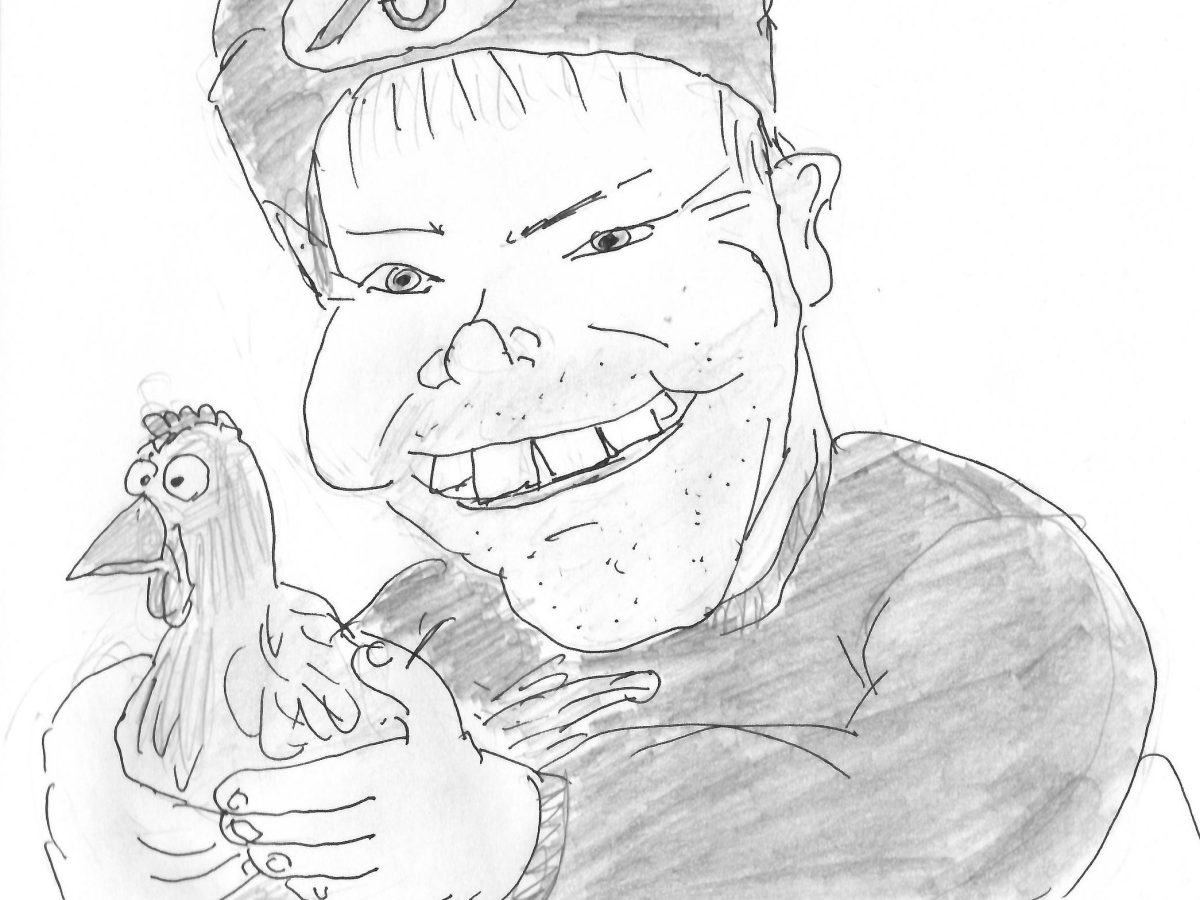

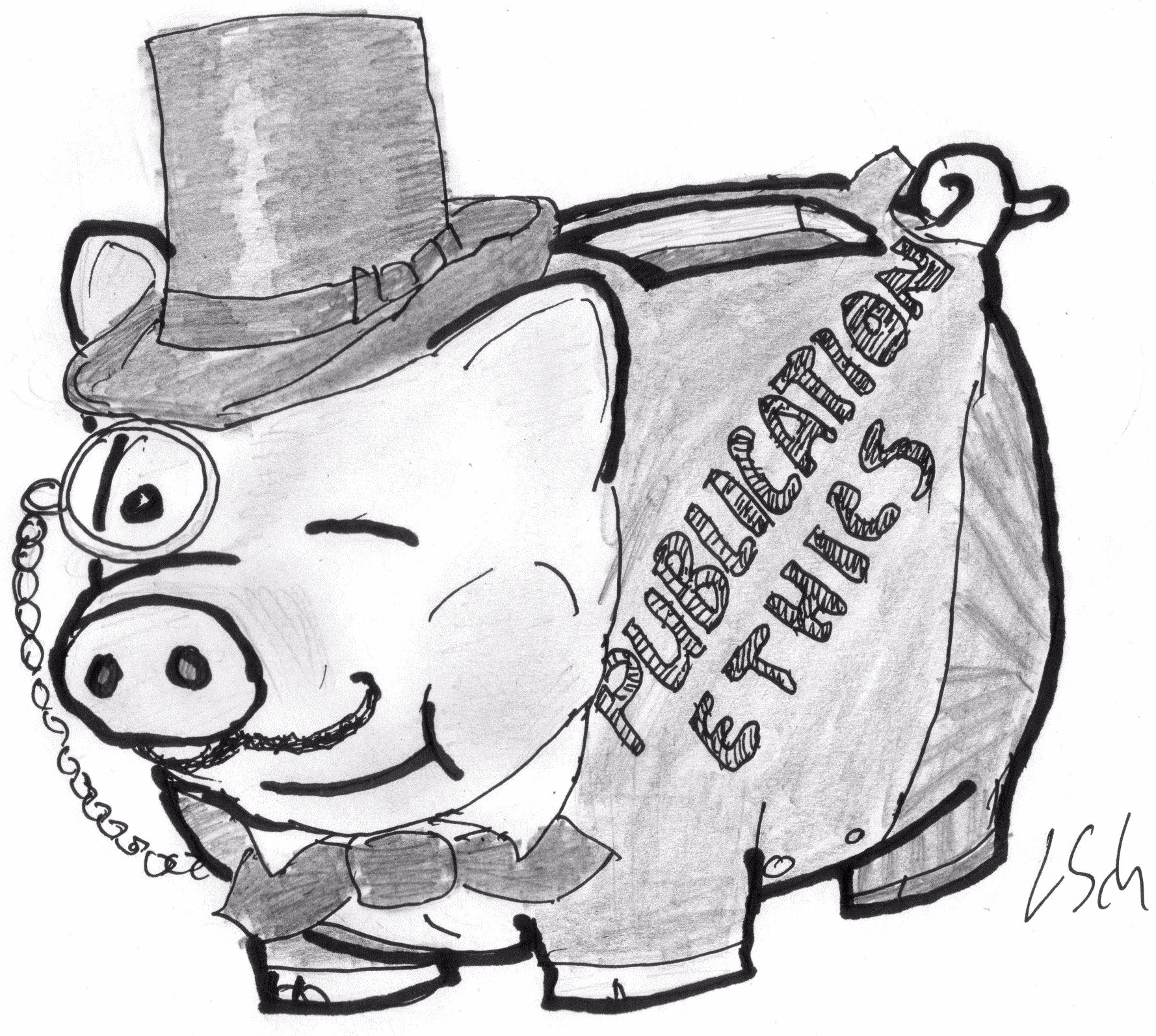
Since the Rinklebe gang runs a ring where they not only publish together, but also editorially handle and review each other’s papers, it is very likely that Rinklebe was either editor or reviewer of the new Science study.
Hou’s expertise is huge. Here, nanoparticles:
Ping Zhang , Irene Lo , David O’Connor , Simo Pehkonen , Hefa Cheng , Deyi Hou High efficiency removal of methylene blue using SDS surface-modified ZnFe2O4 nanoparticles Journal of Colloid and Interface Science (2017) doi: 10.1016/j.jcis.2017.08.025

Reese Richardson: Under Section 2.3. Characterization, the authors state: “Morphology and microstructures were observed using scanning electron microscopy (SEM, JSM-6360) and transmission electron microscopy (TEM, TECNAI G2).” However, Figures 3A and 3B show SEM images from a Hitachi SU8000 (not a JEOL JSM-6360) and Figures 3C and 3D show TEM images from a Hitachi instrument (not an FEI Tecnai).
Sometimes even mass-retracted papermill fraudsters like Ashok Pandey join, like on Kumar et al 2020 by Hou and Tsang.
Here the first retraction for Hou, that retraction already featured in December 2024 Shorts, and took place in a papermill-infested Elsevier journal which was delisted by Clarivate:
David O’Connor, Dietmar Müller-Grabherr , Deyi Hou Strengthening social-environmental management at contaminated sites to bolster Green and Sustainable Remediation via a survey Chemosphere (2019) doi: 10.1016/j.chemosphere.2019.03.035
“A journal-wide investigation by Elsevier’s Research Integrity & Publishing Ethics team identified violations of the journal’s policies on conflict of interest related to the submission and review of this paper.
Review of this submission was handled by Guest Editor Daniel Tsang despite an extensive recent record of collaboration, including co-publication, with one of the paper co-authors (Deyi Hou). Acceptance of the article was partly based upon the positive advice of a reviewer who was closely linked to one of the authors (Hou) and of Tsang, who also acted as a reviewer. This compromised the editorial process and breached the journal’s policies.
The authors disagree with this retraction and dispute the grounds for it”
Undated retraction
All in all, I am glad papermills have finally reached Science. How does all this help with environmental pollution clean-up efforts?
Drink champagne!
The Guardian is always good for great science, so here they are on 29 April 2025, telling you to drink bubbly to prevent sudden cardiac arrest (SCA):
“Drinking champagne could reduce risk of sudden cardiac arrest, study suggests
[…] The study identified 56 non-clinical risk factors associated with SCA, spanning lifestyle, physical measures, psychosocial factors, socioeconomic status and the local environment. It found compelling evidence that addressing these things could prevent a large number of cases.
Researchers found that factors such as higher consumption of champagne and white wine, increased fruit intake, along with maintaining a positive mood, weight management, blood pressure control and improved education, may serve as important protective factors. They concluded that between 40% and 63% of sudden cardiac arrest cases could be avoidable when looking at all 56 risk factors. Their findings were published in the Canadian Journal of Cardiology.”
Of course people who eat and live healthy and are in good jobs and in a good mood, are also financially secure, that’s also why they toast to their wealth with champagne.
The study was the usual: get access to UK Biobank data of 500,000 people, massage the data until you squeeze a correlation you wanted to see. The research was done by Fudan University in China. Here the related press release by Elsevier, and here is the paper:
Huihuan Luo, Qingli Zhang, Lu Zhou, Anni Li, Haidong Kan, Renjie Chen, Modifiable Risk Factors and Attributable Burden of Cardiac Arrest: An Exposome-wide and Mendelian Randomization Analysis Canadian Journal of Cardiology (2025) DOI: 10.1016/j.cjca.2025.02.027
Both the Elsevier press release and Guardian refer to the accompanying editorial:
Nicholas Grubic, Dakota Gustafson, Moving From Reaction to Prevention in Sudden Cardiac Arrest: Causal Clues and Caveats From Mendelian Randomisation Studies Canadian Journal of Cardiology (2025) DOI: 10.1016/j.cjca.2025.03.019

Quote from the piss-up editorial:
“One of the study’s most intriguing findings is the cardioprotective effect associated with champagne and white wine consumption, questioning long-held assumptions about the specificity of red wine’s cardioprotective properties. Research on the underlying mechanisms remains unclear, but these findings reinforce the idea that the benefits of moderate alcohol consumption may be more complex than previously assumed.”
Cheers to that, you can’t argue with so many professors. If your doctor tells you to stop drinking to lower your blood pressure, punch this science-denying bugger.
They talked differently to the female mice
The Rockefeller University discovered the gene for speech, and then taught mice where Neanderthals failed. Here the press release:
“Close relatives of ours such as the Neanderthals likely had anatomical features in the throat and ears that could have enabled the speaking and hearing of spoken language, and they share with us a variant of a gene linked to the ability to speak. And yet it is only in modern humans that we find expanded brain regions that are critical for language production and comprehension.
Now researchers from The Rockefeller University have unearthed intriguing genetic evidence: a protein variant found only in humans that may have helped shape the emergence of spoken language.
In a study published in Nature Communications, researchers in the lab of Rockefeller researcher Robert B. Darnell discovered that when they put this exclusively human variant of NOVA1—an RNA-binding protein in the brain known to be crucial to neural development—into mice, it altered their vocalizations as they called to each other.
The study also confirmed that the variant is not found in either Neanderthals or Denisovans, archaic humans that our ancestors interbred with, as is evidenced by their genetic traces that remain in many human genomes today.”
Of course Neanderthals and Denisovans spoke just like other humans of that time did, but they are not here now to speak for themselves. Neuroscientists routinely declare Neanderthals to be as primitive as monkeys, to argue for their discovery of THAT decisive gene which makes a proper human.
In fact, Alysson Muotri at UCSD already cloned the “autistic” version of NOVA1 gene into neural cell clumps called “mini-brains” to proclaim that he generated Neanderthal minibrains in the dish. That study Trujillo et al Science 2021 was done in collaboration with Beth Shapiro, who now de-exitincts wooly mice and white dogs for the company Colossal.
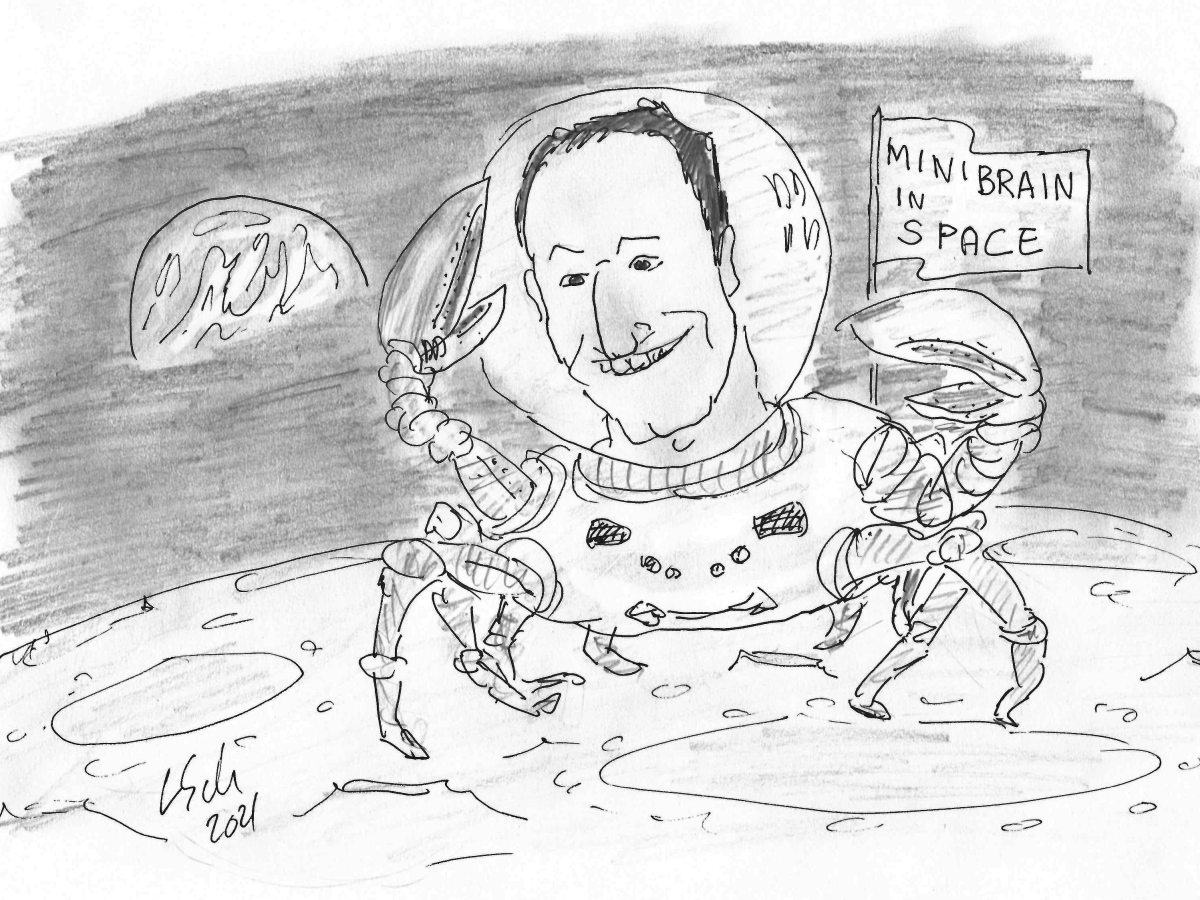
Alysson Muotri, a minibrain
Autistic Neanderthal minibrains operating crab robots via brain waves of newborn babies are to be launched into outer space for the purpose of interstellar colonization. No, I am not insane. Science Has Spoken.
But what about those talking mice? Here is the paper:
Yoko Tajima, César D. M. Vargas, Keiichi Ito, Wei Wang, Ji-Dung Luo, Jiawei Xing, Nurdan Kuru, Luiz Carlos Machado, Adam Siepel, Thomas S. Carroll, Erich D. Jarvis & Robert B. Darnell A humanized NOVA1 splicing factor alters mouse vocal communications Nature Communications (2025) doi: 10.1038/s41467-025-56579-2
The Rockefeller press release quoted the lead author:
““All baby mice make ultrasonic squeaks to their moms, and language researchers categorize the varying squeaks as four ‘letters’—S, D, U, and M,” Darnell notes. “We found that when we ‘transliterated’ the squeaks made by mice with the human-specific I197V variant, they were different from those of the wild-type mice. Some of the ‘letters’ had changed.
They found similar patterns when they studied the hopeful mating calls of male adult mice exposed to female adult mice in estrus. “They ‘talked’ differently to the female mice,” he says. “One can imagine how such changes in vocalization could have a profound impact on evolution.””
News outlets worldwide picked that up of course, who can pass on on talking mice. There are scientific reasons that such an earth-shattering discovery from a top US university still ended up in Nature Communications. Must be the Muotri-embarrassment effect.
The coauthor and Rockefeller professor Erich Jarvis claimed in 2013 that “a set of four mammalian transcription factor genes used to generate iPSCs in mouse and humans can induce a partially reprogrammed pluripotent stem cell (PRPSCs) state in vertebrate and invertebrate model organisms, in mammals, birds, fish, and fly,” (Rossello et al 2013), and nobody spoke about this revolutionary discovery ever since.
Donate!
If you are interested to support my work, you can leave here a small tip of $5. Or several of small tips, just increase the amount as you like (2x=€10; 5x=€25). Your generous patronage of my journalism will be most appreciated!
€5.00
Donate!
If you are interested to support my work, you can leave here a small tip of $5. Or several of small tips, just increase the amount as you like (2x=€10; 5x=€25). Your generous patronage of my journalism will be most appreciated!
€5.00

 For Better Science
It shows that the University of Ulm has got its priorities right. Germany is facing deindustrialisation (poverty), there may be some denial about this point, and that was before the Trump tariffs,
Industry chief contradicts Scholz: ‘German deindustrialisation is real’
and seems to be taking WWIII seriously,
Germany decides to leave history in the past and prepare for war – BBC News
yet the University of Ulm is intent on letting Simone Fulda, who may be preparing to un-resign as the President of the university of Kiel, and Klaus-Michael Debatin, in retirement, off the hook. Perhaps the University of Ulm is a Russian plant. Dumbing Germany down is just what Germany needs (like a hole in the head).
LikeLike
Arash Karimipour got slapped with 11 (!) retractions so far. He already had 2, so in total he has 14 now. It’s quite confusing as there is another fraud with the same name that already has 21 retractions!
LikeLike
Aliakbar Karimipour is a fictional sock puppet of Arash, invented to peer review his own papers.
LikeLike
Noble Genius…
“‘The World Forum and AI World Summit’—seriously? Don’t you mean ‘The Clownworld Forum and AI Scam Summit’? And no Ashutosh Tiwari on the roster?”
Wrt S.Fulda: ‘Any sufficiently advanced incompetence is indistinguishable from malice.’ – Gooden, Philip (2015). Skyscrapers, Hemlines and the Eddie Murphy Rule: Life’s Hidden Laws, Rules and Theories.
LikeLiked by 1 person
Regarding the Deyi Hou paper: also notice D. O’Connor. He is also part of that circle of frauds. What I don’t get is why the last author (who seems to be well respected and legit) is authoring papers with these frauds. And why is Micheal S. Bank yet again publishing with these frauds? Perhaps is not so innocent himself?
LikeLike
Science Breakthrough
From geroscience to precision geromedicine: Understanding and managing aging
https://www.cell.com/cell/fulltext/S0092-8674(25)00284-3
Kroemer, López-Otín, Verdin, …
LikeLike
And Tom Rando, and Seliuanov with his wife Gorbunova.
The real tragedy is that these old gits don’t eat enough of their own anti-aging medicine to bring science forward one funeral at a time.
LikeLike
I like their ‘Declaration of Interests.’ You know—no COI there, just interests. I reckon the phrasing will be one of the fastest to catch on in scientific publishing.
LikeLike
You won’t be laughing when they de-extinct Cullen Taniguchi, Judith Campsi, and more! To cure cancer, reverse ageing and silence critics.
LikeLiked by 1 person
Campisi is still publishing. Or… perhaps it’s her organoids?
https://pubmed.ncbi.nlm.nih.gov/?term=campisi+j&sort=date
LikeLiked by 2 people
“Most likely one of them or even both acted as reviewers or editors of this paper.“
Agree. Safaei, Goodarzi, Karimipour, etc… These are the guys who also provide articles and citations to Iranian scholars anywhere in the world, including universities in Canada and Europe. They are both authors, reviewers and editors. It would be even more scandalous if their ties in Western countries were investigated, but I guess because of the influence of the names of Western universities, the lousy articles of Iranian papermillers in those universities remain untouched. Because universities and publishers often choose to ignore allegations rather than evaluate them.
LikeLike